
In the arena of latest technologies, researchers are looking for a unique treatment strategy for diagnosis and treatment of cancer; it is a second chief cause of deaths in the world. Advances in chemotherapeutic agents, various radiological techniques and bio-nanoparticles treatments (i.e., green synthesized metallic nanoparticles) attracted many researchers to conclude a novel cancer treatment strategy. Unluckily every strategy had some working limitations as a result of which cancer remained a catastrophe for humanity. The present review article devised the modern cancer treatment paradigm which proposed directions towards probiotics or biotics-cancer treatment strategy. The probiotics are present in the human gut region and acting as a health promoter; as they have antioxidative, immunomodulatory, antipathogenic and anti-cancerous properties. Review based on the futuristic and modern aspects of cancer treatment, we believe that probiotics based cancer treatment would be supportive to overcome the chemotherapeutic and radiological drawback sand provides an appropriate cancer treatment strategy. Anticipating various challenges, we expect that probiotics may become a potential cancer bio-theranostic in the field of medical sciences shortly. Appropriate monitoring and treatment are strongly recommended to prevent hepatocellular carcinoma complications.
Review · Volume 34, Issue 2, 6 December 2019 · Open Access
Hepatocellular Carcinomas Risk Factors, Diagnosis, Prevention and Frontier to Probiotic Treatment
· · · ·
Affiliations & Notes ⌄
- 1Department of Zoology, Government College University, Lahore, Pakistan 2Department of Zoology, University of Azad Jammu and Kashmir, Muzaffarabad, Pakistan , Corresponding author: Shaukat Ali, shaukatali134@yahoo.com
Article Info ⌄
- Journal:
- Punjab University Journal of Zoology
- Published:
- 6 December 2019
From the article
- In conclusion, liver cancer is a very fatal disease which is associated with various risk factors.
- Probiotics may represent innovative, safe and low-cost strategies to prevent or treat HCC by changing the composition of gut microbiota.
- Probiotics show their anti-cancer effects by various mechanisms including regulation of Th17 response, Binding/adsorption of carcinogens, improvement of intestinal barrier function, Modulation of SCFA production.
- The extensive mechanistic investigations on gut microbiota and suitable selection of useful bacterial strains are required to establish probiotics as an alternative therapeutic method for cancer.
Selected from the article's own text.
Abstract
Introduction
Cancer: A life threat
The state of cancer is designated by uncontrolled cell division with successive invasions of healthy cells and tissues of the body. Mutations in genes trigger a series of events at the molecular level, leading to tumor formation and renal cell carcinoma (; . Cancer is a chief source of mortalities and morbidities throughout the world . American Cancer Society declared, the cancer global threat will rise to 21.7 million fresh cases by the year 2030 (Society). Both benign and malignant tumor is different from each other based on special features. As benign tumor does not invade all over the body while the malignant tumor invaded to various body regions ; ; . In underdeveloped regions, the cancer incidence rate is exponential rises in the coming years due to non-affordability and non-availability of the inexpensive treatment for cancer reduction ; .
Current efforts in the field of research have made noteworthy advancement in underscoring mechanisms and major risk factors of various cancers, these may be internal and external factors. Internal factors include gene mutations , irregular secretions of body hormones and adverse immunological conditions that cause chronological conditions that lead toward carcinogenesis . External factors include exposure to different chemicals, heavy metals, radiations, fried meat, alcohol, toxic mushrooms, aflatoxins, tobacco smoke, passive smoking and viral infections ; ; . Pancreatic cancer (PC) is caused by the exposure of chemicals and heavy metals (Antwi et al., 2019). The exposure to various pesticides, chlorinated hydrocarbons, asbestos, and benzene also increase PC risk ; ; Antwi et al., 2019).
The most important cause of death through cancer is its poor diagnosis. The most commonly used diagnostic techniques are X-rays, ultrasound scanning (US) and MRI ; Mannaerts et al., 2019; . The probability of detection for ultrasound scanning is 65%-80% and has precision greater than 90% ; ; . MRI is used to make the description and detection of hepatic malignant injuries better . It has more accuracy as compared to the US or CT scan in the detection of HCC and analyzing the actual size of the tumor .
Cancer is treated through chemotherapy therapy, radiation, immunotherapy, surgery, vaccination against cancer, photodynamic therapy and stem cell transformation is mainly used, often accompanied by severe side effects. These effects include limited bioavailability, toxicity, non-specificity and restriction in metastasis ; ; . Modern research developed effective treatment possibilities that are potent against various cancers with little or without damage to healthy cells and tissues. This recent option of treatment is provided by nanobiotechnology which plays a vital role in cancer treatment. Nanobiotechnology research present that AgNPs have a potential source against cancer diagnostic, its therapeutic, imaging and drug delivery agents .
Hepatocellular carcinoma (HCC)
Hepatocellular carcinoma (HCC) is considered as a 5th frequent type of all malignancy and 2nd common reason for tumors which leads to death globally ; Hsu et al., 2010). Hepatocellular carcinoma represents 85% to 90% of primary malignant tumors . It is etiologically as well as histologically different from other types of primary liver cancer . Approximately I million people die due to viral hepatitis and hepatocellular carcinoma and 700,000 people die of liver cancer every year globally .
Causes of hepatocellular carcinoma
Hepatocellular Carcinoma is a frequent form of cancer in which an epithelial tumor appeared by the transformation of hepatocytes (El–Serag and Rudolph, 2007). Cirrhosis Patients have the maximum opportunity of developing liver cancer ; . About 90-95% of people who have developed HCC are cirrhotic however HCC can also arise in non-cirrhotic people. Cirrhosis can develop because of HCV/HBV infectivity. Prolonged HBV infectivity is the most frequent reason for the development of HCC throughout the world whereas in Europe, the most common reason for HCC is HCV infection. If someone is suffering from HCV or HBV infection then developing the risk of HCC would be 3-5% each year ; ; ; .
The Risk of HCC will further increase by the co-infection of HCV or HBV. Some other causes include metabolic syndrome, primary biliary cirrhosis alcoholism, diabetes, smoking and genetic hemochromatosis. Hepatocellular carcinoma may also be linked with elevated aflatoxins i.e., several mycotoxins formed by the fungus Aspergillus flavus and Aspergillus parasiticus in foodstuff. In Asia and Africa (sub-Saharan) this cancer is caused because of contaminated foodstuffs (specifically by the fungus), like grains and peanuts ; ; ; .
Various microorganisms are considered as class 1 carcinogens, such as Epstein–Barr virus, HBV, HCV and Helicobacter pylori, were declared to develop various cancers including gastric cancer, leukemia, hepatocellular carcinoma and lymphoma . In the presence of different types of pathogenic microorganisms, host environmental conditions such as diet , inflammation ; ; , cigarette smoke and antibiotics ; , alters the gut microbiota composition and metabolic activity in host, which may lead to neoplastic changes (Figure 1).
Prevalence of hepatocellular carcinoma
Hepatocellular carcinoma is more frequent in men than in women. It is the 2nd main reason of death (due to cancer) in men throughout the world, especially in those countries which are not well developed while the sixth main reason of cancer death in those countries which are developed as shown by Figure 2 . About 782,500 new cases of HCC had been seen throughout the world during 2012 and from the 745,500 victims died, out of which China single has half of the aggregate cases of HCC and deaths due to it. Western Africa, East and South-East Asia have high incidence rates of liver cancer while Central, Eastern and Northern Europe and South-Central Asia have fewer incidence rates of HCC. Hepatocellular carcinoma is the most dominant primary liver cancer throughout the world i.e., almost 70% to 90% . Owing to the increased rate of liver fluke infectivity, Cholangiocarcinoma (which starts mainly from the bile duct epithelial lining) is more prevalent in some parts of Asia and Thailand but it is uncommon in most regions of the world .
The prevalence of HCC is increasing in Western Europe, Northern America and some parts of Oceania where the risk of cancer was low in the past and increasing prevalence in expressed in Figure 1. In the United States, the increasing prevalence of HCC reflects the increasing possibility of diabetes mellitus and obesity, an increase in severe infection of HCV due to mistreatment, which was more familiar in the late 19th century ; . Conversely, in areas like Japan and China where the risk of HCC was high in the past, the prevalence of HCC is decreasing. This decreasing prevalence is mostly because of decreasing the risk of HCV and HBV infection in Japan and China respectively due to better sanitation and cleanliness . According to a report in Taiwan, Universal HBV vaccination program for children that was started in 1984, has decreased the risk and occurrence of HCC up to 80% . Though, in many countries of Asia vaccination programs of HBV are not much involved in reducing the incidence rates of liver cancer rates because this program is implemented recently .
Various serological markers are mostly tested in HCC including serum Alfa fetoprotein ; ; Sternby-Eilard et al., 2018), Alanine Transaminase (ALT), Aspartate Transaminase AST, Lactate Dehydrogenase , 5-nucleotidase ; Shali et al., 2019) and Gamma-glutamyl transferase .
Preventions
The latest information related important factors for the prevention of HCC are completely explored. Amongst these, the vaccine of HBV designed for the prevention of infection by HBV is a glance of confidence in the field. It is proved that HCC development is strongly prevented by vaccination of HBV .
Sorafenib
Sorafenib is the typical remedy for traditional HCC . In 3rd phase, double-blind, randomized and placebo-controlled analysis of Sorafenib is an effective cure for liver cancer afterward local ablation or medical resection so 1,114 patients are enrolled they randomly take either placebo or Sorafenib for four years or awaiting tumor reappearance. The group of researchers currently declared that neither its primary and secondary endpoints, reappearance-free existence and nor survival were met .
Curcumin
Curcumin is a polyphenol, which is usually used as a spice in cooking in Indian. It received great media attention after the beginning of experiments on a national level and the role of combining curcumin supplementation and chemotherapy in bowel cancer. In vitro, Curcumin can stimulate apoptosis in numerous tumor cell lines. It is shown from animal models that it can stop HCC in murine models and rat model (Afrin et al., 2018).
Interferon-based therapy in HBV and HCV-related HCC
Interferon (IFN) contains anti-proliferative, immune-modulatory and antiviral properties. In the past before the development of advance anticancer and antiviral treatments, conventional IFN was widely verified for HCC remedy and prevention. In the adjuvant setting, conventional IFN therapy show variable results, meta-analyses verified that adjuvant IFN therapy enhances overall survival ; ; . Generally, the results of adjuvant IFN therapy were not favorable to prevent HBV related HCC; ; . Though, this treatment was beneficial for few subgroups. For instance, high expression of RIG-I and low expression of miR-26 show good effects on IFN therapy ; . If we compare HBV with HCV, it shows more response to conventional IFN therapy. The possibilities for the development of Hepatocellular carcinoma are reduced more effectively by Interferon in patients who are affected with prolonged infection of HCV as compared to those who are affected by prolonged HBV infection. According to random control experimentation accomplished in Japan, 49 patients having HCV-related HCC were treated with IFN-α after full ethanol ablation. The patients who were treated, 14 (29%) showed persistent antiviral responses. Comparing with the 25 patients who were not treated with adjuvant IFN-α, the rates of 1st reoccurrence of disease were the same, but the patients who were treated with adjuvant IFN-α, the rates of 2nd and 3rd reoccurrence of disease were decreased in them . In an Italian, randomized control test for patients having HCV-related HCC, adjuvant IFN-α does not affect overall recurrence. Though, in the patients who were adherent to the treatment, adjuvant IFN-α decreased late reappearance in the pure HCV subgroup .
Cancer treatment: nanotechnology, plants and cancer
Metal nanoparticles are considered as an efficient biomedical applicant due to their multifunctional theranostic abilities, as their antitumor, antimicrobial and drug carrier properties ; ; . Oral administration of AgNPs indicates their bright future, as they are potent cancer theranostics agents . The phytochemical-based green synthesized biocompatible colloidal gold nanoparticles (AuNPs) have biomedical applications because of their numerous benefits (eco-friendly, safer, energy-efficient, simple, cost-effective and minor toxicity) over conventional chemical synthetic measures. Biogenic AuNPs exhibits a potential anti-cancer activity by generating oxidative stress and reactive oxygen species ; .
Probiotics: beneficial microorganisms
Probiotics mean “for life”. Probiotics are naturally occurring beneficial organisms that aid in digestion and inhibit pathogenic bacteria in the intestine. Due to the beneficial impact of microorganisms used as probiotics, during the last decade, progressive attention has been focused on biological and molecular characterization and improvement of such microbes ; . Probiotics are currently the subject of significant clinical research. Different probiotic strains play a significant role in ameliorating chronic intestinal inflammation, diarrhea, constipation, vaginitis, irritable bowel syndrome, atopic dermatitis, sepsis, food allergies, and liver disease. Probiotics modulate systemic and mucosal immune function, improve intestinal barrier function, alter gut micro-ecology and exert metabolic effects on the host ; .
Probiotics novelty towards HCC treatment
A bacterium (or any microbe) needs to be isolated, purified, characterized and proved to be beneficial to health when it is administered before it can be designated as a probiotic. Successful probiotics strains need to be able to survive passage through the upper gastrointestinal tract, multiply, colonize and function in the gut. They are mostly of human origin . Probiotics are valuable microorganisms, their survival based on discerning fermented food ingredients known as prebiotics and have potential against hepatocellular carcinoma (HCC) by producing anti-inflammatory metabolites.
Regulation of Th17 response
Probiotics including Prevotella and Oscillibacter secrete anti-inflammatory metabolites that are responsible to regulate T-cell differentiation, reduction of Th17 cell polarization and encouraged the differentiation of anti-inflammatory Treg/Tr1 cells in the GIT. Th17 reduction suppresses tumor development and decreases angiogenesis. Prohep is a novel probiotic mixture that plays a significant role in HCC treatment significantly in mice and modulation of gut microbiota ; . Probiotics play a significant role in various cancers as listed in Table 1.
Mechanisms of action of probiotics against hepatocellular carcinoma
Probiotics exert their anticancerous agents through many mechanisms including a direct impact on modulating gut microbiota, through immune modulation, improved intestinal barrier function, decreased bacterial
Table 1: Probiotics potential against cancer treatment.
| Probiotics strains | Cancer treatment | Significant role | Reference |
| Bacillus polyfermenticus | Colon cancer treatment | Antitumor effect against HT-29, DLD-1 and Caco-2 cells. | |
| Lactobacillus acidophilus | Role against HCC and human colon cancer. | It exerts the anti-tumorous activity in Encapsulated form. | ; |
| L. casei and L. rhamnosus | Against colorectal cancer | Effect on human colorectal HCT-116 cells which decreased metastasis |
|
| L. plantarum | colon cancer | Exhibit a promising antioxidant property to decrease carcinoma | |
| Prohep (probiotic mixture) including Prevotella and Oscillibacter | Potential against Hepatocellular carcinoma (HCC) | Reduction of Th17 cell polarization and encourage the anti-inflammatory Treg/Tr1 cells differentiation. | |
| Propionibacterium spp | Colorectal cancer (CRC) prevention | By killing CRC cells | ; |
| Propionibacterium freudenreichii | Works against gastric cancer | Proapoptotic potential against gastric cancer HGT-1 cells. |
translocation, anti-inflammatory and anti-pathogenic activities, as well as reducing tumor formation and metastasis [reviewed in ].
Binding/adsorption of carcinogens
Some previous studies explained that the probiotics (strains of lactic acid bacteria) can bind and immobilize the dietary toxic substances such as mycotoxins in the gut lumen to decrease the toxicity of these substances and thus resulting in the improvement of gut and liver health. These probiotics bacteria can reverse the toxic effects of mycotoxins on intestinal epithelia ; . Aflatoxin B1 (AFB1)-induced decrease in the trans-epithelial electrical resistance (TEER) was abolished by probiotic bacteria indicating the ability of the bacterial strain to bind with AFB1. This leads to a decrease in AFB1 bioavailability . These reports confirm that probiotics decreased the bioavailability of carcinogen AFB1, and thus reduce HCC incidences.
Improvement of intestinal barrier function
An efficient gut barrier is significant to regulate the diffusion of bacterial components into the liver. By damaging the intestinal barrier function the intestinal permeability to gut-derived LPS is increased which results in HCC pathogenesis by provoking pro-inflammatory responses in the liver . Probiotics change the microbiota composition to reduce the outgrowth of Gram-negative bacteria and thus enhancing the intestinal barrier that prevents the translocation of endotoxins. As a result, tumorigenic inflammation in the liver was minimized .
Modulation of short-chain fatty acids (SCFA) production
Some important probiotics including bifidobacteria and lactobacilli can change the composition of gut microbiota and thus the production of Short-chain fatty acids that results in the reduction of risk of developing cancer, including HCC. It had studied that the anti-cancer effects of probiotics were due to the production of SCFA .
Conclusions and future perspective
In conclusion, liver cancer is a very fatal disease which is associated with various risk factors. The incidences of HCC are increasing globally. Probiotics may represent innovative, safe and low-cost strategies to prevent or treat HCC by changing the composition of gut microbiota. Probiotics show their anti-cancer effects by various mechanisms including regulation of Th17 response, Binding/adsorption of carcinogens, improvement of intestinal barrier function, Modulation of SCFA production. The extensive mechanistic investigations on gut microbiota and suitable selection of useful bacterial strains are required to establish probiotics as an alternative therapeutic method for cancer.
Figures
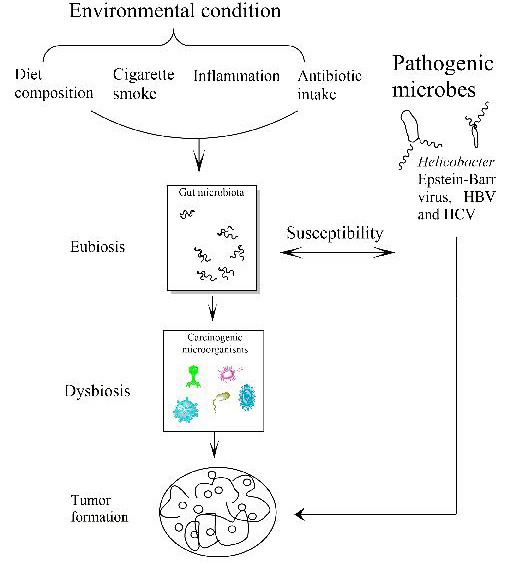
Environmental factors play a role in the promotion of dysbiosis and pathogen-derived susceptibility to tumor formation. These factors such as diet components, inflammation, and antibiotics involved in the disruption of the healthy microbiota, which associated with dysbiosis.
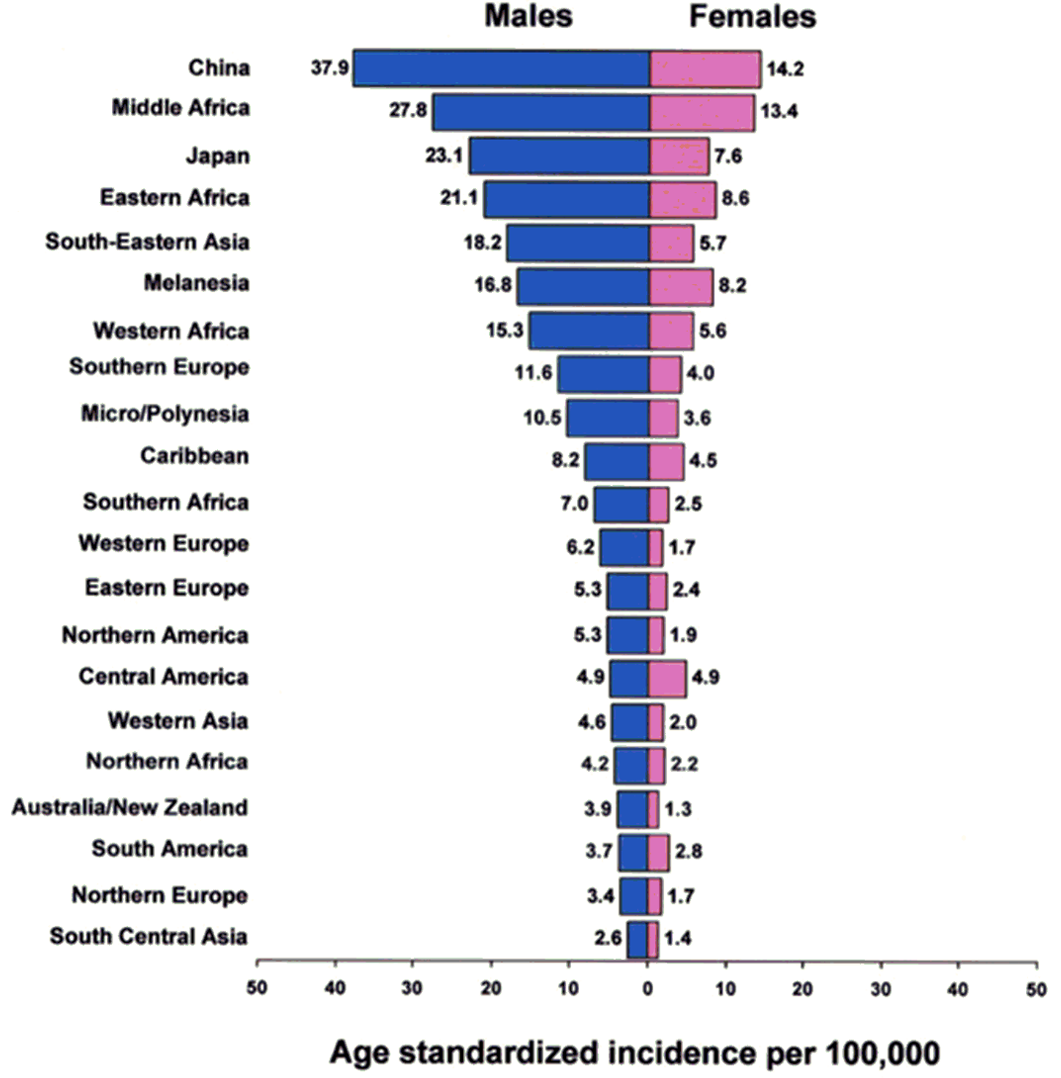
Prevalence of liver cancer.
References
- Afrin, R., Arumugam, S., Rahman, A., Wahed, Mi., Karuppagounder, V., Harima, M., Suzuki, H., Miyashita, S., Suzuki, K., Yoneyama, H., Ueno, K. and Watanabe, K., 2017. Curcumin ameliorates liver damage and progression of NASH in NASH-HCC mouse model possibly by modulating HMGB1-NF-κB translocation. Int. Immunopharmacol., 44: 174-182. https://doi.org/10.1016/j.intimp.2017.01.016[CrossRef]
- Aghamir, S.M., Heshmat, R., Ebrahimi, M., Ketabchi, S.E., Dizaji S. and Khatami, F., 2019. The Impact of succinate dehydrogenase gene (SDH) mutations in renal cell Carcinoma (RCC): A systematic review. Onco. Targets Ther., 26: 7929- 7940. https://doi.org/10.2147/OTT.S207460[CrossRef]
- Ajmal, S. and Ahmed, N., 2009. Probiotic potential of Lactobacillus strains in human infections. Afr. J. Microbiol. Res., 3: 851-855.
- Ali, S., Nasreen, S., Safeer, S., Andleeb, S., Ejaz., M., Bano., S. and Shakir, H.A., 2016. Medicinal plants as therapeutic agents for cancer treatment. Punjab Univ. J. Zool., 31: 295-305.
- Altekruse, S.F., Mcglynn, K.A. and Reichman, M.E., 2009. Hepatocellular carcinoma incidence, mortality, and survival trends in the United States from 1975 to 2005. J. Clin. Oncol., 27: 1485-1491. https://doi.org/10.1200/JCO.2008.20.7753[CrossRef]
- Anand, P., Kunnumakara, A.B., Sundaram, C., Harikumar, K.B., Tharakan, S.T., Lai, O.S., Sung, B. and Aggarwal, B.B., 2008. Cancer is a preventable disease that requires major lifestyle changes. Pharm. Res., 25: 2097-2116. https://doi.org/10.1007/s11095-008-9661-9[CrossRef]
- Antwi, S.O., Eckert, E.C., Sabaque, C.V., Leof, E.R., Hawthorne, K.M., Bamlet, W.R., Chaffee, K.G., Oberg, A.L. and Petersen, G.M. 2015. Exposure to environmental chemicals and heavy metals, and risk of pancreatic cancer. Cancer Causes Contr., 26: 1583-1591. https://doi.org/10.1007/s10552-015-0652-y[CrossRef]
- Antwi, S.O., Eckert, E.C., Sabaque, C.V., Leof, E.R., Hawthorne, K.M., Bamlet, W.R., Chaffee, K.G., Oberg, A.L. and Petersen, G.M., 2015. Exposure to environmental chemicals and heavy metals, and risk of pancreatic cancer. Cancer Causes Contr. 26: 1583-1591. https://doi.org/10.1007/s10552-015-0652-y[CrossRef]
- Asrani, S.K., Devarbhavi, H., Eaton, J. and Kama, P.S., 2019. Burden of liver diseases in the world. J. Hepatol., 70: 151-171. https://doi.org/10.1016/j.jhep.2018.09.014[CrossRef]
- Bali, A., Singh, M.P., Padmavathi, Khorate, M. and Ahmed, J., 2010. Malignant fibrous histiocytoma - An unusual transformation from benign to malignant. J. Cancer Sci. Ther., 2: 053-057.
- Baskar, R. and Itahana, K., 2017. Radiation therapy and cancer control in developing countries: Can we save more lives? Int. J. Med. Sci., 1: 13-17. https://doi.org/10.7150/ijms.17288[CrossRef]
- Biedermann, L., Zeitz, J., Mwinyi, J., Sutter-Minder, E., Rehman, A., Ott, S.J., Steurer-Stey, C., Frei, A., Frei, P., Scharl, M. and Loessner, M.J., 2013. Smoking cessation induces profound changes in the composition of the intestinal microbiota in humans. PLoS One, 8: 59260. https://doi.org/10.1371/journal.pone.0059260[CrossRef]
- Bolondi, L., Sofia, S., Siringo, S., Gaiani, S., Casali, A., Zironi, G., Piscaglia, F., Gramantieri, L., Zanetti, M. and Sherman, M., 2001. Surveillance programme of cirrhotic patients for early diagnosis and treatment of hepatocellular carcinoma: A cost effectiveness analysis. Gut., 48: 251–259. https://doi.org/10.1136/gut.48.2.251[CrossRef]
- Bray, F., Jemal, A., Grey, N., Ferlay, J. and Forman, D., 2012. Global cancer transitions according to the Human Development Index (2008– 2030): a population-based study. Lancet Oncol., 13: 790–801. https://doi.org/10.1016/S1470-2045(12)70211-5[CrossRef]
- Breitenstein, S., Dimitroulis, D., Petrowsky, H., Puhan, M.A., Müllhaupt, B. and Clavien, P.A., 2009. Systematic review and meta-analysis of interferon after curative treatment of hepatocellular carcinoma in patients with viral hepatitis. Br. J. Surg., 96: 975–981. https://doi.org/10.1002/bjs.6731[CrossRef]
- Bruix, J. and Llovet, J.M., 2009. Major achievements in hepatocellular carcinoma. Lancet, 373: 614-616. https://doi.org/10.1016/S0140-6736(09)60381-0[CrossRef]
- Bruix, J. and Sherman, M., 2005. Management of hepatocellular carcinoma. Hepatology, 42: 1208–1236. https://doi.org/10.1002/hep.20933[CrossRef]
- Bruix, J., Hessheimer, A.J., Forner, A., Boix, L., Vilana, R. and Llovet, J.M., 2006. New aspects of diagnosis and therapy of hepatocellular carcinoma. Oncogene., 25: 3848–3856. https://doi.org/10.1038/sj.onc.1209548[CrossRef]
- Calle, E.E., Rodriguez, C. and Walker-Thurmond, K., 2003. Overweight, obesity, and mortality from cancer in a prospectively studied cohort of U.S. adults. N. Engl. J. Med., 348: 1625-1638. https://doi.org/10.1056/NEJMoa021423[CrossRef]
- Center, M.M. and Jemal, A., 2011. International trends in liver cancer incidence rates. Cancer Epidemiol. Biomark. Prev., 20: 2362-2368. https://doi.org/10.1158/1055-9965.EPI-11-0643[CrossRef]
- Chang, L.S., Barroso-Sousa, R., Tolaney, Sm., Hodi, F.S., Kaiser, U.B. and Min, L., 2019. Endocrine Toxicity of Cancer Immunotherapy Targeting Immune Checkpoints. Endocr. Rev., 1: 17-65. https://doi.org/10.1210/er.2018-00006[CrossRef]
- Chang, M.H., Chen, C.J., Lai, M.S., Hsu, H.M., Wu, T.C., Kong, M.S., Liang, D.C. and Shau, W.Y. And Chen, D.S., 1997. Universal hepatitis B vaccination in Taiwan and the incidence of hepatocellular carcinoma in children. N. Engl. J. Med., 336: 1855-1859. https://doi.org/10.1056/NEJM199706263362602[CrossRef]
- Chen, L.T., Chen, M.F. and Li, L.A., 2012. Disease Committee of Adjuvant Therapy for Postoperative Hepatocellular Carcinoma, Taiwan Cooperative Oncology Group, National Health Research Institutes, Zhunan, Taiwan. Long-term results of a randomized, observation controlled, phase III trial of adjuvant interferon Alfa-2-bin hepatocellular carcinoma after curative resection. Ann. Surg., 255: 8–17.
- Chiang, C.J., Yang, Y.W., You, S.L., Lai, M.S. and Chen, C.J. 2013. Thirty-year outcomes of the national hepatitis B immunization program in Taiwan. Jama., 310(9): 974-976. https://doi.org/10.1001/jama.2013.276701[CrossRef]
- Chuang, S.C., La, Vecchia, C. and Boffetta, P., 2009. Liver cancer: descriptive epidemiology and risk factors other than HBV and HCV infection. Cancer letters., 286: 09-14. https://doi.org/10.1016/j.canlet.2008.10.040[CrossRef]
- Coughlin, S.S., Anderson, J. and Smith, S.A., 2015. Legislative smoking bans for reducing exposure to secondhand smoke and smoking prevalence: Opportunities for Georgians. Am. J. Public Hlth., 5(1):2.
- Cousin, F.J., Jouan-Lanhouet, S., Dimanche-Boitrel, M.T., Corcos, L. and Jan, G., 2012. Milk fermented by Propionibacterium freudenreichii induces apoptosis of HGT-1 human gastric cancer cells. PLoS One, 7: 31892. https://doi.org/10.1371/journal.pone.0031892[CrossRef]
- Dar, K.K., Ali, S., Ejaz, M., Nasreen, S., Ashraf, N., Gillani, S.F., Shafi, N., Safeer, S., Khan, M.A., Andleeb. S. and Mughal. T.A., 2019. In vivo induction of hepatocellular carcinoma by diethylnitrosoamine and pharmacological intervention in Balb C mice using Bergenia ciliata extracts. Braz J. Biol., 79:629-638. https://doi.org/10.1590/1519-6984.186565[CrossRef]
- Del Pup, L., Codacci-Pisanelli, G. And Peccatori, F., 2019. Breast cancer risk of hormonal contraception: Counselling considering new evidence. Crit. Rev. Oncol. Hematol., 137: 123-130. https://doi.org/10.1016/j.critrevonc.2019.03.001[CrossRef]
- Dinan, T.G. and Cryan, J.F., 2017. Brain-Gut-Microbiota Axis and Mental Health. Psychosom Med., 79: 920-926. https://doi.org/10.1097/PSY.0000000000000519[CrossRef]
- D’onofrio, M., Beleù, A. And De Robertis, R., 2019. Ultrasound-guided percutaneous procedures in pancreatic diseases: new techniques and applications. Eur. Radiol. Exp., 22: 2. https://doi.org/10.1186/s41747-018-0081-2[CrossRef]
- El-Nezami, H., Polychronaki, N., Salminen, S. and Mykkänen, H., 2002. Binding rather than metabolism may explain the interaction of two food-grade Lactobacillus strains with zearalenone and its derivative alpha-zearalenol. Appl. Environ. Microbiol., 68: 3545-3549. https://doi.org/10.1128/AEM.68.7.3545-3549.2002[CrossRef]
- El-Nezami, H.S., Chrevatidis, A., Auriola, S., Salminen, S. and Mykkänen, H., 2002. Removal of common Fusarium toxins in vitro by strains of Lactobacillus and Propionibacterium. Food Addit. Contam., 19: 680-686. https://doi.org/10.1080/02652030210134236[CrossRef]
- El–Serag, H.B. and Rudolph, K.L., 2007. Hepatocellular carcinoma: epidemiology and molecular carcinogenesis. Gastroenterology, 132: 2557-2576. https://doi.org/10.1053/j.gastro.2007.04.061[CrossRef]
- Escamilla, J., Lane, M.A. and Maitin, V., 2012. Cell-free supernatants from probiotic Lactobacillus casei and Lactobacillus rhamnosus GG decrease colon cancer cell invasion in vitro. Nutr. Cancer, 64: 871–878. https://doi.org/10.1080/01635581.2012.700758[CrossRef]
- Ferlay, J., Colombet, M., Soerjomataram, I., Mathers, C., Parkin, D.M., Piñeros, M., Znaor, A. and Bray, F., 2019. Estimating the global cancer incidence and mortality in 2018: GLOBOCAN sources and methods. Int. J. Cancer, 15: 1941-1953. https://doi.org/10.1002/ijc.31937[CrossRef]
- Ferlay, J., Franceschi, S., Vignat, J., Bray, F., Forman, D. and Plummer, M., 2012. Global burden of cancers attributable to infections in 2008: a review and synthetic analysis. Lancet Oncol., 13: 607-615. https://doi.org/10.1016/S1470-2045(12)70137-7[CrossRef]
- Ferlay, J., Soerjomataram, I. and Dikshit, R., 2015. Cancer incidence and mortality worldwide: sources, methods and major patterns in Globocan 2012. Int. J. Cancer, 136: 359–386. https://doi.org/10.1002/ijc.29210[CrossRef]
- Forner, A., Llovet, J.M. and Bruix, J., 2012. Hepatocellular carcinoma. Lancet, 379: 1245-1255. https://doi.org/10.1016/S0140-6736(11)61347-0[CrossRef]
- França, A.V., Elias, J., Lima, B.L., Martinelli, A.L. and Carrilho, F.J., 2004. Diagnosis, staging and treatment of hepatocellular carcinoma. Braz. J. Med. Biol. Res., 37: 1689–1705. https://doi.org/10.1590/S0100-879X2004001100015[CrossRef]
- Frenk, J., Knaul, F.M., Shulman, L.N., Alleyne, G., Armstrong, L., Atun, R., Blayney, D., Chen, L., Feachem, R., Gospodarowicz, M., Gralow, J., Gupta, S., Langer, A., Lob-Levyt, J., Neal, C., Mbewu, A., Mired, D., Piot, P., Reddy, K.S., Sachs, J.D., Sarhan, M. and Seffrin, J.R., 2010. Expansion of cancer care and control in countries of low and middle income: a call to action. Lancet, 376: 1186–1193. https://doi.org/10.1016/S0140-6736(10)61152-X[CrossRef]
- Fritschi, L., Benke, G., Risch, H.A., Schulte, A., Webb, P.M., Whiteman, D.C., Fawcett, J. and Neale, R.E., 2015. Occupational exposure to N-nitrosamines and pesticides and risk of pancreatic cancer. Occup. Environ. Med., 72: 678-683. https://doi.org/10.1136/oemed-2014-102522[CrossRef]
- Gevers, D., Kugathasan, S., Denson, L.A., Vázquez-Baeza, Y., Van, Treuren, W., Ren, B., Schwager, E., Knights, D., Song, S.J., Yassour, M. and Morgan, X.C., 2014. The treatment-naive microbiome in new-onset Crohn’s disease. Cell Host. Microbe.,15: 382-392. https://doi.org/10.1016/j.chom.2014.02.005[CrossRef]
- Gratz, S., Täubel, M., Juvonen, R.O., Viluksela, M., Turner, P.C., Mykkänen, H. and El-Nezami, H., 2006. Lactobacillus rhamnosus strain GG modulates intestinal absorption, fecal excretion, and toxicity of aflatoxin B1 in rats. Appl. Environ. Microbiol., 72: 7398-7400. https://doi.org/10.1128/AEM.01348-06[CrossRef]
- Gureyev, T.E., Nesterets, Y.I., Baran, P.M., Taba, S.T., Mayo, S.C., Thompson, D., Arhatari, B., Mihocic, A., Abbey, B., Lockie, D. and Fox, J., 2019. Propagation-based X-ray phase-contrast tomography of mastectomy samples using synchrotron radiation. Med. Phys. Press. https://doi.org/10.1002/mp.13842[CrossRef]
- Hakansson, A., Branning, C., Molin, G., Adawi, D., Hagslatt, M.L., Jeppsson, B., Nyman, M. and Ahrne, S., 2012. Blueberry husks and probiotics attenuate colorectal inflammation and oncogenesis, and liver injuries in rats exposed to cycling DSS-treatment. PLoS. One, 7: 33510. https://doi.org/10.1371/journal.pone.0033510[CrossRef]
- Hollstein, M., Alexandrov, L.B., Wild, C.P., Ardin, M. and Zavadil, J., 2017. Base changes in tumor DNA have the power to reveal the causes and evolution of cancer. Oncogene, 36(2): 158. https://doi.org/10.1038/onc.2016.192[CrossRef]
- Hou, J., Zhou, Y., Zheng, Y., Fan, J., Zhou, W., Ng, I.O., Sun, H., Qin, L., Qiu, S., Lee, J.M. and Lo, C.M., 2014. Hepatic RIG-I predicts survival and interferon-α therapeutic response in hepatocellular carcinoma. Cancer Cell, 25: 49-63. https://doi.org/10.1016/j.ccr.2013.11.011[CrossRef]
- Howlader, N., Noone, A.M. and Krapcho, M., 2014. Garshell, J., Miller, D., Altekruse, S.F., Kosary, C.L., Yu, M., Ruhl, J., Tatalovich, Z., Mariotto, A., Lewis, D.R., Chen, H.S., Feuer, E.J. and Cronin, K.A. 2014 SEER cancer statistics review, 1975-2011. National Cancer Institute. Bethesda, MD, USA. Pp.20-35.
- Hsu, W.H., Chang, C.C., Huang, K.W., Chen, Y.C., Hsu, S.L., Wu, L.C., Tsou, A.P., Lai, J.M. and Huang, C.Y., 2015. Evaluation of the medicinal herb Graptopetalumparaguayense as a treatment for liver cancer. PLoS One, 10: e0121298. https://doi.org/10.1371/journal.pone.0121298[CrossRef]
- Israel, Y., Rachmiel, A., Ziv, G. and Nagler, R., 2016. Benign and Malignant Salivary Gland Tumors-Clinical and Demographic Characteristics. Anticancer. Res., 36: 4151-4154.
- Ji, J., Shi, J., Budhu, A., Yu, Z., Forgues, M., Roessler, S., Ambs, S., Chen, Y., Meltzer, P.S., Croce, C.M. and Qin, L.X., 2009. MicroRNA expression, survival and response to interferon in liver cancer. N. Engl. J. Med., 36: 1437-1447. https://doi.org/10.1056/NEJMoa0901282[CrossRef]
- Khan, M.A., Raza, A., Ovais, M., Sohail. F.M. and Ali, S., 2018. Current state and prospects of nano-delivery systems for sorafenib. J. Int. J. Polym. Mater. Polym. Biomater., 67: 1105-1115. https://doi.org/10.1080/00914037.2018.1429434[CrossRef]
- Lan, A., Lagadic-Gossmann, D., Lemaire, C., Brenner, C. and Jan, G., 2007. Acidic extracellular pH shifts colorectal cancer cell death from apoptosis to necrosis upon exposure to propionate and acetate, major end-products of the human probiotic propionibacteria. Apoptosis, 12: 573-591. https://doi.org/10.1007/s10495-006-0010-3[CrossRef]
- Leblanc, Jg., Chain, F., Martín, R., Bermúdez-Humarán, Lg., Courau, S. and Langella, P., 2017. Beneficial effects on host energy metabolism of short-chain fatty acids and vitamins produced by commensal and probiotic bacteria. Microb. Cell Fact., 16: 79. https://doi.org/10.1186/s12934-017-0691-z[CrossRef]
- Lee, D.K., Jang, S., Kim, M.J., Kim, J.H. and Chung, M.J., 2008. Anti-proliferative effects of Bifidobacterium adolescentis SPM0212 extract on human colon cancer cell lines. BMC Cancer, 8: 310. https://doi.org/10.1186/1471-2407-8-310[CrossRef]
- Lersritwimanmaen, P. and Nimanong, S., 2018. Hepatocellular Carcinoma Surveillance: Benefit of Serum Alfa-fetoprotein in Real-world Practice. Euroasian J. Hepatogastroenterol., 8: 83-87. https://doi.org/10.5005/jp-journals-10018-1268[CrossRef]
- Li, J., Sung, C.Y.J., Lee N., Ni, Y., Pihlajamäkid, J., Panagiotou, G. and El-Nezami, H., 2016. Probiotics modulated gut microbiota suppresses hepatocellular carcinoma growth in mice. PNAS, 1306–1315. https://doi.org/10.1073/pnas.1518189113[CrossRef]
- Li, J., Sung, Cy., Lee, N., Ni, Y., Pihlajamäki, J., Panagiotou, G. and El-Nezami, H., 2016. Probiotics modulated gut microbiota suppresses hepatocellular carcinoma growth in mice. PNAS, 113: 306-315. https://doi.org/10.1073/pnas.1518189113[CrossRef]
- Lim, Z.Z.J., Li, J.E.J., Ng, C.T., Yung, L.Y.L. and Bay, B.H., 2011. Gold nanoparticles in cancer therapy. Acta. Pharmacol. Sin., 32: 983–990. https://doi.org/10.1038/aps.2011.82[CrossRef]
- Liu, X., Cheng, D. and Wang, W., 2015. MRI in differentiation of benign and malignant tongue tumors. Front. Biosci. (Landmark Ed)., 1: 614-620. https://doi.org/10.2741/4326[CrossRef]
- Lo, C.M., Liu, C.L., Chan, S.C., Lam, C.M., Poon, R.T., Ng, I.O., Fan, S.T. and Wong, J., 2007. A randomized, controlled trial of postoperative adjuvant interferon therapy after resection of hepatocellular carcinoma. Annals Surgery, 245: 831-842. https://doi.org/10.1097/01.sla.0000245829.00977.45[CrossRef]
- London, W.T. and Mcglynn, K.A. 2006. Liver cancer. Cancer Epidemiol. Biomark. Prev., 3: 763-786. https://doi.org/10.1093/acprof:oso/9780195149616.003.0039[CrossRef]
- Ma, E.L., Choi, Y.J., Choi, J., Pothoulakis, C., Rhee, S.H. and Im, E., 2010. The anticancer effect of probiotic Bacillus polyfermenticuson human colon cancer cells is mediated through ErbB2 and ErbB3 inhibition. Int. J. Cancer, 127: 780–790. https://doi.org/10.1002/ijc.25011[CrossRef]
- Mannaerts, C.K., Gayet, M., Verbeek, J.F., Engelbrecht, M.R.W., Savci-Heijink, C.D., Jager, G.J., Gielens, M.P.M., Van Der Linden, H., Beerlage, H.P., De Reijke, T.M., Wijkstra, H. and Roobol, M.J., 2018. Prostate cancer risk assessment in biopsy-naïve patients: The Rotterdam prostate cancer risk calculator in multiparametric magnetic resonance imaging-transrectal ultrasound (TRUS) fusion biopsy and systematic TRUS biopsy. Eur. Urol. Oncol., 1: 109-117. https://doi.org/10.1016/j.euo.2018.02.010[CrossRef]
- Mazzaferro, V., Romito, R., Schiavo, M., Mariani, L., Camerini, T., Bhoori, S., Capussotti, L., Calise, F., Pellicci, R., Belli, G. and Tagger, A., 2006. Prevention of hepatocellular carcinoma recurrence with alpha-interferon after liver resection in HCV cirrhosis. Hepatology, 44: 1543-1554. https://doi.org/10.1002/hep.21415[CrossRef]
- Mittal, S. and El-Serag, H.B., 2013. Epidemiology of hepatocellular carcinoma: consider the population. J. Clin. Gastroenterol., 47: 2-6. https://doi.org/10.1097/MCG.0b013e3182872f29[CrossRef]
- Morgan, X.C., Tickle, T.L., Sokol, H., Gevers, D., Devaney, K.L., Ward, D.V., Reyes, J.A., Shah, S.A., Leleiko, N., Snapper, S.B. and Bousvaros, A., 2012. Dysfunction of the intestinal microbiome in inflammatory bowel disease and treatment. Genome. Biol., 13: 79. https://doi.org/10.1186/gb-2012-13-9-r79[CrossRef]
- Mottawea, W., Chiang, C.K., Mühlbauer, M., Starr, A.E., Butcher, J., Abujamel, T., Deeke, S.A., Brandel, A., Zhou, H., Shokralla, S. and Hajibabaei, M., 2016. Altered intestinal microbiota–host mitochondria crosstalk in new onset Crohn’s disease. Nat. Commun., 7: 13419. https://doi.org/10.1038/ncomms13419[CrossRef]
- Mukherjee, S. and Patra, C.R., 2016. Therapeutic application of anti-angiogenic nanomaterials in cancers. Nanoscale, 8: 12444-12470. https://doi.org/10.1039/C5NR07887C[CrossRef]
- Mukherjee, S., Chowdhury, D., Kotcherlakota, R. and Patra, S., 2014. Potential theranostics application of bio-synthesized silver nanoparticles (4-in-1 system). Theranostics, 4: 316. https://doi.org/10.7150/thno.7819[CrossRef]
- Mukherjee, S., Sau, S., Madhuri, D., Bollu, V.S., Madhusudana, K., Sreedhar, B., Banerjee, R. and Patra, C.R., 2016. Green synthesis and characterization of monodispersed gold nanoparticles: toxicity study, delivery of doxorubicin and its bio-distribution in mouse model. J. Biomed. Nanotechnol., 12: 165-181. https://doi.org/10.1166/jbn.2016.2141[CrossRef]
- Mukherjee, S., Vinothkumar, B., Prashanthi, S., Bangal, P.R., Sreedhar, B. and Patra, C.R., 2013. Potential therapeutic and diagnostic applications of one-step in situ biosynthesized gold nanoconjugates (2-in-1 system) in cancer treatment. RSC. Advances., 3: 2318-2329. https://doi.org/10.1039/c2ra22299j[CrossRef]
- Munger, M.A., Radwanski, P., Hadlock, G.C., Stoddard, G., Shaaban, A., Falconer, J., Grainger, D.W. and Deering-Rice, C.E., 2014. In vivo human time-exposure study of orally dosed commercial silver nanoparticles. Nanomedicine, 10: 1-9. https://doi.org/10.1016/j.nano.2013.06.010[CrossRef]
- Murugaiyan, G. and Saha, B., 2009. Protumor vs antitumor functions of IL-17. J. Immunol., 183: 4169-4175. https://doi.org/10.4049/jimmunol.0901017[CrossRef]
- Natsuyama, T., Mitsui, Y., Uetani, M1., Ohta, S., Inoue, M. and Akakura, K., 2019. Alfa-Fetoprotein-producing female primary urethral adenocarcinoma with neuroendocrine differentiation. Case Rep. Urol. In press. https://doi.org/10.1155/2019/3454037[CrossRef]
- O’keefe, S.J., 2016. Diet, microorganisms and their metabolites, and colon cancer. Nat. Rev. Gastroenterol. Hepatol., 13: 691–706. https://doi.org/10.1038/nrgastro.2016.165[CrossRef]
- Oh, J.K. and Weiderpass, E., 2014. Infection and cancer: global distribution and burden of diseases. Annals Global Hlth., 80: 384-392. https://doi.org/10.1016/j.aogh.2014.09.013[CrossRef]
- Omata, M., Lesmana, L.A., Tateishi, R., Chen, P.J., Lin, S.M., Yoshida, H., Kudo, M., Lee, J.M., Choi, B.I., Poon, R.T. and Shiina, S., 2010. Asian Pacific Association for the Study of the Liver: Consensus recommendations on hepatocellular carcinoma. Hepatol. Int., 4: 439-474. https://doi.org/10.1007/s12072-010-9165-7[CrossRef]
- Ovais, M., Raza, A., Naz, S., Ul-Islam, N., Khalil, A.T., Ali, S., Khan, M.A. And Shinwari, Z.K., 2017. Current state and prospects of the phytosynthesized colloidal gold nanoparticles and their applications in cancer theranostics. Appl. Microbiol. Biotechnol., 101: 3551–3565. https://doi.org/10.1007/s00253-017-8250-4[CrossRef]
- Patra, C.R., Mukherjee, S. and Kotcherlakota, R., 2014. Biosynthesized silver nanoparticles: a step forward for cancer theranostics? Nanomedicine, 9: 1445–1448. https://doi.org/10.2217/nnm.14.89[CrossRef]
- Petrick. J.L., Florio. A.A, Znaor, A., Ruggieri, D., Laversanne, M., Alvarez, C.S., Ferlay, J., Valery. P.C., Bray. F. and Mcglynn. K.A., 2019. International trends in hepatocellular carcinoma incidence, 1978-2012. Int. J. Cancer. In press. https://doi.org/10.1002/ijc.32723[CrossRef]
- Ramakrishnan, G., Augustine, T., Jagan, S., Vinodhkumar, R. and Devaki, T., 2007. Effect of silymarin on N-nitrosodiethylamine induced hepatocarcinogenesis in rats. Exp. Oncol., 29: 39-44.
- Raymond, F., Ouameur, A.A., Déraspe, M., Iqbal, N., Gingras, H., Dridi, B., Leprohon, P., Plante, P.L., Giroux, R., Bérubé, È. and Frenette, J., 2016. The initial state of the human gut microbiome determines its reshaping by antibiotics. ISME. J., 10(3): 707-720. https://doi.org/10.1038/ismej.2015.148[CrossRef]
- Saarela, M., Mogensen, G., Fondén, R., Mättö, J. and Mattila-Sandholm, T., 2000. Probiotic bacteria: safety, functional and technological properties. J. Biotechnol., 84: 197-215. https://doi.org/10.1016/S0168-1656(00)00375-8[CrossRef]
- Sadej, R., Spychala, J. And Skladanowski, A.C., 2006. Expression of ecto-5′-nucleotidase (eN, CD73) in cell lines from various stages of human melanoma. Melanoma Res., 16: 213-222. https://doi.org/10.1097/01.cmr.0000215030.69823.11[CrossRef]
- Shali, S., Y.U, J., Zhang, X., Wang, X., Jin, Y., Su, M., Liao, X., Yu, J., Zhi, X. and Zhou, P. Ecto-5’-nucleotidase (CD73) is a potential target of hepatocellular carcinoma. J. Cell Physiol., 234: 10248-10259. https://doi.org/10.1002/jcp.27694[CrossRef]
- Shen, Y.C., Hsu, C., Chen, L.T., Cheng, C.C., Hu, F.C. and Cheng, A.L., 2010. Adjuvant interferon therapy after curative therapy for hepatocellular carcinoma (HCC): a meta-regression approach. J. Hepatol., 52: 889–894. https://doi.org/10.1016/j.jhep.2009.12.041[CrossRef]
- Shiratori, Y., Shiina, S., Teratani, T., Imamura, M., Obi, S.T., Sato, S.P., Koike, Y., Yoshida, H. and Omata, M., 2003. Interferon therapy after tumor ablation improves prognosis in patients with hepatocellular carcinoma associated with hepatitis C virus. Ann. Intern. Med., 138: 299-306. https://doi.org/10.7326/0003-4819-138-4-200302180-00008[CrossRef]
- Singal, A.K., Freeman, Jr, D.H. and Anand, B.S., 2010. Meta-analysis: interferon improves outcomes following ablation or resection of hepatocellular carcinoma. Aliment. Pharmacol. Ther., 32: 851-858. https://doi.org/10.1111/j.1365-2036.2010.04414.x[CrossRef]
- Snowberger, N., Chinnakotla, S., Lepe, R.M., Peattie, J., Goldstein, R., Klintmalm, G.B. and Davis, G.L., 2007. Alpha fetoprotein, ultrasound, computerized tomography and magnetic resonance imaging for detection of hepatocellular carcinoma in patients with advanced cirrhosis. Aliment. Pharmacol. Ther., 26: 1187–1194. https://doi.org/10.1111/j.1365-2036.2007.03498.x[CrossRef]
- Society, A.C. Global Cancer Facts and Figures (3rd Edition)). American Cancer Society. www.cancer.org.
- Stefaniuk, P., 2010. Present and future possibilities for early diagnosis of hepatocellular carcinoma. W. J. Gastroenterol., 16: 418-424. https://doi.org/10.3748/wjg.v16.i4.418[CrossRef]
- Sternby Eilard, M., Holmberg, E., Naredi, P., Söderdahl, G. and Rizell, M., 2018. Addition of alfa fetoprotein to traditional criteria for hepatocellular carcinoma improves selection accuracy in liver transplantation. Scand. J. Gastroenterol., 53: 976-983. https://doi.org/10.1080/00365521.2018.1488180[CrossRef]
- Sun, G., Hou, Y.B., Jia, H.Y., Bi, X.H., Yu, L. and Chen, D.J., 2016. MiR-370 promotes cell death of liver cancer cells by Akt/FoxO3a signalling pathway. Eur. Rev. Med. Pharmacol. Sci., 20: 2011-2019.
- Torre, L.A., Bray, F., Siegel, R.L., Ferlay, J., Lortet-Tieulent, J. and Jemal, A., 2015. Global cancer statistics, 2012. CA. Cancer J. Clin., 65: 87-108. https://doi.org/10.3322/caac.21262[CrossRef]
- Urbanska, A.M., Bhathena, J., Martoni, C. and Prakash, S., 2009. Estimation of the potential antitumor activity of microencapsulated Lactobacillus acidophilus yogurt formulation in the attenuation of tumorigenesis in Apc (Min/+) mice. Dig. Dis., 54: 264-273. https://doi.org/10.1007/s10620-008-0363-2[CrossRef]
- Wallace, T.C., Guarner, F., Madsen, K., Cabana, M.D., Gibson, G., Hentges, E. and Sanders, M.E., 2011. Human gut microbiota and its relationship to health and disease. Nutri. Rev., 69: 392-403. https://doi.org/10.1111/j.1753-4887.2011.00402.x[CrossRef]
- Wang, Q., Chen, Q., Zhang, X., Lu, X.L., Du, Q., Zhu, T., Zhang, G.Y., Wang, D.S. and Fan, Q.M., 2019. Diagnostic value of gamma-glutamyltransferase/aspartate aminotransferase ratio, protein induced by vitamin K absence or antagonist II, and alpha-fetoprotein in hepatitis B virus-related hepatocellular carcinoma. World J. Gastroenterol., 25: 5515-5529. https://doi.org/10.3748/wjg.v25.i36.5515[CrossRef]
- Yang, J.D., Hainaut, P., Gores, G.J., Amadou, A., Plymoth, A. and Roberts, L.R., 2019. A global view of hepatocellular carcinoma: trends, risk, prevention and management. Nat. Rev. Gastroenterol. Hepatol., 16: 589-604. https://doi.org/10.1038/s41575-019-0186-y[CrossRef]
- Yu, A.Q. and Li, L., 2016. The potential role of probiotics in cancer prevention and treatment. Nutr. Cancer, 68: 535-544. https://doi.org/10.1080/01635581.2016.1158300[CrossRef]
- Yu, L.X., Yan, H.X., Liu, Q., Yang, W., Wu, H.P., Dong, W., Tang, L., Lin, Y., He, Y.Q., Zou, S.S., Wang, C., Zhang, H.L., Cao, G.W., Wu, M.C. and Wang, H.Y., 2010. Endotoxin accumulation prevents carcinogen-induced apoptosis and promotes liver tumorigenesis in rodents. Hepatology, 52: 1322-1333. https://doi.org/10.1002/hep.23845[CrossRef]
- Yu, M.C., Yuan, J.M. and Lu, S.C., 2008. Alcohol, cofactors and the genetics of hepatocellular carcinoma. J. Gastroenterol. Hepatol., 23: S92–S97. https://doi.org/10.1111/j.1440-1746.2007.05293.x[CrossRef]
- Zhang, H.L., Yu, L.X., Yang, W., Tang, L., Lin, Y., W.U, H., Zhai, B., Tan, Y.X., Shan, L., Liu, Q., Chen, H.Y., Dai, R.Y., Qiu, B.J., He, Y.Q., Wang, C., Zheng, L.Y., Li, Y.Q., Wu, F.Q., Li, Z., Yan, H.X. and Wang, H.Y., 2012. Profound impact of gut homeostasis on chemically-induced pro-tumorigenic inflammation and hepatocarcinogenesis in rats. J. Hepatol., 57: 803-812. https://doi.org/10.1016/j.jhep.2012.06.011[CrossRef]
Services
Article usage statistics
Loading…