Research Article · Volume 14, Issue 10, 23 September 2026 · Open Access
First Comprehensive Analysis of Organ-Specific Volatile Metabolites in Drimys piperita (Akway) from Papua: Implications for Veterinary and Ethnomedicinal Applications
· · · · · ·
Affiliations & Notes ⌄
1Doctoral Program Sain Veteriner, Faculty of Veterinary Medicine, Gadjah Mada University, Bulaksumur, Yogyakarta 55281, Indonesia
2Faculty of Animal Husbandry, Universitas Papua, Indonesia
3Departement of Pathology, Faculty of Veterinary Medicine, Gadjah Mada University, Bulaksumur, Yogyakarta 55281, Indonesia
4Departement of Microbiology, Faculty of Veterinary Medicine, Gadjah Mada University, Bulaksumur, Yogyakarta 55281, Indonesia
5Departement of Clinical Pathology, Faculty of Veterinary Medicine, Gadjah Mada University, Bulaksumur, Yogyakarta 55281, Indonesia
6Departement of Pharmacology, Faculty of Veterinary Medicine, Gadjah Mada University, Bulaksumur, Yogyakarta 55281, Indonesia. *Correspondence | Agustina Dwi Wijayanti, Departement of pharmacology, Faculty of Veterinary Medicine, Gadjah Mada University, Bulaksumur, Yogyakarta 55281, Indonesia
Monoterpene abundance was higher in aerial organs such as leaves and twigs, whereas oxygenated sesquiterpenes predominated in bark and root tissues.
The mixed-organ sample showed a chemical profile that included both monoterpenes and oxygenated sesquiterpenes.
This study provides a detailed analysis of the volatile chemical composition of Drimys piperita at the organ level using GC–MS.
Sesquiterpenes such as β-caryophyllene and germacrene D were found in all organs, suggesting they are important components of the species’ volatile profile.
Selected from the article's own text.
Abstract
Drimys piperita Hook. f. (akway) is an aromatic medicinal plant traditionally used in Papua, Indonesia, as a tonic and restorative remedy, including in ethnoveterinary contexts. The objective of this study was to characterize the organ-specific volatile compound profiles of D. piperita and assess their potential biological significance. Essential oil fractions from leaves, bark, stems, roots, twigs, and mixed organs were analyzed using gas chromatography–mass spectrometry (GC–MS). Sesquiterpenes, oxygenated sesquiterpenes, and monoterpenes predominated in the 126 compounds identified in all organs. Monoterpenes like α-pinene and limonene were more abundant in leaves and twigs. At the same time, drimane-type sesquiterpenes, such as derivatives of drimenol and eudesmol, were present in higher relative abundance in bark and roots. Multivariate analysis revealed organ-specific chemical profiles. The profusion of bioactive terpenoids, which are known for their antibacterial, anti-inflammatory, and antiparasitic properties, provides a chemical foundation for future pharmacological evaluation of akway. Direct bioactivity testing was not conducted in this study, and all inferences regarding biological activity remain speculative. This further underscores the potential importance of akway in veterinary and ethnoveterinary medicine applications. This study presents the first comprehensive multi-organ volatile profiling of D. piperita from Papua, establishing a chemical foundation for future bioactivity investigations, including in vitro antimicrobial, antiparasitic, and anti-inflammatory testing relevant to veterinary applications.
Medicinal herbs have been crucial to both human and animal health for many years. They contain healing compounds that stimulate the immune system, combat illness, and aid recovery ; . Aromatic woody plant species have been studied for their complex chemical composition and various effects on living creatures ; . In tropical nations like Indonesia, traditional plant-based medicines are used to treat animal illnesses, particularly in rural regions. When current veterinary treatments are unavailable, these cures increase the energy levels of agricultural animals and reduce parasite populations ; .
Drimys piperita Hook. f. (Winteraceae), called akway in Papua, is a fragrant evergreen plant. Indigenous communities traditionally use it to treat fever, infections, and fatigue. They also use it to maintain vitality and overall health in people ; . D. piperita has been studied less than its South American relative, Drimys winteri. However, reports in ethnobotany show its use against malaria and other conditions, highlighting its importance in traditional health practices ; . Research on D. piperita has started to reveal a range of phytochemicals. These include alkaloids, flavonoids, saponins, and terpenoids, which may explain its biological effects ; . These compounds have been shown to have anti-inflammatory, antioxidant, and antimicrobial properties. These effects are important for many traditional veterinary practices, where oxidative stress, infection, and inflammation can lead to disease in animals ; .
The Winteraceae family, which includes D. piperita, is known for producing secondary metabolites, especially sesquiterpenes and monoterpenes. Sesquiterpenes are natural molecules consisting of three isoprene units. They exhibit a wide range of structures and bioactivities. Drimys and related taxa are rich in drimane-type sesquiterpenes such as polygodial and drimenol . These chemicals have been studied for their antifungal, antibacterial, antiparasitic, and anti-inflammatory activities in a variety of biological models. This shows that they may be effective in both human and veterinary medicine ; . Drimane sesquiterpenoids with substantial bioactivity have been identified from D. winteri, a model species in the genus. These include the ability to inhibit fungal growth and to disrupt bacterial quorum sensing. These findings highlight the potential of Drimys metabolites as natural pharmaceutical leads with a wide range of biological effects .
Despite extensive investigations on comparable species, there remains a significant knowledge gap regarding the chemistry and biological value of D. piperita in its native Indonesian setting ; . Few studies have examined the overall phytochemical composition and antioxidant potential of bark extracts. These tests revealed high levels of phenolic and flavonoid compounds, as well as potential free radical-scavenging activity . Other studies have shown that leaf essential oils and crude extracts exhibit antibacterial activity, inhibiting the growth of pathogenic Gram-negative and Gram-positive bacteria. Extracts of D. piperita have also been shown to be efficient repellents against storage pests such as Tribolium castaneum, implying broader bioactivity beyond microbial targets. These investigations lay a foundation for understanding the significance of D. piperita metabolites, but thorough chemical profiling of different plant organs using gas chromatography-mass spectrometry (GC-MS) is still needed .
Chemical profiling with GC-MS is a useful method for identifying and comparing volatile and semivolatile compounds across various plant organs. Metabolism moves from one section of a plant to another, indicating that each area has a specific function ; . These compounds are frequently found in leaves, bark, roots, and stems because it help plants withstand adverse conditions and respond to their surroundings . Bark and roots play an important role in storing more complex, less volatile chemicals, such as sesquiterpenes and other terpenoids, which provide long-term protection, especially in harsh conditions. These compounds aid plants in combating soil microbes that have become resistant and contribute to allelopathic interactions that limit the growth of competing plants in the rhizosphere ; .
In ethnoveterinary contexts where synthetic medications may not be available or affordable, the use of plant-based products with demonstrated biological activity offers a long-term option for animal care. Identifying bioactive ingredients using data helps create standardized herbal formulations, enhances safety, and boosts effectiveness in real-world settings ; . This is especially relevant in livestock systems, where diseases such as parasite infections, bacterial outbreaks, and oxidative stress are common and have a significant economic impact ; . Thus, carefully characterizing the chemical constituents of D. piperita organs and identifying metabolites with known biological activities are crucial to connecting traditional knowledge with veterinary science.
Studies on related Drimys species provide useful context for this work. They show how specific volatile organic compounds play a role in biological functions. For instance, the essential oils of Drimys granadensis contain many sesquiterpenes and monoterpenes, including drimenol, germacrene D, α-pinene, and sabinene. These compounds exhibit antibacterial and antioxidant properties . Similarly, research on Drimys winteri essential oil showed insecticidal, antifungal, and repellent activities. This highlights the multifunctional nature of these volatile metabolites. These studies suggest that similar compounds in D. piperita could have valuable biological effects important for livestock and animal health. However, targeted analysis in this species is still needed .
Organ-specific GC-MS profiling of D. piperita will expand our understanding of the species and provide useful data for future in vitro and in vivo bioactivity studies ; . Identifying patterns in compound distribution, such as the relative amounts of drimane-type sesquiterpenoids compared to monoterpenes, can indicate which parts of the plant are best for therapeutic extraction and use. These insights are important for creating optimized formulations that enhance desired biological effects while reducing variability found in whole-plant or unstandardized extracts ; .
Chemical fingerprints reveal real-world biological roles, helping guide future research. Substances are then tested in the laboratory against bacteria, inflammation, oxidative stress, and parasites using cells or live animals ; . When chemistry backs up folk treatments, science gains the ability to test old knowledge in modern veterinary practice. New discoveries could transform plant-derived chemicals into therapies tailored to livestock health, leading to medications that improve access to care in areas with limited resources ; .
MATERIALS AND METHODS
Study area and plant material collection
Specimens of Drimys piperita Hook. F. (Winteraceae) were collected in February 2024 from natural forest stands in Distrik Anggi, Kabupaten Pegunungan Arfak, Papua Barat Province, Indonesia (1°19′33″S, 133°54′57″E, elevation ca. 1,700 m a.s.l.). Sampling was conducted during the dry season to minimise changes in volatile chemical composition induced by water content. Seasonal variations may influence the development of secondary metabolites in aromatic species. Taxonomic verification was provided by a specialist at the Herbarium of Universitas Papua (UNIPA), Manokwari, and was supported by preserved voucher material deposited at the herbarium and stored according to standard practice. Harvested pieces were separated using usual methods, including leaves, bark, stems, roots, twigs, and a mixed sample of multiple organs. To avoid sample mixing, various plant parts were separated immediately after collection. Following harvest, each part was rinsed with filtered water to remove dirt and residual debris. To maintain the volatile components, they were air-dried in the shade at ambient temperature (approximately 25–30 oC) until fully dry. Air-drying at ambient temperature may result in partial loss of highly volatile monoterpenes (boiling point below 160 oC), including alpha-pinene and limonene; freeze-drying or direct fresh tissue analysis should be considered in future studies ; .
Sample preparation
Once dry, the plant debris was ground into a coarse powder using steel equipment. Operations adhered to stringent environmental conditions to prevent overheating during processing, as high temperatures can alter volatile compounds. The resultant powders were stored in sealed jars away from light and allowed to settle at ambient temperature before use. Measured amounts of dust-like pieces were collected from all areas of the facility to ensure consistency between batches. A fixed sample mass enables valid comparisons of chemical levels across plant materials. Procedures were carried out under controlled conditions to avoid loss or modification of sensitive components .
Volatile compound extraction
After 2 to 3 days, the mixture was left undisturbed in ambient conditions, with the compound released by sporadic stirring. To extract low-polarity terpenes, the ground material was completely submerged in high-purity n-hexane. Despite being passive, the process enabled the slow transfer of aromatics due to long-term liquid contact. A set proportion of solids and liquids resulted in full submersion at each trial stage. Extended thermal contact remained forbidden because high temperatures could alter the oil’s composition. After soaking was complete, filtering was performed using a Whatman No. 1 filter medium. Reduced pressure permitted solvent removal by rotational evaporation. The concentrated extracts were placed in sealed vials and stored at 4 °C before GC-MS analysis. Cold storage reduces oxidative degradation and keeps the chemical stability of volatile compounds ; .
Gas chromatography–mass spectrometry (GC–MS) analysis
Volatile extracts were analysed using a Trace 1310 GC coupled to an ISQ LT Single Quadrupole MS (Thermo Fisher Scientific Inc., Waltham, MA, USA), equipped with a TriPlus RSH autoinjector. Helium was used as the carrier gas. The column temperature program started at 40 °C (hold 5 min) and was ramped to a final temperature of 300 °C. The system operated at a pressure of 149.6 kPa, with a total flow of 147 mL/min, column flow of 2.77 mL/min, linear velocity of 60 cm/s, and a split injection ratio of 51.0. Electron ionization was set at 70 eV, and the mass scan range covered typical plant volatile compounds. The separation was performed on a TG-5MS capillary column (30 m x 0.25 mm ID, 0.25 um film thickness). The oven was programmed from 40 C (hold 5 min), ramped at 5 C/min to 300 C (hold 5 min). Injection volume was 1 uL in split mode (split ratio 51.0). The MS operated in electron ionization mode (70 eV) with a scan range of 40-500 m/z. Transfer line temperature was 280 oC and ion source 230 oC. Each organ extract was analysed in triplicate ; ; .
Identification of compounds
Compound identification was performed tentatively by matching mass spectra against the Chromeleon library database (Thermo Fisher Scientific), with a minimum match quality score of 80% (SI >= 800 out of 1000). All identifications are tentative, based solely on mass spectral library matching without retention index confirmation using alkane standards or verification with authentic reference compounds. Isomeric assignments (e.g., alpha- vs. gamma-eudesmol) should be interpreted with caution. The relative proportion of each compound was calculated by dividing its peak area by the total of all detected peaks. Data are presented descriptively as mean relative peak area from triplicate GC-MS injections. Formal statistical testing was not applied because relative abundance data are compositional (summing to 100%) and violate parametric test assumptions. Observed differences between organs are reported as descriptive trends rather than statistically confirmed differences. This descriptive approach is widely used for comparative volatile profiling across plant organs, although it does not provide absolute concentration measurements. A further limitation is that compound abundances are reported as relative percentages of total peak area rather than absolute concentrations (e.g., mg/g dry weight). If total volatile content differs substantially between organs, relative percentages may not accurately reflect actual concentrations. Future studies should employ internal standards to enable absolute quantification ; .
Preliminary phytochemical screening
This study focused exclusively on volatile compounds extractable by n-hexane and analysable by GC-MS. Non-volatile secondary metabolites (e.g., alkaloids, flavonoids, tannins) were not evaluated and are beyond the scope of this investigation. GC-MS volatile profiling complements broader phytochemical characterisation (Devi et al., 2024).
Data analysis
To evaluate similarities and differences in chemical composition across plant parts, multivariate methods were applied to GC-MS relative abundance data. Patterns in compound variation emerged through principal component analysis alongside hierarchical clustering. Instead of simplifying complexity, these techniques map structure within intricate phytochemical information, highlighting influential substances behind sample divergence. Beyond taxonomy alone, such approaches detect organs with unique metabolic profiles tied to function ; ; ; .
RESULTS
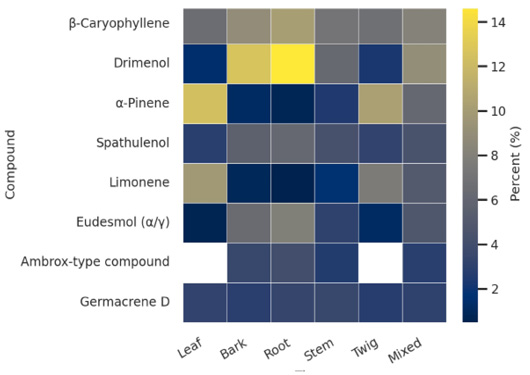
Gas chromatography coupled with mass spectrometry detected numerous volatile substances in various sections of Drimys piperita - such as leaves, bark, roots, stems, twigs, and a combination of organs. Highlighted in Table 1 are key volatiles present above 2% of the total peak area observed. Monoterpenes, sesquiterpenes, oxygen-rich derivatives, and modified forms of these were identified as the eight primary compounds. The results showed clear organ-specific variation; each organ contained a different combination and proportion of chemicals. Shifts were evident when comparing quantities across tissues, indicating distinct metabolic roles in various regions. Monoterpene abundance was higher in aerial organs such as leaves and twigs, whereas oxygenated sesquiterpenes predominated in bark and root tissues. The mixed-organ sample displayed an intermediate profile, reflecting contributions from both aerial and underground tissues. The mixed-organ sample showed an intermediate profile, reflecting contributions from both aerial and underground tissues.
Table 1: Major volatile compounds (>2% relative abundance) detected in D. piperita organs.
Compound
Class
Leaf (%)
Bark (%)
Root (%)
Stem (%)
Twig (%)
Mixed (%)
α-Pinene
Monoterpene
12.4
1.2
0.8
2.5
10.3
6.1
Limonene
Monoterpene
9.8
0.9
0.5
1.7
7.6
5.0
β-Caryophyllene
Sesquiterpene
6.5
8.9
10.2
7.1
6.8
8.1
Drimenol
Oxygenated sesquiterpene
1.5
12.7
14.8
6.2
2.3
9.0
Eudesmol (α/γ)
Oxygenated sesquiterpene
0.7
6.4
7.9
3.1
1.2
4.8
Spathulenol
Oxygenated sesquiterpene
2.8
5.6
6.1
4.3
3.2
4.5
Germacrene D
Sesquiterpene
3.2
2.9
3.4
3.5
2.7
3.1
Ambrox-type compound
Sesquiterpene derivative
–
3.5
4.1
2.6
–
2.8
Note: Values are expressed as mean relative abundance (% area) of triplicate analyses.
Distribution of monoterpenes across plant organs
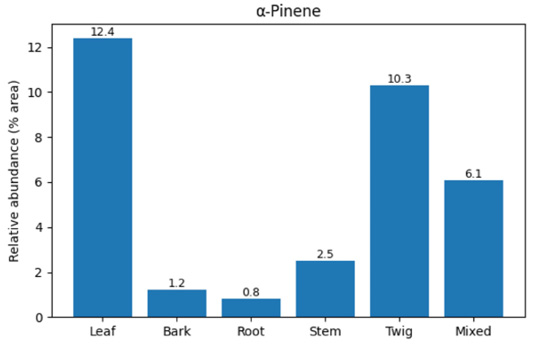
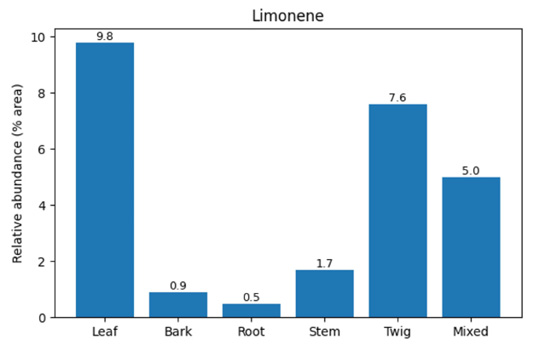
Two monoterpenes, α-pinene and limonene (Figures 1 and 2), were found as major components in several parts, with the highest relative abundances in leaf and twig samples (Table 1). In leaves, α-pinene made up 12.4% of the total volatile fraction, making it the most prevalent compound in this part. Limonene was also present at a high level in leaves, accounting for 9.8% of the total.
Twig samples showed a similar but slightly lower level compared to leaves, with α-pinene at 10.3% and limonene at 7.6% of the total volatile profile. In contrast, bark, root, and stem tissues had much lower levels of monoterpenes. α-Pinene was found at 1.2% in bark, 0.8% in roots, and 2.5% in stems, while limonene was recorded at 0.9%, 0.5%, and 1.7%, respectively. In the mixed-organ sample, α-pinene and limonene were present at intermediate levels of 6.1% and 5.0%, respectively. These findings show that monoterpenes are concentrated in aerial tissues, with lower abundance in structural and underground organs.
Sesquiterpene compounds and their organ-specific patterns
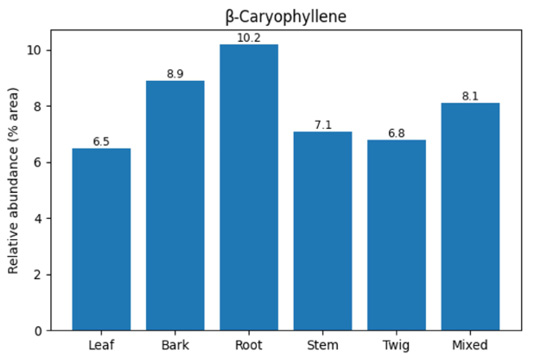
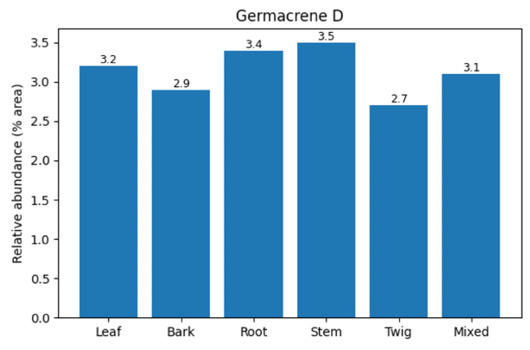
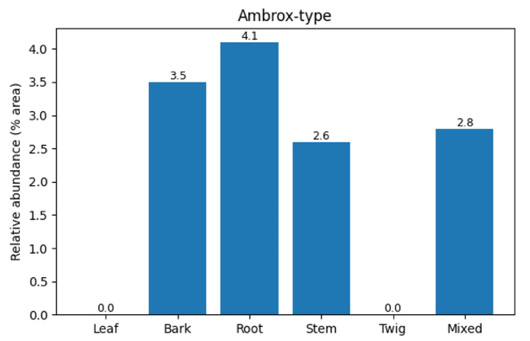
Sesquiterpenes accounted for a significant portion of the volatile profiles in all plant organs. β-Caryophyllene was consistently detected across all parts and showed the narrowest inter-organ range among the major sesquiterpenes detected, spanning 6.5%–10.2% across all organs. The highest level of β-caryophyllene was found in root samples at 10.2% of the total volatile fraction (Figure 3). Bark samples also had high levels at 8.9%, followed by mixed-organ samples at 8.1%, stems at 7.1%, twigs at 6.8%, and leaves at 6.5%. Germacrene D was found in all organs with fairly stable levels. The highest amount was in stem tissue at 3.5%, followed closely by roots at 3.4%, leaves at 3.2%, mixed samples at 3.1%, bark at 2.9%, and twigs at 2.7% (Figure 4). The consistent presence of germacrene D suggests that this compound is a key sesquiterpene found in D. piperita, regardless of the organ. An unidentified oxygenated sesquiterpene (tentatively identified, SI = 782) was found in bark, roots, stems, and mixed samples, but not in leaves or twigs. The highest concentration was in root samples at 4.1%, followed by bark at 3.5%, mixed organs at 2.8%, and stems at 2.6% (Figure 5). The absence of this compound in aerial tissues highlights the strong organ-specificity in woody and underground structures.
Oxygenated sesquiterpenes as dominant constituents in bark and roots
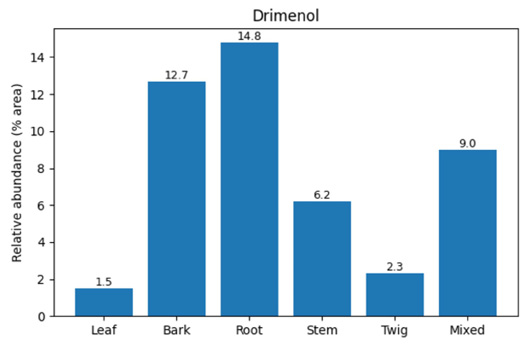
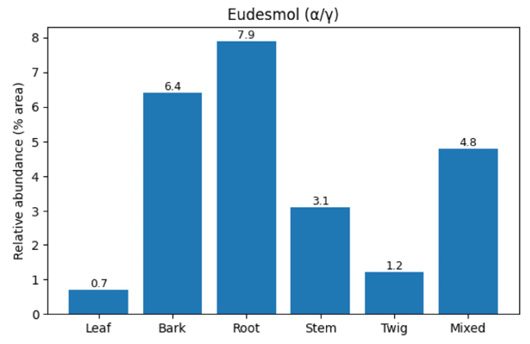
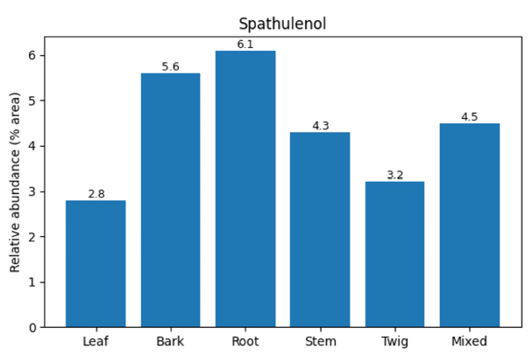
Oxygenated sesquiterpenes were the main chemical group in bark and root samples. Drimenol was particularly abundant in these parts, reaching 14.8% in roots and 12.7% in bark, making it the most dominant compound in both areas (Figure 6). In stems, drimenol was detected at 6.2%, while in mixed samples it accounted for 9.0%. In contrast, leaves and twigs showed relatively low levels of drimenol, at 1.5% and 2.3%, respectively. Eudesmol isomers (α and γ) showed a similar pattern. Roots exhibited the highest level at 7.9%, followed by bark at 6.4%, mixed organs at 4.8%, stems at 3.1%, twigs at 1.2%, and leaves at 0.7% (Figure 7). The low amounts of eudesmol in leaves and twigs contrast sharply with its higher concentrations in bark and root tissues. Spathulenol was found in all parts at levels above 2%. Root samples had the highest levels at 6.1%, followed by bark at 5.6%, mixed organs at 4.5%, stems at 4.3%, twigs at 3.2%, and leaves at 2.8% (Figue 8). Compared to other oxygenated sesquiterpenes, spathulenol showed a wider distribution across different types of organs, although it was still more abundant in underground and woody tissues.
Comparative analysis between aerial and subterranean organs
A clear difference was observed between aerial organs (leaves and twigs) and underground and structural organs (bark, roots, and stems). Aerial tissues had higher amounts of monoterpenes, especially α-pinene and limonene, which together made up 22.2% of the total volatile content in leaves and 17.9% in twigs. In contrast, these compounds accounted for less than 3% in roots and bark. The underground and woody parts were dominated by oxygenated sesquiterpenes and their derivatives. In roots, drimenol, eudesmol, and spathulenol together accounted for 28.8% of the total volatile fraction, while in bark, they accounted for 24.7%. Stems had an intermediate profile, with these three compounds together accounting for 13.6%. The mixed-organ sample reflected contributions from both categories, with monoterpenes (α-pinene and limonene) totaling 11.1% and oxygenated sesquiterpenes (drimenol, eudesmol, and spathulenol) totaling 18.3%. This intermediate composition suggests that mixed samples provide a broader view of the plant’s volatile chemistry.
Dominant compounds and relative contribution
In all organs, β-caryophyllene was a key component, accounting for 6.5%-10.2% of the volatile profile. Drimenol showed significant variation, ranging from 1.5% in leaves to 14.8% in roots. α-Pinene also varied notably, ranging from 12.4% in leaves to less than 1% in roots. The combined contribution of the eight major compounds listed in Table 1 made up a large part of the total volatile fraction in each organ. In roots, these compounds together accounted for over 50% of the total detected volatile content, while in leaves and twigs they accounted for about 40-45%. This indicates that a small number of dominant compounds shape the main volatile profile of D. piperita organs (Figure 9).
DISCUSSION
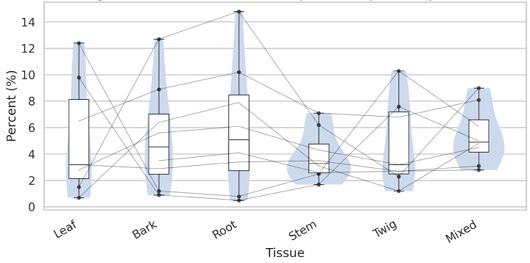
The current study shows clear differences in the volatile chemical composition of Drimys piperita across various organs, as seen in the GC-MS analysis of leaves, bark, roots, stems, twigs, and mixed organs (Figure 10). This variation aligns with the basic idea that plants regulate the production of secondary metabolites based on tissue function, environmental factors, and defense needs ; . The high levels of monoterpenes in aerial parts and of oxygenated sesquiterpenes in woody and underground tissues reflect organ-specific patterns of metabolite accumulation. This pattern may be relevant to the reported traditional veterinary applications, though direct pharmacological testing is required to confirm any bioactivity of this species ; .
The notable levels of α-pinene and limonene in leaves and twigs, as shown in Table 1, reflect a typical chemical profile in aromatic plants. These volatile monoterpenes act as fast-acting defense compounds against herbivores, insects, and microbes ; . These compounds evaporate easily, creating a chemical barrier around aerial tissues. This action reduces the chances of pathogen infection and insect feeding ; . From a veterinary standpoint, this chemical profile supports the traditional use of leaves for topical treatments, fumigation, or repellent, especially in livestock settings where external parasites and insect vectors significantly contribute to disease spread ; .
α-Pinene, which comprises 12.4% of leaves and 10.3% of twigs, has been shown to have antibacterial, antifungal, and anti-inflammatory effects, including activity against pathogens that cause skin and respiratory infections in animals ; . Limonene, found at 9.8% in leaves and 7.6% in twigs, is recognized for its antimicrobial and insect-killing properties, and it has relatively low toxicity to mammals ; . The presence of these monoterpenes together suggests a cooperative chemical defense system. This may help explain the effectiveness of leaf-based treatments in ethnoveterinary practices ; .
In contrast to aerial tissues, bark and root samples mostly contained oxygenated sesquiterpenes, especially drimenol and eudesmol isomers. Together, these compounds accounted for a significant portion of the volatile fraction (Table 1). These compounds are more complex and less volatile than monoterpenes. As a result, they can persist longer in plant tissues exposed to soil-borne pathogens and mechanical stress ; . Oxygenated sesquiterpenes often have antifungal, antiparasitic, and anti-inflammatory effects, making them especially useful in veterinary medicine for treating chronic infections and parasitic diseases ; .
Drimenol, detected at 14.8% in roots and 12.7% in bark, is a drimane-type sesquiterpenoid. It has been studied for its antimicrobial and antifungal properties ; . Drimane sesquiterpenes can disrupt microbial cell membranes and prevent fungal growth, including species that impact livestock health ; . The high levels of drimenol in root and bark tissues may explain why these parts are traditionally used as tonics or remedies for systemic issues in animals, where lasting antimicrobial effects are needed ; .
Eudesmol isomers, found at 7.9% in roots and 6.4% in bark, further highlight the specialized functions of underground tissues. These compounds are known for their sedative, anti-inflammatory, and antimicrobial effects. They have also been studied for their effects on the immune and nervous systems ; . In veterinary practice, these properties are important for treating inflammation, pain, and stress-related conditions, especially in livestock facing environmental or physiological pressures ; .
Spathulenol, detected in all organs but most abundant in bark and roots, is another oxygenated sesquiterpene known for its biological activity. Research shows that spathulenol has antimicrobial, antioxidant, and anti-inflammatory effects. Its wide distribution suggests it plays a general protective role throughout the plant ; . The consistent presence of spathulenol across various tissues supports the idea that D. piperita employs both targeted and broad chemical defenses, which may enhance its overall ability to withstand biological stress ; .
β-Caryophyllene emerged as a key compound across all plant parts, with relative amounts ranging from 6.5% to 10.2% (Table 1). This sesquiterpene is particularly important in veterinary medicine because it interacts with cannabinoid CB2 receptors. This interaction leads to anti-inflammatory and pain-relieving effects without causing any psychoactive responses ; . Although it was initially studied in mammals, β-caryophyllene has attracted interest in veterinary phytotherapy as a natural modulator of inflammation and immune responses ; . Its widespread presence in D. piperita suggests that several plant parts may provide anti-inflammatory benefits when used in traditional remedies.
Germacrene D, found consistently across all parts at moderate levels, is another sesquiterpene known for its antimicrobial and insecticidal properties ; . Although its relative amount was lower than that of β-caryophyllene or drimenol, its widespread occurrence suggests it plays a supporting role in the plant’s overall chemical defense strategy. In veterinary settings, such compounds may enhance the overall effectiveness when included in complex mixtures of phytochemicals ; .
The unidentified oxygenated sesquiterpene (tentative) found only in bark, roots, stems, and mixed samples highlights the chemical specialization of non-aerial tissues. Compounds like this are often linked to woody tissues and associated with antimicrobial properties and fixative qualities that help stabilize other active compounds ; . Their absence from leaves and twigs suggests a focused accumulation in parts that require long-lasting chemical stability, such as bark and roots, which are exposed to soil microorganisms ; .
The differences between the parts above and below ground noted in this study match broader patterns observed in medicinal plants. In such plants, volatile monoterpenes typically dominate the photosynthetic tissues, while sesquiterpenes accumulate in structural or storage tissues ; . From an ethnoveterinary perspective, this distinction supports the selective use of plant parts for specific effects, such as using leaves for topical or repellent purposes and bark or roots for systemic treatments ; .
The mixed-organ sample showed a chemical profile that included both monoterpenes and oxygenated sesquiterpenes. This pattern is important because traditional remedies often use whole plants or mixed parts instead of isolated organs. The presence of both quick-acting volatile monoterpenes and longer-lasting sesquiterpenes may yield combined biological effects, thereby improving overall effectiveness in ethnoveterinary practice ; .
The interaction between plant secondary metabolites is increasingly recognized as an important factor in the success of traditional herbal remedies. In veterinary use, these interactions can lower the required dose of individual compounds, reduce toxicity, and decrease the risk of pathogen resistance. The chemical diversity found in D. piperita supports its potential as a source of multi-target plant-based medicine ; .
While the findings give useful information, numerous limitations must be addressed. GC–MS spectrum matching and relative abundance analysis were used for substance identification; these techniques are suitable for initial screening but inadequate for determining amounts or verifying molecular stereochemistry. Instead of being empirically verified through controlled tests, biological effects were inferred from established properties of identified substances. Subsequent research could strengthen these findings by incorporating functional evaluations of animal health such as antimicrobial activity, antiparasitic efficacy, modulation of inflammatory markers, or antioxidant capacity to connect phytochemical data to physiologically relevant endpoints .
Furthermore, seasonal fluctuations, edaphic conditions, and developmental stage all affect plant secondary metabolite biosynthesis, which were not examined in this study. Furthermore, n-hexane as a non-polar solvent preferentially extracts non-polar terpenes and may underrepresent oxygenated terpenoids and polar volatile compounds. The volatile profiles reported herein therefore reflect n-hexane-extractable volatiles only. Future studies should employ complementary extraction using solvents of intermediate polarity (e.g., ethyl acetate or dichloromethane) or headspace solid-phase microextraction (HS-SPME) to obtain a more comprehensive volatile profile. Future studies that include these environmental and phenological characteristics would better understand phytochemical variability and help develop more reliable, repeatable phytogenic therapies for veterinary applications ; .
The specific volatile profiles of Drimys piperita found in this study provide strong chemical evidence for its traditional use and highlight its potential in veterinary phytotherapy. The presence of monoterpenes in aerial parts and oxygenated sesquiterpenes in the bark and roots indicates a complex chemical defense system with potential applications in antimicrobial, anti-inflammatory, and antiparasitic treatments ; . These findings lay a solid foundation for future functional studies and add to the growing body of evidence supporting the use of plant-derived compounds as sustainable resources in veterinary medicine.
CONCLUSION
This study provides a detailed analysis of the volatile chemical composition of Drimys piperita at the organ level using GC–MS. The results show differences in the relative abundance of volatile compounds across plant organs, though these should be interpreted as descriptive trends pending further confirmation with larger sample sizes. Leaves and twigs mainly contain monoterpenes like α-pinene and limonene. In contrast, bark and roots have higher levels of oxygenated sesquiterpenes, particularly drimenol and eudesmol isomers. Sesquiterpenes such as β-caryophyllene and germacrene D were found in all organs, suggesting they are important components of the species’ volatile profile. The mixed-organ sample showed an intermediate composition, reflecting contributions from both above-ground and below-ground parts. These findings may provide a basis for future investigation of the traditional uses of D. piperita and emphasize its potential value in veterinary phytotherapy. Plant material was collected from a single location (Distrik Anggi) during one season (dry season, February 2024). Volatile metabolite profiles may vary with altitude, soil type, microclimate, and seasonal factors; multi-site and multi-season sampling is recommended. Future investigations should also prioritize: (1) in vitro antimicrobial testing against common livestock pathogens (e.g., Staphylococcus aureus, Escherichia coli, Pasteurella multocida); (2) antiparasitic assays against gastrointestinal nematodes relevant to ruminant health; and (3) anti-inflammatory bioassays using appropriate animal models to validate the traditional use of bark and root preparations.
ACKNOWLEDGMENTS
This article was supported in part by the Postgraduate Research-Doctoral Dissertation Research Funding from Center for Higher Education Funding (Balai Pembiayaan Pendidikan Tinggi) and Indonesia Endowment Funds for Education (Lembaga Pengelola Dana Pendidikan), with grant number from Keputusan Kepala Pusat Layanan Pendidikan No: 1306/J5.2.3/BPI.06/10/2021. BPI ID Number: 202209092141. We are grateful to the local communities for their assistance during the collection of plant materials. Technical support provided by laboratory staff is also sincerely appreciated.
NOVELTY STATEMENT
This study provides the first comprehensive multi-organ GC-MS volatile profiling of Drimys piperita from Papua. While Cepeda et al. (2021) characterised leaf essential oil composition and Suryanto et al. (2018) reported essential oil composition from leaf material, the present study extends those foundations by systematically characterising and comparing volatile profiles across six distinct plant organs (leaves, bark, stems, roots, twigs, and mixed organs), revealing organ-specific chemical differentiation not previously described in this species. This research supports the local Papuan government’s efforts to preserve the akway tree, a native species of Papua.
AUTHOR’S CONTRIBUTION
DN and IR conceptualized the study and performed the formal analysis. DN also developed the methodology and prepared the original draft of the manuscript. AS and PS were responsible for data curation, while PS also contributed to the methodology. YPK and TU contributed to the methodological supervision of the study. AS, PS, YPK, TU, and ADW supervised the research process. ADW and IR contributed to conceptualization, formal analysis, and manuscript review and editing. All authors have read and approved the final version of the manuscript.
Generative AI and AI-assisted technology statement
During the preparation of this manuscript, the authors used only AI-based tools for language editing and grammar checking. The authors reviewed and edited the content as needed and take full responsibility for the content of this publication.
Conflict of interest
The authors have declared no conflict of interest.
Figures
Figure 1:.
Organ-specific distribution of α-pinene in Drimys piperita. The bar chart shows the relative abundance (% area) of α-pinene detected by GC-MS in different plant organs of D. piperita. α-Pinene was mainly found in leaves (12.4%) and twigs (10.3%), with lower levels in bark, root, and stem tissues. These values represent the average relative abundance from three analyses.
Figure 2:.
Limonene distribution in Drimys piperita is organ-specific. The relative abundance of limonene across six plant organs was evaluated using GC-MS. Limonene was most plentiful in leaves (9.8%) and twigs (7.6%), whereas bark and root samples had low quantities. The data are provided as the mean percent area of triplicate runs.
Figure 3:.
Drimys piperita exhibits organ-specific distribution of β-caryophyllene. The bar chart depicts the relative quantity of β-caryophyllene in leaf, bark, root, stem, twig, and mixed organ samples. The roots and bark had the highest quantities (10.2% and 8.9%, respectively). This suggests a tendency for accumulating in subterranean and woody tissues.
Figure 4:.
Germacrene D distribution in Drimys piperita is organ-specific. Germacrene D was relatively abundant throughout organs, ranging from 2.7% to 3.5%. This exhibits a more even dispersion than other sesquiterpenes.
Figure 5:.
Drimys piperita exhibits organ-specific distribution of an unidentified oxygenated sesquiterpene (tentative). GC-MS analysis shows the presence of a tentatively identified oxygenated sesquiterpene mainly in root (4.1%) and bark (3.5%) tissues. The values represent the average relative abundance from triple analyses.
Figure 6:.
Drimenol distribution in Drimys piperita is organ-specific. Drimenol levels are significantly higher in root (14.8%) and bark (12.7%) tissues compared to leaves and twigs, according to GC-MS analysis. These findings highlight the organ-specific synthesis of oxygenated sesquiterpenes.
Figure 7:.
Drimys piperita exhibits organ-specific distribution of eudesmol (α/γ). The relative abundance (% area) of eudesmol isomers varies by plant organ. Root samples showed the highest concentration (7.9%). Bark and mixed organ extracts were then tested, demonstrating that accumulation patterns vary by tissue type.
Figure 8:.
Spathulenol distribution in Drimys piperita is organ-specific. The bar chart depicts the distribution of spathulenol across several organs. Root samples (6.1%) and bark samples (5.6%) exhibited higher concentrations than aerial tissues. This corresponds to the profile of sesquiterpene-rich woody organs.
Figure 9:.
Heatmap showing the relative abundance (%) of major volatile compounds across different plant tissues (leaf, bark, root, stem, twig, and mixed samples). Color intensity reflects compound percentage, highlighting tissue-specific distribution patterns, including higher drimenol levels in bark and root and increased monoterpenes in leaf and twig tissues.
Figure 10:.
Paired dot–line plot with violin and boxplot overlays showing the distribution (%) and trajectories of major volatile compounds across plant tissues (leaf, bark, root, stem, twig, and mixed samples). Individual compound values are connected across tissues to illustrate organspecific variation, while violins and boxplots summarize overall distribution and central tendency within each tissue.
References
Castro C, Silva LM, Oliveira AS, Costa EV (2019). Drimane sesquiterpenoids: Occurrence, structural diversity, and biological activities. Phytochem. Rev., 18(2): 387–414.
Cepeda GN, Cabrera JL, Cuenca MR (2021). Chemical composition and biological activities of essential oils from the genus Drimys (Winteraceae): A review. Industr. Crops Prod., 171, 113930.
Dewi RT, Faramayuda F, Hermanto R, Suryani S (2024). Phytochemical screening and antioxidant activity of Drimys piperita Hook. f. bark extract from Papua, Indonesia. J. Appl. Pharmac. Sci., 14(2): 123–131.
Fidyt K, Fiedorowicz A, Strządała L, Szumny A (2016). β-Caryophyllene and β-caryophyllene oxide—Natural compounds of anticancer and analgesic properties. Cancer Med., 5(10): 3007–3017. https://doi.org/10.1002/cam4.816[CrossRef]
Garuda SH (2024). Antibacterial activity of Drimys piperita leaf extract against selected Gram-positive and Gram-negative bacteria. Indones. J. Vet. Sci., 18(1): 45–52.
Gertsch J, Leonti M, Raduner S, Racz I, Chen JZ, Xie XQ, Altmann KH, Karsak M, Zimmer A (2008). Beta-caryophyllene is a dietary cannabinoid. Proc. Natl. Acad. Sci. U.S.A., 105(26): 9099–9104. https://doi.org/10.1073/pnas.0803601105[CrossRef]
Hermanto R, Faramayuda F (2025). Ethnobotanical documentation of medicinal plants used by indigenous Papuan communities. J. Ethnopharmacol., 326: 117116.
Jasmi (2017). Ethnoveterinary practices and their role in sustainable livestock production systems. Indones. J. Anim. Vet. Sci., 22(3): 145–154. https://doi.org/10.31248/JASVM2018.109[CrossRef]
Klauke AL, Racz I, Pradier B, Markert A, Zimmer AM, Gertsch J, Zimmer A (2014). The cannabinoid CB2 receptor-selective phytocannabinoid β-caryophyllene exerts analgesic effects in mouse models of inflammatory and neuropathic pain. Euro. Neuropsychopharmacol., 24(4): 608–620. https://doi.org/10.1016/j.euroneuro.2013.10.008[CrossRef]
Marchese A, Arciola CR, Barbieri R, Silva AS, Nabavi SF, Tsetegho Sokeng AJ, Izadi M, Jafari NJ, Suntar I, Daglia M, Nabavi SM (2017). Update on monoterpenes as antimicrobial agents: A particular focus on p-cymene. Materials, 10(8): 947. https://doi.org/10.3390/ma10080947[CrossRef]
McGaw LJ, Eloff JN (2018). Ethnoveterinary use of southern African medicinal plants: A review. J. Ethnopharmacol., 214: 232–247.
Navarro G, Salinas-Sánchez DO, Céspedes CL (2024). Plant secondary metabolites as alternatives to synthetic antimicrobials in veterinary medicine. Vet. Res. Commun., 48(1): 1–15.
Padalia RC, Verma RS, Chauhan A, Chanotiya CS (2015). Changes in aroma profiles of 11 Indian Ocimum taxa during plant ontogeny. Acta Physiol. Plant., 37(5): 1–14.
Pavela R, Benelli G (2016). Essential oils as ecofriendly biopesticides? Challenges and constraints. Trends Plant Sci., 21(12): 1000–1007. https://doi.org/10.1016/j.tplants.2016.10.005[CrossRef]
Pichersky E, Raguso RA (2018). Why do plants produce so many terpenoid compounds? New Phytol., 220(3): 692–702. https://doi.org/10.1111/nph.14178[CrossRef]
Regnault-Roger C, Vincent C, Arnason JT (2018). Essential oils in insect control: Low-risk products in a high-stakes world. Annu. Rev. Entomol., 63: 321–338.
Salatnaya H, Widyastuti S, Suryanto D (2019). Ethnoveterinary medicinal plants used for livestock health management in rural Indonesia. Vet. World, 12(12): 1946–1954.
Salehi B, Sharifi-Rad J, Quispe C, Llaique H, Villalobos M, Smeriglio A, Trombetta D, Ezzat SM, Salem MA, Sharifi-Rad M (2019). Insights into Eucalyptus genus chemical constituents, biological activities and health-promoting effects. Trends Food Sci. Technol., 91: 609–624. https://doi.org/10.1016/j.tifs.2019.08.003[CrossRef]
Salehi B, Upadhyay S, Erdogan Orhan I, Jugran AK, Jayaweera SLD, Dias DA, Sharopov F, Taheri Y, Martins N, Baghalpour N, Sharifi-Rad J (2020). Therapeutic potential of α- and β-pinene: A miracle gift of nature. Biomolecules, 9(11): 738. https://doi.org/10.3390/biom9110738[CrossRef]
Sharifi-Rad J, Sureda A, Tenore GC, Daglia M, Sharifi-Rad M, Valussi M, Tundis R, Sharifi-Rad M, Loizzo MR, Ademiluyi AO, Sharifi-Rad R (2017). Biological activities of essential oils: From plant chemoecology to traditional healing systems. Molecules, 22(1): 70. https://doi.org/10.3390/molecules22010070[CrossRef]
Silva LM, Alves DR, Castro C, Costa EV (2020). Antifungal activity of drimane sesquiterpenes and derivatives: A review. J. Appl. Microbiol., 129(2): 245–259.
Sparkman OD, Penton ZE, Kitson FG (2011). Gas chromatography and mass spectrometry: A practical guide (2nd ed.). Academic Press. https://doi.org/10.1016/B978-0-12-373628-4.00002-2[CrossRef]
Suryanto D, Salatnaya H, Widyastuti S (2018). Essential oil composition of Drimys piperita Hook. f. from Papua and its potential biological activity. Biodiversitas, 19(5): 1891–1897.
Tholl D (2015). Biosynthesis and biological functions of terpenoids in plants. Adv. Biochem. Engin. Biotechnol., 148: 63–106. https://doi.org/10.1007/10_2014_295[CrossRef]
Yang Y, Wang J, Li X, Zhang H (2020). Terpenoids from medicinal plants: Chemical diversity, biosynthesis, and biological functions. Nat. Prod. Rep., 37(6): 761–786.
Yang Y, Wang J, Li X, Zhang H (2024). Terpenoids from medicinal plants: Structural diversity, biosynthesis and biological functions. Phytochemistry, 219: 113697.