Research Article · Volume 41, Issue 2, 2 October 2026 · Open Access
Effect of Fasciolosis on Production Performance, Liver Function, and Hematology in Local and Crossbreed Dairy Cows in District Peshawar
· · · · · · · · ·
Affiliations & Notes ⌄
1Department of Livestock Management, Breeding and Genetics, The University of Agriculture, Peshawar, Pakistan 2Arid Zone Small Ruminants Research Institute, Ghulam Banda, Kohat, Pakistan 3College of Veterinary Sciences, Faculty of Animal Husbandry and Veterinary Sciences, The University of Agriculture, Peshawar, Pakistan 4Faculty of Veterinary Sciences, The University of Veterinary and Animal Sciences Swat, 19201, Pakistan 5Department of Veterinary and Animal Sciences, Faculty of Livestock and Ra
The body condition score (BCS), milk yield (MY), hemoglobin, packed cell volume (PCV), and total red blood cells (TRBCs) were significantly higher in the local non-infected dairy cows than in the local infected dairy cows.
The local dairy cows showed little loss in BCS compared to the crossbred cattle.
The present study demonstrated that naturally occurring Fasciolosis adversely affects the productive performance and physiological status of both local and crossbred dairy cows.
Fasciola-infected animals exhibited reduced milk yield and body condition score, accompanied by significant alterations in liver enzyme activities and hematological parameters.
Selected from the article's own text.
Abstract
These studies investigated the susceptibility of local and crossbreed cows to Fasciolosis and documented the resulting loss in productivity, liver function, and hematology. One hundred dairy cows, consisting of an equal number of local and cross-breed animals, with each breed represented by 40 Fasciola-infected and 10 non-infected animals at the 2nd to 5th lactation stages, were selected. Results showed significantly higher body condition score (BCS), milk yield, hemoglobin, packed cell volume, and total red blood cell counts in local and crossed-breed non-infected dairy cows than in local and crossed-breed fasciola-infected dairy cows. Aspartate aminotransferase (AST), Alanine aminotransferase (ALT), total bilirubin (TB), total leukocyte count (TLC), lymphocyte cells, neutrophils, monocytes, and eosinophils had significantly higher values in the local and crossed breed fasciola-infected dairy cows than in the local and crossed breed non-infected dairy cows. It is concluded that Fasciolosis significantly reduced body condition score, milk yield, hemoglobin concentration, packed cell volume, and red blood cell count, while increasing liver enzyme activities and leukocyte counts in both local and crossbreed dairy cows.
Novelty Statement | This study aims to make a comparative assessment of naturally occurring Fasciolosis in local and crossbred dairy cows in Peshawar, Pakistan, using a field approach. Concurrently assessing production performance, liver function and hematological changes giv es breed specific information on the physiological and productive effects of Fasciola infection in local farming systems.
Introduction
A large population is involved in Livestock in Pakistan due to local conditions, as livestock seems well adapted and includes some of the best tropical breeds (Wajid et al., 2026). For livestock sector development, the government provides opportunities for the private and government sectors by installing modern technology and new technical methods (Pakistan Economic Survey, 2021-22). Pakistan’s livestock faces significant challenges, including harsh climatic conditions, fodder scarcity, and disease ; Ul-Hassan et al., 2025). Among various diseases, Fasciolosis is a primary threat to the livestock population.
Worldwide, the parasitic disease Fasciolosis, caused by Fasciola hepatica and Fasciola gigantica (trematodes), affects ruminants such as cattle, buffaloes, sheep, goats, and pigs, and also infects humans. Ruminants with liver damage experience decreased production of meat, milk, and wool, leading to fertility issues, secondary bacterial infections, and high treatment costs . The economic significance of Fasciolosis has two types of loss: direct and indirect. The direct losses are low weight gain, low milk production, and poor reproductive performance in animals, while the indirect losses include reproductive problems, poor growth rate in young animals, and pathological and biochemical ovarian conditions ; Wajid et al., 2026). It was found that 58.4% of repeat-breeder cattle are positive for Fasciola hepatica . Fasciolosis directly affects body condition, as Fasciola-infested animals are thin and emaciated.
Body condition scoring is a management tool used to assess the nutritional and energy status of cattle. We can enhance cattle production efficiency by timely treatment against Fasciolosis with anthelmintics and by adjusting the nutritional program, thereby achieving good body condition scores (BCS) at different stages of production. BCS allows extension personnel, researchers, and producers to communicate more effectively about the herd’s nutritional status .
The analysis of blood parameters in domestic animals is performed for the diagnosis of different diseases, such as infectious, parasitic, and systemic, and blood parameters give information about the treatment response, severity of disease, and its effects on the systems of an animal or group of animals ; . Hematological parameters can vary with factors such as age, breed, sex, reproductive status, feeding, circadianvariations, the restraint procedure for blood collection, and health status ; . There are many liver enzymes detected in the laboratory for liver dysfunction, which are aspartate aminotransferase (AST), dehydrogenase (SDH), serum γ-glutamyl transpeptidase or transferase (GGT), bilirubin, ALT, and bile acids are generally used to detect hepatic disorder and infectious disease in all animals.
Despite the economic importance of dairy cattle in Pakistan, limited information is available on the impact of Fasciolosis on production performance, liver function, and hematological characteristics of local and crossbred dairy cows under field conditions in Peshawar district. Therefore, the present study was conducted to evaluate the effects of naturally occurring Fasciolosis on milk production, body condition score, liver enzyme activities, and hematological parameters in local and crossbred dairy cows.
Materials and Methods
Study location
The study was conducted in the irrigated areas of Peshawar district, Khyber Pakhtunkhwa (Badha Ber, Chamkani, and Bakhshoo bridge areas). The crossbred and local cattle breeds were used as experimental animals to establish reference values for hematology and biochemistry. All samples were processed at the Center of Animal Nutrition (Veterinary Research Institute, Peshawar) and the Department of Animal Health, The University of Agriculture, Peshawar, Khyber Pakhtunkhwa, Pakistan.
Experimental design and selection of animals
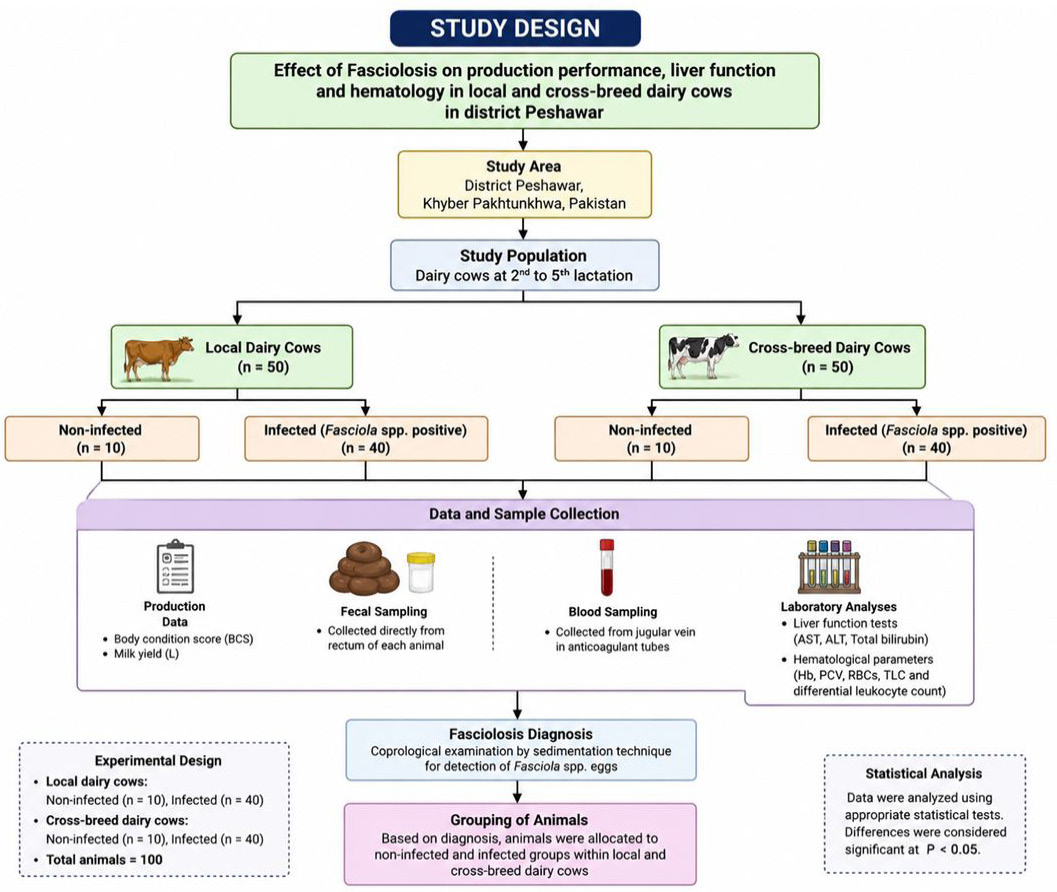
A total of 100 cattle were selected. Eighty cattle (40 local and 40 crossbred) that tested positive for Fasciolosis were selected as infested experimental groups, and 20 healthy cattle (10 local and 10 crossbred) were kept as control groups. All the animals (diseased and controlled) were selected from the peri-urban area of Peshawar, where small farms and household cows are available under similar management conditions. The sample size was determined based on animal availability in the selected endemic areas and to ensure adequate representation of infected and non-infected animals from both local and crossbred dairy cattle populations. A total of 100 cattle provided sufficient observations for comparative statistical analysis of production, biochemical, and hematological variables between groups. Experimental design is presented in Figure 1.
Animals in the stages of 2nd to 5th lactation were selected. In the first phase of the study, blood and fecal samples were collected from healthy cattle that had been previously treated with anthelmintics and were free from both endoparasites and ectoparasites. Those animals showing signs of parasitic infestation were excluded from the study.
A strict screening protocol was used to ensure that any changes in body condition score, milk production, haematology and serum hepatic enzymes were specifically due to Fasciola infection and not other concurrent morbidity and/or management differences.
Microhematocrit and microscopic examination of thin blood smears stained with Giemsa were performed on all experimental and control cows to exclude hemoparasitic infections such as Babesia, Theileria spp. and Anaplasma spp. Fecal samples were also analysed by the McMaster flotation technique to avoid the inclusion of animals that were concurrently infected with a gastrointestinal nematode, cestode, or coccidial infection. Complete clinical checks were performed to rule out animals with systemic bacterial, viral or metabolic disease (mastitis, metritis, respiratory distress, clinical ketosis). In addition, all selected cows (infected and non-infected) were from peri-urban smallholder farms within the same geographic location with similar feeding, watering and management systems, which reduces the confounding effect of dietary variation and the environment.
Diagnosis of Fasciolosis
Fasciolosis was diagnosed through coprological examination of fecal samples using the sedimentation technique. Approximately 5 g of feces was collected directly from each animal’s rectum and processed according to standard parasitological procedures. Samples were examined microscopically for the presence of Fasciola spp. eggs. Animals positive for Fasciola eggs were classified as infected, whereas animals with no detectable eggs and no history of parasitic infestation were considered non-infected controls.
Samples collection
For the hematological study, blood samples (5 mL) from the jugular vein were collected into a sterile test tube containing anticoagulant (EDTA) using 10 mL sterile syringes and examined within 5 hours of collection. For liver function tests, serum was obtained from blood samples without anticoagulants.
Milk yield and body condition score (BCS)
Milk yield was measured twice daily (morning and evening). The body condition score was recorded at weekly intervals according to the standard protocol of Peters and Ball (1987). According to this methodology, the tail and lumber region were estimated for the thickness of fat over them and assigned a score from 1 (emaciated) to 5 (very fat).
Biochemical analysis for liver enzymes
Biochemical analyses of alanine aminotransferase (ALT), aspartate aminotransferase (AST), and total bilirubin were performed on serum samples obtained from Fasciola-infested cattle of crossbreed and local breeds by using a Hitachi 747-200 automated chemistry analyzer (Boehringer-Mannheim Corp, Indianapolis, Indiana, USA).
Hematological analysis
The total erythrocyte count (TEC), hemoglobin concentration (Hb), and packed cell volume (PCV) were calculated in accordance with Lamberg and Rothstein (1977) using standard measures; hematological values were determined. Neubauer hemocytometers were used to determine total white blood cell counts (WBC) and TEC. For red blood cell (RBC) count, Ganti’s fluid was used. For total WBC counts, 2% glacial acetic acid was used as the diluent. The microhematocrit method was used to determine the PCV, and the blood was centrifuged at 12,000 rpm for 5 min. Hb concentrations were determined by the acid-hematin method by using Sahli-Helling’s hemoglobinometer. The differential leucocyte (DLC) was calculated by staining blood smears with Giemsa’s stain.
Statistical analysis
The collected data were entered into Microsoft Excel and analyzed using the Statistical Package for Social Sciences (SPSS) version 20.0 (SPSS Inc., Chicago, IL, USA). Descriptive statistics were calculated, and results were expressed as mean ± standard error of the mean (SEM). Differences in production performance, body condition score, liver enzyme activities, and hematological parameters between Fasciola-infested and non-infested animals within each breed group (local and crossbred dairy cows) were evaluated using the independent-samples t-test. Statistical comparisons were performed separately for local and crossbred cattle to assess the effect of Fasciolosis on the measured variables. A P-value <0.05 was considered statistically significant.
The statistical model used for comparison was:
Yij = μ + Tᵢ + εij
Where; Yij = observed value of the dependent variable, μ = overall mean, Tᵢ = effect of Fasciola infestation status (infested or non-infested), and εij = random experimental error.
Results
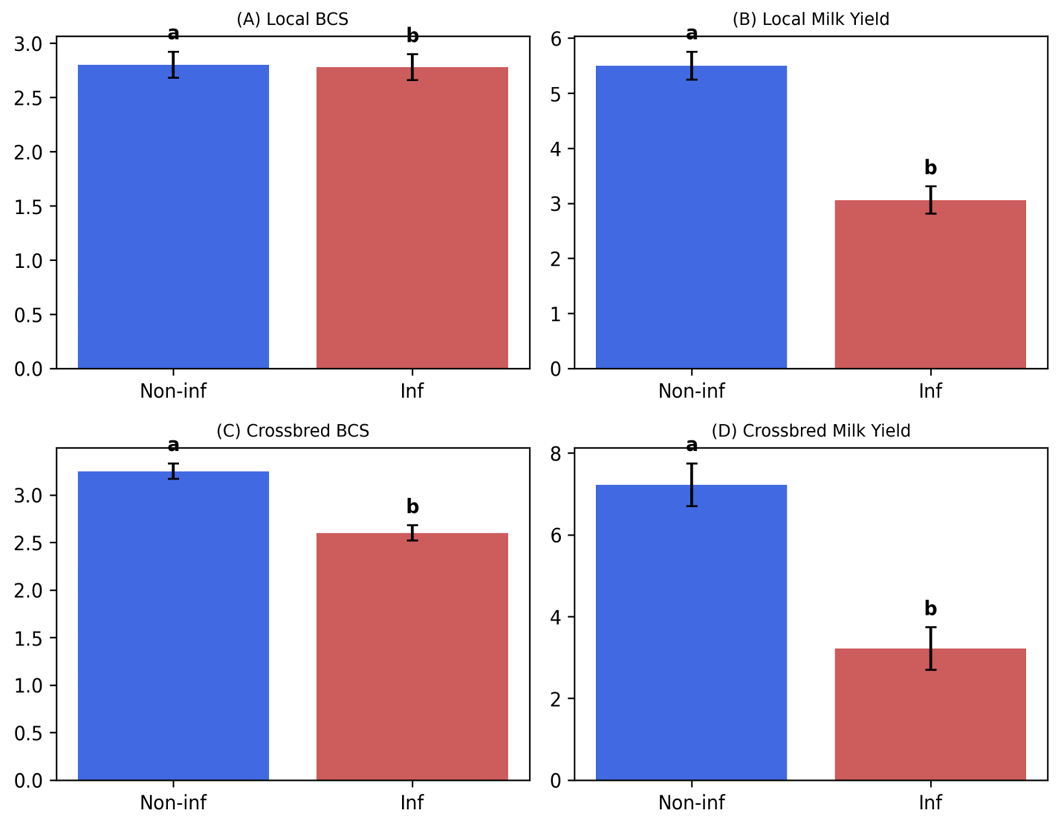
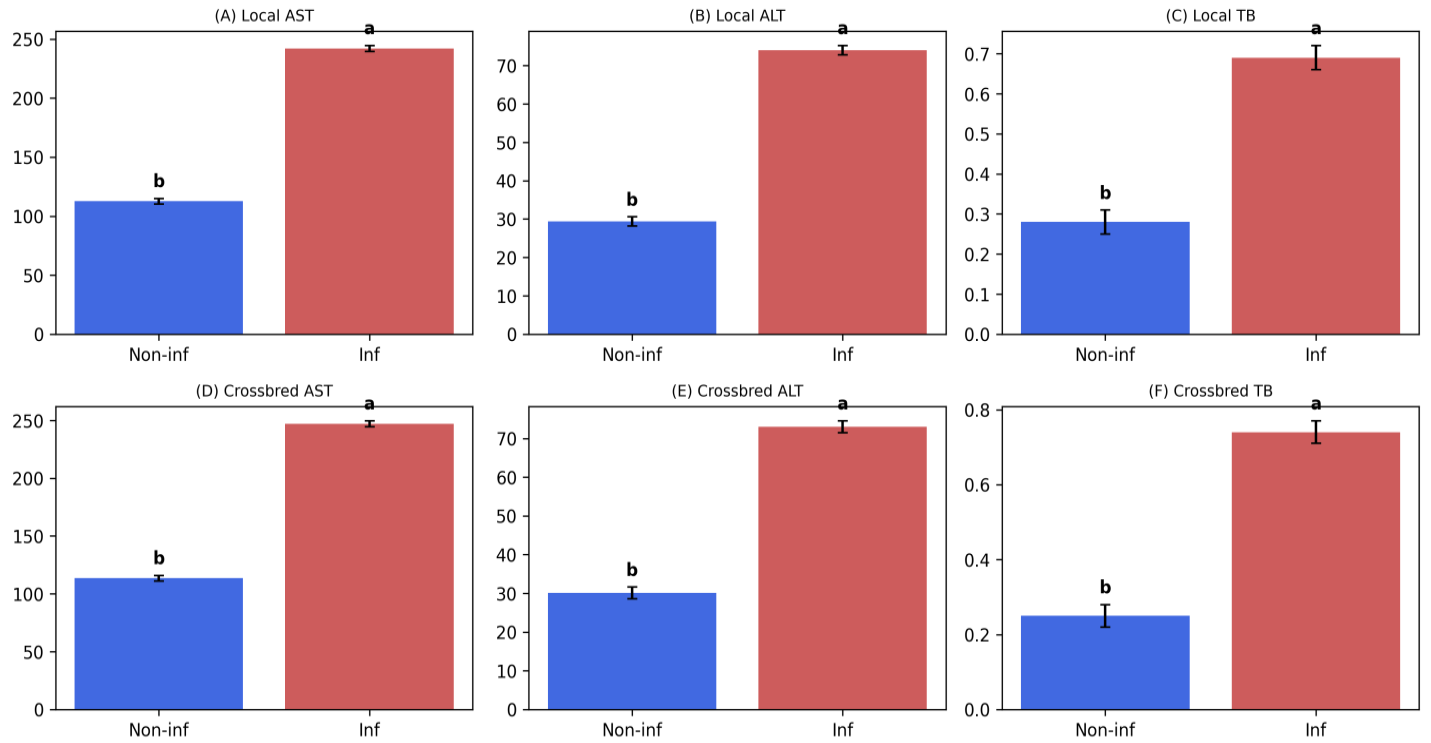
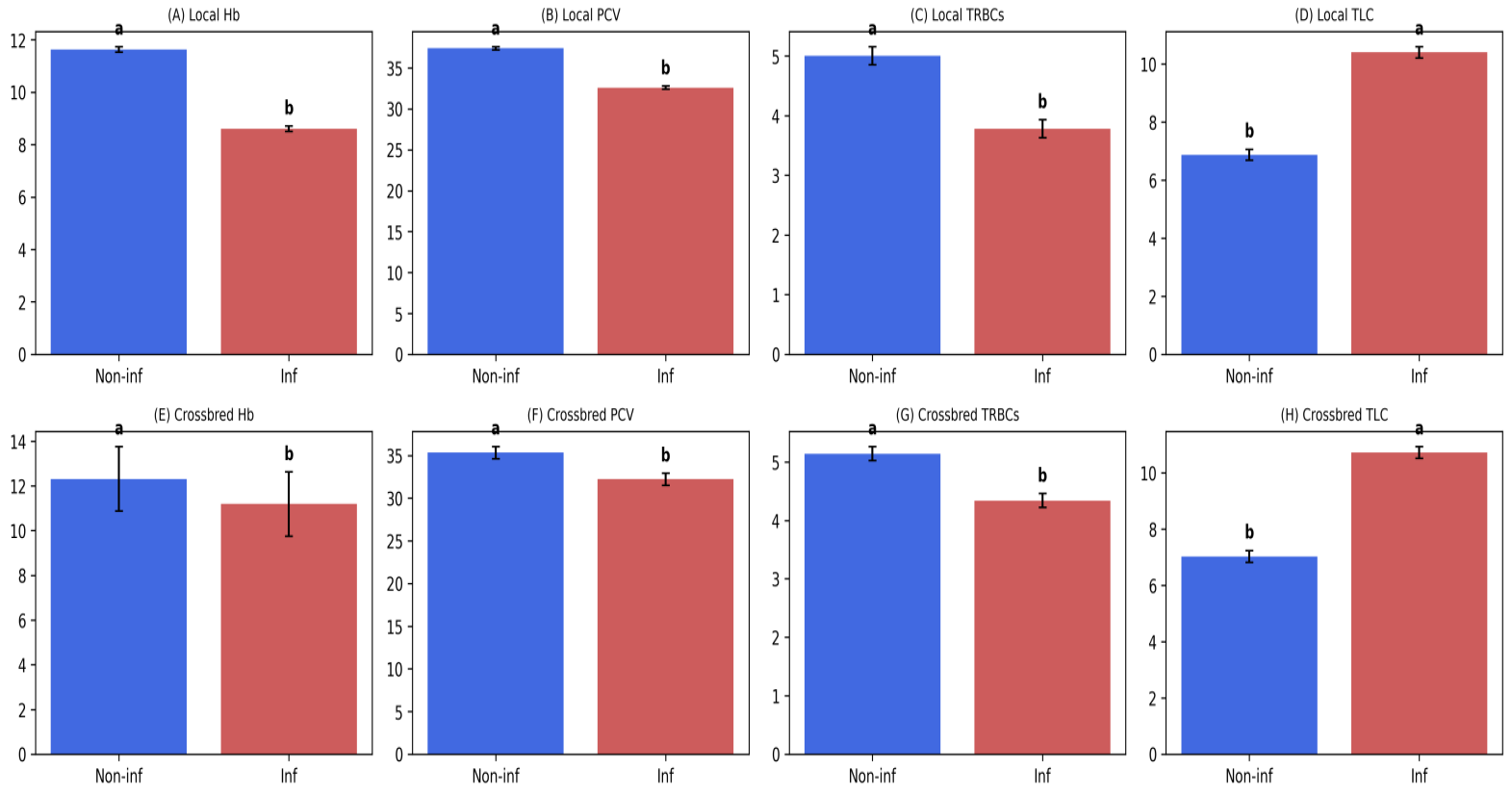
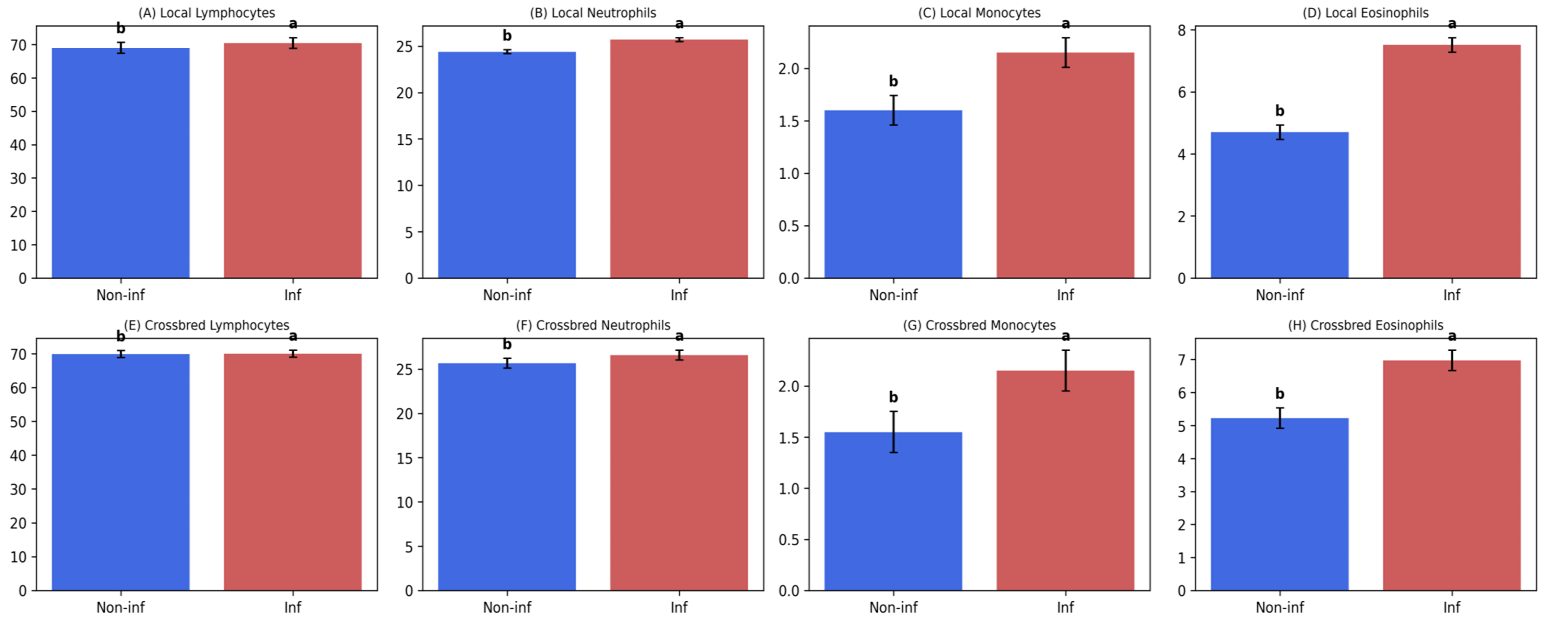
The rforults for production performance, liver function, and hematological parain in local dairy cattle are shown in Table 1 and Figures 2, 3, 4, and 5. The body condition score (BCS), milk yield (MY), hemoglobin, packed cell volume (PCV), and total red blood cells (TRBCs) were significantly higher in the local non-infected dairy cows than in the local infected dairy cows.
Table 1: Production, liver function and hematological parameters of local dairy cows.
Parameters
Non infected
(n=10)
Infected (n=40)
Percent increase or decrease
SEM
P-value
Production performance
BCS
2.80a
2.78b
-0.71
0.12
0.001
Milk yield (L)
5.50a
3.06b
-44.3
0.25
0.002
Liver function
AST (U/L)
112.6b
242a
+116
2.44
0.001
ALT (U/L)
29.4b
74.0a
+153
1.20
0.001
TB (g/dl)
0.28b
0.69a
+146
0.03
0.002
Hematology parameters
Hb (g/dl)
11.63a
8.60b
-26.7
0.10
0.002
PCV (%)
37.4a
32.6b
-12.8
0.18
0.001
TRBCs(×10⁶/µL)
5.00a
3.78b
-24.4
0.15
0.003
TLC (×10³/µL)
6.87b
10.4a
+51.3
0.19
0.001
Lymphocyte (%)
69.0b
70.4a
+2.02
1.60
0.002
Neutrophils (%)
24.4b
25.7a
+5.33
0.20
0.003
Monocytes (%)
1.60b
2.15a
+34.3
0.14
0.001
Eosinophils (%)
4.70b
7.51a
+59.7
0.23
0.001
Mean values having different superscripts within the same row are significantly different (P<0.05). SEM, sum of error mean; BCS,Body condition score; TB, Total bilirubin; Hb, Hemoglobin; PCV, Packed cell volume; TRBCs, Total red blood cells; TLC, Total leukocyte count; AST, Aspaartate aminotransferase; ALT, Alanine aminotransferase.
Table 2: Production, liver function and hematological parameters of cross breed dairy cows.
Parameters
Non infected
(n=10)
Infected
(n=40)
Percent increase or decrease
SEM
P-value
Production performance
BCS
3.25a
2.60b
-20
0.08
0.002
Milk yield (L)
7.22a
3.22b
-55.4
0.52
0.001
Liver function
AST (U/L)
113.5b
247.1a
+118
2.45
0.001
ALT (U/L)
30.11b
73.02a
+110
1.50
0.003
TB (g/dl)
0.25b
0.74a
+196
0.03
0.001
Hematology
parameters
Hb (g/dl)
12.31a
11.19b
-9.08
1.44
0.002
PCV (%)
35.33a
32.22b
-8.80
0.70
0.001
TRBCs(×10⁶/µL)
5.14a
4.34b
-15.5
0.12
0.001
TLC (×10³/µL)
7.03b
10.72a
+52.4
0.21
0.002
Lymphocyte (%)
69.88b
70.0a
+0.17
1.02
0.003
Neutrophils (%)
25.66b
26.57a
+3.55
0.56
0.002
Monocytes (%)
1.55b
2.15a
+38.7
0.20
0.001
Eosinophils (%)
5.22b
6.97a
+33.5
0.31
0.001
Mean values having different superscripts within the same row are significantly different (P<0.05). SEM, sum of error mean. BCS, Body condition score; TB, Total bilirubin; Hb, Hemoglobin; PCV, Packed cell volume; TRBCs, Total red blood cells; TLC, Total leukocyte count; AST, Aspaartate aminotransferase; ALT, Alanine aminotransferase.
Aspartate aminotransferase (AST), alanine aminotransferase (ALT), total bilirubin (TB), total leukocyte count (TLC), lymphocyte cells, neutrophils, monocytes, and eosinophils had significantly higher values in the local infected dairy cows than in the local non-infected dairy cows. Table 2, and Figures 2, 3, 4, and 5 show the results regarding the production performance, liver function, and hematological parameters of the crossed-breed dairy cows. The BCS, MY, hemoglobin, PCV, and TRBCs were significantly higher in the crossed-breed non-infected dairy cows than in the crossed-breed infected dairy cows. AST, ALT, TB, TLC, lymphocytes, neutrophils, monocytes, and eosinophils had significantly higher values in the crossed-breed infected dairy cows than in the crossed-breed non-infected dairy cows.
Discussion
This study was conducted to investigate the effects of Fasciolosis on production performance, liver function, and hematological parameters in local and crossbred dairy cows in the district of Peshawar. Various studies have shown that parasitic infections significantly compromise livestock productivity and health under field conditions ; Ul-Hassan et al., 2025). In the present study, Fasciolosis had a significant effect on BCS in both local and crossbred cattle. The local dairy cows showed little loss in BCS compared to the crossbred cattle. The greater change in the BCS of the crossbreeds may be due to better care for milk production and the metabolic load of milk production in this breed, making it more sensitive to Fasciolosis and resulting in a significant loss in BCS. Various studies have shown that Fasciolosis directly affects BCS and milk yield, as fasciola-infected animals are thin, weak, and emaciated, producing less milk. Our study also showed the same pattern. Adjusting the nutritional program and timely treatment of Fasciola-infested animals with anthelmintics can help achieve the desired BCS at various stages of production, which is essential for improving production efficiency (Manual, 2000). The results also show that production was markedly decreased in both across-breed local dairy cows affected by Fasciolosis. Similar reductions in productive performance and animal efficiency under field conditions have been reported in cattle reared under different production systems ; Wajid et al., 2026). Similar results were also found by Raunelli et al. (2009), in which production was restored by up to 75% with an anthelmintic treatment program.
The results of our study are similar to those of various studies reporting elevated levels of different liver enzymes in cases of Fasciolosis. El-Attar et al. (2007) reported that serum biochemical analysis showed a significant increase in ALT and AST in Fasciola-infested cows compared to control cows, concluding that alterations are produced in the clinical, hematological, and biochemical picture compared to that of healthy control cows. Similar results were reported by Atakisi et al. (2006) after examining dermatophytic cattle using liver function tests, and observing significantly higher serum alanine aminotransferase and aspartate aminotransferase activities in dermatophytic cattle compared with those of the healthy group (P=0.01). Samia et al. (2000) investigated the relationship between Fascioliasis and the presence of pathogenic bacteria, as well as the effects of these bacteria on the liver and gallbladder. Liver enzymes were elevated, including an increase of aspartate aminotransferase from 112-236±3.3 U/L, while alanine aminotransferase was elevated from 30-79±7.4 U/L. Animals with Fascioliasis had liver lesions with blood vessel destruction and parenchymal necrosis, and elevated AST activity (EI-Samani et al., 1985). In this study, AST was elevated relative to ALT, consistent with the findings of Diehl et al. (1995) that infection increases gallstone production.
All hematological parameters were significantly affected by Fasciolosis, with decreases in Hb, TRBC, and PCV and increases in TLC, neutrophils, and eosinophils. El-Attar et al. (2007) also reported similar results in clinically healthy and diseased Holstein dairy cows. In a study by Gokce et al. (2004), FMD-infected cattle had significantly fewer RBCs (P<0.05) than the control group, but no significant differences in other hematological parameters. El-Khadrawy et al. (2008) found decreased erythrocyte counts and PCV in Fasciola-positive buffaloes and cows, suggesting macrocytic hypochromic anemia compared with healthy animals (P<0.001). Similar applications of hematological and biochemical profiling for evaluating animal health and physiological status have been reported under Pakistani field conditions .
This research found that Fasciolosis induced hypochromic macrocytic anemia and alterations in lymphocytes, eosinophils, and basophils, which are consistent with those reported by Matanoviae et al. (2007). Ganga et al. (2007) found regeneration anemia in infected buffaloes, characterized by decreased Hb, PCV, and total erythrocyte counts. Animals increased red cell Hb content to compensate for lower RBC counts and PCV, which were negatively associated with worm load . The blood physiological tests revealed decreases in RBC and HB, while WBC counts increased significantly; these results agreed with Abood (1992). RBC deficiency is caused by inflammation, worms sucking 0.2 ml of blood daily, muscles bleeding 0.5 ml, and immature RBCs entering the circulatory system . Compared with uninfected cows, infected cows have more eosinophils because they may bind to the parasite wall and release granules to kill larval stages (Al-Kubassie, 1996). Liver fluke infection kills hepatocytes, raising total bilirubin .
The exclusion of coexisting infections and the typical lesions of Fasciolosis are both used to establish that the reductions in body condition and milk yield, and the changes in liver and blood parameters, were directly induced by Fasciola. The increased activity of AST, ALT, and total bilirubin is directly related to the hepatocellular damage resulting from mechanical migration of the juvenile flukes through the liver parenchyma, followed by biliary stasis caused by the encysted adult flukes in the bile ducts. The macrocytic hypochromic anemia (Hb, PCV and TRBC) directly observed is due to the active hematophagy of the adult parasites and the chronic seepage of blood from liver lesions, while the high levels of leukocytosis, neutrophilia and eosinophilia are a typical host immune response to migrating larval stages of the parasites. The reduction in body condition score and milk loss is the direct metabolic cost of tissue repair, nutrient malabsorption, and systemic stress caused by fluke. Combined, these differences between the pathological, enzymatic and cellular profiles indicate that the physiological deterioration noted was specific to naturally occurring Fasciola infection.
Overall, the findings of the present study demonstrate that naturally occurring Fasciolosis adversely affects the productive performance and physiological status of dairy cows under field conditions. The reductions in milk yield and body condition score, together with alterations in liver enzyme activities and hematological indices, indicate that Fasciola infection imposes a substantial metabolic and health burden on affected animals. These findings highlight the importance of early diagnosis, strategic parasite control programs, and improved herd management practices to minimize production losses and maintain the health and productivity of both local and crossbred dairy cattle.
Conclusions and Recommendations
The present study demonstrated that naturally occurring Fasciolosis adversely affects the productive performance and physiological status of both local and crossbred dairy cows. Fasciola-infected animals exhibited reduced milk yield and body condition score, accompanied by significant alterations in liver enzyme activities and hematological parameters. The observed anemia, leukocytosis, neutrophilia, and eosinophilia indicate the detrimental impact of Fasciola infection on animal health and liver function. These findings emphasize the importance of effective prevention and control strategies for Fasciolosis to minimize production losses and improve the health and productivity of dairy cattle. Further studies are warranted to elucidate the underlying pathological mechanisms and to evaluate the long-term effects of Fasciolosis on cattle performance under field conditions.
Declarations
Acknowledgement
We acknowledge the staff of the Faculty of Animal Husbandry and Veterinary Sciences, The University of Agriculture, Peshawar, Pakistan, and the Directorate of Livestock Research and Dairy Development, Peshawar, Khyber Pakhtunkhwa, who provided technical and laboratory facilities.
Funding
This study was self-supported and received no external grant.
IRB approval
The study was approved by the Board of Studies (BOS) conducted at the Department of Livestock Management, Breeding and Genetics, The University of Agriculture, Peshawar (January 04, 2019).
Ethical statement
The Animal Welfare and Care Committee of the Faculty of Animal Husbandry and Veterinary Sciences (FAH & VS), the University of Agriculture, Peshawar, Pakistan, approved this study, and all measures and tools were implemented to minimize animal pain and discomfort.
Generative AI and AI assisted technology statement
The authors declare that no generative AI and AI assisted technology was used in the creation of this manuscript.
Statement of conflict of interest
The authors have declared no conflict of interest.
Figures
Figure 1:.
Study design.
Figure 2:.
Effect of Fasciolosis on production performance of local and cross breed dairy cows. (A) Local breed body condition score (BCS) and (B) local breed milk yield. (C) Cross breed body condition score (BCS) and (D) cross breed milk yield. Bars represent mean ± SEM. Different superscripts indicate significant differences between infected and non-infected groups (P<0.05).
Figure 3:.
Effect of Fasciolosis on liver function parameters of local and cross breed dairy cows. (A) Local breed AST, (B) local breed ALT, and (C) local breed total bilirubin (TB). (D) Cross breed AST, (E) cross breed ALT, and (F) cross breed total bilirubin (TB). Bars represent mean ± SEM. Different superscripts indicate significant differences between infected and non-infected groups (P<0.05).
Figure 4:.
Effect of Fasciolosis on hematological parameters of local and cross breed dairy cows. (A) Local breed hemoglobin (Hb), (B) local breed packed cell volume (PCV), (C) local breed total red blood cells (TRBCs), and (D) local breed total leukocyte count (TLC). (E) Cross breed hemoglobin (Hb), (F) cross breed packed cell volume (PCV), (G) cross breed total red blood cells (TRBCs), and (H) cross breed total leukocyte count (TLC). Bars represent mean ± SEM. Different superscripts indicate significant differences between infected and non-infected groups (P<0.05).
Figure 5:.
Effect of Fasciolosis on differential leukocyte counts of local and cross breed dairy cows. (A) Local breed lymphocytes, (B) local breed neutrophils, (C) local breed monocytes, and (D) local breed eosinophils. (E) Cross breed lymphocytes, (F) cross breed neutrophils, (G) cross breed monocytes, and (H) cross breed eosinophils Bars represent mean ± SEM. Different superscripts indicate significant differences between infected and non-infected groups (P < 0.05).
References
Abood, R.A., 1992. Study of some pathological and biochemical changes resulting from infection with the liver fluke Fasciola gigantica in three strains of Iraqi sheep. M.Sc. thesis, College of Veterinary Medicine, University of Baghdad, Iraq.
Ali, M., Majid, H.A., Khan, M.R., Muhammad, D., Ullah, F., Shuaib, M., Khan, B. and Shah, I.A., 2022. Prevalence and drug efficacy against gastrointestinal nematodes particularly Haemonchus contortus in district Kohat, Pakistan. World J. Pharm. Pharm. Sci., 11: 107–115.
Ali, S.A.K., 1984. Study of the effects of Fasciola gigantica infection in domestic goats and comparison with Awassi sheep in Iraq. M.Sc. Thesis, College of Veterinary Medicine, University of Baghdad, Iraq.
Al-Kubaisse, R.Y., 1996. Bioimmunological study of some antigens of Fasciola gigantica. Ph.D. Thesis, College of Veterinary Medicine, University of Baghdad, Iraq.
Atakisi, E., Karapehlivan, M., Atakisi, O., Kontas, T. and Marasli, S., 2006. Adenosine deaminase and biochemical liver function tests in dermatophytic cattle. Bull. Vet. Inst. Pulawy, 50: 481–483.
Damir, H.A., Barrim, M.E., EL-Hassan, S.M., Tageldin, M.H., Wahbi, A.A. and Idris, O., 1988. Clinical zinc and copper deficiencies in cattle of Western Sudan. Trop. Anim. Hlth. Prod., 20: 52–56. https://doi.org/10.1007/BF02239647[CrossRef]
Diehl, A.K., Schwesinger, W.H. and Holleman, D.R., 1995. Clinical correlates of gallstone composition distinguishing pigment from cholesterol stones. Am. J. Gastroenterol., 90: 967–972.
Ehsan, S., Khan, M.T., Khan, H., Tunio, M.T., Hussain, A., Shuaib, M., Hussain, A., Nazif, M.S. and Siddiqui, S.A., 2025. Effect of Moringa oleifera leaves supplementation via urea molasses block on milk yield and composition, hematological and blood biochemical profile in Azikheli buffaloes. Pakistan J. Zool., 57: 2187. https://doi.org/10.17582/journal.pjz/20231028142235[Full text][CrossRef]
El-Attar, H., Yassein, M., ABD EL-Raof, M. and Ghanem, M.M., 2007. Alterations in the clinical, hematological and biochemical picture in abomasal displacement in cows in Egypt. Proc. 5th Sci. Conf., pp. 102–109. https://doi.org/10.21608/jvmr.2008.77855[CrossRef]
El-Khadrawy, H., Faragalla, H., Moghazy, M., Abd-El-Aziz, M.M. and Ahmed, W.M., 2008. Field investigation on the correlation between ovarian activity and Fasciolosis in buffalo cows. Am. Eurasian J. Agric. Environ. Sci., 3: 539–546.
El-Samani, F., Mahmoud, O.M., Fawi, M.T., Gameel, A.A. and Haroun, E.M., 1985. Serum enzyme activity and bilirubin concentration in sheep experimentally infected with Fasciola gigantica. J. Comp. Pathol., 95: 499–503. https://doi.org/10.1016/0021-9975(85)90020-9[CrossRef]
Gajewska, A., Smaga-Kozlowska, K. and Wisniewski, M., 2005. Pathological changes of liver in infection with Fasciola hepatica. Wiad. Parazytol., 51: 115–123.
Ganga, G.J., Varshney, P., Sharma, R.L., Varshney, V.P. and Kalicharan, P., 2007. Effect of Fasciola gigantica infection on adrenal and thyroid glands of riverine buffaloes. Res. Vet. Sci., 82: 61–67. https://doi.org/10.1016/j.rvsc.2006.04.002[CrossRef]
Gökçe, G., Gökçe, H.İ., Güneş, V., Erdoğan, H.M. and Çitil, M., 2004. Alterations in some haematological and biochemical parameters in cattle suffering from foot-and-mouth disease. Turk. J. Vet. Anim. Sci., 28: 723–727.
Kiladze, Z.M., Chapashvili, L., Abuladze, D. and Jath, V.D., 2000. Obstruction of common bile duct caused by liver fluke Fasciola hepatica. Sb. Lek., 101: 255–259.
Kramer, J.W., 2000. Normal hematology of the horse. In: Schalm’s veterinary hematology (eds. B.F. Feldman, J.G. Zinkl and N.C. Jain). Lippincott Williams and Wilkins, Philadelphia, USA, pp. 1069–1074.
Lamberg, S.L. and Rothstein, R., 1977. Laboratory manual of hematology and urinalysis. AVI Publishing Company Inc., Westport, Connecticut, USA.
Lassen, E.D. and Swardson, C.J., 1995. Hematology and hemostasis in the horse: Normal functions and common abnormalities. Vet. Clin. North Am. Equine Pract., 11: 351–389. https://doi.org/10.1016/S0749-0739(17)30306-1[CrossRef]
Loyacano, A.F., Williams, J.C., Gurie, J. and Derosa, A.A., 2002. Effect of gastrointestinal nematode and liver fluke infections on weight gain and reproductive performance of beef heifers. Vet. Parasitol., 107: 227–234. https://doi.org/10.1016/S0304-4017(02)00130-9[CrossRef]
Manuel, E.A. and Lardy, G., 2000. Body condition scoring I: Managing your cow herd through body condition scoring. NDSU Ext. Serv. Publ., pp. 118–122.
Matanovic, K., Severin, K., Martinkovic, F., Simpraga, M., Janicki, Z. and Barisic, J., 2007. Hematological and biochemical changes in organically farmed sheep naturally infected with Fasciola hepatica. Parasitol. Res., 101: 1657–1661. https://doi.org/10.1007/s00436-007-0709-2[CrossRef]
Messer, N.T., 1995. The use of laboratory tests in equine practice. Vet. Clin. North Am. Equine Pract., 11: 345–350. https://doi.org/10.1016/S0749-0739(17)30305-X[CrossRef]
Molina, E.C., Lozano, S.P. and Barraca, A.P., 2006. Relationship between haematological indices, serum gamma-glutamyl transferase and glutamate dehydrogenase, visual hepatic damage and worm burden in cattle infected with Fasciola gigantica. J. Helminthol., 80: 277–279. https://doi.org/10.1079/JOH2006337[CrossRef]
Ndlovu, T., Chimonyo, M. and Muchenje, V., 2009. Monthly changes in body condition scores and internal parasite prevalence in Nguni, Bonsmara and Angus steers raised on sweetveld. Trop. Anim. Hlth. Prod., 41: 1169–1177. https://doi.org/10.1007/s11250-008-9297-0[CrossRef]
Pakistan Economic Survey, 2021–22. Economic Adviser’s Wing, Finance Division, Government of Pakistan, Islamabad, Pakistan. https://finance.gov.
Peters, A.R. and Ball, P.J.H., 1987. Reproduction in cattle. Butterworths, London, UK, pp. 167–168.
Raunelli, F. and Gonzalez, S., 2009. Strategic control and prevalence of Fasciola hepatica in Cajamarca, Peru: A pilot study. Int. J. Appl. Res. Vet. Med., 7: 145–152).
Rehman, A., Islam, Z., Shuaib, M., Hussain, A., Saleem, M., Ullah, K., Shakoor, A. and Ghaffar, A., 2025. Understanding livestock systems and their effect on reproductive performance of Achai and Jersey crossbred cows in northern Hindukush mountainous ranges. Pakistan J. Zool., 57: 1421. https://doi.org/10.17582/journal.pjz/20230307100354[Full text][CrossRef]
Santiliano, F.C., 2012. The importance of diagnosis and treatment of Fasciolosis in cattle. Int. J. Appl. Res. Vet. Med., 7: 144–148. https://doi.org/10.22256/pubvet.v6n20.1385[CrossRef]
Ul Hassan, S., Khan, F.A., Shuaib, M., Shahid, M., Shah, S.S.A., Siddiqui, S.A., Pokoo-Aikins, A. and Swelum, A.A., 2025. Investigation into the seromolecular prevalence of Brucella melitensis in small ruminants in districts Mohmand and Charsadda Khyber Pakhtunkhwa Pakistan. Plos One, 20(2), p.e0315206.
Wajid, U., Suhail, S. M. shuaib, M.. Ul-Hassan, S., Sufyan, A., Ullah, O., Uzair, M.S. and Iqbal, M., 2025. Performance traits and milk composition of different cattle breeds reared under subtropical conditions of Khyber Pakhtunkhwa, Pakistan. J. Agric. Vet. Sci., 4(3), 367-373. https://doi.org/10.55627/agrivet.004.03.01759)[CrossRef]