ResearchersLinks

Research Article · Volume 41, Issue 2, 2 October 2026 · Open Access

Host Plant Range and Prey Associations of Aphid Hoverflies (Diptera: Syrphinae) in Sukkur, Sindh, Pakistan

· ·

Affiliations & Notes ⌄
  1. 1Advance Entomology Research Laboratory (AERL) Department of Zoology, University of Sindh, Jamshoro-76080- Pakistan. Corresponding author: Kamal Khan Abro drdastankhan125@gmail.com
Article Info ⌄
Journal:
Punjab University Journal of Zoology
Published:
2 October 2026

From the article

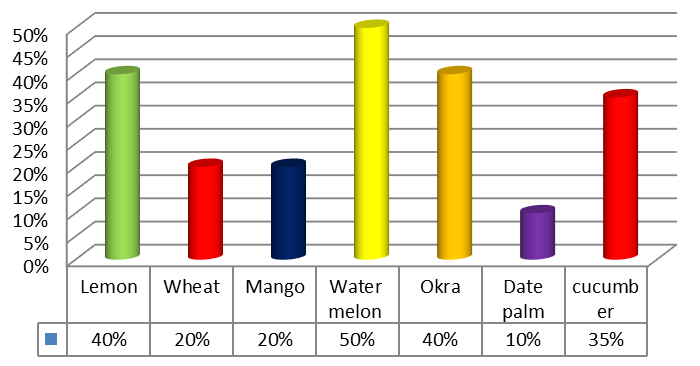
  • Host-wise prevalence of Baccha elongata and Episyrphus balteatus hoverflies indicated that the species exhibited maximum abundance on wheat, followed by brassica, and minimum on okra (Figures 3).
  • The host plant range of syrphid flies in Sukkur was investigated during the research, with Baccha elongata being the most prevalent species, totaling 198 specimens, while the Episyrphus balteatus was the least abundant, with only 55 specimens.
  • The study investigation, conducted in different farming fields of Aror, Sukkur from January-April 2024, yielded significant insights into the host plant approach of aphidophagous hoverflies in relation to their prey plant louse aphids.
  • Notably, E. balteatus exhibited higher count (199) specimens, compared to B. elongata (59) specimens, including a greater abundance of the former species in the research area.

Selected from the article's own text.

Abstract

Promoting the proliferation of natural enemies through the cultivation of appealing flowering plants constitutes a tangible strategy for pest control in the biological farming. Identification of the most attractive blossoming plants for beneficial insects is crucial in implementing this method effectively. Within the ecosystem the Syrphid flies emerge as a pivotal group for biological control pest management and pollination. The aphidophagous hoverflies, a significant subset of Syrphidae, play a crucial role as their larvae prey on various insect pest such as aphids, thrips and jassids which commonly infest many crops like mustard, okra, spinach, rice, strawberry, lemon, potato, tomato, garlic, sesame and wheat. Additionally, the adults sun-flies contribute a significantly to the pollination of the many crops. The diverse species of syrphid flies breeding in agroecosystems, particularly the aphidophagous larvae, hold substantial economic importance. Moreover, this research work aims to identify the hoverfly species suitable for the pest control in many agricultural crops of district Sukkur and its surrounding areas respectively. Sukkur region experiences a hot desert climate, marked by scorching and hazy summers alongside warm winters and also acknowledges as a canal district of whereas majority of fodder crops, vegetables and fruits are cultivated. The research, conducted in various farming fields of Sukkur from January-April 2024, involved trapping a total of 258 specimens, representing two species (Baccha elongata and Episyrphus balteatus) within the genera Baccha and Episyrphus. The captured specimens comprised 34 ♂ and 224 ♀, with Episyrphus balteatus exhibiting a higher count (199) compared to Baccha elongata (59).
 
Novelty Statement | This research explore the new relationship between the weather and the population of aphid-flies and non-aphidophagous hovering flies species in region Sukkur (Aror), Sindh, providing new perception into the ecological subtleties of these useful flowering flies in an agricultural region with exclusive climate features respectively.

Introduction

Abundance of many flying insects, particularly syrphid/hoverflies, play a crucial main role in providing significant ecosystem services to humans, primarily in bio-control and pollination. Hoverflies, scientifically known as Syrphid flies, belong to a diverse family ranging from minor to large species . Recognized for their dual contribution to the ecosystem, Syrphid flies are essential as their larvae act as natural predators to the many arthropods herbivores (Sajjad et al., 2010), while their adults serve as effective pollinators for various crops and wild plants. With approximately about (6000) identified hoverflies species worldwide, hovering-flies are pivotal foe their pollination and bio-control services . Economically, both adult and larvae syrphid flies hold importance. Adults act as good pollination agent by sucking nectar from many flowers, while the larvae contribute to pest management by feeding on various crops insect pest such as jassids, thrips and aphids infesting crops like brassica, wheat, rice and cabbage. Syrphinae flies have garnered attention not only for their diverse species and economies significance but also for their exposed behaviors and visually appealing presence. Hoverflies are prevalent in many parts of Pakistan, thriving in areas with abundant fauna and flourishing flowers for their nutrition. They demonstrate migratory behavior, moving from one location to another in search of food or under unfavorable survival contribution. Hoverflies can be found wherever flowers are present, and their presence has been observed on a wide variety of various flowers and vegetables. The adult flies predominantly feed on the pollen and nectar of flowering plants, and their feeding habits vary among species. Some species of hoverflies are highly generalized feeders, while others exhibit extreme specialization in their feeding preferences ; Ghahari et al., 2008). The blooming preferences of syrphid flies contribute to their versatility in different environments, making them crucial components of ecosystem and agricultural landscapes (Hegland and Boeke, 2006). According to Kuzentsov (2002), The attractiveness of flowers to hoverflies can be attributed to many factors, the shape and color of flowers, accessibility to nectar and pollen, as well as the availability of prey and shelter. These factors contribute to the overall floral environmental and impact hoverfly behavior. According to (Lapchin et al., 1987), insects, including hoverflies, often exhibit specificity in choosing their food sources. Generalist predators may show a preference hierarchy for various hosts. The nutritional needs of adult flies, including amino acids and carbohydrates for egg production and energy, emphasize the importance of suitable floral resources. The selection of specific flora around the fields plays a vital role in attracting adult hoverflies, leading to increased oviposition rates in the fields and a subsequent decrease in aphid populations (Naderloo and Rad, 2008). Flowers contribute significantly to the development, reproduction, growth and survival rates of hoverflies and other insects (Steffan et al., 2002). In some cases, insects may rely on weeds for pollen and nectar sources. The reduction in plant diversity in agricultural fields, often due to herbicide use, can impact natural enemies involved in biological control. Introducing flowering plants into ecosystem is considered a beneficial approach to enhance the availability of pollen and nectar sources, regulating the populations of both insects’ pest and their natural enemies. Research indicates that hoverflies, numbering around 49 species feed on peach aphid species (Potts et al., 2003). Specific hoverfly species, Episyrphus balteatus and other aphidophagous species have been observed requiring pollen for ovarian growth, emphasizing the interconnected relationship between hoverflies and flowering plants in agroecosystems . Syrphid flies are essential elements of ecosystems and agricultural landscapes because of their blossoming preferences (Souza et al., 2001), which also contribute to their adaptability in a variety of settings (Sajjad et al., 2010). Aphids typically feed on plant tissues, specifically the phloem and xylem, as noted by These elements influence hoverfly behavior and add to the overall floral habitat (Shebl et al., 2008). Hoverflies also contribute significantly to aphid populations, which in turn affects how many aphids proliferate in agricultural areas. Hoverflies are among the insects that frequently show selectivity in their food source selection (Souza et al., 2001). The significance of appropriate floral resources is highlighted by the nutritional requirements of adult flies, which include amino acids and carbohydrates for energy and egg formation (Potts et al., 2003). The choice of particular plants surrounding the fields is essential for drawing adult hoverflies, which raises the fields’ oviposition rates and, in turn, lowers the number of aphids (Steffan et al., 2002).

Objectives of this research were:

  • To observe the host plant range of hoverflies species in different localities of Sukkur, such as Aror and Sukkur city Sindh, Pakistan.
  • To assess the most preferred plant species of hoverflies under natural environmental conditions.
  • To examine the relationship between the abundance of aphidophagous flies and the availability of host plants as well as the presence of aphids colonies.

Materials and Methods

Research areas

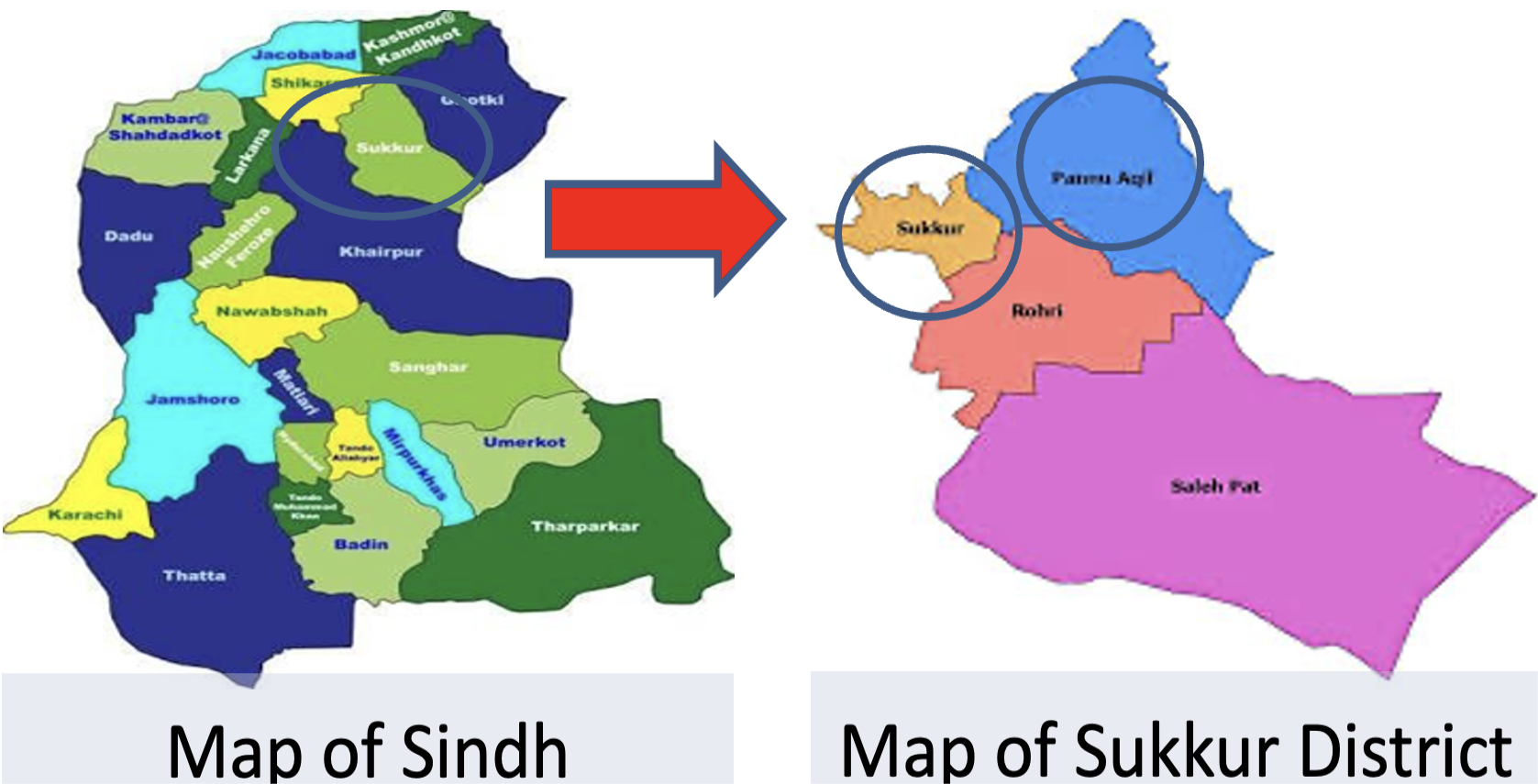
The research was carried out from January-April 2024 in various locations of Sukkur including Sukkur city, Pano -Aqal and Aror. Sukkur is a city in the province of Pakistan, located along the western bank of the Indus River. The geographical coordinates of Sukkur district range between 27 º 42’ and 22º north latitudes and 68º 50’ east longitudes (Figure 1).

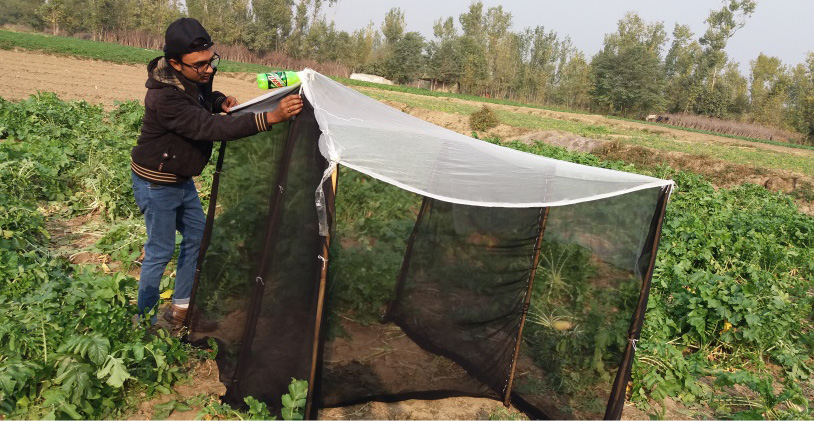
Sindh stands as the most crucial agricultural province in Pakistan, cultivating a variety of crops, wheat, rice, brassica and various vegetables and fruits. This province holds immense economic importance, contributing significantly to the country’s yield and providing diverse food products for both domestic consumption and export, thereby boosting the national economy. Among the region in Sindh, Sukkur plays a pivotal role in the ecosystem. The district experiences as a sub-tropical climate characterized by cold winters and hot summers. Its landscape consists of a fertile muddy plain formed over thousands of years by sedimentation from the Indus River’s floodwaters. Sukkur relies heavy on the irrigation system with extensive canal and underground water networks facilitating agricultural cultivation across the region. Sukkur and its surrounding areas cultivate a diverse range of crops, including major ones, rice, cotton, sugarcane, dates, cotton, banana, wheat and sunflower. Additionally, minor crops such as chilies, okra onions and melons are also grown in peripheral regions.To study the syrphid flies in these areas, random collection were made using insects hand net and malaise traps . Malaise traps, known for the capturing insects in fight, were particularly useful in assessing aphidophagous hoverflies communities across different crops (Figures 2). Each selected plot, approximately about 14 x 9m in size, maintained 50cm spacing between lines and plants. Notably, no insecticides were applied during the experiments . The research aimed to monitor the monthly prevalence of Episyrphus balteatus, Baccha elongata and their interactions with their aphid prey. We documented all plant species susceptible to aphid attacks, encompassing both general and monophagous feeders. These sap-feeding crop pests target various crops, chili, dates, brassica, wheat, onion and rice along with garden plants such as flowering shrubs and annuals during the period from January-April 2024. Aphids inflict damage on different plant parts including leaves, buds, and stems leading to wilting and reduced crop yield. During field visits in natural environments, random research areas were selected, focusing on multi-plant species infested by aphids. Each crop was observed for duration of 2-3 minutes, and a total observation time is 20-25 minutes was allocated to each plant. The quantity of aphidophagous hovering flies per species was reported through optical observations. Weekly surveys were conducted from the early stages to the end of flowering for each blooming crop. The study began in the second week of January 2024, with various crops already in bloom, and concluded in the third week of April 2024, with some crops still in flowering state.

Data analysis

For data analysis, Pearson’s correlation was employed to examine the relationship between predators and their prey, using SPSS version 18.

Result and Discussion

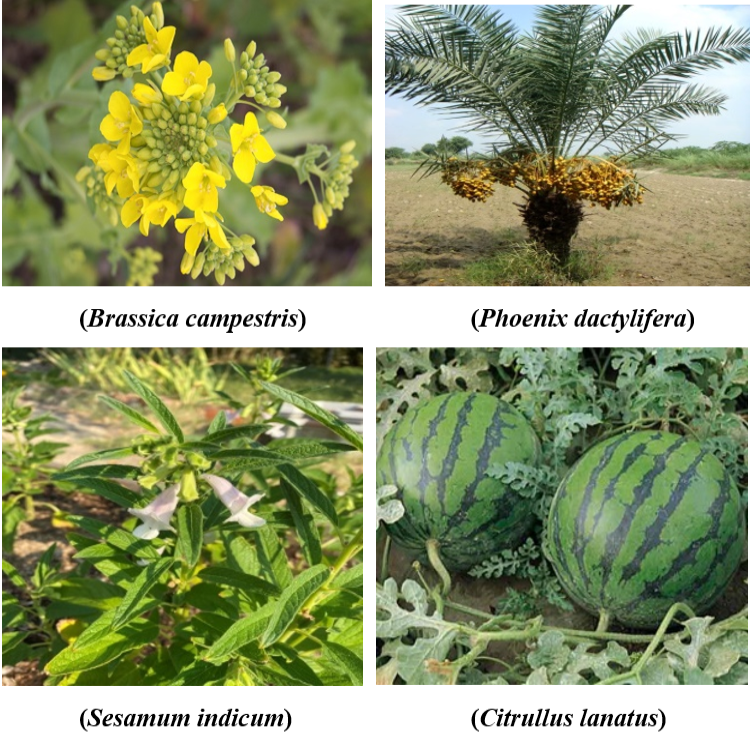
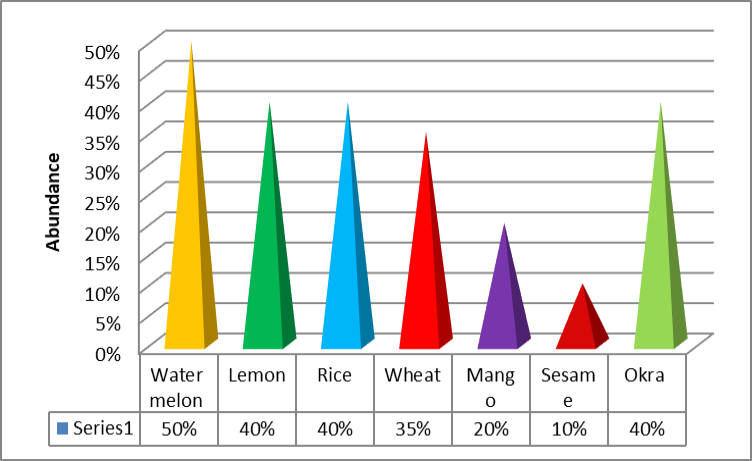
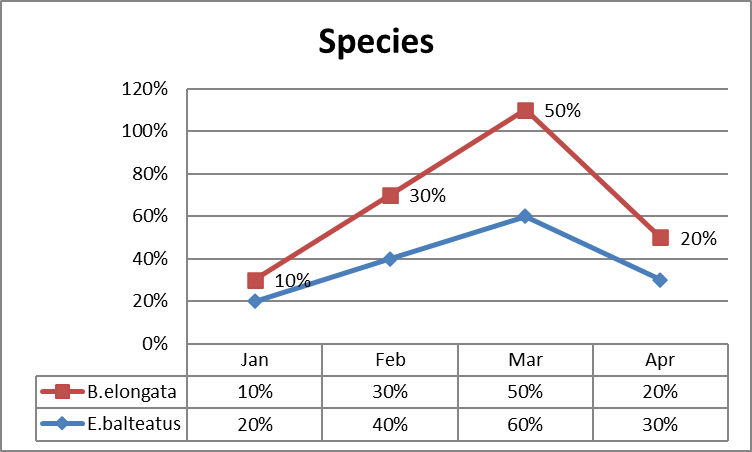
This research was conducted from January-April 2024 in Sukkur district of Upper Sindh, Pakistan, renowned as an irrigation of Hub. Sukkur, a center of irrigation, witnessed the documentation of a total 255 specimens, comparing two species-Episyrphus balteatus and Baccha elongata belonging to the Episyrphus and Baccha genera in the sub-family Syrphinae. Among these specimens, 198 were Baccha elongata and 55 were Episyrphus balteatus. The female (♀) population of both species outnumbered males (Table 1). Baccha elongata was observed in crops such as wheat, Brassica, cabbage, green chili, tomato and (first time recorded from Date palm tree Table 2), while Episyrphus balteatus was found in onion, brassica, spinach, okra, melon, weeds and also first time reported from lemon tree (Table 3). Additionally, various aphid colonies of different species were noted on these crops, especially on wheat, brassica, melon, lemon, okra and sunflower. Host-wise prevalence of Baccha elongata and Episyrphus balteatus hoverflies indicated that the species exhibited maximum abundance on wheat, followed by brassica, and minimum on okra (Figures 3). For Episyrphus balteatus, the most preferred host plant was wheat, followed by weeds, while the least preferred host plant was cabbage (Figures 4). Examining the month-wise prevalence of Baccha elongata and Episyrphus balteatus revealed that the maximum population (76) was recorded in March, followed by April (70), with a minimum in January (22). Similarly, population dynamics of Episyrphus balteatus showed the highest population (23) in the month of April, followed by the month of March (22), and the minimum in the month of January (03) (Figures 5).

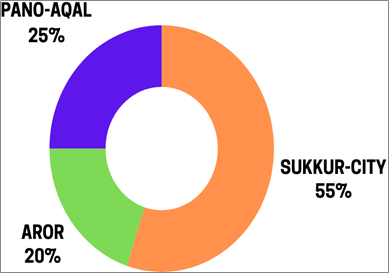
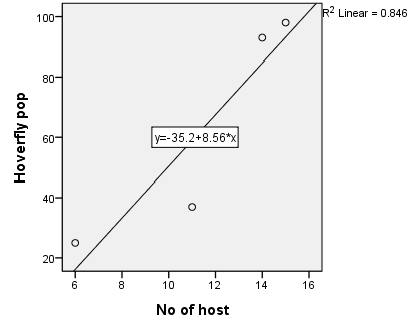
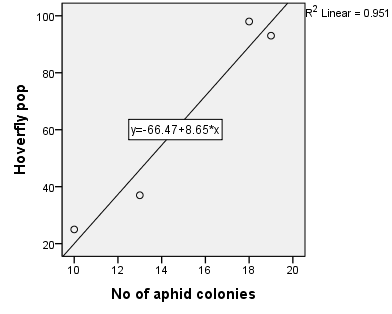
Localities-wise prevalence of Syrphid flies reported that the highest abundance (55%) was in Pano Aqal, followed by Aror (25%), while the minimum prevalence (20%) was founded in Sukkur city (Figures 6). Pearson correlation analysis highlighted a strong positive correlation among the population of aphidophagous hoverflies with the quantity of host plant range and the number of aphid colonies per month, with values of (r= 0.920 and r= 0.975, Kuzentsov (2002) (Figures 7, 8 and 9). Generally, hoverflies are attracted to actinomorphic flowering plant especially. These flies were frequently observed in aphid colonies, emphasizing the pivotal role of host in the distribution and selection of egg-laying sites for hoverflies. During field survey in the different localities of Sukkur, it was also evident that these hoverflies exhibit a preference for infested plants hosting large aphid colonies like a bunch of grapes. Throughout the research period, it was observed that Sukkur district is crucial from an agricultural standpoint, boasting a diverse range of crops, vegetables, and many fruits on a large scale. Brassica, rice, wheat, okra, onion, cucumber, chilies, tomatoes, dates, banana, lemon, melons, and various grasses are cultivated here, with a significant presence of aphid population, particularly on wheat, brassica and lemon crops Kuzentsov (2002). The host plant range of syrphid flies in Sukkur was investigated during the research, with Baccha elongata being the most prevalent species, totaling 198 specimens, while the Episyrphus balteatus was the least abundant, with only 55 specimens. The highest population of aphidophagous hoverflies was recorded on wheat and brassica, indicating that it is the most favorable host plant of both species in Sukkur, Sindh, Pakistan.

Throughout the survey period from January-April, a total (252) hoverflies were documented in the Sukkur district. Previous research on the host plant range of aphidophagous hoverflies species has focused on various agricultural and non-agricultural plants. The relative attractiveness of syrphid flies was noted on numerous plants and these hoverflies species play a vital role in the bio-control of many agricultural crops. Wheat, chilies, brassica, lemon and melons recorded the highest numbers of aphidophagous hoverfly species, attributed to the abundance of aphid colonies on these crops. The syrphid flies population surged, likely due to the favorable tropical climatic condition, the presence of extensive aphid colonies on infested crops, and the availability of a large quantity of host plants for larvae. The varied vegetation, including herbs, shrubs, and trees provided nectar source for adult hoverflies, contributing to the overall population increases.

Table 1: Displaying the total count of male and female Syrphid flies, along with their respective host plant ranges.

Hoverflies

Host plant

Male ♂

Female ♀

Total

Episyrphus balteatus

Fragaria x ananassal, Tritcum, Solanum lycopersicum, Solanum tuberosum, Brassica compestris, Citrus limon, Solanum lycopersicum, Solanum melongena, Momordica charatia, Solanum melongena

33

166

199

Baccha elongata

Phoenix dactylifera, Brassica compestris, Phoenix dactylifera, Sesamum indicum, Cucumis sativus and Citrullus lanatus

03

56

59

Total

36

222

258

Table 2: The monthly population of hoverflies observed during January-April 2024.

Month

Total: No

B. elongata

E. balteatus

January

25

03

22

February

37

07

30

March

98

22

76

April

93

23

70

Total

253

59

199

Table 3: This table is showing the Pearson correlation value among the population of aphidophagous hoverflies, their host crops and aphid population 2024.

Population of Syrphid flies vs.

Number of host plant:

Pearson correlation = 0.920, significant at the 0.080 level (2-tailted)

Population of Syrphid flies vs.

Number of aphid colonies:

Pearson correlation=0.975, significant at the 0.025 level (2-tailted)

Number of host plants vs.

Number of aphid colonies:

Pearson correlation=0.953, significant at the 0.047 level (2-tailted)

Conclusions and Recommendations

The study investigation, conducted in different farming fields of Aror, Sukkur from January-April 2024, yielded significant insights into the host plant approach of aphidophagous hoverflies in relation to their prey plant louse aphids. The research revealed that two species, Baccha elongata acknowledge as helicopter shaped a species known for its agility and fast hovering and Episyrphus balteatus a species recognized for its distinctive dark lack and pale yellow bold stripes, were prevalent in the region (Steffan et a., 2002). Notably, E. balteatus exhibited higher count (199) specimens, compared to B. elongata (59) specimens, including a greater abundance of the former species in the research area. The recorded specimens comprised (34) ♂ and (224) ♀, with a notable preponderance of ♀ in both species respectively. The judgments of this research underscore the importance of understanding the biological relationship between aphidophagous hoverflies and their host plant species, as well as their prey pest (crops louse aphids).

Declarations

Acknowledgement

The authors express their sincere gratitude to all individuals/ research scholar who contributed to this research work. Special thanks are extended to the dedicated members of the Advance-Entomology research Laboratory (AERL) department, of Zoology, University of Sindh, Pakistan.

Funding

This study was conducted without any external funding support respectively.

IRB approval

This study was conducted in accordance with the institutional Review Board guidelines of the Zoology, Department, University of Sindh, Jamshror-76080- Pakistan.

Ethical statement

The study adhered to the ethical standards and guidelines set forth by the University of Sindh, Jamshoro-76080-Pakistan, ensuring the integrity and responsibility of all procedures and methods employed.

Data availability statement

Raw data can be obtained upon request from the corresponding authors.

Generative AI and AI assisted technology statement

The authors declare that no generative AI and AI assisted technology was used in the creation of this manuscript.

Conflict of interest

The authors have declared no conflict of interest.

Figures

Figure 1:
Figure 1:.

Research area District-Sukkur, Aror, Sindh, Pakistan 2024.

Figure 2:
Figure 2:.

Malaise trap fixed in mix crops in Aror Sukkur 2024.

Figure 3:
Figure 3:.

Most preferred host crops of Baccha elongata.

Figure 4:
Figure 4:.

Here is the host-wise abundance of Episyrphus balteatus during January-April 2024.

Figure 5:
Figure 5:.

Host-wise abundance of Baccha elongata during January-April 2024.

Figure 6:
Figure 6:.

The locality-wise abundance of hoverflies collected during Jan-April 2024

Figure 7:
Figure 7:.

The month-wise distribution of hang-flies in Aror-Sukkur, Sindh, Pakistan. 

Figure 8:
Figure 8:.

This graph showing the strong positive correlation between aphid-flies and their host crops 2024.

Figure 9:
Figure 9:.

This graph is showing the strong positive correlation of aphid flies with aphid population 2024.

References

  1. Barrett, S.C.H. and Helenurm, K., 1987. The reproductive biology of boreal forest herbs. I. breeding systems and pollination. Can. J. Bot., 65: 2036-2046. https://doi.org/10.1139/b87-278[CrossRef]
  2. Carvalho, A.M.C., Mendes, J., Marghiori, C.H. and Lomônaco, C., 1991. Variação espacial esazonal de dipterous muscóides em duas áreas decerrado no município de Uberlândia - MG. Calliphoridae e Muscidae. R. Cent. Ci. Bioméd. Univ. Fed. Uberlândia., 7: 27-34.
  3. Ghahari, H., Hayat, R., Tabari, M. and Ostovan, H., 2008. Hoverflies (Diptera:Syrphidae) from rice fields and around grasslands of Northern Iran. Mun. Ent. Zool., 3: 275-283.
  4. Giles, K., Hein, G. and Peairs, F., 2008. Areawide pest management of cereal aphids in dryland wheat systems of the Great Plains, USA. In: Areawide pest management: Theory and implementation. Wallingford UK: CABI. pp. 441-466. https://doi.org/10.1079/9781845933722.0441[CrossRef]
  5. Hegland, S.J. and Boeke, L., 2006. Relationships between the density and diversity of floral resources and flower visitor activity in a temperate grassland community. Ecol. Entomol., 31: 532–538. https://doi.org/10.1111/j.1365-2311.2006.00812.x[CrossRef]
  6. Kuzentsov, S.Y., 2002. The phylogeny of the family Syrphidae (Diptera), in proceedings of the12th Congress of Russian Entomological Society, pp. 189.
  7. Lapchin L., Ferran, A. and Iperti, G., 1987. Coccinellids (Coleoptera: Coccinellidae) and syrphids (Diptera: Syrphidae) as predators of aphids in cereal crops: A comparison of sampling methods. Can. Ent. 119: 815-822. https://doi.org/10.4039/Ent119815-9[CrossRef]
  8. Naderloo, M. and Rad, S.P., 2014. Diversity of hoverfly (Diptera: Syrphidae) communities in different habitat types in Zanjan Province, Iran ISRN Zoology, 2014: 1-5. https://doi.org/10.1155/2014/162343[CrossRef]
  9. Potts, S.G., Vulliamy, B., Dafni, A., Ne’eman and Willmer, P., 2003. Linking bees and flowers: How do floral communities structure pollinator communities? Ecology, 84: 2628. https://doi.org/10.1890/02-0136[CrossRef]
  10. Sajjad, A. Saeed, S. and Ashfaq, M., 2010. Seasonal variation in abundance and composition of hoverfly (Diptera: Syrphidae) communities in Multan, Pakistan. Pakistan J. Zool., 42: 105-115.
  11. Shebl, M.A., Kamel, S.M., Abuhashesh, T.A. and Osman, M.A., 2008. Seasonal abundance of leafcutting bees (Megachile minutissima, Megachilida, Hymenoptera). W. J. Agric. Sci., 4: 280–287.
  12. Singh, H.P. and Lohithaswa, H.C., 2006. Sorghum. In: Cereals and millets. Berlin, Heidelberg: Springer Berlin Heidelberg. pp. 257-302. https://doi.org/10.1007/978-3-540-34389-9_7[CrossRef]
  13. Souza-Silva, M., Fontenelle, J.C.R. and Martins, R.P., 2001. Seasonoal abundance and species compositon of flower-visiting flies. Neotrop. Ent., 30: 351359. https://doi.org/10.1590/S1519-566X2001000300002[CrossRef]
  14. Steffan-Dewenter, I., Münzenberg, U., Bürger, C., Thies, C. and Tscharntke, T., 2002. Scale-dependent effects of landscape structure on three pollinator guilds. EcoL. 83: 1421–1432. https://doi.org/10.1890/0012-9658(2002)083[1421:SDEOLC]2.0.CO;2[CrossRef]
  15. Stubbs, A. and Falk, S., 1996. British hoverflies: An illustrated identification guide. Reading: British Entomological and Natural History Society. pp. 469.
  16. Thompson, F.C. and Rotherary, G.E., 1998. Family syrphidae manual of palearctic Diptera vol.3 (ed. by Papp and B. Darvas), 880p. Science herald, Budapest.
  17. Tooker, J.F., Hauser, M. and Hanks, L.M., 2006. Floral host plants of syrphidae and tachinidae (Diptera) of central illinois. Ann. Entomol. Soc. Am., 99: 96-112. https://doi.org/10.1603/0013-8746(2006)099[0096:FHPOSA]2.0.CO;2[CrossRef]

Services

Article usage statistics

Loading…

Host Plant Range and Prey Associations of Aphid Hoverflies (Diptera: Syrphinae) in Sukkur, Sindh, Pakistan · ResearchersLinks