
For elucidating effect of quorum sensing (QS) systems I and II (QS-1 and QS-II) on Escherichia coli flagellin expression, E. coli F18ab strain 107/86 was modified to either express acyl-homoserine lactone (AHL) synthase (QS-I) or deleted for autoinducer 2 (AI-2) expression (QS-II). AHL expression and deletion of luxS (AI-2) both inhibited flagellin expression, as measured by motility assays, bacterial gene expression, and host responses to infection. The QS systems and flagellin were coordinately regulated, as deleting fliC caused decreased QS-II activity.
Research Article · Volume 50, Issue 5, 6 August 2018 · Open Access
Both Quorum Sensing (Qs)-I and Ii Systems Regulate Escherichia coli Flagellin Expression
· · ·
Affiliations & Notes ⌄
- 1Jiangsu Co-Innovation Center for Important Animal Infectious Diseases and Zoonoses, College of Veterinary Medicine, Yangzhou University, Yangzhou 225009, China 2Institute of Epigenetics and Epigenomics and College of Animal Science and Technology, Yangzhou University, Yangzhou 225009, China , * Corresponding author: yzgqzhu@yzu.edu.cn
- 2yzgqzhu@hotmail.com
Article Info ⌄
- Journal:
- Pakistan Journal of Zoology
- Published:
- 6 August 2018

From the article
- Overall, we show here that expressing QS-1 in E. coli inhibits flagella expression, whereas the LuxS QS-II system up-regulates flagella expression.
- These systems are coordinately regulated, as QS-I inhibited QS-II and flagellin expression positively regulated LuxS.
- These data suggest that E. coli flagella expression is also regulated by AHLs.
Selected from the article's own text.
Abstract
Introduction
Porcine edema disease and porcine post-weaning diarrhea are two important diseases which bring pigs high morbidity and mortality. Shiga toxin-producing E. coli (STEC) is major pathogen of the diseases ; . Flagella participate in bacterial pathogenicity as important virulence factor. Besides providing motility, it also contributes to bacterial initial adhesion or colonization to host cells. In vivo, enteric bacteria could take advantage of flagella motility to compete with intestinal microbiota by exploiting inflammation , 2008; ; .
Quorum sensing (QS) represents one crucial communication system, and was considered as a kind of bacterial-population based language between bacteria ; . QS-I positive bacteria normally express acyl-homoserine lactone (AHL) synthase, whereas the QS-II system is regulated by LuxS and autoinducer 2 (AI-2) . We previously reported that QS-I expression in E. coli suppresses flagella expression . QS-II also regulates bacterial virulence strategies, including regulate motility by flhDC, type III secretion systems ; ; , as well as biofilm formation and bacterial pathogenicity ; ; .
Here we investigated the extent to which QS-II can also regulate flagellin expression in STEC and examined the potential for coordinate regulation between two QS systems.
Materials and methods
Strains used in this study
Strains and plasmids used are listed in Table I. LB broth or LB agar plates were used for bacterial growth. Caco-2 cell line was cultivated in DMEM with 10 % FBS (37 ˚C, 5 % CO2). Human TNF and IL-8 immunoassay Kits (R&D Systems, Inc.) were purchased for relative experiments.
Construction of recombinant strains
The F18ab luxS gene in-frame deletion mutant (F18abΔluxS) was constructed using λRed-based recombination system . The luxS open reading frame (ORF) was amplified by primers LuxS-1/ LuxS-2 (Table II). Plasmid pBR-luxS was constructed and then transformed into F18abΔluxS to obtain the complemented strain F18abΔluxS/pluxS.
To over-express uvrY and csrB in F18ab, the primers uvrY-F/uvrY-R and csrB-F/csrB-R were used to PCR amplify uvrY and csrB, respectively. uvrY and csrB were cloned into pBR322 and transformed into F18ab E. coli.
AI-2 bioassays and motility assays
After grown to an OD600 of 1.3, supernatants of strains were collected. Bioluminescence was measured in luminescence mode by Tecan GPM reader ; . For motility assays, strains were seeded in the middle of motility agar plates. After appropriate growth time, motility halos were measured .
Table I.- Strains and plasmids used in this study.
| Strain or plasmid | Description | Source or reference |
| Strains | ||
| E. coli F18ab 107/86 | Wild-type: O139:H1:F18ab, Stx2e; O139:H1:F18ab, Stx2e | |
| E. coli F18ab/pyenI | 107/86 carrying pyenI | |
| E. coli F18ab/pBR | 107/86 carrying pBR322 | |
| E. coli F18abΔfliC | fliC deletion mutant | |
| E. coli F18abΔfliC/pfliC | F18abΔfliC carrying pBR-fliC | |
| E. coli F18abΔluxS | luxS deletion mutant | This study |
| E. coli F18abΔluxS/pluxS | F18abΔluxS carrying pBR-luxS | This study |
| E. coli F18ab/pcsrB | 107/86 carrying pcsrB | This study |
| E. coli F18ab/puvrY | 107/86 carrying puvrY | This study |
| E. coli DH5a | AI-2 bioassay negative control | Takara Ltd. |
| Vibrio harveyi BB170 | AI-2 bioassay reporter strain | |
| Plasmids | ||
| pBR322 | Expression vector, Ampr | Takara Ltd. |
| pBR-luxS | pBR322 carrying LuxS ORF | This study |
| pKD3 | Cmr; Cm cassette template | |
| pKD46 | Ampr, λRed recombinase expression | |
| pCP20 | Ampr,Cmr; Flp recombinase expression | |
Table II.- Primers used in this study.
| Primer | Sequence (5’-3’) | Primer | Sequence (5’-3’) |
| LuxS-1 | ATGCCGTTGTTAGAT AGCTTCAC | csrA-RT-F | AGCCTGGATACG CTGGTAGA |
| LuxS-2 | CTAGATGTGCAGTTC CTGCAACT | csrA-RT-R | CGAGTTGGTGAG ACCCTCAT |
| ΔLuxS-1 | TGCAGTTCGGGTGGCG AAAACAATGA ACACCCCGCATGGCGA CGCAATCATGT GTAGGCTGGAGCTGCTTCG | barA-RT-F | GCTGCGTACACC ACTGAATG |
| barA-RT-R | TGCGTAGTGGGA ATGGAATAC | ||
| fliC-RT –F | CAGCAAGCGGTG AAGTGAA | ||
| ΔLuxS-2 | TCTGATTCTGATCCTGCAC TTTCAGCAC GTCTTCCATTGCCGCTTTC CCATATGAAT ATCCTCCTTAG | fliC-RT-R | AAGCGTAGCCAC AGTAGCA |
| flhD-RT-F | ACTGACTCTTCCG CAAATGGT | ||
| flhD-RT-R | TGGCTGTCAAAAC GGAAGTG | ||
| uvrY-F | TAAGGATCCATGGAC ATGAGTAT | il8-RT-F | TGCAGCTCTGTGT GAAGGTG |
| uvrY-R | TTAGTCGACTCACTGA CTTGATAAT | il8-RT-R | ACTTCTCCACAACC CTCTGC |
| csrB-F | TAAGGATCCGTCGAC AGGGAGT | il10-RT-F | CCACGCTTTCTAGC TGTTGA |
| csrB-R | CGCGTCGACAATAAAA AAAGGG | il10-RT-R | CTCCGAGACACTG GAAGGTG |
| gapA-RT-F | CGTTAAAGGCGCTA ACTTCG | tnfa-RT –F | CCCAGGGACCTCT CTCTAATC |
| gapA-RT-R | ACGGTGGTCATCAG ACCTTC | tnfa-RT-R | TGAGGTACAGGCC CTCTGAT |
| uvrY-RT-F | TACCAGCGAAAGTC ATGCAG | GAPDH-RT-F | GATGGGCGTGAAC CATGAG |
| uvrY-RT-R | CGTTCAGACAAACT GGCAAA | GAPDH-RT-R | GAGGCATTGCTGAC GATCTTG |
Measurement of mRNA level
Tiangen RNA Extraction Kit (DP419) was employed in this study, through which total RNA from each strain was prepared . Primers for flhD, fliC, csrA, barA, uvrY, pfs, and luxS genes were designed and listed in Table II. Gene gapA was chosen as the endogenous reference. Caco-2 (1×10⁶ cells/well density) was plated in 6-well plates. 107 CFU of relative strains were injected into each well, and infected for 2 h. Then cells were dealt with Tiangen RNA Extraction Kit following the standard protocol. 2-ΔΔCT method was employed for data analysis.
ELISA assay
Monolayer of Caco-2 was prepared for infection of individual E. coli strains. After 2h incubation, supernatants were obtained by centrifugation . With commercial kits, expression levels of IL-8 and TNF were then measured.
Statistics
All experiments were repeated at least 3 times. Data are presented as the mean + standard deviation. To evaluate statistical significance with p < 0.05 considered significant, the Student’s t-test method was employed.
Results and discussion
QS-1 and QS-II have differential impact on bacterial motility and affect E. coli-induced pro-inflammatory responses
F18ab E. coli was transformed with the yenI gene from Y. enterocolitica to induce endogenous AHL production (QS-1) . Flagella involves in bacterial motility, adhesion, invasion. Furthermore, it could induce inflammation response in host cells. With the recombinant strain, function of AHL (QS-1 signals) upon flagella expression could be identified. Subsequently, expressing pyenI inhibited bacterial motility on swim agar plates (Fig. 1A). Reduced flagella expression was observed in AHL positive strain F18ab/pyenI, as well as decreased motility ability.
QS-II manipulates multiple genes expression through AI-2. In many pathogenic bacteria, AI-2 participates in regulating bacterial virulence strategies. To assess a similar role for QS-2 on motility, we deleted the luxS gene. F18abΔluxS was deficient in AI-2 production (Fig. 1B) and was less motile than the WT strain (Fig. 1A). Consistent with their impaired motility, fliC expression was inhibited in both pyenI and in ΔluxS (Fig. 1C).
Bacterial flagellin can induce pro-inflammatory responses through TLR5. TLR5 stimulates pro-inflammatory genes in NF-κB and MAPK pathways ; . Researchers found that as one pathogen-associated molecular pattern (PAMP), flagellin also have TLR5-independent pro-inflammatory ability by Naip5 and Ipaf, members of the NLR family ; .
These F18ab E. coli strains did not activate the pro-inflammatory IL-8 or TNF responses of infected Caco-2 cells to a magnitude equal to that of infection by WT F18ab E. coli, as measured by both RT-PCR (Fig. 2A, B) or by ELISA (Fig. 2C, D). QS-1 expression inhibits F18 E. coli motility, whereas QS-II expression enhances motility by affecting fliC expression.
AI-1 and flagella expression influence AI-2
AI-2 activity was impaired in F18ab/pyenI, indicating that QS-1 influences AI-2 production (Fig. 1B). The phenomenon was consistent with the decreased mRNA level of both luxS and pfs in F18ab/pyenI (Fig. 3), which encode enzymes involved in AI-2 synthesis in E. coli . Pfs, an important functional enzyme in AI-2 signal synthesis, encounter 25 % decrease of mRNA level under QS-1 influence, while flagella motility was reduced heavily in luxS mutant. FliC expression also regulated QS-II, as deleting fliC inhibited pfs and luxS expression (Fig. 3).
Coordinate regulation of flagella and QS expression
Bacteria utilize two-component systems for adaptation to environmental changes , 2003; ; . The BarA/UvrY and the CsrA/CsrB two-component systems regulate flagella expression . UvrY can activate barA expression through an auto-regulatory loop. Influence of CsrA upon csrB is regulated partly by barA, and a BarA-independent, UvrY-dependent mechanism also involves. CsrA indirectly induces csrB transcription. UvrY can directly activate csrB transcription, and also is included in up-regulation of CsrA. Increased transcription of uvrY has been observed when E. coli is sustained in an AHL-positive environment ; .
In this study, expression of barA and uvrY were increased by 2.3- and 2.7-fold, respectively, in F18ab/pyenI (Fig. 4). Up-regulation of uvrY and barA can induce csrB transcription, which binds to CsrA and antagonizes its regulatory effects upon flhDC ; ; . flhD expression did decreased 2.1-fold in pyenI (Fig. 4). Over-expressing uvrY and csrB caused a 1.7- and 2.3-fold reduction in fliC expression, respectively (Fig. 1C).
Conclusions
Overall, we show here that expressing QS-1 in E. coli inhibits flagella expression, whereas the LuxS QS-II system up-regulates flagella expression. These systems are coordinately regulated, as QS-I inhibited QS-II and flagellin expression positively regulated LuxS. We implicate the BarA/UvrY and the CsrA/CsrB two-component systems as possible regulators of this coordinated regulation. In the presence of cattle rumen AHLs, E. coli O157:H7 represses LEE gene expression and activates gad expression to improve acid tolerance ; . Other aspects of E. coli biology are also regulated by AHLs, including cell division and antibiotic resistance . These data suggest that E. coli flagella expression is also regulated by AHLs.
Acknowledgements
This study was supported by grants from the 13th Five-Year National Key Development Program (2016YFD0501000), Natural Science Foundation of Jiangsu Province (BK20150442), the Chinese National Science Foundation Grants (Nos. 31502075, 31072136, 31270171 and 30771603), the Genetically Modified Organisms Technology Major Project of China (2014ZX08006-001B), Program for Chang Jiang Scholars and Innovative Research Team In University “PCSIRT” (IRT0978), 948 programme from Ministry of Agriculture of the People’s Republic of China (grant No. 2011-G24) and the Priority Academic Program Development of Jiangsu Higher Education Institutions.
Statement of conflict of interest
The authors or their institution do not have any relationships that may influence or bias the results and data presented in this manuscript. There is no conflict of interests regarding the publication of the manuscript.
Figures
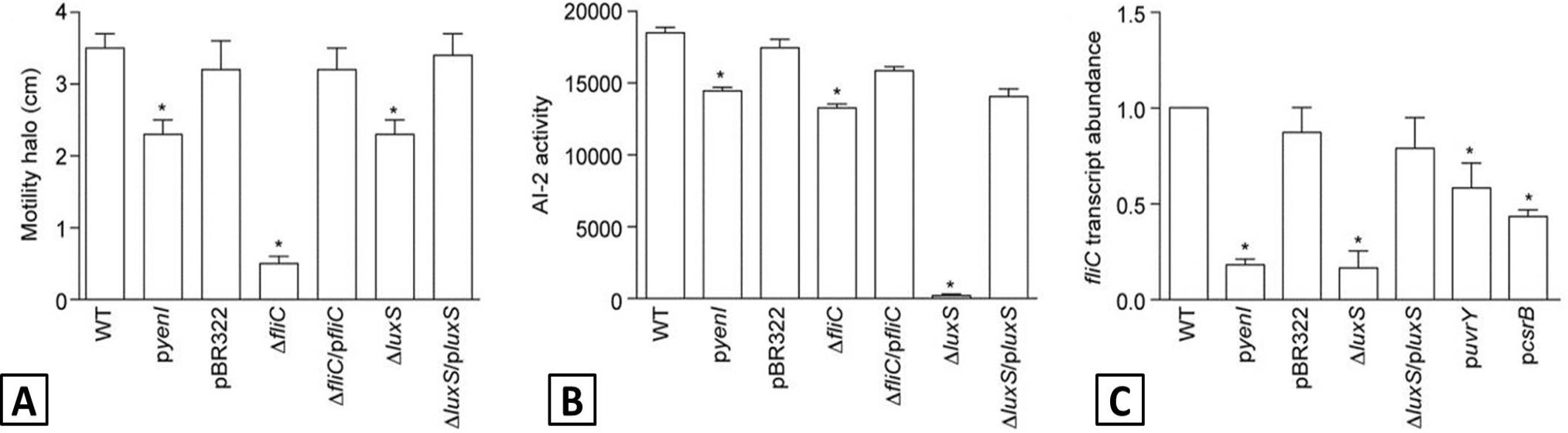
QS-1 and QS-II have differential impact on bacterial motility. A, motility diameters were quantified after 12 h growth on 0.3 % swim agar plates; B, AI-2 production, AI-2 activity was measured using a bioluminescence assay after growing the indicated bacterial strains to an OD600 of 1.3. AI-2 activity is expressed as relative light units measured; C, fliC expression. fliC expression was measured using qRT-PCR with data normalized to the endogenous reference gene gapA. Data are expressed relative to expression in the WT strain.
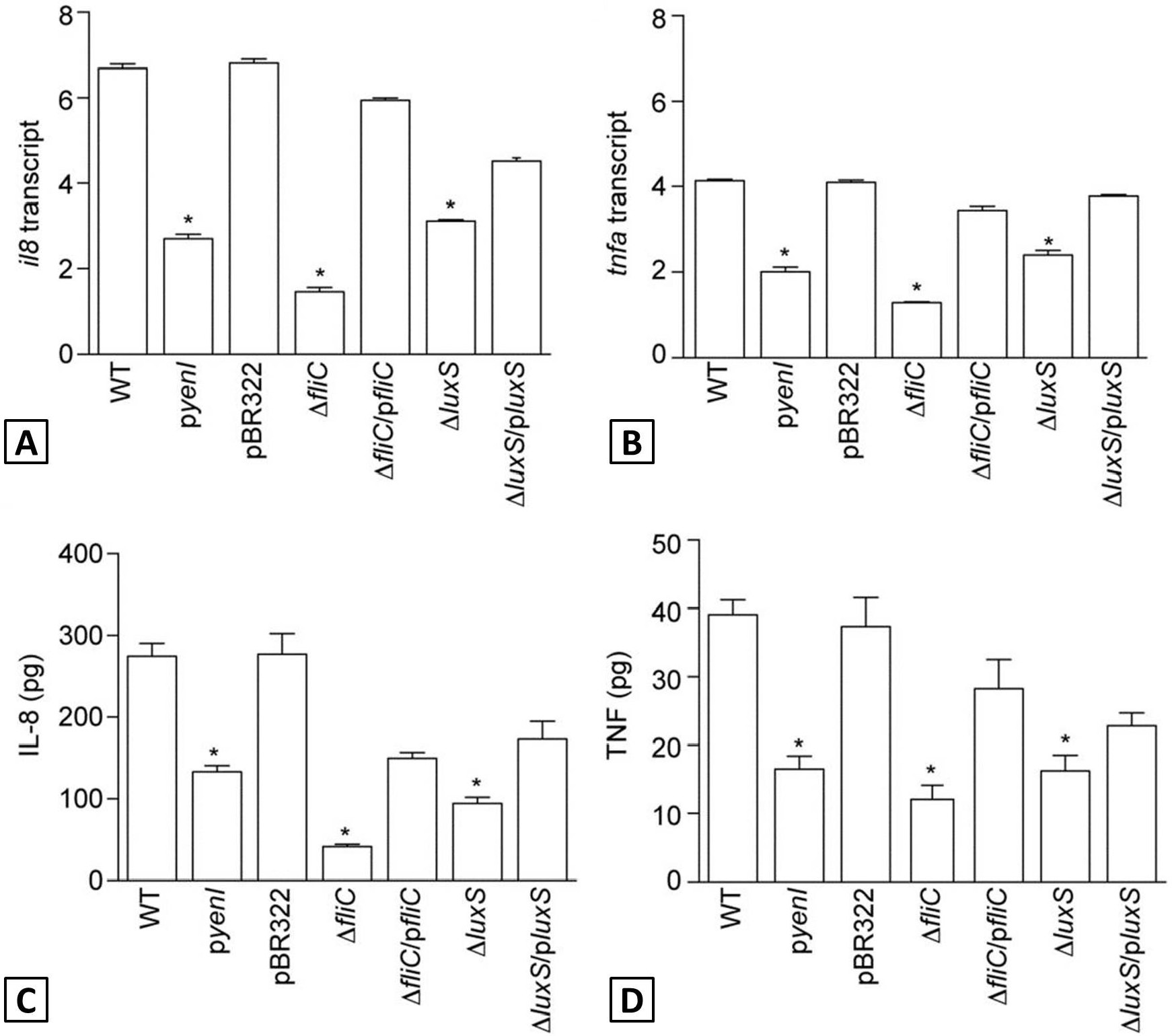
Host IL-8 and TNF expression in response to F18 E. coli infection. A-B, transcription of il8 and tnfa in Caco-2 cells after a 2 h infection with the indicated bacterial strains. Data were normalized to the housekeeping gene gapdh; C-D, ELISA, secretion of IL-8 and TNF into Caco-2 cell supernatants after a 2 h infection with the indicated bacterial strains was quantified using ELISAs.
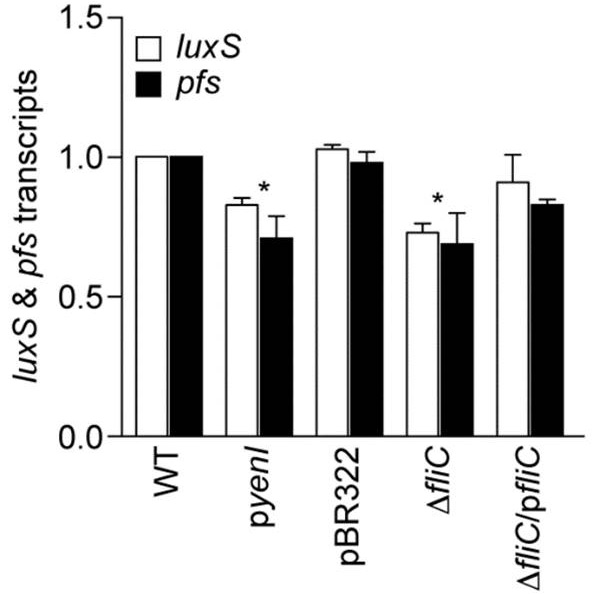
AI-1 and flagella expression influence AI-2 expression. luxS and pfs expression were measured using qRT-PCR with data normalized to the endogenous reference gene gapA. Data are expressed relative to expression in the WT strain.
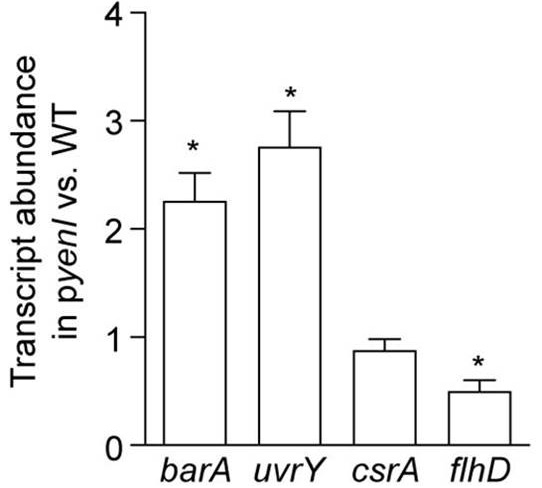
Coordinate regulation of flagella and QS expression. Transcription of the indicated genes was measured using qRT-PCR. Data are shown as expression in pyenI vs. WT.
References
- Anand, S.K. and Griffiths, M.W., 2003. Quorum sensing and expression of virulence in Escherichia coli O157:H7. Int. J. Fd. Microbiol., 85: 1-9. https://doi.org/10.1016/S0168-1605(02)00482-8[CrossRef]
- Bassler, B.L., Wright, M. and Silverman, M.R., 1994. Multiple signalling systems controlling expression of luminescence in Vibrio harveyi: sequence and function of genes encoding a second sensory pathway. Mol. Microbiol., 13: 273-286. https://doi.org/10.1111/j.1365-2958.1994.tb00422.x[CrossRef]
- Clarke, M.B., Hughes, D.T., Zhu, C., Boedeker, E.C. and Sperandio, V., 2006. The QseC sensor kinase: a bacterial adrenergic receptor. Proc. natl. Acad. Sci. USA, 103: 10420-10425. https://doi.org/10.1073/pnas.0604343103[CrossRef]
- Curtis, M.M. and Sperandio, V., 2011. A complex relationship: The interaction among symbiotic microbes, invading pathogens, and their mammalian host. Mucosal. Immunol., 4: 133-138. https://doi.org/10.1038/mi.2010.89[CrossRef]
- Da, S.A., Valadares, G.F., Penatti, M.P., Brito, B.G. and Da, S.L.D., 2001. Escherichia coli strains from edema disease: O serogroups, and genes for Shiga toxin, enterotoxins, and F18 fimbriae. Vet. Microbiol., 80: 227-233. https://doi.org/10.1016/S0378-1135(01)00316-9[CrossRef]
- Datsenko, K.A. and Wanner, B.L., 2000, One-step inactivation of chromosomal genes in Escherichia coli K-12 using PCR products. Proc. natl. Acad. Sci. USA, 97: 6640-6645. https://doi.org/10.1073/pnas.120163297[CrossRef]
- Duan, Q., Zhou, M., Zhu, L. and Zhu, G., 2012. Flagella and bacterial pathogenicity. J. Basic Microbiol., 52: 1-8.
- Duan, Q., Zhou, M., Zhu, X., Bao, W., Wu, S., Ruan, X., Zhang, W., Yang, Y., Zhu, J. and Zhu, G., 2012. The flagella of F18ab Escherichia coli is a virulence factor that contributes to infection in a IPEC-J2 cell model in vitro. Vet. Microbiol., 160: 132-140. https://doi.org/10.1016/j.vetmic.2012.05.015[CrossRef]
- Duan, Q., Zhou, M., Zhu, X., Yang, Y., Zhu, J., Bao, W., Wu, S., Ruan, X., Zhang, W. and Zhu, G., 2013. Flagella from F18+Escherichia coli play a role in adhesion to pig epithelial cell lines. Microb. Pathog., 55: 32-38. https://doi.org/10.1016/j.micpath.2012.09.010[CrossRef]
- Edwards, A.N., Patterson-Fortin, L.M., Vakulskas, C.A., Mercante, J.W., Potrykus, K., Vinella, D., Camacho, M.I., Fields, J.A., Thompson, S.A., Georgellis, D., Cashel, M., Babitzke, P. and Romeo, T., 2011. Circuitry linking the Csr and stringent response global regulatory systems. Mol. Microbiol., 80: 1561-1580. https://doi.org/10.1111/j.1365-2958.2011.07663.x[CrossRef]
- Frydendahl, K., 2002. Prevalence of serogroups and virulence genes in Escherichia coli associated with postweaning diarrhoea and edema disease in pigs and a comparison of diagnostic approaches. Vet. Microbiol., 85: 169-182. https://doi.org/10.1016/S0378-1135(01)00504-1[CrossRef]
- Gonzalez, B.A., Zuo, R., Hashimoto, Y., Yang, L., Bentley, W.E. and Wood, T.K., 2006, Autoinducer 2 controls biofilm formation in Escherichia coli through a novel motility quorum-sensing regulator (MqsR, B3022). J. Bact., 188: 305-316. https://doi.org/10.1128/JB.188.1.305-316.2006[CrossRef]
- Han, X.G. and Lu, C.P., 2009. Detection of autoinducer-2 and analysis of the profile of luxS and pfs transcription in Streptococcus suis serotype 2. Curr. Microbiol., 58: 146-152. https://doi.org/10.1007/s00284-008-9291-9[CrossRef]
- Herren, C.D., Mitra, A., Palaniyandi, S.K., Coleman, A., Elankumaran, S. and Mukhopadhyay, S., 2006. The BarA-UvrY two-component system regulates virulence in avian pathogenic Escherichia coli O78:K80:H9. Infect. Immun., 74: 4900-4909. https://doi.org/10.1128/IAI.00412-06[CrossRef]
- Li, J., Attila, C., Wang, L., Wood, T.K., Valdes, J.J. and Bentley, W.E., 2007. Quorum sensing in Escherichia coli is signaled by AI-2/LsrR: Effects on small RNA and biofilm architecture. J. Bact., 189: 6011-6020. https://doi.org/10.1128/JB.00014-07[CrossRef]
- Liu, M.Y. and Romeo, T., 1997. The global regulator CsrA of Escherichia coli is a specific mRNA-binding protein. J. Bact., 179: 4639-4642. https://doi.org/10.1128/jb.179.14.4639-4642.1997[CrossRef]
- Mercante, J., Edwards, A.N., Dubey, A.K., Babitzke, P. and Romeo, T., 2009. Molecular geometry of CsrA (RsmA) binding to RNA and its implications for regulated expression. J. mol. Biol., 392: 511-528. https://doi.org/10.1016/j.jmb.2009.07.034[CrossRef]
- Miao, E.A., Alpuche-Aranda, C.M., Dors, M., Clark, A.E., Bader, M.W., Miller, S.I. and Aderem, A., 2006. Cytoplasmic flagellin activates caspase-1 and secretion of interleukin 1beta via Ipaf. Nat. Immunol., 7: 569-575. https://doi.org/10.1038/ni1344[CrossRef]
- Niu, C., Robbins, C.M., Pittman, K.J., Osborn, J., Stubblefield, B.A., Simmons, R.B. and Gilbert, E.S., 2013. LuxS influences Escherichia coli biofilm formation through autoinducer-2-dependent and autoinducer-2-independent modalities. FEMS Microbiol. Ecol., 83: 778-791. https://doi.org/10.1111/1574-6941.12034[CrossRef]
- Pacheco, A.R. and Sperandio, V., 2009. Inter-kingdom signaling: Chemical language between bacteria and host. Curr. Opin. Microbiol., 12: 192-198. https://doi.org/10.1016/j.mib.2009.01.006[CrossRef]
- Pernestig, A.K., Georgellis, D., Romeo, T., Suzuki, K., Tomenius, H., Normark, S. and Melefors, O., 2003. The Escherichia coli BarA-UvrY two-component system is needed for efficient switching between glycolytic and gluconeogenic carbon sources. J. Bact., 185: 843-853. https://doi.org/10.1128/JB.185.3.843-853.2003[CrossRef]
- Pernestig, A.K., Melefors, O. and Georgellis, D., 2001. Identification of UvrY as the cognate response regulator for the BarA sensor kinase in Escherichia coli. J. biol. Chem., 276: 225-231. https://doi.org/10.1074/jbc.M001550200[CrossRef]
- Rahmati, S., Yang, S., Davidson, A.L. and Zechiedrich, E.L., 2002. Control of the AcrAB multidrug efflux pump by quorum-sensing regulator SdiA. Mol. Microbiol., 43: 677-685. https://doi.org/10.1046/j.1365-2958.2002.02773.x[CrossRef]
- Ren, T., Zamboni, D.S., Roy, C.R., Dietrich, W.F. and Vance, R.E., 2006. Flagellin-deficient Legionella mutants evade caspase-1- and Naip5-mediated macrophage immunity. PLoS Pathog., 2: e18. https://doi.org/10.1371/journal.ppat.0020018[CrossRef]
- Salazar-Gonzalez, H. and Navarro-Garcia, F., 2011. Intimate adherence by enteropathogenic Escherichia coli modulates TLR5 localization and proinflammatory host response in intestinal epithelial cells. Scand. J. Immunol., 73: 268-283. https://doi.org/10.1111/j.1365-3083.2011.02507.x[CrossRef]
- Sheng, H., Nguyen, Y., Hovde, C.J. and Sperandio, V., 2013. SdiA aids enterohemorrhagic E. coli carriage by cattle fed forage or grain diets. Infect. Immun., 81: 3472–3478. https://doi.org/10.1128/IAI.00702-13[CrossRef]
- Sitnikov, D.M., Schineller, J.B.,and Baldwin, T.O., 1996. Control of cell division in Escherichia coli: Regulation of transcription of ftsQA involves both rpoS and SdiA-mediated autoinduction. Proc. natl. Acad. Sci. USA, 93: 336-341. https://doi.org/10.1073/pnas.93.1.336[CrossRef]
- Sperandio, V., 2010. SdiA sensing of acyl-homoserine lactones by enterohemorrhagic E. coli (EHEC) serotype O157:H7 in the bovine rumen. Gut Microbes, 1: 432-435. https://doi.org/10.4161/gmic.1.6.14177[CrossRef]
- Sperandio, V., Torres, A.G. and Kaper, J.B., 2002. Quorum sensing Escherichia coli regulators B and C (QseBC): A novel two-component regulatory system involved in the regulation of flagella and motility by quorum sensing in E. coli. Mol. Microbiol., 43: 809-821. https://doi.org/10.1046/j.1365-2958.2002.02803.x[CrossRef]
- Stecher, B., Barthel, M., Schlumberger, M.C., Haberli, L., Rabsch, W., Kremer, M. and Hardt W.D., 2008. Motility allows S. typhimurium to benefit from the mucosal defence. Cell Microbiol., 10: 1166-1180. https://doi.org/10.1111/j.1462-5822.2008.01118.x[CrossRef]
- Stecher, B., Hapfelmeier, S., Muller, C., Kremer, M., Stallmach, T. and Hardt, W.D., 2004. Flagella and chemotaxis are required for efficient induction of Salmonella enterica serovar Typhimurium colitis in streptomycin-pretreated mice. Infect. Immun., 72: 4138-4150. https://doi.org/10.1128/IAI.72.7.4138-4150.2004[CrossRef]
- Van Houdt, R., Aertsen, A., Moons, P., Vanoirbeek, K. and Michiels, C.W., 2006. N-acyl-L-homoserine lactone signal interception by Escherichia coli. FEMS Microbiol. Lett., 256: 83-89. https://doi.org/10.1111/j.1574-6968.2006.00103.x[CrossRef]
- Vijay-Kumar, M., Carvalho, F.A., Aitken, J.D., Fifadara, N.H. and Gewirtz, A.T., 2010. TLR5 or NLRC4 is necessary and sufficient for promotion of humoral immunity by flagellin. Eur. J. Immunol., 40: 3528-3534. https://doi.org/10.1002/eji.201040421[CrossRef]
- Wei, Y., Lee, J.M., Smulski, D.R. and LaRossa, R.A., 2001, Global impact of sdiA amplification revealed by comprehensive gene expression profiling of Escherichia coli. J. Bact., 183: 2265-2272. https://doi.org/10.1128/JB.183.7.2265-2272.2001[CrossRef]
- Yang, Y., Yao, F., Zhou, M., Zhu, J., Zhang, X., Bao, W., Wu, S., Hardwidge, P.R. and Zhu, G., 2013. F18ab Escherichia coli flagella expression is regulated by acyl-homoserine lactone and contributes to bacterial virulence. Vet. Microbiol., 165: 378-383.
- Yang, Y., Zhou, M., Hou, H., Zhu, J., Yao, F., Zhang, X., Zhu, X., Hardwidge, P.R. and Zhu, G., 2014. Quorum-sensing gene luxS regulates flagella expression and Shiga-like toxin production in F18ab Escherichia coli. Can. J. Microbiol., 60: 355-361. https://doi.org/10.1139/cjm-2014-0178[CrossRef]
- Zhou, M., Duan, Q., Zhu, X., Guo, Z., Li, Y., Hardwidge, P.R. and Zhu, G., 2013. Both flagella and F4 fimbriae from F4ac+ enterotoxigenic Escherichia coli contribute to attachment to IPEC-J2 cells in vitro. Vet. Res., 44: 30. https://doi.org/10.1186/1297-9716-44-30[CrossRef]
- Zhou, M., Guo, Z., Yang, Y., Duan, Q., Zhang, Q., Yao, F., Zhu, J., Zhang, X., Hardwidge, P.R. and Zhu, G., 2014. Flagellin and F4 fimbriae have opposite effects on biofilm formation and quorum sensing in F4ac+ enterotoxigenic Escherichia coli. Vet. Microbiol., 168: 148-153. https://doi.org/10.1016/j.vetmic.2013.10.014[CrossRef]
- Zhu, C., Feng, S., Sperandio, V., Yang, Z., Thate, T.E., Kaper, J.B. and Boedeker, E.C., 2007. The possible influence of LuxS in the in vivo virulence of rabbit enteropathogenic Escherichia coli. Vet. Microbiol., 125: 313-322. https://doi.org/10.1016/j.vetmic.2007.05.030[CrossRef]
Cited by 2 articles
In journals published by ResearchersLinks.
Services
Article usage statistics
Loading…