
The aim of this study was to determine and compare the extraction potential and in vitro antimicrobial activity of methanol, ethanol, chloroform, aqueous and acetone extracts of Olea ferruginea leaf nut galls against bacteria and fungi of gastrointestinal tracts. Cold maceration procedure was used to check the extraction potential of the active bimolecules. Qualitative Phytochemical screening for primary and secondary metabolites were carried out for all of the extracts and were analyzed for the presence of active constituents such as flavonoids, terpeniods, tannins, carbohydrates, proteins, steroids and saponins. Various extracts of Olea ferruginea leaf nut galls were screened for antimicrobial activity at 100mg/ml concentration level against four bacterial species including two gram positive bacteria (Staphylococcus aureus and Streptococcus mutans), two gram negative bacteria (Escherichia coli and Salmonella typha) and one yeast species (Candida albicans) using agar well diffusion method. Among the extracts, methanol was found best solvent for extraction followed by acetone. Qualitative Phytochemical screening of leaf nut galls extracts confirmed the presence of primary and secondary metabolites i.e., tannins, steroids, terpeniods, proteins, carbohydrates, saponins and flavonoids. Results of antimicrobial activity demonstrated that various extracts were active against the selected test microorganisms. The acetone and ethanol extracts were most active against all the tested micro organisms. Candida albicans was most susceptible (36.00 mm) in acetone extract among the handpicked microorganisms to different crude extracts of nut galls, followed by Staphylococcus aureus (34.00mm) in acetone extract, Streptococcus mutans (33.00mm) in acetone extract, Salmonellatypha (32.67mm) and Escherichia coli was found least susceptible to nut galls extract (27.00 mm) in ethanol. However Chloroform extract was found comparatively least effective against microorganisms. In conclusion, Olea ferruginea leaf nut galls showed promising phytochemiacls and antimicrobial properties, making them a potential source for further research in developing antibacterial and antifungal agents.
Research Article · Volume 30, Issue 4, 20 January 2025 · Open Access
Antimicrobial Activity of Olea ferruginea Leaf Galls Extracts
· · · · · · ·
Affiliations & Notes ⌄
- 1Department of Botany, Government Girls Degree College KDA Karak, Khyber Pakhtunkhwa, Pakistan
- 2PCSIR Laboratories Complex Peshawar, Khyber Pakhtunkhwa, Pakistan
- 3Kohat Division Development Project, P and D Peshawar, Khyber Pakhtunkhwa, Pakistan
- 4Khyber Medical University, Peshawar, Khyber Pakhtunkhwa, Pakistan. *Correspondence | Shahida Naveed, Department of Botany, Government Girls Degree College KDA Karak, Khyber Pakhtunkhwa, Pakistan
- 5Email: shahidanaveed@live.com
Article Info ⌄
- Journal:
- Pakistan Journal of Weed Science Research
- Published:
- 20 January 2025
Abstract
Introduction
Throughout history, humans have delved into the natural world, specifically medicinal plants, in their quest for novel pharmaceuticals. Approximately 80% of the global population has relied on medicinal plants for their fundamental health needs. Phytochemicals, which naturally occur in plants, leaves, vegetables, and roots, operate as a defence mechanism and safeguard against various diseases. They also impart distinct sensory attributes and colour to the plants . In contemporary times, pathogens have developed resistance to antibiotics, prompting the exploration of herbal remedies. To address this demand, a recent study was conducted to investigate the phytochemical composition and antimicrobial properties of extracts from Olea ferruginea leaf nut galls.
Olea ferruginea (Oleaceae) is commonly known as wild Olive. Nut galls arise on the lower surfaces of the leaves caused by gall midges or gall flies . Various plants and galls have been screened and reported to possess antimicrobial and antioxidant activity e.g., first ever report on olive leaf nut gall caused by gall midges or gall flies , Phytochemical content and antioxidant activity of Q. infectoria galls , Gall of Pistacia integerrima for antimicrobial activity Phytochemistry and pharmaceutical properties of Oleaeuropaea and leaves and bark of Olea ferruginea Royle . As no such study is done on the Olea ferruginea, so the aim of this project work was to investigate phytochemical profile and antimicrobial efficacy of extracts derived from Olea ferruginea leaf nut galls.
Materials and Methods
Chemicals
Benedict solution, Molisch reagent, Iodine solution, Distilled water, Bromine water, Sodium carbonate (Na₂CO₃), Acetic Acid, Sulphuric acid, NaOH, HCl, HNO₃, Lead acetate, Chloroform, Ferric chloride (FeCl3), Methanol, Acetone, Ethanol.
Test micro-organsisms
Fungal strain: Candida albicans
Bacterial strains
Gram (-ve) bacterial strains
- Escherichia coli
- Salmonella typha
Gram (+ ve) bacterial strains
- Streptococcus mutans
- Staphylococcus aureus
Plant collection
The leaf nut galls of Olea ferruginea were collected from Palosasar Shamshaki District Karak KP-Pakistan. The test microorganisms and antimicrobial activity was performed by PCSIR.
Preservation and gringding
Leaf nut galls were dried in the lab at room temperature. Dried mass was grind d by electric grinder and stored in air tight bottle.
Extraction
The extraction process of crude plant drugs involves isolating bioactive compounds from plant material using appropriate solvents and extraction techniques (Evens, 2009). The extraction process followed the cold maceration technique with a selection of five dissimilar solvents: Water, ethanol, methanol, acetone, and chloroform. 10g of leaf gull powder were soaked in 200ml for 10 days. They were regularly shacked after 12 hours and filtered with filter paper. The filtrate was evaporated at room temperature and in water bath to remove extra solvent and dried to semi-dried crude extracts (Wado et al., 2022).
Estimation of the extraction yield
The extraction yield (%) was calculated using the formula:
Extraction yield (%) = Weight of the extract after evaporating solvent and freeze drying /dry weight of the sample powder × 100
Phytochemical analysis
Phytochemical analysis of aqueous, methanol, ethanol, acetone and chloroform extract of the screened olive leaf galls were done for the presence or absence of active bioactive secondary metabolites or different components such as Carbohydrates, Proteins, Tannins, Saponins, Steroids, Flavonoids, and Terpniods following the procedures of Evans (2009), Khalid et al. (2018), Yadave and Agarwala (2011) and Banu and Cathrine (2015).
Table 1: Phytochemical screening of various crude extracts obtained from the nut galls of Olea ferruginea.
| S. No | Phytochemicals | Tests | Extracts results | ||||
| Aqueous extract | Methanol extract | Ethanol extract | Acetone extract | Chloroform extract | |||
| 1 | Tannins | Ferric chloride test | +++ | +++ | +++ | +++ | + |
| Bromine water test | + | +++ | +++ | +++ | − | ||
| Lead acetate test | +++ | +++ | +++ | +++ | − | ||
| 2 | Carbohydrates | Mulish test | + | +++ | + | + | +++ |
| Iodine test | + | ++ | − | +++ | ++ | ||
| Benedicts test | +++ | +++ | ++ | + | − | ||
| 3 | Protein | Xanthoprotic test | +++ | ++ | +++ | +++ | − |
| 4 | Saponins | Test for Saponins | − | +++ | +++ | − | − |
| 5 | Terpeniods | Test for terpeniods | +++ | + | +++ | + | + |
| 6 | Steroids | Test for steroid | + | − | +++ | +++ | + |
| 7 | Flavonoids | Test for flavonoids | +++ | +++ | +++ | +++ | +++ |
Note: “+”least intense, “++” moderate amount.
Antimicrobial activity
The antimicrobial effectiveness of different organic and inorganic solvent extracts was evaluated using the ager well diffusion method. The test microorganisms were initially cultured in nutrient broth for 24 hours before the experiments. To create the ager plates, nutrient ager (Mueller-Hinton Ager) was melted, cooled to 40°C, and poured into sterilized petridishes wells were formed in the ager using a sterile metal cork borer. The microorganisms were streaked onto the ager plates using a non-pathogenic cotton swab. This process was repeated three times, with the plate rotated by 60° between each streaking. Following this, approximately 1ml of the respective extracts (at a concentration of 100mg/ml), dissolved in DMSO, was added to the wells and allowed to diffuse at room temperature. The plates were then incubated at 37°Cfor 24 hours. As a standard for gall extracts of different solvents, ciprofloxacin at 25µg/ml was used as control. The diameter of the zone of inhibitions was measured in millimeters.
Statistical analysis
The experimental outcomes were expressed as mean ± Standard deviation (STD) from three repetitions in each trial. Statistically ANOVA one way and Dunnett’t tests were applaid to data for analysis in MS Excel 2007.
Results and Discussion
Esimation of the extractive yield
Extractive values are crucial in medicinal plants because they determine the concentration of bioactive compounds, such as alkaloids, flovonoids and phenolic compounds, which possess therapeutic properties. Extractive values of olive leaf nut galls can vary depending on the solvent used for extraction and the specific components being targeted. Here extractive values are expressed in %. The most extractable solvent was methanol followed by acetone while the rest of the solvents showed moderate extraction i.e., 7.7% for ethanol,6%for aqueous and 4.7% for chloroform.
Phytochemical analysis
Phytochemical analysis plays a significant role in drug development by identifying bioactive compounds in medicinal plants that can lead molecules for pharmaceutical research. Here’s a brief overview of the phytochemical analysis of olive leaf nut galls.
Olive leaf nut galls are rich in tannins, flavonoids, terpenoids, proteins, etc. tannins are polyphenolic compounds known for their antioxidant and antimicrobial properties . Flavonoids are another group of phytochemicals found in olive leaf nut galls. These compounds have various biological activities, including antioxidant, anti-inflammatory and antimicrobial effects .These studies provide insights into the phytochemical composition and potential health benefits of olive leaf nut galls.
Antimicrobial assay
The antimicrobial efficacy of diverse extracts of Olea ferruginea leaf nut galls was carried out at a 100mg/mL concentration level against different bacterial and fungal strains, i.e. Escherichiacoli, Salmonella typha, Staphylococcus aureus, Streptococcus mutans, and Candida albicans using the well diffusion method. The bacterial strains were gram positive and gram-negative species that often cause infectious diseases. The result from the different solvents extracts of Olea ferruginea leaf nut galls against various bacteria and fungi are presented in the above Table 2.
The efficiency of different extracts was expressed by measuring the zone of inhibition in millimeters. Acetonic crude extract was less active against Escherichia coli i.e., 15.67 ±1.53mm however it showed appreciable antimicrobial activity against all other strains. Ethanolic extract induced higher bactericidal activity against Escherichia coli. It also showed a considerable amount of activity against rest of the strains. Methanolic and acetonic extracts also inhibited the growth of the Streptococcus mutans i.e. (32.00±2.00, 33.00±1.00mm), respectively. Acetone and ethanol crude extracts also showed greater efficiency against Staphylococcus aureus bacteria (34.00±1.00, 25.67±0.58mm). Aqueous extract induced higher antimicrobial activity against Escherichia coli, Candida albicans and Salmonella typha (21.67±1.53, 24.00±1.00mm), respectively. It also showed a greater amount of activity against Candida albicans (24.00±1.00mm). Chloroform extract inhibited the growth of any of all the tested organisms less efficiently. The highest activity (36. 33±1.53mm) was found for acetone crude extract against Candida albican.
The treatment of diseases through plant derived medicines is immemorial. According to (WHO) the qualities of safety, efficacy, low-cost rate and easily availability have made natural products as an important source in killing primary health problems on earth ; . The research employed two categories of test microorganisms: Bacterial and fungal strains. Specifically, the study focused on four bacterial variations (two positive and two negative) and one type of fungus. To assess phytochemiacls screening and antimicrobial activity, five solvents of variable polarity were utilized.
Atta et al. (2023) explored the extraction yield using distilled water, methanol, and ethyl acetate extracts of different nine plants by sonication assisted maceration
Table 2: Zone of inhibition(mm) of different crude extracts of Olea ferruginea leaf nut galls against selected microorganisms.
| Strains | Aqueous extract | Ethanol extract | Methanol extract | Acetone extract | Chloroform extract | Ciprofloxacin (25µg) |
| Escherichia coli | 21.67 ± 1.53 | 27.00±1.00*** | 17.00 ± 1.00 | 15.67 ± 1.53 | 17.67 ± 1.53 | 35 |
| Staphylococcus aureus | 18.00 ± 0.00 | 25.67 ± 0.58 | 15.00 ± 1.00 | 34.00±1.00*** | 15.00 ± 1.00 | 50 |
| Streptococcus mutans | 17.67 ± 1.53 | 23.00 ± 0.00 | 32.00 ± 2.00 | 33.00±1.00*** | 19.67 ± 1.53 | 50 |
| Salmonella typha | 24.00 ± 1.00 | 26.00 ± 1.00 | 19.67 ± 1.53 | 32.67±2.52*** | 16.00 ± 1.00 | 42 |
| Candida albicans | 24.00 ± 1.00 | 26.33 ± 2.08 | 17.00 ± 1.00 | 36.33±1.53*** | 17.00 ± 1.29 | 50 |
Note: Values are expressed as mean ± STD.DE. ANOVA followed by Dunnett’t post hoc test at alpha level 0.01, 0.05 and 0.10 compared to control group (ciprofloxacin). *** indicated the highest inhibition zone in all of the extracts against selected test micro-organisms.
method. Out of this methanol extract showed higher extraction efficiency. And greater extractive yield may not always refer to definite biological inhibition and more pronounced activity may be observed in lower yield of extracts. This depends upon the nature of the extracted phytochemiacls.
In the current study using distilled water, methanol, acetone, ethanol, and chloroform were used as a solvent for cold maceration process. The extraction efficiency of methanol was higher in all the extracts followed by acetone. Chloroform has least extractive value and acetone show more pronounced antimicrobial activity followed by ethanol. Tannins and terpeniods are being assessed for their potential as analgesic and anti-inflammatory agents. Tannins also heal the wounds and inflamed mucous membrane ; Hussein et al., 2023).
Saponins are cardiotonic in nature and reported to have antifungal and antidiabatic activities. Plant steroids are effective for insecticidal and antimicrobial properties. It also used as nutrition, herbal medicine and in cosmetics .
Flavonoids dissolve poorly in water but readily dissolve in organic solvents . Flavonoids also used as antiviral, antibacterial spasmolytic activities . Mehmood and Murtaza (2018) worked on Olea ferruginea Royle leaves and bark extracts. The results showed that both leaf and bark chloroform extracts did not stop the growth of any test species, while in present study, leaf nutgall of chloroform extract exhibited considerable inhibition values for microbial growth but least among all of the other extracts.
Ramachandra et al. (2010) reported from the investigation of Pistacia integeryima leaf gall using ethanol and aqueous extract. The ethanol extract appears to more potent in antibacterial activity than the aqueous extract. Ethanol extract showed highest suppressive impact on the growth of Escherichia coli in the current investigative work. This is because of two reasons: First one is the nature of biologically active chemicals and secondly the stronger capacity of extraction of corresponding active constituents of antibacterial activity. Studies on antibacterial properties of medicinal plants by Adil et al. (2020), Hashim et al. (2022) and Noori et al. (2023) are in support of our current studies. For anti-fungal activity, Hussein al. (2018) reported the antifungal activity of Q. infectoria galls against Candida albicans at different concentrations. The highest antifungal activity was noted as 28mm at concentration of 100mg/ml and 20mm at 6.25mg/ml. The present study illustrating that inhibition zone value of Candida albicans was high in all of the extracts than the others test microorganisms (36.33mm in acetone extract specifically). This high antifungal activity of all the experienced extracts is associated with the flavonoids and other phenolic content that are confirmed by phytochemical screening .
Acknowledgement
The authors would like to extend their sincere gratitude to PCSIR Laboratories Complex Peshawar for their technical support and assistance in conducting the antimicrobial activity tests, which greatly contributed to the successful completion of this research project
Novelty Statement
This study pioneers the investigation of Olea ferruginea leaf gall extracts, revealing their potent antimicrobial properties and underscoring their potential as a natural remedy against microbial infections.
Author’s Contribution
All authors contributed to the conception and design of the study. Madeeha collected the plant material.Madeeha , Jalwa and Ayosha processed the plant material, while Dr.Gul Rose and Dr.Abdul Haq conducted the antimicrobial activity tests. Dr. Shahida Naveed designed and supervised the whole research activity. Madeeha, Jalwa and Ayosha analyzed the data. Zunaira helped in outline of the manuscript.InayatUllah helped financially in this research activity. All authors reviewed and approved the final manuscript.
Conflict of interest
The authors have declared no conflict of interest.
Figures
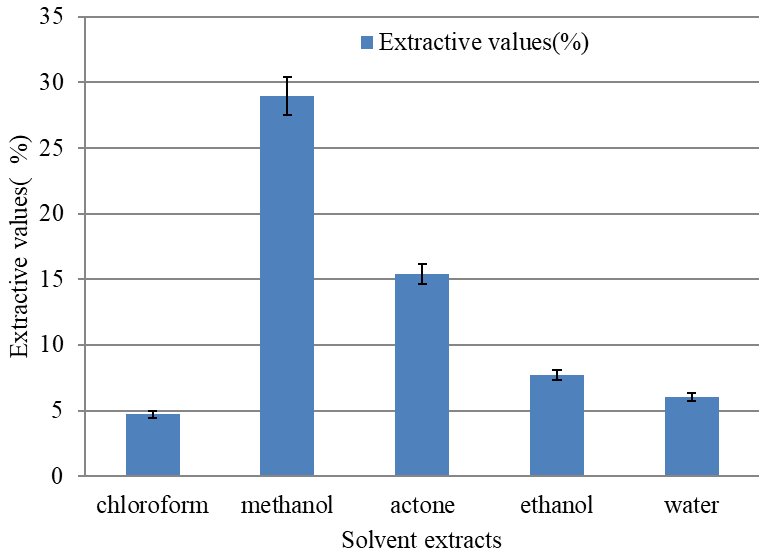
Graphical representation of % yield of various crude extracts of Olea ferruginea leaf nut galls.
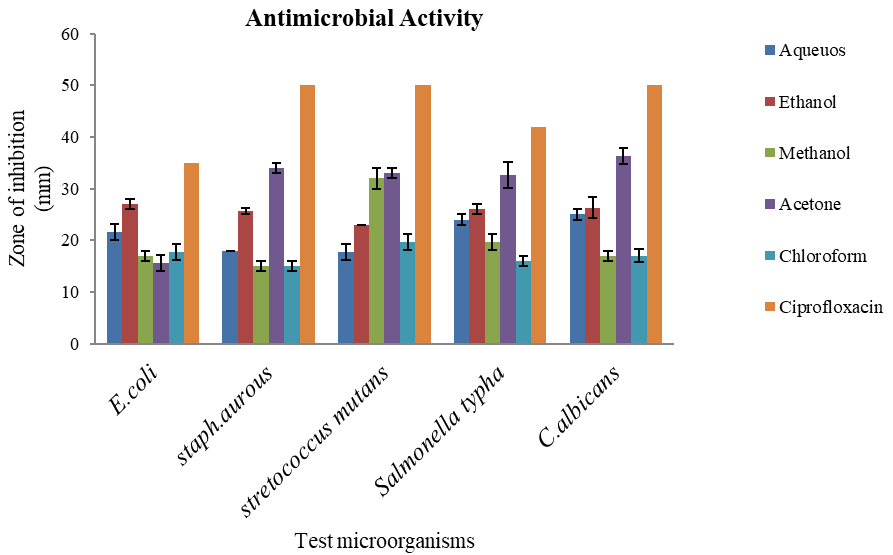
Microbial inhibition exhibited by various crude extracts against the specified microorganisms.
References
- Adil, M., G. Dastagir, J. Bakht and Ambrin. 2020. Phytochemical screening and antimicrobial activity of medicinally important Achillea millefolium L and Chaerophyllum villosum Wall ex DC. Pak. J. Bot., 52(3): 971-974. https://doi.org/10.30848/PJB2020-3(29)[CrossRef]
- Almasoodi, I.H., H.J. Hussein and A.F. Al-Rubaye. 2020. Antifungal activity of the two medicinal plants (Curcuma longa L. and Boswellia carteri Birdwood) against Fusarium species isolated from maize seeds. Int. J. Pharma. Res., 12(3): 408-414. https://doi.org/10.31838/ijpr/2020.12.03.063[CrossRef]
- Atta, S., D. Waseem, I. Naz, F. Rasheed, A.R. Phull, T. Ur-Rehman, N. Irshad, P. Amna and H. Fatima. 2023. Polyphenolic characterization and evaluation of multimode antioxidant, cytotoxic, biocompatibility and antimicrobial potential of selected ethnomedicinal plant extracts. Arab. J. Chem., 16: 104474. https://doi.org/10.1016/j.arabjc.2022.104474[CrossRef]
- Banu, K., Sahira and L. Cathrine. 2015. General techniques involved in Phytochemical analysis. Int. J. Adv. Res. Chem. Sci., 2(4): 25-32.
- Evans, W.C., 2009. Trease and evans pharmacognocy (16th ed.). Saunders Ltd.
- Hashim, S., S. Ayub, A. Jan, M. Israr, M.A. Khan and M. Fawad. 2022. Medicinal properties, phytochemistry and pharmacology of Acacia modesta (Wall.) Hurter. Pak. J. Weed Sci. Res., 28(3): 269-282. https://doi.org/10.28941/pjwsr.v28i3.1058[CrossRef]
- Hashmi, M.A., A. Khan, M. Hanif, U. Farooq and S. Perveen. 2015. Traditional uses, phytochemistry, and pharmacology of Olea europaea (Olive). Evid Based Complement. Altern. Med., 2015: 541591. https://doi.org/10.1155/2015/541591[CrossRef]
- Hussain, F., S.M. Shah, K. Aziz, S. Raisham and S. Ahmad. 2023. Qualitative phytochemical screening of some medicinally important alpine plants from Mastuj Valley, Hindu Kush Range, Pakistan. Pak. J. Bot., 55(2): 587-594. https://doi.org/10.30848/PJB2023-2(4)[CrossRef]
- Hussein, S.E.O., F.Al. R.M., E.I. Elnima and M.E. Shayoub. 2018. Antifungal potential of quercus infectoria galls against candida albicans-an in vitro study.
- Jemai, H., A. Eifeki, S. Sayadi and I. Fki. 2009. Hypolipidimic and antioxident activites of oleuropein and its hydrolysis derivative-rich extraxts from Chemlali olive leaves. Chem. Biol. Interact., 180(3): 421-432. https://doi.org/10.1016/j.cbi.2008.08.014[CrossRef]
- Kamarudin, N.A., N. Muhammad, N.N.H.N. Salleh and S.C. Tan. 2021. Impact of solvent selection on Phytochemical content, recovery of Tannin and antioxidant activity of Quercus infectoria galls. Pharmacogn. J., 13(5): 1195-1204. https://doi.org/10.5530/pj.2021.13.153[CrossRef]
- Khalid, S., A. Shahzad, N. Basharat, M. Abubakar and P. Anwar. 2018. Phytochemical screening and analysis of selected medicinal plants in Gujarat. J. Phytochem. Biochem., 2(1): 108.
- Noori, Z.T., M.T. Rad, M.H. Vala, M. Karimi and A.E. Nejad. 2023. Evaluation of the antibacterial effect of hydroalcoholic extract of the galls of Quercus infectoria on Aggregatibacter actinomycete mcomitans. J. Adv. Periodontol. Implant Dent., 15(1): 35-41. https://doi.org/10.34172/japid.2023.006[CrossRef]
- Mehmood, A. and G. Murtaza. 2018. Phelonic contents, antimicrobial and antioxidant activity of Olea ferruginea Royle (Oleaceae). BMC Complement. Altern. Med., 18: 173. https://doi.org/10.1186/s12906-018-2239-0[CrossRef]
- Naveed, S., M. Ibrar and I. Khattak. 2012. First ever report on Olive leaf nut galls caused by an unidentified Cecidomyiidaen spp. in District Karak, KPK, Pakistan. Greener J. Biol. Sci., 2(2): 25-27. https://doi.org/10.15580/GJBS.2012.2.08241253[CrossRef]
- Omar, S.H., 2010. Oleuropein in Olive and its pharmacological effects. Sci. Pharmaceut., 78(2): 133-154. https://doi.org/10.3797/scipharm.0912-18[CrossRef]
- Thomas, R.A. and Krishnakumari. 2015. Phytochemical profiling of Myristica fragras seed extract with different organic solvents. Asian J. Pharm. Clin. Res., 8(1): 303-307.
- Ramachandra, Y.L., B.E.R. Shankara, P.S.S. Ganapathy and S. Rajan. 2010. In vitro antimicrobial activity of Pistacia integeryima leaf gall extracts. Pharmacophore, 1(2): 149-159.
- Riaz, K., Z.F. Rizvi, S. Hyder and R. Rashed. 2021. Antibacterial, antitumor activity and phytochemical studies of methanolic extract of Catharanthus roseus (Linn.) G. Don. Pak. J. Bot., 53(6): 2259-2266. https://doi.org/10.30848/PJB2021-6(3)[CrossRef]
- Wadood, A., S.B. Jamal, M. Naeem and A. Khan. 2013. Phytochemical analysis of medicinal plants occurring in local area of Mardan. Biochem. Anal. Biochem., 2(4): 2-14. https://doi.org/10.4172/2161-1009.1000144[CrossRef]
- Wedo, T.E., S. Suleman and T. Mohammed. 2022. Antimicrobial evolution of sequentially extracted leaf of Vernonia auriculifera hiern (Rejicho). BMC Complement. Med. Ther., 22: 219. https://doi.org/10.1186/s12906-022-03690-2[CrossRef]
- Yadav, R.N.S. and M. Agarwala. 2011. Phytochemical analysis of some medicinal plants. J. Phytol., 3(12): 10-14.
Services
Article usage statistics
Loading…