2017). Antimicrobial agent must suppress or destroy microbial growth; thus susceptibility of the microorganisms, penetration of antimicrobial agent to the infected site, adequate concentration of the agent, low toxicity of the host cell, lack of micro-organism development of resistance to the agent are necessary (Rehab, 2015; Rehab, 2017; Mahon and Manuseli, 1995).
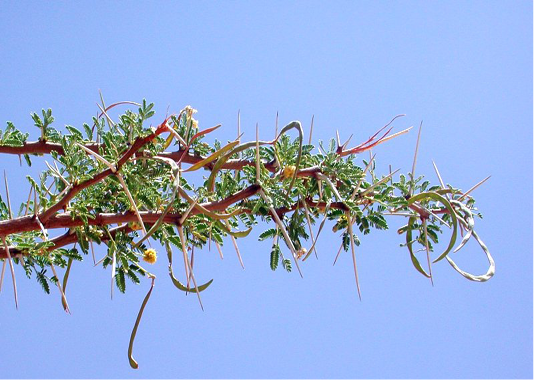
So the aim of this study is to investigate the phytochemical and antimicrobial activity of , Acacia ehrenbergiana Hayne (Salam) aqueous extract as a grazing herb against some medically important animal pathogens (Staphylococcus epidermis, Escherichia coli ,Streptococcus pyogens, Pseudomonasaerogenes, Salmonella typhimurium, Enterococcus, Bacillus cereus, Klebsiella pneumoniae and Candida albicans) by agar well diffusion method.
A lot of studies involve extraction of the active component in the plants using organic solvents. But plants as used in traditionally, using organic solvent extraction for the antibacterial properties should not be done often; therefore, in the present study the commonly used plant extract are made with distilled water and tested for its antimicrobial effect against (Staphylococcus epidermis, Escherichia coli, Streptococcus pyogens, Pseudomonasaerogenes, Salmonella typhimurium, Enterococcus, Bacillus cereus, Klebsiella pneumoniae and Candida albicans)
All plants used in the traditional medicine mostly have moderate antimicrobial activities as reported earlier (Rehab, 2015; Rehab, 2017; Chung et al.,1993; Chung et al., 1998; Sasikumar et al, 2005; Alkhazaragi, 1991).
The previous study with C. procera has been shown that the plant has antibacterial and antiparasitic activities (Larhsini et al., 1999). Recently, Rahim et al. (2016) studied the antimicrobial activity of methanol extract of A. ehrenbergiana which showed a wide spectrum activity against bacterial isolates but a poor inhibitory activity on fungi. These results clearly show that high extract concentration has high antibacterial activity. (Rahim et al., 2016).
Considering the above results, the results obtained showed that the hot and cold aqueous extract of Acacia ehrenbergiana Hayne for their antimicrobial activity against some medically important pathogens isolated from animals and poultry farms (Staphylococcus epidermis, Escherichia coli ,Streptococcus pyogens, Pseudomonas aerogenes, Salmonella typhimurium, Enterococcus, Bacillus cereus, Klebsiella pneumoniae and Candida albicans) by agar well diffusion method. Posses high antibacterial effect against the all examined pathogenic bacteria samples. While the extracts did not show any significant antifungal activity against Candida albicans.
The presence of biologically active constituents such as alkaloids, tannins, saponins and flavonoids in leaf and florets though in varying percentages might be responsible for the antimicrobial activity. Also the potency of leaf extract when compared with stem and floret could be due to high percentage of alkaloids and saponins in the extract. Alkaloids have been reported to posses antimicrobial activity against organisms such as klebsiella pueumonia and Candida albican (Rehab, 2017; Kanife and Odesanmi, 2012).
The Terminalia citrina extracts tannin content causes inhibition of cell wall formation leads to death of fungi. (Rehab, 2017; Le Houerou, 2013). However, non- inhibition of Candida albicans and Aspergillus flavus suggests resistance of these fungi to the active component present in the leaf extract. Also (Kanife and Odesanmi, 2012; Okokon et al., 2011) reported the antimicrobial activity of tannins through coagulating the protoplasm of the microorganism. Biological function of flavonoids includes protection against allergies, inflammation, free-radicals, platelet aggregation, microbes, ulcer, hetatoxins and tumors (Rehab, 2017; Kanife and Odesanmi, 2012). This may be explained by its activity against the test organisms. Also ithas been reported by (Rehab, 2017; Kanife and Odesanmi, 2012; Mahon and Manuseli, 1995). that flavonoids are responsible for anti microbial activity of some other medicinal plants. The absence of alkaloids, tannins and saponins in the extract may be responsible for its non-activity against all the organisms tested.
In this regard, the study was performed to investigate the phytochemical contents of Acacia ehrenbergiana Hayne. All phytochemical tests results indicated that the aqueous extract most abundantly contained alkaloids, flavnoids, tannins and saponin compounds in addition to glycoside was yielded from extract as shown in Table (2).
Antimycobacterial properties of the herb could be due to the abundant saponins, and tannins that were found in it Table (2). Phytochemical constituents such as tannins, saponins, flavonoids, alkaloids, and several other aromatic compounds are secondary metabolites of plants that serve as defense mechanisms against predation by many microorganisms, insects, and other herbivores. (Rehab, 2017; Chung et al., 1993).
Therefore, in order to obtain effective antimicrobial activity at low concentrations without any side effects on the health researches should focus on the optimization of purification and applications.
Also it can act as growth promoter through its effects by increasing activity of metabolic cycles because it contains Tannins (high molecular weight phenolic compounds) that have enough hydroxyl ions to bind feed nutrients (protein, carbohydrates and vitamins) and precipitate feed nutrients in tissues (Rehab, 2017; Chung et al.,1998).The bacteriostatic or bactericidal of tannin against Staphylococcus aureus. have been reported (Rehab, 2017; Sasikumar et al, 2005). The mechanisms of tannin antimicrobial activity can be explained briefly as follows. (i) Many microbial enzymes have been inhibited by tannin astringent property. (ii) A tannin’s can cause microbial membrane toxicity. (iii) This toxicity due to metal ions produced by tannin (Rehab, 2017; Alkhazaragi,1991).