Research Article · Volume 14, Issue 10, 18 September 2026 · Open Access
A Glimpse of Invasive Janitor Fish Pterygoplichthys as Alternative Protein Source for Animal Feed – A Review
Affiliations & Notes ⌄
1Caraga Center for Agricultural Research and Entrepreneurship, Caraga State University, Ampayon, Butuan City, 8600, Philippines
2Department of Animal Science, College of Agriculture and Agri-Industries, Caraga State University, Ampayon, Butuan City, 8600, Philippines. *Correspondence | John Mark S. Ramada, Caraga Center for Agricultural Research and Entrepreneurship, Caraga State University, Ampayon, Butuan City, 8600, Philippines
3Department of Animal Science, College of Agriculture and Agri-Ind
This review indicates that Pterygoplichthys spp. has potential as an alternative protein resource for animal feed, particularly where invasive populations generate large amounts of removable biomass.
Available studies suggest that processed meals and silages can replace conventional fishmeal or protein supplements in selected poultry, aquaculture, and ruminant diets without consistent adverse effects on performance or product quality.
The main practical constraints are high ash content, variable nutrient composition, uncertain long-term biomass supply, and the risk of heavy metal contamination from polluted waters.
Addressing these research gaps will help determine the long-term feasibility of utilizing Pterygoplichthys biomass as a safe and sustainable alternative feed resource while supporting invasive-species management and local feed-resource development.
Selected from the article's own text.
Abstract
Janitor fish (Pterygoplichthys spp.) are widely reported as invasive freshwater fishes, but the biomass removed from invaded systems may also have value as an animal-feed ingredient. This review examines available evidence on their nutrient composition, processing options, feeding applications, and safety limitations. Reported whole-body meals generally contain high crude protein (about 54-62%) and low lipid content, although ash content can be high because of the armored body structure. Several processing routes have been tested, including conventional fishmeal production, acid or biological silage, and enzymatic hydrolysis. Feeding studies in poultry, aquaculture species, and ruminants suggest that processed Pterygoplichthys products can partly or completely replace conventional fishmeal in some diets without clear adverse effects on growth performance, feed use, carcass traits, or milk quality. However, these findings should be interpreted cautiously because available studies differ in species, processing methods, inclusion levels, and contaminant screening. Heavy metal accumulation, particularly lead, cadmium, and mercury, remains the main constraint when fish are collected from polluted waters. The safe use of Pterygoplichthys as feed therefore depends on source-water quality, raw-material testing, appropriate processing, and compliance with feed-safety standards. Overall, the evidence supports further evaluation of Pterygoplichthys biomass as a locally available protein resource, but broader adoption requires stronger data on nutrient consistency, contaminant control, supply volume, and economic feasibility.
Keywords | Alternative protein sources, Animal feed, Fishmeal replacement, Fish silage, Invasive fish biomass, Pterygoplichthys spp.
INTRODUCTION
Fishmeal remains an important protein ingredient in animal and aquaculture feeds, but its use is affected by cost, supply fluctuation, and pressure on marine resources (FAO, 2022; . These concerns have encouraged interest in alternative protein sources, particularly ingredients that can be produced from underused or problematic biological resources ; . One compelling candidate is the janitor fish or armored suckermouth catfish (Pterygoplichthys spp.), a South American loricariid genus that has established invasive populations in several regions after introduction through the ornamental fish trade ; ; . In invaded freshwater systems, these fishes may affect native biodiversity, habitat structure, and local fisheries. Established populations have been reported in India, Bangladesh, Mexico, Indonesia, the Philippines, and other tropical and subtropical areas ; ; ; ; . In different regions, they are commonly known by various local or trade names, including ‘devil fish’ in Mexico , ‘janitor fish’ in the Philippines , and ‘plecos’ in the global aquarium trade . In Indonesia, the vernacular name “sapu-sapu” is used more broadly for loricariid suckermouth catfishes and has also been applied to fish identified as Hypostomus plecostomus . Nevertheless, several introduced sailfin catfish populations in Southeast Asia have been identified as Pterygoplichthys spp., particularly P. pardalis, P. disjunctivus, or morphologically intermediate forms ; ; USFWS, 2018). Their air-breathing ability, tolerance to hypoxia and degraded waters, armored morphology, and reproductive capacity make control difficult once populations become established ; . These same traits also produce a large and often discarded biomass that could be evaluated as a feed resource rather than treated only as waste.
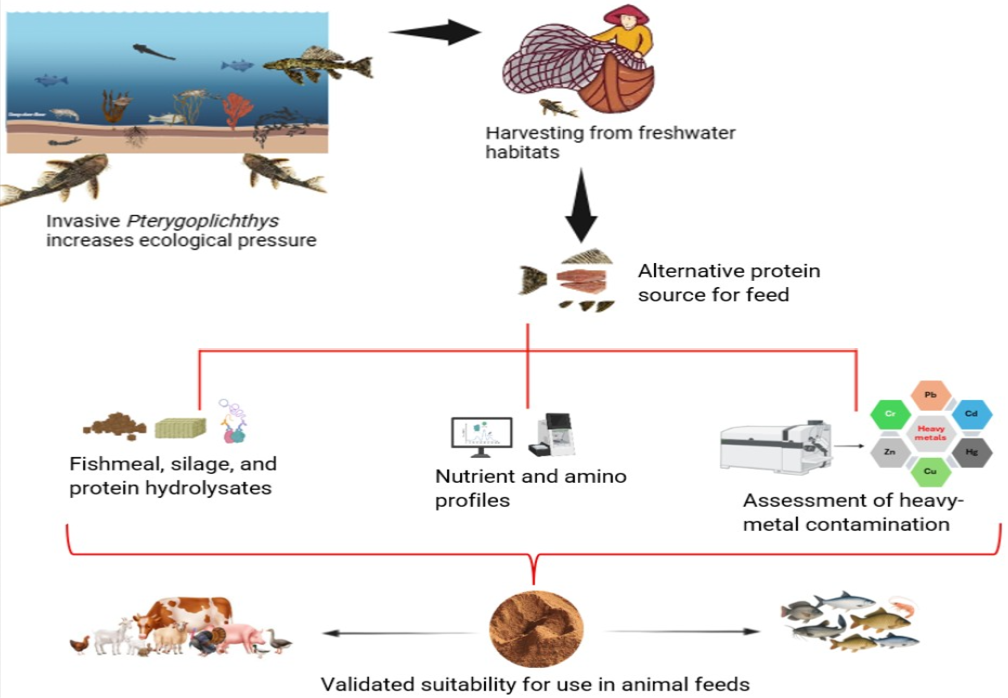
Using invasive Pterygoplichthys biomass in animal feeds may provide two linked benefits: removal of unwanted fish from aquatic systems and generation of a local protein ingredient. Several studies have tested Pterygoplichthys meal or silage in beef cattle, poultry, aquaculture species, and dairy animals, with generally acceptable performance when the material was processed and included at appropriate levels ; ; . However, the evidence remains scattered across animal species and processing methods. Some studies focus mainly on proximate composition, others on performance responses, and others on contamination risks. As a result, the practical value of this fish as a feed ingredient cannot be judged from protein content alone. A more comprehensive assessment should consider nutritional value, processing requirements, feeding responses, safety concerns, and broader sustainability considerations. Figure 1 presents the main considerations involved in evaluating Pterygoplichthys as a potential feed resource. This review therefore brings together the available evidence, with particular attention to where findings are consistent, where uncertainties remain, and what safeguards are needed before wider field-level application.
The objective of this review is to synthesize current evidence on the use of janitor fish as an alternative protein source for animal feeds. The discussion covers nutritional composition, processing and conversion technologies, feeding applications in livestock and aquaculture, safety concerns, and sustainability or regulatory considerations. The review also identifies research gaps that should be addressed before Pterygoplichthys-derived ingredients can be recommended for wider and routine use in animal production.
Search strategy and literature selection
Electronic databases of published scientific literature were used as the primary sources for this review. A structured literature search was conducted using Scopus, Web of Science, PubMed, and Google Scholar to identify relevant studies published between 2007 and 2025, with earlier or foundational reports included when relevant. Additional papers were identified through cross-referencing of the retrieved articles. The search strategy combined keywords related to the target species and its potential use in animal feeding using Boolean operators (AND/OR), including “Pterygoplichthys”, “janitor fish”, “armored catfish”, “nutritional composition”, “fishmeal replacement”, “processing technologies”, “fish silage”, “protein hydrolysate”, “animal feed”, “poultry nutrition”, “aquaculture nutrition”, “ruminant supplementation”, “heavy metals”, and “invasive species utilization”. Database-specific syntax was adjusted where necessary while maintaining equivalent search concepts.
Only English-language, peer-reviewed articles were considered. Greater emphasis was placed on studies with clearly described methodologies and sufficient data relevant to the objectives of this review. Studies were included when they reported nutrient composition, processing methods, feeding responses, safety aspects, or sustainability of Pterygoplichthys spp. Studies unrelated to these topics, duplicate publications, or reports lacking sufficient methodological or experimental information were excluded. Because the available evidence consisted of heterogeneous analytical, processing, feeding, environmental, and observational studies, no formal risk-of-bias assessment or quantitative meta-analysis was performed. Instead, the literature was critically synthesized using a narrative approach, with findings interpreted according to study design, sample source, processing methods, animal species, feeding application, reported contaminants, and the limitations of individual studies.
Nutrient composition of pterygoplichthys spp.
Across studies, Pterygoplichthys spp. consistently exhibit a high-protein, low-lipid biochemical profile, but its composition varies with species, body part, and processing method (Table 1). Whole-body meals of P. pardalis generally contain approximately 54–62% crude protein, 6.0–6.4% crude fat, and 21–25% ash. The high ash content is expected because the fish has dermal armor containing collagen and hydroxyapatite . From a feed-formulation perspective, this mineral fraction is important because it can dilute organic nutrients, reduce metabolizable energy, and limit inclusion rates, especially in monogastric diets. Variation in crude protein also appears to reflect sample type. Srinual et al. (2020), for example, reported 62.18% crude protein and 25.14% ash in processed meal, whereas the much higher value reported for fresh muscle samples by Rezky (2025) likely reflects selective sampling of low-mineral tissue and differences in drying or basis of expression. Sookying et al. (2025) reported high concentrations of essential amino acids in P. pardalis meal, including lysine, leucine, and arginine. However, sulfur amino acids appear more variable. Srinual et al. (2020) reported lower methionine relative to fishmeal, and Mohanty et al. (2017) observed that P. disjunctivus muscle was dominated by leucine and phenylalanine but contained lower sulfur amino acids. Diets using this ingredient may therefore still require amino-acid balancing, particularly for poultry and swine. Lipid content is generally low, but the fatty-acid fraction may contain a high proportion of polyunsaturated fatty acids, including 15.32% arachidonic acid (ARA) and 13.90% docosahexaenoic acid (DHA) in P. disjunctivus muscle ; . This may be useful in aquaculture diets, but it may also increase susceptibility to oxidative deterioration during processing and storage ; ; . Overall, the nutrient profile supports the potential use of Pterygoplichthys as a protein ingredient, but high ash content and compositional variability are recurring issues that should be addressed through processing, ingredient specifications, and routine quality testing. Table 2 compares selected proximate values for Pterygoplichthys with other feed protein sources.
Processing and conversion technologies for janitor fish
Table 3 summarizes the main processing routes reported for Pterygoplichthys biomass. Conventional fishmeal production is the most familiar option for feed use because it produces a dry ingredient that can be transported, stored, and incorporated into formulated diets. Reported preparation methods include evisceration, roasting, air-drying, oven-drying, milling, and sieving ; . A practical limitation is the hard dermal armor, which contributes to the high ash content of whole-body meals . Where practical, removing dermal plates and other mineral-rich tissues before drying and milling may improve meal quality. Enzymatic hydrolysis may offer an alternative by recovering soluble proteins while leaving more mineral-rich residues for separate handling, although its application to feed-grade Pterygoplichthys meal still requires further evaluation . At smaller scales, fish silage may be more feasible because it uses simpler equipment and can process whole or residual fish materials. Acid silage, such as devil fish acid silage, relies on rapid acidification to about pH 4.0, whereas biological silage uses fermentation substrates and starter cultures ; . Both methods promote protein breakdown and produce semi-liquid materials containing soluble peptides and amino acids . The main advantage is lower energy demand and possible use in decentralized processing systems, although product handling and storage conditions must be controlled .
Fish protein hydrolysates represent a more specialized processing route. They are produced through enzymatic or autolytic hydrolysis and may be valuable where soluble peptides or bioactive fractions are desired . Protein hydrolysates have been associated with improved intake, gut development, immune responses, and early growth in several animal species, although these effects depend on ingredient source, peptide profile, inclusion level, and diet formulation ; . For P. pardalis, Prihanto et al. (2021) reported a protein hydrolysate yield of 57.39% after hydrolysis at pH 9 for 24 h. Beyond feed, the mineral-rich skeletal structure has also been used for collagen, hydroxyapatite, and bone-char production ; . Among these processing options, conventional meal is likely the most direct route for feed manufacture, silage may suit low-resource or community-level use, and hydrolysate production may be more appropriate for higher-value products. In all cases, processing should be evaluated not only for yield but also for ash reduction, nutrient digestibility, oxidative stability, and contaminant control.
Feeding applications across livestock and aquaculture species
Pterygoplichthys-derived feed materials have been tested in poultry, aquaculture species, and ruminants (Table 4). Most studies report that processed meals or silages can replace part of conventional fishmeal or protein supplements without marked negative effects on performance. However, the number of studies is still limited, and comparisons are complicated by differences in processing method, diet formulation, animal species, and inclusion rate.
Poultry feeding responses to pterygoplichthys-based diets
In poultry, processed janitor fish meal has been evaluated mainly as a fishmeal substitute. In Thai native chickens (Pradu Hang Dam), replacing part of the commercial feed with P. pardalis meal at 25-50% improved average daily gain and feed conversion ratio .
Table 1: Proximate composition of Pterygoplichthys spp. across studies and processing methods.
Species
Sample Type
Moisture (%)
Crude Protein (%)
Crude Fat (%)
Ash (%)
Crude Fiber (%)
References
P. pardalisa
Gutted, roasted, sun-dried whole-fish meal
10.63 ± 0.21
54.48 ± 0.68
6.23 ± 0.35
21.72 ± 0.36
NR
Panase et al., 2018
Pterygoplichthys spp.a
Viscera-removed, oven-dried whole-fish meal
6.0 ± 0.20
69.5 ± 0.04
4.5 ± 0.05
10.6 ± 0.20
NR
de Fonseka and Radampola, 2022
P. pardalisa
Gutted, roasted, sun-dried whole-fish meal
4.43 ± 0.52
62.13 ± 0.25
6.40 ± 0.53
16.64 ± 0.43
0.507 ± 0.02
Sookying et al., 2025
P. pardalis
Sun-dried whole-fish meal
NR
62.28
6.40
NR
NR
Intawicha et al., 2020
P. pardalisb
Viscera removed, dried whole-fish meal
NR
62.18 ± 0.10
6.00 ± 0.23
25.14 ± 0.15
0.04 ± 0.03
Srinual et al., 2020
P. disjunctivus
Fresh muscle fillet (wet basis)
NR
16.10
1.03
0.79
NR
Mohanty et al., 2017
P. pardalisc
Fresh muscle fillet
81.21
89.99
1.59
5.84
1.04
Rezky, 2025
P. pardalis
Fresh muscle fillet (wet basis), large (>40 cm)
83.87
14.52
0.49
0.91
NR
Hasrianti et al., 2022
P. pardalis
Fresh muscle fillet (wet basis), small (<22 cm)
82.83
14.58
0.52
1.00
NR
Hasrianti et al., 2022
P. pardalis
Dried flesh, small size
NR
50.05
1.13
NR
NR
Elfidasari et al., 2018
P. pardalis
Sample type not reported
28.00
32.81
23.65
24.30
6.51
Surianti et al., 2025
Note: All values are expressed on a dry-matter (DM) basis unless otherwise stated. NR = Not reported. a Values are expressed as mean ± SD. b Values are expressed as mean ± SEM. c Values represent grand means across three sampling stations and two sampling months.
Table 2: Proximate composition of Pterygoplichthys spp. and different conventional protein sources used in animal feed.
High adsorption capacity; markedly increased surface area
Cisneros-Ontiveros et al., 2024
Abbreviations: PPM- Pterygoplichthys pardalis Meal; CFM- Commercial Fish Meal; PLM- Pterygoplichthys spp. Meal; DFAS- Devil Fish Acid Silage; EAAs- Essential Amino Acids; FPH- Fish Protein Hydrolysate; ACE- Angiotensin I-Converting Enzyme; BC- Bone Char; F- Fluoride; Cd- Cadmium; TCS- Triclosan
Srinual et al. (2020) reported that replacing commercial fishmeal with suckermouth armored catfish meal up to 100% did not adversely affect ADFI, ADG, or FCR in indigenous Thai chickens. In broilers, Olut and Roxas (2007) observed improved body weight gain and FCR with 5-10% P. disjunctivus meal compared with a fishmeal-free control diet, with higher feed intake in fishmeal-fed groups. Some intestinal responses have also been reported.
Table 4: Animal performance responses to dietary inclusion of Pterygoplichthys-based feed across species and production systems.
Animal group
Feed form
Inclusion level
Responses
Reference
Broiler chickens
Meal
5–10% of diet
BW ↑ (5%); BW ↔ (10%); FI ↑; FCR ↓ (improved at 5%)
For example, diets containing 25% P. pardalis meal increased villus height and villus height-to-crypt depth ratio, which Srinual et al. (2020) attributed, in part, to the relatively high glutamine content of the meal. Glutamine serves as an important energy source for intestinal epithelial cells and supports intestinal integrity and villus development, which may enhance nutrient absorption . These findings suggest possible nutritional value in poultry diets, but they should not be generalized without caution. Most studies are limited in number, species, and production conditions, and feed safety remains a major concern when fish are sourced from polluted waters. Reported lead concentrations in P. pardalis muscle from contaminated sites may exceed safety limits ; . Therefore, poultry use should be considered only when raw materials are screened and diet formulations account for mineral load and amino-acid balance.
Aquaculture responses to pterygoplichthys-derived diets
Aquaculture studies provide some of the strongest evidence for the use of Pterygoplichthys meals, although results still depend on species and inclusion level. In Nile tilapia fry, Cano-Salgado et al. (2022) reported that pelleted Pterygoplichthys meal containing 54% crude protein could replace sardine meal completely during a 56-day trial without negative effects on specific growth rate, ADG, weight gain, survival, or nutrient digestibility. Surianti et al. (2025) reported the highest growth and digestive enzyme activity in tilapia when suckermouth armored catfish meal was included at 75% of the diet. In juvenile guppy, complete substitution of commercial fishmeal with sailfin catfish meal maintained growth indicators and improved profit index . Panase et al. (2018) also reported that P. pardalis meal could replace commercial fishmeal up to 100% in juvenile Mekong giant catfish without adverse effects on growth performance or serum biochemical indices. In Chinese bullfrogs, P. pardalis meal maintained performance up to 75% replacement, whereas full replacement reduced growth responses . These studies suggest that aquaculture species may tolerate relatively high inclusion levels, but the evidence is not uniform enough to define a universal replacement rate. Long-term adoption will also depend on biomass availability, contaminant monitoring, and whether harvesting pressure can be managed without creating unintended ecological or market incentives.
Ruminant feeding responses to Pterygoplichthys-based silage
In ruminant feeding, Pterygoplichthys has been used mainly as silage rather than dry meal. Ornelas et al. (2011) reported that including devil fish acid silage at 12-18% in finishing beef cattle diets resulted in daily gain, dry matter intake, feed conversion, and carcass yield comparable with control diets. In lactating dual-purpose cows, biologically fermented Pterygoplichthys silage included at up to 20% of the protein supplement did not negatively affect milk composition, physicochemical quality, or sensory acceptability . García-Hernández et al. (2020) also reported increased milk yield in lactating water buffaloes supplemented with Pterygoplichthys silage while milk composition and sensory traits remained acceptable. These findings indicate that fish silage can be compatible with ruminant feeding systems, particularly where local biomass is available. Still, the evidence is narrow, and more work is needed on intake response, rumen fermentation, product quality, contaminant transfer, and practical storage under farm conditions.
Heavy metal bioaccumulation and trophic transfer risk
Safety is the main limitation to the use of Pterygoplichthys in feeds. Because these fishes live near sediments and can persist in degraded waters, they may accumulate metals such as Pb, Cd, Hg, and Cr depending on the collection site . Chavez et al. (2006) reported measurable Pb in janitor fish from Laguna de Bay, with higher concentrations in more urbanized areas. Similarly, Aksari et al. (2015) detected Pb in the gills, liver, and muscles of suckermouth catfish from the Ciliwung River, whereas Munandar and Eurika (2016) reported measurable Pb concentrations in fish from the Bedadung River, Jember. More recently, P. pardalis collected from urban waterways in the Ciliwung River contained Cd, Hg, and Pb concentrations exceeding several national or international limits ; Elfidasari et al., 2020). In contrast, Rezky (2025) found that Pb concentrations in P. pardalis from Lake Sidenreng remained within Indonesian safety limits, although Hg exceeded the permissible limit at some sampling sites. These findings suggest that heavy metal contamination in Pterygoplichthys is strongly influenced by collection site and should therefore be verified before the fish is processed as feed. Moreover, heavy metals accumulated by adult fish may also be transferred to reproductive tissues during oogenesis, resulting in metal deposition in fish eggs . However, information on heavy metal accumulation in wild Pterygoplichthys eggs remains limited and requires further investigation. These reports do not mean that Pterygoplichthys is inherently unsafe as a feed ingredient. Rather, safety depends strongly on source-water quality, tissue used, processing route, and contaminant screening. Moreover, Codex Alimentarius and EU guidelines set maximum allowable concentrations for Hg at 0.5 mg/kg for most fish and between 0.1–0.5 mg/kg for Pb and Cd (UNDRR, 2025). Any feed-use program should therefore require site-specific testing for Pb, Cd, Hg, Cr, and other relevant contaminants before processing. Although several post-processing approaches have been explored to reduce heavy metals in other feed materials, evidence for their application to Pterygoplichthys biomass remains limited. Careful source selection and contaminant screening therefore remain the most reliable way to ensure feed safety. Without such controls, the ecological benefit of removing an invasive fish could be offset by the risk of transferring toxic residues into animal products.
Sustainability and regulatory dimensions
The use of Pterygoplichthys biomass also has sustainability and regulatory dimensions. Harvesting invasive populations could support local control efforts and provide a feed ingredient, but this approach should be managed carefully. If a market develops without regulation, there is a risk of encouraging movement, culture, or intentional maintenance of invasive stocks. Processing the fish into meal, silage, or hydrolysate may contribute to circular-bioeconomy goals by converting an ecological burden into a useful input, but only if harvesting, traceability, and safety testing are in place . Regulatory compliance is particularly important because bottom-dwelling and detritivorous fish may carry heavy metals when collected from contaminated habitats . For this reason, feed-use initiatives should include raw-material certification, contaminant thresholds, and clear rules on sourcing and transport. The sustainability value of this ingredient therefore depends not only on nutrient content but also on governance, environmental safeguards, and consistent quality control.
Future recommendations
The use of Pterygoplichthys spp. as a feed resource remains promising but requires more targeted research before broader adoption. First, harvestable biomass should be quantified across invaded systems. Removal programs need ecological monitoring to ensure that harvesting reduces invasive pressure without damaging native species or creating incentives to spread the fish . Second, processing methods should be optimized for feed quality. High ash content, variable protein concentration, and lipid oxidation may limit ingredient value unless addressed through deboning, mechanical separation, drying control, hydrolysis, or antioxidant strategies. Enzymatic approaches, such as those reported by Gómez-Valdéz et al. (2025), may help recover oil and protein fractions, but their cost and scalability for feed use require evaluation. Third, contaminant mitigation should be treated as a central requirement rather than a secondary issue. Fish collected from polluted sites may contain elevated Hg, Pb, Cd, or other metals . Raw-material testing, organ-specific residue profiling, and sourcing from lower-risk waters should therefore be standard components of future studies. Evidence from other invasive fish also suggests that site selection can determine whether biomass meets feed-safety thresholds .
Finally, economic and environmental assessments are needed. Although Pterygoplichthys biomass may benefit from its low raw-material cost because it is often obtained through invasive fish removal or bycatch , harvesting, transport, processing, and contaminant monitoring still contribute substantially to production costs. Fish silage may also offer a practical option where processing infrastructure or biomass supply is limited . However, no study has comprehensively evaluated the economic feasibility of Pterygoplichthys-based feed ingredients relative to commercial fishmeal. Life-cycle analysis, cost-benefit evaluation, and pilot-scale processing trials would help determine whether Pterygoplichthys meal or silage can compete with conventional fishmeal under local conditions. The promising use of invasive carp meal in catfish diets suggests that similar approaches may be worth testing for Pterygoplichthys, but direct evidence is still limited. Future work should therefore prioritize four areas: biomass monitoring, processing methods that improve nutrient value and reduce mineral burden, site-specific contaminant screening, and techno-economic feasibility. Collaboration among fisheries managers, feed manufacturers, animal nutritionists, and regulators will be needed if this invasive biomass is to be used safely and responsibly.
CONCLUSION
This review indicates that Pterygoplichthys spp. has potential as an alternative protein resource for animal feed, particularly where invasive populations generate large amounts of removable biomass. Available studies suggest that processed meals and silages can replace conventional fishmeal or protein supplements in selected poultry, aquaculture, and ruminant diets without consistent adverse effects on performance or product quality. At the same time, the evidence base remains limited and uneven across animal species, processing methods, and inclusion levels. The main practical constraints are high ash content, variable nutrient composition, uncertain long-term biomass supply, and the risk of heavy metal contamination from polluted waters. Therefore, Pterygoplichthys should not be promoted simply as a ready substitute for fishmeal. Its value depends on careful sourcing, processing, feed formulation, and safety testing. Further research should prioritize multi-site feeding trials, contaminant monitoring, processing optimization, and techno-economic evaluation before routine use can be recommended. Addressing these research gaps will help determine the long-term feasibility of utilizing Pterygoplichthys biomass as a safe and sustainable alternative feed resource while supporting invasive-species management and local feed-resource development.
ACKNOWLEDGEMENTS
The author acknowledges Caraga State University for academic support during the preparation of this manuscript.
NOVELTY STATEMENT
This review integrates the currently scattered evidence on invasive janitor fish (Pterygoplichthys spp.) as a potential alternative protein source for animal feed by critically examining its nutritional composition, processing approaches, feeding applications, and heavy metal safety risks. Unlike previous species-specific or application-specific studies, this review highlights the practical constraints and safety requirements that must be addressed before wider feed utilization can be recommended.
AUTHOR’S CONTRIBUTION
The author confirms sole responsibility for manuscript preparation.
Ethical consideration
This review was based entirely on previously published studies and did not involve direct experimentation on animals or humans; therefore, ethical approval was not required.
Funding
This research did not receive any specific grant from funding agencies in the public, commercial, or not-for-profit sectors. The evidence synthesized in this review is intended to support future project development and funding applications focused on sustainable feed resources and the valorization of invasive janitor fish species.
Generative AI and AI-assisted technology statement
This manuscript was written and revised by the author. Generative AI was used only to support language refinement, including grammar and sentence clarity. It was not used to generate scientific content, interpret literature, extract data, or develop the analysis. All interpretations, evaluations, and intellectual contributions remain the sole responsibility of the author.
Conflict of interest
The author declares no known competing financial or personal interests that could have appeared to influence the work reported in this paper.
Figures
Figure 1:.
Key considerations in the use of invasive Pterygoplichthys biomass as an alternative protein source for animal feed, including biomass recovery, processing, nutritional value, feed applications, and contaminant assessment.
References
Abdulkarimi R, Shahir MH, Daneshyar M (2019). Effects of dietary glutamine and arginine supplementation on performance, intestinal morphology and ascites mortality in broiler chickens reared under cold environment. Asian-Australas. J. Anim. Sci., 32(1): 110-117. https://doi.org/10.5713/ajas.17.0150[CrossRef]
Aksari YD, Perwitasari D, Butet NA (2015). Concentration of heavy metals (Cd, Hg, and Pb) of Amazon sailfin catfish, Pterygoplichthys pardalis (Castelnau, 1855) in Ciliwung River, West Java. J Iktiol Indones, 15(3): 257–266.
Asnawi A, Dradjat AS, Wiryawan KG (2021). The use of sapu-sapu fish (Hypostomus plecostomus) as a substitute for commercial feed to improve production performance of Mojosari ducks. Int. J. Poult. Sci., 20(3): 129-135. https://doi.org/10.3923/ijps.2021.129.135[CrossRef]
Becze A, Senila M, Senila L, Dordai L, Cadar O, Fuss-Babalau VL, Roman M, Levei L, Uiuiu P, Naghiu MO (2025). Optimization of protein extraction from sunflower meal using Taguchi design and regression modeling for human nutrition applications. Foods, 14(14): 2415. https://doi.org/10.3390/foods14142415[CrossRef]
Bhati D, Hayes M (2025). From ocean to market: technical applications of fish protein hydrolysates in human functional food, pet wellness, aquaculture and agricultural bio-stimulant product sectors. Appl. Sci., 15(10): 5769. https://doi.org/10.3390/app15105769[CrossRef]
Bijukumar A, Smrithy R, Sureshkumar U, George S (2015). Invasion of South American suckermouth armoured catfishes Pterygoplichthys spp. (Loricariidae) in Kerala, India - A case study. J. Threat. Taxa, 7(3): 6987-6995. https://doi.org/10.11609/JoTT.o4133.6987-95[CrossRef]
Cano-Salgado MP, Álvarez-González CA, Martínez-García R, Peña-Marín ES, Rodríguez-Estrada U, Barba Macias E, Civera-Cerecedo R, Goytortua-Bores E (2022). Pterygoplichthys spp. (Siluriformes: Loricariidae) meal is suitable for the culture of Nile tilapia Oreochromis niloticus (Cichlidae) juveniles. Cienc. Rural, 52(7): 1-9. https://doi.org/10.1590/0103-8478cr20200801[CrossRef]
Castañeda-Chávez MdR, Lango-Reynoso F, Navarrete-Rodríguez G, Wakida-Kusunoki AT (2021). Concentration of metals in native and invasive species of fish in the fluvial-lagoon-deltaic system of the Palizada River, Campeche Fishes, 6(4): 72. https://doi.org/10.3390/fishes6040072[CrossRef]
Castillo-Mercado RA, Bucio-Galindo A, Salinas-Hernández RM, Aranda-Ibáñez EM, Izquierdo-Reyes F, Ramos-Juárez JA (2020). Milk quality of dual-purpose cows supplemented with biological fish silage (Pterygoplichthys sp.) as a protein source. Rev. Colomb. Cienc. Pecu., 33(4): 252-263. https://doi.org/10.17533/udea.rccp.v33n4a05[CrossRef]
Chalamaiah M, Dinesh Kumar B, Hemalatha R, Jyothirmayi T (2012). Fish protein hydrolysates: proximate composition, amino acid composition, antioxidant activities and applications: A review. Food Chem., 135(4): 3020–3038. https://doi.org/10.1016/j.foodchem.2012.06.100[CrossRef]
Chavez HM, Casao EA, Villanueva EP, Paras M, Guinto MC, Mosqueda MB (2006). Heavy metal and microbial analyses of janitor fish (Pterygoplichthys spp.) in Laguna de Bay, Philippines. J. Environ. Sci. Manag., 9(2): 31-40.
Cisneros-Ontiveros HG, Medellín-Castillo NA, Flores-Rojas AI, Cruz-Briano SA (2024). Removal of fluoride, cadmium and triclosan from water using bone chars from an invasive species: optimization, equilibrium and adsorption mechanisms. Sustain. Chem. Environ., 8: 100182. https://doi.org/10.1016/j.scenv.2024.100182[CrossRef]
Da Cruz AL, da Silva HR, Lundstedt LM, Schwantes AR, Moraes G, Klein W, Fernandes MN (2013). Air-breathing behavior and physiological responses to hypoxia and air exposure in the air-breathing loricariid fish, Pterygoplichthys anisitsi. Fish Physiol. Biochem., 39(2): 243-256. https://doi.org/10.1007/s10695-012-9695-0[CrossRef]
De Carvalho-Souza GF, Kourantidou M, Laiz I, Nuñez MA, González-Ortegón E (2024). How to deal with invasive species that have high economic value? Biol. Conserv., 292: 110548. https://doi.org/10.1016/j.biocon.2024.110548[CrossRef]
De Fonseka R, Radampola K (2022). Feasibility of using sailfin catfish meal as an alternative to commercial fishmeal in the diets of juvenile guppy (Poecilia reticulata). J. Fish., 10(1): 101203. https://doi.org/10.17017/j.fish.344[CrossRef]
Ebenstein DC, Calderon C, Troncoso OP, Torres FG (2015). Characterization of dermal plates from armored catfish Pterygoplichthys pardalis reveals a sandwich-like nanocomposite structure. J. Mech. Behav. Biomed. Mater., 45: 175–182. https://doi.org/10.1016/j.jmbbm.2015.02.002[CrossRef]
Elfidasari D, Ismi LN, Shabira AP, Sugoro I (2018). The correlation between heavy metal and nutrient content in plecostomus (Pterygoplichthys pardalis) from Ciliwung River in Jakarta. Biosaintifika, 10(3): 597-604. https://doi.org/10.15294/biosaintifika.v10i3.16248[CrossRef]
Elfidasari DLN, Ismi I, Sugoro (2020). Heavy metal concentration in water, sediment, and Pterygoplichthys pardalis in the Ciliwung River, Indonesia. AACL Bioflux, 13(3): 1764–1778
Ernawati Y (2014). The analysis of the concentration of heavy metals cadmium, mercury and lead in the flesh of suckermouth catfish (Pterygoplichthys pardalis) in Ciliwung River, Indonesia. AACL Bioflux, 7(1): 33-42.
Fayyaz MS, Chughtai MFJ, Khaliq A, Mehmood T, Bordiga M, Mukonzo Kasongo EL, Alsulami T (2025). Comparative analysis of proximate, nutritional, and phytochemical profiles of soybean varieties using FTIR and HPLC. Food Sci. Nutr., 13(10): e71072. https://doi.org/10.1002/fsn3.71072[CrossRef]
Food and Agriculture Organization of the United Nations (FAO 2022). The state of world fisheries and aquaculture 2022: Towards blue transformation. FAO, Rome, Italy.
Froese R, Pauly D (Eds.) (2018). FishBase. Available at: https://www.fishbase.org (Accessed 15 November 2025).
Ganguly N, Umapathy G (2024). Is it there? Estimating the invasion of armored sailfin catfish (Pterygoplichthys sp.) in the water bodies of Eastern Ghats, India using the eDNA approach. Environ. DNA, 6(2): e538. https://doi.org/10.1002/edn3.538[CrossRef]
García-Hernández A, Castillo-Zamudio RI, López-Ortíz S, Ramos-Juárez JA, Graillet-Juárez EM, Brito-Vega H, Osorio-Osorio R, Ulín-Montejo F, Salinas-Hernández RM (2020). Production, physicochemical characteristics and sensory profile of buffalo milk supplemented with silage of devil fish (Pterygoplichthys sp.). Trop. Subtrop. Agroecosyst., 23(2): 1-10. https://doi.org/10.56369/tsaes.3045[CrossRef]
Glencross BD (2009). Exploring the nutritional demand for essential fatty acids by aquaculture species. Rev. Aquac., 1(2): 71-124. https://doi.org/10.1111/j.1753-5131.2009.01006.x[CrossRef]
Gómez-Valdéz AJ, Meza-Gordillo R, Abud-Archila M, Ovando-Chacón GE, Ovando-Chacón SL (2025). Oil extraction from Pterygoplichthys pardalis with Alcalase® 2.4 L using Plackett-Burman experimental design. Appl. Food Res., 5(2): 101226. https://doi.org/10.1016/j.afres.2025.101226[CrossRef]
Guo Y, Michael N, Fonseca-Madrigal J, Sosa-Aguirre C, Jauregi P (2019). Protein hydrolysate from Pterygoplichthys disjunctivus (armoured catfish) with high antioxidant activity. Molecules, 24(8): 1628. https://doi.org/10.3390/molecules24081628[CrossRef]
Hasrianti M, Armayani, Surianti, Putri ARS, Akbar AH (2022). Analysis of nutritional content and heavy metals of suckermouth catfish Pterygoplichthys pardalis in Lake Sidenreng, South Sulawesi, Indones. Biodiversitas, 23(7): 3539-3545. https://doi.org/10.13057/biodiv/d230729[CrossRef]
Hossain MY, Vadas Jr RL, Ruiz-Carus R, Galib SM (2018). Amazon sailfin catfish Pterygoplichthys pardalis (Loricariidae) in Bangladesh: a critical review of its invasive threat to native and endemic aquatic species. Fishes, 3(1): 14. https://doi.org/10.3390/fishes3010014[CrossRef]
Host AL, Bockus AB, Gaylord TG, Archer SK (2025). Potential of invasive carp as a source of fish meal and fish oil in channel catfish diets. N. Am. J. Aquac., 88. https://doi.org/10.1093/naaqua/vraf024[CrossRef]
Hou Y, Wu Z, Dai Z, Wang G, Wu G (2017). Protein hydrolysates in animal nutrition: industrial production, bioactive peptides and functional significance. J. Anim. Sci. Biotechnol., 8(1): 24. https://doi.org/10.1186/s40104-017-0153-9[CrossRef]
Hua K, Cobcroft JM, Cole A, Condon K, Jerry DR, Mangott A, Praeger C, Vucko MJ, Zeng C, Zenger K, Strugnell JM (2019). The future of aquatic protein: implications for protein sources in aquaculture diets. One Earth, 1(3): 316-329. https://doi.org/10.1016/j.oneear.2019.10.018[CrossRef]
Hubilla M, Kis F, Primavera J (2007). Janitor fish Pterygoplichthys disjunctivus in the Agusan Marsh: a threat to freshwater biodiversity. J. Environ. Sci. Manag., 10(1): 10-23
Intawicha P, Tapingkae W, Punyatong M (2020). Suckermouth armored catfish (Pterygoplichthys pardalis) as a replacement for fish meal in Thai ‘Pradu Hang Dam’ native chicken diets. Int. J. Poult. Sci., 19(8): 380-384. https://doi.org/10.3923/ijps.2020.380.384[CrossRef]
Jezierska B, Witeska M (2006). The metal uptake and accumulation in fish living in polluted waters. In: Twardowska I, Allen HE, Häggblom MM, Stefaniak S (Eds.), Soil and Water Pollution Monitoring, Protection and Remediation. Springer Dordrecht Neth., pp. 107–114. https://doi.org/10.1007/978-1-4020-4728-2_6[CrossRef]
Juárez A, Ordaz G, Cuellar JC, Salas G, Gutiérrez E (2025). Circular valorization of acid silage from invasive Pterygoplichthys species in hens’ diets: impacts on laying performance and egg quality. J. World Poult. Res., 15(3): 303-313. https://doi.org/10.36380/jwpr.2025.29[CrossRef]
Jumawan JC, Vallejo BM, Herrera AA, Buerano CC, Fontanilla IKC (2011). DNA barcodes of the suckermouth sailfin catfish Pterygoplichthys (Siluriformes: Loricariidae) in the Marikina River system, Philippines: molecular perspective of an invasive alien fish species. Philipp. Sci. Lett., 4(2): 103-113
Kozioł A, Brysiewicz A, Czerniejewski P, Plust D (2025). Nutritional quality and heavy metal in invasive stone moroko (Pseudorasbora parva) from natural waters and aquaculture ponds. Sci. Rep., 15(1): 34385. https://doi.org/10.1038/s41598-025-17243-3[CrossRef]
Libonatti CC, Agüería DA, Breccia J (2023). Fish waste silage, a green process for low feedstock availability: a review. Agron. Mesoam., 34(2): 51077. https://doi.org/10.15517/am.v34i2.51077[CrossRef]
Macusi ED, Cayacay MA, Borazon EQ, Sales AC, Habib A, Fadli N, Santos MD (2023). Protein fishmeal replacement in aquaculture: a systematic review and implications on growth and adoption viability. Sustainability, 15(16): 12500. https://doi.org/10.3390/su151612500[CrossRef]
Mahesvaran S, Yap CK, Azmai MNA, Ridzuan AR, Saghir AF, Mohamad H, Saidin A, Al-Azwadt N (2025). Visual evidence and ecological implications of Pterygoplichthys spp. invasion in Setia Alam Central Park Lake, Malaysia: a preliminary photographic observational study. Int. J. Hydrol., 9(2): 74-78. https://doi.org/10.15406/ijh.2025.09.00405[CrossRef]
Mamun SAA, Hossain MS, Capps KA (2023). Promoting community-based surveillance of economically important invasive species in lower-income economies: a case study of the suckermouth catfish (Pterygoplichthys pardalis) in Bangladesh. Biol. Invasions, 25: 1285-1290. https://doi.org/10.1007/s10530-022-02993-2[CrossRef]
Mishra P, Thakur MS, Khan A (2023). Proximate analysis of poultry and fish feed ingredients in Madhya Pradesh and Chhattisgarh states. Pharma Innov. J., 12(9S): 1659-1662
Mohanty BP, Ganguly S, Mahanty A, Mitra T, Mahaver L, Bhowmick S, Paul SK, Das BK (2017). Nutritional composition of the invasive Pterygoplichthys disjunctivus from East Kolkata Wetland, India. J. Inl. Fish. Soc. Indian, 49(2): 48-54.
Munandar K, Eurika N (2016). Diversity of fish economic value and heavy metal Pb and Cd content in fish Hypostomus plecostomus in River Bedadung of Jember. Proceeding Biol. Educ. Conf., 13(1): 717–722. https://jurnal.uns.ac.id/prosbi/article/view/5888
Olut M, Roxas DB (2007). The effect of feeding janitor fish (Pterygoplichthys disjunctivus) meal on the performance of broilers. Philipp. J. Vet. Anim. Sci., 33(2).
Orfinger AB, Goodding DD (2018). The global invasion of the suckermouth armored catfish genus Pterygoplichthys (Siluriformes: Loricariidae): annotated list of species, distributional summary, and assessment of impacts. Zool. Stud., 57: e7.
Ornelas S, Gutiérrez E, Juárez A, Garcidueñas R, Espinoza JL, Perea M, Flores JP, Salas G (2011). Use of silage acid devil fish (Pterygoplichthys spp.) as protein supplement in finishing beef cattle. J. Agric. Sci. Technol. A, 1: 1280-1283
Panase P, Uppapong S, Tuncharoen S, Tanitson J, Soontornprasit K, Intawicha P (2018). Partial replacement of commercial fish meal with amazon sailfin catfish Pterygoplichthys pardalis meal in diets for juvenile Mekong giant catfish Pangasianodon gigas. Aquac. Rep., 12: 25-29. https://doi.org/10.1016/j.aqrep.2018.08.005[CrossRef]
Patoka J, Takdir M, Yonvitner, Aryadi H, Jerikho R, Nilawati J, Tantu FY, Bohatá L, Aulia A, Kamal MM, Wardiatno Y, Petrtýl M (2020). Two species of illegal South American sailfin catfish of the genus Pterygoplichthys well-established in Indonesia. Knowl. Manag. Aquat. Ecosyst., 421: 28. https://doi.org/10.1051/kmae/2020021[CrossRef]
Prihanto AA, Nurdiani R, Sari LW (2021). Production and characteristics of sailfin catfish (Pterygoplichthys pardalis) protein hydrolysate. F1000 Res., 10: 1089. https://doi.org/10.12688/f1000research.73335.1[CrossRef]
Rezky MC (2025). Feasibility analysis of suckermouth catfish Pterygoplichthys pardalis (Castelnau, 1855) as a feed ingredient for cultivated fish. J. Mar. Probl. Threats, 2(1): 34-46.
Sá AGA, Pacheco MTB, Moreno YMF, Carciofi BAM (2022). Cold-pressed sesame seed meal as a protein source: effect of processing on the protein digestibility, amino acid profile, and functional properties. J. Food Compos. Anal., 111: 104634. https://doi.org/10.1016/j.jfca.2022.104634[CrossRef]
Sandström V, Chrysafi A, Lamminen M, Troell M, Jalava M, Piipponen J, Siebert S, van Hal O, Virkki V, Kummu M (2022). Food-system by-products upcycled in livestock and aquaculture feeds can increase global food supply. Nat. Food, 3(9): 729-740. https://doi.org/10.1038/s43016-022-00589-6[CrossRef]
Sauvant D, Perez JM, Tran G (2023a). Tables of composition and nutritional values of feed materials. INRAE, CIRAD, AFZ, Paris, France. Available at: https://www.feedtables.com/content/meat-and-bone-meal (Accessed 20 January 2026).
Sauvant D, Perez JM, Tran G (2023b). Tables of composition and nutritional values of feed materials. INRAE, CIRAD, AFZ, Paris, France. Available at: https://www.feedtables.com/content/blood-meal (Accessed 20 January 2026).
Sookying S, Srisuttha P, Rodprasert V, Chaodon C, Phinrub W, Sutthi N, Panase P (2025). Utilizing invasive Pterygoplichthys pardalis as a sustainable fish meal substitute and Euphorbia hirta extract supplement: effects on growth performance, organosomatic indices, hematological profiles, and serum biochemistry in Chinese bullfrogs (Hoplobatrachus chinensis). Life, 15(1): 115. https://doi.org/10.3390/life15010115[CrossRef]
Srinual O, Punyatong M, Moonmanee T, Intawicha P, Yachai M, Tapingkae W (2020). Replacement of fish meal with suckermouth armored catfish and its effect on performance and intestinal morphology of indigenous Thai chicken. J. Anim. Plant Sci., 30(4): 802-810. https://doi.org/10.36899/JAPS.2020.4.0094[CrossRef]
Surianti, Damis, Wahyudi, Febrian MR, Sulaiman MA (2025). Utilization of suckermouth catfish (Pterygoplichthys pardalis) as a raw material of protein in artificial feed tilapia. J. Teknol. Perikan. Kelaut., 16(4): 384-394. https://doi.org/10.24319/jtpk.16.384-394[CrossRef]
U.S. Fish and Wildlife Service (USFWS 2018). Ecological risk screening summary - Amazon sailfin catfish (Pterygoplichthys pardalis). U.S. Fish and Wildlife Service, Washington, DC, USA.
United Nations Office for Disaster Risk Reduction (UNDRR 2025). Levels of contaminants in food and feed: hazard information profile CH0601. PreventionWeb. Available at: https://www.preventionweb.net/understanding-disaster-risk/terminology/hips/ch0601 (Accessed 15 November 2025).
Wakida-Kusunoki AT, Ruiz-Carus R, Amador-del Ángel LE (2007). Amazon sailfin catfish, Pterygoplichthys pardalis (Castelnau, 1855) (Loricariidae), another exotic species established in southeastern Mexico. Southwest. Nat., 52(1): 141-144. https://doi.org/10.1894/0038-4909(2007)52[141:ASCPPC]2.0.CO;2[CrossRef]
Wijayanti F, Lisdaniyah A, Hasanah M, Elfidasari D (2023). Minerals and fatty acids profile of armored catfish Pterygoplichthys pardalis from Ciliwung River, Indonesia. Nusant. Biosci., 15(1): 58-67. https://doi.org/10.13057/nusbiosci/n150107[CrossRef]
Wu LW, Liu CC, Lin SM (2011). Identification of exotic sailfin catfish species (Pterygoplichthys, Loricariidae) in Taiwan based on morphology and mtDNA sequences. Zool. Stud., 50(2): 235-246.