
Issue · 2026
Vol. 44, Iss. 1
11 articles · All issues →
 Research Article
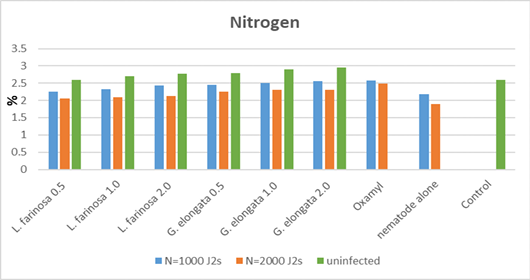
Biocontrol Potential of Red Sea Algae Liagora farinosa and Galaxaura elongata Against Meloidogyne incognita on Tomato
Marwa M. El-Deriny, Sahar H. Abdel-Baset, Doaa A. Abou El-Atta, Sandy E. Hammad
Tomato cultivation suffers significant financial losses due to the root-knot nematode (Meloidogyne incognita), while chemical nematicides pose health and environmental hazards. The effectiveness of methanolic extracts from two red algae, Liagora farinosa and G…
6 Mar 2026DOI 10.17582/journal.pjn/2026/44.1.23.33 Research Article
Combining Freshly-Harvested Green Leaves of Medicinal Morinda lucida, Azadirachta indica and Vernonia amygdalina for Effective Management of Diverse Invasive Soil-Borne Crop-Damaging Phytoparasitic Nematodes Reduced Okra (Abelmoschus esculentus) Plant Bio
William K. Heve, Nechamah N.O. Aryee, Abigail M. Norvor
This study examined whether multiple combinations of freshly-harvested green leaves of medicinal brimstone, neem and bitter leaf trees against phytoparasitic nematodes (PPNs) could be complementary to improve okra plant biomass (OPB). Therefore, field evaluati…
1 Mar 2026DOI 10.17582/journal.pjn/2026/44.1.06.22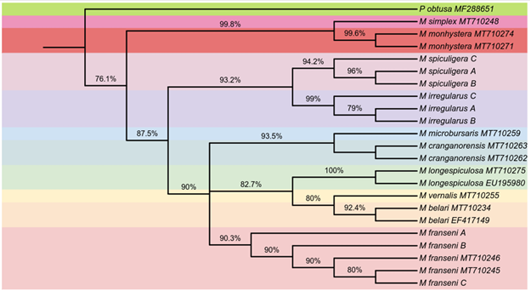 Short Communication
Genetic Characterization of Species of the Genus Mesorhabditis (Rhabditida: Rhabditidae) Osche, 1952
Turopova Mukhlisa, Bekmurodov Abdujabbor, Amirov Oybek, Ismatov Azamat, Egamberdiyev Mehmonjon, Jumaqulova Guzal
This study presents a genetic characterization and phylogenetic analysis of nematode species belonging to the genus Mesorhabditis Osche, 1952, collected from wild rosehip (Rosa canina L.) in the Surkhandarya region of southern Uzbekistan. Specimens of M. spicu…
12 Jun 2026DOI 10.17582/journal.pjn/2026/44.1.77.86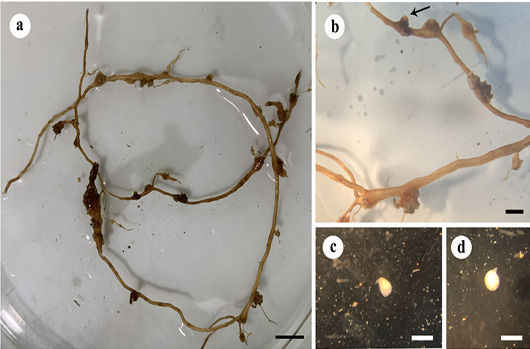 Research Article
First Report of Root-Knot Nematode, Meloidogyne javanica from Wisteria sinensis in Razavi Khorasan Province, Iran
Fatemeh Shekari Mahoonaki, Fatemeh Azad-Disfani, Majid Shahi-Bajestani
Because of the significance of root-knot nematodes, the Meloidogyne species were recognized in the green spaces of Khorasan Razavi Province (Mashhad, Iran) using soil and plant samples collected from the rhizosphere of Wisteria sinensis roots (30 to 50 cm) dur…
19 Dec 2025DOI 10.17582/journal.pjn/2026/44.1.01.05 Short Communication
Crop Rotation and its Effect on Nematodes Population
Habibeh Jabbari
In order to investigate the effect of crop rotation on nematode population, soil sampling was carried out from the fields of the National Wheat Project of the National Rainfed Agricultural Research Institute, Maragheh-East Azerbaijan. Nematodes were extracted…
31 Mar 2026DOI 10.17582/journal.pjn/2026/44.1.45.47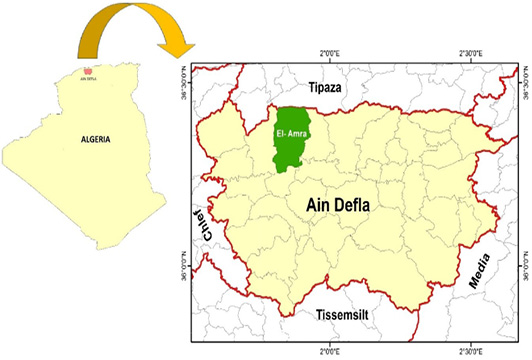 Research Article
Diversity and Ecological Roles of Bacteriophagous and Omnivorous Nematodes in Potato Soils of Algeria (Ain Defla)
Meziane Boukhatem Malika, Ali-Arous Samir, Bradai Abdelhamid, Madani Nacira, Medjahed Khaldia, Lankri Elhassen et al.
Nematodes play a crucial role in soil ecosystems, contributing to nutrient cycling and providing protection for plants. This study examined the diversity and potential biological roles of nematodes associated with potato (Solanum tuberosum L.) fields in Ain De…
26 May 2026DOI 10.17582/journal.pjn/2026/44.1.58.67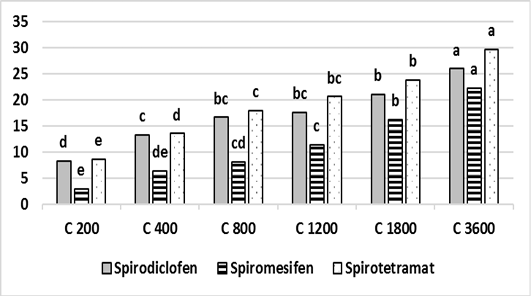 Research Article
Potential of Acetyl-CoA Carboxylase Inhibitors as Nematicides Against Southern Root-Knot Nematode, Meloidogyne incognita (Kofoid and White, 1919): In vitro and Semi-Field Studies
Aida M. El-khouly, Mohamed S. Khalil, Shady Selim
The management of plant-parasitic nematodes such as root-knot nematodes (Meloidogyne spp.) has been one of the most important research priorities over the last two decades. Chemical nematicides are the primary control method used by farmers against RKNs. Howev…
12 Jun 2026DOI 10.17582/journal.pjn/2026/44.1.68.76 Research Article
Relative Susceptibility of Seedlings of Certain Local and Imported Date Palm Cultivars Against Root- Knot Nematode, Meloidogyne incognita in Egypt
Mahmoud M.A. Youssef, Wafaa M.A. El-Nagdi, Mohamed Fahmy M. Eissa
Date palm, Phoenix dactylifera L., is attacked by numerous pests and diseases of which root -knot nematodes wherever are occurred causing damage to its yield quality and quantity. Due to little work done on date palm and genetic variation in open field in Egyp…
13 Jul 2026DOI 10.17582/journal.pjn/2026/44.1.97.102- Research Article
Environmental Impact of Olive Mill Waste and Some Natural Compounds in Root-Knot Nematode Meloidogyne incognita Resistance on Grapevines
Dina, S. S. Ibrahim, Ahmed M. Elbaalawy, Sahar H. Abdel-Baset, Rania H. Wahdan
Olive mill waste (OMW) represents both an environmental challenge and a potential biotechnological resource due to its high organic load and phenolic content. This study investigated the nematicidal efficacy of compost, fermented OMW, Pseudomonas fluorescens,…
12 Jun 2026DOI 10.17582/journal.pjn/2026/44.1.87.96 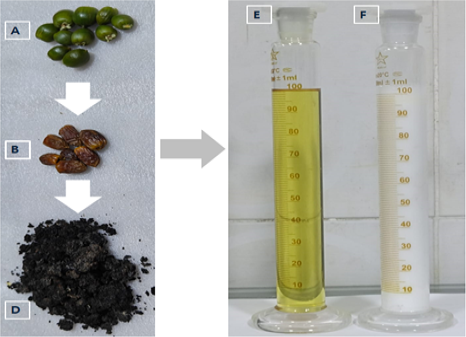 Research Article
Open-Field Evaluation of Jojoba (Simmondsia chinensis) Oil Emulsion and Its Seed Cake for Biological Control of Root-Knot Nematode (Meloidogyne incognita) in Hybrid Watermelon (Giza Type)
Rehab Y. Ghareeb, Shawky M. Eid, Soliman A. Omran
Root-knot nematodes (Meloidogyne incognita) are a major constraint to watermelon production. This study evaluated the nematicidal potential of jojoba (Simmondsia chinensis) oil emulsion (JOE) and seed cake (JSC) under open-field conditions. Physicochemical ana…
14 Apr 2026DOI 10.17582/journal.pjn/2026/44.1.48.57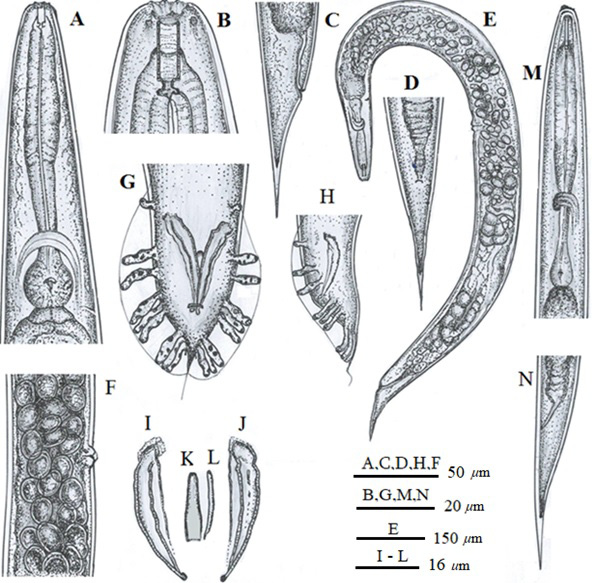 Research Article
A New Species of Entomopathogenic Nematode Oscheius anaseuli n. sp. (Nematoda: Rhabditidae) from West Georgia (Caucasus)
Oleg Gorgadze, Mzia Kokhia, Madona Kuchava
A new species of the entomopathogenic nematode Oscheius anaseuli n. sp. was isolated from a soil sample from a nut orchard in the village Anaseuli, Guria Region, West Georgia. Morphological studies were carried out using an optical microscope, which confirmed…
6 Mar 2026DOI 10.17582/journal.pjn/2026/44.1.34.44