
The sable was one species of holarctic carnivores and it was mainly in Russia, China, and Japan. There have little information about gastrointestinal parasite and bacterium of the sable, but it was important for its health. Five parasitic species and two hundreds thirty four gut bacteria (genus) of the sable were detected by the saturated NaCl floating and next sequencing methods. The parasites were Capillaria sp., Baylisascaris devosi, Echinochasmus sp., and two Coccidianspecies. The Echinochasmus sp. andtwo Coccidian species were first time found either in sable or in other martens. The 434 genus of bacteria, belong to 30 phylum, the more popular bacteria were Proteobacteria (33.54%), following by Firmicutes (18.58), Acidobacteria (12.82%), Actinobacteria (9.27%), Bacteridetes (5.44%), Crenarchaeota (4.58%), Fusobacteria (2.66%), Verrucomicrobia (2.29%), Gemmatimonadetes (2.18%) and Planctomycetes (1.39%), and they were more than 92.75%. The gut bacteria of the sable have more diversity than Siberian tiger, panda, horse, and human, and it may originate from the more divertible diet of the sable.
Research Article · 2 August 2018 · Open Access
The Gastrointestinal Parasites and Bacteria Community of Sable (Mates zibellina) in Northeastern China
· · · · ·
Affiliations & Notes ⌄
- 1College of Wildlife Resources, Northeast Forestry University, Hexing Road No. 26, Harbin 150040, P.R. China 2Key Laboratory of Wildlife Conservation, China State Forestry Administration, Harbin, P.R. China , * Corresponding author: houzhijundz@163.com
Article Info ⌄
- Journal:
- Pakistan Journal of Zoology
- Published:
- 2 August 2018

From the article
- The Echinochasmus sp. and two Coccidian species were first time found either in sable or in other martens.
- The sable gut bacteria belong to 26 phylum, contrast with the Siberian tiger, panda, horse, and human, they were 6, 6, 16, and 20 one, and it could be concluded that the gut bacteria of the sable had more diversity (Table II).
- Five parasitic species and two hundreds thirty four gut bacteria (genus) of the sable were detected.The study concluded that gut bacteria of the sable have more diversity.
Selected from the article's own text.
Abstract
Introduction
Sable, Martes zibellina (Linnaeus, 1758), one of eight species of Mustela (Mustelidae, Carnivora), is a circumboreal ones ; . Four species of the Mustela, Martes zibellina (sable), Martes americana (American marten), Martes martes (pine marten), and Martes melampus (Japanese marten) are forest-dwelling carnivores that occur allopatrically in coniferous and deciduous forests in the Holarctic region . The sables were widespread in all taiga zoogeographical zones of Eurasia, primarily in Russia from the Ural Mountains throughout Siberia, in northern Mongolia and northeastern China, and on Hokkaido in Japan ; ; .
The sable is generally considered to have the most beautiful and richly tinted pelt among martens. Since the nineteenth century, intensive hunting for pelts has resulted in sable population dramatic declined in Russia and China . Habitat changes associated with forestry utilization had contributed to this loss . In Russia, sables reached a nadir of distribution and abundance early in this century, but recovered following protection, development of sable farming, and reintroduction . To protect the sable, the Chinese government has added it to the list of wildlife under special state protection and has completely prohibited hunting and fur trade for this species since 1988, but the population still has not yet recovered in China until now .
Many studies, especially in the phylogeny, genetic variability and diversity, population genetic structure, species molecular distinguished, and ecology, had been done on the sables ; ; ; ; ; , 2013; ; ; ; ; ; . There were also some articles on the parasitism of martens (Table I), but as to our knowledge, this was first report on sable parasitic fauna in China, and there was not any information of gut bacteria community about sable excepting this study.
Materials and methods
The fresh fecal samples of two rescued sable individuals originated from Northeastern China were collected when they were discharged into the environment timely. The samples was stored frozen at -20°C for using in later.
Table I.- The parasites community of Marets have been documented.
| M. americana | M. martes | M. fonia | M. pennati | M. melampus | M. zibellina |
| Alaria taxideae | \ | Angiostr ongylus sp. | \ | \ | \ |
| Baylisascaris devosi | \ | Ascaridida | \ | \ | Ascaris |
| Crenosoma petrowi | \ | Capillaria sp. | \ | \ | Crenosoma sp. |
| Dioctophyme renale | \ | Dirofilaria | \ | \ | Capillaria sp. |
| Eucoleus aerophilus | \ | \ | \ | \ | \ |
| Euryhelmis aquamula | \ | \ | \ | \ | \ |
| Filaroides martes | \ | \ | \ | \ | Filaroides sp. |
| Mesocestoides sp. | \ | \ | \ | Hepato zoon | Mesocest oides sp. |
| Molineus patens | Skrjabingylus petrowi | Skrjabin gylus petrowi | \ | \ | Skrjabin gylus petrowi |
| Pearsonema plica | \ | \ | \ | \ | \ |
| Physaloptera sp. | \ | \ | \ | \ | \ |
| Soboliphyme baturini | \ | \ | Sarcocystis spp. | \ | Soboliph yme sp. |
| Taenia marits americanan | \ | Taenia marits | Toxoplasma gondii | \ | Taenia sp. |
| Taenia mustelae | \ | Taenia sp. | \ | \ | Thominx sp. |
| Trichinella spiralis | Trichinella britovi | Molineus patens | \ | \ | \ |
| Hoberg et al. (1990), Zarnke et al. (2004), Seville and Addison (1995) and | Heddergott et al. (2015), Kornas et al. (2013), Real and Torino (2011) and Miterpakova et al. (2013) |
There was no any report in published document.
Subsequently, the parasitic fauna was examined by centrifugal flotation in concentrated NaCl solutions to detect parasitic eggs as described by Kocijan et al. (2008). The stored examples with dry ice were transformed to Sangon Biotech (Shanghai Co., Ltd.) for detecting the Bacteria fauna. The V3-V4 regions of the bacterial 16S rDNA were amplified and sequenced on the Illunina Miseq platform. The primers were 341F and 805R. 341F: CCCTACACGACGCTCTTCCGATCTG (barcode) CCTACGGGNGGCWGCAG; 805R: GACTGGAGTTCCTTGGCACCCGAGAATTCCAGACTACHVG-GGTATCTAATCC) barcodes, chimeras, and out target numbers or ambiguous bases were removed dataset. The remaining Sequences were then clustered into OTUs at a cutoff of 97% similarity using uclust (v1.1.579). Taxonomic assignments of the OTUs were made down to the genus level (cutoff, 0.8) using the Ribosomal Database Project (RDP) classifier with the Bayesian method.
Results
Five parasitic species, two nematodes, one trematode, and two protozoa (Coccidian), were found in sable feces, and they are Capillaria sp., Baylisascaris devosi, Echinochasmus sp., and two different Coccidian species (each of them maybe Eimeria sp. or Isospara sp.) (Fig. 1). The Echinochasmus sp. and two Coccidian species were first time found either in sable or in other martens. There were 434 genuses of bacteria, belong to 30 phylums homed in the gut of the sable (Fig. 2, Table I). The more popular bacteria were Proteobacteria (33.54%), Firmicutes (18.58), Acidobacteria (12.82%), Actinobacteria (9.27%), Bacteridetes (5.44%), Crenarchaeota (4.58%), Fusobacteria (2.66%), Verrucomicrobia (2.29%), Gemmatimonadetes (2.18%), and Planctomycetes (1.39%), they were more than 92.75%.
Table II.- The bacteria communities of the sable, Siberian tiger, panda, horse and human on phylum.
| Bacteria groups | Sable | Siberian tiger | Panda | Horse | Human |
| Proteobacteria | 33.54% | 6.16 | 15.77 | 0.95 | 2.81 |
| Firmicutes | 18.57% | 33.56 | 83.90 | 69.21 | 57.20 |
| Acidobacteria | 12.82% | 0 | 0 | Nearby 0 or 0 | Nearby 0 or 0 |
| Actinobacteria | 9.27% | 2.95 | 0 | 0 | 2.22 |
| Bacteroidetes | 5.44% | 23.82 | 0.02 | 5.71 | 32.00 |
| Crenarchaeota | 4.58% | 0 | 0 | Nearby 0 or 0 | 0 |
| Fusobacteria | 2.66% | 33.47 | 0.16 | 0 | 2.2 |
| Verrucomicrobia | 2.29% | 0 | 0 | 18.13 | Nearby 0 |
| Gemmatimonadetes | 2.18% | 0 | 0 | Nearby 0 or 0 | 0 |
| Planctomycetes | 1.39% | 0 | 0 | Nearby 0 or 0 | 0 |
Discussion
Although nine parasitic species had been reported could infect the sable in Russia, only five species were found in this study. Although this may attribute to the zoogeographical zone difference of the sable between in Russia and China, but the limited samples numbers of this study is another cannot be ignored factor.
The Echinochasmus sp. could infect the sable was discovered in this research at first time. As the document, the rodents, fox, cat, dog, or other some carnivores could be as the final host of the Echinochasmus sp., the river snail as first intermediate host, and fish or frog as the second intermediate host . Obviously the Echinochasmus sp. infected the final host when they eaten the frog or fish, which as the second intermediate host. But this situation, it may be not really for sable. Kang et al. (2003) and Xu et al. (1996) had reported that many plants or plant seeds and animals excepting the fish and frog can be as the diet for the sable in China, so if the Echinochasmus sp. was disseminated between sables by fish or frog or by other ways we still unknown was in doubt, and the fact need additional research to do in the future.
Two Coccidian obviously different on the shape (Fig. 1) were detected from the sable feces, but we could not confirmed which specific species they were Isospora, Eimeria, or other coccidian specie, based only on the shape. And egg incubating or molecular way would be a useful method to the fact in next step.
There was three species, Echinochasmus sp., and Eimeria sp. or Isospara sp., were reported either in sables or in other martens at first time, but any other information more that could be afforded in this study, and the potential health risks of those new found parasites for the sable require more additional research.
The sable gut bacteria belong to 26 phylum, contrast with the Siberian tiger, panda, horse, and human, they were 6, 6, 16, and 20 one, and it could be concluded that the gut bacteria of the sable had more diversity (Table II). The majority gut bacteria of the sable were Proteobacteria, but other animal ones were Firmicutes. More interesting, the Acidobacteria (12.82%) were mainly bacteria of the sable, but they were zero or nearby zero in other animals. Those may attribute to the diet diversity of the sable.
Although the data reported in this paper are limited due to relatively small sample size and can therefore be considered preliminary, this study revealed which bacteria and parasites are present in the digestive tract of the sable members. And addressing questions such as the potential health risks for the sable or its role in disease transmission require more exhaustive sampling and additional research.
Conclusion
Five parasitic species and two hundreds thirty four gut bacteria (genus) of the sable were detected.The study concluded that gut bacteria of the sable have more diversity.
Acknowledgment
This research was supported by the National Key Research and Development Program of China (No. 2018YFD0502201); The Fundamental Research Funds for theCentral Universities(No. 2572018BE07).
Statement of conflict of interest
There was not any interest conflicts with others person or affiliation, and all authors have seen the manuscript and approved to submit to your journal. This manuscript has neither been submitted nor to be submitted to any other journal.
Figures
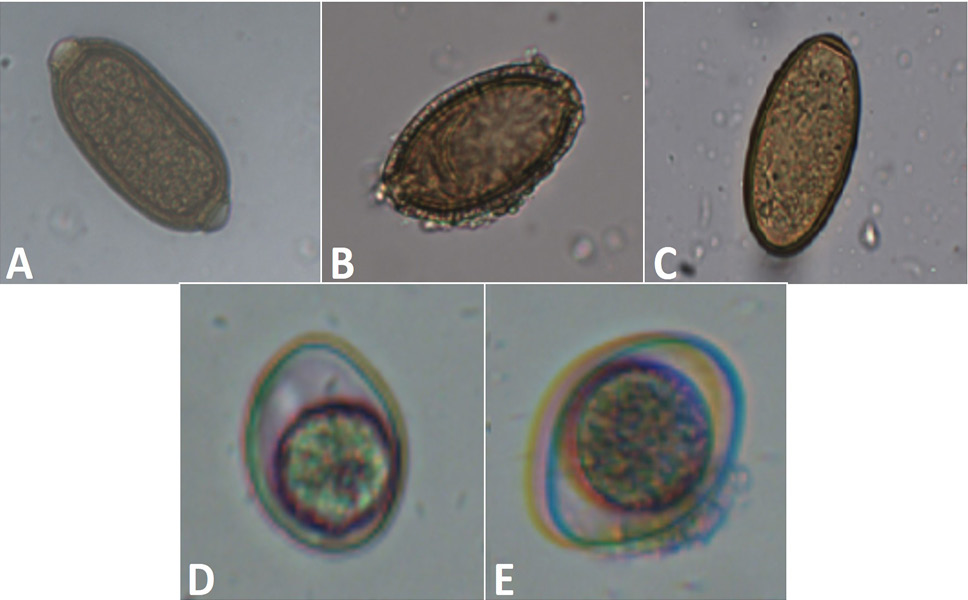
A, Capillaria sp. (63.9×25.9μm); B, Baylisascaris devosi (55.6×32.1μm); C, Echinochasmus sp. (66.9×37.4μm); D and E, two different Coccidian species (31.9×25.9μm) (42.4×31.7μm).
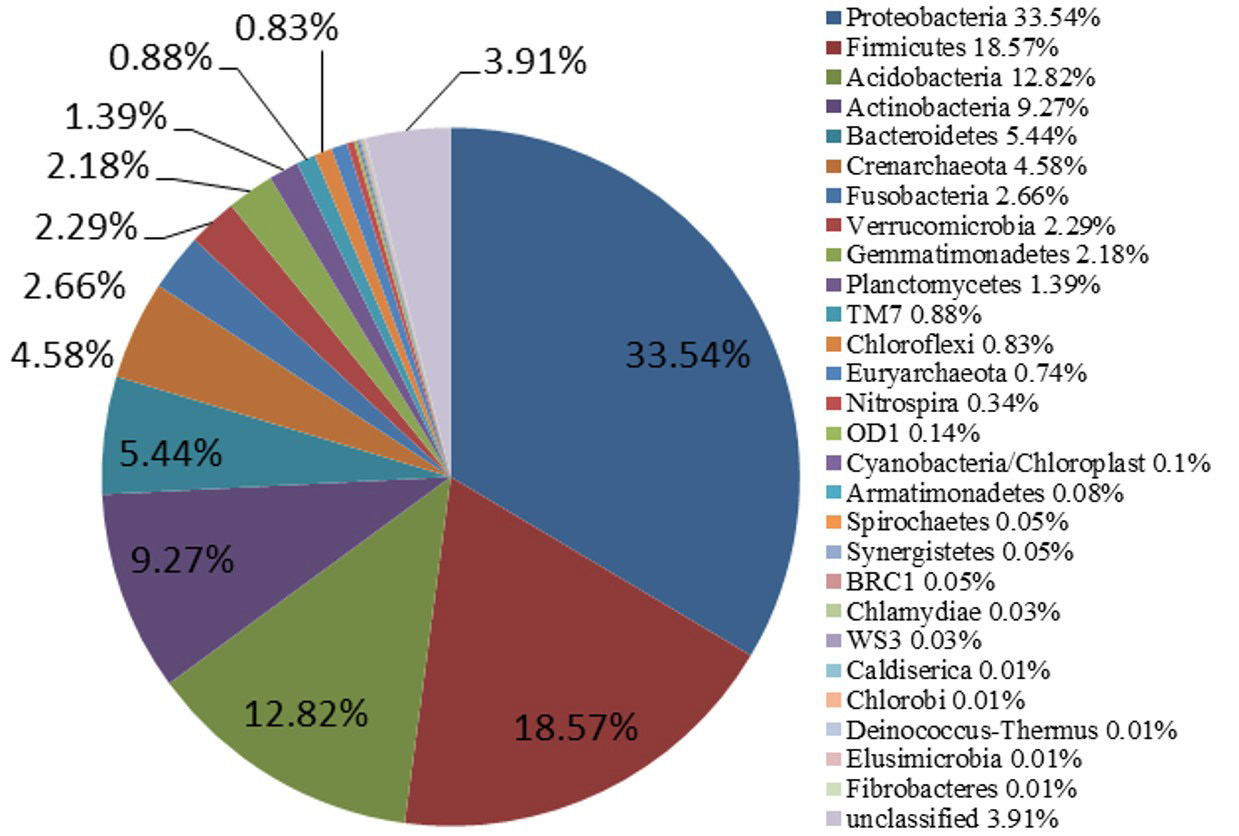
The bacteria community of the sable gut on phylum.
References
- Dubinin, E.A., 2010. On sexual dimorphism in the winter diet of the sable (Martes zibellina L.) Russian J. Ecol., 41: 244-248. https://doi.org/10.1134/S1067413610030082[CrossRef]
- Heddergott, M., Muller, F. and Frantz, A.C., 2015. Prevalence and molecular identification of the sinus worm Skrjabingylus petrowi (Nematoda: Metastrongyloidea) from Martes spp. in Germany. Parasitol. Res., 114: 2053-2061. https://doi.org/10.1007/s00436-015-4388-0[CrossRef]
- Hoberg, E.P., Aubry, K.B. and Brittell, J.D., 1990. Helminth parasitism in martens (Martes americana) and ermines (Mustela erminea) from Washington, with comments on the distribution of Trichinella spiralis. J. Wildl. Dis., 26: 447-452. https://doi.org/10.7589/0090-3558-26.4.447[CrossRef]
- Ishida, K., Sato, J.J., Kinoshita, G., Hosoda, T., Kryukov, A.P. and Suzuki, H., 2013. Evolutionary history of the sable (Martes zibellina brachyura) on Hokkaido inferred from mitochondrial Cytb and nuclear Mc1r and Tcf25 gene sequences Acta Theriol., 58: 13-24. https://doi.org/10.1007/s13364-012-0103-z[CrossRef]
- Kang, B., Ma, J. and Zhang, Y., 2003. Analysis the diet composition of the sable in Daxinanling of China. Acta Theriol. Sin., 23: 203-207.
- Kinoshita, G., Sato, J.J., Meschersky, I.G., Pishchulina, S.L., Simakin, L.V., Rozhnov, V.V., Malyarchuk, B.A., Derenko, M.V., Denisova, G.A., Frisman, L.V., Kryukov, A.P., Hosoda, T. and Suzuki, H., 2015. Colonization history of the sable Martes zibellina (Mammalia, Carnivora) on the marginal peninsula and islands of northeastern Eurasia. J. Mammal., 96: 172-184. https://doi.org/10.1093/jmammal/gyu021[CrossRef]
- Kocijan, I., Prukner-Radovčić, E., Beck, R., Galov, A., Marinculić, A. and Sušić, G., 2008. Microflora and internal parasites of the digestive tract of Eurasian griffon vultures (Gyps fulvus) in Croatia. Eur. J. Wildl. Res., 55: 71-74. https://doi.org/10.1007/s10344-008-0209-4[CrossRef]
- Kong, F., 1997. Veterinary parasitology, Second edn. The Chinese Agriculture University Publisher, Beijing.
- Kornas, S., Wierzbowska, I.A., Gorski, P. and Okarma, H., 2013. Occurrence of internal parasites in stone martens (Martes foina) from Cracow and suburbs. Annls. Parasitol., 59: 203-205.
- Kubo, M., Nagataki, M., Agatsuma, T., Sakai, H., Masegi, T., Panciera, R.J. and Yanai, T., 2009. Parasitological and molecular features of the Hepatozoon species in the myocardium of Japanese Martens (Martes melampus melampus). J. Parasitol., 95: 1496-1502. https://doi.org/10.1645/GE-2187.1[CrossRef]
- Larkin, J.L., Gabriel, M., Gerhold, R.W., Yabsley, M.J., Wester, J.C., Humphreys, J.G., Beckstead, R. and Dubey, J.P., 2011. Prevalence to Toxoplasma gondii and Sarcocystis spp. in a reintroduced fisher (Martes pennanti) population in Pennsylvania. J. Parasitol., 97: 425-429. https://doi.org/10.1645/GE-2623.1[CrossRef]
- Li, B., 2012. Sables: Their biology, husbandry and ulilization. The Chinese Forestry Publisher, Beijing.
- Li, B., Xu, Y.C., Ma, Y., Elmeros, M., Lan, T.M. and Bai, S.Y., 2011. A PCR-RFLP-based method to distinguish sable (Martes zibellina) and pine marten (Martes martes). Acta Theriol., 56: 283-288. https://doi.org/10.1007/s13364-011-0027-z[CrossRef]
- Li, M., Xia, W., Wang, M., Yang, M., Zhang, L. and Guo, J., 2014. Application of molecular genetics method for differentiating Martes zibellina L. heart from its adulterants in traditional Chinese medicine based on mitochondrial cytochrome b gene. Mitochondrial DNA, 25: 78-82. https://doi.org/10.3109/19401736.2013.815167[CrossRef]
- Maliarchuk, B.A., Petrovskaia, A.V. and Derenko, M.V., 2010. Intraspecific structure of sable Martes zibellina inferred from nucleotide variation of the mitochondrial DNA cytochrome b gene. Genetika, 46: 73-78. https://doi.org/10.1134/S1022795410010102[CrossRef]
- Malyarchuk, B., Derenko, M. and Denisova, G., 2014. A mitogenomic phylogeny and genetic history of sable (Martes zibellina). Gene, 550: 56-67. https://doi.org/10.1016/j.gene.2014.08.015[CrossRef]
- Miterpakova, M., Hurnikova, Z., Zalesny, G. and Chovancova, B., 2013. Molecular evidence for the presence of Dirofilaria repens in beech marten (Martes foina) from Slovakia. Vet. Parasitol., 196: 544-546. https://doi.org/10.1016/j.vetpar.2013.02.028[CrossRef]
- Monakhov, V.G., 2014. Size structure of the sable in the Lake Baikal Region: A decadal analysis over the last sixty years. Izvestiia Akademii Nauk Seriia Biologicheskaia, Rossiiskaia Akademiia Nauk, pp. 40-47.
- Moskwa, B., Gozdzik, K., Bien, J., Bogdaszewski, M. and Cabaj, W., 2012. Molecular identification of Trichinella britovi in martens (Martes martes) and badgers (Meles meles); new host records in Poland. Acta Parasitol., 57: 402-405. https://doi.org/10.2478/s11686-012-0054-1[CrossRef]
- Mustonen, A.M., Puukka, M., Saarela, S., Paakkonen, T., Aho, J. and Nieminen, P., 2006. Adaptations to fasting in a terrestrial mustelid, the sable (Martes zibellina). Comp. Biochem. Physiol. Part A: Mol. Integrat. Physiol., 144: 444-450. https://doi.org/10.1016/j.cbpa.2006.03.008[CrossRef]
- Nagai, T., Murakami, T. and Masuda, R., 2012. Genetic variation and population structure of the sable Martes zibellina on eastern Hokkaido, Japan, revealed by microsatellite analysis. Mamm. Stud., 37: 323-330. https://doi.org/10.3106/041.037.0406[CrossRef]
- Poole, B.C., Chadee, K. and Dick, T.A., 1983. Helminth parasites of pine marten, Martes americana (Turton) from Ontario, Canada. J. Wildl. Dis., 19: 10-13. https://doi.org/10.7589/0090-3558-19.1.10[CrossRef]
- Real, J.M.C. and Torino, E.F., 2011. Helminth parasites in stone martens (Martes foina) from Italy. Zeitschrift fur Jagdwissenschaft, 47: 229-231.
- Rozhnov, V.V., Meschersky, I.G., Pishchulina, S.L. and Simakin, L.V., 2010. Genetic analysis of sable (Martes zibellina) and pine marten (M. martes) populations in sympatric part of distribution area in the northern Urals. Russian J. Genet., 46:488-492. https://doi.org/10.1134/S1022795410040150[CrossRef]
- Rozhnov, V.V., Pishchulina, S.L., Meshcherskii, I.G., Simakin, L.V., Lazebnyi, O.E. and Kashtanov, S.N., 2013. Genetic structure of sable (Martes zibellina L.) from Eurasia based on distribution of mitochondrial lineages. Genetika, 49: 251-258.
- Sato, J.J., Hosoda, T., Kryukov, A.P., Kartavtseva, I.V. and Suzuki, H., 2011. Genetic diversity of the sable (Mantes zibellina, Mustelidae) in Russian far east and Hokkaido inferred from mitochondrial NADH dehydrogenase subunit 2 gene sequences. Mamm Stud., 36: 209-222. https://doi.org/10.3106/041.036.0404[CrossRef]
- Seville, R.S. and Addison, E.M., 1995. Nongastrointenstinal helminths in marten (Mates americnana) from Ontario, Canada. J. Wildl. Dis., 31: 529-535. https://doi.org/10.7589/0090-3558-31.4.529[CrossRef]
- Steven, W.B., Ma, Y., Xu, L. and Jiang, Z., 1996. Winter habitat ecology of sables (Martes zibellina) in relation to forest management in China. Ecol. Appl., 6: 318-325. https://doi.org/10.2307/2269575[CrossRef]
- Xu, L., Jiang, Z., Ma, Y., Jin, A. and Wang, Y., 1996. Analusis of the winter diet of the sable in China. Acta Theriol. Sin., 16: 272-277.
- Zarnke, R.L., Whitman, J.S., Flynn, R.W. and ver Hoef, J.M., 2004. Prevalence of Soboliphyme baturini in marten (Martes americana) populations from three regions of Alaska, 1990-1998. J. Wildl. Dis., 40: 452-455. https://doi.org/10.7589/0090-3558-40.3.452[CrossRef]
- Zhigileva, O.N., Politov, D.V., Golovacheva, I.M. and Petrovicheva, S.V., 2014. Genetic variability of sable Martes zibellina L., pine marten M. martes L., and their hybrids in Western Siberia: Protein and DNA polymorphism. Genetika, 50: 581-590. https://doi.org/10.1134/S1022795414050135[CrossRef]
- Zhu, W.C., Wei, Q.G., Xue, S.Y., Zhang, H.X., Lv, T.S. and Zhang, H.H., 2017. Isolation and characterization of microsatellite markers for the sable, Martes zibellina (Mammalia: Mustelidae) Pakistan J. Zool., 49:1909-1912 http://dx.doi.org/10.17582/journal.pjz/2017.49.5.sc1[CrossRef]
Services
Article usage statistics
Loading…