Research Article · Volume 12, Issue 5, 1 March 2024 · Open Access
The Effects of Equilibration Time and Post-Thawing Temperatures in Cryopreservation of Gaga Chicken Semen
· · · ·
Affiliations & Notes ⌄
1Department of Animal Reproduction and Genetic, Faculty of Animal Science, University of Brawijaya, Jl. Veteran, Malang 65145, East Java, Indonesia
2Student of Doctoral program in Animal Science, Faculty of Animal Science, University of Brawijaya, Jl. Veteran, Malang 65145, East Java, Indonesia
3Department of Veterinary Medicine, Faculty of Veterinary Medicine, University of Brawijaya Jl. Puncak Dieng, Malang 65151, Indonesia *Correspondence | Sri Wahjuningsih, Department of Animal Reproduction and Genetic, Faculty of Animal Science, University of Brawijaya, Jl. Veteran, Malang 65145, East Java, Indonesia
The results of the macroscopic and microscopic evaluation of fresh gaga chicken semen showed good quality for freezing.
The results of analysis of variance show that the treatment of different thawing and equilibrium times have no significant influence (P>0.05) on the motility of gaga chicken semen (Table 1).
Semen of Gaga Chicken after thawing with different equilibration time and thawing lengths shows ranges between 45.68±3.00 to 50.85±1.85.
In conclusion, there is no difference of influence between the long equilibration and the temperature difference of the thawing on the quality of the frozen chicken semen.
Selected from the article's own text.
Abstract
This study aimed to evaluation the effect of different equilibration time and post thawing cryopreservation in gaga chicken semen. The research material was 10 male Gaga chickens who were 10 months old, healthy, and normal reproductive organs. Semen was collected using massage methods. This study uses a complete random design of factorial patterns with factor I being the equilibration time and factor II being the different thawing conditions. Fresh semen was evaluated macroscopically and microscopically. The sperm used had a motility of over 80%. The semen was diluted Lactate Ringer with 10% egg yolk and the addition of 7% DMSO cryoprotectant. Then the semen was equilibrated at different times and then frozen. The frozen semen was then stored in a liquid nitrogen container at a temperature of -196°C.After 24 hours, the semen was thawing at a different temperature. The evaluation of semen quality included motility, viability, plasma membrane integrity, and acrosome integrity. All data obtained were analyzed with two way-analysis of variance. The result showed that equilibration time treatment and differential temperature of thawing yield good results on the motility and viability of Gaga chicken sperm on all treatments (P>0,01). Equilibration time of treatment for 2 hours was capable of preserving Plasma Membrane Integrity (PMI) and acrosomal integrity with a thawing temperature of 38 °C for 30 seconds or a 60 °C Thawing temperature for 5 seconds (P<0.01).
Gaga chicken is one of the local Indonesian chickens that has a unique sound that originates from South Sulawesi Province, Indonesia. Gaga chickens are bred as pet chicks and competitive chicks with a distinctive voice that resembles the laughing voice of humans. The Gaga chicken is a wealth of Indonesian livestock genetic resources that need to be protected and preserved (Indonesia Ministry of Agriculture, 2011). The diversity of local Indonesian chickens needs to be preserved to prevent them from extinction.
One way to save animals from extinction is through cryopreservation technology of gamete cells to resurrect animal species someday even if their ancestors were dead. Thelie et al. (2019) stated that chicken sperm cryopreservation is capable of fertility for 18 years. Furthermore, cryopreservation technologies of gamete cells, especially spermatozoa, can be used for Artificial Insemination (AI) in different areas that are distant from each other. However, spermatozoa are so sensitive to environmental factors during the cryopreservation process that appropriate techniques are required in their handling both before and after freezing. Moreover, according to Blesbois (2012), Spermatozoa of chicken whose filiform shape makes it more sensitive to the process of freezing and thawing.
The diluted semen needs to be balanced and temperature reduced in the process of freezing the semen (Taskin et al., 2020). Equilibration is the time the sperm adapts to the diluent used before the semen is frozen. Short equilibration can decrease the ability of sperm to adapt to the dilution, otherwise too long equilibration, spermatozoa will lose a lot of energy thereby decreasing sperm activity.
Cryopreservation causes thermal stress due to temperature changes during cooling, freezing, and thawing, and osmotic pressure due to cryoprotectant agents and crystallization in spermatozoa ; . Thawing semen quickly reduces the harmful effects of the recrystallization and hydration processes, preventing membrane damage to semen and cytoplasm. In this case, ice crystals do not form, and sperm shifts directly from freezing to liquid . According to Salih et al. (2021) thawing semen at a temperature of 60 °C in 5 seconds could be an efficient strategy to maintain the quality of semen chicken that is cryopreserved. In mammal species, Zenteno et al. (2023) found that the motility of bovine spermatozoa was found to be higher at a thawing temperature of 38 °C for 30 seconds compared to 36 °C for 30 seconds, while Nisa et al. (2022) found the best treatment for thawing bovine sperms to be 28 °C during 45 seconds.
The cryopreservation process involves a phase of gradual temperature decrease. The balancing process is the storage of sperm at a temperature of 5 °C before freezing. This storage aims to reduce sperm metabolic activity and osmotic adaptation helps cryoprotectan enter sperm membranes . Equilibration time is important to note because it affects the quality of sperm post thawing. This study aims to know the effect of the equilibration time and the temperature difference in treatment thawing on the quality of the frozen semen of gaga chicken.
Materials and Methods
The study area
The study was conducted between November 2022-December 2023 at the Teaching Farm Laboratory Politeknik Pembangunan Pertanian Malang-Indonesia.
Animal population
This research is a laboratory experiment. The samples of fresh semen came from 10 male chickens were the study animals with different body condition category. The criterion of fresh semen used in this study must have a sperm motility of ≥70% to be processed into frozen semen (BSN, 2021).
Experimental design
This study used a complete random design of factorial patterns with factor I being the equilibration time and factor II being the different thawing conditions.
Factor I: P0 = 0 hour (without equilibration)
P1 = 1 hour equilibration
P2 = 2 hours equilibration
Factor II: T1 = 28 °C thawing temperature for 45 seconds
T2 = 38 °C thawing temperature for 30 seconds
T3 = 60 °C thawing temperature for 5 seconds
Sampling methodology and sample size determination
In determining the number of samples using the Federer formula is: (n-1) (t-1) ≥ 15 where (t) is the count of treatment groups, and (n) is number of repetitions.
Extender preparation
The extender used was 90 % Ringer Lactate (PT Satoria Aneka Industri) and 10% egg yolk . It was centrifuged for 15 minutes at a speed of 3000 rpm. The supernatant was taken and added 7% DMSO or dimethyl sulfoxide (Merck, KgaA, 64721 Darmstadt, Germany), 1000 IU/ml penicillin (PT Meiji, Indonesia) and 1 mg/ml streptomycin (PT Meiji, Indonesia). The pH of the diluent was adjusted with the addition of tris (hydroxymethyl) aminomethane (Merck, KgaA, 64721 Darmstadt, Germany) up to pH 7.4.
Semen collection and dilution
The study used semen from 10 male Gaga chickens 10 months old, healthy, normal reproductive organs. Semen was collected using massage methods on the back of the chicken. At the time of the sheltering, the hands form a 45° angle with the backbone (os vertebrae lumbales et sacrales) of chicks. The semen that comes out is stored in a petri cup and avoided contamination by dirt. Gaga chickens were kept in individual cages equipped with feed and drinking water. The daily feed commercial was 100 grams. Drinking water was given ad libitum. Semen was divided into 9 tubes and each diluted according to treatment with a sperm concentration of 50x106 in 0.25 ml of mini straw (IMV, France).
Equilibration and freezing
The straw was then equilibrated at a temperature of 5 oC based on treatment for P0=0 hours (without equilibration), P1= 1 hours of equilibration and P2=2 hours of equilibration. It was pre-freezing for 10 minutes by placing the straw on a liquid nitrogen surface a distance of 3 cm , and then put into a liquid nitrogen container (-196 °C) for 24 hours .
Macroscopically of semen evaluation
Macroscopically of Semen Evaluation adopting Arifiantini (2012). The macroscopic evaluation covers the volume of semen measured by looking at the scale on the semen housing tube. The colour is seen visually, fresh semen can be milk white, cream or yellowish. Acidity (pH) is measured using pH indicator paper (range 6, 4-8, Merck Germany). The consistency of the semen is assessed by bending the container tube and returning it to its original position. Consistency is seen based on the speed of semen returning to the base of the tube. The consistency of the semen ranges from low to medium.
Parameter semen of evaluation
The evaluation of frozen semen (more than 24 hours) after thawing was done by placing frozen semen in a water bath based on temperature treatment T1=28 °C, T2= 37 °C, T3=60 °C for 5 seconds. Percentage of sperm motility, percentage of sperm viability, PMI, and acrosome integrity were evaluated after thawing.
Percentage motility of sperm
A total of 10 μL of frozen semen after thawing then was observed using a binocular microscope (Olympus CX-23, Japan) with a 400X magnification of microscope, and observations were made of the number of progressive motile spermatozoa from one field of view and expressed in percentages . Under a light microscope, Spermatozoa were assessed in each smear in at least five distinct fields. Sperm were classified as motile or nonmotile individually. From a single field of view, observations were made about the total number of progressing motile spermatozoa and their velocity, which were then expressed as a percentage.
Percentage viability of sperm
The percentage of sperm viability was done by the eosin-nigrosin (Merck, KgaA, 64721 Darmstadt, Germany) colouring method. One drop of diluted frozen semen after thawing, placed on the object glass, then added with one drop of eosin-nigrosin (Merck, KgaA,64721 Darmstadt, Germany) dye (1:3) and then homogenized. Then the preparation is made by pressing and pushing the object glass to form a 45° angle and dried. Then observe with a magnification of 400X- microscope in ten fields of view or 200 cells of sperm. The dead sperm will absorb red matter because the permeability of the cell wall has been weakened while the living sperm would look transparent .
PMI of sperm
Observation of PMI using hypoosmotic swelling test techniques. 10 μL semen diluted in hypoosmotic solution (0.9 g of fructose and 0.49 g of sodium citrate (Merck, KgaA, 64721 Darmstadt, Germany) dissolved in 100 μL of distillation water) kept at a temperature of 37 °C for 30 minutes, 200 of cell spermatozoa were evaluated which indication for intact was swelling in the tail of spermatozoa, and if not swelling in the tail of spermatozoa so damaged plasma membrane ; .
Acrosome integrity of sperm
Observation of intact acrosome using colouring solution of Coomassie Brilliant Blue (CBB) (Merck, KgaA,64721 Darmstadt, Germany). The semen was placed on a glass of the object and then dried and scrubbed for 30 minutes in a 5% formalin solution at a temperature of 37 °C, rinsed with distilled water and air-dried. The dyeing procedure is based on Silyukova et al. (2022) that semen was dried for 5 minutes in a CBB solution (0.25% Coomassie Brilliant Blue R 250 in a solution of 10% glacial acetate acid and 25% methanol) and then rinsed with distillation water and dried with air. Observations of acrosome integrity are done at 5-6 fields of view in a 100x magnification microscope. The whole spermatozoa acrosome was concentrated blue, while the unintegrated acrosome was less coloured.
Data analysis
The all data were analyzed using a two-way analysis of variance (ANOVA), if the F-value was significant (P<0.05) then it was continued with the Duncan multiple range test. Statistical analysis using the SPSS application version 27.0, and presented as mean ± standard error (SE).
Results and Discussion
The quality of fresh semen gaga chicken in this study included (a) the evaluation of macroscopic among others: volume, colour, pH, and smell; (b) microscopic among others: mass motility, individual motility, viability, concentration, and abnormality. The characteristic of chicken fresh semen quality in the study was good, with an average volume 0.18± 0.06 mL, and pH 8.10±0.16. the colour was milky white to cream, has a thick consistency, has average concentration 3.69±1.02, mass movement +++, motility 83.75±2.50, viability 98.20±0.33, PMI 97.25±3.80, and abnormality 12.67±1.31. The results of the macroscopic and microscopic evaluation of fresh gaga chicken semen showed good quality for freezing.
Motility of chicken spermatozoa experienced a significant decrease after thawing . The differences in the equilibrium time caused by the motility of chicken spermatozoa after freezing are also different (Zhong et al., 2023).
The results of analysis of variance show that the treatment of different thawing and equilibrium times have no significant influence (P>0.05) on the motility of gaga chicken semen (Table 1). The motility of the gaga chicken semen after freezing with different equilibration and different thawing shows ranging from 33.00±1.13 to 35.80±1.03. The study showed that there were no significant differences between treatments (P>0.05). Lower than the motility in previous research reports, that was chicken frozen semen motility after thawing has 38.6% using Beltsville Poultry Semen Extender (BPSE) with hyaluronic acid added , 38% in Bangkok chicken freezing semen using BPSE with DMA cryoprotectant , 37.22% in chicken semen with egg yellow milk ringer with DMSO cryoprotectant , and 35.8% using L-carnitine . The results obtained in this study are higher than Shahverdi et al. (2015) which has 22.7% using Beltsville extender and Pranay et al. (2018) who got 27.73%-34,55% using the N-methyl acetate added. That was in line with the Milanda and Fattah (2022) which stated that there was no difference in the time of thawing against the motility of the frozen semen of domestic chicken ((P>0.05).
Table 1: Percentage motility of sperm Gaga chicken in post thawing with treatment equilibration time and treatment thawing.
Treatment thawing
Treatment equilibration time
Mean
P0
P1
P2
T1
33.40±1.46
33.30±2.77
33.00±1.56
33.23±1.92
T2
30.00±1.13
33.40±3.08
34.00±1.84
32.47±2.01
T3
31.80±2.26
35.80±1.03
32.00±1.55
33.20±1.61
Mean
31.73±1.61
34.17±2.29
33.00±1.65
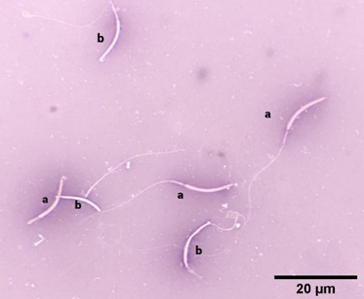
Viability of sperm gaga chicken was observed with eosin nigrosin colouring will remain bright, whereas dead sperms will absorb the eosin nigrosin colour. That was because the Na+ pump in the living sperm works well whereas in the dead sperm Na+ pumps do not work (Figure 1).
Average percentage of viability of sperm Gaga chicken after freezing is presented in Table 2. Semen of Gaga Chicken after thawing with different equilibration time and thawing lengths shows ranges between 45.68±3.00 to 50.85±1.85. The study showed that there were no significant differences between treatments (P>0.05). That was because it protects sperm plasma membranes against the internal and external electrolyte-electrolyte balance of spermatozoa, so that the sperm metabolism process was uninterrupted so that it can maintain sperm survival. This result was higher when compared to Mosca et al. (2016) in Lohman chickens, for DMA (Dimethyl Acetamide) produced live spermatozoa which were 46.9%, respectively, and Setioko et al. (2002) on the duck semen using DMA and DMF for cryoprotectant produced viability of sperm post thawing that were 48.04 and 39.88%, respectively.
Table 2: Percentage viability of sperm Gaga chicken in post thawing with treatment equilibration time and treatment thawing.
Treatment thawing
Treatment equilibration time
Mean
P0
P1
P2
T1
45.82±3.45
50.85±1.85
47.92±3.96
48.20±3.08
T2
45.16±2.98
47.36±2.46
46.24±2.20
46.25±2.54
T3
45.68±3.00
49.82±2.47
55.53±1.82
50.34±2.43
Mean
45.55±3.14
49.34±2.26
49.90±2.66
Table 3: Percentage PMI of sperm Gaga chicken in post thawing with treatment equilibration time and treatment thawing.
Treatment thawing
Treatment equilibration time
Mean
P0
P1
P2
T1
44.34±3.38
40.23±2.54
44.68±2.89
43.08±2.93a
T2
42.52±2.96
48.37±2.94
54.38±2.75
48.42±2.88b
T3
43.02±2.41
47.78±2.32
56.36±3.28
49.06±2.67b
Mean
43.29±2.91a
45.46±2.60a
51.81±2.97b
Significant differences in the same row and column at P<0.01
Average percentage of PMI of sperm Gaga chicken after freezing was presented in Table 3. Chicken Gaga spermatozoa after frozen with different balancing time treatments show best treatment on treatment P2 averages 51.81±2.97 (P<0.01) compared to P0 43.29±2.91 % and P1 45.46±2.60. While different thawing temperature treatments indicate difference between treatments. On treatment T2 and T3 were best 48.42±2.88 and 49.06±2.67(P<0,01) and last on T1 43.08±2.93 (P>0.01).
Semen freezing can result in physical stress, often called cold shock, which affects structural and biochemical damage, thereby affecting cell function and ultimately causing cell death . Cold shock causes changes in the phospholipids that make up the plasma membrane during the transition phase from the liquid to the freezing phase , changes in plasma lipid chain and protein membrane arrangements that can result in leakage or decreased selectivity . The plasma membrane will lose its selective permeability and affect many cellular components such as lipids, proteins and ions it releases . When there is damage to the plasma membrane due to cold shock, the glucose-6-phosphate dehydrogenase enzyme first leaves the cytoplasm, which generally leads to a decrease in intra-cellular ATP concentration . There are also leaks of enzymes that play a role in metabolic processes such as aspartate aminotransferase (AspAT), the ATPase-linked sodium-potassium pump enzyme (Na+/K+-ATPase) , Cold shock also predicts the dislocation of plasma membrane proteins such as glucose transporter groups, which have a role to play in the transport of hexose through plasmatic membranes .
DMSO is a mixture of organosulfur with the chemical formula [Me2SO, (CH3)2SO] and has a small molecular weight, hence the DMSO known as an intracellular cryoprotectant. The addition of DMSO aims to maintain membrane integrity and increase the osmotic potential of the medium so that the fluid inside the cell flows out and dehydration occurs . The ability of the cryoprotectant to protect against cell membranes was an indication of a functioning interaction between the cryoprotectant and the cell membrane. This interaction can reduce damage to the membrane of the cell when the condition changes from relatively liquid to relatively dense structure and also when it returns to a relatively fluid structure during the thawing process .
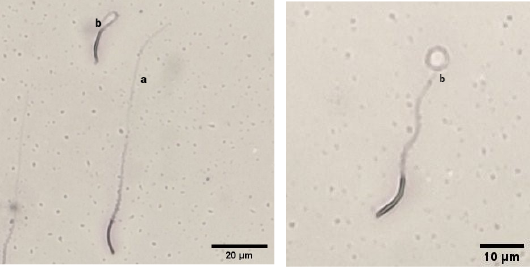
The PMI is an absolute thing that spermatozoa must have. The plasma membrane serves as the first protection of cells from the external environment that can damage cells. Spermatozoa that suffer from plasmatic membrane damage are characterized by a straight tail, whereas spermatozoa with an PMI are characterised by a circled or swelling in the tail of sperm (Figure 2).
Table 4: Percentage acrosome integrity of sperm Gaga chicken in post thawing with treatment equilibration time and treatment thawing.
Treatment thawing
Treatment equilibration time
Mean
P0
P1
P2
T1
30.56±2.51
39.86±1.84
36.80±1.54
35.74±1.96a
T2
46.88±2.61
47.17±2.78
41.39±3.42
45.15±2.93b
T3
51.14±1.71
50.70±2.53
56.50±3.29
52.78±2.51c
Mean
42.86±2.27
45.91±2.38
44.90±2.75
Significant differences in the same column at P<0.01
Average percentage of integrity of acrosome in the Gaga chicken semen after freezing was presented in Table 4. Gaga spermatozoa after freezing with different equilibration time treatments did not show any significant difference between treatments (P>0.01), the largest of P1 45.91±2.38, P2 44.90±2.75, P0 42.86±2.27. While thawing treatments showed a marked difference between treatment (P<0.01) T3 of 52.78±2.51, T2 45.15±2.93, and T1 of 35.74±1.96.
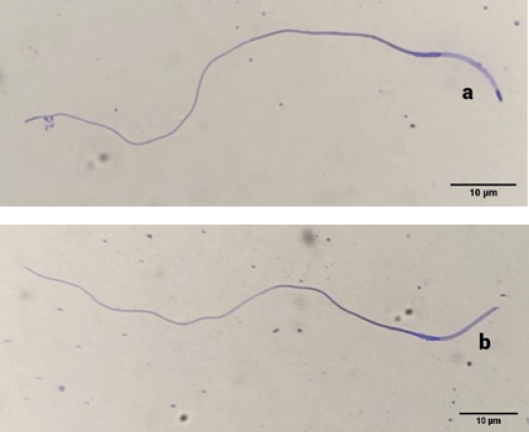
CB stain was commonly used in protein identification. Coomassie Blue is able to bind to membrane proteins, by binding to glycoprotein . The spermatozoa acrosome membrane consists of the Inner Acrosome Membrane (IAM) and the Outer Acrosome Membrane (OAM) which serves as the protector of the sperm of acrosome that will be coloured . When part of the acrosome of the spermatozoa cells is damaged or imperfect, sperm cells are unable to absorb colour properly and the colouring results will fade (Figure 3). An irregularity in the head can also be used as one of the indications that the plasma membrane has suffered damage as well as potential damage to the acrosome.
Conclusions and Recommendations
In conclusion, there is no difference of influence between the long equilibration and the temperature difference of the thawing on the quality of the frozen chicken semen. this study showed that all treatment gives quite good results on motility and viability of sperm Gaga chicken. A two-hour equilibration treatment was capable of preserving plasma membrane integrity and acrosome integrity at a 38°C thawing temperature for 30 seconds or a 60 °C thawing temperature of 5 seconds. Further research was needed on the successful implementation of artificial insemination.
Acknowledgment
The authors would like to thank the Ministry of Research Technology and Higher Education of the Republic of Indonesia for having granted this project through Hibah Professor University of Brawijaya year 2023 with number granted: 2044.2/UN10.F05/PN/2023.
Novelty Statement
This is the first study to report the effects of equilibration time and post thawing temperatures in the cryopreservation of Gaga chicken which is a local Indonesian chicken that needs to be protected and preserved.
Author’s Contribution
SW, AAA, KH, HP and ARIP were conceptualized and designed the experiment, literature search, and wrote manuscript drafts. SW and AAA edited and revised the manuscript. KH, HP and ARIP helped with interpretation of analytical statistic. All authors were critically read, reviewed and approved the final manuscript.
Animals and ethical approval
All procedures in this study have obtained approval from Research Ethic Commission, University of Brawijaya for the use of animals with certificate number: 096-KEP-UB-2023.
Conflict of interest
The authors have declared no conflict of interests.
Figures
Figure 1:.
Viability of sperm Gaga chicken a. dead sperm b. live sperm.
Figure 2:.
Plasma membrane integrity of sperm a. damaged PMI b. intact PMI (swelling in tail of sperm).
Figure 3:.
Acrosome Integrity of sperm Gaga chicken using colouring solution of Coomassie Brilliant Blue (CBB) a: integrated acrosome (blue coloured in head sperm) b: unintegrated acrosome (less coloured in head sperm).
References
Badan Standarisasi Nasional (BSN) (2021). Frozen semen. Part1. SNI 4869-1:2021. Jakarta: BSN.
Arifiantini RI (2012). Teknik Koleksi dan Evaluasi Semen Pada Hewan. (Semen Collection and Evaluation Techniques in Animals). Bogor: IPB Press.
Arifiantini RI, Purwantara B (2010). Motility and viability of friesian holstein spermatozoa in three different extender stored at 5°C. J. Indones. Trop. Anim. Agric., 35(4): 222–226. https://doi.org/10.14710/jitaa.35.4.222-226[CrossRef]
Biniova Z, Stadnik L, Dolezalova M, Duchacek J (2018). Effect of thawing method on bull sperm survival in ejaculates frozen in 4 ml and 8 ml volumes. Czech J. Anim. Sci., 63(10): 399–407. https://doi.org/10.17221/117/2018-CJAS[CrossRef]
Blesbois E (2012). Biological features of the avian male gamete and their application to biotechnology of conservation. J. Poult. Sci., 49(3): 141–149. https://doi.org/10.2141/jpsa.011120[CrossRef]
Dong Q, Rodenburg SE, Huang C, Vandevoort CA (2008). Cryopreservation of rhesus monkey (Macaca mulatta) epididymal spermatozoa before and after refrigerated storage. J. Androl., 29(3): 283-292. https://doi.org/10.2164/jandrol.107.003921[CrossRef]
Dziekońska A, Strzezek J (2011). Boar variability affects sperm metabolism activity in liquid stored semen at 5°C. Pol. J. Vet. Sci., 14(1): 21–27. https://doi.org/10.2478/v10181-011-0003-1[CrossRef]
El-Ahwany A, Samir H, Alahwany H (2018). Using two different thawing temperatures and their effect on the motility recovery of human cryopreserved sperms in cancer patients. Middle East Fertil. Soc. J., 23(4): 331–334. https://doi.org/10.1016/j.mefs.2018.04.007[CrossRef]
Erol OD, Pervin B, Seker ME, Aerts-Kaya F (2021). Effects of storage media, supplements and cryopreservation methods on quality of stem cells. World J. Stem Cells, 13(9): 1197–1214. https://doi.org/10.4252/wjsc.v13.i9.1197[CrossRef]
Fattah, A., Sharafi, M., Masoudi, R., Shahverdi, A., Esmaeili, V., Najafi, A. (2017). L-Carnitine in rooster semen cryopreservation: Flow cytometric, biochemical and motion findings for frozen-thawed sperm. Cryobiology, 74, 148–153. https://doi.org/10.1016/j.cryobiol.2016.10.009[CrossRef]
Ghetler Y, Yavin S, Shalgi R, Arav A (2005). The effect of chilling on membrane lipid phase transition in human oocytes and zygotes. Hum. Reprod., 20(12): 3385–3389. https://doi.org/10.1093/humrep/dei236[CrossRef]
Huang C, Tang YL, Hu JL, Zhou WJ, Huang ZH, Luo XF, Li Z, Zhu WB (2022). Update on techniques for cryopreservation of human spermatozoa. Asian J. Androl., 2(6): 563-569. https://doi.org/10.4103/aja20229[CrossRef]
Indonesia Ministry of Agriculture (2011). SK. Menteri Pertanian No.2920/Kpts/OT.140/6/2011 about Gaga chicken in Indonesia. J. Wartazoa, 17: 128-136.
Junaedi J, Arifiantini R, Sumantri C, Gunawan A (2016). The use of dimethyl sulfoxide as cryoprotective agent for native chiken frozen semen. J. Vet., 17(2): 300–308. https://doi.org/10.19087/jveteriner.2016.17.2.300[CrossRef]
Khaeruddin, Wahjuningsih S, Ciptadi G, Yusuf M, Hermawansyah, Sahiruddin (2022). Cryopreservation of Gaga’ chicken semen from South Sulawesi, Indonesia with the addition of L-carnitine, hyaluronic acid, sucrose and their combination in diluent. Biodiversitas, 23(6): 3297–3302. https://doi.org/10.13057/biodiv/d230659[CrossRef]
Khairuddin K, Kurniawan ME, Soman S (2019). Cryopreservation of Kampung rooster semen using egg yolk diluent from four types of poultry with different concentrations. Indones. J. Vet. Sci., 13(3): 82–87. https://doi.org/10.21157/j.ked.hewan.v13i3.14892[CrossRef]
Khalek AK, Sak MA, Nagy WM, Abou-Serie HS, Eliraqy EZ (2018). Role of propolis ethanolic extract as an antioxidant supplement in tris-extender to enhance semen quality of Egyptian buffaloes during cryopreservation. Adv. Anim. Vet. Sci., 4(4): 527–534.
Khalil WA, El-Harairy MA, Zeidan AEB, Hassan MAE, Mohey-Elsaeed O (2018). Evaluation of bull spermatozoa during and after cryopreservation: Structural and ultrastructural insights. Int. J. Vet. Sci. Med., 6: 49–56. https://doi.org/10.1016/j.ijvsm.2017.11.001[CrossRef]
Khan IM, Cao Z, Liu H, Khan A, Rahman SU, Khan MZ, Sathanawongs A, Zhang Y (2021). Impact of cryopreservation on spermatozoa freeze-thawed traits and relevance OMICS to assess sperm cryo-tolerance in farm animals. Front. Vet. Sci., 8(February): 1–14. https://doi.org/10.3389/fvets.2021.609180[CrossRef]
Khawar MB, Gao H, Li W (2019). Mechanism of acrosome biogenesis in mammals. Front. Cell Dev. Biol., 7(September): 1–12. https://doi.org/10.3389/fcell.2019.00195[CrossRef]
Kokk K, Verajankorva E, Laato M, Wu XK, Tapfer H, Pollanen P (2005). Expression of insulin receptor substrates 1-3, glucose transporters Glut-1-4, signal regulatory protein 1 alpha, phosphatidylinositol 3-kinase and protein kinase B at the protein level in the human testis. Anat. Sci. Int., 80: 91–96. https://doi.org/10.1111/j.1447-073x.2005.00091.x[CrossRef]
Laura Y, Harimurti S, Ismaya. 2017. Effect of different levels of dimethylacetamide (DMA) on sperm quality of bangkok rooster chicken and sperm survivability in reproductive tract of hen. Pak J Nutr 16(3): 144-147.
Lemma A (2011). Effect of cryopreservation on sperm quality and fertility. Intech Open Access Publisher. https://doi.org/10.5772/16563[CrossRef]
Lotfi S, Mehri M, Sharafi M, Masoudi R (2017). Hyaluronic acid improves frozen-thawed sperm quality and fertility potential in rooster. Anim. Reprod. Sci., 184: 204–210. https://doi.org/10.1016/j.anireprosci.2017.07.018[CrossRef]
Lotfi S, Mehri M, Sharafi M, Masoudi R (2017). Hyaluronic acid improves frozen-thawed sperm quality and fertility potential in rooster. Anim. Reprod. Sci., 184: 204–210. https://doi.org/10.1016/j.anireprosci.2017.07.018[CrossRef]
Madeddu M, Mosca F, Abdel Sayed A, Zaniboni L, Mangiagalli MG, Colombo E, Cerolini S (2016). Effect of cooling rate on the survival of cryopreserved rooster sperm: Comparison of different distances in the vapor above the surface of the liquid nitrogen. Anim. Reprod. Sci., 171: 58–64. https://doi.org/10.1016/j.anireprosci.2016.05.014[CrossRef]
Mehaisen GMK, Elomda AM, Hamad SK, Ghaly MM, Sun Y, Li Y, Zong Y, Chen J, Partyka A, Nazmi A, Abbas AO, Stino FKR (2022). Effect of dimethylacetamide concentration on motility, quality, antioxidant biomarkers, anti-freeze gene expression, and fertilizing ability of frozen/thawed rooster sperm. Animals, 12(20). https://doi.org/10.3390/ani12202739[CrossRef]
Mehaisen GMK, Elomda AM, Hamad SK, Ghaly MM, Sun Y, Li Y, Zong Y, Chen J, Partyka A, Nazmi A, Abbas AO, Stino FKR (2022). Effect of dimethylacetamide concentration on motility, quality, antioxidant biomarkers, anti-freeze gene expression, and fertilizing ability of frozen/thawed rooster sperm. Animals, 12(20). https://doi.org/10.3390/ani12202739[CrossRef]
Mehaisen GMK, Elomda AM, Hamad SK, Ghaly MM, Sun Y, Li Y, Zong Y, Chen J, Partyka A, Nazmi A (2022). Effect of dimethylacetamide concentration on motility, quality, antioxidant biomarkers, anti-freeze gene expression, and fertilizing ability of frozen/thawed rooster sperm. Animals, 12: 2739. https://doi.org/10.3390/ani12202739[CrossRef]
Mehdipour M, Daghigh KH, Moghaddam G, Hamishehkar H (2018). Effect of egg yolk plasma and soybean lecithin on rooster frozen-thawed sperm quality and fertility. Theriogenology, 116: 89–94. https://doi.org/10.1016/j.theriogenology.2018.05.013[CrossRef]
Milanda S, Fattah AH (2022). The effect of thawing time on the quality of native chicken spermatozoa. J. Anim. Husb., 1(2013): 14–18. https://doi.org/10.24252/anoa.v1i1.27549[CrossRef]
Mosca F, Madeddu M, AbdelSayed A, Zaniboni L, Iaffaldano N, Cerolini S (2016). Combined effect of permeant and non-permeant cryoprotectants on the quality of frozen/thawed chicken sperm. Cryobiology, 73(3): 343–347. https://doi.org/10.1016/j.cryobiol.2016.10.001[CrossRef]
Najafi A, Daghigh-Kia H, Mehdipour M, Mohammadi H, Hamishehkar H (2022). Comparing the effect of rooster semen extender supplemented with gamma-oryzanol and its nano form on post-thaw sperm quality and fertility. Poult. Sci., 101(3): 1–7. https://doi.org/10.1016/j.psj.2021.101637[CrossRef]
Nisa DC, Rachmawati A, Susilawati T, Yekti APA (2022). The quality of frozen semen with different thawing duration and temperature on simmental bull. J. Ilmu-Ilmu Petern., 32(1): 108–117. https://doi.org/10.21776/ub.jiip.2022.032.01.11[CrossRef]
Pranay KK, Swathi B, Shanmugam M (2018). Cryopreservation of rooster semen using n-methylacetamide as cryoprotective agent. Int. J. Agric. Sci., 10(3): 5123. https://doi.org/10.9735/0975-3710.10.3.5123-5126[CrossRef]
Salih SA, Daghigh-Kia H, Mehdipour M, Najafi A (2021). Does ergothioneine and thawing temperatures improve rooster semen post-thawed quality? Poult. Sci., 100(10): 1–6. https://doi.org/10.1016/j.psj.2021.101405[CrossRef]
Setıoko AR, Sıtumorang P, Trıwulannıngsıh E, Sugıartı Dan DT, Kusumanıngrum A. 2002. Pengaruh Krioprotektan dan Waktu Ekuilibrasi Terhadap Kualitas dan Fertilitas Spermatozoa Itik dan Entog. JITV, 7(4), 237-243.
Shahverdi A, Sharafi M, Gourabi H, Yekta AA, Esmaeili V, Sharbatoghli M, Janzamin E, Hajnasrollahi M, Mostafayi F. (2015). Fertility and flow cytometric evaluations of frozen-thawed rooster semen in cryopreservation medium containing low-density lipoprotein. Theriogenology. 1;83(1):78-85. doi: 10.1016/j.theriogenology.2014.07.044[CrossRef]
Silyukova Y, Fedorova E, Stanishevskaya O (2022). Influence of technological stages of preparation of rooster semen for short-term and long-term storage on its quality characteristics. Curr. Issues Mol. Biol., 44(11): 5531–5542. https://doi.org/10.3390/cimb44110374[CrossRef]
Taskın A, Ergün F, Karadavut U, Ergün D (2020). Effects of extenders and cryoprotectants in cryopreservation of duck. Turk. J. Agric. Food Sci. Technol., 8(9): 1965–1970. https://doi.org/10.24925/turjaf.v8i9.1965-1970.3588[CrossRef]
Thelie A, Bailliard A, Seigneurin F, Zerjal T, Tixier-Boichard M, Blesbois E (2019). Chicken semen cryopreservation and use for the restoration of rare genetic resources. Poult. Sci., 98(1): 447–455. https://doi.org/10.3382/ps/pey360[CrossRef]
Zenteno ES, Rojano B, Betancur GR (2023). Influence of thawing temperature on sperm motility, structure, and metabolism of frozen bovine semen. Ciencia Rural, 53(3). https://doi.org/10.1590/0103-8478cr20210731[CrossRef]
Zong Y, Li Y, Sun Y, Mehaisen GMK, Ma T, Chen J (2023). Chicken sperm cryopreservation: Review of techniques, freezing damage, and freezability mechanisms. Agriculture (Switzerland), 13(2): 1–16. https://doi.org/10.3390/agriculture13020445[CrossRef]