Research Article · Volume 12, Issue 5, 3 March 2024 · Open Access
COVID-19 Lockdown and its Impact on Animal, Human Health and Veterinary Medical Education, Iraq
· ·
Affiliations & Notes ⌄
1College of Dentistry, Al Iraqia University, Baghdad, Iraq
2Department of Microbiology, College of Veterinary Medicine, University of Kirkuk, Kirkuk, Iraq
3Department of Pathology and Poultry Disease, College of Veterinary Medicine, University of Kirkuk, Kirkuk, Iraq. *Correspondence | Karima Akool Al-Salihi, College of dentistry, Al Iraqia University, Baghdad, Iraq
Additionally, the lockdown and cancellation of veterinary student clinical training sessions revealed significant effects on veterinary services because they were contributed in all activities of veterinary hospital such as treatment, and animal vaccination campaigns under supervision of university academic lectures.
All educational institutions were closed in Iraq during COVID-19 pandemic and the veterinary colleges had to pivot quickly to online education to ensure students could continue their studies.
The increased burden on veterinary medical services significantly influences the COVID-19 contagion on veterinary medical education.
Moreover, the COVID-19 pandemic and associated lockdowns have significantly impacted veterinary medical education.
Selected from the article's own text.
Abstract
During COVID-19, lockdown was applied worldwide to reduce pandemic circulating. This study intended to investigate the influence of the COVID-19 lockdown on the distribution of animal and zoonotic diseases and its effects on Veterinary Medical Education (VME) in Iraq. A cross-sectional analysis was designed and the participants were invited to answer an online questionnaire on veterinary medical online education. Data of reported diseases were collected from veterinary hospital and ministry of health authorities. This study showed aggressive distribution of external parasites particularly ticks, and other diseases such as Theileria, Anaplasmosis, FMD, three-days sickness, contagious ecthyma, sheep pox, clostridium diseases, brucellosis, mastitis, and respiratory diseases. The study also showed reemerging of Crimean Congo hemorrhagic fever and rabies in humans. The participants (187) responded at a rate of 98.1%. The undergraduate students and graduated veterinarian percentages were 79.67% and 20.32%, respectively. Online study materials were accessed via Google Classrooms, University platforms, You Tube, and Slide Share. Moreover, Google Classroom, Telegram, WhatsApp, Viber, Zoom, and FCC were the tools for lectures and communication with lecturers. A variation appeared in the assessment of the online education Theoretical and Practical Veterinary subjects evaluations, including 6.40%, 13.40%, 19.77%, 25.67%, 34.76%, and 3.30%, 5.30%,18.70%, 25.60%, and 47.10% respectively for scores 1, 2, 3, 4, 5 (poorly, slightly, reasonably, noticeably, significantly affected). In conclusion, this study approved that COVID-19 lockdown adversely affected animal and human health. Online education appeared as an alternative mode of veterinary education during COVID-19 lockdown with various challenges in practical lessons and clinical subjects.
COVID-19 is also recognized as Coronavirus disease. It is an acute, highly contagious respiratory syndrome caused by a novel coronavirus 2 (SARS-CoV-2) and triggered an extensive global health pandemic in December 2019. Coronavirus is an important pathogen for both humans and animals. A new coronavirus was first reported in Wuhan, China, which has not been identified in human previously . The infected patients suffered from severe pneumonia-like illnesses characterized by fever, cough, sore throat, asthma, and sometimes gastrointestinal problems ; . COVID-19 circulated rapidly, resulting in an epidemic throughout China following a global pandemic . A lockdown was applied on all sectors including veterinary service, which lead to corrupted the veterinary service and consequently distribution of animal diseases and reemerging of zoonotic diseases (Alsalihi et al., 2023, 2024). Subsequently, universities and colleges were suspended and stopped all campus academic and teaching activities to decrease gathering and thus the transmission of the virus ; . Therefore, the conventional campus classroom was substituted with online teaching ; . Previous studies approved that the COVID-19 pandemic and associated lockdowns have significantly impacted veterinary medical education ; . Researchers found that COVID-19 lockdowns affected veterinary medical education differently, including the transition to online learning due to the closure of educational institutions. Veterinary schools have had to transition to online learning. Lectures and other educational materials have been made available online, and virtual classrooms have been established to facilitate interactions between students and faculty ; . Clinical rotations and hands-on training were disrupted and considered the significant challenges veterinary schools face. Many veterinary schools have had to suspend or cancel these activities, leaving students with limited opportunities to gain practical experience . The COVID-19 pandemic has also affected animal welfare concerns. With the closure of many animal shelters and veterinary clinics, animals have been left without access to essential medical care. These conditions have increased the burden on veterinary medical services and raised concerns about the long-term impact on animal health . The pandemic has also impacted the mental health of veterinary students and faculty. Moreover, anxiety and stress were reported to have been associated with the pandemic, correlated with the isolation caused by lockdowns, and significantly impacted many individuals’ mental well-being . Despite these challenges, veterinary schools have also demonstrated strength and adaptation in response to the pandemic. Many schools have introduced innovative approaches to teaching, such as virtual case-based learning, and have established new collaborations with animal shelters and other veterinary clinics to provide students with practical experience ; ; ; . Iraq has a well-established veterinary medical education that started at Baghdad University in the 1950s and lately has 15 colleges of veterinary medicine distributed in different Iraqi governorates . A literature review regarding the impact of COVID-19 lockdowns on university education in Iraq, specifically for veterinary education, revealed the absence of publications. Moreover, after COVID-19 lockdown, Iraqi livestock suffered from serious diseases which were observed by veterinarian in the field and veterinary hospital. Additionally, veterinary students claimed that online education is not a suitable method for veterinary training sessions and they faced a problems in clinical subjects. Consequently, the current study intended to investigate the influence of the COVID-19 lockdown on the distribution of animal and zoonotic diseases and veterinary medical education through the evaluation online education for theoretical and practical veterinary subjects.
MATERIALS AND METHODS
To determine the influence of COVID-19 lockdown on animal and human health, data were collected from teaching veterinary hospital in Al Muthanna province, Iraq for reported diseases of animals after covid-19 lockdown. While, data regarding human diseases was collected from authorities of ministry of health in Al-Muthanna province.
A cross-sectional analysis was designed to assess the perceptions and satisfactions of the veterinary students (1st to 5th year) and the veterinarians (who graduated during the COVID-19 epidemic lockdown between 2019 to 2020) to the learning outcomes during the online transition.
Google form creation
A survey was done by creation of an anonymous online Google form, and its links were sent to the targeted participants through a popular telegram group. The questionnaire form was available for one week, from 1st to 8th May 2022. The survey form was comprised of four parts, including the first with 4 personal questions about the student’s name (optional), sex, age, and year of study. In the second part, the participants were asked to show their opinions on electronic learning (E-learning) during the COVID-19 contagion by five Likert scale. It is the appropriate scale for evaluating these categories and comprised six questions: Curiosity of students in online education, simplicity of the applied technology, the university platform appropriateness for online classes, switching the face-to-face (in class) training to online education, the veterinary medicine learning degree via online mode, and levels of actual thinking of veterinary medical knowledge in the examination. The third part contained 3 issues with multi-select multiple-choice questions (MCQ), including the device used for online learning of veterinary subjects and the online resources used to study the veterinary theoretical and practical subjects. The fourth part involved a single-selection question. The participants were asked about the suitability of veterinary theoretical or practical E-learning for each unit. Two free text note boxes were introduced for students in the latest part to enable them to share their positive or negative points about online veterinary education.
Data analysis
Statistical package (SPSS, version 21/ IBM Crop., Armonk, NY) was applied to analyze the data. All participant’s demographic information was arranged. Moreover, data were presented numerically as mean±standard deviation for Likert scale questions (5: Significantly affected, 4: Noticeably affected, 3 Reasonably affected, 2: Slightly affected, and 1: Poorly affected). Data was presented as a descriptive analysis based on the total response percentage. Thematic analysis was applied to evaluate the qualitative text data. Participant’s responses were categorized by theme, and each answer was classified and listed based on those themes.
Ethical research approval was released for the current study by the research and animal ethical committee, College of Veterinary Medicine, Al Muthanna University No. (2021- Sci-P 09).
RESULTS and DISCUSSION
Data collected from teaching veterinary hospital in Al Muthanna province/ Iraq after covid-19 lockdown showed various diseases in animals including aggressive distribution of external parasites specially the ticks, as well as other diseases such as Theileria, Anaplasma, Foot and Mouth Disease (FMD), three day sickness, contagious ecthyma, sheep pox, clostridium diseases, brucellosis, mastitis, respiratory diseases and other diseases (Table 1) The data from ministry health approved reemerging of zoonotic diseases such as the reemerging of Crimean Congo hemorrhagic fever (multiple outbreaks during 2021, 2022 and 2023), and rabies in human.
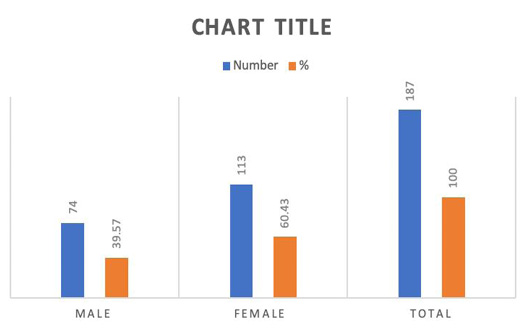
One hundred eighty-seven participants (149 students and 38 veterinarians who graduated during 2019-2020) replied to the survey, with a response rate of 98.1 %. The percentages of undergraduate students and graduated veterinarians were 79.67 % and 20.32 %, respectively. According to gender (Figure 1), among these participants, there were (113) 60.43 % and (74) 39.57% females and males, respectively.
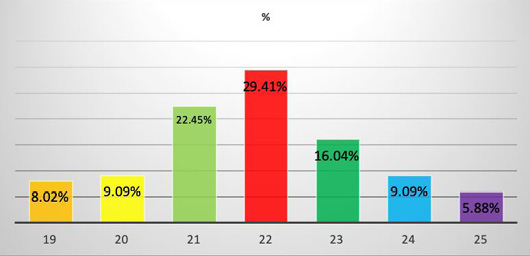
According to age groups, the participants ranged from 19 to 25 years (Mean±SD = 21.871 ± 2.35 years). The percentages of ages were 8.02 %, 9.09%, 22.45%, 29.41%, 16.04%, 9.09%, and 5.88% for 19, 20, 21, 22, 23, 24, and 25 years, respectively (Figure 2).
Table 1: Shows the percentages of diseases spreading in animals after COVID-19 pandemic.
Other diseases ( TRP, dog bites, copper deficiency, nutritional deficiencies )
20%
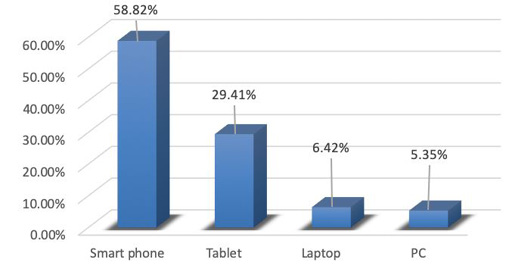
The results of the current analysis also deal with the electronic devices used for study online by the participants. The most commonly used device was the smartphone (58.82%), followed by an iPad, tablet (29.41%) and a laptop (6.42 %). Additionally, the percentage of the latest used device was (5.35%) for a PC (Personal computer) (Figure 3).
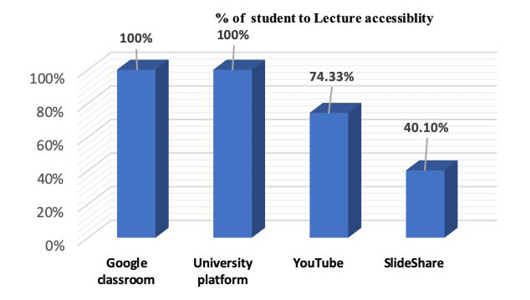
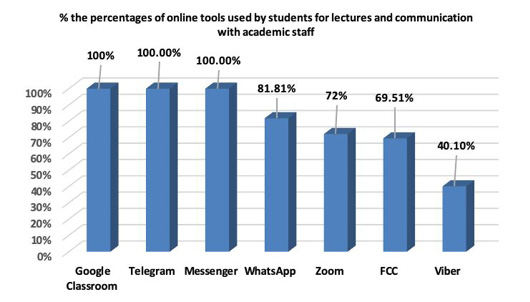
The participants showed that the online study materials were accessible through online Google classes, University platforms, YouTube, and SlideShare with percentages of 100%, 100%, 74.33%, and 40.1%, respectively (Figure 4). They also showed that the online tools for lectures and communication with academic staff were Google Classroom, Telegram, WhatsApp, Viber, Zoom, and FCC (Free Call Conference) with a percentage of 100%, 72.19%, 69.51%, 100%, 81.81%, 40.1%, and 100 % respectively (Figure 5).
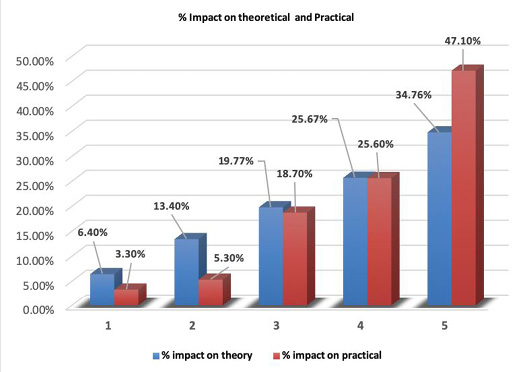
The results of the current study also showed that the evaluation percentages of the impact on the online theoretical and practical learning of various veterinary subjects were 6.40%, 13.40%, 19.77%, 25.67%, 34.76%, and 3.30%, 5.30%, 18.70%, 25.60%, and 47.10% respectively for scores 1 (Poorly affected), 2 (Slightly affected), 3 (Reasonably affected), 4 Noticeably affected), and 5 (Significantly affected) (Figure 6).
The worldwide circulation of the novel COVID-19- SARS-CoV-2 outbreak in Wuhan/China led to increased death rates between populations (https://www.who.int/dg/speeches2020; . The disease was quickly disseminated worldwide, posing a universal threat to public health . Consequently, the authorities and governments have lockdowns or applied local cessations of educational institutions that affect over 60% of the students worldwide (UNESCO, 2020a, b).
The current study designed to explore the impact of the COVID-19 lockdown on the distribution of animal and zoonotic diseases and its effects on VME in Iraq. And, according to reported data in teaching veterinary hospital in Al Muthanna province, Iraq, there were increasing in the percentages of various animal diseases after covid-19 lockdown due to absence, shortage of veterinary services during the pandemic. Corruption of veterinary services led to encourage the multiplication of various pathogens resulted in emerging or reemerging of diseases especially ticks borne diseases, and these results are compatible with previously reported studies , 2023, 2024; ; . Recent published article and data from Iraqi ministry of health confirmed reemerging of Crimean Congo hemorrhagic fever (CCHF) in population with multiple outbreaks during 2021, 2022 and 2023) . These were related to aggressive ticks multiplication the host of CCHF virus due to absence of livestock spraying campaigns during COVID-19 pandemic in 2020 and 2021. According to previous reports of CCHF outbreaks in Iraq, it is a well-recognized that heavy tick population is the risk factors of spreading and reemerging of the disease and worldwide ; ; ; ; ; . Additionally, the lockdown and cancellation of veterinary student clinical training sessions revealed significant effects on veterinary services because they were contributed in all activities of veterinary hospital such as treatment, and animal vaccination campaigns under supervision of university academic lectures.
During COVID-19 pandemic all university in the world substituted the conventional campus classroom with online teaching ; . Additionally, previous studies approved that the COVID-19 pandemic and associated lockdowns have significantly impacted veterinary medical education ; . Consequently, different tools and educational platforms have been hosted in most countries in the world to solve the institution lockdown and secure the continuity of the educational process throughout the contagion . The COVID-19 pandemic and the resulting lockdowns have impacted various sectors, including veterinary medicine. The impact on veterinary medical education has been significant, as veterinary schools and colleges worldwide were to adopt new teaching methods and practices during the effects of the pandemic ; ; ; .
The universities banned or canceled all campus teaching activities, including theory lectures, classrooms, and practical laboratory and clinical training, to reduce the virus’s rapid spread. Hence, online teaching was implemented by most veterinary colleges for undergraduate and postgraduate students to minimize the spreading of infection between students and lecturers .
In the current study, 187 participants from Al-Muthanna University, College of Veterinary Medicine responded to the questionnaire. The overall response rate was 98.1 %, including 60.43 % and 39.57% females and males, respectively. The majority, 79.67 %, were undergraduate students, in comparison, the graduated veterinarians comprised 20.32 %. The age of the participants was ranged from 19 to 25 years (Mean±SD = 21.871 ± 2.35 years), and these results agree with the previously published study , which showed COVID-19’s enormous impact on equity in tertiary education.
The present study revealed that the smartphone (58.82%) was the most popular device used by students to approach the online teaching class and materials, followed by iPad/ tablet (29.41%) and laptop (6.42 %). However, PC (Personal computer (5.35%) was the latest used device. These observations agree with previous studies that recorded higher percentages of use of smartphones and laptops, followed by iPads/tablets, and subsequently PCs to access online social media , lessons of mathematical sciences , and veterinary sciences . However, some differences were seen in this study, where students used iPads/tablets more than laptops. Moreover, a positive impact was reported in South Africa’s previous study on students learning experience using smartphones in studying anatomy among medical students ; . Albeit, the poor economic status of some students prevented them from accessing online learning due to either the inability to buy the device or an internet subscription. However, help was promoted for these students to continue their education, and these results are compatible with previously published research . In the current study, students accessed the online study materials via freely available tools such as Google online classes, University platforms, and YouTube with percentages of 100%, 100%, and 74.33%, respectively.
Additionally, student also joined the live lectures and communicated with their lecturers through Google Classroom, Telegram, WhatsApp, Viber, Zoom, and FCC (Free Call Conference). These results are compatible with the results reporting that students widely used the free-of-charge accessible software such as the Zoom, Google Meet, Microsoft Teams, and WebEx in the online teaching of medicine than others . However, other studies displayed WhatsApp’s extensive practice for veterinary academic purposes by undergraduate and postgraduate students to share lectures, images, videos, and websites. As well as, the student created chat groups to discuss their research projects, experimental designs, and academic experiences ; . The results of the current study also indicated the various effects of the COVID-19 pandemic lockdown on theoretical and practical veterinary education. This observation agrees with previously published studies, which recorded that COVID-19 extremely impacts medical, veterinary, dental, and radiology education ; ; ; ; ; ; ; ; Sandhu and de Wolf, 2020; . Moreover, the transition to online learning was the more significant effect of the COVID-19 pandemic on veterinary medical education. All educational institutions were closed in Iraq during COVID-19 pandemic and the veterinary colleges had to pivot quickly to online education to ensure students could continue their studies. However, this transition to remote learning has been challenging. Many veterinary students have struggled to adapt to the new learning environment, with some reporting difficulties with technology and poor internet connections. The student’s evaluation for online theoretical and practical sessions showed high variations and revealed a significant percentage, 34.76% and 47.10%, respectively. These results are compatible with previously reported studies ; .
Furthermore, veterinary medical education relies heavily on hands-on training and clinical experience. COVID-19 pandemic caused to the substantial disruption of clinical rotations and other practical experiences, as many veterinary clinics and hospitals have had to limit the number of students on-site to ensure social distancing. As a result, veterinary students need more access to clinical experience and may need help meeting their clinical training requirements ; . These results also agree with the other published American Veterinary Medical Association investigation that revealed the negative impression of COVID-19 on the veterinary practice .
The increased burden on veterinary medical services significantly influences the COVID-19 contagion on veterinary medical education. With many veterinary clinics and hospitals closing or operating at reduced capacity, the demand for veterinary medical services has increased significantly. These circumstances led to fears about the long-term influence of the pandemic on animal health and welfare, as animals may be unable to access the essential medical care they require . According to WHO’s representative in Iraq, a considerable tick multiplication was reported in Iraq because of the absence or shortage of livestock spraying campaigns during the Coronavirus 2020 and 2021 pandemics (https://www.al-monitor.com/originals/2022/05/deadly-nose-bleed-fever-shocks-iraq-cases-surge), which led to emerging subsequent Crimean–Congo hemorrhagic fever (CCHF) outbreak . The current observations showed the experience of the transition to online education in colleges of veterinary medicine with variations and challenges in the success of online veterinary education. Despite these challenges, veterinary colleges have demonstrated resilience and adaptation in response to the pandemic. Many veterinary colleges have introduced innovative teaching and practical training approaches, such as virtual case-based learning and telemedicine consultations. These approaches have allowed veterinary students to continue their education and gain practical experience despite the limitations caused by the pandemic.
CONCLUSIONs and Recommendations
Adverse effects of COVID-19 lockdown on animal and public health was confirmed in this study. Moreover, it also showed the advantages of the transition to online learning, disruption of clinical rotations, and increased burden on veterinary medical services. Moreover, the COVID-19 pandemic and associated lockdowns have significantly impacted veterinary medical education. However, veterinary colleges have demonstrated flexibility and innovation in response to the pandemic and have introduced various teaching and practical training approaches. Several limitations faced this study such as collection of data from veterinary hospital because of the sudden COVID-19 lockdown and missing reports during this period. The authors recommend to improve the methods of practical online session by incorporation a new simulation technique.
ACKNOWLEDGMENT
The author thanks the student and graduated veterinarian Al Muthanna University, College of Veterinary Medicine for participating in this study.
NOVELTY STATEMENT
An evaluation of the COVID-19 lockdown on online veterinary medical education and animal and human health/ Iraq is a first study in Iraq that evaluate the impact of COVID-19 on animal and human health and its effects on veterinary medical education, as the traditional education was replaced by online education.
AUTHOR’s CONTRIBUTION
All authors contributed equally in doing and writing this manuscript.
Funding
The authors received no financial support for the research, authorship, and/or publication of this article.
Ethical consideration
The authors have no any ethical issues such as plagiarism, information fabrication, misconduct and/or falsification, permission to publish, duplicate publication and/or sub- mission, and redundancy.
Conflict of interest
The authors have declared no conflict of interest.
Figures
Figure 1:.
The scattering of the participants according to the gender.
Figure 2:.
The percentages of the participant’s age/ year.
Figure 3:.
The percentages of devices used by the participants during online learning.
Figure 4:.
The percentages of the accessibility of the online study materials.
Figure 5:.
The percentages of online tools used by students for lectures and communication with academic staff.
Figure 6:.
The evaluation percentages of the impact of the online theoretical and practical learning of various veterinary subjects (scores: 1 (Poorly affected), 2 (Slightly affected), 3 (Reasonably affected), 4 Noticeably affected), and 5 (Significantly affected).
References
Abdul Al-Hussein AH, Shanan AH, Al-Salihi KA (2020). Prevalence of ticks infestation in dromedary camels (Camelus dromedarius) in area surrounded Sawa lake, Iraq (2020). Mirror Res. Vet. Sci. Anim., 9(3): 24-36.
Adebowale OO, Adenubi OT, Adesokan HK, Oloye AA, Bankole NO, Fadipe OE, Ayo-Ajayi PO, Akinloye AK (2021). SARS-CoV-2 (COVID-19 pandemic) in Nigeria: Multi-institutional survey of knowledge, practices and perception amongst undergraduate veterinary medical students. PLoS One, 16(3): e0248189. https://doi.org/10.1371/journal.pone.0248189[CrossRef]
Ahmad S, Hashmi N, Siddiqui JA, Siddiqui A, Ahmad S, Hashim HT, Essar MY (2022). The nosebleed fever outbreak in Iraq: Challenges, efforts and recommendations. Ann. Med. Surg. (Lond). 79: 104077. https://doi.org/10.1016/j.amsu.2022.104077[CrossRef]
Al-Salihi KA, Mahmoud ZZ, Younise MH, Hussain T (2023). Review on crimean-congo hemorrhagic fever with special focus on Iraqi outbreaks (2022). Mirror Res. Vet. Sci. Anim., 12(1): 1-44.
Al-Salihi KA, Ali NK (2021). Unusual clinical signs presentation of tropical theileriosis (Theileria annulate) infection associated with orbital lesions in Calves in Al-Muthhana Province. Mirror Res. Vet. Sci. Anim., 10(2): 1-13.
Al-Salihi K, Hassan YM, Zuhair MZ, Hussain T (2024). The 2022 crimean-congo hemorrhagic fever outbreak in Iraq. Austral. J. Vet. Sci., 56(1): e560102. https://doi.org/10.4206/ajvs.561.02[CrossRef]
Alaa HA, Mokhaled NA, Al-Hamadani IA, Satam (2022). Prediction of COVID-19 disease severity using machine learning techniques. Bull. Electron. Eng. Inf., 11(2): 1069-1074. https://doi.org/10.11591/eei.v11i2.3272[CrossRef]
Ali HM (2020). Epidemiological profile of crimean-congo hemor- rhagic Fever, Iraq, 2018; Epidemiology Conference. August 10-11, 2020. London, UK. J. Health Med. Res., S(2). https:// www.iomcworld.org/articles/epidemiological-profile-of-crimeancon-go-hemorrhagic-fever-iraq-2018.pdf
Al-Salihi KA, Habib MA (2020). SARS-CoV-2, MERS-CoV and SARS-CoV, the Emerging Coronaviruses: An insight into the Pathological features. Mirror Res. Vet. Sci. Anim., 9(3): 1-23.
Al-Salihi KA (2012). An insight into veterinary education in Iraq. Vet. Rec., 171(13): 316–317. https://doi.org/10.1136/vr.e5145[CrossRef]
Al-Salihi KA, Khalaf JM (2021). The emerging SARS-CoV, MERS-CoV, and SARS-CoV-2: An insight into the viruses zoonotic aspects. Vet. World, 14(1): 190–199. https://doi.org/10.14202/vetworld.2021.190-199[CrossRef]
Al-Salihi KA, Karim AJ, Jasim HJ, Kareem FA (2018). Epidemiology of ticks fauna of camels in Samawah desert. Adv. Anim. Vet. Sci., 6(8): 311-316. https://doi.org/10.17582/journal.aavs/2018/6.8.311.316[Full text][CrossRef]
Al-Tammemi A (2020). The battle against COVID-19 in Jordan: An early overview of the Jordanian Experience. Front. Publ. Health, 8: 188. https://doi.org/10.3389/fpubh.2020.00188[CrossRef]
Alvin MD, George E, Deng F, Warhadpande S, Lee SI (2020). The impact of COVID-19 on radiology trainees. Radiology, 296: 246–248. https://doi.org/10.1148/radiol.2020201222[CrossRef]
AVMA (2020). COVID-19 impact on veterinary practices. Available online at: https://www.avma.org/resources-tools/animal-health-and-welfare/covid19/covid-19-impact-veterinary-practices (accessed April 23, 2023).
Bergdahl N, Nouri J (2020). Covid-19 and crisis-prompted distance education in Sweden. Tech. Know Learn. 26: 443–459, 2021. https://doi.org/10.1007/s10758-020-09470-6[CrossRef]
Chapman LE, Wilson ML, Hall DB, LeGuenno B, Dykstra EA, Ba K, Fisher-Hoch SP (1991). Risk factors for Crimean-Congo hemorrhagic fever in rural northern Senegal. J. Infect. Dis., 164(4): 686–692. https://doi.org/10.1093/infdis/164.4.686[CrossRef]
Chong LA, Khoo EJ, Kamar AA, Tan HS (2020). Teaching medicine online during the COVID-19 pandemic: A Malaysian perspective. Bangladesh J. Med. Sci., 19: S77–S81. https://doi.org/10.1007/s41649-020-00142-2[CrossRef]
Gledhill L, Dale VHM, Powney S, Gaitskell-Phillips GHL, Short NRM (2017). An international survey of veterinary students to assess their use of online learning resources. J. Vet. Med. Educ., 44(4): 692–703. https://doi.org/10.3138/jvme.0416-085R[CrossRef]
Hunt JA, Anderson SL (2022). Remote assessment of veterinary clinical skills courses during the COVID-19 pandemic. J. Vet. Med. Educ., 49(1): 16–24. https://doi.org/10.3138/jvme-2020-0084[CrossRef]
Iglesias-Pradas S, Hernández-García Á, Chaparro-Peláez J, Prieto JL (2021). Emergency remote teaching and students’ academic performance in higher education during the COVID-19 pandemic: A case study. Comp. Hum. Behave., 119: 106713. https://doi.org/10.1016/j.chb.2021.106713[CrossRef]
Islam M, Alam MI (2021). Impact of SARS-CoV-2 infection on veterinary medical education. J. Univ. Teach. Learn. Pract., 18(5). https://doi.org/10.53761/1.18.5.14[CrossRef]
Iyer P, Aziz K, Ojcius DM (2020). Impact of COVID-19 on dental education in the United States. J. Dent. Educ., 84: 718–722. https://doi.org/10.1002/jdd.12163[CrossRef]
Kanneganti A, Sia CH, Ashokka B, Ooi SBS (2020). Continuing medical education during a pandemic: An academic institution’s experience. Postgrad Med. J., pp. 137840. https://doi.org/10.1136/postgradmedj-2020-137840[CrossRef]
Karti SS, Odabasi Z, Korten V, Yilmaz M, Sonmez M, Caylan R, Akdogan E, Eren N, Koksal I, Ovali E, Erickson BR, Vincent MJ, Nichol ST, Comer JA, Rollin PE, Ksiazek TG (2004). Crime- an-Congo hemorrhagic fever in Turkey. Emerg. Infect. Dis., 10(8): 1379–1384. https://doi.org/10.3201/eid1008.030928[CrossRef]
Kuehnert PA, Stefan CP, Badger CV, Ricks KM (2021). Crimean-congo hemorrhagic fever virus (CCHFV): A silent but widespread threat. Curr. Trop. Med. Rep., 8(2): 141–147. https://doi.org/10.1007/s40475-021-00235-4[CrossRef]
Lazarus L, Sookrajh R, Satyapal KS (2017). Tablet technology in medical education in South Africa: A mixed methods study. Br. Med. J. Open, 7: e013871. https://doi.org/10.1136/bmjopen-2016-013871[CrossRef]
Mahdy MAA (2020). The impact of COVID-19 pandemic on the academic performance of veterinary medical students. Front. Vet. Sci., 7: 594261. https://doi.org/10.3389/fvets.2020.594261[CrossRef]
Mahdy MAA, Sayed RKA (2022). Evaluation of the online learning of veterinary anatomy education during the Covid-19 pandemic lockdown in Egypt: Students perceptions. Anat. Sci. Educ., 15(1): 67–82. https://doi.org/10.1002/ase.2149[CrossRef]
Malee BR, Arnhold N (2020). World bank blogs; COVID-19’s immense impact on equity in tertiary education. https://blogs.worldbank.org/education/covid-19s-immense-impact-equity-tertiary-education
Malhotra DK, Bansal S (2017). Magnetism of Whatsapp among veterinary students. Elect. Libr., 35: 1259–1267. https://doi.org/10.1108/EL-04-2016-0086[CrossRef]
Marwah N, Fawzya R, Sura IMA (2023). Machine learning methods and approaches for predicting Covid19. AIP Conf. Proc., 2591: 040044.
Mertens M, Schmidt K, Ozkul A, Groschup MH (2013). The impact of Crimean-Congo hemorrhagic fever virus on public health. Antiviral Res., 98(2): 248–260. https://doi.org/10.1016/j.antiviral.2013.02.007[CrossRef]
Mohmmed AO, Khidhir BA, Nazeer A, Vijayan VJ (2020). Emergency remote teaching during Coronavirus pandemic: the current trend and future directive at Middle East College Oman. Innov. Infrastr. Solut., 5(3): 72. https://doi.org/10.1007/s41062-020-00326-7[CrossRef]
Mulenga EM, Marbán JM (2020). Is COVID-19 the gateway for digital learning in mathematics education? Contemp. Educ. Technol., 12(2): ep269. https://doi.org/10.30935/cedtech/7949[CrossRef]
Nurunnabi M, Almusharraf N, Aldeghaither D (2021). Mental health and well-being during the COVID-19 pandemic in higher education: Evidence from G20 countries. J. Publ. Health Res., 9(Suppl 1): 2010. https://doi.org/10.4081/jphr.2020.2010[CrossRef]
Owczarczak-Garstecka SC, Furtado T, Graham TM, Lloyd I, Singleton DA, Wallis L, Westgarth C (2022). Impacts of COVID-19 on owner’s veterinary healthcare seeking behavior for dogs with chronic conditions: An exploratory mixed-methods study with a convenience sample. Front. Vet. Sci., 9: 902219. https://doi.org/10.3389/fvets.2022.902219[CrossRef]
Ozkurt Z, Kiki I, Erol S, Erdem F, Yilmaz N, Parlak M, Gundogdu M, Tasyaran MA (2006). Crimean-Congo hemorrhagic fever in Eastern Turkey: Clinical features, risk factors and efficacy of ribavirin therapy. J. Infect., 52(3): 207–215. https://doi.org/10.1016/j.jinf.2005.05.003[CrossRef]
Parkes RSV, Barrs VRD (2021). Interaction identified as both a challenge and a benefit in a rapid switch to online teaching during the COVID-19 pandemic. J. Vet. Med. Educ., 48(6): 629–635. https://doi.org/10.3138/jvme-2020-0063[CrossRef]
Pragholapati A (2020). COVID-19 impact on students. https://doi.org/10.17605/OSF.IO/NUYJ9, https://doi.org/10.35542/osf.io/895ed[CrossRef]
Rose S (2020). Medical student education in the time of COVID-19. JAMA. 323: 2131–2132. https://doi.org/10.1001/jama.2020.5227[CrossRef]
Rothan HA, Byrareddy SN (2020). The epidemiology and pathogenesis of coronavirus disease (COVID-19) outbreak. J. Autoimmune., 109: 102433. https://doi.org/10.1016/j.jaut.2020.102433[CrossRef]
Sánchez-Seco MP, Sierra MJ, Estrada-Peña A, Valcárcel F, Molina R, de Arellano ER, Olmeda AS, San Miguel LG, Jiménez M, Romero LJ, Negredo A (2021). Group for CCHFv research. Wide spread detection of multiple strains of crimean-congo hemorrhagic fever virus in ticks, Spain. Emerg. Infect. Dis., 28(2): 394-402. https://doi.org/10.3201/eid2802.211308[CrossRef]
Sandhu P, de Wolf M (2020). The impact of COVID-19 on the undergraduate medical curriculum. Med. Educ. Online, 25: 1764740. https://doi.org/10.1080/10872981.2020.1764740[CrossRef]
Sohrabi C, Alsafi Z, O’Neill N, Khan M, Kerwan A, Al-Jabir A, Iosifidis C, Agha R (2020). World health organization declares global emergency: A review of the 2019 novel coronavirus (COVID-19). Int. J. Surg. (London, England), 76: 71–76. https://doi.org/10.1016/j.ijsu.2020.02.034[CrossRef]
UNESCO, 2020a. Education: From disruption to recovery. Available online at: https://www.unesco.org/en/covid-19/education-disruption-recovery. accessed April 29, 2023.
UNESCO, 2020b. National Learning Platforms and Tools. Available online at: https://inee.org/resources/national-learning-platforms-and-tools. accessed April 29, 2023. Published 9 March 2020 by United Nations Educational, Scientific and Cultural Organization (UNESCO).
Ward JL, Mulherin BL, Vengrin CA (2022). Virtual VM4 clinical rotations: A COVID-19 pandemic response at Iowa State University College of Veterinary Medicine. J. Vet. Med. Educ., 49(2): 141–150. https://doi.org/10.3138/jvme-2020-0122[CrossRef]
Wickramanayake L, Muhammad Jika S (2018). Social media use by undergraduate students of education in Nigeria: A survey. Electron. Lib., 36(1). https://doi.org/10.1108/EL-01-2017-0023[CrossRef]
Wilhelm J, Mattingly S, Gonzalez VH (2021). Perceptions, satisfactions, and performance of undergraduate students during Covid-19 emergency remote teaching. Anatom. Sci. Educ., 15: 42–56. https://doi.org/10.1002/ase.2161[CrossRef]
Xu D, Xu Y (2019). The promises and limits of online higher education: Understanding how distance education affects access, cost, and quality. Washington, DC: American Enterprise Institute, pp. 1–40.
Yagci-Caglayik D, Korukluoglu G, Uyar Y (2014). Seroprevalence and risk factors of Crimean-Congo hemorrhagic fever in selected seven provinces in Turkey. J. Med. Virol., 86(2): 306–314. https://doi.org/10.1002/jmv.23699[CrossRef]
Zalat M, Hamed M, Bolbol S (2021). The experiences, challenges, and acceptance of e-learning as a tool for teaching during the COVID-19 pandemic among university medical staff. PLoS One, 16: e0248578. https://doi.org/10.1371/journal.pone.0248758[CrossRef]
Zhou F, Yu T, Du R, Fan G, Liu Y, Liu Z, Xiang J, Wang Y, Song B, Gu X, Guan L, Wei Y, Li H, Wu X, Xu J, Tu S, Zhang Y, Chen H, Cao B (2020). Clinical course and risk factors for mortality of adult inpatients with COVID-19 in Wuhan, China: A retrospective cohort study. Lancet (London, England), 395(10229): 1054–1062. https://doi.org/10.1016/S0140-6736(20)30566-3[CrossRef]
Zhu N, Zhang D, Wang W, Li X, Yang B, Song J, Zhao X, Huang B, Shi W, Lu R, Niu P, Zhan F, Ma X, Wang D, Xu W, Wu G, Gao GF, Tan W, China Novel Coronavirus Investigating and Research Team (2020). A novel coronavirus from patients with pneumonia in China, 2019. N. Engl. J. Med., 382(8): 727–733. https://doi.org/10.1056/NEJMoa2001017[CrossRef]