Research Article · Volume 12, Issue 8, 12 July 2024 · Open Access
The Effect of Selenium as a Feed Additive on Blood Parameters Antioxidant Activity in Dairy Goat: Meta-Analysis
· · ·
Affiliations & Notes ⌄
1Department of Animal Production, Faculty of Animal Science, Universitas Brawijaya, Malang, East Java, Indonesia
2Department of Animal Nutrition and Feed Science, Faculty of Animal Science, Universitas Brawijaya, Malang, East Java, Indonesia. *Correspondence | Osfar Sjofjan, Department of Animal Nutrition and Feed Science, Faculty of Animal Science, Universitas Brawijaya, Malang, East Java, Indonesia
The meta-analysis indicates that different selenium sources have significantly varied effects on white blood cells (WBC), glucose, and glutathione peroxidase (GSH-Px) activity in the blood (P F. Control.
Results from the meta-analysis showed that feeding dairy goats with selenium as a feed additive significantly increase the activity of glutathione peroxidase (GSH-Px) in their blood.
Selected from the article's own text.
Abstract
This study aimed to provide more precise conclusions about the effect of selenium as a feed additive on the blood parameters and antioxidant activity in dairy goats using a meta-analysis method. A comprehensive literature search was conducted, selecting studies published from 2005 to 2023 that examined selenium supplementation in dairy goats. Using R software 4.3.3 (2024-02-29 ucrt), data from 16 studies were analyzed using meta-regression analyses. Selenium supplementation in dairy goats significantly enhanced GSH-Px activity (P<0.01), but had no significant effect on blood parameters (RBC, WBC, hemoglobin, hematocrit, cholesterol, glucose, and total selenium). Organic selenium, such as selenium yeast, selenium-enriched yeast, selenomethionine, selenium proteinate, and lactate protein complex, was found to be more effective than inorganic selenium after a post hoc analysis between selenium sources and parameters. In conclusion, supplementing with selenium, especially from organic sources, can improve some of the antioxidant status in dairy goats.
Feed is very important to support livestock growth and productivity. Feed holds the largest financing, between 60-70% of the total livestock production costs . Yadav et al. (2018) stated that livestock requires five categories of nutrients, namely carbohydrates, proteins, lipids, minerals, and vitamins. Ruminants can experience poor growth if fed feeds with low protein, low energy, and unbalanced minerals. Twenty-one minerals are considered essential for animals. These minerals are classified into macro and micro mineral.
Selenium (Se) is one of the important minerals (trace minerals) in livestock production because of its diverse physiological roles . Some of the benefits of selenium in the animal body include playing a role in thyroid gland synthesis and thyroid hormone function, reducing oxidative stress, ant mutagenic, ant carcinogenic, antimicrobial and ant parasitic, increasing immune function and providing protection against oxidative brain lipid damage (Hosnedlova et al., 2017).
Selenium is a mineral that is only a small part of feed, but is very important for livestock. The optimal amount of selenium in feed must be considered to maintain normal animal physiology, however, excess or deficiency can cause toxicity and deficiency. Schone et al. (2013) reported that Se toxicity is not considered a life threat to animals or humans. Selenium deficiency can affect reproductive efficiencies such as placental retention, abortion, premature embryo death and infertility, besides it can interfere with growth performance (white muscle disease) and skeletal muscle necrosis . Blood profiles have been extensively utilized to assess animal stress and welfare levels, as well as to track nutritional status, metabolism, and health status . Blood parameters in ruminants are correlated with the season, the herd management techniques, and the physiological state . However, the studies reported regarding the blood profiles are critical because they provide information regarding the animal’s health status .
Meta-analysis is a systematic review of a specific topic in the literature that provides quantitative estimates of the impact of a treatment . Meta-analysis is the analysis of statistical studies by analyzing data from primary studies. The results of the primary study analysis are used as a basis for correction factors, accepting and supporting existing research . Meta-analysis overcomes the limitations of small sample sizes of individual studies, detecting effects of interest and reducing the risk of false-negative results. Combining data from separate studies can statistically provide more precise estimates than single studies . Therefore, this research aims to provide more precise conclusions about the effect of selenium as a feed additive on blood parameters and antioxidant activity in dairy goats through meta-analysis methods.
MATERIALS AND METHODS
Eligibility criteria, search strategy, and data extraction
A dataset comprising literature on the use of selenium as a feed additive in dairy goats was compiled, covering publications from 2005 to 2023. Literature searches were conducted on Scopus (https://www.sciencedirect.com/), PubMed (https://pubmed.ncbi.nlm.nih.gov/), and Google Scholar (https://scholar.google.com/). The keywords used included selenium, dairy goat, feed additive, red blood cell, white blood cell, haemoglobin, haematocrit, cholesterol, glucose, total protein, GSH-Px, selenium concentration, and blood.
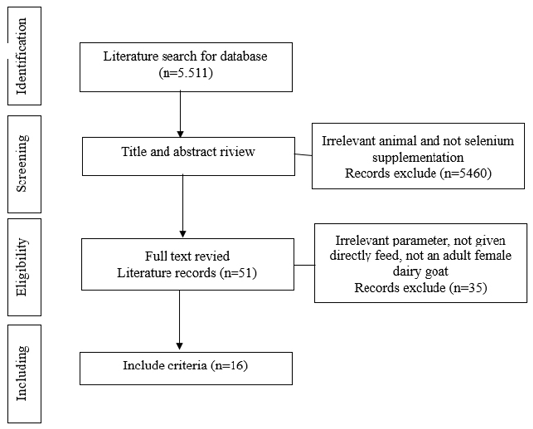
The criteria for including articles in the database were: (1) the article was published between 2005 and 2023, (2) the treatment included the dose of selenium used, (3) the article reported on the use of selenium in dairy goats, excluding other animals, (4) the dairy goats were adult females, and (5) selenium was administered by mixing it into feed. Data from articles meeting these criteria were tabulated in Excel, including details such as author, year of publication, type of goat used, lactation phase of the goat, type of selenium used, amount of selenium used, and the values of each parameter. All data were converted into consistent units of measurement to facilitate direct analysis within specific parameters. The final database included 16 articles with a total of 129 data units. Figure 1 details the selection process of the studies used in this meta-analysis, while Table 1 provides a summary of the completed dataset, adhering to PRISMA-P guidelines .
Table 1: Studies selected to be included in the meta-analysis.
No
Reference
Source of selenium
Period
Level (mg/day)
Strain dairy goat
1
Zhang et al. (2017)
Se-enriched yeast and sodium selenite
L
0-1,12
Guanzhong
2
Rashnoo et al. (2020)
N/A
D
0-0,25
N/A
3
Petrera et al. (2009)
Sodium selenite and se yeast
L
0-0,26
Saanen
4
Kachuee et al. (2019)
Sodium selenite and selenomethionine
L
0-0,6
Khalkhali
5
Silveira et al. (2019)
Se yeast
L
0-0,4
Saanen
6
Shi et al. (2018)
Se enriched yeast
D
0-4,63
Taihang black
7
Barcelos et al. (2022)
Se yeast
L
0-11,2
Saanen X Pardo Alpine
8
Vasconcelos et al. (2023)
Se yeast
L
0-40
Saanen X Toggenburg
9
Ziaei et al. (2015)
-
D
0-0,86
Rainei
10
Shareef et al. (2019)
Se yeast
L
0,0,03
Local Iraqi does
11
Tozzi et al. (2016)
Sodium selenite and se yeast
L
0-0,2
Alpine chamois
12
Misurova et al. (2009)
Sodium selenite and lactate protein complex
D
0-0,28
White shorthair
13
Antuvonic et al. (2013)
Se yeast
L
0-0,03
Alpine
14
Pavlata et al. (2011)
Sodium selenite and lactate protein complex
D
0-0,3
White shorthair
15
Pavlata et al. (2012)
Sodium selenite, se-enriched yeast, selenium proteinate and lactate protein complex
D
0-0,24
Shite shorthair
16
Tsiplakou et al. (2021)
Se yeast
L
0-0,12
Alpine X local breed
Note: L= Lactation; D= Days open; N/A= Not available.
Coding and statistical analysis
The meta-analysis equation follows the following formula ; .
Equation 2.
Yijk represents the dependent variable, μ stands for the overall mean value (intercept value), Si denotes the random effect of the ith study, assumed to be ~ Niid (0, σS2), τj represents the fixed effect of the jth of τ factor, and Sτij represents the random interaction effect between the ith and jth dosage of the τ factor, also assumed to follow a normal distribution with mean 0 and variance σSr2. β1 represents the overall value of the linear regression coefficient for Y in relation to X, serving as a fixed effect or slope, β2 denotes the general coefficient of the quadratic regression for Y concerning X, functioning as a fixed effect or slope, Xij dan X2ij represent the continuous values of the predictor variable in both linear and quadratic forms, respectively. The bi stands for the random effect specific to each study on the regression coefficient of Y with respect to X, assumed to be ~ Niid (0, σS2). Finally, eijk represents the residual value arising from unpredictable error. In case, the quadratic form presented insignificant different, the models changes into linear form.
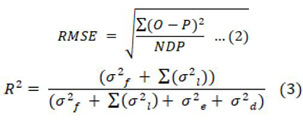
The validation test was carried out utilizing the root mean square error (RMSE) and coefficient of determination (R2) as metrics. The following equation represents RMSE and R2.
Equation 1.
In this scenario, where O represents the actual value, P stand for the estimated value, NDP denotes the number of data point, σ2f represents the variant of a fixed factor, ∑(σ2l ) is the sum of component variances, σ2e signifies the variance attributed to predictor dispersion, and σ2d characterizes the specific distribution of the variance. All meta-regression analyses were carried out using R software 4.3.3 (2024-02-29 ucrt).
Table 2: Descriptive statistics of the effect selenium as feed additive on the blood profile of dairy goat.
No
Response
Unit
N
Mean
SD
Min
Max
1
RBC
x 1012/L
12
11,02
1,07
9
12,46
2
WBC
x 109/L
12
13,34
3,59
9,24
21,73
3
Hemoglobin
g/dL
12
7,96
0,84
6,82
9,79
4
Hematocrit
%
15
33,20
18,58
20,25
72
5
Cholesterol
mg/dL
8
12,85
18,65
29,19
77,02
6
Glucose
mg/dL
9
57,59
4,51
48,29
61
7
Total protein
g/L
11
59,23
23,49
20,4
80,3
8
Selenium
µg/L
32
185,73
111,94
36,18
463,33
9
GSH-Px
µkat/L
18
329,44
385,89
45,5
1154,6
Note: RBC= Red Blood Cell; WBC= White Blood Cell.
RESULT AND DISCUSSION
The results of the meta-analysis on the relationship between selenium sources and blood profiles are presented in Table 2. The meta-analysis indicates that different selenium sources have significantly varied effects on white blood cells (WBC), glucose, and glutathione peroxidase (GSH-Px) activity in the blood (P<0.05), with selenium concentration showing a highly significant effect (P<0.01). Conversely, there was no significant effect on red blood cells (RBC), haemoglobin, haematocrit, cholesterol, or total protein (P>0.05). In dairy goats, the white blood cell (WBC) count ranges from 9.24 x 10⁹/L to 21.73 x 10⁹/L. Their glucose levels vary between 48.29 and 61 mg/dL, and the activity of glutathione peroxidase (GSH-Px) ranges from 45.5 to 1154.6 µkat/L. Post hoc analysis indicated that Se-enriched yeast was the most effective selenium source for improving WBC and glucose levels. Both Se-enriched yeast and selenomethionine were effective in increasing total se, whereas sodium selenite and lactate protein complex were most effective for enhancing GSH-Px activity. The study found that organic sources of selenium, such as Se-enriched yeast (782.2 µkat/L), Selenium proteinate (904.2 µkat/L), and lactate protein complex (926.47 µkat/L), were the most effective. The data supporting these findings is presented in Table 3.
According to Sevcikova et al. (2006), organic selenium is utilised more efficiently than inorganic selenium sources. Organic selenium is actively absorbed via amino acid
Table 3: Regression linear model of effect source of selenium on blood profile of dairy goat.
No
Response
Unit
Average
F value
Pr > F
Control
Sodium selenite
Se yeast
Se-enriched yeast
Seleme thionine
Sele-nium protei-nate
Lactate protein complex
1
RBC
x 1012/L
10.69
N/A
11.38
11.93
N/A
N/A
N/A
5.48
0.05
2
WBC*
x 109/L
12.94a
N/A
11.64a
18.59b
N/A
N/A
N/A
7.97
0.01
3
Hemoglobin
g/dL
7.72
N/A
8.31
8.12
N/A
N/A
N/A
1.74
0.25
4
Hematocrit
%
32.16
N/A
24.98
34.63
N/A
N/A
N/A
4.33
0.08
5
Cholesterol
g/dL
48.83
N/A
59.74
34.84
N/A
N/A
N/A
1.29
0.39
6
Glucose*
mg/dL
54.81a
N/A
49.75a
58.79b
N/A
N/A
N/A
26.54
0.03
7
Total protein
g/L
58.37
N/A
71.70
70.75
N/A
N/A
N/A
1.01
0.46
8
Selenium**
µg/L
128.36a
238.6ab
168.09ab
340.97b
435.86b
167.2ab
154.2ab
5.98
0.001
9
GSH-Px*
µkat/L
325.77a
972.72b
170.29ab
782.2ab
N/A
904.2ab
926.47b
6.23
0.025
RBC= Red Blood Cell; WBC= White Blood Cell; N/A= Not available. *= significant different (P<0,05); **=significantly (P<0,01).
transport mechanisms, whereas inorganic selenium is absorbed passively through simple diffusion . Khalili et al. (2019) reported that organic selenium in the form of selenium yeast is more effective than inorganic selenium in the form of sodium selenite at increasing mean corpuscular hemoglobin (MCH), reproductive parameters, and health parameters. Additionally, Huang et al. (2023) found that organic selenium supplements, such as selenomethionine and selenium yeast, are more effective at enhancing the immune and antioxidant capacities of Chinese Xiangzhong Black beef cattle.
The bioavailability and toxicity of selenium are linked to its chemical form, with organic selenium being reported as more bioavailable and less toxic than inorganic selenium . Organic selenium compounds, such as selenomethionine and selenocysteine, are actively absorbed through amino acid transport mechanisms. On the other hand, inorganic selenium, like selenate and selenite, is passively absorbed through simple diffusion processes . The bioavailability of selenium in dairy goats is essential for their health and productivity. Studies have shown that organic selenium sources have higher oral bioavailability due to greater rumen microorganism incorporation and reduced formation of elemental selenium by rumen microorganisms . Additionally, organic selenium supplementation has been linked to improved milk production in dairy goats . Conversely, inorganic selenium is quickly transformed into metabolically available selenide in the organism, which is then converted into functional selenoproteins containing selenocysteine . The rapid metabolism of inorganic selenium and its difficulty in absorption contribute to its potential toxicity, emphasizing the importance of considering the chemical form of selenium to mitigate adverse effects .
The key differences in study design, animal species, and dosage of supplementation between the two studies likely account for these contrasting results. The theoretical implications of our findings suggest that selenium plays a more critical role in glucose metabolism in dairy goats than previously understood. This aligns with theories proposing selenium’s involvement in antioxidant defense and metabolic regulation. Our study’s significant findings support the hypothesis that adequate selenium levels can enhance metabolic health and glucose homeostasis in dairy goats.
Long-term, these findings suggest that selenium supplementation could be a valuable strategy in managing metabolic health in dairy goats, potentially improving productivity and overall health. Future research should further explore the optimal selenium dosage and its effects on various metabolic parameters, considering different breeds and environmental conditions to generalize these findings.
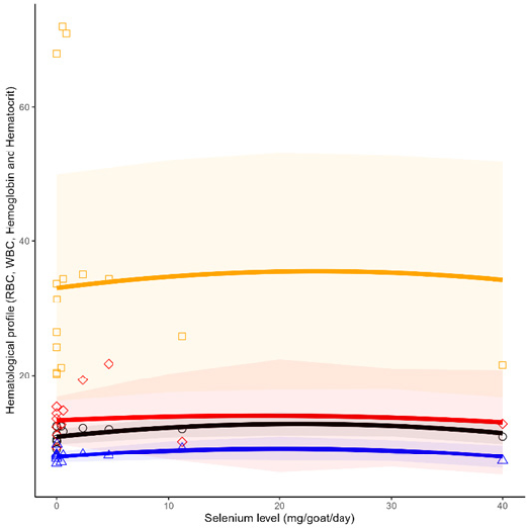
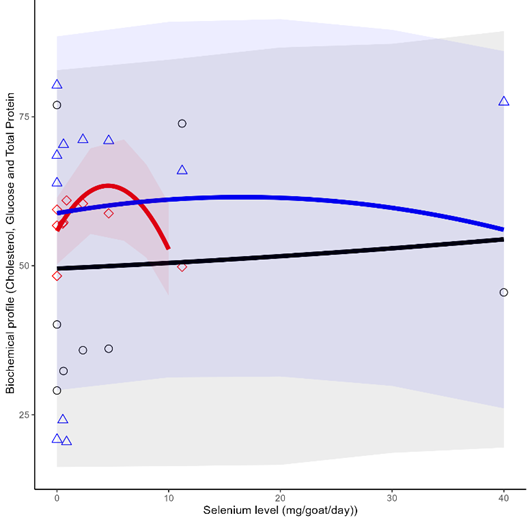
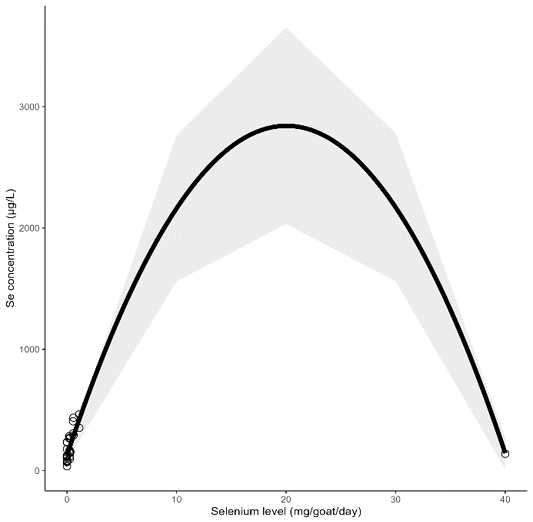
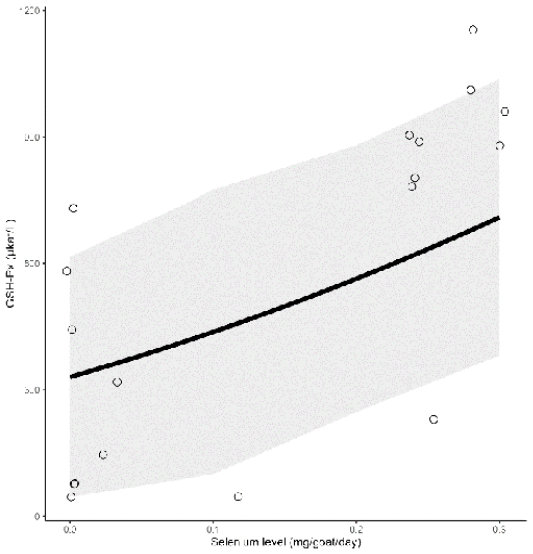
The meta-analysis results regarding selenium levels and blood profiles are shown in Table 4. The illustration regression line between the level of selenium and blood profile is shown in Figures 2, 3, and 4. Different selenium levels had a highly significant effect on GSH-Px (µkat/L) in the blood (P<0.01), with the regression function y=329.44+1223.944x, Figure 5. Meanwhile, RBC, WBC, hemoglobin, hematocrit, cholesterol, glucose, total protein, and selenium concentration showed no significant effect (P>0.05). Each regression function, where RBC (x 1012/L): y= 11.02 + 0.022x, WBC (x 109/L): y= 13.34 - 0.002x, hemoglobin (g/dL): y= 7.96 + 0.007x, hematrocit (%): y= 33.2 + 7.745x, cholesterol (mg/dL): y=49.47 + 12.854x; glucose (mg/dL): y= 57.59 +1.759x, total protein (g/L): y= 59.23 + 12.855x and selenium (µg/L): y= 185.73 + 0.104x.
Even though the research results are like that, feeding dairy cows a supra-nutritional selenium-yeast supplement during late gestation resulted in improved antioxidant status
Table 4: Regression linear model of effect level selenium on blood profile of dairy goat.
No
Response
Unit
Model
N
Inter-cept
SE inter-cept
Slope
SE slope
P value
RMSE
AIC
1
RBC
x 1012/L
L
12
11.02
0.53
0.022
0.02
0.28
0.85
43.33
2
WBC
x 109/L
L
12
13.34
1.46
-0.002
0.08
0.98
0.99
69.72
3
Hemoglobin
g/dL
L
12
7.96
0.39
0.007
0.02
0.68
0.91
41.33
4
Hematocrit
%
L
15
33.20
7.74
7.745
0.06
0.48
0.95
96.43
5
Cholesterol
g/dL
L
8
49.47
12.85
12.854
0.11
0.31
0.78
57.16
6
Glucose
mg/dL
L
9
57.59
1.75
-0,479
0.43
0.31
1.07
55.62
7
Total protein
g/L
L
11
59.23
12.85
-0,043
0.06
0.48
0.87
71.19
8
Selenium
µg/L
L
32
185.73
30,03
0.104
2.49
0.97
1.52
379.32
9
GSH-Px**
µkat/L
L
18
329.44
133,83
1223.944
230,98
<0.001
0.86
219.59
Note: RBC= Red Blood Cell; WBC= White Blood Cell; N= amount of data; SE= standart error; RMSE= root mean squares error. AIC= akaike information criteria. **= significantly (P<0.01).
postpartum, indicating a potentially positive impact on red blood cell, hemoglobin, and hematocrit . In addition, increasing RBC count, hemoglobin, and hematocrit by selenium supplementation was also reported in lactating donkeys .
The lack of a significant impact of selenium as a feed additive on glucose levels in dairy goats aligns with the findings of Żarczyńska et al. (2021), their study indicated that selenium supplementation, particularly in organic forms like selenite-triglycerides, did not significantly affect glucose levels in dairy cows. Despite the analytical results of this study, theoretically, there is a hypothesized influence of selenium on glucose metabolism; studies in rats and humans revealed that selenium might stimulate glucose intake and regulation of metabolic processes such as glycolysis, gluconeogenesis, fatty acid synthesis, or pentose phosphate pathway . Total protein levels are a good indicator to describe the osmotic state, and nutrient transportation through extracellular fluid (blood plasma). In addition, total protein is also a good indication of the physiologic and biochemical function of liver tissue. Good liver function can fulfil the availability of nutrient precursors, both amino acids, glucose, and fatty acids for the biosynthesis of milk in the mammary gland . However, in the research of Reczyńska et al. (2019) reported that selenium can increase the concentration of total blood protein in goats, but the effect was observed during a longer study, namely after 160 days of oral selenium supplementation.
There was an increase in the amount of Glutathione Peroxidase in the blood of dairy goats supplemented with selenium, the same as in cows in the study by Salman et al. (2013) has shown that dietary supplementation with selenium enhances the activity of GSH-Px in the blood. Arshad et al. (2020) the significant effects of selenium (Se) in dairy animals are largely due to the various functions performed by selenoproteins. The cellular redox system and the body’s antioxidant defense depend on selenoenzymes (such as Glutathione Peroxidase) and selenoprotein. Therefore, an adequate dietary intake of Se is essential to provide sufficient Se-Cys and Se-Met for selenoprotein synthesis. Supplementing dairy animals’ diets with Se is considered a potential strategy to enhance immune response and reduce metabolic and oxidative stress. Enzyme Glutathione peroxidase contains selenium as an integral structural component and plays an important role in animal physiology and health .
CONCLUSIONS AND RECOMMENDATIONS
Results from the meta-analysis showed that feeding dairy goats with selenium as a feed additive significantly increase the activity of glutathione peroxidase (GSH-Px) in their blood. The regression function y = 329.44 + 1223.944x indicates that giving 1 mg of selenium per goat per day will raise the glutathione peroxidase activity in the blood by 1223.944 µkat/L. GSH-Px is a selenoenzyme that plays a role in protecting cells from oxidative damage by catalyzing the breakdown of hydrogen peroxide and lipid peroxide, thus acting as a major antioxidant defense mechanism. An increase in glutathione peroxidase activity in the blood means improved antioxidant status in dairy goats.
ACKNOWLEDGeMENTS
The authors thanks to Universitas Brawijaya and LPDP (Lembaga Pengelola Dana Pendidikan) for funding this research.
NOVELTY STATEMENT
The novelty of this research is by using meta-analysis to evaluate the impact of selenium as a feed additive on the blood profile of dairy goats.
AUTHOR’S CONTRIBUTION
Dwi Putri Nurmala contributed to data collection, data analysis and manuscript preparation. Tri Eko Susilorini, Osfar Sjofjan and Danung Nur Adli contributed to the research design, supervision and revision of the manuscript. All authors read and approved the final version of the manuscript in the journal at this time.
Conflict of interest
The authors have declared no conflict of interest.
Figures
Figure 1:.
Diagram flow for study selection in meta-analysis study.
Figure 2:.
Linear regression of correlation between selenium level and RBC, WBC, hemoglobin and hematrocit (Black= RBC; red= WBC; blue= Hemoglobin, orange= Hematocrit).
Figure 3:.
Linear regression of correlation between selenium level and cholesterol, glucose and total protein (Black= Cholesterol; red= Glucose; blue= Total Protein).
Figure 4:.
Linear regression of correlation between selenium level and se concentration.
Figure 5:.
Linear regression of correlation between selenium level and GSH-Px.
References
Adli DN, Sholikin MM, Ujilestari T, Ahmed B, Sadiqqua A, Harahap MA, Sofyan A and Sugiharto S (2024). Effect of fermentation of herbal products on growth performance, breast meat quality, and intestinal morphology of broiler chickens: A meta-analysis. Ital. J. Anim. Sci., 23(1): 734-750. https://doi.org/10.1080/1828051X.2024.2351441[CrossRef]
Antunović Z, Klapec T, Ćavar S, Šperanda M, Pavić V, Novoselec J and Klir Ž (2013). Status of selenium and correlation with blood GSH-Px in goats and their kids in organic breeding fed with different levels of organic selenium. Arch. Anim. Breed., 56(1): 169–177. https://doi.org/10.7482/0003-9438-56-016[CrossRef]
Arshad MA, Ebeid HM, Hassan F (2020). Revisiting the effects of different dietary sources of selenium on the health and performance of dairy animals: A review. Biol. Trace Element. Res., 199: 3319–3337. https://doi.org/10.1007/s12011-020-02480-6[CrossRef]
Astuti A, Rochijan, Widyobroto BP, Noviandi CT (2021). Nutrient status hematological and blood metabolite profile of mid-lactating dairy cows during wet and dry seasons raised under Indonesian tropical environmental conditions. J. Anim. Behave. Biometeorol., 10: 2207. https://doi.org/10.31893/jabb.22007[CrossRef]
Barcelos B, Gomes V, Vidal AMC, Junior JEF, Araujo MLGML, Alba HDR, Netto AS (2022). Effect of selenium and vitamin E supplementation on the metabolic status of dairy goats and respective goat kids in the peripartum period. Trop. Anim. Health Prod., 54: 36. https://doi.org/10.1007/s11250-021-03034-1[CrossRef]
Dara F, Buchari, Noviandri I (2018). Preparation of copper amalgam (CuHg) as working electrode for analysis of selenium. IOP Conf. Ser. Earth Environ. Sci., 160(1): 012024. https://doi.org/10.1088/1755-1315/160/1/012024[CrossRef]
Fontenelle LR, Feitosa MM, Morais JBS, Severo JS, Freitas TEC, Beserra JB, Henriques GS, Marreiro DN (2018). The role of selenium in insulin resistance. Braz. J. Pharm. Sci., 54(1): e00139. https://doi.org/10.1590/s2175-97902018000100139[CrossRef]
Gao J, Yang D, Sun Z, Niu J, Bao Y, Liu S, Tan, Z, Hao L, Cheng Y, Liu S (2022). Changes in blood metabolic profiles reveal the dietary deficiencies of specific nutrients and physiological status of grazing yaks during the cold season in Qinghai province of China. Metabolites, 12: 738. https://doi.org/10.3390/metabo12080738[CrossRef]
Hosnedlova B, Kepinska M, Skalickova S, Fernandez C, Ruttkay-Nedecky B, Peng Q, Baron M, Melcova M, Opatrilova R, Zidkova J, Bjorklund G, Sochor J, Kizek R (2018). Nano-selenium and its nanomedicine applications: A critical review. Int. J. Nanomed., 13: 2107–2128. https://doi.org/10.2147/IJN.S157541[CrossRef]
Huang Q, Wang S, Yang X, Han X, Liu Y, Khan NA and Tan Z (2023). Effects of organic and inorganic selenium on selenium bioavailability, growth performance, antioxidant status and meat quality of a local beef cattle in China. Front. Vet. Sci., 10. https://doi.org/10.3389/fvets.2023.1171751[CrossRef]
Januardani AA, Tanuwira UH, Mushawwir A (2023). Profil Hematologi dan Protein Plasma darah Sapi Perah Laktasi di Kelompok ternak Bojong Kawung Pasir Jambu dengan Pemberian Feed Supplement. J. Ilmu dan Industri Petern., 9(2): 103-115. https://doi.org/10.24252/jiip.v9i2.39383[CrossRef]
Jin W, Yoon C, Johnston TV, Ku S, Ji GE (2018). Production of Selenomethionine-Enriched Bifidobacterium bifidum BGN4 via Sodium Selenite. Biocatalysis, 23(11): 2860. https://doi.org/10.3390/molecules23112860[CrossRef]
Kachuee R, Benmar HA, Mansouri Y, Davati JS (2019). The effect of nano-selenium, seleno-methionine and sodium selenite on milk production, selenium and IgG levels of Khalkhali goats and their kids. J. Anim. Sci. Res., 29(2): 57-71.
Khalili M, Chamani M, Amanlou H, Nikkhah A, Sadeghi A, Dehkordi FK, Rafiei M, Shirani V (2019). The effect of feeding inorganic and organic selenium sources on the hematological blood parameters, reproduction and health of dairy cows in the transition period. Acta Sci. Anim. Sci., 42: e45371. https://doi.org/10.4025/actascianimsci.v42i1.45371[CrossRef]
Korzeniowska M, Króliczewska B, Kopeć W (2018). Effect of dietary selenium on protein and lipid oxidation and the antioxidative potential of selected chicken culinary parts during frozen storage. J. Chem., pp. 1–12. https://doi.org/10.1155/2018/3492456[CrossRef]
Lee YH (2019). Strengths and limitations of meta-analysis. Korean J. Med., 94(5): 391-395. https://doi.org/10.3904/kjm.2019.94.5.391[CrossRef]
Martiniano SE, Fernandes LA, Alba EM, Philippini RR, Tabuchi SCT, Kieliszek M, Santos JCS, Silva SS (2020). A new approach for the production of selenium-enriched and probiotic yeast biomass from agro-industrial by-products in a Stirred-Tank Bioreactor. Metabolites, 10: 508. https://doi.org/10.3390/metabo10120508[CrossRef]
McDermott F, Kennedy E, Drouin G, Brennan L, O’Callaghan TF, Egan M, Hogan SA (2024). Triglyceride and fatty acid composition of bovine colostrum and transition milk in pasture-based dairy cows supplemented prepartum with inorganic selenium, organic selenium or rumen-protected choline. Int. J. Dairy Technol., 77(2): 559–574. https://doi.org/10.1111/1471-0307.13051[CrossRef]
Mehdi Y, Dufrasne I (2016). Selenium in cattle: A review. Molecules, 21(4): 545. https://doi.org/10.3390/molecules21040545[CrossRef]
Mekroud M, Arzour-Lakehal N, Ouchene-Khelifi NA, Ouchene N, Titi A, Mekroud A (2021). Seasonal variations in hematological profile of Holstein dairy cows as an indicator for physiological status assessment. Agric. Sci. Technol., 13(1): 28-33. https://doi.org/10.15547/ast.2021.01.005[CrossRef]
Misurova L, Pavlata L, Pechova A, Dvorak R (2009). Effect of a long-term peroral supplementation with sodium selenite and selenium lactate-protein complex on selenium status in goats and their kids. Vet. Med., 54(7): 324–332. https://doi.org/10.17221/107/2009-VETMED[CrossRef]
Pavlata L, Misurova L, Pechova A, Dvorak R (2011). The effect of inorganic and organically bound forms of selenium on glutathione peroxidase activity in the blood of goats. Vet. Med., 56(2): 75–81. https://doi.org/10.17221/1576-VETMED[CrossRef]
Pavlata L, Mišurová L, Pechová A, Dvořák R (2012). Comparison of organic and inorganic forms of selenium in the mother and kid relationship in goats. Czech J. Anim. Sci., 57(8): 361–369. https://doi.org/10.17221/6271-CJAS[CrossRef]
Petrera F, Calamari L, Bertin G (2009). Effect of either sodium selenite or Se–yeast supplementation on selenium status and milk characteristics in dairy goats. Small Rumin. Res., 82(2–3): 130–138. https://doi.org/10.1016/j.smallrumres.2009.02.008[CrossRef]
Qazi IH, Angel C, Yang H, Zoidis E, Pan B, Wu Z, Ming Z, Zeng CJ, Meng Q, Han H (2019). Role of selenium and selenoproteins in male reproductive function: a review of past and present evidences. Antioxidants, 8(8): 268. https://doi.org/10.3390/antiox8080268[CrossRef]
Rashnoo M, Rahmati Z, Azarfar A, Fadayifar A (2020). The effects of maternal supplementation of selenium and iodine via slow-release blouses in late pregnancy on milk production of goats and performance of their kids. Ital. J. Anim. Sci., 19(1): 502–513. https://doi.org/10.1080/1828051X.2020.1761269[CrossRef]
Reczyńska D, Witek B, Jarczak J, Czopowicz M, Mickiewicz M, Kaba J, Zwierzchowski L, Bagnicka E (2019). The impact of organic vs inorganic selenium on dairy goat productivity and expression of selected genes in milk somatic cells. J. Dairy Res., 86: 48–54. https://doi.org/10.1017/S0022029919000037[CrossRef]
Russo MW (2007). How to review a meta-analysis. Gastroenterol. Hepatol., 3(8): 637-642.
Salman S, Dinse D, Khol-Parisini A, Schafft H, Lahrssen-Wiederholt M, Schreiner M, Scharek-Tedin L, Zentek J (2013). Colostrum and milk selenium, antioxidative capacity and immune status of dairy cows fed sodium selenite or selenium yeast. Arch. Anim. Nutr., 67(1): 48–61. https://doi.org/10.1080/1745039X.2012.755327[CrossRef]
Sauvant D, Schmidely P, Daudin JJ, St-Pierre NR (2008). Meta-analyses of experimental data in animal nutrition. Animal, 2(8): 1203–1214. https://doi.org/10.1017/S1751731108002280[CrossRef]
Schöne F, Steinhöfel O, Weigel K, Bergmann H, Herzog E, Dunkel S, Kirmse R, Leiterer M (2013). Selenium in feedstuffs and rations for dairy cows including a view of the food chain up to the consumer. J. Verbr. Lebensm., 8: 271–280. https://doi.org/10.1007/s00003-013-0827-y[CrossRef]
Sevcikova S, Skrivan M, Dlouha G, Koucky M (2006). The effect of selenium source on the performance and meat quality of broiler chicken. Czech J. Anim. Sci., 51(10): 449–457. https://doi.org/10.17221/3964-CJAS[CrossRef]
Shareef MA, Mohammed TR, Alrawi HM (2019). Effect of yeast (Saccharomyces cerevisiae) enhanced with selenium or zinc on the hematological characteristics in Iraqi Does Al-Anbar. J. Vet. Sci., 12(2): 75-81. https://doi.org/10.37940/AJVS.2019.12.2.9[CrossRef]
Shi L, Ren Y, Zhang C, Yue W, Lei F (2018). Effects of organic selenium (Se-enriched yeast) supplementation in gestation diet on antioxidant status hormone profile and haematobiochemical parameters in Taihang Black Goats. Anim. Feed Sci. Technol., 238: 57-66. https://doi.org/10.1016/j.anifeedsci.2018.02.004[CrossRef]
St-Pierre NR (2001). Invited review: Integrating quantitative findings from multiple studies using mixed model methodology. J. Dairy Sci., 84(4): 741–755. https://doi.org/10.3168/jds.S0022-0302(01)74530-4[CrossRef]
Suroso GGA, Adhianto K, Muhtarudin M, Erwanto E (2023). Evaluasi Kecukupan Nutrisi Pada Sapi Potong di KPT Maju Sejahtera Kecamatan Tanjung Sari Kabupaten Lampung Selatan. J. Riset dan Inovasi Petern., 7(2): 147-155. https://doi.org/10.23960/jrip.2023.7.2.147-155[CrossRef]
Tong M, Li S, Hui F, Meng F, Li L, Shi B, Zhao Y, Guo X, Guo Y, Yan S (2024). Effects of dietary selenium yeast supplementation on lactation performance antioxidant status and immune responses in lactating donkeys. Antioxidants, 13: 275. https://doi.org/10.3390/antiox13030275[CrossRef]
Tozzi B, Liponi GB, Turchi B, Casini L, Fratini F, Minieri S, Incerti E, Gatta D (2016). Fortification of dairy goats’ products with various selenium sources. Large Anim. Rev., 22: 257-263.
Tsiplakou E, Mitsiopoulou C, Karaiskou C, Simoni M, Pappas AC, Righi F, Sotirakoglou K, Labrou NE (2021). Sesame meal, vitamin E and selenium influence goats antioxidant status. Antioxidants, 10(3): 392. https://doi.org/10.3390/antiox10030392[CrossRef]
Vasconcelos AM, Rios MR, Martins TP, Bonfirm JM, Magalhaes YA, Pinheiro RR, Rogerio MCP, Facanha DAE, Ferreira J, Silveira RMF (2023). Organic selenium supplementation on metabolic profile of dairy goats. Trop. Anim. Health Prod., 55: 146. https://doi.org/10.1007/s11250-023-03572-w[CrossRef]
Wang J, Zhang J, Zhong Y, Qin L, Li J (2021). Sex-dimorphic distribution and anti-oxidative effects of selenomethionine and Se-methylselenocysteine supplementation. J. Food Sci., 86(12): 5424-5238. https://doi.org/10.1111/1750-3841.15970[CrossRef]
Yadav SP, Paswan VK, Singh P, Bhinchhar BK, Gupta PK (2018). Chemical composition and mineral profile of concentrate feeds from dairy farms of Varanasi, India Asian. J. Dairy Food Res., 37(3): 182-186. https://doi.org/10.18805/ajdfr.DR-1378[CrossRef]
Żarczyńska K, Snarska A, Rytel L, Sobiech P (2018). Effect of a single-dose parenteral selenium supplement administered to pregnant dairy cows on selenium and iron concentrations and immune status of calves. Pol. J. Vet. Sci., 21(2): 401–403 https://doi.org/10.24425/119045.[CrossRef]
Żarczyńska K, Sobiech P, Tobolski D, Mee JF, Illek J (2021). Effect of a single, oral administration of selenitetriglycerides, at two dose rates, on blood selenium status and haematological and biochemical parameters in Holstein-Friesian calves. Irish Vet. J., 74(1). https://doi.org/10.1186/s13620-021-00192-4[CrossRef]
Zhang L, Liu XR, Liu JZ, An XP, Zhou ZQ, Cao BY, Song YX (2017). Supplemented organic and inorganic selenium affects milk performance and selenium concentration in milk and tissues in the Guanzhong dairy goat. Biol. Trace Element Res., 183(2): 254–260. https://doi.org/10.1007/s12011-017-1112-1[CrossRef]
Zhang T, Qi M, Wu Q, Xiang P, Tang D, Li Q (2023). Recent research progress on the synthesis and biological effects of selenium nanoparticles. Front. Nutr., 10. https://doi.org/10.3389/fnut.2023.1183487[CrossRef]
Ziaei N (2015). Effect of selenium and vitamin E supplementation on reproductive indices and biochemical metabolites in Raieni goats. J. Appl. Anim. Res., 43(4): 426-430. https://doi.org/10.1080/09712119.2014.980415[CrossRef]