Research Article · Volume 12, Issue 8, 28 June 2024 · Open Access
Control of Ichthyophthirius multifiliis Infecting African Sharptooth Catfish Clarias gariepinus Using Ocimum gratissimum
· · · ·
Affiliations & Notes ⌄
1Department of Zoology and Environmental Biology, University of Nigeria, Nsukka, Enugu State, Nigeria. *Correspondence | Ikele Chika Bright, Department of Zoology and Environmental Biology, University of Nigeria, Nsukka, Enugu State, Nigeria
However, parasitaemia in the infected and untreated (negative control) was significantly higher P=0.05 than standard control for theront and trophont in water, fish skin and gill.
Utilization and proper regulation of ethanol leaf extract of O. gratissimum within 96 h bath treatment to control protozoan parasite, I. multifilis was effective and showed a positive influence over the adult parasite (trophonts) at both high and low concentrations.
Selected from the article's own text.
Abstract
Ichthyophthiriasis, caused by ciliate protozoa, Ichthyophthirius multifiliis, persists in freshwater fish and affects aquaculture production globally. An experiential study on Clarias gariepinus to investigate the potential of graded concentrations of ethanol leaf extract of O. gratissimum (ELEOG) for control of I. multifiliis (Ich) in a 96 h short bath treatment. A total of 120 ich-infected catfish, Clarias gariepinus were infected with 10,875 theronts and were randomly distributed in triplicates into five groups (A-E). Groups A, B and C (500mg/L chloramphenicol) served as the normal, negative control, and positive control, while groups D and E were treated with 500mg/L and 1,500mg/L ELEOG, respectively. ELEOG controlled the parasitaemia after the seventh-day post-inoculation but persisted after treatment relative to the standard drug, chloramphenicol’s significant (P=0.05) performance. However, between 72 h and 96 h post-treatment, both the intensity of theronts and trophonts declined to a non-detectable level at a concentration of 500mg/L ELEOG with linear similarity with the standard drug. A positive and strong relationship was observed between pH and Ich intensity, although no Ich was detected at 5.5. There was no relationship between the temperature (25° C and 29° C) and Ich intensity. O. gratissimum is a good anti-ich plant material favouring 500mg/l and 1500mg/L ELEOG in bath treatment against I. multifilis.
Overall, 47% of global fish production is in aquaculture (FAO, 2018). Nigeria is the largest aquaculture producer in sub-Saharan Africa, from 21700 tonnes in 1999 to 316700 tonnes in 2015 (FAO, 2017). It has created over 13,627 (2% women) employment in Nigeria. Small-scale fishers generate over 80% of Nigeria’s total domestic production. The culture of clariids species in Nigeria has attracted the interest of private sectors to support the propagation of the most commonly farmed catfishes such as Clarias gariepinus, heteroclarias (Heterobranchus bidorsalis), and Clarias nigrodigitatus . The expansion of freshwater aquaculture worldwide and the intensification of the production system have facilitated the propagation of pathogens, of which Ichthyophthirius multifillis infection under favourable water temperature conditions (particularly, the trophont stage development between 20 days at 7°C to five to seven days between 20°C- 24°C) multiplies speedily and mostly generate significant economic losses every year. One of the major parasitic infections affecting fish both in the ponds and wild is the Ichthyophthirius multifilis which causes ichthyophthiriasis. It is characterized mainly by the presence of white spots observed on both the skin and fins of the infected fish. The disease is highly epizootic without the need for an additional host. Periodically, it causes respiratory distress, ulcers, bacterial infection due to ulcers and 100% mortality if it spreads in an enclosed pond . Ulcers and lesions observed on the infected fish’s body impede the fish’s ability to control water movement relative to its body and intolerance to low dissolved oxygen levels. The life cycle of I. multifiliis involves 4 distinct forms of the parasite (mature trophont, encysted, rapidly dividing tomites and ciliated infective theronts). Mathias (2014) reported the outbreaks of ichthyophthiriasis on Clarias gariepinus reared in the Tella area of River Taraba, Taraba State, Nigeria. reported 37.08% of I. multifiliis infections in Clarias gariepinus reared in home-stead ponds against 42.51% of fishes in the wild. While it is true that I. multifilis is unlikely to be transmitted to man, It is, however, a threat to our food source, leading to a whopping loss of fish yearly, rendering them unmarketable due to the skin lesion, and drains resources invested in treatment and eradication . Most chemotherapeutics such as chlorine T (Rintamakl-kinnunen et al., 2005; , metronidazole , potassium permanganate (Straus and Griffin, 2002; ; ; , citrocide (Shin et al., 2005), hydrogen peroxide (Landstainer and Weismann, 2007), copper sulphate , ornidazole , acetic acid , sodium chloride (Shin et al., 2005; Lahnstainer and Weismann, 2007), formaldehyde , tannic acid have been adopted in controlling the Ich parasite. Notwithstanding their efficacy in controlling the parasites, most of the chemicals are harmful to both the fish and man following bioaccumulation, off-flavour to the fish reducing consumers’ preference and an unsustainable practice in aquaculture, which has created serious public concern . Chemicals, especially malachite green, formaldehyde are also one of the banned chemicals due to their toxic impact on humans. Most chemicals can deplete dissolved oxygen levels in water and its toxicity to humans. However, considering the commercial fish production setting that houses fingerlings and adult fish, how ideal it would be to move these fish and house them appropriately in the interim pending theront clearing, is up for debate. Positive alternative measures have been put in place to explore natural herbs and environmentally friendly alternatives to develop an effective and efficient alternative treatment towards enhancement of growth performance, health, and immune system. Some previously used medicinal plants which are bio-degradable and cost-effective utilized in eradicating I. multifillis adult parasites include Cynachum paniculatum , Polygonum cuspidatum , Allium sativum (Garlic) ; Gholipour-kenani et al., 2012; , Carica papaya , Matricaria chamomilla (Ghalipour-kenani et al., 2012), Macleaya microcarpa (Yao et al., 2011), Sophora alopecuroidis , Toddalia asiatica , Galla chinensis , and also encouraged organic production adopted in food fish farms. The herbaceous plant, Ocimum gratissimum, which belongs to the Labiatae family, is popularly used in most countries, especially in Nigeria, to treat various ailments such as diarrhoea and skin diseases, conjunctivitis, and pneumonia (Prabhu et al., 2009). Less information exists on its efficacy in controlling I. multifillis parasite infection in freshwater fish. The study aims to ascertain the potential of ethanol extract of Ocimum gratissimum against I. multifillis.
MATERIALS AND METHODS
Plant materials
Five kilograms of the fresh leaf of Ocimum gratissimum were collected from a nearby farm at the University of Nigeria, Nsukka and were identified in the Department of Plant Science and Biotechnology Laboratory University of Nigeria, Nsukka. The healthy, fresh leaf was removed from the stalk and washed to remove debris and dust particles without squeezing. The leaf was dried under room temperature for two weeks, ground into a fine powder using a commercial blender, and weighed. A weight of 1342g of the powder was concentrated in 1000ml of ethanol, shaken vigorously and left for 24 hours. The mixture was filtered using a muslin cloth and evaporated to dryness. The percentage yield was calculated by dividing the weight of concentrated extract by the weight of dried-ground leaf, multiplied by 100, and a 23.5% yield was obtained. The extract was stored in an airtight container until ready for use.
Phytochemicals
Alkaloids, flavonoids, saponins, tannins, terpenoids, and phenol were done using Dahiru et al. (2006) (Table 1).
Table 1: Phytochemical constituents of ethanol leave extract of O. gratissimum.
Parameters
Bioavailability
Amount (%)
Terpenoid
+
0.187±0.03
Phenol
+
0.252±0.02
Saponin
++
1.095±0.00
Flavonoid
+
0.265±0.00
Tannins
+
0.214±0.01
Alkaloid
+
0.425±0.01
+: Present; ++: moderately present.
Experimental fish
One hundred and twenty (120) juvenile Clarias gariepinus with an average weight of 97.24±13.26g and standard length of 13.2±0.87 cm were obtained from Freedom fisheries, Nsukka, Enugu State, Nigeria. They were disinfected using 1% potassium permanganate, certified free from ectoparasitic infestations, acclimatized for two weeks, and fed twice daily at 5% body weight with commercial fish pellet feed; faecal matters were daily removed. The water temperature was 23.3–24.4°C, pH 6.8–7.3 and dissolved oxygen 5.8–6.7mg/L, and aeration was optimum. The fish were fed 5% body weight per day with commercial feed (Coppens, Coppens International, Netherland) containing 42 % crude protein, 19.8 MJ/kg gross energy and 17.3MJ/kg digestible energy. Faecal matters were siphoned off daily.
The fish was handled following the approved regulatory guideline of the University of Nigeria, Nsukka committee on animal and research ethics (UNN-ACC, PROTOCOL/NO 0709/2018). No discomfort was observed in the experimental fish. A complete randomized design was adopted such that each of the experiments was in triplicates. The experiment consisted of 5 groups (A-E); where A-C were the normal, negative and positive control (500mg/L chloramphenicol), respectively and groups D and E were exposed to 500mg/L and 1,500mg/L ELEOG, respectively, were maintained daily via water exchange. Meanwhile, water pH, temperature (°C) and dissolved oxygen (mg/L) were monitored throughout the experiment. The concentrations selected were obtained from the probit of acute toxicity tests of ELEOG.
Parasite
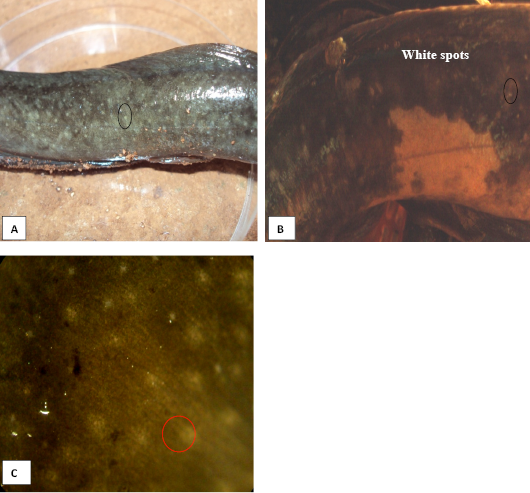
The native strain parasite source (infected Clarias gariepinus) was identified by visible white spots, and mature trophonts (Figure 14) were procured from Anambra River, Nigeria. The infected fish was anaesthetized with 150 mg/l tricaine methanesulfonate (MS-222, Sigma), and the skins were gently scraped to dislodge the trophonts. Isolated parasites were transferred into beakers containing 500ml of dechlorinated tap water to remove organic matter for four hours and were incubated in the dark chamber (slight modification) to allow mitotic division, which finally produced free-swimming theronts within 48 h. Furthermore, groups C-E excluding the control (A, normal control and B, negative control), were challenged with approximately 10,875 isolated infective theronts and quantified under a binocular microscope (Olympus-CH, Japan) using a Sedgewick-Rafter cell to detect the number of viable theronts produced. As a modification, the fish were kept in darkness for 5-10 days at 24°C. Active white spots observed on the fish’s body were an indication of Ich infection. Before parasite examination, the fish (6 fish per group) were immobilized using clove oil, the gill was excised and cut through the operculum and the gill arch to obtain a three-gill arch containing the filaments of the lamellae. The excised gill and skin smears were placed on a clean glass slide; three drops of water were added and covered with a coverslip to check for the presence of parasites under 40X magnification. Parasites were further stained with Lugol iodine for a clear morphological view.
Data analysis
Data were analyzed using R package version 3.6.1 (R core team, 2019) and statistical package for service solution version 23.0 (IBM cooperation, Armonk, USA). Generalized linear model univariate analysis of variance was estimated between and within treatment effects of the treatment and duration of exposure. Parasite intensity was not normally distributed and was therefore compared between groups of interests using the Kruskal wallis H-test, the ggpubr package , coupled to ggplot2 , used to for this purpose. The level of significance was set at P= 0.05.
RESULTS AND DISCUSSION
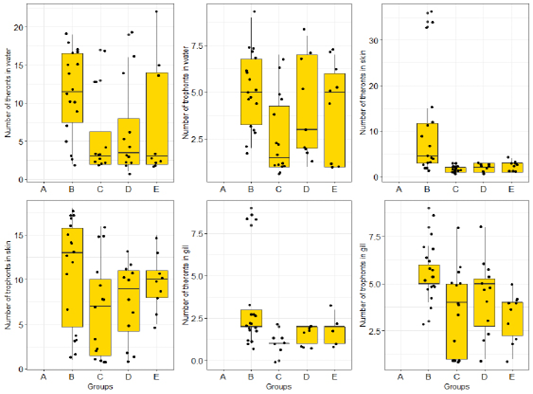
In the present study, O. gratissimum controlled I. multifilis infection, irrespective of its asynchronous life cycle and the continuous release into the water column of different stages, considering the water temperature and applications of the environmentally friendly plant. Infective theront inoculation into the experimental media B, C, D and E resulted in a parasitic infection in all the groups, which became apparent from the seventh-day post-inoculation (Figure 1). The application of low and high concentrations of ethanol extract of O. gratissimum leaf eliminated I. multifiliis infection within 96 h. More efforts have caused positive alternative, sustainable strategies for the eradication ; Gholipour et al., 2012) and management of I. multifiliis infection, as reported by Zhang et al. (2013).
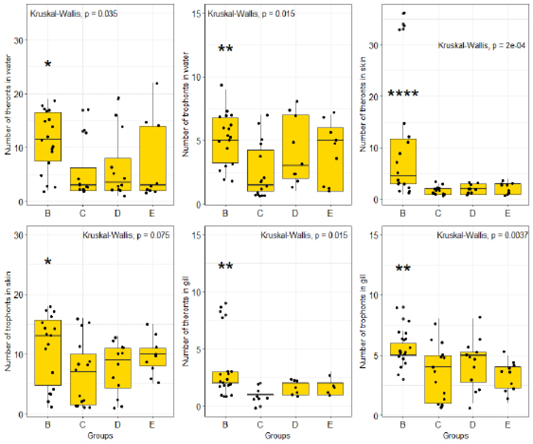
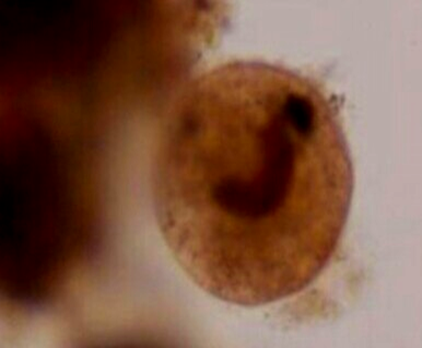
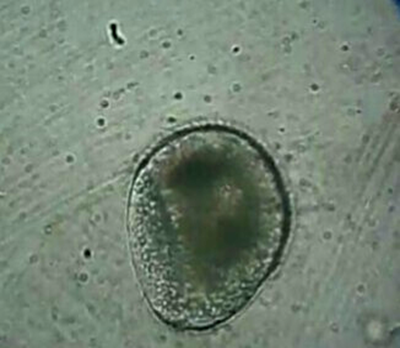
Clarias gariepinus, a mostly consumed freshwater fish, is generally considered one of the most susceptible and vulnerable hosts to I. multifilis infections. The I. multifilis susceptibility may vary considerably, including commercially important species observed in channel catfish (Ictalurus punctatus, Rafinesque, 1818) (Jorgensen et al., 2001). The most common form of treatment to control this ciliate in farm systems is trough-based bath treatments over a short exposure time, e.g. 30 min – 96 h (considering marketability and sustainability), which target the free-swimming stages of the parasite (i.e. tomonts and theronts). Meanwhile, parasitaemia persisted after treatment, except in group A which did not receive the inoculums, although a general fluctuation in parasitaemia was observed. The parasitic stages included the theronts and trophonts (Figures 12 and 13). Parasitaemia was affected by the treatment, while the number of theronts and trophonts in water, on the skin and gills of fish was affected strongly (p=0.05) by O. gratissimum. Parasitaemia of theronts and trophonts in the water culture medium, skin and gill of fish were significantly different between the groups at most of the points of comparison (p < 0.05).
Notwithstanding, the variation noticed in the number of trophonts present in both the skin and gill was due to coverage of the body by a mucous layer, a defence mechanism against the I. multifiliis parasite. In addition, water movement over the gills increased the possibility of parasite contact with the host Erkin et al. (2012), and the gills appeared to be more susceptible to the infection. The extract performed impressively relative to the standard drug, but parasitaemia was not different between the extract groups and the standard control. These findings coincided with Chika et al. (2020) report, which opined that standard control and 4500mg/L aqueous leaves of Moringa oleifera eliminated 83.33% trophonts present in the gill of ich-infested fish. However, parasitaemia in the infected and untreated (negative control) was significantly higher P=0.05 than standard control for theront and trophont in water, fish skin and gill.
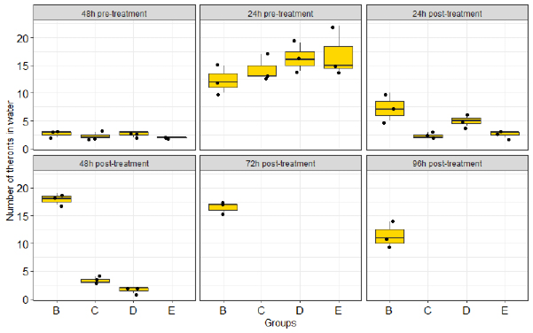
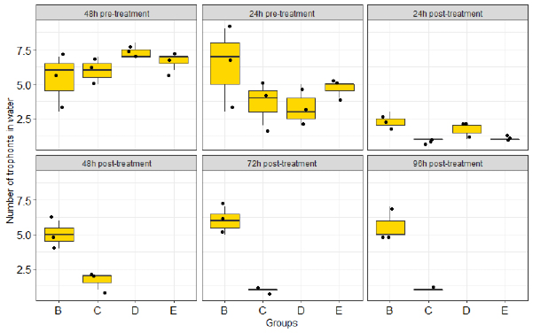
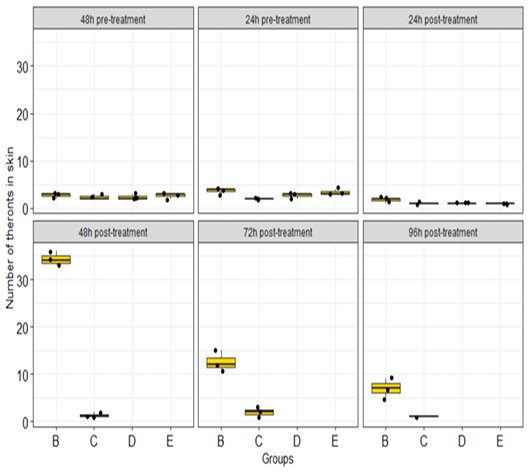
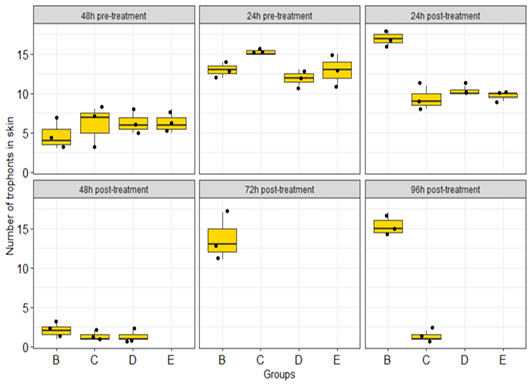
In contrast, the significant difference between standard and negative controls was more evident for dermal theronts (p<0.0001). Changes in theront and trophonts intensities are presented in Figures 3 to 8. Post-treatment parasitaemia of theronts in water decreased as the duration of treatment increased. It dropped drastically 24 h post-exposure treatment compared to 24h pre-treatment (Figure 2). By 72 h post-treatment, theront intensity in the water had decreased to a non-detectable level (Figure 3). Ekanem et al. (2004) reported that 200 mg/L of Carica papaya wiped out 100% of Ich parasite within 6 h, while 200 mg/L Mucuna prurens reduced the adult parasites by 90% after 72 h and 96 h, exposure in Goldfish. A similar pattern as theront in water was observed for trophonts in water. However, from 48 h to 96 h, parasitaemia was zero in the groups administered at 500mg/L and 1500mg/L ELEOG (Figure 4). The same pattern re-occurred for theront and trophont in the skin
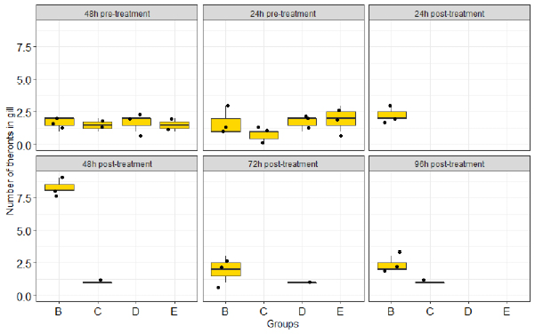
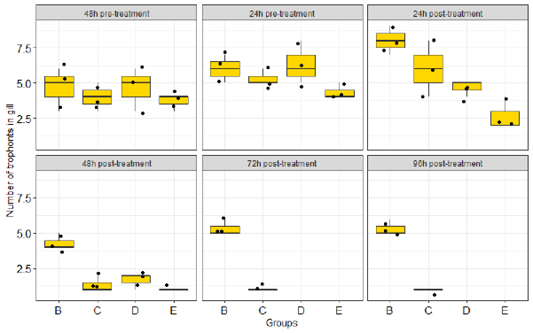
(Figures 5 and 6). Post-treatment, the intensity of parasitaemia was consistently higher in the negative control at all time intervals. Chika et al. (2020) reported similar intensity of parasitaemia in the negative control within 24 hours. The performance of the extract against water and skin Ich parasites was impressive when considered against the standard conventional drug used in this experiment. The efficacy of O. gratissimum ethanol leaf extract depended on the duration of treatments for the total eradication of the parasites. Though the standard drug was active against the Ich parasite, the infection persisted in the standard control in some cases where the extract reduced the infection to a below detectable level. In the gills, I. multifiliis clearance was not as impressive as was detected on the skin. Ich persisted 48 h post-treatment, except for 1500mg/L ELEOG. Complete clearance of infection at a lower extract concentration occurred at 500mg/L ELEOG (Figures 7 and 8). Yi (2012) reported eliminating theronts within 4h methanol extract of Magnolia officinalis and Sophora alopecuroides (pea flowered tree) eradicated I. multifiliis within 4hours by 2.45 mg/L and 3.43 mg/L, respectively.
Nevertheless, there is still a paucity of literature on the efficacy of O. gratissium in the treatment of I. multifiliis infected fish. O. gratissimum served as a better alternative to chemical drugs in controlling I. multifiliis in fishes which can improve consumer preference and acceptability in utilizing Clarias gariepinus as a good source of protein due to zero off-flavour caused by the plant material.
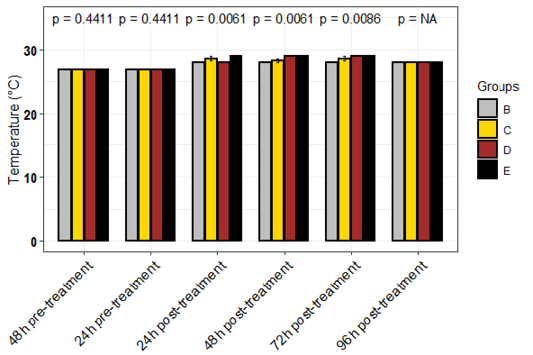
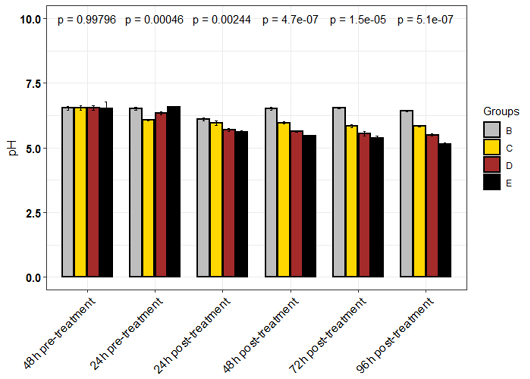
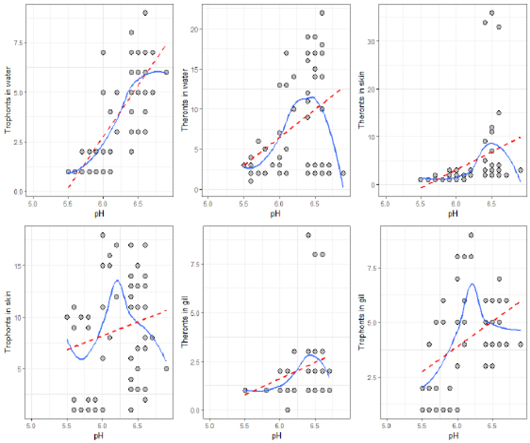
There were few variations in the water temperature for the duration of the study. The temperature of the media varied significantly 24-, 48- and 72 h post-treatment. On further analysis, there was no relationship between the temperature of 24°C and Ich intensity for a temperature range of between 25°C and 29°C (Figure 9). However, the pH was different between medium, and 24h pre-treatment of Ich infection was significantly different between the setups (p=0.00046). At the same time, the standard control group had the most petite pH. At this time, however, no drug had been introduced. Upon introducing the extract and control drug, there were variations in pH believed to be extract induced. All the groups that received the extract had a marked drop in their pH relative to the negative control (Figure 10). An exciting relationship was noticed on further analysis to assess the implication of pH change on Ich intensity. There was a positive and robust relationship between pH and Ich intensity (Figure 11).
Conclusions and Recommendations
Utilization and proper regulation of ethanol leaf extract of O. gratissimum within 96 h bath treatment to control protozoan parasite, I. multifilis was effective and showed a positive influence over the adult parasite (trophonts) at both high and low concentrations. It also demonstrated efficacy of novel non-chemical treatment against the adult and infective parasite.
Acknowledgements
We acknowledge the Department of Veterinary Parasitology, University of Nigeria and Parasitology unit of the Department of Zoology and Environmental Biology, towards their assistance in providing laboratory work space and technical experimental set up.
Novelty Statement
The research work currently evaluated potential of Ocimum gratissimum against I. multifillis. O. gratissimum has seldomly be used to control protozoa ich parasite
Author’s Contribution
ICB designed the experiment, isolated and identified the parasite and supervised the research. OCMG proof read the manuscript. ECC conducted and monitored the experiment, including trophonts and theronts counts in the water, skin and gill of the ich-infected fish.
Ethical approval
All the fish used in the research work followed the guidelines of animal ethics and was approved by the appropriate ethical committee (UNN-ACC, protocol No. 07/09/2018) of the University of Nigeria, Nsukka and does not contain clinical studies or patient data.
Conflict of interest
The authors have declared no conflict of interest.
Figures
Figure 1:.
Intensity of Ichthyopthirius multifilis infection on Clarias gariepinus juvenile 48h pre-treatment with Ocimum gratissimum. Key: A: Normal control (not infected and not treated); B: Negative control (Infected, not treated); C: Standard control (infected and treated with 150mg/L chlomphenicol); D: 500mg/L Ethanolic leaves extract of O. gratissimum (ELEOG); E: 1500mg/L ELEOG.
Figure 2:.
Intensity of Ichthyopthirius multifilis infection in Clarias gariepinus juvenile 24h pre-treatment with Ocimum gratissimum. Key: B: Negative control (Infected, not treated); C: Standard control (infected and treated with 150mg/L chloromphenicol); D: 500mg/L Ethanolic leaves extract of O. gratissimum (ELEOG); E: 1500mg/L ELEOG.
Figure 3:.
Theront intensity pre- and post-treatment with O. gratissimum extract in water. Key: A: Normal control (not infected and not treated); B: Negative control (Infected, not treated); C: Standard control (infected and treated with 150mg/L chlomphenicol); D: 500mg/L Ethanolic leaves extract of O. gratissimum (ELEOG); E: 1500mg/L ELEOG.
Figure 4:.
Trophont intensity pre- and post-treatment with O. gratissimum extract in water. Key: A: Normal control (not infected and not treated); B: Negative control (Infected, not treated); C: Standard control (infected and treated with 150mg/L chlomphenicol); D: 500mg/L Ethanolic leaves extract of O. gratissimum (ELEOG); E: 1500mg/L ELEOG.
Figure 5:.
Theront intensity pre- and post-treatment with O. gratissimum extract on the skin. Key: A: Normal control (not infected and not treated); B: Negative control (Infected, not treated); C: Standard control (infected and treated with 150mg/L chlomphenicol); D: 500mg/L Ethanolic leaves extract of O. gratissimum (ELEOG); E: 1500mg/L ELEOG.
Figure 6:.
Trophont intensity pre- and post-treatment with O. gratissimum extract on the skin. Key: A: Normal control (not infected and not treated); B: Negative control (Infected, not treated); C: Standard control (infected and treated with 150mg/L chlomphenicol); D: 500mg/L Ethanolic leaves extract of O. gratissimum (ELEOG); E: 1500mg/L ELEOG.
Figure 7:.
Theront intensity pre- and post-treatment with O. gratissimum extract on the gill. Key: A: Normal control (not infected and not treated); B: Negative control (Infected, not treated); C: Standard control (infected and treated with 150mg/L chloromphenicol); D: 500mg/L Ethanolic leaves extract of O. gratissimum (ELEOG); E: 1500mg/L ELEOG.
Figure 8:.
Trophont intensity pre- and post-treatment with O. gratissimum extract in gill. Key: A: Normal control (not infected and not treated); B: Negative control (Infected, not treated); C: Standard control (infected and treated with 150mg/L chloromphenicol); D: 500mg/L Ethanolic leaves extract of O. gratissimum (ELEOG); E: 1500mg/L ELEOG.
Figure 9:.
Changes in temperature in the experimental media.
Figure 10:.
pH of experimental medium.
Figure 11:.
Relationship between culture water pH and intensity of I. multifiliis.
Figure 12:.
Trophont (Adult stage).
Figure 13:.
Theront (Infective stage).
Figure 14:.
Gross morphology of infected Fish, Clarias gariepinus showing white spots (circles); A and B: Through visual observations; C: White spots under stereo microscope. Mag. 20X.
References
Adewumi A, Olaleye, EF (2011). Catfish culture in Nigeria: Progress, prospects and problems. Afr. J. Agric. Res, 6(6):1281-1285
Alavinia SJ, Mirzargar SS, Holasoo HR, Mousavi HE (2018). The in vitro and in vivo effect of tannic acid on Ichthyophthiruis multifilis in zebrafish (Danio rerio) to threat ichthyophthiriasis. J. Fish. Dis., pp. 1-10. https://doi.org/10.1111/jfd.12886[CrossRef]
Balta F, Kayis S, Altinok I (2008). External protozoans parasites in three trout species in the Eastern black sea region of the Turkey: Intensity, seasonality and their treatments. Bull. Eur. Assoc. Fish. Pathol., 28: 157-162.
Chika BI, Okpasuo JO, Ikele CF, Ating E, Obiezue NR, Mgbenka BO (2020). Antiparasiticidal potential of aqueous leaves extract of Moringa oleifera against Ichthyophthirius multifiliis infestation on Clarias gariepinus. J. Anim. Health Prod., 8(3): 113-121. https://doi.org/10.17582/journal.jahp/2020/8.3.113.121[Full text][CrossRef]
Dahiru D, Onubiyi JA, Umaru HA (2006). Phytochemical screening and antiulcerogenic effects of Moringa oleifera aqueous leaf extract. Afri. J. Trad. Comp. Altern. Med., 3(3): 70-75. https://doi.org/10.4314/ajtcam.v3i3.31167[CrossRef]
Ekanem AP, Obiekezie A, Kloas W, Knopf K (2004). Effects of crude extracts of Mucuna pruriens (Fabaceae) and Carica papaya (Caricaceae) against the protozoan fish parasite Ichthyophthirius multifiliis. Parasitol. Res., 92: 361-366. https://doi.org/10.1007/s00436-003-1038-8[CrossRef]
Erkin KC, Erol T, Serhat T (2012). The infection of Ichthyophthirius mulifilis (Fouget, 1876) in some of the Aquarium Fishes (Cichlasoma nigrofasciatum Gunther, 1867). Mersin 3rd International Symposium on sustainable development, Sarajero.
FAO (2018). The State of World Fisheries and Aquaculture 2018- Meeting the sustainable development goals.
FAO (2017). Fishery and Aquaculture country profile, the federal republic of Nigeria. ftp://ftp.fao.org/Fi/DOCUMENT/fcp/en/Fi_cp_NG. accessed 3rd November, 2020.
Gholipour-kanani H, Sahandi J, Taheri A (2012). Influence of garlic Allium sativum and motherworth (Matricaria chamomilla) extract on Ichthophthirius multifilis parasite treatment in sailfin molly (Poecilia latipinna) ornamental fish. APCBEE Proc., 4: 6-11. https://doi.org/10.1016/j.apcbee.2012.11.002[CrossRef]
Ji-Hong W, Yan-li W, Yu-Hua L, Ji-yuan Z, Ze-Hong LI (2017). Activity of two extracts of Cynachum paniculatum against Ichthyophthirius multifilis theronts and tomonts. Parasitology, 144: 179-185. https://doi.org/10.1017/S003118201600144X[CrossRef]
Jorgensen TR, Larsen TB, Buchmann K (2001). Parasite infections in recirculated rainbow trout (Oncorhynchus mykiss) farms. Aquaculture, 289: 91-94. https://doi.org/10.1016/j.aquaculture.2008.12.030[CrossRef]
Kassambara A (2019). ggpubr: ‘ggplot2’ Based Publication Ready Plots. R package version 0.2.3.
Lahnsteiner F, Weismann T (2007). Treatment of ichthyophthiriasis in rainbowtrout and common carp with common and alternative therapeutics. J. Aqua. Animal Health, 19: 186-194. https://doi.org/10.1577/H07-002.1[CrossRef]
Lusiastuti M, Taukhid T, Anggi I, Caruso D (2017). Dry green leaf of Indian almond (Terminalaia catappa) to prevent streptococcal infection in juvenile of the Nile Tilapia (Oreochromis niloticus). Bull. Eur. Assoc. Fish Pathol., 37: 119-125.
Mathias SB (2014). Gill digestive tract parasites of Clarias gariepinus in the Tella area of River Taraba, Taraba State, Nigeria.
Noga EJ (2010). Fish disease: Diagnosis and treatment, 2nd edition. Wiley-Blackwell, Ames, IA, USA, pp. 519. https://doi.org/10.1002/9781118786758[CrossRef]
Nya EJ, Austin B (2009). Use of garlic, Allium sativum, to control Aeromonas hydrophila infection in rainbow trout, Oncorhynchus mykiss (Walbaum). J. Fish. Dis., 32: 963-970. https://doi.org/10.1111/j.1365-2761.2009.01100.x[CrossRef]
Omeji S, Solomon SG, Idoga ESA (2011). Comparative study of the common protozoan parasites of Clarias gariepinus from the wild and cultured environments in Benue State. Niger. J. Parasitol. Res., 9(1): 64-89. https://doi.org/10.1155/2011/916489[CrossRef]
Prahbu KS, Lobo R, Shiwaikar AA, Shirwaiker A (2009). Ocimum gratissimum: A review of its chemical, pharmacological and ethnomedicinal properties. Open Complement. Med. J., 1: 1-15. https://doi.org/10.2174/1876391X00901010001[CrossRef]
R Core Team. (2021). R: A language and environment for statistical computing.R Foundation for Statistical Computing, Vienna, Austria. URL https://www.R-project.org/.
Rintamaki-Kinnunen P, Rahkonen M, Mannermaa-Keranen AL, Suomalainen LR, Mykra H, Valtonen ET (2005). Treatment of ichthyophthiriasis after malachite green. I. concrete tanks at salmonid farms. Dis. Aqua. Org., 64: 69-76. https://doi.org/10.3354/dao064069[CrossRef]
Shinn AP, Taylor NGH, Wooten R (2005). Development of a management system for the control of Ichthyophirius multifillis. Trout News, 40: 21-25. https://doi.org/10.1016/S0029-7437(05)71220-9[CrossRef]
Straus DL, Hossain MM, Clark TG (2009). Copper sulphate toxicity to two isolates of Ichthyophthirius multifilis relative to alkalinity. Dis. Aqua. Org., 83: 31-36. https://doi.org/10.3354/dao02010[CrossRef]
Stoskopf MK (2015). Biology and management of laboratory fishes, in laboratory animal medicine (Third Edition), J.G. Fox, et al., Editors., Academic Press: Boston. https://doi.org/10.1016/B978-0-12-409527-4.00021-3[CrossRef]
Tieman DM, Godin AE (2001). Treatments for ich infestations in channel catfish evaluated under static and flow-through water conditions. North Am. J. Aqua., 63: 293-299. https://doi.org/10.1577/1548-8454(2001)063<0293:TFIIIC>2.0.CO;2[CrossRef]
Toksen E, Nemli E (2010). Oral treatment trials on telescope fish (Carassius auratus) experimentally infected with Ichthyophthirius multifiliis (Fouqet, 1876). Bull. Euro. Assoc. Fish. Pathol., 30: 48-52.
Wickham H (2016). ggplot2: Elegant graphics for data analysis. Springer-Verlag New York. https://doi.org/10.1007/978-3-319-24277-4_9[CrossRef]
Williams CF, Vacera AR, Dunhm L, Llolyd D, Coogan MP, Evans G, Graz M, Cable J (2016). The redox-active drug metronidazole and thiol-depleting garlic compounds act synergistically in the protest parasite spironucleus vortens. Mol. Biochem. Parasitol., 206: 20-28. https://doi.org/10.1016/j.molbiopara.2016.03.001[CrossRef]
Zhang Q, Xu DH, Klesius PH (2013). Evaluation of an antiparasitic compound extracted from Galla chinensis against fish parasite Ichthyophthirius multifilis. Vert. Parasitol., 198: 45–53. https://doi.org/10.1016/j.vetpar.2013.08.019[CrossRef]
Zhou SY, Liu YM, Zhang QZ, Fu YW, Lin DJ (2018). Evaluation of an antiparasitic compound extracted from Polygonum cuspidatum against Ichthyophthirius multifilis in grass carp. Vert. Parasitol., 253: 22-25. https://doi.org/10.1016/j.vetpar.2018.02.005[CrossRef]
Xiao-Feng S, Qing-Feng M, Yuan-Huan K, Yu B, Yuan-Hang G, Wei-Li W, Ai-Dong Q (2014). Isolation of active compounds from methanol extracts of Toddalia asiatica against Ichthyophthirius multifilis in gold fish (Carassius auratus). Vert. Parasitol., 199: 250-254. https://doi.org/10.1016/j.vetpar.2013.10.021[CrossRef]
Yao JY, JY Shen, XL Li, Y Xu, GJ Hao, XY Pan, GX Wang, WL Yin (2010). Effect of sanguinarine from the leaves of Macleaya cordata against Ichthyophthirius multifiliis in grass carp (Ctenopharyngodon idella). Parasitol. Res. 107(5): 1035–1042. doi: 10.1007/s00436-010-1966-z[CrossRef]
Yao JY, Zhou ZM, Li XL, Yin WL, Ru HS, Pan XY, Hao GJ, Xu Y, Shen J (2010). Antiparasitic efficacy of dihydrogesanguinarine and dihydrocheletythrine from Macleaya microcarpa against Ichthyophthirius multifilis in richaadsin (Squaliobarbus curniculus). Vert. Parasitol., 183: 8-13. https://doi.org/10.1016/j.vetpar.2011.07.021[CrossRef]
Yi YL, Lu C, Hu XG, Ling F, Wang GX (2012). Antiprotozoal activity of medicinal plants against Ichthyophthirius multifilis in gold fish (Carassius auratus). Parasitol. Res., 111: 1771-1778. https://doi.org/10.1007/s00436-012-3022-7[CrossRef]