Special Issue: Emerging and Re-Emerging Animal Health Challenges in Low and Middle-Income Countries · Volume 12, Issue 1, 11 December 2024 · Open Access
The Effect of Carotenoids of Rhodotorula glutinis and Probiotic of Lactobacillus acidophilus on Physiological and Histological Variables of the Kidney in Male Rats Exposed to Ultraviolet Radiation
· · ·
Affiliations & Notes ⌄
1Community Health Department, Kirkuk Technical Institute, Northern Technical University, Iraq
2Department of Biology, College of Education, University of Samarra, Iraq
3Al-Door Technical Institute, Northern Technical University, Mosul, Iraq. *Correspondence | Mohammed Ahmed Mustafa, Department of Biology, College of Education, University of Samarra, Iraq
The carotenoids obtained from Rhodotorula glutinis, and probiotics from Lactobacillus acidophilus used to discover, evaluate, and treat the effect of UV radiation on the kidney health and efficiency. A total of 28 consecutive days, with 24-hours designating the UV radiation exposure period immediately before therapy. The research project comprised 28 male albino rats were distributed into 4 groups, every group containing seven animals. The findings revealed a considerable increase (P< 0.05) of urea, creatinine and uric acid concentrations in the UV radiation-exposed group relative to the control group. We have observed a significantly reduced in urea, creatinine and uric acid in all groups receiving a probiotics of L. acidophilus and the carotenoids compared with UV exposed group, and repair of potential renal tissue injury that resulting of exposure to the effect of ultraviolet rays.
Ultraviolet rays (UV) are one of the most important types of low-energy non-ionizing rays. The UV range of the spectrum of electromagnetic radiation extends from 10 nm to 400 and a large portion of UV from sun accessing the surface of Earth consists mainly of UVB (90-99%) with a minor UV component (1-10%) nm .
UV radiation can widely induce reactive oxygen species (ROS) by directly impacting on components of cell or by sensitivity mechanisms to light. Indirectly generated reactive oxygen species include a species variety such as OH•, superoxide radical, 1O2, and H2O2 during several processes . These radicals can transformed to different species as reactive oxygen species, a low quantity of radicals may result of mutations, the intermediate quantity of ROS can cause of aging, in addition, a elevate quantity from reactive oxygen species may leads to death of cells as necrosis . To identify a harmful and dangerous effects of ultraviolet rays on the efficiency and functions of the kidney, this study was conducted .
Carotenoids are among the most widespread pigments in nature and are specifically manufactured by plants and microorganisms . Adequate intake of carotenoids could be linked to a decreased risk on the heart, eye, skin, and bone diseases, in addition to a variety of malignancies, including breast, ovarian, prostate, colorectal and cervical cancer , vegetables and fruits are the major sources of carotenoids in the diets of humans, despite of the carotenoids are found in large quantities in seafood, dairy products, egg yolks, and other foods of animal origin . In this study, attention was focused on the carotenoids extracted ability to removal or neutralized free radicals for their potential exploitation in the treatment of damage caused by exposure to ultraviolet radiation to propose the carotenoid molecules as novel, valuable components for nutritional supplements for human health .
Lactobacillus acidophilus, is a type of gram-positive bacteria that is found in the digestive system. L. acidophilus as a probiotic has a group of benefits to the body, such as improving digestion. It also contributes to maintaining the balance of beneficial bacteria in the digestive system, in addition to promoting health and the immune system ; .
MATERIAL AND METHODS
Study design
28 male albino rats were used the strain (Sprague Dawely) whose ages ranged between (2-2.5) months and weighed (200-250 g), The animals were given 2 weeks to acclimate to their new surroundings environment of animal-house and verify they were disease-free, then divided into four groups with 7 animals in each group (G1 as healthy control group, G2 refer to UV exposed group, G3 as bacterial probiotic group, and G4 group represent that treated with carotenoids extract). They were given water and food continuously throughout the experiment period, which amounted to 28 days that expanded between February 2023/ April 2023, including a period of 24 hours that represents the time was exposed the animals to UV radiation before receiving therapy. The animals were exposed to ultraviolet radiation at a wavelength of 300 nm by an ultraviolet lamp 30 W and length 90 cm was positioned to the up to the animal cage covers.
Samples and methods
An isolate of Rhodotorula glutinis yeast was obtained and previously identified from the laboratories of the College of Agriculture, Kirkuk University. The carotenoid pigment was extracted from the isolate of yeast after growing it on Sabouraud glucose agar (SGA), based on the procedure of which was modified method for carotenoids extraction. The dye was kept in opaque bottles and in dark conditions at -18 ℃ to avoid oxidation and damage to the dye. 2.39 mg of the prepared carotene was dissolved, and the carotenoids dose was used based on the recommended daily requirement of beta-carotene for rats, which is 2.39 mg/kg of body weight. The animals were dosed orally by using a gavage.
The bacterial suspension of L. acidophilus as a probiotic supplement results from emptying the contents of a ready-made bag (Lacteol fort) containing L. acidophilus in a dried powder form, which was manufactured by a (Rameda Pharma company, Egypt, with permission from Axcan Pharma, France). The contents of the bag were mixed in 10 ml of skimmed milk and then the dose given to the animals 2.5 ml/kg.
Physiological and Biochemical test
Urea, creatinine and uric acid were determined depending on the enzymatic colorimetric method by kits supplied by (Biolabo Company, France).
Histological study
The animals anesthetized by chloroform, then the blood were taken, and a laparotomy, the chest (sternum) and abdomen were opened in an inverted T shape, then, extirpate the kidneys from each rat, then, completing a steps to the preparation of histological sections (tissue slices) ; .
Statistical analysis
SAS (2001) statistical program executed and examined the results. To compare the variable means, one-way analysis of variance (ANOVA) was utilized. Additionally, Duncan’s Test (1955) was used to assess significant variances, and the significance level (P< 0.05).
RESULTS AND DISSCUSION
According to the data in Tables 1, 2 the concentrations of urea, creatinine, and uric acid in the group exposed to UV radiation were significantly higher (P< 0.05) in comparison to the healthy control group, while, found a significant reduction (P< 0.05) in urea, creatinine and uric acid in the groups were treated with probiotic and the carotenoids that extracted from Rhodotorula glutinis in comparison with ultraviolet radiation exposure group.
UV radiation harm to organisms can happen either directly or indirectly. When water molecules are exposed to UV light, they radiolyze and create free radicals, these radicals then interact with other molecules, changing their structures and functions ; , and thus may lead to damage in kidney cells as in the present study and subsequently, this affects the functions and efficiency of this organ which is the reason for the high concentration of some of the studied parameters, such as urea, creatinine and uric acid.
Table 1: Concentrations of urea and creatinine in serum of all study groups.
Creatinine (mg\dL)
Urea (mg\dL)
Parameters
groups
Mean±SD (n= 7)
0.93± 0.04c
41.13± 2.71c
G1
3.91± 0.40a
56.96± 0.92a
G2
2.11± 0.32 b
48.13± 1.32b
G3
1.31±0.10c
38.56±2.60c
G4
The vertically different letters indicate a significant difference at p≤0.05.
Table 2: Concentration of uric acid in serum of all study groups.
Uric acid (mg\dL)
Parameters groups
Mean ± SD,( n= 7)
3.03±0.64c
G1
7.13±0.55a
G2
3.76±0.25bc
G3
4.20±0.30b
G4
The vertically different letters indicate a significant difference at p≤0.05.
The therapeutic effect of carotenoids on the above parameters and organ in current research may be due to that carotenoids can regulate oxidative stress through peroxisome proliferator-activated receptors (PPAR) and nuclear factor erythroid 2 (Nrf2) or cause upregulation of antioxidants and enzymes of cytoprotective phase II. Carotenoid-mediated Nrf2 signaling’s main function is to reduce reactive oxygen species and responses of inflammation ; . It has been shown through research that carotenoids, which act as antioxidants, can prevent the formation of tumors or damage by reducing the levels of free radicals that can cause damage to DNA ; , also, oxidative stress and the inflammatory process can be considered as a part of the pathogenesis of renal diseases, so, carotenoids are the most fat-soluble chemicals have anti-inflammatory, antioxidant and anti-apoptotic activities, which are associated with the regulation of signaling pathways related to oxidative damage and inflammation, on the other hand, carotenoids can removal or neutralized reactive oxygen species and improve the ability of cells to prevent free radicals .
Also, the causes of improved functions and health of kidneys may be due to the use of L. acidophilus probiotic to increase normal flora in the gut, which in return improves digestion and increases absorption of food and supplements. Furthermore, probiotic help activate the immune system and improve and support overall function in the body ; . Moreover, found that the carotenoids were associated with activity and efficiency of GFR, both in older persons and renal patients ; . In addition, the effects of L. acidophilus probiotic on renal tissue not only improve intestinal homeostasis but also decrease uremic toxins production or retention, and probiotic of L. acidophilus may lowering urinary protein excretion and urea nitrogen in the blood and decreased oxidative stress and fibrosis in the renal tissues by transforming of intestinal microflora composition toward homeostasis ; , subsequently, that may lead to decrease of creatinine, urea, and uric acid concentrations. Furthermore, exposure to UV effect may lead to an increased risk of constipation, which may promote the fermentation of unprocessed peptides and amino acids in the colon, as well as the production and uptake of additional precursors to uremic toxins which effects on the efficiency of the kidney , and thus, administrated probiotic can be a new pathway to give prospective benefits to improve quality of life and renal functions.
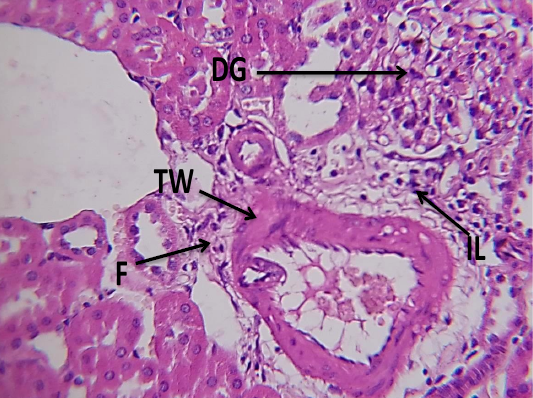
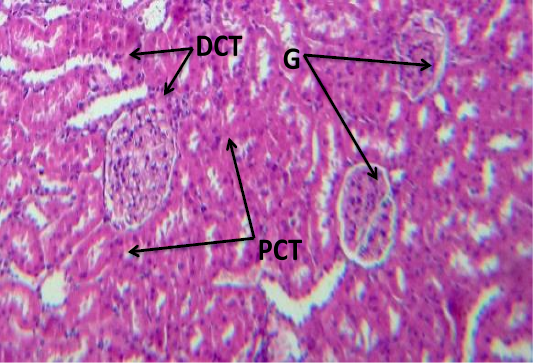
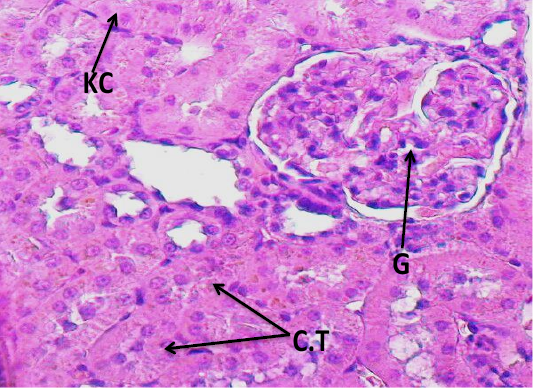
On the other hand, the specimens were within the histological section (Figure 1), which shows a section in renal tissue from the ultraviolet-exposed group that illustrates the damage of glomeruli, thickening walls of blood vessels and infiltration of lymphocytes with present fibrocytes. Whereas the current histological study for the carotenoids extract group in (Figure 2), explains the effect of giving carotenoids to male rats daily for (28) days when compared with the kidney sections of the control group clearly showed the treatment effect of the extract on the effect of radiation and observed the renal glomeruli, the proximal urinary tubules and distal urinary tubules naturally. Also, the histological section for the group treated with bacterial probiotic of L. acidophilus in (Figure 3), explains the effect of giving probiotic to male rats daily for (28) days when compared with the kidney sections of the control group clearly showed the effect of treatment on the UV effect and observed the healing effect to probiotic on the damage and only closed tubules remains in the renal tissue, in addition to the glomeruli and kupffer cells.
The causes of this physiological and histological injury might result from an increase in the lipid peroxidation process and a reduction in the body’s antioxidant enzyme activity accompanied by the cellular membranes damage ; . Furthermore, high concentrations of reactive oxygen species may result in endothelial dysfunction, inflammation, and renal fibrosis . While the improvement in the health and recovery of the renal tissues may be due to the carotenoids that are important as the antioxidant level and activity, in addition, have anti-inflammatory and anti-apoptotic activities, and associated with the regulation of signaling pathways related to oxidative damage and inflammation . In addition, the carotenoids have a role in lipid peroxidation inhibition, and participating in apoptosis . Furthermore, Supplementation of L. acidophilus probiotic may due to reducing fibrotic-related proteins and kidney damage lowered pro-inflammatory processes and oxidative stress, and enhanced immunological reactions in the kidney , thus, that maybe lead to a decrease and treatment of the effect of oxidative stress that resulting from exposure to ultraviolet radiation .
CONCLUSION
The current study concludes that exposure to UV rays leads to damage to kidneys, and their functions are impaired, while administration of probiotics and carotenoids leads to an improvement in the functions of the kidney and restoration of potential renal tissue injury that resulting from the effect of ultraviolet rays.
ACKNOWLEDGMENTS
The authors sincerely acknowledge the staff of the Department of Biology, College of Education and University of Samarra for their general and technical support.
NOVELTY STATEMENT
This study presents a novel approach to mitigating the harmful effects of ultraviolet (UV) radiation on kidney health by investigating the protective potential of carotenoids extracted from Rhodotorula glutinis yeast and L. acidophilus as a probiotic. This study uniquely combines carotenoids and probiotics as therapeutic agents. The findings provide evidence for the significant therapeutic effects of these compounds in reducing UV-induced renal damage, providing new insights into alternative, non-pharmacological interventions for kidney health.
AUTHOR’S CONTRIBUTION
LSL and WIAA-A designed the experiment. HSA and MAM conducted the laboratory work and the data was analyzed. Editing, revision, and proofreading were done by all researchers to improve the language of writing. All authors contributed to the article and approved the submitted version.
Conflict of interest
The authors declare no interest conflicts associate with this manuscript.
Figures
Figure 1:.
The kidney of an ultraviolet exposed group shows thickening wall (TW) of blood vessels, damaged glomerulus (DG), infiltration of lymphocytes (IL) and present fibrocytes (F), H & E 400X.
Figure 2:.
The kidney of the carotenoids extract group observed the kidney glomeruli (G), proximal urinary tubules (PCT), and distal urinary tubules (DCT), H and E 400X.
Figure 3:.
The kidney of the treated group by bacterial probiotic shows the kidney glomeruli (G), Kupffer cells (KC) and closed tubules (C.T), H and E 400X.
References
Abd-alwahab WI, Al-Assie RJ, Azeez AK, Ghadir GK (2024). The effect of carotenoids of Rhodotorula glutinis and probiotic of Lactobacillus acidophilus on some physiological and histological variables of the pancreas and liver in male rats exposed to ultraviolet radiation. Tikrit J. Agric. Sci., 24(2): 235-245. https://doi.org/10.25130/tjas.24.2.17[CrossRef]
Ali DF (2013). Studies on carotenoids production from some yeasts. Ph.D. Thesis, Faculty of Agriculture, Mansoura University.
Alsalame HAAA, Laylani LS (2024). Evolution the effectiveness of Vernonia amygdalina in some physiological parameters against hepatic and renal injury in male rats. Tikrit J. Agric. Sci., 24(2): 298-310. https://doi.org/10.25130/tjas.24.2.21[CrossRef]
Bancroft JD, Layton C (2018). Bancroft’s theory and practice histological technique. 8th ed, Elsevier health science, pp. 153-176. https://doi.org/10.1016/B978-0-7020-6864-5.00013-X[CrossRef]
Bhatt T, Patel K (2020). Carotenoids: Potent to prevent diseases review. Natl. Prod. Biopros., 10: 109-117. https://doi.org/10.1007/s13659-020-00244-2[CrossRef]
Bohn T (2019). Carotenoids and markers of oxidative stress in human observational studies and intervention trials: Implications for chronic diseases. Antioxidants, 8(6): 179. https://doi.org/10.3390/antiox8060179[CrossRef]
Dawson MI (2000). The importance of vitamin A in nutrition. Curr. Pharma. Design, 6(3): 311-325. https://doi.org/10.2174/1381612003401190[CrossRef]
Do Nascimento TC, Cazarin CB, Maróstica MR, Mercadante AZ, JacobLopes E, Zepka LQ (2020). Microalgae carotenoids intake: Influence on cholesterol levels, lipid peroxidation and antioxidant enzymes. Food Res. Int., 128: 108770. https://doi.org/10.1016/j.foodres.2019.108770[CrossRef]
Duncan DB (1955). Multiple range and F-test. Biomertic, 11: 42. https://doi.org/10.2307/3001478[CrossRef]
Gwozdzinski K, Pieniazek A, Gwozdzinski L (2021). Reactive oxygen species and their involvement in red blood cell damage in chronic kidney disease. Oxid. Med. Cell Longev., 2021: 6639199. https://doi.org/10.1155/2021/6639199[CrossRef]
Hirahatake KM, Jacobs DR, Gross MD, Bibbins-Domingo KB, Shlipak MG, Mattix-Kramer H (2019). The association of serum carotenoids, tocopherols, and ascorbic acid with rapid kidney function decline: The coronary artery risk development in young adults (CARDIA) study. J. Ren. Nutr., 29: 65-73. https://doi.org/10.1053/j.jrn.2018.05.008[CrossRef]
Huang H, Li K, Lee Y, Chen M (2021). Preventive effects of Lactobacillus mixture against chronic kidney disease progression through enhancement of beneficial bacteria and downregulation of gut-derived uremic toxins. J. Agric. Food Chem., 69: 7353-7366. https://doi.org/10.1021/acs.jafc.1c01547[CrossRef]
Jagetia GC, Reddy TK (2005). Modulation of radiation induced alteration in the antioxidant status of mice by naringin. Life Sci.; 77(7): 780-794. https://doi.org/10.1016/j.lfs.2005.01.015[CrossRef]
Karupusamy S, Mustafa MA, Jos BM, Dahiya P, Bhardwaj R, Kanani P, Kumar A (2023). Torque control-based induction motor speed control using anticipating power impulse technique. Int. J. Adv. Manuf. Technol., pp. 1-9. https://doi.org/10.1007/s00170-023-10893-5[CrossRef]
Kaulmann A, Bohn T (2014). Carotenoids, inflammation, and oxidative stress-implications of cellular signaling pathways and relation to chronic disease prevention. Nutr. Res. 34(11): 907–929. https://doi.org/10.1016/j.nutres.2014.07.010[CrossRef]
Kimeswenger S, Schwarz A, Födinger D, Müller S, Pehamberger H, Schwarz T, Jantschitsch C (2016). Infrared A radiation promotes survival of human melanocytes carrying ultraviolet radiation-induced DNA damage. Exp. Dermatol., 25(6): 447-452. https://doi.org/10.1111/exd.12968[CrossRef]
Kohandel Z, Farkhondeh T, Aschner M, Samarghandian S (2021). Nrf2 a molecular therapeutic target for Astaxanthin. Biomed. Pharmacother., 137: 111374. https://doi.org/10.1016/j.biopha.2021.111374[CrossRef]
Mahmoud ZH, Ajaj Y, Hussein AM, Al-Salman HNK, Mustafa MA, Kadhum EH, and Kianfar E (2024). CdIn2Se4@ chitosan heterojunction nanocomposite with ultrahigh photocatalytic activity under sunlight driven photodegradation of organic pollutants. Int. J. Biol. Macromol., 267: 131465. https://doi.org/10.1016/j.ijbiomac.2024.131465[CrossRef]
Mani-López E, Arrioja-Bretón D, López-Malo A (2022). The impacts of antimicrobial and antifungal activity of cell-free supernatants from lactic acid bacteria in vitro and foods. Comprehen. Rev. Food Sci. Food Saf., 21(1): 604-641. https://doi.org/10.1111/1541-4337.12872[CrossRef]
Meléndez-Martínez AJ, Mapelli-Brahm P, Stinco CM (2018). The colourless carotenoids phytoene and phytofluene: From dietary sources to their usefulness for the functional foods and nutricosmetics industries. J. Food Composit. Anal., 67: 91-103. https://doi.org/10.1016/j.jfca.2018.01.002[CrossRef]
Mustafa MA, Raja S, Asadi LAA, Jamadon NH, Rajeswari N, Kumar AP (2023). A decision-making carbon reinforced material selection model for composite polymers in pipeline applications. Adv. Polymer Technol., 2023(1): 6344193. https://doi.org/10.1155/2023/6344193[CrossRef]
Park PK, Cho DH, Kim EY, Chu KH (2005). Optimization of carotenoid production by Rhodotorula glutinis using statistical experimental design. World J. Microbiol. Biotechnol., 21(4): 429-434. https://doi.org/10.1007/s11274-004-1891-3[CrossRef]
Saada HN, Azab KS (2001). Role of lycopene in recovery of radiation induced injury to mammalian cellular organelles. Europe PMC (Die Pharmazie); 56(3): 239-241.
Statistical Analysis System (2001) User’s Guide: Statistics, Version 8.2. SAS Institute, NC, USA.
Singh A, Kukreti R, Saso L, Kukreti S (2022). Mechanistic insight into oxidative stress-triggered signaling pathways and type 2 diabetes. Molecules, 27(3): 950. https://doi.org/10.3390/molecules27030950[CrossRef]
Suvik A, Effendy AW (2012). The use of modified masson’s trichrome staining in collagen evaluation in wound healing study. Mala J. Vet. Res., 3(1): 39-47.
Tsai CW, Huang HW, Lee YJ, Chen MJ (2024). Investigating the efficacy of kidney-protective lactobacillus mixture-containing pet treats in feline chronic kidney disease and its possible mechanism. Animals, 14(4): 630. https://doi.org/10.3390/ani14040630[CrossRef]
Türker H (2015). The effect of ultraviolet radiation of pancreatic exocrine cells in mole rats: An ultrastructural study. J. Radiat. Res. Appl. Sci., 8(1): 49-54. https://doi.org/10.1016/j.jrras.2014.10.006[CrossRef]
Vardi N, Hakan P, Asl C, Ali E, Cetin O (2010). Protective effect of carotene on methotrexate–induced oxidative liver damage. J. Toxicol. Pathol., 38: 592-597. https://doi.org/10.1177/0192623310367806[CrossRef]
Vemuri R, Martoni CJ, Kavanagh K, Eri R (2022). Lactobacillus acidophilus DDS-1 modulates the gut microbial co-occurrence networks in aging mice. Nutrients, 14(5): 977. https://doi.org/10.3390/nu14050977[CrossRef]
Wei M, He X, Liu N, Deng H (2024). Role of reactive oxygen species in ultraviolet-induced photodamage of the skin. Cell Div., 19(1): 1. https://doi.org/10.1186/s13008-024-00107-z[CrossRef]
Wen J, Ma X, Liu Y (2023). The latest research progress on application of Lactobacillus acidophilus. Adv. Biosci. Biotechnol., 14(6): 298-307. https://doi.org/10.4236/abb.2023.146018[CrossRef]
Xavier Sr EA (2023). The risks of chronic exposure to ultraviolet light in laboratory environment. bioRxiv, pp. 12. https://doi.org/10.1101/2023.12.30.572924[CrossRef]
Yoshifuji A, Wakino S, Irie J, Tajima T, Hasegawa K, Kanda T, Tokuyama H, Hayashi K, Itoh H (2016). Gut Lactobacillus protects against the progression of renal damage by modulating the gut environment in rats. Nephrol. Dial. Transplant, 31: 401-412. https://doi.org/10.1093/ndt/gfv353[CrossRef]
The Effect of Carotenoids of Rhodotorula glutinis and Probiotic of Lactobacillus acidophilus on Physiological and Histological Variables of the Kidney in Male Rats Exposed to Ultraviolet Radiation · ResearchersLinks