
Gram negative bacteria are today’s major worldwide health concern because of production hydrolytic enzyme New Delhi Metallo-β-lactamase (NDM-1). The enzyme NDM-1 is responsible for bacterial resistance against almost all the β-lactam antibiotics. Therefore, NDM-1 inhibitors can play an important role against these emerging highly resistant microorganisms. The existing beta lactamase inhibitors are considered ineffective against these superbugs and there is an urgent need for discovery of novel drugs with selective potential. In this study, we illuminate the binding mode of pimarane diterpenes (diaporthein A and diaporthein B) to the NMD-1 by molecular docking. A computational ligand-target docking approach was used to analyze structural complexes of enzyme target with diaportheins. Auto Grid model showed the most energetically favorable binding mode of natural compounds to beta-lactamase. Docked energies for diaporthein A and B were -8.02 and -8.41 kcal/mol, respectively. These outcomes revealed that these ligands could be potential drugs to treat infectious diseases.
Research Article · Volume 50, Issue 6, 6 September 2018 · Open Access
Targeted Based Drug Designing of Pimarane Diterpenes as Potential Inhibitors of New Delhi-Beta-Lactamase
· · · · ·
Affiliations & Notes ⌄
- 1Institute of Molecular Biology and Biotechnology, Bahauddin Zakariya University, Multan 2Department of Pharmacy, Comsats University Islamabad, Abbottabad Campus 3Department of Microbiology, Shah Abdul Latif University, Khairpur , * Corresponding author: nighatfatima@ciit.net.pk
- 2nighatmfatimamrl@gmail.com
Article Info ⌄
- Journal:
- Pakistan Journal of Zoology
- Published:
- 6 September 2018

From the article
- The minimum binding energy indicated that the target enzyme was successfully docked with ligands molecules (Tables I, II).
- In Figure 2 the validated and tertiary crystallographic structure of NDM-1 was used as target for molecular docking analysis.
- We demonstrated that diaporthein A and B may be considered as powerful and suitable inhibitors against NDM-1 β lactamase producing superbugs.
- These compounds demonstrated an appreciable binding affinity against NDM-1 β-lactamase can give a noteworthy basis for drug development against emerging global health risk.
Selected from the article's own text.
Abstract
Introduction
Human beings are affected by number of diseases. Infectious diseases are one of the top listed challenges for human beings. It’s the major concern of the scientists worldwide to find out the ways by which the problem is to be sort out. They are trying their best to find the solution by conducting number of researches. The emergence of new infectious diseases has become major source of morbidity and mortality all over the world. The major concern in the recent infectious diseases is the emergence of multi drug-resistant (MDR) bacteria which draws the attention of the community as well as the hospital settings towards developing its treatment strategies .
Gram-negative pathogens have been recognized as most problematic bacteria challenges for Infectious Diseases Society of America ; . Out of six bacteria, Enterococcus faecium, Staphylococcus aureus, Klebsiella pneumoniae, Acinetobacter baumanii, Pseudomonas aeruginosa, and Enterobacter species (ESKAPE) pathogens which recognized as particularly troubling, four are gram-negative. Hence the attention of the scientific community has shifted to the resistant gram-negative bacteria ; ; . However several drugs are available for treatment of β-lactam resistant gram-positive bacterial infections like linezolid, tigecycline and daptomycin1. Simultaneous resistance to cephalosporin’s and carbapenems in pathogens might lead to therapeutic dead-ends .
The New Delhi Metallo-β-lactamase 1 (NDM-1) was initially reported in 2009 in a Swedish patient, who got urinary tract infection by Klebsiella pneumonia when travelled to New Delhi ; . A study reported that Klebsiella pneumonia NDM-1 positive strain or Escherichia coli NDM-1 positive strain was profoundly impervious to all antibiotics applied with the exception of tigecycline and colistin ; . Since August 2010, the spreading of NDM-1 positive strain, with cases being universally reported by medias from nations including United States, Canada, Sweden, United Kingdom, Austria, Belgium, France, Netherlands, Germany, Africa, Oman, Australia, Japan and China ; . In spite of the fact that NDM-1-positive cases are not presently pervasive worldwide, it can spread through renal or bone marrow transplantation, dialysis, pregnancy, burns and nonessential surgery.
The spread of NDM-1 gene containing pathogenic microorganisms (called “super bugs’’) now considered as worldwide major health risk . Carbapenems have been utilized for a long time as the antibiotics of final resort for the treatment of nosocomial contaminations created by Enterobacteriaceae. Imperviousness to these medications in Enterobacteriaceae has developed around the world. This resistance is basically determined by the biosynthesis of enzymes i.e. carbapenemases, especially Klebsiella pneumoniae carbapenemase 2 (KPC-2) and more recently, New Delhi Metallo β-lactamase 1 (NDM-1) ; . Bacteria showed resistance to drugs because of plasmids containing the blaNDM-1 gene shuttling through bacterial populaces. The enzyme NDM-1 encoded by the blaNDM-1 gene has the ability to hydrolyzes β-lactam antibiotics permitting the organisms to escape from their effects. New Delhi Metallo β-lactamase 1 (NDM-1) is a novel wide range β-lactamase with the capacity to inactivate all β-lactams except Aztreonam . Recently it is reported that majority of the NDM-1 producers have the ability to produce aztreonam hydrolyzing β-lactamases. Therefore these pathogens become completely impervious to all β-lactams . Although the structural features and biological activities of NDM-1 have been investigated and proposed but the specific molecular characteristics and mechanism of action of NDM-1 have not been clarified .
For many years’ natural products have assumed an essential part in human health and aversion of infections. The antiquated civil establishments of the Chinese, Indians and North Africans give composed proof to the utilization of natural sources for curing different illnesses . Recent studies by the World Health Organization (WHO) indicated that around 80% of the world’s populace depends on traditional medicines . Around 121 drugs recommended in USA today originate from natural sources . Many of compounds from plants as well as microbial sources used to treat infectious diseases.
Plant metabolites ranging from simple phenols to flavonoids and complex triterpenoids (taxol) have been reported for their potential pharmacological functions . Similarly microorganisms have a potential to produce unique substances that prompted the revelation of antibacterial agents like cephalosporin’s, antidiabetic agent such as acarbose and anticancer drug lead such as epirubicin . Microorganisms produce unique secondary metabolites with diverse chemical (terpenes, tepenoids, alkaloids, anthrquinones, azaphilones, and steroids) and biological activities (anticancer, antimalarial, antibacterial, antifungal .
Diterpeniods are of fungal or plant compounds found in gums and sticky exudates. They showed various biological activities such as antiseptic, antimicrobial, anticancer and antimalarial . Pimarane diterpenes showed significant antimicrobial effects against microorganisms causing dental caries. Therefore, pimarane terpenes are a vital class of auxiliary metabolites with potential to be developed as antimicrobial agents against resistant microorganisms . The aim of the current work is to evaluate NDM-1 inhibition potential of diterpenic compounds (diaporthein A and B) by using structure-based drug designing virtual screening approaches (Fig. 1).
Materials and methods
Accession of target protein
The 3D structure of New Delhi-beta-lactamase (NDM-1) was obtained from the Protein Data Bank (PDBID: 4GYQ). NDM-1 is an enzyme that makes microbes impervious to almost all beta-lactam antibiotics including carbapenems, which are a backbone for the treatment of antibiotic-resistant bacterial infections. The enzyme NDM-1 encoded by the blaNDM-1 gene has the ability to hydrolyzes β-lactam antibiotics. Recently it is reported that NDM-1 producers have the ability escape from effects of aztreonam making the situation more challenging.
Anti NDM-1 ligands
Diaporthein derivatives previously reported from micro-organisms especially from fungi were used as ligands molecules ; . These structures were designed by utilizing Chem Bio-Draw and MOL2 configuration of these ligands were changed to PDB format using Open Babel tool, before transfer onto ArgusLab programming.
Target and ligands optimization
For docking analysis, PDB coordinates of the target protein and ligand molecules were optimized by ArgusLab software. These coordinates had minimum energy and stable conformation.
Analysis of target active binding sites
Proteins carry out their functions through interactions with other proteins and hence precisely recognizing the protein-ligand binding site assumes an essential part in protein functional annotation and discerning drug discovery. The active sites are the coordinates of the ligand in the target protein matrices and these dynamic binding sites of target protein were investigated using the DoGSite Scorer: Active Site Prediction and Analysis Server .
Molecular docking analysis
A computational ligand-target docking approach was used to analyze structural complexes of the New Delhi-beta-lactamase target with diaporthein A and B, respectively. Molecular docking was carried out by ArgusLab software. At each step of the simulation, the energy of interaction of ligand and protein was evaluated using atomic affinity potentials computed on a grid. The remaining parameters were set as default.
Results and discussion
There are several reports from different areas of Pakistan regarding prevalence of NDM-1 positive pathogens and their devastating effects. Consequently, potential efforts are underway to tackle NDM-1 positive pathogens. Recently, Qamar et al. (2017) found that Manuka honey was effective against NDM-1 positive clinical isolates of Pakistan, although the effects were not much promising. One of the reasons behind could be the less sensitivity of in vitro antibacterial testing system. Therefore, advanced methods like in silico drug designing are much needed.
In order to identify the novel classes of NDM-1 inhibitors by means of structure-based drug design, prediction of protein-ligand interaction is essential for virtual screening approaches . This process requires docking tools to produce suitable conformations of a ligand within a protein-active site. Furthermore, a reliable energy evaluation can easily indicate the quality of receptor-ligand putative complex and provide insights for biomedical science and drug development .
The minimum binding energy indicated that the target enzyme was successfully docked with ligands molecules (Tables I, II). In Figure 2 the validated and tertiary crystallographic structure of NDM-1 was used as target for molecular docking analysis. A Ramachandran graph produced from New Delhi-beta-lactamase (PDBID: 4GYQ) protein that contains both β-sheet and α-helix. The plot indicates that the acceptable area is considerably larger and it shows the quality of protein structure. The possible binding modes are: ALA, ARG, ASN, ASP, CYS, GLN, GLU, GLY, HIS, ILE, LEU, LYS, MET, PHE, PRO, SER, THR, TRP, TYR, and VAL. The minimum binding energy indicated that the target enzyme was successfully docked with diaporthein derivatives .
Table I.- Energy values calculated during docking analysis of Diaporthein-A with New Delhi-beta-lactamase (PDBID: 4GYQ).
| Serial No. | Ligand target | Energy (Kcal/mol) | Rotatable bonds |
| 1 | Diaporthein A_4GYQ | -8.02 | 6 |
| 2 | Diaporthein A_4GYQ | -7.99 | 6 |
| 3 | Diaporthein A_4GYQ | -7.44 | 6 |
| 4 | Diaporthein A_4GYQ | -7.24 | 3 |
| 5 | Diaporthein A_4GYQ | -7.06 | 3 |
| 6 | Diaporthein A_4GYQ | -6.71 | 3 |
| 7 | Diaporthein A_4GYQ | -6.56 | 3 |
| 8 | Diaporthein A_4GYQ | -6.49 | 3 |
| 9 | Diaporthein A_4GYQ | -6.32 | 3 |
| 10 | Diaporthein A_4GYQ | -6.01 | 3 |
Table II.- Energy values calculated during docking analysis of Diaporthein-B with New Delhi-beta-lactamase (PDBID: 4GYQ).
| Serial No. | Ligand target | Energy (Kcal/Mol) | Rotatable bonds |
| 1 | Diaporthein B_4GYQ | -8.41 | 6 |
| 2 | Diaporthein B_4GYQ | -8.42 | 6 |
| 3 | Diaporthein B_4GYQ | -8.13 | 6 |
| 4 | Diaporthein B_4GYQ | -7.82 | 6 |
| 5 | Diaporthein B_4GYQ | -7.61 | 6 |
| 6 | Diaporthein B_4GYQ | -7.55 | 6 |
| 7 | Diaporthein B_4GYQ | -6.13 | 6 |
| 8 | Diaporthein B_4GYQ | -5.89 | 6 |
| 9 | Diaporthein B_4GYQ | -5.51 | 5 |
| 10 | Diaporthein B_4GYQ | -5.46 | 5 |
Diaporthein A showed relatively good binding affinity (-8.51 kcal/mol) as compared to other ligand (Fig. 3). The docking of enzyme target focus with ligands utilizing docking methodology uncovered that all the computationally predicted lowest energy complexes of enzyme are stabilized by intermolecular hydrogen bonds and stacking interactions. The AutoGrid model exhibited the most energetically positive binding mode of diaporthein to enzyme site. The terpenes as ligands are docked into the produced consolidated matrices and the RMSD from native pose and the binding energies are assessed and it is observed that the weight averaged grids performed the best. The ligands demonstrated the best interaction with target proteins in light of the RMSD values.
Beside RMSD clustering, ArgusLab software has determined the binding free energies of these interactive molecules to discover the best binding mode. The final docked energies for diaporthein A and B were -8.51 and -8.46 kcal/mol, respectively (Figs. 3, 4). Docking results uncovered that these ligand particles can precisely interact with enzyme target.
Conclusion
We demonstrated that diaporthein A and B may be considered as powerful and suitable inhibitors against NDM-1 β lactamase producing superbugs. These compounds demonstrated an appreciable binding affinity against NDM-1 β-lactamase can give a noteworthy basis for drug development against emerging global health risk. However, further genetic and experimental validation is needed to ascertain antimicrobial potential of these natural compounds for clinical and therapeutic applications.
Acknowledgments
Authors acknowledge CIIT project No. 16-73/CRGP/CIIT/IBD/15/696 to fund the current work.
Statement of conflict of interest
No competing financial interests exist.
Figures
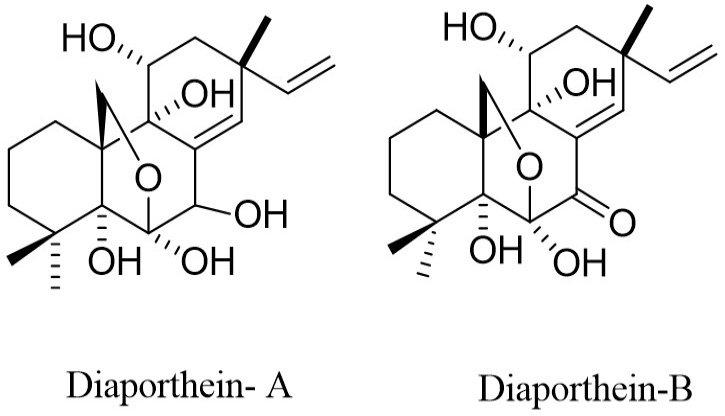
Pimarane diterpenes (Diaporthein A and B) used as NDM-1 inhibitors.
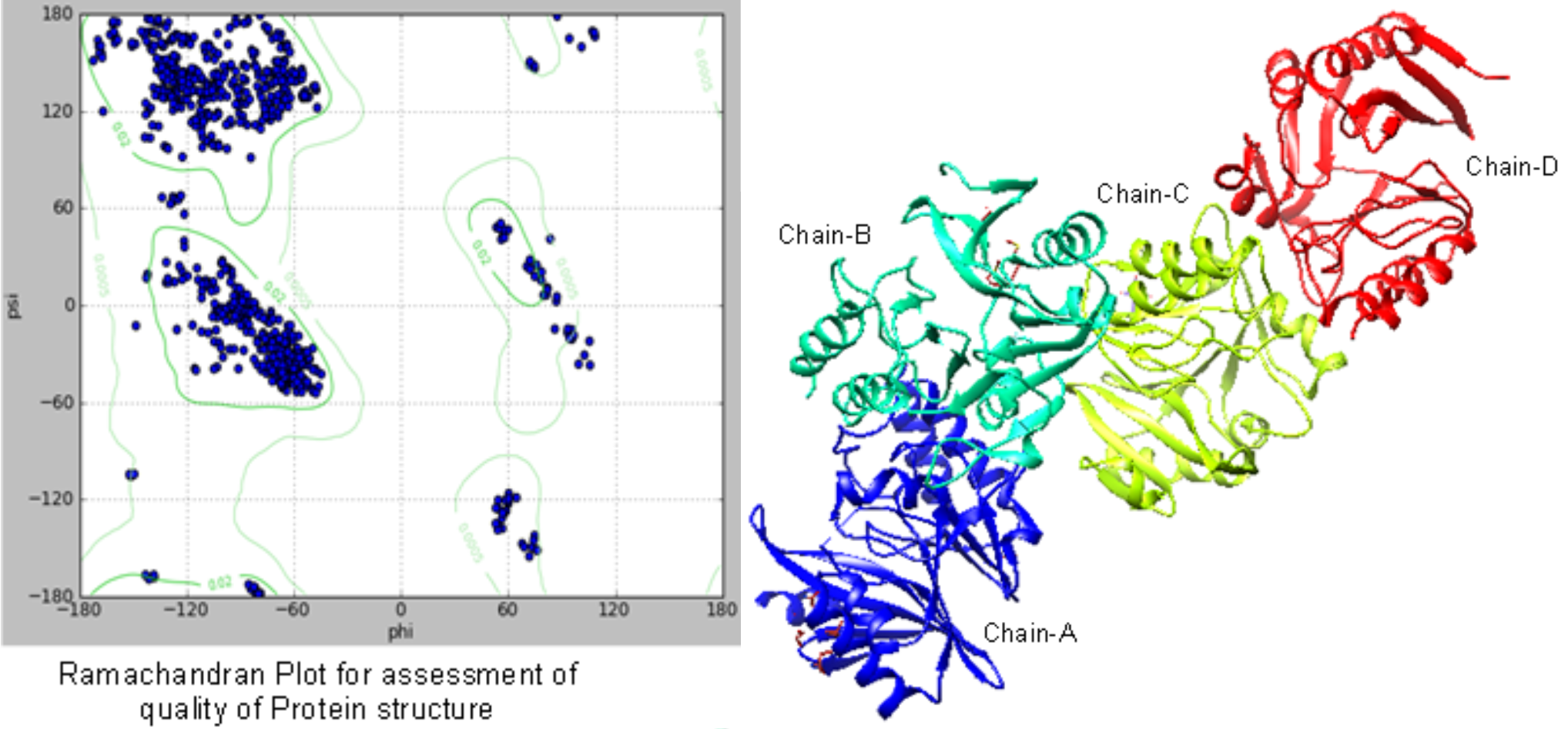
Crystallographic 3D structure of New Delhi-beta-lactamase, the quality of the protein model was estimated by Ramachandran plot (PDBID: 4GYQ).
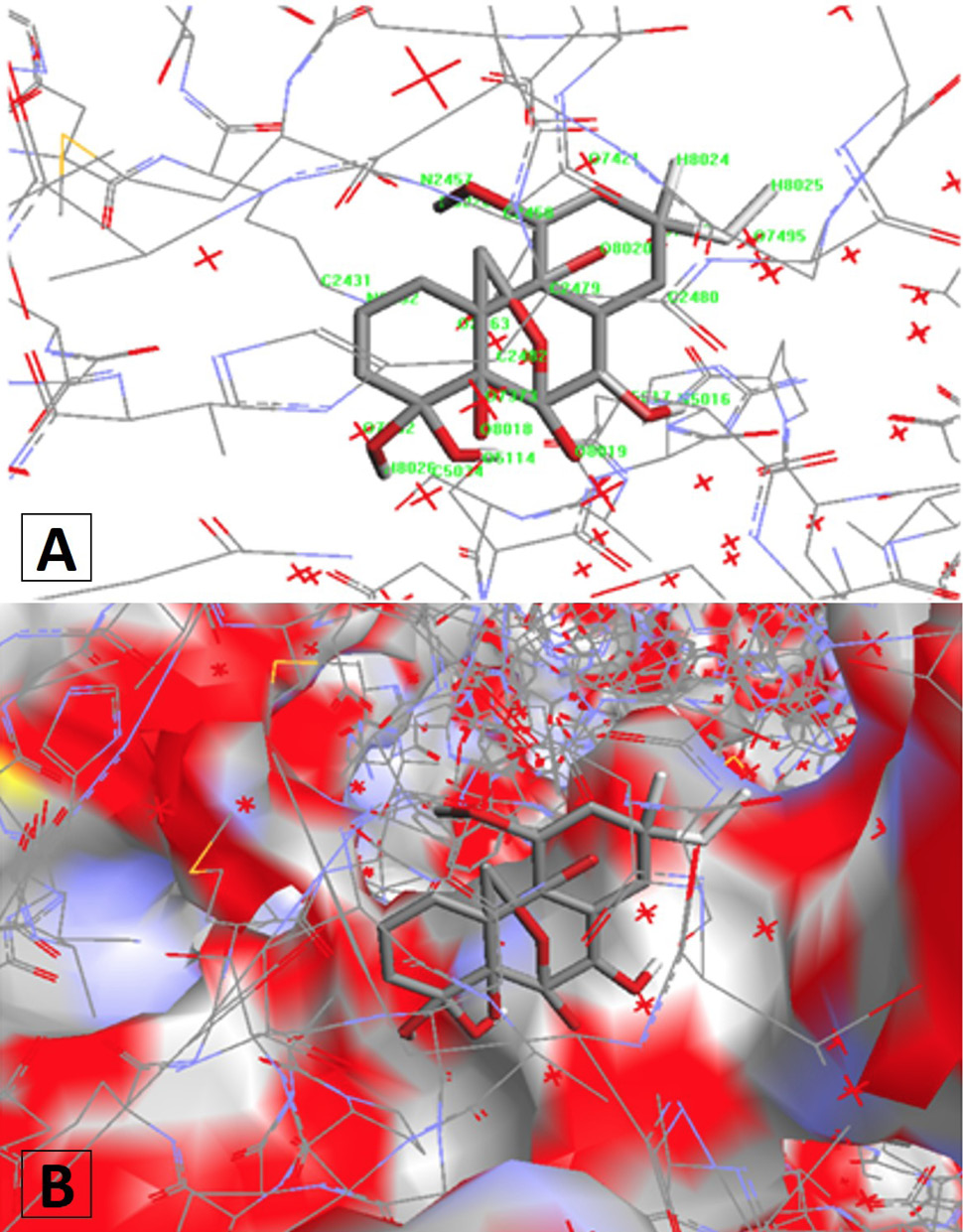
A, The binding region with related amino acids residues ALA, ASN, ASP, CYS, GLN, GLU, GLY, HIS, ILE, LEU, LYS, MET, PHE, PRO, SER, THR, TRP, TYR, and VAL; B, Visual of molecular docking shows the confirmation of Diaporthein-A to New Delhi-beta-lactamase with binding energy of -8.02 Kcal/mol.
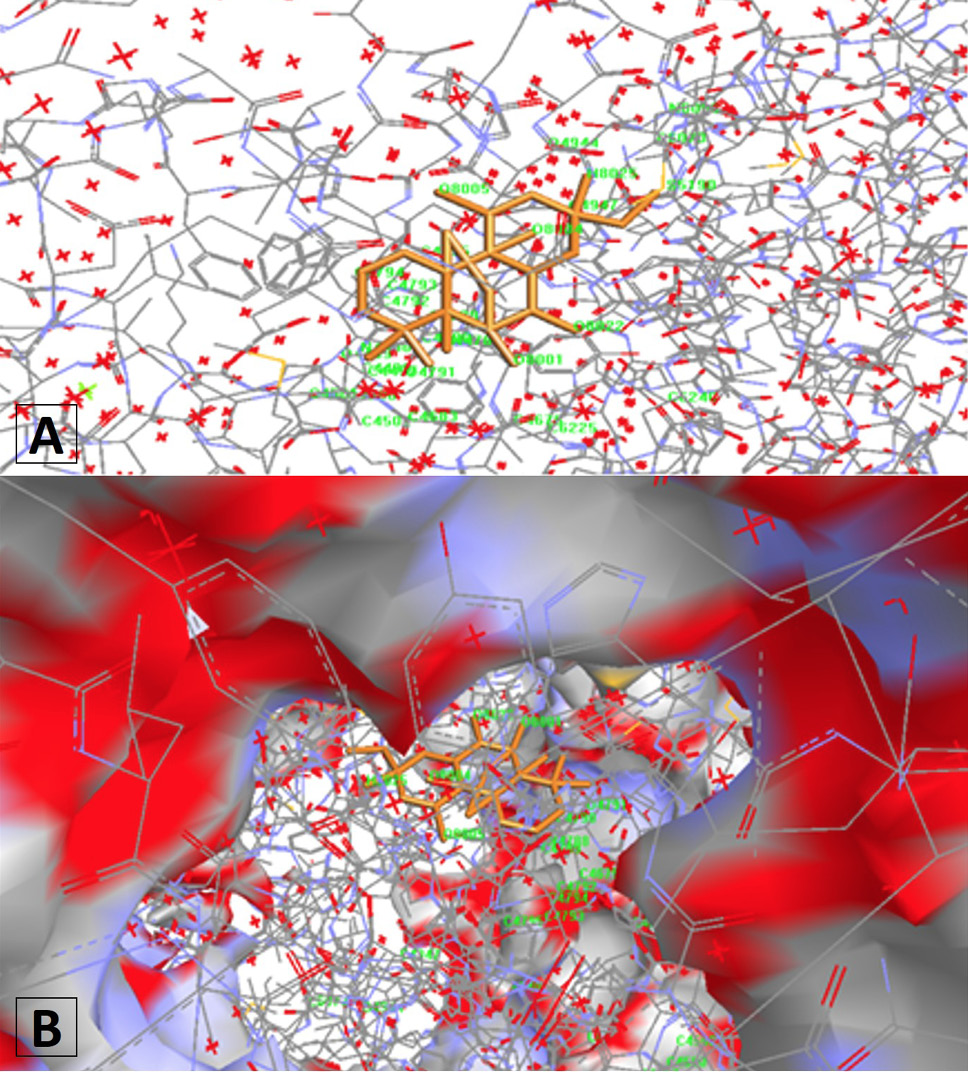
A, The binding region with related amino acids residues ALA, ARG, ASN, ASP, CYS, GLN, GLU, GLY, HIS, ILE, LEU, LYS, MET, PHE, PRO, SER, THR, TRP, TYR, and VAL; B, Visual of molecular docking shows the confirmation of Diaporthein-B to New Delhi-beta-lactamase with binding energy of -8.41 Kcal/mol.
References
- Benowitz, N.L., 1996. Cotinine as a biomarker of environmental tobacco smoke exposure. Epidemiol. Rev., 18: 188-204. https://doi.org/10.1093/oxfordjournals.epirev.a017925[CrossRef]
- Berman, H.M., Westbrook, J., Feng, Z., Gilliland, G., Bhat, T.N., Weissig, H., ShindyalovI, N. and Bourne, P.E., 2000. The protein data bank. Nucl. Acids Res., 28: 235-242. https://doi.org/10.1093/nar/28.1.235[CrossRef]
- Boucher, H.W., Talbot, G.H., Bradley, J.S., Edwards, J.E., Gilbert, D., Rice, L.B., Scheld, M., Spellberg, B. and Bartlett, J., 2009. Bad bugs, no drugs: No ESKAPE! An update from the Infectious Diseases Society of America. Clin. Infect. Dis., 48: 1-12. https://doi.org/10.1086/595011[CrossRef]
- Bush, K. and Jacoby, G.A., 2010. Updated functional classification of β-lactamases. Antimicrob. Agents Chemother., 54: 969-976. https://doi.org/10.1128/AAC.01009-09[CrossRef]
- Cardoza, R.E., Malmierca, M.G., Hermosa, M.R., Alexander, N.J., McCormick, S.P., Proctor, R.H., Tijerino, A.M., Rumbero, A., Monte, E. and Gutiérrez, S., 2011. Identification of loci and functional characterization of trichothecene biosynthetic genes in the filamentous fungus Trichoderma. Appl. Environ. Microbiol., 77: 4867-4877. https://doi.org/10.1128/AEM.00595-11[CrossRef]
- Dettrakul, S., Kittakoop, P., Isaka, M., Nopichai, S., Suyarnsestakorn, C., Tanticharoen, M. and Thebtaranonth, Y., 2003. Antimycobacterial pimarane diterpenes from the fungus Diaporthe sp. Bioorg. Med. Chem. Lett., 13: 1253-1255. https://doi.org/10.1016/S0960-894X(03)00111-2[CrossRef]
- Drawz, S.M., Papp-Wallace, M.K. and Bonomo, R.A., 2014. New β-lactamase inhibitors: A therapeutic renaissance in an MDR world. Antimicrob. Agents Chemother., 58: 1835-1846. https://doi.org/10.1128/AAC.00826-13[CrossRef]
- Ewing, T.J.A., Makino, S., Skillman, A.G. and Kuntz, I.D., 2001. DOCK 4.0: Search strategies for automated molecular docking of flexible molecule databases. J. Comput. Aided Mol. Des., 15: 411-428. https://doi.org/10.1023/A:1011115820450[CrossRef]
- Fabricant, D.S. and Farnsworth, N.R., 2001. The value of plants used in traditional medicine for drug discovery. Environ. Hlth. Perspect., 109: 69-75. https://doi.org/10.2307/3434847[CrossRef]
- Guo, Y., Wang, J., Niu, G., Shui, W., Sun, Y., Zhou, H., Zhang, Y., Yang, C., Lou, Z. and Rao, Z., 2011. A structural view of the antibiotic degradation enzyme NDM-1 from a superbug. Protein Cell, 2: 384-394. https://doi.org/10.1007/s13238-011-1055-9[CrossRef]
- Hassan, A., Rahman, S., Deeba, F. and Mahmud, S., 2009. Antimicrobial activity of some plant extracts having hepatoprotective effects. J. med. Pl., 3: 20-23.
- Kumarasamy, K.K., Toleman, M.A., Walsh, T.R., Bagaria, J., Butt, F., Balakrishnan, R., Chaudhary, U. and Doumith, M., 2010. Emergence of a new antibiotic resistance mechanism in India, Pakistan, and the UK: A molecular, biological, and epidemiological study. Lancet Infect. Dis., 10: 597-602. https://doi.org/10.1016/S1473-3099(10)70143-2[CrossRef]
- Liang, Z., Li, L., Wang, Y., Chen, L., Kong, X., Hong, Y., Lan, L., Zheng, M., Guang-Yang, C., Liu, H., Shen, X., Luo, C., Li, K.K., Chen, K. and Jiang, H., 2011. Molecular basis of NDM-1, a new antibiotic resistance determinant. PLoS One, 6: e23606. https://doi.org/10.1371/journal.pone.0023606[CrossRef]
- Muhammad, S.A., Ali, A., Ismail, T., Zafar, R., Ilyas, U. and Ahmad, J., 2014. Insilico study of anti-carcinogenic lysyl oxidase-like 2 inhibitors. Comput. Biol. Chem., 51: 71-82. https://doi.org/10.1016/j.compbiolchem.2014.03.002[CrossRef]
- Murugesan, S., Senthilkumar, N., Rajeshkannan, C. and Vijayalakshmi, K.B., 2013. Phytochemical characterization of Melia dubia for their biological properties. Der Chem. Sin., 4: 36-40.
- Nordmann, P., Naas, T. and Poirel, L., 2011. Global spread of carbapenemase producing Enterobacteriaceae. Emerg. Infect. Dis., 17: 1791-1798. https://doi.org/10.3201/eid1710.110655[CrossRef]
- Qamar, M.U., Saleem, S., Arshad, U., Rasheed, M.F., Ejaz, H., Shahzad, N. and Jahan, S., 2017. Antibacterial efficacy of Manuka honey against New Delhi metallo-β-lactamase producing gram negative bacteria isolated from blood cultures. Pakistan J. Zool., 49: 1997-2003.
- Porto, T.S., Rangel, R., Furtado, N.A.J.C., De Carvalho, T.C., Martins, C.H.G., Veneziani, R.C.S., Da Costa, F.B., Vinholis, A.H.C., Cunha, W.R., Heleno, V.C.G. and Ambrosio, S.R., 2009. Pimarane-type diterpenes: Antimicrobial activity against oral pathogens. Molecules, 14: 91-199. https://doi.org/10.3390/molecules14010191[CrossRef]
- Rice, L.B., Carias, L.L., Hutton, R.A., Rudin, S.D., Endimiani, A. and Bonomo, R.A., 2008. The KQ element, a complex genetic region conferring transferable resistance to carbapenems, aminoglycosides, and fluoroquinolones in Klebsiella pneumonia. Antimicrob. Agents Chemother., 52: 3427-3429. https://doi.org/10.1128/AAC.00493-08[CrossRef]
- Rolain, M.J., Panola, P. and Cornaglia, G., 2010. New Delhi metallo-beta-lactamase (NDM-1): towards a new pandemia? Clin. Microbiol. Infect., 16: 1699-1701. https://doi.org/10.1111/j.1469-0691.2010.03385.x[CrossRef]
- Rozales, F.P., Ribeiro, V.B., Magagnin, C.M., Pagano, M., Lutz, L., Falci, D.R., Machado, A., Barth, A.L. and Zavascki, A.P., 2014. Emergence of NDM-1-producing Enterobacteriaceae in Porto Alegre, Brazil. Int. J. Infect. Dis., 25: 79-81. https://doi.org/10.1016/j.ijid.2014.01.005[CrossRef]
- Saxena, M., Saxena, J., Nema, R., Singh, D. and Gupta, A., 2013. Phytochemistry of medicinal plants. J. Pharmacogn. Phytochem., 1: 168-182.
- Shakil, S., Azhar, E.I., Tabrez, S., Kamal, M.A., Jabir, N.R., Abuzenadah, A.M., Damanhouri, G.A. and Alam, Q., 2011. New Delhi metallo-b-lactamase (NDM-1): An update. J. Chemother., 23: 263-265. https://doi.org/10.1179/joc.2011.23.5.263[CrossRef]
- Volkamer, A., Kuhn, D., Grombacher, T., Rippmann, F. and Rarey, M., 2012. DoGSiteScorer: A web server for automatic binding site prediction, analysis and druggability assessment. Bioinformatics, 28: 2074-2075. https://doi.org/10.1093/bioinformatics/bts310[CrossRef]
- Yong, D., Toleman, M.A., Giske, C.G., Cho, H.S., Sundman, K., Lee, K. and Walsh, T.R., 2009. Characterization of a new metallo-beta-lactamase gene, bla (NDM-1), and a novel erythromycin esterase gene carried on a unique genetic structure in Klebsiella pneumoniae sequence type 14 from India. Antimicrob. Agents Chemother., 53: 5046-5054. https://doi.org/10.1128/AAC.00774-09[CrossRef]
Services
Article usage statistics
Loading…