
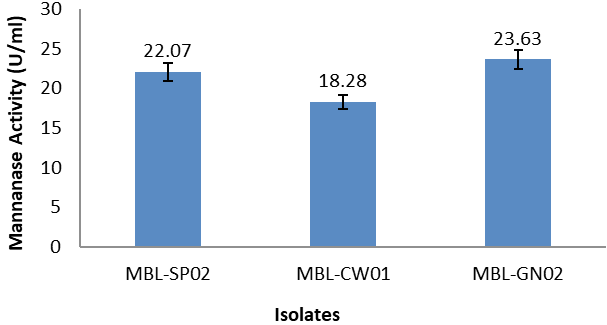
Mannanase belongs to hydrolytic family of enzymes which occupies a great commercial position because of their high stability under alkaline and acidic conditions. The current research was planned to isolate, screen and optimize mannanase production from Bacillus megaterium from decayed fruits. Microorganisms were isolated from fruits, soil and water samples obtained from different localities of Lahore city, Pakistan. Locally isolated microorganisms were screened for their mannanase producing characteristics on mineral salt agar medium pH 7. Six isolates were found to be mannanase producers by qualitative analysis. Three isolates (MBL-SP02, MBL-CW01 and MBL-GN02) produced maximum zone of hydrolysis with maximum activity ratio. These isolates (MBL-SP02, MBL-CW01 and MBL-GN02) produced maximum units of mannanase activity, i.e., 9.474, 7.364 and 3.568 U/ml in quantitative, respectively.These best producers were further selected for optimization of cultural conditions for mannanase production. They all produced maximum mannanase units in M1 medium after incubation of 48 hours. The MBL-CW01 was best mannanase producer at 35oC, pH 6.0 at 1% substrate concentration while MBL-GN02 produced maximum enzyme at 35oC, pH 4.0 with 0.5% substrate concentration. The MBL-SP02 produced maximum enzyme at 45oC, pH 7.0 with 2.0% substrate concentration. Among various carbon sources tested guar gum was the best producer of enzyme. Under these optimized conditions for each isolate, the best producers MBL-SP02, MBL-CW01 and MBL-GN02 produced maximum mannanase 22.07, 18.28 and 23.63 U/ml, respectively. MBL-GN02 showed maximum mannanase production and MBL-CW01 showed minimum mannanase production at optimized conditions of production.
Research Article · Volume 34, Issue 2, 14 December 2019 · Open Access
Screening and Optimization of Cultural Conditions for Production of Thermophilic Mannanase from Bacillus megaterium
· ·
Affiliations & Notes ⌄
- 1Department of Zoology, University of the Punjab (FRS, FSK) Lahore, Pakistan. , Corresponding author: Tanzeela Riaz, dr.tanzeela@ucp.edu.pk
Article Info ⌄
- Journal:
- Punjab University Journal of Zoology
- Published:
- 14 December 2019

From the article
- Iodine staining was performed on guar gum agar plates for qualitative estimation of mannanase producing poteinal of B. megaterium.
- Results of present study indicated that production of mannanase was dependent on bacterial cell growth.
- So, it gives maximum yiled of mannanase among all other carbon sources.
- Present results indicated that mannanase production ranges from acidic to neutral pH.
Selected from the article's own text.
Abstract
Introduction
Enzymes are biological catalytic agents in all living organism and are considered an important tool in biotechnological industry. They provide a huge supply of biomolecules for industry to perform various types of bio-catalytic conversions . Plants, animals and microorganisms are natural reservoirs of enzymes. But microbial enzymes are tremendously used in industrial application for their novel properties, easy and economical production. They possessed their catalytic activities over an array of pH and temperature . According to anestimation, about 20% of world’s enzyme sale is comprised of these industrial enzymes like cellulases, pectinases and hemicellulases .
Mannans are a group of mannose polymers and their complete hydrolysis is dependent on action of enzymes. Endo-β-1, 4-mannanase is an important enzyme which is responsible for cleavage of β-1, 4 linkages in the main chain of mannose .
Production of microbial β-mannanase is attracting attention due to increased production, low cost and culture controlled conditions. Their broad substrate specificities make them highly versatile in industrial applications. These enzymes are very important in various industrial phenomenon like vegetable oils extraction from leguminous plant seeds which also reduce the viscosity of plant extracts during production of instant chocolate, coffee and cacao liquor. Synergism between mannanase and xylanase is useful in Prebleaching of soft wood pulp . Majority of pulps are derived from soft wood which contains about 15–20% hemicelluloses like galactomannan. Mannanase and xylanase synergism may also be used in removal of lignin during pulp bleaching and produce comparable results to alkaline protease pretreatment . Mannanase are substrate specific and catalyse the cleavage of galactomannan and find it way as an excellent candidate for enzymatic bleaching of softwood pulps at high temperature and wide pH range ; ; . Moreover, they possessed their activity at high temperature and wide pH range. Microbial mannanase production is greatly influenced by incubation time, medium composition, temperature, dissolved oxygen concentration, agitation and inorganic salts . In Pakistan, there is no considerable production of mannanase for use in industries. Keeping in view, the current project was aimed to isolate and screen such mannanase from Bacillus megaterium and to optimize various conditions for high production of extracellular, thermostable and acidic mannanase in laboratory conditions that can be used in paper, pulp and textile industries.
Materials and Methods
Sample collection for isolation of bacteria
Water and soil samples from composts of peels of various fruits (apple, orange and banana) were collected in sterilized polyethene bags and were brought to laboratory for further studies. The samples were stored at 4oC and processed within 24 hours of collection. The locality, physical state, temperature and pH were presented in Table 1.
Screening and isolation of mannanase producing bacterial isolates
Two selective media for mannanase production were used for screening of isolates. The composition of medium “A” and “B” is presented in Table 2. The pH of the media was adjusted 7.0 followed by sterilization for 20 minutes at 121°C and 15 pounds pressure. Both media were poured in sterilized petri plates with respective labeling followed by incubation at 37°C for 24 hours to check the contamination. Serial dilutions of all three types of samples were prepared and 100µl of each serial dilution was poured and spread on respective selective medium plates. These petri plates were again incubated at 50oC for 48 hours. The bacterial growth was only observed on selective medium B so it was selected for further studies. Pure culture of these isolates were prepared and preserved in glycerol stock at 4 oC.
Qualitative screening
Qualitative screening for β-mannanase production was done on selective medium containing galactomannan as substrate followed by inoculation with isolated microorganisms and incubation for 24 hours at 37°C. The culture plates stained with iodine solution for 15 minutes and breakdown of galactomannan was observed by the appearance of clear zone of hydrolysis around the bacterial streak. The β-mannanase activity was calculated in terms of ratio of area of clear zone of hydrolysis around the streak to the area of streak.
Identification of microorganisms
Identification of β-mannanase producing microorganisms was done on the bases of different morphological and physiological characteristics like cell morphology, motility, colony morphology, gram staining, spore staining and capsule staininging. Various biochemical tests like oxidase, catalase, urease, starch hydrolysis, gelatine hydrolysis, huge-leifsion, sugar utilization, H2S production and nitrate reduction were performed and compared with standard description given in Burgey’s Manual of Determinative Bacteriology .
Optimization of temperatures and pH for bacterial growth
All the mannanase producing bacterial isolates were grown in LB broth containing tubes at different temperatures from 30-50°C to check their thermophillic or thermotolerence behavior. The light absorbance for each tube was measured at 600nm for 24hours and plotted in graph. Similarly, these bacterial isolates were further checked for their alkalophilic or acidophilic behavior by growing them at 4-9 pH ranges.
Quantitative estimation of β-mannanase production
Based on high activity ratio, MBL-SP02, MBL-GN02 and MBL-CW01 were selected for the quantitative analysis. Bacterial colony was inoculated for 24 hours in test tubes (10ml) containing sterilized fermentation medium (Table 2). From these tubes 1% of inoculums is tarnsfered to sterilized mannanase fermentation medium of above composition and incubated at 50oC in shaking water bath for 48hours at 120rpm.
Table 1: Characteristics of samples collected from various sources.
| Sr. No. | Sample name | Sample type | Source of collection | Temperature | pH |
| 1 | MBL-CW | Water | Main Fruit Market Lahore | 25oC | 6.8 |
| 2 | MBL-GN | Water | Main Fruit Market Lahore | 25oC | 6.8 |
| 3 | MBL-AA | Rotten Fruit Peels | Apple | 30oC | 6 |
| 4 | MBL-BB | Rotten Fruit Peels | Banana | 30oC | 7.5 |
| 5 | MBL-O | Rotten Fruit Peels | Orange | 30oC | 5 |
| 6 | MBL-DG | Soil | Main Fruit Market Lahore | 30oC | 6 |
| 7 | MBL-SP | Soil | Main Fruit Market Lahore | 30oC | 5.5 |
Table 2: Composition of various media.
| Selective medium A | Selective medium B | |||
| Ingredients | Concentration (%) | Ingredients | Concentration (%) | |
| 1 | Guar Gum | 0.5 | Guar Gum | 0.16 |
| 2 | (NH4)2SO4 | 0.5 | NH4NO3 | 0.03 |
| 3 | Na2HPO4 | 0.754 | MgSO4.7H2O | 0.02 |
| 4 | NaH2PO4 | 0.232 | FeSO4.7H2O | 0.001 |
| 5 | MgSO4.7H2O | 0.02 | CaCl2.2H2O | 0.005 |
| 6 | FeSO4.7H2O | 0.001 | K2HPO4 | 0.754 |
| 7 | CaCl2.2H2O | 0.005 | KH2PO4 | 0.232 |
| 8 | Agar | 2 | Agar | 1.5 |
| M1 medium for mannanase production | M2 medium for mannanase production | |||
| Guar gum | 1 | NaH2PO4 | 0.5 | |
| Peptone | 0.1 | MgSO4.7H20 | 0.06 | |
| Yeast Extract | 0.1 | Yeast Extract | 0.4 | |
| KH2PO4 | 1.4 | Beef Peptone | 0.8 | |
| MgSO4.7H2O | 0.06 | Guar Gum | 2.0 | |
| Inoculum | 1 | Inoculum | 1 | |
| Fermentation medium | ||||
| Ingredients | Concentration (%) | |||
| Guar gum | 2 | |||
| Peptone | 0.1 | |||
| Yeast extract | 0.1 | |||
| KH2PO4 | 1.4 | |||
| MgSO4.7H2O | 0.06 | |||
| Inoculum | 1 | |||
Enzyme assay and protein estimation
β-Mannanase activity was calculated by measuring the amount of mannose by DNS (di-nitrosalicylic acid) method . After 48 hours of incubation, 1ml of crude enzyme from fermentation medium was centrifuged at 10,000 rpm for 15 minutes at 4°C. The supernatants were used for estimation of mannanase activity. The substrate, guar gum (0.5%) was prepared in 50mM phosphate buffer (pH 7.0) and homogenized at 100°C followed by cooling and storage at 37°C overnight. It was stirred and sterilized at 121°C for 20 min followed by centrifugation at 4000rpm at 4°C for 30 minutes to remove insoluble guar gum.
Enzyme assay was performed in triplicates by adding 1.8ml of substrate guar gum and 0.2ml of the crude enzyme in reaction mixture. Distilled water (0.2ml) was used in control tube. All test tubes were incubated at 50oC for 5 minutes and then 1ml of DNS reagent was added and boiled in water bath at 100oC for 15 minutes. The light absorbance was measured at 575nm against blank. The reducing sugar i.e. D-mannose produced by enzyme action was calculated using standard curve of mannose. One unit of enzyme activity is the amount of enzyme which releases 1mg of mannose. Soluble protein contents in supernatants were determined by Lowery method (Lowery et al., 1951) and bovine serum albumin standard curve was used.
Optimization of mannanase production
Selected bacterial isolates with high β-mannanase producing ability were processed for the optimization of various factors like incubation time, temperature, pH, substrate concentration and carbon and nitrogen sources.
Optimum medium composition for mannanase production
Mannanase production by three selected bacterial strains was carried out in two media M1 at pH 6.8 and M2 (Table 2) at pH 7. These media were inoculated separately by 1% inoculums of each of three mannanase producing bacterial strains followed by incubation at 50°C for 24-48hours in shaking water bath at 120rpm.
Optimum incubation time for mannanase production
The optimum fermentation medium was inoculated with respective strains and incubated at 50°C for 24-120 hours (at 24 intervals) in shaking water bath at 120rpm. After each interval, the crude enzyme was used for estimation of enzyme activity.
Determination of optimum temperature for mannanase production
For the record of optimum temperature, the media inoculated with bacterial isolates were incubated at 35-65°C (at scale of 5°C) for 48 hours in shaking water bath at 120rpm followed by enzyme estimation for each temperature.
Determination of optimum pH for mannanase production
To determine the effect of pH, inoculated fermentation medium with pH range from 4-8.5 was incubated for 48 hours at 45°C followed by enzyme estimation at each pH range.
Determination of optimum carbon sources for mannanase production
Different carbon sources including wheat bran, potato peels, rice bran and orange peels and guar gum separately were used in medium 1. The different carbon sources containing media at respective pH for three isolates was incubated for 48 hours at 45°C followed by enzyme estimation for each carbon source.
Evaluation of optimum substrate concentration for mannanase production
Different concentration of carbon sources i.e., 0.5, 1, 1.5, 2, 2.5 and 3% guar gum were used in fermentation medium to check the optimum concentration of carbon sources for maximum enzyme production. Each inoculated fermentation medium with different carbon concentrations was incubated at 45°C for MBL-SP02 and 35°C for both MBL-GN02 and MBL-CW01 for 48 hours. Enzyme estimation was performed at each concentration.
Mannanase production was also carried out at each optimized condition of fermentation medium.
Results
Screening and purification of microorganisms
Total twelve bacterial isolates were purified from soil and water from composts of rotten fruits. From these isolates, only 6 isolates produced zones of hydrolysis on selective medium plates after 24 hours incubation. Activity ratio of mannanase producing bacteria was presented in the Table 3 and Figure 1.
Table 3: Mannanase producing isolates and their activity ratio.
| Sr. No. | Bacterial isolate | Area of colony (cm2) | Area of zone (cm2) | Mannanase activity | Activity ratio (24 h) |
| 1 | MBL-DG01 | 5.1 | 18.5 | +ve | 3.628 |
| 4 | MBL-SP02 | 0.75 | 14.62 | +ve | 19.5 |
| 5 | MBL-CW01 | 1.98 | 15.02 | +ve | 7.586 |
| 7 | MBL-GN02 | 1.65 | 15.95 | +ve | 9.67 |
| 10 | MBL-BN02 | 54.02 | 18.19 | +ve | 0.336 |
| 12 | MBL-AA01 | 40.87 | 28.79 | +ve | 0.70 |
Table 4: Morphological and biochemical identification of bacterial isolates.
| Morphologial & Biochemical Tests | MBL-SP02 | MBL-GN02 | MBL-CW01 |
| Cell morphology | Rod | Rod | Rod |
| Motility | Motile | Motile | Motile |
| Colony morphology | White, circular and opaque | White, circular and opaque | White, circular and opaque |
| Gram staining | Positive | Positive | Positive |
| Spore staining | Positive | Positive | Positive |
| Capsule staining | Positive | Positive | Positive |
| Oxidase test | Negative | Negative | Negative |
| Catalase test | Positive | Positive | Positive |
| Starch hydrolysis | Positive | Positive | Positive |
| Urease test | Negative | Negative | Negative |
| H2S production | Negative | Negative | Negative |
| Nitrate reduction | Positive | Positive | Positive |
| Sugar utilization | Positive | Positive | Positive |
| Indole | Negative | Negative | Negative |
Optimum temperature for growth of microorganism
All the three mannanase producing isolates were thermo-tolerant. They showed maximum growth at 50°C, moderate growth was also observed at 45 and 55°C but growth was reduced at 30, 35, 40, 60°C while no growth was observed at 65°-70°C (Figure 2).
Optimum pH for bacterial growth
They showed maximum growth at pH 6, moderate growth at pH 7 and reduced growth at pH 5. No growth was observed after pH 8 except MBL-SP02. All mannanase producing bacterial isolates were acidophilic but can also work in alkalophilic environment too (Figure 3).
Identification of microorganisms
Based on morphological and biochemical characterization (Table 4) all the three isolates were identified as Bacillus megaterium.
Quantitative analysis of mannanase production
Mannanase activity (U/ml) and total protein contents of three isolates MBL-CW01, MBL-GN02 and MBL-SP02 was shown in the Table 5.
Table 5: Activity ratio, mannanase activity and protein estimation of bacterial isolates.
| Bacterial isolates | Activity ratio | Mannanase activity (U/ml) | Protein estimation (mg/ml) |
| MBL-CW01 | 7.586 | 7.364 | 0.3611 |
| MBL-GN02 | 9.67 | 3.568 | 0.384 |
| MBL-SP02 | 19.5 | 9.474 | 0.503 |
Optimization of cultural conditions for mannanase production
Effect of medium composition on mannanase production
Mannanase production by MBL-SP02, MBL-CW01 and MBL-GN02 in two fermentation media M1 and M2 after 24, 48, 72, 96 and 120 hours of incubation was shown in (Figures 4, 5, 6, 7 and 8). From all figures it was evident that maximum enzyme production was occurred in fermentation medium 1 after all incubation periods.
Effect of incubation time on mannanase production
Mannanase production at different incubation periods 24-120 in M1 was shown in Figure 10. All isolates exhibited maximum production at 48 hours of incubation; however, enzyme production was decreased after 48 hours.
Optimum temperature for mannanase production
Mannanase production in M1 medium at 6.8 pH after 48 hours of incubation at different temperatures 30, 35, 40, 45, 50, 60, 65°C was shown in Figure 9. MBL-SP02 showed maximum activity (10.31U/ml) at 45°C while MBL-CW01 and MBL-GN02 showed maximum production at 35°C. All the three isolates showed minimum production at 65°C.
Optimum pH for mannanase production
Mannanase production at different pH ranging from 4-8.5 after 48 hours of incubation in M1 was shown in Figure 11. MBL-SP02 produced maximum mannanase (13.08U/ml) at pH 7 while MBL-GN02 produced maximum mannanase (10.70U/ml) at pH 4.0 while MBL-CW01 produced maximum enzyme (11.07U/ml) at pH 6.0.
Determination of optimum carbon sources for mannanase production
Among all the tested carbon sources the orange peels were considered best carbon source for maximum production of mannanase (15.03 U/ml). But guar gum produced significantly higher mannanase (22.00U/ml) as compared to other carbon sources (Figure 12).
Effect of substrate concentration on mannanase production
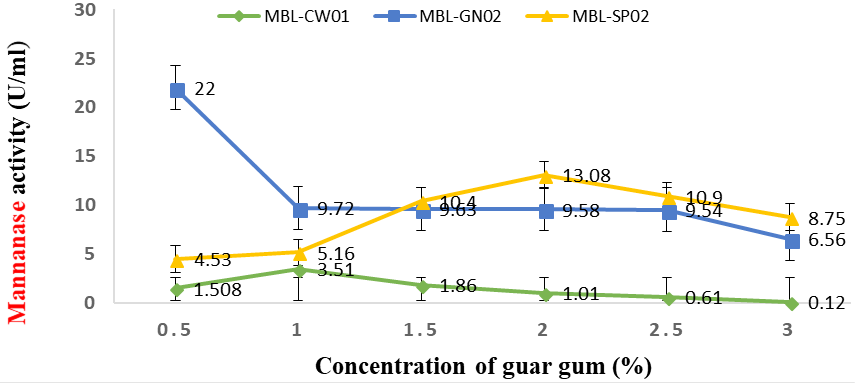
Mannanase production by MBL-SP02, MBL-GN02 and MBL-CW01 at pH 7, 4 and 6, respectively at 45°C after 48 hours at various guar gum concentration ranging from 0.5-3.0% was shown in Figure 13. The MBL-SP02 showed maximum mannanase production (13.08 U/ml) at 2% concentration while MBL-GN02 and MBL-CW01 produced maximum enzyme (22 and 3.51 U/ml) at 0.5% and 1% concentration of guar gum, respectively.
Production of mannanase at optimized conditions
The enzyme production at optimized pH, temperature, incubation time, substrate concentration and media was shown in Figure 14. Maximum amount of enzyme was produced by MBL-GN02 was at optimized temperature 35oC, pH 4.0 with 0.5% substrate concentration after 48 hours of incubation time in M1.
Discussion
Enzymes are important biological catalysts which play an important role in biological systems by increasing the rate of chemical reactions occurring in living organisms . Stahl and Olsson (1977) stated that bacteria possessed wide range of temperature range from minimum to maximum temperature for their growth but highest growth is achieved at optimum temperature. In current study, β-mannanase producing bacterial strains was isolated from composts formed by decayed fruits and these isolates possessed a wide range of temperature from 30-60°C for their growth and optimum temperature is 50°C. According to Gibson and Gordon (1974) the 40-45°C is the temperature for maximum growth of Bacillus megaterium so, it is characterized as mesophilic organism. Lindsay and Creaser (1975) proposed “thermal adaptor genes” that may be present on plasmids and these gene works by specifying amino acid substitution into proteins which ultimately results into more thermo stable components. Panda et al. (2019) also reported isolation of bacteria from composts which may stay stable at wide temperature range.
β-mannanase activity ratio of three bacterial isolates MBL-SP02, MBL-GN02 and MBL-CW01 belonging to Bacillus megaterium was 19.5, 9.67 and 7.59, respectively. Olaniyi et al. (2013) reported highest mannanase activity ratio 9 in klebsiella edwardsii that is in accordance with present results. Iodine staining was performed on guar gum agar plates for qualitative estimation of mannanase producing poteinal of B. megaterium. However, Congo red can alternatively be used but Iodine staining is preferably better option because it produces clear zone of hydrolysis. Moreover, it contains less toxic chemicals .
Maximum production of mannanase enzymes was observed in medium 1 utilising KH2PO4 salt and the results of Zakaria et al. (1998) also predicted that medium containig KH2PO4 salt enhance the enzyme production. Olaniyi et al. (2013) also found maximum mannanase production in KH2PO4 salt containing medium in favor of current results. Optimum incubation time for enzyme production was 48 hours which was in correlation with the data recorded by Marga et al. (1996). Results of present study indicated that production of mannanase was dependent on bacterial cell growth. The B. megaterium colonies started multiplication earlier and reached to maximum growth in 48 hours.
Ray et al. (2007) suggested that the selection of carbon sources for maximum production of enzymes is dependent on cost of substrate, its availability and also utilization of agricultural wastes. In current study the orange peel was a good carbon source other than guar gum. The nature of hemicelluloses or cellulose and other activator or inhibitor components are also involved in substrate accessibility. Orange peels are rich source of various minerals, carbohydrates including fiber and various amino acids. So, it gives maximum yiled of mannanase among all other carbon sources.
Present results indicated that mannanase production ranges from acidic to neutral pH. Bacterial mannanase has pH optimal range 5.0-7.0 investigated by Harnentis et al. (2013). Kote et al. (2009) found maximum production of mannanase from Aspergillus flavus grown in a fermentation medium at pH 5.0. Harnentis et al. (2013) also found that mannanase of Bacillus sp. reached the highest point of production at pH 7.0 for 48.
Jiang et al. (2006) first time reported high level of β-mannanase production from B. subtilis at 50°C are in accordance to MBL-SP02 who produced maximum enzyme at 45°C in current research experiments but MBL-GN02 and MBL-CW01 both produced maximum mannanase at 35°C. Feng et al. (2002) recorded 30°C is appropriate for β-mannanase B. licheniformis NK-27. Substrate is also very essential element for enzyme production. Chantorn et al. (2012) reported guar gum was the best producer of mannanase (14U/mg protein) by P. oxalicum KUB-SN2-1. Similarly, Bhoria et al. (2009) recorded increased production of enzyme with an increase in concentration of guar gum upto 0.5% by Streptomyces sp. In current study MBL-SP02, MBL-CW01 and MBL-GN02 produced maximum mannanase at 2, 1 and 0.5% of guar gum, respectively.
Figures
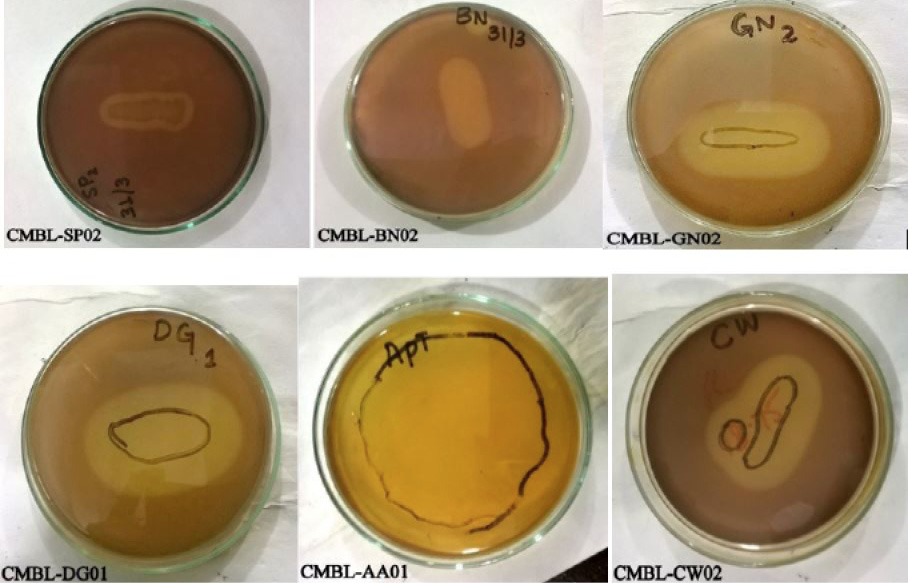
Zone of Hydrolysis of mannanase activity of bacterial isolates.
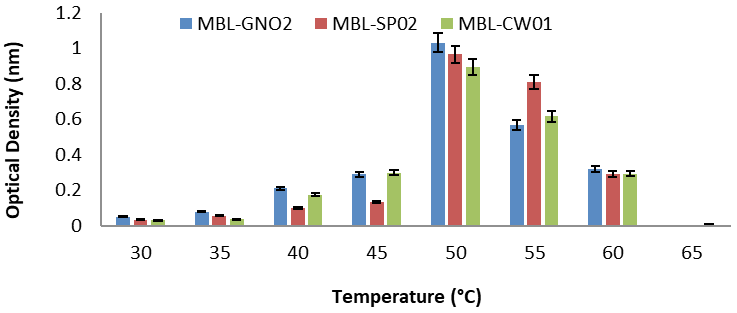
Growth of microorganism over different temperature.
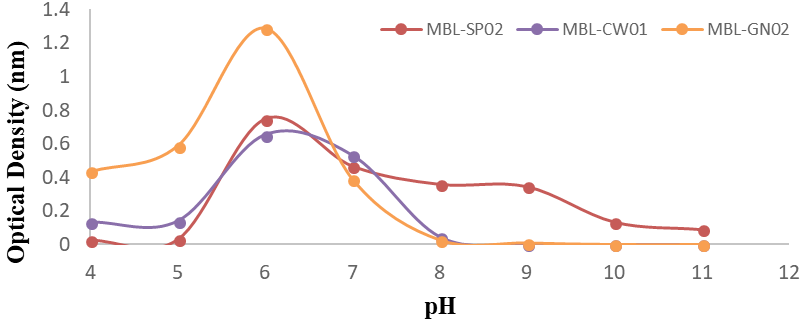
Growth of microorganism on different pH.
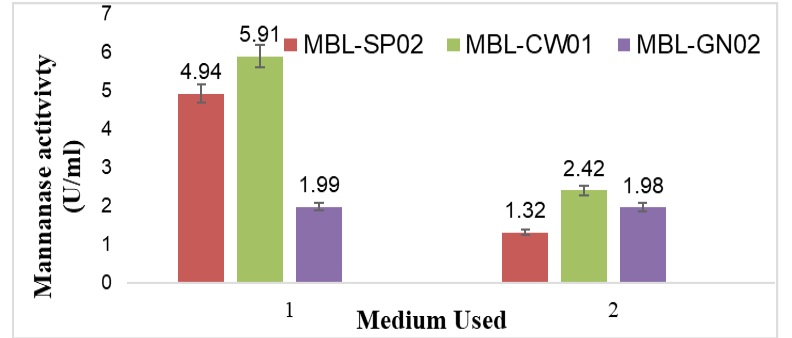
Effect of medium composition on mannanase production at 24 hrs incubation.
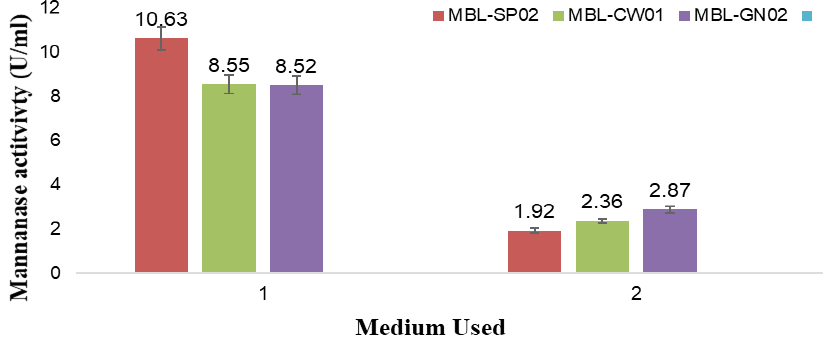
Effect of medium composition on mannanase production at 48 hrs incubation.
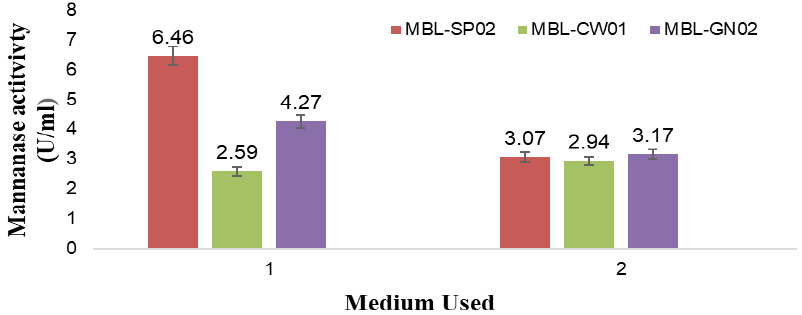
Effect of medium composition on mannanase production at 72 hrs incubation.
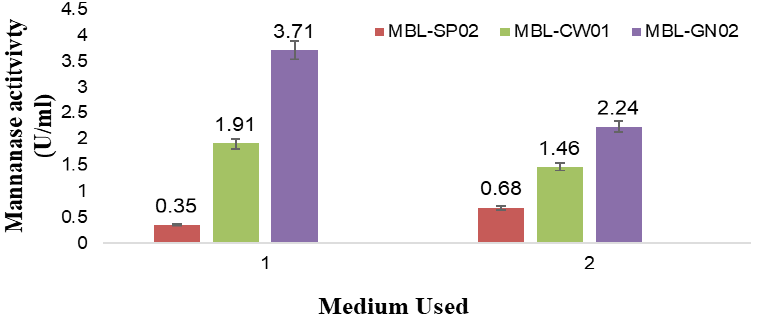
Effect of medium composition on mannanase production at 96 hrs incubation.
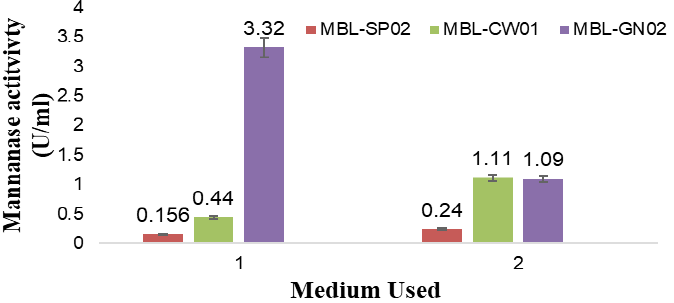
Effect of medium composition on mannanase production at 120 hrs incubation.
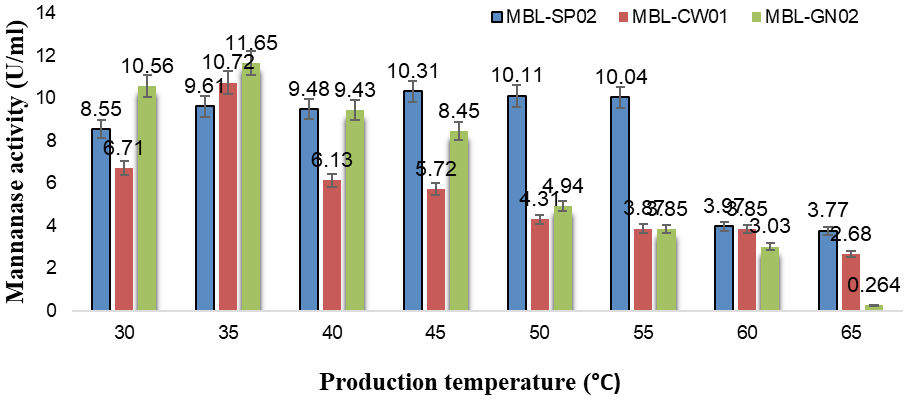
Effect of temperature on mannanase production.
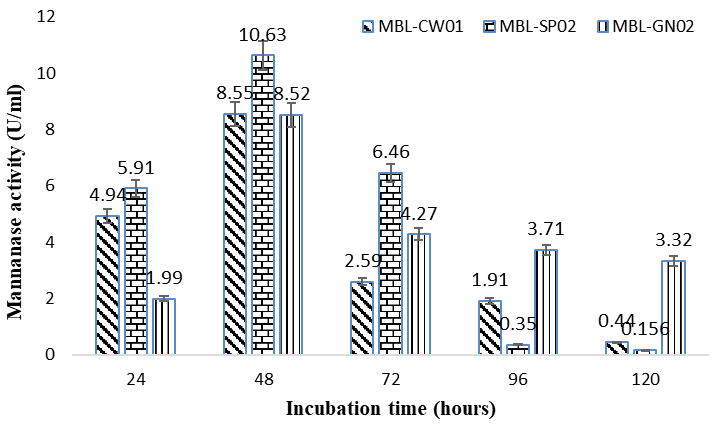
Effect of incubation time on mannanase production.
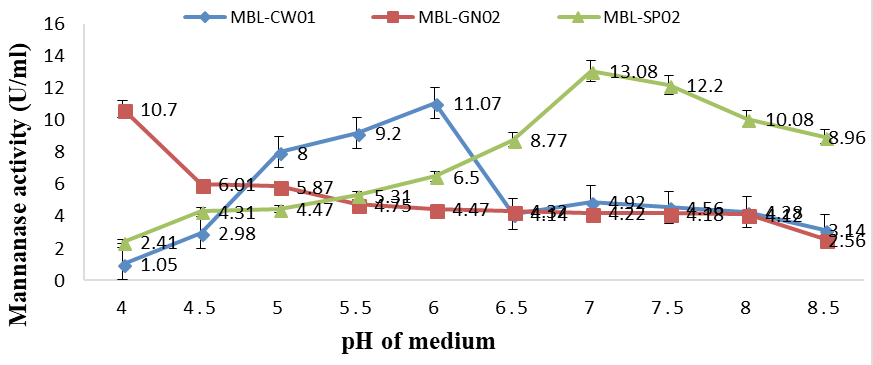
Effect of pH on mannanase production.
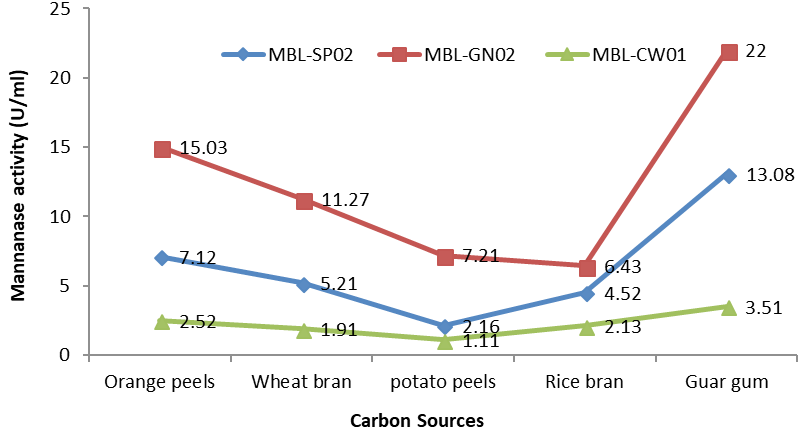
Effect of carbon sources on mannanase production.
Effect of substrate concentration on mannanase production.
Production of mannanase at optimized conditions.
References
- Aziz, S.A., Ong, L.G.A., Hassan, M.A. and Karim, M.I.A., 2008. Production parameters optimization of mannanse production from Aspergillus niger FTCC 5003 using palm kernel cake as carbon source. Asi. J. Biochem., 3: 297–307. https://doi.org/10.3923/ajb.2008.297.307[CrossRef]
- Antunes, L.P., Martins, L.F., Pereira, R.V., Thomas, A.M., Barbosa, D. and Lemos, L.N., 2016. Microbial community structure and dynamics in thermophilic composting viewed through metagenomics and metatranscriptomics. Sci. Rep., 6: 38915. https://doi.org/10.1038/srep38915[CrossRef]
- Benech, R., Li, X., Patton, D., Powlowski, J., Storms, R., Bourbonnais, R., Paice, M. and Tsang, A., 2007. Recombinant expression, characterization,and pulp prebleaching property of a Phanerochaetechrysosporium endo-β-1,4-mannanase. Enzyme Microb. Technol., 41: 740–747. https://doi.org/10.1016/j.enzmictec.2007.06.012[CrossRef]
- Bernfeld, P. and Colowick, S.P., 1955. Methods in enzymology by SP Colowick and No Kaplan, Acad. Press Inc., New York, 149.
- Bhat, M.K., 2000. Cellulases and related enzymes in biotechnology. Biotechnol. Adv. 18: 355-383. https://doi.org/10.1016/S0734-9750(00)00041-0[CrossRef]
- Bhoria, P., Singh, G. and Hoondal, G.S., 2009. Optimization of mannanase production from Streptomyces sp. PG-08-03 in submerged fermentation. Bioresources, 4: 1130–1138.
- Buckeridge, M.S. and Dietrich, S.M.C., 1990. Galactomannan from Brasilian legume seeds. Rev. Bras. Bot., 13: 109-112.
- Chantorn, S.T., Buengsrisawat, K., Pokaseam, A., Sombat, K., Dangpram, P., Jantawon, K. and Nitisinprasert, K., 2012. Optimization of extracellular mannanase production from Penicillium oxalicum KUB-SN2-1 and application for hydrolysis property. Songklanakarin J. Sci. Technol., 35: 17-22.
- Dhawan, S. and Kaur, J., 2007. Microbial mannanases: an overview of production and applications. Crit. Rev. Biotechnol., 27: 197–216. https://doi.org/10.1080/07388550701775919[CrossRef]
- Dye, D.W., Lelliott, R.A., Buchanan, R. and Gibbons, N., 1974. Genus II. Xanthomonas Dowson 1939, 187. Bergey’s Manual Determinative Bacteriol., 89: 243-249.
- Feng, Y., He, Z., Leong, Ong, S., Hu, J., Zhang, Z. and Jern N.G.W., 2002. Optimization of agitation, aeration and temperature conditions for maximum β-mannanase production. Enzyme Microbial. Technol., 32: 282-289. https://doi.org/10.1016/S0141-0229(02)00287-9[CrossRef]
- Gibson, T. and Gordon, R. E., 1974. Endospore-forming rods and cocci. Bergey’s Manual of Determinative Bacteriology. pp. 5-29.
- Godfrey, T. and West, S., 1996. Industrial Enzymology. London: Macmillan Press Ltd.
- Harnentis, Y.M.Y. and Maria, E.M., 2013. Isolation, characterization and production of mannanase from thermophilic bacteria to increase the feed quality. Pak. J. Nut., 12: 360-364. https://doi.org/10.3923/pjn.2013.360.364[CrossRef]
- He, X., Liu, N., Zhang, Z., Zhang, B. and Ma, Y., 2008. Inducible and constitutive expression of a novel thermostable alkaline β-mannanase from alkalophilic Bacillus sp. N16-5 in Pichiapastoris and characterization of the recombinant enzyme. Enzyme. Microb. Technol., 43: 13–18. https://doi.org/10.1016/j.enzmictec.2008.03.011[CrossRef]
- Jiang, Z., Wei, Y., Li, D., Li, L., Chai, P. and Kusakabe, I., 2006. High-level production, purification and characterization of a thermostable β-mannanase from the newly isolated Bacillus subtilis Wy34. Carbohydrate Polymers, 66: 88-96. https://doi.org/10.1016/j.carbpol.2006.02.030[CrossRef]
- Kanasa, R.C., Salwan, R., Dhar, H., Dutt, S. and Gulati, A., 2008. A rapid and easy method for the detection of microbial cellulse on agar plates using Gram’s Iodine. Curr. Microbiol., 57: 503-507. https://doi.org/10.1007/s00284-008-9276-8[CrossRef]
- Kote, N.V., Patil, A.G.G. and Mulimani, V.H., 2009. Optimization of the production of thermostable endo-β-1,4 mannanase from a newly isolated Aspergillus niger and Aspergillus flavus. Appl. Biochem. Biotechnol., 152: 213-223. https://doi.org/10.1007/s12010-008-8250-z[CrossRef]
- Lindsay, J.A. and Creaser, E.H., 1975. Enzyme thermostability is a transformable property between Bacillus spp. Nature, (Lond.). 255: 650- 652. https://doi.org/10.1038/255650a0[CrossRef]
- Lowry, O.H., Rosebrough, N.J., Farr, A.L. and Randall, R.J., 1951. Protein measurement with Folin phenol reagent. J. Biol. Chem., 193: 265-275.
- Marga, F., Ghakis, C., Dupont C., Morosoli, R. and Kluepfel, D., 1996. Improved production of mannanase by Streptomyces lividans. Appl. Environ. Microbiol., 62: 4656–4658.
- Moreira, L.R.S. and Filho, E.X.F., 2008. An overview of mannan structure and mannan degrading enzyme systems. Appl. Microbiol. Biotechnol., 79: 165–178. https://doi.org/10.1007/s00253-008-1423-4[CrossRef]
- Olaniyi, O.O. and Arotupin, D.J., 2013. Isolation and screening of mannanase producing bacteria from agricultural wastes. Br. Microbiol. Res. J., 3: 654-663. https://doi.org/10.9734/BMRJ/2013/4221[CrossRef]
- Pan, X., Zhou, J., Tian, A., Le, K., Yuan, H., Xue, Y., Ma, Y. and Lu, H., 2011. High level expression of a truncated β-mannanase from alkalophilic Bacillus sp. N16-5 in Kluyveromyces cicerisporus. Biotechnol. Lett., 33: 565–570. https://doi.org/10.1007/s10529-010-0457-8[CrossRef]
- Panda, A.K., Bisht, S.S., De Mandal, S. and Kumar, N.S., 2019. Microbial Diversity of Thermophiles Through the Lens of Next Generation Sequencing. Microbial. Diversity Genomic Era. Acad. Press. pp. 217-226. https://doi.org/10.1016/B978-0-12-814849-5.00013-7[CrossRef]
- Polizeli, M.L.T.M., Rizzatti, A.C.S., Monti, R., Terenzi, H.F., Jorge, J.A., and Amorim, D.S., 2005. Xylanase from fungi: properties and industrial applications. Appl. Microbiol. Biotechnol., 67: 577–591. https://doi.org/10.1007/s00253-005-1904-7[CrossRef]
- Rattanasuk, S. and Ketudat-Cairns, M., 2009. Cryseobacteriumindologenes novel mannanase-producing bacteria. Songklanakarin J. Sci. Technol., 31: 395-399.
- Ray, A.K., Bairagi, A., Ghosh, K.S. and Sen, S.K., 2007. Optimization of fermentation conditions for cellulase production by Bacillus subtilis CY5 and Bacillus circulans TP3 isolated from fish gut. Acta Ichthyologica Et. Piscatoria., 37: 47-53. https://doi.org/10.3750/AIP2007.37.1.07[CrossRef]
- Soetan, K., Aiyelaagbe, O. and Olaiya, C.O., 2010. A review of the bichemical, biotechnological and other applications of enzymes. Afr. J. Biotechnol., 9: 382-393.
- Stahl, S. and Olsson, O., 1977. Temperature range variants of Bacillus megaterium. Arch. Microbiol., 113: 221-229. https://doi.org/10.1007/BF00492029[CrossRef]
- Vries, R.P. and Visser, J., 2001. Aspergillus enzymes involved in degradation of plant cell wall polysaccharides. Microbiol. Mol. Biol. Rev., 65: 497-522. https://doi.org/10.1128/MMBR.65.4.497-522.2001[CrossRef]
- Verma, D., Kawarabayasi, Y., Miyazaki, K. and Satyanarayana, T., 2013. Cloning, expression and characteristics of a novel alkalistable and thermostable xylanase encoding gene (Mxyl) retrieved from compost-soil metagenome. PLoS One, 8: e52459. https://doi.org/10.1371/journal.pone.0052459[CrossRef]
- Zakaria, M.M., Yamamoto, S. and Yagi, T., 1998. Purification and characterization of an endo-1,4-β-mannanase from Bacillus subtilis KU-1. FEMS Microbiol. Lett., 158: 25-31. https://doi.org/10.1016/S0378-1097(97)00494-1[CrossRef]
Services
Article usage statistics
Loading…