
The present study was aimed at examining the role of hypothalamic neuropeptides genes expressions on body mass regulation under different photoperiods in Eothenomys miletus, body mass, food intake, serum leptin levels and hypothalamic neuropeptide neuropeptide Y (NPY), Agouti related peptide (AgRP), pro-opiomelanocortin (POMC), cocaine and amphetamine regulated transcript (CART) expressions were measured. The results showed that short photoperiod reduced body mass and body fat mass, and increased food intake. But serum leptin levels showed no significant differences between short photoperiod group and long photoperiod group, and serum leptin levels showed a positive correlation with body fat mass. Hypothalamic neuropeptide NPY, AgRP, POMC and CART expressions had no significant differences between two groups. Leptin was negatively correlated with NPY expression, but not correlated with CART, POMC and AgRP expressions. All of the results suggested that short photoperiod can reduce body mass, body fat mass, increased food intake. Leptin may play a regulation on body mass and energy metabolism by acting on hypothalamic neuropeptide of NPY expression under different photoperiods in E. miletus.
Research Article · Volume 49, Issue 2, 1 April 2017 · Open Access
Role of Hypothalamic Neuropeptides Genes Expression on Body Mass Regulation under Different Photoperiods in Yunnan Red-Backed Vole, Eothenomys miletus
·
Affiliations & Notes ⌄
- 1Key Laboratory of Ecological Adaptive Evolution and Conservation on Animals-Plants in Southwest Mountain Ecosystem of Yunnan Province, Higher Institutes College, School of Life Science of Yunnan Normal University, 1st Yuhua District, Chenggong County, Kunming City, Yunnan Province 650500, People’s Republic of China 2College of Life Sciences, Nanjing Normal University, Nanjing 210023, China
Article Info ⌄
- Journal:
- Pakistan Journal of Zoology
- Published:
- 1 April 2017

From the article
- Body fat mass was lower significantly in short photoperiod, which also may be related with the increasing of thermogenesis, E. miletus needed to mobilize fat content to maintain body mass homeostasis.
- In conclusion, short photoperiod reduced body mass, body fat mass and serum leptin levels, and increased food intake.
- Leptin may regulate on body mass and energy metabolism by acting on hypothalamic neuropeptide of NPY expression in E. miletus under different photoperiods.
Selected from the article's own text.
Abstract
INTRODUCTION
Photoperiod, as a kind of environmental and ecological factors, plays an important role in seasonal changes of energy metabolism in small mammals , especially for energy balance and thermogenesis in rodents ; . At present there had many researches, such as short photoperiod had no effect on thermogenesis in Clethrionomys glareolus and Clethrionomys rutilu ; , but affected the thermogenesis in Microtus ochrogaster , Dipodomys ordii , Phodpus sungorus , Acomys cahirinus , Meriones unguiculatus , Microtus agrestis and Apodemus mystacinus . Effect of photoperiod on body mass changing in mammals were not similar, for example, short photoperiod decreased body mass in Sekeetamys calurus and Lasiopodomys brandtii , but had no effect in Meriones unguiculatus , Apodemus sylvaticus and Acomys cahirinus .
Leptin can regulate food intake and body mass in small mammals . Leptin plays a pivotal role in the regulation of energy intake and energy expenditure in animals , which plays an important role in the regualtion of body mass . It showed that lower leptin levels can increase food intake in rats , but for Lasiopodomys brandtii and Phodopus sungorus in winter, lower concentrations of leptin decreased food intake. In addition, it confirmed that there was a positive correlation between leptin and body fat mass in many mammals, such as Meriones unguiculatus , Phodopus sungorus and Dicrostonyx hudsonius . The hypothalamic arcuate nucleus (ARC) can regulate food intake under environmental changing . Within the ARC, there are two types of neuropeptides: orexigenic neuropeptides: neuropeptide Y (NPY) and agouti-related protein (AgRP); and anorectic neuropeptides: pro-opiomelanocortin (POMC) and cocaine- and amphetamine-regulated tran-script (CART); the balance between NPY/AgRP and POMC/CART expressions can inhibit food intake and stimulate energy expenditure . Leptin is mediated by a hierarchy of both anorectic and orexigenic neuropeptidergic neurons in specific sites in the hypothalamus . Hypothalamic neuropeptide genes expressions affected body mass and energy balance under different photoperiods, such as injection of NPY increased food intake significantly under the different photoperiods in Phodopus sungorus ; injection of NPY can affect body mass and activity significantly in mice under different photoperiods . Short photoperiod increased the AgRP expression significantly in Phodopus sungorus, leading to the increase of food intake . It showed that POMC expression appeared rhythm changes in rat . And short photoperiod reduced CART expression significantly in rats .
Eothenomys miletus is an inherent species in Hengduan mountain region . Previous studies showed that E. miletus in short photoperiod reduced body mass, body fat mass, increased the thermogenesis and uncoupling protein 1 content . The aims of this study were to evaluate the role of hypothalamic neuropeptides genes expressions on body mass regulation under different photoperiods in E. miletus. We hypothesized that E. miletus would respond to short photoperiod by reducing body mass, body fat mass, and serum leptin levels, increasing food intake and adjusting the hypothalamic neuropeptides genes expressions. We predicted that E. miletus may change the hypothalamic neuropeptides genes expressions to regulate body mass, and leptin may involve in the regulation of hypothalamic neuropeptide genes expressions in E. miletus under different photoperiods.
MATERIALS AND METHODS
Samples
E. miletus were obtained from a laboratory colony, which were captured in farmland (26°15´~26°45´N; 99°40´~99°55´E; altitude 2,590m) in Jianchuan County, Yunnan province, 2010. E. miletus were maintained at a room temperature of 25±1°C, under a photoperiod of 12L:12D (with lights on at 08:00), food (standard mice chow pellets; produced by Kunming Medical University, Kunming) and water were provided ad libitum. All animal procedures were compliance with the Animal Care and Use Committee of School of Life Science, Yunnan Normal University. This study was approved by the Committee (13-0901-011). Young individuals were excluded in present study. After 1 month of stabilization, 12 male E. miletus were randomly divided into the following two experimental regimes: short photoperiod group (n=6) that were fed ad libitum during 4 weeks under 25oC, under a photoperiod of 8L:16D (with lights on at 08:00), and a long photoperiod group (n=6) in which each animal was fed ad libitum under 25oC, under a photoperiod of 16L:8D (with lights on at 08:00) for 4 weeks. On day 0 and day 28, body mass and food intake were measured, all animals were sacrificed between 0900h and 1100h by decapitation after 28 day, determination of body fat mass, hypothalamic neuropeptide genes expressions and serum leptin levels. Before the experiment, body mass between the two groups showed no significant differences (P>0.05). Total body fat was extracted from the dried carcass by ether extraction in a Soxhlet apparatus .
Measurement of food intake
Food intake was measured by food equity . Each animal was put in a metabolic cage (20×15×15cm3) with no nest materials, and fed laboratory mice chow pellets. Animals were fed a fixed quantity at a set time (9.5–10.5g, 11:00 am), and the next day body mass was assessed, and residual food collected. Residual food was dried in a vacuum dryer until the mass was invariable.
Measurement of serum leptin levels
Serum leptin levels were determined by radioimmunoassay (RIA) with the 125I Multi-species Kit (Cat. No. XL-85K, Linco Research Inc.). The lowest level of leptin that can be detected by this assay was 1.0 ng/ml when using a 100 μl sample size. And the inter- and intra-assay variability for leptin RIA were <3.6% and 8.7%, respectively.
Measurements of hypothalamic neuropeptide gene expression
Total RNA was isolated from the hypothalamus by using TRIzol Kit (Invitrogen, Carlsbad, CA, USA) according to the manufacturer’s protocol. To remove any contaminating DNA, RNA samples were treated with DNase I (Promega, USA) at 37°C for 30 min followed by another cycle of TRIzol extraction to eliminate residual DNase I. An equal amount (3 μg) of total RNA was transcribed into first strand cDNA for each sample using the M-MLV First Strand Kit (Invitrogen) according to the manufacturer’s instructions.
Primers set for β-actin and four hypothalamic genes were used for real-time q-PCR . Standard curves were constructed for each gene via serial dilutions of cDNA (1 to 26-fold dilutions). Analysis of standard curves between target genes and β-actin showed that they had similar amplification efficiency, which ensures the validity of the comparative quantity method. Real-time q-PCR was completed using the SYBR Green I qPCR kit (Invitrogen) in the ABI Prism® 7000 Sequence Detection system (Applied Biosystems, Carlsbad CA, USA). Real-time qPCR was carried out in 20 μL reaction agent comprised of 9.5μL RNase-free ddH2O, 9.0 μL Platinum® Quantitative PCR SuperMix-UDG (including Rox), 0.5 μL cDNA templates, 0.5 μL 10 μmoL/L forward primer, and 0.5 μL 10 μmoL/L reserse primer. Each sample was analyzed in triplicate. Thermal cycling conditions were: 50°C for 120 s, 95°C for 120 s, 45 cycles of 95°C for 15 s, and 60°C for 45 s.
Statistical analysis
Data were analyzed using the software package SPSS 15.0. Prior to all statistical analyses, data were examined for assumptions of normality and homogeneity of variance using Kolmogorov-Smirnov and Levene tests, respectively. Body mass, food intake, serum leptin levels and hypothalamic neuropeptide genes expressions between short photoperiod group and long photoperiod group were analyzed using independent-samples T test. Pearson-correlation analysis was used to detect the relationship between serum leptin levels and body fat mass, hypothalamic neuropeptide genes expressions. Results are presented as means ± SEM and P < 0.05 was considered to be statistically significant.
RESULTS
Body mass, body fat mass and food intake
Before the experiment, body mass in short photoperiod group and long photoperiod group were 39.55±2.59 and 39.31±1.34g, respectively, which showed no significant differences (t1,10=0.09, P > 0.05). On day 28, body mass had significant differences between two groups (t1,10=-2.48, P < 0.05, Fig. 1), which reduced 6.91% in short photoperiod group compared with that in long photoperiod group. Body fat mass on 28 day showed significant differences between two groups (t1,10=-2.76, P < 0.05, Fig. 2), and body fat mass in short photoperiod group and long photoperiod group were 5.71±0.52g and 7.63±0.46g, respectively. Body fat mass in short photoperiod group reduced 25.16% than that in long photoperiod group. Before the experiment, food intake in short photoperiod group and long photoperiod group were 6.40±0.43g and 5.87±0.34g, respectively, which showed no significant differences (t1,10=0.956, P>0.05). On 28 day, food intake had significant differences between two groups (t1,10=2.50, P < 0.01, Fig. 3), which reduced 27.33% in short photoperiod group compared with that in long photoperiod group.
Serum leptin levels and hypothalamic neuropeptide genes expressions
Serum leptin levels showed no significant differences between two groups on 28 day (t1,10=-1.44, P>0.05), and leptin levels in short photoperiod group decreased 13.90% than that in long photoperiod group. Serum leptin levels were positively correlated with body fat mass(r=0.655, P<0.05, Fig. 4). During the acclimation, NPY, AgRP, POMC and CART expressions had no significant difference between two groups on 28 day (NPY: t1,10=-0.758, P>0.05; AgRP:t1,10=-1.499, P>0.05; POMC: t1,10=2.043, P> 0.05; CART: t1,10=1.136, P>0.05, Fig. 5). Leptin was negatively correlated with NPY expression (r=-0.604, P<0.05, Fig. 6a), but had no relationship with AgRP expression (r=-0.042, P>0.05, Fig. 6b), POMC expression (r=0.295, P>0.05, Fig. 6c) and with CART expression (r=0.112, P>0.05, Fig. 6d).
DISCUSSION
Seasonal variations in body mass of small mammals was an important adaptation strategy for their survival in the field . Some small mammals in short photoperiod reduced body mass and increased thermogenesis , such as Microtus pennsylvanicus and Peromyscus leucopus . But for Dicrostonyx torquatus, short photoperiod increased body mass and reduced thermogenesis . In the present study, short photoperiod decreased body mass in E. miletus, decreasing body mass in short photoperiod was associated with an increasing of thermogenesis capacity , previous study in E. miletus showed that short photoperiod can increase resting metabolic rate and non-shivering thermogenesis significantly , reducing body mass was benefit to reduce the total energy consumption. Body fat mass was lower significantly in short photoperiod, which also may be related with the increasing of thermogenesis, E. miletus needed to mobilize fat content to maintain body mass homeostasis.
Short photoperiod increased food intake significantly, which was matching the increase of energy consumption. Compared with the results of E. miletus during cold acclimation, changes of body mass, body fat mass and food intake were lower significantly in different photoperiods than that in cold acclimation, which may suggest that E. miletus was more sensitivity to temperature than that of photoperiod, which was consistent with our previous study .
Leptin plays an important role in the regulation of body mass in small mammals . Leptin levels can reflect the content of adipose tissue . Current researches indicated that there had a positive relationship between serum leptin levels and body fat mass in Meriones unguiculatus , and there had a negative relationship between serum leptin levels and body fat mass in Tupaia belangeri , but for Cricetulus barabensis, there had no
relationship between serum leptin levels and body fat mass . Therefore, relationships of leptin levels and body fat mass were more complex . In the present study, although serum leptin levels were lower in short photoperiod group, which reduced 13.90% in short photoperiod group compared to that in long photoperiod group, but there showed no significant differences between two groups. Further correlation analysis showed that leptin was positively correlated with body fat mass, suggesting that leptin can still be used as a signal molecule to reflect the content of adipose tissue . Leptin can regulate body mass mainly through the regulation of energy intake and energy consumption . In the present study, food intake increased significantly in short photoperiod group, leptin was negative related with food intake, indicated that low concentrations of leptin can promote food intake, suggesting that leptin may involve in the regulation of body mass and energy metabolism under different photoperiods. Hypothalamic neuropeptide genes were essential for the maintenance of body mass and energy metabolism, and leptin plays an important role of hypothalamic neuropeptide genes expressions . Our results showed that NPY and AgRP expressions in short photoperiod group were higher than that of long photoperiod group, POMC and CART expressions in short photoperiod group were lower than that in long photoperiod group, but NPY, AgRP, POMC and CART expressions had no significant differences between two groups, indicating that photoperiod is not sufficient to cause hypothalamic neuropeptide genes expressions changes. And from the relationship between leptin and hypothalamic neuropeptide genes expressions, leptin was only negative correlated with NPY expression, and other three genes expressions had no relationship with leptin, suggesting that leptin was involved in the regulation of NPY expression, thereby contributing to the increased appetite under short photoperiod condition.
CONCLUSIONS
In conclusion, short photoperiod reduced body mass, body fat mass and serum leptin levels, and increased food intake. Leptin may regulate on body mass and energy metabolism by acting on hypothalamic neuropeptide of NPY expression in E. miletus under different photoperiods.
ACKNOWLEDGMENTS
This research was financially supported by National Key Technology Research and Development Program (No. 2014BAI01B01-06), National Science Foundation of China (No. 31260097; 31560126), and Launch scientific research projects of Yunnan Normal University. We wish to thank Pro. Burkart Engesser at Historisches Museum Basel, Switzerland for correcting the English usage in the draft. Thank you for the two anonymous reviewers and the editor of the journal for their valuable comments.
Statement of conflict of interests
The authors declare no conflicts of interest.
Figures
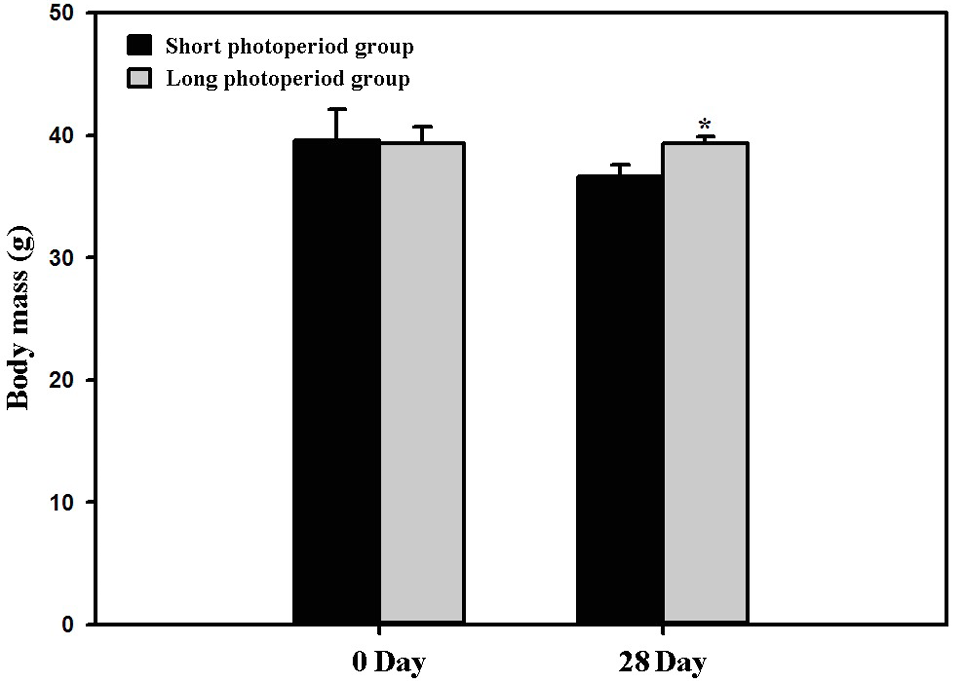
Photoperiodic response on body mass in Eothenomys miletus. *: significant difference (P<0.05) between the two groups.
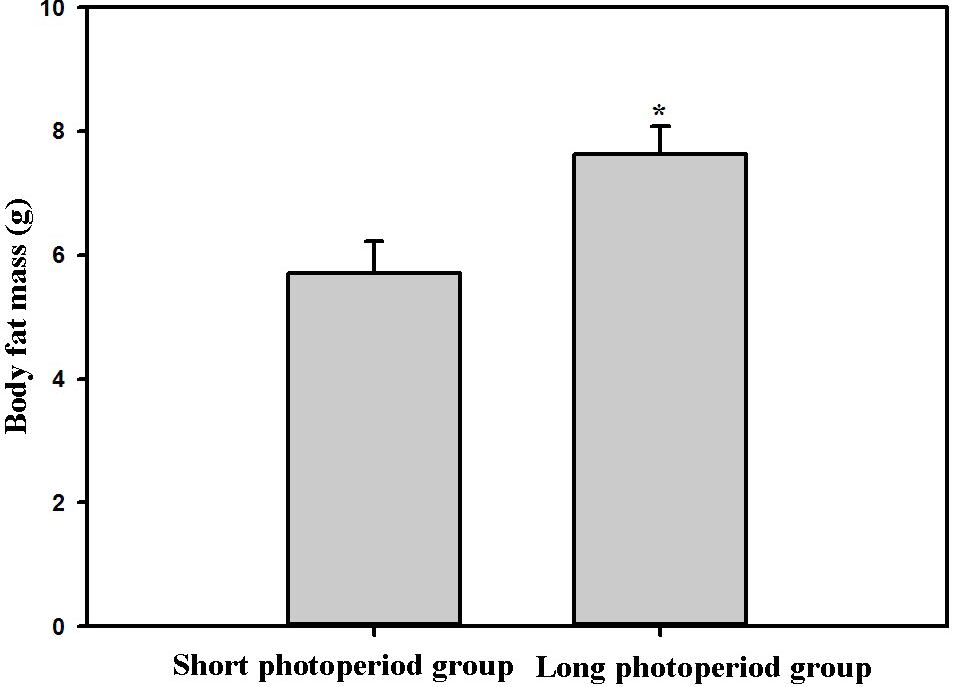
Photoperiodic response on body fat mass in Eothenomys miletus. *: significant difference (P<0.05) between the two groups.
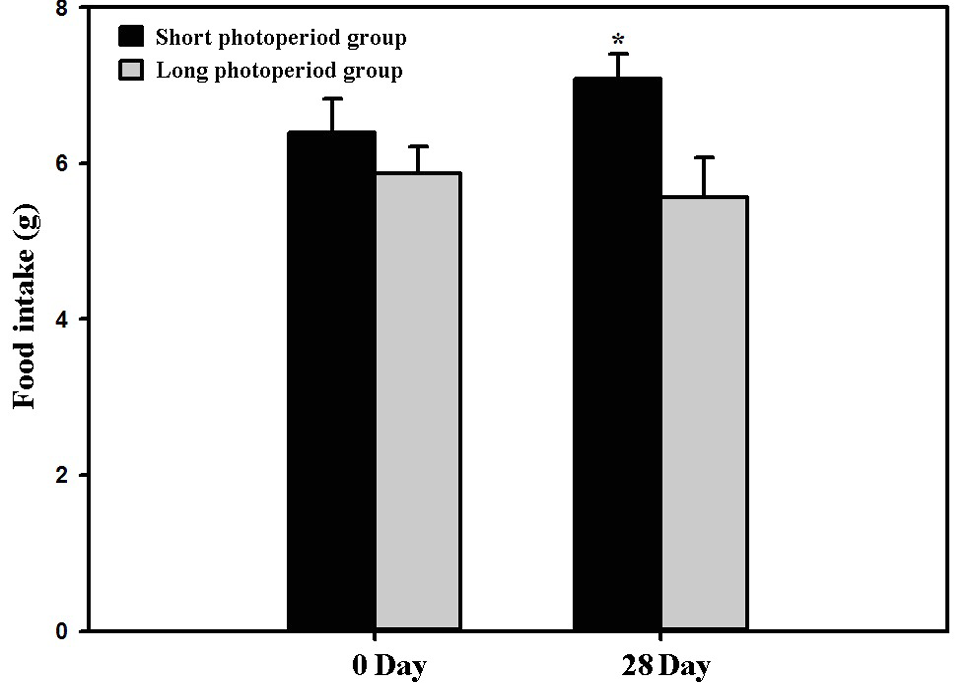
Photoperiodic response on food intake of Eothenomys miletus. **: significant difference (P<0.01) between the two groups.
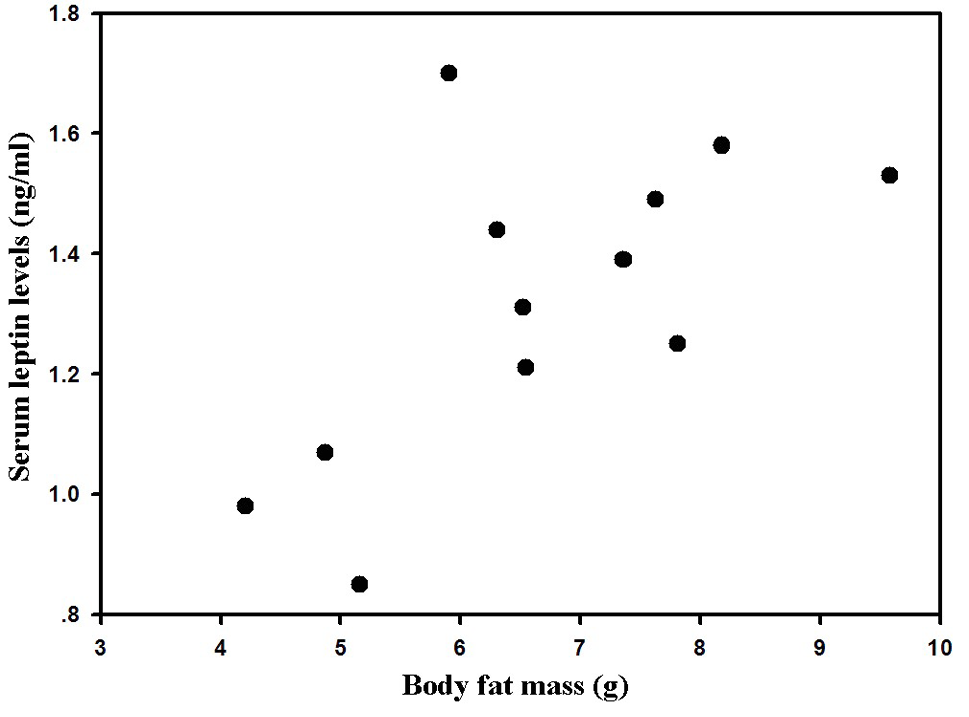
Photoperiodic response on correlation between serum leptin levels and body fat mass in Eothenomys miletus.
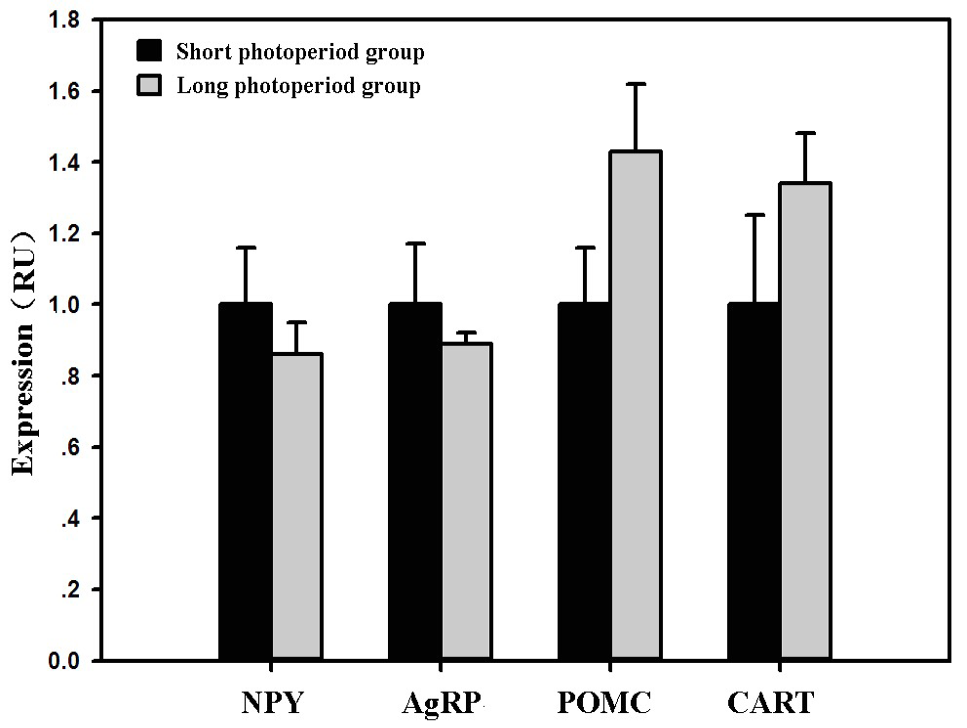
Effects of different photoperiods on hypothalamic genes expressions in Eothenomys miletus.
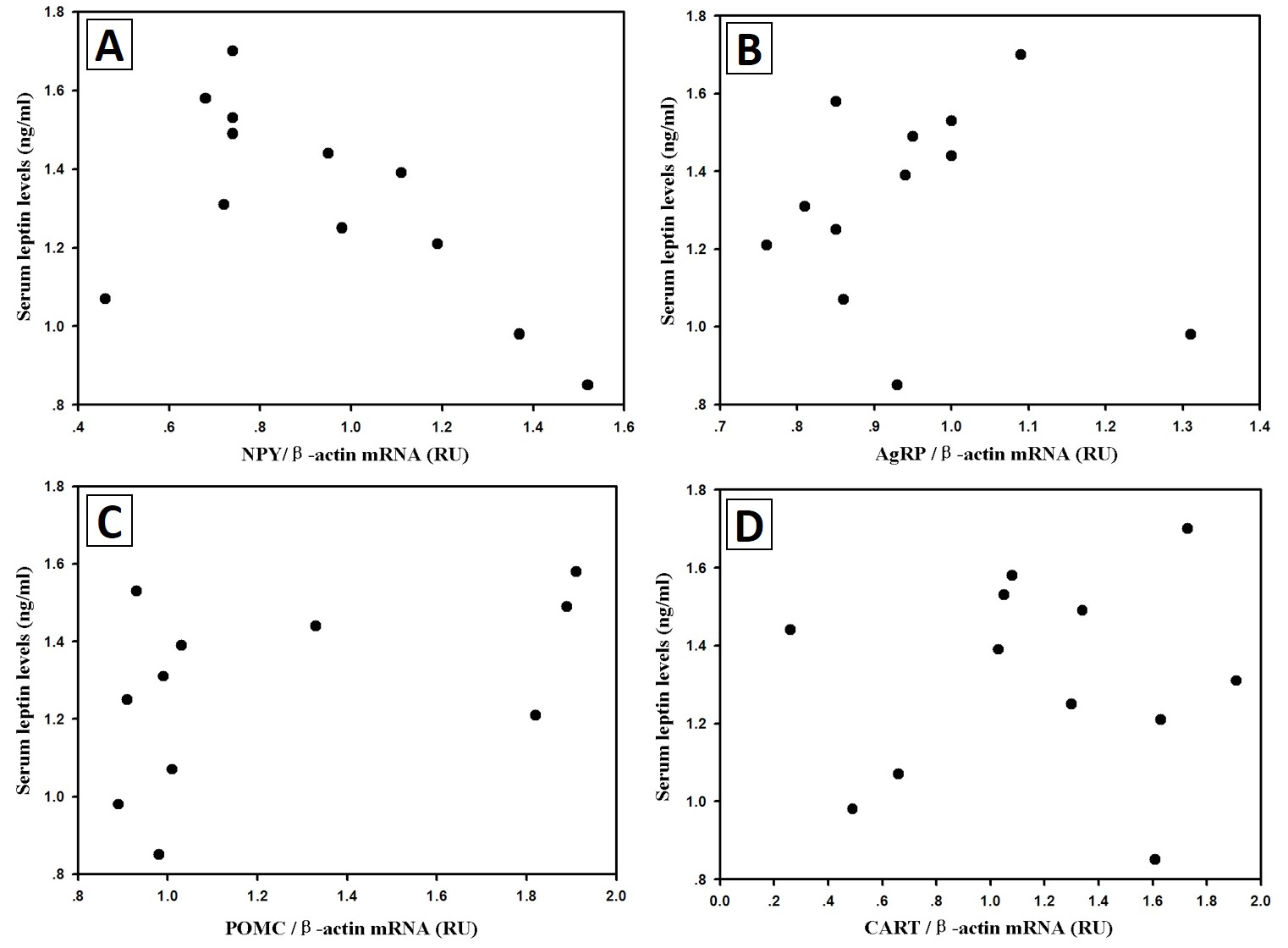
Correlation of NPY (A), AgRP (B), POMC (C) and CART (D) with serum leptin level in Eothenomys miletus in different photoperiods.
References
- Abelenda, M., Ledesma, A. and Rial, E., 2003. Leptin administration to cold acclimated rats reduces both food intake and brown adipose tissue thermogenesis. J. therm. Biol., 28: 525-530. https://doi.org/10.1016/S0306-4565(03)00053-6[CrossRef]
- Aguilar, A.J., Conde-Sieira, M., López-Patiño, M.A., Míguez, J.M. and Soengas, J.L., 2011. In vitro leptin treatment of rainbow trout hypothalamus and hindbrain affects glucosensing and gene expression of neuropeptides involved in food intake regulation. Peptides, 32: 232-240. https://doi.org/10.1016/j.peptides.2010.11.007[CrossRef]
- Arch, J.R., 2005. Central regulation of energy balance: inputs, outputs and leptin resistance. Proc. Nutr. Soc., 64: 39-46. https://doi.org/10.1079/PNS2004407[CrossRef]
- Boss-Williams, K.A. and Bartness, T.J., 1996. NPY stimulation of food intake in siberian hamsters is not photoperiod dependent. Physiol. Behav., 59: 157-164. https://doi.org/10.1016/0031-9384(95)02037-3[CrossRef]
- Concannon, P., Levac, K. and Rawson, R., 2001. Seasonal changes in serum leptin, food intake, and body weight in photo entrained woodchucks. Am. J. Physiol., 281: 951-959.
- Dark, J. and Zucker, I., 1986. Photoperiodic regulation of body mass and fat reserves in the meadow vole. Physiol. Behav., 38: 851-854. https://doi.org/10.1016/0031-9384(86)90053-3[CrossRef]
- Feist, D.D. and Feist, C.F., 1986. Effects of cold, short day and melatonin on thermogenesis, body weight and reproductive organs in Alaskan red-backed voles. J. comp. Physiol., 156: 741-746. https://doi.org/10.1007/BF00692753[CrossRef]
- Flier, J.S., 1998. What’s in a name? In search of leptin’s physiological role. J. clin. Endocrinol. Metab., 83: 1407-1412. https://doi.org/10.1210/jcem.83.5.4779[CrossRef]
- Friedman, J.M. and Halaas, J.L., 1998. Leptin and the regulation of body weight in mammals. Nature, 395: 763-770. https://doi.org/10.1038/27376[CrossRef]
- Geiser, F., McAllan, B.M. and Kenagy, G.J., 2007. Photoperiod affects 10 daily torpor and tissue fatty acid composition in deer mice. Naturwissenschaften, 94: 319-325. https://doi.org/10.1007/s00114-006-0193-z[CrossRef]
- Gettinger, R.D. and Ralph, C.L., 1985. Thermoregulatory responses to photoperiod by Kangaroo rats (Dipodomys ordii): Influence of night lighting on nonshivering thermogenesis and resting metabolism. J. exp. Zool., 234: 335-340. https://doi.org/10.1002/jez.1402340302[CrossRef]
- Gottreich, A., Hammel, I. and Yogev, L., 2000. Effect of photoperiod variation on testes and accessory sex organs in the male blind mole rat Spalax ehrenbergi. Life Sci., 67: 521-519. https://doi.org/10.1016/S0024-3205(00)00649-4[CrossRef]
- Haim, A., 1996. Food and energy intake, non-shivering thermogenesis and daily rhythm of body temperature in the bushy-tailed gerbil Sekeetamys calurus: the role of photoperiod manipulations. J. therm. Biol., 21: 37-42. https://doi.org/10.1016/0306-4565(96)81275-7[CrossRef]
- Haim, A. and Zisapel, N., 1999. Daily rhythms of nonshivering thermogenesis in common spiny mice Acomys cahirinus under short and long photoperiods. J. therm. Biol., 17: 347-351. https://doi.org/10.1016/0306-4565(92)90044-G[CrossRef]
- Hausman, G.J. and Barb, C.R., 2010. Adipose tissue and the reproductive axis: biological aspects. In: Adipose tissue development: from animal models to clinical conditions. Endocrine development (eds. C. Levy-Marchal, L. Pe´nicaud), vol 19. Karger, Basel, pp. 31-44. https://doi.org/10.1159/000316895[CrossRef]
- Heldmaier, G., Steinlechner, S. and Ruf, T., 1989. Photoperiod and thermoregulation in vertebrate: body temperature rhythms and thermogenic acclimation. J. Biol. Rhythms., 4: 251-265. https://doi.org/10.1177/074873048900400211[CrossRef]
- Huang, C.M., Zhu, W.L., Yu, T.T., Yang, S.C. and Wang, Z.K., 2013. Amplification and sequence analysis of partial cDNA sequence of NPY, AgRP, POMC and CART genes in Eothenomys miletus. Acta Theriol. Sin., 33: 186-192.
- Jamali, A.K. and Tramu, G., 1997. Daily cycle of fos expression within hypothalamic POMC neurons of the male rat. Brain Res., 771: 45-54. https://doi.org/10.1016/S0006-8993(97)00767-1[CrossRef]
- Johnson, M.S., Onorato, D.P. and Gower, B.A., 2004. Weight change affects serum leptin and corticosterone in the collared lemming. Gen. Comp. Endocrinol., 136: 30-36. https://doi.org/10.1016/j.ygcen.2003.11.011[CrossRef]
- Khokhlova, I., Krasnov, B.R. and Shenbrot, G.I., 2000. Body mass and environment: a study in Negev rodents. Israel J. Zool., 46: 1-13.
- Khorooshi, R., Helwig, M. and Werckenthin, A., 2008. Seasonal regulation of cocaine and amphetamine-regulated transcript in the arcuate nucleus of Djungarian hamster (Phodopus sungorus). Gen. Comp. Endocr., 157: 142-147. https://doi.org/10.1016/j.ygcen.2008.04.007[CrossRef]
- Kim, H.J. and Harrington, M.E., 2008. Neuropeptide Y-deficient mice show altered circadian response to simulated natural photoperiod. Brain Res., 1246: 96-100. https://doi.org/10.1016/j.brainres.2008.09.040[CrossRef]
- Klaus, S., Heldmaier, G. and Ricquier, D., 1988. Seasonal acclimation of bank voles and wood mice: nonshivering thermogenesis and thermogenic properties of brown adipose tissue mitochondria. J.comp. Physiol., 158: 157-164. https://doi.org/10.1007/BF01075829[CrossRef]
- Klingenspor, M., Dickopp, A. and Heldmaier, G., 1996. Short photoperiod reduces leptin gene expression in white and brown adipose tissue of Djungarian hamsters. FEBS Lett., 399: 290-294. https://doi.org/10.1016/S0014-5793(96)01343-9[CrossRef]
- Klingenspor, M., Niggemann, H. and Heldmaier, G., 2000. Modulation of leptin sensitivity by short photoperiod acclimation in the Djungarian hamster, Phodopus sungorus. J. comp. Physiol., 170: 37-43. https://doi.org/10.1007/s003600050005[CrossRef]
- Król, E., Redman, P.J. and Williams, T.R., 2005. Effect of photoperiod on body mass, food intake and body composition in the field vole, Microtus agrestis. J. exp. Biol., 208: 571-584. https://doi.org/10.1242/jeb.01429[CrossRef]
- Król, E., Duncan, J.S. and Redman, P., 2006. Photoperiod regulates leptin sensitivity in field voles, Microtus agrestis. J. comp. Physiol., 176: 153-163. https://doi.org/10.1007/s00360-005-0037-8[CrossRef]
- Li, X.S. and Wang, D.H., 2005. Regulation of body weight and thermogenesis in seasonally acclimatized Brandt’s voles (Microtus brandti). Horm. Behav., 48: 321-328. https://doi.org/10.1016/j.yhbeh.2005.04.004[CrossRef]
- Li, X.S. and Wang, D.H., 2007. Photoperiod and temperature can regulate body mass, serum leptin concentration, and uncouling protein 1 in Brandt’s voles (Lasiopodomys brandtii) and Mongolian gerbils (Meriones unguiculatus). Physiol. Biochem. Zool., 80: 326-334. https://doi.org/10.1086/513189[CrossRef]
- Lynch, G.R. and Wichman, H.A., 1981. Reproduction and thermoregulation in Peromyscus: effects of chronic short days. Physiol. Behav., 26: 201-205. https://doi.org/10.1016/0031-9384(81)90012-3[CrossRef]
- McNab, B.N., 1983. Energetics, body size and the limits of endothermy. J. Zool., 199: 1-29. https://doi.org/10.1111/j.1469-7998.1983.tb06114.x[CrossRef]
- Mercer, J.G. and Tups, A., 2003. Neuropeptides and anticipatory changes in behavior and physiology: seasonal body weight regulation in the Siberian hamster. Eur. J. Pharmacol., 480: 43-50. https://doi.org/10.1016/j.ejphar.2003.08.091[CrossRef]
- Powel, C.S., Blaylock, M.L. and Wang, R., 2002. Effects of energy expenditure and Ucp1 on photoperiod-induced weight gain in collared lemmings. Obes. Res., 10: 541-550. https://doi.org/10.1038/oby.2002.73[CrossRef]
- Schneider, J.E., Zhou, D. and Blum, R.M., 2000. Leptin and metabolic control of reproduction. Horm. Behav., 37: 306-326. https://doi.org/10.1006/hbeh.2000.1590[CrossRef]
- Spiegel, M. and Hsim, A., 2004. Daily rhythms of non-shivering thermogenesis and responses to photoperiod manipulations in Apodemus mystacinus from two different ecosystems. J. therm. Biol., 29: 635-640. https://doi.org/10.1016/j.jtherbio.2004.08.037[CrossRef]
- Wang, J.M., Zhang, Y.M. and Wang, D.H., 2006. Photoperiodic regulation in energy intake, thermogenesis and body mass in root voles (Microtus oeconomus). Comp. Biochem. Physiol., 145: 546-553. https://doi.org/10.1016/j.cbpa.2006.08.034[CrossRef]
- Wiesinger, H., Heldmaier, G. and Buchberger, A., 1989. Effect of photoperiod and acclimation temperature on nonshivering thermogenesis and GDP-binding of brown fat mitochondria in the Djungarian hamster Phodopus s. sungorus. Eur. J. Physiol., 413: 667-672. https://doi.org/10.1007/BF00581818[CrossRef]
- Wunder, S.A., 1985. Energetics and thermoregulation. In: Biology of new world Microtus (ed. R.H. Tamarin) American Society of Mammalogists, pp. 812-844.
- Zhang, L., Zhu, W.L. and Wang, Z.K., 2012. Role of photoperiod on hormone concentrations and adaptive capacity in tree shrews, Tupaia belangeri. Comp. Biochem. Physiol., 163: 253-259. https://doi.org/10.1016/j.cbpa.2012.08.008[CrossRef]
- Zhang, X.Y. and Wang, D.H., 2007. Thermogenesis, food intake and serum leptin in cold-exposed lactating Brandt’s voles Lasiopodomys brandtii. J. exp. Biol., 210: 512-521. https://doi.org/10.1242/jeb.02659[CrossRef]
- Zhao, Z.J. and Wang, D.H., 2005. Short photoperiod enhances thermogenic capacity in Brandt’s voles. Physiol. Behav., 85: 143-149. https://doi.org/10.1016/j.physbeh.2005.03.014[CrossRef]
- Zhao, Z.J. and Wang, D.H., 2006. Effects of photoperiod on energy budgets and thermogenesis in Mongolian gerbils (Meriones unguiculatus). J. therm. Biol., 31: 323-331. https://doi.org/10.1016/j.jtherbio.2006.01.001[CrossRef]
- Zhao, Z.J. and Cao, J., 2009. Effect of fur removal on the thermal conductance and energy budget in lactating Swiss mice. J. exp. Biol., 212: 2541-2549. https://doi.org/10.1242/jeb.029603[CrossRef]
- Zhao, Z.J., 2011. Serum leptin, energy budget and thermogenesis in striped hamsters exposed to consecutive decrease in ambient temperatures. Physiol. Biochem. Zool., 84: 560-572. https://doi.org/10.1086/662553[CrossRef]
- Zhu, W.L., Cai, J.H., Lian, X. and Wang, Z.K., 2010. Adaptive character of metabolism in Eothenomys miletus in Hengduan Mountains region during cold acclimation. J. therm. Biol., 35: 417-421. https://doi.org/10.1016/j.jtherbio.2010.09.002[CrossRef]
- Zhu, W.L., Cai, J.H., Lian, X. and Wang, Z.K., 2011. Effects of photoperiod on energy intake, thermogenesis and body mass in Eothenomys miletus in Hengduan Mountain region. J. therm. Biol., 36: 380-385. https://doi.org/10.1016/j.jtherbio.2011.06.014[CrossRef]
- Zhu, W.L., Zhan, L. and Wang, Z.K., 2013. Thermogenic property and its hormonal regulation in a south China field mouse, Apodemus draco, under seasonal acclimatization. Pakistan J. Zool., 45: 423-431.
- Zhu, W.L., Zhang, H., Zhang, L. and Wang, Z.K., 2014. Thermogenic properties of Yunnan red-backed voles (Eothenomys miletus) from the Hengduan mountain region. Anim. Biol., 64: 59-73. https://doi.org/10.1163/15707563-00002430[CrossRef]
Services
Article usage statistics
Loading…