
Small mammals usually showed physiological and behavioral adaptations to cope with seasonal environmental changing, such as temperature, photoperiod, and food etc. To investigate the physiological and behavioral adaptation strategies in Eothenomys miletus of different areas from Hengduan mountain regions in response to high-fat diet, E. miletus in Jianchuan (JC) and Xianggelila (XGLL) were fed a high-fat (HF) diet for 4 weeks and returned to a low-fat (LF) diet for another 4 weeks, body mass, food intake, resting metabolic rate (RMR), activity behavior, serum leptin levels, hypothalamic neuropeptide expressions and body compositions were measured. The results showed that regions and HF diet affected body mass, food intake and RMR significantly, HF diet increased body mass in E. miletus, while regions had significant effect on activity behavior, but HF diet had not affect activity behavior. Regions and HF diet also showed remarkable effects on leptin and hypothalamus Neuropeptide Y (NPY) expression, and leptin positively correlated with body mass and negatively correlated with NPY expression. Moreover, E. miletus from two regions showed some physiological differences, such as RMR and food intake in XGLL were higher than that of JC, but body mass was lower than that of JC. Body mass reduced quickly inJC after re-feeding LF diet, while it decreased body mass gradually in XGLL. All of the results showed that body mass increased in E. miletus of two regions when faced with HF diet, which returned to the control levels after re-feeding LF diet, showing higher phenotypic plasticity. Leptin and NPY expression may play an important role in body mass regulation. Phenotypic differentiations in E. miletus of two regions may be closely related to food resources, altitude and temperature of Hengduan mountain regions.
Research Article · Volume 54, Issue 1, 20 November 2021 · Open Access
Faster Response to High-Fat Diet in Body Mass Regulation from Lower Altitude Population in Eothenomys miletus from Hengduan Mountain Regions
· · ·
Affiliations & Notes ⌄
- 1Key Laboratory of Ecological Adaptive Evolution and Conservation on Animals-Plants in Southwest Mountain Ecosystem of Yunnan Province Higher Institutes College, School of Life Sciences, Yunnan Normal University
- 2Engineering Research Center of Sustainable Development and Utilization of Biomass Energy Ministry of Education
- 3Key Laboratory of Yunnan Province for Biomass Energy and Environment Biotechnology, Kunming, 650500. 2Yunnan College of Business Management, Kunming, 650106, China , * Correspo
Article Info ⌄
- Journal:
- Pakistan Journal of Zoology
- Published:
- 20 November 2021

From the article
- During the HF diet acclimation, body mass increased in E. miletus in the two areas, and then returned to the control level on day 56, showing higher phenotypic plasticity.
- Body mass loss in JC was significant, which might be related to smaller changes of food intake after re-feeding LF diet.
- Body mass in XGLL decreased gradually after re-feeding, which was due to the increasing of food intake, suggesting that E. miletus in XGLL was more sensitive to changes in food quality.
- But HF diet had no significant effect on the other three neuropeptides expressions, suggesting that leptin and NPY expression may play an important role in body mass regulation in E. miletus.
Selected from the article's own text.
Abstract
INTRODUCTION
Efficiency of energy intake and expenditure were essential for survival in small mammals ; . Food quality was an important environmental factor, which affected survival and reproduction in the wild small mammals . Previously studies showed that fat content was closely related to body fat mass accumulation, high-fat (HF) diet increased energy intake and body mass in animals . However, different animals had different body mass regulation for HF diet. For example, rats and mice fed ad libitum or HF diet increased body mass significantly , but HF diet did not affect body mass in Meriones shawi . Therefore, it can be speculated that different species had different physiological adaptation strategies to cope with changes of food quality.
Leptin, is an adipostatic signal linking energy metabolism and food intake regulation . It entered the brain through blood circulation and affected the neuropeptides expressions such as hypothalamus neuropeptide Y (NPY), agouti-related peptide (AgRP), pro-opiomelanocortin (POMC), cocaine and amphetamine regulated transcript peptide (CART), thus controlling food intake and energy balance in small mammals . Recent studies showed that serum leptin levels were positively correlated with body mass, and higher leptin levels inhibited animals’ food intake ; . Therefore, leptin could inhibit NPY/AgRP pathway and stimulated POMC/CART pathway to regulate energy balance . Resting metabolic rate (RMR) refers to the minimum number of calories needed basic functions, including breathing and circulation , which is an important physiological indicator for field small mammals to respond to different environmental pressures . Activity behavior of animals had great significance for adapting environmental changes . Mammals usually increased the activity behavior under low temperature or food restriction. For example, food restriction increased activity significantly in Mus musculus . HF diet reduced activity behavior significantly in rats .
Eothenomys miletus belongs to the genus Eothenomys is an inherent species in Hengduan mountain regions. E. miletus was a nocturnal rodent, and its main food was fresh pulp plants and roots of grass. Hengduan Mountain regions is located the boundary between the Palaearctic region and the Oriental region , which altitude and climate changes dramatically, and small mammals in different locations may have different physiological characteristics . Previous studies showed that changes of RMR and relative fatness in E. miletus form different regions were related to environmental temperature and food resources ; temperature and food restriction had significant effects on physiological characteristics in E. miletus , 2014). In the present study, we selected E. miletus from two areas (Jianchuan, JC and Xianggelila, XGLL) with significant phenotypic differentiation . XGLL has higher altitude, lower annual average temperature (5.5°C), less crops and vegetations, so food conditions in winter were relatively poor; while JC has lower altitude, higher average annual temperature (13.9°C), higher vegetations and almost no snow cover, so food resources in winter were relatively better, so the present study was to investigate the effects of HF diet on physiological and behavioral plasticity, body mass, food intake, RMR, activity behavior, serum leptin levels, hypothalamic neuropeptide expressions and body compositions were measured. We hypothesized that E. miletus would respond to HF diet by changing body mass, serum leptin levels, activity behavior and adjusting the hypothalamic neuropeptides genes expressions. We predicted that E. miletus may change the physiological responses to regulate body mass, and there were regional differences in physiological changes in E. miletus in response to high-fat diet and refeeing.
MATERIALS AND METHODS
Samples
E. miletus were obtained from farmland in XGLL (99°83´E, 27°90´N, altitude 3321 m) and JC county (99°75´E, 26°43´N, altitude 2590 m) in January 2019. E. miletus were maintained at a room temperature of 25±1°C, under a photoperiod of 12L:12D (with lights on at 08:00), food (standard mice chow pellets; produced by Kunming Medical University, Kunming) and water were provided ad libitum. All pregnant, lactating or young individuals were excluded in the present study. HF diet used in the experiment was prepared from the standard mice chow pellets with about 18% soybean oil, and low-fat (LF) diet was the standard mice chow pellets, the main food components were shown in Table I. All animal procedures were compliance with the Animal Care and Use Committee of School of Life Science, Yunnan Normal University. This study was approved by the Committee (13-0901-011).
Table I. Composition of experimental diets.
| Contents | Low-fat diet | High-fat diet |
| Crude fat (%) | 6.2 | 21.4 |
| Crude protein (%) | 20.8 | 17.6 |
| Neutral detergent fiber (%) | 21.5 | 19.6 |
| Acid detergent fiber (%) | 12.5 | 10.6 |
| Ash (%) | 10.0 | 8.5 |
| Caloric value (KJ/g) | 17.5 | 19.7 |
Experiment 1
Effects of HF diet on body mass, food intake, RMR and activity behavior in E. miletus. Sixteen adult E. miletus of XGLL (n=8, ♀4 and ♂4) and JC (n=8, ♀4 and ♂4) were housed individually (were maintained at 12L: 12D (light on at 08:00am), 25±1ºC, respectively), and kept for 1 weeks to familiarize with the environment. After the acclimatizing period, the animals of XGLL and JC were acclimated to HF diet for 28 days, and then re-feeding LF diet for another 28 days, animals were acclimated for 8 weeks. Food intake was calculated as the mass of food missing from the hopper, subtracting orts mixed in the bedding. Body mass, food intake, RMR and activity behavior were measured every day.
Experiment 2
Effects of HF diet on body mass, serum leptin levels, hypothalamic neuropeptide genes expression, body compositions and gastrointestinal tract in E. miletus. 43 adult weight-matched E. miletus from two regions (XGLL: n=21, ♀11 and ♂10; JC: n=22, ♀10 and ♂12) were selected, which were maintained at 12L: 12D (light on at 08:00 am), 25±1ºC, respectively. Animals of one region were randomly assigned to a control group, and a HF diet and refeeding LF diet group (HF-LF). Controls were fed LF diet for 8 weeks, while HF-LF group were fed HF diet for 4 weeks, then fed LF diet for a further 4 weeks. On day 28, animals were randomly selected from HF-LF group for the measurement of body mass, serum leptin levels, body composition, gastrointestinal tract mass and length, and hypothalamic neuropeptide genes expression. These measurements were taken again from the remaining animals of each group (Control group and HF-LF group) on day 56. All animals were sacrificed between 09:00 h and 11:00 h by decapitation, and animals were dissected to evaluate organ morphology. Blood was centrifuged at 4,000 rpm for 30 min after a 30 min interval. Blood serum was collected and stored at −75 °C prior to hormone measurement.
Measurement of RMR, food intake and activity behavior
Body mass, RMR, food intake and activity behavior were measured using the metabolic system (BXY-R, Sable Systems). E. miletus were acclimated to calorimetry cages prior to 30 min the study and data collection .
Measurement of morphology, serum leptin levels and hypothalamic neuropeptide gene expression
Measurements of morphology was details in Zhang et al. (2018). Serum leptin levels were determined by radioimmunoassay (RIA) with the 125I Multi-species Kit (Millipore), and leptin values were determined in a single RIA; the lowest level of leptin that can be detected by this assay is 1.0 ng/mL when using a 100-μL sample size (instructions for Multi-species Kit). The inter- and intra-assay variabilities for leptin RIA were 3.6% and 8.7%, respectively. Measurements of hypothalamic neuropeptide gene expression was details in Ren et al. (2020).
Statistical analysis
Data were analyzed using the software package SPSS 15.0. Prior to all statistical analyses, data were examined for assumptions of normality and homogeneity of variance using Kolmogorov–Smirnov and Levene tests, respectively. Since no gender effects were found on almost all measured parameters, data from females and males were combined. Differences in body mass, food intake, RMR, activity behavior, serum leptin levels and hypothalamic neuropeptide genes expression were analyzed by two-way ANOVA, and differences in body compositions and gastrointestinal tract were analyzed by two-way ANCOVA with body mass as a covariate, followed by Tukey’s post hoc test. Results are presented as means ± SE, and P<0.05 was considered to be statistically significant.
RESULTS
Body mass, food intake, RMR and activity behavior
Region and HF diet had significant effects on body mass (Region: F1, 907= 200.61, P < 0.01; HF: F1,907= 29.36, P < 0.01), but the interaction had no effect (F1,907= 0.60, P > 0.05, Fig. 1). Region and HF diet affect food intake significantly in E. miletus (Region: F1,907= 212.57, P<0.01; HF: F1,907= 54.56, P<0.01), but the interaction showed no significant effect (F1,907=0.08, P>0.05, Fig. 2). The influence of region on activity behavior of E. miletus was extremely significant (F1,907= 273.18, P<0.01), but no effect of high-fat diet on activity behavior (F1,907=0.01, P>0.05), and the interaction was also had no effect (F1,907= 0.07, P>0.05, Fig. 3). Region, HF diet and the interaction had remarkable effects on RMR in E. miletus (Region: F1,907=116.44, P<0.01; HF: F1,907=16.45, P<0.01; Interaction: F1,907=15.09, P<0.01, Fig. 4).
Serum leptin levels, hypothalamus neuropeptide expressions and body compositions
There were significant differences in the effect of region and HF diet on serum leptin levels in E. miletus (Region: F1,36=9.03, P<0.01; HF: F2,36=13.64, P<0.01), but the interaction showed no significant difference (F2,36=0.68, P>0.05). Effect of region on NPY expression in E. miletus was significant (F1,36=8.28, P<0.01), and HF diet also affect NPY expression significantly (F2,36=4.85, P<0.05), but the interaction effect was not significant difference (F2,36=2.31, P>0.05). However, the region and diet had no effects on the expression levels of the other three hypothalamic neuropeptides (P>0.05, Table II). There was a significant positive correlation between serum leptin levels and body mass (r=0.40, P<0.01, Fig. 5), and a significant negative correlation between serum leptin levels and NPY expression (r=-0.58, P<0.01), but no correlation with the expression of three other hypothalamic neuropeptides (P> 0.05). Region had significant influence on cecum length (F1,36= 4.76, P < 0.05), large intestine mass with content (F1,36= 10.71, P < 0.01), small intestine mass with no content (F1, 36= 6.01, P < 0.05), cecum mass with no content (F1,36= 7.71, P < 0.01). Region and HF diet had no effects on the remaining indicators (Table II).
DISCUSSION
Phenotypic plasticity is the ability of an organism to change its phonotype in response to changes in the environment, such as temperature and photoperiod . Food quality was also an important factor affecting animals’ phenotypic changes . HF diet increased body mass and body fat mass significantly in mice , but it has no significant effect on body mass in Cricetulus barabensis . Changes in organ mass and digestive tract morphology play important roles in energy balance . The present results showed that body mass in E. miletus in JC was larger than that of in XGLL, but total digestive tract in XGLL area was longer and lighter than that in JC area, which may be related to the different food resources in the two regions. During the HF diet acclimation, body mass increased in E. miletus in the two areas, and then returned to the control level on day 56, showing higher phenotypic plasticity. However, body mass changes in the two areas were different after re-feeding LF diet. Body mass loss in JC was significant, which might be related to smaller changes of food intake after re-feeding LF diet. Body mass in XGLL decreased gradually after re-feeding, which was due to the increasing of food intake, suggesting that E. miletus in XGLL was more sensitive to changes in food quality. Moreover, the initial food intake in XGLL was
Table II. Effects of high-fat food on body mass, serum leptin levels, hypothalamic neuropeptide expressions and body compositions in Eothenomy miletus from different regions.
| Parameters | Xianggelila | Jianchuan | ||||
| Control group (n=6) | HF group (n=8) | HF-LF group (n=7) | ||||
| Body mass(g) | 33.68±1.88 | 35.71±0.66 | 33.59±0.98 | 41.98±1.73 | 44.99±2.80 | 41.81±1.93 |
| Serum leptin levels(ng/ml) | 1.08±0.05 | 1.40±0.07 | 1.11±0.05 | 1.20±0.05 | 1.41±0.04 | 1.19±0.05 |
| NPY(RU) | 1.21±0.06 | 0.99±0.03 | 1.16±0.04 | 1.00±0.05 | 0.95±0.03 | 0.97±0.05 |
| AgRP(RU) | 1.15±0.06 | 0.98±0.03 | 1.09±0.03 | 1.00±0.05 | 0.99±0.06 | 0.99±0.04 |
| CART(RU) | 0.93±0.03 | 1.02±0.07 | 0.89±0.02 | 1.00±0.03 | 1.03±0.04 | 0.97±0.02 |
| POMC(RU) | 0.90±0.06 | 0.91±0.08 | 0.89±0.07 | 1.00±0.05 | 1.02±0.07 | 1.00±0.05 |
| Heart weight(g) | 0.18±0.02 | 0.25±0.02 | 0.21±0.02 | 0.23±0.02 | 0.25±0.02 | 0.24±0.01 |
| Liver weight(g) | 2.11±0.16 | 2.00±0.12 | 1.92±0.07 | 2.28±0.22 | 2.11±0.30 | 2.05±0.14 |
| Spleen weight(g) | 0.06±0.001 | 0.09±0.008 | 0.06±0.006 | 0.09±0.017 | 0.08±0.008 | 0.09±0.012 |
| Lung weight(g) | 0.22±0.02 | 0.25±0.02 | 0.26±0.02 | 0.25±0.01 | 0.23±0.01 | 0.27±0.03 |
| Kidney weight(g) | 0.39±0.02 | 0.47±0.06 | 0.45±0.03 | 0.43±0.02 | 0.46±0.05 | 0.43±0.06 |
| 2.77±0.29 | 2.08±0.20 | 2.59±0.25 | 2.05±0.13 | 2.68±0.10 | 2.16±0.19 | |
| 37.75±1.69 | 36.30±1.73 | 36.12±1.94 | 36.85±2.46 | 35.77±1.30 | 37.03±1.60 | |
| 18.70±1.31 | 20.51±1.16 | 19.00±1.47 | 18.85±0.76 | 16.82±1.02 | 18.14±0.53 | |
| Cecum length(cm) | 9.03±1.62 | 9.84±0.85 | 10.85±0.70 | 8.42±0.42 | 8.21±0.61 | 9.62±0.85 |
| Stomach mass with content(g) | 0.72±0.10 | 0.65±0.09 | 0.76±0.11 | 0.81±0.18 | 0.98±0.09 | 0.67±0.04 |
| Small intestine mass with content(g) | 1.78±0.14 | 1.73±0.09 | 1.57±0.10 | 1.68±0.07 | 1.93±0.19 | 1.35±0.06 |
| Large intestine mass with content (g) | 0.54±0.12 | 0.62±0.05 | 0.63±0.07 | 0.52±0.07 | 0.44±0.04 | 0.46±0.06 |
| Cecum mass with content (g) | 1.64±0.23 | 1.80±0.11 | 1.99±0.14 | 1.85±0.19 | 2.01±0.33 | 1.87±0.24 |
| Stomach mass with no content(g) | 0.36±0.05 | 0.49±0.03 | 0.38±0.04 | 0.30±0.01 | 0.35±0.03 | 0.35±0.04 |
| Small intestine mass with no content(g) | 0.45±0.05 | 0.69±0.04 | 0.57±0.04 | 0.65±0.03 | 0.93±0.13 | 0.75±0.14 |
| Large intestine mass with no content(g) | 0.29±0.03 | 0.33±0.05 | 0.29±0.05 | 0.32±0.02 | 0.33±0.02 | 0.35±0.05 |
| Cecum mass with no content (g) | 0.36±0.08 | 0.49±0.03 | 0.38±0.03 | 0.50±0.03 | 0.65±0.07 | 0.61±0.05 |
higher than that of JC, which mainly because the environment temperature was lower and food resources were poor in winter of XGLL, when food was sufficient, food intake would be increased.
Behavioral regulation is an important adaptive strategy for wild small mammals to cope with environmental changes, especially for uncertainty of food resources . Rats reduced their foraging behavior by a HF diet . In the current research, activity behavior only varied between regions, which was related to their habitat temperature and food conditions. There was no significant change in activity behavior form two regions, indicating that E. miletus did not need to increase activity behavior when food quality is good. But activity behavior in XGLL fluctuated larger, probably because E. miletus in XGLL were more sensitive to food resources in winter. RMR is often used to study the adaptation of small mammals to extreme environments (Li and Huang, 1994). LF diet increased RMR in mammals , while HF diet has no significant effect on RMR and body compositions in Labrador . In the present study, higher RMR in XGLL was related to lower temperature and cold temperature. RMR in JC remained unchanged under acclimation, which was consistent with its activity behavior. RMR in XGLL was more volatile, one reason is that it may be related to the fluctuation of their activity behavior, the other reason is that the environment in XGLL is more volatile in winter.
Leptin plays an important role in the regulation of body mass and energy metabolism . In the present study, serum leptin levels were positively correlated with body mass, supporting the hypothesis that leptin could be used as a lipid signaling molecule . Moreover, there was a significant difference in leptin levels between two regions. Serum leptin levels in JC was higher than that of in XGLL, which was related to the higher body mass in JC. Hypothalamus controls food intake and energy expenditure mainly by regulating the expression of two types of neuropeptides (food promoters: NPY, AgRP; food inhibition: POMC, CART), which plays an important role in body mass regulation . Previous studies have shown that high-quality food increased NPY expression significantly . However, other studies have shown that HF diet has no effect on POMC expression . In our study, HF diet decreased NPY expression significantly, and NPY showed a significant negative correlation with leptin levels. But HF diet had no significant effect on the other three neuropeptides expressions, suggesting that leptin and NPY expression may play an important role in body mass regulation in E. miletus.
In conclusion, HF diet increased body mass in E. miletus, which returned to the control level when re-feeding LF diet. Leptin and NPY play important roles in the regulation of body mass and food intake. There were differences in body mass regulation patterns in E. miletus form different regions when they were exposed to HF diet, which may be related to different environmental conditions in Hengduan mountain regions.
ACKNOWLEDGMENTS
This research was financially supported by National Science Foundation of China (No. 31760118), and Young and Middle-aged Academic and Technical Leaders Reserve Talents Project of Yunnan Province (2019HB013). We wish to thank Pro. Burkart Engesser at Historisches Museum Basel, Switzerland for correcting the English usage in the draft. Thank you for the anonymous reviewers and the editor of the journal for their valuable comments.
Statement of conflict of interest
The authors have declared no conflict of interests.
Figures
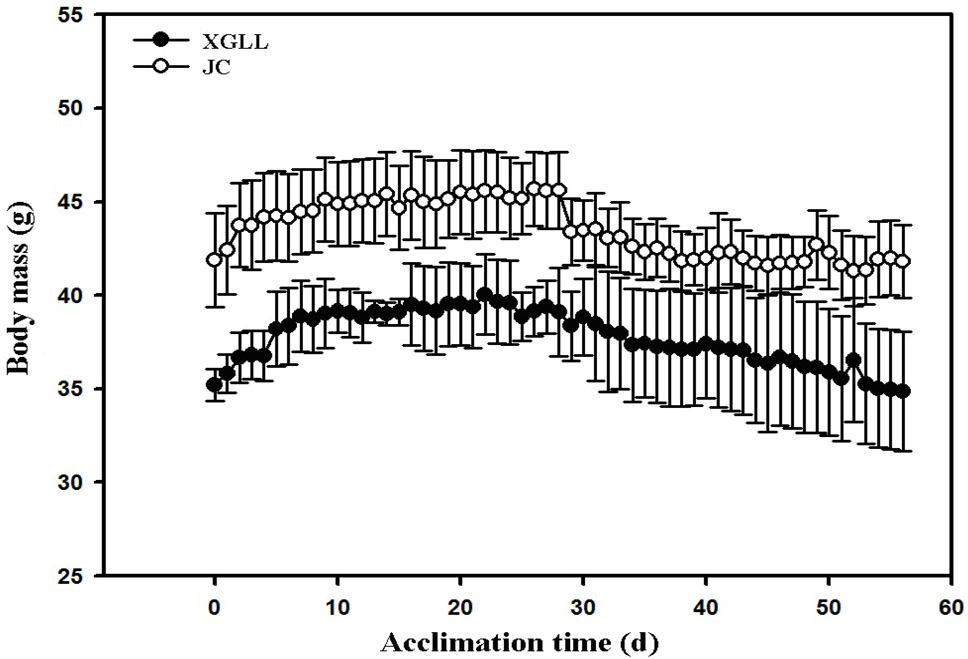
Effects of high-fat diet on body mass in Eothenomys miletus.
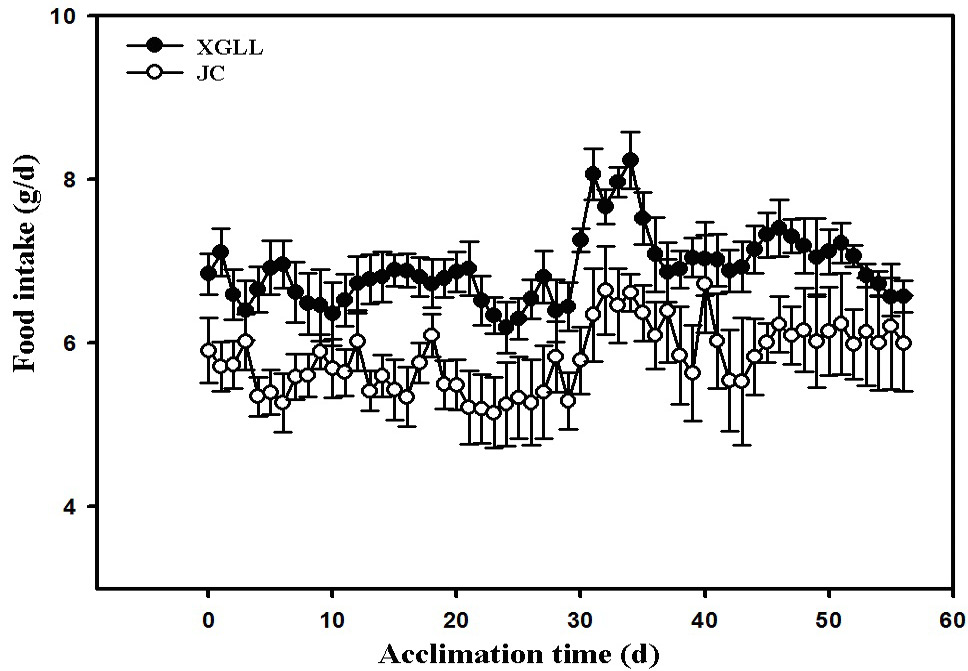
Effects of high-fat diet on food intake in Eothenomys miletus.
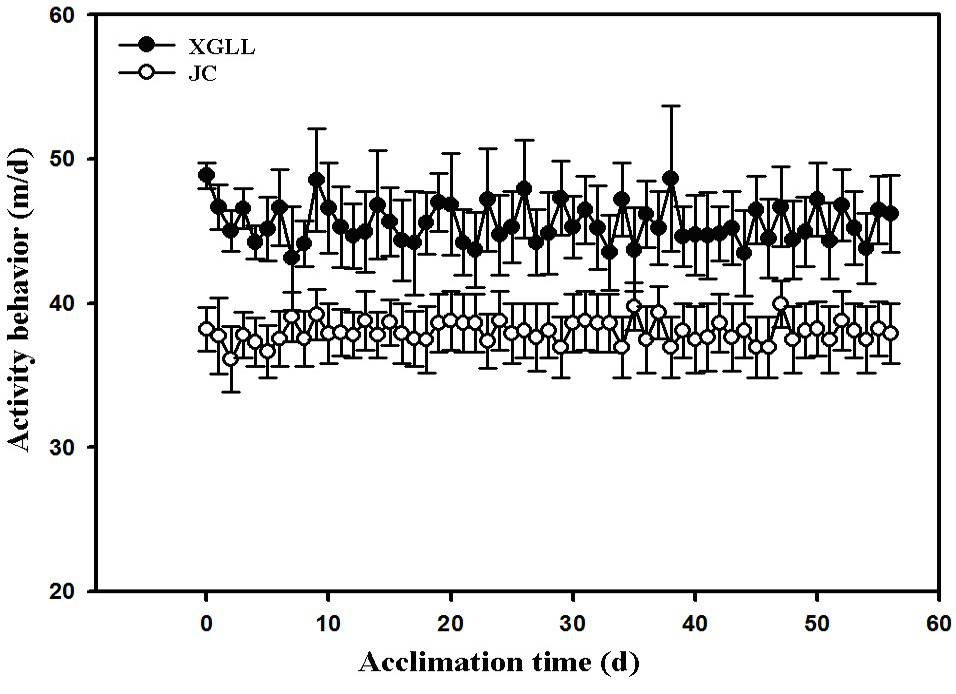
Effects of high-fat diet on activity behavior in Eothenomys miletus.
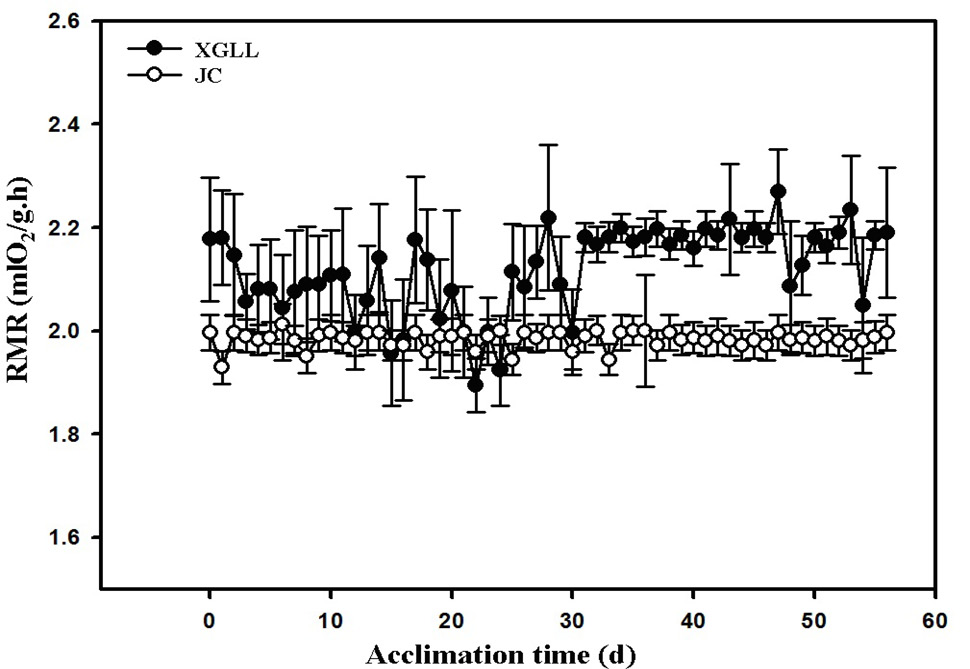
Effects of high-fat diet on RMR in Eothenomys miletus.
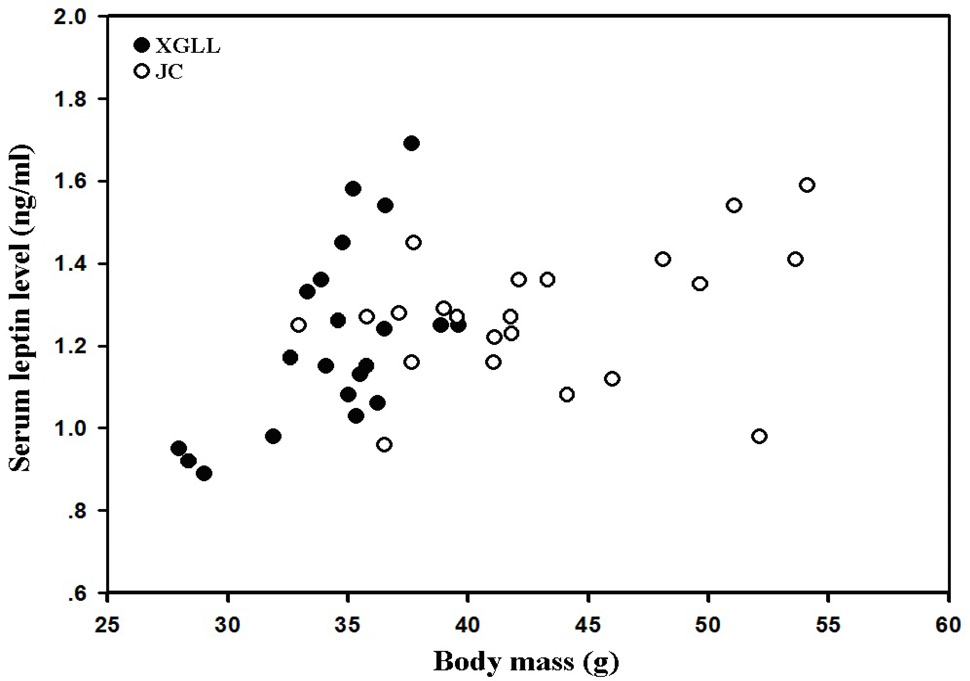
Correlation between serum leptin levels and body mass in Eothenomys miletus.
References
- Abelenda, M., Ledesma, A., Rial, E. and Puerta, M., 2003. Leptin administration to cold-acclimated rats reduces both food intake and brown adipose tissue thermogenesis. J. Therm. Biol., 28: 525-530. https://doi.org/10.1016/S0306-4565(03)00053-6[CrossRef]
- Blank, J.L. and Desjardins, C., 1985. Differential effects of food restriction on pituitary-testicular function in mice. Am. J. Physiol. Regul., Integr. Comp. Physiol., 248: 181-189. https://doi.org/10.1152/ajpregu.1985.248.2.R181[CrossRef]
- Chen, W., Jia, Y., Cao, S., Chen, Y. and Li, C., 2014. Effect of chronic high-fat diet on predation behavior in rats. J. Cent. S. Univ., 39: 1266-1270.
- Camp, M.J., Shipley, L.A., Milling, C.R., Rachlow, J.L. and Forbey, J.S., 2018. Interacting effects of ambient temperature and food quality on the foraging ecology of small mammalian herbivores. J. Therm. Biol., 71: 83-90. https://doi.org/10.1016/j.jtherbio.2017.10.021[CrossRef]
- Delciellos, A.C., Barros, C.D.S.D., Prevedello, J.A., Ferreira, M.S., Cerqueira, R. and Vieira, M.V., 2018. Habitat fragmentation affects individual condition: evidence from small mammals of the Brazilian Atlantic Forest. J. Mammal., 99: 936-945. https://doi.org/10.1093/jmammal/gyy078[CrossRef]
- El-Bakry, H.A., Plunkett, S.S. and Bartness, T.J., 1999. Photoperiod, but not a high-fat diet, alters body fat in Shaw’s jird. Physiol. Behav., 68: 87-91. https://doi.org/10.1016/S0031-9384(99)00151-1[CrossRef]
- Flier, J.S. and Maratos-Flier, E., 2017. Leptin’s physiologic role: does the emperor of energy balance have no clothes? Cell Metab., 26: 24-26. https://doi.org/10.1016/j.cmet.2017.05.013[CrossRef]
- Gao, W.R., Zhu, W.L., Meng, L.H., Cao, N., Yu, T.T. and Wang, Z.K., 2013. Effects of photoperiod and high fat diet on energy intake and thermogenesis in female Apodemus chevrieri. Acta Ecol. Sin., 33: 5696-5703. https://doi.org/10.5846/stxb201304290870[CrossRef]
- Hu, S.M., Wang, L., Yang, D.B., Li, L., Togo, J., Wu, Y.G., Liu, Q.S., Li, B.G., Li, M., Wang, G.L., Zhang, X.Y., Niu, C.Q., Li, J.B., Xu, Y.C., Couper, E., Davies, A.W., Mazidi, M., Luo, L.J., Wang, S.N., Douglas, A. and Speakman J.R., 2018. Dietary fat, but not protein or carbohydrate, regulates energy intake and causes adiposity in mice. Cell Metab., 28: 415-431. https://doi.org/10.1016/j.cmet.2018.06.010[CrossRef]
- Hume, I.D., 2002. Digestive strategies of mammals. Acta Zool. Sin., 48: 1-19.
- Kaga, T., Inui, A., Okita, M., Asakawa, A., Ueno, N. and Kasuga, M., 2001. Modest overexpression of neuropeptide y in the brain leads to obesity after high-sucrose feeding. Diabetes, 50: 1206-1210. https://doi.org/10.2337/diabetes.50.5.1206[CrossRef]
- Kingsbury, L., Huang, S., Wang, J., Gu, K., Golshani, P., Wu, Y.E. and Hong, W., 2019. Correlated neural activity and encoding of behavior across brains of socially interacting animals. Cell, 178: 429-446. https://doi.org/10.1016/j.cell.2019.05.022[CrossRef]
- Li, Q.F. and Huang C.X., 1994. Characteristic of the resting metabolic rate of Brandt’s voles (Microtus Brandti). Acta Theriol. Sin., 14: 217-220.
- Marco, A., Kisliouk, T., Weller, A. and Meiri, N., 2013. High fat diet induces hypermethylation of the hypothalamic pomc promoter and obesity in post-weaning rats. Psychoneuroendocrinology, 38: 2844-2853. https://doi.org/10.1016/j.psyneuen.2013.07.011[CrossRef]
- Miner, B.G., Sultan, S.E., Morgan, S.G., Padilla, D.K. and Relyea, R.A., 2005. Ecological consequences of phenotypic plasticity. Trends Ecol. Evolut., 20: 685-692. https://doi.org/10.1016/j.tree.2005.08.002[CrossRef]
- Mitchell, S.J., Madrigal-Matute, J., Scheibye-Knudsen, M., Fang, E., Aon, M., González-Reyes, J.A., Cortassa, S., Kaushik, S., Gonzalez-Freire, M., Patel, B., Wahl, D., Ali, A., Rubio, M.C., Buron, M.I., Guiterrez, V., Ward, T.M., Palacios, H.H., Cai, H., Frederick, D.W., Hine, C., Broeskamp, F., Habering, L., Zhang, Y.Q., Bohr, V.A., Longo, D.L., Navas, P., Ferrucci, L., Sinclair, D.A., Cohen, P., Egan, J.M., Mitchell, J.R., Baur, J.A., Allison, D.B., Anson, R.M., Villalba, J.M., Madeo, F., Cuervo, A.M., Pearson, K.J., Ingram, D.K., Bernier, M. Cabo, R., 2016. Effects of sex, strain, and energy intake on hallmarks of aging in mice. Cell Metab., 23: 1093-1112. https://doi.org/10.1016/j.cmet.2016.05.027[CrossRef]
- Mu, Y., Ma, Z.Q., Zhu, W.L., Zhang, D. and Wang Z.K., 2015. Study of body mass, thermogenesis and relative fatness in Eothenomy miletus from yunnan Province. J. Yunnan Norm. Univ., 35: 58-63.
- Pérez-Maceira, J.J., Otero-Rodiño, C., Mancebo, M.J., Soengas, J.L. and Aldegunde, M., 2016. Food intake inhibition in rainbow trout induced by activation of serotonin 5-HT2C receptors is associated with increases in POMC, CART and CRF mRNA abundance in hypothalamus. J. Comp. Physiol., 186: 313-321. https://doi.org/10.1007/s00360-016-0961-9[CrossRef]
- Ren, Y., Liu, P.F., Zhu, W.L., Zhang, H. and Cai, J.H., 2020. Higher altitude and lower temperature regulate the body mass and energy metabolism in male Eothenomys miletus. Pakistan J. Zool., 52: 139-146. https://doi.org/10.17582/journal.pjz/2020.52.1.139.146[Full text][CrossRef]
- Rothwell, N.J. and Stock, M.J., 1988. The cafeteria diet as a tool for studies of thermogenesis. J. Nutr., 118: 925-928. https://doi.org/10.1093/jn/118.8.925[CrossRef]
- Schneider, J.E., Zhou, D. and Blum, R.M., 2000. Leptin and metabolic control of reproduction. Horm. Behave., 37: 306-326. https://doi.org/10.1006/hbeh.2000.1590[CrossRef]
- Shi, L.L., Tan, S., Wen, J. and Zhao, Z.J., 2017. Individual differences in BMR and energetic strategies of striped hamsters in response to a high fat diet. Acta Theriol. Sin., 37: 179-188.
- Splinter, Z.T. and Wilson, P.B., 2019. Physiological and perceptual effects of self-selected and classical relaxing music on resting metabolic rate: A crossover trial. J. Sports Med. Phys. Fitness, 59: 1150-1155. https://doi.org/10.23736/S0022-4707.18.09115-6[CrossRef]
- Trayhurn, P. and Bing, C., 2006. Appetite and energy balance signals from adipocytes. Philos. Trans. R. Soc. B. Biol. Sci., 361: 1237-1249. https://doi.org/10.1098/rstb.2006.1859[CrossRef]
- Wang, P.P., Huang, L, Wu, X.X. and Dai, H.C., 2008. Effect of high fat diet on lipid metabolism and expression of leptin gene in mice. Acta Lab. Anim. Sci. Sin., 16: 40-44.
- Yoo, S., Ramsey, J.J., Havel, P.J., Jones, P.G. and Fascetti, A.J., 2006. Resting energy expenditure and body composition of labrador retrievers fed high fat and low fat diets. J. Anim. Physiol. Anim. Nutr., 90: 185-191. https://doi.org/10.1111/j.1439-0396.2005.00588.x[CrossRef]
- Zhang, H.J., Hou, D.M., Mei, L., Chen, L.X., Wang, Z.K. and Zhu W.L., 2018. Differences of body composition and morphology of the gastrointestinal tract in Eothenomys miletus at different areas from the Hengduan mountains in summer. Acta Theriol. Sin., 38: 499-503.
- Zhang, H.J., Wang, Z.K. and Zhu, W.L., 2019. Metabolomics of Eothenomys miletus from five Hengduan mountains locations in summer. Sci. Rep., 9: 14924. https://doi.org/10.1038/s41598-019-51493-2[CrossRef]
- Zhao, Z.J. and Wang, D.H., 2009. Plasticity in the physiological energetics of Mongolian gerbils is associated with diet quality. Physiol. Biochem. Zool., 82: 504-515. https://doi.org/10.1086/603630[CrossRef]
- Zhao Z.J., Cao, J., Wang G.Y., Ma F. and Meng, X.L., 2009. Effect of random food deprivation and re-feeding on energy metabolism and behavior in mice. Acta Theriol. Sin., 28: 277-285.
- Zhu, W.L., Cai, J., Lian, X. and Wang, Z.K., 2010. Adaptive character of metabolism in Eothenomys miletus in Hengduan Mountains region during cold acclimation. J. Therm. Biol., 35: 417-421. https://doi.org/10.1016/j.jtherbio.2010.09.002[CrossRef]
- Zhu, W.L., Mu, Y., Zhang, H., Gao, W.R., Zhang, L. and Wang, Z.K., 2014. Effects of random food deprivation on body mass, behavior and serum leptin levels in Eothenomys miletus (Mammalia: Rodentia: Cricetidae). Italian J. Zool., 81: 227-234. https://doi.org/10.1080/11250003.2014.902511[CrossRef]
- Zhu, W.L., Zhang, D., Hou, D.M. and Yang, G., 2017. Roles of hypothalamic neuropeptide gene expression in body mass regulation in Eothenomys miletus (Mammalia: Rodentia: Cricetidae). Eur. Zool. J., 84: 322-333. https://doi.org/10.1080/24750263.2017.1334840[CrossRef]
Services
Article usage statistics
Loading…