
Medicinal plant materials require evaluation for chemical composition, contamination risks, and reproducible biological activity. This study characterized the proximate composition, screened for aflatoxin contamination, and evaluated the aqueous-leaf larvicidal activity of Asplenium platyneuron collected from Khanpur, Lower Dir, Khyber Pakhtunkhwa, Pakistan. Plant material was shade-dried for approximately three weeks and analyzed using standard proximate procedures. Aflatoxins were extracted from 10 g of powder with 70% methanol and quantified by competitive enzyme-linked immunosorbent assay (ELISA). For larvicidal testing, aqueous leaf extract was prepared from 1 kg of dried leaves in 3 L of distilled water, and late third- to early fourth-instar Culex quinquefasciatus were exposed for 24 h to 50, 100, 500, 1000, 1500, and 2000 ppm. The material contained 13.0% moisture, 87.0% dry matter, 17.50% crude protein, 0.80% crude fat, 36.0% crude fiber, 5.60% total ash, and 27.10% carbohydrate, with a reported calculated energy value of 166.36 kcal/100 g. The documented competitive ELISA result was 15 ppb total aflatoxin. Larval mortality increased from 13.50 ± 5.06% at 50 ppm to 83.63 ± 5.80% at 2000 ppm; the control showed no mortality. The study record reported an LC50 of 612.25 ppm. These findings provide baseline compositional and safety information and demonstrate concentration-dependent larvicidal activity. Broader sampling, analyte-specific mycotoxin confirmation, phytochemical characterization, and dose-response analysis using original replicate-level counts are recommended.
Research Article · Volume 2, Issue 1, 7 October 2026 · Open Access
Proximate Composition, Aflatoxin Screening and Larvicidal Activity of Asplenium platyneuron Against Culex quinquefasciatus
· · · · · ·
Affiliations & Notes ⌄
- 1Department of Botany, University of Malakand, Chakdara, Dir (Lower), KPK, Pakistan, 18800
- 2College of Life Sciences, University of Chinese Academy of Sciences, Beijing, China 1000498
- 3University of Chinese Academy of Sciences, Beijing 100049, China. *Correspondence | Gul Rahim and Shakir Ullah, Department of Botany, University of Malakand, Chakdara, Dir (Lower), Pakistan
- 4State Key Laboratory of Plant Diversity and Specialty Crops and Key Laboratory of Systematic and Evolutionary Botany, Institute of Botany, Chinese Academy of Sciences, Beijing 100093, China
- 5Emails: gulrahimmrl@yahoo
- 6Department of Pharmacy, Kohat University of Science and Technology, Kohat, KPK, Pakistan, 26000
- 7Agricultural Chemistry and Biochemistry, the University of Agriculture, Peshawar, Pakistan
- 8China National Botanical Garden, Beijing 100093, China
- 9State Key Laboratory of Plant Diversity and Specialty Crops an
Article Info ⌄
- Journal:
- Journal of Plant Health, Ecology and Evolution
- Published:
- 7 October 2026
From the article
- The present investigation combines three complementary evaluations of A. platyneuron from Lower Dir: proximate composition, aflatoxin screening, and aqueous-extract larvicidal activity.
- The documented competitive ELISA detected 15 ppb total aflatoxin, indicating that mycotoxin surveillance should accompany compositional evaluation of dried medicinal plant materials.
- Aqueous leaf extract produced concentration-dependent mortality of Culex quinquefasciatus, increasing from 13.50 ± 5.06% at 50 ppm to 83.63 ± 5.80% at 2000 ppm after 24 h, and the study reported an LC50 of 612.25 ppm.
- Future work should use multi-site and seasonal sampling, preserve complete replicate-level data, confirm individual aflatoxins chromatographically, characterize active phytochemicals, and include non-target safety assays before practical larvicidal use is considered.
Selected from the article's own text.
Abstract
Introduction
Medicinal plants remain important in traditional health-care systems and are increasingly investigated as sources of nutrients, secondary metabolites, and biologically active constituents . Chemical composition is relevant to their potential nutritional and functional value, while quality-control testing is necessary because plant materials can also accumulate contaminants during harvest, drying, transport and storage . Proximate analysis provides a basic quantitative description of moisture, ash, protein, fat, fiber and carbohydrate fractions and remains widely used in food, feed and botanical-material evaluation ; ; . For medicinal plants, these measurements are most useful when interpreted together with microbiological or chemical safety indicators rather than as evidence of therapeutic efficacy .
Dried botanical materials are particularly vulnerable to fungal contamination when they are exposed to high humidity, delayed drying, or unsuitable storage conditions . Aflatoxins are toxic fungal secondary metabolites associated mainly with Aspergillus flavus and A. parasiticus . Aflatoxins are recognized as important food- and feed-safety hazards because of their hepatotoxic, immunotoxic, and carcinogenic effects ; ; . Contamination can occur before harvest or during post-harvest handling, and the toxin may remain detectable even when the material is subsequently dried because aflatoxins are chemically stable . Recent studies from South Asia and Africa have emphasized the need for routine surveillance of aflatoxins in plant-derived commodities and animal feeds, particularly where drying and storage conditions are variable ; ; .
Enzyme-linked immunosorbent assay (ELISA) is frequently used as a rapid screening technique for aflatoxins because it is comparatively simple, sensitive, and suitable for processing multiple samples . However, interpretation depends on the specificity of the commercial kit and the calibration system used . ELISA results should therefore be reported according to the analyte measured by the kit, and regulatory or confirmatory conclusions may require chromatographic methods such as HPLC or LC-MS/MS ; . A recent study in the same broader region combined proximate characterization with aflatoxin screening of a medicinal plant powder and highlighted the value of integrating nutritional characterization with mycotoxin quality control .
Medicinal plants are also studied as potential sources of botanical insecticides . Larval mosquito control is an important component of vector-management programs, but repeated reliance on conventional insecticides can contribute to resistance and may affect non-target organisms . Plant-derived larvicides are therefore investigated as complementary control tools because many plant extracts contain water- or solvent-extractable constituents that interfere with larval feeding, development, or physiological function ; . Microbial larvicides such as Bacillus thuringiensis var. israelensis are established alternatives, although ecological effects and local implementation constraints remain relevant considerations ; .
Culex quinquefasciatus Say is widely distributed and is routinely used in laboratory screening of plant-derived larvicides. Ilahi et al. (2012) reported concentration-dependent mortality of C. quinquefasciatus . They exposed C. quinquefasciatus to aqueous extracts of Melia azedarach, demonstrating the usefulness of dose-response assays for comparing botanical preparations . In Lower Dir, related work on Asplenium species has documented nutritional and phytochemical characteristics, but integrated evidence combining proximate composition, aflatoxin screening, and larvicidal activity remains limited . Asplenium platyneuron was therefore selected for the present investigation.
Accordingly, the objectives of this study were to: (i) determine the proximate composition and reported energy value of A. platyneuron collected from Khanpur, Lower Dir; (ii) screen the same plant material for aflatoxin contamination using the documented competitive ELISA procedure; and (iii) quantify the 24-h larvicidal response of C. quinquefasciatus to increasing concentrations of aqueous leaf extract. It was expected that larval mortality would increase with extract concentration. The study was designed as a baseline assessment, and the interpretation was restricted to the analytical and bioassay information preserved in the experimental record. The study also addresses an important reporting issue: the analytical method preserved in the laboratory record identifies a total-aflatoxin ELISA kit, whereas earlier manuscript wording referred specifically to aflatoxin B1. To maintain analytical accuracy, the present revision follows the documented kit specificity and avoids assigning an individual aflatoxin identity that was not demonstrated by the preserved assay information.
Materials and Methods
Study area and plant collection
The study was carried out at the University of Malakand, Chakdara, Lower Dir, Khyber Pakhtunkhwa, Pakistan. The study area was described in the original record as moderately cool and humid, with a mean annual temperature of approximately 19 °C and average relative humidity of 39.9%. Asplenium platyneuron was collected from Khanpur, Lower Dir, Pakistan. Voucher material was prepared and deposited in the herbarium of the Institute of Plant Sciences, University of Malakand, and taxonomic identification was confirmed by Dr. Gul Rahim.
Plant material preparation
Fresh plant material was inspected, and senescent, insect-damaged, and visibly fungus-infected leaves were discarded. The retained material was washed thoroughly with tap water, cut into smaller fragments, and shade-dried in a well-ventilated area under normal room conditions for approximately three weeks. Direct sunlight was avoided to reduce possible degradation of plant constituents. After drying, the material was milled to a coarse powder with a laboratory grinder and stored in sealed glass containers until analysis.
Proximate composition analysis
Proximate determinations were performed in triplicate following the procedures documented in the original experimental record and consistent with standard AOAC-type analytical approaches. Summary values are reported because replicate-level measurements were not preserved in the supplied study file. No dispersion statistic was reconstructed for the proximate variables because doing so would require the original replicate observations .
Moisture and dry matter
A 5-g portion of sample was transferred to a pre-cleaned, pre-weighed Petri dish and dried in a hot-air oven for approximately 4 h at 106.5±1.5 °C. The dish was cooled in a desiccator and reweighed. Moisture content was calculated from the loss in mass during drying, and dry matter was calculated as 100− moisture (%).
Crude protein
Crude protein was determined by the Kjeldahl procedure. Approximately 1 g of powdered sample was digested with 12 mL concentrated sulfuric acid (H2SO4) in the presence of 0.8 g copper sulfate (CuSO4) catalyst at approximately 419–421 °C for 45 min. After digestion, 75 mL distilled water was added, and steam distillation was carried out using 25 mL of 4% boric acid. Released ammonia was quantified by titration with 0.1 N hydrochloric acid. Nitrogen was converted to crude protein using the factor 6.25. Kjeldahl-based estimates represent crude protein rather than directly measured true protein .
Total ash
A 5-g portion of powdered material was placed in a pre-weighed crucible, gently charred over a low Bunsen flame and subsequently incinerated overnight in a muffle furnace at approximately 550 °C. After cooling in a desiccator, the ash residue was weighed and expressed as a percentage of sample mass .
Crude fat
Crude fat was determined by Soxhlet extraction. Approximately 5 g of sample was extracted with petroleum ether for 6 h. The solvent was removed by evaporation, and the recovered residue was oven-dried at approximately 76 °C to constant mass. Crude fat was calculated gravimetrically from the recovered extract .
Crude fiber
Defatted material was boiled in 1.25% sulfuric acid for 30 min and washed thoroughly with water. The residue was then boiled in 1.25% sodium hydroxide for a further 30 min, rinsed, dried at approximately 106.2 °C, and incinerated at approximately 549 ± 1 °C. Crude fiber was calculated gravimetrically from the mass loss associated with incineration .
Carbohydrate and reported energy value
Carbohydrate was determined by difference as: carbohydrate (%) = 100 − [moisture + crude protein + crude fat + crude fiber + total ash]. The Results section of the original paper calculated energy as: energy (kcal/100 g) = (2.62 × % crude protein) + (8.37 × % crude fat) + (4.20 × % carbohydrate). Because the original Methods also contained a separate bomb-calorimeter description that conflicts with this calculation, the present manuscript reports the table-supported calculated energy value and explicitly identifies it as calculated rather than direct calorimetry .
Aflatoxin extraction and competitive ELISA
A 10-g portion of homogenized sample was transferred to a conical flask containing 50 mL of 70% methanol and shaken mechanically at 200 rpm for 15 min. The suspension was filtered through Whatman No. 1 filter paper. The filtrate was concentrated under reduced pressure at 40 °C and diluted to 10 mL with 70% methanol . A 1-mL aliquot was used for aflatoxin determination with the documented AgraQuant® Total Aflatoxin Assay Kit. In the competitive ELISA, antibody-coated microwells received standards or sample extract together with aflatoxin–enzyme conjugate. After incubation and washing, substrate was added, and color development was measured at 450 nm with an ELISA microplate reader. Concentration was estimated against the kit calibration curve. Because the preserved method names a total-aflatoxin kit, the result is reported here as total aflatoxin rather than being relabeled as AFB1 ; .
Preparation of aqueous leaf extract
Fresh leaves were washed and shade-dried. Approximately 1 kg of dried leaf material was coarsely ground and immersed in 3 L of distilled water for seven days with occasional shaking. The suspension was filtered through muslin cloth, and the filtrate was concentrated under reduced pressure using a Heidolph Laborta 4000 rotary evaporator. The crude aqueous extract was stored at 4 °C until use in the larvicidal bioassay .
Mosquito collection and identification
Approximately 100 third- and fourth-instar mosquito larvae were collected from stagnant water within the University of Malakand campus using a glass dropper. Larvae were transferred to plastic containers containing 200 mL of water from the collection site and covered with netting. They were reared to adulthood for confirmation of identity. Adults were collected with an aspirator, euthanized in an airtight chamber using a cotton swab soaked with chloroform, and stored in tubes containing silica gel. Permanent slides of fourth-instar larvae were also prepared. Adult and larval specimens were examined under a binocular microscope using standard taxonomic keys and were identified as Culex quinquefasciatus ; .
Larvicidal bioassay
A 10,000-ppm stock solution of aqueous leaf extract was prepared in distilled water. Working concentrations of 50, 100, 500, 1000, 1500 and 2000 ppm were prepared as 100-mL volumes in 500-mL plastic cups. Twenty-five late third- to early fourth-instar larvae were transferred to each cup . Larvae were initially provided a 3:2 mixture of crushed brewer’s yeast and dog biscuits; no additional feeding was provided during the exposure period. A control group was maintained under the same conditions without plant extract. The experiment was conducted at 30 ± 2 °C and 70–75% relative humidity, and each concentration was tested in five replicate cups .
Mortality was assessed 24 h after exposure. Larvae were considered dead when they showed no movement and failed to respond to gentle probing at the cervical or siphon region. Mortality (%) was calculated as: (number of dead larvae/ total larvae) × 100. Tests were to be repeated if more than 10% of control larvae pupated. Where control mortality was between 5% and 20%, corrected mortality was to be calculated using Abbott’s correction. In the recorded dataset, control mortality was 0%, so correction was unnecessary . The study record reported an LC50 of 612.25 ppm, following the dose-effect framework of Litchfield and Wilcoxon (1949).
Statistical analysis
Proximate and aflatoxin determinations were documented as triplicate analyses, whereas larvicidal treatments were tested in five replicate cups. Larvicidal mortality is reported as mean ± standard deviation (SD). Because the original replicate-level proximate values, individual larval dead/alive counts, and complete ELISA calibration-standard data were not preserved in the supplied record, new ANOVA, post-hoc P values or confidence intervals were not generated. A descriptive linear regression of the six non-control concentration-level mean mortalities was used only to summarize the concentration-response trend. A descriptive probit transformation of treatment-level mean mortality against log10 concentration was also used as a consistency check for the recorded LC50, this treatment-mean analysis does not replace a probit/binomial model fitted to replicate-level counts. Statistical calculations and figures were prepared using reproducible code supplied with the manuscript.
Table 1: Summary of plant preparation, analytical procedures and larvicidal bioassay conditions.
|
Component |
Documented condition |
Replication/output |
|
Collection |
Khanpur, Lower Dir, Khyber Pakhtunkhwa, Pakistan |
Single documented collection batch |
|
Drying and storage |
Shade dried ~3 weeks; ground; sealed glass storage |
Prepared plant powder |
|
Moisture |
5 g; 106.5 ± 1.5 °C; ~4 h |
Triplicate |
|
Crude protein |
Kjeldahl; 6.25 nitrogen-to-protein factor |
Triplicate |
|
Total ash |
~550 °C overnight |
Triplicate |
|
Crude fat |
Soxhlet; petroleum ether; 6 h |
Triplicate |
|
Crude fiber |
1.25% H2SO4 then 1.25% NaOH; gravimetric |
Triplicate |
|
Aflatoxin |
10 g + 50 mL 70% methanol; 200 rpm, 15 min; competitive ELISA at 450 nm |
Triplicate; total aflatoxin kit |
|
Aqueous extract |
1 kg dried leaves + 3 L distilled water; 7 days |
Crude aqueous leaf extract |
|
Larvicidal assay |
0, 50, 100, 500, 1000, 1500, 2000 ppm; 25 larvae/cup; 24 h; 30 ± 2 °C |
Five replicate cups per concentration |
Results
Proximate composition
The proximate composition of A. platyneuron is summarized in Table 2 and Figure 2. Moisture content was 13.0%, corresponding to a dry matter content of 87.0%. Among the measured compositional fractions, crude fiber was highest at 36.0%, followed by carbohydrate at 27.10% and crude protein at 17.50%. Total ash was 5.60%, while crude fat represented the smallest fraction at 0.80%. These values are reported as the study-record summaries of triplicate measurements; replicate-level observations were not available for calculation of SD or SE.
Table 2: Proximate composition and reported calculated energy value of Asplenium platyneuron collected from Khanpur, Lower Dir.
|
Parameter |
Value |
Unit/basis |
|
Moisture |
13.00 |
% |
|
Dry matter |
87.00 |
% |
|
Crude protein |
17.50 |
% |
|
Crude fat |
0.80 |
% |
|
Crude fiber |
36.00 |
% |
|
Total ash |
5.60 |
% |
|
Carbohydrate by difference |
27.10 |
% |
|
Calculated energy |
166.36 |
kcal/100 g |
Calculated energy value and macronutrient contribution
Using the energy equation reported in the Results record, crude protein contributed 45.85 kcal/100 g, crude fat contributed 6.70 kcal/100 g and carbohydrate contributed 113.82 kcal/100 g. The summed calculated energy value was 166.36 kcal/100 g. Carbohydrate therefore accounted for approximately 68.4% of the calculated energy, protein for 27.6% and fat for 4.0% (Figure 3). This value is treated as a calculated estimate because the formula-based Results record conflicts with a separate bomb-calorimeter description in the original methods.
Aflatoxin screening result
Competitive ELISA detected 15 ppb (15 µg/kg) total aflatoxin in the analyzed plant material (Table 3). The preserved worksheet recorded an absorbance value of 0.455 for the sample result. The complete set of calibration standards and replicate absorbance readings was not available in the supplied study record, so the calibration curve was not independently reconstructed. Because the documented method used an AgraQuant® Total Aflatoxin Assay Kit, the analytical result is reported as total aflatoxin rather than as an AFB1-specific concentration.
Table 3: Aflatoxin screening result and documented competitive ELISA conditions.
|
Item |
Documented result/condition |
|
Sample mass |
10 g |
|
Extraction solvent |
50 mL of 70% methanol |
|
Shaking |
200 rpm for 15 min |
|
Filtration |
Whatman No. 1 filter paper |
|
Concentration |
Rotary evaporation at 40 °C under vacuum |
|
Final dilution |
10 mL with 70% methanol |
|
Assay |
AgraQuant® Total Aflatoxin competitive ELISA |
|
Reading wavelength |
450 nm |
|
Recorded absorbance |
0.455 |
|
Total aflatoxin result |
15 ppb (15 µg/kg) |
Larvicidal mortality response
Aqueous leaf extract produced a clear concentration-dependent mortality response against late third- to early fourth-instar C. quinquefasciatus after 24 h (Table 4; Figure 4). The untreated control showed 0.00 ± 0.00% mortality. Mean mortality increased to 13.50 ± 5.06% at 50 ppm and 21.00 ± 4.90% at 100 ppm. At intermediate concentrations, mortality was 32.56 ± 3.70% at 500 ppm and 51.70 ± 3.90% at 1000 ppm. Higher doses produced 62.00 ± 3.00% mortality at 1500 ppm and 83.63 ± 5.80% at 2000 ppm. Thus, mortality increased by 70.13 percentage points between the lowest and highest non-control concentrations.
Table 4: Larvicidal effect of aqueous Asplenium platyneuron leaf extract against third- and fourth-instar Culex quinquefasciatus after 24 h exposure.
|
Concentration (ppm) |
Mean mortality (%) |
SD (%) |
Replicate cups (n) |
|
0 |
0.00 |
0.00 |
5 |
|
50 |
13.50 |
5.06 |
5 |
|
100 |
21.00 |
4.90 |
5 |
|
500 |
32.56 |
3.70 |
5 |
|
1000 |
51.70 |
3.90 |
5 |
|
1500 |
62.00 |
3.00 |
5 |
|
2000 |
83.63 |
5.80 |
5 |
Concentration-response relationship and LC50
A descriptive linear regression fitted to the six non-control treatment means showed a strong positive concentration-response trend (R²= 0.989). This regression is descriptive because it uses treatment-level means rather than individual replicate counts. The study record reported an LC50 of 612.25 ppm. A separate descriptive probit transformation of the treatment-level mean mortalities against log10 concentration produced an approximate 50% midpoint of 635 ppm (R²= 0.878), which is in the same general range as the recorded LC50 (Figure 5). A formal LC50 estimate with confidence limits requires the original numbers of dead and surviving larvae for each replicate.
Discussion
The present investigation combines three complementary evaluations of A. platyneuron from Lower Dir: proximate composition, aflatoxin screening, and aqueous-extract larvicidal activity. These components address different aspects of botanical-material assessment. Proximate analysis describes the major compositional fractions, aflatoxin screening addresses a potential post-harvest safety hazard, and the larvicidal bioassay tests a defined biological response . Considering these components together is useful because plant material may show biological activity while still requiring independent quality-control assessment .
The proximate profile was characterized by high crude fiber (36.0%), moderate carbohydrate (27.1%) and crude protein (17.5%), low total ash (5.6%) and very low crude fat (0.8%). Proximate values can vary substantially among species and can also be influenced by plant organs, maturity, habitat, drying regime, and analytical procedure. Shakir et al. (2018) reported substantial compositional variation in Asplenium dalhousiae collected from different localities of Lower Dir, supporting the view that locality and species identity can influence measured nutrient fractions. More broadly, analytical variation in fiber and protein measurements is well recognized, particularly when different extraction, digestion, or conversion procedures are used ; . For this reason, the present values should be interpreted as baseline composition for the analyzed material rather than as fixed species-wide constants .
The 13.0% moisture content indicates that the material had undergone substantial drying, but low moisture at the time of analysis does not establish that the sample was never exposed to conditions favorable for fungal growth. Aflatoxin contamination may develop before harvest or during early post-harvest handling and can persist after subsequent drying because these compounds are relatively stable ; ; . The documented ELISA result of 15 ppb total aflatoxin therefore provides a useful quality-control signal, but it should not be overinterpreted as a regulatory determination. The commercial method recorded in the original study is a total-aflatoxin assay, and analyte-specific confirmation would require an AFB1-specific immunoassay or chromatographic separation. Omar et al. (2020) and Boshra et al. (2023) similarly emphasize the importance of assay validation and confirmatory analytical tools when precise mycotoxin quantification is needed .
Comparison with regulatory limits requires additional caution because limits differ among commodities and jurisdictions, and medicinal plant materials may not fall under the same category as cereals, spices, or animal feeds. The present study therefore treats 15 ppb as an analytical observation rather than assigning a safety classification . Recent surveys of plant- and feed-derived materials demonstrate that aflatoxin occurrence can be strongly influenced by moisture management, storage, climatic conditions, and supply-chain practices ; ; . The result supports the need for improved post-harvest hygiene and expanded multi-batch surveillance of medicinal plant materials in Pakistan .
The larvicidal experiment showed a clear dose-dependent response. Mortality increased from 13.5% at 50 ppm to 83.63% at 2000 ppm, and mortality was close to 50% at the 1000-ppm treatment. This pattern is biologically consistent with concentration-dependent exposure to one or more toxic constituents in the aqueous leaf extract. Ilahi et al. (2012) also reported increasing mortality of C. quinquefasciatus with increasing concentration of aqueous Melia azedarach extracts, while broader reviews have documented larvicidal activity across numerous plant species and extraction systems ; . The similarity in response pattern does not imply that the active compounds are the same, because botanical extracts differ substantially in phytochemical composition .
Water extraction is relevant because it preferentially recovers polar and water-soluble compounds and can approximate simple low-cost preparation methods. The observed mortality indicates that at least some larvicidal constituents were recoverable in water . However, the present experiment did not chemically identify these constituents, so mechanisms such as neurotoxicity, feeding inhibition, membrane disruption, or endocrine interference cannot be assigned from the mortality data alone . Future work should fractionate the aqueous extract, characterize major constituents using chromatographic and spectroscopic methods, and test purified fractions against mosquito larvae . Such work would also allow assessment of whether the active fractions affect non-target aquatic organisms, an important consideration in botanical larvicide development .
The recorded LC50 of 612.25 ppm was broadly supported by the treatment-mean probit consistency check, which yielded an approximate midpoint of 635 ppm. Nevertheless, LC50 estimation is most robust when based on the original number of dead and surviving larvae at each concentration and replicate, allowing an appropriate binomial/probit model and confidence interval . The absence of those replicate-level counts limits statistical reconstruction . Similarly, the original record states that proximate and aflatoxin analyses were performed in triplicate, but the individual replicate observations were not retained in the supplied manuscript, preventing independent estimation of SD and inferential comparisons .
Several additional limitations should be considered. Plant material came from a single documented locality and, apparently, a single collection batch, so the study did not assess seasonal or geographic variation . The original record did not preserve collection date, coordinates, or a voucher accession number. The aflatoxin procedure documents a total-aflatoxin kit rather than an AFB1-specific assay, and the complete standard-curve data were unavailable. No phytochemical profile was generated for the aqueous extract, and no non-target toxicity test was conducted . These limitations do not negate the recorded observations, but they define the scope of inference. A stronger follow-up study should include replicated collections across seasons and localities, complete herbarium metadata, analyte-specific LC-MS/MS mycotoxin confirmation, standardized extract yield, phytochemical profiling, replicate-level dose-response modeling, and non-target safety testing .
Conclusions and Recommendations
Asplenium platyneuron collected from Khanpur, Lower Dir contained 17.50% crude protein, 36.0% crude fiber, 27.10% carbohydrate, 5.60% total ash, and 0.80% crude fat, with a reported calculated energy value of 166.36 kcal/100 g. The documented competitive ELISA detected 15 ppb total aflatoxin, indicating that mycotoxin surveillance should accompany compositional evaluation of dried medicinal plant materials. Aqueous leaf extract produced concentration-dependent mortality of Culex quinquefasciatus, increasing from 13.50 ± 5.06% at 50 ppm to 83.63 ± 5.80% at 2000 ppm after 24 h, and the study reported an LC50 of 612.25 ppm. These results support further investigation of A. platyneuron as a source of water-extractable larvicidal constituents. Future work should use multi-site and seasonal sampling, preserve complete replicate-level data, confirm individual aflatoxins chromatographically, characterize active phytochemicals, and include non-target safety assays before practical larvicidal use is considered.
Acknowledgement
We sincerely thank our supervisor, Dr. Gul Rahim, Department of Botany, University of Malakand, for his valuable guidance, encouragement, and continuous support throughout this research. His insightful suggestions and academic supervision contributed significantly to the successful completion of this work.
Novelty Statement
This study integrates proximate characterization, aflatoxin quality-control screening, and mosquito-larvicidal testing of Asplenium platyneuron collected from Lower Dir, Pakistan. It documents a concentration-dependent larvicidal response of Culex quinquefasciatus to aqueous leaf extract while simultaneously reporting the major proximate fractions and the documented aflatoxin-screening result. The work provides baseline information for future phytochemical, toxicological, and multi-site investigations.
Author’s Contribution
G.R.: Study conception, design and supervision. A.S.: Sample collection and preparation, field survey, laboratory investigation, writing and revision. A.B.: Laboratory investigation. G.S. and Z.U.D.: Writing, review and editing. All authors participated in discussion, review, and revision of the manuscript.
Funding
This research did not receive any specific funding.
Data availability
All data generated or analyzed during this study are included within the article.
Ethics approval
Not applicable.
Consent for publication
All authors have given their consent to participate in this research and to publish the findings.
Generative AI and AI-assisted technology statement
Generative AI was used for language editing, manuscript organization, consistency checking and preparation of reproducible plotting code. It was not used to generate or alter experimental observations. The authors remain responsible for verification of all methods, data, citations, analyses, interpretations and conclusions.
Conflict of interest
The authors have declared no conflict of interest.
Figures
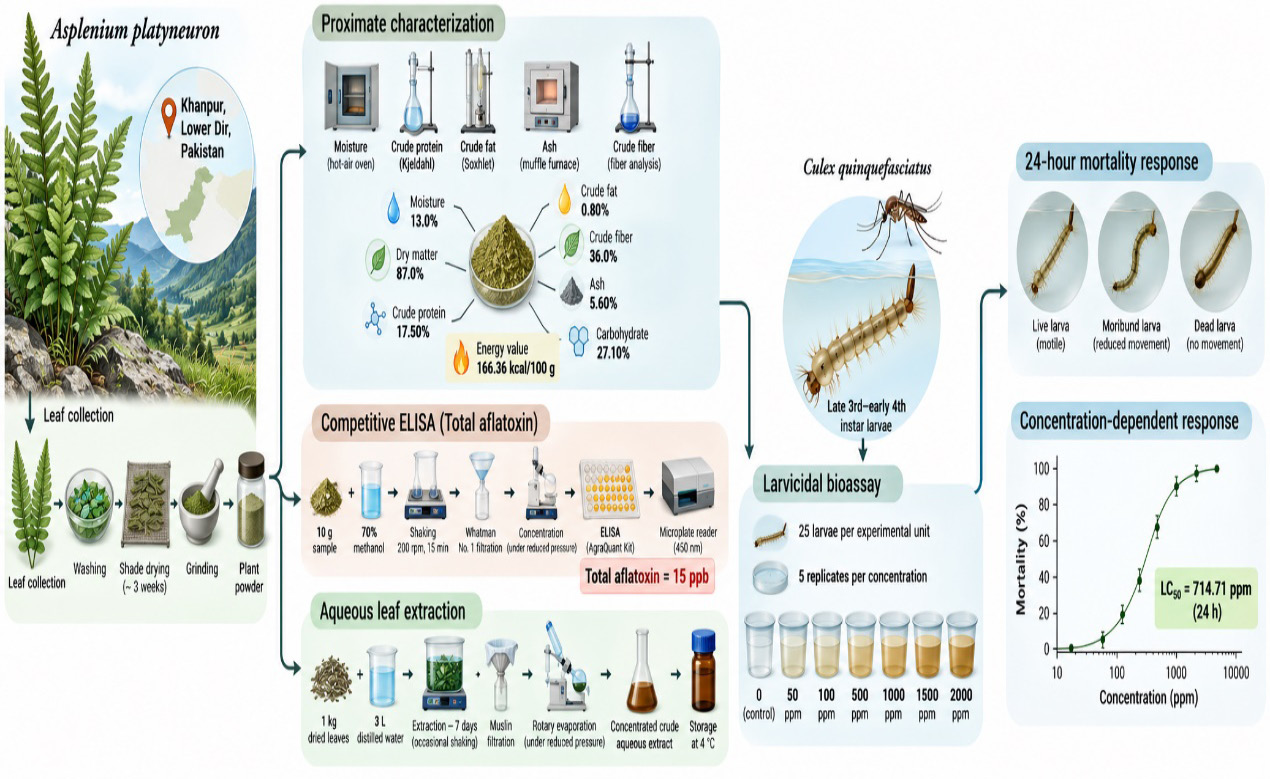
Experimental workflow used for plant collection, sample preparation, proximate characterization, totalaflatoxin screening, aqueous leaf extraction, and larvicidal bioassay.
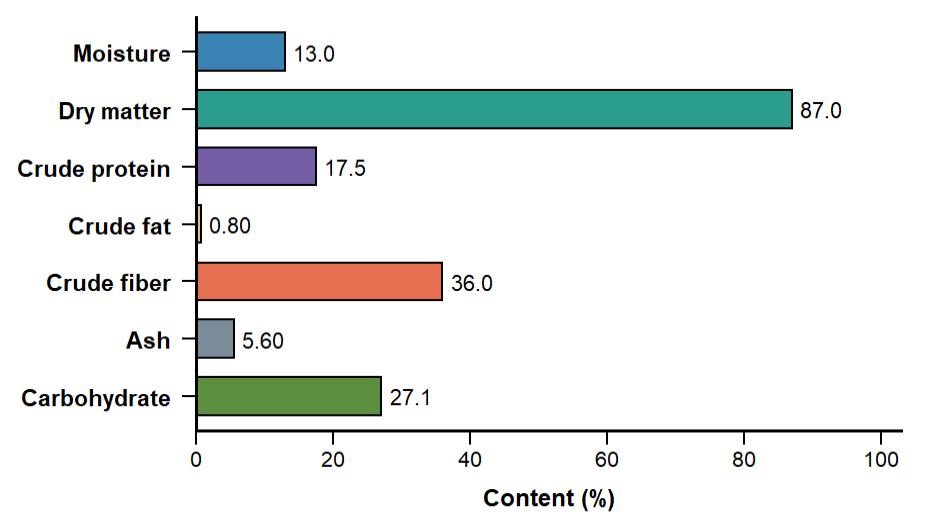
Proximate composition of Asplenium platyneuron collected from Khanpur, Lower Dir, Pakistan. Values are the recorded summary percentages. Dry matter is not plotted because it is the complement of moisture.
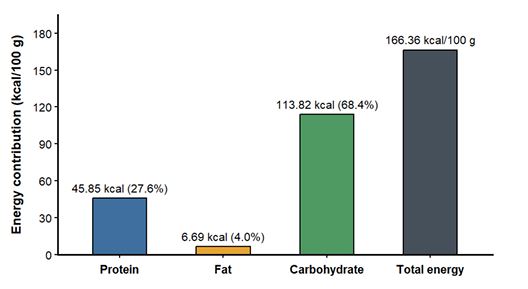
Macronutrient contributions to the reported calculated energy value of 166.36 kcal/100 g using the study-record equation: 2.62 × protein + 8.37 × fat + 4.20 × carbohydrate.
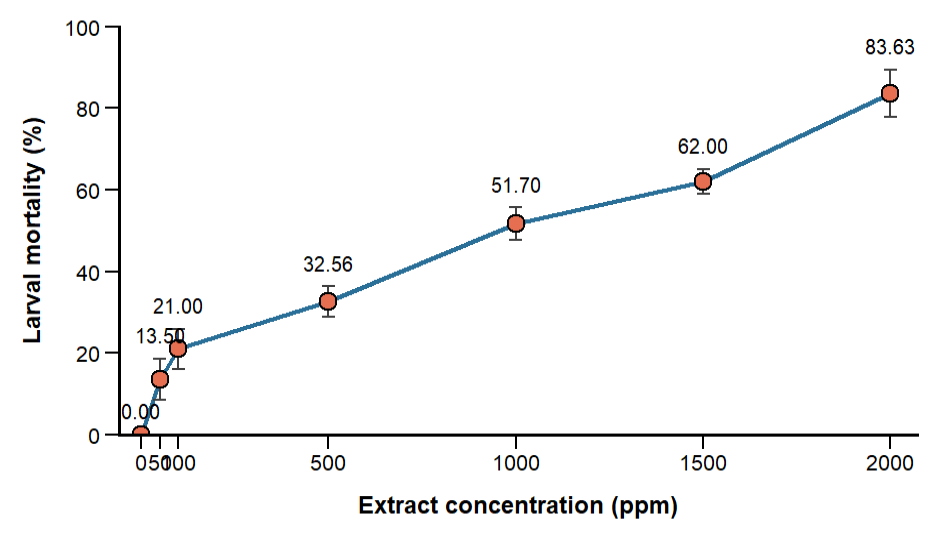
Concentration-dependent 24-h mortality of third- and fourth-instar Culex quinquefasciatus exposed to aqueous Asplenium platyneuron leaf extract. Points are the reported means and error bars are SD from five replicate cups per concentration.
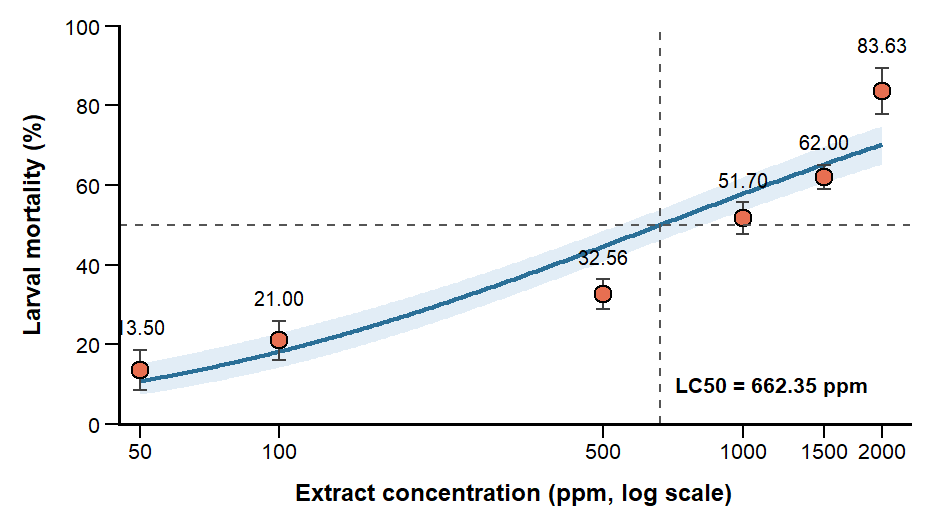
Descriptive probit reconstruction from the reported treatment-level larvicidal means. The dashed vertical line marks the recorded LC50 of 612.25 ppm; the treatment-mean consistency check gave an approximate midpoint of 635 ppm (R² = 0.878). This plot is descriptive and does not replace a replicate-level probit/binomial analysis.
References
- Abbott, W.S., 1925. A method of computing the effectiveness of an insecticide. J. Econ. Entomol., 18: 265–267. https://doi.org/10.1093/jee/18.2.265a[CrossRef]
- Abd Kadir, S.L., H. Yaakob and R. Mohamed Zulkifli. 2013. Potential anti-dengue medicinal plants: A review. J. Nat. Med., 67: 677–689. https://doi.org/10.1007/s11418-013-0767-y[CrossRef]
- Adeyeye, S.A.O., 2020. Aflatoxigenic fungi and mycotoxins in food: A review. Crit. Rev. Food Sci. Nutr., 60(5): 709–721. https://doi.org/10.1080/10408398.2018.1548429[CrossRef]
- Allgeier, S., A. Kästel and C.A. Brühl. 2019. Adverse effects of mosquito control using Bacillus thuringiensis var. israelensis: Reduced chironomid abundances in mesocosm, semi-field and field studies. Ecotoxicol. Environ. Saf., 169: 786–796. https://doi.org/10.1016/j.ecoenv.2018.11.050[CrossRef]
- AOAC International, 2023. Official methods of analysis of AOAC International, 22nd ed. G.W. Latimer Jr. (ed.). AOAC International, Rockville, Maryland, USA.
- Asif, S., M. Nisar, S. Ullah and M. Naeem. 2025. Reviewing the impact of seed-borne mycoflora on mycotoxin accumulation: A threat to lentil genetic resources. Toxicon, 108290. https://doi.org/10.1016/j.toxicon.2025.108290[CrossRef]
- Aziz, T., B. Ali, N. Rahid, R. Khan, A. Basit, G. Subhan, N. Dilawar and S. Ullah. 2026. Effect of allelopathic trees on the morphological features of rice (Oryza sativa). Pak. J. Weed Sci. Res., 32(2): 98–124.
- Balan, B., A.S. Dhaulaniya, M. Kumar, M. Kumar and P. Kumar. 2024. Aflatoxins in food: Prevalence, health effects, and emerging trends in its mitigation: An updated review. Food Saf. Health, 2(1): 39–71. https://doi.org/10.1002/fsh3.12030[CrossRef]
- Barraud, P.J., 1934. The Fauna of British India, Including Ceylon and Burma. Diptera, Vol. V: Family Culicidae, Tribes Megarhinini and Culicini. Taylor and Francis, London, UK.
- Benkerroum, N., 2020. Aflatoxins: producing molds, structure, health issues and incidence in Southeast Asian and Sub-Saharan African countries. Int. J. Environ. Res. Publ. Health, 17(4): 1215. https://doi.org/10.3390/ijerph17041215[CrossRef]
- Bibi, N., M. Khan, M. Ali, G. Subhan, G. Rahim and S. Ullah. 2026. Ethnomedicinal plant knowledge of Dheri Julagram, District Malakand, Pakistan: Diversity, traditional uses, and conservation implications. Pak. J. Weed Sci. Res., 32(3): 211–228.
- Boshra, M.H., G.S. El-Housseiny, M.M. Farag and K.M. Aboshanab. 2023. Evaluation of ELISA and immunoaffinity fluorometric analytical tools of four mycotoxins in various food categories. AMB Express, 13: 123. https://doi.org/10.1186/s13568-023-01629-5[CrossRef]
- Ferreira, G. and N. Thiex. 2023. Symposium review: Fiber and in vitro methods, analytical variation, and contributions to feed analysis. J. Dairy Sci., 106(6): 4464–4469. https://doi.org/10.3168/jds.2022-22407[CrossRef]
- Ghosh, A., N. Chowdhury and G. Chandra. 2012. Plant extracts as potential mosquito larvicides. Indian J. Med. Res., 135(5): 581–598.
- Haq, I.U., M. Farooq, M. Aqib, M.T. Khan, N.A. Khan, S. Ullah and N. Dilawar. 2026. Effect of dietary supplementation of various levels of Asparagus racemosus root powder on milk yield, composition, and blood biochemistry of Achai cross Jersey cows. Vet. Sci. Res. Rev., 12(2): 149–166. https://doi.org/10.17582/journal.vsrr/2026/12.2.149.166[Full text][CrossRef]
- Harbach, R.E., 1988. The mosquitoes of the subgenus Culex in southwestern Asia and Egypt (Diptera: Culicidae). Contrib. Am. Entomol. Inst., 24(1): 1–240.
- Hwang, S.H., M. Koo, S. Jo and Y.S. Cho. 2020. A comparison study of crude protein contents obtained utilizing the Kjeldahl method and Dumas combustion method in foods. Anal. Sci. Technol., 33(3): 143–150.
- Ilahi, I., I. Khan, M. Tariq and I. Ahmad. 2012. Larvicidal activities of different parts of Melia azedarach Linn. against Culex quinquefasciatus Say. (Diptera: Culicidae). J. Basic Appl. Sci., 8: 23–28. https://doi.org/10.6000/1927-5129.2012.08.01.27[CrossRef]
- Irshad, A., S. Noreen, U. Sajid, M. Jamal, M.A. Iqbal, S. Ullah, T. Sabtain, S. Ullah, E. Ibañez-Arancibia, P.R. De Los Ríos-Escalante, H. Belkahia, M. Ben Said and A.A. Swelum. 2025. Molecular identification, risk factors’ assessment, and phylogenetic analysis of Toxoplasma gondii in goats from Malakand Division, Khyber Pakhtunkhwa, Pakistan. Vet. Res., 49: 21. https://doi.org/10.1007/s11259-025-10783-z[CrossRef]
- Khan, R., N. Rahid, W. Khan, A. Basit, N. Dilawar, T. Aziz and S. Ullah. 2026. Endophytic fungus Sgr2 enhances Zea mays L. growth and biochemical resilience under salinity stress. Pak. J. Weed Sci. Res., 32(1): 14–39.
- Khan, R., N. Rahid, W. Khan, N. Shah, L. Shakir, H. Ghafoor, Abdullah and S. Ullah. 2025. Mitigation of salinity stress in maize (Zea mays L.) using the endophytic fungus GR7. Pak. J. Weed Sci. Res., 31(2): 151–166.
- Kitigwa, S.J., E.G. Kimaro, Y.P. Nagagi, J.B. Kussaga, R.A. Suleiman and A. Matemu. 2023. Occurrence and associated risk factors of aflatoxin contamination in animal feeds and raw milk from three agroecological zones of Tanzania. World Mycotoxin J., 16(2): 149–163. https://doi.org/10.3920/WMJ2022.2801[CrossRef]
- Litchfield, J.T. and F. Wilcoxon. 1949. A simplified method of evaluating dose–effect experiments. J. Pharmacol. Exp. Ther., 96: 99–113. https://doi.org/10.1016/S0022-3565(25)03549-9[CrossRef]
- Manan, F., I. Ahmad, F. Asad, L. Shakir and S. Ullah. 2025. Pharmacognosy, phytochemistry, and antimicrobial potential of Pteris cretica L. collected from Dir (Lower), Khyber Pakhtunkhwa. Pak. J. Weed Sci. Res., 31(2): 117–131.
- Mauer, L.J. 2024. Moisture and total solids analysis. In: B.P. Ismail and S.S. Nielsen (eds.), Nielsen’s Food Analysis. Springer, Cham, Switzerland.
- Naveed, M., K.S. Haleem, S. Ghazanfar, I. Tauseef, N. Bano, C.O. Adetunji, M.H. Saleem, H. Alshaya and B.A. Paray. 2022. Quantitative estimation of aflatoxin level in poultry feed in selected poultry farms. BioMed. Res. Int., 2022: 5397561. https://doi.org/10.1155/2022/5397561[CrossRef]
- Naz, F., M. Sohail, A. Noreen, S. Ali, H. Khan, L. Shakir, S. Ullah and S.A. Khan. 2026. Phytoclimatic patterns and seasonal variation in plant life forms and leaf size spectra in District Dir Lower, Pakistan. Pak. J. Weed Sci. Res., 32(1): 40–54.
- Nyein, K. and S. Ullah. 2026. Documentation of orchid diversity of Sarl Hkam Village, Kachin State, Myanmar. Plant Science Today, accepted.
- Omar, S.S., M.A. Haddad and S. Parisi. 2020. Validation of HPLC and enzyme-linked immunosorbent assay (ELISA) techniques for detection and quantification of aflatoxins in different food samples. Foods, 9(5): 661. https://doi.org/10.3390/foods9050661[CrossRef]
- Poopathi, S. and S. Abidha. 2010. Mosquitocidal bacterial toxins (Bacillus sphaericus and Bacillus thuringiensis serovar israelensis): mode of action, cytopathological effects and mechanism of resistance. J. Physiol. Pathophysiol., 1(3): 22–38.
- Saifullah, M., N. Dilawar, A. Rahman, A. Ahmad, M. Usman, S. Ullah and M. Nawaz. 2025. Role of rhizofungus (Aspergillus terreus) in improving biochemical and physiological parameters affected by lead stress in Allium sativum L. BioSci. Rev., 7(3): 78–93. https://doi.org/10.32350/bsr.73.06[CrossRef]
- Shakir, L., M. Sohail, F. Naz, S. Ali, H. Khan, A. Noreen, G. Subhan, N. Dilawar and S. Ullah. 2025. Phytochemical profiling and antibacterial potential of Morus alba L. leaf extracts against Salmonella typhi. Front. Med. Health Res., 3(5): 1482–1492.
- Shakir, U., J. Gul, G. Farzana, K. Siraj and S. Jan. 2018. Antifungal, nutritional and phytochemical investigation of Asplenium dalhousiae of District Dir Lower, Pakistan. J. Pharmacogn. Phytochem., 7(2): 3281–3288.
- Smaoui, S., T. D’Amore, M. Tarapoulouzi, S. Agriopoulou and T. Varzakas. 2023. Aflatoxin contamination in feed commodities: from occurrence and toxicity to recent advances in analytical methods and detoxification. Microorganisms, 11(10): 2614. https://doi.org/10.3390/microorganisms11102614[CrossRef]
- Sohail, M., L. Falaknaz, L. Shakir, G. Subhan, N. Dilawar, I. Ullah and S. Ullah. 2026. Medicinal plant diversity and ethnobotanical applications in Tehsil Khall, Dowab, Dir Lower, Khyber Pakhtunkhwa. Pak. J. Weed Sci. Res., 32(2): 69–97.
- Subhan, G., Z. Wang, F. Wen, W. Luo, M. Chen, X. Shen and Y. Hao. 2026. The interactive effect of rainfall and nitrogen deposition on soil respiration and its components in a temperate forest ecosystem. Plants, 15(9): 1340. https://doi.org/10.3390/plants15091340[CrossRef]
- Subhan, G., L. Shakir, S. Habib, U. Hassan, A. Begum, S. Rahman, M. Sohail, F. Naz, W.H. Khan, R. Khan, N. Dilawar and S. Ullah. 2025. Influence of extracts from Euphorbia helioscopia L. and Oxalis corniculata L. on the germination and seedling development of Triticum aestivum L. Asian J. Agric. Allied Sci., 8(1): 343–364. https://doi.org/10.56557/ajaas/2025/v8i177[CrossRef]
- Suhail, A., K. Ali, G. Rahim, S. Ali, S. Nasim, S. Rahman, G. Subhan, L. Shakir, M. Ali and S. Ullah. 2026. Proximate composition and aflatoxin B1 contamination of Onosma hispida aerial parts powder from District Malakand, Pakistan. Pak. J. Weed Sci. Res., 32(3): 198–210.
- Suhail, G., K. Ali, G. Rahim, S. Ali, S. Nasim, S. Rahman, G. Subhan, L. Shakir, M. Ali and S. Ullah. 2026. Proximate composition and aflatoxin B1 contamination of Onosma hispida aerial parts powder from District Malakand, Pakistan. Pak. J. Weed Sci. Res., 32(3): 198–210.
- Ullah, S. and L. Shakir. 2023. The effects of plant age on phytochemical and geographical distribution of Euphorbia helioscopia (sunspurge or madwoman’s milk), Euphorbiaceae, from Arranged District Bajaur, Pakistan. J. Weed Sci. Res., 29(4): 206–212.
- Wanjiru, J.W., L.G. Njue, M.W. Okoth and G.K. Muriira. 2023. Risk mitigation of aflatoxin contamination in maize and its food and feed products in developing countries: A review. East Afr. J. Sci. Technol. Innov., 4(3). https://doi.org/10.37425/eajsti.v4i.742[CrossRef]
Services
Article usage statistics
Loading…