
Asparagus racemosus (Shatavari) root powder supplementation was evaluated for its effects on feed intake, milk yield, and composition, and blood biochemistry in Achai × Jersey crossbred cows. Thirty-six lactating multiparous Achai–Jersey crossbred cows (290 ± 10 kg body weight; 15 ± 2.3 days in milk) were randomly allotted to four dietary treatments supplying 0, 50, 100, or 150 g/day of A. racemosus root powder in a randomized complete block design over 28 days. Supplementation significantly increased (P < 0.01) intakes of dry matter, organic matter, ether extract, crude protein, and crude fiber. Milk performance also improved, with significant increases (P < 0.01) in yields of milk, protein, lactose, solids-not-fat (SNF), and total solids (TS). The highest supplementation level (150 g/day; AR4) produced the greatest responses, including milk yield (3.14 L/day), milk protein (3.99%), lactose (5.04%), SNF (9.73%), and TS (13.26%) relative to the control. Milk fat percentage was not affected (P = 0.43). Blood metabolites were also enhanced by supplementation, with increases (P < 0.01) in total protein (125.5 mg/dL), glucose (63.64 mg/dL), and blood urea nitrogen (43.01 mg/dL). Overall, these results indicate that dietary A. racemosus root powder can improve feed intake, milk yield, and key milk constituents, and selected blood biochemical parameters in Achai × Jersey dairy cows. To evaluate the effects of Asparagus racemosus (Shatavari) root powder supplementation on feed intake, milk yield, and composition, and blood biochemistry in Achai × Jersey lactating cows. Supplement A. racemosus root powder at 150 g/cow/day to improve feed intake, milk yield, and milk solids, and blood biochemical indicators without affecting milk fat.
Research Article · Volume 12, Issue 2, 22 July 2026 · Open Access
Effect of Dietary Supplementation of Various Levels of Asparagus racemosus Root Powder on Milk Yield, Composition, and Blood Biochemistry of Achai Cross Jersey Cows
· · · · · ·
Affiliations & Notes ⌄
- 1Department of Animal Nutrition, The University of Agriculture, Peshawar 25120, Khyber Pakhtunkhwa, Pakistan
- 2State Key Laboratory of Systematic and Evolutionary Botany (LSEB), Institute of Botany, University of Chinese Academy of Science, Beijing, China, 100000
- 3Women University Mardan, Mardan 23200, Khyber Pakhtunkhwa, Pakistan. *Correspondence | Ihtisham Ul Haq and Shakir Ullah, Department of Animal Nutrition, The University of Agriculture, Peshawar 25120, Khyber Pakhtunkhwa, Pakistan
- 4Email: shakirawkum321@gmail.com, ihtishamulhaq114@gmail.com
Article Info ⌄
- Journal:
- Veterinary Sciences: Research and Reviews
- Published:
- 22 July 2026
From the article
- Dietary supplementation with Asparagus racemosus root powder at 150 g/day significantly enhanced nutrient intake, milk yield, and milk compositional quality in Achai × Jersey crossbred cows.
- Improvements in milk composition, particularly protein, lactose, SNF, and TS, indicate enhanced milk nutritional value, while favorable changes in the blood biochemical profile (increased BTP and BTG, and reduced BUN) suggest improved metabolic efficiency and nitrogen utilization.
Selected from the article's own text.
Abstract
Introduction
Dairy farming is a cornerstone of Pakistan’s agricultural economy, supporting millions of rural households and contributing significantly to national food and nutrition security . In 2023, agriculture accounted for approximately 23.37% of the country’s GDP . Within this sector, livestock, particularly dairy, represents a major component, contributing about 60.84% of value added in agriculture and 14.63% of the total GDP (PES, 2023–24). Pakistan is currently the fourth-largest milk producer in the world, after the USA, China, and India ; however, despite high national production, the sector still faces an estimated 4.57-billion-liter annual shortfall due to rising domestic demand ; .
Milk productivity in Pakistan remains constrained by structural and nutritional challenges . A large proportion of livestock farmers are landless and therefore rely on conventional production systems with limited resources for improved feeding and management ; . Moreover, inadequate year-round fodder availability, high feed costs, low nutrient density of available rations, and restricted access to practical, low-cost nutritional strategies collectively contribute to suboptimal milk yield and animal performance ; . As the livestock population continues to increase annually, ensuring a sustainable supply of nutrient-rich, economically feasible feed resources is essential to reduce the widening productivity gap between Pakistan and leading dairy-producing countries ; .
In recent years, herbal feed additives have attracted increasing attention as natural alternatives to synthetic growth and production enhancers in animal nutrition ; Șonea et al., 2023). Herbal medicines are generally valued for their safety, affordability, wide availability, minimal side effects, and low risk of residues in milk, and their use in traditional livestock health practices dates back to ancient times . Among these botanicals, Asparagus racemosus (Shatavari) is a well-known herb in Ayurvedic medicine . Shatavari is a perennial species of the family Asparagaceae and is recognized for its galactagogue , adaptogenic, immunomodulatory, and phytoestrogenic properties . These effects are attributed to diverse bioactive constituents, including alkaloids, flavonoids, steroidal saponins, and essential oils . The roots are particularly rich in steroidal saponins, antioxidants, sarsasapogenin, Shatavarin I–IV, quercetin, rutin, and trace minerals ; , suggesting potential to enhance reproductive function, feed efficiency, and milk productivity in dairy animals .
Pakistan hosts approximately 14 Asparagus species, of which A. racemosus, A. gonaclades, A. adsendens, and A. officinalis are commonly used in indigenous medicine . Asparagus officinalis is widely distributed in the plains of Punjab and the foothills of Kashmir . Previous studies have reported improvements in milk yield and milk composition following Shatavari supplementation ; . Although Shatavari use in dairy production is well established in India, evidence under Pakistani production systems, particularly in local breeds and crossbreds, remains limited, highlighting the need for further evaluation ; .
Pakistan has a diverse range of animal breeds adapted to various climatic and agricultural conditions . Among these, Achai cows have gained attention for their resilience and moderate milk production, particularly in the challenging terrains of Khyber Pakhtunkhwa . Achai is a light-draught dairy breed that can thrive under limited feed resources and supports farming livelihoods in hilly and sub-hilly regions . Native to the northwestern Hindukush mountains of Pakistan and adjacent regions of Afghanistan, Achai cattle are well known for their adaptability to harsh climates and rugged terrains (Ullah et al., 2018). They exhibit strong immunity, better reproductive performance, and disease resistance, and they can graze freely, making them an economical option for high-altitude and low-input farming systems . The average milk yield of Achai cows is about 5.8 L/day, with relatively stable milk composition across different watering frequencies . Although their milk yield is lower than that of many local and exotic breeds in Pakistan, crossbreeding with Jersey cattle has been reported to enhance milk production ; . Therefore, identifying affordable, nutrient-rich, and locally applicable supplements is important to improve productivity by enhancing performance, supporting reproductive efficiency, and increasing milk yield under the low-input feeding systems common in marginal areas (Ullah et al., 2018).
The study aimed to evaluate the effects of graded levels of Asparagus racemosus (Shatavari) root powder on feed intake, milk yield, milk composition, and blood biochemical parameters in Achai × Jersey crossbred cows. Although Shatavari has been widely used and studied as a galactagogue and productivity enhancer in dairy animals, particularly under Indian production systems, there is limited scientific evidence on its efficacy in Pakistani dairy conditions, especially in local breeds and their crossbreds managed under low-input feeding systems. Therefore, this study addresses a clear research gap by assessing the performance and metabolic responses of Achai × Jersey cows to Shatavari supplementation and identifying an appropriate supplementation level that could be adopted as a functional and sustainable nutritional intervention to enhance dairy productivity in Pakistan.
Materials and Methods
Study area
The lactation trial was conducted at the Livestock Research and Development Station, Surezai, Peshawar, Pakistan (34°27′12.46″ N, 71°27′56.4″ E; 490 m above sea level) . The experiment was carried out from September to November 2024, during which the ambient temperature ranged from 20 to 24 °C (Ullah et al., 2018c).
Experimental animals and allocation
Thirty-six healthy lactating multiparous Achai × Jersey crossbred cows (290 ± 10 kg body weight; 15 ± 2.3 days in milk) were selected based on parity, milk production, and live body weight . Animals were blocked based on initial characteristics (milk yield, parity, and body weight) and allocated to four dietary treatments (n = 9 cows per treatment) using a randomized complete block design (RCBD) .
Diets
The experimental cows were offered a basal diet consisting of oats, maize silage, wheat straw, ground corn, wheat bran, cottonseed cake, a vitamin mineral premix, and salt. Four dietary treatments were used: AR1 (control) received the basal diet without Asparagus racemosus root powder; AR2 received the basal diet plus 50 g/cow/day A. racemosus root powder; AR3 received the basal diet plus 100 g/cow/day; and AR4 received the basal diet plus 150 g/cow/day (Ullah et al., 2018d). The chemical composition of the A. racemosus root powder is presented in Table 1.
Table 1: Chemical Composition of Asparagus racemosus root powder.
| Nutrients | Chemical composition (%) |
| Moisture | 9.5 |
| Carbohydrates | 52.9 |
| Crude Fiber | 17.9 |
| Crude Fat | 6.2 |
| Crude Protein | 6.1 |
| Ash | 4.2 |
Feeding management
Cows were housed in individual pens with slatted wooden floors and were provided separate feeders and water troughs. Animals were fed twice daily at 07:00 h and 19:00 h, with ad libitum access to fresh drinking water. Before the start of data collection, cows were adapted to the experimental diets for 12 days .
Data recording
Following the adaptation period, data on nutrient intake, milk yield, milk composition, and blood metabolites were collected for the subsequent 28 days (Ullah et al., 2018g).
Sampling procedure
All experimental cows were milked twice daily at 04:00 hours and 18:00 hours, and individual daily milk yield was recorded throughout the trial. For milk composition analysis, morning and evening milk samples (20 mL each) were collected from each cow for two consecutive days every week. Milk samples were stored at 4°C until analysis (Ullah et al., 2018e).
Blood samples (10 mL) were collected from each cow via jugular venipuncture into EDTA tubes. Samples were centrifuged at 3000 rpm for 3 min, and serum was harvested for subsequent biochemical analysis .
Measurements
Milk samples were analyzed for fat, protein, lactose, total solids (TS), and solids-not-fat (SNF). Blood serum was analyzed for total protein, glucose, and blood urea nitrogen (BUN) using an SMT-120VP® biochemical analyzer .
To assess nutrient intake and diet composition, weekly samples of the offered ration and refusals (leftovers) were collected, oven-dried at 55°C for 72 h, ground to pass through a 1-mm sieve, and analyzed for dry matter (DM), crude protein (CP), crude fiber (CF), ether extract (EE), and ash .
Chemical analysis
Feed (Ration and Refusals) analysis: Feed samples were analyzed for dry matter (DM), ether extract (EE), crude protein (CP), and ash according to AOAC methods . Dry matter was determined by drying samples to constant weight at 103°C in a hot-air oven (protocol #930.15). Crude protein (N × 6.25) was measured using the Kjeldahl procedure (protocol #984.13) with a KjeltecTM® 8200 autoanalyzer .
Ether extract was determined using the Soxhlet extraction method (protocol #920.39), and ash content was measured by complete incineration at 550°C for 4 h (protocol #942.05) . Crude fiber (CF) was determined following AOAC protocol #978.10, involving sequential digestion with 1.25% (w/v) sulfuric acid and 1.25% (w/v) sodium hydroxide, followed by ashing .
Milk composition analysis
Milk samples were analyzed using a Lactoscan MCCW-V1 3050®, which measures milk fat, lactose, protein, total solids (TS), and solids-not-fat (SNF). The instrument aspirated 12 mL of milk per analysis according to the manufacturer’s standard operating procedures .
Quality control and replication
All laboratory analyses were performed in duplicate under controlled laboratory conditions to ensure consistency and reliability of the results .
Statistical analysis
The effects of the experimental diets on nutrient intake, milk yield and composition, and blood metabolites were analyzed using the PROC MIXED procedure of SAS (Version 6.2; SAS Institute Inc., NC, USA). When a significant treatment effect was detected (P ≤ 0.05), differences among least squares means were separated using the Tukey–Kramer multiple comparison test. Results are reported as least squares means ± standard error of the mean (SEM).
The statistical model used was:
Yij = μ+ βi+ τj + εij
Where: Yij is the observed response (e.g., dry matter intake (DMI), milk yield, or milk composition) for the jth animal in the ith treatment group, μ is the overall mean, βi is the fixed effect of the ith treatment (e.g., dietary supplementation with Asparagus), τj is the random effect accounting for variation among individual animals, and εij is the random error term associated with the observation. Results are presented as least square means with their standard error of the mean (SEM). Figures were generated in R (v4.3) using the ggplot2 package.
Result
Chemical composition of Asparagus racemosus root powder
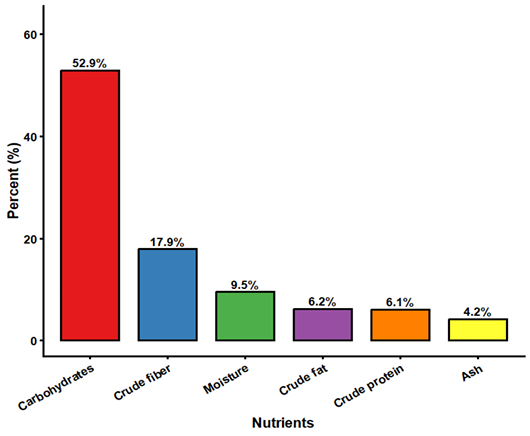
Table 1 and Figure 1 present the proximate composition of Asparagus racemosus root powder, showing that it is predominantly an energy- and fiber-rich plant supplement with moderate fat and relatively low protein and mineral content. Carbohydrates (52.9%) are the largest fraction, indicating that the powder is mainly a carbon/energy source. This high carbohydrate level can contribute to improved palatability and support rumen fermentation by providing readily available substrate for microbes . Crude fiber (17.9%) is substantial, suggesting the supplement contains a meaningful structural component. In ruminants, this can help maintain rumen function (chewing activity, saliva production, stable rumen pH), although very fibrous supplements can also dilute dietary energy if included at excessive levels. Moisture (9.5%) is relatively low, which is favorable for storage stability and reduces the risk of spoilage compared with wetter plant materials. Lower moisture also means the powder is more concentrated in nutrients per unit weight. Crude fat (6.2%) is moderate for a plant root product. This can modestly raise dietary energy density. However, because high fat can suppress fiber digestion in the rumen when excessive, the overall inclusion rate still matters at this level; it more likely supports energy supply rather than causing negative rumen effects. Crude protein (6.1%) is low, meaning the powder should not be considered a primary protein supplement. Any improvements in crude protein intake observed with supplementation (Table 2) are therefore more likely due to increased overall feed intake or improved utilization rather than the powder directly supplying large amounts of protein. Ash (4.2%) reflects total mineral content and is modest. This suggests that Asparagus root powder contributes minerals but is unlikely to replace a dedicated mineral mixture in dairy diets.
Table 2: Effect of Asparagus racemosus root powder supplementation on feed intake of Achai cross Jersey cows.
| Diets | Intake (kg/day) | ||||
| DM | OM | EE | CP | CF | |
| AR1 | 7.74d | 6.46c | 0.19b | 1.17c | 1.55d |
| AR2 | 7.82c | 6.54b | 0.20b | 1.18bc | 1.62c |
| AR3 | 7.89b | 6.62a | 0.25ab | 1.21a | 1.77b |
| AR4 | 7.92a | 6.63a | 0.29a | 1.19b | 1.81a |
| SEM | 2.48 | 3.31 | 1.44 | 5.45 | 3.14 |
| P value | ** | ** | *** | ** | ** |
Means with different superscripts (abcd) in the same column differed at P < 0.05, **P<0.01, ***P<0.05, AR1= control diet without Asparagus racemosus root powder supplementation, AR2= control diet with 50g Asparagus racemosus root powder supplementation, AR3= control diet with 100g Asparagus racemosus root powder supplementation, AR4= control diet with 150g Asparagus racemosus root powder supplementation, DM; dry matter, OM organic matter, CP; crude protein, CF; crude fiber, EE; ether extract.
Effect of Asparagus racemosus root powder supplementation on feed intake
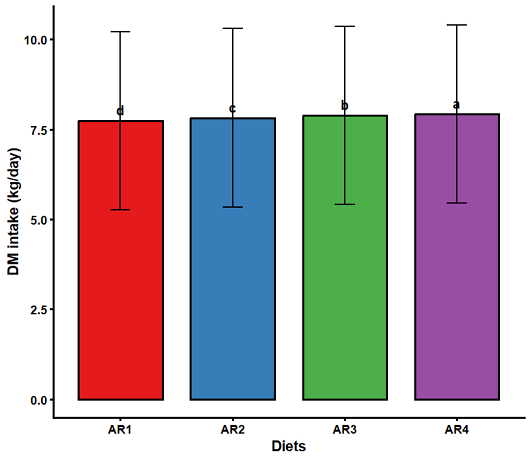
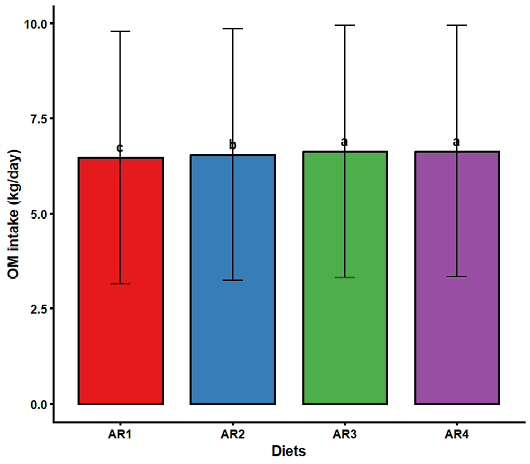
Table 2 summarizes the effects of increasing levels of Asparagus root (AR) powder on daily nutrient intake across treatment groups (including the control and AR₁–AR₄). Overall, supplementation improved intake of multiple nutrients, with the strongest responses generally occurring at the higher supplementation levels. Dry matter (DM) intake (kg/day): Supplementation caused a significant increase (P < 0.01). The highest DM intake was observed in AR₄ (7.92 kg/day), indicating that higher AR inclusion most strongly stimulated total feed consumption. Organic matter (OM) intake (kg/day): OM intake also increased significantly (P < 0.01), with the peak value in AR₄ (6.63 kg/day). This aligns with the DM response and confirms improved intake of digestible feed components . Ether extract (EE) intake (kg/day): EE intake was significantly affected (P < 0.05). The highest EE intake occurred in AR₄ (0.29 kg/day), compared with AR₁ (0.19 kg/day), suggesting improved intake of dietary fat components at higher AR levels. Crude protein (CP) intake (kg/day): CP intake showed a highly significant improvement (P < 0.01), but the highest CP intake was recorded in AR₃ (1.21 kg/day) rather than AR₄, indicating CP intake may peak at an intermediate-high supplementation level. Crude fiber (CF) intake (kg/day): CF intake increased significantly (P < 0.01). The highest CF intake was noted in AR₄ (1.81 kg/day), compared to the control (1.55 kg/day), showing improved fiber consumption with the highest AR dose. Interpretation from Table 2: Asparagus root powder supplementation enhanced intake of key nutrients, with AR₄ showing the most consistent improvement across DM, OM, EE, and CF, while AR₃ produced the highest CP intake. This pattern supports the conclusion that higher AR dosing generally promotes greater nutrient intake, which may contribute to improved production responses (e.g., milk yield) and metabolic support . Figure 2 illustrates the increase in DM intake with AR supplementation. The key visual message is the statistically significant rise (P < 0.01), with the highest DM intake in AR₄ (7.92 kg/day). This figure highlights that AR₄ produced the greatest improvement in overall feed intake. Figure 3 presents the OM intake response, showing a significant improvement (P < 0.01) across supplemented groups. The maximum OM intake is shown for AR₄ (6.63 kg/day), reinforcing that higher AR supplementation improved consumption of organic (nutritive) components of the diet. Figure 4 displays the change in EE intake, showing a significant effect (P < 0.05). The figure emphasizes that AR₄ had the highest EE intake (0.29 kg/day), notably higher than AR₁ (0.19 kg/day). This supports the idea that higher supplementation levels improved intake of fat-related nutrients. Figure 5 shows the CP intake pattern, with a highly significant increase (P < 0.01). Importantly, the figure highlights that the highest CP intake occurred in AR₃ (1.21 kg/day), suggesting the CP response peaked at AR₃ rather than increasing
monotonically to AR₄. Figure 6 presents CF intake and confirms a significant improvement (P < 0.01). The figure emphasizes the highest CF intake in AR₄ (1.81 kg/day) compared with the control (1.55 kg/day), showing that the highest AR dose increased fiber consumption most clearly. Together, Table 2 (numerical results) and Figures 2–6 (visual trends) indicate that Asparagus root powder supplementation improves nutrient intake in Achai × Jersey cows. The most pronounced and consistent enhancements are observed in AR₄ for DM, OM, EE, and CF, while AR₃ yields the highest CP intake, suggesting that some nutrients may respond optimally at slightly different supplementation levels.
Effect of Asparagus racemosus root powder supplementation on milk yield
Table 3 shows the effect of Asparagus root supplementation on the milk yield of the Achai cross Jersey cow. Supplementation significantly (P < 0.01) enhanced milk production, with the highest yield (3.14 liters/day) observed in AR₄, followed by AR₃ (2.88 liters/day), AR₂ (2.5 liters/day), and AR₁ (2.24 liters/day). The control group (0 g/day) exhibited the lowest milk yield, further supporting the positive impact of Asparagus supplementation on lactation performance. The results suggest that higher levels of Asparagus root powder in the diet correlate with improved milk production, with AR₄ showing a remarkable 40% increase in milk yield compared to the control. This demonstrates the potential of Asparagus racemosus as an effective feed supplement to enhance milk yield in dairy cows . The pattern in Table 3 indicates that increasing Asparagus root powder levels are associated with progressively higher milk output, suggesting a positive relationship between supplementation dose and lactation performance. Our data also report that AR₄ achieved ~40% higher milk yield than the control, highlighting a biologically meaningful improvement, not just a statistically significant one. From a nutritional/production perspective, this response is consistent with what we observed earlier in nutrient intake (e.g., improved DM and OM intake at higher AR levels): higher intake and better nutrient supply commonly translate into improved milk synthesis, especially when energy availability and rumen efficiency are supported. Figure 7 graphically presents the same milk yield results shown in Table 3. We notice a clear upward trend in milk yield from control → AR₁ → AR₂ → AR₃ → AR₄. The dominant peak in AR₄ (3.14 L/day), followed by AR₃ (2.88 L/day). The lowest bar/point for the control group, reinforcing the benefit of supplementation. The significant treatment effect (P < 0.01) indicates the differences among groups are unlikely.
Table 3: Effect of supplementation of Asparagus racemosus root powder on milk yield of Achai cross Jersey cows.
| Diets | Milk yield (Liters) |
| AR1 | 2.2d |
| AR2 | 2.5c |
| AR3 | 2.8b |
| AR4 | 3.1a |
| SEM | 3.47 |
| P value | ** |
Means with different superscripts (abcd) in the same column differed at P < 0.05, **P<0.01, AR1 control diet without Asparagus racemosus root powder supplementation, AR2= control diet with 50g Asparagus racemosus root powder supplementation, AR3= control diet with 100g Asparagus racemosus root powder supplementation, AR4= control diet with 150g Asparagus racemosus root powder supplementation.
Effect of Asparagus racemosus root powder supplementation on milk composition of Achai cross Jersey cow
Milk composition responses to Asparagus racemosus root powder supplementation is presented in Table 4 and further illustrated in Figures 6-12. Overall, the findings demonstrate that dietary inclusion of Asparagus root powder improves milk quality, primarily by enhancing milk protein, lactose, solids-not-fat (SNF), and total solids (TS), while milk fat percentage remains unaffected. Statistical analysis showed that milk fat (%) was not significantly influenced by Asparagus root supplementation (P = 0.43). Although small numerical differences may have occurred among treatment groups, these variations were not large enough to be attributed to the dietary treatments, indicating that Asparagus root powder does not alter the fat fraction of milk under the conditions of this study . In contrast, several key milk quality parameters improved significantly with supplementation. Milk protein (%) increased markedly across treatments (P < 0.01), with the highest protein concentration recorded in AR₄ (3.99%), suggesting that the greatest improvement occurred at the highest supplementation level. Similarly, milk lactose (%) differed significantly among groups (P < 0.01), reaching its maximum value in AR₄ (5.04%), supporting a clear dose-related enhancement in milk carbohydrate content. The improvements in milk protein and lactose were reflected in the overall milk solids profile. Solids-not-fat (SNF, %) showed a highly significant increase (P < 0.01), with the highest SNF concentration observed in
Table 4: Effect of Asparagus racemosus root powder supplementation on milk composition of Achai cross Jersey cows.
| Diets | Milk composition % | ||||
| Fat | Protein | Lactose | SNF | Total solids | |
| AR1 | 3.52 | 3.28d | 4.85d | 8.80d | 12.32d |
| AR2 | 3.53 | 3.54c | 4.93c | 9.15c | 12.69c |
| AR3 | 3.54 | 3.75b | 4.97b | 9.43b | 12.97b |
| AR4 | 3.52 | 3.99a | 5.04a | 9.73a | 13.26a |
| SEM | 0.01 | 0.02 | 0.01 | 0.03 | 0.03 |
| P value | 0.43 | ** | ** | ** | ** |
Mean with different superscripts (abcd) in the same column differed at P < 0.05, **P<0.01, AR1= control diet without Asparagus racemosus root powder supplementation, AR2= control diet with 50g Asparagus racemosus root powder supplementation, AR3= control diet with 100g Asparagus racemosus root powder supplementation, AR4= control diet with 150g Asparagus racemosus root powder supplementation, SNF: solid not fat.
AR₄ (9.73%), consistent with the fact that protein and lactose are major contributors to SNF. In addition, total solids (TS, %) increased significantly (P < 0.01), and the highest TS value was again recorded in AR₄ (13.26%), indicating a richer and more nutrient-dense milk composition at the highest Asparagus inclusion level. Collectively, Table 4 confirms a dose-dependent improvement in milk composition, with AR₄ (150 g/day) producing the most favorable outcomes for milk quality traits, particularly protein, lactose, SNF, and TS. Since milk fat percentage remained unchanged, the enhanced milk quality appears to be driven mainly by increases in non-fat milk solids, which is advantageous for both human nutrition and dairy processing efficiency, where higher SNF and TS are often associated with better product yield and quality.
Effect of Asparagus racemosus root powder supplementation on blood biochemistry of Achai cross Jersey
The effects of Asparagus racemosus root powder supplementation on the blood biochemical profile of Achai × Jersey cows are summarized in Table 5 and graphically illustrated in Figures 13–15. Overall, the results indicate that supplementation positively influenced key metabolic indicators, suggesting improved nutritional and physiological status in supplemented cows. Total blood protein (BTP) increased significantly with Asparagus supplementation (P < 0.01). The highest BTP concentration was observed in AR₄ (125.5 mg/dL), demonstrating that the greatest improvement occurred at the highest inclusion level. Elevated blood protein generally reflects better protein status and may indicate improved dietary protein intake, utilization, or overall metabolic function.
Table 5: Effect of Asparagus racemosus root powder supplementation on the blood biochemical profile of Achai cross Jersey cows.
| Diets | Blood parameters (mg/dl) | ||
| BTP | BTG | BUN | |
| AR1 | 121.5d | 58.31d | 43.01a |
| AR2 | 123.4c | 62.26c | 41.68b |
| AR3 | 124.7b | 65.27a | 40.93c |
| AR4 | 125.5a | 63.64b | 39.94d |
| SEM | 0.84 | 0.19 | 0.08 |
| P value | ** | ** | ** |
Means with different superscripts (abcd) in the same column differed at P < 0.05, **P<0.01, AR1= control diet without Asparagus racemosus root powder supplementation, AR2= control diet with 50g Asparagus racemosus root powder supplementation, AR3= control diet with 100g Asparagus racemosus root powder supplementation, AR4= control diet with 150g Asparagus racemosus root powder supplementation, BTP=Blood Total Protein, BTG= Blood Total Glucose, BUN= Blood Urea Nitrogen.
Similarly, blood glucose (BTG) rose significantly across treatments (P < 0.01), with the maximum value recorded in AR₃ (65.27 mg/dL). This increase suggests an enhanced energy status, potentially linked to improved feed intake and better nutrient availability. The fact that glucose peaked in AR₃ rather than AR₄ may indicate an optimal metabolic response at that level, or a plateau in glucose regulation at the highest dose. In contrast to the increases in BTP and BTG, blood urea nitrogen (BUN) showed a consistent downward trend with increasing supplementation. BUN decreased progressively from AR₁ (43.01 mg/dL) to AR₄ (39.94 mg/dL), indicating more efficient nitrogen utilization. Lower BUN is often interpreted as improved protein metabolism and reduced nitrogen wastage, suggesting that supplemented cows may have experienced better synchronization of dietary energy and protein in the rumen, leading to improved incorporation of nitrogen into productive processes rather than excretion. Table 5 and Figures 13–15 demonstrate that Asparagus root powder supplementation improves the blood biochemical profile of dairy cows by increasing total blood protein and glucose and reducing BUN, reflecting enhanced protein and energy status as well as improved nitrogen balance. These changes point to a beneficial effect on metabolic health, which may support improved productivity and overall performance when Asparagus root powder is included in the diet.
Discussion
In Ayurvedic medicine, Asparagus racemosus (Shatavari) is widely recognized for its lactogenic properties and broader health-promoting effects . In dairy production systems, particularly in low milk-producing animals, Shatavari has been investigated as a functional feed supplement with potential benefits for intake, rumen function, and overall performance .
The increase in dry matter intake (DMI) observed with Asparagus root supplementation may be linked to the plant’s bioactive saponins, especially Shatavarins I–IV, which are reported to enhance rumen fermentation efficiency and improve nutrient utilization . Saponins can interact with ruminal microorganisms by selectively suppressing protozoa while encouraging fibrolytic bacterial populations, including Fibrobacter succinogenes and Ruminococcus flavefaciens, thereby supporting fiber degradation and fermentation dynamics . Such microbial modulation provides a plausible mechanism for changes in fiber utilization and crude fiber (CF) intake patterns across supplementation levels, where different doses may shift microbial populations and fermentation outcomes differently, rather than producing a strictly linear response .
These findings are consistent with earlier reports showing improved intake responses to Shatavari supplementation in cattle. Berhane (2000) reported that postpartum supplementation with 100 g of Asparagus improved feed intake in crossbred cows, and similarly noted that feeding Shatavari on alternate days to freshly parturated cows markedly increased intake. Bhinda et al. (2021) also observed significantly higher DMI (P < 0.05) in crossbred heifers supplemented with Asparagus at 150 and 200 mg/kg body weight, supporting the view that supplementation can stimulate feed consumption under certain conditions . Comparable improvements in DMI have been reported in growing crossbred heifers supplemented with Asparagus ; . However, not all studies show a consistent intake effect; Kumar et al. (2011) reported that supplementation at 100 and 200 mg/kg live body weight during the prepartum and postpartum periods did not affect DMI in crossbred cattle, suggesting that responses may depend on physiological stage, basal diet, dose, and management .
The present pattern, where crude protein (CP) intake peaked at AR₃ (100 g/day), may indicate an optimal dose at which saponin-driven rumen changes enhance nitrogen capture and utilization . At moderate supplementation levels, saponins may improve microbial protein synthesis by limiting protozoal predation on bacteria, increasing bacterial flow, and potentially improving amino acid availability for absorption ; . Thus, the highest CP intake at AR₃ may reflect a balance between improved rumen microbial efficiency and nitrogen use, whereas higher supplementation levels may shift fermentation patterns or nutrient partitioning in ways that do not further increase CP intake to the same extent . Overall, the literature supports the biological plausibility of Asparagus root powder improving intake and nutrient utilization through rumen microbial modulation, while also emphasizing that responses can vary by dose and physiological state, a pattern consistent with the mixed findings reported across studies .
The results of the present study reinforce the beneficial role of Asparagus racemosus (Shatavari) in improving lactation performance, as evidenced by the significant increase in milk yield in supplemented cows. This outcome is consistent with earlier work suggesting that Shatavari acts as a natural lactogenic herb, partly through endocrine stimulation . For example, Gupta and Shaw (2011) proposed that Shatavari supplementation increases prolactin, a key hormone regulating milk synthesis and secretion in the mammary gland. In line with this mechanism, Mishra et al. (2008) reported that postpartum supplementation with A. racemosus markedly enhanced milk production in crossbred cows .
A growing body of literature also supports the positive production responses reported in the current trial. Chavan et al. (2023) observed a significant improvement in milk yield in crossbred cows receiving Asparagus supplementation, while Khera et al. (2022) documented a highly significant increase (p < 0.01) in daily milk yield in crossbred cows of uniform parity when A. racemosus was included in the diet. Similar improvements have been reported in both cattle and buffaloes; Tanwar et al. (2008) and Asif et al. (2025) found increased average milk production (P < 0.05) in dairy cows and buffaloes supplemented with 50 g Shatavari root powder for 60 days, and Meena et al. (2020) also reported enhanced milk production in buffaloes fed powdered Asparagus root . Comparable results were demonstrated by Pandiyan et al. (2022), who reported a significant increase (p < 0.01) in milk production of Jersey crossbred cows supplemented with Asparagus root powder, findings further supported by Jingar et al. (2018).
The higher milk production observed in the highest supplementation group (AR₄) in the present study may be explained, in part, by improved nutrient intake, which increases the availability of substrates and bioactive “galactogenic” compounds needed to support milk synthesis . Beyond nutritional effects, Shatavari may also contribute to better udder health and lactation persistence. Sharma (2009) reported that supplementing crossbred cows with Asparagus at 250 mg/kg body weight reduced the incidence of mastitis and significantly improved milk yield, suggesting a dual role in both production and health .
Mechanistically, several authors have proposed that the lactogenic response to A. racemosus is mediated through stimulation of the pituitary gland, resulting in increased prolactin release ; . Pandey et al. (2005) further explained that A. racemosus may exert estrogenic effects on mammary tissue, promoting higher circulating prolactin and stimulating division and proliferation of alveolar secretory epithelial cells within mammary ducts . Collectively, these endocrine and nutritional pathways provide a strong biological basis for the consistent increases in milk yield reported across studies and support the conclusion that Asparagus racemosus root powder is a promising natural feed supplement for enhancing milk production in dairy cows .
The improvements observed in milk composition in the present study are consistent with earlier reports showing that Asparagus racemosus (Shatavari) supplementation enhances milk quality traits. Our results align with Khera et al. (2022) and Bhinda et al. (2021), who reported significantly higher (P < 0.05) lactose, protein, SNF, and TS in animals supplemented with Asparagus compared to control groups. The rise in milk protein in our trial is further supported by the improved crude protein (CP) intake recorded in Table 2, suggesting that better protein intake and utilization may have contributed directly to increased protein deposition in milk. Similar responses have been documented across species; Krishana et al. (2005) reported a 12–15% increase in milk protein in goats supplemented with A. racemosus, while Pandiyan et al. (2022) also found significant increases in milk protein, lactose, and SNF in dairy animals receiving Asparagus supplementation.
In contrast to the significant changes in milk protein and other solids, milk fat percentage remained statistically unchanged in our study. This finding is biologically plausible, as milk fat synthesis is strongly dependent on ruminal acetate, a volatile fatty acid primarily produced through fiber fermentation . The basal ration in this trial (maize silage and wheat straw) was forage-based and likely supplied sufficient effective fiber to sustain acetate production, thereby maintaining milk fat synthesis even under Asparagus supplementation . This interpretation is consistent with studies showing that saponin-rich supplements do not necessarily alter milk fat content when cows are fed high-forage diets . Moreover, Gaafar et al. (2011) suggested that stress can reduce milk fat percentage, which could partly explain numerical variations without a treatment-driven effect. Supporting the neutrality of Asparagus on milk fat, Muwal et al. (2020) reported that Asparagus supplementation did not negatively affect milk fat percentage. Likewise, studies in lactating crossbred cows ; ; similarly observed no significant differences (P > 0.05) in milk fat between supplemented and control groups.
The significant increase in milk protein content may be associated with modification of the rumen ecosystem ; and improved nutrient digestion and utilization ; , resulting in greater availability of precursors required for milk protein synthesis. Consistent with our observations, Kumar et al. (2011), Kumawat et al. (2017), and Mishra et al. (2008) also reported significantly higher milk protein in dairy cows and buffaloes supplemented with Shatavari. Similarly, the increase in total solids (TS) observed in our study agrees with findings from Kumar et al. (2014) and Kumawat et al. (2017), who reported significant improvements (p < 0.05) in TS percentage of milk in crossbred cattle fed Asparagus. Additionally, TS values in the control group were comparable to those reported by Hussain (2019) in Jersey cows.
The changes in blood metabolites further support the beneficial metabolic effects of Asparagus supplementation. Our findings are in agreement with Kumar et al. (2014), who reported that postpartum supplementation with A. racemosus significantly affected total blood protein (BTP), blood glucose (BTG), and blood urea nitrogen (BUN) in Karan Fries crossbred cows . The increase in serum/plasma protein with Asparagus supplementation is likely related to improvements in ruminal microbial protein synthesis. In contrast, lower plasma total protein in the control group may reflect poorer protein status, a more negative balance, and reduced amino acid availability. Supplemented cows, therefore, appeared to maintain a better protein status, indicating that A. racemosus may support rumen function and physiological efficiency during demanding production phases .
A mechanistic basis for these effects may involve saponins. Alexander (2005) reported that saponins from Asparagus adscendens reduced rumen ammonia nitrogen, likely through inhibition of ciliate protozoa . Reduced protozoal activity may enhance ruminal bacterial outflow and improve the transfer of microbial nitrogen to the small intestine, thereby increasing amino acid availability for absorption ; and potentially contributing to elevated plasma protein concentrations. The increase in blood glucose observed in supplemented animals also aligns with the reported glucogenic property of Asparagus racemosus . This rise may reflect enhanced gluconeogenesis from propionate, a process potentially strengthened by saponins through rumen fermentation modulation . Supporting this mechanism, Alexander (2005) demonstrated that saponins isolated from aqueous extracts of A. adscendens enhanced propionate production in growing sheep. Likewise, Abreu et al. (2004) and Hu et al. (2006) reported that dietary saponins improved ruminal VFA profiles, microbial efficiency, and significantly increased propionate levels, providing a plausible explanation for improved glucose availability and energy balance in supplemented cows.
Conclusion
Dietary supplementation with Asparagus racemosus root powder at 150 g/day significantly enhanced nutrient intake, milk yield, and milk compositional quality in Achai × Jersey crossbred cows. Improvements in milk composition, particularly protein, lactose, SNF, and TS, indicate enhanced milk nutritional value, while favorable changes in the blood biochemical profile (increased BTP and BTG, and reduced BUN) suggest improved metabolic efficiency and nitrogen utilization. Collectively, these results highlight the potential of A. racemosus as a natural phytogenic feed additive, offering a sustainable and functional approach for improving dairy performance and supporting systemic health in crossbred cattle under field conditions.
Acknowledgements
The authors gratefully acknowledge the Faculty of Animal Husbandry and Veterinary Sciences, The University of Agriculture, Peshawar, for providing the necessary facilities and support to conduct this research. We also thank all staff and field assistants involved in animal management, sampling, and data collection, as well as the dairy farm owners and workers for their cooperation throughout the study.
Novelty Statement
This study introduces the novel concept of utilizing Asparagus racemosus (Shatavari) root powder as a dietary supplement to enhance the performance of Achai cross Jersey cows, focusing on its effects on feed intake, milk yield, milk composition, and blood biochemistry. While previous research has highlighted the general benefits of herbal supplements in livestock nutrition, this is the first to specifically assess the impact of Asparagus racemosus root powder on the productivity and health of crossbred dairy cows. The findings provide new insights into how an Ayurvedic herbal supplement can significantly improve various milk constituents and key blood biochemistry markers, offering potential for enhancing dairy cow management practices.
Author’s Contribution
Ihtisham ul Haq: Conceptualization, Methodology, Software.
Muhammad Farooq: Data curation, writing original draft, Software, Validation.
Muhammad Aqib: Data curation, Writing original draft, Software, Validation.
Muhammad Tahir Khan: Visualization, Investigation, Supervision.
Nazir Ahmad Khan: Writing review and editing.
Shakir Ullah: Data curation, Writing original draft, Software, Validation.
Naveen Dilawar: Writing review and editing.
Abbreviations
AR, Asparagus racemosus; TS, total solids; SNF; solid not fat; DM, dry matter; CP, crude protein; CF, crude fiber; EE, ether extract; DMI, dry matter intake;
Funding
This research did not receive any specific grant from funding agencies in the public, commercial, or not-for-profit sectors.
Ethical approval
The study protocol was reviewed and approved by the Ethical Committee of the Faculty of Animal Husbandry and Veterinary Sciences, The University of Agriculture, Peshawar.
Consent to participate
Not applicable.
Generative AI and AI assisted technology statement
The authors declare that no generative AI and AI assisted technology was used in the creation of this manuscript.
Conflict of interest
The authors have declared no conflict of interest.
Figures
The chemical composition of Asparagus racemosus root powder.
Feed intake mean dry matter (kg/day) of Achai × Jersey cows fed diets with or without Asparagus racemosus root powder supplementation.
Feed intake mean organic matter (kg/day) of Achai × Jersey cows fed diets with or without Asparagus racemosus root powder supplementation.
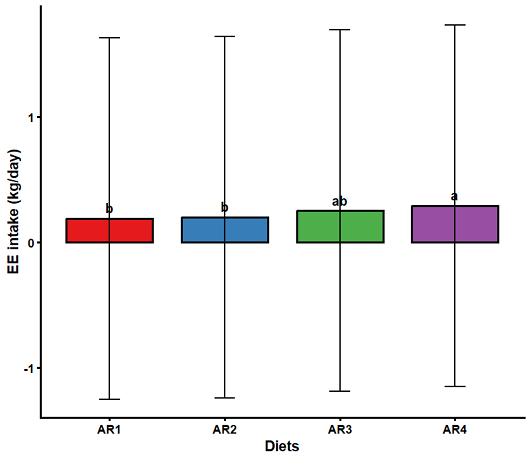
Feed intake mean ether extract (kg/day) of Achai × Jersey cows fed diets with or without Asparagus racemosus root powder supplementation.
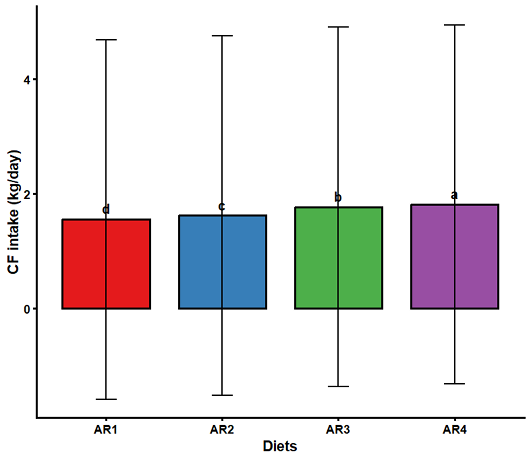
Feed intake mean crude fiber (kg/day) of Achai × Jersey cows fed diets with or without Asparagus racemosus root powder supplementation.
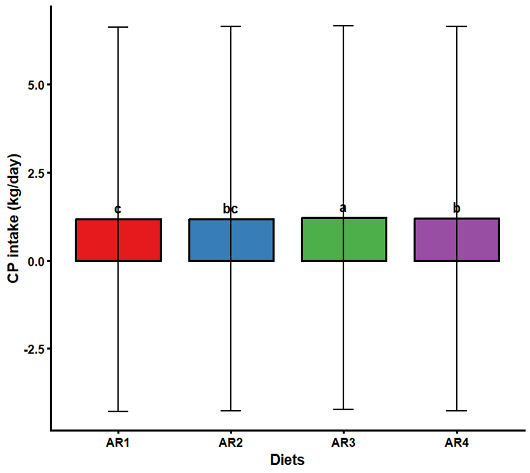
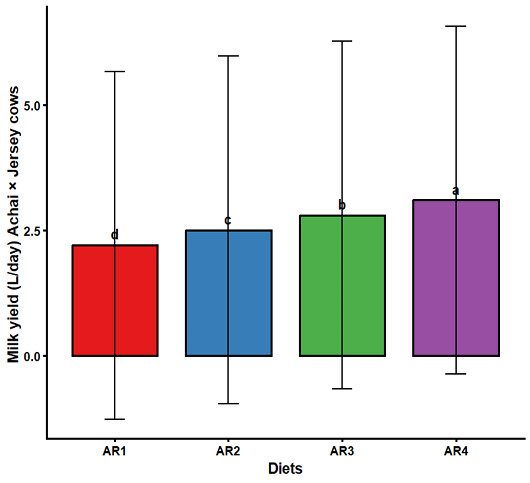
Milk yield (L/day) of Achai × Jersey cows offered diets supplemented with graded levels of Asparagus racemosus root powder.
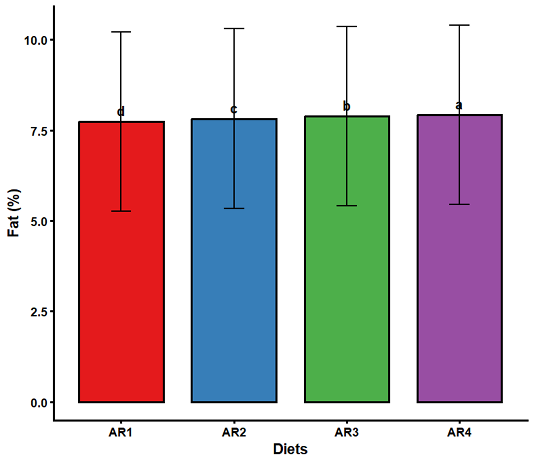
Milk composition (Fat% %) of Achai × Jersey cows receiving Asparagus racemosus root powder in the diet compared with the control.
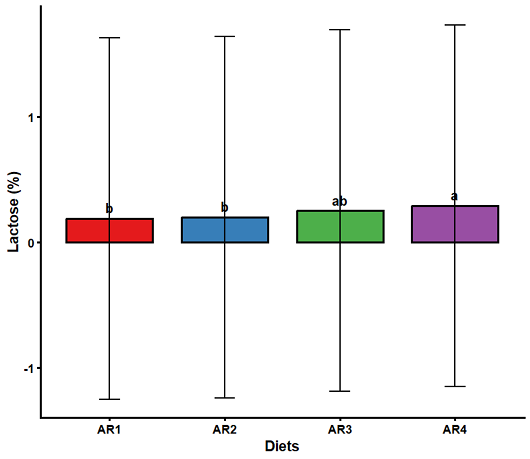
Milk composition (Lactose%) of Achai × Jersey cows receiving Asparagus racemosus root powder in the diet compared with the control.
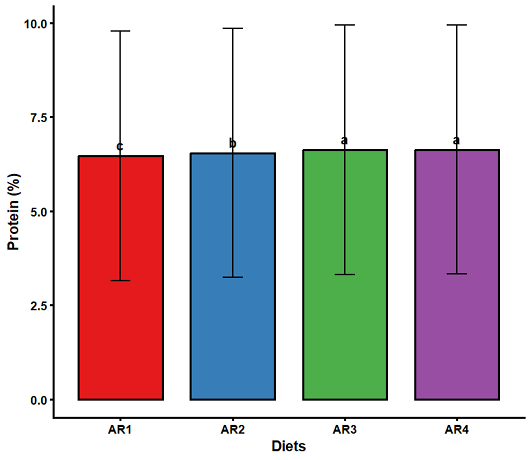
Milk composition (Fat%) of Achai × Jersey cows receiving Asparagus racemosus root powder in the diet compared with the control.
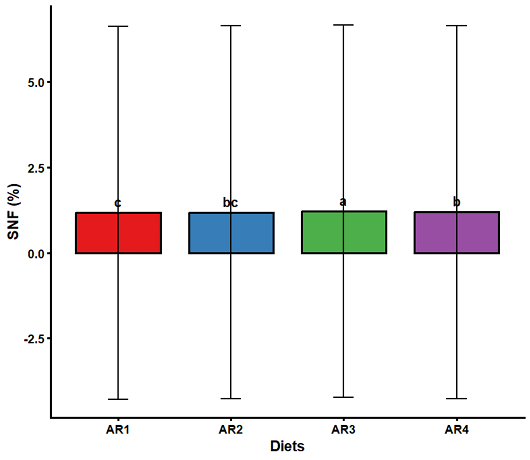
Milk composition (solid-not-fat%) of Achai × Jersey cows receiving Asparagus racemosus root powder in the diet compared with the control.
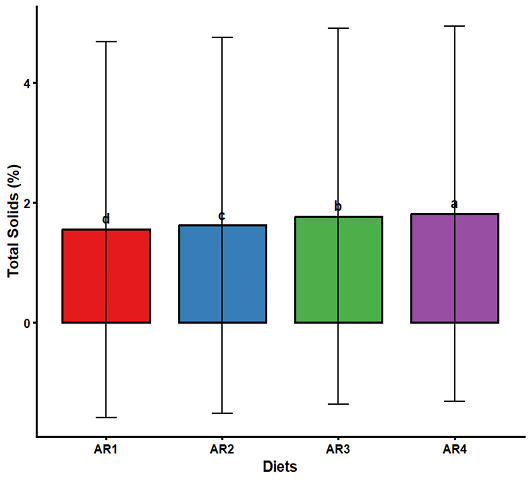
Milk composition (Total solid %) of Achai × Jersey cows receiving Asparagus racemosus root powder in the diet compared with the control.
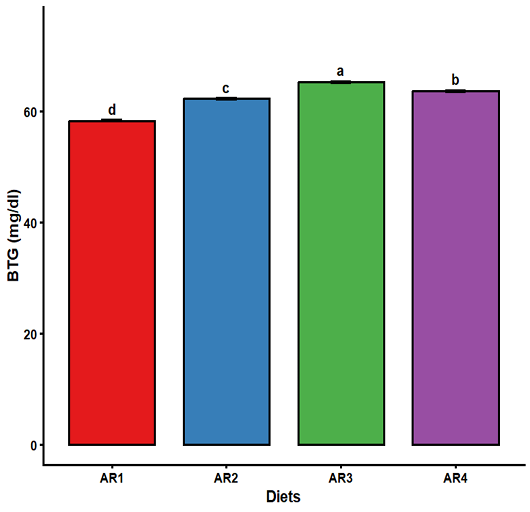
Blood biochemical profile (Blood total Glucose) of Achai × Jersey cows supplemented with Asparagus racemosus root powder.
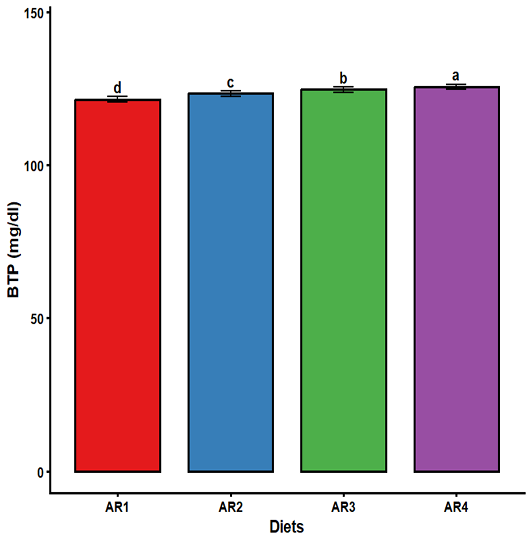
Blood biochemical profile (Blood total Protein) of Achai × Jersey cows supplemented with Asparagus racemosus root powder.
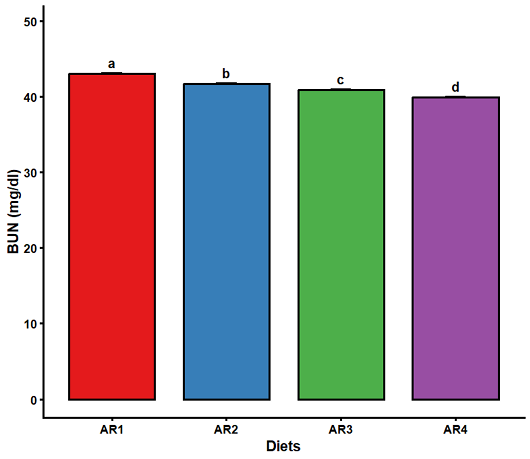
Blood biochemical profile (Blood urea Nitrogen) of Achai × Jersey cows supplemented with Asparagus racemosus root powder.
References
- Abreu, A., Carulla, J.E., Lascano, C.E., Diaz, T., Kreuzer, M. and Hess, H., 2004. Effects of Sapindus saponaria fruits on ruminal fermentation and duodenal nitrogen flow of sheep fed a tropical grass diet with and without legume. J. Anim. Sci., 82(5): 1392–1400. https://doi.org/10.2527/2004.8251392x[CrossRef]
- Alexander, G., 2005. Effect of plant extracts on rumen fermentation and nutrient utilization in sheep. Doctoral dissertation, Indian Veterinary Research Institute (IVRI).
- AOAC, 2000. Official Methods of Analysis of AOAC International. Association of Official Analytical Chemists, Gaithersburg, MD, USA.
- Arshad, M.T., Maqsood, S., Hossain, M.S., Awlqadr, F.H., Rauf, A., Ullah, I., 2025. Integrating microbiomes for regenerative food systems: Recent insights, implementations, and emerging trends. Food Sci. Nutr., 13(12): e71312.
- Asif, S., Nisar, M., Ullah, S. and Naeem, M., 2025. Reviewing the impact of seed-borne mycoflora on mycotoxin accumulation: A threat to lentil genetic resources. Toxicon, 239: 108290. https://doi.org/10.1016/j.toxicon.2025.108290[CrossRef]
- Bauman, D.E. and Griinari, J. M., 2003. Nutritional regulation of milk fat synthesis. Annu. Rev. Nutr., 23(1): 203–227. https://doi.org/10.1146/annurev.nutr.23.011702.073408[CrossRef]
- Berhane, M., 2000. Studies on feeding some indigenous galactopoietic feed supplements on the performance of crossbred cows. M.Sc. Thesis, Jawaharlal Nehru Krishi Vishwa Vidyalaya (JNKVV), Jabalpur, Madhya Pradesh, India.
- Bhatt, N., 2015. Herbs and herbal supplements: A novel nutritional approach in animal nutrition. Unpublished manuscript.
- Bhinda, R., Choudhary, J., Jain, H. and Jat, J.R., 2021. Effect of different levels of asparagus root powder supplementation on body weight and milk composition of lactating crossbred cows. Curr. J. Appl. Sci. Technol., 40(45): 1–6. https://doi.org/10.9734/cjast/2021/v40i4531623[CrossRef]
- Burki, T.K., 2018. Tackling antimicrobial resistance in food-producing animals. Lancet Respir. Med., 6(2): 93–94. https://doi.org/10.1016/S2213-2600(18)30017-1[CrossRef]
- Chavan, M.K., Bhosale, T.R. and Deokar, D., 2023. Effect of feeding shatavari (Asparagus racemosus) root powder on the quantity of milk in crossbred cows. Asian J. Dairy Food Res., 42(2): 150–153. https://doi.org/10.18805/ajdfr.DR-1820[CrossRef]
- Choudhary, J.L., Bhinda, R. and Jat, J.R., 2024. Effect of shatavari (Asparagus racemosus) herb on feed intake, milk yield, and composition, and reproductive performance of lactating cows. Anim. Nutr. Feed Technol., 24(3): 645–656. https://doi.org/10.5958/0974-181X.2024.00048.2[CrossRef]
- Gaafar, H., Gendy, M., Bassiouni, M., Shamiah, S.M., Halawa, A. and Hamd, M., 2011. Effect of heat stress on the performance of dairy Friesian cows’ milk production and composition. Researcher, 3(5): 85–93.
- Goyal, R., Singh, J. and Lal, H., 2003. Asparagus racemosus: An update. Indian J. Med. Sci., 57(9): 408–414. (PMID: 14515032).
- Gupta, M. and Shaw, B., 2011. A double-blind randomized clinical trial for evaluation of galactogogue activity of Asparagus racemosus Willd. Iran. J. Pharm. Res., 10(1): 167–172.
- Gupta, N., Kumar, A. and Tiwari, D., 2004. Effect of herbs as feed additive on growth and nutrient utilization in crossbred heifers. Proc. XIth Anim. Nutr. Conf., Jabalpur, India,
- Hayes, P.Y., Jahidin, A.H., Lehmann, R., Penman, K., Kitching, W. and De Voss, J.J., 2008. Steroidal saponins from the roots of Asparagus racemosus. Phytochemistry, 69(3): 796–804. https://doi.org/10.1016/j.phytochem.2007.09.001[CrossRef]
- Hess, H.D., Beuret, R., Lötscher, M., Hindrichsen, I.K., Machmüller, A., Carulla, J.E., Lascano, C.E. and Kreuzer, M., 2004. Ruminal fermentation, methanogenesis and nitrogen utilization of sheep receiving tropical grass hay–hay-concentrate diets offered with Sapindus saponaria fruits and Cratylia argentea foliage. Anim. Sci., 79(1): 177–189. https://doi.org/10.1017/S1357729800054643[CrossRef]
- Hu, W., Liu, J., Guo, Y. and Wu, Y., 2006. Effect of saponin on rumen fermentation and methanogenesis in vitro. Proc. 12th AAAP Congress, Busan, South Korea (Abstracts), p.
- Hussain, D.L., 2019. Veterinary extension education. Doctoral dissertation, Assam Agricultural University, Khanapara, India.
- Iqbal, M., Bibi, Y., Raja, N.I., Ejaz, M., Hussain, M., Yasmeen, F., Saira, H. and Imran, M., 2017. Review on therapeutic and pharmaceutically important medicinal plant Asparagus officinalis L. J. Plant Biochem. Physiol., 5(180): 1–2. https://doi.org/10.4172/2329-9029.1000180[CrossRef]
- Irshad, A., Noreen, S., Sajid, U., Jamal, M., Iqbal, M.A., Ullah, S., Sabtain, T., Ullah, S., Ibañez-Arancibia, E., De Los Ríos-Escalante, P.R., Belkahia, H., Ben Said, M. and Swelum, A.A., 2025. Molecular identification, risk factors’ assessment, and phylogenetic analysis of Toxoplasma gondii in goats from Malakand Division, Khyber Pakhtunkhwa, Pakistan. Trop. Anim. Health Prod., 49: 21. https://doi.org/10.1007/s11259-025-10783-z[CrossRef]
- Jain, M. and Bais, B., 2016. Effect of Jiwanti (Leptadenia reticulata) supplementation on fat percentage and fat yield of milk produced by Kankrej cows in the arid zone of Rajasthan, India. Res. Rev. J. Vet. Sci., 2(1): 1–3.
- Jingar, S. C., Sharma, R., Lawania, P., Kumar, A., Bugaliya, H. and Meena, S. M., 2018. Effect of Shatavari (Asparagus recemosus) on milk production in lactating buffaloes. Int. J. Curr. Microbiol. App. Sci., 7(9): 3610–3612. https://doi.org/10.20546/ijcmas.2018.709.447[CrossRef]
- Kamal, M., Martinez-Boggio, G., Rafiq, N., Yu, Y., Peñagaricano, F. and Usman, T., 2025. Genetic association of candidate genes with milk and mastitis resistance traits using SNP-Chip array in Holstein Friesian and Pakistani indigenous dairy cattle breeds. Pak. Vet. J., 45(1): 402–408.
- Khalil, Z.U.R., Rehman, A., Islam, Z., Shuaib, M., Hussain, A., Saleem, M., Ullah, K., Ahmad, S. and Ghaffar, A., 2025. Understanding livestock systems and their effect on the reproductive performance of Achai and Jersey crossbred cows in Northern Hindukush mountainous ranges. Pak. J. Zool., 57(3): 1421–1434. https://doi.org/10.17582/journal.pjz/20230307100354[Full text][CrossRef]
- Khan, M.H., Suhail, S.M., Uddin, H., Khan, A., Magsi, R.A., Khan, R., Ahmed, I., Ijaz, A. and Khan, K., 2022. Effect of yeast culture (Saccharomyces cerevisiae) on production performance in Achai cattle. Sarhad J. Agric., 38(2): 626–632. https://doi.org/10.17582/journal.sja/2022/38.2.626.632[Full text][CrossRef]
- Khan, M., Haris, M., Riaz Khan, M., Ali, I., Nasreen, N., Sohail, M. and Ullah, S., 2024. Acaricidal efficacy of Melia azedarach, Olea ferruginea, and Zanthoxylum armatum against Rhipicephalus microplus from Khyber Pakhtunkhwa, Pakistan. Asian J. Sci. Eng. Technol., 3(1): 99–114. https://doi.org/10.47264/idea.ajset/3.1.7[CrossRef]
- Khera, P.K., Hussain, J., Bordoloi, J.P., Saharia, J., Gohain, A.K., Borpuzari, T., Borah, L. and Nath, S., 2022. Effect of dietary supplementation of shatavari (Asparagus racemosus) on the production performance of crossbred cows. Pharma Innov. J., 11(11S): 491–495.
- Kholif, A.E., Gouda, G.A., Olafadehan, O.A. and Abdo, M.M., 2018. Effects of replacement of Moringa oleifera for berseem clover in the diets of Nubian goats on feed utilisation, and milk yield, composition and fatty acid profile. Anim., 12(5): 964–972.
- Krishana, L., Swarup, D. and Patra, R.C., 2005. An overview of prospects of ethno-veterinary medicine in India. Indian J. Anim. Sci., 75(12): 1481–1491.
- Kumar, S., Mehla, R.K. and Meena, R., 2011. Pre- and postpartum managemental intervention through herbal feed supplement (Asparagus racemosus) and its effect on production and reproduction performance during supplementation and post-supplementation period in crossbred cows. Indian J. Anim. Sci., 81(7): 669–673.
- Kumar, S., Mehla, R.K. and Singh, M., 2014. Effect of shatavari (Asparagus racemosus) on milk production and immune-modulation in Karan Fries crossbred cows. Indian J. Tradit. Knowl., 13(2): 404–408.
- Kumar, S., Saharan, V., Sihag, Z.S. and Sihag, S., 2024. Dietary supplementation of shatavari (Asparagus racemosus) during the transition period influences blood metabolites, milk production, and its quality in cattle. Indian J. Anim. Nutr., 41(1): 95–104. https://doi.org/10.5958/2231-6744.2024.00009.4[CrossRef]
- Kumawat, M., Sharma, A., Yogi, R. and Yadav, A.K., 2017. Effect of Asparagus racemosus (Shatavari) supplementation on intake and milk production in crossbred cattle. Environ. Ecol., 35(3): 1765–1768.
- Lubna, S., Sohail, M., Naz, F., Ali, S., Khan, H., Noreen, A., Subhan, G., Naveen, D. and Ullah, S., 2025. Phytochemical profiling and antibacterial potential of Morus alba L. leaf extracts against Salmonella typhi. Front. Med. Health Res., 3(5): 1482–1492. Available at: https://fmhr.org/index.php/fmhr/article/view/692.
- Manisha, T., 2023. Effect of Shatavari (Asparagus racemosus) root powder supplementation on performance of Sahiwal cows. Doctoral dissertation, Pt. Deen Dayal Upadhyaya Pashu Chikitsa Vigyan Vishwavidyalaya Evam Go Anusandhan Sansthan (DUVASU), Mathura, Uttar Pradesh, India.
- Meena, G., Bairwa, R., Mahajani, K. and Meena, B., 2020. Effect of supplement feeding of shatavari on lactating buffaloes: Assessment of shatavari feeding on buffaloes. J. AgriSearch, 7(3): 182–184. https://doi.org/10.21921/jas.v7i03.18696[CrossRef]
- Mishra, I.S., Jaiswal, R.S., Bhardwas, R.K., Sharma, R.J., Joshi, Y.P., Mondal, B.C. and Rahal, A., 2008. Effect of feeding shatavari (Asparagus racemosus) on nutrient intake, digestibility and milk production in crossbred lactating cows. In: National Seminar on Emerging Opportunities for Commercialization in Dairy,
- Muwal, H., Rai, D.C., Bhateshwar, V., Meena, J.P. and Lal, D., 2020. Effect of shatavari root powder (Asparagus racemosus) supplementation on milk composition of Sahiwal crossbred cows. J. Anim. Res., 10(3): 411–415. https://doi.org/10.30954/2277-940X.03.2020.12[CrossRef]
- Negi, J.S., Singh, P., Joshi, G.P., Rawat, M.S. and Bisht, V.K., 2010. Chemical constituents of Asparagus. Pharmacogn. Rev., 4(8): 215–220. https://doi.org/10.4103/0973-7847.70921[CrossRef]
- Newbold, C.J., de la Fuente, G., Belanche, A., Ramos-Morales, E. and McEwan, N.R., 2015. The role of ciliate protozoa in the rumen. Front. Microbiol., 6: 1313. https://doi.org/10.3389/fmicb.2015.01313[CrossRef]
- Pandey, S.K., Sahay, A., Pandey, R.S. and Tripathi, Y.B., 2005. Effect of Asparagus racemosus rhizome (Shatavari) on mammary gland and genital organs of pregnant rat. Phytother. Res., 19(8): 721–724. https://doi.org/10.1002/ptr.1590[CrossRef]
- Pandiyan, G. D., Leela, V., Eswari, S., Ramachandran, M., Ranganathan, V., Visha, P. and Rajarajan, G., 2022. Effect of Asparagus racemosus supplementation on milk yield and composition during summer stress in Jersey crossbred cows. Int. J. Bioresour. Stress Manag., 13(10): 1109–1114.
- PES, 2023–2024. Pakistan Economic Survey, Chapter 2 – Agriculture. Ministry of Finance, Government of Pakistan. Available at: https://www.finance.gov.pk/survey/chapter_24/2_agriculture.pdf
- Pradhan, N., 1995. Therapeutic efficacy of Herbosal, a herbal digestive tonic for ruminants. Indian Vet. J., 72(2): 195–197.
- Rehman, A., Memon, M.I., Lakho, A.A., Usman, M., Munir, A., Solangi, N.A., 2025. Seroprevalence and risk factors of peste des petits ruminants in goats from Khipro, District Sanghar, Sindh. Res. J. Vet. Pract., 13: 39–46.
- Rojas-Downing, M.M., Nejadhashemi, A.P., Harrigan, T. and Woznicki, S.A., 2017. Climate change and livestock: Impacts, adaptation, and mitigation. Clim. Risk Manage., 16: 145–163. https://doi.org/10.1016/j.crm.2017.02.001[CrossRef]
- Shakir, L., Ullah, S., Suhail, M., Ullah, R. and Sajid, M., 2023. Phytochemical analysis, antipyretic and antifungal activities of Solanum nigrum L. Natl. J. Pharm. Sci., 3(2): 6–12.
- Sharma, A., 2009. Influence of polyherbal immunomodulator supplementation on production performance and milk quality of Karan-Fries cows. Ph.D. thesis, National Dairy Research Institute (NDRI), Karnal, Haryana, India.
- Shaw, N.D., Seminara, S.B., Welt, C.K., Au, M.G., Plummer, L., Hughes, V.A., 2011. Expanding the phenotype and genotype of female GnRH deficiency. J. Clin. Endocrinol. Metab., 96(3): E566–E576.
- Siddiqui, A.J., Elkahoui, S., Alshammari, A.M., Patel, M., Ghoniem, A.E.M., Abdalla, R.A.H., Dwivedi-Agnihotri, H., Badraoui, R. and Adnan, M., 2025. Mechanistic insights into the anticancer potential of Asparagus racemosus Willd. against triple-negative breast cancer: A network pharmacology and experimental validation study. Pharmaceuticals, 18(3): 433. https://doi.org/10.3390/ph18030433[CrossRef]
- Singh, S.P., 2010. Study of the effect of feeding of plant supplement (Asparagus resemosus) on cholesterol and hormonal profile of Murrah buffaloes. M.V.Sc. thesis, National Dairy Research Institute (NDRI), Karnal, Haryana, India.
- Singh, S.P., Mehla, R.K. and Singh, M., 2012. Plasma hormones, metabolites, milk production, and cholesterol levels in Murrah buffaloes fed with Asparagus racemosus in the transition and postpartum period. Trop. Anim. Health Prod., 44: 1827–1832. https://doi.org/10.1007/s11250-012-0144-y[CrossRef]
- Șonea, C., Gheorghe-Irimia, R.-A., Tăpăloagă, D. and Tăpăloagă, P.-R., 2023. Nutrition and animal agriculture in the 21st century: A review of prospects. Annals of the University of Craiova Agriculture, Montanology, Cadastre Series, 53(1): 303–312. https://doi.org/10.52846/aamc.v53i1.1482[CrossRef]
- Srivastava, A., Ahmad, R. and Srivastava, A.K., 2025. Preparation, sensory, and nutritional evaluation of extruded functional food products using Asparagus racemosus (Shatavari). Cureus, 17(2): e79593. https://doi.org/10.7759/cureus.79593[CrossRef]
- Statistics, 2023. Pakistan bureau of statistics, chapter Agriculture statistics. Retrieved 23/04/2025 from https://www.pbs.gov.pk/content/agriculture-statistics.
- Subhan, G., Shakir, L., Habib, S., Hassan, U., Begum, A., Rahman, S., Sohail, M., Falaknaz, Khan, W.H., Khan, R., Dilawar, N. and Ullah, S., 2025. Influence of extracts from Euphorbia helioscopia L. and Oxalis corniculata L. on the germination and seedling development of Triticum aestivum L. Asian J. Agric. Allied Sci., 8(1): 343–364. https://doi.org/10.56557/ajaas/2025/v8i177[CrossRef]
- Tanwar, P.S., Rathore, S.S. and Kumar, Y., 2008. Effect of shatavari (Asparagus recemosus) on milk production in dairy animals. Indian J. Anim. Res., 42(3): 232–233.
- Tiwari, S.P., Lal, R., Arora, S.P. and Narang, M.P., 1993. Effect of feeding Anifeed a herb combination on milk production in crossbred cows. Indian J. Anim. Nutr., 10(2): 115–117.
- Uddin, H., Khan, H.U., Khan, M.I., Khan, R. and Naveed, A., 2014. Productive and reproductive performance of Achai cattle maintained at Livestock Research and Development Station, Surezai, Peshawar, Pakistan. J. Anim. Health Prod., 22(1): 14–20.
- Ullah, S. and Shakir, L., 2023. The effects of plant age on phytochemical and geographical distribution of Euphorbia helioscopia (sun spurge or madwoman’s milk) (Euphorbiaceae) from Arrang District, Bajaur. Pak. J. Weed Sci. Res., 29(4): 206–212.
- Ullah, S., Jan, G., Gul, F., Khan, S., Husna, Sher, J. and Abidullah, S., 2018a. Phytochemistry and antibacterial activities of some selected plants of war affected area of Bajaur Agency, Pakistan. J. Pharmacogn. Phytochem., 7(3): 415–422.
- Ullah, S., Jan, G., Gul, F., Khan, S., Khattak, M., Bibi, H. and Sher, J., 2018b. Phytochemistry, anti-inflammatory and antipyretic activities of Adiantum capillus-veneris in Swiss albino mice. Int. J. Fauna Biol. Stud., 5(3): 19–25.
- Ullah, S., Jan, G., Gul, F., Khan, S., Khattak, M., Ihsan, M. and Bibi, H., 2018c. Phytochemical and nutritional analysis of selected plants of District Buner, Pakistan. Int. J. Fauna Biol. Stud., 5(3): 111–117.
- Ullah, S., Jan, G., Gul, F., Khan, S., Khattak, M., Sher, J. and Bibi, H., 2018d. Antifungal and phytochemical screening of selected medicinal plants of Malamjaba, Swat, Pakistan. Pharma Innov. J., 7(5): 176–180.
- Ullah, S., Jan, G., Jan, F. G., Khan, S., Khattak, M., Bibi, H. and Ihsan, M., 2018e. Phytochemical analysis, antipyretic and antifungal activities of Cyrtomium caryotideum. Biosci. Biotechnol. Res. Asia, 15(3): 577–589. https://doi.org/10.13005/bbra/2664[CrossRef]
- Ullah, S., Jan, G., Jan, F.G., Khan, S., Khattak, M., Bibi, H. and Ihsan, M., 2018f. Phytochemical analysis, analgesic, anti-inflammatory, and antibacterial activities of Berberis lycium. Int. J. Adv. Res., 6(7): 1150–1166. https://doi.org/10.21474/IJAR01/7470[CrossRef]
- Ullah, S., Khattak, M., Abasi, F., Sohil, M., Ihsan, M. and Ullah, R., 2019. Antifungal, nutritional and phytochemical investigation of Actiniopteris radiata of District Dir Lower, Pakistan. Int. J. Hortic. Food Sci., 1(1): 1–8. https://doi.org/10.33545/26631067.2019.v1.i2a.21[CrossRef]
- Ullah, S., Shakir, L. and Ullah, R., 2023. Morphological and phytochemical study of Cirsium arvense from District Mardan, Pakistan. J. Bioinform. Biotechnol. Res., 1(1): 1–7. https://doi.org/10.61440/JBBR.2023.v1.01[CrossRef]
- Ullah, S., Shakir, L., Ali, S., Subhan, G., Sohail, M., Khan, I. and Ali, S., 2025. Nutritional analysis, phytochemical and antifungal study of Equisetum arvense L. from Village Kharkay, Pak–Afghan Border, District Dir Lower, Pakistan. Kashmir J. Sci., 4(1): 1–8. https://doi.org/10.63147/krjs.v4i01.85[CrossRef]
- Ullah, S., Ullah, I., Khan, M., Zamir, M., Khan, B. T., Naz, R., Sohil, M., Ihsan, M. and Abasi, F., 2019a. Phytochemical analysis and antibacterial activity of Ajuga bracteosa, Bergenia ciliata and Amaranthus viridis from District Lower Dir (Village Maidan Banda), Khyber Pakhtunkhwa, Pakistan. Int. J. Biosci., 14(5): 403–412. https://doi.org/10.12692/ijb/14.5.403-412[CrossRef]
- Ullah, S., Ullah, I., Naz, R., Sohil, M., Ihsan, M. and Abasi, F., 2019b. Phytochemical screening and chromatographic separation of bioactive compounds from the roots of Berberis lyceum. J. Biotechnol. Bioinform. Res., 1(1). https://doi.org/10.47363/JBBR/2019(1)101[CrossRef]
- Ullah, Z., Kalim, K., Ullah, S., Irshad, M., Ullah, N., Zaman, F. U., Ullah, Z., Khan, S. and Ullah, I., 2025. Effect of watering frequency on milk parameters, feed, and water intake in Achai–Jersey cross cattle. Pure Appl. Biol., 14(2): 630–636. https://doi.org/10.19045/bspab.2025.140060[CrossRef]
- Usman, M., Ali, A., Rosak-Szyrocka, J., Pilař, L., Baig, S.A., Akram, R. and Wudil, A.H., 2023. Climate change and livestock herders’ wellbeing in Pakistan: Does the nexus of risk perception, adaptation and their drivers matter? Heliyon, 9(6): e16983. https://doi.org/10.1016/j.heliyon.2023.e16983[CrossRef]
- Veena, N., Arora, S., Singh, R.R.B., Katara, A., Rastogi, S. and Rawat, A.K.S., 2015. Effect of Asparagus racemosus (shatavari) extract on physicochemical and functional properties of milk and its interaction with milk proteins. J. Food Sci. Technol., 52: 1176–1181. https://doi.org/10.1007/s13197-013-1073-0[CrossRef]
- Wina, E., Muetzel, S. and Becker, K., 2005. The impact of saponins or saponin-containing plant materials on ruminant production: A review. J. Agric. Food Chem., 53(21): 8093–8105. https://doi.org/10.1021/jf048053d[CrossRef]
Cited by 1 article
In journals published by ResearchersLinks.
Services
Article usage statistics
Loading…