
Consumption of raw vegetables is common in many parts of the world. Raw vegetables are an obligatory source of nutritious intake and parasitic transmission to humans. Vegetables contaminated with parasites play a vital role in the cycle of intestinal parasitic transmission. A study on vegetables collected from shops, wholesale markets and vendors in Narowal were analyzed for parasitic contamination. Five vegetables, including coriander (Corriandum sativum), spinach (Spinacia oleracea), mint (Mentha viridus), green chili (Capsicum annum) and carrot (Davcus carota), were examined in our study. One hundred forty-five samples of different vegetables were collected and processed. 200 grams of each vegetable sample was centrifuged, followed by sedimentation and floatation to recover parasites eggs, cysts and larvae. A high prevalence of about 47.58% was described in this study. Coriander was the highest contaminated vegetable (51.42%), followed by mint (48.57%). The carrot was the minimum contaminated vegetable with 40% contamination. Examination of vegetables revealed 12 genera of parasites along with aquatic mites (5.74%). Taenia was the most prevalent parasite (25.28%) followed by Ascaris (21.83%), Toxocara (9.19%) and Hymenolepis (9.19%). Isospora belli and Trichostongylois were the lowest prevalent (2.29%). Trichuris, Toxoplasma, Entamoeba, Fasciola, Hookworm and Giardia showed less than 5% prevalence. Statistical inquiry indicated a significant relationship (P < 0.05) of parasitic contaminations and raw vegetables. This study infers that raw and unwashed vegetable consumption is an essential route of parasitic infections to humans.
Research Article · Volume 69, Issue 1, 22 October 2023 · Open Access
Prevalence of Parasitic Contaminations in Raw Vegetables in District Narowal
· · · ·
Affiliations & Notes ⌄
- 1Department of Zoology, University of Narowal, Narowal, Pakistan
- 2Department of Wildlife and Ecology, University of Veterinary and Animal Sciences, Lahore, Pakistan. *Correspondence | Sabila Afzal, Department of Zoology, University of Narowal, Narowal, Pakistan
- 3Email: sabila.afzalAuon.edu.pk
Article Info ⌄
- Journal:
- Biologia (Lahore)
- Published:
- 22 October 2023
From the article
- Ascaris (21.83%) was the second most prevalent parasite in the vegetables examined.
- The parasitic contamination of vegetables can affect human health adversely.
- The significant prevalence of Taenia in unwashed raw vegetables suggests that unwashed raw vegetables play a significant role in the epidemiology of Taenia infections.
- The presence of more than one parasite in a sample in this study indicates the likelihood of poly fecal contamination of vegetable samples, which would most likely result in poly parasitic infection in humans.
Selected from the article's own text.
Abstract
Introduction
Over two billion individuals and more than half of the population in the world are suffering from intestinal parasites . Food is becoming an important source for parasitic infections due to contamination during handling or processing. Vegetables are a necessary part of the human diet . Many raw fruits and vegetables are the sources of parasitic infections . Vegetables are beneficial, primarily involved in delivering nutrients, vitamins and minerals, protein and fibers to the human body and preventing various ailments through their ingestion .
In addition to their nutritional value, contaminated vegetables can transfer parasites to humans . The high prevalence of parasitic infections is the main ground for identifying the sources of parasitic infections, transmission and prevention from contaminated sources and vegetables can serve as a vital source of a parasitic contamination. The parasitic contamination of vegetables plays an epidemiological role in parasitic transmission in humans worldwide. Studies have shown that parasitic diseases are common in people where wastewater is used to irrigate vegetables or they are used without proper washing . Various parasitic stages can contaminate vegetables through manure, sewage wastewater from livestock, processing and transport ; . Eating raw and improperly washed vegetables can infect humans with various parasites, including Trichuris trichiura, Toxocara, Taenia, Enterobius vermicularis, Hymenolepis, Giardia lamblia, Fasciola, Cryptosporidium, Entamoeba histolytica, Ascaris lumbricoides and hookworms ; . Traditional washing of vegetables with tap water decreases parasite infection (32.6 to 1.3%) but fails to eliminate parasites from vegetables completely . Therefore, to eliminate parasites, vegetables must be thoroughly washed using traditional techniques, such as calcium hypochlorite and an automatic fruit-vegetable washer .
The eggs of roundworms are sticky and are carried by hand to mouth by consumers and food handlers. The world’s one-sixth population is affected by these intestinal parasites like Trichuris trichiura and hookworm . 1.2 billion infections are caused by A. lumbricoides , hookworm is responsible for 740 million and T. trichiura accounts for 795 million infections worldwide . E. histolytica and Giardia lamblia are the most dominant protozoans causing intestinal diseases . These intestinal parasites can cause retarded growth, anemia and many mental and physical health issues (WHO, 2005), causing approximately 2 lac deaths each year ; . Standard stages of intestinal parasites contaminating vegetables are cysts, eggs, or larvae. Untreated sewage for irrigation and wastewater are the most common ways for parasites to contaminate crops . Contamination is also due to naturally composted manure and feces of grazing animals . Transport and processing, sprinkling contaminated water to keep vegetables fresh , poor sanitation and unhygienic handling are also causes of vegetable contamination. The use of wastewater for irrigation of vegetables in developing countries can also be responsible for the high level of pollution . Slightly cooked vegetables, which protect heat-sensitive nutrients, make vegetables more susceptible to intestinal parasites . The intricacy of surface structure and porosity of surfaces of most vegetables are the main reasons for pathogens attachment and survival on vegetables which can cause contamination of vegetables, and serve as an essential means of transmission of many infectious parasites . Regions, where people eat raw vegetables have high rates of parasitic infections, showing that vegetables are an essential means of transmission of infection . Lack of proper health system and analysis of foodborne pathogens, most of the infections caused by contaminated vegetables remain undetected in developing countries . Prevention of parasitic disease associated with the use of contaminated vegetables is possible by practical and unfailing detection methods for checking this contamination ; . Existing literature shows a limited number of studies in Pakistan and no previous studies in district Narowal regarding parasitic contamination of raw vegetables have been undertaken, the present study investigates the prevalence of parasitic contamination in raw vegetables in district Narowal, Pakistan.
Materials and Methods
Study area
The district of Narowal is situated between 31° 55’ and 32° 30’ north latitude and 74° 35’ and 75° 21’ east longitude in Pakistan’s Punjab province. Narowal, at 32°21′N and 74°54′ E, Shakargarh, at 32°15′46′′ N and 75°9′30′′ E, and Zafarwal, at 32°21′0 N and 74°54′0 E, are the three tehsils that make up this district . The area is primarily flat, with only the Ravi River and a few drainage ditches to break up the monotony .
Sample collection
From December 2020 to March 2021, 145 samples of fresh vegetables were collected from three diverse sites; shops, wholesale markets and vendors. 200g of every sample of 5 different vegetables were taken to confirm parasitic contamination, including coriander (Corriandum sativum), spinach (Spinacia oleracea), mint (Mentha viridus), green chili (Capsicum annum) and carrot (Davcus carota). Rotten vegetables and vegetables with excessive dirt were not included in the sample. Vegetable samples were collected in sterilized plastic bags to transfer to the laboratory of the University of Narowal for further processing within 2 hours after collection.
Sample processing
Sedimentation method: 200 grams of each vegetable was taken into a sterile plastic jar and shaken well with 0.2% saline solution to remove parasitic ova, larva, or cyst, resultant washout was centrifuged at 3000 rpm for 3 minutes . Supernatant was collected and placed 10-11 hours for sedimentation without using a centrifuge to concentrate parasitic stages . After removing the supernatant, a drop of sediment was used to observe parasitic stages at 10X and 40X of the microscope according to Down’s description .
Floatation method: 200-250 g of sample of each vegetable were washed in distilled water for the removal of ova and/or cysts of parasites. Undesireable materials were removed by straining the suspension through a sterile sieve. For 5 min, the filtrate was centrifuged at 5000 rpm. The supernatant was discarded and the sediment was resuspended in concentrated NaCl floatation fluid. The solution was kept for 20-25 minutes for floatation without a centrifuge. NaCl was filled to the rim of test tubes and a coverslip was placed on it. After the desired time, coverslips were carefully placed on slides to observe under 10X and 40X, as Soulsby (1982) explained.
Statistical analysis
The chi-square test was performed by using SPSS 22.0 to find out the relationship between parasitic contamination and vegetables found in various markets. P-value <0.005 was considered as significant.
Results and Discussion
Out of 145 analyzed vegetable samples, 69 were found contaminated with 12 different genera of parasites. The overall prevalence of contaminated raw vegetables was 47.58%. Coriander was the most contaminated with 51.42% of the vegetables, and carrot was the lowest contaminated with 40% of total samples.
Table 1 shows the prevalence of parasitic contaminations and the respective collection site, the number of samples of vegetables analyzed, and the number of samples found positive. Twelve genera of parasites are reported in this study. Taenia, Hymenolepis, Ascaris, Toxocara, Toxoplasma, hookworm, Isospora belli, Trichuris, Trichostrongyloids, Giardia, Fasciola, Entamoeba and mites were observed in vegetable samples see Figure 1, 2 and 3.
Table 1: Prevalence of parasites in vegetables along with the site of collection.
| Vegetables | Sites of collection | Total | Positive % age | |||||
| Shops | Wholesale market | Vendors | ||||||
| Total (n) | Positive (%age) | Total (n) | Positive (%age) | Total (n) | Positive (%age) | |||
| Coriander | 15 | 7(46.6%) | 10 | 6(60%) | 10 | 5(50%) | 35 | 18(51.42%) |
| Mint | 15 | 9(60%) | 10 | 5(50%) | 10 | 3(30%) | 35 | 17(48.57%) |
| Spinach | 10 | 5(50%) | 8 | 4(50%) | 7 | 3(42.85%) | 25 | 12(48%) |
| Carrot | 8 | 3(37.5%) | 6 | 3(50%) | 6 | 2(33.33%) | 20 | 8(40%) |
| Green chili | 10 | 4(40%) | 10 | 6(60%) | 10 | 4(40%) | 30 | 14(46.66%) |
| Total | 58 | 21(36.20%) | 44 | 24(54.54%) | 43 | 17(39.53%) | 145 | 69(47.58%) |
Overall, Taenia (25.28%) was found to be the most prevelant parasite in the vegetable samples. Ascaris (21.83%) was the second most prevalent parasite in the vegetables examined. These were followed by Hymenolepis and Toxocara i.e. 9.91% each. Whereas Toxoplasma, Entamoeba, and hookworm were 4.59% prevalent, followed by Trichuris, Giardia, and Fasciola were 3.44% prevelant. Isospora belli and Trichostongyloids (2.29%) were found to be the least prevelant among all parasites found.
Table 2 shows the frequency of parasitic attacks on vegetables and the respective collection site. The prevalence of each parasite genera is also mentioned. 15 (21.73%) out of 69 positive samples were contaminated with more than one type of parasite. Mites (5.75%) were also observed in this study.
Vegetables are a vital part of our daily diet and are an essential source of many minerals and micronutrients. The parasitic contamination of vegetables can affect human health adversely. Intestinal parasitic infections are high due to encouraging climate, unhygienic routine, and sanitary or wastewater in agriculture. In addition, the use of animal excreta as fertilizer has increased the contamination rate . Microscopic examination revealed that 69 (47.58%) samples were contaminated with different parasites’ eggs, cysts and larvae. The high contamination rate of mint (48.57%) and coriander (51.42%) may be attributed to their cultivation near the ground where the fecal waste of animals, contaminated soil, water are in direct contact with these vegetables. In addition, the thick vegetation and shrubbery appearance of mint and coriander offer an encouraging site for eggs and cysts and safeguard them from sunlight, wind and desiccation ; . The broad leafy spinach (48%) and carrot (40%) with small pits on the surface make these vegetables more suitable for deposition of parasite eggs and cysts, which can attach to rough surfaces of vegetables easily . 46.66% of green chilli samples were found contaminated in this study. In a study by Maqbool et al. (2014), only 8% of chili were found contaminated. 12 genera of parasites were observed in this study and similar results were also reported from Lahore, Punjab, Pakistan by Maqbool et al. (2014). Taenia was reported as the most prevalent parasite with 25.28%, which lines with the study conducted by Kozan et al. (2005) in Ankara, Turkey, due to its high environmental resistance. The significant prevalence of Taenia in unwashed raw vegetables suggests that unwashed raw vegetables play a significant role in the epidemiology of Taenia infections. The high prevalence of Ascaris (21.83%) was consistent with the study in Vietnam , which reported 21% contamination of vegetables with Ascaris. These findings are also supported by Anwar and Mckenr (2012) and Ensink et al. (2007). Ascaris eggs are adhesive and can easily stick to vegetable surfaces and other utensils. Ascaris eggs and cysts are found in sewage water and soil contaminated with human feces .
The percentage of Trichostongyloids, Fasciola, Isospora belli and Giardia was less than 5%, aligning with study in Nigeria . The parasite prevalence is low; still, it is possible that consuming just one embryonated helminth egg is enough source of infection ; . The high prevalence of these parasites could be attributed to favorable meteorological and climatic conditions, such as temperature and humidity. High resistance of the eggs and cysts of Ascaris and Taenia in the environment is a significant reason for their high contamination as they can survive and persist and are sustainable for several months and years in soil ; ; . In this study, there was variation in contamination of vegetable samples collected from the whole sale market, shops, and vendors. 54.54% of samples collected from the wholesale market of Narowal were reported positive, which lines with the results of a study conducted by Ojemudia (2011), who reported 56.25% contamination of vegetable samples collected from markets of Jos. The roaming animals and displaying vegetables on the ground are the main factors contributing to high contamination. Samples collected from shops and vendors were 36.20% and 39.53% positive, respectively. Umoh et al. (2001) stated that food contamination relies on the cleanliness in a specific location and hygienic practices of the public handling the vegetables. 15 (21.73%) out of 69 samples were polluted with more than a single kind of parasite, which lines with evaluation in Ethiopia by Alemu et al. (2019), who reported that 61 (70.1%) and 26 (29.9%) of positive samples were contaminated with single and dual parasite species, respectively. The presence of more than one parasite in a sample in this study indicates the likelihood of poly fecal contamination of vegetable samples, which would most likely result in poly parasitic infection in humans.
Conclusions and Recommendations
The vegetable cannot be avoided from daily intake but can be omitted from the chain of transmission and dispersion of parasites. This can be accomplished by maintaining individual and environmental hygiene by vendors, wholesalers, shopkeepers, transporters and consumers. In avoiding untreated human and animal wastes as manure in agriculture, proper sewage and sanitation treatment can play an essential role in this regard. In addition, health providers must check the practices of vegetable transport and handling to lessen the risk of parasitic transmission.
Acknowledgement
We would like to acknowledge the University of Narowal for providing research support.
Novelty Statement
This manuscript is the original work and has not been published elsewhere. In this study, we are reporting the parasitic prevalence in raw vegetables first time in district Narowal.
Author’s Contribution
SSS, AJ and SA: Data analysis, Manuscript writing AJ, MZ and IFB: Data collection, Experimentation.
Conflict of interest
The authors have declared no conflict of interest.
Figures
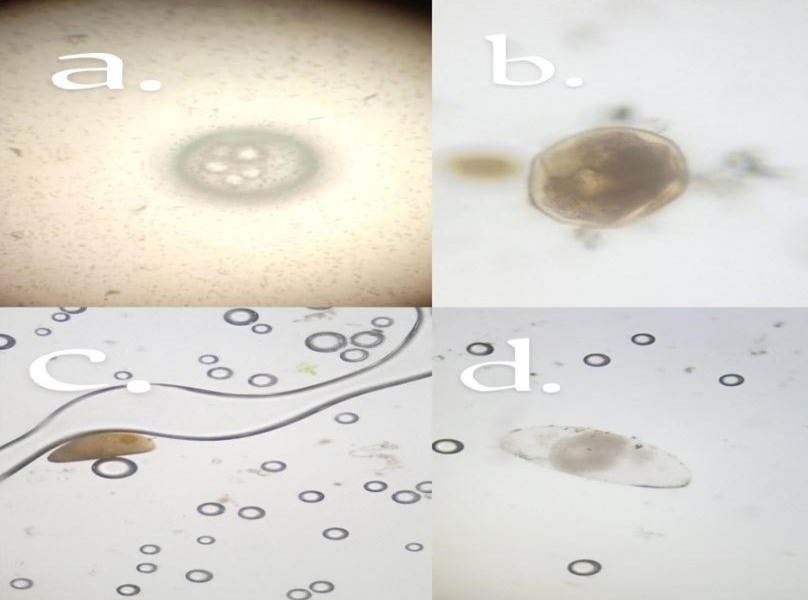
(a). Entamoeba cyst, (b) Hookworm egg, (c) Fasciola egg, (d) Isospora belli.
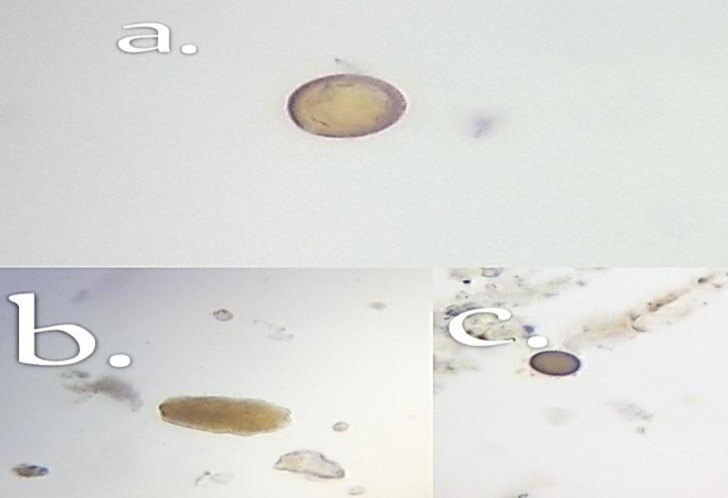
(a) Taenia egg (40X), (b) Ascaris unfertilized egg (10X), (c) Ascaris fertilized egg (10X).
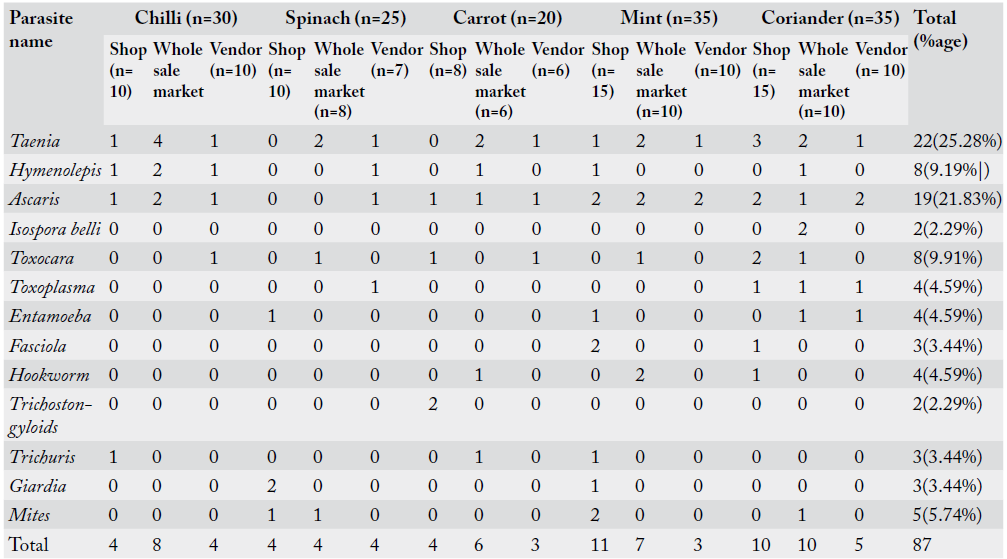
Frequency distribution of parasites in vegetable samples.
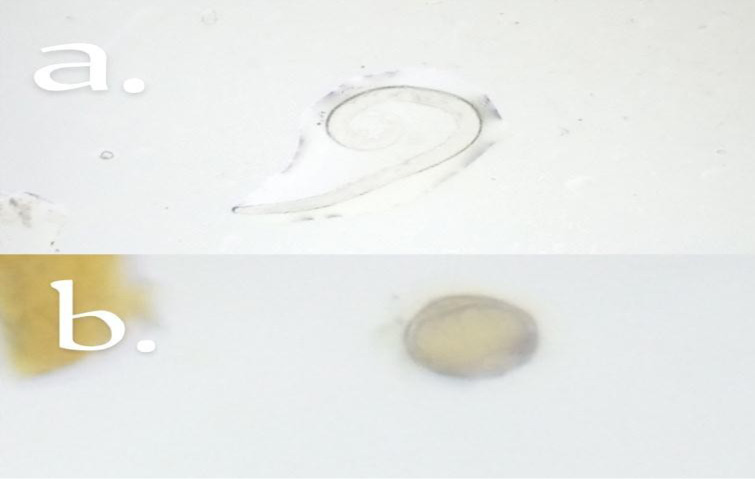
(a) Hookworm larva (10X), (b) Toxocara egg (10X).
References
- Abdalla, M.A., A.M. Salim and S.H. Hassanin. 2013. The prevalence of intestinal parasitic diseases in humans and its association with infection stages in vegetables in El. Khorma Province, Saudi Arabia. Life Sci. J., 10(4): 3107-3113.
- Abougrain, A.K., M.H. Nahaisi, N.S. Madi, M.M. Saied and K.S. Ghenghesh. 2010. Parasitological contamination in salad vegetables in Tripoli-Libya. Food Contr., 21(5): 760-762. https://doi.org/10.1016/j.foodcont.2009.11.005[CrossRef]
- Afzal, M. and M.H. Bashir. 2007. Influence of certain leaf characters of some summer vegetables with incidence of predatory mites of the family Cunaxidae. Pak. J. Bot., 39(1): 205.
- Ahmad, F., S. Ghazi, S.R. Ahmad, I. Ahmad, R.M.A. Khan, A. Raoof and K. Shafique. 2014. Spectral characteristics and mapping of rice fields using multi-temporal Landsat and M.O.D.I.S. data: A case of District Narowal. Glob. J. Hum. Soc. Sci., 14(6): 2.
- Al-Binali, A.M., C.S. Bello, K. El-Shewy and S.E. Abdulla. 2006. The prevalence of parasites in commonly used leafy vegetables in South Western, Saudi Arabia. Saudi Med. J., 27(5): 613-616.
- Alemu, G., M. Mama, D. Misker and D. Haftu. 2019. Parasitic contamination of vegetables marketed in Arba Minch town, southern Ethiopia. BMC Infect. Dis., 19(1): 1-7. https://doi.org/10.1186/s12879-019-4020-5[CrossRef]
- Alum, A., J.R. Rubino and M.K. Ijaz. 2010. The global war against intestinal parasites should we use a holistic approach? Int. J. Infect. Dis., 14(9): e732- e738. https://doi.org/10.1016/j.ijid.2009.11.036[CrossRef]
- Amaechi, E.C., C.C. Ohaeri, O.M. Ukpai and R.A. Adegbite. 2016. Prevalence of parasitic contamination of salad vegetables in Ilorin, North Central, Nigeria. Momona Ethiop. J. Sci., 8(2): 136-145. https://doi.org/10.4314/mejs.v8i2.3[CrossRef]
- Anwar, S.A. and M.V. Mckenry. 2012. Incidence and population density of plant-parasitic nematodes infecting vegetable crops and associated yield losses in Punjab, Pakistan. Pak. J. Zool., 44(2): 327-333.
- Avcioglu, H., E. Soykan and U. Tarakci. 2011. Control of helminth contamination of raw vegetables by washing. Vector-Borne Zoonotic Dis., 11(2): 189-191. https://doi.org/10.1089/vbz.2009.0243[CrossRef]
- Bouhoum, K. and O. Amahmid. 2002. Municipal wastewater reuse for irrigation: Productivity and contamination level of irrigated crops by pathogens. Proc. Int. Sympo. Environ. Poll. Contr. Waste Manage., 7: 7-10.
- Brooker, S., 2010. Estimating the global distribution and disease burden of intestinal nematode infections: Adding up the numbers a review. Int. J. Parasitol., 40(10): 1137-1144. https://doi.org/10.1016/j.ijpara.2010.04.004[CrossRef]
- Cotruvo, J.A., A. Dufour, G. Rees, J. Bartram, R. Carr, D.O. Cliver and V.P. Gannon. 2004. Waterborne zoonoses. Iwa Publishing. pp. 1-125.
- Damen, J.G., E.B. Banwat, D.Z. Egah and J.A. Allanana. 2007. Parasitic contamination of vegetables in Jos, Nigeria. Ann. Afr. Med., 6(3): 115. https://doi.org/10.4103/1596-3519.55723[CrossRef]
- Doyle, M.P. and M.C. Erickson. 2008. Summer meeting 2007–the problems with fresh produce: An overview. J. Appl. Microbiol., 105(2): 317-330. https://doi.org/10.1111/j.1365-2672.2008.03746.x[CrossRef]
- Ebrahimzadeh, A., A. Jamshidi and S. Mohammadi. 2013. The parasitic contamination of raw vegetables consumed in Zahedan, Iran. Health Scope, 1(4): 205-209. https://doi.org/10.17795/jhealthscope-8209[CrossRef]
- El-Bakri, A., N.M. Hussein, Z.A. Ibrahim, H. Hasan and R. AbuOdeh. 2020. Intestinal parasite detection in assorted vegetables in the United Arab Emirates. Oman Med. J., 35(3): e128. https://doi.org/10.5001/omj.2020.46[CrossRef]
- Ensink, J.H.J., W. van Der Hoek, D.D. Mara and S. Cairncross. 2007. Waste stabilization pond performance in Pakistan and its implications for wastewater use in agriculture. Urban Water J., 4(4): 261-267. https://doi.org/10.1080/15730620701427429[CrossRef]
- Eraky, M.A., S.M. Rashed, M.E.S. Nasr, A.M.S. El-Hamshary and A.S. El-Ghannam. 2014. Parasitic contamination of commonly consumed fresh leafy vegetables in Benha, Egypt. J. Parasitol. Res., 2014: 1-7. https://doi.org/10.1155/2014/613960[CrossRef]
- Fallah, A.A., K. Pirali-Kheirabadi, F. Shirvani and S.S. Saei-Dehkordi. 2012. Prevalence of parasitic contamination in vegetables used for raw consumption in Shahrekord, Iran: Influence of season and washing procedure. Food Contr., 25(2): 617-620. https://doi.org/10.1016/j.foodcont.2011.12.004[CrossRef]
- Hailegebriel, T., 2017. Prevalence of intestinal parasitic infections and associated risk factors among students at Dona Berber primary school, Bahir Dar, Ethiopia. BMC Infect. Dis., 17(1): 1-8. https://doi.org/10.1186/s12879-017-2466-x[CrossRef]
- Hajjami, K., M.M. Ennaji, H. Amdiouni, S. Fouad and N. Cohen. 2013. Parasitic contamination on fresh vegetable consumed in Casablanca city (Morocco) and risk for consumer. Int. J. Sci. Technol., 2(7): 543-549.
- Harhay, M.O., J. Horton and P.L. Olliaro. 2010. Epidemiology and control of human gastrointestinal parasites in children. Expert. Rev. Anti-Infect. Ther., 8(2): 219-234. https://doi.org/10.1586/eri.09.119[CrossRef]
- Idahosa, O.T., 2011. Parasitic contamination of fresh vegetables sold in Jos markets. Glob. J. Med. Res., 11(1): 21-25.
- Idrissa, S., D. Belghyti, K. El Kharrim and C. Yoro. 2010. Parasitic contamination of the mint and turnip irrigated by untreated wastewater in Sidi Yahia Gharb (Morocco). Balwois, Ohrid, Republic of Macedonia., pp. 1-4.
- Jaykus, L.A., 1997. Epidemiology and detection as options for control of viral and parasitic foodborne disease. Emerg. Infect. Dis., 3(4): 529. https://doi.org/10.3201/eid0304.970418[CrossRef]
- Jiang, X., J. Morgan and M.P. Doyle. 2002. Fate of Escherichia coli O157: H7 in manure- amended soil. Appl. Environ. Microbiol., 68(5): 2605-2609. https://doi.org/10.1128/AEM.68.5.2605-2609.2002[CrossRef]
- Johannessen, G.S., G.B. Bengtsson, B.T. Heier, S. Bredholt, Y. Wasteson and L.M. Rørvik. 2005. Potential uptake of Escherichia coli O157: H7 from organic manure into crisphead lettuce. Appl. Environ. Microbiol., 71(5): 2221-2225. https://doi.org/10.1128/AEM.71.5.2221-2225.2005[CrossRef]
- Kniel, K.E., D.S. Lindsay, S.S. Sumner, C.R. Hackney, M.D. Pierson and J.P. Dubey. 2002. Examination of attachment and survival of Toxoplasma gondii oocysts on raspberries and blueberries. J. Parasitol., 88(4): 790-793. https://doi.org/10.1645/0022-3395(2002)088[0790:EOAASO]2.0.CO;2[CrossRef]
- Kozan, E., B. Gonenc, O. Sarimehmetoglu and H. Aycicek. 2005. Prevalence of helminth eggs on raw vegetables used for salads. Food Contr., 16(3): 239-242. https://doi.org/10.1016/j.foodcont.2004.02.005[CrossRef]
- Kozan, E., F.K. Sevimli, M. Köse, M. Eser and H. Ciçek. 2007. Examination of helminth contaminated wastewaters used for agricultural purposes in Afyonkarahisar. Turk. Parazitol. Derg., 31(3): 197-200.
- Mahvi, A.H. and E.B. Kia. 2006. Helminth eggs in raw and treated wastewater in the Islamic Republic of Iran. Eastern Med. Health J., 12 (1-2): 137-143.
- Maqbool, A., U.J. Khan, G. Yasmin and R. Sultana. 2014. Parasitic contamination of vegetables eaten raw in Lahore. Pak. J. Zool., 46(5): 1303-1309.
- Mohamed, M.A., E.E. Siddig, A.H. Elaagip, A.M.M. Edris and A.A. Nasr. 2016. Parasitic contamination of fresh vegetables sold at central markets in Khartoum state, Sudan. Ann. Clin. Microbiol. Antimicrobial., 15(1): 1-7. https://doi.org/10.1186/s12941-016-0133-5[CrossRef]
- Northrop-Clewes, C.A. and C. Shaw. 2000. Parasites. Br. Med. Bull., 56(1): 193- 208. https://doi.org/10.1258/0007142001902897[CrossRef]
- Ogden, I.D., N.F. Hepburn, M. MacRae, N.J.C. Strachan, D.R. Fenlon, S.M. Rusbridge and T.H. Pennington. 2002. Long-term survival of Escherichia coli O157 on pasture following an outbreak associated with sheep at a scout camp. Lett. Appl. Microbiol., 34(2): 100-104. https://doi.org/10.1046/j.1472-765x.2002.01052.x[CrossRef]
- Ojemudia, T.I., 2011. Parasitic contamination of fresh vegetables soldin Jos Markets. Glob. J. Med. Res., 11(1): 20-25.
- Olyaei, A. and L. Hajivandi. 2013. Parasitological contamination of markets and farms in vegetables consumed in southern Iran. Glob. Vet., 10(3): 327-331.
- Pires, S.M., A.R. Vieira, E. Perez, D.L.F. Wong and T. Hald. 2012. Attributing human foodborne illness to food sources and water in Latin America and the Caribbean using data from outbreak investigations. Int. J. Food Microbiol., 152(3): 129-138. https://doi.org/10.1016/j.ijfoodmicro.2011.04.018[CrossRef]
- Roepstorff, A., K.D. Murrell, J. Boes and S. Petkevičius. 2001. Ecological influences on transmission rates of Ascaris suum to pigs on pastures. Vet. Parasitol., 101(2): 143- 153. https://doi.org/10.1016/S0304-4017(01)00506-4[CrossRef]
- Said, D.E.S., 2012. Detection of parasites in commonly consumed raw vegetables. Alex. J. Med., 48(4): 345-352. https://doi.org/10.1016/j.ajme.2012.05.005[CrossRef]
- Shaddel, M., I. Sharifi, M. Karvar, A. Keyhani and Z. Baziar. 2018. Cryotherapy of cutaneous leishmaniasis caused by Leishmania major in BALB/c mice: A comparative experimental study. J. Vector Borne Dis., 55(1): 42. https://doi.org/10.4103/0972-9062.234625[CrossRef]
- Shahnazi, M., and M. Jafari-Sabet. 2010. Prevalence of parasitic contamination of raw vegetables in villages of Qazvin Province, Iran. Foodborne Pathog. Dis., 7(9): 1025-1030. https://doi.org/10.1089/fpd.2009.0477[CrossRef]
- Soulsby, E.J.L. 1982. Helminths. Arthropods and Protozoa of Domestic Animals, 7th edn. Balliere and Tindall, London. pp. 92–93.
- Stien, J.L. and J. Schwartzbrod. 1990. Experimental contamination of vegetables with helminth eggs. Water Sci. Technol., 22(9): 51-57. https://doi.org/10.2166/wst.1990.0066[CrossRef]
- Tefera, T., A. Biruksew, Z. Mekonnen and T. Eshetu. 2014. Parasitic contamination of fruits and vegetables collected from selected local markets of Jimma town, southwest Ethiopia. Int. Sch. Res. Notices, pp. 1-7. https://doi.org/10.1155/2014/382715[CrossRef]
- Uga, S., N.T. Hoa, S. Noda, K. Moji, L. Cong, Y. Aoki and Y. Fujimaki. 2009. Parasite egg contamination of vegetables from a suburban market in Hanoi, Vietnam. Nepal Med. Coll. J., 11(2): 75-78. https://doi.org/10.2149/tmh.2010-02[CrossRef]
- Umoh, V.J., C. Okafo and M. Galadima. 2001. Contamination by helminths of vegetables cultivated on land irrigated with urban waste water in Zaria and Kaduna, Nigeria. Niger. J. Parasitol., 22(1): 95-104. https://doi.org/10.4314/njpar.v22i1.37765[CrossRef]
- Wakid, M.H., 2009. Improvement of ritchie technique by identifying the food that can be consumed pre-analysis. J. Appl. Sci. Res., 5(3).
- World Health Organization, 2005. De-worming for health and development. Report of the third global meeting of the partners for parasite control. Geneva, Switzerland. WHO. pp. 1-51.
- Yusof, A.M., M. Mohammad, M.A. Abdullahi, Z. Mohamed, R. Zakaria and R.A. Wahab. 2017. Occurrence of intestinal parasitic contamination in select consumed local raw vegetables and fruits in Kuantan, Pahang. Trop. Life Sci. Res., 28(1): 23. https://doi.org/10.21315/tlsr2017.28.1.2[CrossRef]
- Zereen, A., S.S. Ahmad and A. Jahan. 2018. Determination of correlation between plant distribution and ecological factors in Narowal district Punjab, Pakistan. Bangladesh J. Bot., 47(3): 451-458. https://doi.org/10.3329/bjb.v47i3.38711[CrossRef]
Services
Article usage statistics
Loading…