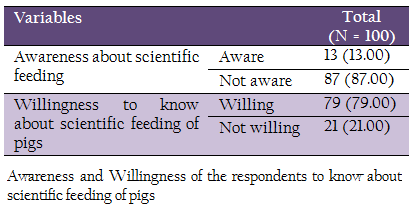
Feeding and production performance in commercial pig farms The study revealed that 87% (Table: 1) of the respondents were not aware of the scientific feeding of pigs despite 83% of them being literates.
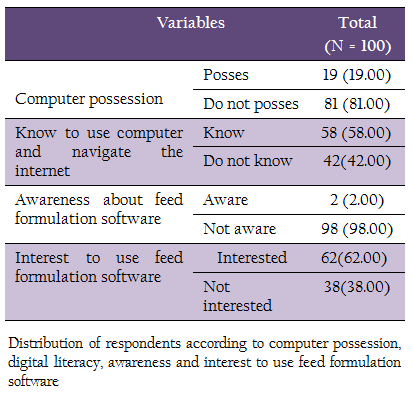
Table 4: Distribution of respondents according to computer possession, digital literacy, awareness and interest to use feed formulation software
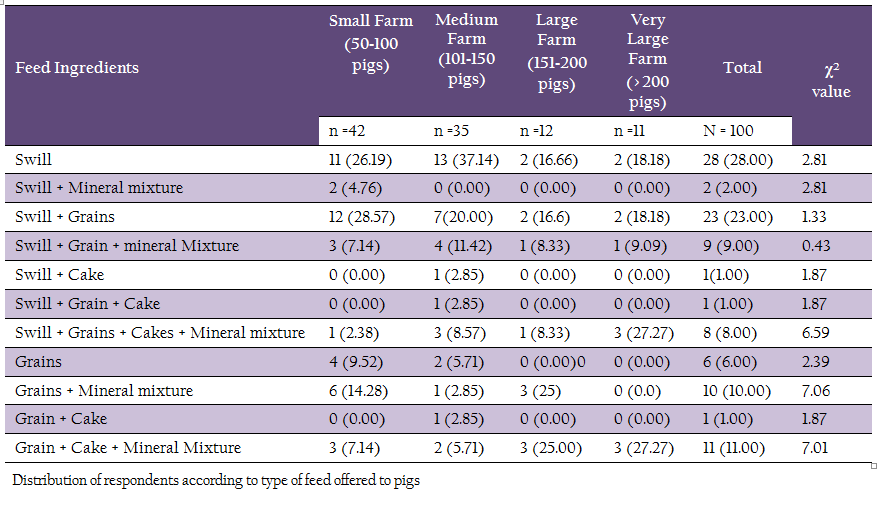
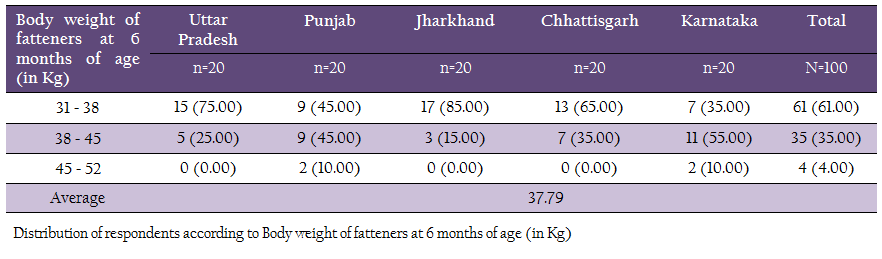
The poor awareness was well reflected in the fact that, about 28% of farmers were feeding exclusively swill feed and 42% of them were supplementing swill with little grains like broken rice maize and cakes. Only 22% of the farmers were supplementing feed with some protein sources (cakes) otherwise rest were feeding only energy source. Mineral mixture was fed by only 40% of the farmers. The pattern of feeding was not found to be significantly (p < 0.05) different among the farms (classified bases on herd size) (Table: 2). Average litter size and average body weight of fatteners at 6 month of age was found to be 7.73 and 37.79kg (Table: 3) respectively. Poor knowledge about feeding (Deka et al., 2007., Tiwari and Tiwari., 2001 and Verma et.al., 2007), improper feeding, poor management practices and lower average daily weight (Kumaresan et. al., 2007) were also reported to be some of the major constraints to improve pig production. All the pig farms considered under the study were operated commercially with 100% stall feeding. This kind of production system demands adequate knowledge and management skills for the economic viability of the farm. Since feed accounts for the 70-75% of the production cost; knowledge about scientific feeding is of paramount importance in commercial pig production. But majority of the pig farmers were not aware of scientific feeding of pigs. Average litter size of 10 -12 and average body weight of 60 kg at 6 months for fatteners (Hand book of animal husbandry, 2011) can be achieved in Indian conditions. But, these production parameters were found to be 29.72% and 37% less than the attainable production. It was interesting that 79.00 % (Table: 1) of the farmers were willing to know about scientific feeding.
Assessment of digital literacy of the commercial pig farmers
It was found that, about 58.00% of the respondents had skills to use computer and navigate the internet but only 19.00% of them had personal computer. Even though the level of digital literacy was appreciable, only 2.00% of the farmers were aware of feed formulation software. However, 62.00% (Table: 4) of them showed interest to use; once they were informed about the utility of such software. Regarding the language of the software; 63% of the respondents preferred Hindi followed by regional language (29.00%) and English language (11.00%). The study revealed that digital literacy is no more an obstacle in promoting ICT tools among commercial pig farmers in India. However, significant (p < 0.01) difference with respect to digital literacy was found among states. The level of digital literacy and interest to use software is a good indicator of sufficient e-readiness among the farmers.
Assessment of the perceived utility of the PFF
The utility Index (UI = 0.76) (Table: 5) of the software revealed that that PFF was simple to understand (UII = 0.76), user friendly (UII = 0.72) and perceived to be useful (UII = 0.78). The software was effective (UII = 0.76) in enhancing the knowledge and majority of the users were satisfied (UII = 0.62) about the software. Majority of the respondents were willing to pay (UII = 0.9) for software and the average price quoted was rupees 1,188. Only around 19.98 % of the respondents said the PFF should be made available for free. Tiwari et al (2013) also reported willingness to purchase the e-learning tool “Pashudhan avum kukkut rog suchna pranali” (PAKRSP) by majority of the livestock owners. The amount of price quoted on the PFF depended on the extent to which the PFF had direct bearing on the commercial piggery as perceived by the respondents, amount of business turnover of pig farmers and their annual income. Phand et al (2013) also reported that, the amount of price, willing to pay by the farmers for a copy of ‘Animal Health Information System” was directly proportional to their annual income. The Pig Feed Formulator can serve as an effective ICT tool to assist commercial pig farmers in on-farm feed formulation. It can bring improvement in the productivity and profitability of the pig farm by ensuring balanced ration to the animals. Moreover it can help in efficient and economic utilization of scarce feed resources.
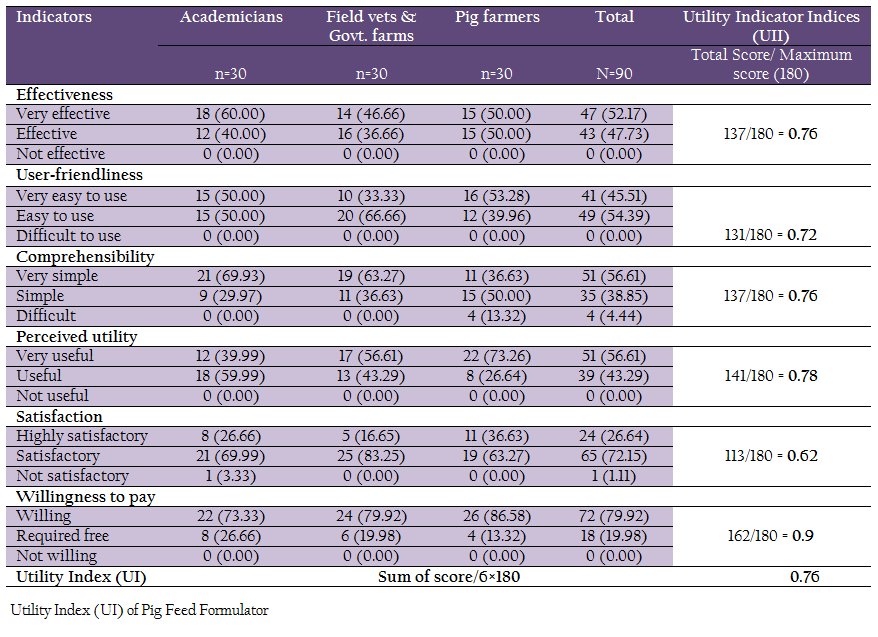
Table 5: Utility Index (UI) of Pig Feed Formulator
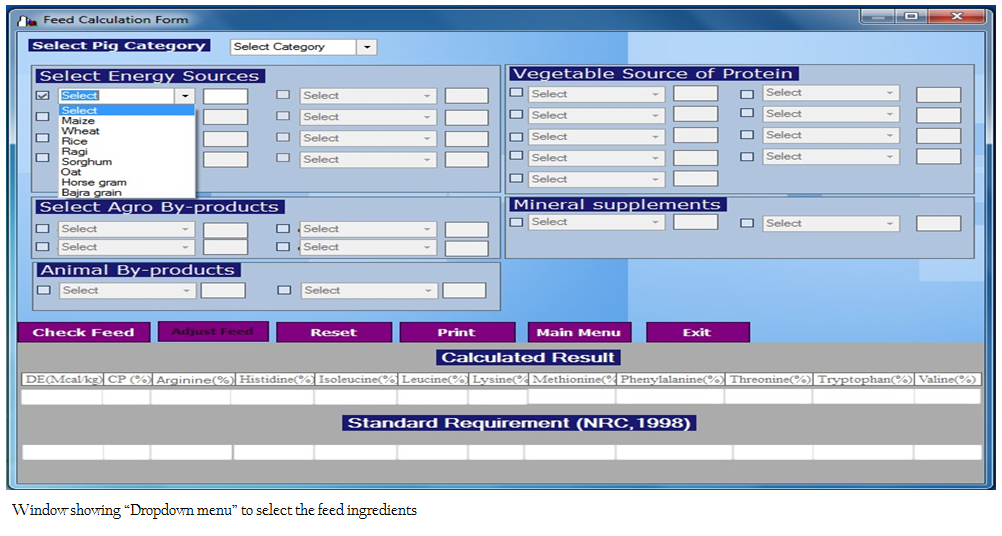
Figure 1: Window showing “Dropdown menu” to select the feed ingredients
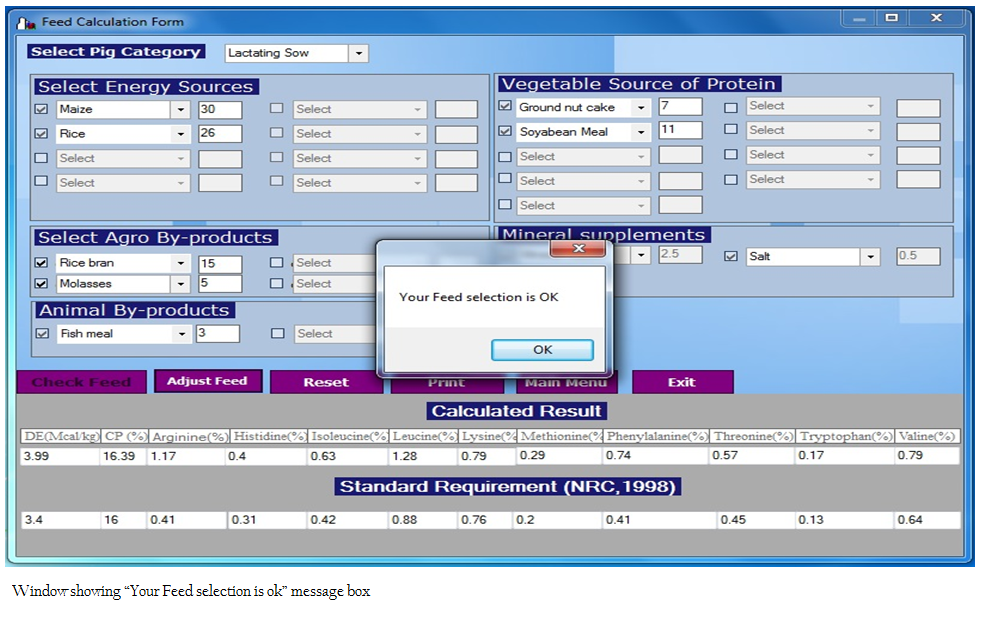
Figure 2: Window showing “Your Feed selection is ok” message box
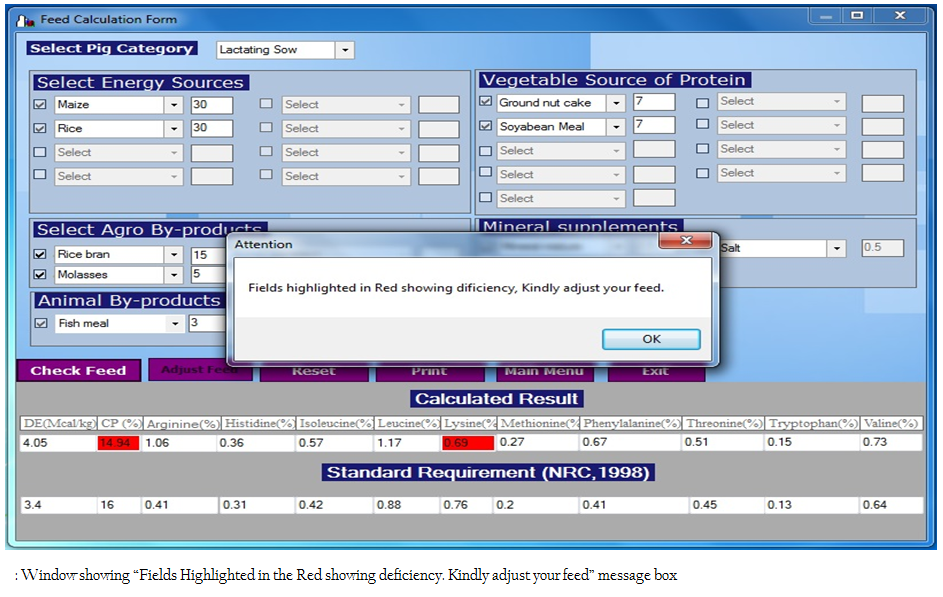
Figure 3: Window showing “Fields Highlighted in the Red showing deficiency. Kindly adjust your feed” message box
Since it contains feed ingredients available in most of the agro-ecological regions of India, it can be used in any part of the country. It can be used in Krishi vigyan Kendras (KVK), Non-Governmental organizations, state agriculture universities and other extension agencies to educate and train farmers in feed formulation. There is enough of e-readiness for ICT based technology acceptance among the pig farmers. ICT tools such as PFF can help in capacity building and open up new ways of farm management and enable efficient utilization of production factors. Hence, ICT tools can be promoted in driving the development of livestock sector.
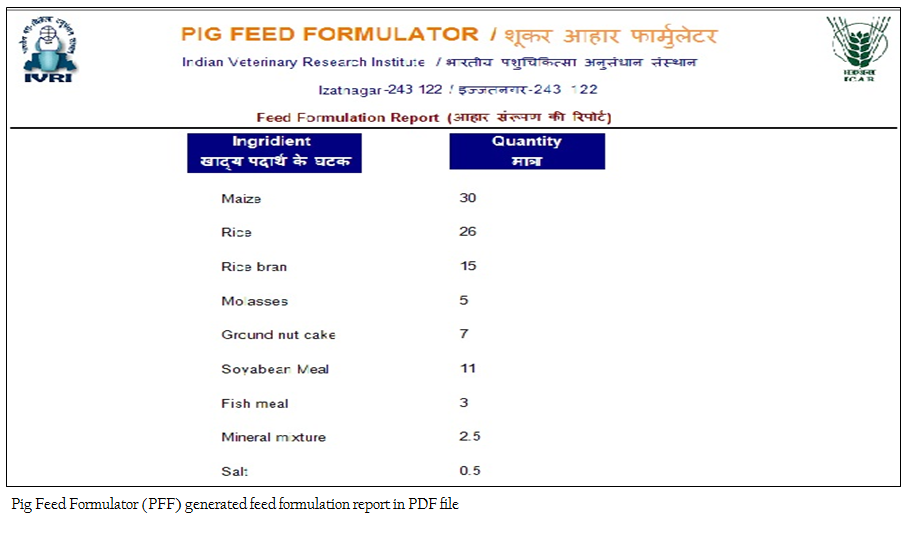
Figure 4: Pig Feed Formulator (PFF) generated feed formulation report in PDF file