Milind Digambar Patil
College of Forestry, Department of Natural Resource Management, Dr. Balasaheb Sawant Konkan Krishi Vidyapeeth (Agricultural University), Dapoli, Dist. Ratnagiri, Maharashtra 415712, India.
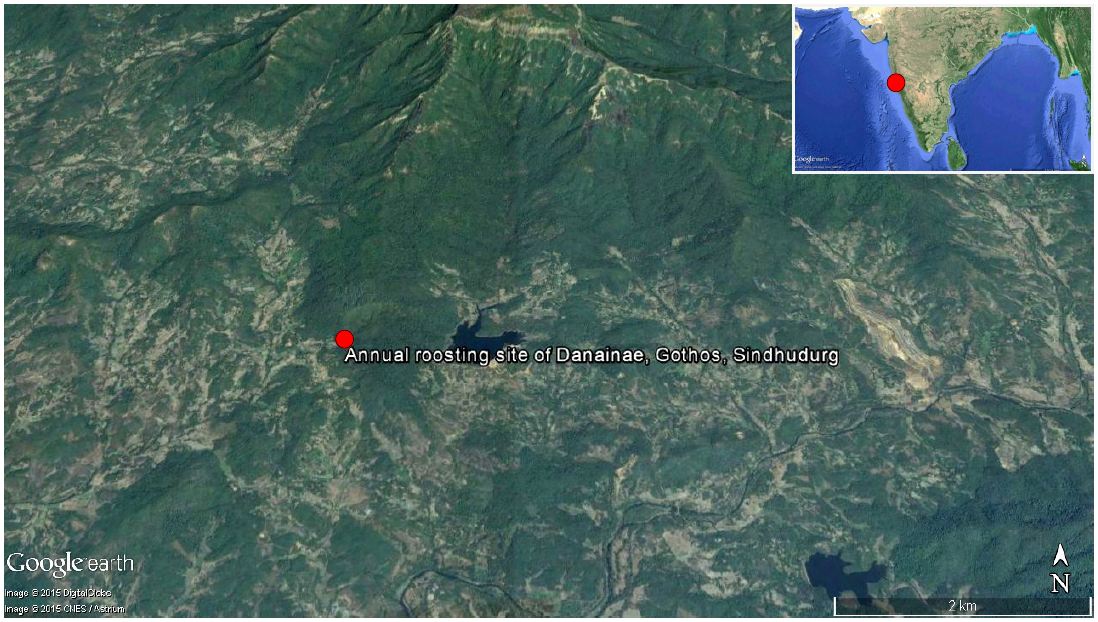
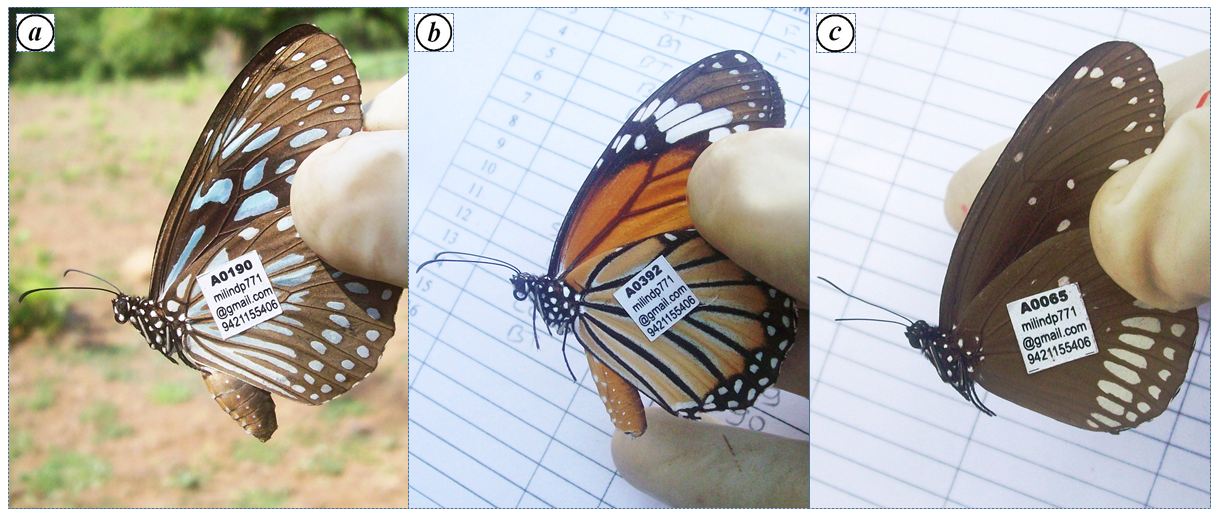
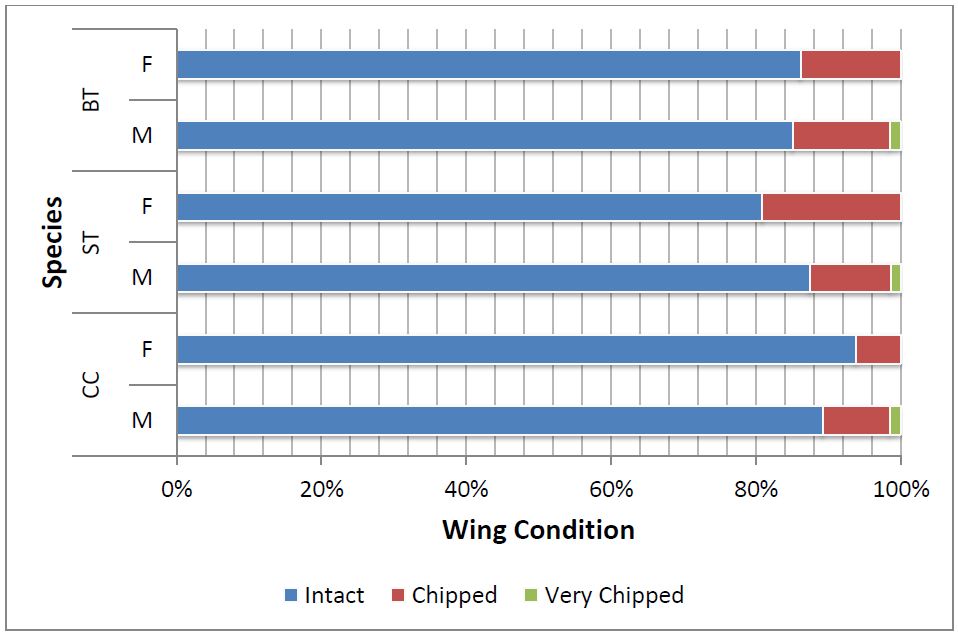
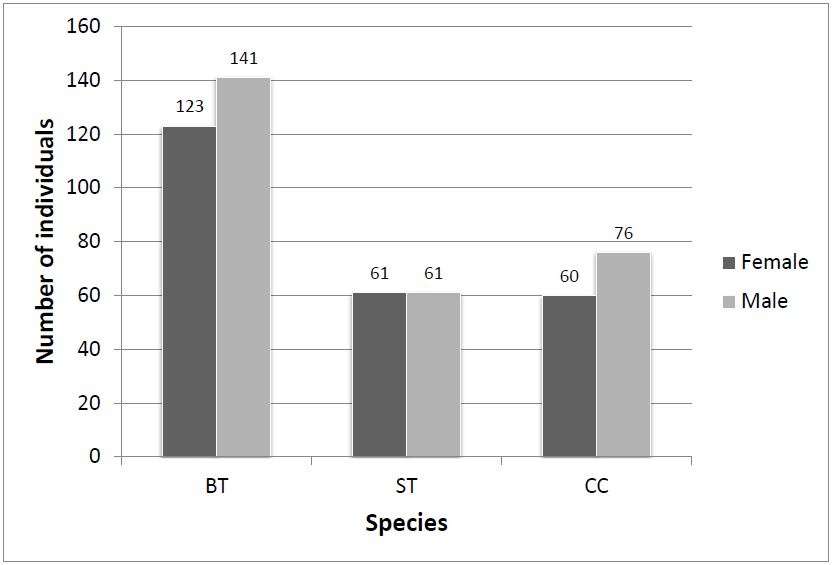
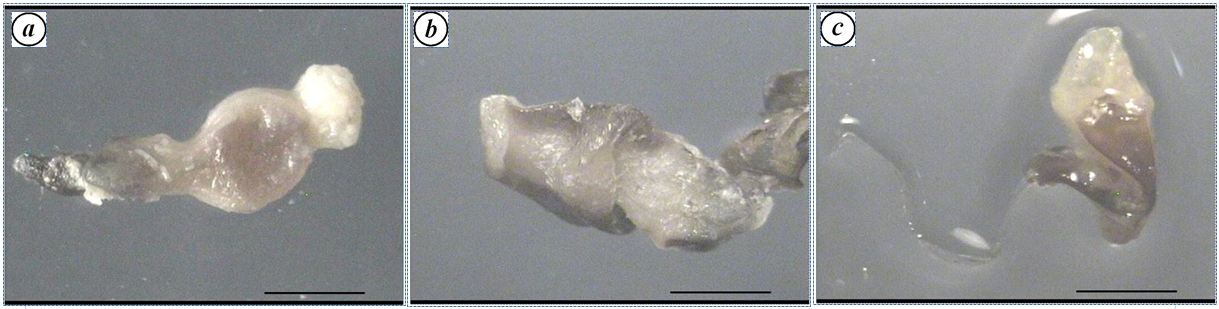
Abstract | Butterfly migrations are one amongst the most fascinating phenomena in the animal kingdom. Tropical butterfly migrations are unique in them since they are comprised with more than one species and chiefly governed by sequential seasonal events of monsoon. To investigate the population structure and diapause behaviour of congregated Danainae populations, a study was conducted at the congregation site in Gothos village during the period 05/02/2014 to 09/02/2014. The roosting colony comprised of three Danainae (Nymphalidae) taxa viz. (i) Oriental Blue Tiger Tirumala limniace exoticus, (ii) Oriental Striped Tiger Danaus genutia genutia and (iii) Indian Common Crow Euploea core core in order of dominance. Congregation was lasted for around three months. Out of the total visual estimates of 50,000 individuals, 522 individuals were randomly captured and permanently tagged. An excellent wing condition of captured individuals depicted their ‘fresh’ eclosion. Abdominal dissections of 30 female specimens (10 of each species) showed existence of reproductive diapause. Recording three consecutive years’ congregations (2012-13, 2013-14 and 2014-15) confirm the Gothos valley as the first documented ‘annual pre-monsoonal congregation site’ of Danainae in the Indian peninsula. The observations highlight specific niche requirements of freshly ecloded migratory broods of Danainae to overcome reproductive diapause followed by theiradvancing voyages in the rain-shadow region.
Keywords | Annual mass congregation, Butterfly tagging, Reproductive diapause, Roosting behaviour, Seasonal migration