Attaullah*, Nasrullah Khan, Zahid Muhammad
Laboratory of Plant Ecology, Department of Botany, University of Malakand, Chakdara Dir (lower), Khyber Pakhtunkhwa, Pakistan.

Selected from the article's own text.
Attaullah*, Nasrullah Khan, Zahid Muhammad
Laboratory of Plant Ecology, Department of Botany, University of Malakand, Chakdara Dir (lower), Khyber Pakhtunkhwa, Pakistan.
An area which is set aside by the national government for the protection of natural environment is known as a national park. According to the World Conservation Union it is a natural area selected in order to protect the ecological integrity of one or more ecosystems for the present and upcoming generation . For the conservation of biodiversity, educational, historical recreational purposes the protected areas are most important in many ways. Overall all there are 102102 protected areas in the world which covers 18.8 million km2 of the earth .
In Pakistan there are 26 national parks covering about 3% area of the country. The largest one is that Central Karakoram National Park, while Toli Pir (1000 acre area) is the smallest national park of Pakistan. Sheikh Buddin National Park is one of them, situated in the Dera Ismail Khan District, which is the southernmost district of Khyber Pakhtunkhwa (KPK), Pakistan. It is believed that Hazrat Sheikh Bahauddin Zakariya, the great Sufi saint of Multan has traveled to this town to preach Islam, while others believed that the hill got the name Sheikh Bahauddin after Pir Sheikh Bahauddin, whose tomb is on the top of the hill, his offspring’s are still living here and are locally known as Pirs of Sheikh Badin., which later on shortened to Sheikh Buddin. The park spreads over an area of 15540 hectare and was upgraded to the category of National Park (NP) for the aims of conserving its biodiversity, beautiful
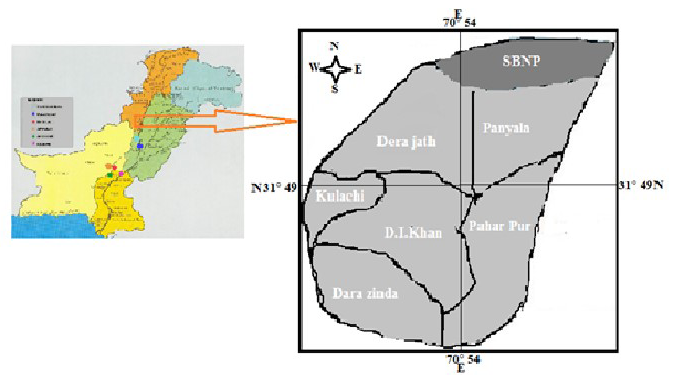
Figure 1:Showing the SBNP (Dark) in Dera Ismael Khan district
sceneries and history as well as educational and recreational tenacities as a result of notification number . Forest 1 (FFT) VIII. Peshawar, Dated 15.07.1993 .
In Pakistan there are 5521 recorded species of angiosperms belonging to 1572 genera, mostly present in the hilly areas of the country ; .
Arshad et al. (2013) collected 88 plant species from Chitral Goal National Park in their report about assessing potential habitats of Kashmir Markhor in Chitral Gol National park. They use multivariate techniques and divide the Park in 1V communities. Similarly, Hussain et al. (2013) explored the vegetation structure and dynamics of the vegetation in Central Karakoram National Park. Qureshi et al. (2011) reported 62 plant species from Khunjerab National Park, in which the most important family was Primulaceae which contributed 11.29% of the total flora. Khan et al. (2011) documented 31 species belonging to 21 families along with their medicinal uses from Chitral Gol National Park. Hussain and Parveen (2009) documented 70 plant species describing their life form and phonological characters from Kirthar range. From the Dureji game reserve of Balochistan Province Perveen et al. (2008) recorded 79 plant species belonged to 66 genera’s and 32 families, in which family Poaceae was the dominant family with 12 plant species. They also reported that the Chaemophytes were the most dominant class of life form in the study area followed by Phanerophytes. Similarly research was conducted on 6 most prominently underutilized plant species and their medicinal and food uses were studied in Ayubia National Park by Ahmad and Jawed (2007). While, Hameed et al. (2002) described the vegetation of Lal Suhnra National Park and reported 56 plant species belonging to 20 families of which Poaceae was the largest family with 19 grass species. A phytosociological survey of the vegetation in Machyara National Park was described by Malik and Zandiyal (1996). To date no published report is about the flora of Sheikh Buddin National Park, so this was the first attempt to provide a check list of angiosperm plants of the study area and this will provide necessary information’s for the future researches. The aim of the present study was to explore the vegetation of Sheikh Buddin National Park.
The Sheikh Buddin National Park is situated in the Dera Ismail Khan District of Khyber Pakhtunkhwa spanning between 32º16” to 32º34” N latitudes and 70°45” to 71º12” E longitudes with an altitudinal range of 300-1350 m above sea level Marwat et al. (2012a) (Figure 1) . The area is highly diversified not only in mineral resources but also hub to biodiversity to micro-climatic regimes. Geographically the study area is situated in such a way that its boundaries touches the South Wazirestan Agency on the west; the districts of Tank and Lakki Marwat on the north, river Indus, Mian Wali and Bhakkar of Punjab in the east and Dera Ghazi Khan of Punjab province in the south Marwat and Khan (2008). The area has distinct summer and winter seasons. The climatic conditions of the area reveal that January (12ºC) is the coldest and June (35ºC) is the hottest months of the year, respectively. During winter the mean maximum and minimum temperature are 20.3°C and 4.2°C respectively, while 35°C and 22°C during summer. Average annual rainfall is 200 mm , while total rainfall during study period was 276mm (Figure 2).
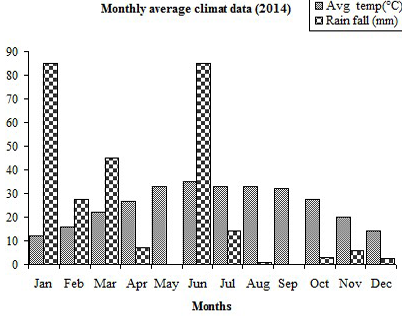
Figure 2: Mean average temperature and rain fall of the year 2013
Due to these harsh and xeric conditions the study site provide a well substratum to xerophytes communities, developing as subtropical dry ecosystem . Dominant species of the area are Acacia modesta, Prosopis juliflora, Olea ferruginea, Capparis decidua, Tamarax aphla Dodonea viscosa, Saccharum species and Cymbpogon species .
The present check list of angiosperms of Sheikh Buddin National Park is a result of various field collections and as a laboratory work from March 2013 to April 2014. For the collection and identification of living, wild and cultivated Angiospermic species, monthly field trips were arranged. The Park enclosures was thoroughly surveyed and photograph of various plant species were taken with the help of a digital camera and live plants were collected, pressed on, dried and preserved with their full morphological structure (roots, stem, leaves, flowers and fruits) on the herbarium sheet following the standard techniques of (Decoteau and Kelly, 1985; . Field information such as habit, flower color and flowering season along with their local names (Pashto names) were collected from the local knowledgeable peoples.
The species were identified with the help of available literature and flora of Pakistan (Ali and Qaiser, 1995-2008) and were confirmed by comparing with authentic specimens available and deposited at the botanical garden Herbarium Deportment of Botany, University of Malakand, Chakdara Dir lower, Pakistan. In addition specimens which were collected from other national parks and tropical forests were also studied. Genera were arranged in alphabetical order.
Intensive and Extensive tours in various seasons and ecosystem resulted in collection of 117 plant species belonging to 99 genera from the Sheikh Buddin National Park. These plants species belong to 51 families in which 6 (11.76%) were monocots, one gymnosperm while rest of the families (86.27%) were dicots as shown in Table 1 (given at the end).
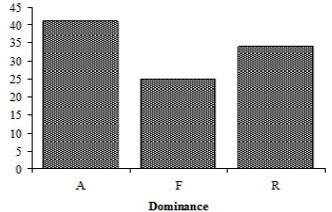
Figure 3: Representing the leading plants families of Sheikh Buddin national Park
The flora of the study area was dominated by the members of Poaceae and Lamiaceae contributed 7.75% by each one followed by Asteraceae 6%, Apocyanaceae and Fabaceae 5.17% each, Mimosaceae and Solanaceae with 4.31% each one. While rest of the families showed poor floristic composition of the National Park as shown in Figure 3. Majority (60%) of the families were monospecific. Floral abundance show that majority of the species were found in abundant categories (Figure 4).
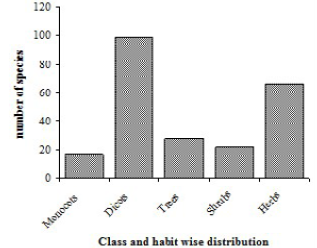
Figure 4: Percent abundance of species
Among the monocots the family Poaceae had 9 species and 7 generas, liliaceae, Arecaceae and Asparagaceae each one were represented by 2 species while rest of the families (asphodelaceae and cyperaceae) were represented by 1 species. In Dicots the Lamiaceae was the largest family including 9 species followed by Asteraceae with 7 species and 6 generas, Fabaceae and apocyanaceae were the 3rd leading families of dicots representing 6 species, While Mimosaceae and solanaceae were the 4th largest families with 5 plant species and 3 generas of each one. Other well represented families were Boraginaceae, Brassicaceae, Euphorbiaceae, Scrophulariaceae and Zygophylaceae with 3 specie each. The remaining 30 families were represented by one species each indicating that these families have poor floristic representation in the overall vegetation of the National Park.
Among the 117 species 28 were trees, 22 shrubs and 67 were herbs. Among trees Acacia modesta, Olea ferruginea, Salvadora oleoides, in shrubs Prosopis juliflora, Dodonea viscosa and Rhazya stricta, while among herbs Cymbopogon species, Saccharum bengalense and Cynodon dactylon , Peganum harmala were dominant species. Table 1 also shows that there were 47 abundant species, 29 frequent while 40 species were rare. Most of the abundant species were herbs and some shrubs, while most of the shrubs and some trees were frequently distributed whereas few of the trees and herbs were rare in the National Park. Among the trees Acacia modesta, Olea ferruginea were abundant and frequently occuring species. In shrubs the most abundant species were Prosopis julifora at low altitude and Dodonea viscosa at high altitude while in herbs grasses were dominated in the entire study area.
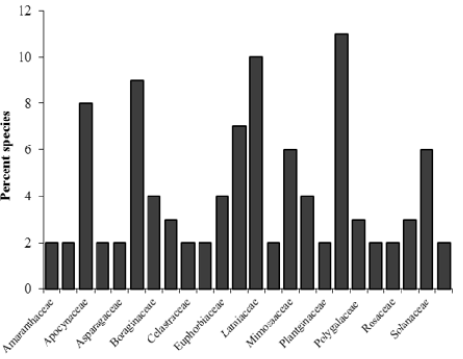
Figure 5: Showing class and habit-wise distribution of the angiosperms plants in SBNP, D. I. Khan
Aerva javanica, Rhazya stricta, Echinops echinatus, Launaea procumbens, Calotropis procera, Periploca aphylla, Euphorbia prostrate, Acacia nilotica, Alhagi maurorum, Ziziphus nummularia, Salvadora oleoides, Solanum surattense, Tamarix dioica and Tamarix aphylla etc., were recorded by Perveen et al. (2008) Dureji (Khirthar Range) while all of the above mentioned species were recorded by us from the Sheikh Buddin National Park. Sophora mollis, Rumex hastatus, Filago hardwerica, Purtulaca oleracae, Chenopodium album and Convulvus arvensis, were collected by Arshad et al. (2013) from Chitral Gol National Park and all of these plants species were also found in the study area.
Figure 5 shows the class-wise and habit wise distribution of the species in Sheikh Baddin National Park. It is clear from Figure 5 that the contribution of herbs was more than trees and shrubs, similarly the floristic composition of trees was more than that of shrubs. Figure 5 also indicated the distribution of monocots is higher than that of dicots in the Park.
The study area face sever biotic and abiotic pressure, due to which diversity and composition of natural flora being vanishing. If proper management, care and protection were not taken, the area would become a barren area in near decades. This loss will not only effect climate but also, socioeconomic level of the area.
Authors declare that their is no conflict of interest in this work.
Nasrullah Khan designed the project, Atta Ullah collected field data and prepared early draft of manuscript while Zahid Muhammad help in field work, preparing and designing the manuscript and figures.
Loading…