
Mangrove ecosystems support diverse macrofaunal communities and play an important role in coastal ecological functioning. The present study investigated macrofaunal diversity and seasonal variation in the mangrove-mudflat ecosystem of Damb, Sonmiani, Balochistan, Pakistan, based on monthly sampling conducted from January to December 2018 at six stations. A total of 2,098 individuals belonging to 17 species representing 14 families and three phyla (Mollusca, Arthropoda and Chordata) were recorded. Mollusca dominated the assemblage, contributing 65.44% of the total abundance, followed by Arthropoda (30.17%) and Chordata (4.39%). Gastropods formed the major component of the community, with Cerithideopsilla cingulata, Telescopium telescopium and Pirenella cingulata as the most abundant species. Among arthropods, sesarmid and ocypodid crabs, particularly Neosarmatium meinerti and Austruca annulipes, were numerically dominant. The mudskipper Scartelaos histophorus was the only fish species recorded. Shannon–Wiener diversity values remained relatively high throughout the year (H′ = 2.17-2.51), indicating a well-structured community. Although monthly fluctuations in abundance were observed, Kruskal-Wallis tests showed no significant differences among months or seasons (p > 0.05). The results indicate that the mangrove ecosystem of Damb Sonmiani supports a stable and diverse macrofaunal community, highlighting its ecological importance along the Balochistan coast of Pakistan.
Research Article · Volume 58, Issue 6, 2 October 2026 · Open Access
Macrofaunal Diversity and Seasonal Variation in the Mangrove Ecosystem of Damb Sonmiani, Balochistan, Pakistan
·
Affiliations & Notes ⌄
- 1Department of Marine Sciences, Faculty of Marine Sciences, Lasbela University of Agriculture, Waters and Marine Sciences, Balochistan, Pakistan. * Corresponding author: shaziarasheed_22@hotmail.com
Article Info ⌄
- Journal:
- Pakistan Journal of Zoology
- Published:
- 2 October 2026

From the article
- The concurrence of high abundance and high diversity during post-monsoon months suggests broad recruitment rather than single-species proliferation.
- The species composition, abundance patterns and diversity indices collectively confirm that the study area supports a well-structured and ecologically balanced macrofaunal community, highlighting the significance of intertidal mangrove-associated habitats in sustaining coastal biodiversity along the Pakistani coast.
- The mangrove-mudflat ecosystem of Damb Sonmiani supports a diverse and stable macrofaunal community dominated by gastropods and mangrove-associated crabs.
- High diversity and evenness values reflect the ecological integrity of this habitat.
Selected from the article's own text.
Abstract
INTRODUCTION
Mangrove forests are among the most productive coastal ecosystems worldwide, providing a wide range of ecological services such as shoreline stabilization, nutrient cycling, detritus production and nursery habitats for numerous marine and terrestrial organisms (Alongi, 2014; Wang et al., 2023). These ecosystems support diverse assemblages of macrofauna that play critical roles in sediment bioturbation, organic matter decomposition and trophic energy transfer. Among these groups, mangrove-associated arthropods, particularly brachyuran crabs, are of special ecological importance due to their influence on sediment structure, burrow aeration and regulation of microbial and detrital processes, making them reliable indicators of ecosystem health and environmental change (Chen et al., 2024).
Along the northern Arabian Sea, Pakistan’s coastline supports extensive mangrove stands dominated primarily by Avicennia marina, particularly along the Sindh and Balochistan coasts. These mangroves underpin coastal fisheries, protect shorelines and sustain regional biodiversity, while also supporting the livelihoods of local communities. However, Pakistan’s mangrove ecosystems are increasingly exposed to environmental stressors, including climate variability, altered freshwater inflow, coastal development and hydrological modification (Kazmi et al., 2019). Despite their ecological and socio-economic significance, detailed faunal assessments of Pakistan’s mangrove habitats remain limited, with most available studies focusing on general biodiversity inventories or macrobenthic assemblages (Siddiqui et al., 2023; Ahmed et al., 2026). Information on temporal variation in macrofaunal community structure, particularly along the Balochistan coast, remains scarce.
Seasonal variability is a key driver of faunal dynamics in mangrove ecosystems. Changes in temperature, salinity, rainfall and monsoon-driven hydrological inputs can influence recruitment patterns, food availability and habitat suitability for mangrove-associated fauna (Priyashantha et al., 2023; Ravichandran et al., 2024). Understanding temporal patterns in abundance and diversity is therefore essential for evaluating ecosystem functioning and resilience, particularly in regions experiencing increasing anthropogenic pressure.
Damb Sonmiani represents one of the ecologically important mangrove systems along the Balochistan coast, characterized by extensive mudflats and lagoonal environments. Quantitative information on its macrofaunal communities, however, remains limited. The present study addresses this knowledge gap by examining the composition, abundance and temporal variation of mangrove-associated macrofauna at Damb Sonmiani over a twelve-month period. The findings provide baseline information to support future monitoring, conservation and management of mangrove ecosystems along the Pakistani coast.
MATERIALS AND METHODS
Study area and sampling design
The study was conducted in the mangrove-mudflat ecosystem of Damb, Sonmiani Bay, located along the Balochistan coast of Pakistan. Twelve months sampling stations were established within inner-creek and lagoon habitats dominated by Avicennia marina (Fig. 1; Table I). The stations were visited monthly from January to December 2018, and sampling was carried out during low-tide conditions.
Field sampling and laboratory
Macrofaunal sampling was conducted from exposed mudflats and shallow subtidal habitats during low tide. Gastropod assemblages were sampled using a standard quadrat-based procedure, with replicate 1 m² quadrats placed randomly across each site to encompass the range of available microhabitats. Additional macrofaunal specimens were collected using hand picking, small scoop nets, and manual excavation to a depth of approximately 10 cm.
All collected specimens were immediately preserved in 4% buffered formalin, properly labelled, and transported to the laboratory for further analysis. Sampled were sorted, counted, and identified to the lowest possible taxonomic level using regional taxonomic monographs and diagnostic literature (e.g., Kazmi et al., 2019; Huber, 2010; WoRMS). Nomenclature follows current taxonomic consensus. Where necessary, specimens morphology was examined under a stereomicroscope to confirm identification. Abundances were expressed as the total number of individuals per species per site.
Table I. Sampling locations in the mangrove-mudflat ecosystem of Damb Sonmiani, Balochistan, Pakistan, surveyed during January-December 2018.
|
Station No. |
Location name |
Latitude (N) |
Longitude (E) |
|
1 |
Site One |
25°27′52″ N |
66°31′48″ E |
|
2 |
Site Two |
25°27′44″ N |
66°31′51″ E |
|
3 |
Site Three |
25°27′34″ N |
66°31′52″ E |
|
4 |
Site Four |
25°25′50″ N |
66°35′10″ E |
|
5 |
Site Five |
25°25′43″ N |
66°35′16″ E |
|
6 |
Site Six |
25°25′39″ N |
66°35′20″ E |
All stations were visited monthly during low tide. GPS coordinates were recorded in the field using a handheld global positioning system receiver.
Diversity indices and data analysis
Species diversity of the faunal assemblage was assessed using standard ecological diversity indices. Species abundance data collected monthly were used to calculate the Shannon-Wiener diversity index (H′), Simpson diversity index (1-D), and Pielou’s evenness index (J′).
The Shannon-Wiener diversity index (H′) was calculated as:
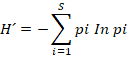
pi is proportion of individuals of the ith species, S is total number of species.
Natural logarithms (ln) were used.
Simpson diversity was expressed as 1–D, where:
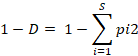
Where; pi is proportion of individuals of the ith species, S is total number of species.
Values of 1–D range from 0 to 1, with higher values indicating greater diversity.
Species evenness was estimated using Pielou’s evenness index (J′), calculated as:

Where H′ is Shannon–Wiener diversity index, S is total number of species.
Values of J′ range from 0 to 1, with values closer to 1 indicating a more even distribution of individuals among species.
Monthly diversity indices were computed based on pooled species abundance data for each sampling month. All diversity indices were calculated using relative abundance data, and results are presented as monthly and overall values.
RESULTS
A total of 2,098 macrofaunal individuals representing 17 species, 14 families, and three phyla (Arthropoda, Mollusca, and Chordata) were recorded during the study period (Table II). Mollusca was the dominant phylum, contributing 1,373 individuals (65.4%), followed by Arthropoda with 514 individuals (24.5%), while Chordata was represented by 92 individuals (4.39%).
Species composition and abundance
The most abundant species was Cerithideopsilla cingulata (332 individuals; 15.82%), followed by Telescopium telescopium (301; 14.35%) and Pirenella cingulata (279; 13.30%). Together, these gastropods accounted for a substantial proportion of the total macrofaunal abundance. Among arthropods, Neosarmatium meinerti (131 individuals; 6.24%) and Austruca annulipes (109; 5.20%) were the most abundant species, whereas Penaeus merguiensis showed the lowest abundance (19 individuals; 0.91%). Bivalve species were less abundant compared to gastropods, with Gari amethystus (147 individuals; 7.01%) representing the dominant bivalve, followed by Anadara antiquata (68; 3.24%) and Marcia marmorata (62; 2.96%) The chordate component of the assemblage was represented solely by Scartelaos histophorus, which contributed 92 individuals (4.39%) to the total abundance.
Arthropoda
Arthropods were represented by eight species belonging to six families. The most abundant species was Neosarmatium meinerti (131 individuals; 6.24%), followed by Austruca annulipes (109; 5.20%) and Balanus balanus (100; 4.77%). Moderate abundances were observed for Pagurus bernhardus (91; 4.34%) and Parasesarma guttatum (90; 4.29%). Lower abundances were recorded for Ocypode ceratophthalmus (46; 2.19%), Scylla serrata (47; 2.24%), and Penaeus merguiensis (19; 0.91%).
Table II. Taxonomic composition, total abundance (N), and percentage occurrence (%) of macrofaunal species recorded from Damb Sonmiani, Balochistan, during January-December 2018.
|
Phylum/ Family |
Species |
Total (N) |
Occurrence (%) |
|
Arthropoda |
|||
|
Ocypodidae |
Ocypode ceratophthalmus |
46 |
2.19 |
|
Ocypodidae |
Austruca annulipes |
109 |
5.20 |
|
Sesarmidae |
Neosarmatium meinerti |
131 |
6.24 |
|
Sesarmidae |
Parasesarma guttatum |
90 |
4.29 |
|
Paguridae |
Pagurus bernhardus |
91 |
4.34 |
|
Portunidae |
Scylla serrata |
47 |
2.24 |
|
Balanidae |
Balanus balanus |
100 |
4.77 |
|
Penaeidae |
Penaeus merguiensis |
19 |
0.91 |
|
Mollusca Gastropoda |
|||
|
Potamididae |
Pirenella cingulata |
279 |
13.30 |
|
Potamididae |
Telescopium telescopium |
301 |
14.35 |
|
Rostellariidae |
Tibia curvirostris |
107 |
5.10 |
|
Cerithiidae |
Cerithideopsilla cingulata |
332 |
15.82 |
|
Muricidae |
Thais carinifera |
77 |
3.67 |
|
Mollusca Bivalvia |
|||
|
Arcidae |
Anadara antiquata |
68 |
3.24 |
|
Veneridae |
Marcia marmorata |
62 |
2.96 |
|
Psammobiidae |
Gari amethystus |
147 |
7.01 |
|
Chordata |
|||
|
Gobiidae |
Scartelaos histophorus |
92 |
4.39 |
Mollusca
Mollusca constituted the largest component of the assemblage and was represented by gastropods and bivalves. Gastropods were the most abundant class, comprising 1,096 individuals. The highest abundance was recorded for Cerithideopsilla cingulata (332 individuals; 15.82%), followed by Telescopium telescopium (301; 14.35%) and Pirenella cingulata (279; 13.30%). Tibia curvirostris and Thais carinifera contributed 107 (5.10%) and 77 individuals (3.67%), respectively. Bivalves were represented by three species with a total of 277 individuals. Gari amethystus was the most abundant bivalve (147 individuals; 7.01%), followed by Anadara antiquata (68; 3.24%) and Marcia marmorata (62; 2.96%).
Chordata
Chordata was represented by a single species, Scartelaos histophorus, with 92 individuals (4.39%) recorded during the study period.
Monthly distribution of macrofaunal species
The monthly distribution of macrofaunal species at Damb Sonmiani demonstrates clear seasonal variation in abundance while maintaining overall community stability. Monthly macrofaunal abundance exhibited pronounced seasonal variation (Fig. 2A), with the lowest number of individuals recorded in May (104) and a progressive increase towards a peak in December (300). This fluctuation was largely driven by gastropods, particularly the potamidid species Cerithideopsilla cingulata, Telescopium telescopium, and Pirenella cingulata, which collectively contributed the highest proportions of the total assemblage. C. cingulata was the most abundant species overall (15.82%), showing pronounced peaks in November and December, while T. telescopium and P. cingulata exhibited strong seasonal pulses during pre-monsoon and post-monsoon periods. Abundance remained moderate during winter and pre-monsoon months but increased substantially during the post-monsoon period. Despite these numerical fluctuations, proportional community structure remained relatively stable (Fig. 2B). Gastropods constituted the dominant taxonomic group in most months, particularly during March-April and November-December, when their percentage contribution exceeded half of the total assemblage. Crustaceans displayed consistent representation throughout the year, contributing to structural continuity of the community. Bivalves showed intermittent increases associated with specific months, while chordates (mudskippers) remained a minor but persistent component. These patterns indicate that seasonal changes primarily affected total abundance rather than overall community composition.
Arthropods were consistently present throughout the year, with sesarmid and ocypodid crabs forming the dominant crustacean component. Neosarmatium meinerti (6.24%) and Austruca annulipes (5.20%) displayed relatively stable monthly distributions, indicating their ecological resilience and continuous role in sediment bioturbation and detrital processing. Other crustaceans, such as Pagurus bernhardus and Balanus balanus, showed moderate but regular occurrence, while Penaeus merguiensis remained rare (0.91%), suggesting transient habitat utilization.
Bivalves contributed intermittently to the assemblage, with Gari amethystus (7.01%) showing notable peaks in April, June, September, and December, possibly reflecting changes in sediment composition and hydrodynamic conditions. Anadara antiquata and Marcia marmorata were present across most months but in comparatively lower numbers, indicating secondary ecological roles within the benthic system. The chordate component was represented solely by the mudskipper Scartelaos histophorus (4.39%), which occurred in most months and peaked in April and August, confirming the persistent suitability of exposed mudflat habitats.
Overall, the table indicates that seasonal changes primarily affected population density rather than taxonomic composition. Gastropod recruitment pulses largely determined total abundance trends, whereas crustaceans provided structural continuity to the community across all months. The persistence of multiple taxa throughout the year, even during low-abundance periods, reflects a stable and resilient mangrove-associated macrofaunal assemblage influenced by monsoonal cycles but not subject to drastic compositional shifts.
Community diversity
The overall Shannon-Wiener diversity index (H′) of the assemblage was 2.60, while the Simpson diversity index (1-D) was 0.91. Pielou’s evenness index (J′) was 0.92, indicating a relatively even distribution of individuals among species. Overall, the narrow fluctuation range of diversity indices indicates temporal stability of the mangrove-associated macrofaunal community. Monthly diversity indices indicated moderate to high macrofaunal diversity throughout the study period. Shannon-Wiener values ranged from 2.17 (June) to 2.51 (December) (Fig. 3A), while Simpson diversity varied between 0.85 and 0.90 (Fig. 3B). Evenness remained consistently high (0.84-0.92), indicating a relatively uniform distribution of individuals among species (Fig. 3C). Although abundance peaked during November and December, diversity values remained stable, suggesting that increases in abundance were not driven by dominance of a single species but rather by broad recruitment across multiple taxa. Slightly reduced diversity and evenness during May and June may reflect seasonal environmental stress associated with elevated temperatures and sediment instability.
Table III. Monthly variation in species diversity indices of the macrofaunal assemblage at Damb Sonmiani, Balochistan, Pakistan, from January to December 2018.
|
Month |
Individuals (N) |
Shannon wiener (H′) |
Simpson (1-D) |
Evenness (J′) |
|
January |
126 |
2.30 |
0.87 |
0.87 |
|
February |
142 |
2.42 |
0.89 |
0.90 |
|
March |
180 |
2.19 |
0.86 |
0.88 |
|
April |
192 |
2.37 |
0.88 |
0.87 |
|
May |
104 |
2.25 |
0.86 |
0.85 |
|
June |
189 |
2.17 |
0.85 |
0.85 |
|
July |
141 |
2.37 |
0.88 |
0.88 |
|
August |
175 |
2.38 |
0.89 |
0.90 |
|
September |
128 |
2.42 |
0.89 |
0.92 |
|
October |
158 |
2.39 |
0.89 |
0.91 |
|
November |
263 |
2.39 |
0.87 |
0.84 |
|
December |
300 |
2.51 |
0.90 |
0.89 |
Discussion
The present study demonstrates that the macrofaunal community of Damb Sonmiani is dominated by molluscs, particularly gastropods, and a pattern characteristic of intertidal mangrove-associated and muddy coastal habitats. Similar dominance of molluscan fauna has been widely reported from mangrove and intertidal zones along the Pakistani coast and other parts of the Indo-West Pacific (Tirmizi and Siddiqui, 1981; Barkati and Rahman, 2012; Nagelkerken et al., 2008).
The high abundance of potamidid and cerithiid gastropods, including Cerithideopsilla cingulata, Telescopium telescopium and Pirenella cingulata, reflects the suitability of organic-rich muddy substrates and detritus-based food resources prevailing in the study area. These taxa are well-established ecological indicators of mangrove and estuarine environments (Plaziat, 1984; Abbott, 1991), and their numerical dominance has also been documented from mangrove systems of Pakistan and neighboring regions (Bianchi, 1985; Ravichandran et al., 2024).
Among arthropods, sesarmid and ocypodid crabs constituted prominent components of the assemblage. Species such as Neosarmatium meinerti, Parasesarma guttatum and Austruca annulipes are typical inhabitants of mangrove forests and intertidal mudflats, where they play a crucial role in leaf-litter processing, sediment bioturbation and nutrient cycling (Kristensen, 2008; Nagelkerken et al., 2008). The comparatively lower abundance of penaeid shrimps and portunid crabs likely reflects their greater mobility and more transient use of intertidal habitats.
Bivalves were less abundant than gastropods, with Gari amethystus dominating the group. The occurrence of G. amethystus and Marcia marmorata, species typically associated with sandy or mixed substrates, suggests ecological connectivity between mangrove creeks and adjacent open coastal areas. In contrast, Anadara antiquata is a well-known mangrove-associated ark clam, and its consistent presence further supports the strong mangrove influence on the benthic assemblage (Oliver, 1984; Abbott, 1991).
The occurrence of the mudskipper Scartelaos histophorus further confirms the intertidal and mangrove-influenced nature of the habitat, as this species is closely associated with exposed mudflats and burrowed sediments (Clayton, 1993). Seasonal trends in abundance, with higher values during post-monsoon and winter months, may be linked to increased recruitment, reduced thermal stress and enhanced food availability, as reported for intertidal communities along the northern Arabian Sea (Barkati and Rahman, 2012; Ravichandran et al., 2024). Lower abundance during late spring and early summer may be associated with increased desiccation stress and sediment instability.
Monthly abundance showed clear seasonal fluctuation, with the highest values recorded during November and December and the lowest in May. In contrast, diversity indices exhibited only minor variation throughout the year. Shannon-Wiener diversity (H′= 2.17-2.51) and Simpson diversity (0.85-0.90) remained consistently moderate to high, indicating a structurally stable macrofaunal assemblage. Slightly reduced diversity during early monsoon months suggests temporary numerical dominance by a few taxa, likely associated with environmental stress. However, the consistently high evenness (0.84-0.92) indicates that individuals were relatively evenly distributed among species. The concurrence of high abundance and high diversity during post-monsoon months suggests broad recruitment rather than single-species proliferation. Overall, seasonal changes primarily influenced population size rather than community structure, reflecting the ecological stability of the mangrove-mudflat ecosystem.
The macrofaunal assemblage exhibited moderate to high species diversity, as indicated by an overall Shannon-Wiener index value of H′ = 2.60 and Simpson diversity of 1-D= 0.91, values comparable to those reported from mangrove and intertidal ecosystems along the Pakistani coast and adjacent regions (Barkati and Rahman, 2012; Nagelkerken et al., 2008). The high evenness value (J′= 0.92) indicates a relatively uniform distribution of individuals among species, with limited numerical dominance by any single taxon. Such evenness is typical of structurally complex habitats such as mangrove mudflats, where heterogeneous microhabitats and diverse food resources support stable and balanced assemblages (Plaziat, 1984; Kristensen, 2008).
Monthly fluctuations in diversity indices showed lower Shannon and Simpson values during early monsoon months, particularly June, coinciding with reduced total abundance. In contrast, higher diversity values during post-monsoon and winter months, especially in December (H′= 2.51; 1-D= 0.90), likely reflect enhanced recruitment and increased availability of organic matter, as documented for intertidal benthic communities in the region (Bianchi, 1985; Ravichandran et al., 2024).
Overall, the dominance of potamidid and cerithiid gastropods, together with relatively high diversity and evenness values, underscores the ecological importance of mangrove-influenced habitats as stable and productive benthic systems. The species composition, abundance patterns and diversity indices collectively confirm that the study area supports a well-structured and ecologically balanced macrofaunal community, highlighting the significance of intertidal mangrove-associated habitats in sustaining coastal biodiversity along the Pakistani coast.
Conclusion
The mangrove-mudflat ecosystem of Damb Sonmiani supports a diverse and stable macrofaunal community dominated by gastropods and mangrove-associated crabs. High diversity and evenness values reflect the ecological integrity of this habitat. The baseline information generated by this study contributes to understanding macrofaunal ecology along the Pakistani coast and provides a reference for future monitoring and conservation of mangrove ecosystems.
Declaration
Acknowledgement
Authors acknowledge the colleagues of Department of Marine Sciences, LUAWMS for constructive comments on this research and fruitful discussion.
Funding
Author received no financial support for research, authorship and publication of this article.
IRB approval
This study formed part of the M.Phil. research of Nazakat Ali and was approved by the Department of Marine Sciences, Lasbela University of Agriculture, Water and Marine Sciences (LUAWMS), Uthal, Pakistan.
Generative AI and AI assisted technology statement
The authors declare that no generative AI and AI assisted technology was used in the creation of this manuscript.
Statement of conflict of interest
The authors have declared no conflict of interest.
REFEREFCES
Abbott, R.T., 1991. Seashells of South-East Asia. Graham Brash, Singapore, pp. 145.
Alongi, D.M., 2014. Carbon cycling and storage in mangrove forests. Annu. Rev. Mar. Sci., 6: 195-219. https://doi.org/10.1146/annurev-marine-010213-135020
Ahmed, N., Rasheed, S., Manzoor, R. and Ali, Z., 2026. Malacofaunal diversity and abundance along the coastline of Gaddani, Balochistan. Pakistan J. Zool., 58: 1055-1067. https://doi.org/10.17582/journal.pjz/20240312042149
Barkati, S. and Rahman, A., 2012. Diversity and distribution of intertidal molluscs along the coast of Pakistan. Pakistan J. Zool., 44: 151-162.
Bianchi, G., 1985. Field guide to the commercial marine and brackish-water species of Pakistan. FAO Fisheries Synopsis No. 709, Rome, pp. 200.
Chen, G., Li, Y., Wang, M. and Wang, Y., 2024. Functional importance of mangrove crabs in ecosystem processes: A synthesis from the Indo-Pacific. Mar. Environ. Res., 195: 106401.
Clayton, D.A., 1993. Mudskippers. Oceanogr. Mar. Biol. Annu. Rev., 31: 507-577.
Huber, M., 2010. Compendium of bivalves: A full-color guide to the world’s marine bivalves. ConchBooks, Hackenheim, pp. 901.
Kazmi, Q.B., Moazzam, M. and Sultana, R., 2019. Marine molluscan fauna of the Pakistani coastal waters. Marine Reference Collection Centre, University of Karachi, pp. 467.
Kristensen, E., 2008. Mangrove crabs as ecosystem engineers: With emphasis on sediment processes. J. Sea Res., 59: 30-43. https://doi.org/10.1016/j.seares.2007.05.004
Nagelkerken, I., Blaber, S.J.M., Bouillon, S., Green, P., Haywood, M., Kirton, L.G., Meynecke, J.O., Pawlik, J., Penrose, H.M., Sasekumar, A. and Somerfield, P.J., 2008. The habitat function of mangroves for terrestrial and marine fauna: A review. Aquat. Bot., 89: 155-185. https://doi.org/10.1016/j.aquabot.2007.12.007
Oliver, A.P.H., 1984. Guide to seashells of the world. Octopus Books, London, pp. 320.
Plaziat, J.C., 1984. Mollusk distribution in mangal. In: Hydrobiology of the mangal (ed. F.D. Por and I. Dor). Dr W. Junk Publishers, The Hague, pp. 111-143.
Priyashantha, P.G.A., Jayasuriya, M.N.D.A., Madarasinghe, U. and Gunawardena, M., 2023. Seasonal variation of benthic macrofaunal assemblages associated with mangrove habitats in a tropical estuary of Sri Lanka. Reg. Stud. Mar. Sci., 64: 103099.
Ravichandran, S., Manivannan, K. and Rajasekar, T., 2024. Monsoonal influence on benthic faunal diversity in a tropical estuarine ecosystem. J. Sea Res., 204: 102431.
Siddiqui, G., Rasheed, S. and Ahmed, N., 2023a. Mangrove-associated fauna along the Northern Arabian Sea. Indian J. Geo-Mar. Sci., 52: 345-354.
Tirmizi, N.M. and Siddiqui, F.A., 1981. Trawl fauna of the northern Arabian Sea. Pakistan–US Project Report, University of Karachi, pp. 155.
Wang, Z., Zhang, H. and Ye, Y., 2023. Macrofaunal diversity as an indicator of mangrove ecosystem condition. Mar. Pollut. Bull., 192: 115035.
World Register of Marine Species (WoRMS), 2026. Available at: http://www.marinespecies.org (accessed January 2026).
Figures
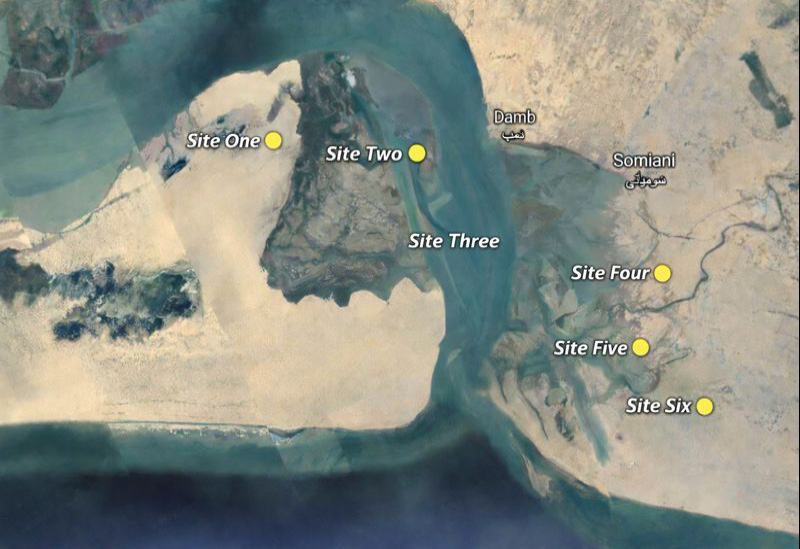
Study area map of Damb–Sonmiani Bay, Balochistan, Pakistan, showing the six sampling stations (Site One to Site Six) located within the mangrove-mudflat environment. Satellite basemap source: Google Earth.
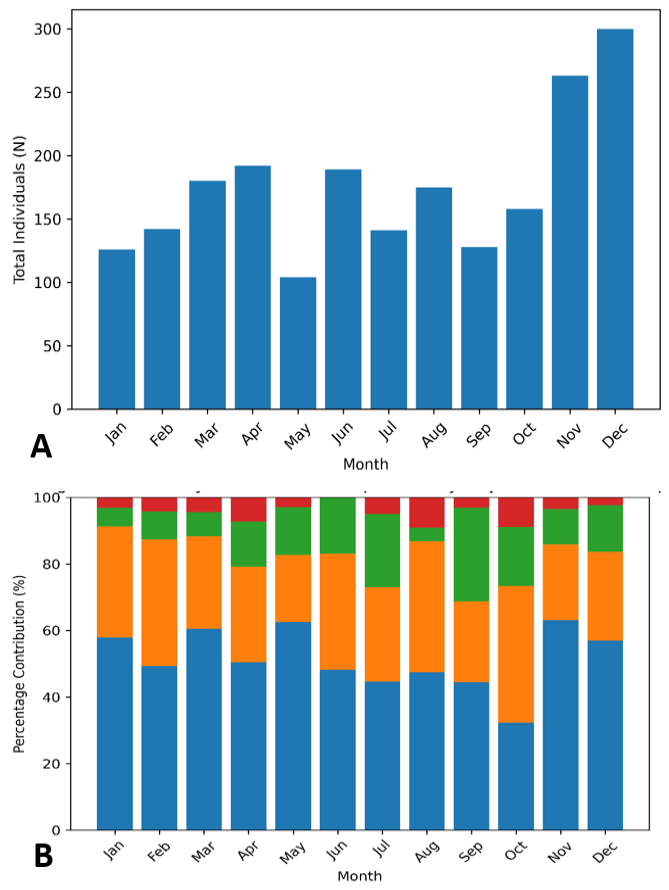
(A) Monthly variation in total macrofaunal abundance (N) recorded from the mangrove-mudflat ecosystem of Damb Sonmiani during January-December 2018. (B) Monthly percentage contribution of major taxonomic groups (from bottom: Gastropoda, Crustacea, Bivalvia and Chordata) to the total macrofaunal assemblage. Abundance peaks during post-monsoon months correspond with increased gastropod dominance, whereas crustaceans maintain relatively consistent contributions throughout the year.
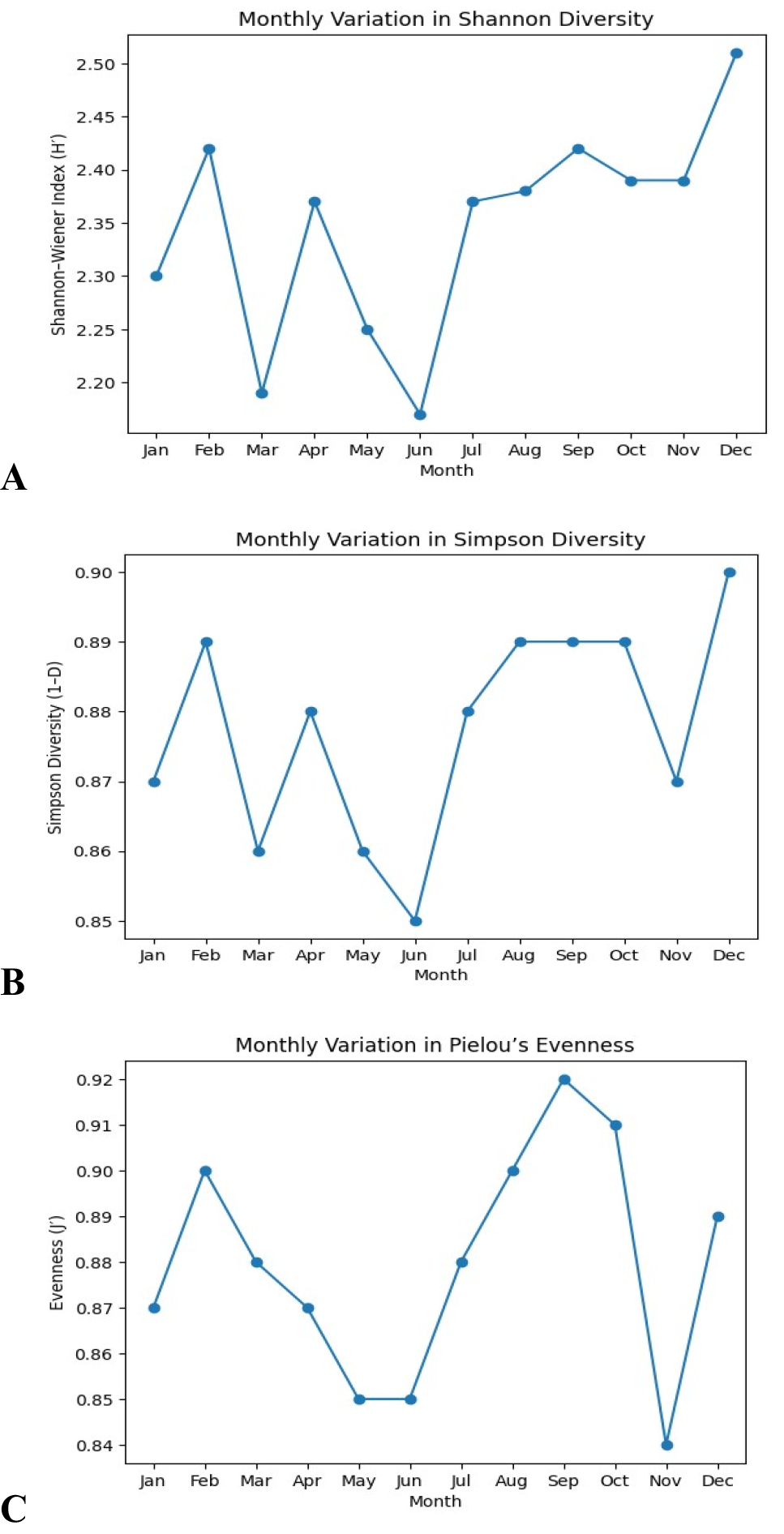
Monthly variation of the faunal assemblage in (A) Shannon–Wiener diversity index (H′), (B) Simpson diversity index (1–D) and (C) Pielou’s evenness index (J′).
Services
Article usage statistics
Loading…