
Fast growth can reduce production costs so that the price of rabbit meat is cheaper. In order to achieve rapid growth, crossbreeding programs are widely used to produce broiler rabbits. Evaluation of the growth of kits is needed to see their genetic potential in tropical climates. Body weights of kits from Hyla (n = 63), Hycole (n = 68), Hyla x Hycole (n = 72), and Hycole x Hyla (n = 66) rabbits were collected weekly. Weekly body weights were analysed using a general linear model and least square means computed with SAS 9.4. Hycole x Hyla birth weights (62.52 ± 1.55) were greater than birth weights from the other breed groups. However, Hyla had the highest body weights at one and five weeks of age. We also found Hyla to have better litter size (9.65 ± 0.25) than the other breed groups. The superior reproductive and growth performance of Hyla indicated that this breed is the most suitable of the four breed groups under Indonesian tropical climate conditions.
Short Communication · Volume 57, Issue 2, 8 April 2025 · Open Access
Kits Performance of Hyla, Hycole and its Reciprocal Crossbreds in Tropical Climates
· · · ·
Affiliations & Notes ⌄
- 1Research Center for Animal Husbandry, Research Organization for Agriculture and Food, National Research and Innovation Agency of The Republic of Indonesia (BRIN), Cibinong Sciences Center, Cibinong, Bogor 16915, West Java, Indonesia 2Department of Animal Production and Technology, Faculty of Animal Science, IPB University, Jalan Agatis, Kampus IPB Dramaga, Bogor 16680, West Java, Indonesia 3Balai Pengujian Standardisasi Instrumen Unggas dan Aneka Ternak, Ministry of Agriculture, Jalan Veteran II
Article Info ⌄
- Journal:
- Pakistan Journal of Zoology
- Published:
- 8 April 2025

From the article
- Hyla (9.65 ± 0.25) had larger birth litter sizes than Hycole (8.29 ± 0.24) (Table I).
- Kits from smaller litter sizes tended to have higher body weights than kits from larger litter sizes in the four breed groups of this study.
- Hyla rabbits had higher weekly body weights than Hycole and reciprocal crossbred rabbits.
- The best rabbit breeding programs aim to produce large litters and kits that grow rapidly.
Selected from the article's own text.
Abstract
Materials and methods
Body weights of kits from Hyla (n = 63), Hycole (n = 68), Hyla x Hycole (n = 72), and Hycole x Hyla (n = 66) rabbits were collected weekly. Rabbits were kept in individual wire cages. The cage height from the floor was 100 cm. Each cage was equipped with a diet trough made from pottery (15 cm x 12 cm x 60 cm), and drinking water was provided in the nipple made from metal. The size of the doe cage was 60 cm x 75 cm x 40 cm, while the size of the buck cage was 75 cm x 45 cm x 40 cm. The nesting cage size was 40 cm x 30 cm x 25 cm. Sawdust was used as flooring. Dams would lose their hair and use it as a nest for their kits. Nesting cages were cleaned when the kits were four to five weeks old and prepared for subsequent kits. The kits were weaned at five weeks and kept in a 45 cm x 75 cm x 45 cm wooden cage. The diet used in this study contained 18% crude protein, 2500 kcal/kg metabolic energy, and 14% crude fibre. The diet was made in the form of a pellet. Pellets were delivered in the morning and evening, and drinking water supplied ad libitum. This experiment was approved by the Animal Ethics Committee of the Indonesian Agency for Agricultural Research and Development, Ministry of Agriculture (Registration Number: Balitbangtan/Balitnak/Rd/01/2021).
The weekly body weight data were analyzed using a general linear model and least square means with SAS 9.4. The mathematical model was as follows:
Yijk = μ + Bi + Lj + eijk
where Yijk is the weekly body weight of the kth kit from the ith breed group, and jth litter size; μ is the overall mean; Bi is the effect of the ith breed group; Lj is the effect of the jth litter size; and eijk is the random residual.
Heterosis was calculated using the formula:
Heterosis was calcu
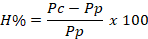
Where H% was the relative heterosis expressed as a percentage, Pc was the mean phenotypic value of the two crossbred groups, and Pp was the mean phenotypic value of the two purebred groups.
Growth curves were analysed using the Gompertz model with SAS 9.4. The following growth curve equations based on the Gompertz model were used to estimate the growth rate of the four breed groups:
Y=4889.17 exp (-exp (-0.14) (Age-10.13)) for Hycole ...(1)
Y=4052.47 exp (-exp (-0.13) (Age-10.02)) for Hycole x Hyla ..(2)
Y = 5008.96 exp (-exp (-0.14) (Age-10.33)) for Hyla ...(3)
Y=2157 exp (-exp (-0.19) (Age-6.24)) for Hyla x Hycole ...(4)
where Y is individual rabbit weekly weight in g; exp is base of natural logarithms; age is age of an individual rabbit.
Results and discussion
Hyla (9.65 ± 0.25) had larger birth litter sizes than Hycole (8.29 ± 0.24) (Table I). The matings of Hyla males to Hycole female yielded smaller litter sizes at birth than matings of Hycole males to Hyla females. These birth litter sizes were smaller than those of Chinchilla rabbits (12.00±2.21) and comparable to those of New Zealand rabbits (8.33±2.13) in Nigeria . The birth litter size of Hyla in this study was lower than that reported for first generation Hyla rabbits in Tunisia (8.50; . Conversely, the birth litter size of Hycole in this study was within the range of values for this breed estimated in Poland (8 to 10; . Tůma et al. (2010) stated that season had a negative correlation with litter size at weaning (7.08±0.19) in Hyplus rabbits. Bhatt et al. (2010) found that grey rabbits had the largest litter sizes at birth, birth weights, and litter sizes at weaning in winter than in summer and the rainy season. Furthermore, Nuriyasa et al. (2012) reported that rabbits kept in cages in an underground shelter with a low temperature-humidity index (THI) showed better physiological responses. Unsuitable THI conditions as well as low doe milk yields can cause pre-weaning mortality . Therefore, improved nutrition and management of does is necessary for successful rabbit farming .
Table I. Least square means of weekly body weight (kits) and litter size of doe based on breed.
| Traits | Breed (Means ± SEM) (g) | |||
| Hycole | Hycole x Hyla | Hyla | Hyla x Hycole | |
| BW0 | 60.36 ± 1.52a | 62.52 ± 1.55a | 60.87 ± 56.39a | 56.39 ± 1.48b |
| BW1 | 145.27 ± 4.51b | 141.42 ± 4.35b | 162.66 ± 5.19a | 143.94 ± 4.18b |
| BW2 | 244.22 ± 8.91a | 212.83 ± 8.59b | 261.93 ± 10.25a | 223.67 ± 8.26b |
| BW3 | 369.546 ± 15.30a | 320.00 ± 14.75b | 393.15 ± 17.62a | 362.14 ± 14.19a |
| BW4 | 536.39 ± 15.98a | 476.61 ± 15.41b | 568.36 ± 18.41a | 496.51 ± 14.82b |
| BW5 | 747.23 ± 23.53a | 642.05 ± 22.68b | 797.98 ± 27.09a | 679.91 ± 21.81b |
| LS | 8.29 ± 0.24b | 8.37 ± 0.24b | 9.65 ± 0.25a | 7.76 ± 0.23b |
Description BW0-5: body weight of 0-5 weeks; LS, litter size at birth.
Table II. Least square means of weekly body weight based on litter size at birth.
| Traits | Litter size at birth | ||||||||
| 2 | 4 | 6 | 7 | 8 | 9 | 10 | 11 | 12 | |
| BW0 | 80.00± 8.17a | 76.61 ± 2.98a | 67.45 ± 2.98a | 56.69 ± 1.43b | 61.83 ± 1.60b | 64.37 ± 2.80a | 59.22 ± 1.92b | 55.11 ± 1.51b | 53.51 ± 3.85b |
| BW1 | 204.38± 20.57a | 168.41 ± 7.65a | 142.11 ± 7.70b | 150.22 ± 3.88b | 162.17 ± 4.19b | 122.46 ± 7.127b | 115.55 ± 4.96b | 123.68 ± 3.88b | 145.90 ± 9.87b |
| BW2 | 384.99± 40.61a | 303.89 ± 15.11a | 169.09 ± 15.20b | 232.54 ± 7.67b | 237.69 ± 8.29b | 221.80 ± 14.058b | 161.45 ± 9.80b | 180.17 ± 7.67b | 229.37 ± 19.48b |
| BW3 | 724.06± 69.77a | 441.37 ± 25.97b | 322.71 ± 26.12b | 313.97 ± 13.17b | 349.73 ± 14.24b | 304.53 ± 24.15b | 234.83 ± 16.84b | 273.62 ± 13.18b | 286.05 ± 33.47b |
| BW4 | 1102.95± 72.87a | 631.76 ± 27.12b | 487.11 ± 27.28b | 468.24 ± 13.76b | 478.52 ± 14.87b | 443.33 ± 25.22b | 323.60 ± 17.59b | 358.03 ± 13.76b | 381.65 ± 34.96b |
| BW5 | 1491.37± 107.27a | 871.28 ± 39.93b | 660.55 ± 40.16b | 629.77 ± 20.25b | 649.19 ± 21.89b | 618.18 ± 37.13b | 475.16 ± 25.90b | 498.33 ± 20.26b | 557.33 ± 51.46b |
Table III. Heterosis effect of traits in crossbred.
| Traits | Crossbred | |
| Hyla x Hycole | Hycole x Hyla | |
| BW0 | -7.124 | 2.203 |
| BW1 | -3.787 | -4.816 |
| BW2 | -5.816 | -7.487 |
| BW3 | 0.748 | -12.906 |
| BW4 | -1.211 | -9.992 |
| BW5 | -4.859 | -13.117 |
| LS | -11.763 | -5.140 |
Description BW0-5: body weight of 0-5 weeks; LS: litter size at birth.
Di Meo et al. (2004) obtained individual rabbit birth weights of 60 to 70 g, however they indicated that they could range from 35 to 40 g to 80 to 90 g. Individual birth weights decreased as litter size increased (Table II). Birth weight of kits was found to be determined by doe body weight and age . The birth weight of Hyla rabbits in this study was within the range obtained by Chrysostome et al. (2011), however it was greater than those of Fauve de Bourgogne (47.19 g), Chinchilla (50.95 g), British Spot (47.99 g), and New Zealand White rabbits (45.51 g) .
Hyla had better growth performance than Hycole and their crossbreds. In addition, kits coming from a litter of size 2 tended to have larger body weights than kits from other litter sizes. The negative values of heterosis for weekly body weights and litter size indicated that the performance of crossbred groups was not as good as that of the purebred groups (Table III). Conversely, Brahmantiyo et al. (2021) found that doe reproduction and kit growth performance from New Zealand White and Hyla crossbreds was superior to purebreds under tropical conditions. Conversely, Hyla had better performance than Hycole, and the two crossbred groups in this study. Therefore, it is necessary to evaluate crossbreeding programs to produce rabbits that are well adapted and productive under Indonesian tropical conditions.
Table IV. The estimation of inflection poin of body weight and age of Hycole, Hyla, and it’s reciprocal.
| Breed | Inflection point of body weight (g) | Inflection point of age (week) | R2 |
| Hycole | 256.91 | 2.5 | 0.75 |
| Hycole x Hyla | 240.98 | 2.5 | 0.71 |
| Hyla | 266.89 | 2.5 | 0.73 |
| Hyla x Hycole | 262.72 | 2.5 | 0.73 |
The inflection points for kit bodyweight and age in Hyla, Hycole, and reciprocal crossbred groups is shown in Table IV. The coefficient of determination of the inflection points ranged from 0.71 for Hycole x Hyla kits to 0.75 for Hycole kits. Kits grew faster after 2.5 weeks of age indicating that 2.5 weeks is a crucial time for their growth.
Gompertz model was confirmed as better growth curve for body weight of birds than that of Logistic model due to lower of root mean square error (RMSE) value . Inflection point of body weight in reciprocal was lower than Hycole and Hyla. Despite, all breed had similar of inflection point of age value (approximately 2,5 weeks) and inflection point of body weight in reciprocal Hycole x Hyla (240.98) and Hyla x Hycole (262.72) was lower than Hyla (266.89). Szendrő et al. (2019) stated that the maternal effect has an important role for kits at 3 weeks of age because they only consume milk. Therefore, the selection of does that has good maternal effects, one of which is milk production is needed to get the ideal body weight in kits at 2.5 weeks of age. Hyla has a greater inflection point of body weight than other rabbits. This could be an indicator that Hyla has a better maternal effect.
Conclusions
Kits from smaller litter sizes tended to have higher body weights than kits from larger litter sizes in the four breed groups of this study. Hyla rabbits had higher weekly body weights than Hycole and reciprocal crossbred rabbits. The best rabbit breeding programs aim to produce large litters and kits that grow rapidly. Hyla had the largest litter sizes and weekly body weights indicating that this rabbit breed is the most suitable of the four breed groups under Indonesian tropical climate conditions.
Acknowledgement
Authors would like to thank all the breeding staff, Laurentius Hardi Prasetyo, and Yono Cahyanto Raharjo.
Funding
The authors thank Indonesian Research Institute for Animal Production for the funding. This work was supported by the Ministry of Agriculture of the Republic of Indonesia through the Agency of Agricultural Research and Development (No. 4585.SDA/051/B/B1/APBN/2021.)
Ethical statement and project approval
This experiment was approved by the Animal Ethics Committee of the Indonesian Agency for Agricultural Research and Development, Ministry of Agriculture.
Statement of conflict of interest
The authors have declared no conflict of interest.
References
- Bhatt, R.S., Sharma, S.R., Singh, U., Kumar, D. and Bhasin, V., 2002. Asian-Aust. J. Anim. Sci., 15: 812–820. https://doi.org/10.5713/ajas.2002.812[CrossRef]
- Brahmantiyo, B., Pratiwi, N., Saputra, F., Raharjo, Y.C. and Prasetyo, L.H., 2021. Trop. Anim. Sci. J., 44: 273-279. https://doi.org/10.5398/tasj.2021.44.3.273[CrossRef]
- Brahmantiyo, B., Raharjo, Y.C. and Prasetyo, L.H., 2017. Indones. J. Anim. Vet. Sci., 22: 16-23. https://doi.org/10.14334/jitv.v22i1.1590[CrossRef]
- Cervera, C., Blas, E. and Fernandez-Carmona, F., 1997. World Rabbit Sci., 5: 71-75.
- Chrysostome, C.A.A.M., Houndonougbo, M.F., Gbangboché, A.B. and Houangni, M.S.M., 2011. Res. Opin. Anim. Vet. Sci., 1: 669-672.
- Di Meo, C., Gazaneo, M.P., Raccal, C., Bovera, F., Piccolo, G. and Nizza, A., 2004. Asian-Aust. J. Anim. Sci., 17: 1158-1161. https://doi.org/10.5713/ajas.2004.1158[CrossRef]
- Egena, S.S.A., Akpa, G.N., Alemede, I.C. and Aremu, A., 2012. Anim. Prod., 14: 160-166.
- Hamouda, M., Salwa, K. and El-Gaied, J., 1990. Options Mediterr. Ser. A, 8: 103–108.
- Jimoh, O.A. and Ewuola, E.O., 2017. J. Anim. Sci. Technol., 59: 25. https://doi.org/10.1186/s40781-017-0151-7[CrossRef]
- Ludwiczak, A., Składanowska-Baryza, J., Kuczyńska, B. and Stanisz, M., 2020. Animal, 10: 214. https://doi.org/10.3390/ani10020214[CrossRef]
- Marai, I.F.M., Ayyat, M.S. and Abd, E.U.M., 2001. Trop. Anim. Hlth. Prod., 33: 1–12. https://doi.org/10.1023/A:1012772311177[CrossRef]
- Nuriyasa, I.M., Mastika, I.M., Mahardika, I.G. and Kasa, I.W., 2012. E J. Anim. Sci. Udayana Univ., 1: 1-10.
- Putra, W.P.B., Riaz, R., Gunawan, A.A. and Orman, 2021. J. Res. Med., 40: 49-53. https://doi.org/10.30782/jrvm.779699[CrossRef]
- Rashwan, A.A. and Marai, I., 2010. World Rabbit Sci., 8: 111-124. https://doi.org/10.4995/wrs.2000.427[CrossRef]
- Szendrő, Z., Cullere, M., Atkári, T. and DalleZotte, A., 2019. Livest. Sci., 230: 103841. https://doi.org/10.1016/j.livsci.2019.103841[CrossRef]
- Tůma, J., Tůmová, E. and Valášek, V., 2010. Czech J. Anim. Sci., 55: 330–336. https://doi.org/10.17221/317/2009-CJAS[CrossRef]
- Wang, J., Su, Y., Elzo, M.A., Jia, X., Chen, S. and Lai, S., 2016. Korean J. Fd. Sci. Anim. Resour., 36: 84–89. https://doi.org/10.5851/kosfa.2016.36.1.84[CrossRef]
- Zapletal, D., Švancarová, D. and Gálik, B., 2021. Acta Fytotechn. Zoot., 24: 55–59. https://doi.org/10.15414/afz.2021.24.01.55-59[CrossRef]
Services
Article usage statistics
Loading…