
The objective of this study was to examine the differentially expressed genes between sick and normal tissues in animal models of nonalcoholic fatty liver disease (NAFLD) and colorectal cancer (CRC) based on the gene expression database (GEO) and to study the relevant essential genes and signaling pathways. Data sets were screened from the GEO and evaluated for significantly differentially expressed genes in sick and normal tissues using GEO2R. Bio venn was used to obtain the common differential genes in the two datasets, and then they were functionally annotated, KEGG enriched, and screened for core interacting genes. Seventeen major common differential genes were identified. These involved biological processes such as inflammatory response, innate immune response and immune system process. The PI3K-Akt signaling pathway and NF-kappa B-related signaling pathway were engaged. The total survival time of Hmox1 and Ldlr low expression group was lower than that of Hmox1 and Ldlr high expression group (P < 0.05). It was postulated that Pparg, Tlr2, Hmox1, and Ldlr are important genes closely associated to the development of NAFLD and colorectal cancer, providing a theoretical framework for the research of the mechanism of association between NAFLD and CRC and related animal disease models.
Research Article · Volume 57, Issue 4, 30 May 2025 · Open Access
Key Genes Associated with Nonalcoholic Fatty Liver Disease and Colorectal Cancer in Experimental Animal Models
· ·
Affiliations & Notes ⌄
- 1Tianjin Medical University Cancer Institute and Hospital, National Clinical Research Center for Cancer, Key Laboratory of Cancer Prevention and Therapy, Tianjin 300060, China. 2Laboratory Animal Center of Inner Mongolia Medical University, Inner Mongolia Medical University, Inner Mongolia, Hohhot 010110, China. Fan Zhang and Shuai Han contributed equally to this work. * Corresponding author: 532637158@qq.com
Article Info ⌄
- Journal:
- Pakistan Journal of Zoology
- Published:
- 30 May 2025

From the article
- In this study, we identified DEGs and activated signaling pathways from NAFLD and colorectal cancer models using microarray technology (data from GEO database).
- We examined the GEO database for independent gene chips on two mice disease models (NAFLD and CRC) and performed differential analysis in the present work.
- Analysis of functional enrichment revealed that the frequent DEGs were primarily associated with the membrane, an integral component of the membrane, the cytoplasm, protein binding, metal ion binding, identical protein binding, inflammatory response, innate immune response, and immune system process.
- In future investigations, we intend to investigate the key genetic pathways underlying Alzheimer’s disease using animal models.
Selected from the article's own text.
Abstract
INTRODUCTION
The nonalcoholic fatty liver disease (NAFLD) syndrome is a clinical syndrome. Recent population-based epidemiological studies indicate that the prevalence of NAFLD ranges from 11.3% to 24.6%, with an average prevalence of 15.6%. Patients with NAFLD have extrahepatic malignancies as their second most common cause of mortality, and colorectal cancer (CRC) is the condition that most firmly ties extrahepatic malignancies to NAFLD . Current studies have demonstrated that the presence of NAFLD can promote the formation and development of CRC ; ; ; ; and that the risk of CRC significantly increases with the development of NAFLD disease . There is mounting evidence that NAFLD and colorectal cancer are associated. Patients with NAFLD who had colonoscopic screening were more likely to acquire colorectal cancer precursor lesions, according to the findings of an Austrian study . However, the mechanism underlying the connection between NAFLD and CRC remains unclear. Exploring the molecular mechanism between PCOS and NAFLD is therefore unquestionably of major clinical importance.
MATERIALS AND METHODS
Bioinformatics databases and analysis tools
The databases used in this study include Gene Expression Omnibus (GEO) (https://www.ncbi.nlm.nih.gov/geo/GEO), Biological venn (Biological venn, Bio venn) database (http://bi-oinformatics.psb.ugent.be), database for annotation, visualization and integrated discovery (DAVID) (http://www.david.niaid.nih.gov, kyoto encyclopedia of genes and genomes (KEGG) (https://www.ge-nome.jp/kegg), search tool for the retrival of interacting genes/ proteins of interacting genes/ proteins (STRING) database (http://string.db.org).
Bioinformatics analysis methods
Using qualified option filtering against the GEO database dataset wer obtained. Using GEO2R, differential expression analysis was done on the dataset. The GEO2R analysis results were saved, imported into R studio, and the plot function of the R package was used to plot the volcanoes. Blue indicates logFC<0 for down-regulated genes at P<0.05, while red indicates logFC > 0 for up-regulated genes. Using the internet mapping software Bio venn, Venn diagrams of distinct genes were created. DAVID online study performed gene ontology (GO) functional annotation and KEGG signaling pathway enrichment analysis on common differential genes. The STRING web analysis tool was used to obtain interaction maps between co-differentiated proteins.
To determine the impact of changed expression levels of differentially expressed genes on patient survival, the Kaplan-Meier database was used to conduct an online analysis of the correlation between key genes and overall patient survival.
RESULTS
Identification of DEGs in NAFLD and colorectal cancer
To find the genes closely related to NAFLD and colorectal cancer, we downloaded two sets of experimental data, GSE53381 and GSE137292, from the GEO database, respectively. And using the GEO2R function in the GEO database, the genes in microarrays GSE53381 and GSE137292 were analyzed differently. Ultimately, 1334 and 2741 related genes were screened for the two data sets. Additionally, a Venn diagram was utilized to identify DEGs shared by GSE53381 and GSE137292. Three hundred nine overlapping DEGs were found, as shown in Figure 1.
GO and KEGG enrichment pathway analysis of overlapping DEGs
These 309 genes were identified as being linked with NAFLD-related colorectal cancer. We did GO and KEGG enrichment analysis and visual picture mapping using the cluster profiler and ggplot2 packages in R software to better comprehend the biological activities of these overlapping genes. (DEGs). After screening with an adjusted p0.05 cutoff, we chose the three most significantly enriched GO terms and the ten most significantly enriched KEGG terms (Fig. 2).
The findings demonstrated that DEGs enriched in cellular components contained membrane, an important component of membrane, and cytoplasm (Fig. 3, Supplementary Table S1). DEGs were primarily linked with protein binding, metal ion binding, and identical protein binding in terms of molecular function. Inflammatory response, innate immune response, and immune system process were all considerably enriched in DEGs, according to an examination of biological processes (Fig. 3, Supplementary Table S1). The top ten important KEGG pathways of DEGs were enriched for metabolism (metabolic pathways), environmental information (Cytokine-cytokine receptor interaction,
PI3K-Akt signaling pathway, NF-kappa B signaling pathway), organismal systems (chemokine signaling pathway, osteoclast differentiation, IL-17 signaling pathway), human diseases (pathway in cancer, lipid and atherosclerosis, fluid shear stress and atherosclerosis).
PPI network analysis and hub genes identification
Analysis of the STRING database showed 308 nodal proteins and 1864 interaction networks, while hub genes were identified by analyzing PPI networks with Cytoscape. The MCC algorithm identified the leading 17 genes as possible hub genes. Among them, Pparg protein was central in the network graph. The network nodes were ranked from highest to lowest, and the 17 most important genes were identified as follows: Pparg, Itgb2, Il1b, Aif1, Ccl2, lgf1, Pla2g4a, Tlr2, Tyrobp, lcam1, Msn, ltgax, Hmox1, Ldlr, Vcam1, Gja1, and Plgs2 (Figs. 3, 4).
The relationship between core genes and survival rates
Patients who had elevated Pparg and Hmox1 expression had significantly poorer survival rates than the general population (P<0.05) (Fig. 5).
DISCUSSION
In this study, we identified DEGs and activated signaling pathways from NAFLD and colorectal cancer models using microarray technology (data from GEO database). A large number of labeled nucleic acid sequences in the cell or tissue of the organism being tested hybridize with the arrays of probes to enable rapid detection of gene information by detecting the hybridized probes at the corresponding locations. Gene probes of known sequences are integrated onto a solid surface. This can help identify DEGs that are present in both NAFLD and colorectal cancer, allowing study into the connection between these two diseases and the creation of relevant animal models.
We examined the GEO database for independent gene chips on two mice disease models (NAFLD and CRC) and performed differential analysis in the present work. We discovered 309 DEGs shared between CRC and NAFLD. Analysis of functional enrichment revealed that the frequent DEGs were primarily associated with the membrane, an integral component of the membrane, the cytoplasm, protein binding, metal ion binding, identical protein binding, inflammatory response, innate immune response, and immune system process. Co-DEGs are involved in metabolic pathways, Cytokine-cytokine receptor interaction, PI3K-Akt signaling pathway, NF-kappa B signaling pathway, pathway in cancer, lipid and atherosclerosis, fluid shear stress and atherosclerosis, chemokine signaling pathway, osteoclast differentiation, and IL-17 signaling pathway, according to the results of signaling pathway analysis. The results of the protein interaction network ranked the 17 most important genes as
follows: Pparg, Itgb2, Il1b, Aif1, Ccl2, lgf1, Pla2g4a, Tlr2, Tyrobp, lcam1, Msn, ltgax, Hmox1, Ldlr, Vcam1, Gja1, Plgs2.
Pparg is the gene encoding peroxisome proliferator-activated receptors (PPARs), located on chromosome 3p25 and contains several functional regions, including the DNA-binding structural domain and ligand-binding structural domain. PPARs have been decreasingly expressed in various malignancies including gastric, esophageal, colon, cervical, and prostate ; ; ; ; . And there is evidence in both in vivo and in vitro experiments that PPARs agonists can inhibit tumor cell proliferation, induce tumor cell differentiation and regulation, and suppress tumor tissue angiogenesis ; ; . Therefore, it has been suggested that Pparg may function as an oncogene suppressor .
The Tlr2 gene encodes a toll-like receptor (TLR) protein member. This gene is closely associated with the pathogenesis of several autoimmune diseases. It has been shown that toll-like receptor protein expression is significantly higher in intestinal mucosal tissues of patients with ulcerative colitis than in normal intestinal mucosa, and TLR2 mRNA levels are significantly elevated in peripheral blood individual nuclei ; , The TLR2/myeloid differentiation factor 88 (MyD88)/NF-κB signaling pathway is closely related to ulcerative colitis , which may be a potential target for treating ulcerative colitis.
HMOX1 is an essential enzyme for heme catabolism metabolism and plays a dual role in iron death. On the one hand, as a cytoprotective enzyme, it significantly attenuates erastin-induced iron death in renal epithelial cells . On the other hand, high expression of HMOX1 induces iron death in breast cancer cells, osteosarcoma cells, and other cancer cells ; Hl et al., 2021).
LDLR (low-density lipoprotein receptor) is a membrane mosaic protein that belongs to the low density lipoprotein receptor family. LDLR regulates the low-density lipoprotein (LDL) cytokine, which mainly binds to the plasma cholesterol lipoprotein LDL and transports it into cells by endocytosis. Ishibashi et al. (1993) established an LDLR knockout mouse model using homologous recombination in embryonic stem cells. Compared with ApoE gene-deficient mice, LDLR-/- mice have a lipoprotein profile more similar to humans and a disease course similar to humans, making LDLR-/- mice a common model mouse for studying lipid metabolism disorders and related diseases .
Conclusion
In conclusion, Pparg, Tlr2, Hmox1, Ldlr, and their associated signaling pathways are likely to be central genes closely associated with the development of NAFLD and colorectal cancer, providing a theoretical foundation for the investigation of the mechanism of association between NAFLD and CRC and related animal disease models.
This research has some drawbacks. Important DEGs must be confirmed using RT-qPCR. In future investigations, we intend to investigate the key genetic pathways underlying Alzheimer’s disease using animal models.
Acknowledgement
Declarations
Funding
The study was financially supported by Laboratory Open Fund Project of Inner Mongolia Medical University (Grant No. 2023GZ21).
Availability of data and material
Supplementary material
There is supplementary material associated with this article. Access the material online at: https://dx.doi.org/10.17582/journal.pjz/20230427020444
Statement of conflict of interest
I hereby declare that the co-authors of this manuscript, familiar with its content, have given their consent to publish the manuscript in the presented form in the “International Journal of Biostatistics” and all authors declare that there is no conflict of interest.
Figures
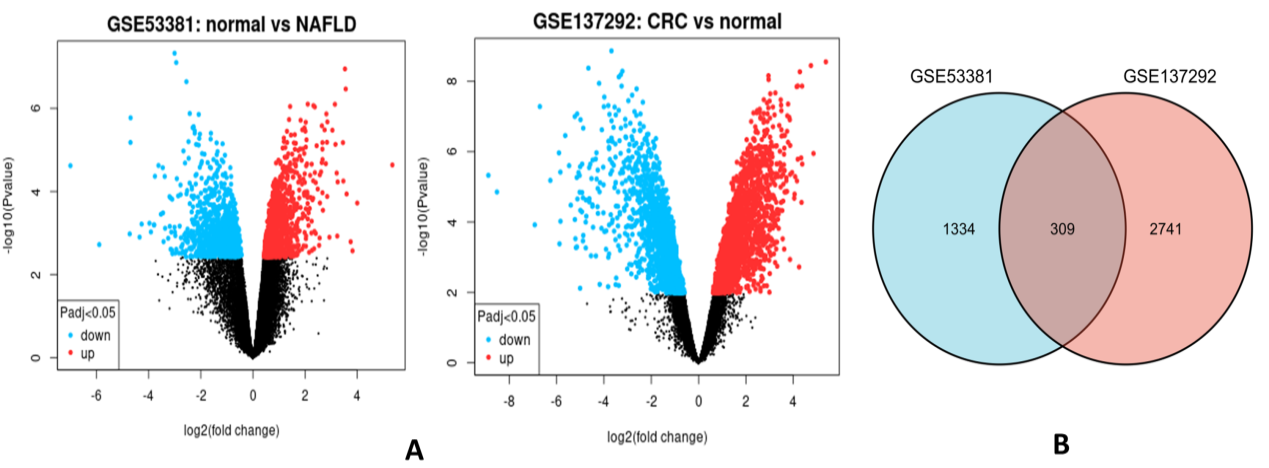
Identification of DEGs in NAFLD and colorectal cancer. A, Volcano plots of DEGs in NAFLD and colorectal cancer versus normal tissues. B, venn diagram of DEGs in GSE53381 and GSE137292 gene chips.
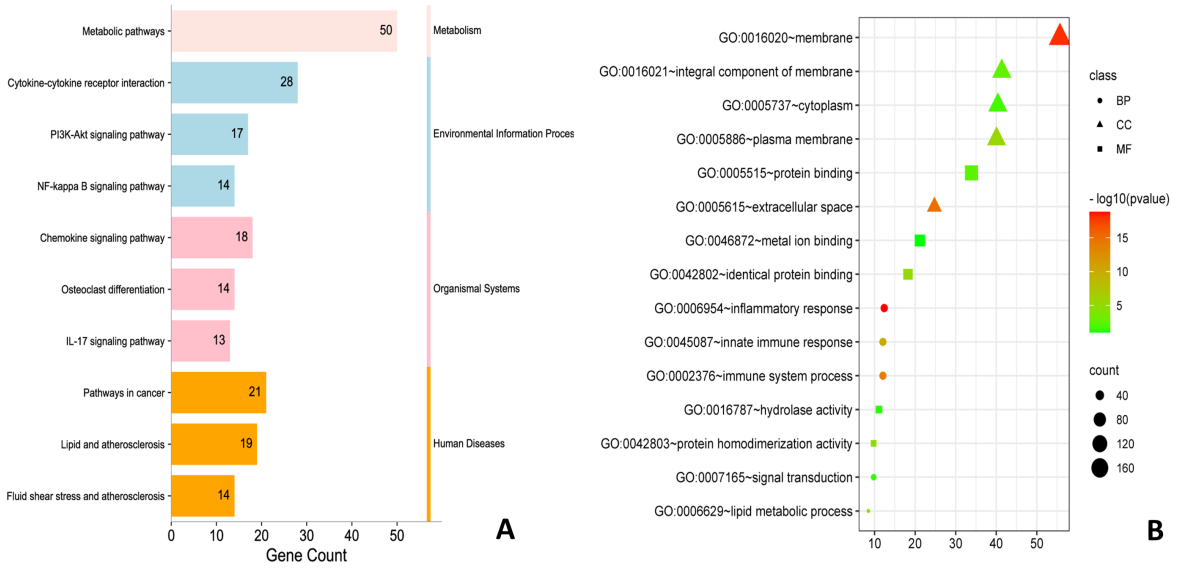
GO and KEGG analysis of common differential genes. A, The most activated KEGG pathways of the 309 common differential genes. B, The most enriched GO terms of the 309 common differential genes.
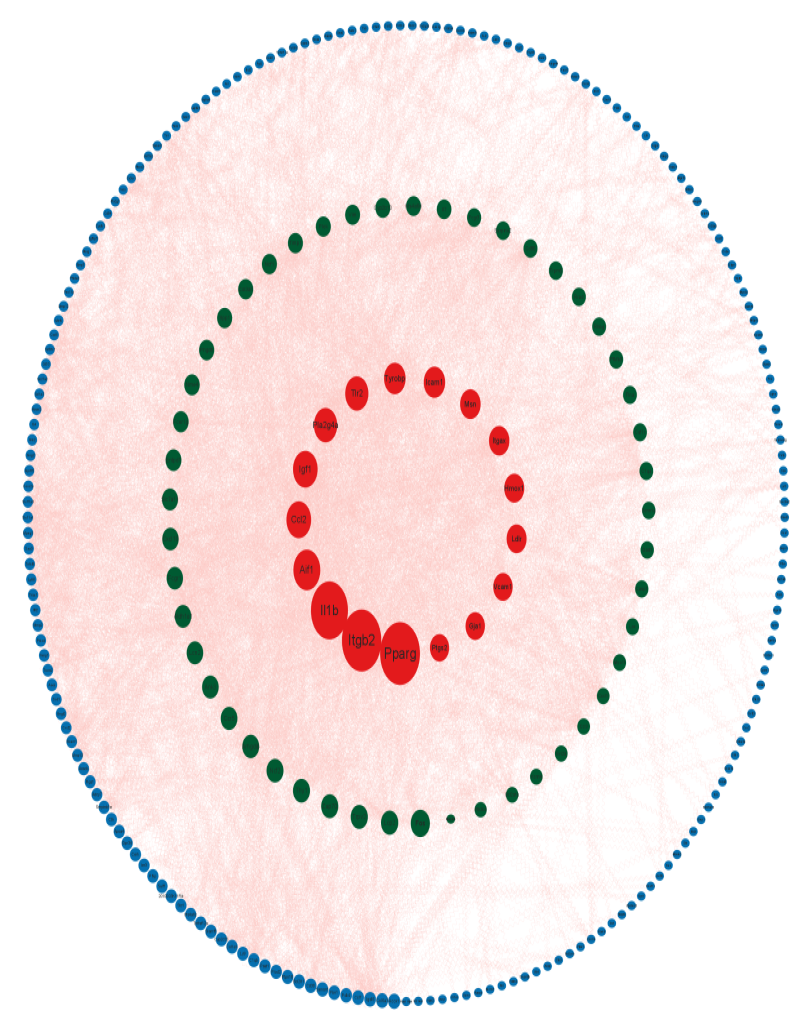
The 17 gene functional modules (marked by red circles) with the highest scores among the 309 genes in the PPI network.
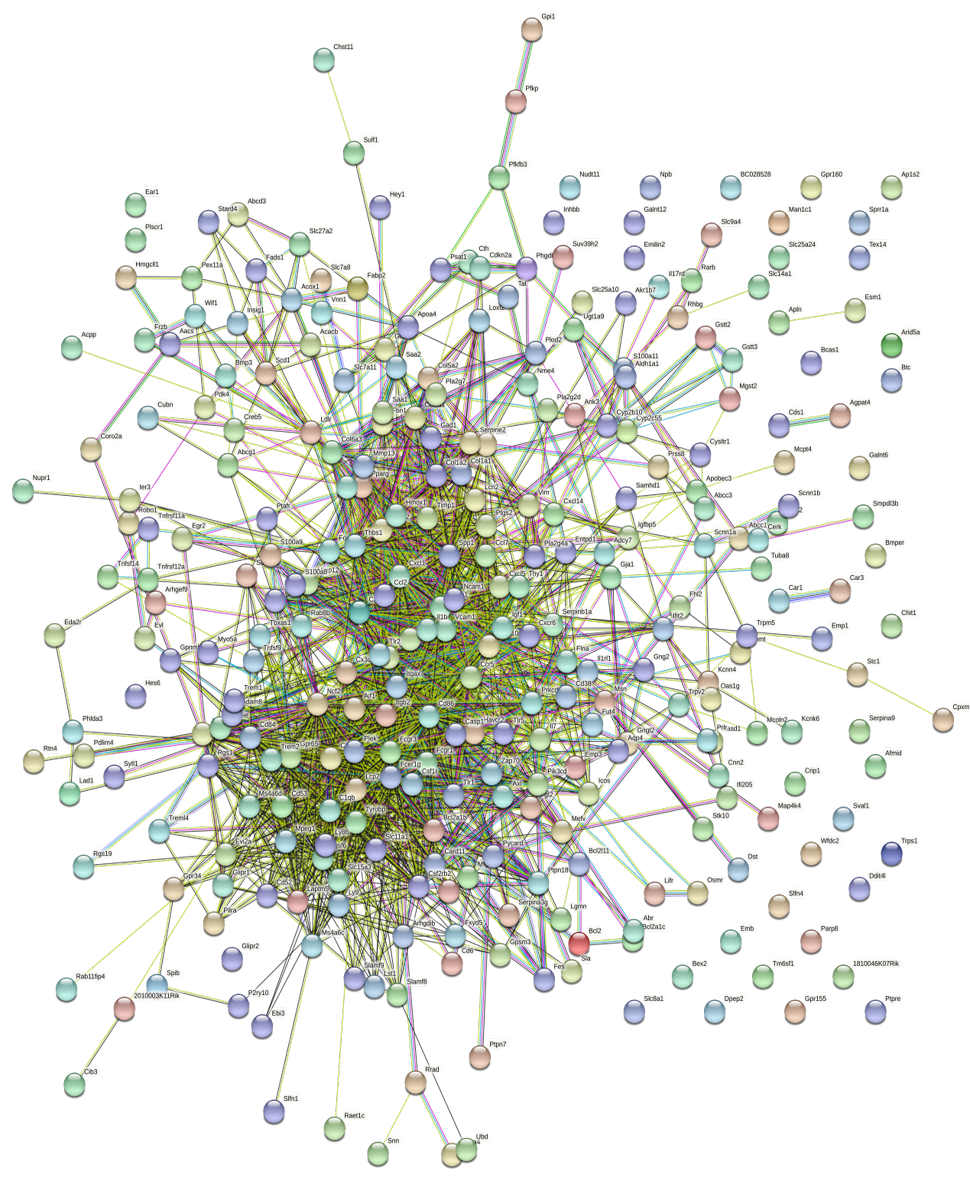
The protein-protein interaction map of the common differential gene.
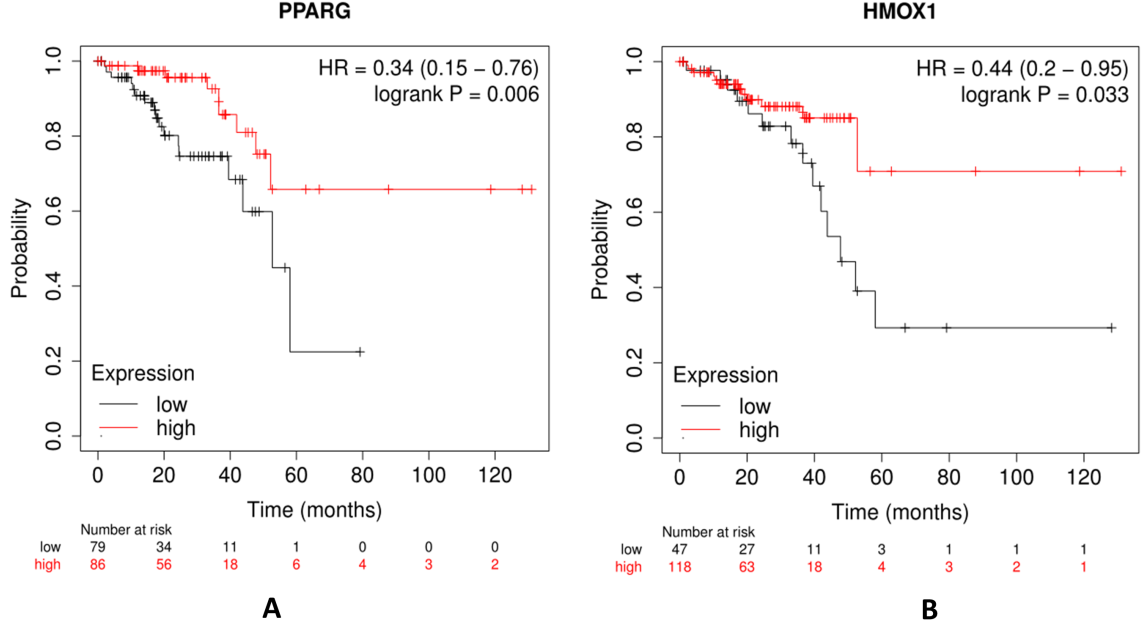
The survival curve of differential gene. A, The survival curve of PPARG gene. B, The survival curve of HMOX1 gene.
References
- Adams, R.B., Aloia, T.A., Loyer, E., Pawlik, T.M., Taouli, B. and Vauthey, J.N.J.H., 2013. Selection for hepatic resection of colorectal liver metastases: Expert consensus statement. Hepato-Pancreato-Biliary, 15: 91-103. https://doi.org/10.1111/j.1477-2574.2012.00557.x[CrossRef]
- Adedoyin, O., Boddu, R., Traylor, A.M., Lever, J.M., Bolisetty, S., George, J. and Agarwal, A., 2017. Heme Oxygenase-1 mitigates ferroptosis in renal proximal tubule cells. Am. J. Physiol. Renal Physiol. Am. J. Physiol. Renal. pp. 00044.02017. https://doi.org/10.1152/ajprenal.00044.2017[CrossRef]
- Brinkman, M.B., Mckevitt, M., Mcloughlin, M., Perez, C. and Palzkill, T., 2006. Reactivity of antibodies from syphilis patients to a protein array representing the Treponema pallidum proteome. J. clin. Microbiol., 44: 888-891. https://doi.org/10.1128/JCM.44.3.888-891.2006[CrossRef]
- Cameron, C.E., Brown, E.L., Kuroiwa, J., Schnapp, L.M. and Brouwer, N.L.J.J.o.B., 2004. Treponema pallidum fibronectin-binding proteins. J. Bact., 186: 7019-7022. https://doi.org/10.1128/JB.186.20.7019-7022.2004[CrossRef]
- Chang, L.C., Chiang, S.K., Chen, S.E., Yu, Y.L., Chou, R.H. and Chang, W.C.J.C.L., 2017. HO-1 mediates BAY 11–7085 induced ferroptosis. Cancer Lett.. S0304383517307978. https://doi.org/10.1016/j.canlet.2017.12.025[CrossRef]
- Dickerson, M.T., Abney, M.B., Cameron, C.E., Knecht, M. and Anderson, K.W.J.B.C., 2012. Fibronectin binding to the Treponema pallidum adhesin protein fragment rTp0483 on functionalized self-assembled monolayers. ACS Publ., 23: 184-195. https://doi.org/10.1021/bc200436x[CrossRef]
- Fiorentini, G., Tilli, M., Mulazzani, L. Graziano, F. Giordani, P. Mambrini, A. Montagnani, F., Alessandroni, P., Catalano, V. and Coschiera, P. 2012. Intra-arterial infusion of irinotecan-loaded drug-eluting beads (DEBIRI) versus intravenous therapy (FOLFIRI) for hepatic metastases from colorectal cancer: final results of a phase III study. J. Anticancer Res., 32: 1387.
- Gallinger, S., Biagi, J.J., Fletcher, G.G., Nhan, C., Ruo, L. and Mcleod, R.S.J.C.O., 2013. Liver resection for colorectal cancer metastases. Curr. Oncol., 20: 255. https://doi.org/10.3747/co.20.1341[CrossRef]
- Lin, H., Chen, X., Zhang, C., Yang, T., Deng, Z., Song, Y., Huang, L., Li, F., Li, Q. and Lin, S., 2021. EF24 induces ferroptosis in osteosarcoma cells through HMOX1. pp. 136. https://doi.org/10.1016/j.biopha.2020.111202[CrossRef]
- Houston, S., Hof, R., Honeyman, L., Hassler, J., Cameron, C.E. and Coburn, J.J.P.P., 2012. Activation and proteolytic activity of the Treponema pallidum metalloprotease, Pallilysin. PLoS Pathog., 8: e1002822. https://doi.org/10.1371/journal.ppat.1002822[CrossRef]
- Ishibashi, S., Brown, M.S., Goldstein, J.L., Gerard, R.D. and Herz, J., 1993. Hypercholesterolemia in low density lipoprotein receptor knockout mice and its reversal by adenovirus-mediated gene delivery. J. Clin. Invest., 92: 883. https://doi.org/10.1172/JCI116663[CrossRef]
- Kasia, C., Jurgen, R., Michal, H., Jaap and Surgery, S.J.D., 2014. New perspectives in the assessment of future remnant liver. Dig. Surg., 31: 255–268.
- Lan, T., Shiyu-Hu, Shen, Z., Yan, B. and Chen, J.J.A.R.R., 2021. New insights into the interplay between miRNAs and autophagy in the aging of intervertebral discs. Ageing Res. Rev., 65: 101227. https://doi.org/10.1016/j.arr.2020.101227[CrossRef]
- Li, S., 2017. Detection of intestinal flora levels as well as cytokine and TLRs molecule expression in patients with ulcerative colitis. J. Commun., Article ID 234289, pp. 95-98
- Maher, B., Ryan, E., Little, M., Boardman, P. and Stedman, B.J.C.R., 2017. The management of colorectal liver metastases. Clin. Radiol., 72: 617-625. https://doi.org/10.1016/j.crad.2017.05.016[CrossRef]
- Matthew, McKevitt, Mary, Beth, Brinkman, Melanie, McLoughlin, Carla, Perez, Infection, J.J. and Immunity. 2005. Genome scale identification of Treponema pallidum antigens. Infect. Immun., 73: 4445–4450. https://doi.org/10.1128/IAI.73.7.4445-4450.2005[CrossRef]
- Mitchell, D., Puckett, Y. and Nguyen, Q.N.J.C., 2019. Literature review of current management of colorectal liver metastasis. https://doi.org/10.7759/cureus.3940[CrossRef]
- Parker, M.L., Simon, H., Charmaine, W., Cameron, C.E., Boulanger, M.J. and Brian, S.J.P.O., 2016. The structure of Treponema pallidum Tp0624 reveals a modular assembly of divergently functionalized and previously uncharacterized domains. PLoS One, 11: e0166274. https://doi.org/10.1371/journal.pone.0166274[CrossRef]
- Schepers, A., Mieog, S., Burg, B.B.D., Schaik, J., Liefers, G.J. and Research, P.J.M., 2010. Impact of complications after surgery for colorectal liver metastasis on patient survival. J. Surg. Res., 16: e91-97. https://doi.org/10.1016/j.jss.2010.07.022[CrossRef]
- Stadlmayr, Aigner, Strasser, Patsch, Datz and Gastroenterol, C.J.Z., 2011. Nonalcoholic fatty liver disease: An independent risk factor for colorectal neoplasia. J. Int. Med., 270: 41-49. https://doi.org/10.1055/s-0031-1279833[CrossRef]
- Sun, H., Guo, L. and Gastroenterology, 2016. Expression and significance of TLRs in PBMC of patients with ulcerative colitis.
- Tomson, F.L., Conley, P.G., Norgard, M.V. and Hagman, K.E.J.O., 2007. Assessment of cell-surface exposure and vaccinogenic potentials of Treponema pallidum candidate outer membrane proteins. pp. 9. https://doi.org/10.1016/j.micinf.2007.05.018[CrossRef]
- Veniant, M.M., Withycombe, S. and Young, S.G.J.A.T.V.B., 2001. Lipoprotein size and atherosclerosis susceptibility in Apoe(-/-) and Ldlr(-/-) mice. Arterioscler. Thromb. Vasc. Biol., 21: 1567-1570. https://doi.org/10.1161/hq1001.097780[CrossRef]
Services
Article usage statistics
Loading…