Research Article · Volume 13, Issue 12, 3 December 2025 · Open Access
Impact of Orange Peel Essential Oil Microcapsules (OPEOM) on Feed Utilisation, Performance, and Blood Biochemistry in Grower-Phase Sentul Chickens
· · ·
Affiliations & Notes ⌄
1Department of Animal Nutrition and Feed Technology, Faculty of Animal Science, Padjadjaran University, Jalan Ir. Soekarno Km. 21 Jatinangor, Sumedang 45363, West Java, Indonesia
2Doctoral Programme, Faculty of Animal Science, Padjadjaran University, Jatinangor Campus Jl. Ir. Soekarno KM.21, Jatinangor-Sumedang 45363, Indonesia
3Department of Animal Bioscience, Faculty of Food Security, Surabaya State University. Campus 3, Jl. Prof. Dr. Moestopo No. 4, Pacar Keling, Tambaksari District, Surabaya, East Java 60131, Indonesia
4Animal Science, Faculty of Agriculture, Sriwijaya University, Jalan Palembang-Prabumulih, KM 32, Inderalaya, Ogan Ilir Regency, 30662, South Sumatra, Indonesia. *Correspondence | Denny Rusmana, Department of Animal Nutrition and Feed Technology, Faculty of Animal Science, Padjadjaran University, Jalan Ir. Soekarno Km. 21 Jatinangor, Sumedang 45363, West Java, Indonesia
The results of this study indicate that the administration of OPEOM at a level of 125 mg/kg (MC2) of feed has the best potential for improving the productivity of Sentul chickens, including feed utilisation, performance, reducing radical activity.
This confirms that the active compounds in OPEOM at this level are most optimal in supporting the productivity of Sentul chickens.
Selected from the article's own text.
Abstract
An experiment using orange peel essential oil microcapsules (OPEOM) was added to the Sentul chicken feed to assess the effect of OPEOM on feed utilization, performance, and metabolite profiles in blood plasma. Two hundred two-month-old Sentul chickens were used, divided into five experimental groups, with the following treatments: MC0: Basal Ration, without OPEOM; MC1: Basal Ration + 100 mg OPEOM; MC2: Basal Ration + 150 mg OPEOM; MC3: Basal Ration + 200 mg OPEOM; MC4: Basal Ration + 250 mg OPEOM, respectively. All sample analyses were performed using standard procedures with the UV-VIS spectrophotometer and ELISA techniques based on reagent kit protocols were used in this research. The effects and differences in treatment responses were tested using analysis of variance based on a completely randomized design and Duncan’s test. The results showed that the chickens that received the MC2 treatment had the lowest malondialdehyde (P<0.05), at 0.04 mg/dL, compared to the other treatment groups (0.09 and 0.08 in MC0 and MC1). Similarly, this group showed the best results regarding feed utilization (73.68% DCP), performance (1473 g body weight), and blood biochemistry profile (8.27 mg/dL of total protein).
The livestock industry’s focus on zero waste and products free from synthetic materials has increased interest in researching the potential of natural plant-based materials as feed additives. Previous studies have been quite interesting because compounds from these natural materials can trigger immunity, modulate metabolism, and improve performance ; . Further research and application in local chickens is fundamental and has not been widely reported.
Plant-derived essential oils, such as orange-peel oil, have gained significant attention in animal nutrition studies because they contain diverse bioactive compounds like terpenes, terpenoids, and phenylpropene . These compounds affect physiological and biochemical functions, boosting antioxidant defenses and promoting better growth in animal. Microencapsulation protects the volatile components of these oils from degradation in the digestive system , allowing for targeted and sustained release to maximize their effectiveness .
Previous researchers have widely reported the application of essential oils to animals. For example, Mousapour et al. (2020) compared encapsulated and non-encapsulated essential oils. They reported that broiler performance appeared to be better with the encapsulation technique, while feed digestibility did not show an increase in the essential oil treatment group without encapsulation. Other studies have shown that unencapsulated garlic essential oil is ineffective due to polymer degradation before reaching the ileum. It inhibits glycogenolysis even at relatively high doses .
This method tackles issues related to essential oils’ instability, like oxidation and volatilization, helping to maintain their bioactivity and therapeutic effects. Microencapsulation techniques, such as polymer shells or carrier materials (Rahmania et al., 2022), significantly improve these active ingredients’ stability, bioavailability, and controlled release , shielding them from harmful environmental factors during feed processing and digestion. This increased stability ensures a more reliable delivery of active compounds, leading to better animal physiological responses ; ; .
Research on essential oils, including those from oregano and cinnamon, has demonstrated their ability to replace antibiotic growth promoters, primarily due to their antimicrobial, antioxidant, anti-inflammatory, and analgesic properties . Although their application does not always yield satisfactory results , even excessive doses can cause a decline in performance . Adding phytogenic feed additives, particularly essential oils, has improved feed efficiency in broiler chickens by modulating lipid and protein intermediate metabolic signalling pathways, ultimately enhancing growth performance and meat characteristics (Dorantes-Iturbide et al., 2023). While the application of orange peel, often reported as orange peel powder, has been studied in livestock by Purwanti et al. (2024), the results showed no significant difference compared to the control group without orange peel powder. Meanwhile, Purwanti et al. (2024) applied it to ruminant. However, research reports on using essential oils from orange peel in poultry remain sporadic.
Phytogenic compounds from fruit peels have attracted much interest because they can improve ileum function, boost feed efficiency, and reduce environmental pollutants ; . Microencapsulation, particularly of citrus peel essential oils, offers an effective way to deliver these compounds specifically and enable sustained release in the digestive system, enhancing their benefits for animal metabolism and productivity. Such strategies are essential for sustainable livestock farming.
The strategic application of phytogenic microcapsules, such as this orange peel essential oil, is very important to study, as this technique is a new approach to improving the overall nutritional utilisation and health of animals. However, the specific mechanisms by which orange peel essential oil microcapsules affect nitrogen retention, energy metabolism, and growth hormone receptor expression in local chickens have not been extensively explored. It can be assumed that the administration of OPEOM can improve feed efficiency, stimulate metabolism, reduce oxidative stress, and enhance broiler performance.
MATERIALS AND METHODS
Animal samples, basal rations, and experimental design
Two-month-old Sentul chickens were used in this experiment. The chickens were randomly assigned to five treatment groups with four replicates. Each treatment group included forty chickens, with ten chickens per replicate. The chickens were housed in litter system cages measuring 2.5 meters each, equipped with feeding and drinking troughs. They were maintained for two months, with free access to feed and water. The temperature and humidity of the cage were recorded during the study, averaging 260C and 75%, respectively. The same applies to the temperature and humidity surrounding the experimental animal housing, which were 28 oC and 78%, respectively.
Table 1: Nutrient and metabolisable energy content of the basal diet used in the experimental study.
Description
Amount
Standard requirement
Metabolic energy (kcal/kg)
2918
Minimum 2850
Crude Protein (%)
18
17–18
Crude Fat (%)
8
Min. 3
Crude Fibre (%)
6
Max. 10
Calcium (%)
4.1
3.25–4.25
Phosphorus (%)
0.6
Minimum 0.55
All experimental chickens were fed a basal diet throughout the study. OPEOM was administered at different levels as follows: MC0: Basal Ration without OPEOM; MC1: Basal Ration + 100 mg of OPEOM; MC2: Basal Ration + 150 mg of OPEOM; MC3: Basal Ration + 200 mg of OPEOM; MC4: Basal Ration + 250 mg of OPEOM.
The basal feed used in this experiment consisted of a mixture of feed ingredients and their composition in the ration, namely corn (56%), rice bran (5%), soybean meal (11%), fish meal (10%), coconut meal (15%), bone meal (25%), and coconut oil (1%). The total nutrient content of the ration is shown in Table 1.
Preparation of OPEOM
Essential oil from orange peel has been separated using steam distillation. Fresh orange peel, cut into small pieces weighing 350 g, is placed in a flask heated to 80 oC. Water was added to half the volume of the orange peel.
Microcapsule production was carried out using a complex coacervation method with orange peel essential oil as the core, a gelatin-sodium alginate layer, cross-linked with glutaraldehyde, and a Tween 80 emulsifier based on a modified procedure by Julaeha et al. (2024). Essential oil was obtained by hydrodistillation. Gelatin (2.8 g) was stirred in distilled water using a magnetic stirrer at a temperature of 60±1°C.
Tween-80 (0.8 g) and 3.5 g of essential oil and 0.8 g of sodium alginate were added to 40 ml of distilled water and stirred again for 15 minutes at 60°C with a stirring speed of 600 rpm. Add 2.5% glacial acetic acid drop by drop until the pH reaches 3.75, then cool to 5–10°C. 1.25 mmol of glutaraldehyde was added to the previous solution at up to 35°C, stirring for 3–4 hours and cooling to room temperature. Filtration and washing using n-hexane were carried out at the final stage of this procedure, before drying.
The characterization of OPEOM, tested with a Particle Size Analyzer, showed an average particle size of 1.635 µm. Particle stability was measured with a Thermogravimetric Analyzer, showing a decrease in water mass and volatile compounds occurring at temperatures below 250°C, and the degradation process beginning at temperatures exceeding 420°C.
Blood sampling and sample analysis
Blood biochemistry testing used blood plasma samples from blood collected using 3 mL EDTA tubes. Blood was collected from the wing veins of each experimental chicken sample at 4 months of age. The blood samples were then centrifuged at 3500 rpm for 15 minutes. The clear yellowish upper portion was pipetted into plasma tubes and stored in a freezer at -70°C until the plasma was analysed. Spectrophotometry based on Biolabo and Randox analysis kits was used to determine the concentration of all blood biochemical parameters in this experiment. 100 µL of reagent (provided in the kit for each parameter) was pipetted into a cuvette containing 10 µL of plasma. Absorbance was measured at wavelengths of 450–550 nm.
Energy utilisation was determined using the force-feeding method, a paste inserted through the oesophagus using a syringe, based on the procedure described by Abun et al. (2023). Similarly, digestibility was determined using an internal indicator (lignin), based on a modified method described by Abun et al. (2022).
Data analysis
All data were collected using Microsoft Excel, and the tabulated data were analysed using analysis of variance (ANOVA) based on a completely randomised design to determine the effect of treatment with α = 0.05. Differences between treatments were determined using Duncan’s multiple range test.
RESULTS AND DISCUSSION
Feed utilisation
The results shown in Table 2 measure feed utilisation efficiency during the study with OPEOM administration to Sentul chickens in the grower phase.
Table 2: Effect of OPEOM on DDM, DOM, DCP, ME, MEn, and nitrogen retention.
OPEOM level
DOM
(%)
DDM
(%)
DCP
(%)
Nitrogen retention (%)
MEn (kcal/kg)
ME (kcal/kg)
MC0
59.49a
48.68a
65.35a
67.27a
2439a
2306a
MC1
68.84b
65.87b
70.73b
71.52b
2601a
2576b
MC2
73.64c
68.92c
73.68c
75.57c
2773b
2605b
MC3
65.58d
64.28b
64.43ac
70.26d
2561a
2564b
MC4
50.37e
60.59d
63.25ac
66.94a
2342c
2398a
a,bDifferent superscript on the same row indicates significant differences (P < 0.05). DOM: digestibility of organic matter; DDM: digestibility of dry matter; DCP: digestibility of crude protein; MEn: metabolisable energy-nitrogen; ME: metabolisable energy.
The current study shows that the administration of OPEOM is highly effective for Sentul chickens in utilising their feed intake. The MC2 dosage level (150 mg) showed the best dosage level (P < 0.05) of all OPEOM dosage levels. Microencapsulation is very beneficial because this technique can improve the stability and targeted delivery of active and sensitive compounds, such as essential oils, in animal feed. This process protects bioactive ingredients from degradation during processing and passage through the digestive tract, ensuring controlled release at specific locations.
Previous studies, for instance, have demonstrated that liposomal encapsulation significantly enhances the delivery and bioavailability of essential oils, resulting in improved growth, easier digestion, and better regulation of gut microbiota in broiler chickens. Additionally, microencapsulation methods such as core-shell or microdroplet techniques are vital for preserving the bioactivity of these volatile substances, especially when subjected to high temperatures or mechanical stress during feed processing. The microencapsulation’s protective matrix ensures a slow release, minimizes active compound loss, and prevents adverse effects on feed intake.
Increases in DOM, DDM, DCP nitrogen retention, and ME at MC2 dosage levels demonstrate the ability of active compounds in essential oils to stimulate physiological and biochemical conditions in experimental chickens. Previous research results have also reported that microencapsulated essential oils significantly improve organic digestibility, as this formulation protects the active compounds from premature degradation, allowing them to provide optimal effects on digestive enzyme activity and nutrient absorption in the intestinal lumen. Regarding intestinal function, several studies have also reported ; that it can effectively prevent pathogen proliferation and promote intestinal health. It has been shown that when microencapsulated, essential oil components, such as carvacrol and malondialdehyde ; , have been proven to replace growth-promoting antibiotics by improving intestinal integrity and nutrient absorption. Other research results show that adding microencapsulated essential oils has increased nitrogen retention in poultry ; ; .
Based on current research results (especially with MC1 and MC2 levels), the increase in ME can be stimulated by OPEOM’s ability to modulate the enzyme pathways involved in energy distribution, resulting in more efficient energy utilisation. Supported by research findings , this enhanced energy metabolism can impact overall growth performance and animal productivity by optimising nutrient allocation for various physiological functions.
Performance
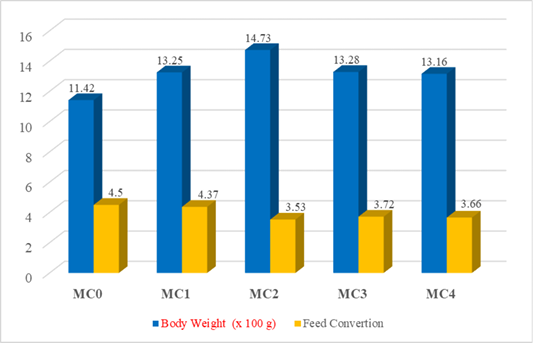
The active compounds in OPEOM appear to trigger growth and feed efficiency. Adding the MC2 level is the best dosage (P < 0.05) compared to the other levels. Figure 1 compares body weight and feed conversion during the study at 4 months of age.
Figure 1 shows the superior performance of experimental chickens at the MC2 level. The experimental chicken group at this dosage level achieved the highest average body weight (1473 g) and the best feed conversion efficiency (3.53). Essential oils in microcapsule form stimulate increased nutrient absorption, directly contributing to superior zootechnical performance metrics, such as weight gain and feed conversion. Previous research reports ; ; 2023; indicate that this method outperforms the control group of chickens that did not receive essential oil supplements.
Additionally, the type and concentration of essential oils in the microcapsules significantly influence their biological activity, with specific compounds such as thymol and carvacrol exhibiting strong antimicrobial and anti-inflammatory properties ; , which indirectly support growth performance. These active compounds can capture free radicals, thereby reducing fatty acid oxidation. This leads to decreased cell death, thereby improving and increasing the metabolic rate. Ultimately, cell proliferation and muscle mass increase. Similarly, when microencapsulated, combinations of active compounds in essential oils such as carvacrol, cinnamaldehyde, and oleoresin capsicum have shown increased weight gain and antioxidant status in broiler chickens . This supports the idea that the protective matrix of microcapsules enhances the delivery of these bioactive compounds, maintaining their effectiveness throughout the digestive tract and optimising their systemic impact ; .
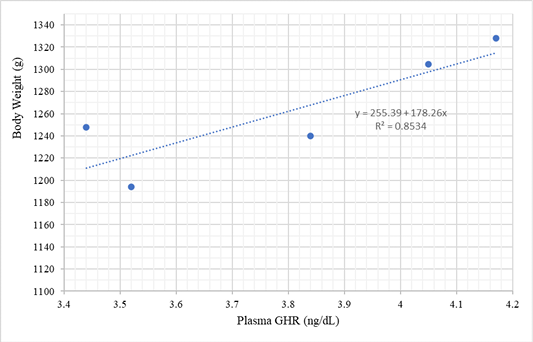
Growth hormone receptor (GHR) concentration also appears to be closely related (r = 0.92) to weight gain, with an influence proportion (R2) of 0.8534, indicating that GHR concentration can influence body weight (Figure 2).
Based on the regression analysis of the data collected in this study, the regression equation y= 255.39+178.26x was obtained. This mathematical model shows that every one ng/dL increase in GHR concentration causes a 178.26 g increase in body weight. The results of this study indicate that higher concentrations of GHR cause higher growth, or that there is a linear relationship between the two. This relationship suggests that increased expression of growth hormone receptors mediated by essential oil microcapsules may indicate a better endocrine response, which supports higher growth and metabolic efficiency. The reported research results ; show that increased GHR optimises protein synthesis and nutrient partitioning towards muscle tissue accumulation and egg production . This enhanced anabolic signalling pathway can increase the systemic availability of insulin-like growth factor-1 (IGF-1), a key mediator of growth hormone action. IGF-1 promotes skeletal muscle development and overall growth .
Blood biochemistry
Table 3 presents plasma blood biochemistry concentrations as effects of OPEOM administration, including markers of free radical activity and biochemical profiles.
The OPEM levels were able to influence (P < 0.05) the free radical activity markers concentration and plasma metabolism in Sentul chickens. Overall, there was a decrease in free radical activity with the administration of OPEOM while simultaneously stimulating the physiological system in various tissues to regulate metabolism. Based on the results of the lowest average bilirubin level obtained in the MC2 treatment, which is 3.42 (P < 0.05), compared to the bilirubin concentration of Sentul chickens in the experimental group of essential oil microcapsule administration levels. The highest mean bilirubin level was obtained in the MC0 treatment, which was 4.25 (P < 0.05) compared to the other experimental levels. The same results were also observed with alkaline phosphatase. Conversely, the MDA level decreased dramatically with the administration of the MC2 level (0.04 mg/dL), which was lower (P < 0.05) than the MDA level in the other treatment groups.
The decrease in MDA levels with OPEOM administration in this study is strong evidence that the active compounds in OPEOM can inhibit the activity of free radicals in oxidising fatty acids. This ability also reduces the risk of inflammation and damage to liver cells, resulting in a decrease in the release of bilirubin and alkaline phosphatase from liver cells into the body’s fluid circulation system, especially blood plasma.
Table 3: Effect of OPEOM levels on plasma concentrations of free radical activity markers and metabolic markers in Sentul chickens.
Parameters
Level of OPEOM
MC0
MC1
MC2
MC3
MC4
P value
Effect free radical activity (mg/dL)
Bilirubin
4.25a
3.98b
3.42c
3.66d
3.73d
0.003
Alkaline phosphatase
5.20a
5.07a
4.28b
4.62bc
4.59c
0.011
Malondialdehyde (MDA)
0.09a
0.08a
0.04b
0.05b
0.05b
0.003
Total Antioxidant
0.13a
0.22b
0.46c
0.43c
0.48c
0.017
Metabolic (mg/dL)
Albumin
4.21a
5.16b
5.89c
4.64d
4.66d
0.001
Uric Acid
3.68a
2.81b
2.06b
2.63c
2.72c
0.001
Total Protein
4.52a
7.63b
8.27c
7.46b
7.18b
0.002
Creatinine
2.85a
1.79b
1.63c
1.92d
2.01d
0.021
Creatinine Kinase
0.94a
0.63b
0.51c
0.71d
0.72d
0.032
Triglycerides (TAG)
72.94a
55.26b
50.73b
61.29c
63.68c
0.001
Non-esterified fatty acids (NEFA)
3.24a
4.25b
4.58c
3.96d
3.77ad
0.002
Glucose-6-phosphate
1.28a
2.37b
2.83c
2.33b
2.31b
0.004
a,bDifferent letters on the same row indicates significant differences (P<0.05).
Previous researchers have reported the strong antioxidant ability of orange peel essential oil, mainly due to its rich composition of d-limonene, β-myrcene, α-pinene, and linalool, which collectively contribute more than 94% of its total active compound content ; . The high concentration of these monoterpenes and monoterpenoids contributes significantly to their antioxidant effectiveness , as these compounds can donate hydrogen atoms to neutralise free radicals, thereby inhibiting oxidative chain reactions, one effect of which is to reduce the oxidation product of fat, MDA ; ; .
This reduction of malondialdehyde (MDA) content is highly effective as a critical biomarker for assessing lipid peroxidation. This process is often accelerated in biological systems and food products due to the reaction of free radicals with fatty acids , 2024; Meligy et al., 2923). Its presence indicates oxidative damage, particularly in omega-3 and omega-6 fatty acids. The damage caused by free radicals can be measured through various indicators, including conjugated dienes and 4-hydroxynonenal, with MDA as the primary determinant of lipid peroxidation ; .
The decrease in malondialdehyde (MDA) levels observed in various previous studies, as well as the reported decrease in MDA in pears treated with encapsulated savoury essential oil, further support the potential of critical oil microencapsulation in reducing lipid peroxidation, thereby preventing liver tissue damage and avoiding the migration of bilirubin and alkaline phosphatase into the blood circulation system ; . Specifically, malondialdehyde, a stable and abundant secondary lipid oxidation product with reactive carbonyl groups, is readily involved in nucleophilic reactions that alter the chemical behaviour of nucleic acids, lipoproteins, and peptides. Therefore, measuring the concentration of malondialdehyde provides direct insight into the level of lipid peroxidation and the cellular damage that follows. The concentration of this biomarker can indicate oxidative damage, as seen in fat peroxidation ; . Low levels indicate decreased free radical activity, reducing bilirubin, alkaline phosphatase, ALT, and AST ; .
The inclusion of OPEOM in the feed to Sentul chickens effectively reduced free radical activity. However, the experimental group of chickens given the MC2 treatment also appeared to be generally able to regulate a more beneficial metabolism. The total protein expressed and circulating in the blood plasma was highest (P < 0.05) with the MC2 treatment (8.27 mg/dL) compared to the other experimental chicken groups. Similarly, the albumin level in MC2 (5.89) was higher (P < 0.05) than in the different groups. The same results were also seen with 6-phosphate glucose concentrations, which showed that the metabolic rate increased with the administration of MC2.
Adding OPEOM to the diet protects active compounds like those in orange peel essential oil from degradation and directs their delivery to the digestive tract, enhancing their ability to regulate metabolic pathways ; . The strategy allows for the sustained release of bioactive compounds, increasing their interaction with the host’s physiological systems ,2025; and influencing vital metabolic markers ; . It also stabilizes essential oils against environmental factors, ensuring their biological availability, which improves nutrient utilization and overall animal health.
An increase in Protein synthesis and albumin and a decrease in catabolism indicate improved nutrient utilisation ; . This can be attributed to the protective benefits of microencapsulation, which shield active compounds during feed processing and digestion ; . These results ensure that the active components can optimally express their biological activity in the lower digestive tract, influencing protein synthesis and overall metabolic efficiency ; .
On the other hand, lower TAG levels (50.73–63.68 mg/dL) (P < 0.05) observed with OPEOM administration compared to without it suggest that the active compounds can inhibit lipogenesis. This effect increases NEFA levels, serving as energy precursors for muscle tissue synthesis. Plasma triglyceride levels are a vital metabolic marker in chickens. Supplementing essential oils, especially from sources like orange peel, can influence lipid metabolism ; . Studies indicate that these compounds may alter circulating triglyceride levels ; , potentially affecting hepatic lipid synthesis or lipoprotein metabolism, key factors in determining plasma triglyceride levels .
Other studies suggest that dietary essential oils can significantly alter triglyceride profiles ; ; , leading to decreases associated with improved lipid utilization or reduced synthesis , which explains the increase in NEFA levels ; ; . Conversely, some plant essential oil compounds may raise triglyceride levels in broiler chickens ; . These contrasting effects underline the complex regulation of lipid metabolism by external compounds, emphasizing the need for further research into how orange-peel essential oil microcapsules specifically impact these pathways.
CONCLUSION
The results of this study indicate that the administration of OPEOM at a level of 125 mg/kg (MC2) of feed has the best potential for improving the productivity of Sentul chickens, including feed utilisation, performance, reducing radical activity. This confirms that the active compounds in OPEOM at this level are most optimal in supporting the productivity of Sentul chickens. These results can also serve as a basis for further research on the potential of OPEOM in increasing egg production, the expression of economically valuable genes, and as a nutrigenomic agent.
ACKNOWLEDGEMENT
The authors express their appreciation and gratitude to the Ministry of Higher Education, Research, and Technology of the Republic of Indonesia for funding this research through a basic grant. The authors also thank all research teams and parties directly involved for their excellent cooperation and contributions during the planning and writing of this article.
NOVELTY STATEMENT
The use of essential oils from various types of plants has been widely applied and reported, although the results of essential oils from orange peel with encapsulation for poultry feed additive have not been widely reported. Furthermore, microencapsulation technology for orange peel essential oil in local chicken feed has not been reported. A more in-depth study of its potential as an antioxidant and metabolism regulator, as is the aim of this research, has not been reported previously.
AUTHOR’S CONTRIBUTION
All authors listed in this article have contributed equally, from planning, designing, and conducting the research to writing this article. All authors have played an equal role with their respective expertise and specialisation.
Ethical approval
The Animal Ethics Committee of the Research Licence Management Directorate, with certificate (No. 462/KEP.04/SK/01/2025), has evaluated, approved, and declared this in vivo study, with applications described in the research methods, to meet animal ethics requirements.
Generative AI and AI-assisted technology statement
All authors listed in this article declare with complete sincerity that the writing of this article did not utilise any AI software and technology.
Conflict of interest
All authors declare no conflict of interest regarding costs, data, or any other aspects related to this research with any party.
Figures
Figure 1:.
The effect of OPEOM administration on body weight (4 months of age) and feed conversion.
Figure 2:.
Regression model of the relationship between plasma GHR concentration and body weight of Sentul chickens (at 4 months of age).
References
Abdelli N, Solà-Oriol D, Pérez JF (2021). Phytogenic feed additives in poultry: Achievements, prospects, and challenges. Review of phytogenic feed additives in poultry: Achievements, prospects, and challenges. Animals, 11(12): 3471. https://doi.org/10.3390/ani11123471[CrossRef]
Abun, Rusman D, Indriani NP (2023). Penentuan kecernaan ransum megandung ampas ubi pada ayam broiler. Bionatura. 5(3): 277-283.
Abun, Saefulhadjar D, Haetami K (2022). Nilai energi metabolis dan kecernaan ransum mengandung imbuhan pakan dari limbah kulit udang. J. Ilmu Ternak. 12(1): 1-7.
Adriani L, Abun, Mushawwir A (2015). Effect of dietary supplementation of Jengkol (Pithecellobium jiringa) skin extract on broiler chicken’s blood biochemistry and gut flora. Int. J. Poult. Sci., 14: 407-410. https://doi.org/10.3923/ijps.2015.407.410[CrossRef]
Adriani L, Latipudin D, Mayasari N, Mushawwir A, Kumalasari C, Nabilla T I (2024). Consortium probiotic fermented milk using Bifidobacterium sp. and Lactobacillus acidophilus protects against Salmonella typhimurium and repairs the intestine. Asian J. Dairy Food Res., 43: 216-218. https://doi.org/10.18805/ajdfr.DRF-326[CrossRef]
Aguiar MCS, Silva MF, Das GF, Fernandes JB, Forim MR (2020). Evaluation of the microencapsulation of orange essential oil in biopolymers by using a spray-drying process. Sci. Rep., 10(1): 234-239. https://doi.org/10.1038/s41598-020-68823-4[CrossRef]
Amer SA, Tolba SA, AlSadek DMM, Fattah DMA, Hassan AM, Metwally AE (2021). Effect of supplemental glycerol monolaurate and oregano essential oil blend on the growth performance, intestinal morphology, and amino acid digestibility of broiler chickens. BMC Vet. Res., 17(1): 25-31. https://doi.org/10.1186/s12917-021-03022-5[CrossRef]
Aritonang HN, Adriani L, Mushawwir A (2025). Effect of moringa leaves (Moringa oleifera) oil microcapsules (MOM) on growth and plasma metabolites related to inflammation in sentul chickens. Adv. Anim. Vet. Sci., 13: 835–842. https://doi.org/10.17582/journal.aavs/2025/13.4.835.842[Full text][CrossRef]
Aritonang HN, Mushawwir A, Adriani L, Puspitasari T (2024). Lipid regulation by early administration of irradiated chitosan and glutathione in heat-stressed broilers. IOP Conf. Ser. Earth Environ. Sci. 1292: 012011. https://doi.org/10.1088/1755-1315/1292/1/012011[CrossRef]
Bortoluzzi C, Lahaye L, Oxford JH, Detzler D, Eyng C, Barbieri NL, Santín E, Kogut, MH (2021). Protected organic acid and essential oils for broilers raised under field conditions: Intestinal health biomarkers and cecal microbiota. Front. Physiol., 12(3): 64-71. https://doi.org/10.3389/fphys.2021.722339[CrossRef]
Chen X, Shang S, Yan F, Jiang H, Zhao G, Tian S, Chen R, Chen D, Dang Y (2023). Antioxidant activities of essential oils and their major components in scavenging free radicals, inhibiting lipid oxidation and reducing cellular oxidative stress. Molecules, 28(11): 4559. https://doi.org/10.3390/molecules28114559[CrossRef]
Dorantes-Iturbide G, Orzuna–Orzuna JF, Lara-Bueno A, Martínez GDM, Miranda‐Romero LA, Lee-Rangel HA (2022). Essential oils as a dietary additive for small ruminants: A meta-analysis on performance, rumen parameters, serum metabolites, and product quality. Vet. Sci., 9(9): 475-482. https://doi.org/10.3390/vetsci9090475[CrossRef]
Dudi D, Hilmia N, Khaerunnisa I, Mushawwir A (2023). DGAT1 gene polymorphism and their association with fat deposition and carcass quality in Pasundan cattle of Indonesia. Biodiversity. 24: 4202-4208. https://doi.org/10.13057/biodiv/d240765[CrossRef]
Faramarzidozein R, Motamedi E, Tarighi S, Oskoueian E, Bostan A (2024). Improving ROS and expression of SOD, APX, and CAT genes in pear seedlings inoculated with Erwinia amylovora through encapsulated bioactive compounds. Research Square (Research Square). https://doi.org/10.21203/rs.3.rs-5342311/v1[CrossRef]
Firmansyah A, Adriani L, Mushawwir A, Mayasari N, Rusmana D, Ishmayana S (2024). Effect of feed supplementation with liquid and powdered probiotic yogurt on the lipid profile of chicken egg yolk. Advance in anim. And Vet. Sci., 12(7): 1371-1377. https://doi.org/10.17582/journal.aavs/2024/12.7.1371.1377[Full text][CrossRef]
Flees JJ, Ganguly B, Dridi S (2020). Phytogenic feed additives improve broiler feed efficiency via modulation of intermediary lipid and protein metabolism–related signaling pathways. Poult. Sci., 100(3): 100963. https://doi.org/10.1016/j.psj.2020.12.060[CrossRef]
Julaeha E, Puspita W R, Permadi N (2024). Optimization of Citrus aurantifolia peel extract encapsulation in alginate-gelatin hydrogel microbeads for antibacterial wound dressing applications. Carbohyd. Polym. Technol. Appl., 7(6): 100406. https://doi.org/10.1016/j.carpta.2023.100406[CrossRef]
Kamil KA, Mushawwir A, Latipudin D, Rahmat D, Lobo R (2020). The effects of ginger volatile oil (GVO) on the metabolic profile of glycolytic pathway, free radical and antioxidant activities of heat-stressed Cihateup duck. Int. J. Adv. Sci. Engin. Inf. Tech., 10: 1228-1233. https://doi.org/10.18517/ijaseit.10.3.11117[CrossRef]
Kharazi AY, Latipudin D, Suwarno N, Puspitasari T, Nuryanthi N, Mushawwir A (2022). Lipogenesis in Sentul chickens of starter phase inhibited by irradiated chitosan. IAP Conf. Proc., 1001(1): 1-7. https://doi.org/10.1088/1755-1315/1001/1/012021[CrossRef]
Li J, Wu J, Yu L, Kong F, Zhang R, Sun J, Liao W, Li, Z, Shi J, Wang Y, Wei Y, Zhang K, Lei Z (2022). Oregano essential oils mediated intestinal microbiota and metabolites and improved growth performance and intestinal barrier function in sheep. Front. Immunol., 13(10): 484. https://doi.org/10.3389/fimmu.2022.908015[CrossRef]
Manin F, Yusrizal M, Adriani L, Mushawwir A (2024). Effects of the combination of probiotic probio fmand phytobiotics on broiler meat’s performance, gut dysbiosis, and lipid profile. Adv. Anim. Vet. Sci., 12(11): 2110-2117. https://doi.org/10.17582/journal.aavs/2024/12.11.2110.2117[Full text][CrossRef]
Meligy AMA, El-Hamid MIA, Yonis, AE, Elhaddad GY, Abdel-Raheem SM, El‐Ghareeb WR, Mohamed MHA, Ismail H, Ibrahim D (2023). Liposomal encapsulated oregano, cinnamon, and clove oils enhanced the performance, bacterial metabolites antioxidant potential, and intestinal microbiota of broiler chickens. Poult. Sci., 102(6): 102683. https://doi.org/10.1016/j.psj.2023.102683[CrossRef]
Mousapour A, Salarmoini M, Afsharmanesh M, Ebrahimnejad H, Meimandipour A (2020). Efficacy of savory essential oil utilization in conventional and encapsulated forms on performance of broiler chickens. Braz. J. Poult. Sci., 22(4): 85-92. https://doi.org/10.1590/1806-9061-2020-1284[CrossRef]
Muhammad LN, Purwanti S, Pakiding W, Marhamah, Nurhayu, Prahesti KI, Sirajuddin, SN, Mushawwir A (2023). Effect of combination of Indigofera zollingeriana, black soldier fly larvae, and turmeric on performance and histomorphological characteristics of native chicken at starter phase. J. Anim. Feed Res., 13(4): 279-285. https://doi.org/10.51227/ojafr.2023.42[CrossRef]
Mushawwir A, Adriani L, Kamil KA (2011). Prediction models for olfactory metabolic and sows % RNAreticulocyt (RNArt) by measurement of atmospheric ammonia exposure and microclimate level. J. Indon. Trop. Anim. Agric., 36: 14-20. https://doi.org/10.14710/jitaa.36.1.14-20[CrossRef]
Mushawwir A, Adriani L, Permana R, Sahara E (2025). Egg production and physiological assessment of sentul hens in temperate and lowland regions of West Java, Indonesia. Adv. Anim. Vet. Sci., 13(2): 413-420. https://doi.org/10.17582/journal.aavs/2025/13.2.413.420[Full text][CrossRef]
Mushawwir A, Permana R, Darwis D, Puspitasari T (2024). The villi ileum growth of native quail fed by irradiated chitosan with glutathione from an early age in high temperature. IOP Conf. Ser. Earth Environ. Sci., 1292(1): 1-6. https://doi.org/10.1088/1755-1315/1292/1/012016[CrossRef]
Mushawwir A, Permana R, Darwis D, Puspitasari T, Pangerteni DS, Nuryanthi N, Suwarno N (2021b). Enhancement of the liver histologic of broiler induced by irradiated chitosan (IC). AIP Conf. Proc., 2381: 020046. https://doi.org/10.1063/5.0066271[CrossRef]
Mushawwir A, Permana R, Latipudin D, Suwarno D (2023). Flavonoids avoid the damage of ileal plaque-patches of heat-stressed cihateup ducks. IAP Conf. Proc., 2628: 140007-1-14007-6. https://doi.org/10.1063/5.0144095[CrossRef]
Mushawwir A, Permana R, Latipudin D, Suwarno N (2021a). Organic Diallyl-n-Sulfide (Dn-S) inhibited the glycogenolysis pathway and heart failure of heat-stressed laying hens. IOP Conf. Ser. Earth Environ. Sci., 788: 012091. https://doi.org/10.1088/1755-1315/788/1/012091[CrossRef]
Nurfauziah I, Adriani L, Ramadhan RF, Mushawwir A, Ishmayana S (2024). Bacteriocin activity of yogurt probiotics on increasing production of laying hens. Adv. Anim. Vet. Sci., 12(8): 1548-1555. https://doi.org/10.17582/journal.aavs/2024/12.8.1548.1555[Full text][CrossRef]
Prachumchai R, Suriyapha C, Dagaew G, Sommai S, Matra, M, Phupaboon S, Phasuk Y, Wanapat M (2024). Microencapsulation of lemongrass and mangosteen peel as phytogenic compounds to gas kinetics, fermentation, degradability, methane production, and microbial population using in vitro gas technique. PLoS One, 19(6): https://doi.org/10.1371/journal.pone.0304282[CrossRef]
Purwanti S, Pakiding W, Nadir M, Nurhayu, Prahesti KI, Sirajuddin SN, Syamsu JA, Mushawwir A (2024). Lipid regulation and cardiovascular biomarkers of native chickens fed a combination of maggot, Indigofera, and Turmeric. J. Anim. Health Prod., 12(2): 173-181. https://doi.org/10.17582/journal.jahp/2024/12.2.173.181[Full text][CrossRef]
Rahmania H, Permana R, Latipudin D, Suwarno N, Puspitasari T, Nuryanthi N, Mushawwir A (2022). Enhancement of the liver status of Sentul chickens from the starter phase induced by irradiated chitosan. IAP Conf. Proc., 1001: 1-7. https://doi.org/10.1088/1755-1315/1001/1/012007[CrossRef]
Tanuwiria UH, Mushawwir A, Zain M, Despal D (2023). Lipid regulation and growth on native ram lambs in the south coast of West Java, Indonesia, fed legume forages. Biodiversity, 24: 4183-4192. https://doi.org/10.13057/biodiv/d240763[CrossRef]
Tanuwiria UH, Susilawati I, Tasripin D, Salman LB, Mushawwir A (2022). Evaluation of cardiovascular biomarkers and lipid regulation in lactation friesian holstein at different West Java, Indonesia altitudes. Hayati J. Biosci., 29: 428-434. https://doi.org/10.4308/hjb.29.4.428-434[CrossRef]