
The Labeo rohita is one of the most valuable freshwater fish species, which has an important role in the aquaculture production in South Asian countries, including Pakistan, India, and Bangladesh, and is also a commercially important fish species in South Asia. Its growth, metabolism, immunity, reproduction, and survival are significantly affected by environmental factors like temperature, dissolved oxygen, pH, salinity, ammonia concentration, and water quality. Changes in these environmental factors may cause physiological stress that leads to alterations of biochemical pathways, declining feed efficiency, oxidative stress, immune dysfunction, and higher mortality rates. Temperature changes can impact metabolic rate, enzymatic activity, and oxygen consumption in particular, and inadequate dissolved oxygen will restrict the utilization of oxygen and growth performance. Higher ammonia levels and improper pH also affect osmoregulatory and haematological functions. Labeo rohita is able to tolerate environmental stressors within limits by the physiological mechanisms such as expression of heat shock proteins, antioxidant enzymes, endocrine regulation, and adaptive metabolic changes. But when environmental changes occur for extended periods or are especially harsh, the adaptive capacity is not enough to reduce the impact on aquaculture productivity. Important interactions between environmental parameters and fish physiological responses must be understood to manage aquaculture sustainability and climate resilience, as well as to enhance fish health.
Review · Volume 72, Issue 2, 3 September 2026 · Open Access
Impact of Environmental Stress on Labeo rohita Physiology
· · · ·
Affiliations & Notes ⌄
- 1Department of Zoology, University of Gujrat, Gujrat, Pakistan. *Correspondence | Mubashar Hussain, Department of Zoology, University of Gujrat, Gujrat, Pakistan
- 2Email: dr.mubasharhussain@gmail.com
Article Info ⌄
- Journal:
- Biologia (Lahore)
- Published:
- 3 September 2026
From the article
- In freshwater fish production systems, Labeo rohita is greatly influenced by the environmental conditions for good health, growth, and survival.
- Of the several environmental factors, temperature, dissolved oxygen, pH, and ammonia are the most important regulators of physiological performance.
- Adaptive physiological mechanisms, such as antioxidant response, hormonal regulation, and heat shock protein synthesis, can tolerate moderate fluctuations of the environment.
- It is therefore important to ensure proper environmental management, provision of oxygen via aeration, monitoring of water quality, and adoption of climate-adaptive strategies for sustainable production of Labeo rohita in ponds.
Selected from the article's own text.
Abstract
Introduction
Climate change has emerged as the world’s major problem since the mid-nineteenth century. Both natural factors and anthropogenic activities are considered primary drivers of these changes, as shown in Figure 1 . These changes alter temperature, precipitation, ocean acidification, and salinity levels in aquatic ecosystems ; . These hydrological stressors significantly affect the flora and fauna of the aquatic ecosystem ; ; . The aquaculture sector is economically important, as it ensures food security for the growing masses and provides livelihoods for millions of people. Over the last few decades, aquaculture has been expanding rapidly compared to other agricultural sectors . Compared to other meat sources, fish are more nutritious, providing a higher proportion of quality protein and essential fatty acids that are beneficial for heart health . Unlike most terrestrial animals, fish are exothermic animals, and their physiological processes are directly and indirectly influenced by environmental conditions. Minor temperature fluctuations can have drastic effects on the health of fish. For instance, a 1 °C rise in temperature can increase metabolic rate up to 10% . Therefore, the successful freshwater fish culture requires maintenance of optimum temperature, salinity level (0-5ppt), and other physicochemical parameters within desirable ranges ; . Fluctuations in these conditions can lead to oxygen depletion, impair the immune system of fish, increase disease susceptibility, and may cause mortality. Fish refuse to feed, grow poorly, and lose immunity, which changes habitat patterns and ecological distribution. Severe changes also affect the metabolic functions of fish, ultimately reducing reproductive potential, affecting regional genetic variability, and potentially causing population relocation (Georges and Holleley, 2018; . Consequently, fish productivity decreases, the mortality rate increases, and aquaculture industries can face economic losses ; . This review focuses on the key factors in the environment that impact the performance of Labeo rohita and explores some of the physiological mechanisms behind stress adaptation and survival.
Literature review
In Pakistan, both native and exotic freshwater species exist . A total of 193 native species are present in the freshwater ecosystem ; . Pond-based aquaculture produces 31 edible freshwater species . Rohu is distributed across both temperate and tropical areas, including Bangladesh, India, Myanmar, Nepal, Pakistan, and Vietnam. It is an obligate freshwater species that acquires freshwater habitat to complete its cycle and typically lives in the middle layer of the water column. The optimal water temperature for Labeo rohita to achieve the best performance is 28 to 30 °C ; .
During the summer season, water temperature in aquaculture ponds can increase up to 36 °C, which is 6-8 °C higher than the optimal range, making it imperative to examine the thermal stress compensatory mechanism ; . Labeo rohita (rohu) meat is highly palatable, and due to its taste, it is used as a novel food source across the Indian subcontinent, particularly in Bangladesh ; ; . It contributes significantly to the GDP of the country; for example, the aquaculture sector contributes 3.57% to Bangladesh’s total GDP .
Temperature
Due to climate change, i.e., global warming, aquatic animal diversity and abundance decrease worldwide .Water temperature is the most important environmental factor that regulates growth, reproduction, and diversity of species in aquatic ecosystems . Water bodies’ temperature greatly influences physiological mechanisms such as reproduction, feeding, swimming, and nutritional adaptability ; .Water temperature below or above thermal limits weakens immune systems, and aquatic species become highly susceptible to infectious disease ; . Temperature also help determine the diversity of species in a habitat because species perform best at their optimal temperature, and as a result their survival rate, diversity, and abundance increase .
Fishes cannot regulate body temperature and depend entirely on water temperature, which is key factor in determining fish biological system functioning. An optimal range of temperature is necessary for proper growth and development. The growth of the embryo and organ formation are affected by an increase or a decrease in temperature . Fishes are more sensitive to temperature changes at the larval and juvenile stage compared to the adult stage . Labeo rohita belongs to the family cyprinidae that constitute about 53.7% of the fish population in the Ganga River channels in Pakistan, Bangladesh, Nepal, and North India .They are eurythermal species that flourish at about 25-32°C water temperature .
In the Indian Sub-continent, Labeo rohita performs best at 28-30°C; when temperatures fluctuate above and below this range, survival decreases and mortality increases . At 28-30 °C, Labeo rohita daily weight gain, protein efficiency ratio, thermal growth coefficients, and survival rate increase, whereas at 32-36 °C these parameters decrease . At 34°C, yolk and zygote damage happens, which slows down incubation time and hatching success rate, while at 36 °C, hatching success rate is zero . In Pakistan, the Kotri downstream area stretches approximately 155km along the Indus River delta. This delicate ecosystem is adversely affected by climate change (Gleeson et al., 2012). Fluctuations in temperature patterns adversely impact the fish population . In winter and summer, water temperature ranges from 9-34 °C, while the optimal temperature for Labeo rohita survival and spawning is 25-28 °C. Cooler (9 °C) or hotter (34 °C) water negatively affects spawning and survival. Due to climate change, freshwater fish face environmental challenges in Pakistan. In southern Punjab, Pakistan, environmental factors such as light, air, and temperature patterns vary drastically throughout the year ; .
In Sindh and Baluchistan, summer temperatures can reach up to 50 °C , while it drops below -2°C in Skardu and Baltistan . Fluctuations in water temperature increase energy demand, also increasing glucose for balancing carbohydrate metabolism ; .Drastic fluctuations in water temperature affect food intake rate because below 25°C, digestive enzyme efficiency decreases . When water temperature drops or rises from 28 °C, it increases the mortality rate .Higher temperatures accelerate biochemical reaction rates, whereas lower temperatures negatively affect hormonal and cellular responses ; . The temperature range that causes mortality of Labeo rohita is shown in Table 1.
Table 1: Temperature and mortality rate.
|
Temperature |
Mortality rate |
References |
|
28°C |
0% |
|
|
25°C |
16% |
|
|
20°C |
22% |
(Brahmane et al., 2014) |
|
15°C |
43% |
(Jayant Singh and Batta, 2026) |
|
10°C |
85% |
(Jayant Singh and Batta, 2026) |
|
30°C |
1% |
|
|
33°C |
2% |
(Chatterjee, 2006) |
|
35°C |
3% |
Seasonal variation, moisture content, and their effects on hemato-biochemical parameters
RBCs (red blood cells), HCT (haematocrit), Hb (hemoglobin), and WBCs (white blood cells) concentrations were higher during the summer season, followed by spring and winter, respectively. In contrast, MCHC (mean corpuscular hemoglobin concentration), MCHV (mean corpuscular hemoglobin volume), and MCH (mean corpuscular hemoglobin) concentration were higher in winter, followed by spring and summer, respectively. Moisture content plays a significant role in maintaining the shelf life of fish. Due to seasonal variation, moisture content also varies. Variation in moisture content is directly linked with biochemical variable, i.e., lipid concentration. In Labeo rohita, 70.81-74.76% moisture content is present. Fat and moisture content both have an inverse relationship. When the moisture content increases during winter, the fat concentration decreases in Labeo rohita .
In Anuppur, India, the GSI of Labeo rohita is highest during the monsoon season, followed by the pre-monsoon and post-monsoon periods. Fecundity is also highest in the monsoon season. During monsoon season, the GSI index of Labeo rohita from June to August is 10, 23, and 26, respectively, whereas in pre-monsoon, the average GSI is 1 and 3, while in post-monsoon, the average GSI is 1 and 12. The average weight of the ovary, fish body weight, and length are highest during the monsoon season .Climate change disrupts natural seasonal patterns, which ultimately affects the spawning behavior of Labeo rohita. In Bhubaneswar, India, at 32 °C during the monsoon season, testis lobules are engorged with spermatozoa, while oocyte growth reaches its maximum. The monsoon rainy season activates the hypothalamo– hypophyseal gonadal axis .
Effect on gonadotrophin secretion
Environmental clues such as seasonal variation play a substantial role in determining the pre and post-spawning behavior of fish. The monsoon season acts as an important environmental cue which trigger spawning season . It is favorable for gonads maturation and promotes spawning, while in dry or cold season fish gonads development slows down. Seasonal variation affects the gonadosomatic index (GSI), which indicates the spawning time and duration in fish. It spawning season has a very short duration, typically from May to July. Rohu spawns in flowing waters, and monsoon rains increase water flow, which promotes their gonadal development and ultimately increases gonadotropin hormone secretions. Ovarian development initiates inside the ovary, followed by release of eggs by females, and male release of milt (sperm). Alterations in monsoon patterns alter water flow, which affects egg and milt quantity, delays gamete release, and disrupts the reproductive cycles of rohu. These alterations ultimately reduce the diversity, reproductive success, and abundance of Labeo rohita . The temperature range affecting reproduction is shown in Table 2.
Direct impact of water temperature fluctuations on Labeo rohita
Effect on embryonic development: Temperature rise adversely affects embryonic development by increasing incubation duration, decreasing hatching intensity, and increasing the mortality rate of the embryo. The 80% hatching success rate is observed at optimal temperature, while at up to 34 °C the hatching rate declines quickly (from 80%-26%), accompanied by an increase in embryo mortality .The yolk sac provides substantial nutrients for embryonic growth and survival. Elevated temperature like 36°C, disrupt the embryo by darkening the yolk sac, which ultimately causes embryonic deformities and reduces viability .
Effect on gill morphology
Gills play a very important role in osmoregulation, excretion of nitrogenous wastes like ammonia, and respiration. The rise in water temperature (36 oC) elevates oxygen demand, which ultimately imposes greater physiological stress on the oxygen transport system, and as a result altering the morphology of rohu fingerlings’ gills . Abnormal cell growth (hyperplasia), separation of the outer cell layer (epithelial lifting), swelling of blood vessels (telangiectasis), tissue damage (epithelial necrosis), and enlargement of chloride cells are major pathological changes observed in gill lamellae and filaments due to temperature rise .
Effect on erythrocytes physiology
Erythrocytes contain hemoglobin, whose concentration is a primary indicator of anemia and the physiological health of Labeo rohita. The size and quantity of erythrocytes are affected by temperature fluctuations, which ultimately affects hemoglobin quantity . At higher temperatures, a reduction in oxygen solubility increases metabolic demand. Prolonged exposure to hypoxia can lead to a weak immune system, impair growth, induce nuclear and cellular anomalies in RBCs, and consequently, the mortality rate rises .
RBCs carry oxygen from the gills to body tissues for efficient functioning of fish. Temperature fluctuation disrupts normal cell division, and when chromosomes
Table 2: Temperature range and Labeo rohita reproductive performance.
|
Area |
Temp. |
Ovulation % |
Spawning time-hour |
Fertility % |
Hatching -hours |
References |
|
Islamabad (Punjab) |
26.3 |
100 |
9 |
85 |
29 |
|
|
Bangladesh |
32 |
100 |
8 |
88 |
13 |
|
|
India |
28 |
100 |
6 |
85 |
24 |
|
|
Barisal (Bangladesh) |
29 |
100 |
7 |
86 |
24 |
(Minar et al., 2012) |
|
Punjab (India) |
28 |
100 |
7 |
77 |
24 |
(Tiwana and Raman, 2012) |
|
New Delhi (India) |
29 |
100 |
7 |
82 |
22 |
(Sridhar et al., 2014) |
fail to integrate into the nucleus, then as a result, micronuclei form, acting as indicators of temperature-induced genotoxicity. Elevated temperatures increase the frequency of micronuclei in the Labeo rohita fingerlings, like 0.5%, 0.8%, and 1.4%, respectively, at 30°C, 33°C, and 36 °C. Higher micronucleus formation at 36 °C in the fingerlings disrupts the functioning of erythrocytes, decreasing the oxygen-delivering efficiency of RBCs. Therefore, Labeo rohita’s overall metabolism decreases and susceptibility to disease increases.
Effect on hemoglobin concentration
An extreme rise in temperature denatures hemoglobin, such as at 33-36°C, Hb concentration reduces in rohu. Reduction in HB levels decreases oxygen transportation to different tissues, causing sluggish behavior, weakened immune system, and hypoxia . At 36°C, WBC level increases, and blood glucose level rises. Elevated temperature activates adrenaline and cortisol release, which triggers gluconeogenesis and glycogenolysis, providing energy to the rohu to cope with thermal stress. Prolonged exposure to thermal stress disrupts metabolic homeostasis, contributing to physiological imbalance in rohu .
Effect on FCR
FCR measures feed efficiency in fish, calculated as feed intake/ total body weight gained. Temperature and feed quality have significant effects on FCR. The optimal temperature range, i.e., 24-26 °C gives the best FCR value .Temperature above this range increases feed intake but reduces growth efficiency, ultimately resulting in poor FCR.
Effect on GH and IGH
The Hypothalamus-pituitary-liver (somatotropic axis) is the primary initiator of growth and development. It is influenced by endogenous and exogenous factors, which regulate GH and IGFs .Growth hormone (GH) and insulin-like growth factor (IGF) play a significant role in the growth of rohu.GH activates liver cells to produce IGF-1, which increases cell proliferation, muscle growth, enhances development, and leads to better growth.GH also plays a significant role in steroidogenesis, sexual maturation, and gametogenesis . The optimal temperature for rohu growth is 28-33°C. Exposure to high temperature, i.e., 36°C, reduces weight gain and specific growth rate, and increases FCR. Higher temperature suppresses growth by suppressing the expression of IGF-1, IGF-2, and GH in the liver and juvenile pituitary, respectively .
Indirect impact of temperature fluctuations on Labeo rohita
Due to climate change, the rate of evaporation of water from freshwater bodies increases, resulting in rising concentrations of calcium, magnesium, and other dissolved ions, which ultimately change the water PH . Warmer water increases the growth of algal blooms, with CyanoHABs growing faster in warmer temperature as compare to other algal blooms . An increase in temperature also changes oxygen quantity in water bodies and increases oxygen demand in rohu.
Effect of fluctuation in water PH on growth and survival
Water quality plays a substantial role in the survival of aquatic organisms. For fish, water is the elixir of life. Physical, biological, and chemical characteristics of water determine its suitability for rohu . Pakistan is a water-stressed country, ranking 14th out of 17 extremely water risk countries . Due to climate change, the rate of evaporation of water from freshwater bodies increases, which ultimately increases water hardness. Moderate water hardness had a positive impact on the growth and survival of Labeo rohita, as the optimal range of water hardness provides calcium and magnesium, which are essential for overall health and bone development. The growth rate of rohu (fry stage) increases up to 150 mg/l, and further rise in water hardness above this limit does not favor growth and weight gain. A PH range of 6-9 supports optimal growth and survival . Conversely, water hardness less than 20mg/l and above 300mg/l causes stress and mortality of rohu, respectively .
Effect of algal bloom on yield
In Chitwan, Nepal, elevated temperatures promote red algal blooms growth in shallow ponds, adversely affecting Labeo rohita farming. These blooms reduce rohu yield, increase nitrates concentration, and decrease oxygen quantity in shallow ponds. It causes approximately 10% reduction in overall yield and 20% reduction in survival rate. Dissolved oxygen concentration decreases 2 times, while nitrate concentration decreases 3 times in the pond due to a red algal bloom. Low DO causes physiological stress and reduces growth rate, while a lower concentration of nitrates reduces immunity, ultimately causing rohu death .
Effect of fluctuations of DO concentration on oxygen consumption
Environmental factors, such as temperature, alter the oxygen consumption in fingerlings (Burton et al., 2011). Warmer conditions weaken the oxygen transport condition . Rise in temperature increases oxygen demand of rohu fingerlings; at 36°C the oxygen consumption rate reaches 81mgO2/kg/h, whereas at 30 °C it’s consumption rate remains 57 mgO2/kg/h. Increases in oxygen uptakes elevate the respiratory load on gills, and a weakened oxygen transport system exerts stress on the rohu’s body, leading to lowered swimming ability, decreased energy level, and impaired growth and survival . In the Indus River, fluctuations in DO affect the body composition of fish, and low temperature further weaken Immune system of fish.
Salinity
Salinity is one of the abiotic factors of aquatic ecosystems. It adversely affects the growth, immunity, metabolism, and cognitive behavior . Due to climate change, sea level rise increases, which causes the intrusion of saline water into inland areas, especially coastal areas . The aquaculture industry faces major challenges in Bangladesh due to these climatic changes ; . The 2%, 4%, and 6% increase in salinity level decreases the survival rate of rohu from 98% to 83%, followed by 98-72%, followed by 98-64- 98%, respectively. Every 2% rise in salinity level causes an approximately 2% reduction in body weight .
Precipitation
Environmental factors, such as precipitation patterns, drastically change throughout the year ; . Climate change is adversely affecting India’s rainfall pattern. Warmer oceans ultimately lead to more intense rainfall patterns. Inter-annual variation in rainfall occurs in India, experiencing both high and low rainfall. Rainfall below optimal levels leads to low water levels, oxygen depletion impacts growth rate, while above optimal levels leads to flooding, habitat deterioration ultimately decreases population. Climate change causes a reduction in natural breeders by reducing egg and sperm quantity, decreasing egg viability, reducing sperm motility, and lowering ovulation of eggs, which ultimately causes a reduction in the fertilization rate . Every living organism performs reproduction to ensure its survival over time. Favorable environmental conditions, such as optimal temperature, precipitation, and photoperiods, align best with the reproductive behavior of rohu. In India, from 1981 to 2010, rainfall pattern changes due to climate change. It increases at Cuttack (27.78 mm) and Puri (13.20 mm), while decreasing at Balasore (16.25 mm), Bolangir (11.25 mm), Angul (18.73 mm), Khurda (-7.4 mm), and Sambalpur (86.88 mm). In the Mahanadi River, fish spawning from 30-43 ml daily per net reduces to 6 ml daily per net due to rainfall fluctuations. Labeo rohita breeding starts earlier in hatcheries in Balasore, Khurda, Puri, and Mayurbhanj, which is mainly due to changing rainfall patterns .
Direct impact of precipitation on Labeo rohita
Effect on gonadotropin secretion: Environmental clues such as seasonal variation play a substantial role in determining the pre and post-spawning behavior of fish. The monsoon season acts as an important environmental cue which trigger spawning season . It is favorable for gonads maturation and promotes spawning, while in dry or cold season fish gonads development slows down. Seasonal variation affects the gonadosomatic index (GSI), which indicates the spawning time and duration in fish. Rohu spawns in flowing waters, and monsoon rains increase water flow, which promotes their gonadal development and ultimately increases gonadotropin hormone secretions. Ovarian development initiates inside the ovary, followed by the release of eggs by females, and the male release of milt (sperm). Alterations in monsoon patterns alter water flow, which affects egg and milt quantity, delays gamete release, and disrupts the reproductive cycles of rohu. These alterations ultimately reduce the diversity, reproductive success, and abundance of Labeo rohita . The overall impact of environmental factors on rohu is shown in Figure 2.
Conclusion
In freshwater fish production systems, Labeo rohita is greatly influenced by the environmental conditions for good health, growth, and survival. Of the several environmental factors, temperature, dissolved oxygen, pH, and ammonia are the most important regulators of physiological performance. These parameter alterations directly impact metabolic activity, immune competence, respiration, osmoregulation, and reproductive efficiency. Adaptive physiological mechanisms, such as antioxidant response, hormonal regulation, and heat shock protein synthesis, can tolerate moderate fluctuations of the environment. But, when exposed to adverse circumstances over a period of time, oxidative stress, tissue damage, impaired immunity, feed conversion ratio, and mortality rates increase. These challenges are further magnified in aquaculture production systems by climate change and poor water quality. It is therefore important to ensure proper environmental management, provision of oxygen via aeration, monitoring of water quality, and adoption of climate-adaptive strategies for sustainable production of Labeo rohita in ponds. New research is needed on molecular stress markers, selection for environmental tolerance, and the integration of aquaculture to improve productivity and environmental adaptation.
Acknowledgement
The authors are thankful to the Systematic and Pest Management Lab Fellows for their kind support.
Novelty Statement
This study provides data on how environmental drivers affect economically and the local Fish species Labeo rohita.
Author’s Contribution
Iram Asad and Mubashar Hussain conceptualized and wrote the original draft. Arooj Fatima, Sheeza Sakhawat, and Aniza Iftikhar critically reviewed the manuscript and make final editing.
Generative AI and AI assisted technology statement
The authors declare that no generative AI and AI assisted technology was used in the creation of this manuscript.
Conflict of interest
The authors have declared no conflict of interest.
Figures
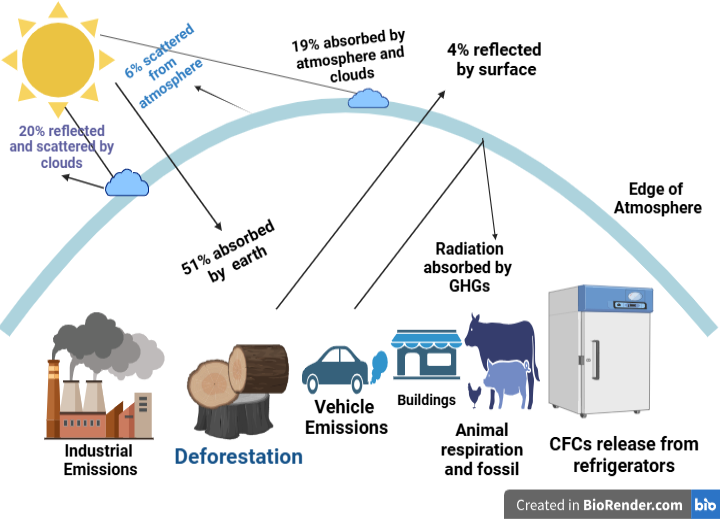
Anthropogenic causes of climate change
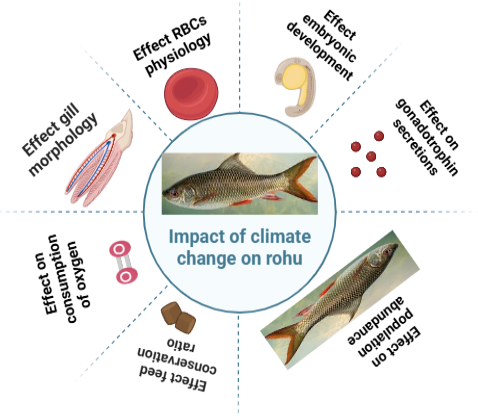
Overall impact of environmental factors on Labeo rohita (rohu).
References
- Ahmad, T., Singh, S., Khangembam, B., Sharma, J. and Chakrabarti, R., 2014. Food consumption and digestive enzyme activity of Clarias batrachus exposed to various temperatures. Aquacult. Nutr., 20: 265-272. https://doi.org/10.1111/anu.12072[CrossRef]
- Armobin, K., Ahmadifar, E., Adineh, H., Samani, M.N., Kalhor, N., Yilmaz, S., Hoseinifar, S.H. and Van Doan, H., 2023. Quercetin application for common carp (Cyprinus carpio): I. effects on growth performance, humoral immunity, antioxidant status, immune-related genes, and resistance against heat stress. Aquacult. Nutr., 2023(1): 1168262. https://doi.org/10.1155/2023/1168262[CrossRef]
- Ashaf-Ud-Doulah, M., Islam, S.M., Zahangir, M.M., Islam, M.S., Brown, C. and Shahjahan, M., 2021. Increased water temperature interrupts embryonic and larval development of the Indian major carp rohu Labeo rohita. Aquacult. Int., 29: 711-722. https://doi.org/10.1007/s10499-021-00649-x[CrossRef]
- Ashaf-Ud-Doulah, M., Shahjahan, M., Islam, S.M., Al-Emran, M., Rahman, M.S. and Hossain, M.A.R., 2019. Thermal stress causes nuclear and cellular abnormalities of peripheral erythrocytes in the Indian major carp, rohu Labeo rohita. J. Therm. Biol., 86: 102450. https://doi.org/10.1016/j.jtherbio.2019.102450[CrossRef]
- Ashraf, M., Ullah, K. and Adnan, S., 2022. Satellite-based impact assessment of temperature and rainfall variability on drought indices in Southern Pakistan. Int. J. Appl. Earth Observ. Geoinf., 108: 102726. https://doi.org/10.1016/j.jag.2022.102726[CrossRef]
- Azhar, M.S., Anjum, M.Z., Akhter, S., Bibi, S., Khan, M.Q. and Rasool, F., 2022. Effect of temperature fluctuation on the indian major carp Labeo rohita and Cirrhinus mrigala larvae under a controlled environment. Jammu Kashmir J. Agric., 2(3): 9-17. https://doi.org/10.56810/jkjagri.002.03.0044[CrossRef]
- Bais, B., 2018. Fish scenario in India with emphasis on Indian major carps. Int. J. Avian Wildl. Biol., 3(6): 409-411. https://doi.org/10.15406/ijawb.2018.03.00130[CrossRef]
- Bhatnagar, A., Jana, S., Garg, S., Patra, B., Singh, G. and Barman, U., 2004. Water quality management in aquaculture. Course Manual of summer school on development of sustainable aquaculture technology in fresh and saline waters. CCS Haryana Agric., Hisar (India), 3: 203-210.
- Burton, T., Killen, S., Armstrong, J.D. and Metcalfe, N., 2011. What causes intraspecific variation in resting metabolic rate and what are its ecological consequences? Proc. R. Soc. B: Biol. Sci., 278(1724): 3465-3473. https://doi.org/10.1098/rspb.2011.1778[CrossRef]
- Cascarano, M.C., Stavrakidis-Zachou, O., Mladineo, I., Thompson, K.D., Papandroulakis, N. and Katharios, P., 2021. Mediterranean aquaculture in a changing climate: Temperature effects on pathogens and diseases of three farmed fish species. Pathogens, 10(9): 1205. https://doi.org/10.3390/pathogens10091205[CrossRef]
- Chen, B.J., Fu, S.J., Cao, Z.D. and Wang, Y.X., 2019. Effect of temperature on critical oxygen tension (Pcrit) and gill morphology in six cyprinids in the Yangtze River, China. Aquaculture, 508: 137-146. https://doi.org/10.1016/j.aquaculture.2019.04.057[CrossRef]
- Cox, A., Hope, D., Angelica Zamora-Duran, M. and Johnson, K.B., 2018. Environmental factors influencing benthic polychaete distributions in a subtropical lagoon. Mar. Technol. Soc. J., 52: 58-74. https://doi.org/10.4031/MTSJ.52.4.1[CrossRef]
- Dastagir, G., Jalbani, S., Narejo, N. and Khan, P., 2016. Effect of physico-chemical parameters on fish growth in Hanna Lake, Balochistan, Pakistan. Pak. J. Anal. Environ. Chem., 17(2): 175. https://doi.org/10.21743/pjaec.v17i2.269[CrossRef]
- Dawood, M.A., Moustafa, E.M., Gewaily, M.S., Abdo, S.E., AbdEl-Kader, M.F., SaadAllah, M.S. and Hamouda, A.H., 2020. Ameliorative effects of Lactobacillus plantarum L-137 on Nile tilapia (Oreochromis niloticus) exposed to deltamethrin toxicity in rearing water. Aquat. Toxicol., 219: 105377. https://doi.org/10.1016/j.aquatox.2019.105377[CrossRef]
- Degani, G. 2020. Brain control reproduction by the endocrine system of female blue gourami (Trichogaster trichopterus). Biol, 9(5): 109.https://doi.org/10.3390/biology9050109[CrossRef]
- Enders, E. and Boisclair, D., 2016. Effects of environmental fluctuations on fish metabolism: Atlantic salmon Salmo salar as a case study. J. Fish Biol., 88(1): 344-358. https://doi.org/10.1111/jfb.12786[CrossRef]
- Fey, D.P. and Greszkiewicz, M., 2021. Effects of temperature on somatic growth, otolith growth, and uncoupling in the otolith to fish size relationship of larval northern pike, Esox lucius L. Fish. Res., 236: 105843. https://doi.org/10.1016/j.fishres.2020.105843[CrossRef]
- Forgati, M., Kandalski, P.K., Herrerias, T., Zaleski, T., Machado, C., Souza, M.R.D.P. and Donatti, L., 2017. Effects of heat stress on the renal and branchial carbohydrate metabolism and antioxidant system of Antarctic fish. J. Comp. Physiol. B, 187: 1137-1154. https://doi.org/10.1007/s00360-017-1088-3[CrossRef]
- Georges, A. and Holleley, C.E., 2018. How does temperature determine sex? Science, 360(6389): 601-602. https://doi.org/10.1126/science.aat5993[CrossRef]
- Gleeson, T., Wada, Y., Bierkens, M.F. and Van Beek, L.P., 2012. Water balance of global aquifers revealed by groundwater footprint. Nature, 488(7410): 197-200. https://doi.org/10.1038/nature11295[CrossRef]
- Gobler, C.J., 2020. Climate change and harmful algal blooms: insights and perspective. Harmful Algae, 91: 101731. https://doi.org/10.1016/j.hal.2019.101731[CrossRef]
- Habib, S.S., Fazio, F., Naz, S., Arfuso, F., Piccione, G., Rehman, H.U., Achakzai, W.M., Uddin, M.N., Rind, K.H. and Rind, N.A., 2021. Seasonal variations in haematological parameters and body composition of Labeo rohita (Rohu) and Cirrhinus mrigala (Mrigal carp) in River Indus, District Dera Ismail Khan, Pakistan. Turk. J. Fish. Aquat. Sci., 21(9): 435-441. https://doi.org/10.4194/1303-2712-v21_9_02[CrossRef]
- Haseeb, A. and Yousafzai, A., 2023. Assessment of ichthyofaunal diversity of family Cyprinidae in River Panjkora Dir, Khyber Pakhtunkhwa, Pakistan. Braz. J. Biol., 84: e271574. https://doi.org/10.1590/1519-6984.271574[CrossRef]
- Hussain, S., Mubeen, M., Ahmad, A., Majeed, H., Qaisrani, S.A., Hammad, H.M., Amjad, M., Ahmad, I., Fahad, S. and Ahmad, N., 2023. Assessment of land use/land cover changes and its effect on land surface temperature using remote sensing techniques in Southern Punjab, Pakistan. Environ. Sci. Pollut. Res., 30(44): 99202-99218. https://doi.org/10.1007/s11356-022-21650-8[CrossRef]
- Inayat, I., Batool, A.I., Rehman, M.F.U., Ahmad, K.R., Kanwal, M.A., Ali, R., Khalid, R. and Habib, S.S., 2024. Seasonal variation and association of heavy metals in the vital organs of edible fishes from the River Jhelum in Punjab, Pakistan. Biol. Trace Element. Res., 202(3): 1203-1211. https://doi.org/10.1007/s12011-023-03730-z[CrossRef]
- Iqbal, K.J., Umair, M., Altaf, M., Hussain, T., Ahmad, R.M., Abdeen, S.M.Z.U., Pieroni, A., Abbasi, A.M., Ali, S. and Ashraf, S., 2023. Cross-cultural diversity analysis: Traditional knowledge and uses of freshwater fish species by indigenous peoples of southern Punjab, Pakistan. J. Ethnobiol. Ethnomed., 19: 4. https://doi.org/10.1186/s13002-022-00573-1[CrossRef]
- Islam, M.J., Slater, M.J., Bögner, M., Zeytin, S. and Kunzmann, A., 2020. Extreme ambient temperature effects in European seabass, Dicentrarchus labrax: Growth performance and hemato-biochemical parameters. Aquaculture, 522: 735093. https://doi.org/10.1016/j.aquaculture.2020.735093[CrossRef]
- Islam, M.S., 2021. Temperature and relative humidity-mediated immature development and adult emergence in the mulberry silkworm Bombyx mori L. Available at SSRN 3837093. https://doi.org/10.2139/ssrn.3837093[CrossRef]
- Islam, S.M., Zahangir, M.M., Ashaf-Ud-Doulah, M., Khatun, M.M. and Shahjahan, M., 2020. Extreme warm acclimation temperature alters oxygen consumption, micronucleus formation in erythrocytes, and gill morphology of rohu (Labeo rohita) fingerlings. Fish Physiol. Biochem., 46: 2323-2330. https://doi.org/10.1007/s10695-020-00886-6[CrossRef]
- Islam, S., Shah, M., Shams, F., Ali, M. and Rahi, M., 2015. Genetic variability assay of different natural and hatchery populations of Rohu (Labeo rohita) in Bangladesh. https://doi.org/10.3126/ijls.v9i1.11923[CrossRef]
- Jia, Y., Chen, X., Wang, Z., Meng, Z., Huang, B. and Guan, C., 2020. Physiological response of juvenile turbot (Scophthalmus maximus L) during hyperthermal stress. Aquaculture, 529: 735645. https://doi.org/10.1016/j.aquaculture.2020.735645[CrossRef]
- Kausar, R. and Sultan, M., 2006. Effect of water temperature on the growth performance and feed conversion ratio of Labeo rohita. Pak. Vet. J., 26(3): 105-108
- Khaliq, I., Ramampiandra, E.C., Vorburger, C., Narwani, A. and Schuwirth, N., 2024. The effect of water temperature changes on biological water quality assessment. Ecol. Indicat., 159: 111652. https://doi.org/10.1016/j.ecolind.2024.111652[CrossRef]
- Lema, M.Z., Al-Zobayer, M.F., Akram, W., Anti, F.T.Z. and Lifat, R., 2024. Effect of arsenic on the biological traits of the Major carp, Rohu (Labeo rohita): Arcenic impacts on biological traits of carp. Mar. Rep. (Marep), 3(1): 32-47.
- Lindmark, M., Audzijonyte, A., Blanchard, J.L. and Gårdmark, A., 2022. Temperature impacts on fish physiology and resource abundance lead to faster growth but smaller fish sizes and yields under warming. Glob. Change Biol., 28(21): 6239-6253. https://doi.org/10.1111/gcb.16341[CrossRef]
- Little, A.G., Loughland, I. and Seebacher, F., 2020. What do warming waters mean for fish physiology and fisheries? J. Fish Biol., 97(2): 328-340. https://doi.org/10.1111/jfb.14402[CrossRef]
- Mandal, R.B., Rai, S., Shrestha, M.K., Jha, D.K. and Pandit, N.P., 2018. Effect of red algal bloom on growth and production of carps. Our Nature, 16(1): 48-54. https://doi.org/10.3126/on.v16i1.22122[CrossRef]
- Maqbool, N., 2023. Impact of climate change on water in Pakistan. Pak. Dev. Rev., 62(4): 605-616. https://doi.org/10.30541/v62i4pp.605-616[CrossRef]
- Mashi, S., 2021. Seasonal variations in the Ovaries of some teleosts in respect to their gono-somatic index and fecundity. Int. J. Glob. Sci. Res., 8: 1589-1595. https://doi.org/10.26540/ijgsr.v8.i2.2021.186[CrossRef]
- Matolia, J., Khan, M.A., Verma, S. and Prasad, A., 2024. The interplay of climate change and water chemistry: Impacts on freshwater aquaculture. https://doi.org/10.20944/preprints202410.1258.v1[CrossRef]
- Mridul, M.M.I., Zeehad, M.S.K., Aziz, D., Salin, K.R., Hurwood, D.A. and Rahi, M.L., 2024. Temperature induced biological alterations in the major carp, Rohu (Labeo rohita): Assessing potential effects of climate change on aquaculture production. Aquacult. Rep., 35: 101954. https://doi.org/10.1016/j.aqrep.2024.101954[CrossRef]
- Ninawe, A.S., Indulkar, S.T. and Amin, A., 2018. Impact of climate change on fisheries. In: Biotechnology for Sustainable Agriculture. Elsevier. pp. 257-280. https://doi.org/10.1016/B978-0-12-812160-3.00009-X[CrossRef]
- Norin, T., Malte, H. and Clark, T.D., 2014. Aerobic scope does not predict the performance of a tropical eurythermal fish at elevated temperatures. J. Exper. Biol., 217(2): 244-251. https://doi.org/10.1242/jeb.089755[CrossRef]
- Panda, B., Ogirala, G.K., Manna, S., Verma, D.K., Samanta, L. and Routray, P., 2022. Seasonal germ cell proliferation and maturation patterns in Indian major carp, Labeo rohita (Hamilton, 1822) and Tilapia, Oreochromis Niloticus (Linnaeus, 1758). Turk. J. Fish. Aquat. Sci., 22(9). https://doi.org/10.4194/TRJFAS20810[CrossRef]
- Parra, J.E.G. and Baldisserotto, B., 2019. Effect of water pH and hardness on survival and growth of freshwater teleosts. In: Fish osmoregulation. CRC Press. pp. 135-150. https://doi.org/10.1201/9780429063909-5[CrossRef]
- Rafique, M. and Khan, N.U.H., 2012. Distribution and status of significant freshwater fishes of Pakistan. Rec. Zool. Surv. Pak., 21: 90-95.
- Rahi, M.L. and Shah, M.S., 2012. Triploidization in rohu× mrigal hybrid and comparison of growth performance of triploid hybrid. Aquacult. Res., 43(12): 1867-1879. https://doi.org/10.1111/j.1365-2109.2011.02996.x[CrossRef]
- Rahi, M.L., Sabbir, W., Salin, K.R., Aziz, D. and Hurwood, D.A., 2022. Physiological, biochemical and genetic responses of black tiger shrimp (Penaeus monodon) to differential exposure to white spot syndrome virus and Vibrio parahaemolyticus. Aquaculture, 546: 737337. https://doi.org/10.1016/j.aquaculture.2021.737337[CrossRef]
- Rahman, M.L., Zahangir, M.M., Kitahashi, T., Shahjahan, M. and Ando, H., 2019. Effects of high and low temperature on expression of GnIH, GnIH receptor, GH and PRL genes in the male grass puffer during breeding season. Gen. Compar. Endocrinol., 282: 113200. https://doi.org/10.1016/j.ygcen.2019.06.004[CrossRef]
- Rahman, M.M., Salin, K.R., Tsusaka, T.W., Anal, A.K., Rahi, M.L. and Yakupitiyage, A., 2022. Effect of stocking density on growth performance and gonadal maturity of all-female giant freshwater prawn, Macrobrachium rosenbergii. J. World Aquacult. Soc., 53(6): 1120-1133. https://doi.org/10.1111/jwas.12888[CrossRef]
- Raosaheb, S.S., Ojha, M., Chanu, T.I., Saini, V. and Sharma, A., 2018. Effect of water depth with respect to survival of Clarias magur (Hamilton, 1822) larvae in two tier larval rearing system. J. Entomol. Zool. Stud., 6: 2192-2197.
- Raza, M., Hussain, D., Rasul, G., Akbar, M. and Raza, G., 2015. Variations of surface temperature and precipitation in Gilgit-Baltistan (GB), Pakistan from 1955 to 2010. J. Biodiv. Environ. Sci., 6(2): 67-73.
- Reinecke, M., 2010. Influences of the environment on the endocrine and paracrine fish growth hormone–Sinsulin-like growth factor-I system. J. Fish Biol., 76(6): 1233-1254. https://doi.org/10.1111/j.1095-8649.2010.02605.x[CrossRef]
- Roychowdhury, P., Aftabuddin, M. and Pati, M.K., 2020. Thermal stress altered growth performance and metabolism and induced anaemia and liver disorder in Labeo rohita. Aquacult. Res., 51(4): 1406-1414. https://doi.org/10.1111/are.14486[CrossRef]
- Sabbir, W., Khan, M.N., Sultana, S., Rahi, M.L. and Shah, M.S., 2017. Production of heterotic hybrid in Rohu (Labeo rohita) by crossing the riverine and hatchery strains. Int. J. Innov. Sci. Res., 6(2): 982-986.
- Sabbir, W., Masud, M., Islam, S.S., Rahman, M., Islam, M. and Rahi, M., 2010. Some aspects of water quality parameters of the Mouri River, Khulna: An attempt to estimate pollution status. Bangladesh Res. Publ. J., 4(1): 95-102.
- Schulte, P.M., Healy, T.M. and Fangue, N.A., 2011. Thermal performance curves, phenotypic plasticity, and the time scales of temperature exposure. Integr. Compar. Biol., 51(5): 691-702. https://doi.org/10.1093/icb/icr097[CrossRef]
- Shahjahan, M., Uddin, M.H., Bain, V. and Haque, M.M., 2018. Increased water temperature altered hemato-biochemical parameters and structure of peripheral erythrocytes in striped catfish Pangasianodon hypophthalmus. Fish Physiol. Biochem., 44: 1309-1318. https://doi.org/10.1007/s10695-018-0522-0[CrossRef]
- Shahjahan, M., Zahangir, M.M., Islam, S.M., Ashaf-Ud-Doulah, M. and Ando, H., 2021. Higher acclimation temperature affects growth of rohu (Labeo rohita) through suppression of GH and IGFs genes expression actuating stress response. J. Therm. Biol., 100: 103032. https://doi.org/10.1016/j.jtherbio.2021.103032[CrossRef]
- Sharma, A., Naskar, M., Joshi, K., Bhattacharjya, B., Sahu, S., Das, S., Sudheesan, D., Srivastava, P., Rej, A., & Das, M. 2014. Impact of climate variation on breeding of major fish species in inland waters. Bull, 185: 32.https://doi.org/10.13140/2.1.1483.4881[CrossRef]
- Sheikh, M., Laghari, M., Lashari, P., Khooharo, A. and Narejo, N., 2017. Current status of three major carps (Labeo rohita, Cirrhinus mrigala and Catla catla) in the downstream Indus river Sindh. Fish Aqua J., 8(222): 2.
- Shirangi, S.A., Kalbassi, M.R., Khodabandeh, S., Jafarian, H., Lorin-Nebel, C., Farcy, E. and Lignot, J.H., 2016. Salinity effects on osmoregulation and gill morphology in juvenile Persian sturgeon (Acipenser persicus). Fish Physiol. Biochem., 42: 1741-1754. https://doi.org/10.1007/s10695-016-0254-y[CrossRef]
- Siddika, A., Akram, W., Mridul, M.M.I., Zeehad, M.S.K., Islam, M.R., Salin, K.R., Hurwood, D.A. and Rahi, M.L., 2025. Effects of elevated salinity levels on the biological alterations of rohu (Labeo rohita): Initiative for developing salinity tolerant line. Aquacult. Int., 33(1): 21. https://doi.org/10.1007/s10499-024-01708-9[CrossRef]
- Uppanunchai, A., Chitmanat, C. and Lebel, L., 2018. Mainstreaming climate change adaptation into inland aquaculture policies in Thailand. Clim. Policy, 18(1): 86-98. https://doi.org/10.1080/14693062.2016.1242055[CrossRef]
- Verma, A., 2024. Studies on seasonal variation in gonadosomatic index of indian major carp Labeo rohita in pond water. In. Proc. Zool. Soc. India. https://doi.org/10.59467/PZSI.2024.23.61[CrossRef]
- Yilmaz, S., Ergün, S., Çelik, E.Ş., Banni, M., Ahmadifar, E. and Dawood, M.A., 2021. The impact of acute cold water stress on blood parameters, mortality rate and stress-related genes in Oreochromis niloticus, Oreochromis mossambicus and their hybrids. J. Therm. Biol., 100: 103049. https://doi.org/10.1016/j.jtherbio.2021.103049[CrossRef]
- Yoon, G.R., Bugg, W.S., Fehrmann, F., Yusishen, M.E., Suh, M. and Anderson, W.G., 2022. Long-term effects of temperature during early life on growth and fatty acid metabolism in age-0 Lake Sturgeon (Acipenser fulvescens). J. Therm. Biol., 105: 103210. https://doi.org/10.1016/j.jtherbio.2022.103210[CrossRef]
- Zhang, C., Li, F. and Xiang, J., 2015. Effect of temperature on the standard metabolic rates of juvenile and adult Exopalaemon carinicauda. Chinese J. Oceanol. Limnol., 33(2): 381-388. https://doi.org/10.1007/s00343-015-4138-2[CrossRef]
Services
Article usage statistics
Loading…