
Worldwide there are 23 species of vultures. The vultures are known as one of nature’s most successful scavengers. However, since the 1990’s vulture numbers in South East Asia have been in decline, especially the oriental white-rumped vulture (Gyps bengalensis), thelong-billed vulture (Gyps indicus), and the slender-billed vulture (Gyps tenuirostris). The use of the non-steroidal anti-inflammatory drug (NSAID) diclofenac has been linked to this rapid decline in vulture populations. Diclofenac has been in use since 1974 to treat several problems in cattle such as pain during calving, lameness, mastitis, and swelling. The drug was also used to treat diverse problems such as dysmenorrhea, ocular inflammation, rheumatoid arthritis, osteoarthritis, ankylosing spondylitis, and actinic keratosis etc. Although, it is good for livestock, its impact on the vulture population has been very deleterious. The present review discusses the chemical structure, uses, and the mechanism of the action of diclofenac and its negative impacts on vulture populations along with less harmful alternatives such as meloxicam, and controlling measures to stop decline of vulture species that can be adopted to regain normal population numbers of these vulture species.
Review · Volume 54, Issue 1, 19 December 2021 · Open Access
Impact of Diclofenac a Non-steroidal Anti-inflammatory Veterinary Pharmaceutical Drug on Vultures
· ·
Affiliations & Notes ⌄
- 1Lahore Garrison University, Lahore, Phase VI, Sector C, DHA, Lahore 2GSPA Laboratory of Research (Management of Animal Health and Productions), Institute of Veterinary Sciences,University Mentouri Brothers, Constantine 1, Constantine, Algeria , * Corresponding author: raheelasattar44@gmail.com, roheelayasmeen@lgu.edu.pk
Article Info ⌄
- Journal:
- Pakistan Journal of Zoology
- Published:
- 19 December 2021

From the article
- Vultures are scavenging birds and ecologically very important species.
- We concluded that diclofenac was very toxic for vulture populations and one of the main causative agents for their rapid decline.
- There is a need to treat livestock diseases with alternate and less harmful drugs such as meloxicam.
- There is also a need to educate veterinarian, pharmacologists, stock raisers, and general public about the harmful effects of diclofenac and some other medicines (ketoprofen and aceclofenac) which are also harmful for vultures.
Selected from the article's own text.
Abstract
INTRODUCTION
Vultures are an avian species and are deemed as the most successful scavengers and at the highest level of decomposers . There are 23 species of vultures found across the world, including areas like the Amazon forests, African savannas, Saharan deserts, and high roof of Himalayas . They act as an obligate scavenger and provide important economic, ecologic, and cultural services to mankind . These birds have exceptional sight and as reported by Lisney et al. (2013), vultures have visual activities twice as high as humans and six times as high as ostriches. They can soar in flight Ruxton and Houston (2004) and possess a remarkable feature of extremely low pH of the stomach which makes them unique in the animal kingdom. This characteristic of low pH allows them to dissolve metal, e.g. shovels, as well as digest nearly all organisms, including all those that can be a reason for dreadful diseases (botulism, anthrax, cholera, hepatitis and polio), and various other proteins. Vultures can eat almost anything that is dead and rotten, including animals that died from infections . Asia and Africa are considered as the richest regions for vultures . These birds like to live at open sites.
Nine species of vultures are documented from the Indian sub-continent (Fig. 1) ; . The three species of vultures endemic of the South Asia region are the oriental white-rumped vulture (Gyps bengalensis), Long-billed vulture (Gyps indicus), and Slender-billed vulture (Gyps tenuirostris). All three species have shown rapid decline and declared as critically endangered species in a number of literature studies ; ; ; ; ; ; ; ; ; . According to another study all three species declined at the rate of 98 % in the Indian sub-continent since early 1990’s and declared as critically endangered species by the International Union for Conservation of Nature and Natural Resources . The oriental white-rumped vulture (G. bengalensis) was one of the most important birds of prey in the Indian subcontinent. However, a sudden decline of more than 95 % G. bengalensis was noticed since 1990 at Keoladeo National Park, India ; . G. indicus is a long-billed vulture and an endangered species of South Asian region. This species has disastrously declined in India as compared to Pakistan ; . Stotrabhashyam et al. (2015) reported that the long-billed vulture showed a rapid decline as a threatened species and only few breeding sites have been seen in peninsular India.
Diclofenac (Fig. 2) was prepared with the aim to produce the most effective results in cattle ailments. It is a non-steroidal anti-inflammatory drug (NSAID) ; ; . It is in use since 1974 for the long-term treatment of degenerative diseases . It exhibits anti-inflammatory, analgesic, antithrombotic, and antipyretic properties .
Diclofenac sodium is an analgesic and well tolerated drug that is used to cure both chronic and acute painful and inflammatory ailments ; . Kayali et al. (2007) also reported that a dose of diclofenac sodium (150 mg/day) was applied as an effective short-term treatment against acute ankle injuries in patients. It is administered intramuscularly, rectally, and orally. Oral consumption of the drug is rapid in action and binds efficaciously to the albumin in the plasma. The targeted site of the action of NSAIDs is the synovial fluid . These NSIADs are characterized by their ability to suppress cyclooxygenase enzymes i.e. COX-1 and COX-2. It is known that COX-1 enzymes are involved in blood flow modulation to the kidneys and the COX-2 are responsible for the modulation of the pain and inflammatory response (Fig. 3). The cyclooxygenases enzymes are participants in the production of the prostaglandins. The drug imposes negative effects on the kidneys . According to Naidoo and Swan (2009) the drug is very toxic for the renal tubular epithelial and increases the production of reactive oxygen species by decreasing the transfer of uric acid and interfering the channels of p-amino-hippuric acid. Ng et al. (2006) described decrease in NADPH production on the mitochondrial membrane potential of rat kidneys after exposure to diclofenac. In this study, very low ATP formed due to the blockage of glutamate and malate entry in the cycle by the diclofenac.
Diclofenac is used by veterinarians for the treatment of cattle facing pain during calving, lameness, mastitis, and swelling . This drug has also been used to treat pain, menstrual pain, dysmenorrhea, ocular diseases, osteoarthritis, rheumatoid arthritis, chronic spondylitis, and actinic keratosis in humans as reported in number of studies ; ; .
HARMFUL IMPACTS OF DICLOFENAC ON VULTURES
A diminished number in population of three vulture’s species (G. tenuirostris, G. bengalensis, G. indicus) is an important issue. This high drop off in the vulture population was found due to exposure of these birds to diclofenac , 2006; ; ; ; ; ; . This drug was found extremely toxic to vulture populations and mortality resulted within few days after exposure ; ; . According to one study, diclofenac was experimentally administrated to vultures that resulted in renal failure and visceral gout-like problems ; . Gilbert et al. (2002) reported drastic changes in the population of vulture’s occurred in 1990. Similarly, a dramatic decline of 95% was also noticed within 10 years for all three species . However, Johnson et al. (2006, 2008) reported 95% decrease in the population of oriental white-rumped vulture particularly due to diclofenac. Arshad et al. (2009) also agreed and reported 95-100 % reduction in G. bengalensis, and Gyps indicus population on the Indian subcontinent due to severe effects of diclofenac. In the literature, a number of studies reported that all the three species, G. tenuirostris, G. bengalensis, and G. indicus have been observed as critically endangered species (Prakash et al., 2003; ; ; . Apart from the adverse effects of diclofenac, the main reasons for the mortality and decline of the vultures are the disturbance of food, nesting and breeding, changes in feeding behavior, loss of habitat, cutting down of mature trees and weather changes such as temperature fluctuation and cyclones ; ; ; ; . However, the use of diclofenac in veterinary practices is one of the most important factors for the decline of the vulture population ; ; ; , 2008; ; ; ; ; ; . Traces of diclofenac and its derivative compounds have been detected in cadavers of vultures found across India by Paitala and Duttac (2015) and Das et al. (2010). This might be due to improper disposal of carcasses and spread of diseases. The literature studies justified the presence of diclofenac in vultures as a result of biomagnifications, as these vultures fed on carcasses of cattle that were treated with these drugs before mortality ; ; Chaudhary et al., 2012; .
The presence of diclofenac in cattle carcasses are a source of contamination. Saini et al. (2006) collected 1251 liver samples of livestock carcasses and analyzed them by enzyme-linked immunosorbent assay (Elisa) and Liquid Chromatography Electrospray Ionization Tandem Mass Spectrometric (LC-ESI/MS) for the presence of diclofenac. Results indicated that Elisa was more robust technique than LC-ESI/MS and 60% of the samples were positive for the presence of diclofenac in the liver of carcasses. According to Oaks et al. (2004) the dose of diclofenac that was provided to cattle’s before their death was a big reason for the vulture’s decline. Moreover, a large number of the dead vultures reported from India and Nepal were fed upon carcasses of cattle treated with diclofenac. The postmortem results of these vultures showed residues of diclofenac resulting in kidney failure .
Diclofenac was in use worldwide and its toxic effects were experimentally identified on vulture populations in different regions. An amount of 0.8 mg/kg body weight was found very lethal for European (G. fulvus), and an African (G. africanus) vulture species . A study was performed to determine the toxicological effects of diclofenac on the Cape Griffon vulture (G. coprotheres), one of the most important South African species. The study revealed that 0.8 mg/kg body weight dose of diclofenac was fatal by all means, i.e, clinical symptoms, gross pathology and histo-pathological findings. The author and coworkers agreed with all other literature studies that diclofenac is very toxic for all Gyps species . Diclofenac was also determined to be a noxious drug for all Gyps species such as G. africanus, G. fulvus, G. coprotheres and G. bengalensis . Another study conducted during 2005-2007 where tissue and blood plasma samples were collected from different vulture species (oriental white-rumped vulture (G. bengalensis), Egyptian vulture (Neophron percnopterus), and two Griffon vultures (G. fulvus) reported that 89% of the plasma samples had residues of diclofenac. The highest levels were identified in the liver and kidneys. However, the concentration of this drug was lower than the toxic limits (0.8mg/kg body weight) . In the literature, different parameters for the analysis of vulture population have been monitored: size, breeding success, death rate, and sex ratio of dead and newly hatched baby vultures. Arshad et al. (2009) found that diclofenac was directly affecting the mortality and sex ratio imbalance for the population of G. bengalensis in Toawala.
There are very few studies performed about the decline of vultures from Pakistan across the years (Table I, Fig. 4)Chaudhary et al. (2012) reported a rise within 1-2 years in vulture’s abundance (55%), nest occupancy (52%), and nest productivity (95%) after the ban of diclofenac (2006). However, there is still a gap for a comprehensive study and for an up to date numbers.
Table I. Reported data about vulture species from different study areas of Pakistan.
| Study area | Species of vulture | Decline in population | Decline in nests | No. of vulture sp. (N) | Year | Year of published data |
| Kasur, Khanewal, Layyah, and Muzaffargarh | Oriental white-backed vulture | 34-95% | - | - | 2000-2003 | |
| Changa Manga | Oriental white-backed vulture | - | 198 nests declined to zero | - | 2000-2004 | |
| Dholewala | Oriental white-backed vulture | - | 421 nests declined to two | - | ||
| Toawala | Oriental white-backed vulture | - | 445 nests declined to 203 | - | ||
| Punjab Province | Oriental white-backed vulture | 11-61% | - | - | 2001 | |
| Karunjhar Hills | Long-billed Vulture | 61 % | 73% | - | 2003-2012 | |
| Pir Lasura National Park in Azad Jammu and Kashmir | Himalayan griffons | - | - | 128 | 2015-2016 | |
| White rumped vultures | - | - | 48 | |||
| Egyptian vultures | - | - | 41 |
Sp., Species; N, No. of individual.
Diclofenac was banned in South Africa for the treatment of livestock because of the potential exposure of this drug on birds and especially on vulture’s food habitats ; . Different studies were carried out to see the effects of diclofenac with different avian fauna. Hussain et al. (2008) fed four bird species (pigeons, Japanese quail, mynah, and broiler chicks) with diclofenac at different dose rates (0, 0.25, 2.5, 10 and 20 mg/kg body weight). Very acute results such as depression, drowsiness, loss of body weight and mortality were recorded. Appearance of symptoms was directly related to the dose of the drug. An enlargement of the liver and kidney was found in all birds, but results were more severe in broiler chicks, followed by pigeons, Japanese quail, and mynah. Similarly, another study was conducted on turkey vultures (Cathartes aura) and diclofenac (doses ranging from 0.08 to 25 mg/kg body weight) was fed to birds. The estimated half-life of diclofenac was found to be six hours. Moreover, no residue of the drug was found in liver and kidney after necropsy. The study showed the sensitivity of different bird species with varying concentrations of diclofenac . However, very controversial results were recorded in Japanese quail (Coturnix coturnix japonica) after exposure to diclofenac and lead. Hepatotoxicity along with nephrotoxicity were detected after diclofenac intake ; . Swan et al. (2006) also affirmed that vulture exposures to diclofenac resulted in kidney damage, elevated levels of uric acid, visceral gout, and death. In addition, in a study quantifying the levels of diclofenac in Himalayan griffon (G. himalayensis) and Indian white-backed vulture during 2011-2014, revealed that G. himalayensis had higher levels (139.69 to 411.73 ng/g) of diclofenac than Indian white-backed vultures (62.28 to 272.20 ng/g). Additionally, the authors reported that fourteen out of twenty-nine white-backed vultures and nine out of twelve G. himalayensis had died due to diclofenac poisoning . Munjpara et al. (2018) also performed a study in Gujrat, India and reported a decline of 68 % in four Gyps species (red-headed vulture, white rumped vulture, Egyptian vulture, and long billed vulture) during 2005-2016.
According to Acuna et al. (2015) there is a need to focus on the harmful and negative impacts of diclofenac and other products. Although pharmacologists made diclofenac-like products for human and animal health welfare, they were not concerned with these serious threats that directly or indirectly are harming the non-targeted organisms of freshwater and environment. However, most of studies considered diclofenac as major reason for the vulture’s decline however Paitala and Duttac (2015) also reported that inadequate data is available to confirm whether the diclofenac is the primary cause of vulture’s mortality. As decline of vultures due to other contaminants has also been not well studied. Moreover, there should be need to do more research which may determine the actual factors that are responsible for vulture mortalities.
CONTROLLING MEASURES TO STOP DECLINE OF VULTURE SPECIES
Diclofenac is used extensively in Pakistan and India and is the main reason for vulture’s extinction . For this reason, already since 2006 a complete ban on the use of diclofenac in livestock has been recommended and the establishment of conservation breeding centers are also suggesting to stop the extinction of these three species of vultures ; ; ; . There are already lower toxicity alternative drugs such as meloxicam, which should immediately be used. The mechanism of action of meloxicam is shown in Figure 5. The comparison of pharmacokinetics and pharmacodynamics of both drugs (diclofenac and meloxicam) showed that meloxicam is better to use as compared to diclofenac ; ; . Meloxicam is also in use for veterinary practices in India. This drug did not show any effect in the birds as no clinical signs were seen with varying doses . According to Chaudhry et al. (2012) and Nambirajan et al. (2018) diclofenac was officially prohibited since 2006 in India, Nepal, and Pakistan. There is a need to educate veterinarian, pharmacologists, stock raisers, and general public about the harmful effects of diclofenac. Moreover, conservationist agencies need to work for uplift of these Gyps species and to launch various incentive programs for the general public. Besides this, there is an urgent need to plan captive facilities for the re-introduction of threatened species again to their natural habitat ; ; . However, regular monitoring and collection of data is required to update the status of these species so that we can change a plan if it is not working properly. As Safford et al. (2019) had stated that conservationists are working well for the stability and increase of the vulture populations in Europe however, anthropogenic threats still exist.
Conclusion
Vultures are scavenging birds and ecologically very important species. Nature has provided them a sharp vision and a unique stomach with extremely low pH and both characteristics are well suited with their job as they can clear cattle carcasses and are also able to eliminate dreadful human pathogens. We concluded that diclofenac was very toxic for vulture populations and one of the main causative agents for their rapid decline. There is a need to treat livestock diseases with alternate and less harmful drugs such as meloxicam. There is also a need to educate veterinarian, pharmacologists, stock raisers, and general public about the harmful effects of diclofenac and some other medicines (ketoprofen and aceclofenac) which are also harmful for vultures. Moreover, conservationist agencies should work for the uplift of these Gyps species and to launch various incentive programs for the awareness of general public. A decrease in habitat and food due to urbanization is also a reason for the decline of these species. So, captive facilities are required to enhance the number of these critically endangered species for the reintroduction of these environment friendly birds again to their natural environment.
Statement of conflict of interest
The authors have declared no conflict of interest.
Figures
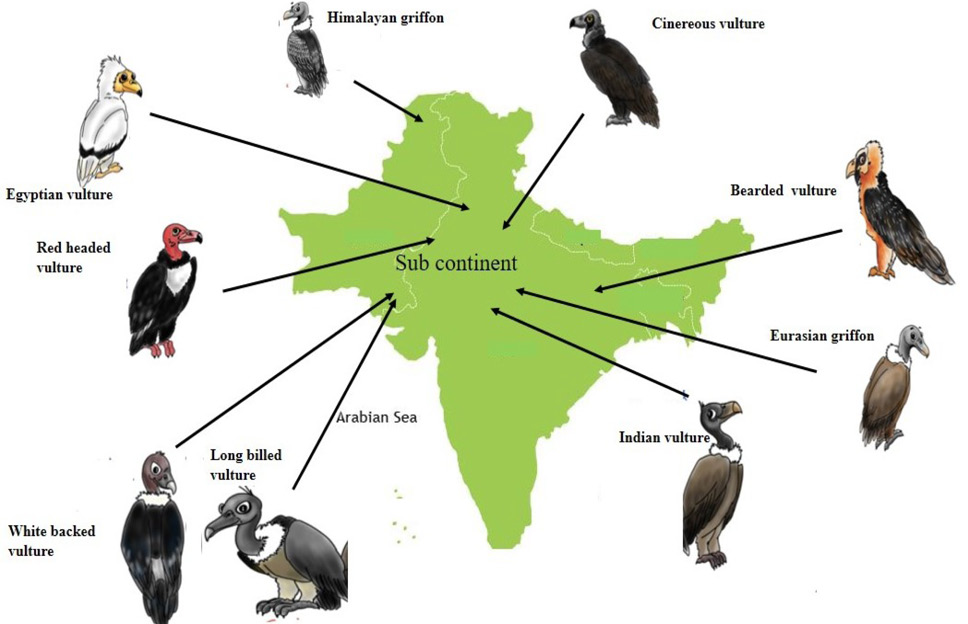
Nine famous species of vultures of subcontinent (Adopted from google images).
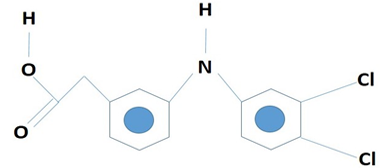
Chemical structure of diclofenac.
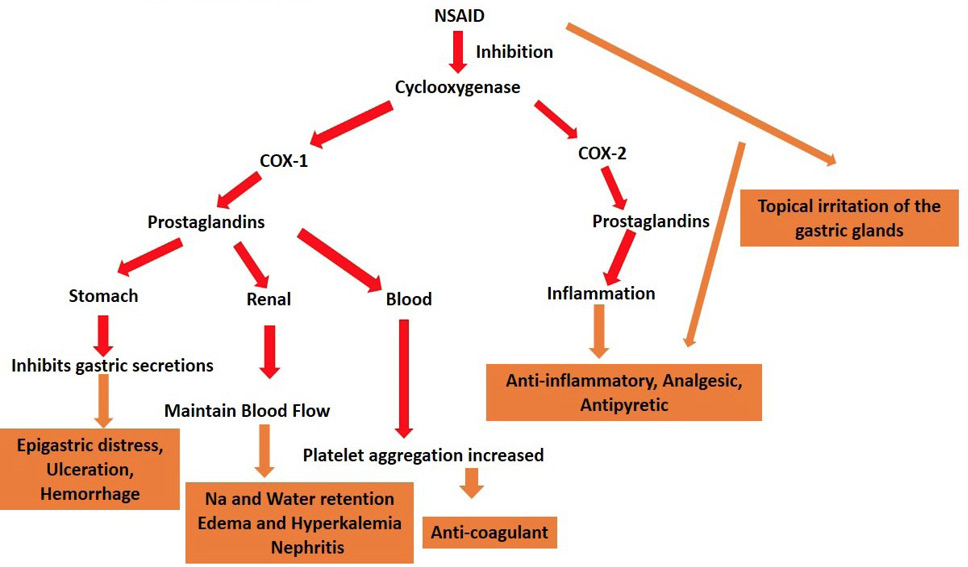
Mechanism of action of diclofenac (https://www.slideshare.net/lovnishthakur75/presentation-on-diclofenac).
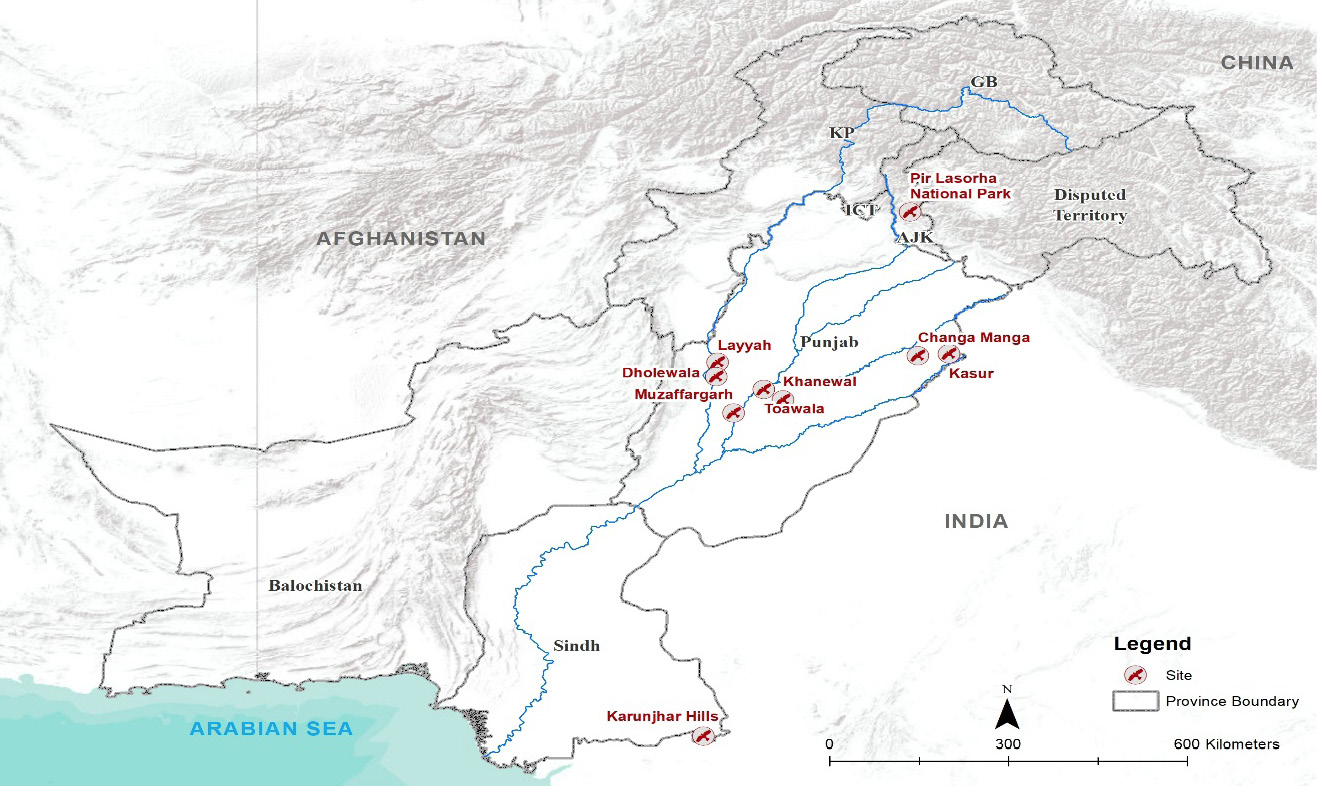
Pakistan map showing sites from where vulture’s data has been reported.
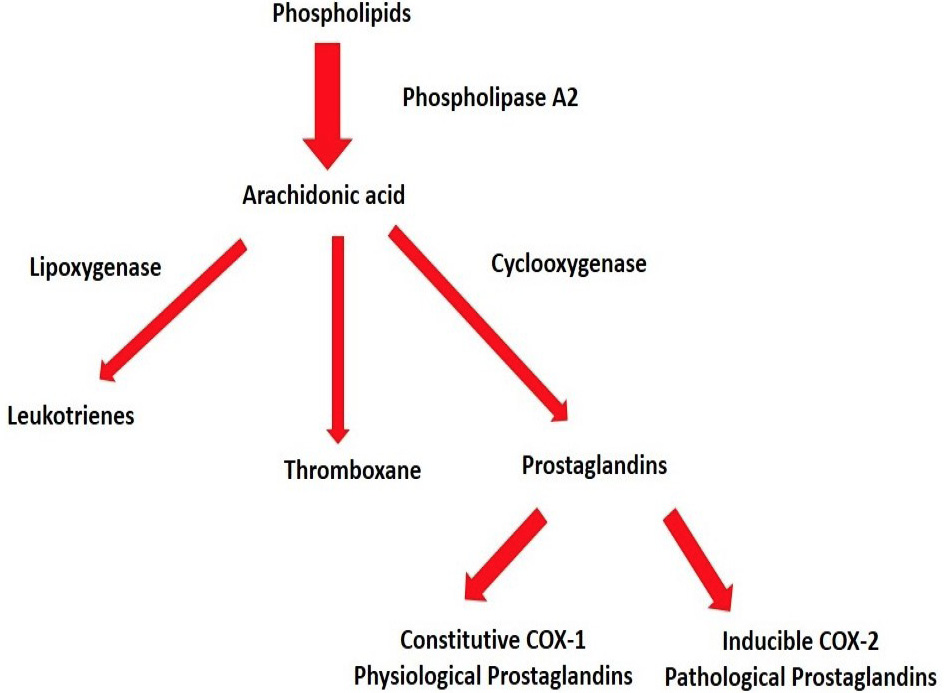
Mechanism of action of meloxicam (Hilario et al., 2006).
References
- Acuna, V., Ginebreda, A., Mor, J.R., Petrovic, M., Sabater, S., Sumpter, J. and Barcelo, D., 2015. Balancing the health benefits and environmental risks of pharmaceuticals: Diclofenac as an example. Environ. Int., 85: 327-333. https://doi.org/10.1016/j.envint.2015.09.023[CrossRef]
- Altman, R., Bosch, B., Brune, K., Patrignani, P. and Young, C., 2015. Advances in NSAID development: Evolution of diclofenac products using pharmaceutical technology. Drugs, 75: 859-877. https://doi.org/10.1007/s40265-015-0392-z[CrossRef]
- Anderson, M.D., Piper, S.E. and Swan, G.E., 2005. Non-steroidal anti-inflammatory drug use in South Africa and possible effects on vultures: News and views. S. Afr. J. Sci., 101: 112-114.
- Arshad, M., Chaudhary, M.J. and Wink, M., 2009. High mortality and sex ratio imbalance in a critically declining oriental white-backed vulture population (Gyps bengalensis) in Pakistan. J. Ornithol., 150: 495-503. https://doi.org/10.1007/s10336-008-0368-9[CrossRef]
- Baral, N. and Gautam, R., 2007. Socio-economic perspectives on the conservation of critically endangered vultures in South Asia: An empirical study from Nepal. Bird Conserv. Int., 17: 131-139. https://doi.org/10.1017/S0959270907000688[CrossRef]
- Buechley, E.R. and Şekercioglu, C.H., 2016. The avian scavenger crisis: looming extinctions, trophic cascades, and loss of critical ecosystem functions. Biol. Conserv., 198: 220-228. https://doi.org/10.1016/j.biocon.2016.04.001[CrossRef]
- Buechley, E.R. and Sekercioglu, C.H., 2016. Vultures. Curr. Biol., 26: R560-R561. https://doi.org/10.1016/j.cub.2016.01.052[CrossRef]
- Chaudhry, M.J.I., Ogada, D.L., Malik, R.N., Virani, M.Z. and Giovanni, M.D., 2012. First evidence that populations of the critically endangered long-billed vulture Gyps indicus in Pakistan have increased following the ban of the toxic veterinary drug diclofenac in south Asia. Bird Conserv. Int., 22: 389-397. https://doi.org/10.1017/S0959270912000445[CrossRef]
- Cuthbert, R., Parry-Jones, J., Green, R.E. and Pain, D.J., 2007. NSAIDs and scavenging birds: potential impacts beyond Asia’s critically endangered vultures. Biol. Lett., 3: 91-94. https://doi.org/10.1098/rsbl.2006.0554[CrossRef]
- Dan Greaney, 2017. pH for public health. Bird Words.
- Das, D., Cuthbert, R.J., Jakati, R.D. and Prakash, V., 2010. Diclofenac is toxic to the Himalayan vulture Gyps himalayensis. Bird Conserv. Int., 21: 72-75. https://doi.org/10.1017/S0959270910000171[CrossRef]
- Davies, N.M. and Anderson, K.E., 1997. Clinical pharmacokinetics of diclofenac. Clin. Pharmacokinet., 33: 184-213. https://doi.org/10.2165/00003088-199733030-00003[CrossRef]
- Day, R.O., McLachlan, A.J., Graham, G.G. and Williams, K.M., 1999. Pharmacokinetics of nonsteroidal anti-inflammatory drugs in synovial fluid. Clin. Pharmacokin., 36: 191-210. https://doi.org/10.2165/00003088-199936030-00002[CrossRef]
- Di Vittorio, M., Hema, E.M., Dendi, D., Akani, G.C., Cortone, G., López-López, P., Amadi, N., Hoinsoudé Ségniagbeto, G., Battisti, C. and Luiselli, L., 2018. The conservation status of West African vultures: An updated review and a strategy for conservation. Vie Milieu-life Environ., 68: 33-43.
- Galligan, T.H., Taggart, M.A., Cuthbert, R.J., Svobodova, D., Chipangura, J., Alderson, D., Prakash, V.M. and Naidoo, V., 2016. Metabolism of aceclofenac in cattle to vulture-killing diclofenac. Conserv. Biol., 30: 1122-1127. https://doi.org/10.1111/cobi.12711[CrossRef]
- Gilbert, M., Virani, M.Z., Watson, R.T., Oaks, J.L., Benson, P.C., Khan, A.A., Ahmed, S., Chaudhry, J., Arshad, M., Mahmood, S. and Shah, Q.A., 2002. Breeding and mortality of oriental white-backed vulture Gyps bengalensis in Punjab Province, Pakistan. Bird Conserv. Int., 12: 311-326. https://doi.org/10.1017/S0959270902002198[CrossRef]
- Gilbert, M., Watson, R.T., Ahmed, S., Asim, M. and Johnson, J.A., 2007. Vulture restaurants and their role in reducing diclofenac exposure in Asian vultures. Bird Conserv. Int., 17: 63-77. https://doi.org/10.1017/S0959270906000621[CrossRef]
- Gilbert, M., Watson, R.T., Virani, M.Z., Oaks, J.L., Ahmed, S., Chaudhry, M.J., Arshad, M., Mahmood, S., Ali, A. and Khan, A.A., 2006. Rapid population declines and mortality clusters in three oriental white-backed vulture Gyps bengalensis colonies in Pakistan due to diclofenac poisoning. Oryx, 40: 388-399. https://doi.org/10.1017/S0030605306001347[CrossRef]
- Green, R.E., Newton, I.A.N., Shultz, S., Cunningham, A.A., Gilbert, M., Pain, D.J. and Prakash, V., 2004. Diclofenac poisoning as a cause of vulture population declines across the Indian subcontinent. J. appl. Ecol., 41: 793-800. https://doi.org/10.1111/j.0021-8901.2004.00954.x[CrossRef]
- Green, R.E., Taggart, M.A., Das, D., Pain, D.J., Kumar, C.S., Cunningham, A.A. and Cuthbert, R., 2006. Collapse of Asian vulture populations: Risk of mortality from residues of the veterinary drug diclofenac in carcasses of treated cattle. J. appl. Ecol., 43: 949-956. https://doi.org/10.1111/j.1365-2664.2006.01225.x[CrossRef]
- Hilario, M.O.E., Terreri, M.T. and Len, C.A., 2006. Nonsteroidal anti-inflammatory drugs: cyclooxygenase 2 inhibitors. J. Pediat., 82: S206-S212.
- Hussain, I., Khan, M.Z., Khan, A., Javed, I. and Saleemi, M.K., 2008. Toxicological effects of diclofenac in four avian species. Avian Pathol., 37: 315-321. https://doi.org/10.1080/03079450802056439[CrossRef]
- Jafari, E., 2013. Preparation, characterization and dissolution of solid dispersion of diclofenac sodium using Eudragit E-100. J. appl. Pharm. Sci., 3: 167.
- Johnson, J.A., Gilbert, M., Virani, M.Z., Asim, M., Mindell, D.P., 2008. Temporal genetic analysis of the critically endangered oriental white-backed vulture in Pakistan. Biol. Conserv. 141: 2403-2409. https://doi.org/10.1016/j.biocon.2008.07.001[CrossRef]
- Johnson, J.A., Lerner, H.R., Rasmussen, P.C. and Mindell, D.P., 2006. Systematics within Gyps vultures: A clade at risk. BMC Evol. Biol., 6: 65. https://doi.org/10.1186/1471-2148-6-65[CrossRef]
- Kayali, C., Agus, H., Surer, L. and Turgut, A., 2007. The efficacy of paracetamol in the treatment of ankle sprains in comparison with diclofenac sodium. Saud Med. J., 28: 1836.
- Kołodziejska, J. and Kołodziejczyk, M., 2018. Diclofenac in the treatment of pain in patients with rheumatic diseases. Reumatology, 56: 174. https://doi.org/10.5114/reum.2018.76816[CrossRef]
- Lisney, T.J., Stecyk, K., Kolominsky, J., Graves, G.R., Wylie, D.R. and Iwaniuk, A.N., 2013. Comparison of eye morphology and retinal topography in two species of new world vultures (Aves: Cathartidae). Anat. Rec., 296: 1954-1970. https://doi.org/10.1002/ar.22815[CrossRef]
- Mahmood, K.T., Ashraf, M. and Ahmad, M.U., 2010. Eco-friendly meloxicam replaces eco-demaging diclofenac sodium in veterinary practice in South Asia-A Review. J. Pharm. Sci. Res., 2: 672.
- Mahmood, T., Akrim, F. and Nadeem, M.S. 2019. Spatial distribution and population estimates of three vulture species in and around Pir Lasura National Park, Northeastern Himalayan Region, Pakistan. J. Rap. Res., 53: 164-171. https://doi.org/10.3356/JRR-18-18[CrossRef]
- Meteyer, C.U., Rideout, B.A., Gilbert, M., Shivaprasad, H.L. and Oaks, J.L., 2005. Pathology and proposed pathophysiology of diclofenac poisoning in free-living and experimentally exposed oriental white-backed vultures (Gyps bengalensis). J. Wildl. Dis., 41: 707-716. https://doi.org/10.7589/0090-3558-41.4.707[CrossRef]
- Mirbahar, N., Firdous, F. and Ghalib, S.A., 2016. Baseline study report. National Vulture Conservation Strategy Project, Facilitation By USAID. https://www.iucn.org/sites/dev/files/content/documents/vulture_baseline_report_-_nagar_thar.pdf
- Munjpara, S.B., Tatu, K. and Kamboj, R.D., 2018. Population estimation of resident vultures in Gujarat. Indian For., 144: 936-940.
- Muralidharan, S. and Dhananjayan, V., 2010. Diclofenac residues in blood plasma and tissues of vultures collected from Ahmedabad, India. Bull. environ. Contam. Toxicol., 85: 377-380. https://doi.org/10.1007/s00128-010-0109-7[CrossRef]
- Murn, C., Khan, U. and Farid, F., 2008. Vulture populations in Pakistan and the Gyps vulture restoration project. Vulture News, 58: 35-43.
- Naidoo, V. and Swan, G.E., 2009. Diclofenac toxicity in Gyps vulture is associated with decreased uric acid excretion and not renal portal vasoconstriction. Comp. Biochem. Physiol. C Toxicol. Pharm., 149: 269-274. https://doi.org/10.1016/j.cbpc.2008.07.014[CrossRef]
- Naidoo, V., Wolter, K., Cuthbert, R. and Duncan, N., 2009. Veterinary diclofenac threatens Africa’s endangered vulture species. Regul. Toxicol. Pharm., 53: 205-208. https://doi.org/10.1016/j.yrtph.2009.01.010[CrossRef]
- Nambirajan, K., Muralidharan, S., Roy, A.A. and Manonmani, S., 2018. Residues of diclofenac in tissues of vultures in India: A post-ban scenario. Arch. environ. Contam. Toxicol., 74: 292-297. https://doi.org/10.1007/s00244-017-0480-z[CrossRef]
- Ng, L.E., Halliwell, B. and Wong, K.P., 2008. Nephrotoxic cell death by diclofenac and meloxicam. Biochem. biophys. Res. Commun., 369: 873-877. https://doi.org/10.1016/j.bbrc.2008.02.116[CrossRef]
- Ng, L.E., Vincent, A.S., Halliwell, B. and Wong, K.P., 2006. Action of diclofenac on kidney mitochondria and cells. Biochem. biophys. Res. Commun., 348: 494-500. https://doi.org/10.1016/j.bbrc.2006.07.089[CrossRef]
- Oaks, J.L., Gilbert, M., Virani, M.Z., Watson, R.T., Meteyer, C.U., Rideout, B.A., Sivaparsad, H.L., Ahmed, S., Chaudhry, M.J.I., Arshad, M., Mahmood, S., Ali, A. and Khan, A.A., 2004. Diclofenac residues as the cause of vulture population decline in Pakistan. Lett. Nat., 427: 630-633. https://doi.org/10.1038/nature02317[CrossRef]
- Ogada, D.L., Keesing, F. and Virani, M.Z., 2012. Dropping dead: Causes and consequences of vulture population declines worldwide. Annls. N. Y. Acad. Sci., 1249: 57-71. https://doi.org/10.1111/j.1749-6632.2011.06293.x[CrossRef]
- Osickova, J., Banďouchova, H., Kováčová, V., Král, J., Novotný, L., Ondráček, K., Pohanka, M., Sedlackova, J., Skochova, H., Vitula, F. and Pikula, J., 2014. Oxidative stress and liver damage in birds exposed to diclofenac and lead. Acta Vet. Brno, 83: 299-304. https://doi.org/10.2754/avb201483040299[CrossRef]
- Paitala, B. and Duttac, S.D.S.K., 2015. Biochemical and environmental insights of declining vulture population in some Asian countries. Curr. Trends Biotechnol. Pharm., 9: 389-411.
- Prakash, V., Green, R.E., Pain, D.J., Ranade, S.P., Saravanan, S., Prakash, N. and Cunningham, A., 2007. Recent changes in populations of resident Gyps vultures in India. J. Bomb. nat. Hist. Soc., 104: 127-133.
- Rattner, B.A., Whitehead, M.A., Gasper, G., Meteyer, C.U., Link, W.A., Taggart, M.A., Meharg, A.A., Pattee, O.H. and Pain, D.J., 2008. Apparent tolerance of turkey vultures (Cathartes aura) to the non-steroidal anti-inflammatory drug diclofenac. Environ. Toxicol. Chem. Int. J., 27: 2341-2345. https://doi.org/10.1897/08-123.1[CrossRef]
- Rishabha, M., Pranati, S., Mayank, B. and PK, S., 2010. Preparation and evaluation of disintegrating properties of Cucurbita maxima pulp powder. Int. J. Pharm. Sci., 2: 395-399. https://doi.org/10.1016/S0975-3575(10)80021-5[CrossRef]
- Ruxton, G.D. and Houston, D.C., 2004. Obligate vertebrate scavengers must be large soaring fliers. J. theor. Biol., 228: 431-436. https://doi.org/10.1016/j.jtbi.2004.02.005[CrossRef]
- Safford, R., Andevski, J., Botha, A., Bowden, C.G., Crockford, N., Garbett, R., Margalida, A., Ramirez, I., Shobrak, M., Tavares, J. and Williams, N.P., 2019. Vulture conservation: the case for urgent action. Bird Conserv. Int., 29: 1-9. https://doi.org/10.1017/S0959270919000042[CrossRef]
- Saini, M., Taggart, M.A., Knopp, D., Upreti, S., Swarup, D., Das, A., Gupta, P.K., Niessner, R., Prakash, V., Mateo, R. and Cuthbert, R.J., 2012. Detecting Diclofenac in livestock carcasses in India with an ELISA: A tool to prevent widespread vulture poisoning. Environ. Pollut. 160: 11-16. https://doi.org/10.1016/j.envpol.2011.09.011[CrossRef]
- Samson, A., Ramakrishnan, B., Kannan, G., Veeramani, A., Ramasubramanian, S., 2018. Conservation threats on critically endangered Gyps vultures in the tamil nadu part of the nilgiri biosphere reserve, southern India. In: Indian hotspots. Springer, Singapore. pp. 251-261. https://doi.org/10.1007/978-981-10-6983-3_14[CrossRef]
- Saran, R.P., Purohit, A. and Ram, H., 2016. A Comparative patho-physiological study of diclofenac and meloxicam induced toxicity in Gallus domestics. Am. J. Pharm. Hlth. Res., 4: 71-84.
- Sekercioglu, C.H., 2006. Increasing awareness of avian ecological function. Trends Ecol. Evol., 21: 464-471. https://doi.org/10.1016/j.tree.2006.05.007[CrossRef]
- Shirse, P., 2012. Formulation and evaluation of bilayer tablets of diclofenac sodium with ranitidine HCl for sustained and immediate release. J. appl. Pharm. Sci., 2: 136-141. https://doi.org/10.7324/JAPS.2012.2523[CrossRef]
- Shultz, S., Baral, H.S., Charman, S., Cunningham, A.A., Das, D., Ghalsasi, G.R., Goudar, M.S., Green, R.E., Jones, A., Nighot, P., Pain, D.J., 2004. Diclofenac poisoning is widespread in declining vulture populations across the Indian subcontinent. Proc. R. Soc. Lond. Ser. B Biol. Sci., 271: 458-460. https://doi.org/10.1098/rsbl.2004.0223[CrossRef]
- Stotrabhashyam, S., Reddy, B., Satla, V. and Siddiqui, I., 2015. A breeding site record of long-billed vulture Gyps indicus (Aves: Accipitriformes: Accipitridae) from Bejjur Reserve Forest, Telangana, India. J. Threat. Taxa., 7: 6800-6804. https://doi.org/10.11609/JoTT.o4014.6800-4[CrossRef]
- Swan, G., Naidoo, V., Cuthbert, R., Green, R.E., Pain, D.J., Swarup, D., Prakash, V., Taggart, M., Bekker, L., Das, D. and Diekmann, J., 2006. Removing the threat of diclofenac to critically endangered Asian vultures. PLoS Biol., 4: e66. https://doi.org/10.1371/journal.pbio.0040066[CrossRef]
- Swan, G.E., Cuthbert, R., Quevedo, M., Green, R.E., Pain, D.J., Bartels, P. and Parry-Jones, J., 2006. Toxicity of diclofenac to Gyps vultures. Biol. Lett., 2: 279-282. https://doi.org/10.1098/rsbl.2005.0425[CrossRef]
- Taggart, M.A., Senacha, K.R., Green, R.E., Jhala, Y.V., Raghavan, B., Rahmani, A.R., Cuthbert, R., Pain, D.J. and Meharg, A.A., 2007. Diclofenac residues in carcasses of domestic ungulates available to vultures in India. Environ. Int., 33: 759-765. https://doi.org/10.1016/j.envint.2007.02.010[CrossRef]
- Todd, P.A. and Sorkin, E.M., 1988. Diclofenac sodium. Drugs, 35: 244-285. https://doi.org/10.2165/00003495-198835030-00004[CrossRef]
- Van Dooren T., 2010. Pain of extinction: The death of a vulture. Cult. Stud. Rev., 16: 271-289. https://doi.org/10.5130/csr.v16i2.1702[CrossRef]
- Yadav Ruby, A.K. and Kanaujia, A., 2018. A review on aerial display, nest site selection, nest defense, courtship display, copulation, parental care: Key events of vultures during breeding, threats and management. Int. J. Life Sci., 6: 586-604.
Services
Article usage statistics
Loading…