Review · Volume 1, Issue 2, 29 September 2026 · Open Access
Harnessing Microalgae for the Bioremediation of Microplastic Pollution in Marine Ecosystems
· · · · · · · · · ·
Affiliations & Notes ⌄
- 1Institute of Zoology, University of the Punjab, Quaid-i-Azam Campus, Lahore 54590, Pakistan *Corresponding author: itrat.phd.zool@pu.edu.pk
- 2farah.zool@pu.edu.pk
Article Info ⌄
- Journal:
- BIOMEDICUS: Journal of Biological and Biomedical Frontiers
- Published:
- 29 September 2026

From the article
- Upon contact with plastic debris, algae secrete EPS, that embed MPs particles in a sticky matrix90.
- This dense matrix enhances MPs aggregation and promotes sedimentation: as algal EPS, bacterial slime, and trapped detritus build up, the effective density of formerly buoyant plastics increases100.
- By analogy, algal EPS also binds MPs, creating a scaffold that concentrates both plastic and degraders.
- Engineered enzyme expression and metabolic pathways can equip algae to chemically break down plastics, while boosting EPS and forming strategic consortia can capture and degrade MPs more effectively.
Selected from the article's own text.
Abstract
INTRODUCTION
Marine microplastic (MP) pollution is a pervasive and growing global challenge in the current Plasticene epoch, with an estimated 5.25 trillion particles (<5 mm) contaminating the world’s oceans1. These MPs originate from the fragmentation of macroplastics and primary sources such as microbeads and fibers, persisting for centuries due to the slow degradation of plastics, which can take 300-400 years2-4. Without intervention, legacy plastic pollution is expected to increase substantially, with projections indicating that by 2050, the total mass of ocean plastics could surpass that of all marine fish5, 6. MPs pose significant ecological and human health risks, acting as vectors for toxic additives and adsorbed pollutants such as hydrophobic organic compounds, heavy metals, and persistent organic pollutants, due to their small size, large surface-to-volume ratio, and hydrophobic properties7, 8. Laboratory and field studies have linked MPs to oxidative stress, reproductive and developmental toxicity, and endocrine disruption in marine life9. Smaller MPs also known as nanoplastics can cross cell membranes and penetrate animal and human tissues, potentially triggering inflammation and cellular damage10. Marine MPs threaten ecosystem integrity and ultimately affect human health via seafood contamination11.
Conventional remediation methods have limited effectiveness against MPs12,13. Physical techniques, including skimming, netting, and filtration, can capture larger plastic debris but generally fail to eliminate smaller MPs fragments14. Wastewater treatment plants (WWTPs) can intercept a significant portion of plastic, typically removing approximately 16-98.4% of the incoming load through sedimentation, coagulation, and flocculation processes15, 16. However, even efficient WWTPs often discharge residual micro- and nanoplastics into effluent or concentrate them in biosolids, posing ongoing environmental risks17. Other plastic remediation approaches, such as adsorption, incineration, and landfilling, frequently shift pollutants between environmental compartments rather than achieving destruction18. Biodegradation of conventional plastics by marine bacteria or fungi proceeds extremely slowly under typical oceanic conditions due to low temperatures and limited nutrient availability, resulting in negligible natural attenuation over ecologically relevant timescales19, 20. Several marine bacteria, Alcanivorax, Pseudomonas, Bacillus, Rhodococcus, Vibrio, Shewanella, and Kocuria20-22 and fungi Aspergillus (A. sydowii and A. tubingensis), Penicillium, Cladosporium, Alternaria, and Fusarium20 have shown good MPs bioremediation ability under laboratory conditions. Ciliated protozoa, established ecotoxicological models22,24,25, are increasingly explored in MPs remediation due to their ability to ingest and retain MPs, influencing their fate in aquatic ecosystems26. However, the rates of plastic mineralization by these organisms are extremely low under natural marine conditions.
Microalgae, including photosynthetic cyanobacteria and eukaryotic phytoplankton, are ubiquitous in aquatic systems and can grow rapidly in sunlight and basic nutrients. They are already known to sequester pollutants (heavy metals, dyes, and various organic pollutant) via cell-surface adsorption, bioaccumulation, and extracellular polymeric substances (EPS) that mediate flocculation2, 27. Recent studies extend these principles to plastics: many algal species can bind or aggregate MPs into flocs, facilitating their removal from water. For instance, the green alga Scenedesmus abundans was shown to remove over 84% of mixed plastic particles such as polystyrene (PS), polymethyl methacrylate (PMMA), polylactic acid (PLA))28, forming large EPS-linked flocs27. Similarly, Chlorella vulgaris can eliminate ~84% of polyethylene microbeads under optimal conditions, and the cyanobacterium Spirulina platensis (blue-green alga) can remove ~81% of suspended polystyrene particles in laboratory trials29. These interactions are driven by the naturally sticky, polysaccharide-rich cell walls and secreted biopolymers of the algae, which bridge plastic particles into aggregates that settle out of solution30.
Biotechnological innovations are further enhancing algal remediation. Researchers have engineered microalgae to express plastic-degrading enzymes. For example, Chlamydomonas reinhardtii has been transformed to produce and secrete PETases (polyester hydrolases) that break down polyethylene terephthalate (PET) into its monomers31. Incubating PET plastics with culture supernatant from these engineered algae yields detectable levels of terephthalic acid, confirming enzymatic degradation5. Such “living cell factories” combine sunlight-powered growth with biocatalysis of plastics. The integration of algae with heterotrophic bacteria is also under study: recent work on Desmodesmus algae and their associated microbiomes showed recruitment of plastic-degrading bacteria in the algal phycosphere and direct evidence of polymer breakdown under illumination32. These findings suggest that algal–bacterial consortia (the marine “plastisphere”) could synergistically enhance plastic biodegradation.
Altogether, these studies indicate microalgae could serve as renewable “bio-coagulants” or biocatalysts for MPs cleanup, with minimal secondary waste. To guide future development, this review synthesizes current research on marine microalgae in MPs remediation. We survey the diversity of microalgal taxa studied for this purpose and their relevant traits from the literature. We detail the mechanisms by which microalgae capture or degrade MPs. We examine emerging approaches, including algal–microbe consortia and genetic/metabolic engineering for enhanced MPs polymer breakdown. Finally, we discuss practical challenges and highlight knowledge gaps. We aim to outline pathways toward scalable, sustainable algal-based systems for mitigating marine MPs pollution by evaluating these advances (Fig. 1).

MARINE MPs POLLUTION
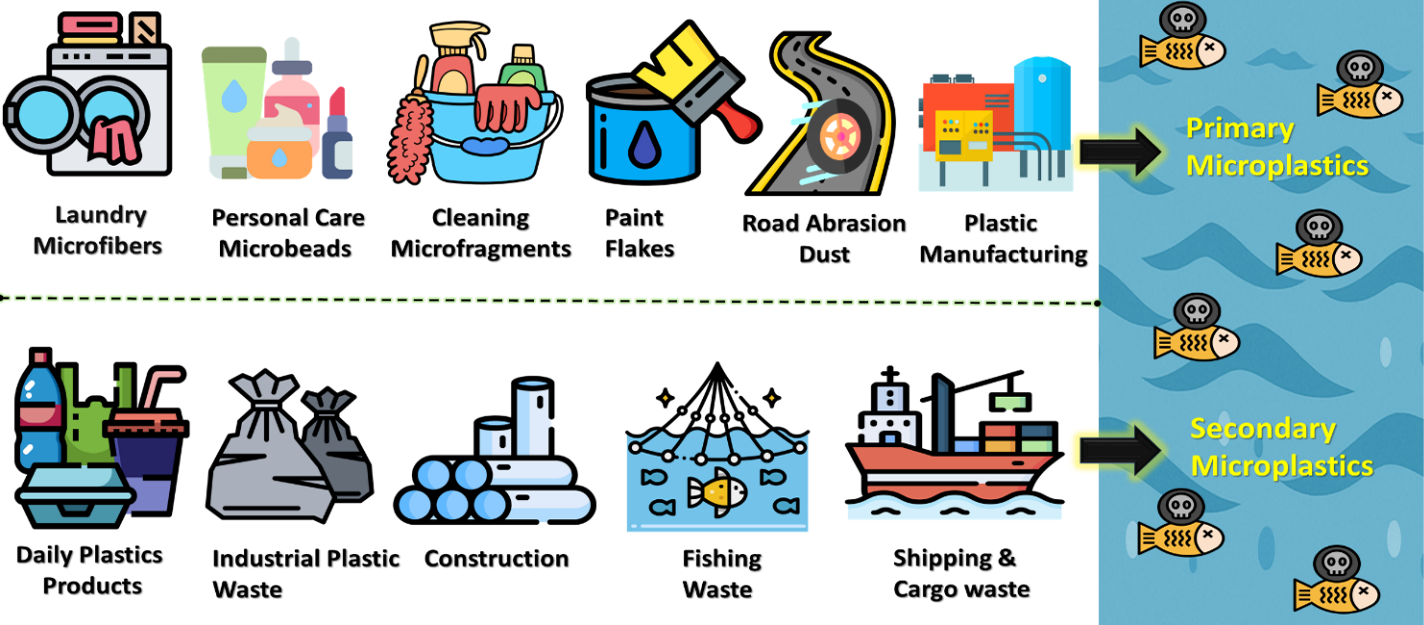
Marine MPs, typically defined as plastic particles smaller than 5 mm, originate from both primary and secondary MPs pollution sources. Land-based activities are the predominant contributors, accounting for approximately 75-90% of total marine MPs inputs33. These sources encompass a range of anthropogenic processes that release MPs either as intentionally manufactured particles or through the degradation of larger plastic debris (Fig. 2).
Primary MPs are purposefully produced at microscopic dimensions and directly introduced into the environment without undergoing environmental fragmentation. These include plastic pellets (nurdles), typically composed of polymers such as polyethylene (PE), polypropylene (PP), polystyrene (PS), or polyvinyl chloride (PVC), which serve as raw materials in plastic manufacturing34. Additionally, microbeads found in personal care products, such as facial cleansers and toothpastes, are commonly made of PS or PE and generally measure less than 0.5 mm in diameter. These particles often bypass conventional wastewater treatment systems and are released into freshwater and marine ecosystems35. Other notable sources include laundry-derived microfibers from synthetic textiles, microfragments from cleaning agents, paint flakes, and road abrasion dust, which all contribute significantly to primary MPs loading36,37.
Secondary MPs result from the environmental degradation of larger plastic products through photodegradation, mechanical abrasion, and chemical weathering. Items such as plastic bags, containers, fishing gear, and construction waste disintegrate into smaller fragments and fibers composed of polymers, including PE,
PP, PVC, and acrylic37. The washing of synthetic fabrics (polyester, polyamide, and acrylic) is a major source of microfibers, which enter aquatic systems via wastewater effluents or overflows from wastewater treatment plants (WWTPs). Despite advanced treatment technologies capable of removing over 90% of MPs, the sheer volume of wastewater often results in substantial residual discharge into receiving waters36.
Additional pathways include land-based runoff, which transports tire wear particles, urban dust, and mismanaged waste from roads, industrial zones, and construction sites into rivers and coastal systems. Road runoff alone accounts for approximately 66% of terrestrial MPs input, while atmospheric deposition contributes around 7%38. Although marine-based activities contribute a smaller proportion (~2%), introduce MPs directly into ocean waters via gear wear, paint degradation, and waste loss from fishing, aquaculture, shipping, and tourism operations.
Atmospheric transport has emerged as a critical long-range pathway, whereby airborne MP, including fibers from textiles and dust from industrial sources are deposited onto ocean surfaces through precipitation and wind-driven fallout38.
TAXONOMY OF RELEVANT MARINE
MICROALGAE
Chlorophyta (green algae)
Chlorophyta, a diverse group of photosynthetic microalgae, contribute significantly to marine primary productivity and carbon cycling. These are widely recognized for their role in MPs remediation due to their rapid growth, ecological versatility, and production of EPS. EPS-rich surfaces, along with functional groups such as –COOH,
–OH, and –NH₂ present on their cell walls, promote strong interactions with hydrophobic polymer39. Bioflocculation, the aggregation of MPs via mucilaginous EPS, is a common strategy among chlorophytes. Several genera of green microalgae, including Chlorella, Scenedesmus, Tetraselmis, Dunaliella, and Chlamydomonas, have been studied for their MPs remediation potential.
Chlorella spp., Chlorella vulgaris, extensively studied for its MPs biosorption potential, is predominantly a freshwater species but can tolerate brackish environments. Under controlled conditions, it achieves 50-75% removal of PS MPs by forming bioflocs through cell wall interactions29. Its capacity to bind PE MPs is notable, attributed to specific surface chemistry40. Laboratory studies have shown that C. vulgaris can induce MPs aggregation into flocs averaging 377 μm in size29, highlighting its potential as a biocoagulant in marine environments.
Scenedesmus obliquus and S. abundans are primarily freshwater green microalgae, but they tolerate brackish or mildly saline conditions. Both species demonstrate exceptional hetero-aggregation capabilities. Notably, S. abundans achieved over 84% removal of mixed plastic types (PS, PMMA, PLA) following extended exposure28. Comparative assessments rank Scenedesmus higher in MPs accumulation efficiency than Chlorella or Tetraselmis41. MPs induced stress triggers prolific EPS secretion in these species, encapsulating MPs particles into dense, rapidly settling flocs42,43. SEM analyses of S. obliquus have confirmed the intertwining of EPS filaments with MPs, facilitating stable aggregate formation30.
Marine flagellates of the genus Tetraselmis respond to MPs and light stress by secreting glycoprotein-rich EPS, forming adhesive mats that effectively bind and entrap MPs. In comparative trials, Tetraselmis chuii produced 3.27 g/L of EPS, outperforming Chlorella (3.03 g/L) and approaching the levels observed in Spirulina (4.59 g/L). These EPS matrices efficiently captured MPs from suspension. Notably, Tetraselmis and Spirulina removed more plastic mass than Chlorella or Dunaliella under identical conditions. Marine species such as T. subcordiformis also form EPS-mediated flocs, further reinforcing the genus’s bioremediation potential in the marine environment40.
The halotolerant green alga Dunaliella salina has not been extensively studied for MPs remediation, although it is known to secrete substantial EPS up to 2.86 g/L under saline stress40. Its robust physiology, including β-carotene accumulation and glycerol-based osmoregulation44, enables survival under fluctuating marine conditions. While direct evidence of MPs aggregation remains limited, their EPS productivity and stress resilience suggest potential for application, particularly in hypersaline marine environments30. Among Chlamydomonas species, halotolerant strains such as Chlamydomonas concordia may contribute to MPs flocculation; however, the most notable advancement involves the genetic modification of C. reinhardtii. Molino et al.5 engineered a strain expressing the PETase enzyme PHL7, capable of depolymerizing PET. After seven-day incubations at 68 °C, cultures showed increased absorbance at 240 nm and accumulation of terephthalic acid (TPA), as confirmed via HPLC and LC-MS. This represents the first demonstration of enzymatic PET degradation by a green microalga, extending the functional role of Chlorophyta from biosorption to active biodegradation.
Across chlorophytes, MPs removal is predominantly driven by EPS-mediated bioflocculation and hydrophobic surface interactions. EPS secretion is typically upregulated under MPs exposure, leading to the entrapment of particles within mucilaginous aggregates that subsequently settle. SEM and microscopy studies confirm the central role of EPS networks in forming dense flocs30, 45. Green microalgae thus act as dynamic biocoagulants: not only do they passively bind MPs, but they actively restructure their extracellular environment to increase pollutant capture and sedimentation.
Bacillariophyta (diatoms)
Bacillariophyta (diatoms) are microalgae distinguished by their ornate silica frustules and their dominance in marine biofilms. Genera such as Nitzschia, Navicula, Coscinodiscus, Thalassiosira, Skeletonema, Chaetoceros, Cylindrotheca, and Phaeodactylum are particularly notable for producing extensive extracellular mucus or transparent exopolymer particles (TEP), which play a critical role in MPs aggregation46-49. TEP is highly surface-active; as Passow and Alldredge50 described, they act as “biological glue,” promoting aggregation of both living and non-living particles, including MPs51.
Diatoms rapidly colonize plastic surfaces. Field studies of the “plastisphere” frequently report genera such as Nitzschia, Gomphonema, Navicula, and Pinnularia forming dense biofilms on marine plastic fragments within days of exposure in mesocosm experiments52. These epiphytic biofilms are rich in diatom-derived heteropolysaccharides, often containing uronic and sulphate groups that significantly enhance the stickiness and density of particle aggregates, embedding MPs into flocs that eventually sink. The additional diatom biomass increases the overall density, causing the aggregates to become negatively buoyant53.
For instance, Nitzschia spp., common in estuarine environments, secrete acidic polysaccharides that tightly bind particles1, Thalassiosira spp. form long chains that trap debris53, blooms of Skeletonema and Chaetoceros release viscous mucus54, and even unicellular species like Phaeodactylum tricornutum contribute to co-flocculation during algal blooms56.
Diatoms function as passive flocculants: while they do not enzymatically degrade synthetic polymers, their rigid frustules and abundant EPS efficiently capture and aggregate MPs57. Zettler et al.58 documented diverse diatom assemblages encrusting PE and PP pellets, forming thick biofilms that caused plastic particles to sink below the photic zone. Diatoms also frequently dominate mixed-species biofilms on plastic debris. As Xiong et al.59 noted, marine plastic biofilms are composed primarily of exopolysaccharides secreted by bacteria, microalgae, and cyanobacteria, with diatom EPS representing a major component.
The defining traits of diatoms, silicified cell walls, and prolific TEP production make them important mediators of MPs aggregation and sedimentation. Although few studies have experimentally exposed live diatom cultures to MPs in controlled settings, ecological data strongly suggest that where diatoms flourish, plastic particles are often entrapped and transported downward.
Cyanobacteria (blue-green algae)
Several cyanobacterial genera, Synechococcus, Synechocystis, Lyngbya, Phormidium, Oscillatoria, Spirulina, and Trichodesmium, have been implicated in MPs aggregation through well-characterized biophysical mechanisms. Their capacity to secrete EPS and form cohesive, often filamentous biofilms enables them to immobilize MPs within aquatic environments.
Synechococcus and Synechocystis spp. exhibit high EPS productivity under environmental stress. Synechocystis spp. PCC 6803 can channel up to 93% of its fixed carbon into EPS under conditions of salinity, nutrient imbalance, or irradiance stress60. This species synthesizes synechan, a sulfated EPS that facilitates the formation of dense aggregates capable of entrapping MPs61.
Lyngbya, Phormidium, and Oscillatoria filamentous benthic cyanobacteria spp. form mucilaginous mats anchored to sediments. These structures provide a stable matrix in which MPs can become physically embedded, especially in shallow or slow-flowing waters62. Notably, Spirulina spp., S. sustain secrete EPS even under high salinity, nutrient depletion, or elevated light intensity conditions that typically impair microbial flocculation. supports their application in variable and extreme marine environments40.
Cyanobacterial EPS exhibit polyanionic properties that promote electrostatic binding with plastic surfaces. This interaction supports polymer bridging and gel entrapment processes, resulting in compact, MPs-containing flocs with increased settling velocity63. These traits are particularly advantageous for passive sedimentation-based MPs removal strategies, making them promising agents for scalable, bio-based MPs remediation technologies from the marine environment.
Dinophyta (Dinoflagellates)
Dinoflagellates represent a phylogenetically diverse group of microalgae, many of which produce extracellular structures such as mucilage and cysts64. Several bloom-forming species, including Karenia and Alexandrium, are known to secrete adhesive exudates, while benthic genera such as Prorocentrum, Coolia, and Ostreopsis produce abundant EPS65. Emerging evidence suggests that MPs exposure can stimulate EPS release in dinoflagellates. Xu et al.66 demonstrated that exposure of the toxic benthic dinoflagellate Prorocentrum lima to PS MPs resulted in significantly elevated production of both EPS and associated toxins, despite negligible effects on cell growth. Transcriptomic profiling revealed upregulation of genes involved in carbohydrate metabolism, indicating an active cellular response to MPs-induced stress via EPS-mediated protective mechanisms. These findings imply that P. lima may form biofilms incorporating MPs, thus promoting their aggregation and potential sedimentation.
Beyond P. lima, few studies have quantitatively assessed MPs interactions with dinoflagellates. Nonetheless, existing observations allow plausible extrapolation. Motile dinoflagellates like Ostreopsis67 and Alexandrium often produce “slime layers” when stressed. When they bloom or form cyst chains, these mucilaginous masses68, can likely ensnare MPs by sticking to them. Some heterotrophic dinoflagellates ingest small particles, though mostly organic prey69; ingestion of MPs is plausible. In the benthos, dinoflagellates adhere to surfaces and debris, so plastics on the seafloor might get colonized by genera like Prorocentrum70, Coolia, or Gambierdiscus67, adding to plastic aggregation in sediments. Although the direct use of dinoflagellates in MPs bioremediation has not been investigated, their role in mixed microbial communities (“plastisphere”) likely supports hetero-aggregation processes that enhance MPs sinking and removal from the water column.
Haptophyta and coccolithophores
Haptophytes, including coccolithophores and colony-forming species like Phaeocystis globosa, are recognized for producing copious amounts of EPS and TEP during bloom formation. These EPS matrices typically contain fucose, rhamnose, galactose, glucose, and uronic acids, with sulfate and amino sugar modifications enhancing their adhesiveness and flocculation potential71.
In mesocosm experiments, Li et al.72 demonstrated that 50 nm PS nanoparticles significantly enhanced colony size and density in P. globosa. Transcriptomic profiling revealed upregulation of glycosyltransferases and sulfated polysaccharide biosynthesis genes, consistent with elevated production of EPS rich in glucuronic acid and galactose-containing polymers. These stress-induced changes suggest that MPs can act as stimulants for mucilage production, promoting entrapment and removal of MPs via sedimentation.
Similarly, the coccolithophore, Emiliania huxleyi, releases high levels of TEP during active growth phases73. Although no study has explicitly tested E. huxleyi for MPs aggregation, its EPS, enriched in acidic sugars and occasionally amino sugars like glucosamine, is known to trap oil droplets and other particles, facilitating marine snow formation74, 75. This implies a strong likelihood that MPs could be incorporated into TEP aggregates during coccolithophore blooms, enhancing their vertical flux.
Other haptophytes, such as Isochrysis galbana, commonly used in aquaculture, also produce substantial quantities of sticky polysaccharides under stress conditions. Although specific interactions with MPs remain uninvestigated, their exopolymers containing sulfated galactans and uronic acid-rich glycoconjugates suggest a high potential for MPs entrapment76.
Haptophytes, especially Phaeocystis and coccolithophores, exhibit strong natural flocculation capabilities via EPS production. These polymers, enriched in uronic acids and structurally adhesive sugars, act as effective particle binders. Their role as passive but efficient MPs aggregators in marine systems warrants further targeted investigation.
Cryptophyta (cryptomonads)
Cryptophytes; Cryptomonas, Rhodomonas, and Teleaulax are small flagellated algae found in marine biofilms. They typically produce only modest amounts of extracellular mucus (often as a “periplast” layer)77, 78. No studies have examined cryptophyte-plastic interactions. However, cryptophytes can form transient blooms with mucus-rich cells77, if MPs are present, suggesting a possible, though as yet untested, capacity for particle adsorption and aggregation. Given this physiological plasticity, cryptophytes warrant further investigation as potential contributors to natural MPs removal processes in marine systems.
Rhodophyta (red algae)
Unicellular red microalgae are relatively rare, but one genus stands out: Porphyridium (formerly Porphyridium purpureum). This marine rhodophyte is renowned for its prolific exopolysaccharide, EPS production, which can exceed 50% of its dry biomass under certain growth conditions78. In biotechnology, Porphyridium EPS is used as a natural flocculant, stabilizer, and viscoelastic agent due to its unique rheological properties and high sulfate content80. Although no experiments have tested Porphyridium on MPs, its known physiology suggests it would be highly effective: its mucilage is sticky and has been shown to bind heavy metals and dyes81.
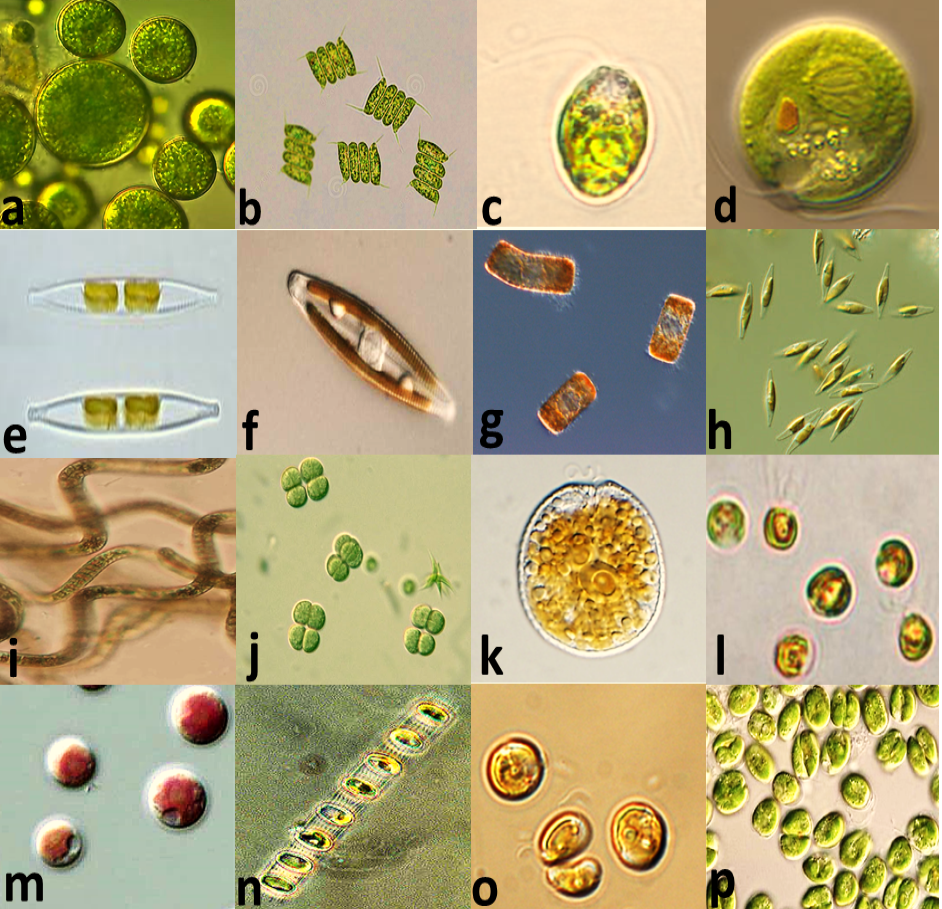
Several groups of marine microalgae have emerged as promising agents for MPs remediation, notably chlorophytes (Chlorella, Scenedesmus, Tetraselmis, Dunaliella, Chlamydomonas), diatoms (Nitzschia, Thalassiosira, Skeletonema), and cyanobacteria (Spirulina, Trichodesmium, Lyngbya), with additional potential in dinoflagellates (Prorocentrum, bloom-formers), haptophytes (Phaeocystis, Emiliania), and red microalgae (Porphyridium). These taxa primarily remove MPs through surface adsorption and EPS-mediated flocculation, leveraging polysaccharides and cell-wall interactions (Table I). For instance, S. platensis achieved ~81% removal of PS beads, while C. vulgaris reached ~75% under similar conditions. Comparative studies have reported flocculation efficiencies following the hierarchy S. platensis > Tetraselmis chuii > C. vulgaris > D. salina. Recent evidence further indicates that MPs exposure stimulates EPS secretion across diverse algal groups, enhancing aggregation and accelerating MP sedimentation. While data remain limited for certain taxa, it is increasingly evident that EPS production, colonial morphology, and growth rates critically influence algal MP-removal efficiency. Notable microalgae species that can survive in marine water and tolerate brackish water, and are experimentally tested involved in MPs bioremediations are shown in Fig. 3.
MECHANISMS OF MPs CAPTURE AND
DEGRADATION
Marine microalgae can mitigate MPs pollution through multiple interrelated mechanisms. These mechanisms function sequentially or in parallel, beginning with physical capture and progressing toward chemical degradation. Below are the major processes contributing to algal-driven MPs remediation.
EPS-mediated hetero-aggregation and adhesion
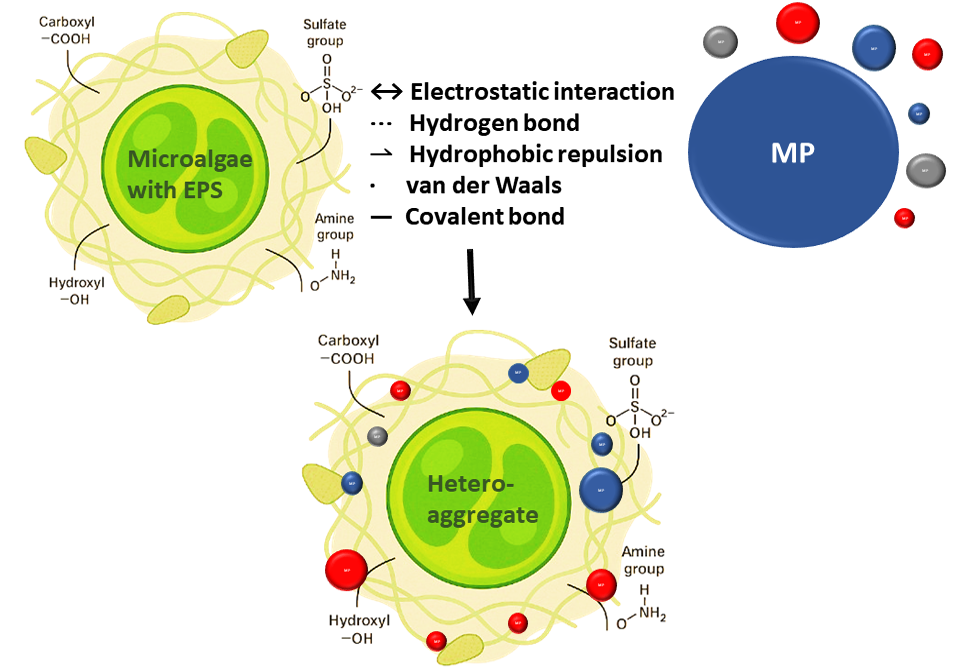
A key mechanism for MPs removal by microalgae is hetero-aggregation formation via EPS production (Fig. 4). Microalgae secrete copious EPS, composed of polysaccharides, proteins, and lipids, rich in functional groups (hydroxyl, carboxyl, sulfate, amide) that confer high polarity and adhesiveness82. These properties enable EPS to bind diverse plastic surfaces through electrostatic attraction, hydrogen bonding, and hydrophobic interactions83. Upon MP exposure, many microalgal species upregulate EPS secretion84, leading to the formation of dense algal EPS-coated MP flocs (“plastisphere flocs”), which. settle more readily than free algal cells or bare MPs85. For example, Spirulina produced 4.59 g/L EPS and flocculated 1.397 g/L of PP beads, outperforming other strains40.
Table I. Taxonomic overview of marine and salinity-tolerant microalgal species with potential for MP remediation in marine. The table summarizes habitat tolerance, primary MPs removal mechanisms, EPS or TEP production, and reported MPs removal efficiencies.
|
Taxonomic group/ Species |
Habitat tolerance |
MP removal mechanisms |
EPS / TEP production |
Reported MP removal efficiency |
|
Chlorophyta |
Fresh–brackish |
EPS flocculation, biosorption |
High (~3 g) |
~50–75% PS beads |
|
Chlorella vulgaris |
||||
|
Scenedesmus obliquus / S. abundans |
Fresh–mildly saline |
EPS-mediated hetero-aggregation |
High |
>84% mixed plastics |
|
Tetraselmis chuii |
Marine |
EPS matrix adhesion |
Very high (~3.3 g) |
Higher than Chlorella |
|
Tetraselmis subcordiformis |
Marine |
EPS-mediated flocculation |
Very high |
Not quantified |
|
Dunaliella salina |
Marine (hypersaline) |
Stress-induced EPS secretion |
Moderate (2.86 g/L) |
Not quantified |
|
Chlamydomonas reinhardtii (GM) |
Freshwater |
PETase-driven enzymatic PET degradation |
Genetically enhanced |
PET depolymerization (TPA) |
|
Bacillariophyta |
Estuarine marine |
TEP-mediated passive aggregation |
Very high |
Not quantified |
|
Nitzschia spp. |
||||
|
Navicula spp. |
Marine biofilms |
TEP / biofilm formation |
Very high |
Not quantified |
|
Skeletonema spp. |
Marine bloom waters |
Mucus release; chain trapping |
Very high |
Not quantified |
|
Thalassiosira spp. |
Open marine |
Chain formation and TEP adhesiveness |
Very high |
Not quantified |
|
Phaeodactylum tricornutum |
Marine |
Biofilm co-flocculation |
Very high |
No inhibition by MPs |
|
Cyanobacteria |
Brackish/marine |
EPS entrapment, electrostatic binding |
Very high (~4.6 g) |
~81% PS beads |
|
Spirulina platensis |
||||
|
Synechocystis spp. |
Marine |
Sulfated EPS (synechan) flocculation |
Extremely high (93% carbon-to-EPS) |
Not quantified |
|
Lyngbya spp. |
Benthic marine |
Mat formation trapping MPs |
High |
Not quantified |
|
Phormidium spp. |
Benthic marine |
Mucilaginous mats |
High |
Not quantified |
|
Oscillatoria spp. |
Benthic marine |
Mats embed MPs in biodetritus |
High |
Not quantified |
|
Dinophyta |
Benthic marine |
MP-induced EPS upregulation |
Moderate |
Not quantified |
|
Prorocentrum lima |
||||
|
Alexandrium spp. |
Marine surface waters |
Mucilaginous exudates, cyst-chain trapping |
Moderate |
Not quantified |
|
Ostreopsis spp. |
Marine benthic/surface |
Slime layer and cyst EPS entanglement |
Moderate |
Not quantified |
|
Haptophyta |
Marine bloom waters |
TEP-mediated aggregation |
Very high |
Not quantified |
|
Phaeocystis globosa |
||||
|
Emiliania huxleyi |
Marine |
EPS/TEP flocculation |
High |
Not tested |
|
Isochrysis galbana |
Marine |
Sticky EPS-mediated adhesion |
High |
Not tested |
|
Cryptophyta |
Marine mixotrophic |
Indirect via microbiome interactions |
Low–moderate |
Not quantified |
|
Cryptomonas spp. |
||||
|
Rhodomonas spp. |
Marine biofilms |
Mucus/periplast potential binding |
Low–moderate |
Not tested |
|
Teleaulax spp. |
Marine biofilms |
Similar mucus/periplast interaction |
Low–moderate |
Not tested |
|
Rhodophyta |
Marine |
EPS-mediated flocculation |
Extremely high (>50% dry wt.) |
Not tested |
|
Porphyridium purpureum |
||||
*EPS: extracellular polymeric substances; TEP: transparent exopolymeric particles; MP: microplastics; PET: Polyethylene terephthalate; PETase: polyethylene terephthalate hydrolase; PS: polystyrene; TPA: terephthalic acid (PET depolymerization product); GM: genetically modified.
The adhesive strength of algal biofilms is determined by EPS chemistry. Many algal EPS contain uronic acids (glucuronic and galacturonic acids) and sulfate groups, imparting negative charge and gel-like properties86. These charged polysaccharides bridge hydrophobic plastics by mediating water–polymer interactions. Cell walls and EPS of strains like C. vulgaris, rich in –COOH, –OH, and
–NH₂ groups, exhibit strong binding to polystyrene beads40. Similarly, cyanobacteria such as Gloeocapsa secrete high-molecular-weight mucilage that strongly adheres to MPs and facilitates sedimentation with organic matter87.
EPS-mediated aggregation is influenced by MPs properties: plastics with higher surface charge or roughness, smaller or irregular particles, promote faster EPS adhesion, while even buoyant polymers (polypropylene, polystyrene) are captured once sufficient EPS binding offsets their low density88. Collectively, EPS functions as a “biological glue,” binding MPs to algal biomass and promoting their aggregation and removal from aquatic systems.
Biofilm formation and mixed-species plastispheres
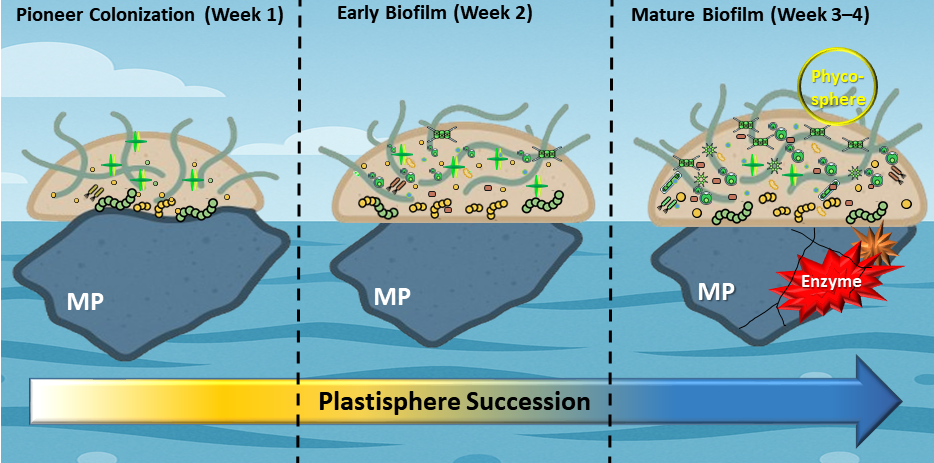
Following EPS-mediated heteroaggregate formation, biofilm colonization constitutes a second critical mechanism facilitating MPs degradation. Marine microalgae readily form gelatinous biofilms on submerged surfaces of plastic89. Upon contact with plastic debris, algae secrete EPS, that embed MPs particles in a sticky matrix90. This dense, mucoid film can physically shield cells and concentrate enzymes locally91. For example, Jiang et al.92 reported that microplastics become embedded within the microalgal EPS matrix and associate with cell surfaces, thereby enhancing their aggregation and facilitating more efficient removal from the marine environment. Within days of exposure, a transparent, mucilaginous biofilm forms on MPs. This initial biofilm consists mainly of bacteria and diatoms: diatoms are frequently observed as early colonizers on floating plastics93-95. Experiments show diatoms “mixed with the primary microbial biofilm” within the first week. Over subsequent weeks, additional phototrophs (green algae and cyanobacteria) and heterotrophs join the plastisphere. By two to four weeks, a mature, multilayer biofilm is established: cells are embedded in a dense EPS matrix with water channels and microniches. Structurally, plastisphere biofilms resemble classic biofilms: they contain bacteria, algae, fungi, and protozoans enveloped in EPS96.
Floating microplastics in marine environments are also colonized by fungi, viruses, and protists in addition to algae and bacteria97. Early successional biofilms on new plastics are often dominated by primary producers (diatoms, cyanobacteria, green algae) together with Gammaproteobacteria. Over time, the community diversifies, incorporating Bacteroidetes and Alphaproteobacteria as the biofilm matures98.
Mixed-species biofilms tend to accumulate more biomass and EPS than single-species films; they form multilayered mats significantly thicker than solitary algal films99. This dense matrix enhances MPs aggregation and promotes sedimentation: as algal EPS, bacterial slime, and trapped detritus build up, the effective density of formerly buoyant plastics increases100. Microcosm studies confirmed that biofilm-covered microbeads rapidly sink once sufficient biomass accumulates101.
Moreover, metabolic activity within the biofilm, including organic acid production or oxidative enzymes, can etch polymer surfaces. Laboratory studies show that microalgae-induced biofilms cause visible damage to plastics: SEM images reveal pits, cracks, and erosions on polyethylene and polystyrene films102. Biofilm colonization not only fosters multi-species community assembly but also enables MPs aggregation, sedimentation, and early-stage biodegradation through both physical and metabolic processes (Fig. 5).
Enzymatic degradation by oxidative enzymes
Several marine microalgae and cyanobacteria produce extracellular oxidative enzymes capable of degrading synthetic polymers103. These include ligninolytic enzymes such as laccases, peroxidases, and oxidases, which evolved to break down lignin-like substances but incidentally act on plastic polymers as well. For example, Phormidium lucidum and Oscillatoria subbrevis secrete laccase and peroxidase that degrade polyethylene, achieving ~30% weight loss of LDPE films in 42 days without pretreatment104. Similarly, Picochlorum maculatum secreted EPS that adhered to LDPE, enabling ~20% degradation within 45 days102. These enzymes cleave carbon-carbon bonds and introduce carbonyl or carboxyl groups, making polymers more hydrophilic and susceptible to further attack105. These findings underscore that marine phototrophs can act as biocatalysts in plastic degradation.
Photodegradation and ROS-mediated oxidation
Photosynthesis generates reactive oxygen species (ROS), superoxide, hydrogen peroxide, and singlet oxygen as byproducts. In an algal biofilm on MPs, these ROS can oxidize nearby materials, potentially contributing to photo-oxidative degradation of MPs. Conversely, plastics in contact with algae can create localized oxidative stress. Some studies note that algal photosynthetic activity can raise dissolved oxygen and ROS levels within the plastisphere106. The net effect is complex: on one hand, oxygen and ROS from algae could accelerate polymer oxidation (break double bonds, form peroxides); on the other hand, the biofilm matrix itself can shield plastics from environmental UV. For instance, a protective EPS layer significantly reduced UV penetration to the polymer core107. Algal photosynthesis likely both aids and impedes photodegradation depending on conditions. Under natural light, algal pigments may scatter or absorb UV, while their metabolic ROS may still contribute to slow oxidative weathering and interplay between light, oxygen, and biofilm chemistry remains an evolving area of research108.
Influence of MPs physicochemical properties
Not all plastics are equally prone to algal remediation. Polymer type, size, and surface characteristics significantly affect capture and breakdown. For instance, denser or more polar polymers may interact more strongly with charged EPS. A larger surface-area-to-volume ratio (such as small fragments or fibers) offers more binding sites for microbial cells and EPS109. Hydrophobic aliphatic plastics like PE and PP are extremely water-repellent, which boosts the adsorption of organic matter and microbial colonization over time40. However, low-density plastics like PP and PS can stay buoyant and avoid contact with benthic degraders. Experimental flocculation studies demonstrate that algal aggregation can capture even floating plastics, heteroaggregates of PP or PS become heavy enough to sink88. Additives and weathering also influence outcomes; aged plastics with surface oxidation or attached pollutants may become more biodegradable. For instance, Spirulina flocculated ~80% of 1 g/L PP beads within a week, whereas other algae achieved less than 20%, highlighting the influence of algal species and plastic chemistry on remediation outcomes110. So, plastics with rough, charged, or weathered surfaces are more effectively captured and degraded by microalgae.
Harvesting biofilm-bound plastics
An emerging idea is to “farm” such biofilms to concentrate and remove MPs. The concept is to use floating substrates (nets, membranes, or vessels) that encourage algal biofilm growth. As biofilms develop, they naturally bind MPs from the water. Periodically harvesting the biofilm (by skimming or filtration) would co-remove the entrapped plastics. In wastewater systems, similar approaches have been proposed: for example, C. vulgaris and other algae have been tested as living flocculants, producing EPS that aggregate suspended particles (including MPs) for easier removal29, 111. Likewise, some studies report >80% removal of polyethylene or polystyrene MPs by dense algal cultures (sedimentation of algal flocs). Importantly, algae-based harvesting avoids harsh chemicals; the recovered biomass (laden with plastic) could be processed separately2.
However, translating this to open waters or large-scale clean-up is challenging. Key factors (light, mixing, nutrients) must be optimized to grow robust biofilms on introduced substrates. The efficiency also depends on algal species: fast-growing, EPS-rich strains (certain Scenedesmus, Chlorella or cyanobacteria) yield bigger flocs. Research is ongoing to assess whether artificial biofilm harvesters could work in ponds, harbors or coastal lagoons. So far, pilot studies focus on controlled systems (treatment ponds); open-ocean deployment remains speculative110. In all cases, understanding natural biofilm formation informs the design of these bioremediation strategies.
ALGAE–MICROBE INTERACTIONS (PLASTISPHERE CONSORTIA)
Colonization of MPs by the plastisphere
MPs particles in the marine environment are rapidly colonized by highly structured microbial consortia, collectively termed the “plastisphere.” Scanning electron microscopy of North Pacific Gyre samples revealed dense colonization of PE by pennate diatoms (1,097 ± 154 cells mm⁻²) and Bacillus spp. (1,664 ± 247 cells mm⁻²) immediately after immersion, roughly 40% and 60% of surface‐associated microbes, respectively93. High-throughput 16S/18S sequencing further shows that photoautotrophs, diatoms, cyanobacteria, and green algae dominate early colonization, comprising ~45–65% of plastisphere communities within 3-7 days. Filamentous cyanobacteria such as Phormidium and Rivularia alone can contribute ~25% of chlorophyll-bearing reads by day 7, forming dense photosynthetic mats112.
As the biofilm matures, diverse heterotrophic bacteria (Proteobacteria, Bacteroidetes, Actinobacteria, etc.) become more abundant, but the initial algal-bacterial association remains essential for structure. In natural plastispheres, typical taxa include Rhodobacteraceae, Pseudoalteromonadaceae, and other marine heterotrophs, often forming tight consortia with microalgal EPS and cells on MPs surface113.
Algal–Bacterial interactions in plastisphere biofilms
Such algal–bacterial consortia can exhibit synergistic biodegradation. The microalga provides metabolites and electron acceptors that fuel bacterial activity. For example, oxygen released by photosynthesis can enable aerobic plastic-degrading enzymes in associated bacteria. Dissolved organic compounds exuded by algae (simple sugars, polysaccharides) serve as carbon sources, effectively “feeding” heterotrophic degraders. Experimental co-cultures demonstrate this synergy; Chlamydomonas grown with heterotrophic bacteria removed dyes and organics far more effectively than either alone. Although direct MP-targeted examples are few, analogous systems exist. In one study, C. vulgaris and activated sludge consortia removed ~90% of polychlorinated biphenyls, showing how phototroph–heterotroph teamwork accelerates breakdown. By analogy, algal EPS also binds MPs, creating a scaffold that concentrates both plastic and degraders. The oxygen gradient within an algal mat can enhance oxidative breakdown: surface algae use light to produce O₂, which diffuses into the biofilm and activates bacterial monooxygenases/peroxidases on the plastic surface. In return, many bacteria produce vitamins (B12 etc.) and growth factors that benefit algal partners. Thus, consortia self-organize: algal “phycospheres” (microsites around algal cells) harbor specific bacteria, and these associations can be harnessed to degrade MPs more completely than monocultures114.
Role of algal products in supporting bacteria
Photosynthetic microalgae secrete extracellular polymers and metabolites that directly support heterotrophs. As noted, algal EPS (polysaccharide-rich glue) traps bacteria on the plastic and supplies labile carbon82. For instance, Picochlorum and Oscillatoria both produced EPS that adhered to low-density polyethylene (LDPE), seeding bacteria onto the film and enabling co-metabolism104. Oxygen from photosynthesis also supports obligate aerobes: many plastic-degrading enzymes e.g., laccases, require O₂ as a co-substrate115. Conversely, microalgal byproducts like organic acids or polyols may induce degradative pathways in bacteria. In situ, algae can generate microzones of high pH by active CO₂ fixation, which can hydrolyze certain polymer bonds. Algal-bacterial interactions are further mediated by quorum sensing: many plastisphere bacteria use N-acyl homoserine lactone signals to coordinate community functions. In a recent study, S-capable Rhodobacteraceae dominated MP biofilms, producing multiple AHL signals that regulated biofilm density116. This signaling often controls degradative enzyme production or EPS secretion. Once signal thresholds are reached, the consortium may switch into a coordinated ‘degradation mode. Although algal QS is less characterized, inter-species chemical crosstalk likely fine-tunes plastisphere activity. For example, compounds secreted by algae dimethylsulfoniopropionate (DMSP) can inhibit or modify bacterial QS and affect community structure116.
Quorum sensing and regulatory mechanisms in the plastisphere
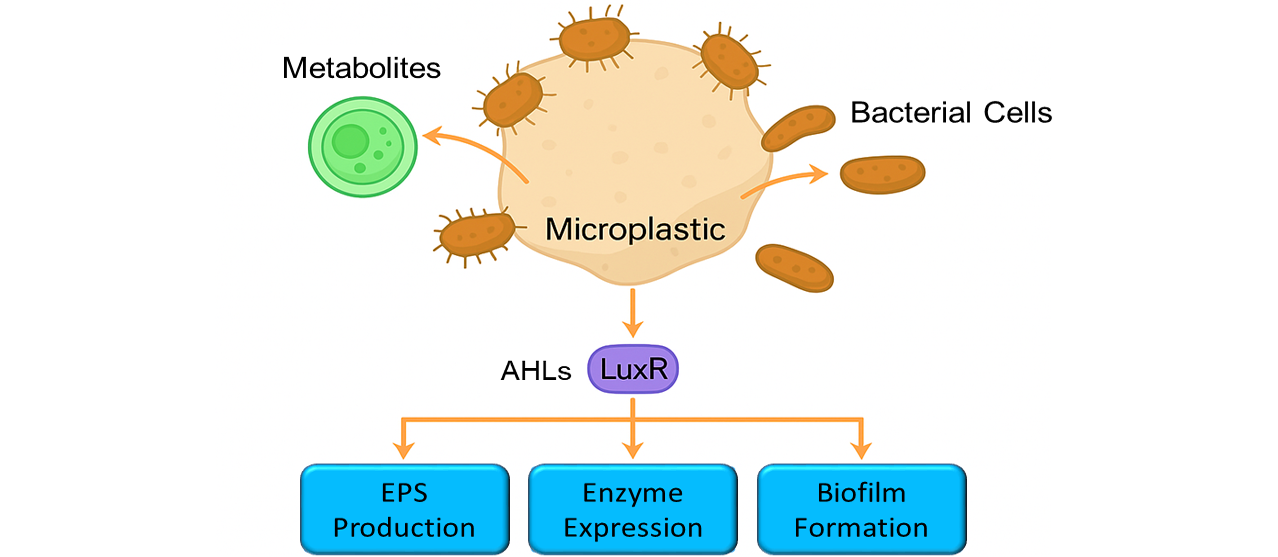
Biofilm communities on MPs exhibit classical biofilm regulation. Metagenomes of marine plastispheres show over-expression of quorum sensing (QS) and biofilm genes (luxR-type regulators) compared to free-living microbes97. Experimental isolations confirm that MPs biofilms often contain cultural QS bacteria: Rhodobacteraceae strains with detectable AHL signals were repeatedly isolated from PP and PVC plastics118. These QS bacteria formed robust biofilms and could modulate algal partners, for instance by producing algal-inhibitory metabolites. In practice, plastisphere consortia can rapidly adapt to environmental cues. Under nutrient limitation, QS signals may trigger EPS production to trap scarce resources (Fig. 6). Under low oxygen, some bacteria may induce anaerobic degradation pathways. These regulatory networks are an active frontier: understanding them could allow us to steer consortia behavior (adding QS inhibitors to accelerate detachment or applying specific signals to boost plastic-degrading enzymes)119.
Engineered consortia
Inspired by natural plastispheres, researchers are now constructing synthetic algal–bacterial consortia for MPs remediation. Recent reviews highlight strategies such as co-cultivating microalgae that express plastic-degrading enzymes (PET hydrolases) with heterotrophic bacteria120. One vision is to engineer microalgae (C. reinhardtii) to secrete PETase while hosting bacterial partners that consume the PET breakdown products. Pilot studies are exploring photobioreactors in which algal biofilms are established on floating membranes or beads; these systems could simultaneously absorb nutrients (N, P, C) and colonize attached plastics with a custom microbiome121. Early experiments in wastewater treatment have shown that algal–bacterial flocs can remove >90% of MPs from effluents when optimized122. Future designs may involve “phycosphere programming,” selectively enriching bacterial taxa on chosen algal species to optimize degradation pathways. For example, pairing Synechocystis with Pseudomonas (a known hydrocarbon degrader) is being tested for PET breakdown under light123. Overall, the field is moving toward bioaugmented consortia: assembling communities that combine autotrophic oxygen production with powerful degraders.
GENETIC AND METABOLIC ENGINEERING OPPORTUNITIES
Enzyme expression in algae
One direct strategy is to engineer microalgae to produce heterologous plastic-degrading enzymes. For example, the PETase enzyme from Ideonella sakaiensis has been successfully expressed in the model alga C. reinhardtii, both in the nucleus and the chloroplast, yielding strains that can cleave PET into its monomers21, 124. In a recent study, a C. reinhardtii strain was engineered to secrete the polyesterase PHL7 (originally identified from a compost metagenome) into the medium; this algal secretome was capable of depolymerizing post-consumer PET (and even polyurethane Impranil) into TPA under saline phototrophic cultivation125. These demonstrations establish that algae can serve as “living reactors” for plastic hydrolysis. Likewise, a marine diatom (Phaeodactylum tricornutum) was converted into a PETase-producing chassis: the secreted enzyme degraded shredded PET films at mesophilic temperatures, yielding TPA and mono(2-hydroxyethyl) terephthalate (MHET) as breakdown products126. In principle, other plastic-hydrolyzing enzymes (cutinases, laccases or polyurethaneases) could be similarly expressed in algal hosts. Genetic tools such as advanced promoters, signal peptides and genome editing (e.g. CRISPR/Cas) now enable high-level, stable expression of these enzymes in algae127, 128. These efforts suggest that metabolic engineering of the secretory and protein-folding pathways in algae can turn them into efficient factories for degrading diverse polymeric pollutants.
Enhanced EPS production
Another promising avenue is to increase the secretion of EPS by algae, since EPS are sticky, high-molecular-weight biomolecules that strongly bind MPs particles. Microalgal EPS are typically rich in charged polysaccharides and proteins, which readily adsorb to hydrophobic plastic surfaces. Indeed, studies show that algae-derived EPS promote flocculation of MPs, for instance, C. vulgaris induced to high pH secreted copious EPS, resulting in aggregated flocs that removed over 80% of polyethylene microbeads from solution105. EPS release by algae creates biopolymer gels that enmesh particles, so increasing EPS yield can significantly boost MPs capture. Engineering EPS biosynthesis pathways (overexpressing glycosyltransferases or nucleotide-sugar precursors) to raise polysaccharide output. No studies to date have explicitly engineered algae for EPS-mediated plastic sorption, but the principle is supported by observations that EPS production strongly correlates with MPs removal. Future work could exploit regulatory genes or stress-response pathways (such as pH or nutrient sensing) to induce continuous EPS secretion. Promoting algal EPS through genetic or process control is a natural way to create bio-flocculants for microplastics29.
Metabolic pathway engineering
Beyond simply hydrolyzing polymers, algae could be engineered to assimilate plastic-derived monomers. For example, PET degradation yields TPA and ethylene glycol (EG) after PETase and MHETase action129. Wild-type algae cannot catabolize these monomers, but introducing bacterial pathways could enable assimilation of the carbon. Genes from I. sakaiensis or Comamonas (the tph gene cluster) could be introduced into algae to funnel TPA into central metabolism (via conversion to protocatechuate and entry into the TCA cycle)21, 130, 131. Likewise, ethylene glycol could be oxidized via engineered glyoxylate pathways. Similar strategies apply to other plastics: styrene (from PS) could be degraded by inserting styrene monooxygenase, lactate (from PLA) by lactate dehydrogenase pathways, and so on. The goal would be a complete PETase/MHETase + assimilation pathway, converting PET carbon into biomass or valuable products. Engineered bacterial consortia have converted TPA and EG to bioplastics: for example, a two-strain Pseudomonas system was constructed wherein one strain degrades TPA and the other degrades EG, together channeling all PET monomers into medium-chain polyhydroxyalkanoate (PHA) and cis,cis-muconate132, 133. Analogously, algae could be coupled with bacteria or even carry the full pathway themselves to enable “carbon upcycling” of plastics. Metabolic engineering could link algal photosynthesis to plastic carbon recycling. By importing key enzymes (PETase/MHETase plus ring-cleaving dioxygenases, dehydrogenases, etc.), engineered microalgae might not only depolymerize plastics but also biodegrade the fragments into biomass or high-value metabolites132.
Adaptive and synthetic consortia
Algae rarely act alone in nature; consortia of algae and bacteria could synergize in MPs remediation. Photosynthetic algae produce oxygen and organic substrates (sugars, oxygen) that can stimulate aerobic plastic-degrading bacteria, while those bacteria supply enzymes or cofactors beneficial to the algae. For example, pairing an oxygenic microalga with a PET-degrading bacterium could create a self-sustaining loop. Recent analyses suggest that engineered microbial communities often outperform single strains: in fact, it has been argued that constructing synthetic consortia “holds more promise” for plastic upcycling than modifying one organism alone134. Synthetic consortia can divide labor: one species depolymerizes the plastic and another assimilates the breakdown products135. As a concrete example, Bao et al.132 built a two-bacterial consortium in which one Pseudomonas was engineered to convert TPA to harmless products, while another handled EG; together they achieved complete assimilation of PET monomers into bioproducts. One could similarly design mixed cultures (or even a single algal ‘phycosphere’) by co-culturing engineered algae with complementary bacteria or fungi. It has been shown that synergistic alga–bacterium interactions can enhance pollutant degradation yields136. Adaptive strategies can also be applied: communities could be evolved in the laboratory by exposure to MPs, selecting for consortia that stabilize and form aggregates on plastic surfaces. Studies of the algal phycosphere (the microbial habitat around algal cells) indicate that plastic debris can alter DOM gradients and promote stable attachment of functional microbiota to plastic particles32. Adaptive consortia (naturally selected algal–bacterial communities) and synthetic consortia (rationally assembled cultures) both offer pathways to improve plastic degradation via microbial collaboration. The emerging field of engineered phycospheres suggests one could even program algal surfaces to recruit plastic-degrading partners, effectively creating “plasticeating microbiomes” guided by the algae137, 138.
Selection and domestication
Classical strain development remains important. Natural microalgal biodiversity provides raw material: screening wild isolates for fast growth, high EPS production, or innate plastic affinity is the first step. Just as crop plants have been domesticated for yield, “algal crops” can be domesticated for remediation traits139. For example, forward genetic screens and high-throughput phenotyping have been used to isolate robust C. reinhardtii mutants; similar approaches could select mutants with enhanced plastic uptake or resilience to MPs-associated stress140. Directed evolution or adaptive laboratory evolution (ALE) could also be applied: by culturing algal populations under microplastic challenge (or with plastic monomers as sole carbon sources), one might enrich for variants able to tolerate or even metabolize plastic residues119. Domestication efforts will likely combine multiple tactics, cross-breeding, mutagenesis, and CRISPR-mediated trait insertion, to create “elite” remediation strains139, 141. These domesticated algae would combine fast growth (reducing costs) with specialized capacities (e.g., high EPS, enzyme secretion or stress tolerance). Importantly, achieving consistently high performance in real-world conditions is still challenging for microalgae, but recent advances in algal genomics and biotechnology promise to accelerate this process. Overall, selection and domestication provide a parallel route to engineering: by iteratively enriching for superior algae (or consortia of algae), we can improve MPs bioremediation traits even before (or in tandem with) targeted genetic modifications142.
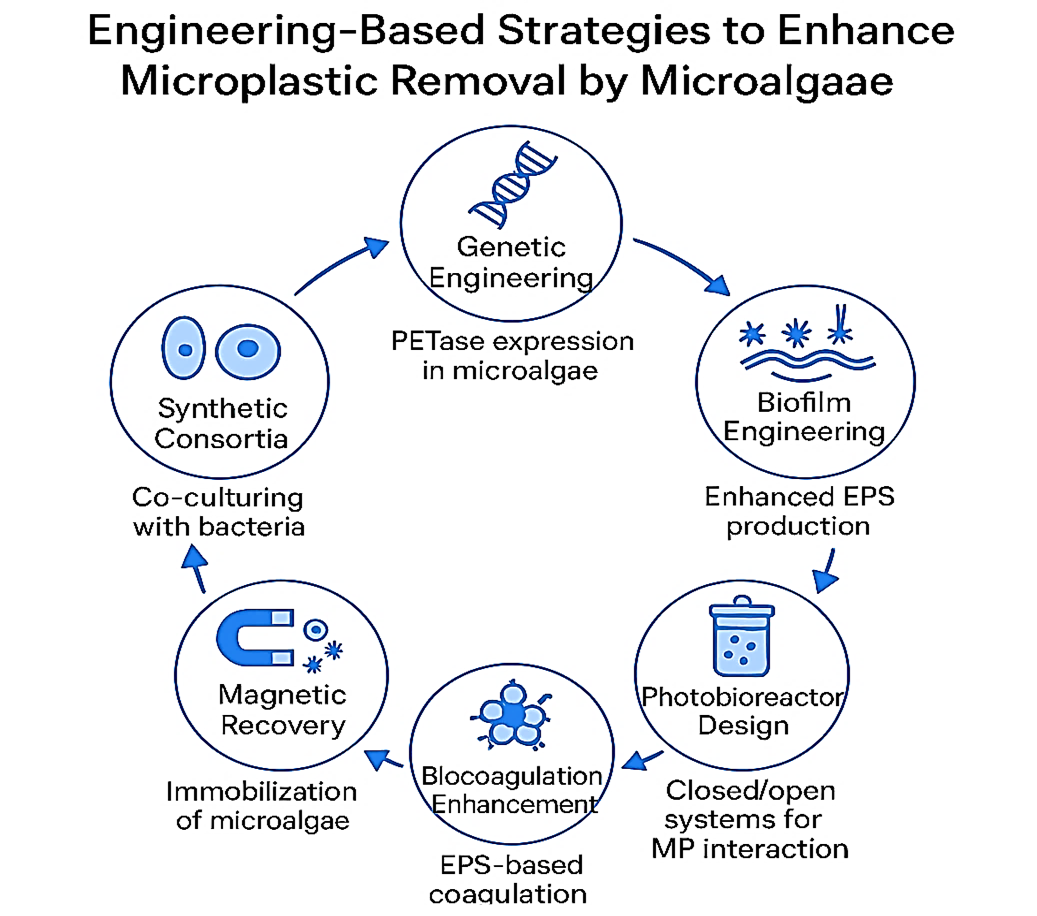
Combining synthetic biology with adaptive selection offers many tools to enhance marine algae for MPs cleanup. Engineered enzyme expression and metabolic pathways can equip algae to chemically break down plastics, while boosting EPS and forming strategic consortia can capture and degrade MPs more effectively. Simultaneously, classical strain development and domestication remain critical for achieving robust, high-performing algal bioremediators. Together, these genetic and metabolic engineering strategies point towards a future in which designer microalgae play a key role in clearing MPs pollution (Fig. 7).
CHALLENGES AND LIMITATIONS
Efficiency and kinetics: Although promising in labs, algal MPs removal rates are often slow. Many studies report <50% removal in days to weeks under ideal conditions. The relative inertness of plastics (high crystallinity, additives, multilayer structure) means even active cultures only partially degrade polymers. The optimum conditions (light, nutrient, pH) for maximal removal can be narrow. Further, field heterogeneity (temperature, salinity, light cycles) may reduce efficacy.
Cultivation constraints: Large-scale algal cultivation is resource-intensive. For a significant remediation impact, massive algal biomass must contact dispersed MPs. This raises issues of nutrient supply, light penetration, and culture containment. In open oceans, dilution and grazing by zooplankton further limit the sustained growth of introduced algae.
Ecological risks: Releasing engineered or even wild algal strains carries ecological risks. Non-target effects include disruption of local plankton communities or unintended biofilm growth on infrastructure. If GMOs
are used, regulatory hurdles and horizontal gene transfer concerns arise. Additionally, accumulated MPs in algal biomass could enter food webs if not properly harvested.
Post-treatment handling: Once MPs are aggregated into algal biomass or biofilms, they must be removed and treated. Harvesting microalgal flocs at scale (filtration, sedimentation) may be expensive and energy-intensive. Disposal of contaminated biomass also poses challenges; simply sending it to a landfill might reintroduce plastics. Designing circular processes (e.g., converting biomass+MPs into biofuels or composite materials) is nontrivial.
Current knowledge gaps: Many studies remain at lab-scale with limited real-world validation. Likewise, “most genetically modified organisms have displayed unsatisfactory results in field studies”. There is a critical need for pilot-scale demonstrations in realistic water bodies. In conclusion, cost, scalability, variability of conditions, and regulatory issues are significant obstacles to deploying algal MPs remediation widely.
FUTURE RESEARCH DIRECTIONS
- Strain discovery: Expedite bioprospecting for novel marine microalgae with high EPS yields or innate plastic affinity from plastic-polluted sites. Metagenomic mining of plastisphere communities could reveal new candidates.
- Omics and mechanistic studies: Use genomics, transcriptomics and proteomics to understand how algae sense and respond to plastics. Identifying regulatory networks triggered by MPs will inform engineering targets. Isolate and characterize algae-produced plastic-active enzymes.
- Consortia optimization: Experimentally evolve or rationally design algal–bacterial consortia for synergistic plastic degradation. For example, co-culture Synechocystis with a plastic-degrading Bacillus, optimizing mutualistic interactions. Test consortia in wastewater or coastal microcosms.
- Bioreactor development: Develop photobioreactor designs (open ponds with containment, membrane bioreactors) tailored for MPs capture. Investigate floating biofilm reactors that intercept plastic debris on water surfaces.
- Environmental monitoring: Field trials should include fate-tracking of plastics (size, chemistry) to assess actual removal vs. fragmentation into nanoplastics. Long-term monitoring of ecosystems after algal treatment will be important.
- Life-cycle and risk assessment: Perform techno-economic and ecological impact studies comparing algal remediation to alternatives. Address questions like energy inputs, GHG emissions, and ecosystem effects. Such analyses will guide whether algal methods are truly sustainable on balance.
- Policy and public engagement: Collaborate with policymakers to integrate algal bioremediation into marine debris management strategies. Engage stakeholders (coastal communities, fisheries) in pilot projects to ensure social acceptance. As the field matures, standards for efficacy and biosafety of algal remediation technologies will be needed.
DECLARATIONS
Author contribution
TA and IZ: Conceptualization, data curation, writing original draft, visualization. Review and editing: TA, IZ, AI, AL, RI, NA, AA, US, SN, AG. FRS: Conceptualization and supervision. All authors read and approved the final manuscript.
Statement of conflict of interest
The authors declare no conflict of interest.
Funding
This review paper received no funding.
IRB approval
Not applicable.
Ethical statement
This study does not involve human participants or animals; therefore, ethical approval was not required.
Generative AI and AI-assisted technology statement: The authors declare that they have not used generative AI or AI-assisted technologies in this manuscript.
Publisher’s note
All claims expressed in this article are solely those of the authors and do not necessarily represent those of their affiliated organizations, and those of publishers, the editor and the reviewers. Any product that may be evaluated in this article, or claim that may be made by this manufacturer, is not gaurenteed or endorsed by the publisher.
Statement of conflict of interest
The authors have declared no conflict of interest.
Figures

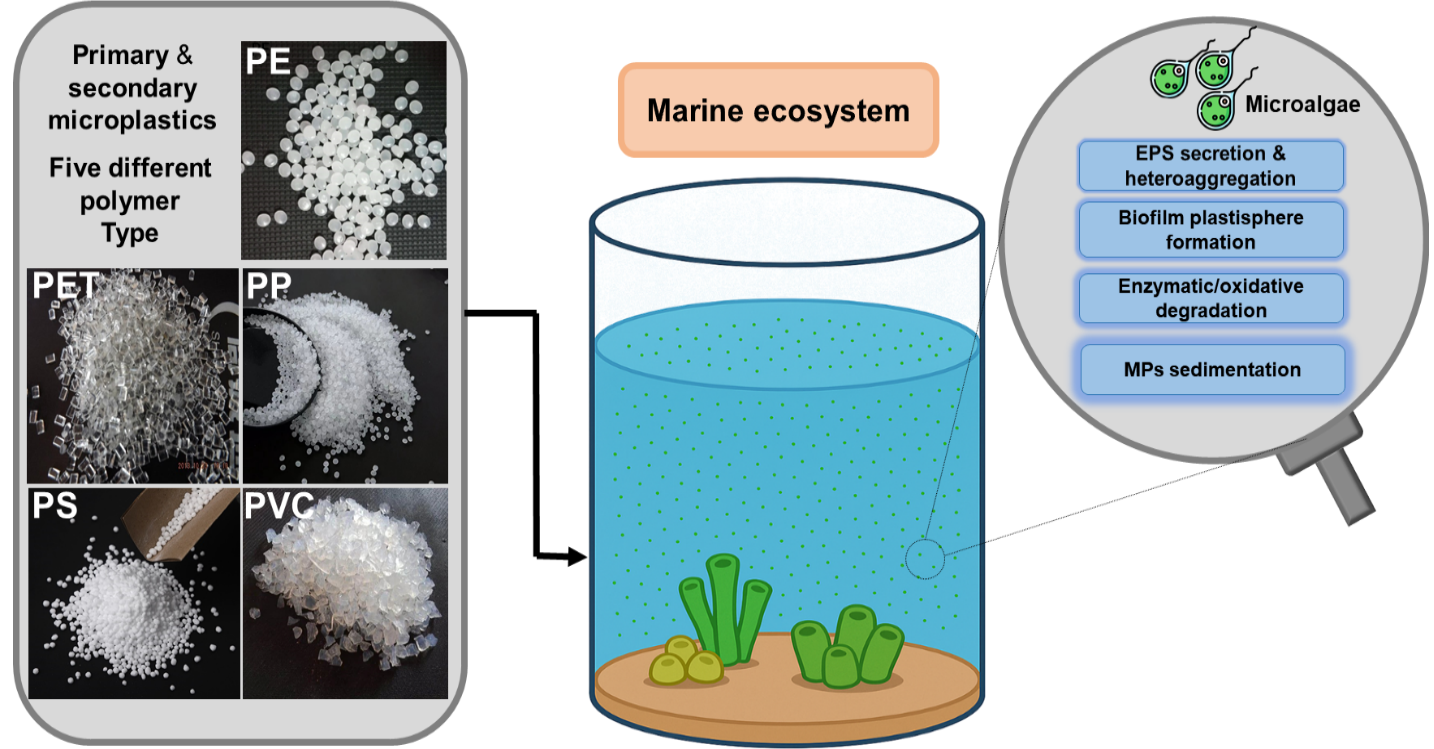
Conceptual illustration of microalgae-mediated bioremediation of microplastics (MPs) in marine ecosystems. Primary and secondary microplastics of different polymer types, including polyethylene (PE), polyethylene terephthalate (PET), polypropylene (PP), polystyrene (PS), and polyvinyl chloride (PVC), enter the marine environment and interact with microalgae. Microalgae facilitate MP removal through multiple mechanisms, including extracellular polymeric substance (EPS) secretion and heteroaggregation, biofilm (plastisphere) formation, enzymatic and oxidative degradation, and enhanced sedimentation of plastic particles highlighting the multifunctional role of microalgae as MP degraders in marine ecosystem.

Schematic representation of primary and secondary MPs from different sources entering the marine ecosystem.

Representative micrographs of marine and salinity-tolerant microalgal species that have demonstrated MPs removal upon experimental interaction. (a) Chlorella spp., (b) Scenedesmus spp., (c) Dunaliella salina, (d) Chlamydomonas reinhardtii, (e) Nitzschia spp., (f) Navicular diatom, (g) Thalassiosira spp., (h) Phaeodactylum tricornutum, (i) Spirulina platensis, (j) Synechocystis spp., (k) Prorocentrum lima, (l) Phaeocystis globosa, (m) Porphyridium spp., (n) Skeletonema costatum, (o) Isochrysis galbana, (p) Nannochloropsis spp.

Mechanism of EPS-mediated hetero-aggregation between microalgal EPS and MPs particles. EPS functional groups enable electrostatic, hydrophobic, and hydrogen bond interactions, leading to the formation of dense, negatively buoyant flocs that facilitate MPs sedimentation.

Biofilm colonization and synergistic interaction between microalgae and bacteria on MPs surfaces. Microalgae provide oxygen and organic compounds through photosynthesis, while heterotrophic bacteria secrete degradative enzymes and provide nutrients to microalgae from the phycosphere. The plastisphere biofilm matrix enables mutualistic interactions and initiates chemical modification of plastic polymers.

QS-mediated regulation within the marine plastisphere. Bacterial cells attached to MPs surfaces produce acyl-homoserine lactones (AHLs) that bind to LuxR-type regulators, triggering enhanced EPS production, enzyme expression, and biofilm formation.

Genetic and metabolic engineering strategies in microalgae for enhanced MPs remediation.
References
- Khan, M.J., Singh, R., Shewani, K., Shukla, P., Bhaskar, P.V., Joshi, K.B., Vinayak, V., 2020. Exopolysaccharides directed embellishment of diatoms triggered on plastics and other marine litter. Sci. Rep., 10(1): 18448. https://doi.org/10.1038/s41598-020-74801-7[CrossRef]
- Eydi Gabrabad, M., Yari, M., Bonyadi, Z., 2024. Using Spirulina platensis as a natural biocoagulant for polystyrene removal from aqueous medium: performance, optimization, and modeling. Sci. Rep., 14(1): 2506. https://doi.org/10.1038/s41598-024-53123-y[CrossRef]
- Shabbir, U., Zahra, I., Liaqat, A., Arshad, A., Nawaz, S., Betenbaugh, M., Ijaz, R., Ibrahim, A., Arooj, T., Muneer, B., Ali, N.M., 2025. Polyhydroxyalkanoate production by Paramecium caudatum isolated from industrial wastewater: a micro eukaryotic host for bioplastic accumulation. Biotechnol. Lett., 47(4):88. https://doi.org/10.1007/s10529-025-03629-w[CrossRef]
- Zahra, I., Arshad, A., Betenbaugh, M., Shabbir, U., Nawaz, S., Liaqat, A., Hussain, T., Ramzan, U., Shakoori, A.R., Shakoori, F.R., 2025. Biosynthesis of polyhydroxyalkanoates employing a newly isolated Paramecium multimicronucleatum. Int. J. Environ. Sci. Technol., 22(1): 365–374. https://doi.org/10.1007/s13762-024-05681-x[CrossRef]
- Molino, J.V.D., Saucedo, B., Kang, K., Walsh, C., Diaz, C.J., Tessman, M., Mayfield, S., 2024. Efficient secretion of a plastic-degrading enzyme from the green algae Chlamydomonas reinhardtii. bioRxiv, 2024-10. https://doi.org/10.1101/2024.10.23.619606[CrossRef]
- Talha, M., Abbas, A.S., Jabeen, F., Hussain, A., Zahra, I., Aslam, S., Yousaf, I., Awais, M., Ali, M.B., Hedfi, A., 2025. Valorization of Musa paradisiaca Peel Waste for Bioplastic Production: A Study on Microbial Degradation Dynamics. Waste Biomass Valor., 1-10. https://doi.org/10.1007/s12649-025-03228-w[CrossRef]
- Liu, Z., Yu, P., Cai, M., Wu, D., Zhang, M., Chen, M., Zhao, Y., 2019. Effects of microplastics on the innate immunity and intestinal microflora of juvenile Eriocheir sinensis. Sci. Total Environ., 685: 836–846. https://doi.org/10.1016/j.scitotenv.2019.06.265[CrossRef]
- Enfrin, M., Lee, J., Gibert, Y., Basheer, F., Kong, L., Dumée, L. F., 2020. Release of hazardous nanoplastic contaminants due to microplastics fragmentation under shear stress forces. J. Hazard. Mater., 384: 121393. https://doi.org/10.1016/j.jhazmat.2019.121393[CrossRef]
- Lithner, D., Nordensvan, I., Dave, G., 2012. Comparative acute toxicity of leachates from plastic products made of polypropylene, polyethylene, PVC, acrylonitrile-butadiene-styrene, and epoxy to Daphnia magna. Environ. Sci. Pollut. Res., 19: 1763–1772. https://doi.org/10.1007/s11356-011-0663-5[CrossRef]
- Mahmud, F., Sarker, D.B., Jocelyn, J.A., Sang, Q.X.A., 2024. Molecular and cellular effects of microplastics and nanoplastics: focus on inflammation and senescence. Cells, 13(21): 1788. https://doi.org/10.3390/cells13211788[CrossRef]
- Leslie, H. A., Van Velzen, M. J., Brandsma, S. H., Vethaak, A. D., Garcia-Vallejo, J. J., Lamoree, M. H., 2022. Discovery and quantification of plastic particle pollution in human blood. Environ. Int., 163: 107199. https://doi.org/10.1016/j.envint.2022.107199[CrossRef]
- Sharma, S., Chatterjee, S., 2017. Microplastic pollution, a threat to marine ecosystem and human health: a short review. Environ. Sci. Pollut. Res., 24(27): 21530–21547. https://doi.org/10.1007/s11356-017-9910-8[CrossRef]
- Li, J., Liu, H., Chen, J.P., 2018. Microplastics in freshwater systems: a review on occurrence, environmental effects, and methods for microplastics detection. Water Res., 137: 362–374. https://doi.org/10.1016/j.watres.2017.12.056[CrossRef]
- Sun, J., Dai, X., Wang, Q., Van Loosdrecht, M.C., Ni, B.J., 2019. Microplastics in wastewater treatment plants: detection, occurrence and removal. Water Res., 152: 21–37. https://doi.org/10.1016/j.watres.2018.12.050[CrossRef]
- Ziajahromi, S., Neale, P.A., Rintoul, L., Leusch, F.D., 2017. Wastewater treatment plants as a pathway for microplastics: development of a new approach to sample wastewater-based microplastics. Water Res., 112: 93–99. https://doi.org/10.1016/j.watres.2017.01.042[CrossRef]
- Lares, M., Ncibi, M.C., Sillanpää, M., Sillanpää, M., 2018. Occurrence, identification and removal of microplastic particles and fibers in conventional activated sludge process and advanced MBR technology. Water Res., 133: 236–246. https://doi.org/10.1016/j.watres.2018.01.049[CrossRef]
- Murphy, F., Ewins, C., Carbonnier, F., Quinn, B., 2016. Wastewater treatment works (WwTW) as a source of microplastics in the aquatic environment. Environ. Sci. Technol., 50(11): 5800–5808. https://doi.org/10.1021/acs.est.5b05416[CrossRef]
- Geyer, R., Jambeck, J.R., Law, K.L., 2017. Production, use, and fate of all plastics ever made. Sci. Adv., 3(7): e1700782. https://doi.org/10.1126/sciadv.1700782[CrossRef]
- Gewert, B., Plassmann, M.M., MacLeod, M., 2015. Pathways for degradation of plastic polymers floating in the marine environment. Environ. Sci. Process. Impacts, 17(9): 1513–1521. https://doi.org/10.1039/C5EM00207A[CrossRef]
- Urbanek, A.K., Rymowicz, W., Miro-czuk, A.M., 2018. Degradation of plastics and plastic-degrading bacteria in cold marine habitats. Appl. Microbiol. Biotechnol., 102(18): 7669–7678. https://doi.org/10.1007/s00253-018-9195-y[CrossRef]
- Yoshida, S., Hiraga, K., Takehana, T., Taniguchi, I., Yamaji, H., Maeda, Y., Toyohara, K., Miyamoto, K., Kimura, Y., Oda, K., 2016. A bacterium that degrades and assimilates poly(ethylene terephthalate). Science, 351(6278): 1196–1199. https://doi.org/10.1126/science.aad6359[CrossRef]
- Danso, D., Chow, J., Streit, W.R., 2019. Plastics: environmental and biotechnological perspectives on microbial degradation. Appl. Environ. Microbiol., 85(19): e01095-19. https://doi.org/10.1128/AEM.01095-19[CrossRef]
- Ramzan, U., Shakoori, F.R., Zahid, M.T., Majeed, W., Zahra, I., Abbas, S.Z., Hedfi, A., Hassan, S., Shakoori, A.R., Mutery, A.A., 2022. Biodegradation and decolorization of textile azo dyes by Paramecium caudatum isolated from industrial wastewater. Water, 14(21): 3553. https://doi.org/10.3390/w14213553[CrossRef]
- Zahra, I., Liaqat, A., Betenbaugh, M., Ramzan, U., Elmnasri, K., Hedfi, A., Ali, M.B., Albogami, B., Shakoori, F.R., Shakoori, A.R., 2023. Bioremediation of heavy metals using a novel species of ciliate Paramecium multimicronucleatum isolated from industrial wastewater. Mater. Res. Express, 10(3): 035403. https://doi.org/10.1088/2053-1591/acc159[CrossRef]
- Zahra, I., DeVine, L., Cole, R., Malik, H.A., Wu, J., Wen, J., Hedfi, A., Liaqat, A., Ijaz, R., Ramzan, U., Shakoori, A.R., 2024. Insights into the differential proteome landscape of a newly isolated Paramecium multimicronucleatum in response to cadmium stress. J. Proteomics, 300: 105178. https://doi.org/10.1016/j.jprot.2024.105178[CrossRef]
- Nał-cz-Jawecki, G., Chojnacka, J., Wawryniuk, M., Drobniewska, A., 2021. Influence of nano-and small microplastics on ciliated protozoan Spirostomum ambiguum (Müller, 1786) Ehrenberg, 1835. Water, 13(20): 2857. https://doi.org/10.3390/w13202857[CrossRef]
- Manzi, H.P., Abou-Shanab, R.A., Jeon, B.-H., Wang, J., Salama, E.-S., 2022. Algae: a frontline photosynthetic organism in the microplastic catastrophe. Trends Plant Sci., 20: 20. https://doi.org/10.1016/j.tplants.2022.06.005[CrossRef]
- Cheng, Y.R., Wang, H.Y., 2022. Highly effective removal of microplastics by microalgae Scenedesmus abundans. Chem. Eng. J., 435: 135079. https://doi.org/10.1016/j.cej.2022.135079[CrossRef]
- Lotfigolsefidi, F., Davoudi, M., Sarkhosh, M., Bonyadi, Z., 2025. Removal of microplastics by algal biomass from aqueous solutions: performance, optimization, and modeling. Sci. Rep., 15(1): 501. https://doi.org/10.1038/s41598-024-84114-8[CrossRef]
- Long, M., Moriceau, B., Gallinari, M., Lambert, C., Huvet, A., Raffray, J., Soudant, P., 2015. Interactions between microplastics and phytoplankton aggregates: impact on their respective fates. Mar. Chem., 175: 39–46. https://doi.org/10.1016/j.marchem.2015.04.003[CrossRef]
- Kim, J.W., Park, S.B., Tran, Q.G., Cho, D.H., Choi, D.Y., Lee, Y.J., Kim, H.S., 2020. Functional expression of polyethylene terephthalate-degrading enzyme (PETase) in green microalgae. Microb. Cell Fact., 19(1): 97. https://doi.org/10.1186/s12934-020-01355-8[CrossRef]
- Fan, X., Kong, L., Wang, J., Tan, Y., Xu, X., Li, M., Zhu, L. 2024. Surface-programmed microbiome assembly in phycosphere to microplastics contamination. Water Res., 262: 122064. https://doi.org/10.1016/j.watres.2024.122064[CrossRef]
- Li, S., Wang, P., Zhang, C., Zhou, X., Yin, Z., Hu, T., et al., 2020. Influence of polystyrene microplastics on the growth, photosynthetic efficiency and aggregation of freshwater microalgae Chlamydomonas reinhardtii. Sci. Total Environ., 714: 136767. https://doi.org/10.1016/j.scitotenv.2020.136767[CrossRef]
- Song, J., Wang, C., Li, G., 2024. Defining primary and secondary microplastics: a connotation analysis. ACS ES&T Water, 4(6): 2330–2332. https://doi.org/10.1021/acsestwater.4c00316[CrossRef]
- Ahmad, O.A., Jamal, M.T., Almalki, H.S., Alzahrani, A.H., Alatawi, A.S., Haque, M.F., 2025. Microplastic pollution in the marine environment: sources, impacts, and degradation. J. Adv. Vet. Anim. Res., 12(1): 260. https://doi.org/10.5455/javar.2025.l893[CrossRef]
- Simon, M., 2021: The Arctic Ocean is teeming with microfibers from clothes. Wired. Available at: https://www.wired.com/story/the-arctic-ocean-is-teeming-with-microfibers-from-clothes/ (accessed 30 Jul 2025).
- Osman, A.I., Hosny, M., Eltaweil, A.S., Omar, S., Elgarahy, A.M., Farghali, M., et al., 2023. Microplastic sources, formation, toxicity and remediation: a review. Environ. Chem. Lett., 21(4): 2129–2169. https://doi.org/10.1007/s10311-023-01593-3[CrossRef]
- Meng, X., Yuan, J., Huang, Q., Liu, R., Yang, Y., Yang, X., Wang, K., 2025. A review of sources, hazards, and removal methods of microplastics in the environment. Water, 17(1). https://doi.org/10.3390/w17010102[CrossRef]
- Maggi, F., Tang, F.H., 2015. Analysis of the effect of organic matter content on the architecture and sinking of sediment aggregates. Mar. Geol., 363: 102–111. https://doi.org/10.1016/j.margeo.2015.01.017[CrossRef]
- Hadiyanto, H., Khoironi, A., Dianratri, I., Joelyna, F.A., Christwardana, M., Sabhira, A.I., Baihaqi, R.A., 2025. Microplastic removal in aquatic systems using extracellular polymeric substances (EPS) of microalgae. Sustain. Environ., 11(1): 2454756. https://doi.org/10.1080/27658511.2025.2454756[CrossRef]
- Su, Y., Gao, L., Peng, L., Diao, X., Lin, S., Bao, R., Mehmood, T., 2023. Heterogeneous aggregation between microplastics and microalgae: may provide new insights for microplastics removal. Aquat. Toxicol., 261: 106638. https://doi.org/10.1016/j.aquatox.2023.106638[CrossRef]
- Bhattacharya, P., Lin, S., Turner, J.P., Ke, P.C., 2010. Physical adsorption of charged plastic nanoparticles affects algal photosynthesis. J. Phys. Chem. C, 114(39): 16556–16561. https://doi.org/10.1021/jp1054759[CrossRef]
- Chae, Y., An, Y.J., 2018. Current research trends on plastic pollution and ecological impacts on the soil ecosystem: a review. Environ. Pollut., 240: 387–395. ttps://doi.org/10.1016/j.envpol.2018.05.008[CrossRef]
- Borowitzka, M.A., 2013. High-value products from microalgae—their development and commercialisation. J. Appl. Phycol., 25(3): 743–756. https://doi.org/10.1007/s10811-013-9983-9[CrossRef]
- Li, S., Wang, P., Zhang, C., Zhou, X., Yin, Z., Hu, T., Hu, D., Liu, C., Zhu, L., 2020. Influence of polystyrene microplastics on the growth, photosynthetic efficiency and aggregation of freshwater microalgae Chlamydomonas reinhardtii. Sci. Total Environ., 714: 136767. https://doi.org/10.1016/j.scitotenv.2020.136767[CrossRef]
- Parsons, T.R., Stephens, K., Strickland, J.D.H., 1961. On the chemical composition of eleven species of marine phytoplankton. J. Fish. Res. Board Can., 18(6): 1001–1016. https://doi.org/10.1139/f61-063[CrossRef]
- Wustman, B.A., Lind, J., Wetherbee, R., Gretz, M.R., 1998. Extracellular matrix assembly in diatoms (Bacillariophyceae). Plant Physiol., 116(4): 1431–1441. https://doi.org/10.1104/pp.116.4.1431[CrossRef]
- Thornton, D.C., 2002. Diatom aggregation in the sea: mechanisms and ecological implications. Eur. J. Phycol., 37(2): 149–161. https://doi.org/10.1017/S0967026202003657[CrossRef]
- Passow, U., 2002. Transparent exopolymer particles (TEP) in aquatic environments. Prog. Oceanogr., 55(3–4): 287–333. https://doi.org/10.1016/S0079-6611(02)00138-6[CrossRef]
- Passow, U., Alldredge, A.L., 1995. Aggregation of a diatom bloom in a mesocosm: the role of transparent exopolymer particles (TEP). Deep Sea Res. Pt. II, 42(1): 99–109. https://doi.org/10.1016/0967-0645(95)00006-C[CrossRef]
- Jennings, M.K., Passow, U., Wozniak, A.S., Hansell, D.A., 2017. Distribution of transparent exopolymer particles (TEP) across an organic carbon gradient in the western North Atlantic Ocean. Mar. Chem., 190: 1–12. https://doi.org/10.1016/j.marchem.2017.01.002[CrossRef]
- Taurozzi, D., Cesarini, G., Scalici, M., 2023. Epiplastic microhabitats for epibenthic organisms: a new inland water frontier for diatoms. Environ. Sci. Pollut. Res., 30(7): 17984–17993. https://doi.org/10.1007/s11356-022-23335-8[CrossRef]
- Gärdes, A., Iversen, M.H., Grossart, H.P., Passow, U., Ullrich, M.S., 2011. Diatom-associated bacteria are required for aggregation of Thalassiosira weissflogii. ISME J., 5(3): 436–445. https://doi.org/10.1038/ismej.2010.145[CrossRef]
- Rigby, K., Selander, E., 2021. Predatory cues drive colony size reduction in marine diatoms. Ecol. Evol., 11(16): 11020–11027. https://doi.org/10.1002/ece3.7890[CrossRef]
- Zhang, C., Chen, X., Wang, J., Tan, L., 2017. Toxic effects of microplastic on marine microalgae Skeletonema costatum: interactions between microplastic and algae. Environ. Pollut., 220: 1282–1288. https://doi.org/10.1016/j.envpol.2016.11.005[CrossRef]
- Kiørboe, T., Andersen, K.P., Dam, H.G., 1990. Coagulation efficiency and aggregate formation in marine phytoplankton. Mar. Biol., 107(2): 235–245. https://doi.org/10.1007/BF01319822[CrossRef]
- Parikh, H.S., Dave, G., Tiwari, A., 2025. Microplastic pollution in aquatic ecosystems: impacts on diatom communities. Environ. Monit. Assess., 197(2): 206. https://doi.org/10.1007/s10661-025-13636-z[CrossRef]
- Zettler, E.R., Mincer, T.J., Amaral-Zettler, L.A., 2013. Life in the “plastisphere”: microbial communities on plastic marine debris. Environ. Sci. Technol., 47(13): 7137–7146. https://doi.org/10.1021/es401288x[CrossRef]
- Xiong, S., Cao, X., Eggleston, I., Chi, Y., Li, A., Liu, X., et al., 2023. Role of extracellular polymeric substances in the aggregation and biological response of micro(nano)plastics with different functional groups and sizes. J. Hazard. Mater., 446: 130713. https://doi.org/10.1016/j.jhazmat.2022.130713[CrossRef]
- Martinho de Brito, M., Bundeleva, I., Marin, F., Vennin, E., Wilmotte, A., Plasseraud, L., Visscher, P.T., 2022. Effect of culture pH on properties of exopolymeric substances from Synechococcus PCC7942: implications for carbonate precipitation. Geosciences, 12(5): 210. https://doi.org/10.3390/geosciences12050210[CrossRef]
- Maeda, K., Okuda, Y., Enomoto, G., Watanabe, S., Ikeuchi, M., 2021. Biosynthesis of a sulfated exopolysaccharide, synechan, and bloom formation in the model cyanobacterium Synechocystis sp. strain PCC 6803. eLife, 10: e66538. https://doi.org/10.7554/eLife.66538[CrossRef]
- Hudon, C., De Sève, M., Cattaneo, A., 2014. Increasing occurrence of the benthic filamentous cyanobacterium Lyngbya wollei: a symptom of freshwater ecosystem degradation. Freshw. Sci., 33(2): 606–618. https://doi.org/10.1086/675932[CrossRef]
- Yang, H., Chen, Z., Kong, L., Xing, H., Yang, Q., Wu, J., 2025. A review of eco-corona formation on micro/nanoplastics and its effects on stability, bioavailability, and toxicity. Water, 17(8): 1124. https://doi.org/10.3390/w17081124[CrossRef]
- Pompei, M., Mazziotti, C., Guerrini, F., Cangini, M., Pigozzi, S., Benzi, M., Palamidesi, S., Boni, L., Pistocchi, R., 2003. Correlation between the presence of Gonyaulax fragilis (Dinophyceae) and the mucilage phenomena of the Emilia-Romagna coast (northern Adriatic Sea). Harmful Algae, 2(4): 301–316. https://doi.org/10.1016/S1568-9883(03)00059-3[CrossRef]
- Lee, B., Park, M.G., 2022. Drifting marine plastics as new ecological habitats for harmful eukaryotic microbial communities in Jeju Strait, Korea. Front. Mar. Sci., 9: 985756. https://doi.org/10.3389/fmars.2022.985756[CrossRef]
- Xu, S.Y., Mo, Y.H., Liu, Y.J., Wang, X., Li, H.Y., Yang, W.D., 2024. Physiological and genetic responses of the benthic dinoflagellate Prorocentrum lima to polystyrene microplastics. Harmful Algae, 136: 102652. https://doi.org/10.1016/j.hal.2024.102652[CrossRef]
- Parsons, M.L., Aligizaki, K., Bottein, M.Y.D., Fraga, S., Morton, S.L., Penna, A., Rhodes, L., 2012. Gambierdiscus and Ostreopsis: reassessment of the state of knowledge of their taxonomy, geography, ecophysiology, and toxicology. Harmful Algae, 14: 107–129. https://doi.org/10.1016/j.hal.2011.10.017[CrossRef]
- Anderson, D.M., 1998. Physiology and bloom dynamics of toxic Alexandrium species, with emphasis on life cycle transitions. NATO ASI Ser. G Ecol. Sci., 41: 29–48.
- Jeong, H.J., Yoo, Y.D., Kim, J.S., Seong, K.A., Kang, N.S., Kim, T.H., 2010. Growth, feeding and ecological roles of the mixotrophic and heterotrophic dinoflagellates in marine planktonic food webs. Ocean Sci. J., 45(2): 65–91. https://doi.org/10.1007/s12601-010-0007-2[CrossRef]
- Aquino-Cruz, A., Purdie, D.A., Morris, S., 2018. Effect of increasing sea water temperature on the growth and toxin production of the benthic dinoflagellate Prorocentrum lima. Hydrobiologia, 813(1): 103–122. https://doi.org/10.1007/s10750-018-3512-4[CrossRef]
- Yang, X., Shen, P., Li, K., 2023. Factors inducing morphological transition in harmful algal bloom-forming species Phaeocystis globosa with emphasis on predator chemical cue. J. Oceanol. Limnol., 41(4): 1537–1546. https://doi.org/10.1007/s00343-022-2009-1[CrossRef]
- Li, Y., Xu, D., Huang, X., Sun, Y., Beardall, J., Yang, F., Wang, Y., Sun, K., Tong, S., Zhang, X., Fan, X., 2025. Nanoplastics Stimulate Colony Formation and Bloom in Phaeocystis globosa. Environ Sci Technol.,59 (26): 13192–13203. https://doi.org/10.1021/acs.est.5e02570[CrossRef]
- Engel, A., Delille, B., Jacquet, S., Riebesell, U., Rochelle-Newall, E., Terbrüggen, A., Zondervan, I., 2004. Transparent exopolymer particles and dissolved organic carbon production by Emiliania huxleyi exposed to different CO2 concentrations: a mesocosm experiment. Aquat. Microb. Ecol., 34(1): 93–104. https://doi.org/10.3354/ame034093[CrossRef]
- Passow, U., Ziervogel, K., Asper, V., Diercks, A., 2012. Marine snow formation in the aftermath of the Deepwater Horizon oil spill in the Gulf of Mexico. Environ. Res. Lett., 7(3): 035301. https://doi.org/10.1088/1748-9326/7/3/035301[CrossRef]
- Mari, X., Passow, U., Migon, C., Burd, A.B., Legendre, L., 2017. Transparent exopolymer particles: effects on carbon cycling in the ocean. Prog. Oceanogr., 151: 13–37. https://doi.org/10.1016/j.pocean.2016.11.002[CrossRef]
- Myklestad, S.M., 1995. Release of extracellular products by phytoplankton with special emphasis on polysaccharides. Sci. Total Environ., 165(1–3): 155–164. https://doi.org/10.1016/0048-9697(95)04549-G[CrossRef]
- Hill, D.R.A., 1991. A revised circumscription of Cryptomonas (Cryptophyceae) based on examination of Australian strains. Phycologia, 30(2): 170–188. https://doi.org/10.2216/i0031-8884-30-2-170.1[CrossRef]
- Hoef-Emden, K., Marin, B., Melkonian, M., 2002. Nuclear and nucleomorph SSU rDNA phylogeny in the Cryptophyta and the evolution of cryptophyte diversity. J. Mol. Evol., 55(2): 161–179. https://doi.org/10.1007/s00239-002-2313-5[CrossRef]
- Arad, S.M., Levy-Ontman, O., 2010. Red microalgal cell-wall polysaccharides: biotechnological aspects. Curr. Opin. Biotechnol., 21(3): 358–364. https://doi.org/10.1016/j.copbio.2010.02.008[CrossRef]
- de Jesus Raposo, M.F., de Morais, A.M.M.B., de Morais, R.M.S.C., 2015. Bioactivity and applications of polysaccharides from marine microalgae. Polysaccharides, 1683–1727. https://doi.org/10.1007/978-3-319-16298-0_47[CrossRef]
- Soeprobowati, T.R., Hariyati, R., 2013. Bioaccumulation of Pb, Cd, Cu, and Cr by Porphyridium cruentum (SF Gray) Nägeli. Int. J. Mar. Sci., 3. https://doi.org/10.5376/ijms.2013.03.0027[CrossRef]
- Lestari, S.W., Suryanto Hertika, A.M., Yona, D., Buwono, N.R., 2025. Functional groups in microalgal extracellular polymeric substances: a promising biopolymer for microplastic mitigation in marine ecosystems. Ecol. Eng. Environ. Technol., 26(3). https://doi.org/10.12912/27197050/199787[CrossRef]
- Costa, K. M., Hayes, C. T., Anderson, R. F., Pavia, F. J., Bausch, A., Deng, F., Dutay, J.-C., Geibert, W., Heinze, C., Henderson, G., Hillaire-Marcel, C., Hoffmann, S., Jaccard, S. L., Jacobel, A. W., Kienast, S. S., Kipp, L., Lerner, P., Lippold, J., Lund, D., Marcantonio, F., McGee, D., McManus, J. F., Mekik, F., Middleton, J. L., Missiaen, L., Not, C., Pichat, S., Robinson, L. F., Rowland, G. H., Roy-Barman, M., Tagliabue, A., Torfstein, A., Winckler, G., Zhou, Y., 2020. 230Th normalization: New insights on an essential tool for quantifying sedimentary fluxes in the modern and Quaternary ocean. Paleoceanogr. Paleoclimatol., 35(2), e2019PA003820. https://doi.org/10.1029/2019PA003820[CrossRef]
- Chentir, I., Hamdi, M., Doumandji, A., HadjSadok, A., Ouada, H.B., Nasri, M., Jridi, M., 2017. Enhancement of extracellular polymeric substances (EPS) production in Spirulina (Arthrospira sp.) by two-step cultivation process and partial characterization of their polysaccharidic moiety. Int. J. Biol. Macromol., 105: 1412–1420. https://doi.org/10.1016/j.ijbiomac.2017.07.009[CrossRef]
- Lagarde, F., Olivier, O., Zanella, M., Daniel, P., Hiard, S., Caruso, A., 2016. Microplastic interactions with freshwater microalgae: hetero-aggregation and changes in plastic density appear strongly dependent on polymer type. Environ. Pollut., 215: 331–339. https://doi.org/10.1016/j.envpol.2016.05.006[CrossRef]
- Laroche, C., 2022. Exopolysaccharides from microalgae and cyanobacteria: diversity of strains, production strategies, and applications. Mar. Drugs, 20(5): 336. https://doi.org/10.3390/md20050336[CrossRef]
- Gongi, W., Gomez Pinchetti, J.L., Cordeiro, N., Ouada, H.B., 2022. Extracellular polymeric substances produced by the thermophilic cyanobacterium Gloeocapsa gelatinosa: characterization and assessment of their antioxidant and metal-chelating activities. Mar. Drugs, 20(4): 227. https://doi.org/10.3390/md20040227[CrossRef]
- Liu, S., Huang, Y., Luo, D., Wang, X., Wang, Z., Ji, X., Chen, Z., Dahlgren, R.A., Zhang, M., Shang, X., 2022. Integrated effects of polymer type, size and shape on the sinking dynamics of biofouled microplastics. Water Res., 220: 118656. https://doi.org/10.1016/j.watres.2022.118656[CrossRef]
- Nava, V., Matias, M.G., Castillo-Escrivà, A., Messyasz, B., Leoni, B., 2022. Microalgae colonization of different microplastic polymers in experimental mesocosms across an environmental gradient. Glob. Chang. Biol., 28(4): 1402–1413. https://doi.org/10.1111/gcb.15989[CrossRef]
- Shiu, R.F., Vazquez, C.I., Chiang, C.Y., Chiu, M.H., Chen, C.S., Ni, C.W., Gong, G.C., Quigg, A., Santschi, P.H., Chin, W.C., 2020. Nano- and microplastics trigger secretion of protein-rich extracellular polymeric substances from phytoplankton. Sci. Total Environ., 748: 141469. https://doi.org/10.1016/j.scitotenv.2020.141469[CrossRef]
- Su, J., Lin, J., Zhan, W., Li, J., Dong, X., Zhang, T., Guo, P., 2025. Extracellular polymeric substances towards the toxicity effect of Microcystis flos-aquae under nanoplastic stress. Environ. Pollut., 372: 125996. https://doi.org/10.1016/j.envpol.2025.125996[CrossRef]
- Jiang, Y., Niu, S., Wu, J., 2024. The role of algae in regulating the fate of microplastics: A review for processes, mechanisms, and influencing factors. Sci. Total Environ., 949: 175227. https://doi.org/10.1016/j.scitotenv.2024.175227[CrossRef]
- Carson, H.S., Nerheim, M.S., Carroll, K.A., Eriksen, M., 2013. The plastic-associated microorganisms of the North Pacific Gyre. Mar. Pollut. Bull., 75(1–2): 126–132. https://doi.org/10.1016/j.marpolbul.2013.07.054[CrossRef]
- Oberbeckmann, S., Loeder, M.G., Gerdts, G., Osborn, A.M., 2014. Spatial and seasonal variation in diversity and structure of microbial biofilms on marine plastics in Northern European waters. FEMS Microbiol. Ecol., 90(2): 478–492. https://doi.org/10.1111/1574-6941.12409[CrossRef]
- Kettner, M.T., Oberbeckmann, S., Labrenz, M., Grossart, H.-P., 2019. The eukaryotic life on microplastics in brackish ecosystems. Front. Microbiol., 10: 538. https://doi.org/10.3389/fmicb.2019.00538[CrossRef]
- Gaylarde, C.C., de Almeida, M.P., Neves, C.V., Neto, J.A.B., da Fonseca, E.M., 2023. The importance of biofilms on microplastic particles in their sinking behavior and the transfer of invasive organisms between ecosystems. Micro, 3(1): 320–337. https://doi.org/10.3390/micro3010022[CrossRef]
- Zhai, X., Zhang, X.H., Yu, M., 2023. Microbial colonization and degradation of marine microplastics in the plastisphere: A review. Front. Microbiol., 14: 1127308. https://doi.org/10.3389/fmicb.2023.1127308[CrossRef]
- Roager, L., Sonnenschein, E.C., 2019. Bacterial candidates for colonization and degradation of marine plastic debris. Environ. Sci. Technol., 53: 11636–11643. https://doi.org/10.1021/acs.est.9b02212[CrossRef]
- Sosa, A., Chen, F., 2022. An in situ study to understand community structure of estuarine microbes on the plastisphere. Microorganisms, 10(8): 1543. https://doi.org/10.3390/microorganisms10081543[CrossRef]
- Halsband, C., 2021. Effects of biofouling on the sinking behavior of microplastics in aquatic environments. In: Handbook of Microplastics in the Environment, 1–13. Springer International Publishing, Cham. https://doi.org/10.1007/978-3-030-10618-8_12-1[CrossRef]
- Miao, L., Gao, Y., Adyel, T.M., Huo, Z., Liu, Z., Wu, J., Hou, J., 2021. Effects of biofilm colonization on the sinking of microplastics in three freshwater environments. J. Hazard. Mater., 413: 125370. https://doi.org/10.1016/j.jhazmat.2021.125370[CrossRef]
- Gowthami, A., Marjuk, M.S., Raju, P., Devi, K.N., Santhanam, P., Kumar, S.D., Perumal, P., 2023. Biodegradation efficacy of selected marine microalgae against low-density polyethylene (LDPE): an environment friendly green approach. Mar. Pollut. Bull., 190: 114889. https://doi.org/10.1016/j.marpolbul.2023.114889[CrossRef]
- Vimal Kumar, R., Kanna, G.R., Elumalai, S., 2017. Biodegradation of polyethylene by green photosynthetic microalgae. J. Bioremediat. Biodegrad., 2017: 1000381. https://doi.org/10.4172/2155-6199.1000381[CrossRef]
- Sarmah, P., Rout, J., 2018. Efficient biodegradation of low-density polyethylene by cyanobacteria isolated from submerged polyethylene surface in domestic sewage water. Environ. Sci. Pollut. Res., 25: 33508–33520. https://doi.org/10.1007/s11356-018-3079-7[CrossRef]
- Chia, W.Y., Tang, D.Y.Y., Khoo, K.S., Lup, A.N.K., Chew, K.W., 2020. Nature’s fight against plastic pollution: algae for plastic biodegradation and bioplastics production. Environ. Sci. Ecotechnol., 4: 100065. https://doi.org/10.1016/j.ese.2020.100065[CrossRef]
- Xu, Y., Ou, Q., van der Hoek, J.P., Liu, G., Lompe, K.M., 2024. Photo-oxidation of micro- and nanoplastics: physical, chemical, and biological effects in environments. Environ. Sci. Technol., 58(2): 991–1009. https://doi.org/10.1021/acs.est.3c07035[CrossRef]
- Kadac-Czapska, K., Osko, J., Knez, E., Grembecka, M., 2024. Microplastics and oxidative stress—current problems and prospects. Antioxidants, 13(5): 579. https://doi.org/10.3390/antiox13050579[CrossRef]
- Zhang, H., Liu, P., Zhang, J., Dai, J., Zhang, X., Zhang, Z., Jia, H., 2024. Unveiling the protective role of biofilm formation on the photoaging of microplastics. Sci. China Technol. Sci., 67(10): 3067–3078. https://doi.org/10.1007/s11431-024-2721-5[CrossRef]
- Parrella, F., Brizzolara, S., Holzner, M., Mitrano, D.M., 2024. Impact of heteroaggregation between microplastics and algae on particle vertical transport. Nat. Water, 2(6): 541–552. https://doi.org/10.1038/s44221-024-00248-z[CrossRef]
- Gao, N., Ning, R., Deng, X., 2023. Feasibility, challenges, and future prospects of microalgae-based bioremediation technique for removing microplastics from wastewater. Front. Bioeng. Biotechnol., 11: 1288439. https://doi.org/10.3389/fbioe.2023.1288439[CrossRef]
- Gopalakrishnan, K., Kashian, D.R., 2022. Extracellular polymeric substances in green alga facilitate microplastic deposition. Chemosphere, 286: 131814. https://doi.org/10.1016/j.chemosphere.2021.131814[CrossRef]
- Bryant, J.A., Clemente, T.M., Viviani, D.A., Fong, A.A., Thomas, K.A., Kemp, P., Karl, D.M., White, A.E., Long, E.F., 2016. Diversity and activity of communities inhabiting plastic debris in the North Pacific Gyre. mSystems, 1: e00024–e116. https://doi.org/10.1128/mSystems.00024-16[CrossRef]
- Dey, S., Rout, A.K., Behera, B.K., Ghosh, K., 2022. Plastisphere community assemblage of aquatic environment: plastic–microbe interaction, role in degradation and characterization technologies. Environ. Microbiome, 17(1): 32. https://doi.org/10.1186/s40793-022-00430-4[CrossRef]
- Anand, U., Dey, S., Parial, D., Federici, S., Ducoli, S., Bolan, N.S., Dey. A. and Bontempi E., 2023. Algae and bacteria consortia for wastewater decontamination and transformation into biodiesel, bioethanol, biohydrogen, biofertilizers and animal feed: a review. Environ. Chem. Lett., 21(3): 1585–1609. https://doi.org/10.1007/s10311-023-01562-w[CrossRef]
- Srikanth, M., Sandeep, T. S. R. S., Sucharitha, K., Godi, S., 2022. Biodegradation of plastic polymers by fungi: A brief review. Bioresour. Bioproc., 9(1), 42. https://doi.org/10.1186/s40643-022-00532-4[CrossRef]
- Xu, X., Wang, S., Li, C., Li, J., Gao, F., Zheng, L., 2023. Quorum sensing bacteria in microplastics epiphytic biofilms and their biological characteristics which potentially impact marine ecosystem. Ecotoxicol. Environ. Saf., 264: 115444. https://doi.org/10.1016/j.ecoenv.2023.115444[CrossRef]
- Johnson, W.M., Kido Soule, M.C., Kujawinski, E.B., 2016. Evidence for quorum sensing and differential metabolite production by a marine bacterium in response to DMSP. ISME J., 10(9): 2304–2316. https://doi.org/10.1038/ismej.2016.6[CrossRef]
- Ziesche, L., Wolter, L., Wang, H., Brinkhoff, T., Pohlner, M., Engelen, B., Wagner-Döbler, I., Schulz, S., 2018. An unprecedented medium-chain diunsaturated N-acylhomoserine lactone from marine roseobacter group bacteria. Mar. Drugs, 17(1): 20. https://doi.org/10.103390/md17010020[CrossRef]
- Zhang, B., Wu, J., Meng, F., 2021. Adaptive laboratory evolution of microalgae: a review of the regulation of growth, stress resistance, metabolic processes, and biodegradation of pollutants. Front. Microbiol., 12: 737248. https://doi.org/10.3389/fmicb.2021.737248[CrossRef]
- Barone, G.D., Rodríguez-Seijo, A., Parati, M., Johnston, B., Erdem, E., Cernava, T., Zhu, Z., Liu, X., Axmann, I.M., Lindblad, P., Radecka, I., 2024. Harnessing photosynthetic microorganisms for enhanced bioremediation of microplastics: a comprehensive review. Environ. Sci. Ecotechnol., 20: 100407. https://doi.org/10.1016/j.ese.2024.100407[CrossRef]
- Xu, K., Du, M., Yao, R. and Luo, J., 2024. Microalgae-mediated heavy metal removal in wastewater treatment: Mechanisms, influencing factors, and novel techniques. Algal Res., 82: 103645. https://doi.org/10.1016/j.algal.2024.103645[CrossRef]
- Van Den Hende, S., Carré, E., Cocaud, E., Beelen, V., Boon, N., Vervaeren, H., 2014. Treatment of industrial wastewaters by microalgal bacterial flocs in sequencing batch reactors. Bioresour. Technol., 161: 245–254. https://doi.org/10.1016/j.biortech.2014.03.057[CrossRef]
- Zhu, H., Li, Y., 2023. Light-driven synthetic microbial consortia: playing with an oxygen dilemma. Quant. Biol., 11(2): 143–154. https://doi.org/10.15302/J-QB-022-0314[CrossRef]
- Di Rocco, G., Taunt, H.N., Berto, M., Jackson, H.O., Piccinini, D., Carletti, A., Scurani, G., Braidi, N., Purton, S., 2023. A PETase enzyme synthesised in the chloroplast of the microalga Chlamydomonas reinhardtii is active against post-consumer plastics. Sci. Rep., 13: 10028. https://doi.org/10.1038/s41598-023-37227-5[CrossRef]
- Sonnendecker, C., Oeser, J., Richter, P.K., Hille, P., Zhao, Z., Fischer, C., Lippold, H., Blázquez-Sánchez, P., Engelberger, F., Ramírez-Sarmiento, C.A., Oeser, T., 2021. Low carbon footprint recycling of post-consumer PET plastic with a metagenomic polyester hydrolase. ChemSusChem, 15(9), p.e202101062. https://doi.org/10.1002/cssc.202101062[CrossRef]
- Moog, D., Schmitt, J., Senger, J., Zarzycki, J., Rexer, K.H., Linne, U., Erb, T., Maier, U.G., 2019. Using a marine microalga as a chassis for polyethylene terephthalate (PET) degradation. Microb. Cell Fact., 18: 171. https://doi.org/10.1186/s12934-019-1220-z[CrossRef]
- Tran, M., Zhou, B., Pettersson, P.L., Gonzalez, M.J., Mayfield, S.P., 2009. Synthesis and assembly of a full-length human monoclonal antibody in algal chloroplasts. Biotechnol. Bioeng., 104: 663–673. https://doi.org/10.1002/bit.22446[CrossRef]
- Kselíková, V., Singh, A., Bialevich, V., Čížková, M., Bišová, K., 2022. Improving microalgae for biotechnology—from genetics to synthetic biology—moving forward but not there yet. Biotechnol. Adv., 58: 107885. https://doi.org/10.1016/j.biotechadv.2021.107885[CrossRef]
- Yang, Q., Li, H., Wang, D., Zhang, X., Guo, X., Pu, S., Guo, R., Chen, J., 2020. Utilization of chemical wastewater for CO₂ emission reduction: purified terephthalic acid (PTA) wastewater-mediated culture of microalgae for CO₂ bio-capture. Appl. Energy, 276: 115502. https://doi.org/10.1016/j.apenergy.2020.115502[CrossRef]
- Sasoh, M., Masai, E., Ishibashi, S., Hara, H., Kamimura, N., Miyauchi, K., Fukuda, M., 2006. Characterization of the terephthalate degradation genes of Comamonas sp. strain E6. Appl. Environ. Microbiol., 72: 1825–1832. https://doi.org/10.1128/AEM.72.3.1825-1832.2006[CrossRef]
- Satta, A., Zampieri, G., Loprete, G., Campanaro, S., Treu, L., Bergantino, E., 2024. Metabolic and enzymatic engineering strategies for polyethylene terephthalate degradation and valorization. Rev. Environ. Sci. Biotechnol., 23: 351–383. https://doi.org/10.1007/s11157-024-09688-1[CrossRef]
- Bao, T., Qian, Y., Xin, Y., Collins, J.J., Lu, T., 2023. Engineering microbial division of labor for plastic upcycling. Nat. Commun., 14: 5712. https://doi.org/10.1038/s41467-023-40777-x[CrossRef]
- Utomo, R.N.C., Li, W.J., Tiso, T., Eberlein, C., Doeker, M., Heipieper, H.J., Jupke, A., Wierckx, N., Blank, L.M., 2020. Defined microbial mixed culture for utilization of polyurethane monomers. ACS Sustain. Chem., Eng., 8: 17466–17474. https://doi.org/10.1021/acssuschemeng.0c06019[CrossRef]
- Chung, Y.C., Chen, C.Y., 2023. Coupled photocatalysis and microalgal–bacterial synergy system for continuously treating aquaculture wastewater containing real phthalate esters. Environ., 10: 215. https://doi.org/10.3390/environments10120215[CrossRef]
- Roberts, C., Edwards, S., Vague, M., León-Zayas, R., Scheffer, H., Chan, G., Swartz, N.A., Mellies, J.L., 2020. Environmental consortium containing Pseudomonas and Bacillus species synergistically degrades polyethylene terephthalate plastic. MSphere, 5: e01028-20. https://doi.org/10.1128/mSphere.01151-20[CrossRef]
- Brandenberg, O.F., Schubert, O.T., Kruglyak, L., 2022. Towards synthetic PETtrophy: engineering Pseudomonas putida for concurrent polyethylene terephthalate (PET) monomer metabolism and PET hydrolase expression. Microb. Cell Fact., 21: 119. https://doi.org/10.1186/s12934-022-01849-7[CrossRef]
- Salinas, J., Carpena, V., Martínez-Gallardo, M.R., Segado, M., Estrella-González, M.J., Toribio, A.J., Jurado, M.M., López-González, J.A., Suárez-Estrella, F., López, M.J., 2023. Development of plastic-degrading microbial consortia by induced selection in microcosms. Front. Microbiol., 14: 1143769. https://doi.org/10.3389/fmicb.2023.1143769[CrossRef]
- Schneier, A., Melaugh, G., Sadler, J.C., 2024. Engineered plastic-associated bacteria for biodegradation and bioremediation. Biotechnol. Environ., 1: 7. https://doi.org/10.1186/s44314-024-00007-0[CrossRef]
- Benedetti, M., Vecchi, V., Barera, S., Dall’Osto, L., 2018. Biomass from microalgae: the potential of domestication towards sustainable biofactories. Microb. Cell Fact., 17: 173. https://doi.org/10.1186/s12934-018-1019-3[CrossRef]
- Schierenbeck, L., Ries, D., Rogge, K., Grewe, S., Weisshaar, B., Kruse, O., 2015. Fast forward genetics to identify mutations causing a high light tolerant phenotype in Chlamydomonas reinhardtii by whole-genome-sequencing. BMC Genomics, 16: 57. https://doi.org/10.1186/s12864-015-1232-y[CrossRef]
- Hassanien, A., Saadaoui, I., Schipper, K., Al-Marri, S., Dalgamouni, T., Aouida, M., Saeed, S., Al-Jabri, H.M., 2023. Genetic engineering to enhance microalgal-based produced water treatment with emphasis on CRISPR/Cas9: a review. Front. Bioeng. Biotechnol., 10: 1104914. https://doi.org/10.3389/fbioe.2022.1104914[CrossRef]
- Maréchal, E., 2021. Grand challenges in microalgae domestication. Front. Plant Sci., 12: 764573. https://doi.org/10.3389/fpls.2021.764573[CrossRef]
Services
Article usage statistics
Loading…