Research Article · Volume 14, Issue 10, 3 September 2026 · Open Access
Effect of Vitamin AD3E and Folic Acid Supplemented with Selenium and Zinc on Hematological and Biochemical Parameters of Laying Hens
· ·
Affiliations & Notes ⌄
1Department of Veterinary Public Health, College of Veterinary Medicine, University of Baghdad, Baghdad, Iraq
2Iraqi Ministry of Agriculture, Department of Agricultural Research, Animal Resources Section, Poultry Research Station, Iraq. *Correspondence | Sura F. Hasan, Department of Veterinary Public Health, College of Veterinary Medicine, University of Baghdad, Baghdad, Iraq
We conducted this study at the Department of Veterinary Public Health, College of Veterinary Medicine, University of Baghdad over a period of 4 months to evaluate the effect of adding vitamin AD3E, folic acid, Selenium (Se), and Zinc (Zn) as dietary supplements on hematological and biochemical parameters of laying hens during the production period. A total of 105 commercial Lohmann Brown laying hens were used and divided into seven treatment groups (15 hens per group), which were T1: control group fed basal diet; T2: AD3E (1 g/kg feed) + basal diet, T3: folic acid (15 mg/kg feed) + basal diet T4: Zn (120 mg/kg feed) + Se (0.2 mg/kg feed) + basal diet, T5: AD3E + folic acid + basal diet, T6: AD3E + Se + Zn + basal diet, T7: AD3E + folic acid + Se + Zn + basal diet for a period of four months of egg production. The results showed a significant (P≤0.05) and (P≤0.01) in all blood cellular .The parameters of biochemical, enzyme and antioxidant was record significant (P≤0.05) and (P≤0.01) .The treatment T7 recorded blood cell count RBC (3.45), packed cell volume PCV (37.165), and hemoglobin Hb concentration(12.25). Additionally, a decrease in H/L ratio(0.29) and the oxidative stress index MDA (0.31) were observed due to an improvement in immune status and reduced stress comparative with the control group it show RBC(2.96),PCV(31.91),Hb(10.25), H/L ratio (0.33) and MDA ratio (0.56),. Biochemical parameter values revealed improvements in protein metabolism and decreased liver enzyme activity. Combined nutritional supplements improved all blood cellular parameters, immunity, overall health performance, and reduced physiological stress of laying hens.
Table eggs are among the most important nutritional sources for humans. They have high nutritional value and they are an important source of protein with high biological value ; Al–Shadeedi, 2024).
Currently, vitamin-fortified foods are a type of desirable food, called designer or pharmaceutical foods. The production and provision of enriched or Designer eggs contribute to increasing the demand for this type of eggs, which contributes to improving the health of humans ; . Enriched eggs can be produced by modifying the composition of feed mixtures for laying hens, it is possible to influence the content of certain nutrients in eggs, so it is possible to increase the certain minerals like zinc and selenium that are important for immune support and in human nutrition ; ; .
The dietary supplements play an important role in preventing nutritional deficiency diseases and metabolic disorders that are expected to occur in laying hens as a result of insufficient intake of these nutrients through feed; their deficiency leads to reduced activity, production performance, and health, which is reflected in decreased vitality, reduced mobility, and physical activity . Improving the nutritional value of eggs and modifying certain vitamin and mineral contents relevant to human health may have direct positive effects on daily egg consumption and, consequently, on human health, thereby contributing to increased demand for eggs and boosting global production .
The strategic supplementation of laying hen diets with vitamins, minerals, and antioxidants serves a dual purpose: maintaining the health of the bird and designing eggs as functional foods for human consumption . The adding of vitamins and minerals as dietary supplements for laying hens are very important, will improved layer hen performance and health status. The most common antioxidants used in egg enrichment are selenium, vitamins E, A, D3 for human health . Also, adding vitamins and minerals as dietary supplements for laying hens is desirable to design the mixtures for laying hens in such a way that the content of some nutrients, vitamins, minerals and antioxidants is also increased .
The study hypothesis indicated that taking nutritional supplements containing vitamin AD3E and folic acid with selenium and zinc significantly improves blood indicators, biochemical parameters and immune status in laying hens compared to control groups not taking the supplements.
This study aimed to determine the effect of adding vitamins and minerals on blood cellular, biochemical, enzyme, and antioxidant parameters of laying hens during the production period.
MATERIALS AND METHODS
Experiment
This study was conducted at the Poultry Research Station of the Department of Agricultural Research, Ministry of Agriculture, from April 10 to August 20, 2025 (4 months).
Source of layer hens
A total of 105 commercial layer hens (Lohmann Brown) at 22 weeks of age were purchased from a private supplier farm and brought under optimum conditions and quarantined for two weeks with basal production diet (Table 1) and vaccinated individually with Newcastle Disease, Infectious Bronchitis, Egg Drop Syndrome and Avian Influenza Via S/C injection to ensure the hens are free of diseases and good health status. The Vitamin and mineral supplements were mixed with the basal diet by using a feed mixer to blend the ingredients.
Table 1: Ingredients (%) and chemical analysis of basal production diet.
Ingredients
(%)
Yellow corn
45.0
Soybean meal (45% protein)
24.0
wheat
22.0
Limestone
3.50
*Premix (DSM-Firmenich)
2.50
Oil (8,900 kcal/kg)
1.00
Salt (NaCl)
0.25
Lysine
0.80
Methionine
0.45
Dicalcium phosphate
0.50
Total
100
Total protein (%)
17.8
Metabolic energy (Kcal/Kg)
2829
NRC (1994); Lohmann Brown Classic Layers (2020)
Rearing of layer hens: The hens were reared in a research experimental hall equipped with individual vertical cages specialized for laying hen production and equipped with electrical feeders and nipple water suppliers by used the tap water , in addition to electric ventilation fans and mercury thermometers to control the optimal temperature (21-24 ℃) for the laying hens , The numbers of lighting hours ranging between (14-16) hours.
Experimental design
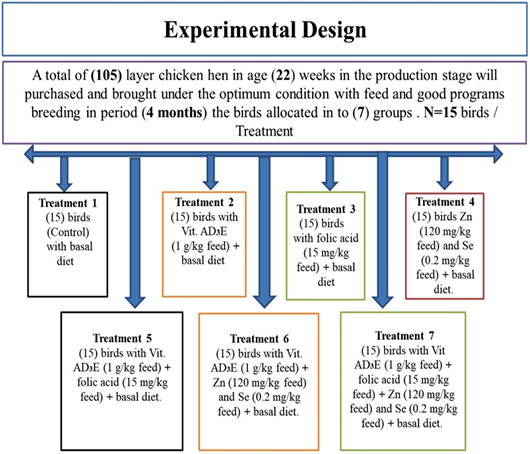
At 22 weeks of age hens were randomly distributed into seven treatment groups (15 hens per treatment) Figure 1 which were:
Treatment 6: 15 hens supplemented with AD3E (1 g/kg feed) + Zn (120 mg/kg feed) and Se (0.2 mg/kg feed) + basal diet.
Treatment 7: 15 hens supplemented with AD3E (1 g/kg feed) + folic acid (15 mg/kg feed) + Zn (120 mg/kg feed) and Se (0.2 mg/kg feed) + basal diet.
Vitamin AD3E: A commercial powder mixture (Vitamin AD3E®, ADMIRAL VIT, India) was obtained from local market in Baghdad and used at a dosage of 1 g/kg feed during 4 months of the study. The composition of the mixture (Vitamin AD3E®) is shown in Table 2.
Table 2: Composition of vitamin AD3E®.
Composition
Contains (Each 1 kg contains)
Vitamin A
12500000 IU
Vitamin D3
2500000 IU
Vitamin E
10000 mg
Folic acid: A commercial folic acid powder (Accord, UK) was obtained from the local market as a poultry feed additive in Baghdad. Laying hens received a dosage of 15 mg/kg feed during 4 months of the study.
Selenium: A commercial selenium powder (Albion®) as selenium glycinate complex (Swanson Health Product, USA) was obtained from the local market in Baghdad. Laying hens received a dosage of 0.2 mg/kg feed during 4 months of the study.
Zinc: A commercial zinc mineral powder (E.C.O. Trace®Zn, Biochem, Germany) was obtained from the local market in Baghdad. Laying hens received a dosage of 120 mg/kg feed during 4 months of the study.
Blood collection: Blood samples were collected at 30, 60, 90, and 120 days of the experiment.
Whole blood samples: Five mL of whole blood were collected from the wing vein of laying hens (3 hens from each group) using standard whole blood collection tubes.
Blood serum samples: 5 mL of whole blood samples were collected from the wing veins and jugular vein of laying hens (3 hens from each group) using standard serum gel collection tubes and the samples were kept overnight at 4°C (in a refrigerator) to separate serum in the top of the gel tubes.
Parameter of the study
Cellular blood parameters
Blood Hemoglobin (Hb): The hemoglobin concentration was estimated using a kit obtained from the local market from the (BioAssay Systems Kit, USA), and according to the instructions included with the kit, using a spectrophotometer at a wavelength of 400 nanometers, in accordance with the method of Fornai et al. (2020).
Red blood cell count: was counted according to Ahmed and Sheikh (2020) and David et al. (2026) using a standard microscope and a hemocytometer method based on Natt and Herrick’s (1952). An equal volume of 0.5 mL of blood was drawn using a pipette and diluted 200 times with Natt and Herrick’s (1952) solution to the 101 marks. The pipette was then gently shaken for two minutes to mix the blood with the solution in the chamber. A drop of the solution was placed on the stem of the hemocytometer slide under the glass cover. ,The number of cells was then counted using a light microscope. Red blood cells appear as transparent cytoplasm and pale-stained nuclei.This sample represents all the squares, and the total number of red blood cells is calculated by applying the following equation:
For clarity white blood cell count: White blood cells are counted according to Campbell (2022) in the same way as red blood cells, using the WBC pipette (1:20 dilution) and the Natt and Herrick (1952) method. A special pipette, different from the one used for counting red blood cells, is used for this purpose. First, blood is drawn to the 0.5 mark, then the volume is increased to the 11-mark using the Natt and Herrick (1952) dilution solution. This dilutes the blood 20 times. There are also four special squares for counting white blood cells on a glass slide, each containing 16 smaller squares.Note that white blood cells stain dark blue and may appear granular. The total count is calculated using the following equation:
Total WBC count (cell/mm3) = Total number of WBCs × 50
Packed Cell Volume (PCV): was calculated according to Campbell (2022) based on Natt and Herrick (1952) method, using special capillary tubes open at both ends containing an anticoagulant. Samples were collected directly from the birds by pricking the bird with a needle in the wing area. After a drop of blood came out, the end of the capillary tube was covered with it. The tube was placed horizontally, and the blood rose by capillary action until the tubes were filled with blood to two-thirds of their length. The tube was then closed immediately after collecting the blood from the same end from which it was collected using a special paste (artificial clay or window glass fixing paste can be used). After that, the tubes were placed horizontally in a special micro-hematocrit centrifuge for 15 minutes. Then the percentage of packed cell volume was measured using a special.
Differential count of white blood cells and ratio of heterophiles to lymphocytes: Blood smears were placed on glass slides, then the blood was spread on the slide using another glass slide placed on top of the blood drop and drawn over the first slide at a 45-degree angle, without applying pressure. After the blood dried (about 10 minutes), the slides were stained with a mixture of Wright-Giemsa stains according to the method of Shen and Patterson (1983). White blood cell types were counted using a light microscope at 100x magnification by placing a drop of oil on the slide according to the method of Burton and Guion (1968). Then the ratio of heterophiles to lymphocytes (H/L ratio) was calculated.
Biochemical blood parameters
Total protein (g/L): Total serum protein concentration was measured by using kit produced by (BIOLABO SAS Company, Les Hautes Rives, Maizy/ France), The test was conducted according to the steps that were referred to by the production company .
Albumin (g/L): Albumin concentration was measured by using Kit produced by (BIOLABO SAS company, Les Hautes Rives, Maizy/ France), The intensity of the color formed is proportional to the concentration of albumin in the sample .
Globulin (g/L): The concentration of globulin was calculated according to the following equation as reported by Al-Oumary (2001).
Globulin concentration (g/L) = total protein concentration – albumin concentration
Glucose (g/dl): Glucose is determined after enzymatic oxidation in the presence of glucose oxidase, the hydrogen peroxide formed react, under the catalysis of peroxidase, with phenol and 4-aminophenazone to form a red-violet quinonimine dye as an indicator, the determination of glucose was made by using kit test provided by BIOLABO SAS Company, Les Hautes Rives, Maizy/ France.
Total cholesterol (g/dl): Serum cholesterol was determined by the enzymatic method that supplied by (linear chemical company, Spain)
Uric Acid (g/dl): collect a blood sample from the wing vein and send it to a laboratory for analysis of serum uric acid levels. by used colorimetric method (Randox, England), uric acid is converted by uricase to allantoin and hydrogen peroxide, which under the catalytic influence of peroxidase, oxidizes TOOS* and 4-aminophenazone to form a red-violet quinonimine compound.
Enzymes parameters
AST and ALT (U/L): The determination of AST and ALT were made by using kit test provided by (BIOLABO SAS company, Les Hautes Rives, Maizy/ France) .
Antioxidant parameter
Malondialdehyde Content Assay (MDA) (μmol/L): Lipid peroxidation produces MDA. Under acidic, high-temperature conditions, MDA reacts with TBA to form a coloured compound. Absorbance was measured at 532 nm. .
Statistical analysis
All data were analyzed using SAS (Statistical Analysis System- version 9.6). The differences among means (P<0.05) are considered statistically significant (SAS, 2010). Duncan’s (1955) multiple range test (ANOVA: Completely randomized design-CRD) was used to compare means at probability on 0.05 and 0.01. The following statistical model:
Yij = µ + Ti + eij
Where; Yij: Observed value j corresponding to treatment i. µ: Overall mean of the trait. Ti: Effect of the treatment (7 Treatments). eij: Random error, assumed to be normally distributed with a mean of zero and a variance of σ²e.
RESULTS AND DISCISSION
Cellular blood parameters
The current study demonstrated consistent and significant improvements in hematological parameters throughout all trial periods (4 months), particularly in the combined supplement group T7, followed by T6 (Table 3). These results suggest a synergistic effect of vitamin AD3E, folic acid, selenium, and zinc on the physiological status of laying hens. Red blood cells (RBCs), hemoglobin (Hb), and packed cell volume (PCV). A significant increase in RBC, PCV, and Hb values was observed in both groups T6 and T7 compared to the control group throughout the trial period. This improvement reflects an increase in red blood cell formation and the cells’ oxygen carrying capacity. White blood cells and immune response. Although white blood cell values showed slight variations, a general stability or slight decrease was observed in the treated groups compared to the control group. This indicates an improvement in immune system efficiency rather than suppression. The Heterophil/Lymphocyte ratio (H/L) showed a significant decrease (P ≤ 0.05) in the H/L ratio was observed in T7 hens throughout the four months of the experiment, a strong indicator of reduced stress and improved health in the laying hens. The significant decrease in the percentage of heterophile cells and an increase or stabilization in the percentage of lymphocytes were observed in the groups receiving nutritional supplements, particularly in T7 hens. This shift indicates a reduced stress response, improved immune system efficiency, and better cellular immunity in the laying hens.
These treatments also showed a significant decrease in WBC, lymphocyte, and heterophil counts, indicating improved immune and physiological status in the hens, reduced stress levels, and improved overall health.
Biochemical blood parameters
Effect of treatments on biochemical blood parameters of layer hens for 4 months (mean±SE) are explained in Table 4. Glucose concentrations were significantly affected (P ≤ 0.01), with the control group consistently exhibiting higher levels. In contrast, the T7 treatment group showed the lowest glucose values indicating improved metabolic efficiency and reduced physiological stress.
Blood cholesterol levels showed moderate but statistically significant differences (P ≤ 0.05),while the control group maintained lower levels, although high cholesterol levels are associated in laying hens with increased synthesis of steroid hormones and egg production.
Uric acid levels showed significant decreases (P ≤ 0.01) in the groups receiving supplementation, particularly in the T7 treatment group, This indicates improved protein metabolism and reduced nitrogenous waste production.
Total protein, albumin, and globulin showed a significant improvement (P ≤ 0.01) in protein levels was observed in the groups receiving supplementation. Total protein levels gradually increased, with the T7 treatment group exhibiting the highest values throughout all months.
Albumin levels rose significantly, with T6 and T7 groups registering the highest concentrations, reflecting increased hepatic synthesis activity. Globulin levels followed a similar trend, with T7 consistently achieving the highest values. The elevated globulin level indicates an improved immune status in the laying hens.
Table 3: Effect of treatments on cellular blood parameters of layer hens for 4 months (mean±SE).
Treatments
RBC
(x106/mL)
PCV
(%)
WBC
(x103/mL)
H/L
(%)
Heterophil
(%)
Lymphocyte
(%)
Hb
(g/dL)
T1
2.9٦± 0.0٤a
31.91± 0.680c
24.83± 0.897d
0.33± 0.012a
22.66± 0.617b
59.50± 1.272a
10.250± 0.310b
T2
3.16± 0.045a
33.00± 0.530b
23.91± 0.540b
0.33± 0.025c
18.67± 0.457a
57.58± 1.315b
11.240± 0.247a
T3
3.22± 0.057a
33.33± 0.670c
24.00± 0.467b
0.33± 0.017a
19.16± 0.750d
56.58± 0.760d
10.99± 0.247a
T4
3.18± 0.043a
33.16± 0.770d
22.83± 0.330a
0.36± 0.015a
19.66± 0.525b
53.91± 1.895d
10.91± 0.227a
T5
3.22± 0.297c
33.34± 1.046df
23.91± 0.372a
0.36± 0.020b
19.55± 0.580b
53.58± 1.275a
11.00± 0.415d
T6
3.50± 0.107b
35.49± 0.477a
23.08± 0.392a
0.32± 0.015a
17.66± 0.622b
53.64± 1.432c
11.91± 0.310b
T7
3.45± 0.022a
37.165± 0.455a
22.99± 0.392a
0.29± 0.085d
16.680± 0.477a
53.75± 1.312b
12.250± 0.330b
Levelofsignificant
(P≤0.05)
(P≤0.01)
(P≤0.05)
(P≤0.05)
(P≤0.01)
(P≤0.05)
(P≤0.01)
Table 4: Effect of treatments on biochemical blood parameters of layer hens for 4 months (mean±SE).
Treatments
Glucose
(g/dL)
Cholesterol
(g/dL)
Uric Acid
(g/dL)
Total protein
(g/dL)
Albumin
(g/dL)
Globulin
(g/dL)
T1
٢٣9.25±4.89 d
134.75±1.18 a
4.21±0.03 b
3.20±0.12 a
1.34±0.01 a
1.93±0.04 b
T2
230.50±1.63 a
140.33±2.35 b
4.18±0.04 b
3.54±0.26 b
1.36±0.02 a
2.12±0.02 a
T3
231.66±1.60 a
138.41±1.47 b
4.09±0.02 a
3.40±0.09 a
1.39±0.10 c
2.135±0.02 a
T4
222.49±2.10 b
142.25±0.47 b
4.09±0.04 b
3.90±0.23 b
1.41±0.00 a
2.48±0.04 b
T5
220.33±1.27 a
137.58±2.31 b
4.10±0.02 a
3.77±0.40 c
1.43±0.01 a
2.35±0.01 a
T6
216.50±1.06 a
137.99±2.63 c
4.04±0.01 a
4.16±0.37 c
1.45±0.05 b
2.70±0.02 a
T7
207.25±4.50 c
144.83±1.57c
3.91±0.03 a
4.62±0.07 a
1.46±0.02 a
3.165±0.08 c
Level of significant
(P≤0.01)
(P≤0.05)
(P≤0.01)
(P≤0.01)
(P≤0.01)
(P≤0.01)
Enzymes and antioxidant
Liver enzymes (ALT and AST), During the four-month trial period, statistically significant differences (P≤0.01) were observed in serum ALT and AST levels between the treatment groups. The control group (T1) consistently recorded the highest ALT levels, indicating increased liver stress. In contrast, the T7 group receiving the combined supplement (vitamin D3E + folic acid + selenium + zinc) showed the lowest ALT levels throughout the trial period.
A similar trend was observed for the AST enzyme, with T7 showing significantly lower values compared to the control group, while T1 remained elevated. This decrease suggests improved liver function and reduced liver cell damage in the supplemented groups (Table 5).
Oxidative Stress Marker as malondialdehyde (MDA), a key indicator of lipid peroxidation, showed significant decreases (P ≤ 0.01) in the supplemented groups. The control group recorded the highest MDA levels, indicating elevated oxidative stress.
In contrast, the T7 treatment consistently showed the lowest MDA values, confirming the potent antioxidant protection. The decrease in MDA reflects a decrease in lipid peroxidation due to the combined effect of vitamin E (a lipid-soluble antioxidant), selenium (a cofactor for glutathione peroxidase), and zinc (a membrane stabilizer) (Table 5).
Table 5: Effect of treatments on blood enzymes and antioxidant parameters of layer hens for 4 months (mean±SE).
Treatments
ALT (U/Ll)
AST (U/L)
MDA (μmol/L)
T1
13.91±0.45 c
192.16±0.71 a
0.56±0.015d
T2
12.24±0.33 b
197.08±0.98 a
0.34±0.01 a
T3
11.83±0.45c
146.66±0.61 a
0.46±0.01 a
T4
12.00±0.45 c
197.66±1.36 b
0.42±0.01 a
T5
11.58±0.33 b
195.16±2.02 b
0.40±0.13 d
T6
11.00±0.310 a
185.16±4.21 d
0.43±0.13 d
T7
10.41±0.33 b
184.08±1.91 b
0.31±0.01 a
Level of significant
(P≤0.01)
(P≤0.01)
(P≤0.01)
Specific selenium sources play a crucial role in maintaining immune homeostasis and may mitigate age-related stress responses. Selenium is essential for the activity of selenoproteins involved in antioxidant defense and other vital physiological functions .
A study by El-Hack et al. (2018) demonstrated significant changes in all hematological parameters as a result of the interaction between vitamin A and vitamin E levels. The treatment supplemented with 500 mg of vitamin E/kg of feed showed the highest values for packed cell volume (40.09%) and hemoglobin (10.33 mg/100 mL) compared to the other groups. The highest lymphocyte count was observed in the blood of chickens fed feed supplemented with 8000 IU of vitamin A and 250 mg of vitamin E/kg of feed.
The highest lymphocyte count was observed in the blood of chickens fed feed supplemented with 8000 IU of vitamin A and 250 mg of vitamin E/kg of feed. Pantaya and Utami (2018) discussed how vitamin A supplementation in feed increased hemoglobin concentration and red blood cell count, as elevated hemoglobin levels affect oxygen levels and red blood cell count.
A study by El-Hack et al. (2018) demonstrated that vitamin A deficiency negatively impacted the immunity of laying hens.
Saleh et al. (2018) indicated that white blood cell formation play a crucial role in immunity and phagocytosis.
The H/L ratio is considered an indicator of stress in poultry ; therefore, a decrease in the H/L ratio in T3-treated birds suggests a potential reduction in stress levels through the stimulation of an immune response. Selenium and vitamin E are known to reduce oxidative stress, and their addition to feed may have a calming effect on poultry, reflected in a decrease in the H/L ratio . Similarly, diets supplemented with organic and inorganic selenium have been shown to have immunomodulatory effects in laying hens .
Adding selenium and vitamin E to laying hen feed improves hematological parameters, immune response, and egg quality after 94 weeks of age. The best results were observed with the addition of 0.45 mg of selenium and 200 mg of vitamin E, demonstrating the effectiveness of these supplements at these dosages across different stages of egg production. Therefore, it is recommended to add 0.45 mg of selenium and 200 mg of vitamin E to the feed of laying hens at different stages of production .
Ismoyowati et al. (2024) discussed the effect of selenium and vitamin E supplementation on white blood cell count, heterozygous cell proportions, eosinophils, basophils, and monocytes in laying hens at different stages of production. Selenium and vitamin E are known for their immunomodulatory properties. In general, folic acid had significant effects on blood chemistry, as evidenced by the results indicating a decrease in two variables, blood glucose and uric acid levels when birds were fed folic acid-enriched diets .
In a study by El-Hack et al. (2016), the increase in total protein, globulin, and albumin levels with vitamin A supplementation was progressively greater with increasing vitamin A levels compared to the control group. From our results, it can be concluded that diets fortified with vitamin A and selenium, either individually or in combination, mitigate the negative effects of heat stress on production and health indicators. Our results confirm the effectiveness of vitamin A (16,000 IU/kg of feed) in improving production performance parameters. However, additional combined concentrations of vitamin A (16,000 IU/kg) and selenium (0.25 mg/kg) may be required to improve production and health in laying hens. Gan et al. (2020) showed that using a mixture of vitamins in laying hen diets increased albumin levels, which improved immunity and the liver’s ability to synthesize protein.
The use of vitamin and mineral concentrates as feed additives in poultry feed resulted in a moderation of blood glucose levels in the groups, indicating blood sugar regulation . Alsalmany and Mohammed (2022) indicated that adding different levels of natural zeolite and vitamin E to laying hen diets (Lohmann-Brown) affected albumin, the main component of total blood protein. It is synthesized by the liver and is considered an indicator of the liver’s protein synthesis capacity. A decrease in albumin levels indicates reduced liver synthesis due to liver tissue and cell damage and is an important indicator of immunity in goose rearing. Vitamin A increases egg quality by boosting immunoglobulin production, improving fertility and hatchability, and reducing MDA levels in the liver and ovaries .
Yeast fortified with zinc, antioxidant capacity, and vitamin E was incorporated into the feed formulation. Production parameters, egg quality, and the biochemical and hematological profiles of blood samples were analyzed during storage. MDA concentration decreased significantly in all experimental groups compared to the control group, indicating that the two components mitigated the effects of heat stress on production parameters, with an antioxidant role demonstrated by delaying lipid peroxidation during different storage periods ; . Serum uric acid levels were higher in older laying hens but unchanged in younger laying hens, suggesting that older birds may be more susceptible to immune challenges . Vitamin A treatments affected serum albumin, total cholesterol, glucose, and uric acid. Administering vitamin, A (6000 IU/kg) to laying hens improved reproductive efficiency, antioxidant status, and immune function . Doses of 6000 and 8000 IU/kg of vitamin A also affected serum albumin, total cholesterol, glucose, uric acid, albumin-to-globulin ratio, alanine aminotransferase (ALT), and calcium content. Administering vitamin A (6000 IU/kg) to laying hens improves reproductive efficiency, antioxidant status, and immune function, thereby increasing fertility and hatchability, reducing embryonic mortality, and improving liver function . In a study by El-Ratel et al. (2024), a decrease in MDA levels was observed across all vitamin A treatment groups compared to the control group, indicating improved health in laying hens. Vitamin A (6000 IU/kg) administration to laying hens improves reproductive efficiency, antioxidant status, and immune function, thereby increasing fertility and hatchability and reducing embryonic mortality. Vitamin A affects chick weight, blood composition, serum biochemicals, antioxidant status, and immunity, and influences offspring productivity and carcass characteristics. Administering vitamin A after hatching improves the growth and carcass characteristics of newly hatched chicks. It is also essential for chick nutrition due to its antioxidant properties in the eggshell glands of laying hens.
In a study by Rakhmonov et al. (2025), the following substances were added to the birds’ feed in the first experimental treatment: 3 g/kg of methionine, 1 mL of oral saline solution per 2 liters of water, and selenium-E at a dose of 2 mL per liter of water. During experiments focused on preventing fatty liver atrophy in egg-producing hens, it was found that the average total protein content in the blood serum of chickens in the first experimental treatment increased by 5.6 g/L, while in the second experimental treatment, it increased by 4.0 g/L. In the control group, a decrease in the average total protein content of 1.0 g/L was observed.
Eggs fortified with vitamins and minerals have several economic benefits, including(Increased market value of eggs, Higher production costs, Improved competitiveness, Increased demand from health-conscious consumers, Reduced long-term healthcare expenditures for consumers Creation of new investment opportunities in the production of food additives, functional food manufacturing, and marketing Poultry-related scientific research).
Key limitations in studies on fortified eggs include (The high cost of laboratory analyses required to determine nutrient concentrations in eggs, Limited economic and marketing studies linking production costs to consumer acceptance, Variable consumer preferences across regions and countries, which affects the assessment of the commercial viability of fortified eggs, These points are typically used in the Limitations or Recommendations for future research sections of theses and dissertations).
The following future research directions in the field of fortified eggs can be suggested (Studying the effects of different levels of fortification to determine the optimal level that achieves the highest nutritional value without impacting production, Evaluating new natural sources of fortification, such as seaweed, medicinal herbs, and antioxidant-rich plants, Studying the long-term effects of fortified eggs on human health and disease prevention, Conducting comprehensive economic studies to assess the feasibility of producing and marketing fortified eggs in local markets, Studying the effect of fortification on egg quality characteristics during storage, such as oxidative stability and shelf life, Evaluating the response of different laying hen breeds to nutritional fortification programs, Studying the synergistic effect of adding more than one fortified nutrient together (such as selenium with vitamin E or omega-3), Utilizing modern micronutrient technologies to improve the efficiency of nutrient transfer from feed to eggs, Studying consumer acceptance of fortified eggs and the factors influencing purchasing decisions).
Conclusions
Over four months, the results indicated that supplementing with vitamins A, D3, and E, folic acid, selenium, and zinc together improved blood parameters, biochemistry, immune function, and stress resistance, as well as physiological performance, liver function, and antioxidant capacity, more effectively than individual supplements in laying hens. The T7 supplement demonstrated the best performance.
Commercially Applicable Recommendations include (Utilize local or affordable sources of fortified materials to reduce production costs, Add appropriate antioxidants when producing omega-3 fortified eggs to maintain egg quality during storage, Conduct periodic testing of the fortified content of eggs to ensure product quality and compliance with specifications, Develop marketing programs that highlight the health benefits of fortified eggs to increase consumer acceptance, Gradually expand fortified egg production after confirming sufficient market demand).
The Cost-Benefit Considerations include: The cost of nutritional additives should be compared with the resulting increase in the selling price of eggs, It is recommended to select fortifying materials with high efficacy and good economic return, Laboratory analysis, packaging, and marketing costs should be included in the total production cost, Fortified egg production is economically viable when the increase in revenue from selling the product exceeds the increase in production costs, It is advisable to conduct periodic economic analysis, including the cost of producing one egg, net profit, and cost-benefit ratio, to assess the project’s sustainability.
Acknowledgements
The authors are grateful to the College of Veterinary Medicine, University of Baghdad, and the Iraqi Ministry of Agriculture, Department of Agricultural Research, Animal Resources Section, Poultry Research Station, Iraq, for providing the necessary assistance for the study project.
Novelty Statement
The novelty of this study lies in the evaluation of a combined dietary supplementation strategy consisting of vitamin AD₃E, folic acid, selenium, and zinc in commercial Lohmann Brown laying hens during the egg production period. Unlike studies focusing mainly on individual vitamins or mineral supplements, the present study systematically compared individual and combined supplementation treatments and demonstrated the potential synergistic effects of their simultaneous inclusion. The combined supplementation of vitamin AD₃E, folic acid, selenium, and zinc produced the most favorable overall responses, particularly in hematological parameters, serum biochemical profiles, liver enzyme activities, and oxidative stress status. These findings provide new evidence that this multi-nutrient combination can improve physiological and antioxidant status and reduce stress in laying hens during production.
Author’s Contribution
SFH: Conceptualization, methodology, data collection, laboratory analysis, statistical analysis, writing–original draft preparation. SMA: Supervision, study design, methodology, manuscript review, and editing. SHF: Experimental management, resources, data acquisition, manuscript review. All authors have read and approved the final version of the manuscript.
Animal welfare statement
All hens were housed and managed under standard husbandry conditions at the Poultry Research Station, Department of Agricultural Research, Ministry of Agriculture, Iraq. The study was conducted in accordance with the ethical guidelines and regulations of the College of Veterinary Medicine, University of Baghdad. All experimental procedures were reviewed and approved by the Animal Ethics Committee of the College of Veterinary Medicine, University of Baghdad, Iraq. Animal handling, housing, feeding, and blood sampling procedures were performed to minimize stress and discomfort to the birds.
Funding statement
This research was conducted as part of the PhD thesis of the first author and received no external funding.
Ethical approval
The current study was conducted in accordance with the guidelines and rules issued by collage of Veterinary Medicine- University of Baghdad. The experimental procedures were approved by the Committee of Animal Ethics in the College of Veterinary Medicine, University of Baghdad, Iraq. (No.P.G/1270)(Date:11/6/2026)
Data availability statement
The datasets generated and analyzed during the current study are available from the corresponding author upon reasonable request.
Generative AI and AI assisted technology statement
The authors declare that no generative AI and AI assisted technology was used in the creation of this manuscript.
Conflict of interest
The authors have declared no conflict of interest.
Figures
Figure 1:.
Experimental design for the study
References
Ahmed I, Sheikh ZA (2020). Comparative study of hematological parameters of snow trout Schizopyge plagiostomus and Schizopyge niger inhabiting two different habitats. Eur. Zool. J., 87(1): 12–19. https://doi.org/10.1080/24750263.2019.1705647[CrossRef]
Al-Kurdy MJ, Khudair KK, Al-Kinani LH (2020). Synthesis and Characterization of black currant selenium nanoparticles (Part I). Iraqi J. Vet. Med., 44(2): 25-34. https://doi.org/10.30539/ijvm.v44i2.974[CrossRef]
Al-Obaidi FA, Al-Shadeedi ShMJ, Al-Dalawi RH (2019). Table egg and designer egg. 1st ed., LAP Lambert Publishing Company. ISBN: 978-3-659-89042-0
Al-Oumary MR (2001). Clinical Chemistry. Scientific partition. Second Book, Book house of publish and distribution, Al-Mosul University.
Alsalmany EHH, Mohammed TT (2022). Effect of adding natural zeolite and vitamin E to diets of laying hens (Lohmann Brown) on some physiological traits and productive performance during hot weather. Bionatura, 7(4): 1–5. https://doi.org/10.21931/RB/2022.07.04.12[CrossRef]
Al–Shadeedi ShMJ (2024). Designer egg a new and valuable table egg, J. Mod. Herit. Sci., 12(1): 87-100. ISSN: 2001-6611.Available at: (PDF) Designer egg a new and valuable table egg.
Attia Y, El-Hamid AA, Abdallah A, Berikaa M, El-Gandy M, Sahin K, Abou-Shehema B (2018). Effect of betaine, vitamin C and vitamin E on egg quality, hatchability, and markers of liver and renal functions in dual-purpose breeding hens exposed to chronic heat stress. Arch. Geflügelk., 82: 1–12. https://doi.org/10.1399/eps.2018.226[CrossRef]
Burton RR, Guion CW (1968). The differential Leucocyte blood count: its precision and individuality in the chicken. Poult. Sci., 47: 1945-1949. https://doi.org/10.3382/ps.0471945[CrossRef]
Cornescu GM, Panaite TD, Untea AE, Varzaru I, Saracila M, Dumitru M, Vlaicu PA, Gavris T (2023). Mitigation of heat stress effects on laying hens’ performances, egg quality, and some blood parameters by adding dietary zinc-enriched yeasts, parsley, and their combination. Front. Vet. Sci., 10: 1202058. https://doi.org/10.3389/fvets.2023.1202058[CrossRef]
Damiot A, Demangel R, Noone J, Chery I, Zahariev A, Normand S, Brioche T, Crampes F, De Glisezinski I, Lefai E, Bareille MP, Chopard A, Drai J, Collin-Chavagnac D, Heer M, Gauquelin-Koch G, Prost M, Simon P, Py G, O’Gorman DJ (2018). A nutrient cocktail prevents lipid metabolism alterations induced by 20 days of daily steps reduction and fructose overfeeding: result from a randomized study. J. Appl. Physiol., 126(1): 88–101. https://doi.org/10.1152/japplphysiol.00018.2018[CrossRef]
David H, García-Párraga D, Pereira N, Morón-Elorza P (2026). Standardized protocols for blood collection and analysis in elasmobranchs: A practical guide for clinicians and researchers. Front. Vet. Sci., 12: 1754037. https://doi.org/10.3389/fvets.2025.1754037[CrossRef]
Duncan DB (1955). Multiple range and multiple F Tests. Biometrics. https://doi.org/10.2307/3001478[CrossRef]
El-Hack MEA, Alagawany M, Mahrose KM, Arif M, Saeed M, Arain MA, Soomro RN, Siyal FA, Fazlani SA, Fowler J (2018). Productive performance, egg quality, hematological parameters and serum chemistry of laying hens fed diets supplemented with certain fat-soluble vitamins, individually or combined, during summer season. Anim. Nutr., 5(1): 49–55. https://doi.org/10.1016/j.aninu.2018.04.008[CrossRef]
El-Hack MEA, Mahrose K, Askar AA, Alagawany M, Arif M, Saeed M, Abbasi F, Soomro RN, Siyal FA, Chaudhry MT (2016). Single and combined impacts of vitamin A and selenium in diet on productive performance, egg quality, and some blood parameters of laying hens during hot season. Biol. Trace Elem. Res., 177(1): 169–179. https://doi.org/10.1007/s12011-016-0862-5[CrossRef]
El-Ratel IT, Amara MM, Beshara MM, Basuini MFE, Fouda SF, El-Kholy KH, Ebeid TA, Kamal M, Othman SI, Rudayni HA, Allam AA, Moustafa M, Tellez-Isaias G, El-Hack MEA, Mekawy A (2024). Effects of supplemental vitamin A on reproduction and antioxidative status of aged laying hens, and growth, blood indices and immunity of their offspring. Poult. Sci., 103(3): 103453. https://doi.org/10.1016/j.psj.2024.103453[CrossRef]
Fornai M, Pellegrini C, Benvenuti L, Tirotta E, Gentile D, Natale G, Ryskalin L, Colucci R, Piccoli E, Ghelardi E, Blandizzi C, Antonioli L (2020). Protective effects of the combination Bifidobacterium longum plus lactoferrin against NSAID-induced enteropathy. Nutrition, 70: 110583. https://doi.org/10.1016/j.nut.2019.110583[CrossRef]
Fu Z, Zhong T, Wan X, Xu L, Yang H, Han H, Wang Z (2022). Effects of dietary vitamin E supplementation on reproductive performance, egg characteristics, antioxidant capacity, and immune status in breeding geese during the late laying period. Antioxidants, 11(10): 2070. https://doi.org/10.3390/antiox11102070[CrossRef]
Gan L, Zhao Y, Mahmood T, Guo Y (2020). Effects of dietary vitamins supplementation level on the production performance and intestinal microbiota of aged laying hens. Poult. Sci., 99(7): 3594–3605. https://doi.org/10.1016/j.psj.2020.04.007[CrossRef]
Haryuni N, Hartutik H, Widodo E, Wahjuningsih S (2021). Interaction Effect of vitamin E-selenium supplementation and metabolic energy on reproductive performance of Joper breeders. J. Ilmu Ternak Vet., 26(3): 124–131. https://doi.org/10.14334/jitv.v26i3.2842[CrossRef]
Husain WM, Araak JK, Ibrahim OM (2019). Green synthesis of zinc oxide nanoparticles from (Punica granatum L) Pomegranate Aqueous Peel Extract. Iraqi J. Vet. Med., 43(2): 6-14. https://doi.org/10.30539/iraqijvm.v43i2.524[CrossRef]
Ismoyowati I, Rosidi R, Hidayat N, Yakubu MA (2024). The impact of selenium yeast and vitamin E in blood profile and egg production of laying hens at the end of egg production period. J. Indones. Trop. Anim. Agric., 49(1): 41–50. https://doi.org/10.14710/jitaa.49.1.41-50[CrossRef]
Jing M, Munyaka P, Tactacan G, Rodriguez-Lecompte JOK, House J (2014). Performance, serum biochemical responses, and gene expression of intestinal folate transporters of young and older laying hens in response to dietary folic acid supplementation and challenge with Escherichia coli lipopolysaccharide. Poult. Sci., 93(1): 122–131. https://doi.org/10.3382/ps.2013-03384[CrossRef]
Kieliszek M, Sandoval SNS (2023). The importance of selenium in food enrichment processes. A comprehensive review. J. Trace Elem. Med. Biol., 79: 27260. https://doi.org/10.1016/j.jtemb.2023.127260[CrossRef]
Kralik Z, Kralik G, Košević M, Galović O, Samardžić M (2023). Natural multi-enriched eggs with n-3 polyunsaturated fatty acids, selenium, vitamin E, and Lutein. Animals, 13(2): 321. https://doi.org/10.3390/ani13020321[CrossRef]
Li Y, Mu T, Li R, Miao S, Jian H, Dong X, Zou X (2023). Effects of different selenium sources and levels on the physiological state, selenoprotein expression, and production and preservation of selenium-enriched eggs in laying hens. Poult. Sci., 103(2): 103347. https://doi.org/10.1016/j.psj.2023.103347[CrossRef]
Muhammad Assumaidaee AA, Ali NM, Fadhil AA (2019). Effect of Vitamin E as α-Tocopherol Acetate on Mercuric Chloride-Induced Chronic Oxidoreductive Stress and Nephrotoxicity in Rats. Iraqi J. Vet. Med., 43(2): 98-108. https://doi.org/10.30539/iraqijvm.v43i2.538[CrossRef]
Natt MP, Herrick CA (1952). A new blood diluent for counting the erythrocytes and the leucocytes of the chicken. Poult. Sci., 31: 735-738. https://doi.org/10.3382/ps.0310735[CrossRef]
NRC (1994). Nutrient requirements of poultry: 9th revised edition, the National Research Council, France. ISBN Paperback: 0-309-04892-3, ISBN Ebook:0-309-59632-7.
Nys Y, Sauveur B (2004). Valeur nutritionnelle des oeufs. INRAE Productions Animales, 17(5): 385–393. https://doi.org/10.20870/productions-animales.2004.17.5.3611[CrossRef]
O’Sullivan SM, E. Ball ME, McDonald E, Hull GLJ, Danaher M, Cashman KD (2020). Biofortification of chicken eggs with vitamin K Nutritional and quality improvements. Foods, 9(11): 1619. https://doi.org/10.3390/foods9111619[CrossRef]
Pantaya D, Utami MMD (2018). The blood haematological profile on laying hens that treated by different levels of yeast supplementation. IOP Conf. Ser. Earth Environ. Sci., 207: 012033. https://doi.org/10.1088/1755-1315/207/1/012033[CrossRef]
Rakhmonov U, Yunusov K, Norboev K, Eshburiev S, Sulaymonov M (2025). Improving methods for preventing hepatosis in laying hens. BIO Web Conferences, 181: 01032. https://doi.org/10.1051/bioconf/202518101032[CrossRef]
Saleh AA, Ebeid TA, Abudabos AM (2018). Effect of dietary phytogenics (herbal mixture) supplementation on growth performance, nutrient utilization, antioxidative properties, and immune response in broilers. Environ. Sci. Pollut. Res., 25(15): 14606–14613. https://doi.org/10.1007/s11356-018-1685-z[CrossRef]
Salman KQ, Mohammed R.M. AlShadeedi, ShMJ (2023). Effect of some natural coating of table egg on shelf life during refrigerator storage. J. Genet. Environ. Resour. Conserv., 11(2): 103-113.
SAS (2010). SAS (Statistical Analysis System - version 9.6). The differences among means (P<0.05) are considered statistically significant. SAS 9.6 Documentation
Shauqi HH, Omran HA (2019). The immune response of broiler chickens fed diets supplemented with Propolis and Digestarom under heat stress condition. Iraqi J. Vet. Med., 42(2): 33-40. https://doi.org/10.30539/iraqijvm.v42i2.283[CrossRef]
Sigut S, Álvarez S, Fresno M, Méndez P, Castro N, Torres A (2025). Effects of the utilization of a local cereals and forage-based diet on productive performance and egg quality in three free-range hen genotypes. J. Appl. Poult. Res., pp. 100524. https://doi.org/10.1016/j.japr.2025.100524[CrossRef]
Skřivan M, Marounek M, Englmaierová M, Skřivanová V (2013). Influence of dietary vitamin C and selenium, alone and in combination, on the performance of laying hens and quality of eggs. Czech J. Anim. Sci., 58(2): 91-97. Available at: (PDF) https://www.cabidigitallibrary.org/doi/pdf/10.5555/20133170388, https://doi.org/10.17221/6619-CJAS[CrossRef]
Sun X, Yue S, Qiao Y, Sun Z, Wang C, Li H (2020). Dietary supplementation with selenium -enriched earthworm powder improves antioxidative ability and immunity of laying hens. Poult. Sci., 99(11): 5344–5349. https://doi.org/10.1016/j.psj.2020.07.030[CrossRef]
TIETZ (2006). Clinical guide to laboratory test, 4th Ed., N.W. p. 916-921.
Viktorova EP, Kazaryan RV, Lukyanenko MV, Semenenko MP, Borodikhin AS, Kuzminova EV, Rogaleva EV (2020). Changes in the biochemical parameters of blood serum of laying hens by varying the feeding diet. IOP Conf. Ser. Earth Environ. Sci., 548(4): 042049. https://doi.org/10.1088/1755-1315/548/4/042049[CrossRef]
Wang L, Li J, Wang B, Yin X, Wei J, Qiu H (2024). Progress in modeling avian hyperuricemia and gout (Review). Biomed. Rep., 22(1): 1. https://doi.org/10.3892/br.2024.1879[CrossRef]
Effect of Vitamin AD3E and Folic Acid Supplemented with Selenium and Zinc on Hematological and Biochemical Parameters of Laying Hens · ResearchersLinks