
Vibration in tractors is a common phenomenon resulting from mechanical components and agricultural field conditions, and it significantly affects driver comfort and safety. This study aimed to estimate tractor vibration levels at different forward speeds and varying soil moisture content during reduced tillage using a disc harrow. Factorial experiment under randomized complete block design (RCBD) was conducted. The first factor tractor forward speed 6.14, 8.35 and 10.23 km.h-1, while the second factor soil moisture content 14.3, 18.5 and 22.1% with three replications. Vibration was measured at the tractor seat and platform in both the vertical and horizontal directions using vibration meter. The results of this study showed that increasing speed leads to increased vibration significantly and conversely, soil moisture content leads to a significant decrease in tractor and machine vibration levels as soil moisture increases. The lowest acceleration and displacement values were 3.26 m.s-2 and 0.11 mm observed at forward speed of 6.14 and soil moisture of 22.1% at horizontal direction , while the highest values were 13.84 m.s-2 and 0.95mm recorded at soil moisture content of 14.3% and forward speed of 10.23km.h-1 respectively at vertical direction.
Research Article · Volume 39, Issue 3, 8 September 2026 · Open Access
Effect of Forward Speed and Soil Moisture Content on Tractor Vibration during Disc Harrowing
· ·
Affiliations & Notes ⌄
- 1College of Agriculture, Al-Muthanna University, Al-Muthanna, Iraq. *Correspondence | Flaieh Hammed Kassar, College of Agriculture, Al-Muthanna University, Al-Muthanna, Iraq
- 2Email: flaiehkassar@mu.edu.iq
Article Info ⌄
- Journal:
- Pakistan Journal of Agricultural Research
- Published:
- 8 September 2026
From the article
- This means that it is important to avoid working at low-moisture soil due to their impact on tractor drivers, especially during extended working hours.
- In addition the level of vibration produced by tractor exceeded the allowable limit according to ISO standard.
- These results climax the significance of reducing vibration levels for agricultural tractor and equipment designers.
- Successful machinery geometry, suspension systems, and operating considerations can assist reducing operator exposure to extreme vibration level, improve machine stability, and improve overall tillage efficiency.
Selected from the article's own text.
Abstract
Introduction
One of the most widely studied factors is tractor vibrations in occupational health and agricultural engineering due to its direct influence on human health and work performance. The concept of human vibration states to the mechanical movements or oscillations transmitted to the human body during the process of different machines and equipment. A huge number of workers worldwide, particularly in the agricultural sector, are exposed to varying levels of mechanical vibration during their daily activities. Various researches have shown that continued exposure to these vibrations can lead to numerous health complications, most remarkably spinal disorders, lower-back pain, reduced concentration, respiratory problems, and hypertension. The severity of these effects differs depending on a number of factors, including level and frequency of vibration, the period of exposure, its transmission method, and its spreading within the human body ; .
Agricultural tractors are among the extreme significant sources of occupational vibrations in the agricultural sector. Their dynamic performance is meaningfully affected by numerous aspects, including soil physical properties, roughness of surface, forward speed, tire inflation pressure, and type of agricultural equipment mounted on the tractor. Vibrations arise from the operation of the engine, power transmission system, and tires, as well as the interaction of the tires with uneven soil surfaces. These vibrations are then transmitted through the tractor’s chassis and driver’s seat to the operator, causing the entire body to be exposed to vibrations during operation ; .
Exposure to vibrations from agricultural tractors poses a clear risk to the health and safety of operators. Even short-term exposure can lead to discomfort, nausea, respiratory problems, and impaired balance, while chronic and prolonged exposure can cause musculoskeletal problems and nervous system disorders. Therefore, regular measurements and assessments of vibration levels are crucial for recognizing potential health risks and emerging and implementing appropriate engineering and regulatory control measures to alleviate their effects ; ; .
In recent years, agricultural mechanization studies have increasingly focused on studying vibrations in tractors, given their direct impact on operator comfort and safety, as well as the long-term reliability and operational efficiency of the machine. It has been observed that the intensity of vibration varies according to the type of agricultural work; for example, tillage operations usually generate much higher levels of vibration compared to harrowing or leveling operations, especially when working at high speeds or on uneven soil. These vibrations not only affect the driver, but can also lead to increased wear and tear on tractor parts and a reduced lifespan for equipment. Therefore, it is essential to study vibration patterns carefully in order to develop control techniques and operating strategies that reduce their undesirable effects ; Villibor et al., 2015; . Some studies have also shown that vertical vibrations frequently dominate at the seat base as compared to longitudinal vibrations, highlighting the necessity for amended seat suspension systems ; .
Numerous studies have shown that the intensity of vibrations experienced by tractors increases significantly with operating speed and is greatly affected by soil properties and moisture content. Dry soil, due to its reduced capacity to absorb energy generated by tractor movement, typically produces higher vibration levels, increasing mechanical stress on components and the chassis and negatively impacting operator comfort. Conversely, moist soil absorbs and dissipates vibration energy more effectively, reducing the intensity of shocks transmitted to the tractor and operator . Rough and uneven soil surfaces also contribute to increased vibrations, while smooth and level surfaces provide more stable tractor performance. These differences highlight the importance of considering soil properties and operating speed when designing agricultural work plans to minimize occupational hazards and improve operational efficiency ; . Additionally, vibration levels along longitudinal, transverse, and vertical axes increase as tractor speed increases, highlighting the importance of optimizing operating parameters to reduce operator exposure ; ; ; . However, no studies have been conducted to investigate the relationship between tractor forward speed and soil moisture content on the vibrations generated during disc harrowing operation in Iraq.
Based on these findings, studying vibrations in agricultural tractors is essential for improving operator health, enhancing machine performance, and extending equipment service life. A comprehensive understanding of vibration sources and influencing factors can support the development of effective mitigation strategies, contributing to safer and more sustainable agricultural mechanization. Keeping the above points into the considerations, the aim of this study was to evaluate the effect of forward speed and soil moisture content on tractor vibration levels during disc harrowing.
Materials and Methods
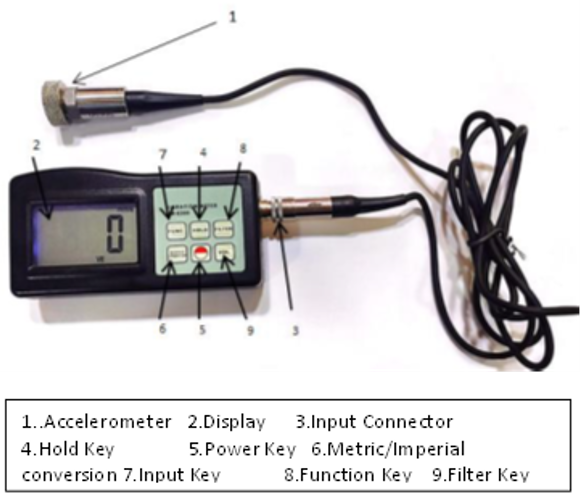
Experiments were conducted at Samawah, Province, Iraq during the winter agricultural season of 2024-2025 in order to evaluate the influence of tractor forward speed and soil moisture content on vibration levels, while disc harrowing operation at 15 cm depth. Vibration meter VM-6360 was used (Figure 1) to measure the acceleration magnitude (m.s-2) and displacement (mm) at seat and platform of tractor in vertical and horizontal direction. The vibration levels were measured at three forward speed (6.14, 8.35 and 10.23 km.h-1) and three soil moisture content (14.3, 18.5 and 22.1 %) with three replication . The soil texture was Silty Clay Loam and its Bulk density was 1.46 (g.cm-3).
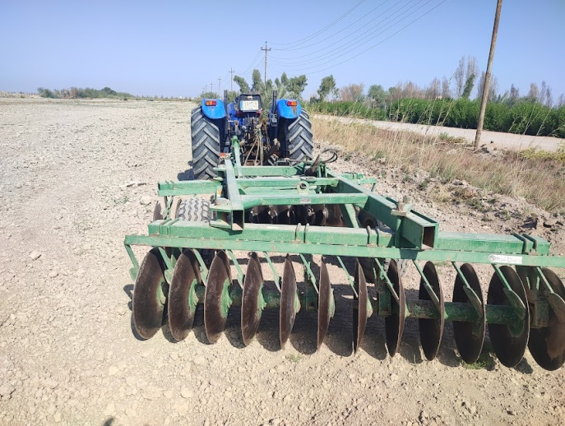
New Holand tractor (TD 80 (4WD)) and disc harrow were used in this experiment and their specifications are presented in Tables 1 and 2 and Figure 2.
Table 1: The specification of tractor used in experiments.
|
4-cylinder, naturally aspirated diesel |
Type |
|
TD-80 NewHoland |
Model |
|
58.8 kW (72 hp (Gross)) |
Power, kW (hp) |
|
2500 |
Crankshaft rated speed, rpm |
|
four-wheel drive (4WD) |
Wheel arrangement |
|
2007 |
Year of made |
Table 2: Specification of disc harrow.
|
Nardeen heavy disc harrow offset with two wheel-mounted with folding system for road transport |
Type |
|
Two |
gang number |
|
40 – 65 hp |
power requirement |
|
Italy |
origin |
|
3 m |
width |
|
200 mm |
maximum depth |
|
6 mm |
disk thickness |
|
front 15˚ rear 25˚ and gang open out angle 50˚ |
gang angle |
|
12 front serrated edge discs with diameter 680 mm and 12 rear smooth edge discs with diameter 600 mm |
Disc number |
|
1780 kg |
weight |
Measurement process
The acceleration (m.s-2) and displacement (mm) values at seat and platform of tractor in both direction were measured with VM-6360 vibration meter. Observations were taken at three tractor forward speeds in each direction of vibration at each selected moisture content. In order to measure the vibration in vertical direction at seat of driver, the vibration meter sensor was put under the seat. For measuring vibration at horizontal direction in seat position, meter sensor was put at back of the seat. Likewise, the vibrations at both directions was estimated at platform of tractor..
Experiment design
Experiment design Factorial experiment under Randomized Complete Block Design (RCBD) with three replications. Experimental data were analyzed using STATISTICA 13 software, Dell Inc. (2016) version 13. Tukey’s test. Means were compared at significant of (p ≤ 0.05). two factors sit in this experiment: Soil moisture (14. 3 ,18.5 and 22.1 %), and tractor forward speed (6.14 , 8.35 and 10.23 km.h-1.
Result and Discussion
Vibration level at tractor seat in vertical
The recent study is carried out to assess the tractor vibration in vertical and horizontal directions, during harrowing operation at three different forward speeds and three different soil moisture content. Vibration levels at tractor seat base were estimated in the vertical direction. The vibration transmitted to the seat base were represented by the accelerations (m.s-2) and displacement(mm), Table 3 shows that the third speed 10.23 km.h-1 gave the highest value 11.70 m/s2 and 0.76 mm, while the first speed 6.14 km.h-1 achieved the lowest values 6.37 m.s-2 and 0.53 mm for the accelerations and displacement respectively. This may be due to increasing speed leads to higher dynamic forces produced from the interface between the disc harrow and the soil. As speed increases, acceleration and force fluctuations also increase, resulting in greater vibration levels (Gao et. al., 2024).
Table 3: Effect of tractor forward speeds and soil moisture on vibration level at seat in vertical direction.
|
Factors |
Factor level |
Acceleration Mean (m/s2) |
S.D. |
displacement means (mm) |
S.D. |
|
Forward speed (Km.h-1) |
6.14 |
6.37a |
1.86 |
0.53a |
0.11 |
|
8.35 |
9.49b |
1.06 |
0.62b |
0.20 |
|
|
10.23 |
11.70c |
1.62 |
0.76c |
0.16 |
|
|
Soil moisture (%) |
14.3 |
11.16a |
2.19 |
0.83a |
0.13 |
|
18.5 |
8.28b |
2.34 |
0.57b |
0.11 |
|
|
22.1 |
8.10b |
2.52 |
0.49c |
0.09 |
The same table also revealed that the lowest soil moisture content 14.3% recorded the highest values of the acceleration and displacement. The values were 11.16 m.s-2 and 0.83 mm respectively. However, the soil moisture (22.1%) achieved the lowest values 8.10 m.s-2 and 0.49 mm, respectively. From Table 3, it can be observed that increasing the values of forward speed has the greatest contribution to affecting the level of acceleration and displacement, followed by decreasing soil moisture content. This phenomenon can be explained by the fact that dry soil tends to be more compact and cohesive, increasing its resistance to rotary tillage equipment. As a result, higher dynamic forces are generated, leading to greater vibration levels in the tractor and equipment system. In contrast, sufficiently moist soil exhibits greater deformability, reducing soil resistance and thus the intensity of vibration. However, excessively moist soil can increase slippage and instability, potentially producing irregular and unpredictable vibrations .
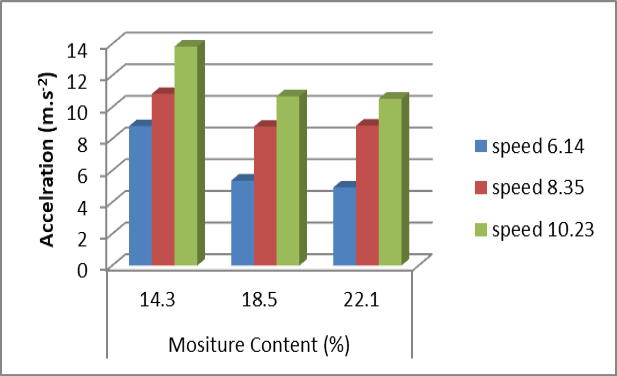
Figures 3 and 4 illustrate the effect of the interaction between forward speed and soil moisture on the vibration level at tractor seat in vertical direction, it can be seen that the forward speed of 6.14 km.h-1 and the content of soil moisture 22.1% recorded the lowest value of acceleration and displacement 4.94 m/s2 and 0.41 mm, respectively, whereas the forward speed of 10.23 km.h-1 and the content of soil moisture 14.3% recorded the highest values 13.84 m.s-2 and 0.95 mm for the acceleration and dissepiment, respectively.
Vibration level at tractor seat in horizontal direction
From the Table 4, we can see clearly that both studied factors significantly affected the vibration levels. The acceleration values were 4.57, 7.09 and 8.50 m.s-2, whereas the displacement values were 0.29, 0.46 and 0.52 mm at the forward speed of 6.14, 8.35 and 10.23 km.h-1, respectively. These results are consistent with what was found by (Villibor et al,. 2014) who confirmed that acceleration levels changed linearly with speed; the faster tractor moves forward, the greater the vibration on the front and rear axis.
From the same Table 4, it can be seen that the vibration level increased with decrement of the soil moisture %. The maximum acceleration and displacement values were 9.25 m.s-2 and 0.54 mm at soil moisture 14.3%, However, the lowest values 4.96 m.s-2 and 0.26 mm were obtained at soil moisture 22.1% . These results are steady with what were revealed by Kaufmann et al. (2025) who stated that the vibration intensity is significantly lower at higher soil moisture levels.
Table 4: Effect of tractor forward speeds and soil moisture on vibration level at seat in horizontal direction.
|
Factors |
Factor level |
Acceleration Mean (m.s-2) |
S.D. |
displacement means (mm) |
S.D. |
|
Forward speed (Km.h-1) |
6.14 |
4.57a |
1.31 |
0.29a |
0.06 |
|
8.35 |
7.09b |
2.14 |
0.46b |
0.11 |
|
|
10.23 |
8.50c |
2.42 |
0.52c |
0.19 |
|
|
Soil moisture (%) |
14.3 |
9.25a |
2.39 |
0.54a |
0.14 |
|
18.5 |
5.97b |
1.47 |
0.47b |
0.13 |
|
|
22.1 |
4.96c |
1.33 |
0.26c |
0.04 |
The results are shown in Figures 5 and 6 present the effect of the interaction between the study factors on acceleration and displacement at horizontal direction of tractor seat in horizontal direction. The highest values were 11.63 m.s-2 and 0.69 mm achieved at forward speed 10.23 km.h-1 and soil moisture of 14.3% while, the lowest values 3.26 m.s-2 and 0.21 mm were obtained from the interaction between first speed 6.14 km.h-1 and third soil moisture 22.1 km.h-1 for the acceleration and displacement, respectively.
Vibration level at tractor platform in vertical direction
The data of tractor platform vibration in vertical axis at different forward speed is compiled in Table 5. The outcomes showed that both vibration parameters increased with increase of the tractor forward speed. The third speed 10.23 km.h-1 gave the maximum values 8.57 m.s-2 and 0.69 mm, whereas the lowest values were 6.75 m.s-2 and 0.31 mm for the acceleration and displacement, respectively obtained at forward speed 6.14 km.h-1.
Table 5: Effect of forward speeds and soil moisture on vibration level at tractor platform in vertical direction.
|
Factors |
Factor level |
Acceleration Mean (m/s2) |
S.D. |
displacement means (mm) |
S.D. |
|
Forward speed (Km.h-1) |
6.14 |
6.75a |
2.10 |
0.31a |
0.11 |
|
8.35 |
7.17b |
1.74 |
0.42b |
0.11 |
|
|
10.23 |
8.57c |
2.29 |
0.69c |
0.10 |
|
|
Soil moisture (%) |
14.3 |
9.38a |
1.00 |
0.57a |
0.16 |
|
18.5 |
8.27b |
0.85 |
0.48b |
0.28 |
|
|
22.1 |
4.85c |
0.71 |
0.35c |
0.15 |
The results are presented in Table 5 also showed that low soil moisture was significantly contributed to raising of the level of vibrations considerably as compared to the highest soil moisture. The lowest values were 4.85 m.s-2 and 0.35 mm at 22.1% soil moisture level, while the highest values were 9.38 m.s-2 and 0.57 mm obtained during harrowing operation at 14.3% soil moisture, for the acceleration and displacement, respectively.
Figures 7 and 8, show that the minimum response of vibration level were found at all tractor forward speed during disc harrowing operation at highest soil moisture of study. On the other hand, vibration levels were high for all speeds used in this study when working at low soil moisture content. The minimum values were 4.00 m.s2 and 0.23 mm recorded at forward speed of 6.14 km.h-1 with soil moisture content of 22.1%, while the maximum values of acceleration 10.69 m.s-2 and displacement 0.76 mm were obtained during harrowing operation at soil moisture of 14.3% and forward speed 10.23 km/h.
Vibration level at tractor platform in horizontal direction
Table 6 reveals that forward speed of tractor has a highly significant affected the vibration levels at tractor platform during harrowing operation. However, the highest values were 8.82 m.s-2 and 0.28 mm obtained at forward speed of 10.23 km.h-1. In contrast, the lowest values were 3.86 m.s-2 and 0.16 mm recorded at forward speed of 6.14 km.h-1.
Table ٦: Effect of forward speeds and soil moisture on vibration level at tractor platform in horizontal direction.
|
Factors |
Factor level |
Acceleration Mean (m/s2) |
S.D. |
displacement means (mm) |
S.D. |
|
Forward speed (Km.h-1) |
6.14 |
3.86 a |
0.65 |
0.16a |
0.05 |
|
8.35 |
7.71 b |
1.8٧ |
0.20b |
0.06 |
|
|
10.23 |
8.82 c |
1.96 |
0.28c |
0.10 |
|
|
Soil moisture (%) |
14.3 |
8.33a |
2.79 |
0.29a |
0.06 |
|
18.5 |
7.07b |
2.62 |
0.22b |
0.07 |
|
|
22.1 |
4.99c |
1.39 |
0.12c |
0.02 |
Form Table 6, it can also be concluded that the soil moisture has significant influence on vibration level at horizontal direction. The values were 8.33, 7.07 and 4.99 m.s-2 and 0.29, 0.22 and 0.12 mm at soil moisture 14.3, 18,5and 22.1% for the acceleration and displacement, respectively.
Based on these findings, the decrease in vibration levels with increasing soil moisture is attributed to the increased elasticity of the soil with higher moisture content. This elasticity causes the soil to act as a damper rather than a solid surface that transmits vibrations directly to the tractor tires and then to the driver’s cab. The change in soil moisture has altered its damping properties, and tractor vibration can be reduced by dissipating the soil’s vibration energy . However, other researchers have pointed this out; Sinclair et al. (2021) found a negative correlation coefficient of 0.98 between soil moisture and tractor vibration levels, with vibration continuing to decrease as soil moisture increases in a very strong negative linear relationship.
Figures 9 and 10 illustrated that with increase of forward speed while working in low-moisture soil, vibration levels increase significantly. In contrast, when working at higher soil moisture content, increasing speed also increases vibration levels, but too less range as compared to dry soil. However, the lowest values were 3.30 m/s2 and 0.11 mm at forward speed of 6km.h-1 and soil moisture of 22.1% , while the highest values were 10.87 m/s2 and 0.38 mm at forward speed of 10.23 km.h-1 and soil moisture of 14.3%.
Conclusions
The values of acceleration and displacement at tractor seat and platform were significantly affected by increasing forward speed during disc harrowing operation in vertical and horizontal direction, However, Soil moisture plays a significant role in reducing vibration damping in tractors while working with three different moisture contents of soil, as the highest moisture content in the study recorded the lowest acceleration and displacement values. This means that it is important to avoid working at low-moisture soil due to their impact on tractor drivers, especially during extended working hours. Vibration values are outside of the limits allowed according to standards. In addition the level of vibration produced by tractor exceeded the allowable limit according to ISO standard. More studies should be conducted in order to reduce the level of vibration. These results climax the significance of reducing vibration levels for agricultural tractor and equipment designers. Successful machinery geometry, suspension systems, and operating considerations can assist reducing operator exposure to extreme vibration level, improve machine stability, and improve overall tillage efficiency.
Acknowledgment
We deeply appreciate the College of Agriculture, Al -Muthanna University which were very helpful to us in carrying out this research.
Novelty Statement
This study provides a comprehensive evaluation of the combined effects of forward speed and soil moisture content on tractor vibration during disc harrowing, highlighting their interaction under actual field conditions. The findings contribute to optimizing operating parameters that simultaneously improve operator comfort, field performance, and machinery efficiency.
Author’s Contribution
Flaieh Hammed Kassar: Conceived and designed the study, conducted the field experiments, collected and analyzed the data, interpreted the results, and prepared the original manuscript draft.
Ahmed Merza Abood: Contributed to the experimental design, supervised the research, assisted in data interpretation, critically reviewed the manuscript, and provided scientific guidance throughout the study.
Jawad Kadhim Al Aridhee: Assisted with data collection and statistical analysis, contributed to the interpretation of the results, reviewed and edited the manuscript, and approved the final version for publication.
All authors read and approved the final manuscript and agree to be accountable for all aspects of the work.
Ethical review
This study does not involve any human or animal testing.
Informed consent
Written informed consent was obtained from all study participants.
Generative AI and AI assisted technology statement
The authors declare that no generative AI and AI assisted technology was used in the creation of this manuscript.
Conflict of interest
The authors have declared no conflict of interest.
Figures
Vibration meter VM-6360.
Heavy disc harrow offset with tractor.
Effect of the interaction between forward speed and soil moisture content on acceleration level at tractor seat in vertical direction.
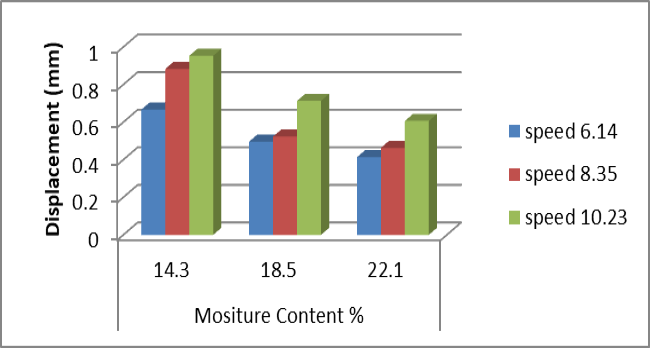
Effect of the interaction between forward speed and soil moisture content on displacement level at tractor seat in vertical direction.
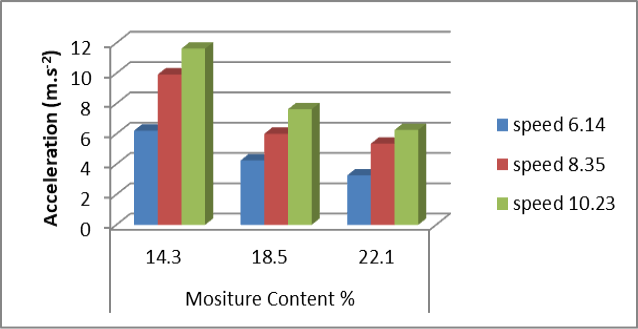
Effect of the interaction between forward speed and soil moisture content on acceleration level at tractor seat in horizontal direction.
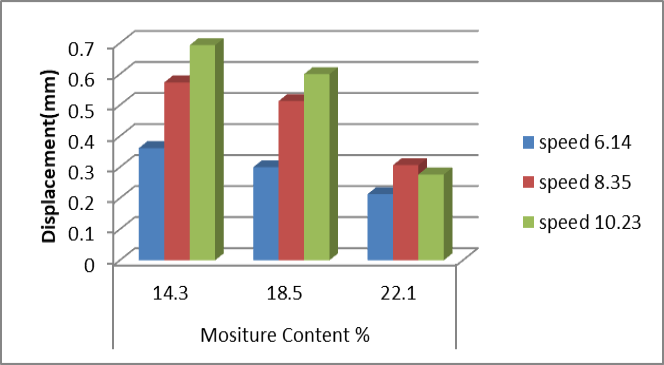
Effect of the interaction between forward speed and soil moisture content on displacement at tractor seat in horizontal direction.
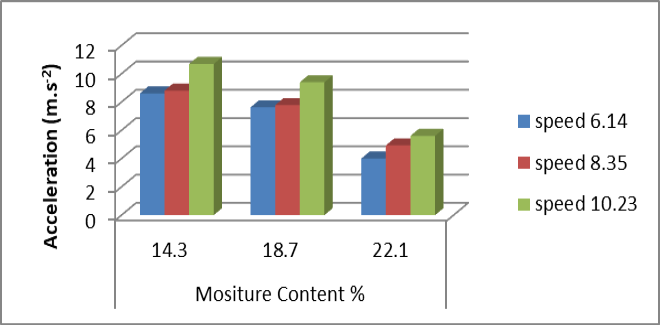
Effect of interaction between forward speed and soil moisture content on acceleration level at tractor platform in vertical direction.
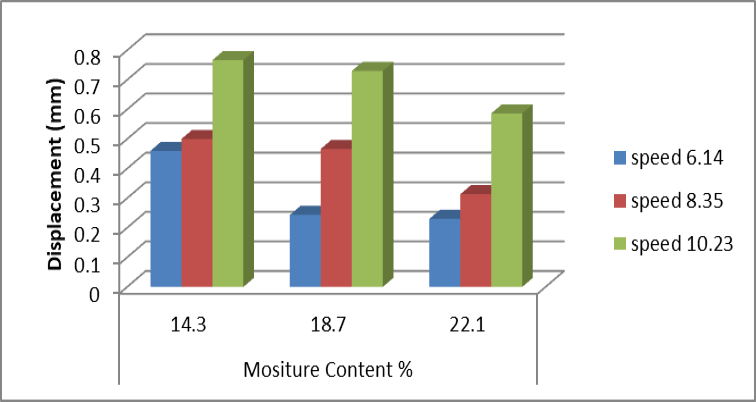
Effect of the interaction between forward speed and soil moisture content on displacement level at tractor platform in vertical direction.
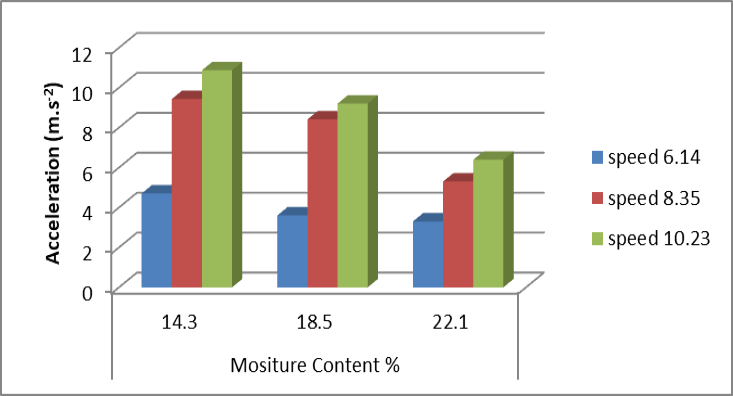
Effect of interaction between forward speed and soil moisture content on acceleration level at tractor platform in horizontal direction
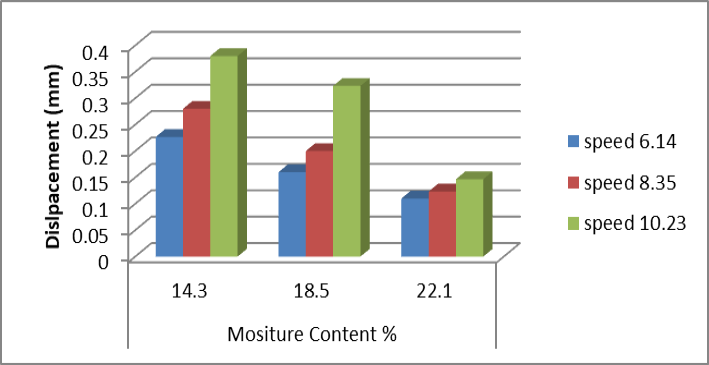
Effect of interaction between forward speed and soil moisture content on displacement at tractor platform in horizontal direction.
References
- Abood, A.M., Al-Aridhee, J.K., Kassar, F.H., Łysiak, G. and Dakhil, M.M., 2023. Assessment of body discomfort and physiological cost of tractor drivers during tillage operation with mould board plough. IOP Conf. Ser. Earth Environ. Sci., 1225(1): 012103. https://doi.org/10.1088/1755-1315/1225/1/012103[CrossRef]
- Abood, A.M., Aridhee, J.K.A., Kassar, F.H., Lysiak, G. and Dakhil, M.M., 2020. Anthropometric survey on male agricultural workers of the middle Euphrates area, Iraq. Indian J. Ecol., 47(12): 385-390.
- Adam, S.A., Jalil, N.A., Rezali, K.M., Ng, Y.G., Sound and Vibration Research Group. 2020. The effect of posture and vibration magnitude on the vertical vibration transmissibility of tractor suspension system. Int. J. Ind. Ergon., 80: 103014. https://doi.org/10.1016/j.ergon.2020.103014[CrossRef]
- Cuong, D.M., Zhu, S. and Zhu, Y. 2013. Effects of tyre inflation pressure and forward speed on vibration of an unsuspended tractor. J. Terramechanics, 50(3): 185-198. https://doi.org/10.1016/j.jterra.2013.05.001[CrossRef]
- Cvetanovic, B. and Zlatkovic, D., 2013. Evaluation of whole-body vibration risk in agricultural tractor drivers. Bulg. J. Agric. Sci., 19(5): 1155-1160
- Dahham, G.A., Muhamed, S.T. and Saleh, S.M., 2019. Practical study for the effect of speed, direction of acceleration and type of machine on vibrations transferred to the steering wheel horticulture tractor type (goldoni). Eng. J., 11(1): 48-58. https://doi.org/10.4236/eng.2019.111005[CrossRef]
- Dell Inc. (2016). Dell Statistica (data analysis software system), version 13. Software.dell.com.
- Dimitriadis, C.I., Kateris, D., Xyradakis, P., Gialama, A. and Gialamas, T., 2023. Vibration assessment of tractor operator based on vibration signals. Inmateh Agric. Eng., 71(3): 776-784. https://doi.org/10.35633/inmateh-71-68[CrossRef]
- Gao, Y., Yang, Y., Fu, S., Feng, K., Han, X., Hu, Y. and Wei, X., 2024. Analysis of vibration characteristics of tractor–rotary cultivator combination based on time domain and frequency domain. Agriculture, 14(7): 1139. https://doi.org/10.3390/agriculture14071139[CrossRef]
- Gialamas, T., Gravalos, I., Kateris, D., Xyradakis, P. and Dimitriadis, C., 2016. Vibration analysis on driver’s seat of agricultural tractors during tillage tests. Spanish J. Agric. Res., 14(4): 5-14. https://doi.org/10.5424/sjar/2016144-9664[CrossRef]
- Hilal, Y.Y., Al-rajabo, S.A.J. and Dahham, G.A., 2021. The effects of vibrating wings subsoiler plow on driver’s seat of agricultural tractors and mechanization performance. Soil Tillage Res., 205: 104806. https://doi.org/10.1016/j.still.2020.104806[CrossRef]
- Janbazialamdari, S., Flippo, D., Ridder, E. and Brokesh, E., 2025. Soil compaction prediction in precision agriculture using cultivator shank vibration and soil moisture data. Agriculture, 15(17): 1896. https://doi.org/10.3390/agriculture15171896[CrossRef]
- Jiang, Q., Weiqiang, N.I., Liangyuan, X.U., Zhang, X. and Jiang, D., 2020. A simulation study on the influence of suspension system parameters on tractor vibration characteristics. Acad. J. Manuf. Eng., 18(2): 12-19.
- Kadam, G.N. and Deshmukh, Y.A., 2021. Optimization of agriculture tractor seat vibration using passive suspension system and modelling and simulating in ansys. Int. J. Trend Sci. Res. Dev., 5(5): 1558-1569.
- Kassar, F.H., Abood, A.M. and Al-Aridhee, J.K., 2024. Study of tractor vibration during sowing operation. Thai J. Agric. Sci., 24(4): 193-204. https://doi.org/10.25130/tjas.24.4.16[CrossRef]
- Kassar, F.H., Aridhee, J.K.A., Abood, A.M., Szymanek, M., Lysiak, G. and Dakhil, M.M., 2020. Effect of various Tillage systems on sone of soil Physical Properties and Wheat yield Parameters. Int. J. Agric. Stat. Sci., 16(1): 1605-1610.
- Kaufmann, H.H., Siebald, H., Bilibio, C., Nasirahmadi, A. and Hensel, O., 2025. Acoustic monitoring of soil water content during tillage and sowing. Soil Adv., 3: 100040. https://doi.org/10.1016/j.soilad.2025.100040[CrossRef]
- Liu, G., Xia, J., Zheng, K., Cheng, J., Wang, K., Zeng, R., Wang, H. and Liu, Z., 2022. Effects of vibration parameters on the interfacial adhesion system between soil and metal surface. Soil Tillage Res., 218: p.105294. https://doi.org/10.1016/j.still.2021.105294[CrossRef]
- Renius, K.T., 2020. Fundamentals of tractor design.Vol. 503: Cham, Switzerland: Springer. https://doi.org/10.1007/978-3-030-32804-7[CrossRef]
- Sinclair, A.N., Redda, D.T., Wondimu, D.H. and Busse, S.K., 2021. Evaluation of single axle tractor handle vibration characteristic and effect of soil and machine parameters on the vibration. Evaluation, 51(1): 849-861.
- Singh, A., Nawayseh, N., Singh, H., Samuel, S., Prakash, C., Singh, R. and Chhuneja, N.K., 2022. Modelling and optimization of tractor ride conditions under water tanker operation. Theor. Issues Ergon. Sci., 23(4): 453–474. https://doi.org/10.1080/1463922X.2021.1981481[CrossRef]
- Villibor, G.P., Santos, F.L. and Júnior, M.R.F., 2015. Mechanical vibrations at the seat base of a tractor during the subsoiling operation. Agrarian, 8(27): 64-73.
- Villibor, G.P., Santos, F.L., de Queiroz, D.M. and Guedes, D.M. 2014. Vibration levels on rear and front axles of a tractor in agricultural operations. Acta Sci. Technol., 36(1): 7-14. https://doi.org/10.4025/18170[CrossRef]
Services
Article usage statistics
Loading…