
Rural households engaged in agriculture are continuously exposed to a wide range of production and climate-related risks that can significantly disrupt income stability and long-term financial well-being. Agricultural insurance has emerged as a key mechanism for reducing vulnerability and improving resilience among farming communities. This study investigates the contribution of agricultural insurance to the financial sustainability of rural households in selected districts of Azerbaijan, namely Shamkir, Tovuz, Agstafa, and Qazakh. Primary data were obtained from 180 households through structured surveys and interviews conducted between September 2024 and February 2025. The empirical analysis employs descriptive statistics, chi-square tests, and binary logistic regression to explore relationships between insurance participation and financial stability indicators. The results indicate that insured households tend to experience more stable incomes, improved recovery after agricultural shocks, and better access to credit services. At the same time, the level of insurance uptake remains moderate due to limited awareness, financial constraints, and informational gaps. The findings further suggest that education, farm size, income level, and extension service access are significant determinants of insurance adoption. The study concludes that improving institutional support and farmer awareness could enhance the effectiveness of agricultural insurance systems in rural Azerbaijan.
Research Article · Volume 39, Issue 3, 13 September 2026 · Open Access
Agricultural Insurance and Financial Sustainability of Rural Households: Evidence from Azerbaijan
·
Affiliations & Notes ⌄
- 1Department of Finance and Accounting, Faculty of Agricultural Economics, Azerbaijan State Agricultural University, Ganja, Azerbaijan. *Correspondence | Jafar Jafarov, Department of Finance and Accounting, Faculty of Agricultural Economics, Azerbaijan State Agricultural University, Ganja, Azerbaijan
- 2Email: cafar.cafarov@adau.edu.az, jafarj@list.ru
Article Info ⌄
- Journal:
- Pakistan Journal of Agricultural Research
- Published:
- 13 September 2026
From the article
- The positive coefficient for insurance participation suggests that insured households are more likely to maintain financial stability under agricultural risk conditions.
- The findings indicate that agricultural insurance contributes positively to income stability, recovery capacity after agricultural losses, and access to financial resources among rural households.
- The study also found that education level, farm size, household income, and access to extension services significantly influence participation in agricultural insurance programs.
- Therefore, improving farmer awareness, strengthening rural extension services, and increasing institutional support for affordable insurance products may contribute to wider insurance adoption and improved rural financial sustainability in Azerbaijan.
Selected from the article's own text.
Abstract
Introduction
Agriculture continues to play a central role in the livelihoods of rural populations, particularly in developing and transition economies where household income is strongly dependent on agricultural output. However, this sector is highly sensitive to external shocks, including extreme weather events, pests, and unstable market conditions . Such uncertainties often translate into income fluctuations and reduced financial security for rural families ; . Agricultural insurance is increasingly recognized as an important policy tool for managing these risks. It provides financial compensation for production losses and helps farmers recover more quickly after adverse events ; . The World Bank (2023) highlights that risk financing instruments are essential components of climate adaptation strategies in agriculture. Similarly, FAO (2023) emphasizes that structured risk management systems play a crucial role in strengthening rural food security. Beyond its protective function, insurance coverage also facilitates improved access to credit and encourages greater investment in agricultural production systems ; ; . Empirical literature confirms that agricultural insurance contributes to income stabilization and resilience building in rural economies ; ; . Despite these advantages, insurance adoption in many developing countries remains relatively low. Financial limitations, lack of awareness, and trust issues are frequently cited as key barriers ; ; . In addition, weak institutional frameworks and insufficient extension services further restrict access to insurance mechanisms in rural regions ; .
In Azerbaijan, agricultural insurance has been gradually introduced as part of broader agricultural reforms . Although institutional frameworks have been strengthened in recent years, uptake among rural households remains limited, particularly among small-scale farmers (FAO, 2021, 2023; ; . Existing evidence on the household-level effects of agricultural insurance in Azerbaijan is still limited, especially regarding its role in improving financial sustainability indicators such as income stability and recovery capacity. Therefore, this study aims to analyze the impact of agricultural insurance on the financial sustainability of rural households in Shamkir, Tovuz, Agstafa, and Qazakh districts, while also identifying key determinants of insurance adoption.
Materials and Methods
Study area
The study was conducted in rural areas of Azerbaijan, specifically in the districts of Shamkir, Tovuz, Agstafa, and Qazakh. These districts are located in the western part of the country and are characterized by a strong dependence on agriculture, including crop production and livestock farming. The selected regions are also frequently exposed to climate-related risks such as drought, hail, and seasonal weather variability, which makes agricultural insurance an important risk management tool for rural households.
Data collection and sampling
Primary data were collected through a structured household survey conducted between September 2024 and February 2025. A total of 180 rural households were selected using a stratified random sampling technique to ensure representation of both insured and uninsured farmers. The survey instrument included sections on socio-economic characteristics of households, farm structure and production patterns, awareness and adoption of agricultural insurance, financial sustainability indicators. In addition to survey data, semi-structured interviews were conducted with selected farmers and local agricultural extension specialists to gain qualitative insights into insurance adoption behavior.
Variables and measurement
The dependent variable of the study is “financial sustainability of rural households”, which is measured through indicators such as income stability, ability to recover from agricultural losses, access to agricultural credit, savings capacity, continuity of farming operations after shocks. The key independent variable is “agricultural insurance participation” (insured = 1, uninsured = 0).
Control variables include age of household head, education level, farming experience, farm size, annual household income, access to extension services. These variables are commonly used in studies on agricultural insurance adoption and rural financial behavior ; .
Analytical framework
The study employs both descriptive and inferential statistical methods.
Descriptive analysis
Descriptive statistics such as frequency distributions, percentages, and mean values were used to summarize socio-economic characteristics and insurance adoption patterns among rural households.
Chi-square test
The relationship between categorical variables (e.g., insurance adoption and education level, farm size categories) was examined using the chi-square test :
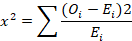
Where: Oi represents observed frequencies, Ei represents expected frequencies under the null hypothesis.
Logistic regression model
To analyze the determinants of financial sustainability and the impact of insurance participation, a binary logistic regression model was applied :

Where; PPP = probability of being financially sustainable, INS = agricultural insurance participation, AGE = age of household head, EDU = education level, FSIZE = farm size, INC = household income, EXT = access to extension services and ε = error term.
Software and significance level
All statistical analyses were conducted using SPSS version 26.0. The significance levels were set at 1%, 5%, and 10% to determine the statistical relevance of estimated coefficients.
Limitations of the study
This study has certain limitations. First, the analysis is based on cross-sectional data, which limits the ability to capture long-term dynamics. Second, the study relies on self-reported survey responses, which may introduce reporting bias. Third, the geographical scope is limited to four districts, which may restrict the generalizability of findings to other regions of Azerbaijan.
Results and Discussion
Socio-economic characteristics of respondents
The socio-economic profile of surveyed households indicates that agriculture remains the primary source of income for most respondents in the study areas. Among the 180 surveyed households, 68.3% were engaged mainly in crop production, while 31.7% combined crop farming with livestock activities. The average age of household heads was 46.8 years, and the majority of respondents had secondary or vocational education.
The findings also show that insured households generally possessed relatively larger farm sizes and higher annual incomes compared to uninsured households. In addition, insured farmers demonstrated better access to agricultural extension services and financial information. Similar patterns have been reported in recent studies examining agricultural risk management in developing rural economies ; .
Table 1: Socio-economic characteristics of surveyed households.
|
Variables |
Insured households (%) |
Uninsured households (%) |
|
Primary education |
18.2 |
31.4 |
|
Secondary education |
46.5 |
48.7 |
|
Higher education |
35.3 |
19.9 |
|
Farm size above 5 ha |
41.7 |
22.6 |
|
Access to extension services |
63.5 |
34.1 |
|
Access to agricultural credit |
58.8 |
27.9 |
The results suggest that education and institutional access play an important role in shaping farmers’ participation in agricultural insurance programs.
Agricultural insurance adoption among rural households
The survey findings reveal that agricultural insurance adoption remains moderate across the selected districts. Out of the total respondents, 44.4% reported having agricultural insurance coverage, while 55.6% were uninsured at the time of the survey. Among insured households, crop insurance represented the most common type of coverage, followed by livestock insurance. Farmers stated that increasing climate variability and recurring crop losses were the main reasons motivating participation in insurance schemes. However, uninsured respondents frequently identified high premium costs, insufficient information, and low trust in insurance procedures as major barriers to adoption.
Table 2: Main barriers to agricultural insurance adoption.
|
Barriers |
Percentage (%) |
|
High insurance premiums |
34.8 |
|
Lack of awareness |
27.6 |
|
Limited trust in insurance institutions |
18.9 |
|
Complicated procedures |
11.4 |
|
Limited institutional access |
7.3 |
These findings are consistent with international evidence indicating that affordability and information asymmetry remain major obstacles to insurance expansion in rural areas ; FAO, 2023).
Relationship between insurance adoption and financial sustainability
Chi-square analysis demonstrated a statistically significant relationship between agricultural insurance participation and several indicators of household financial sustainability. Insured households reported greater income stability and stronger recovery capacity after adverse agricultural events compared to uninsured households. The analysis further revealed that insured farmers were more likely to maintain agricultural production following climate-related losses. In contrast, uninsured households experienced greater financial disruptions and were more dependent on informal borrowing or external assistance after production shocks.
Table 3: Chi-square analysis of selected variables and insurance adoption.
|
Variables |
Chi-square value |
p-value |
|
Education level |
9.84 |
0.007 |
|
Farm size |
11.27 |
0.004 |
|
Access to extension services |
13.16 |
0.002 |
|
Household income |
8.41 |
0.011 |
The results indicate that education level, farm size, and institutional support services significantly influence agricultural insurance participation among rural households.
Logistic regression results
To further evaluate the determinants of financial sustainability, a binary logistic regression model was estimated. The regression results indicate that agricultural insurance participation positively affects the probability of household financial sustainability.
Table 4: Logistic regression results for financial sustainability.
|
Variables |
Coefficient (β) |
Standard Error |
p value |
|
Insurance participation |
0.842 |
0.291 |
0.004 |
|
Education level |
0.517 |
0.214 |
0.016 |
|
Farm size |
0.436 |
0.177 |
0.013 |
|
Household income |
0.391 |
0.169 |
0.021 |
|
Extension services access |
0.473 |
0.198 |
0.018 |
|
Constant |
-1.284 |
0.447 |
0.006 |
The positive coefficient for insurance participation suggests that insured households are more likely to maintain financial stability under agricultural risk conditions. Access to extension services and higher education levels also demonstrate statistically significant positive effects on household resilience. These findings support previous international studies emphasizing that agricultural insurance contributes to reducing vulnerability and strengthening rural economic resilience through improved risk management mechanisms ; .
The findings of this study demonstrate that agricultural insurance can contribute positively to the financial sustainability of rural households in Azerbaijan. Insured farmers exhibited stronger resilience against production shocks, improved access to credit, and relatively greater income stability compared to uninsured households. These outcomes are particularly important in regions where agricultural production remains highly vulnerable to climate variability and market uncertainty. However, the study also reveals that insurance penetration remains limited among small-scale producers. Financial constraints and insufficient awareness continue to restrict participation in insurance schemes, especially among households with lower education levels and smaller farm sizes. This indicates that institutional reforms alone may not be sufficient unless accompanied by broader awareness campaigns and targeted support mechanisms. The results further highlight the importance of extension services in promoting agricultural insurance adoption. Farmers who had regular contact with agricultural advisors demonstrated higher participation rates and better understanding of insurance mechanisms. Therefore, strengthening rural extension systems could play a significant role in improving insurance outreach and enhancing financial resilience among rural households. Overall, the study suggests that agricultural insurance should be integrated more effectively into broader rural development and climate adaptation strategies in Azerbaijan. Expanding farmer education programs, improving institutional trust, and increasing affordability through targeted subsidies may help strengthen the effectiveness of agricultural insurance systems in rural communities.
Conclusions
This study examined the role of agricultural insurance in enhancing the financial sustainability of rural households in the Shamkir, Tovuz, Agstafa, and Qazakh districts of Azerbaijan. The findings indicate that agricultural insurance contributes positively to income stability, recovery capacity after agricultural losses, and access to financial resources among rural households. Insured farmers demonstrated relatively stronger resilience to climate-related and production risks compared to uninsured households. The study also found that education level, farm size, household income, and access to extension services significantly influence participation in agricultural insurance programs. Despite these positive effects, insurance adoption remains limited due to affordability concerns, low awareness levels, and insufficient understanding of insurance mechanisms among small-scale farmers. Therefore, improving farmer awareness, strengthening rural extension services, and increasing institutional support for affordable insurance products may contribute to wider insurance adoption and improved rural financial sustainability in Azerbaijan.
Acknowledgments
The authors would like to express their sincere gratitude to the rural households, farmers, and agricultural specialists from the Shamkir, Tovuz, Agstafa, and Qazakh districts who participated in the survey and shared valuable information during the research process. The authors also appreciate the support provided by local agricultural extension representatives and academic colleagues who contributed to data collection and field observations.
Novelty Statement
This study contributes to the existing literature by providing empirical evidence on the relationship between agricultural insurance and the financial sustainability of rural households in Azerbaijan. Unlike previous studies that primarily focus on institutional and policy aspects of agricultural insurance, this research evaluates household-level impacts related to income stability, recovery capacity, and financial resilience. The study also offers region-specific evidence from the Shamkir, Tovuz, Agstafa, and Qazakh districts, where empirical research on agricultural insurance adoption remains limited. By combining descriptive statistics with econometric analysis, the research provides practical insights for improving agricultural risk management and rural development policies in Azerbaijan.
Author’s Contribution
Jafar Jafarov contributed to the conceptualization of the study, research design, data interpretation, and overall supervision of the manuscript. Niyaz Mammadov was responsible for data collection, statistical analysis, literature review, and manuscript preparation. Both authors reviewed and approved the final version of the manuscript before submission.
Data availability
Data requested will be provided by corresponding author.
Funding statement
No funding was acquired by this study.
Generative AI and AI assisted technology statement
The authors declare that no generative AI and AI assisted technology was used in the creation of this manuscript.
Conflict of interest
The authors have declared no conflict of interest.
References
- Agresti, A., 2018. An introduction to categorical data analysis (3rd ed.). Wiley.
- Carter, M.R., de Janvry, A., Sadoulet, E. and Sarris, A., 2017. Index insurance for developing countries: A review of evidence and a set of policy recommendations. World Dev., 93: 223–241.
- Cole, S., Giné, X. and Vickery, J., 2013. How does risk management influence production decisions? Evidence from a field experiment. Rev. Finan. Stud., 26(7): 1825–1867. https://doi.org/10.1596/1813-9450-6546[CrossRef]
- Dercon, S., 2018. Risk, poverty and insurance in low-income countries. Oxford Rev. Econ. Policy, 34(3): 338–363.
- FAO, 2021. Making agrifood systems more resilient to shocks and stresses. FAO.
- FAO, 2023. The State of Food and Agriculture 2023: Revealing the true cost of food to transform agrifood systems. Food and Agriculture Organization of the United Nations.
- Giné, X. and Yang, D., 2009. Insurance, credit, and technology adoption: Field experimental evidence from Malawi. J. Dev. Econ., 89(1): 1–11. https://doi.org/10.1016/j.jdeveco.2008.09.007[CrossRef]
- Greatrex, H., Hansen, J.W., Garvin, S., Diro, R., Blakeley, S., Le Guen, M., Rao, K.N. and Osgood, D., 2015. Scaling up index insurance for smallholder farmers. CCAFS Report.
- Hazell, P.B.R., 2018. Agricultural insurance for developing countries. World Dev., 105: 1–15.
- Hosmer, D.W., Lemeshow, S. and Sturdivant, R.X., 2013. Applied logistic regression (3rd ed.). Wiley. https://doi.org/10.1002/9781118548387[CrossRef]
- IFAD, 2023. Rural development report 2023: Building inclusive rural financial systems. International Fund for Agricultural Development.
- IPCC, 2022. Climate Change 2022: Impacts, Adaptation and Vulnerability. Cambridge University Press.
- Karlan, D., Osei, R., Osei-Akoto, I. and Udry, C., 2014. Agricultural decisions after relaxing credit and risk constraints. Quart. J. Econ., 129(2): 597–652. https://doi.org/10.1093/qje/qju002[CrossRef]
- Mahul, O. and Stutley, C.J., 2010. Government support to agricultural insurance: Challenges and options for developing countries. World Bank. https://doi.org/10.1596/978-0-8213-8217-2[CrossRef]
- Miranda, M.J. and Farrin, K., 2012. Index insurance for developing countries. Appl. Econ. Perspect. Policy, 34(3): 391–427. https://doi.org/10.1093/aepp/pps031[CrossRef]
- OECD, 2023. Agricultural policy monitoring and evaluation 2023. Organisation for Economic Co-operation and Development.
- Rao, K.N., 2022. Index-based insurance and smallholder resilience. Clim. Risk Manage., 36: 100–432.
- Rosenzweig, M.R. and Binswanger, H.P., 1993. Wealth, weather risk and the composition of agricultural investments. Econ. J., 103(416): 56–78. https://doi.org/10.2307/2234337[CrossRef]
- Skees, J.R. and Barnett, B.J., 2017. Conceptual and practical considerations for sharing catastrophic/systemic risks. Rev. Market. Agric. Econ., 85(3): 345–364.
- World Bank, 2021. Resilience and rural development report. World Bank.
- World Bank, 2022. Enabling agricultural risk management in developing countries. World Bank.
- World Bank, 2023. Agriculture risk management: Managing climate and disaster risks in agriculture. World Bank Group.
- Zant, W., 2023. Agricultural insurance adoption and climate risk management in developing economies. Agric. Finance Rev., 83(2): 210–228.
Services
Article usage statistics
Loading…