
Microplastics (MPs), which are defined as particles of plastic waste with a size smaller than 5 mm, are considered as emerging contaminants and attract global attention. On plants, MPs have detrimental effects such as interfering with nutrient absorption, slowing germination and roots development. Of all the stages of growth, seeding has an important role in the crop yields obtained. The examined the impact of three polymer MPs (1 % w w–1) on paddy seeding and control as a comparison with four repetitions by using soil culture experiment for 20 d. Plant height, leaf length, root length, fresh weight, chlorophyll, and MPs identification in the roots were observed in this study. The data gained were run through ANOVA, followed by randomized complete block design (RCBD). Overall, three types of MPs polymers affect the growth of rice plants. HDPE (High Density Polyethylene) showed no effect on root elongation compared to LDPE (Low Density Polyethylene) and PVC (Polyvinyl Chloride) although all MPs still reduced plant growth (27 % HDPE, 36 % PVC and 20 % LDPE), fresh weight (20 % HDPE, 33 % PVC, and 25 % LDPE) and total chlorophyll (72.5 % HDPE, 33.3 % PVC, and 19.8 % LDPE). HDPE types tend to require a longer time to fragment into smaller plastic sizes compared than other microplastics, soe not accumulated thoroughly in the roots. Further research should be carried out by treating organic matter and earthworms to bioremediate MPs.
Special Issue: Novel Advances in Agricultural Science and Technology for Sustainable Farming in Tropical Region · Volume 39, Issue 1, 11 July 2024 · Open Access
Effect of High-Density Polyethylene, Polyvinyl Chloride and Low-Density Polyethylene Microplastics on Seeding of Paddy
· · · · · · · · · · · · · · · ·
Affiliations & Notes ⌄
- 1University of Muhammadiyah Malang, Malang 65144, East Java, Indonesia
- 2Universitas Islam Madura, Pamekasan 69317, East Java, Indonesia
- 3University of Darma Persada, Capital Special Region of Jakarta 13450, Indonesia
- 4University of Agriculture, Peshawar 25130, Khyber Pakhtunkhwa, Pakistan
- 5Center Reseach and Diagnostic, Satwa Sehat Indonesia, Malang 65146, East Java, Indonesia
- 6University of Wiraraja, Sumenep 69451, East Java, Indonesia
- 7PT. Zakiyah Jaya Mandiri, Lumajang 67381, East Java, Indonesia
- 8University of Lancang Kuning, Pekanbaru 28265, Riau, Indonesia
- 9Universitas Islam Darul Ulum, Lamongan 62253, Indonesia. , *Correspondence | Wahyu Widodo, Department of Animal Sciences, Faculty of Agriculture and Animal Science, University of Muhammadiyah Malang, Jl. Raya Tlogo Mas No. 246, Malang 65144, East Java, Indonesia
- 10Email: wahyu@umm.ac.id
Article Info ⌄
- Journal:
- Sarhad Journal of Agriculture
- Published:
- 11 July 2024
From the article
- This research clearly shows that the presence of HDPE, LDPE, and PVC MPs polymers in soil can cause growth disorders to rice plants.
- HDPE types showed no effect on root elongation compared to LDPE and PVC although all types of MPs still reduced plant growth, chlorophyll and fresh weight.
- HDPE types tend to take longer to fragment into smaller plastic sizes than other MPs, so they have not accumulated thoroughly in the roots.
Selected from the article's own text.
Abstract
Introduction
Microplastics (MPs), which are defined as particles of plastic waste with a size smaller than 5 mm, are considered as emerging contaminants and attract global attention ; Setyobudi et al., 2024a; . In recent years, scientists around the world have observed and investigated the phenomenon of MPs pollution in marine ecosystems, and more recently in inland fresh water, with increasing awareness of its negative impacts . However, MPs are rarely investigated, although recent studies have shown that plastic waste may be more abundant in soil than in oceans ; . These particles mainly come from the disintegration of plastic mulch, polybag, plastic sacks of fertilizers, harvest sacks, and household waste ; Setyobudi et al., 2024b). The use of plastic has increased drastically in recent years, accounting for 10 % of the total waste generated worldwide . While some plastic waste is recycled, most of it is in landfills or agricultural land. In general, people often use plastic for various purposes. Of all the types of plastic that have been mentioned. High Density Polyethylene (HDPE), Polyvinyl chloride (PVC) and Low-Density Polyethylene (LDPE) are often found in the surrounding environment where these types of plastics are spread further by airborne (derived from landfills or other surface deposits) . Airborne plastics can enter the agricultural environment (Setyobudi et al., 2024b). The types of LDPE, PVC and HDPE plastics in the soil can damage soil structure, reduce infiltration of rainwater and irrigation water, and damage groundwater holding capacity. Qi et al. (2020) found that these MPs disturb soil organic carbon (C) and nitrogen (N) cycling, soil microbial activity, and nutrient transfer. Therefore, changes in soil properties and nutrients can also affect plant growth . In their research, Lima et al. (2023) showed that LDPE inhibited germination rate but root length, shoot length and wheat biomass did not experience significant changes.
Paddy rice (Oryza sativa L.) is a food crop as a source of energy which Indonesian people generally consume. The significance of rice is so important that crop failure can result in widespread social upheaval. However, MPs can be toxic to rice seedlings . Rice seedlings can accumulate MPs in their roots and translocate them to the aboveground tissue, it is possible that MPs that have accumulated in rice plant tissue can be moved to a higher trophic level in the food chain, this can happen when rice plants contaminated with MPs are eaten by animals or humans, so that the MPs enter the organism’s body and move to higher trophic levels in the food chain ; . On the basis of these problems, this research needs to be conducted to determine the effect of the three types of MPs that was often found on the growth of rice seeds.
Materials and Methods
Experimental preparation and treatment
The research was conducted using a soil culture experiment. The treatment included three types of plastic namely HDPE, LDPE, PVC and control as a comparison with four repetitions. Rice planting is carried out in trays made of stainless to reduce the aggregation of other microplastics. The soil used was taken from Banyupelle Village, Pamekasan (East Java province) 7°04’38”S 113°24’15”E, which has a pH of 6 with an organic matter content of 1.21 % (organic matter content is relatively low). The soil was air dried at room temperature and sieved through a 1 mm mesh before use. Three types of plastic were crushed (size 200 μm to 250 μm in diameter) using a blender machine (Sharp Blazter SB-TW101P) and mixed with sterile soil as much as 1 % w w–1 for each treatment. The soil after being treated with plastic is then left for 4 wk and is ready for planting rice seeds. The rice seeds used in this study were the Inpari-32 cultivar
The research in trays aims to evaluate the impact of each type of MPs polymer on rice growth. The treatment consisted of control (original soil), LDPE, PVC and HDPE. MP was given at a concentration of 1 % (w w–1) for each type of polymer. The tray used is 40 cm × 30 cm × 4 cm containing 2 000 g of soil. Water application is given as much as 60 % for 48 h. The seeds were soaked in H2O2 for 30 min. Total of 40 rice seeds were spread into trays for 15 d. A total of 16 trays were available for four treatments and four replications. The observed growth analysis included leaf length, plant height, root length, and total fresh weight.
Determination chlorophyll and identification microplastic
After 15 d of planting, chlorophyll (chl a, chl b, and total chlorophyll) was measured. 0.1 g of fresh leaves from each treatment was weighed. The leaf samples were crushed with a porcelain mortar until smooth and mixed with 10 mL of acetone (C3H6O) solution. The solution is then placed in the tube. Then it is put into a centrifuge so that it can distinguish the extract from the remaining leaves. The extract was put into a cuvette and the absorbance was measured with UV-Vis at a wavelength of 662 nm and 644 nm ; . Chlorophyll A, B and total Chlorophyll was calculated using the following Equations 1, 2 and 3, respectively ; .

Identification of MPs was carried out on the roots of plants. The roots of each treatment were added to the solution 20 mL of H2O2 30 % and 10 drops of Fe2SO4. Incubated for 24 h until the sample disintegrates. Then centrifuged to take the supernatant. Supernatant solution in water bath at temperature 70 oC for 30 min. Samples that have cooled in the filter and applied with NaCl. The sample is then ready for identification using a stereo microscope. Identification includes the number of MP and size of the particles attached to the roots .
Statistical analyses
The observed data were subjected to ANOVA (analysis of variance) suitable for randomized complete block design (RCBD). If there is a significant effect, then the LSD test (least significant difference) will be applied at the 5 % level to determine the difference between the treatments and the variables observe , 2022).
Result and Discussion
Effect of microplastics in plant growth
Individual MPs polymer types have different effects on growth factors as leaf length, plant height, and fresh rice weight. All types of MPs suppressed the plant height and leaf length compared to control treatment (P > 0.05) as shown in Figure 1. There was a decrease in plant height of 27 %, 36 % and 20 % for HDPE, PVC and LDPE types compared to the control. The same thing happened to the leaf length variable. Decreasing in leaf length was 28 %, 36 %, and 18 % compared to the control.
Previous studies have shown a negative impact of MPs on plant growth. Liu et al. (2021) in his study showed a significant decrease in plant height and leaf length variables in wheat. Plastic on agricultural land can suppress the growth of cultivated plants. Zhang et al. (2020) reported that an increase in plastic mulch at 100 kg ha–1 reduced plant height by an average of 2 %, while plastic film at 317 kg ha–1 reduced leaf length by 6 % to 10 %. This is in line with this study which showed a decrease in plant height and leaf length. Zhang et al. (2020) explained that 100 kg ha–1 of residual plastic can reduce water filtration by 8 %. Decreased groundwater filtration causes plant growth to be stunted. Plants need a large amount of water in the vegetative phase. The water absorbed by the plant was used for the assimilate formation process and passed on to all parts of the plant for the process of cell division. This can also trigger a decrease in root length. Three types of MPs reduce fresh weight (Figure 2).
This study showed fresh weight decreased by 20 % (HDPE), 33 % (PVC), and 25 % (LDPE) compared to control. Ingraffia et al. (2022) in his research showed a decrease in fresh weight in corn plants caused by HDPE, PVC, and LDPE. According previous study, HDPE and LDPE can decreased soil pH and microbial composition in rhizosphere . Changes in the soil environment due to the presence of MPs can affect soil enzyme activity and N cycle processes (such as nitrification and volatilization) as well as dissolved N accumulation in MPs particles. This can reduce the availability of N and will have a negative impact on plant growth . This further causes low used either stored food or food reserves and ultimately reduces plant fresh weight. MPs cannot penetrate the cell wall but can block the pores in the walls between cells which have an impact on the process of transporting nutrients through plant cells causing plants to be unable to carry out their metabolism optimally.
Effect microplastic in root
Root length due to the influence of three types of MPs showed a significant decrease (Figure 3). There was a decrease in root length by 13 % (HDPE), 57 %
(PVC) and 45 % (LDPE) compared to the control. This reduction in root length can be caused by the presence of microplastics in the seed coat or root hairs which inhibit the imbibition of water entering the plant so that it can significantly inhibit root growth . This revealed that MPs can block water and nutrients from entering through the roots. Bosker et al. (2019) also stated that regarding seed germination and root growth, MPs blocks cell wall pores and inhibits the absorption of water and nutrients thereby disrupting plant physiological processes that ultimately affected plant biomass production.
Previous research also proved that the presence of MPs can inhibit the root growth of maize and wheat and even become toxic in rice germination . However, contrasting results were evident in plants treated with HDPE types. When compared with HDPE root length did not show a significant effect compared to control. This shows that there is a different effect for the type of polymer plastic on root growth. Other variables, including findings from Ma et al. (2022), indicate that PVC MPs have a greater detrimental effect on the metabolism, ionic balance, and growth of food crops compared to polystyrene (PS) counterparts. The results of other studies also showed that the type of HDPE polymer does not significantly reduce overall plant biomass and even showed a stimulatory effect on root growth when a dose of 10 % is applied . It is different with the types of polymer PVC and PS in most cases which actually can reduce the dry weight of the roots. Figure 4 showed the size and total MPs attached roots plants. The most commonly found sizes range from 0.1 mm to 1 mm. Some of the MPs sizes found in roots include HDPE (0.68 mm to 4.51 mm), PVC (0.47 mm to 1.83 mm), and LDPE (0.02 mm to 0.81 mm). The presence of the amount of MPs in the roots is influenced by the size of the MPs. The smaller the size of the MPs, the higher the chance for MPs to enter through the gaps in the plant roots. This study shows that total number of MPs found in roots is dominated by small MPs.
Li et al. (2023) in his study showed that there was an increase in the accumulation and distribution of smaller MPs particle sizes in the roots compared to larger MPs particle sizes. Particles that can penetrate into plant tissue are 2 µm in size and some are even distributed to plant xylem tissues. This study did not use fluorescence to see the presence of microplastics that enter through plant cells. However, HDPE, PVC, and LDPE can reduce root growth. The control treatment showed significantly longer root length compared to the plants treated with microplastics (Figure 5).
Plastic particles with various physical and chemical properties of different polymers are successively fragmented into different sizes by biological and physicochemical actions . This statement supports the explanation of small impact of HDPE polymer on root length. This is possible because HDPE polymer is fragmented to a larger size compared to PVC and LDPE types. The size of the plastic particles determines their transfer to plants. The size of the HDPE plastic found in the roots is on average > 2 mm so that the impact on the roots has not been seen. The same observation was also revealed in the study by Dovidat et al. (2020) that MPs were found attached to the root area of the Spirodela polyrhiza L. plant but no internalized plastic particles were found. Plastics that have a smaller size have a higher chance of being internalized into plant tissues. Several types of polymer MPs, especially those difficult to decompose into smaller pieces, cannot be absorbed into plants, so they tend to accumulate only on the surface of the roots.
Impact on photosynthesis
In terms of physiology, various studies have shown that the presence of MPs can interfere with the formation of chlorophyll in leaves which in turn inhibits plant photosynthesis. Analysis of chlorophyll content was carried out to evaluate the impact of three types of microplastics on plants. Measurement of Chl a, Chl b, and total Chl in rice plants was carried out at 20 d after emergence (Figure 6). The results showed the effect of the three types of MPs on Chl a, Chl b, and total Chl. The three types of polymers reduce the chlorophyll content in the leaves. This indicates that the types of HDPE, PVC and LDPE polymers have an impact on considerable damage to the photosynthetic system of paddy. The presence of HDPE, LDPE and PVC directly causes a decrease in photosynthetic pigments (Figure 6).
This is similar to the results . In his research, MPs can reduce the total chlorophyll concentration in corn plants. Gao et al. (2021) also added that there was a decrease in leaf chlorophyll in lettuce (Lactuca sativa L.) after adding MPs. The presence of MPs on the leaf surface can also trigger an inhibition of photosynthetic activity due to clogged leaf stomatal pores and other cellular activities in plants.
Further research need to be conducted to study the impact of MPs pollution in soils with moderate or high organic matter content as ours. research was conducted with 1.2 % organic soil, categorized as low ; ; . Organic materials play an essential role for plants ; ; ; , b), including chelating heavy metals ; ; ; , among others, from polymer decomposition (MPs).
Conclusions and Recommendations
This research clearly shows that the presence of HDPE, LDPE, and PVC MPs polymers in soil can cause growth disorders to rice plants. HDPE types showed no effect on root elongation compared to LDPE and PVC although all types of MPs still reduced plant growth, chlorophyll and fresh weight. HDPE types tend to take longer to fragment into smaller plastic sizes than other MPs, so they have not accumulated thoroughly in the roots.
Acknowledgement
Research up to the publication of this manuscript was supported by personal funds from several researchers from various institutions. The authors express their gratitude for the mutually beneficial collaboration, especially to Yenni Arista Cipta Ekalaturrahmah, who has helped prepare this manuscript.
Novelty Statement
The effects of MPs on various crops such as sweet potato, carrot, wheat, tomato, lettuce, corn, peas, chicory, and paddy-rice have been reported. However, the above plants’ findings focused primarily on plastic particles’ effect on biochemical properties, growth, and yield. In contrast, their impact on seed germination, a sensitive and critical stage in the plant life cycle, has yet to be investigated. In addition, several studies have not evaluated the growth disorders of MPs in food commodities such as paddy rice.
Author’s Contribution
Iswahyudi Iswahyudi: Conceptualized and designed the study, elaborated the intellectual content, performed literature search, manuscript preparation, and manuscript revision.
Wahyu Widodo and Warkoyo Warkoyo: Research supervision, and elaborated the intellectual content.
Roy Hendroko Setyobudi: Elaborated the intellectual content, performed the literature search, manuscript review and revision, Grammarly check, Turnitin check, and guarantor.
Dyah Roeswitawati, Thontowi Djauhari Nur Subchi, Irma Rahmaita Utarid: Performed the literature search.
Marchel Putra Garfansa and Mohammad Shoimus Sholeh: Statistical analysis, and figure.
Rusli Tonda: Administration and layout to template SJA
Wahyu Alvina Mujianti: Provider of research tools and materials.
Damat Damat, Dodi Sukma RA, Sri Utami Lestari, and Choirul Anam: Manussript review
All authors have read and approved the final manuscript.
Conflict of interest
The authors have declared no conflict of interest.
Figures
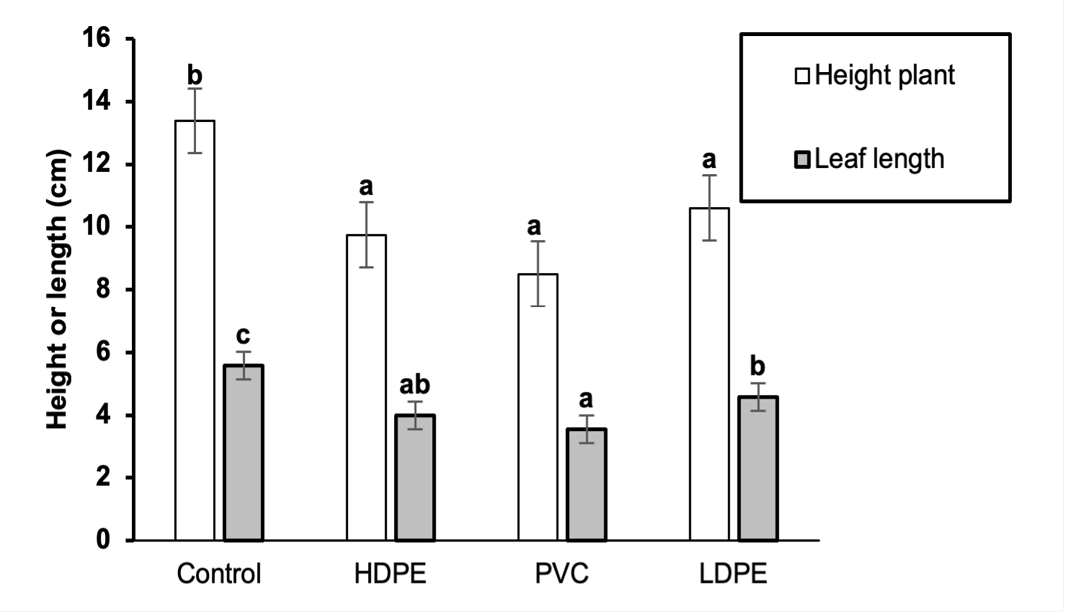
Plant height and leaf length of paddy seeding at different MPs. Different letters for each variable indicate significant difference at P < 0.05
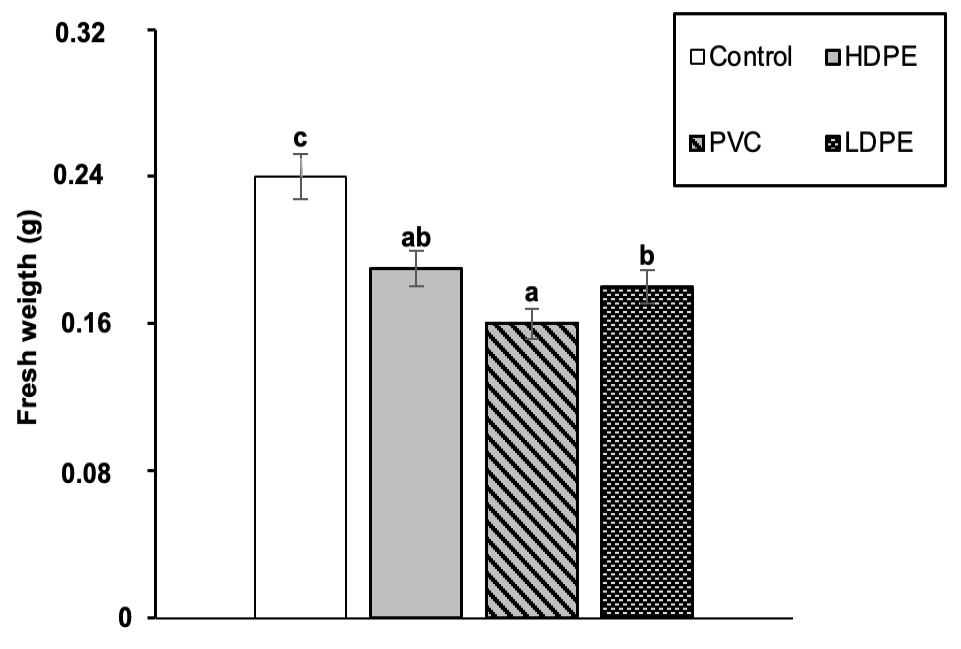
Fresh weight of paddy seeding at different MPs. Different letters for each indicate significant difference at P < 0.05.
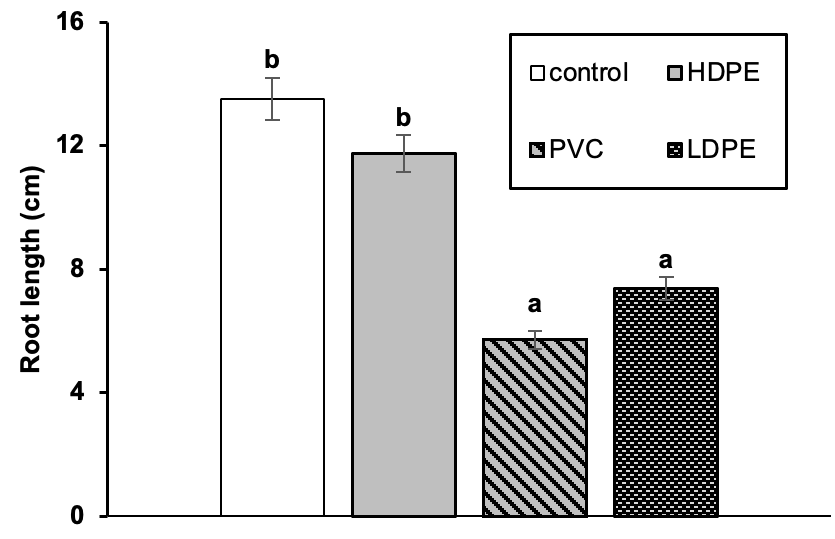
Root length of paddy seeding at different MPs. Different letters for each variable indicate significant difference at P < 0.05.
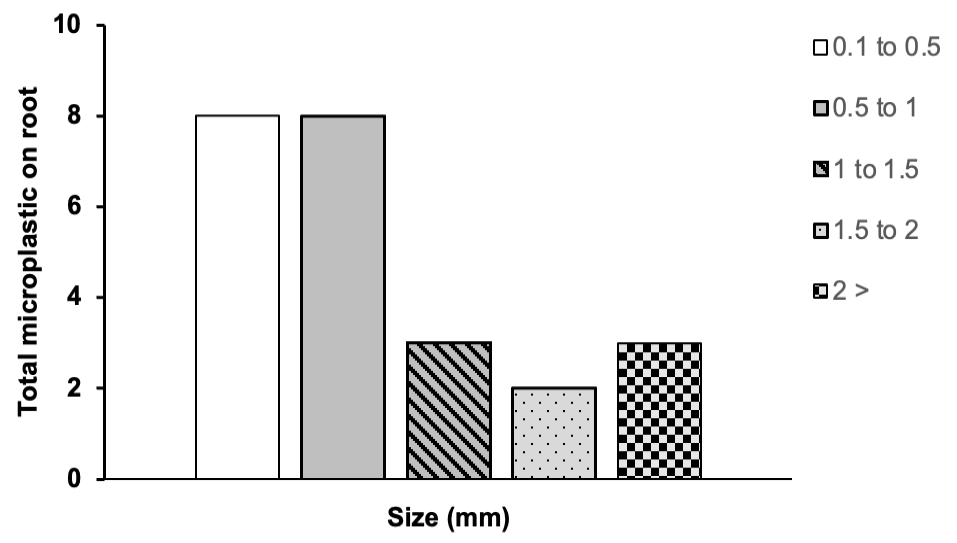
Size and total MPs on root.
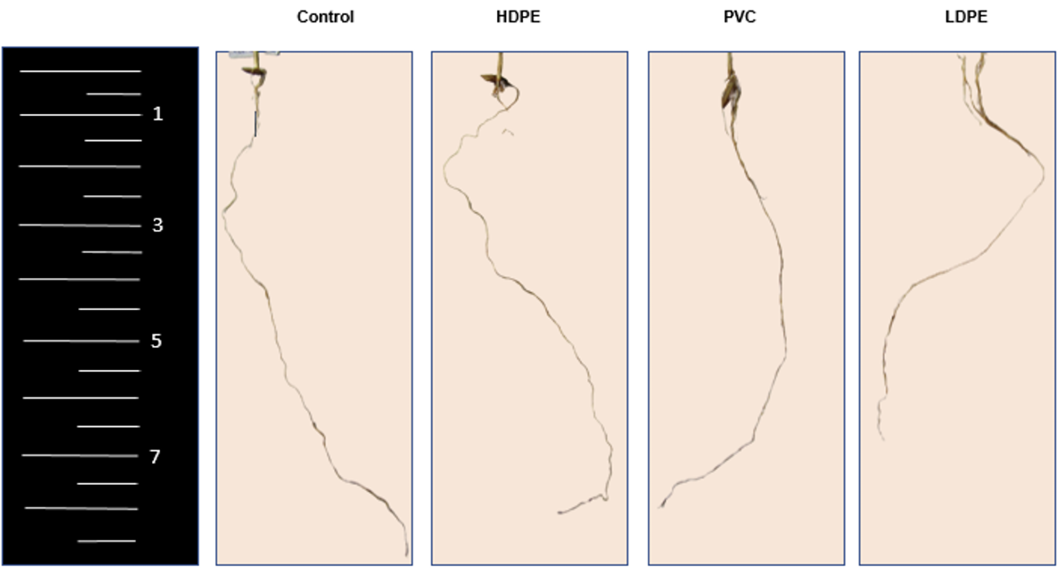
Figure root length of paddy seeding at different MPs.
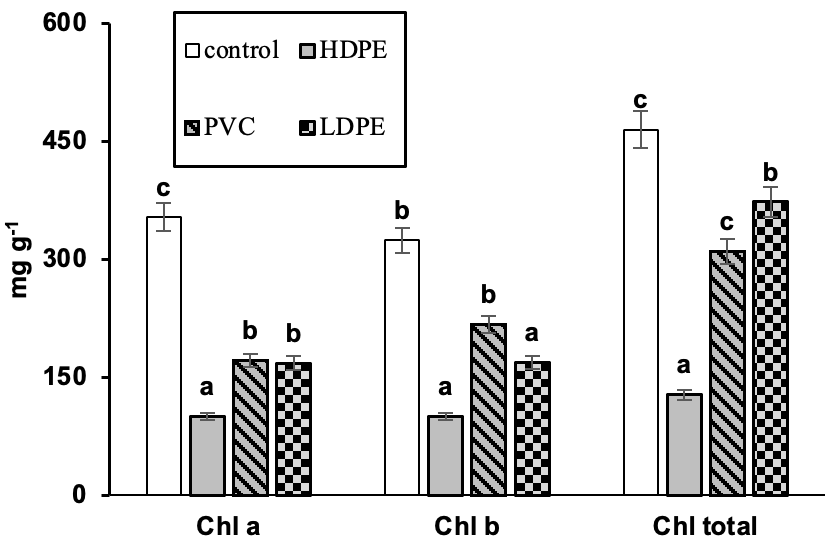
Chlorophyll a, chlorophyll b, and total chlorophyll of paddy seeding at different MPs. Different letters for each variable indicate significant difference at P < 0.05.
References
- Adinurani, P.G., 2016. Design and analysis of agrotrial data: Manual and SPSS. Plantaxia, Yogyakarta, Indonesia.
- Adinurani, P.G., 2022. Agrotechnology applied statistics (compiled according to the semester learning plan). Deepublish, Yogyakarta, Indonesia.
- Adinurani, P.G., S. Rahayu, R.M. Wardhani, R.H. Setyobudi and N.N. Huu. 2023. The role of plant growth regulator and organic fertilizer in growth stimulation and quality enhancement of Muskmelon (Cucumis melo L). Proc. Pak. Acad. Sci. B., 60(3): 539–548. https://doi.org/10.53560/PPASB(60-3)927[CrossRef]
- Angnunavuri, P.N., F. Attiogbe and B. Mensah. 2020. Consideration of emerging environmental contaminants in africa: Review of occurrence, formation, fate, and toxicity of plastic particles. Sci. Afr., 9(e00546): 1–14. https://doi.org/10.1016/j.sciaf.2020.e00546[CrossRef]
- Bosker, T., L.J. Bouwman, N.R. Brun, P. Behrens and M.G. Vijver. 2019. Microplastics accumulate on pores in seed capsule and delay germination and root growth of the terrestrial vascular plant Lepidium sativum. Chemosphere, 226: 774–781. https://doi.org/10.1016/j.chemosphere.2019.03.163[CrossRef]
- Chaukura, N., K.K. Kefeni, I. Chikurunhe, I. Nyambiya, W. Gwenzi, W. Moyo, T.T.I. Nkambule, B.B. Mamba and F.O. Abulude. 2021. Microplastics in the aquatic environment the occurrence, sources, ecological impacts, fate, and remediation challenges. Pollutants, 1: 95–118. https://doi.org/10.3390/pollutants1020009[CrossRef]
- Colzi, I., L. Renna, E. Bianchi, M.B. Castellani, A. Coppi, S. Pignattelli, S. Loppi and C. Gonnelli. 2022. Impact of microplastics on growth, photosynthesis and essential elements in Cucurbita pepo L. J. Hazard. Mater., 423: 127238. https://doi.org/10.1016/j.jhazmat.2021.127238[CrossRef]
- de Souza Machado, A.A., C.W. Lau, W. Kloas, J. Bergmann, J.B. Bachelier, E. Faltin, R. Becker, A.S. Görlich and M.C. Rillig. 2019. Microplastics can change soil properties and affect plant performance. Environ. Sci. Water Res. Technol., 53(10): 6044–6052. https://doi.org/10.1021/acs.est.9b01339[CrossRef]
- Dong, Y., M. Gao, Z. Song and W. Qiu. 2020. Microplastic particles increase arsenic toxicity to rice seedlings. Environ. Pollut., 259: 113892. https://doi.org/10.1016/j.envpol.2019.113892[CrossRef]
- Dovidat, L.C., B.W. Brinkmann, M.G. Vijver and T. Bosker. 2020. Plastic particles adsorb to the roots of freshwater vascular plant Spirodela polyrhiza but do not impair growth. Limnol. Oceanogr. Lett., 5(1): 37–45. https://doi.org/10.1002/lol2.10118[CrossRef]
- Ekawati, I, H.D. Wati, M.P. Koentjoro, H. Sudarwati, P.G. Adinurani, R.H. Setyobudi, R.A. Syabana, R. Tonda and S. Anwar. 2024. Improving soil quality and yield of intercropping-system crops in a dry land area through PGPR application frequency. Proc. Pak. Acad. Sci. B, 61(1): InPress.
- Ekawati, I., 2019. Smart farming: PGPR technology for sustainable dry land agriculture. Prosiding Seminar Nasional Ekonomi dan Teknologi, Universitas Wiraraja, Sumenep, Madura, Indonesia. pp. 615–622.
- Gao, M., Y. Liu, Y. Dong and Z. Song. 2021. Effect of polyethylene particles on dibutyl phthalate toxicity in lettuce (Lactuca sativa L.). J. Hazard. Mater., 401: 123422. https://doi.org/10.1016/j.jhazmat.2020.123422[CrossRef]
- Garfansa, M.P., L. Zalizar, R.H. Setyobudi, S. Anwar, S. Husen, J. Triwanto, I. Iswahyudi, S. K. Wahono, B.A. Prahardika, M. Basyaruddin, T.D.N. Subchi, F.E Purwaningsih, J. Rohaniyah, Y.A.C. Ekalaturrahmah, K. Ningsih, M.S. Sholeh, M.T. Shidqi, A. Labib, T.M. Yuhana and L. Kristiana. 2024. Microplastic impact on plant: Review paper using VOS viewer. Bio Web Conf., 104(00024): 1–18. https://doi.org/10.1051/bioconf/202410400024[CrossRef]
- Gentili, R., L. Quaglini, E. Cardarelli, S. Caronni, C. Montagnani and S. Citterio. 2022. Toxic impact of soil microplastics (PVC) on two weeds: Changes in growth, phenology and photosynthesis efficiency. Agronomy, 12(5): 1–11. https://doi.org/10.3390/agronomy12051219[CrossRef]
- Goenadi, D.H., R.H. Setyobudi, E. Yandri, K. Siregar, A. Winaya, D. Damat, W. Widodo, A. Wahyudi, P.G. Adinurani, M. Mel, I. Zekker, M.Z. Mazwan, D.D. Siskawardani, E.D. Purbajanti and I. Ekawati. 2021. Land suitability assessment and soil organic carbon stocks as two keys for achieving sustainability of oil palm (Elaeis guineensis Jacq.). Sarhad J. Agric., 37(Special Issue 1): 184–196. https://doi.org/10.17582/journal.sja/2022.37.s1.184.196[Full text][CrossRef]
- Hermayanti, D., R.H. Setyobudi, S. Anwar, M.P. Garfansa, I. Iswahyudi, M. Setiawan, T. Liwang, T.D.N. Subchi, L. Zalizar, P.G. Adinurani, D. Mariyam, M.S. Susanti, D. Damat, E.S. Savitri, B.A. Prahardika, S.K. Wahono, T.N. Punjungsari, V. Vania, R. Aprilianti and A.R. Farzana. 2024. The effect of polyethylene terephthalate microplastics on the growth of mice. Bio Web. Conf., 104(00005): 1–10. https://doi.org/10.1051/bioconf/202410400005[CrossRef]
- Huang, D., J. Tao, M. Cheng, R. Deng, S. Chen, L. Yin and R. Li. 2021. Microplastics and nanoplastics in the environment: Macroscopic transport and effects on creatures. J. Hazard. Mater., 407: 124399. https://doi.org/10.1016/j.jhazmat.2020.124399[CrossRef]
- Ingraffia, R., G. Amato, M. Iovino, M.C. Rillig, D. Giambalvo and A.S. Frenda. 2022. Polyester microplastic fibers in soil increase nitrogen loss via leaching and decrease plant biomass production and N uptake. Environ. Res. Lett., 17(054012): 1–10. https://doi.org/10.1088/1748-9326/ac652d[CrossRef]
- Iswahyudi, I., W. Widodo, W. Warkoyo, R.H. Setyobudi, A. Sutanto, Z. Vincēviča-Gaile, M. Wedyan, S. Anwar, S. Yuniati, A. Basir, A. Said, M. P. Garfansa, Y.A.C. Ekalaturrahmah, E. Yunita, S. Sustiyana, S. Mukamilah, M.S. Sholeh, M.T. Shidqi, A.Fauzi, A. Fawaid, A. Kurniawati, B. Baihaqi, B.A. Prahardika, and M.H. Mustaqim. 2023. Bibliometric analysis on contaminant microplastics in compost (2018 to 2022) through VOS viewer. E3S Web Conf., 432(00015): 1–13. https://doi.org/10.1051/e3sconf/202343200015[CrossRef]
- Kalčíková, G., A.Ž. Gotvajn, A. Kladnik and A. Jemec. 2017. Impact of polyethylene microbeads on the floating freshwater plant Duckweed Lemna minor. Environ. Pollut., 230: 1108–1115. https://doi.org/10.1016/j.envpol.2017.07.050[CrossRef]
- Lebreton, L. and A. Andrady. 2019. Future scenarios of global plastic waste generation and disposal. Palgrave Commun., 5(6): 1–11. https://doi.org/10.1057/s41599-018-0212-7[CrossRef]
- Li, H., X, Chang, J. Zhang, Y. Wang, R. Zhong, L. Wang, J. Wei and Y. Wang, 2023. Uptake and distribution of microplastics of different particle sizes in Maize (Zea mays) seedling roots. Chemosphere, 313: 137491. https://doi.org/10.1016/j.chemosphere.2022.137491[CrossRef]
- Liao, Y.C., J. Nazygul, M. Li, X.L. Wang and L.J. Jiang. 2019. Effects of microplastics on the growth, physiology, and biochemical characteristics of Wheat (Triticum aestivum). Huan Jing Ke Xuee, 40(10): 4661–4667.
- Lima, J.Z., R. Cassaro, A.P. Ogura and M.M.G.R. Vianna. 2023. A systematic review of the effects of microplastics and nanoplastics on the soil-plant system. Sustain. Prod. Consum., 38: 266–282. https://doi.org/10.1016/j.spc.2023.04.010[CrossRef]
- Liu, S., J. Wang, J. Zhu, J. Wang, H. Wang and X. Zhan. 2021. The joint toxicity of polyethylene microplastic and phenanthrene to wheat seedlings. Chemosphere, 28: 130967. https://doi.org/10.1016/j.chemosphere.2021.130967[CrossRef]
- Ma, J., M. Aqeel, N. Khalid, A. Nazir, F.M. Alzuaibr, A.A.M. Al-Mushhin, O. Hakami, M.F. Iqbal, F. Chen, S. Alamri, M. Hashem and A. Noman. 2022. Effects of microplastics on growth and metabolism of rice (Oryza sativa L.). Chemosphere, 307: 135749. https://doi.org/10.1016/j.chemosphere.2022.135749[CrossRef]
- Muhammad, I., A. Shalmani, M. Ali, Q.H. Yang, H. Ahmad and F.B. Li. 2021. Mechanisms regulating the dynamics of photosynthesis under abiotic stresses. Front. Plant. Sci., 11(615942): 1–26. https://doi.org/10.3389/fpls.2020.615942[CrossRef]
- Pan, J., R. Sharif, X. Xu and X. Chen. 2021. Mechanisms of waterlogging tolerance in plants: Research progress and prospects. Front. Plant. Sci., 11(627331): 1–16. https://doi.org/10.3389/fpls.2020.627331[CrossRef]
- Pramulya, R., T. Bantacut, E.Noor, M. Yani, M. Zulfajrin, Y. Setiawan, H.B. Pulunggono, S. Sudrajat, O. Anne, S. Anwar, P.G. Adinurani, K. Siregar, H. Prasetyo, S.S. Harsono, E. Novita, D.M. Rahmah, N.N. Huu, D. Agustia and M.I. Rasyid. 2023. Carbon footprint calculation of net CO2 in agroforestry and agroindustry of Gayo arabica coffee, Indonesia. Jordan J. Biol. Sci., 16(2): 335–343. https://doi.org/10.54319/jjbs/160218[CrossRef]
- Prasetyo H, D. Karmiyati, R.H. Setyobudi, A. Fauzi, T.A. Pakarti, M.S. Susanti, W.A. Khan, L. Neimane and M. Mel. 2022b. Local rice farmers attitude and behavior towards agricultural programs and policies. Pak. J. Agric. Res., 35(4): 663–677. https://doi.org/10.17582/journal.pjar/2022/35.4.663.677[Full text][CrossRef]
- Prasetyo, H., R.H. Setyobudi, P.A. Adinurani, Z. Vincēviča-Gaile, A. Fauzi, T.A. Pakarti, R. Tonda, N.V. Minh and M. Mel. 2022a. Assessment on soil chemical properties for monitoring and maintenance of soil fertility in Probolinggo, Indonesia. Proc. Pak. Acad. Sci. B., 59(4): 99–113. https://doi.org/10.53560/PPASB(59-4)811[CrossRef]
- Purbajanti, E.D, F. Kusmiyati, W. Slamet, P.G. Adinurani. 2016. Chlorophyll, crop growth rate and forage yield of Brachiaria (Brachiaria brizantha Stapf) as the result of goat manure in various nitrogen dosage. AIP Conf. Proc. 1755(130013): 1–4. https://doi.org/10.1063/1.4958557[CrossRef]
- Purbajanti, E.D., W. Slamet, E. Fuskhah and Rosyida. 2019. Effects of organic and inorganic fertilizers on growth, activity of nitrate reductase and chlorophyll contents of peanuts (Arachis hypogaea L.). IOP Conf. Ser. Earth Environ. Sci., 250(012048): 1–7. https://doi.org/10.1088/1755-1315/250/1/012048[CrossRef]
- Putri, E.B.P., A. Syafiuddin, S.A. Aini, I. Iswahyudi and M.P. Garfansa. 2023. Identification and quantification on microplastics in seawater and sea salt collected from sea salt ponds. Desalin. Water Treat., 298(1–6). https://doi.org/10.5004/dwt.2023.29719[CrossRef]
- Qi, R., D.L. Jones, Z. Li, Q. Liu and C. Yan. 2020. Behavior of microplastics and plastic film residues in the soil environment: A critical review. Sci. Total Environ., 703: 134722. https://doi.org/10.1016/j.scitotenv.2019.134722[CrossRef]
- Setyobudi, R.H., E. Yandri, Y.A. Nugroho, M.S. Susanti, S.K. Wahono, W. Widodo, L. Zalizar, E.A. Saati, M. Maftuchah, M.F.M. Atoum, M.I. Massadeh, D. Yono, R.K. Mahaswa, H. Susanto, D. Damat, D. Roeswitawati, P.G. Adinurani and S. Mindarti. 2021. Assessment on coffee cherry flour of Mengani Arabica coffee, Bali, Indonesia as iron non-heme source. Sarhad J. Agric., 37(Special Issue 1): 171–183. https://doi.org/10.17582/journal.sja/2022.37.s1.171.183[Full text][CrossRef]
- Setyobudi, R.H., S. Anwar, I. Iswahyudi, S. Husen, D. Damat, M.P. Garfansa, P.G. Adinurani, M. Mel, T. Liwang, R. Aprilianti, T.D.N. Subchi, M. Setiawan, D. Hermayanti, D. Mariyam, B.A. Prahardika, Z.Vincevica-Gaile, S.K. Wahono, T.N. Punjungsari, A. Fauzi, I. Andini, N.R. Malihah, I. Ekawati, D.D. Sulistyoningrum and Y.A.C. Ekalaturrahmah. 2024a. Identification and quantification of microplastics contamination in potato from Malang Raya, Indonesia. Bio Web Conf., 104(00036): 1–36. https://doi.org/10.1051/bioconf/202410400036[CrossRef]
- Setyobudi, R.H., S. Anwar, M.P. Garfansa, T. Liwang, I. Iswahyudi, D. Damat, E.S. Savitri, S.K. Wahono, L. Latipun, P.G. Adinurani, T.D.N. Subchi, M. Setiawan, D. Hermayanti, D. Mariyam, A. Fauzi, Z. Vincevica-Gaile, M. Churochman, D.D, Sulistyoningrum, A.R. Farzana and I.O. Dewi. 2024b. Microplastic debris in palm cooking oil: A call for research. Bio. Web Conf., 104(00037): 1–17. https://doi.org/10.1051/bioconf/202410400037[CrossRef]
- Shinta, Y.C., B. Zaman and S. Sumiyati. 2021. Citric acid and EDTA as chelating agents in phytoremediation of heavy metal in polluted soil: A review. IOP Conf. Ser. Earth Environ. Sci., 896 (012023): 1–8. https://doi.org/10.1088/1755-1315/896/1/012023[CrossRef]
- Singh, B. and K. Singh. 2022. Microplastics contamination in soil affects growth and root nodulation of Fenugreek (Trigonella foenum‐graecum L.) and 16 s rRNA sequencing of rhizosphere soil. J. Hazard. Mater. Adv., 7: 100146. https://doi.org/10.1016/j.hazadv.2022.100146[CrossRef]
- Sumantra, I.K., I.K. Widnyana, N.G.A.E. Martingsih, I.M. Tamba, P.G. Adinurani, I. Ekawati, M. Mel and P. Soni. 2023. Agronomic characters and quality of fruit of salak cv. gulapasir planted in various agro-ecosystems. Jordan J. Biol. Sci., 16(2): 207–221. https://doi.org/10.54319/jjbs/160205[CrossRef]
- Sunitha, T.G., V. Sivasankar, M. Prabhakaran and K. Omine. 2022. Microplastics pollutants interactions, mechanisms, and potential toxicity. In: Vasanthy, M., V. Sivasankar and T.G. Sunitha (eds) Organic Pollutants, Toxicity and Solutions. Part of Emerging Contaminants and Associated Treatment Technologies. Springer, Cham. Switzerland. Chapter 22. p. 551–582. https://doi.org/10.1007/978-3-030-72441-2_22[CrossRef]
- Ullah, R., M.T.K. Tsui, H. Chen, A. Chow, C. Williams and A. Ligaba-Osena. 2021. Microplastics interaction with terrestrial plants and their impacts on agriculture. J. Environ. Qual., 50(5): 1024–1041. https://doi.org/10.1002/jeq2.20264[CrossRef]
- Vincevica-Gaile, Z, T. Teppand, M. Kriipsalu, K. Krievans, Y. Jani, M. Klavins, R.H. Setyobudi, I. Grinfelde, V. Rudovica, T. Tamm, M. Shanskiy, E. Saaremae, I. Zekker and J. Burlakovs. 2021b. Towards sustainable soil stabilization in peatlands: Secondary raw materials as an alternative. Sustainability, 13(126726): 1–24. https://doi.org/10.3390/su13126726[CrossRef]
- Vincevica-Gaile, Z., K. Stankevica, M. Klavins, R.H. Setyobudi, D. Damat, P.G. Adinurani, L. Zalizar, M.Z. Mazwan, J. Burlakovs, D.H. Goenadi, R. Anggriani and A. Sohail. 2021a. On the way to sustainable peat-free soil amendments. Sarhad J. Agric., 37(Special issue 1): 122–135. https://doi.org/10.17582/journal.sja/2021.37.s1.122.135[Full text][CrossRef]
- Wang, F., X. Zhang, S. Zhang, S. Zhang, C.A. Adams and Y. Sun. 2020. Effects of co-contamination of microplastics and Cd on plant growth and Cd accumulation. Toxics, 8(36): 1–12. https://doi.org/10.3390/toxics8020036[CrossRef]
- Weithmann, N., J.N. Möller, M.G.J. Löder, S. Piehl, C. Laforsch and R. Freitag. 2018. Organic fertilizer as a vehicle for the entry of microplastic into the environment. Sci. Adv., 4(4): eaap8060. https://doi.org/10.1126/sciadv.aap8060[CrossRef]
- Wu, X., Y. Liu, S. Yin, K. Xiao, Q. Xiong, S. Bian, S. Liang, H. Hou, J. Hu and J. Yang. 2020. Metabolomics revealing the response of rice (Oryza sativa L.) exposed to polystyrene microplastics. Environ. Pollut., 266: 115159. https://doi.org/10.1016/j.envpol.2020.115159[CrossRef]
- Zhang, D., E.L. Ng, W. Hu, H. Wang, P. Galaviz, H. Yang, W. Sun, C. Li, X. Ma, B. Fu, P. Zhao, F. Zhang, S. Jin, M. Zhou, L. Du, C. Peng, X. Zhang, Z. Xu, B. Xi, X. Liu, S. Sun, Z. Cheng, L. Jiang, Y. Wang, L. Gong, C. Kou, Y. Li, Y. Ma, D. Huang, J. Zhu, J. Yao, C. Lin, S. Qin, L. Zhou, B. He, D. Chen, H. Li, L. Zhai, Q. Lei, S. Wu, Y. Zhang, J. Pan, B. Gu and H. Liu. 2020. Plastic pollution in croplands threatens long-term food security. Glob. Chang. Biol., 26(6): 3356–3367. https://doi.org/10.1111/gcb.15043[CrossRef]
- Zhang, J., G. Zou, X. Wang, W. Ding, L. Xu, B. Liu, Y. Mu, X. Zhu, L. Song and Y. Chen. 2021. Exploring the occurrence characteristics of microplastics in typical maize farmland soils with long-term plastic film mulching in northern China. Front. Mar. Sci., 8(800087): 1–13. https://doi.org/10.3389/fmars.2021.800087[CrossRef]
- Zhou, Y., X. Liu and J. Wang. 2020. Ecotoxicological effects of microplastics and cadmium on the earthworm Eisenia foetida. J. Hazard. Mater., 392: 122273. https://doi.org/10.1016/j.jhazmat.2020.122273[CrossRef]
- Zhu, J., Z. Zou, Y. Shen, J. Li, S. Shi, S. Han and X. Zhan. 2019. Increased ZnO nanoparticle toxicity to wheat upon co-exposure to phenanthrene. Environ. Pollut., 247: 108–117. https://doi.org/10.1016/j.envpol.2019.01.046[CrossRef]
Cited by 3 articles
In journals published by ResearchersLinks.
- Effectiveness of Pineapple Extract in Improving Microplastic Hepatotoxicity in Male White Rats of Wistar StrainSarhad Journal of Agriculture · 2025
- Determination and Quantification of Microplastics in Cooking Oil Sold in IndonesiaSarhad Journal of Agriculture · 2025
- Bioremediation Using Microorganisms and Earthworms in Reducing the Impact of Microplastics in Potato CultivationSarhad Journal of Agriculture · 2025
Services
Article usage statistics
Loading…