
A form of waste from coffee processing, coffee pulp (CP), and coffee husk (CH) has not been optimally explored for value-added products despite the essential nutrients contained. In fact, this solid waste causes various environmental pollution problems. This study aimed to ascertain the characteristics of Indonesian locally-grown CP and confirm its feasibility for coffee cherry flour (CCF) production. Dried CP samples from Ijen, Karangploso and Mengani farms were assessed for mineral, heavy metal, crude protein, crude fiber, crude lipid, dietary fiber, and sugar contents and compared to La Boitê commercial product from Brazil. Principal component analysis (PCA) and analysis of variance (ANOVA) tests were run for the purpose, followed by Tukey posthoc test for certain variables. The results demonstrated that Mengani CP was the most similar to La Boitê as their mineral, heavy metal, crude protein, crude fiber, and sugar contents were insignificantly different. Regarding dietary fiber content, it is slightly lower in Mengani CP, while crude lipid content is significantly lower than in La Boitê. It is, therefore, conclusive that Mengani CP is viable for CCF production serving as a functional food and improving circular economy.
Special Issue: Novel Advances in Agricultural Science and Technology for Sustainable Farming in Tropical Region · Volume 39, Issue 1, 2 September 2024 · Open Access
Coffee Pulp Characterization and Utilization in Coffee Cherry Flour for Circular Economy Improvement
· · · · · · · · · · · · ·
Affiliations & Notes ⌄
- 1University of Muhammadiyah Malang, Malang 65144, East Java, Indonesia
- 2Plant Production and Biotechnology Division, PT Smart Tbk., Bogor 16810, West Java, Indonesia
- 3University of Agriculture, Peshawar 25130, Khyber Pakhtunkhwa, Pakistan
- 4The Hashemite University, PO Box 330127, 13133 Zarqa, Jordan
- 5University of Latvia, Riga LV-1004, Latvia. , *Correspondence | Thontowi Djauhari Nur Subchi, Department of Anatomy, Faculty of Medicine, University of Muhammadiyah Malang, Jl. Bendungan Sutami No.188, Malang 65145, East Java, Indonesia
- 6Email: thontowidjauhari448@gmail.com
Article Info ⌄
- Journal:
- Sarhad Journal of Agriculture
- Published:
- 2 September 2024
From the article
- Mineral, heavy metal, crude protein, crude fiber, and sugar contents in the Mengani sample do not significantly differ from the La Boitê commercial sample.
- The only differences are that its dietary fiber content is faintly lower than for La Boitê, and its crude lipid content is significantly lower.
Selected from the article's own text.
Abstract
Introduction
Coffee has become an essential food-and-beverage commodity with high trade volume worldwide. Indonesia is recorded as the fourth largest coffee producer in the world ; , and its production is dominated by local small business holders ; . Since its introduction by the Dutch colonialists in the late 18th century ; ten Brink, 2017), coffee has been widely spread and cultivated on various islands for decades ; . Quite many coffee specialties, ones with distinctive flavors and unique characteristics that gain them higher market values, are raised in specific locations in Indonesia – among them are Arabica Gayo, Flores Bajawa, Java Ijen-Raung, Kintamani, Mandailing, and Toraja.
While the annual increase in global demand boosts coffee production, poorly man-aged waste from coffee processing results in water and land pollution ; ; Setyobudi et al., 2021a). Coffee husk and pulp (CH and CP, respectively) – representing 40 % to 50 % of fresh coffee cherry weight – dominate as waste products and are still poorly utilized ; . While essentially rich in sugars, proteins, minerals, fibers, and phenolic acids ; ; ; Setyobudi et al., 2021b), CP makes up a small percentage of the revenue in the coffee industry when treated as waste and therefore calls for a coffee byproduct development scheme into a new source of revenue and, at the same time, a means to contribute to the sustainability of the industry ; . Some attempts have been made to address the issue by reusing and recycling CH and CP into feed ; , fertilizers ; , fuel, i.e., briquettes ; ; biofuel ; ; biomass ; , and biogas ; .
Lachenmeier et al. (2022) stated that the side products above are at the base of the pyramid model for coffee-by-product application, while alimentary uses are at the top of the pyramid. Several experts ; ; ; ; reuse and recycle CP for beverages, i.e., cascara. Research on CH and CP to discover its nutrients, bioactive compounds, and mineral and food fiber contents has been carried out ; ; ; ; ; ; . However, only a few discuss its potential as coffee cherry flour (CCF), particularly due to its high Fe non-heme content, which is valuable for anemia treatment ; , 2021a, 2021b, 2022, 2023). Fe non-heme for hemoglobin booster is essential due to the relatively high chance of anemia ; , yet oral Fe supplementation has a number of negative impacts ; ; .
Aiming that the application of coffee byproducts is expected to reduce environmental pollution, provide alternative products, and produce economically valuable compounds ; ; ; ; ; ; ; , 2021a, 2021b, 2022, 2023), a study was conducted at three traditional farms in Indonesia – Ijen, Karangploso, and Mengani – specifically producing Arabica coffee (Coffea arabica L.) to reuse and recycle CP waste into CCF. However, each source should have indigenous CP properties considering their unique edaphic and climatic factors, which may affect the resulting CCF’s nutritional values. Therefore, it is essential to analyze the nutrients in each CP sample and select the most suitable one for CCF as a functional food production. It is significant to examine mineral, heavy metal, proximal, dietary fiber, and sugar contents and to compare values to commercially available CCF to meet the standard.
Since previous studies were generally concentrated on a selection of coffee varieties or samples of certain coffee plantations, further explorations on different variants and places are relevant to extrapolation ; ; ; ; ; ; ; ; ; ; ; ; ; ; . Another reason is the limited sources of CP bioactive compounds specifically gained in Ijen, Karangploso, and Mengani. This study is projected to complement the information on nutrient contents and bioactive compounds in CP of Indonesian coffee and emphasize the prospect of CP for CCF production as a means for achieving a biobased circular economy where coffee waste supports sustainability and also contributes to local income.
Materials and Methods
Sample collection
Coffea arabica L. byproduct samples were collected from three organic traditional farms located in Indonesia – Ijen Farm in Bondowoso, East Java (7°57’59.55” S; 114°01’14.37” E), Karangploso Farm in Malang, East Java (7°52’13.80” S; 112°34’54.44” E), and Mengani Farm in Mengani, Bali (8°17’16.63” S; 115°15’0.61” E). At each location, the sample collection was performed during 2 wk taking a random sample every day; thus, the total collected amount of coffee byproduct samples was about 15 kg. For the tests, three mixed samples were prepared and analyzed with three replications. All the samples were dried, resulting in strong differences regarding particle size (Figure 1A). The dried CP samples were homogeneously ground and sieved prior to analysis (Figure 1B, C, and D). La Boitê, a commercial CCF product made in Brazil, served as the control (Figure 1E).
Mineral assay
Employing an Inductively Coupled Plasma Optical Emission Spectrometer (ICP-OES) (730-ES, Varian Inc., USA), macro-nutrients (N, P, K, Mg, Ca), micro-elements (Al, B, Co, Cu, Fe, Mn, Na, Ni, Zn, Cl), trace-elements (Ba, Ga, In, Li, Sr, Ti) and heavy metals (Cd, Cr, Pb, Hg) were simultaneously examined. A total of 5 g powdered CCF from each sample was run through dry-ashing procedures involving hydrochloric acid dilution to extract the minerals. Total N contents were specifically estimated using the Kjeldahl method ; .
Proximate analysis
Following the standard methods ; , crude protein content was determined using the Kjeldahl System (Buchi, Switzerland). Crude lipid content was applied ether extraction in a Soxhlet extractor (SER 148, VELP Scientifica, Italy), and moisture content was determined after oven-drying (Memert UF55 plus, Germany) 105 °C for 6 h while ash content was measured following combustion at 550 °C for 4 h in a muffle furnace (1200C 64L, K type, China).
Amino acid analysis:
Acid hydrolysis with 6 N HCl (reflux for 23 h at 110 °C) was directed prior to the tests using an automatic amino acid analyzer (Hitachi, Japan) as described in detail by Qiu et al. (2016).
Sugar content analysis
Operating the Dubois method ; to determine the reducing and total sugar concentrations, each CCF sample was diluted up to 200 times before mixing with 100 µL of 5 % phenol. Once 5 mL of 98 % sulfuric acid was added, it was vortex-mixed and rested for 10 min. The absorbance was analyzed using a spectrophotometer at 490 nm. An HPLC (Shimadzu, Prominence UFLC- Nexera XR, Japan) equipped with a refractive index detector (Shimadzu, RID 10A, Japan).
Dietary fiber
Following the AOAC method ; , 0.5 g of each powdered ample was added with 0.1 mL alpha-amylase enzyme in an Erlenmeyer flask before being heated at 100 °C for 15 min involving occasional stirring. Once cooled,
20 mL distilled water and 5 mL HCL 1 N were added. 1 mL of 1 % pepsin enzyme was mixed in prior to a 1 h water bath heating (Thermostatic Water Bath SY-2L8H, China). Removed from the bath, 5 mL 1 N NaOH and 0.1 mL beta amylase enzyme went into the flask. Tightly capped, it was sent to 1 h water bath incubation. The sample was then strained using a Whatman filter No 42 (weighed before use), rinsed with 10 mL ethanol and 10 mL acetone, oven-dried (Memert, UN 55, Germany) at 105 °C for a night, desiccator cooled, and measured for Insoluble Dietary Fibers (IDF) determination. Next, the same filtrate was volume adjusted to 100 mL, mixed with 400 mL
warm 95 % ethanol, let sit for 1 h, strained using ash-free filter paper (weighed before use), rinsed with
10 mL ethanol and 10 mL acetone, oven dried at 105 °C for a night, desiccator cooled, and measured for Soluble Dietary Fibers (SDF) establishment. Dietary fiber is calculated as per Equation (1):
Total dietary fiber = Soluble dietary fiber + Insoluble dietary fiber.........(1)
All chemicals in this study are provided by pro analysics (p.a.).
Data recording and statistical analysis
Each sample assay was carried out in two replications to ensure accuracy, and the results were computed in SPSS-IBM Statistics – Version 29. Analysis of variance (ANOVA), followed by Tukey post-hoc (honestly significant difference - HSD) test, was run in order to verify sample differences where significance was set at P ≤ 0.05 and the results would be presented in mean values and standard error (SE) of the mean. Variables with significant differences were visualized in interval plot of 95 % confidence interval . Sample characteristics on particular parameters were based on principal component analysis (PCA) . Cluster analysis with heatmap visualization based on library gplots of the R package was also involved .
Results and Discussion
Essential nutrients sufficiently provided in dietary foods should cover major minerals (phosphorus, potassium, magnesium, calcium, sodium, and chloride) and trace elements (iron, zinc, selenium), and that is described further.
Mineral content analysis
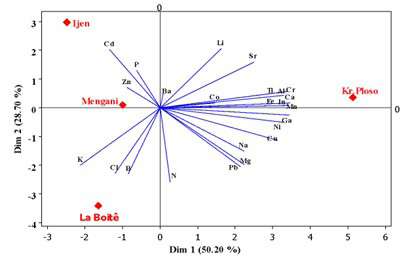
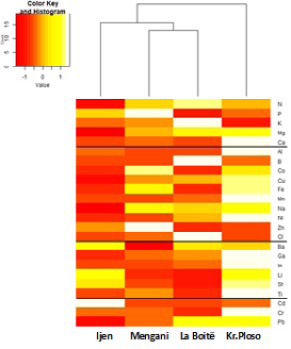
Figure 2 regarding PCA result reveals clear separations of all analyzed samples and the control. While Ijen, Mengani, and La Boitê gather on the left of the axis, Karangploso is settled on the right. The fact that both Ijen and Mengani are close to each other on the upper part generally embodies their similarity regarding mineral contents. It also depicts how Fe content positively correlates to some micro-elements such as Al, Co, Mn, and Ni but is negatively associated with Zn and P. Some heavy metal contents are positively linked with minerals, i.e., Cr with Ca and Cd and Cr with Zn. Furthermore, the figure indicates that nearly 79 % of the variation of the model could be explained based on two aspects of principal components. First, a 50 % variation distinguishes Karangploso from other samples in most trace elements and heavy metals. Second, La Boitê has specific nutrient properties such as high K, Cl, and B contents.
The heatmap in Figure 2 shows how Mengani is the sample most parallel to La Boitê, with an addition on high P and Zn contents. Seeing how Zn is beneficial for food biofortification, this discovery supports Setyobudi et al. (2021b, 2022, 2023) recommending CCF as a functional food to deal with anemia. Yet, the color spread confirms Karangploso CCF and La Boitê to be close due to their color similarities. Ijen, on the other hand, is the most dissimilar of all.
Mineral content information should be beneficial in determining CP potentials. Take Karangploso, for example – as it is high in Fe and Ca, the iron should make it suitable for functional food. However, Setyobudi et al. (2022) doubt it to be its natural feature due to the possibility of rust residue from the pulper mixed in CP since the farm uses little amount of rinsing water. CP rich in N, Ca, and P generally fit for fertilizer application in agriculture . Certain other nutrients make CP a good supplement for feed ; ; ; ; Venkatesh, 2022). Meanwhile, CP with low mineral content matches the requirement for bioethanol or other renewable energy ; ; ; ; ; ; ; as fermentation is involved , and the correlation between mineral content and the process is yet to be empirically proven.
Focusing on CCF production, a number of considerations are required. If it should be rich in minerals – particularly Co, Ti, Al, Cr, Ca, Fe, In, Mn, Na, and Mg – Karangploso CP is the option. However, mineral balance is also pertinent as micronutrient and macronutrient contents define CCF quality and, as a result, enhance the product’s market value. While micronutrients like Fe, Zn, and Cu are favorable in metabolism ; , macronutrients like protein, carbohydrate, and food fiber are suitable for energy sources and body tissue restoration ; ; Setyobudi et al., 2021b; . If it should be the closest to existing commercial CCF, then Mengani is the recommended variant. This finding is in sync with Setyobudi et al. (2021b, 2022, 2024).
Heavy metal analysis
Certain heavy metals can be harmful when accumulated and deposited in the body, so their contents in raw materials must be carefully screened for human dietary food ; . This study has found no significant differences between the samples and the control in terms of Cr, Pb, and Hg contents (Table 1). The Hg contents were < 0.00006 mg kg–1 – below the detection limit – in all samples analyzed. The significant difference in potentially harmful metal content is only seen in Cd; however, Mengani – containing the lowest Cd rate of all samples – is not significantly different from La Boitê commercial product. This finding affirms the feasibility of Mengani CP being processed into CCF for human dietary intake.
Table 1 demonstrates a different finding from Avinash et al. (2017), testifying that Cd and Pb are not detected in CP. Another point is that heavy metal contents in Indonesian CP and La Boitê are higher – except for Pb – than in Bondesson’s study based on dried CH samples gained from Honduras. Heavy metals contained in CP are generally in tiny quantities and are inconsequential. However, excessive amounts of Pb ; ; and Cd ; in the system can cause physical detriment in some cases. Any disproportionate hazardous material indicates that CP is not viable for food or feed but acceptable for organic fertilizer.
It is noteworthy that, aside from Cd in the Ijen sample, heavy metal contents of the studied CP samples and La Boitê are all below the maximum limits regulated by Indonesia National Standard (SNI 7377-2009) and Indonesian Drug and Food Control Agency (BPOM No. 9 2022) .
Proximate analysis
Proximate composition indicates nutritional components in raw materials for human dietary food, and
Table 1: Heavy metal contents in the CCF samples from Ijen, Karangploso, and Mengani (mg kg–1).
| Variables | Source | ANOVA | ||||
| Ijen farm | Kr. Ploso farm | Mengani farm | La Boitê | F value | p value | |
| Cd | 0.220 ± 0.130 a | 0.030 ± 0.004 b | 0.012 ± 0.005 c | 0.017 ± 0.001 bc | 1340.67 | 0.000** |
| Cr | 0.609 ± 0.356 | 3.190 ± 1.200 | 0.747 ± 0.168 | 0.196 ± 0.015 | 2.60 | 0.165 ns |
| Pb | 0.261 ± 0.095 | 0.867 ± 0.201 | 0.539 ± 0.093 | 0.854 ± 0.151 | 2.25 | 0.200 ns |
| Hg | < 0.00006 | < 0.00006 | < 0.00006 | < 0.00006 | ||
The value expressed in the mean ± standard error of the mean. The mean value followed by the same letter in the row does not differ by the Tukey t student test at 5 % probability.
Table 2: Proximate analysis on CCF samples from Ijen, Karangploso, and Mengani (mg kg–1).
| Parameter | Source | ANOVA | ||||
| Ijen farm | Kr. Ploso farm | Mengani farm | La Boitê | F value | p value | |
| Dry matter | 89.02 ± 0.01 c | 89.92 ± 0.02 b | 89.02 ± 0.01 c | 92.92 ± 0.03 a | 4 377.52 | 0.000 ** |
| Organic matter | 90.63 ± 0.02 b | 89.47 ± 0.22 c | 91.57 ± 0.09 a | 72.23 ± 0.01 d | 5 972.49 | 0.000 ** |
| Crude protein | 16.36 ± 0.24 ab | 15.59 ± 0.12 b | 16.03 ± 0.10 ab | 16.56 ± 0.01 a | 9.47 | 0.027 ** |
| Crude fiber | 29.13 ± 0.05 a | 20.59 ± 0.26 b | 18.48 ± 0.17 c | 17.68 ± 0.21 c | 789.83 | 0.000 ** |
| Crude lipid | 0.56 ± 0.01 c | 2.11 ± 0.02 b | 0.54 ± 0.01 c | 3.03 ± 0.03 a | 4 886.12 | 0.000 ** |
The value expressed in the mean ± standard error of the mean. The mean value followed by the same letter in the row does not differ by the Tukey t student test at 5 % probability.
one may differ from another depending on agro-climatic conditions, soil type, and agronomic practice. Table 2 illustrates how crude protein, crude fiber, and crude lipid contents (expressed on a dry weight basis) in all samples are significantly different. Specifically, the Mengani sample contains crude protein and crude fiber insignificantly different from the La Boitê commercial sample. It should prove that Mengani CP is a sufficient biomaterial for CCF production despite its low crude lipid content, as it is favorable in a low-fat diet (Table 2).
Further CP potentials can be derived from proximate analysis results. Dry matter corresponds to moisture content – CP is easier to process into CCF if its dry matter is not too low and moisture content is not too high. Maintaining ideal dry matter content is the main problem in CCF production, considering sun-drying CP on drying floors in farm areas of > 1 000 m asl where the sunlight is not as intense as in lower areas and the rainfall is high is less effective. Involving oven dryers – either electricity, LPG, or biogas-powered – should solve the issue, and the temperature should not be higher than 50 °C to preserve amino acid contents in CP (Setyobudi et al. 2021b, 2022, 2024).
Dietary fiber
Plant complex molecules are resistant to breakage in digestion, and dietary fibers help to avoid various diseases ; . The fiber composition of insoluble dietary fibers (IDF) and soluble dietary fibers (SDF) is a significant variable in both food productions.
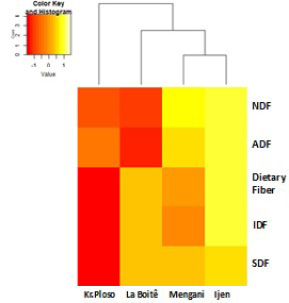
Referring to the heatmap in Figure 3, it is surmised that Mengani has the closest Total Dietary Fiber (TDF) to Ijen, while Karangploso is the farthest. Further, with a TDF of 54.5 % – consisting of 36.4 %
IDF and 18.1 % SDF – Mengani has only slightly lower food fibers than La Boitê, with 59.2 % TDF containing 41.1 % IDF and 18.1 % SDF. IDF prevents constipation and therefore promotes healthy intestine ; ; by being indigestible and adding volume to feces, while SDF reduces cholesterol ; and blood sugar ; that often trigger cardiovascular problems ; ; by forming gel to trap excessive nutrients and take them out of the system with feces. Both fibers should be part of a healthy end-product like CCF.
As for feed production, acid-neutral fibers (ANF) and neutral detergent fibers (NDF) are vital. Fibers containing low cellulose, lignin, and hemicellulose typically take up less space in the stomach, allowing more feed intake and providing a larger amount of energy to animals Mengani CP contains 50.24 % NDF and 43.17 % ADF, affirming its practicability for feed.
Sugar content
The following key variable in the diet is sugar content. The bar graph in Figure 3 demonstrates that Mengani CCF contains a similar amount of sugar to the La Boitê commercial sample, while the Ijen sample has the least. Sugar serves as an energy source and owns its structural and functional properties, among them boosting Fe non-heme absorption as recommended by Setyobudi et al. (2021b) and (2022).
Fructose and glucose are two simple forms of sugar generally found in food. Their contents in CP affect the quality and characteristics of CCF products – the higher their rates are, the darker they will look and the sweeter they will taste. How much sugar is ideally contained in CCF depends on the purpose and market target.
Regarding CCF production, it is generally gathered that Mengani CP owns the best potential. This discovery is paramount in the context of environmentally friendly waste management and sustainable bioeconomy development. Transforming CP into CCF diminishes organic waste from the coffee industry and reduces pollution while also fostering additional revenue for coffee farmers and their stakeholders. Furthermore, it should promote a healthy lifestyle as CCF opens more access to nourishing food and beverages regarding fiber, protein, and iron. As heavy metals in CP may negatively impact health and the environment, safety measures in material selection and waste management should be of serious concern.
Conclusion and Recommendation
This study concludes that compared to the ones from Ijen and Karangploso, coffee pulp from Mengani farm in Bali is the best possibility for circular economy improvement by coffee byproduct processing into coffee cherry flour as its characteristics are the most similar to the currently available commercial product originated from Brazil. Mineral, heavy metal, crude protein, crude fiber, and sugar contents in the Mengani sample do not significantly differ from the La Boitê commercial sample. The only differences are that its dietary fiber content is faintly lower than for La Boitê, and its crude lipid content is significantly lower.
Acknowledgments
It is forwarded with deep regret that Yogo Adhi Nugroho, one of the authors of this article, passed away after a fight against COVID-19. The authors wish to extend their sincere appreciation for his enthusiasm and dedication to the writing process of this manuscript, especially concerning the statistical analysis. The authors would like to express their gratitude to Ricky Hendarto Setyobudi and Fitri Ramli (Arabica Coffee Factory at Mengani, Kintamani, Bali), Soni Sisbudi Harsono (University of Jember), and Pandu Prabowo (Kopi Carlos, Malang) for supplying the CCF research materials. The authors also wish to thank Yohannes Kohar Whisnu Wardhana for bringing CCF packages from La Boitê, a store at Manhattan, 724 11th Avenue, New York, NY 10019, USA, to Indonesia. Also, thanks to the Directorate of Research and Community Service, University of Muhammadiyah Malang (DPPM – UMM), which has funded this research with letter No. E.2a/811/BAA-UMM/viii/2023.
Novelty Statement
This study supports and complements previous studies , 2021b, 2022, 2023) that Indonesian coffee pulp, especially from Kintamani, is suitable for use as a source of Coffee Cherry Flour (CCF). Concerns about the mineral content, primarily heavy metals, are also shown in this manuscript that CCF Kintamani - Bali is not higher than commercial CCF from Brazil.
Author’s Contribution
Damat Damat and Thontowi Djauhari Nur Subchi: supervision and funding
Roy Hendroko Setyobudi: conceptualization, methodology, resources, and writing – review & editing
Yogo Adhi Nugroho: formal analysis, writing – original draft preparation
Tony Liwang: heavy metal and mineral analysis
Ahmad Fauzi: writing – original draft preparation
Shazma Anwar, Zane Vincevica-Gaile, Mohammed Ali Wedyan and Hanif Alamudin Manshur: writing – review & editing
Vritta Amroini Wahyudi, and Devi Dwi Siskawardani: validation, software, and visualization
Yolla Muvika Ananda and Hemalia Agustin Rachmawati: proximate, amino acid, and sugar content analysis.
All authors have read and approved the final manuscript.
Conflict of interest
The authors have declared no conflict of interest.
Figures
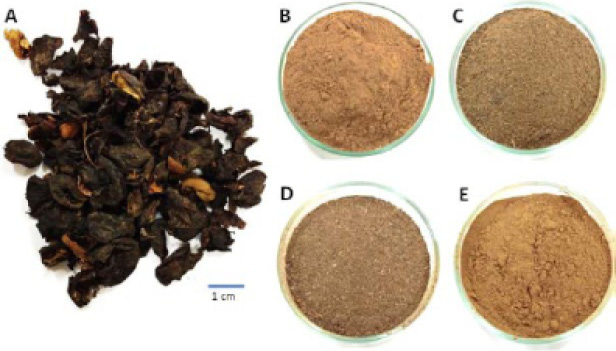
The appearance of unprocessed coffee pulp (A), Four coffee cherry flour products from Mengani (B), Karangploso (C), Ijen (D), and La Boitê commercial product (E).
The PCA result and the heatmap of standardized mineral values from different sources.
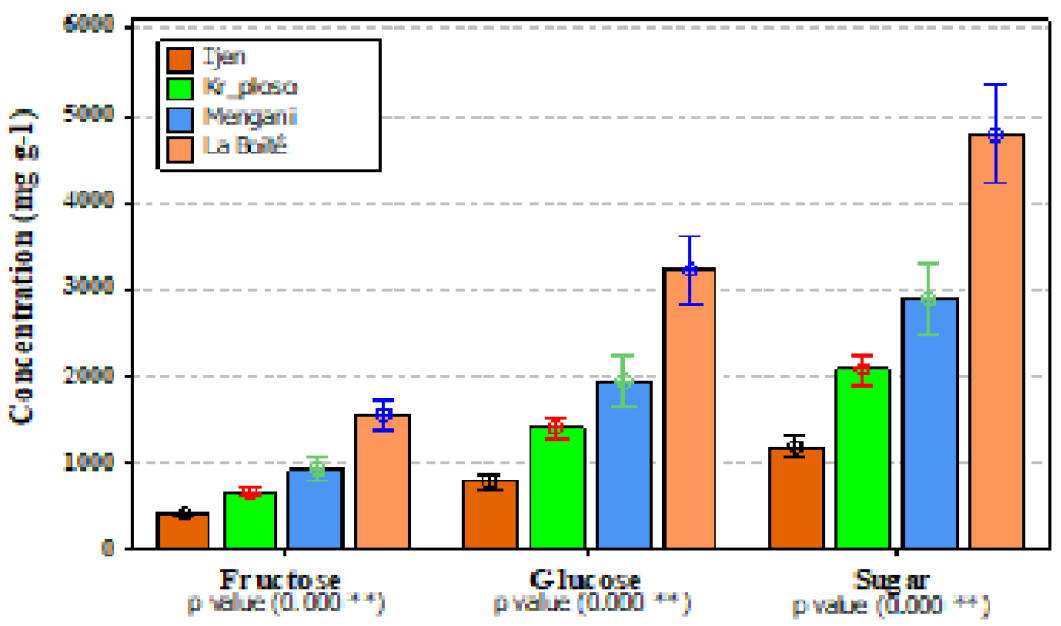
Dietary fiber content expressed as a heatmap (Fig. 3a), and sugar contents indicated in the bar graph (Fig. 3b). The value expressed in the heatmap is z standardized.
References
- Adinurani, P.G. 2016. Design and analysis of agrotrial data: Manual and SPSS. Plantaxia, Yogyakarta, Indonesia.
- Aguirre, J. 2023. The Kjeldahl method. In the Kjeldahl method: 140 years. Springer, Cham. pp. 53–78. https://doi.org/10.1007/978-3-031-31458-2_4[CrossRef]
- Amertet, S., Y. Mitiku and G. Belete. 2021. Analysis of a coffee husk fired cogeneration plant in South Western Ethiopia coffee processing industries. Low Carbon Econ., 12(1): 42–62. https://doi.org/10.4236/lce.2021.121003[CrossRef]
- AOAC. 1995. Official methods of analysis: Official method for crude fibre. Method No. 920.85, 16th ed. Association of Official Analytical Chemists, Washington DC, USA.
- AOAC. 2010. Official methods of analysis of association of official analytical chemists, 18th ed. AOAC, Arlington, VA, USA.
- Apriani, D., F. Marissa and A.M. Igamo. 2022. Indonesian coffee at the international market. J. Paradigma Ekonomika. 17(2): 261–272. https://doi.org/10.22437/jpe.v17i2.13983[CrossRef]
- Ariva, A.N., A. Widyasanti and S. Nurjanah. 2020. The effect of drying temperature to the quality of cascara tea from arabica pulp (Coffea arabica). J. Teknologi Industri Pertanian Indonesia. 12(1): 21–28. https://doi.org/10.17969/jtipi.v12i1.15744[CrossRef]
- Arya, S.S., R. Venkatram, P.R. More and P. Vijayan. 2022. The wastes of coffee bean processing for utilization in food: A review. J. Food Sci. Technol., 59: 429–444. https://doi.org/10.1007/s13197-021-05032-5[CrossRef]
- Assi, M.A., M.N.M. Hezmee, A.W. Haron, M.Y.M. Sabri and M.A. Rajion. 2016. The detrimental effects of lead on human and animal health. Vet. World, 9(6): 660–671. https://doi.org/10.14202/vetworld.2016.660-671[CrossRef]
- Avinash, S.N., C.A. Srinivasamurthy, S. Bhaskar and N.B. Prakash. 2017. Characterization, extraction and foliar spray of fortified humic acid on quality of capsicum. Int. J. Curr. Microbiol. App. Sci., 6(10): 2265–2272. https://doi.org/10.20546/ijcmas.2017.610.268[CrossRef]
- Azhar, S.H.M., R. Abdulla, S.A. Jambo, H. Marbawi, J.A. Gansau, A.A.M. Faik, and K.F. Rodrigues. 2017. Yeasts in sustainable bioethanol production: A review. Biochem. Biophys. Rep., 10: 52–61. https://doi.org/10.1016/j.bbrep.2017.03.003[CrossRef]
- Barber, T.M., S. Kabisch, A.F.H. Pfeiffer and M.O. Weickert. 2020. The health benefits of dietary fibre. Nutrients. 12(10): 3209. https://doi.org/10.3390/nu12103209[CrossRef]
- Batbekh, B., E. Ahmed, M. Hanada, N. Fukuma and T. Nishida. 2023. Assessment of the impact of coffee waste as an alternative feed supplementation on rumen fermentation and methane emissions in an in vitro study. Fermentation, 9(9): 858. https://doi.org/10.3390/fermentation9090858[CrossRef]
- Blinova, L., M. Sirotiak, A. Bartosova and M. Soldan. 2017. Review: Utilization of waste from coffee production. Res. Papers Faculty of Mater. Sci. Technol. Slovak Uni. Technol., 25(40): 91–101. https://doi.org/10.1515/rput-2017-0011[CrossRef]
- Bloor, S.R., R. Schutte and A.R. Hobson. 2021. Oral iron supplementation—gastrointestinal side effects and the impact on the gut microbiota. Microbiol. Res., 12(2): 491–502. https://doi.org/10.3390/microbiolres12020033[CrossRef]
- Boer, R., S.D. Jadmiko, P. Hidayat, A. Wachjar, M. Ardiansyah, D. Sulistyowati and A.P. Situmorang. 2020. Managing climate risk in a major coffee-growing region of Indonesia. In: Venkatramanan, V., S. Shah and R. Prasad (eds), Global Climate Change and Environmental Policy. Springer, Singapore. pp. 147–205. https://doi.org/10.1007/978-981-13-9570-3_5[CrossRef]
- Bondesson, E. 2015. A nutritional analysis on the byproduct coffee husk and its potential utilization in food production: a literature study. Bachelor Thesis. Dept. Food Science, SLU (Sveriges lantbruksuniversitet Swedish University of Agricultural Sciences), Uppsala, Swedish.
- BPOM - Badan Pengawas Obat dan Makanan Republik Indonesia (Republic of Indonesia - Food and Drug Supervisory Agency). 2022. Regulations of the drug and food control agency No. 9 – 2022, about requirements for heavy metal contamination in processed food. BPOM, Jakarta, Indonesia. in Bahasa Indonesia.
- BSN - Badan Standardisasi Nasional (National Standard Agency). 2009. SNI 7387:2009, maximum limit of heavy metal contamination in food. BSN, Jakarta, Indonesia. in Bahasa Indonesia.
- Campera, M., B. Budiadi, E. Adinda, N. Ahmad, M. Balestri, K. Hedger, M.A. Imron, S. Manson, V. Njiman and K.A.I. Nekaris. 2021. Fostering a wildlife-friendly program for sustainable coffee farming: the case of small-holder farmers in Indonesia. Land. 10(2): 121. https://doi.org/10.3390/land10020121[CrossRef]
- Chala, B., H. Oechsner, S. Latif and J. Muller. 2018. Biogas potential of coffee processing waste in Ethiopia. Sustainability, 10(8): 2678. https://doi.org/10.3390/su10082678[CrossRef]
- Chawla, R. and G.R. Patil. 2010. Soluble dietary fiber. Compr. Rev. Food Sci. Food Saf., 9(2): 178–196. https://doi.org/10.1111/j.1541-4337.2009.00099.x[CrossRef]
- Cubero-Castillo, E., A.R. Bonilla-Leiva and E. García-Velazques. 2017. Coffee berry processing byproduct valorization: Coffee parchment as a potential fiber source to enrich bakery goods. J. Food Nutr. Popul. Health, 1(2): 12.
- Dadi, D., G. Daba, A. Beyene, P. Luis and B. Van der Bruggen. 2019. Composting and co-composting of coffee husk and pulp with source-separated municipal solid waste: A breakthrough in valorization of coffee waste. Int. J. Recycl. Org. Waste Agric., 8: 263–277. https://doi.org/10.1007/s40093-019-0256-8[CrossRef]
- Damat, D., R. Anggriani, R.H. Setyobudi and P. Soni. 2019. Dietary fiber and antioxidant activity of gluten-free cookies with coffee cherry flour addition. Coffee Sci., 14(4): 493–500. https://doi.org/10.25186/cs.v14i4.1625[CrossRef]
- Damat, D., R.H. Setyobudi, N. Harini, A. Asmawati, S. Anwar, C.Z. Mahesah, M. Wachid, E. Andoko and A.T. Salsabila. 2023. Characteristics of gluten free biscuit from purple sweet flour, rice brands and coffee cherry flour. E3S Web Conf. 432(00008): 1–9. https://doi.org/10.1051/e3sconf/202343200008[CrossRef]
- DuBois, M., K.A. Gilles, J.K. Hamilton, P.A. Rebers and F. Smith. 1956. Colorimetric method for determination of sugars and related substances. Anal. Chem. 28(3): 350–356. https://doi.org/10.1021/ac60111a017[CrossRef]
- Duran-Aranguren, D.D., S. Robledo, E. Gomez-Restrepo, J.W.A. Valencia and N.A. Tarazona. 2021. Scientometric overview of coffee byproducts and their applications. Molecules, 26(24): 7605. https://doi.org/10.3390/molecules26247605[CrossRef]
- Estrada-Flores, J.G., P.E. Pedraza-Beltrán, G. Yong-Ángel, F. Avilés-Nova, A.A. Rayas-Amor, A.D. Solís-Méndez, M. González-Ronquillo, M.F. Vázquez-Carrillo, and O.A. Castelán-Ortega. 2021. Effect of increasing supplementation levels of coffee pulp on milk yield and food intake in dual-purpose cows: An alternative feed byproduct for smallholder dairy systems of tropical climate regions. Agriculture, 11(5): 416. https://doi.org/10.3390/agriculture11050416[CrossRef]
- FOSS. 2003. Determination of total kjeldahl nitrogen in soil and plant by FIA star 5000, application note AN 5222, rev 2.
- Genanaw, W., G.G. Kanno, D. Derese and M.B. Aregu. 2021. Effect of wastewater discharge from coffee processing plant on river water quality, Sidama Region, South Ethiopia. Environ. Health Insights, 15: 1–12. https://doi.org/10.1177/11786302211061047[CrossRef]
- Getachew, M.T., A.M. Hiruy, M.M. Mazharuddin, T.T. Mamo, T.A. Feseha and Y.S. Mekonnen. 2023. Effect of chemical and biological additives on production of biogas from coffee pulp silage. Sci. Rep., 13(12199): 1–11. https://doi.org/10.1038/s41598-023-39163-w[CrossRef]
- Gill, S.K., M. Rossi, B. Bajka and K. Whelan. 2021. Dietary fibre in gastrointestinal health and disease. Nat. Rev. Gastroenterol. Hepatol., 18: 101–116. https://doi.org/10.1038/s41575-020-00375-4[CrossRef]
- Giuntini, E.B., F.A.H. Sardá and E.W. de Menezes. 2022. The effects of soluble dietary fibers on glycemic response: An overview and futures perspectives. Foods. 11(23): 3934. https://doi.org/10.3390/foods11233934[CrossRef]
- Godt, J., F. Scheidig, C. Grosse-Siestrup, V. Esche, P. Brandenburg, A. Reich and D.A. Groneberg. 2006. The toxicity of cadmium and resulting hazards for human health. J. Occup. Med. Toxicol., 1: 22. https://doi.org/10.1186/1745-6673-1-22[CrossRef]
- Guan, Y., C. Xie, R. Zhang, Z. Zhang, Z. Tian, J. Feng, X. Shen, H. Li, S. Chang, C. Zhao, et al. 2023. Characterization and the cholesterol-lowering effect of dietary fiber from fermented black rice (Oryza sativa L.). Food Funct., 14: 6128–6141. https://doi.org/10.1039/D3FO01308A[CrossRef]
- Heeger, A., A. Kosinska-Cagnazzo, E. Cantergiani and W. Andlauer. 2017. Bioactives of coffee cherry pulp and its utilisation for production of cascara beverage. Food Chem., 221: 969–975. https://doi.org/10.1016/j.foodchem.2016.11.067[CrossRef]
- Jairoun, A.A., M. Shahwan and S.H. Zyoud. 2020. Heavy metal contamination of dietary supplements products available in the UAE markets and the associated risk. Sci. Rep., 10: 18824. https://doi.org/10.1038/s41598-020-76000-w[CrossRef]
- Khoiroh, D., D. Fatmawati, S. Zubaidah, H. Susanto and A. Fauzi. 2023. Drosophila melanogaster behavior study: Does plumbum affect pupation and climbing ability of imago? AIP Conf. Proc. 2634(1): 020099. https://doi.org/10.1063/5.0111891[CrossRef]
- Lachenmeier, D.W., S. Schwarz, J. Rieke-Zapp, E. Cantergiani, H. Rawel, M.A. Martin-Cabrejas, M. Martuscelli, V. Gottstein and S. Angeloni. 2022. Coffee by-products as sustainable novel foods: Report of the 2nd international electronic conference on foods— “future foods and food technologies for a sustainable world”. Foods, 11(1): 3. https://doi.org/10.3390/foods11010003[CrossRef]
- Lu, C.W., C.S. Lee, C.S. Kuo, C.H. Chiang, H.H. Chang and K.C. Huang. 2021. Association of serum levels of zinc, copper, and iron with risk of metabolic syndrome. Nutrients, 13(2): 548. https://doi.org/10.3390/nu13020548[CrossRef]
- Lukito, W. and M.L. Wahlqvist. 2020. Intersectoral and eco-nutritional approaches to resolve persistent anemia in Indonesia. Asia Pac. J. Clin. Nutr. 29S(1): s1–s8.
- Marin-Tello, C., L. Zelada-Castillo, A. Vasquez-Arqueros, A. Vieira and R. Siche. 2020. Coffee pulp: An industrial byproduct with uses in agriculture, nutrition and biotechnology. Rev. Agric. Sci., 8: 323–342. https://doi.org/10.7831/ras.8.0_323[CrossRef]
- Martinez, C.L.M., J. Saari, Y. Melo, M. Cardoso, G.M. de Almeida and E. Vakkilainen. 2021. Evaluation of thermochemical routes for the valorization of solid coffee residues to produce biofuels: A Brazilian case. Renew. Sustain. Energy Rev., 137: 110585. https://doi.org/10.1016/j.rser.2020.110585[CrossRef]
- McCleary, B.V., N. Sloane, A. Draga and I. Lazewska. 2013. Measurement of total dietary fiber using AOAC method 2009.01 (AACC international approved method 32-45.01): Evaluation and updates. Cereal Chem., 90(4): 396–414. https://doi.org/10.1094/CCHEM-10-12-0135-FI[CrossRef]
- Milman, N. 2011. Anemia-still a major health problem in many parts of the world!. Ann. Hematol., 90: 369–377. https://doi.org/10.1007/s00277-010-1144-5[CrossRef]
- Mindarti, S., L. Zalizar, D. Damat, E.A. Saati and S. Fajriani. 2020. Characterization of fiber fraction, physical and chemical properties of coffee flour (Coffea sp.) as functional foodstuff for diabetes mellitus patient. IOP Conf. Ser.: Earth Environ. Sci., 462(012017): 1–11. https://doi.org/10.1088/1755-1315/462/1/012017[CrossRef]
- Moreno, J., S. Cozzano, A.M. Pérez, P. Arcia and A. Curutchet, A. 2019. Coffee pulp waste as a functional ingredient: Effect on salty cookies quality. J. Food Nutr. Res., 7(9): 632–638. https://doi.org/10.12691/jfnr-7-9-2[CrossRef]
- Muhammadong, J., S. Sirajuddin, M.N. Djide and A. Mallongi. 2021. Improving body weight of female wistar rats anemia by using iron biofortified maize. Curr. Res. Nutr. Food Sci., 9(1): 184–189. https://doi.org/10.12944/CRNFSJ.9.1.18[CrossRef]
- Murthy, P.S. and M.M. Naidu. 2012. Sustainable management of coffee industry byproducts and value addition—A review. Resour. Conserv. Recycl., 66: 45–58. https://doi.org/10.1016/j.resconrec.2012.06.005[CrossRef]
- Mussatto, S.I., E.M.S. Machado, S. Martins and J.A. Teixeira. 2011. Production, composition, and application of coffee and its industrial residues. Food Bioprocess. Technol., 4: 661–672. https://doi.org/10.1007/s11947-011-0565-z[CrossRef]
- Muzaifa, M., F. Rahmi and S. Syarifudin. 2021. Utilization of coffee byproducts as profitable foods - A mini review. IOP Conf. Ser.: Earth Environ. Sci., 672(012077): 1–9. https://doi.org/10.1088/1755-1315/672/1/012077[CrossRef]
- Nadiyah, N., L.P. Dewanti, E.Y. Mulyani and I. Jus’at. 2020. Nutritional anemia: Limitations and consequences of Indonesian intervention policy restricted to iron and folic acid. Asia Pac. J. Clin. Nutr. 29S(1): s55–s73.
- Nasibeh, A.M. 2019. How to use DarWin software to draw a tree and do PCoA. Available online: https://www.youtube.com/watch?v=FB2B7nunElM (Accessed on December 2023).
- Nasiry, D., A.R. Khalatbary, M.A. Abdollahifar, M. Bayat, A. Amini, M.K. Ashtiani, S. Rajabi, A. Noori and A. Piryaei, A. 2022. SDF-1α loaded bioengineered human amniotic membrane-derived scaffold transplantation in combination with hyperbaric oxygen improved diabetic wound healing. J. Biosci. Bioeng., 133(5): 489–501. https://doi.org/10.1016/j.jbiosc.2022.01.012[CrossRef]
- Neilson, J., J. Wright and L. Aklimawati. 2018. Geographical indications and value capture in the Indonesia coffee sector. J. Rural Stud., 59: 35–48. https://doi.org/10.1016/j.jrurstud.2018.01.003[CrossRef]
- Núñez, A.C., I.D.C.D. Rentería, M.A.L. Villagómez, P.E. Martínez, C.E.M. Sánchez, S.A.A. Pulido and R. Rojas-Ronquillo. 2015. The use of coffee pulp as a potential alternative supplement in ruminant diets. J. Agric. Sci. Technol., A. 5: 214–217. https://doi.org/10.17265/2161-6256/2015.03.010[CrossRef]
- Oliveira, G., C.P. Passos, P. Ferreira, M.A. Coimbra and I. Goncalves. 2021. Coffee byproducts and their suitability for developing active food packaging materials. Foods, 10(3): 683. https://doi.org/10.3390/foods10030683[CrossRef]
- Oropeza-Mariano, E., M.E. Ortega-Cerrilla, J.G. Herrera-Haro, E.J. Ramírez-Bribiesca, T. Salinas-Ríos. 2022. Use of pulp and husk of coffee in animal feed. Agro Productividad. 15(9): 149–158. https://doi.org/10.32854/agrop.v15i9.2171[CrossRef]
- Pandey, A., C.R. Soccol, P. Nigam, D. Brand, R. Mohan and S. Roussos. 2000. Biotechnological potential of coffee pulp and coffee husk for bioprocesses. Biochem. Eng. J., 6(2): 153–162. https://doi.org/10.1016/S1369-703X(00)00084-X[CrossRef]
- Prakash, A. and B. Kashyap. 2023. Antimicrobial resistance – We need to put in serious steps to thwart it!. Indian J. Med. Spec., 14(4): 185–186 https://doi.org/10.4103/injms.injms_171_23[CrossRef]
- Pua, A., W.X.D. Choo, R.M.V. Goh, S.Q. Liu, M. Cornuz, K.H. Ee, J. Sun, B. Lassabliere and B. Yu. 2021. A systematic study of key odourants, non-volatile compounds, and antioxidant capacity of cascara (dried Coffea arabica pulp). LWT. 138: 110630. https://doi.org/10.1016/j.lwt.2020.110630[CrossRef]
- Qiu, K., C.F. Qin, M. Luo, X. Zhang, W.J. Sun, N. Jiao, D.F. Li and J.D. Yin. 2016. Protein restriction with amino acid-balanced diets shrinks circulating pool size of amino acid by decreasing expression of specific transporters in the small intestine. PloS ONE, 11(9): e0162475. https://doi.org/10.1371/journal.pone.0162475.[CrossRef]
- Quadri, A.L., N.S. Njinga, A.T. Kola-Mustapha, T.O. Amusa, O. Atolani, A.T. Oladiji, M.T. Bakare-Odunola and L. Kambizi. 2021. Elemental composition and proximate analysis of five commonly used african medicinal plants. Plant Arch. 21(Supplement 1): 1360–1366.
- Ramlan, R., M. Basir-Cyio, M. Napitupulu, T. Inoue, A. Anshary, M. Mahfudz, I. Isrun, M. Rusydi, G. Golar, S. Sulbadana, et al. 2022. Pollution and contamination level of Cu, Cd, and Hg heavy metals in soil and food crop. Int. J. Environ. Sci. Technol., 19: 1153–1164. https://doi.org/10.1007/s13762-021-03345-8[CrossRef]
- Rivera, J.A. and C.H. Ortega-Jimenez, C.H. 2019. Power generation with biomass from coffee: A literature review, current trend and scope for future research. Matec Web Conf., 293(05002): 1–5. https://doi.org/10.1051/matecconf/201929305002[CrossRef]
- Rosas-Sánchez, G.A., Z.J. Hernández-Estrada, M.L. Suárez-Quiroz, O. González-Ríos and P. Rayas-Duarte. 2021. Coffee cherry pulp by-product as a potential fiber source for bread production: A fundamental and empirical rheological approach. Foods. 10(4): 742. https://doi.org/10.3390/foods10040742[CrossRef]
- Sera, A.C. and P. Oktaviyani. 2022. Peatland coffee: Potential export commodity from dayak’s land. GHMJ: Glob. Health Manag. J., 5(1): 1–5. https://doi.org/10.35898/ghmj-51590[CrossRef]
- Shenkin, A. 2006. Micronutrients in health and disease. Postgrad. Med. J., 82(971): 559–567. https://doi.org/10.1136/pgmj.2006.047670[CrossRef]
- Setter, C. and T.J.P. Oliveira. 2022. Evaluation of the physical-mechanical and energy properties of coffee husk briquettes with kraft lignin during slow pyrolysis. Renew. Energy, 189: 1007–1019. https://doi.org/10.1016/j.renene.2022.03.077[CrossRef]
- Setyobudi, R.H., L. Zalizar, S.K. Wahono, W. Widodo, A. Wahyudi, M. Mel, B. Prabowo, Y. Jani, Y.A. Nugroho and T. Liwang. 2019. Prospect of Fe non-heme on coffee flour made from solid coffee waste: Mini review. IOP Conf. Ser.: Earth Environ. Sci., 293(012035): 1–24 https://doi.org/10.1088/1755-1315/293/1/012035[CrossRef]
- Setyobudi, R.H., E. Yandri, M.F.M. Atoum, S.M. Nur, I. Zekker, R. Idroes, T.E. Tallei, P.G. Adinurani, Z. Vincevica-Gaile, W. Widodo, et al. 2021a. Healthy-smart concept as standard design of kitchen waste biogas digester for urban households. Jordan J. Biol. Sci., 14(3): 613–620. https://doi.org/10.54319/jjbs/140331[CrossRef]
- Setyobudi, R.H., E. Yandri, Y.A. Nugroho, M.S. Susanti, S.K. Wahono, W. Widodo, L. Zalizar, E.A. Saati, M. Maftuchah, M.F.M. Atoum, et al. 2021b. Assessment on coffee cherry flour of mengani arabica coffee, Bali, Indonesia as iron non-heme source. Sarhad J. Agric., 37(Special issue 1): 171–183. https://doi.org/10.17582/journal.sja/2022.37.s1.171.183[Full text][CrossRef]
- Setyobudi, R.H., M.F.M. Atoum, D. Damat, E. Yandri, Y.A. Nugroho, M.S. Susanti, S.K. Wahono, W. Widodo, L. Zalizar, A. Wahyudi. 2022. Evaluation of coffee pulp waste from coffee cultivation areas in Indonesia as iron booster. Jordan J. Biol. Sci., 15(3): 475–488. https://doi.org/10.54319/jjbs/150318[CrossRef]
- Setyobudi, R.H., D. Damat, S. Anwar, A. Fauzi, T. Liwang, L. Zalizar, Y.A. Nugroho, M. Wedyan, M. Setiawan, S. Husen, et al. 2023. Amino acid profiles of coffee cherry flour from different origins: A comparative approach. E3S Web Conf. 432(00032): 1–11. https://doi.org/10.1051/e3sconf/202343200032[CrossRef]
- Setyobudi, R.H., S. Anwar, M.A. Wedyan, D. Damat, Y.A. Nugroho, T. Liwang, P.G. Adinurani, S.K. Wahono, E.S. Savitri, B.A. Prahardika, I.R. Utarid, I. Iswahyudi and H.A. Rachmawati. 2024. Characterization of amino acids in coffee cherry flour from different coffee cultivation areas: As potential functional food. Sarhad J. Agri. 39(Special issue 1): 36–46. https://dx.doi.org/10.17582/journal.sja/2023/39/s1.36.46[Full text][CrossRef]
- Surampudi, P., B. Enkhmaa, E. Anuurad and L. Berglund. 2016. Lipid lowering with soluble dietary fiber. Curr. Atheroscler. Rep., 18: 75. https://doi.org/10.1007/s11883-016-0624-z[CrossRef]
- Takala, B. 2021. Utilization of coffee husk and pulp waste as soil amendment-A review. Int. J. Curr. Res. Aca. Rev., 9(7): 47–54.
- Tchounwou, P.B., C.G. Yedjou, A.K. Patlolla and D.J. Sutton. 2012. Heavy metal toxicity and the environment. In: Luch, A. (eds). Molecular, clinical and environmental toxicology. Experientia supplementum. Springer, Basel, Swiss. Volume 101. pp. 133–164. https://doi.org/10.1007/978-3-7643-8340-4_6[CrossRef]
- Ten Brink, D. 2017. From colonialism to fairtrade: Power struggles between Indonesia and the Netherlands through the perspective of coffee. Master’s Thesis. Department of Archaeology and Ancient History, Uppsala University, Uppsala, Sweden.
- Tesfaye, A., F. Workie and V.S. Kumar. 2022. Production and characterization of coffee husk fuel briquettes as an alternative energy source. Adv. Mater. Sci. Eng., 2022(9139766): 1–13. https://doi.org/10.1155/2022/9139766[CrossRef]
- Tomanek, D.P. and J. Schröder. 2018. Value added heat map. Eine methode zur visualisierung von wertschöpfung, 1st ed. Springer Gabler, Wiesbaden, Germany. https://doi.org/10.1007/978-3-658-16895-7_1[CrossRef]
- Venkatesh, G. 2022. Circular bio-economy-paradigm for the future: Systematic review of scientific journal publications from 2015 to 2021. Circ. Econ. Sust., 2: 231–279. https://doi.org/10.1007/s43615-021-00084-3[CrossRef]
- Wondemagegnehu, E.B., N.K. Gupta and E. Habtu. 2022. Coffee parchment as potential biofuel for cement industries of Ethiopia. Energy Source, Part A: Recovery, Util. Environ. Eff. 44(2): 5004–5015. https://doi.org/10.1080/15567036.2019.1656682[CrossRef]
- Wu, G. 2016. Dietary protein intake and human health. Food Funct. 7: 1251–1265. https://doi.org/10.1039/C5FO01530H[CrossRef]
- Wulandari, S., F. Djufry and R. Villano. 2022. Coping strategies of smallholder coffee farmers under the COVID-19 impact in Indonesia. Agriculture, 12(5): 690. https://doi.org/10.3390/agriculture12050690[CrossRef]
- Yang, Y.Y., S. Ma, X.X. Wang and X.L. Zheng. 2017. Modification and application of dietary fiber in foods. J. Chem., 9340427. https://doi.org/10.1155/2017/9340427[CrossRef]
- Yue, F., J. Zhang, J. Xu, T. Niu, X. Lu and M. Liu. 2022. Effects of monosaccharide composition on quantitative analysis of total sugar content by phenol-sulfuric acid method. Front. Nutr., 9: 963318. https://doi.org/10.3389/fnut.2022.963318[CrossRef]
- Zeckel, S., P.C. Susanto and N.M.D. Erfiani. 2019. Market potential of cascara tea from Catur village Kintamani Bali. Proceedings I-CFAR (International Conference on Fundamental and Applied Research). Bali, Indonesia, 7 October 2019. pp. 331–338.
Cited by 2 articles
In journals published by ResearchersLinks.
- Autoclaving Cooling Method for Optimizing Resistant Starch Content and Physicochemical Properties of Modified Tannia FlourSarhad Journal of Agriculture · 2025
- Farmers’ Local Knowledge in Accelerating Banana Fruiting to Increase Production Quality and Economic Benefit: A Case in Pragaan, Sumenep Regency, IndonesiaSarhad Journal of Agriculture · 2025
Services
Article usage statistics
Loading…