
Through medium density almond cultivation, production of almond in world has increased many folds from 1034 MT in 1995 to 3214 MT in 2019. The contribution of India to the total almond production in 2019 was merely 2.45 per cent. However, domestic demand is increasing every year, with the result, the country is importing almond to the tune of more than Rs.9.2/- billion annually. Varis is reported very productive and quality wise retains high score of consumer acceptability, accordingly efforts are being made to extend its adoption in the union territory of Jammu and Kashmir. To formulate a policy for its adoption, ex-ante evaluation was carried out by employing economic surplus model on the experimental data collected from the technical expert group of scientists involved in its cultivation, assessment, evaluation and dissemination. By adopting high advance impact assessment technologies and models, the study reveals that under medium density plantation at 2×2.5m (2000 trees/ha) resulted in the productivity of at least 3 mt/ha, the average productivity gain will shoot up from 0.96 MT/ha to about 3.00 MT/ha. thereby, improving the productivity by 3 fold, employability which went up from 260 to 810 man-days/ha. The results further revealed that with an expected expansion of medium density almond orchards over 30 per cent of the target area will provide NPV 1348.5 Billion US $, IRR 70 per cent and BC ratio would amount to 107.74 respectively. The study concludes that attention of people should be diverted towards the cultivation of almond which is a durable crop, having long shell life and can fetch huge amounts through foreign exchange.
Research Article · Volume 37, Issue 4, 7 October 2021 · Open Access
Economics of Medium Density Almond Cultivation in Kashmir Valley of Jammu and Kashmir
·
Affiliations & Notes ⌄
- 1Rajiv Gandhi Chair in Contemporary Studies on Livelihood and Food Security, Sher-e-Kashmir University of Agricultural Sciences and Technology of Kashmir, India. *Correspondence | Arshad Bhat, Rajiv Gandhi Chair in Contemporary Studies on Livelihood and Food Security, Sher-e-Kashmir University of Agricultural Sciences and Technology of Kashmir, India
- 2Email: bhatarshad09@gmail.com
Article Info ⌄
- Journal:
- Sarhad Journal of Agriculture
- Published:
- 7 October 2021
From the article
- The average productivity went up from 0.96 MT/ha to about 3.00 MT/ha after the replacement of traditional almond with medium density almond cultivars, so did the costs of new technology.
- Even though the costs have increased compared to the traditional technology yet it has benefited adopters to a far greater extent in the form of higher productivity besides increasing the employability which went up from 260 to 810 man-days/ha for both skilled and unskilled masses of the area.
- Private players were identified as potential stakeholders who need encouragement to help almond growers for setting up such orchards across Kashmir valley.
- This will facilitate drip pattern of irrigation required for increasing productivity of medium density almond.
Selected from the article's own text.
Abstract
Introduction
Almonds are native to Mediterranean region and are considered as one of the oldest crop in the world. The fruit is closely related to peach and plum are believed to be evolved from the same ancestral species in South-Central Asia and from there it spread along the shores of the Mediterranean in Northern Africa and Southern Europe by Egyptians, Greeks and Romans . It was bought to California in the 17th century by Spanish where the industry progressed and production increased several folds due to cultivation of superior varieties accompanied by prudent scientific production and protection technologies making California the world leader in almond production . In India it was first introduced in Kashmir during 16th century by Persian settlers but in spite of its great potential in the region, the crop could not develop on commercial scale as that of apple, because of being rainfed in anture.
The almond production in the world has increased many folds from 1034 MT (1995) to 2065 MT (2007) of shelled product. The main producing countries are United States of America (40%), Spain (12.45%), Syria (6.77%), Italy (6.38%), Iran (6.53%), Morocco (4.70%), Uzbekistan (3.45t/ha), USA (3.04t/ha), Algeria (3.39%), Tunisia (2.67%), Greece (2.83%), Turkey (2.45 %) and India (2.01%). However, domestic demand is increasing every year, with the result, the country is importing almond to the tune of more than Rs. 9.2 billion annually .
Sustainable almond farming utilizes production practices that are economically viable and are based upon scientific research, common sense and a respect for the environment, neighbours and employees. The result is a plentiful, healthy and safe food product. The conventional almond in the valley is based on seedling rootstock resulting in very high variability in the quality as well as productivity of this nut crop . From last one decade the area under almond is decreasing and farmers are reluctant to go for a new plantation in almond crop (Mukeet, 2012). Number of almond varieties are available in the market, but there are four major varieties of export quality viz. Non-Pereil, California paper Shell, IXL and Merced. In addition to these exotic cultivars, Sher-e-Kashmir University of Agricultural Sciences and Technology of Kashmir (SKUAST-K) has released four almond varieties namely; Shalimar, Makhdoom, Parbat and Varis, which are at par with world acclaimed varieties in terms of production and quality . By adopting these varieties we could lure our farmers to adopt almond farming as a viable option. The productivity can be increased many fold if high yielding varieties and scientific production and protection technologies suited to the region are followed. Under medium density plantation we could plant almond trees as close as 2×2.5m (2000 trees/ha) resulting in the productivity of at least 3mt/ha, thereby, improving the productivity by six fold.
The cultivation of medium density almond has transformed the scenario of almond production in the world in general and is also expected to give boost to the almond economy in Jammu & Kashmir as well. The adoption of medium density almond has increased the yield of almond many folds compared to the traditional almond varieties. Life cycle, development period, creation level, pay procured, benefits, and speculation productivity, Net Present Value (NPV), Internal Rate of Return (IRR), and Payback Period (PP) with high efficiency, high returns predominant organic product quality and increment employment man days of high density plantation is very high compared to traditional plantation density across the world ; ; ; ; ; . In view of the economic benefits accrued by the crop to farmers, the study was conducted with an objective to amylase the economic potentiality of the new almond variety Varis developed by Sher-e-Kashmir University of Agricultural Sciences and Technology of Kashmir (SKUAST-K). The study is en-ante in nature and will help scientists and farmers to extend and adopt this variety on commercial scale for betterment of farming community in particular and for the agricultural University and scientists in general.
Materials and Methods
This study is based upon data of experimental farms maintained by an expert group of SKUAST-K an expert scientist group who are working exclusively on the development of the varieties of almonds, its management and dissemination was consulted during conduct of economic analysis of the crop. Also a few (17) progressive almond growers were consulted during the survey to have an estimate about its adoption and economy as well. The data and information provided by the expert group of scientists and progressive growers has been utilized for the conduct of ex-ante evaluation. The variety is newly introduced by the University and is not yet grown on a large scale; therefore, 30 per cent of the existing area is kept under target zone. The economic surplus model was used to estimate the social gains and economic viability through estimating the net present value (NPV), the internal rate of return (IRR), and the benefit-cost ratio (BCR). Direct benefits get generated by the adoption of new technologies in the target area. The adoption of medium density almond technology have both direct as well as indirect impact on farm economy. While the direct effects may translate in the form of yield gains and increase in income level, its indirect effects are widespread. The indirect effect of medium density almond plantation may be that the produce would fetch premium prices because of its better quality and by achieving various economies of scale. The economic surplus model is inclusive in that it takes into consideration both direct and indirect effect while capturing impact or outcome of investment on research and extension in taking technology to the field. Economic Surplus Model is better than Ordinary Least Square Regression (OLS) Model because unlike OLS it is not sensitivity to outliers and one or two outliers cannot seriously skew the results of a least squares analysis and unlike later it takes into consideration price elasticities. The model was applied in a closed economy framework with the assumption of no spillover effects on international market as the target area fixed for this analysis is only 30 per cent. It was assumed for ease of analysis that the output supply function was unitary elastic and linear with a parallel research-induced supply shift, and the demand function was linearly inelastic. The assumptions of a simple case of linear supply and demand functions with parallel shift have been applied in most of the earlier studies on research benefits ; ; ; ; . This model has been employed by number of scholars in India ; 2011) and abroad ; and was also used to measure the rate of returns to the research investment on development of elite germplasm of maize and rice under various projects in J&K ; 2013a; 2013b). Research benefits were computed as change in economic surplus as follows.
Estimation of Benefit
ΔCS = P0Q0Z (1+0.5Zη)
ΔPS = P0Q0 (K-Z) (1+0.5Zη)
ΔTS = ΔCS + ΔPS = P0Q0K (1+0.5Zη) ;
Where; K: Vertical shift of supply function expressed as a proportion of the initial price; H: Absolute value of the elasticity of demand; Z = Ke / (e + h): Reduction in price, relative to its initial (i.e. pre-research) value, due to the supply shift; E: Elasticity of supply; ΔCS: Change in consumer surplus; ΔPS: Change in producer surplus; ΔTS: Change in total surplus.
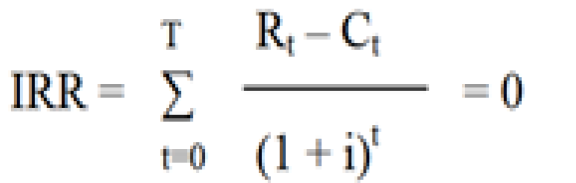
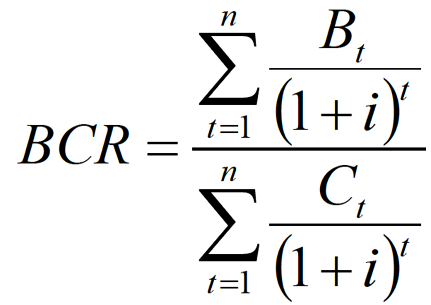
Economic rates of return
Using the above measure of total benefits from research, the different measures of economic rates of returns were estimated ; 2013a) as follows:

Results and Discussion
The assessments of cost and supply versatilities of interest brought out by before considers ; 2011; were utilized to play out the utilitarian examination of the model. The Economic Surplus Model assessed a critical improvement in yield levels of newly introduced almond variety. Almonds have achieved a pivotal position in nuts all-over the globe. Developing shopper request has driven up costs and made it a productive year crop. Farmers have planted a huge number of sections of land of new trees in the previous three decades. Dry season, be that as it may, has carried large issues to the almond business, maybe more than some other fragment of world horticulture. Almonds and other lasting harvests require more water than most temperate crops.
Impact of medium density on almond growers
The cultivation of medium density almond has changed the scenario of almond production in the world in general and in Jammu and Kashmir in particular. The adoption of medium density almond cultivation by the farmers has increased the yield of the almond more than double the produce under traditional almond variety thus increasing gross and net returns from Rs. 38,000/- to Rs. 240,000/- per hectare and Rs. 36,400/- to Rs. 137,000/- per hectare respectively in traditional and medium density almond orchards, ; came with similar results for new cultivars. The marketable surplus increased significantly from 902 to 2820 kg/ha in traditional and medium density orchards. The potential of the medium density could be judged from the increase in the returns per rupee invested which increased from 1.92 to 2.33, domestic consumption from 58 to 180 kg and labour employment from 260 to 810 man days respectively in traditional and medium density. The biggest challenge for medium density almond is that it demands very high investment of Rs.103,000/- per hectare against Rs. 20,000/- per hectare in traditional variety, the results are in consonance with ; . However, the returns are far higher than investment which has improved the standard of living of farmers and provides them a reasonably better livelihood security (Table 1).
Table 1: Ex-ante analysis of medium density almond in Kashmir.
| Particulars | Medium density | Traditional Almond | (%) Change |
| Almond Yield (MT/ha) | 3.00 | 0.96 | 213 |
| Gross returns (Rs/ha) | 240,000 | 38,400 | 525 |
| Net returns (Rs/ha) | 137,000 | 36,400 | 276 |
| Cost of cultivation (Rs/ha) | 103,000 | 20,000 | 415 |
| Cost of production (Rs/kg) | 34.3 | 20.8 | 64 |
| Returns per rupee invested (Rs/ha) | 2.33 | 1.92 | 21 |
| Marketable surplus(kg/ha) | 2820 | 902 | 213 |
| Employment (human days/ha) | 810 | 260 | 211 |
| Domestic consumption (kg) | 180 | 58 | 210 |
Table 2: Returns from investment on medium density plantation revealed through estimates of economic surplus model (ESM).
| Particulars | Values |
| Yield change Kg/ha (%) | 21.3 |
| Variable cost change per ha (%) | 41.5 |
| Target area to be covered in 2020 (%) | 30 % of the existing |
| Time to achieve maximum adoption (yrs) | 25 |
| Elasticity of supply | 0.41 |
| Elasticity of demand | 0.31 |
| Prob. Success | 1 |
| NPV (cr.) | 1348.5 |
| IRR | 70% |
| BC Ratio | 107.74 |
Aggregate benefits
Table 2 shows the economic surplus model estimates, the price elasticities of demand and supply of medium density almond were estimated through functional analysis employed on primary information collected on prices from the producers and consumers (of various income groups) pertaining to various periods of time in a year. The estimate of demand and supply elasticity thus obtained was 0.41 and 0.31 respectively. The analysis showed a significant improvement in yield level in the new variety of almond. The estimates of ESM reveal that on each rupee invested, the benefit-cost ratio (BCR) was 107.74 and the IRR 70 per cent under this study, the results are in conformity with ; ; .
Partial budget estimates
Partial budgeting is used to further assess the impact of adoption of medium density in terms of net economic gains. The results revealed that new technology (medium density) will require more cost of Rs 83,000/- ha-1. However, the credit side shows considerable gains in the form of increased income to the tune of Rs. 201,600/- ha-1 and increase in price for almond yield to the tune of 2.04 MT ha-1, amounting to the total credit of Rs 81,600/- ha-1. The net change in returns will led to an increased amount of Rs 2,00,200/- ha-1. Therefore, it could be concluded that the adoption of medium density will improve the livelihood security by generating additional employment and income (Table 3).
Table 3: Partial budgeting of medium density almond.
| Debit | Credit | ||
| Particulars | Amount (Rs/ha) | Particulars | Amount (Rs/ha) |
| Increase in cost per hectare | 83,000 | Income Effect Increase in income per ha Price Effect Increase in price for the almond yield 2.04MT@ Rs 40 |
201,600 81,600 |
| Decrease in income per hectare | 0.00 | Decrease in cost per hectare | 0.00 |
| Total (Rs) | 83,000 | 283,200 | |
| Net change (Rs) 200,200 | |||
Conclusions and Recommendations
The average productivity went up from 0.96 MT/ha to about 3.00 MT/ha after the replacement of traditional almond with medium density almond cultivars, so did the costs of new technology. Even though the costs have increased compared to the traditional technology yet it has benefited adopters to a far greater extent in the form of higher productivity besides increasing the employability which went up from 260 to 810 man-days/ha for both skilled and unskilled masses of the area. Private players were identified as potential stakeholders who need encouragement to help almond growers for setting up such orchards across Kashmir valley. Proper irrigation which is vital for raising this type of plantation need bore well facility for which extending of soft loans by the local government over a longer period of time is proposed. This will facilitate drip pattern of irrigation required for increasing productivity of medium density almond. The role of institutions has to go long way with the provision.
Acknowledgements
The authors are highly thankful to UGC, New-Delhi and Vice-chancellor SKUAST-K for providing logistic support in compiling this part of the study in a wonderful manner.
Novelty Statement
This is a worldwide based approach to measure the impact of pesticide residues on human health and ecological biosphere.
Author’s Contribution
Masudul Haq Wani: Designed methodology, provided suitable input while writing the description of the paper.
Arshad Bhat: Collected and tabulated and analysed the data, wrote the interpretation of the article.
Conflict of interest
The authors have decleared no conflict of interest.
References
- Agristat. 2019. Agricultural Statistics at a glance. Government of India, Ministry of Agriculture and Farmers Welfare, Department of Agriculture Cooperation and Farmers Welfare Directorate of Economics and Statistics. https://eands.dacnet.nic.in/PDF/At%20a%20Glance%202019%20Eng.pdf
- Alston, J.G. Norton and P. Pandey. 1995. Science under Scarcity. Cornell University Press, Ithaca. https://onlinelibrary.wiley.com/doi/abs/10.2307/1243831
- Badiu, D., F.H. Arion, L.C. Muresan, R. Lile and V. Mitre. 2015. Evaluation of economic efficiency of apple orchard investments, Acta Hortic. 7: 10521-10533. https://www.mdpi.com/2071-1050/7/8/10521
- Boulding, K.E. 1945. The concept of economic surplus. Rev. Econ. Stud. XXXV. https://fraser.stlouisfed.org/archival-collection/committee-history-federal-reserve-system-1342/bibliographies-harvard-university-reading-lists-1950-1955-459006/fulltext
- Cahn, M.B. and J. Goedegebure. 1992. Economic aspects of apple production in relationto tree density. N.Z. J. Crop Hortic. Sci. 20: 289-296. https://www.tandfonline.com/doi/abs/10.1080/01140671.1992.10421770
- Catherine, D. and E. James. 2006. Demand Elasticities for fresh fruit at the retail level, selected paper prepared for American agricultural economics association annual meeting, long beach, California, July 23-26., https://ideas.repec.org/p/ags/aaea06/21099.html
- Daniel, A.S. 2013. The Economic impacts of the California almond industry, University of California Agricultural Issues Centre. https://www.almonds.com/sites/default/files/almond_industry_2.pdf
- Elkins, R.B., K. Klonsky, R. DeMoura, T.M. DeJong. 2008. Economic evaluation of highdensity versus standard orchard configurations; case study using performance data for Golden Russet ®Bosc pear. Acta Hortic. 800 (2): 739–746. https://www.ishs.org/ishs-article/800_101
- Gopal, M.H. 1939. Consumer’s Surplus: A Reply. Indian J. Econ. XXI. https://competitionandappropriation.econ.ucla.edu//2017/09/HistoryConsumerSurplus.pdf
- Hicks, J.R. 1940. The rehabilitation of consumer surplus. Rev. Econ. Stud. 8. https://academic.oup.com/restud/articleabstract/8/2/108/1529586?redirectedFrom=fulltext
- Ishfaq, A.S. 2018. Production and export of fresh and dry fruits in Jammu and Kashmir: An Analytical Study. Int. J. Mark. Bus. Commun. 7(3): 01-09. https://papers.ssrn.com/sol3/papers.cfm?abstract_id=3481048
- Kerutagi, M.G., M.B. Deshetti and K. Abhilash. 2017. Comparative economics of traditional viz high density mango cultivation in Karnataka. Asian J. Agric. Ext. Econ. Sociol. 18(3): 1-12. https://www.journalajaees.com/index.php/AJAEES/article/view/27573
- Kumar, P., A. Kumar, S. Parappurathu and S.S. Raju. 2011. Estimation of demand elasticity for food commodities in India. Agric. Econ. Res. Rev. 24: 1-14. https://ideas.repec.org/a/ags/aerrae/109408.html
- Kumar, P., S. Parappurathu, S.S. Raju and S. Msangi. 2010. Factor Demand, output supply elasticities and supply projections for major crops of India. Agric. Econ. Res. Rev. 23(1). https://www.researchgate.net/46534953_Factor_Demand_Output_Supply_Elasticities_of_India
- Mukeet, A. 2012. Kashmir’s decaying almond orchards to get a new lease of life, GreaterKashmir.com. Tuesday, 3 Apr. https://www.greaterkashmir.com/
- Manolova, V. and K. Kolev. 2007. Economic results from growing of cherry in different levels of intensification. Acta Hortic. 981: 719-723.
- Meland, M. 2005. High density planting systems of European plums-the effect of growth and productivity of three cultivars after nine years. Acta Agriculturae Scandinavica Section B-Soil and Plant. 55: 51-57.
- Milosevic, T., B. Zornic and I. Glisic. 2008. A comparison of low-density and high density plum plantings for differences in establishment and management costs, and in returns over the first three growing seasons- a mini-review. J. Hortic. Sci. Biotechnol. 83(5): 539-542.
- Naseer, A.R., A.L. Parvaze, A.R. Ajaz and M.M. Muzafar. 2013. An analytical study on production and export of fresh and dry fruits in Jammu and Kashmir. Int. J. Sci. Res. Publ. 3(2). http://www.ijsrp.org/research-paper-0213/ijsrp-p1484.pdf
- Rayees, A.H., A. Barkat and A. Tariq. 2021. Fresh and dry fruit production in Himalayan Kashmir, Sub-Himalayan Jammu and Trans-Himalayan Ladakh, India, Heliyon. 7(1). https://doi.org/10.1016/j.heliyon.2020.e05835[CrossRef]
- Reyaz, A.P. and S. Sharma. 2015. Dwindling of almonds in Kashmir Valley: A Case study of district Pulwama. Int. J. Edu. Res. Technol. 6(1). DOI: 10.15515/ijert.0976- 4089.6.1.109120.[CrossRef]
- Robinson, T.L. 2007. An economic comparison of five high density apple planting systems. Acta Horticulturae. 732: 481-489. https://www.ishs.org/ishs-article/732_73
- Seavert, C. and L.E. Long. 2009. Financial and economic comparison between establishingstandard and high density cherry orchard. Acta Hortic. 1-6. https://www.ishs.org/ishs-article/732_76
- Wani, M.H. and S.H. Baba. 2011. Impact assessment of agricultural technology in Kashmir, research project. Indian Counc. Agric. Res. Dev. https://www.skuastkashmir.ac.in
- Wani, M.H., S.H. Baba, P.R. Sundaram, S. Yousuf and S. Yousuf. 2013a. Maize composites enhance economic returns from dry land farming: evidences from uplands of Kashmir Valley. Indian J. Agric. Econ. 68(3). https://ideas.repec.org/a/ags/inijae/206339.html
- Wani, M.H., S.H. Baba, P.R. Sundaram, S. Yousuf and S. Yousuf. 2013b. Has adoption of improved rice technology enhanced economic and livelihood security in Kashmir Valley, Agric. Econ. Res. Rev. 26: 165-171. https://ageconsearch.umn.edu/record/158507?ln=en
- Winch, D.M. 1965. Consumer surplus and the compensation principle, Am. Econ. Rev. 55. https://link.springer.com/chapter/10.1007%2F978-1-349-15739-6_2
Services
Article usage statistics
Loading…