ResearchersLinks

Short Communication · Volume 52, Issue 1, 8 January 2020 · Open Access

Distribution and Abundance of Vertebrate Pests of Cultivated Maize and their Eco-Friendly Management in District Bagh, Azad Jammu and Kashmir, Pakistan

· · ·

Affiliations & Notes ⌄
  1. 1Department of Zoology, Women University of Azad Jammu and Kashmir, Bagh 2Bioresource Research Centre, 34-Bazar Road, G-6/4, Islamabad 3Department of Education, University of Punjab, Lahore , * Corresponding author: sabulhussan@gmail.com
Article Info ⌄
Journal:
Pakistan Journal of Zoology
Published:
8 January 2020

From the article

  • We recorded 23 pest species belonging to 13 families among which five species are large mammals (Table I).
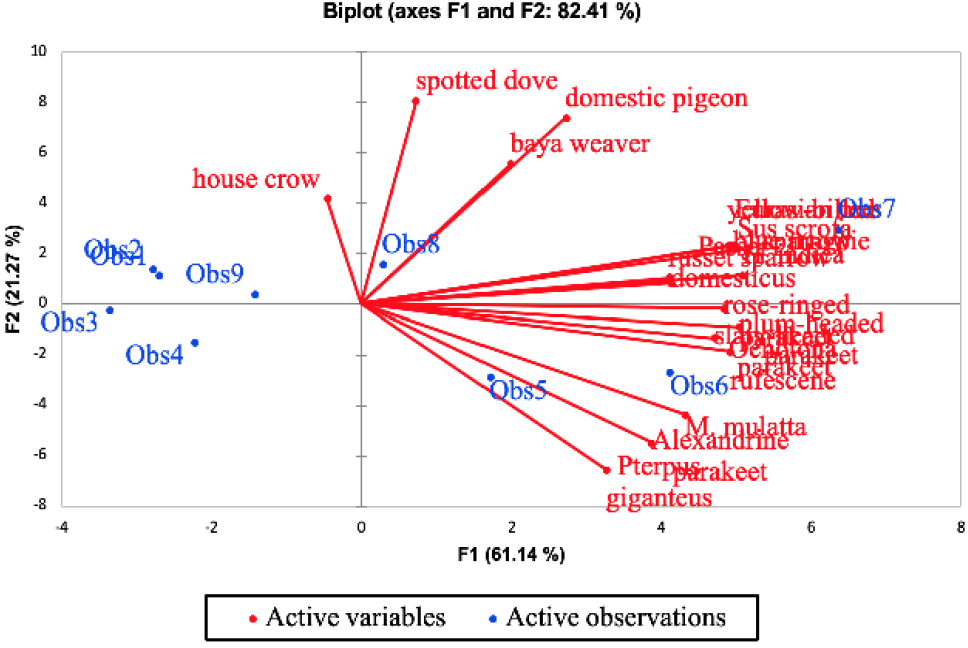
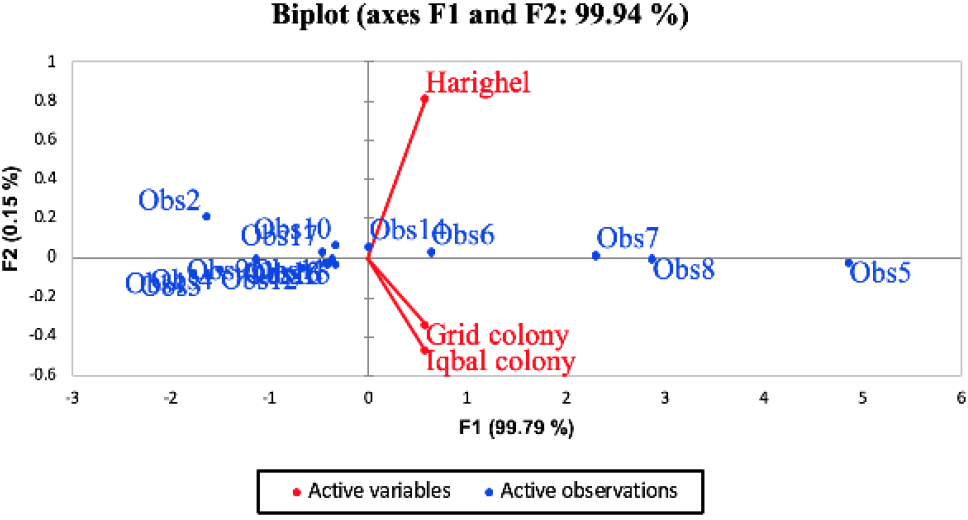
  • The habitat of the three studies is different and also proved statistically significant (Fig. 2) and correlation of species with habitat (Fig. 3).

Selected from the article's own text.

Abstract

The present study was conducted to document distribution and abundance of vertebrate pests in District (Bagh), Azad Kashmir. The study was conducted in three areas (Harighel fields, Grid colony fields and Iqbal colony fields during mid April to mid December 2017 by selecting 5 model plots of maize. On each study site, line transect method for small mammalian pest, for large mammals spot light count and for birds point count methods were used to determine abundance of each species. The study, documented 10 species of mammalian pests, 13 species of pest birds of maize crop and their population density differed significantly (P≤ 0.05) at study sites. The habitat analysis of study sites and correlation of species with habitat were done through Principal Component Analysis (PCA) by using software (XLSTAT-Ecology version). The habitat was positively correlated in the two areas while the study site Harighel fields was negatively correlated. It was also found that most species except for a few were positively correlated with habitat. The infestation of pest starts at the time of sowing and continued to post harvest stage. A properly scheduled ecofriendly approach was needed to control this infestation to prevent significant loss of maize production.
 

Material and methods

For the current study, five plots were randomly selected in each of three randomly selected sites: Iqbal Colony fields, 33°59’39.70”N ,73°46’29.03”E, Harighel fields,33°56’35.00”N 73°42’0.71”E and the Grid colony field 33°58’39.84”N,73°45’47.00”E). The trapping was done from April through September for estimation of pre harvest pests and from October through December post harvest pest estimation by trap-line method (line-transect technique). A trap-line consisting of 30 trap stations laid on a straight line that the distance between the consecutive stations was 15.24 meters apart. At each of the stations, three snap traps, two rat traps and one mouse trap were set for capturing rodents described by Rudran et al. (1996). The traps were baited with bread with cooking oil and a few drops of oil were also rubbed on traps. Trapping nights were calculated by multiplying number of traps by number of nights. The trapping was done each month consecutively for a period of three nights and at each study site two trap lines with 30 stations was applied. The traps were set before sunset in the evening and checked before sunrise the next morning. The trapped specimens were removed and packed in plastic zipper bags and tagged with station number and sample number. The tagged samples were brought to the laboratory for identification and autopsy following the taxonomic keys of Robert (1997). The lagomorph and artiodactyl, populations were estimated by adapting the total count method (Sutherland, 1994). It is the average of sum of animals observed in at each site. The pest bird population was estimated by the point count method. The birds were counted, visualized and photographed in fixed radius plots .

Results and discussion

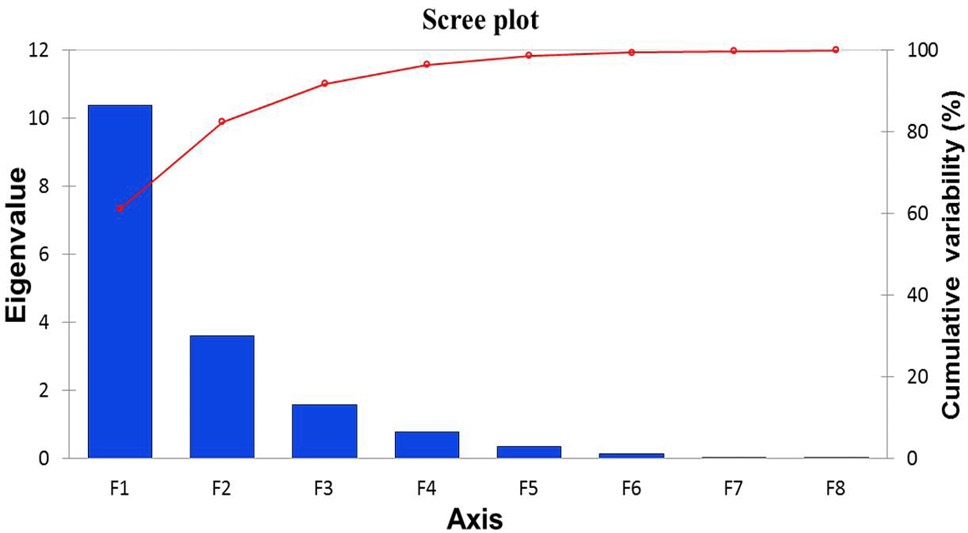
We recorded 23 pest species belonging to 13 families among which five species are large mammals (Table I). The percentage of variability ranged from 61.143 to 0.213, while the percentage of cumulative variability ranged from 61.143 to 100 (Fig. 1). The wild boar (Sus scrofa) is omnivorous and infests maize before the grain become hard and the infestation rate become high . The habitat of the three studies is different and also proved statistically significant (Fig. 2) and correlation of species with habitat (Fig. 3). The Indian flying-foxe (Pterpus giganteus) infestation rate at the study area was recorded August, September and October (Mahmood et al., 2010). The russet sparrow (Passer cinnamomeus), infests crops at the time of sowing, seedling and post harvest . The rose-ringed parakeet (Psittacula krameri), feeds on buds, fruits, vegetables, nuts, berries, and causes significant economic losses . The plum-headed parakeet (Psittacula cyanocephala) has a wide feeding niche of cultivated crops, orchids and damage maize cobs and seeds . The house crow (Corvus splendens), damages cultivations,


Table I.- Comparison of population density at fields.

No.

Common names

Scientific names

Iqbal Colony fields

Grid Colony fields

Harighel fields

Large mammals

1

Indian wild boar

Sus scrofa

3.22±1.15

7.22±1.25

10.42±1.35

2

Rhesus macaque

Macca mulatta

-

-

13.33±6.87

3

Indian crested porcupine

Hystrix indica

4.22±1.75

6.1±2.51

8.77±2.4

4

Royle’s Pika

Ochotona rufescene

6.0 ±2.4

8.1±2.51

12.6±3.21

5

Pterpus giganteus

116.8±6.4

133.2±6.6

257.1±8.6

Small mammals

1

House mouse

Mus. musculus

36.2 ±9.64

45.8 ±10.5

66.1±9.6

2

Roof rat

Rattus rattus

6.22±1.3

8.5 ±2.1

16.22±1.3

3

Kashmir field mouse

Apodemus rusigus

29.44 ±15.3

37.7 ±8.9

49.44 ±15.38

4

Asian house shrew

Suncus murinus

7.88 ±1.5

18.4 ±1.6

27.88 ±1.57

5

Lesser bandicoot rat

Bendicota bengalensis

5.11 ±1.01

6.2 ±1.5

7.11±1.01

Birds

1

Cinnamon tree sparrow

Passer cinnamomeus

38.6±10.8

40.6±12.58

43.6±12.50

2

Russet sparrow

Passer rutilans

41.6±12.85

55.2±1.3

70.44±14.71

3

Eurasian tree sparrow

Passer montanus

53.55±12.52

64.55±12.52

84.55±10.52

4

House sparrow

Passer domesticus

73.55±11.52

83.5±11.5

121.11±12.04

5

Yellow-billed blue magpie

Urocissa flavirostris

10.44±2.12

33.6±2.43

56.6±2.9

6

House crow

Corvus splendens

23.33±5.52

38.3±5.5

53.33±5.5

7

Alexandrine parakeet

Psittacula eupatria

24.44±8.9

37.7±9.9

51.11±10.19

8

Slaty-headed Parakeet

Psittacula himalayana

21.11±6.05

31.1±6.05

34.44±6.79

9

Rock pigeon

Columbalivia domestica

23.33±11.14

36.6±12.21

39.44±12.84

10

Spotted dove

Spilopelia chinensis

29.44±4.12

44.44±4.12

69.44±4.12

11

Plum-headed parakeet

Psittacula cyanocephala

25.55±9.44

38.33±8.5

41.11±8.89

12

Rose-ringed parakeet

Psittacula krameri

23.88±4.4

36.6±8.9

39.4±9.8

13

Baya waver

Ploceus philippinus

21.6±5.7

37.1±6.4

50.01±6.2

Table II.- PCA values association between different components.

Values 

F1

F2

F3

F4

F5

F6

F7

F8

Eigenvalue

10.394

3.615

1.598

0.794

0.367

0.143

0.052

0.036

Variability (%)

61.143

21.267

9.399

4.670

2.160

0.840

0.307

0.213

Cumulative %

61.143

82.410

91.809

96.479

98.640

99.480

99.787

100.000


stored grains and causes significant economic loss . The greatest damage to the ripened crops is due to the foraging activities of the bird species (Ploceus philippinus), and can reduce crop yield by more than 55% . The tree sparrow (Passer montanus) feeds on seeds on the ground and maize cobs . The yellow-billed blue magpie (Urocissa flavirostris) is omnivorous, damages maize cobs. The geographic distribution of species in Azad Jammu Kashmir is reported by . The rock pigeon (Columba livia) is sighted at sowing and post-harvest of the maize crop . The spotted dove (Spilopelia chinensis) is grainivore and is sighted at sowing and post-harvest . The rhesus macaque (Macaca mulatta) infests crops in the groups when maize grain goes to ripening which is similar in India . The distribution of this species is reported as being abundant and is a pest by various authors . The Indian porcupine (Hystrix indica) is a pest of moist temperate forests, plantations, and cultivated land . The infestation of Royle’s pika (Ochotona roylei), normally occurs when maize grains are ripen. The house mouse (Mus musculus) infestation occurs post-harvest . The bandicoot rat (Bendicota bengalensis) infestation occurs at the sowing of seeds and they damage seedling, while a second infestation occurs at the time of post-harvest stage. They collect maize in their burrows .The black rat (Rattus rattus) shift their territory from house to fields when the abundance of food in house is less . The Kashmir field mouse (Apodemus rusiges) infestation was recorded during seedling but they also raided fields at post-harvest . The Asian house shrew (Suncus murinus) feeds on plant matter such as grains, nuts, and seeds . Our results agree with the findings of who reported that the density of (S. murinus) in fields is high because stored cereals at human houses are exhausted.


Statement of conflict of interest

The authors declare no conflict of interest.

Figures

Fig. 1.
Fig. 1..

PCA screen plot showing Eigen values.

Fig. 2.
Fig. 2..

PCA plot showing the habitat similarity (observations and site variable).

Fig. 3.
Fig. 3..

PCA plot showing the distribution of different species in study sites.

References

  1. Amori, G., Hutterer, R., Kryštufek, B., Yigit, N., Mitsain, G. and Muñoz, L.J.P., 2008. Hystrix indica: IUCN red list of threatened species. IUCN.
  2. Bueno, C., Reiné, R., Alados, C. and Gómez-García, D., 2011. Basic appl. Ecol., 12: 125-133. https://doi.org/10.1016/j.baae.2010.12.006[CrossRef]
  3. Bruggers, R.L., Rodriguez, E. and Zaccagnini, M.E., 1998. Int. Biodet. Biodeg., 42: 173–184. https://doi.org/10.1016/S0964-8305(98)00046-8[CrossRef]
  4. Clement, P., Harris, A. and Davis, J., 1993. Finches and sparrows: An identification guide. Christopher Helm.
  5. Dvir, E., 1985. Nat. Sci., 10: 115-120. https://doi.org/10.1007/BF01326516[CrossRef]
  6. FAO, 1977. Analysis of an FAO survey of post-harvest crop losses in developing countries. AGPP:MISC/27, Rome, Italy.
  7. Faiz, A.H., Abbas, F., Ali, Z. and Zahra, L., 2015. J. Anim. Pl. Sci., 25(Supp-2): 404-407.
  8. Faiz, A.H. and Abbas, F.I., 2016. Pakistan J. Zool., 48: 1209-1212.
  9. Faiz, A.H., Abbas, F.I., Ali, Z. and Zahra, L., 2018. Pakistan J. Zool., 50: 1-4. https://doi.org/10.17582/journal.pjz/2018.50.1.sc8[Full text][CrossRef]
  10. Faiz, A.H., Abbas, F.I., Ali, Z. and Zahra, L., 2018. Pakistan J. Zool., 50: 719-724. https://doi.org/10.17582/journal.pjz/2018.50.1.sc8[Full text][CrossRef]
  11. Feare, C.J. and Mungroo, Y., 1990. Biol. Conser., 51: 63-70. https://doi.org/10.1016/0006-3207(90)90032-K[CrossRef]
  12. Greeley, M., 1982. Pinpointing post-harvest food losses. Ceres Jan/Feb 1982, pp. 30-37.
  13. Hutto, R.L., Pletschet, M. and Hendricks, H., 1986. Auk, 103: 593-602.
  14. Jassra, A.W. and Rafi, M.A., 2003. Cash crop farming in the Northern Pakistan: The importance of pollinator diversity and managed pollination in apricots. GoP/NARC, Islamabad, Pakistan.
  15. Mahmood-ul-Hassan, Tayiba, M., Gulraiz, L., Rana, S.A. and Arshad, J., 2010. Acta Chiro., 12: 341-347. https://doi.org/10.3161/150811010X537927[CrossRef]
  16. Prakash, I. and Singh, H., 1999. Proc. natl. Acad. Sci. India, 69: 245-250.
  17. Rao, M.S., Rabinowitz, A. and Ksaw, T., 2001. Conserv. Biol., 16: 360-368. https://doi.org/10.1046/j.1523-1739.2002.00219.x[CrossRef]
  18. Roberts, T.J., 1994. The mammals of Pakistan, revised edition. Oxford University Press.
  19. Rudran, R., Kunz, T.H., Southwell, C., Jarman, P. and Smith, A.P., 1996. In: Measuring and monitoring biological diversity: Standard methods for mammals (eds. D.E. Wilson, F.R. Cole, J.D. Nichols, R. Rudran and M.S. Foster). Smithsonian Institution Press, Washington, DC, pp. 81-104.
  20. Shyama, S.K., 1998. Survey of the bird pests of agricultural crops in Goaparasharya. Society for Applied Ornithology, Hyderabad, India, pp. 18-20.
  21. Summers, S. and Denis, J., 1988. The sparrows: A study of the genus, Passer. Illustrated by Robert Gillmor, Calton, Staffs, T&AD Poyser. England. ISBN 0-85661-048-8.
  22. Thamaraiselvi, V.P. and Nirmala, T., 2015. Int. Res. J. environ. Sci., 4: 26-29.
  23. WHO, 2000. Food-borne disease: A focus for health education. World Health Organization, Geneva, pp. 198. ISBN 92-4-156196-3

Cited by 1 article

In journals published by ResearchersLinks.

  1. Incidence of Post-Harvest Fungal Rot of Some Vegetables in Swabi, Khyber Pakhtunkhwa PakistanPakistan Journal of Agricultural Research · 2021

Services

Article usage statistics

Loading…

Distribution and Abundance of Vertebrate Pests of Cultivated Maize and their Eco-Friendly Management in District Bagh, Azad Jammu and Kashmir, Pakistan · ResearchersLinks