Research Article · Volume 41, Issue 2, 2 October 2026 · Open Access
Comparative Toxicity of Tebufenozide, Bacillus thuringiensis (Protecto), and Azadirachtin (Neemix) and Their Combinations Against Spodoptera littoralis (Lepidoptera: Noctuidae) Larvae
· · ·
Affiliations & Notes ⌄
- 1Department of Science, College of Basic Education, Al-Mustansiriya University, 10046 Baghdad, lraq 2Plant Protection Research Institute, Agricultural Research Center, Dokki, 12619 Giza, Egypt 3Plant Protection Department, Faculty of Agriculture, Assiut University, Assiut, Egypt Corresponding author: Moustafa M.S. Bakry md.md_sabry@yahoo.com
Article Info ⌄
- Journal:
- Punjab University Journal of Zoology
- Published:
- 2 October 2026

From the article
- The higher toxicity index after 168 h, particularly in the combination of Tebufenozide and Protecto (TI = 31.56) and Tebufenozide and Neemix (TI = 43.87), indicates that if these three kinds of materials are used together, they can produce cumulative benefits over time.
- The ternary mixture containing Tebufenozide + Protecto + Neemix was the most effective when used for longer exposure periods.
- While the ternary mixture was the most effective, the binary combination of Tebufenozide + Neemix represents a promising alternative for scenarios where a three-component tank mix is logistically or economically challenging.
- After 168 hours of treatment, the Chou–Talalay (CI) indices for the three binary formulations were consistent with synergy (Tebufenozide + Protecto, CI= 0.51; Tebufenozide + Neemix, CI= 0.37; Protecto + Neemix, CI= 0.53); however, the ternary combination was within the strong synergy range (0.14).
Selected from the article's own text.
Abstract
Introduction
Spodoptera littoralis (Boisduval) (Lepidoptera: Noctuidae), otherwise known as the Egyptian or African cotton leafworm, is one of the most economically damaging polyphagous agricultural pests in the Afro-Mediterranean region, affecting more than 40 families of plants with over 87 species of importance to agriculture, including cotton, maize, tomato, soybean, alfalfa, rice, and many edible and ornamental plant crops . In Egypt, S. littoralis is the primary biotic threat to cotton, and it defoliates, damages the bolls, or reduces the quality of tens of millions of Egyptian pounds of cotton annually .
Larvae cause extensive damage by defoliating plants, thereby reducing photosynthetic capacity, and by feeding on developing buds, flowers, and fruits . In severe infestations, they can completely strip plants of their foliage. Research indicates that 20–70% leaf area loss can reduce cotton yield by up to 50% (El-Saleh et al., 2005). Moreover, the high fertility of this pest, its migration behavior, and its rapid expansion under expected climate change scenarios make it more difficult to control . The European and Mediterranean Plant Protection Organization has classified this pest as a quarantined organism of category A2 .
Historically, the management of S. littoralis has relied on broad-spectrum synthetic insecticides. This reliance has resulted in documented resistance to various classes of insecticides. Additionally, it has disrupted the populations of S. littoralis’s natural enemies and contributed to the accumulation of environmental residues .
Tebufenozide, an ecdysone receptor agonist, induces a premature but lethal molting process in lepidopteran larvae . Importantly, Tebufenozide has not been detected as causing a shift in S. littoralis susceptibility to Tebufenozide after being exposed to continuously low doses of this insecticide for multiple generations, therefore making Tebufenozide an appropriate candidate for an integrated pest management program based upon resistance management .
Protecto is a commercially available bioinsecticide formulated with Bacillus thuringiensis (Bt). The crystalline δ-endotoxins produced by Bt attach to receptors in the epithelial cells of the larval midgut lining and cause the formation of pores that induce osmotic lysis .
The active ingredient in Neemix is azadirachtin, a natural compound that disrupts the process of producing the hormone ecdysone and stops insects from eating and molting into new stages of development and also has multiple effects on how the insect’s body develops and feeds. The combination of these three modes (anti-feedant, insect growth regulator, and endocrine disruptor) is significantly different from synthetic products, and this protects Neemix from having a risk of becoming resistant to it . Neem products have shown that they can kill Spodoptera species, with up to 96% of those insects not feeding on them and killing large numbers at various developmental stages .
A proven method for increasing insecticidal effectiveness, lowering the dose of each individual molecule needed, and delaying the development of resistance is to include compounds with complementary modes of action into binary or ternary combinations ; . For Spodoptera species, combinations of chemical and biological insecticides have shown to work better together, allowing users to reduce the amount of active ingredient by 25-50% and maintain over 70% control effectiveness ; . While there is considerable evidence on the effectiveness of using two types of products together, there are very few studies on using three types of products together, specifically tebufenozide, a Bt product, and azadirachtin against S. littoralis third instar larvae under several different durations of exposure.
This study aimed to: (1) determine the LC₅₀ values, probit slopes, and toxicity indices for individual, binary, and ternary combinations of tebufenozide, Protecto, and Neemix against third-instar S. littoralis larvae; (2) characterize the nature of the interactions (synergistic, additive, or antagonistic) using the Chou-Talalay combination index method; and (3) identify optimal combinations for integrated pest management (IPM) programs across three exposure durations: 72, 120, and 168 hours.
Materials and Methods
Insect rearing
The S. littoralis third instar larvae used in this study were obtained from a laboratory colony maintained at 25 ± 2°C, 65 ± 5% relative humidity, and a 16:8 hour light-dark cycle. S. littoralis were grown on a diet made from castor bean (Ricinus communis L.) leaves that were replaced with fresh leaves every day ; . Larvae in their third instar were chosen since this stage is the most often targeted by pesticide treatments and signifies the substantial eating damage in field populations .
Test compounds and combinations
To evaluate the potency of these materials, three different compound samples were evaluated: 1: Tebufenozide (a synthetic Insect Growth Regulator (IGR), or ecdysone receptor agonist) at a recommended application rate of 120 mg/L of water. 2: Protecto (a bio-insecticide based on Bacillus thuringiensis) at a recommended application rate of 1000 mg/L of water. 3: Neemix (a botanical IGR based on azadirachtin, containing a total of 4.5% azadirachtin) at a recommended application rate of 30 mg/L of water. The control treatment consisted of sterile distilled water with 0.05% Tween 80.
Each treatment was tested at three concentrations: (i) 0.5× the recommended rate, (ii) the recommended rate (1×), and (iii) 2× the recommended rate. For binary and ternary mixtures, the compounds were combined at volumetric ratios of 1:1 and 1:1:1, respectively. The calculations were performed using their respective stock solutions, which are based on the recommended field usage rates .
Recommended usage rates (mg/L) for S. littoralis
Tebufenozide was tested at concentrations of 0.5×, 1×, and 2× the recommended rate, which corresponds to 120, 240, and 480 mg L⁻¹. Protecto was assessed at concentrations of 500, 1000, and 2000 mg L⁻¹, while Neemix was evaluated at 15, 30, and 60 mg L⁻¹.
Each of these three individual compounds was tested separately and then again in three combinations of two (Tebufenozide with Protecto, Tebufenozide with Neemix, and Protecto with Neemix), and finally as a combination of all three compounds together (Tebufenozide, Protecto, and Neemix). Co-dilutions of stock solutions of the binary and ternary mixtures were prepared using equal proportions by weight of the stocks of each ingredient, and serial dilutions of the mixtures in five to seven concentrations that would fall within the estimated mortality range of 5 to 95% were made up in distilled water with 0.01% Triton X-100 as a surfactant to produce the final working solution ; .
Materials and Methods
Experiments to assess the bioefficacy of the test compounds were performed using the leaf dipping method. Discs of freshly cut castor bean leave were dipped in the test solutions and allowed to dry at room temperature for 30 minutes before being offered to groups of 10 third instar larvae that had been placed in ventilated plastic containers . Each treatment group received four replicates of the corresponding concentration, and control larvae received leaf discs that had been dipped only in distilled water and Triton X-100 . The experimental design comprised a total of 84 experimental units (7 treatments × 3 concentrations × 4 replicates). Each group of larvae was assessed for mortality after exposure to the leaf discs for 72, 120, and 168 hours (3, 5, and 7 days). To be considered dead, a larva must show no signs of responding to light mechanical stimuli .
Statistical analysis
The actual mortality recorded at each test concentration was corrected for the mortality observed in the controls according to the Abbott formula . A larva was considered dead if it did not respond to modest mechanical stimulation with a fine-tipped probe and if there was no discernible body movement or indication of proper metamorphosis . Probit analysis was performed based on the Finney (1971) method to calculate the lethal concentration (LC₅₀; 95% confidence limits) and the slope of the probit line with the associated standard error (±).
The percentage toxicity index (%TI) was calculated using the most potent treatment as a baseline (%TI = LC₅₀ of most potent/ LC₅₀ of tested combination × 100), according to Sun (1950) to assess pesticide efficacy and classify types of interactions between treatment components. Resistance Ratio (RR) represents the multiplicative fold difference in LC50 values. Specifically, RR is defined as the ratio of the LC50 of the treatment to the LC50 of the reference compound. The relationship is expressed mathematically as RR= 100 / %TI. While RR and %TI are mathematically related, %TI serves as a relative measure that allows for a convenient visual comparison of efficacy values. In contrast, RR provides the actual fold difference required to achieve the same level of efficacy and is directly applicable in calculating field application rates.
The seven treatments were grouped using hierarchical clustering analysis (UPGMA, Euclidean distance on log₁₀(LC₅₀) profiles) according to the overall efficacy profile, using R software (R Core Team, 2023).
Chou-talalay method
The combination index ; , as determined using the classical isobologram approach for a combination comprising n mutually exclusive (non-competitive) components:
CI = Σ (Dᵢ / Dxᵢ), for i = 1 to n
Where, Dᵢ is the dose of component i provided by the mixture at its respective LC50, i.e., the level of component i that exists within its entire formulation when producing a 50% fatality. Dxᵢ is the LC50 of compound i when evaluated in isolation for the same period of exposure. n is the quantity of components in the formulation (e.g., two for binary, three for ternary).
The CI (combination index) value for each CI can be categorized based on the conventional interaction scale established by Chou and Talalay: CI < 0.1 (very strong synergy), 0.1-0.3 (strong synergy), 0.3-0.7 (synergistic), 0.7-0.85 (moderate synergy), 0.85-0.90 (slight synergy), 0.90-1.10 (nearly additive), 1.10-1.45 (slight antagonism), etc., to a CI > 3.3 (very strong antagonism) .
Results
Toxicity at 72 hours
At 72 h, the ternary mixture exhibited the lowest LC₅₀ value (9.64 mg L⁻¹; Table 1). Among individual compounds, Tebufenozide was the most potent (LC₅₀ = 28.60 mg L⁻¹), while Protecto showed the lowest individual activity (LC₅₀ = 66.05 mg L⁻¹). The binary combination Tebufenozide + Neemix (LC₅₀ = 21.74 mg L⁻¹) was the most effective two-component mixture at this time point (Table 1, Figure 1).
Among individual compounds, Tebufenozide was the most active (LC₅₀= 28.60 mg L⁻¹; % TI = 33.69; RR = 2.97), followed by Neemix (37.90 mg L⁻¹; % TI = 25.43; RR = 3.93). Protecto exhibited the lowest individual potency (LC₅₀= 66.05 mg L⁻¹; % TI= 14.59; RR = 6.85). Among binary combinations, Tebufenozide + Neemix (LC₅₀ = 21.74 mg L⁻¹; % TI = 44.33; RR = 2.26) was the most potent, outperforming Tebufenozide + Protecto (LC₅₀ = 26.69 mg L⁻¹; % TI = 36.11) and Protecto + Neemix (LC₅₀ = 31.27 mg L⁻¹; % TI = 30.82). Chi-square (χ²) values were all non-significant (χ² = 0.01–0.52, p > 0.05), and Probit slopes were generally excellent (0.82 to 0.98) for all dose-response models, indicating good goodness-of-fit, as shown in Table 1.
Table 1: Toxicological parameters of seven treatments against Spodoptera littoralis third instar larvae after 72 h exposure. TI = toxicity index; RR = resistance ratio.
|
Treatment |
LC₅₀ (mg L⁻¹) |
Slope ± SE |
χ² |
% TI |
RR |
|
Tebufenozide |
28.60 |
0.96 ± 0.28 |
0.01 |
33.69 |
2.97 |
|
Protecto |
66.05 |
0.98 ± 0.26 |
0.03 |
14.59 |
6.85 |
|
Neemix |
37.90 |
0.93 ± 0.30 |
0.18 |
25.43 |
3.93 |
|
Tebufenozide + Protecto |
26.69 |
0.90 ± 0.28 |
0.16 |
36.11 |
2.77 |
|
Tebufenozide + Neemix |
21.74 |
0.90 ± 0.32 |
0.24 |
44.33 |
2.26 |
|
Protecto + Neemix |
31.27 |
0.95 ± 0.30 |
0.12 |
30.82 |
3.24 |
|
Teb. + Pro. + Neem. |
9.64 |
0.82 ± 0.28 |
0.32 |
100.00 |
1.00 |
Table 2: Toxicological parameters of seven treatments against Spodoptera littoralis third instar larvae after 120 h exposure. TI = toxicity index; RR = resistance ratio.
|
Treatment |
LC₅₀ (mg L⁻¹) |
Slope ± SE |
χ² |
% TI |
RR |
|
Tebufenozide |
25.11 |
0.99 ± 0.45 |
0.05 |
23.92 |
4.18 |
|
Protecto |
46.94 |
0.92 ± 0.28 |
0.12 |
12.79 |
7.82 |
|
Neemix |
37.90 |
0.95 ± 0.26 |
0.20 |
15.84 |
6.31 |
|
Tebufenozide + Protecto |
18.50 |
0.86 ± 0.32 |
0.37 |
32.46 |
3.08 |
|
Tebufenozide + Neemix |
11.00 |
0.72 ± 0.24 |
0.72 |
54.58 |
1.83 |
|
Protecto + Neemix |
25.90 |
0.88 ± 0.28 |
0.94 |
23.19 |
4.31 |
|
Teb. + Pro. + Neem. |
6.00 |
0.55 ± 0.22 |
0.18 |
100.00 |
1.00 |
Toxicity at 168 Hours.
Toxicity at 120 hours
Gradually, as the exposure time increased, the LC₅₀ value decreased with all the treatments, which showed progressive larval mortality with time (Table 2, Figure 1). The ternary mixture again achieved the lowest LC₅₀ (6.00 mg L⁻¹; % TI = 100%; RR = 1.00). The highest increase in potency compared to 72 h was detected in the combination of Tebufenozide + Neemix with LC₅₀ reduced from 21.74 to 11.00 mg L⁻¹ (% (TI = 54.58), indicating a tremendous improvement in its toxicity index and making it the second most potent treatment. Tebufenozide + Protecto registered an LC₅₀ of 18.50 mg L⁻¹ (% (TI = 32.46; RR = 3.08), while the individual compounds showed LC₅₀ values of 25.11 (Tebufenozide), 46.94 (Protecto), and 37.90 (Neemix) mg L⁻¹. Narrowing of probit slopes was apparent compared to 72 h, with Tebufenozide + Neemix (slope = 0.72 ± 0.24) a bit more heterogeneous in population response at this time point. All Chi-square values remained non-significant (χ² = 0.05–0.94, p > 0.05).
Toxicity at 168 hours
Based upon the 168-hour assessment, the combination of three different biopesticides produced the most time-dependent increase in toxicity with an LC₅₀ value of 4.3 mg/L (100% TI) across all different treatments (Table 3 and Figure 1). At 168 h, the disparity in RR between the ternary mixture and individual compounds was most pronounced. Resistance ratios for Tebufenozide, Protecto, and Neemix were 4.6, 9.46, and 9.21, respectively; therefore, at this point, it was clear that the three compounds demonstrated the largest divergence from the combination treatment.
Additionally, it appears that the resistance ratios between two biopesticide combinations were considerably lower than resistance ratios between single and three compound treatments. Resistance ratios for Tebufenozide + Protecto, Tebufenozide + Neemix, and Protecto + Neemix were 3.17, 2.28, and 4.94, respectively. Consistent with the results of this research, we have demonstrated that multiple biopesticides consistently outperformed individual biopesticides. Probit slopes for IGR-containing treatments at 168 hours were also found to be much flatter than for the previous tests without IGRs. The probit slopes of IGR-containing treatments at 168 hours were 0.28 ± 0.12, and for the ternary treatment, 0.20 ± 0.26. These probit slopes confirm the asynchronous, population-heterogeneous mortality that is observed in IGR bioassays at the late exposure time (> 168 hours).
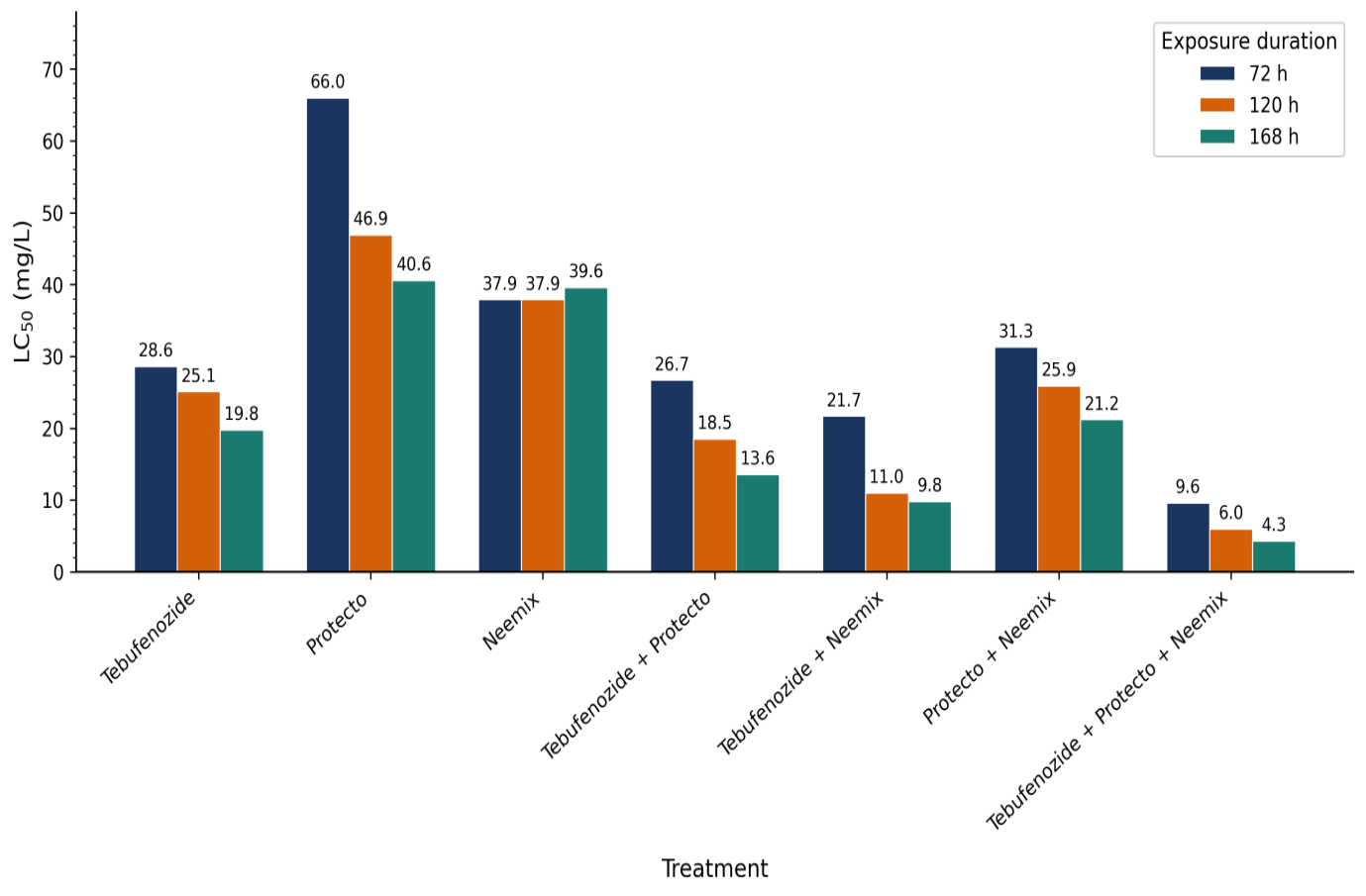
The overall decrease in each bar cluster (left to right) in each treatment group indicates a general escalation in toxicity over time (Figure 1). Of particular note, Neemix shows the least variation in time responses among the chemicals tested, with concentrations of 37.90 mg/L observed at both 72 and 120 hours. This consistency is in line with its basic mode of action, which involves preventing nutrition and disrupting the endocrine system rather than killing through direct contact. The ternary mixture bars, on the other hand, decline significantly at each of the time points, as the mechanism of all three active ingredients is delayed and working simultaneously. Many of these data come from a single panel of results and strongly support the better performance of the ternary combination as compared to single-compound treatments at the early exposure windows.
All % TI values of the non-ternary treatments (Tables 1–2, consistent denominator convention), however, plateau or decrease when compared to the values at 72 h and 120 h by 168 h, indicating that the combination of the three compounds is not as effective as the sole presence of the two compounds, as reflected in the changes in efficacy. The greatly reduced Protecto-alone bars at all time points (14.59→ 12.79 → 10.6%) suggest that the Bt component works best in a mixture where its slower-acting pore-forming toxins are enhanced by the more rapid physiological disruption effects of Tebufenozide and azadirachtin. This is also useful to convey to practitioners how strong the treatments are relative to the ternary formulation: no binary combination is as potent as the ternary, thus justifying the use of a three-component mixture as the best formulation approach.
Table 3 shows the resistance ratio (fold difference between the LC₅₀ of each treatment and the most effective combination) for each of the three exposure durations. The near-flat 168-h bars for the ternary combination (all-time points RR = 1.00) emphasize its function as the stable potency anchor. This is done for the same LC₅₀ data as shown in Figure 1 but expressed on a linear relative scale, where differences between treatments are easily read without the need to interpret them in a logarithmic sense.
Tables 1-3 exhibits the temporal evolution of LC₅₀ for each of the seven treatments as continuous lines along three time points to provide a direct visual comparison of the potency increments in a few seconds. The greatest absolute decrease in the LC₅₀ occurred in the Protecto line (orange), from 66.05 mg L⁻¹ at 72 h to 40.63 mg L⁻¹ at 168 h, reflecting the slow-acting kinetics of Bt δ-endotoxins, which require prolonged contact with the midgut for osmotic lysis. The Neemix line (green) is almost flat (37.90 → 39.57 mg L⁻¹), indicating that the mechanism of action (antifeedancy and developmental arrest) occurs on a longer timeline than 168 h in this instar and bioassay format and that the 168 h endpoint may be an underestimate of its potential. The ternary mixture (pink/magenta line) keeps its position at the lowest level throughout, the slope of which increases from 72 to 120 h and then flattens slightly from 120 to 168 h, suggesting that the greatest effective effect of the three components is occurring in the 72-120 h window. The intermediate (ternary) mixture at 168 h was close to the Tebufenozide + Neemix line, supporting the use of this binary mixture as a simplified, two-product option where a three-product mixture is not operationally feasible.
Table 3: Toxicological parameters of seven treatments against Spodoptera littoralis third instar larvae after 168 h exposure. TI= toxicity index; RR= resistance ratio.
|
Treatment |
LC₅₀ (mg L⁻¹) |
Slope ± SE |
χ² |
% TI |
RR |
|
Tebufenozide |
19.75 |
0.82 ± 0.42 |
0.72 |
21.76 |
4.60 |
|
Protecto |
40.63 |
0.86 ± 0.38 |
0.40 |
10.58 |
9.46 |
|
Neemix |
39.57 |
0.42 ± 0.28 |
0.26 |
10.86 |
9.21 |
|
Tebufenozide + Protecto |
13.61 |
0.38 ± 0.16 |
0.38 |
31.56 |
3.17 |
|
Tebufenozide + Neemix |
9.79 |
0.28 ± 0.12 |
0.30 |
43.87 |
2.28 |
|
Protecto + Neemix |
21.24 |
0.64 ± 0.22 |
0.17 |
20.23 |
4.94 |
|
Teb. + Pro. + Neem. |
4.30 |
0.20 ± 0.26 |
0.22 |
100.00 |
1.00 |
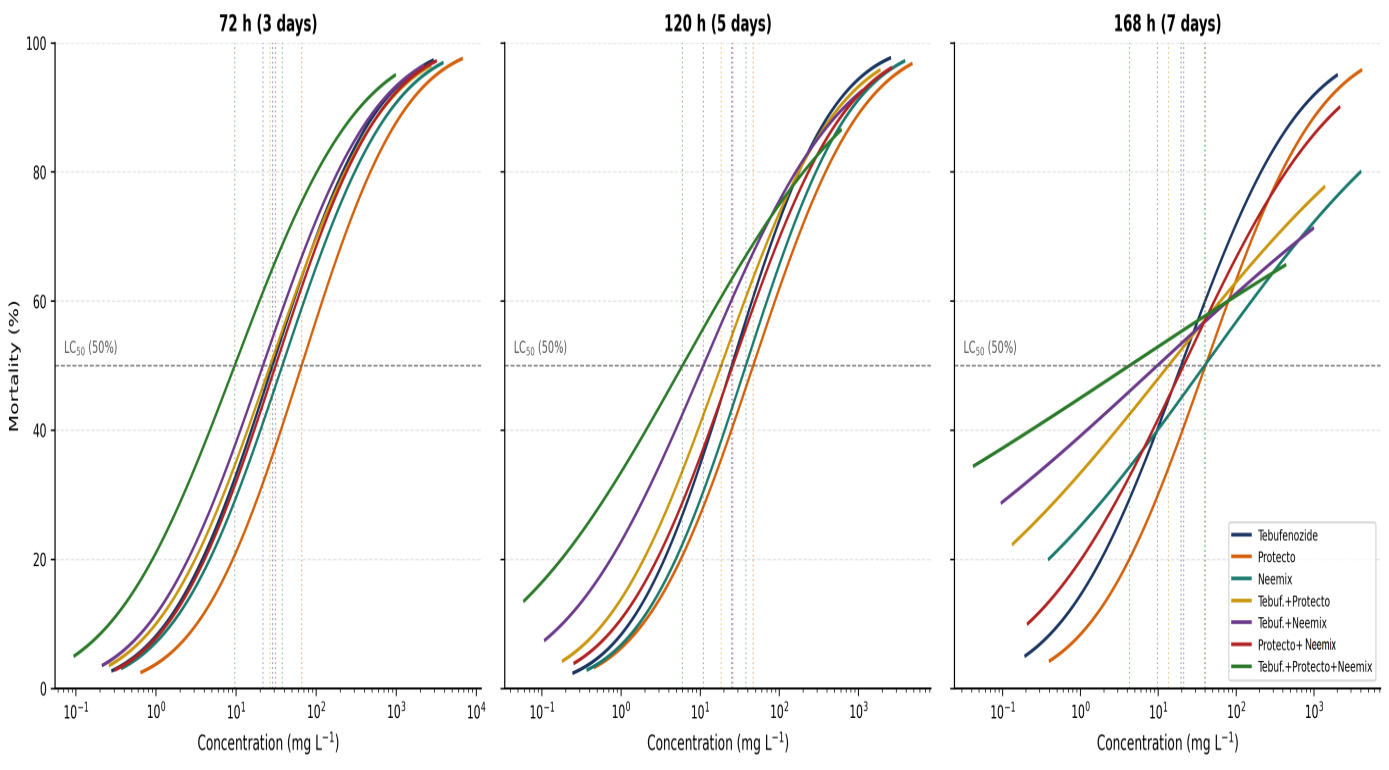
Figure 2 shows the full probit dose–response relationships as sigmoidal curves on log₁₀ concentration axes, thus giving information not obtainable from LC₅₀ tables alone: curve steepness (slope) and horizontal separation (relative potency) and concentration ranges that indicate specific mortality percentages. Panel A (72 h) shows curves that are grouped tightly together in the general area and have moderate slopes, representing a moderately homogeneous response of the larval population and moderate dose-response discrimination among treatments. At the lowest concentration the ternary curve (dark green) is pushed to the farthest left and has the highest mortality. At Panel B (120 h), the curves have more clearly separated, with the ternary and Tebufenozide + Neemix curves having shifted significantly to the left, while the Protecto and Neemix curves have shifted very little, providing a visual confirmation of the higher time sensitivity of the combinations containing IGRs. In contrast, the curves in Panel C (168 h) are far shallower (lower slopes) and are further apart from one another than at earlier time points. The flatter sigmoidal shape of the IGRs containing treatments, especially the ternary mixture, at 168 h is due to population heterogeneity in how long it takes for molting to be disrupted, with some being killed at very low concentrations and others at higher concentrations. It is observed that the vertical LC₅₀ lines, when plotted in successive treatments, from Panel A to Panel C, show a progressive increase in potency in all cases, thus visually confirming the universal potency increase noted in the Tables 1-3.
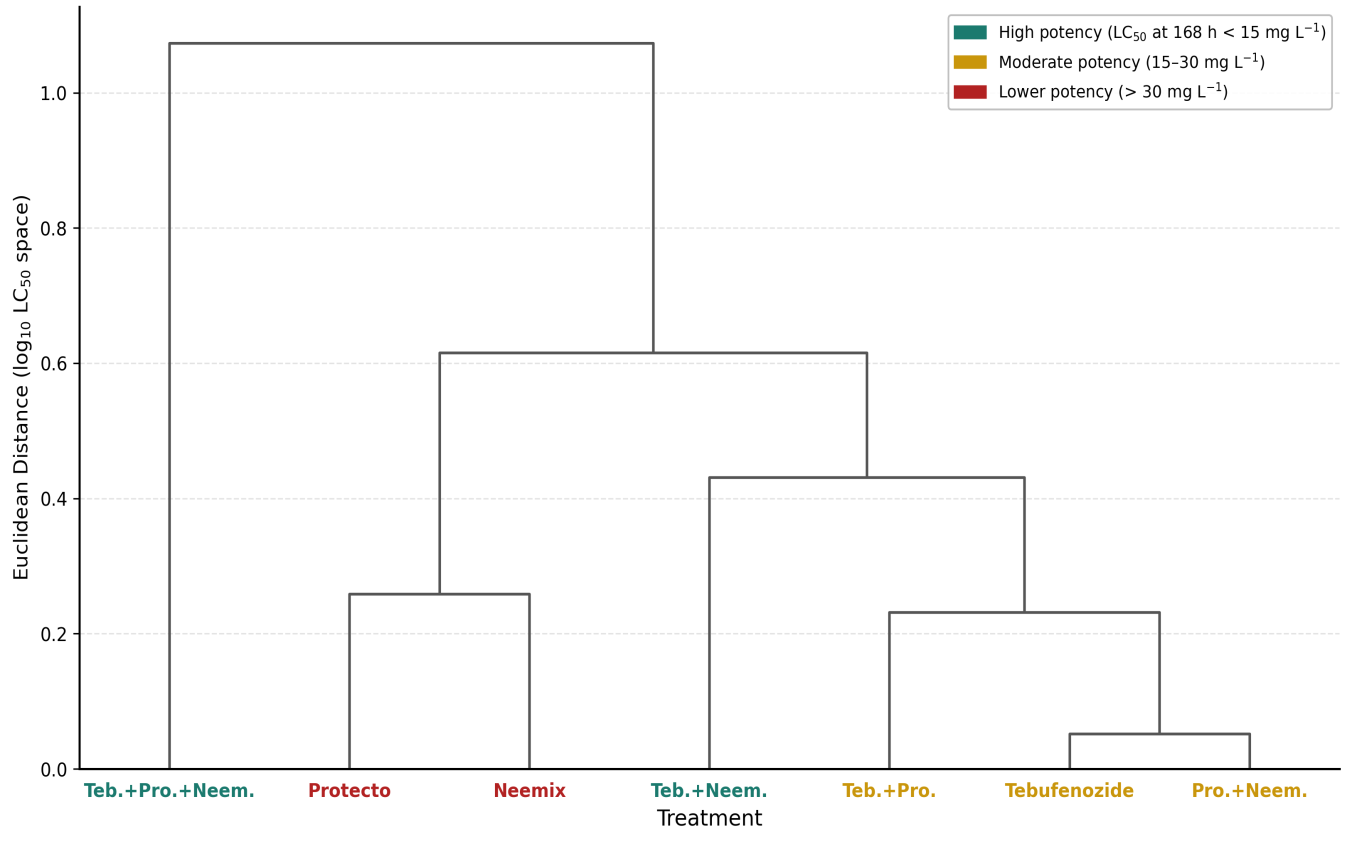
All seven treatments are shown to be multivariate similar at all three time points simultaneously in the log₁0(LC₅₀) Euclidean distance space (Figure 3). The dendrogram structure shows that there are three biologically meaningful clusters. First, the ternary mixture (Teb. + Pro. + Neem., teal label) is clearly distinct from all other treatments and only associates with the broad tree at the highest linkage distance (~1.08), having an extremely powerful and highly consistent potency profile. Second, Protecto alone (red label) arrives at the tree later than it would be expected, given that the LC₅₀ values are quite high and consistent across all time points, with Teb. + Pro. + Neem. in the vicinity, even though the scaling is mathematical (log₁₀) and not biological. The third sub-cluster on the right groups Teb. and Neem. The combination of teal, high potency, Teb. + Pro. and Tebufenozide (then Protecto + Neem.) (moderate LC50 at short and medium exposure) indicates that this formulation has a moderate LC50. The color-coded tier system (teal/gold/red) on the leaf labels makes it very clear that the two treatments with high potencies are the ternary mixture and Tebufenozide + Neemix, and the binary combination is the best two-component option. This clustering serves as the foundational data for organizing treatments into field application protocols based on Integrated Pest Management (IPM) tiers.
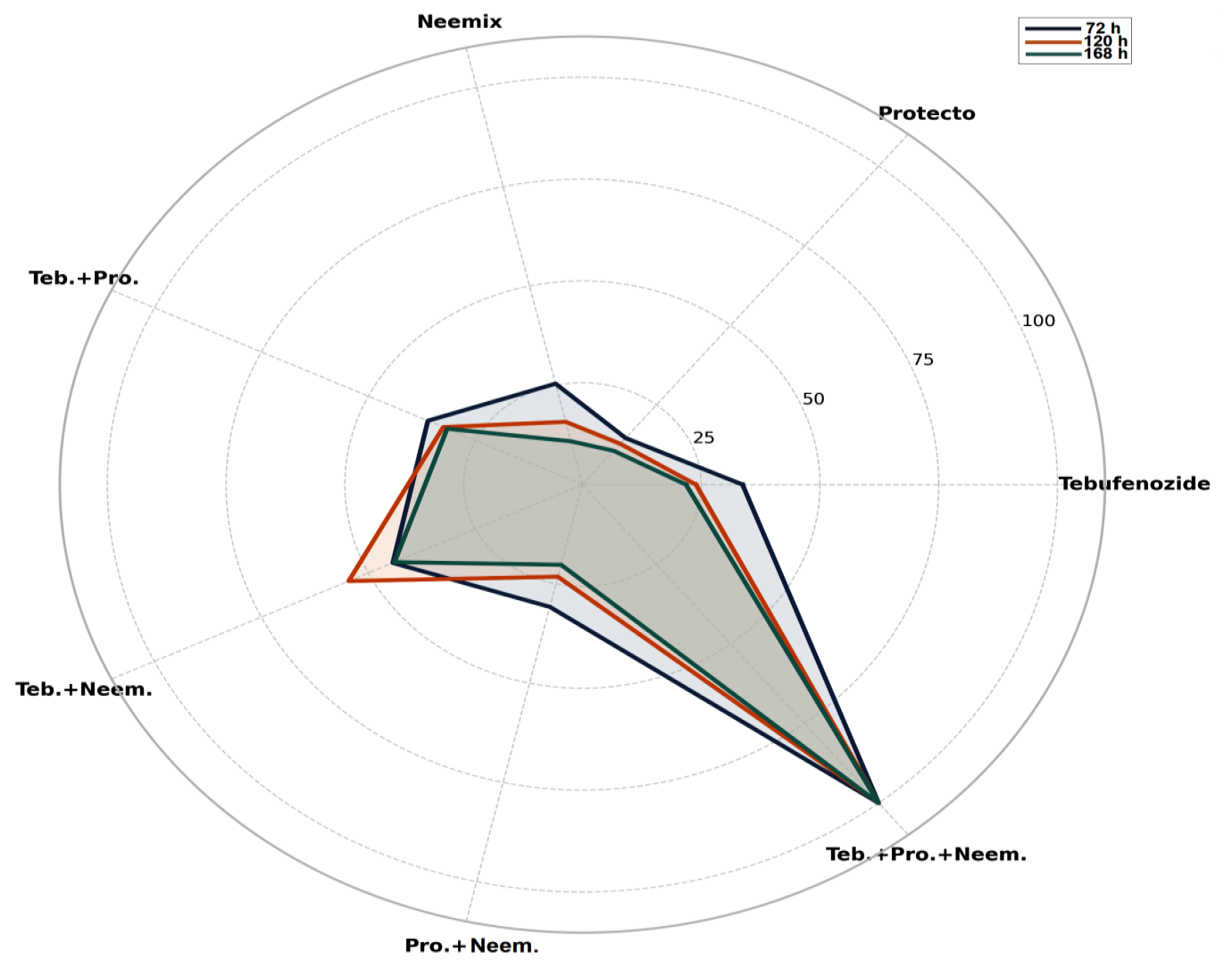
The data for the toxicity index are shown as a radar (spider) chart (Figure 4), which allows a holistic and multi treatment at a time presentation of the toxicity index landscape at all three exposure durations. The three polygons (72 h = blue, 120 h= orange, 168 h = teal/green) depict the toxicity index profile for the space of the treatment. The strongest expression is the strong asymmetry in all three polygons, which are very long towards the Teb.+Pro.+Neem. axis (upper left) but collapse towards zero on both the Protecto and Neemix individual compound axes. A notable extension of polygons is observed in the Teb.+Neem. axis (lower left), with a peak in the polygon value (orange polygon peak) at 120 h, reflecting the greater synergy that is subsequently observed between the two binaries on this axis. The difference in area of the polygon across most of the axes (except the ternary combination axis) is visually encoded over time as the area shrinks from 72 h to 168 h. The triple combination is the only treatment that consistently has a high toxicity index regardless of the duration of exposure, whereas all other treatments have relative efficacy that is highly context-dependent or diminishes over time, making this scheme particularly useful for a graphic summary of a journal or conference poster.
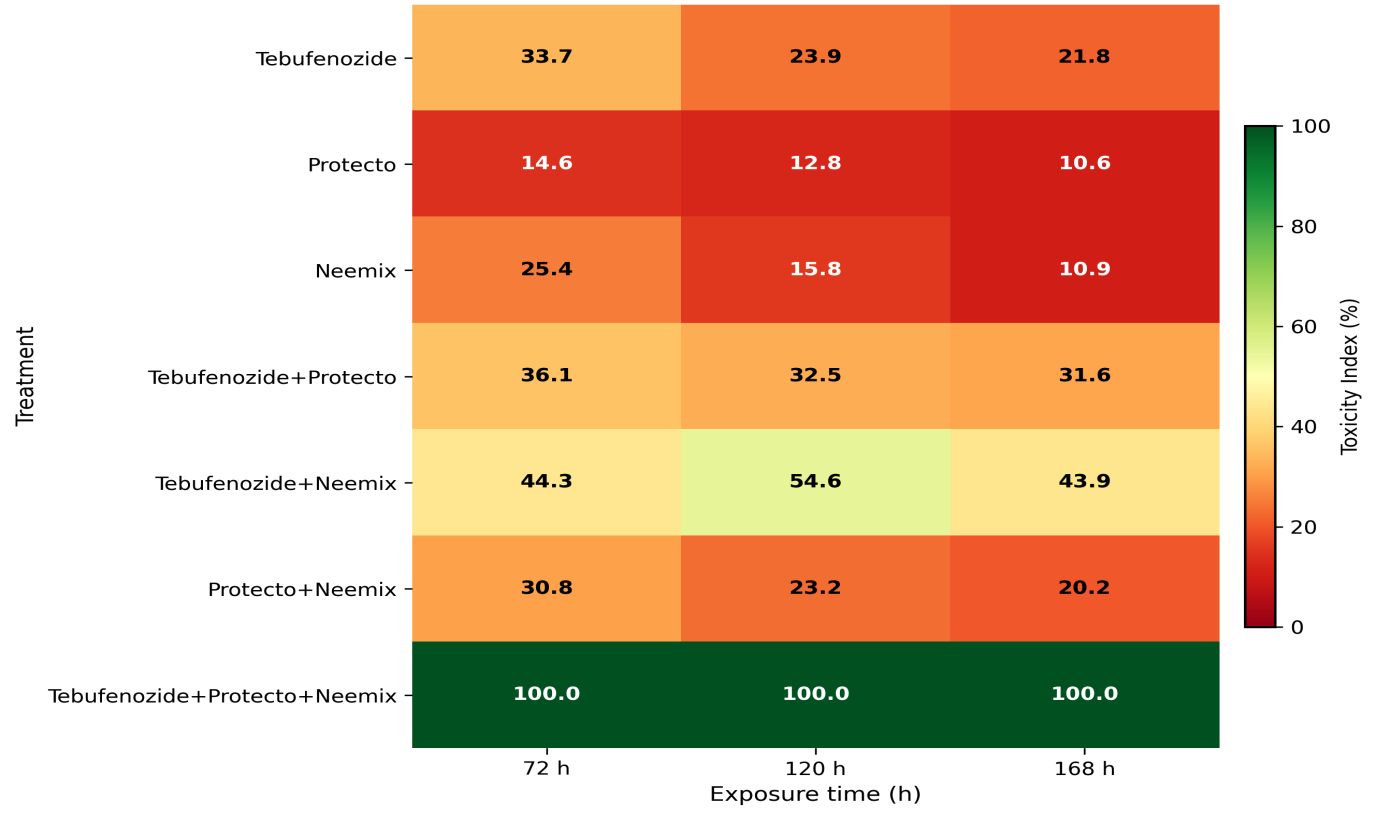
Figure 5 represents the Toxicity Index % (TI) matrix entirely as a colour-coded heat map and permits pattern recognition simultaneously across all 7 treatments and 3 timepoints in a compact format. All columns in the bottom row (Tebufenozide + Protecto + Neemix) are uniformly red at 100.0, creating a visual anchor for the scale. The best informative cell of this heatmap is Tebufenozide + Neemix at 120 h (54.6%, light yellow), which is the brightest cell in the heatmap, except for the ternary reference, indicating this binary-by-timepoint combination is the best competitor to the ternary reference. The Protecto row (second from top) is consistently the darkest green across all timepoints, visually encoding its consistently lowest relative potency. As seen when reading across the rows, most treatments initially become more intense (light in colour) but then become less intense (dark in colour) as time of exposure increases from 72 to 168 h, implying that non-ternary treatments are proportionally less intense than the ternary treatments as exposure time increases. Note that the complementarity of Tebufenozide + Protecto is relatively low and stable across exposure durations (36.1% → 32.5% → 31.6%). When the complete ternary mixture is not available, this stability could render Tebufenozide + Protecto a useful, although not necessarily the best, field choice, as shown in Tables 1-3 and Figure 5.
Clearly, the third position is taken by Tebufenozide + Protecto (%TI was 31.6%) which, as the combination of an ecdysone agonist and a Bt-based product, does not seem to create the same level of potentiation as the ecdysone agonist + azadirachtin combination. This is in line with the mechanistic argument that Tebufenozide and azadirachtin have a complementary target pathway (the ecdysone axis) and can be expected to have a more effective effect that is not seen with the Tebufenozide + Bt combination. Individual compounds at 168 h occupy the three lowest positions: Tebufenozide (%TI = 21.8%), Protecto + Neemix (%TI = 20.2%), Neemix (%TI = 10.9%), and Protecto (%TI = 10.6%). The very similar TI values for Neemix and Protecto at the base of the chart further indicate that the two compounds when applied on their own at the 168 h mark are about 9 fold less effective than the combination at the LC₅₀ concentration and thus argue strongly against being used in larval management programmes when applied alone. A clear difference was also observed between the three treatment levels (i.e., the triple combination (TI = 100%), IGR containing binary combinations (TI = 31.6 – 43.9%) and all individual compounds and the Protecto + Neemix binary (TI = 10.6 – 21.8%). The three tiers have direct implications for the design of IPM programmes. It argues that any formulation that contains tebufenozide can provide a worthwhile potency boost over a non-tebufenozide formulation at longer time of exposure, and that the major job that Protecto plays in the formulation is as a more effective add-on to the IGR, not as a stand-alone agent that provides additional acute mortality, as shown in Tables 1-3 and Figure 5.
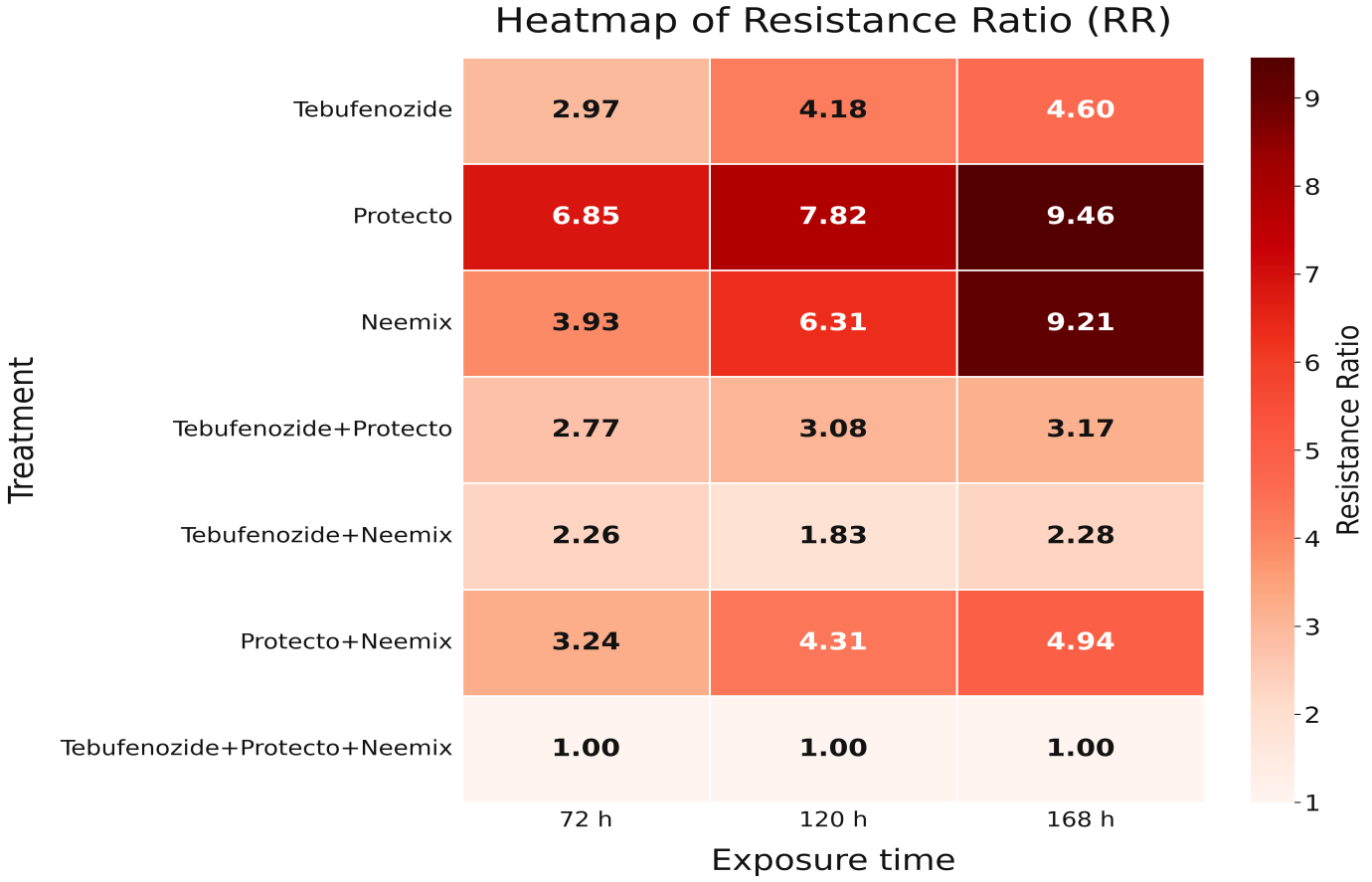
The heat map representing the resistance ratio or RR in each of the three exposure periods, as shown in Figure 6. Reviewing this matrix will reveal multiple biologically relevant patterns. The colour gradient increases very rapidly in intensity from the 168-hour column for all individual biopesticide treatments with Protecto having the highest RR value of 9.46 and Neemix at 9.21 for the matrix; these two RR values are the highest found throughout the matrix. This indicates that as exposure to each treatment continues, the single biopesticide treatment options continue to fall further and further behind the ternary combination; confirming the cumulative and complimentary modes of action associated with many biopesticides working together.
The binary combinations on the lower half of the heatmap (Tebufenozide + Protecto, Tebufenozide + Neemix, Protecto + Neemix), maintain consistent pale colourations across the three exposure times of the heatmap with RR values falling between the narrow range of 1.83 and 4.94, indicating that they serve to close much of the efficacy gap between the individual biopesticides and the three-component benchmark, but do not completely close the gap. The combination of Tebufenozide + Neemix serves to have a consistently smaller fold difference from the ternary combination (RR = 2.26 for 72 hours, 1.83 for 120 hours, 2.28 for 168 hours), this establishes that the combination of Tebufenozide + Neemix is likely the best binary option in reference to the experimental results. As for the Tebufenozide individual treatment row in the matrix; RR values have been shown to continually increase from 72 hours (2.97) to 168 hours (4.60) and reflects but shows a greater increase than has been seen in the values of both the Tebufenozide + Neemix and Tebufenozide + Protecto. This temporal divergence is the natural slow onset of action of insect growth regulators (IGRs) like tebufenozide, which reach their maximum insecticidal activity after completion of an abnormal and lethal moulting attempt. This delay is more prominent when it is the only protective factor in comparison with the ternary mixture, in which another mechanism (Bt δ-endotoxin pore formation) operates in parallel over the entire exposure period, as well as azadirachtin interference with endocrines, as shown in Tables 1-3 and Figure 6.

Chou–Talalay combination index
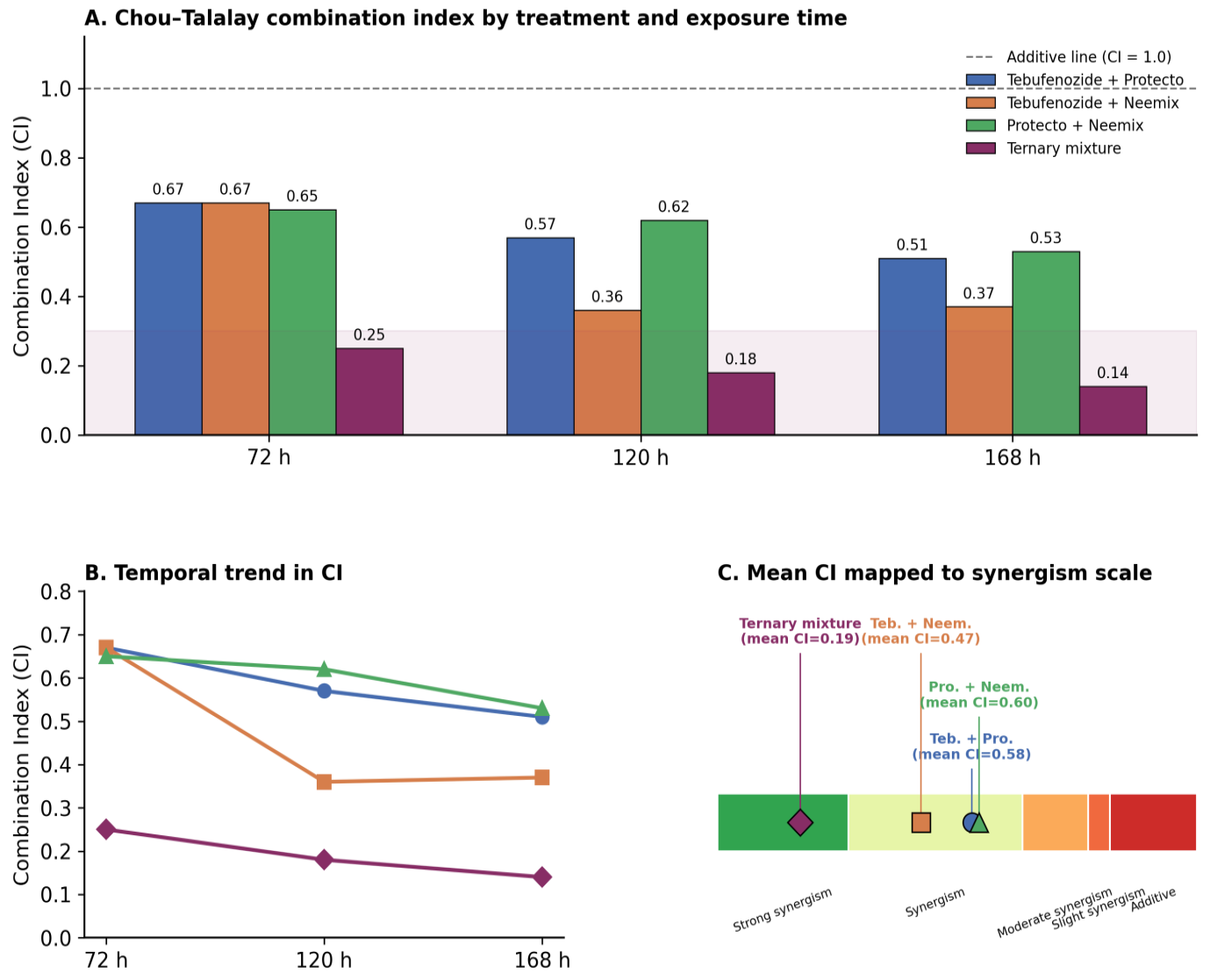
The CI determines the type of interaction that exists between Tebufenozide, Protecto, and Neemix instead of being determined solely based on how toxic or resistant these products are to insect pests, Figure 7. The combination indexes (CI) for all mixtures (both binary and ternary) were calculated, respectively, for each of the three exposure durations from their respective LC50s, as shown in Tables 1-3 ; . For 72 h post-treatment, the three binary combinations had CIs consistent with synergy (Tebufenozide + Protecto, CI = 0.67; Tebufenozide + Neemix, CI = 0.67; Protecto + Neemix, CI = 0.65); however, for the ternary combination, the CI was within the strong synergy range (0.25). Again, at 120 hours post-treatment, the results were consistent with the previous results, but there was a more substantial shift towards synergy for the combination of Tebufenozide + Neemix (CI = 0.36) compared to the combinations of Tebufenozide + Protecto (CI = 0.57) and Protecto + Neemix (CI = 0.62), and the ternary combination had the lowest CI value of all treatments (CI = 0.18), as shown in Figure 7.
The same relative ranking was maintained at 168 hours, with Tebufenozide + Neemix (CI = 0.37) having the largest degree of synergy among the binary combinations, followed by Tebufenozide + Protecto (CI = 0.51) and Protecto + Neemix (CI = 0.53), with the ternary combination reaching its lowest CI for the length of this experiment at CI = 0.14 (Figure 7).
None of the combinations tested during the 3 different time periods had a CI of 0.85 or above, indicating that all four combinations were acting synergistically throughout the duration of the experiment. The ternary combination consistently produced the greatest degree of synergy of any of the combinations tested, and all four combinations became increasingly synergistic as time progressed, coinciding with the widening ratio of resistance between treatments using single compounds compared to the combination treatments discussed previously in Section 3.3.
Discussion
The results of this study demonstrate that the ternary combination of Tebufenozide, Protecto, and Neemix exhibits greater efficacy against S. littoralis larvae than any single component or binary mixture (over a period of 72 to 168 hours). The LC₅₀ values for the combination of products decreased significantly from 9.64 mg L⁻¹ at 72 hours to 4.30 mg L⁻¹ at 168 hours. This increase in potency occurs progressively over time, which is characteristic of Insect Growth Regulator (IGR) treatments, as Tebufenozide and azadirachtin block the molting process without immediate knockdown . The LC₅₀ for Tebufenozide alone at 72 hours (28.60 mg L⁻¹) is higher than that of Suarez-Lopez et al. (2022) at 13.92 mg L⁻¹ for the same larval instar but falls within the same range (9.9–65.7 mg L⁻¹) observed for all S. littoralis instars/bioassays . Differences may be due to prior susceptibility of the colony or methods of assessing bioassay effects (diet versus leaf immersion) or the particular instar(s) being utilized.
The prolonged exposure period (168 h) may have allowed for the expression of Neemix’s antifeedant effects, contributing to larval mortality through starvation, in addition to its direct endocrine-disrupting activity.
Binary and ternary mixtures consistently outperformed individual treatments, suggesting positive interactions. Tebufenozide and neemix (azadirachtin), when combined, produced the second most effective treatment at all time points, with a 120-hour LC₅₀ only slightly above (11.00 mg L⁻¹) the combination of all three products (6.00 mg L⁻¹), indicating that the pairing of an ecdysone agonist (tebufenozide) with an azadirachtin endorsement disruptor creates the best method to control S. littoralis larvae.
Experiments by Ahmed et al. (2022), which demonstrated potential potentiation effects in mixtures of methoxyfenozide (an ecdysone agonist that shares structural similarities with Tebufenozide) with spinetoram against susceptible and methoxyfenozide-selected S. littoralis strains, support our conjecture that the observed synergism associated with the Tebufenozide + Neemix mixture is attributable to the fact that the combined action of both chemicals resulted in the inhibition of both monooxygenase and esterase metabolizing enzymes. A similar process likely occurs in conjunction with the use of the Tebufenozide + neemix mixture; azadirachtin had demonstrated the ability to decrease gut enzyme activity within the gut of Spodoptera litura larvae, thereby decreasing the amount of insecticide that would be metabolized by insects and, by extension, the duration of time that Tebufenozide remains in treated tissues.
The observed relative potency of individual compounds at 72 h (Tebufenozide > Neemix > Protecto) aligns with previous findings ; . In particular, Protecto’s relatively high LC₅₀ value (66.05 mg L⁻¹ at 72 h) has been documented as producing moderate levels of activity against S. littoralis larvae over a 24-h period , while Protecto’s contribution to mixtures is not simply a result of the additive effects of reducing LC₅₀ demonstrated in Table 1. Additionally, the combination of Protecto and chemical insecticides has produced very high levels of synergistic mortality in the second and fourth instars of S. littoralis larvae when utilized in a sequential or combination manner .
The fact that all treatments are characterized by very narrow slopes (0.20–0.98) throughout the testing time frame indicates a reasonable amount of heterogeneity in regard to dose-response behavior (which is not uncommon in third instar bioassays characterized by substantial variation in body weight of individual larvae). All chi-square values were considered non-significant (χ² < 1.0) in all cases, indicating that the probit model used to estimate the LC₅₀ values provided an adequate fit to the data, thus allowing for reasonable confidence in the estimated LC₅₀ required for each chemical.
The higher toxicity index after 168 h, particularly in the combination of Tebufenozide and Protecto (TI = 31.56) and Tebufenozide and Neemix (TI = 43.87), indicates that if these three kinds of materials are used together, they can produce cumulative benefits over time. The data is directly applicable to integrated pest management (IPM); if integrated and moderate spray coverage is applied directly after the larvae have emerged, the integrated use of these three materials should proved long-term residual crop protection. A similar demonstration was reported by Wu et al. (2025), where they reported over 70% control of S. frugiperda at 25-50% lower doses than the individually recommended doses of the combinations of metaflumizone + empedobacter brevis and emamectin benzoate + Bacillus thuringiensis G033A.
The decrease in probit slopes at 168 h for insect growth regulators (IGRs) indicates increased heterogeneity within the population response after prolonged exposure, a feature that has been well documented in IGR bioassays with insects in which a portion of the larval population will completely (or nearly completely) cease their molting process much earlier than others . This should not be considered a reduction of efficacy; rather, it demonstrates the cumulative impact of many IGRs, as mortality occurs asynchronously within a larval cohort and accumulates. During the larval interval of 168 h, all three compounds would exert their complete suite of sublethal effects (antifeedant, growth inhibitor, and development arrestor), which explains why the LC₅₀ values were lower at 168 h for all treatments compared to what was observed at 72 h.
The synergistic interaction between the two mixtures, as predicted from the combined mixture toxicity index and the resistance ratio, has been confirmed using the Chou–Talalay combination index (CI) analysis. All of the tested treatment combinations provided CI values of less than 0.7 at all of the duration of treatment, suggesting synergistic activity as defined by Chou and Talalay (2006 and 2010). The ternary mixture exhibited CI values of < 0.3 throughout, indicating the strongest degree of synergy between all treatment combinations . These findings agree with Chou (2006), who noted that mechanisms of action that are independent and non-overlapping (i.e., ecdysone receptor agonism via tebufenozide, gut lysis via Bt δ-endotoxin, and antifeedant/endocrine disruption via Neemix through azadirachtin) not only possess the potential to interact in ways that greatly enhance their overall effect as measured by CI value when combined but will also produce effects far greater than additive in terms of their individual toxicity.
The lowest CI values at 120 and 168 hours (0.36 and 0.37, respectively) were obtained when the two-component mixture of the binary combinations of Tebufenozide + Neemix was tested. This is consistent with the findings obtained from the combined toxicity index and resistance ratio results showing that this pairing of two insect growth regulators (IGR’s) with complementary modes of action along the ecdysone axis exhibits the highest degree of two-component synergy among the treatment mixtures tested. On the other hand, combinations of Tebufenozide and Protecto, as well as Protecto and Neemix, had CI values that were still synergistic (CI values of 0.51 – 0.67); however, they had lower CI values than the combination of Tebufenozide and Neemix. It is possible that the reason for the lower CI values associated with the combinations of Protecto with either Tebufenozide or Neemix is due to the fact that the relatively slower-acting Bt-based insecticide, Protecto, requires prolonged exposure for its synergistic effects to be maximized, consistent with the delayed kinetics of δ-endotoxins, which increase osmotic lysis .
The progressive decline in CI values with increasing duration of exposure, in all four combinations, supports the interpretation that synergism in this system is not a property of the mixture itself but rather the longer time it takes for the slower-acting components (e.g., the action of Bt toxin, azadirachtin-induced endocrine disruption) to cooperate with the more rapidly acting effects of ecdysone agonists (e.g., Tebufenozide). The gradual development of synergism in this way adds to the justification for evaluating the entire ternary mixture, as well as evaluating Tebufenozide + Neemix as the simpler alternative, in field conditions where all products will continue to have relevant levels of residual activity over time.
It should be noted that the CI values reported in this study were derived from only one point on each of the dose–response curves (the LC50), based on a model of mutually exclusive, equal-ratio mixing. This is contrary to the way that was intended to be supported by the original development of the Chou-Talalay method . While this approach is suitable for comparing the relative strength of the interactions over treatments and time points using the LC50 data that we have available, a complete CI-Fraction-Affected (fraction of mortality) analysis based on a complete concentration-mortality dataset would be a more rigorous way to evaluate the changes in synergism over the entire dose range and, therefore, is recommended for future studies.
The analysis of the drawbacks of single-point confidence interval (CI) for the evaluation of synergy in pesticide mixtures emphasizes the need to consider dose-response characteristics. The median effect level (Fa= 0.5) is not necessarily the same in terms of interactions at higher mortality levels (e.g., Fa= 0.9) that are needed to control pests effectively. It introduces the differences in the temporal kinetics or mechanisms of three chemicals: Tebufenozide (rapid action), Protecto (prolonged exposure), and Neemix (slower effects). This difference may result in complex dose-response curves and in the existence of different synergic patterns.
More comprehensive Chou-Talalay CI-Fa studies over the entire dose range could provide more precise characterization of these interactions. The data currently available were useful for estimating LC50 values but were not particularly useful for describing mortality at higher percentages of the Fa spectrum, and further studies are needed with wider concentration ranges.
Although methodological limitations may exist, LC50-based CI values are considered to be biologically meaningful and useful for comparing treatments. The similarity of the results across the three time points and the fact that all the CI values are below 0.7 and the ternary mixture has the highest range of synergies (0.14–0.25) validates the actual synergies. Furthermore, the results of CI values obtained at exposure times from 72 h to 168 h are decreasing, which is in line with the mechanistic expectations that slower acting components need more time to show their synergism with the faster acting components, confirming the reliability of the results at the target concentration of LC50.
Conclusion
In the laboratory, researchers evaluated three different pesticides in combination as the best treatment against the larvae of Spodoptera littoralis. Each treatment produced an LC₅₀ value (lethal concentration that kills 50%) equal to or greater than 9.64 mg L⁻¹ (72 hr), 6.00 mg L⁻¹ (120 hr), and 4.30 mg L⁻¹ (168 hr), with 100% mortality occurring at the end of each period. The ternary mixture containing Tebufenozide + Protecto + Neemix was the most effective when used for longer exposure periods. The results of the chi-squared tests used to compare the Probit dose-response models showed that the χ² values were not statistically significant at p > 0.05 for all treatments. While the ternary mixture was the most effective, the binary combination of Tebufenozide + Neemix represents a promising alternative for scenarios where a three-component tank mix is logistically or economically challenging. After 168 hours of treatment, the Chou–Talalay (CI) indices for the three binary formulations were consistent with synergy (Tebufenozide + Protecto, CI= 0.51; Tebufenozide + Neemix, CI= 0.37; Protecto + Neemix, CI= 0.53); however, the ternary combination was within the strong synergy range (0.14). Our results illustrate good synergy at the LC50 level, but we recognize that our Chou-Talalay analysis was limited to one effect level. More detailed information on the consistency of synergy at practically relevant high (LC90) effect levels would be gained from future studies based on comprehensive CI-Fraction-Affected analyses conducted throughout the mortality range.
Recommendations
Based on the LC₅₀ data, the following recommendations are made: (A) The combination of the three pesticides (Tebufenozide + Protecto + Neemix) will be evaluated as a potential candidate for future semi-field and field studies against the larvae of S. littoralis on cotton and other crops, focusing on determining the lowest effective dose based upon the rates of individually registered products. (B) The dual-pesticide combination (Tebufenozide + Protecto + Neemix) also requires further field testing and will provide a two-component IPM approach due to its ranked potency and benefits associated with using two formulations rather than three. (C) Since multi-mode-of-action mixes are considered best practice for preventing resistance, even when individual components pose minimal risk of inducing resistance, it is essential to include resistance monitoring in every field deployment plan. (D) This method enables prompt management strategy modifications in addition to aiding in the early detection of possible resistance. Farmers can reduce the long-term impacts of resistance development and maintain sustainable crop yields by adopting these strategies.
Declarations
Acknowledgement
The authors extend their thanks and appreciation to the Plant Protection Research Institute, Agricultural Research Center, Dokki, 12619 Giza, Egypt, for their support in this study.
Funding
The study did not receive any external funding.
IRB approval
This study was approved by the Plant Protection Research Institute, Agricultural Research Center, Dokki, 12619 Giza, Egypt.
Ethics approval
This article does not contain any research conducted by any of the writers.
Data availability
The data that support the findings of this study are available from the corresponding author upon reasonable request.
Consent for publication
All authors of the manuscript have read and agreed to the publication. All authors have agreed to the submission to the journal.
Generative AI and AI assisted technology statement
Yes, in cases where clarity in sentence structure was required, tools such as ChatGPT were used only to edit the language and improve the grammar, with the aim of improving the overall readability of the text.
Statement of conflict of interest
The authors have declared no conflict of interest.
Figures

LC₅₀ values (mg L⻹, log scale) of seven treatments against S. littoralis third instar larvae at 72, 120, and 168 h of exposure. Annotated values above each bar indicate the absolute LC₅₀ estimate.

Probit dose–response curves for seven treatments against S. littoralis third instar larvae at (A) 72 h, (B) 120 h, and (C) 168 h of exposure. Vertical dotted lines indicate individual LC50 values; horizontal dashed line at 50% mortality.

UPGMA hierarchical cluster dendrogram of seven treatments based on their logâ‚â‚€(LCâ‚…â‚€) profiles across three exposure durations against S. littoralis. Leaf labels are colour-coded by potency tier at 168 h: teal = high potency (LCâ‚…â‚€ < 15 mg L⻹); gold = moderate (15–30 mg L⻹); red = lower (> 30 mg L⻹).

Toxicity index radar chart of seven treatments against Spodoptera littoralis third instar larvae at 72 h (blue), 120 h (orange), and 168 h (green) of exposure. Each axis represents a treatment; radial distance indicates % TI. The ternary combination axis is positioned top-left.

Toxicity Index (%) matrix for seven treatments against S. littoralis third instar larvae at 72, 120, and 168 h. Values represent LCâ‚…â‚€(ternary) / LCâ‚…â‚€(treatment) × 100. Color scale: red = 100% (maximum, ternary combination); deep green = lowest toxicity index values.

Heatmap of resistance ratio for seven treatments against S. littoralis third instar larvae at 72, 120, and 168 h. The stark color contrast reveals the extreme efficacy gap between the ternary mixture and all other treatments at extended exposure.

Chou-Talalay combination index analysis (CI) for Tebufenozide, Protecto, and Neemix mixtures against S. littoralis third instar larvae. (A) CI by treatment and exposure time; (B) temporal trend in CI; (C) mean CI mapped to the qualitative synergism scale. CI < 0.1, indicates synergism; CI = 1, additivity; CI > 1, antagonism.
References
- Abbott, W.S., 1925. A method of computing the effectiveness of an insecticide. J. Econ. Entomol., 18: 265–267. https://doi.org/10.1093/jee/18.2.265a[CrossRef]
- Abd El-Salam, A.M.E., Nemat, A.M. and Magdy, A., 2011. Potency of Bacillus thuringiensis and Bacillus subtilis against the cotton leafworm, Spodoptera littoralis (Bosid.) larvae. Arch. Phytopathol. Pl. Prot., 44: 204-215. https://doi.org/10.1080/03235400902952129[CrossRef]
- Abdel-Baky, N.F., Al Rayes, D.A., Al-Deghairi, M.A., Ghonimy, M.I., Alzohairy, A.M., Al-Otaibi, N.D. and Bakry, M.M.S., 2020. Carbon dioxide-enriched atmosphere to control Oryzaaephilus surinamensis L. on stored Saqie date fruits. Pak. J. Biol. Sci., 24: 688-698. https://doi.org/10.3923/pjbs.2021.688.698[CrossRef]
- Abdel-Baky, N.F., Alhewairini, S.S. and Bakry, M.M.S., 2019. Emamectin-benzoate against Tuta absoluta Meyrick and Spodoptera littoralis Boisduval larvae. Pak. J. Agri. Sci., 56: 801-808.
- Ahmed, F.S., Helmy, Y.S. and Helmy, W.S., 2022. Toxicity and biochemical impact of methoxyfenozide/spinetoram mixture on susceptible and methoxyfenozide-selected strains of Spodoptera littoralis (Lepidoptera: Noctuidae). Sci. Rep., 12: 7111. https://doi.org/10.1038/s41598-022-10812-w[CrossRef]
- Ali, M.A., Abd-Elgalil, D.M., Bakry, M.M.S. and Mohamed, G.S., 2025. Evaluation of the potential toxicity of plant extracts, pathogenic fungi, and chemical pesticides for the management of Spodoptera frugiperda. J. Pl. Dis. Prot., 132: 103. https://doi.org/10.1007/s41348-025-01094-1[CrossRef]
- Atta, N.A., Fahmi, A.I., Abdel-Lateif, K.S., Nagaty, H.H. and El-Ghany, E.M.A., 2025. Multilocus identification and genetic enhancement of Trichoderma spp. for entomopathogenic activity against Spodoptera littoralis. Microb. Cell Fact., 24: 202. https://doi.org/10.1186/s12934-025-02834-6[CrossRef]
- Bakhite, E.A., Gad, M.A., Khamies, E., Thagfan, F.A., Mohamed, R.A.E. and Bakry, M.M.S., 2025. Exploration of Some Thieno[2,3-b]pyridines, Thieno[3,2-d]pyrimidinones, and Thieno[3,2-d][1,2,3]triazinones as Insecticidal Agents Against Aonidiella aurantii. Russ. J. Bioorgan. Chem., 51: 816–826. https://doi.org/10.1134/S1068162024605512[CrossRef]
- Bakry, M.M. and Gad, M.A., 2023. Insecticidal efficiency of some pesticides against Spodoptera frugiperda (J.E. Smith) (Noctuidae: Lepidoptera) under laboratory conditions. Andalas. Int. J. Entomol., 1: 16-22. https://doi.org/10.25077/aijent.1.01.16-22.2023[CrossRef]
- Bakry, M.M.S., Abdelhamid, A.A., Al-Hoshani, N., Mohamed, R.A.E. and Gad, M.A., 2024. Green synthesis and bioefficacy screening of new insect growth regulators as eco-friendly insecticides against the cotton mealybug Phenacoccus solenopsis. Chem. Biodiv., 21: e202301390. https://doi.org/10.1002/cbdv.202301390[CrossRef]
- Chou, T.C., 2006. Theoretical basis, experimental design, and computerized simulation of synergism and antagonism in drug combination studies. Pharmacol. Rev., 58: 621-681. https://doi.org/10.1124/pr.58.3.10[CrossRef]
- Chou, T.C., 2010. Drug combination studies and their synergy quantification using the Chou-Talalay method. Cancer Res., 70: 440-446. https://doi.org/10.1158/0008-5472.CAN-09-1947[CrossRef]
- Chou, T.C. and Talalay, P., 1984. Quantitative analysis of dose-effect relationships: the combined effects of multiple drugs or enzyme inhibitors. Adv. Enzyme Regul., 22: 27-55. https://doi.org/10.1016/0065-2571(84)90007-4[CrossRef]
- El-Khayat, E.F., Desuky, W.M., Azab, M.M. and Khedr, M.M., 2012. Toxic impact of some insect growth regulators and biocides in relative to chlorpyrifos to cotton leafworm, Spodoptera littoralis (Boisd.). Egypt. J. Agric. Res., 90: 55-65. https://doi.org/10.21608/ejar.2012.159548[CrossRef]
- Elmenofy, W., Salem, R., Osman, E. Yasser, N., Abdelmawgod, A., Saleh, M., Zaki, A., Hanafy, E., Tamim, S., Salma, A.S., El-Bakry, A., Aya El-Sayed, A. and El-Gaied, L., 2020. Evaluation of two viral isolates as a potential biocontrol agent against the Egyptian cotton leafworm, Spodoptera littoralis (Boisd.) (Lepidoptera: Noctuidae). Egypt J. Biol. Pest Contr., 30: 75. https://doi.org/10.1186/s41938-020-00276-3[CrossRef]
- El-Saleh, M.A., Aioub, A.A., El-Sheikh, E.S.A., Desuky, W.M.H., Alkeridis, L.A., Al-Shuraym, L.A., Farag, M.M.A., Sayed, S., Aioub, A.A.A. and Hamed, I.A., 2025. Comparative toxicological effects of insecticides and their mixtures on Spodoptera littoralis (Lepidoptera: Noctuidae). Insects, 16: 821. https://doi.org/10.3390/insects16080821[CrossRef]
- El-Shahed, S.M., Mostafa, Z.K., Radwan, M.H. and Hosni, E.M., 2023. Modeling the potential global distribution of the Egyptian cotton leafworm, Spodoptera littoralis under climate change. Sci. Rep., 13: 17218. https://doi.org/10.1038/s41598-023-44441-8[CrossRef]
- Finney, D.J., 1971. Probit analysis (3rd ed.). Cambridge University Press.
- Gaaboub, I.A., Halawaa, S. and Rabiha, A., 2012. Toxicity and biological effects of some insecticides, IGRs and Jojoba oil on cotton leafworm Spodoptera littoralis (Boisd.). J. appl. Sci. Res., 8: 5161-5168.
- Gad, M.A., Bakry, M.M.S., Shehata, E.A. and Dabour, N.A., 2023. Insecticidal thioureas: Preparation and Biochemical impacts of some novel thiobenzamide derivatives as potential eco-friendly insecticidal against the cotton leafworm, Spodoptera littoralis (Boisd.). Curr. Chem. Lett., 12: 685-694. https://doi.org/10.5267/j.ccl.2023.5.006[CrossRef]
- Harte, S.J., Bray, D.P., Nash-Woolley, V. Stevenson, P.C. and Fernández-Grandon, G.M., 2024. Antagonistic and additive effect when combining biopesticides against the fall armyworm, Spodoptera frugiperda. Sci. Rep., 14: 6029. https://doi.org/10.1038/s41598-024-56599-w[CrossRef]
- Hosny, M.M., Topper, C.P., Moawad, G.M. and El-Saadany, G.B., 1986. Economic damage thresholds of Spodoptera littoralis (Boisd.) (Lepidoptera: Noctuidae) on cotton in Egypt. Crop. Prot., 5: 100–104. https://doi.org/10.1016/0261-2194(86)90088-8[CrossRef]
- Mohamed, R.A.E., Al-Hoshani, N., Drar, A.M., Bakry, M.M.S., Abdou, A., Youssef, M.A.M and Gad, M.A., 2025. Diversity oriented synthesis, insecticidal evaluation, and molecular docking of some insect growth regulators analogs against Hypera brunneipennis (Boheman). Chem. Biodiv., 22: e00286. https://doi.org/10.1002/cbdv.202500286[CrossRef]
- Moulton, J.K., Pepper, D.A., Jansson, R.K. and Dennehy, T.J., 2002. Pro-active management of beet armyworm (Lepidoptera: Noctuidae) resistance to tebufenozide and methoxyfenozide: baseline monitoring, risk assessment, and isolation of resistance. J. Econ. Entomol., 95: 414-424. https://doi.org/10.1603/0022-0493-95.2.414[CrossRef]
- R Core Team, 2023. R: A language and environment for statistical computing. R Foundation for Statistical Computing, Vienna, Austria. [Available on: https://www.R-project.org/] [Assessed: November 2023]
- Ramos, Y., Taibo, A.D., Jiménez, J.A. and Portal, O., 2020. Endophytic establishment of Beauveria bassiana and Metarhizium anisopliae in maize plants and its effect against Spodoptera frugiperda (J.E. Smith) (Lepidoptera: Noctuidae) larvae. Egypt. J. Biol. Pest Contr., 30: 20. https://doi.org/10.1186/s41938-020-00223-2[CrossRef]
- Shannag, H.K., Capinera, J.L. and Freihat, N.M., 2013. Use of neem-based insecticides against southern armyworm, Spodoptera eridania (Stoll) (Lepidoptera: Noctuidae). Trends Entomol., 9: 45-53.
- Singh, G., Chandi, A.K. and Kaur, A., 2025. Lethal, sublethal and antifeedant effects of azadirachtin on some major insect-pests: A review. Agric. Rev., 46: 901-908. https://doi.org/10.18805/ag.R-2692[CrossRef]
- Suarez-Lopez, Y.A., Aldebis, H.K., Hatem, A.E.S. and Vargas-Osuna, E., 2022. Interactions of entomopathogens with insect growth regulators for the control of Spodoptera littoralis (Lepidoptera: Noctuidae). Biol. Contr., 170: 104910. https://doi.org/10.1016/j.biocontrol.2022.104910[CrossRef]
- Sun, Y.P., 1950. Toxicity index an improved method of comparing the relative toxicity of insecticides. J. Econ. Entomol., 43: 45−53. https://doi.org/10.1093/jee/43.1.45[CrossRef]
- Wu, H.Z., Pan, X.R., Shen, J., He, P.Y., Cao, H.Q., Sheng, C.W. and Chen, J.S., 2025. Joint toxicity and control efficacy of chemical pesticides and insecticidal bacteria against Spodoptera frugiperda (Lepidoptera: Noctuidae). J. Asia-Pac. Entomol., 28: 102414. https://doi.org/10.1016/j.aspen.2025.102414[CrossRef]
- Zayed, M.S., Taha, E.K.A., Hegazy, F.H., Albogami, B., Noureldeen, A. and Elnabawy, E.S.M., 2022. Influence of effective microorganisms on some biological and biochemical aspects of Spodoptera littoralis (Boisduval) (Lepidoptera: Noctuidae). Life, 12: 1726. https://doi.org/10.3390/life12111726[CrossRef]
Services
Article usage statistics
Loading…