Research Article · Volume 38, Issue 1, 3 February 2023 · Open Access
Combined Efficacy of Biorational Insecticides against Potato Leafworm Spodoptera litura Fabricius (Lepidoptera: Noctuidae) Under Laboratory and Field Conditions
· · · ·
Affiliations & Notes ⌄
1Department of Entomology, College of Agriculture, University of Sargodha, Sargodha 40100, Pakistan 2Institutue of Plant Protection, Chinese Academy of Agricultural Sciences, Beijing, P.R. China Corresponding author: Muhammad Zeeshan Majeed zeeshan.majeed@uos.edu.pk
In case of laboratory bioassays, both synthetic insecticides (flubendiamide and spinetoram) and botanical formulations (A. indica and N. tabacum) showed a synergized toxicity against 3rd instar S. litura larvae under lab conditions.
Both microbial insecticides (B. thuringiensis and S. litura-NPV) either showed no additive effect or antagonized the toxicity when applied in combination with synthetic and botanical insecticides.
During both years of the field trial, synthetic insecticides flubendiamide, spinetoram and botanical formulations of A. indica (neem) oil and (tobacco) N. tabacum appeared most effective and significantly reduced the S. litura larval populations in both seasons.
However, future perspectives of this study constitute the evaluation of the non-target effects of these effective insecticidal treatments on beneficial organisms including insect natural enemies (such as local predators and parasitoids of S. litura).
Selected from the article's own text.
Abstract
Armyworm species Spodoptera litura Fabricius (Lepidoptera: Noctuidae) is one of the destructive polyphagous insect pests worldwide and has attained field-evolved resistance to most of the conventional synthetic insecticides. In this study, some previously selected most effective biorational synthetic, botanical and microbial insecticidal formulations were evaluated either alone or in binary combinations against 3rd instar larvae of S. litura under laboratory and then under the field conditions. In both trials, insecticidal treatments affected significantly the mean mortality or reduction of S. litura larvae recorded both at two and five days post-treatment. In laboratory bioassay, combinations of flubendiamide and A. indica, flubendiamide and N. tabacum and of spinetoram and A. indica formulations caused significantly high mortality (100%), followed by B. thuringensis and S. litura-NPV (94.92%) and A. indica and B. thuringensis (93.22%) and exhibited a synergized toxicity against S. litura larvae as compared to other treatments. In two years field trials, binary combination of flubendiamide and spinetoram showed an average larval reduction of 59 – 100%, followed by 100% larval reduction exhibited by flubendiamide and spinetoram alone and by the combination of flubendiamide and A. indica formulations at 5th day of application. While, minimum larval reduction was recorded for both microbial insecticides alone and in combination for both years. Overall results of this in-vitro and in-situ evaluation demonstrate the effectiveness of biorational insecticidal formulations and recommend their incorporation in integrated management of S. litura.
Novelty Statement | Laboratory and then field evaluations of some promising botanical, microbial and non-conventional synthetic insecticidal formulations against 3rd instar larvae of armyworm (Spodoptera litura) comprise the novelty of this study.
Introduction
Armyworm Spodoptera litura Fabricius is a destructive noctuid pest infesting a wide range of crops including vegetables, fruits and agronomic crops world wide including Indo-Pak region . It infests and causes substantial damage (up to 100%) to many ornamental and agronomic crops including maize, brassica, wheat, cotton, potato and gram ; . S. litura is being emerged as a challenging pest of potato crop in Pakistan for last few years causing substantial damage to potato foliage resulting in considerable qualitative and quantitative loss to potato crop , 2021).
Indigenous potato growers primarily depend on blind and extensive use of highly broad-spectrum and persistent synthetic insecticides against infestations of S. litura. Still, it has been a difficult to control pest because of high incidence of resistance it exhibits against most of the conventional synesthetic insecticides being used by the farmers ; . Apart from this insecticide resistance problem, there are other ecological consequences of wide use of conventional synthetic insecticides such as contamination of environment, suppression of non-target species including insect pests’ natural enemies and human health .
This situation demands for seeking some alternate environment-friendly pest control techniques for instance microbial, botanical, and non-conventional synthetic insecticidal formulations which are more biorational and are less toxic to non-target fauna ; ; ; . To this end, this study tested some selected biorational insecticidal formulations including botanical, microbial and differential chemistry non-conventional synthetic pesticides against 3rd instar laboratory-reared S. litura first under the lab conditions and then the most effective treatments were further tested against 3rd instar larvae either alone and/or in binary combinations in laboratory and under field conditions. The primary objective of this research work was to have the comparative evaluation of binary combinations of some already screened out most effective biorational insecticidal formulations including two botanical formulations (i.e. Azadirachta indica oil and N. tabacum extract), two microbial insecticides (i.e. Bacillus thuringensis kurstaki and S. litura–NPV) and two non-conventional synthetic insecticides (i.e. flubendiamide and spinetoram) against S. litura 3rd instar larvae under in-vitro and in-situ setups. These six insecticidal formulations were selected from a previous laboratory screening.
Materials and Methods
Insects rearing
Late 4th or 5th instar larvae of S. litura were sampled from the potato crop located in the surroundings of district Lahore (31°34’55.5’’ N; 74°10’8.2’’ E), and were shifted to the laboratory of the Department of Entomology, College of Agriculture, University of Sargodha, for further rearing on artificial (chickpea powder-based) diet prepared after Jin et al. (2020). Culture of armyworm was reared for many generations prior to its utilization in bioassays. Rearing was done at 65±5 % relative humidity and at 26 ± 2°C temperature under 14:10 h light: dark photoperiod. In all experiments, healthy and active early freshly molted 3rd instar larvae were used.
Insecticidal treatments
In a previous laboartory study , we screened out ninteen biorational non-conventional synthetic, microbial and botanical insecticides against 3rd instar S. litura. Six insecticidal formulations, as described in Table 1, were selected from this study for their further evaluation under laboratory and field conditions. These insecticidal treatments were comprised of two most effective synthetic insecticides (flubendiamide (Belt®, Bayer) and Spinetoram (Radiant®, Dow AgroSciencesTM), two effective botanical (Nicotine 10% EC (Nicotiana tabacum) and Neem oil 0.3% EC (Azadirachta indica), and two microbial (Bacillus thuringensis var kurstaki (Lipel® AgriLifeTM) and Spodoptera litura–NPV (Somstar® AgriLifeTM) insecticidal formulations. LC25 values of these insecticidal treatmetns as given in Table 1 were used for their independent and binary evaluations against 3rd instar larvae of S. larvae under both laborary and field conditions.
Table 1: Selected biorational synthetic, botanical and microbial insecticides bioassayed alone and in binary combinations against 3rd instar larvae of Spodoptera litura under laboratory conditions.
*According to Insecticide Resistance Action Committee (www.irac-online.org) IRAC MoA Classification Version 9.4, June 2022. OB, occlusion bodies.
Toxicity bioassays in laboratory
Toxicological bioassays with LC25 of insecticidal formulations were performed in the laboratory using previously described protocols by Nathan and Kalaivani (2006), Enriquez et al. (2010) and Paul and Chaudhary (2016) after slight modifications. Completely randomized design (CRD) was followed for all laboratory trials with 8–10 replications for each treatment in sterilized plastic Petri-plates (dimensions: 60×15mm). Insecticidal solutions were made using distilled water and were sprayed on foliage of potted potato plants (cultivar Diamant) using hand-held atomizers (50 mL) and their leaf discs (diameter: 60 mm) were prepared and lined on 1.0% agar layer in Petri-plates. Freshly molted 3rd instar healthy and active larvae of laboratory reared S. litura larvae were released on these Petri-plates (10 larvae per plate) and were placed in the incubator (Sanyo MLR-350H, Sanyo, Japan) set at 65% ± 5 relative humidity, 26 ± 2°C, and at photoperiod 14:10 h light: dark. Leaf discs were replaced at alternate days during incubation. Mortality of larvae was observed at 2 and 5 days post-exposure.
Field evaluation of insecticides
For in-situ evaluation of the most effective insecticidal formulations or of their binary combinations, potato plants (cultivar: Diamant) were sown on ridges using 45 and 25 cm row-to-row and plant to plant distance, respectively. Experimental plan was as per randomized complete block design (RCBD). Size of the experimental plot was 5 × 5 ft and each treatment was replicated thrice. Five early 3rd instar laboratory reared larvae were released and allowed to settle on each plant and next day (after 24 h) the insecticidal treatments were sprayed on plant foliage using manual spray bottles. Data on larval count were collected at 2 and 5 days of insecticidal applications.
Statistical analysis
Data regarding larval mortality or larval reduction in case of field trial were presented graphically and were statistically analyzed by Statistix® Version 10.0 (Analytical Software, Tallahassee, Florida). Before statistical analysis, Abbott’s formula (Abbott, 1925) was employed to correct the mortality data. One-way ANOVA (analysis of variance) followed by Tukey’s HSD (highly significant difference) post-hoc test at 95% level of significance was used for statistical analysis of larval mortality data. While two-way ANOVA was used for the analysis of larval reduction data followed by Fisher’s LSD (least significant difference) post-hoc test at 95% level of significance.
Results
Combined toxicity of biorational insecticides against 3rd instar S. litura larvae
First of all, LC25 of selected most effective biorational pesticides comprising of two botanical, two synthetic and two microbial insecticidal formulations were bioassayed alone and in different binary mixtures against 3rd instar S. litura larvae using leaf-disc dip method. According to the factorial analysis of variance, all insecticidal treatments exerted a significant impact on the mean larvae mortality observed both at 2 days post-exposure (F20, 105 = 29.08; P = < 0.001) and at 5 days of exposure (F20, 105 = 56.43; P = < 0.001) (Table 2).
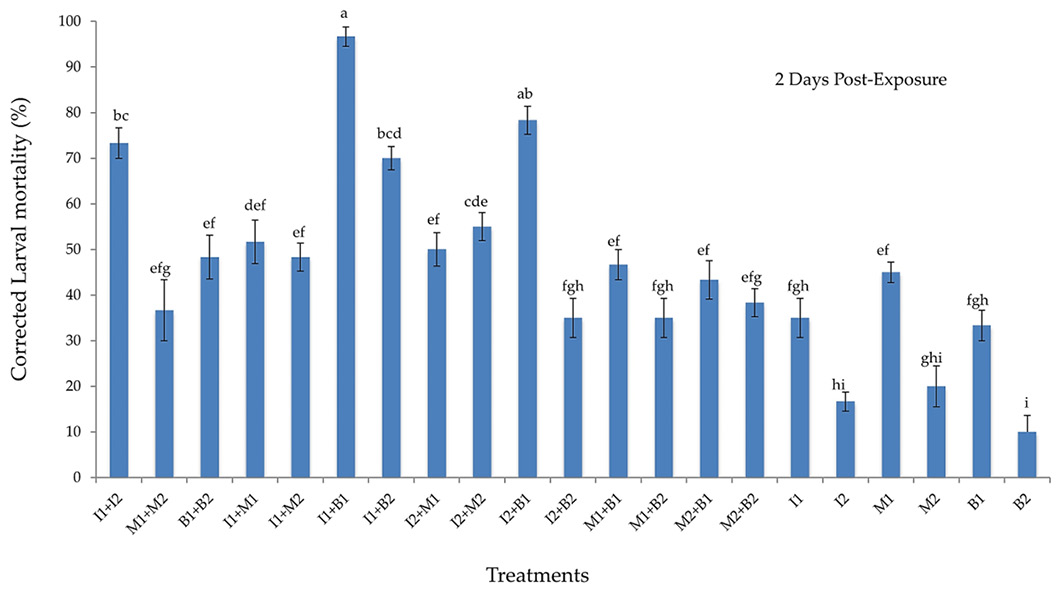
At 2 days post-exposure, significantly high larval mortality (96.67%) was exhibited by the combination of flubendiamide and A. indica formulations, followed by the combined treatments of spinetoram + A. indica (768.33%) and flubendiamide + spinetoram (73.33%). Binary combinations of spinetoram + N. tabacum, B. thuringensis + N. tabacum and B. thuringensis + S. litura-NPV showed minimum mortality (35.0 – 36.67%). Least effective treatments were N. tabacum, spinetoram and S. litura-NPV alone exhibiting minimum (10 – 20%) larval mortality (Figure 1).
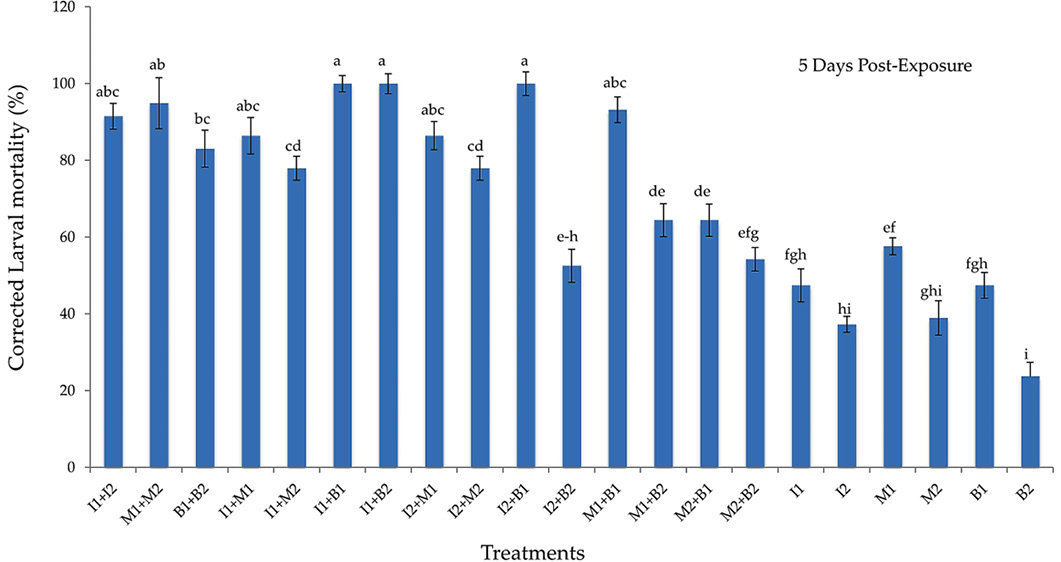
According to observation made at 5 days post-treatment, combinations of flubendiamide + A. indica, flubendiamide + N. tabacum and of spinetoram + A. indica formulations caused highest and significant mortality (100%) followed by B. thuringensis + S. litura-NPV (94.92%) and A. indica + B. thuringensis (93.22%). Among binary combinations, spinetoram + N. tabacum and S. litura-NPV + N. tabacum showed minimum larval mortality (47.46-52.54%). While minimum larval mortality (23.73-57.63%) was recorded for all insecticidal treatments alone at 5th day of bioassay (Figure 2).
Table 2: Analysis of variance comparison table for the mean percent mortality of 3rd instar larvae of Spodoptera litura exposed to different biorational synthetic, botanical and microbial insecticides alone and in binary combinations under laboratory conditions.
Source
DF
2 days post-exposure
5 days post-exposure
SS
MS
F-value
P-value
SS
MS
F-value
P-value
Treatment
20
51515.9
2575.79
29.08
< 0.001
66696.6
3334.84
56.43
< 0.001
Error
105
9300.3
88.57
6205.7
59.10
Grand mean
46.03
70.47
CV
20.45
10.91
P < 0.001 (highly significant) and P < 0.01 (significant); two-way factorial ANOVA at α = 0.05.
Moreover, among all binary combinations of the insecticidal formulations tested, eight combinations (i.e. spinetoram + A. indica, flubendamide + N. tabacum, spinetoram + S. litura-NPV, flubendamide + spinetoram, flubendamide + A. indica, spinetoram + N. tabacum, S. litura-NPV + N. tabacum and A. indica + N. tabacum) exibited synergized toxicity (having combination factor > 1.0) against 3rd instar S. litura larvae under lab conditions,while remaining combinations showed antergistic effect having factor < 1 at 2 days post-treatment. Similarly, at 5 days post-treatment, only five combinations (i.e. spinetoram + A. indica, flubendamide + B. tabacum, spinetoram + S. litura-NPV, flubendamide + spinetoram and flubendamide + A. indica) showed a synergistc effect against the larvae of S. litura (Table 3).
Table 3: Effect of binary combinations of different selected biorational synthetic, botanical and microbial insecticides on 3rd instar larvae of Spodoptera litura under laboratory conditions.
Treatments
Actual mortality
Expected mortality
Factor
Effect
2 DPE
5 DPE
2 DPE
5 DPE
2 DPE
5 DPE
2 DPE
5 DPE
I2+B1
78.33
100.00
50.00
84.75
1.57
1.18
Synergy
Synergy
I1+B2
70.00
100.00
45.00
71.19
1.56
1.40
Synergy
Synergy
I2+M2
55.00
77.97
36.67
76.27
1.50
1.02
Synergy
Synergy
I1+I2
73.33
91.53
51.67
84.75
1.42
1.08
Synergy
Synergy
I1+B1
96.67
100.00
68.33
94.92
1.41
1.05
Synergy
Synergy
I2+B2
35.00
52.54
26.67
61.02
1.31
0.86
Synergy
Antergy
M2+B2
38.33
54.24
30.00
62.71
1.28
0.86
Synergy
Antergy
B1+B2
48.33
83.05
43.33
71.19
1.12
1.17
Synergy
Synergy
I1+M2
48.33
77.97
55.00
86.44
0.88
0.90
Antergy
Antergy
M2+B1
43.33
64.41
53.33
86.44
0.81
0.75
Antergy
Antergy
I2+M1
50.00
86.44
61.67
94.92
0.81
0.91
Antergy
Antergy
I1+M1
51.67
86.44
80.00
105.08
0.65
0.82
Antergy
Antergy
M1+B2
35.00
64.41
55.00
81.36
0.64
0.79
Antergy
Antergy
M1+B1
46.67
93.22
78.33
105.08
0.60
0.89
Antergy
Antergy
M1+M2
36.67
94.92
65.00
96.61
0.56
0.98
Antergy
Antergy
I1 = flubendiamide, I2 = spinetoram, B1 = Azadirachta indica oil, B2 = Nicotiana tabacum oil, M1 = Bacillus thuringensis kurstaki, M2 = Spodoptera litura–NPV, DPE = days post-exposure. Synergistic or antagonistic effect of binary mixtures of insecticides was determined by dividing the actual mortality of mixture with the expected mortality of both treatments alone. If the factor is less than 1.0, it was considered as Antergy and if it is more than 1.0, the effect was considered as synergy.
Effect of insecticidal formulations on S. litura larval population under field conditions
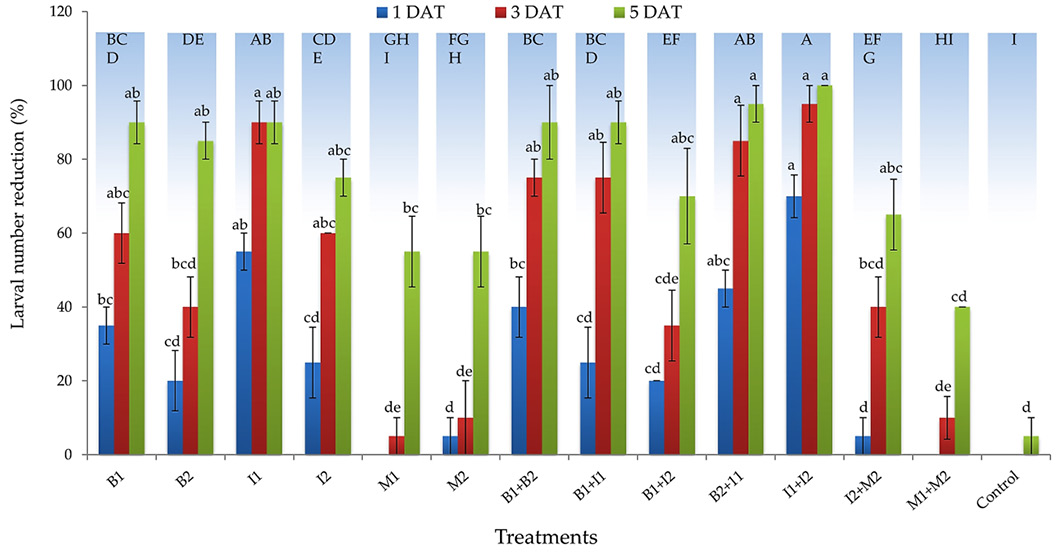
In case of field evaluation of the most effective insecticidal formulations alone and as effective combinations screened out from laboratory bioassays, all insecticidal treatments and time factor and their interactions exerted a significant effect on the larval reduction for both years of experiment (Table 4). In winter 2019, maximum larval reduction was recorded for the potato plots treated with flubendiamide + spinetoram (100%), followed by the combination of N. tabacum + flubendiamide (95%), while B. thuringensis and S. litura-NPV exhibited minimum reduction alone and in combination (i.e., 40 – 55%) and M2 (55%) treated plots showed minimum larval reduction after 5 days of application (Figure 3).
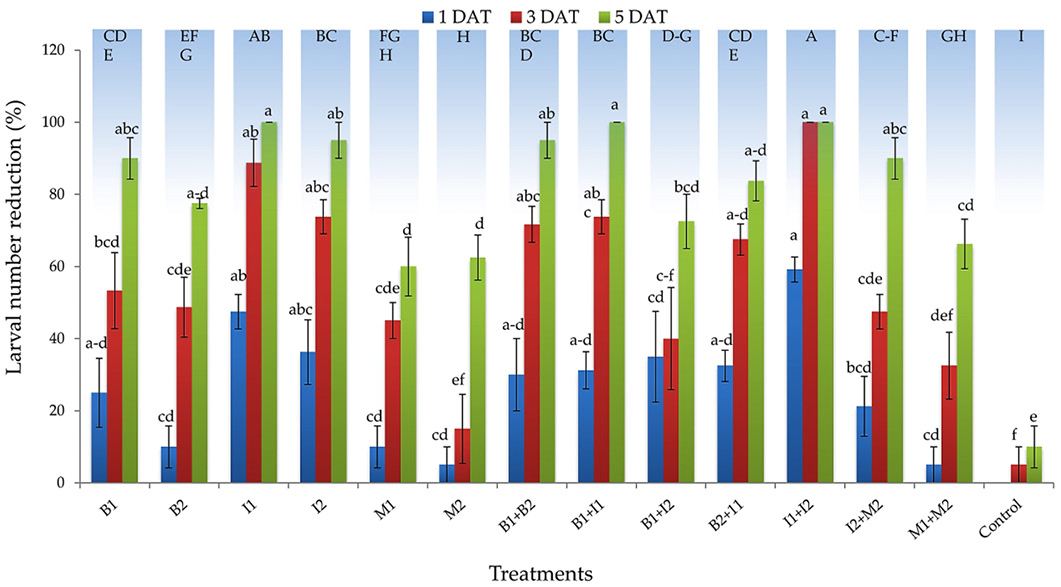
Similar trend of efficacy was recorded for 2nd year repetition of the trial in winter 2020. Combination of synthetic insecticides flubendiamide and spinetoram showed 59-100% larval reduction from 1st to 5th day post-application, followed by 100% larval reduction exhibited by flubendiamide and spinetoram alone and by combination of flubendiamide + A. indica formulations at 5th day of application. While, minimum larval reduction was recorded for both microbial insecticides either alone and in combination (Figure 4). Negligible larval reduction (0-10%) was recorded in control plots for both year field trials.
Discussion
Potato is an important vegetable crop of Pakistan having a substantial share both in terms of area and production. For last few years, local potato growers are being challenged by the attack of crop foliage by
Table 4: Analysis of variance comparison table for the mean percent mortality of 3rd instar larvae of Spodoptera litura exposed to different biorational synthetic, botanical and microbial insecticides alone and in binary combinations under field conditions.
Source
DF
Winter 2019
Winter 2020
SS
MS
F-value
P-value
SS
MS
F-value
P-value
Treatment
13
105933
8148.7
43.51
< 0.001
72755
5596.5
35.63
< 0.001
Time
2
62233
31116.7
166.13
< 0.001
81607
40803.5
259.81
< 0.001
Treatment × Time
26
12967
498.7
2.66
0.002
10989
422.6
2.69
< 0.01
Replication
3
162
54.0
2876
958.8
Error
123
23038
187.3
19317
157.1
Grand mean
48.33
52.69
CV
28.32
23.79
P < 0.001 (highly significant) and P < 0.01 (significant); two-way factorial ANOVA at α = 0.05.
armyworm S. litura. It has become a difficult to control pest due to its field-evolved resistance against prevailing old-chemistry synthetic pesticides ; ; . Therefore, use of reduced-risk biorational insecticides such as non-conventional differential-chemistry synthetic, botanical and microbial insecticidal formulations would be effective to combat S. litura infestations on potato crop with an improved potato quality and minimized ecological risks associated with conventional synthetic pesticides.
In a previous study , a comparative evaluation of lethal toxicity and sublethal effects of some selected biorational insecticidal formulations was done against 3rd instar S. litura larvae and found two synthetic, two botanical and two microbial insecticidal formulations (as described in Table 1) as the most effective treatments against S. litura larvae. In this study, we further tested the LC25 concentrations of all these insecticidal treatments either alone or in combinations against 3rd instar larvae first under laboratory and then under field conditions.
In case of laboratory bioassays, both synthetic insecticides (flubendiamide and spinetoram) and botanical formulations (A. indica and N. tabacum) showed a synergized toxicity against 3rd instar S. litura larvae under lab conditions. Both microbial insecticides (B. thuringiensis and S. litura-NPV) either showed no additive effect or antagonized the toxicity when applied in combination with synthetic and botanical insecticides.
Our results corroborate the results of previous studies demonstrating significant toxicity of botanical pesticides including neem (A. indica) and tobacco (N. tabacum) extracts and of non-conventional synthetic insecticides including flubendiamide and spinetoram against different armyworm and other lepidopterous pest species ; ; ; ; ; ; ; ; ; .
Regarding field evaluation of the most effective insectcides, in winter 2020, after five days of application, treatments flubendamide + spinetoram, A. indica + flubendamide and flubendamide alone gave maximum cumulative larval reduction (100%), followed by spinetoram alone (95%) and A. indica + N. tabacum (95%), while B. thuringensis kustaki and S. litura-NPV revealed minimum larval reduction i.e. 60 and 62.5%, respectively. During both years of the field trial, synthetic insecticides flubendiamide, spinetoram and botanical formulations of A. indica (neem) oil and (tobacco) N. tabacum appeared most effective and significantly reduced the S. litura larval populations in both seasons. While both microbial insecticidal treatments exhibited 50–60% larval reduction on 5th day of observation.
Although most of the insect hosts become dead within few days by the bacterial or viral induced spectcima ; and the observation at 5th day of bioassay or microbial exposure was enough to see if these are effective against the S. litura larvae. Both microbial formluations (B. thuringiensis kustaki and S. litura-NPV) exhibited minimum toxicity in lab and were also the least effective as well under field conditons. This might be because of the limited compatibility of particular entomopathogenic strains used in the microbial formulations against the larval strain of S. liutra tested in the study .
Conclusions and Recommendations
In brief, this laboratory study revealed the effectiveness of aforementioned botanical and non-conventional synthetic pesticides against 3rd instar S. litura larvae, and advocates recommendation and potential incorporation of binary combinations of these biorational pesticides in integrated control of S. litura and other lepidopterous pests on vegetable crops. However, future perspectives of this study constitute the evaluation of the non-target effects of these effective insecticidal treatments on beneficial organisms including insect natural enemies (such as local predators and parasitoids of S. litura).
Acknowledgments
Authors acknowledge the technical help and valuable advice given by Muhammad Asam Riaz (Assistant Professor, Department of Entomology, University of Sargodha) during the research and in proofreading of the final draft.
Conflict of interest
The authors have declared no conflict of interest.
Figures
Figure 1:.
Corrected percent mortality (mean ± S.E.; N = 6) of 3rd instar larvae of Spodoptera litura bioassayed against different biorational synthetic, botanical and microbial insecticides alone and in binary combinations. I1= flubendiamide, I2= spinetoram, B1= Azadirachta indica oil, B2= Nicotiana tabacum oil, M1= Bacillus thuringensis kurstaki, M2= Spodoptera litura–NPV. Alphabets at bar tops indicate significant difference among the treatments (one-way factorial ANOVA followed by Tukey’s post-hoc test HSD at α= 0.05).
Figure 2:.
Corrected percent mortality (mean ± S.E.; N = 6) of 3rd instar larvae of Spodoptera litura bioassayed against different biorational synthetic, botanical and microbial insecticides alone and in binary combinations. I1= flubendiamide, I2= spinetoram, B1= Azadirachta indica oil, B2= Nicotiana tabacum oil, M1= Bacillus thuringensis kurstaki, M2= Spodoptera litura–NPV. Alphabets at bar tops indicate significant difference among the treatments (one-way factorial ANOVA followed by Tukey’s post-hoc test HSD at α= 0.05).
Figure 3:.
Percent reduction (mean ± S.E.; N = 4, n = 40) in Spodoptera litura larval numbers on the potato plants recorded at different time intervals post-treatment by different biorational synthetic, botanical and microbial insecticides alone and in binary combinations in winter 2019. I1 = flubendiamide, I2 = spinetoram, B1= Azadirachta indica oil, B2 = Nicotiana tabacum oil, M1 = Bacillus thuringensis kurstaki, M2 = Spodoptera litura–NPV. Small and capital alphabets indicate significant difference among the treatments for each DAT and overall among the treatments, respectively (factorial ANOVA followed by Tukey’s post-hoc test HSD at α= 0.05).
Figure 4:.
Percent reduction (mean ± S.E.; N = 4, n = 40) in Spodoptera litura larval numbers on the potato plants recorded at different time intervals post-treatment by different biorational synthetic, botanical and microbial insecticides alone and in binary combinations in winter 2020. I1 = flubendiamide, I2 = spinetoram, B1 = Azadirachta indica oil, B2 = Nicotiana tabacum oil, M1 = Bacillus thuringensis kurstaki, M2 = Spodoptera litura–NPV. Small and capital alphabets indicate significant difference among the treatments for each DAT and overall among the treatments, respectively (factorial ANOVA followed by Tukey’s post-hoc test HSD at α= 0.05).
References
Abbot, W.S., 1925. A method of computing the effectiveness of an insecticide. J. Econ. Entomol., 18: 265–267. https://doi.org/10.1093/jee/18.2.265a[CrossRef]
Acheuk, F., Basiouni, S., Shehata, A.A., Dick, K., Hajri, H., Lasram, S., and Ntougias, S., 2022. Status and prospects of botanical biopesticides in Europe and mediterranean countries. Biomolecules, 12: 311. https://doi.org/10.3390/biom12020311[CrossRef]
Ahmad, M., Ghaffar, A., Rafiq, M., and Ali, P.M., 2013. Host plants of leaf worm, Spodoptera litura (Fabricius) (Lepidoptera: Noctuidae) in Pakistan. Asian J. Agric. Biol., 1: 23–28.
Ahmad, M.S., Afzal, M., Ouedraogo, S.N., and Majeed, M.Z., 2021. Differential feeding preference and performance of leafworm Spodoptera litura Fabricius (Lepidoptera: Noctuidae) on some cultivars of potato (Solanum tuberosum L.). Sarhad J. Agric., 37: 791–796. https://doi.org/10.17582/journal.sja/2021/37.3.791.796[Full text][CrossRef]
Ahmed, K.S., Idrees, A., Majeed, M.Z., Majeed, M.I., Shehzad, M.Z., Ullah, M.I., Afzal, A., and Li, J., 2022. Synergized toxicity of promising plant extracts and synthetic chemicals against fall armyworm Spodoptera frugiperda (JE Smith) (Lepidoptera: Noctuidae) in Pakistan. Agronomy, 12: 1289. https://doi.org/10.3390/agronomy12061289[CrossRef]
Ahmad, M.S., Afzal, M., Feng, L.Y., Majeed, M.Z., Safdar, H., Mehmood, A., Iqbal, S. and Adnan, M., 2023. Laboratory evaluation of selected biorational insecticidal formulations against potato leafworm Spodoptera litura Fabricius (Lepidoptera: Noctuidae). Pakistan J. Zool., (early access: Dec. 11, 2022).
Arthurs, S., and Dara, S.K., 2019. Microbial biopesticides for invertebrate pests and their markets in the United States. J. Invertebr. Pathol., 165: 13–21. https://doi.org/10.1016/j.jip.2018.01.008[CrossRef]
Ayyub, M.B., Nawaz, A., Arif, M.J., and Amrao, L., 2019. Individual and combined impact of nuclear polyhedrosis virus and spinosad to control the tropical armyworm, Spodoptera litura (Fabricius) (Lepidoptera: Noctuidae), in cotton in Pakistan. Egypt. J. Biol. Pest Contr., 29: 1–6. https://doi.org/10.1186/s41938-019-0170-4[CrossRef]
Batool, Z., Riaz, M.A., Sayed, S., Majeed, M.Z., Ahmed, S., and Ullah, S., 2022. In vitro synergy of entomopathogenic fungi and differential-chemistry insecticides against armyworm Spodoptera litura Fabricius (Lepidoptera: Noctuidae). Int. J. Trop. Insect Sci., 42: 1997–2006. https://doi.org/10.1007/s42690-022-00751-4[CrossRef]
Bragard, C., Dehnen-Schmutz, K., Di Serio, F., Gonthier, P., Jacques, M.A., Miret, J.A.J., Justesen, A.F., Magnusson, C.S., Milonas, P., Navas-Cortes, J.A., 2019. Pest categorisation of Spodoptera litura. EFSA J., 17: 5765. https://doi.org/10.2903/j.efsa.2019.5765[CrossRef]
Dáder, B., Aguirre, E., Caballero, P., and Medina, P., 2020. Synergy of lepidopteran nucleopolyhedroviruses AcMNPV and SpliNPV with insecticides. Insects, 11: 316. https://doi.org/10.3390/insects11050316[CrossRef]
Duarte, J.P., Redaelli, L.R., Jahnke, S.M., and Trapp, S., 2019. Effect of Azadirachta indica (Sapindales: Meliaceae) oil on Spodoptera frugiperda (Lepidoptera: Noctuidae) larvae and adults. Fla. Entomol., 102: 408–412. https://doi.org/10.1653/024.102.0218[CrossRef]
Enriquez, C.R., Pineda, S., Figueroa, J.I., Schneider, M., and Martínez, A., 2010. Toxicity and sublethal effects of methoxyfenozide on Spodoptera exigua (Lepidoptera: Noctuidae). J. Econ. Entomol., 103: 662–667. https://doi.org/10.1603/EC09244[CrossRef]
Hannig, G.T., Ziegler, M., and Marcon, P.G., 2009. Feeding cessation effects of chlorantraniliprole, a new anthranilic diamide insecticide, in comparison with several insecticides in distinct chemical classes and mode-of-action groups. Pest Manage. Sci., 65: 969–974. https://doi.org/10.1002/ps.1781[CrossRef]
Hernandez-Trejo, A., Rodríguez-Herrera, R., Sáenz-Galindo, A., López-Badillo, C.M., Flores-Gallegos, A.C., Ascacio-Valdez, J.A., and Osorio-Hernández, E., 2021. Insecticidal capacity of polyphenolic seed compounds from neem (Azadirachta indica) on Spodoptera frugiperda (JE Smith) larvae. J. Environ. Sci. Hlth. B, pp. 1–8. https://doi.org/10.1080/03601234.2021.2004853[CrossRef]
Jin, T., Lin, Y.Y., Chi, H., Xiang, K.P., Ma, G.C., Peng, Z.Q., and Yi, K.X., 2020. Comparative performance of the fall armyworm (Lepidoptera: Noctuidae) reared on various cereal-based artificial diets. J. Econ. Entomol., 113: 2986–2996. https://doi.org/10.1093/jee/toaa198[CrossRef]
Kong, F., Song, Y., Zhang, Q., Wang, Z., and Liu, Y., 2021. Sublethal effects of chlorantraniliprole on Spodoptera litura (Lepidoptera: Noctuidae) moth: Implication for attract-and-kill strategy. Toxics, 9: 20. https://doi.org/10.3390/toxics9020020[CrossRef]
Lacey, L.A., 2017. Entomopathogens used as microbial control agents. In Microbial control of insect and mite pests, Academic Press, pp. 3–12. https://doi.org/10.1016/B978-0-12-803527-6.00001-9[CrossRef]
Liu, Y., Gao, Y., Liang, G., and Lu, Y., 2017. Chlorantraniliprole as a candidate pesticide used in combination with the attracticides for lepidopteran moths. PLoS One, 12: e0180255. https://doi.org/10.1371/journal.pone.0180255[CrossRef]
Maistrou, S., Natsopoulou, M.E., Jensen, A.B., and Meyling, N.V., 2020. Virulence traits within a community of the fungal entomopathogen Beauveria: Associations with abundance and distribution. Fungal Ecol., 48: 100992. https://doi.org/10.1016/j.funeco.2020.100992[CrossRef]
Nagal, G., and Verma, K.S., 2015. Intrinsic toxicity evaluation of novel insecticides and bio-pesticides against Spodoptera litura (Fabricius) on Bell pepper. Ann. Pl. Prot. Sci., 23: 227–230.
Nathan, S.S., and Kalaivani, K., 2006. Combined effects of Azadirachtin and nucleopolyhedrovirus (SpltNPV) on Spodoptera litura Fabricius (Lepidoptera: Noctuidae) larvae. Biol. Contr., 39: 96–104. https://doi.org/10.1016/j.biocontrol.2006.06.013[CrossRef]
Paul, D., and Chaudhary, M., 2016. Larvicidal and antifeedant activity of some indigenous plants of Meghalaya against 4th instar Helicoverpa armigera (Hübner) larvae. J. Crop. Prot., 5: 447–460. https://doi.org/10.18869/modares.jcp.5.3.447[CrossRef]
Phambala, K., Tembo, Y., Kasambala, T., Kabambe, V.H., Stevenson, P.C., and Belmain, S.R., 2020. Bioactivity of common pesticidal plants on fall armyworm larvae (Spodoptera frugiperda). Plants, 9: 112. https://doi.org/10.3390/plants9010112[CrossRef]
Rani, A.T., Kammar, V., Keerthi, M.C., Rani, V., Majumder, S., Pandey, K.K., and Singh, J., 2021. Biopesticides: An alternative to synthetic insecticides. In: Microbial technology for sustainable environment. Springer: Singapore, pp. 439–466. https://doi.org/10.1007/978-981-16-3840-4_23[CrossRef]
Saleem, M., Hussain, D., Ghouse, G., Abbas, M., and Fisher, S.W., 2016. Monitoring of insecticide resistance in Spodoptera litura (Lepidoptera: Noctuidae) from four districts of Punjab, Pakistan to conventional and new chemistry insecticides. Crop Prot., 79: 177-184. https://doi.org/10.1016/j.cropro.2015.08.024[CrossRef]
Serrão, J.E., Plata-Rueda, A., Martínez, L.C., and Zanuncio, J.C., 2022. Side-effects of pesticides on non-target insects in agriculture: A mini-review. Sci. Nat., 109: 1–11. https://doi.org/10.1007/s00114-022-01788-8[CrossRef]
Soumia, P.S., Krishna, R., Jaiswal, D.K., Verma, J.P., Yadav, J., and Singh, M., 2021. Entomopathogenic microbes for sustainable crop protection: future perspectives. In: Current trends in microbial biotechnology for sustainable agriculture. Springer, Singapore. pp. 469-497. https://doi.org/10.1007/978-981-15-6949-4_19[CrossRef]
Thakur, H., and Srivastava, R.P., 2019. Sub-lethal and antifeedant effect of spinosyn and diamide insecticides against Spodoptera litura (Fab.) and Spilarctia obliqua (Wlk.). J. Entomol. Res., 43: 431–438. https://doi.org/10.5958/0974-4576.2019.00076.8[CrossRef]
Thakur, N., Tomar, P., Sharma, S., Kaur, S., Sharma, S., Yadav, A.N., and Hesham, A.E.L., 2022. Synergistic effect of entomopathogens against Spodoptera litura (Fabricius) under laboratory and greenhouse conditions. Egypt. J. Biol. Pest Contr., 32: 1–10. https://doi.org/10.1186/s41938-022-00537-3[CrossRef]
Zhang, Z., Gao, B., Qu, C., Gong, J., Li, W., Luo, C., and Wang, R., 2022. Resistance monitoring for six insecticides in vegetable field-collected populations of Spodoptera litura from China. Horticulturae, 8: 255. https://doi.org/10.3390/horticulturae8030255[CrossRef]
Combined Efficacy of Biorational Insecticides against Potato Leafworm Spodoptera litura Fabricius (Lepidoptera: Noctuidae) Under Laboratory and Field Conditions · ResearchersLinks