Research Article · Volume 35, Issue 2, 1 January 2021 · Open Access
Comparative Toxicity of Phyto-Extracts of Indigenous Flora of Soone Valley against some Insect Pests of Agricultural and Urban Importance
· · · · · · · ·
Affiliations & Notes ⌄
1Department of Entomology, College of Agriculture, University of Sargodha, Sargodha, Pakistan. 2Department of Agricultural Extension, College of Agriculture, University of Sargodha, Sargodha, Pakistan. , Corresponding author: Muhammad Zeeshan Majeed zeeshan.majeed@uos.edu.pk
Insecticidal potential of forty indigenous plant species (including trees, herbs and shrubs) was evaluated in this laboratory study against four insect pests of economic importance.
So, for the further studies’ chemical characterization of these most effective plant extracts will be analyzed for their chemical constituents.
Selected from the article's own text.
Abstract
This laboratory study encompasses comparative evaluation of insecticidal potential of indigenous ethnomedicinal flora of Soone Valley and surrounding Salt Range of Pakistan. Acetone extracts (10%) of forty plant species were evaluated against Asian citrus psyllid (Diaphorina citri), armyworm (Spodoptera litura), house mosquito (Culex quinquefasciatus) and subterranean termite (Odontotermes obesus) using twig-dip, leaf-dip, aqueous exposure and filter paper-dip bioassay methods, respectively. Results revealed that the extracts of Mentha longifolia, Sonchus asper and Nerium indicum were the most toxic to D. citri exhibiting 90% mortality. The extracts of Dodonaea viscosa and Olea ferruginea caused highest mortality of S. litura (i.e. 70 and 58%, respectively). Maximum mortality of C. quinquefasciatus larvae was observed by Maerua arenaria (87%), N. indicum (84%) and Withania coagulans (83%) extracts. While, the most toxic plant extracts against O. obesus termites were Periploca aphylla, Rhamnus spp. and Buxus papillosa causing 89, 62 and 52% mortality, respectively. These findings corroborate the effectiveness of indigenous plant extracts as safe and environment friendly alternates to hazardous synthetic insecticides and suggest the incorporation of these natural compounds in the pest management programs against agricultural and urban insect pests.
Novelty Statement | This study encompasses a first extensive evaluation of ethnomedicinal flora of Soone Valley and surrounding Salt Range for their toxicity potential against four major insect pests of economic importance. Results of this study demonstrate the relative insecticidal potential of indigenous plant extracts as biorational alternates to toxic synthetic insecticides and recommend the incorporation of these phyto-chemicals in the future insect pest management programs.
Introduction
Apart from their great ecological impact, many species of insects pose a serious threat to humans. They are destructive pests of agricultural crops, notorious vectors of
various plant and human diseases and cause many other direct and indirect losses. Insect pest problems have been an almost inevitable part of agriculture and urban sectors all over the world including Indo-Pak regions. For instance, armyworms and psyllids are among the major insect pests of agricultural and horticultural crops including fruits and vegetables. Similarly, mosquitos and termites are the most important urban and medical pests, respectively.
Asian citrus psyllid, Diaphorina citri Kuwayama (Hemiptera: Psyllidae), is a sap feeding pest of citrus and other plants of Rutaceae family ; . Firstly, reported in Pakistan in 1927, it has become a major pest for all citrus growing regions of Pakistan . Both nymphs and adults desap plant foliage resulting in defoliation and curling of leaves, flowers and withering of branches and premature fruit drop . Moreover, this pest is also responsible for the transmission of citrus greening disease (Huánglóngbìng), a severe threat to citrus industry in Pakistan ; ; ; ; ; .
Armyworm, Spodoptera litura Fabricius (Lepidoptera: Noctuidae), is polyphagous pest of cosmopolitan distribution causing severe losses to agricultural production worldwide . With a host range of more than 150 plants, S. litura infests and damage many fruit and vegetable crops of economic significance ; ; . In Indo-Pak regions, considerable quantitative and qualitative losses are incurred by armyworm infestations in cotton, gram, potato, okra, tomato, chilies and many other horticultural crops.
With more than 3,500 described species, termites constitute an important part of all ecosystems and play a vital role in plant litter decomposition, turnover organic matter and soil acclimatization/reclamation ; . However, many termite species particularly subterranean species are destructive pests of forest and orchard plantations, industrial crops and wooden infrastructures . Coptotermes heimi Wasmann (Rhinotermitidae) and Odontotermes obesus Rambur (Termitidae) are most predominant and destructive termite species . In Indo-Pak regions, these termites infest a wide range of agricultural crops including wheat, maize, gram, cotton, sugarcane and sesame ; . Moreover, they are serious threat to wooden infrastructures in urban and rural areas .
Mosquitoes are of the nature’s most serious bioterrorists because they are responsible to transmit the world’s most severe life-threatening diseases including malaria, filariasies, dengue, Zika and Chickungunya fevers (WHO, 2005). Among pest mosquito species, Culex mosquitoes, especially C. quinquefasciatus, are the principal vectors of nematode, Wuchereria bancrofti that cause a disease known as Bancroftian filariasis. C. quinquefasciatus is native to the West Africa from where it has been spread throughout the Asia .
In Pakistan, synthetic insecticides have been the sole control measure being relied upon to suppress and control these agricultural and urban insect pests ; ; . Undoubtedly use of these insecticides increase farmers’ production and improve their monetary benefits by their quick action against insect pests. However, their long-term negative effects on environment health and crop production sustainability cannot be overlooked. The frequent and indiscriminate application of these persistent synthetic insecticides have resulted into many non-target effects including environmental contamination , pest resistance to insecticides ; , resurgence of secondary pests , eradiation of beneficial fauna including insect predator and parasitoid species ; , and human health hazards ; .
Due to above mentioned deleterious effects of synthetic insecticides being used in agricultural and urban environments; researchers have diverted their focus towards the development of biorational pesticides such as botanical pesticides. Many studies have demonstrated the efficacy of different phyto-extracts against D. citri ; ; , S. litura ; ; ; ; ; , O. obesus ; ; ; ; and Culex spp. ; ; . Although lack quick knock-down effects as synthetic insecticides, plant-based pesticides can be effective alternatives to synthetic pesticides as most of these extracts are volatile in nature, target-specific and have reduced environmental risks .
As indigenous plants of a particular bio-geographical area may constitute effective and bioactive compounds against indigenous insect pest species ; , the present study was aimed to determine the insecticidal potential of indigenous flora of Soone Valley situated in the North-West of district Khushab (Punjab, Pakistan). This valley and surrounding salt range harbor a rich diversity of medicinal plants including many herbs and shrubs (Ahmed et al., 2009; .
Materials and Methods
Sampling locations
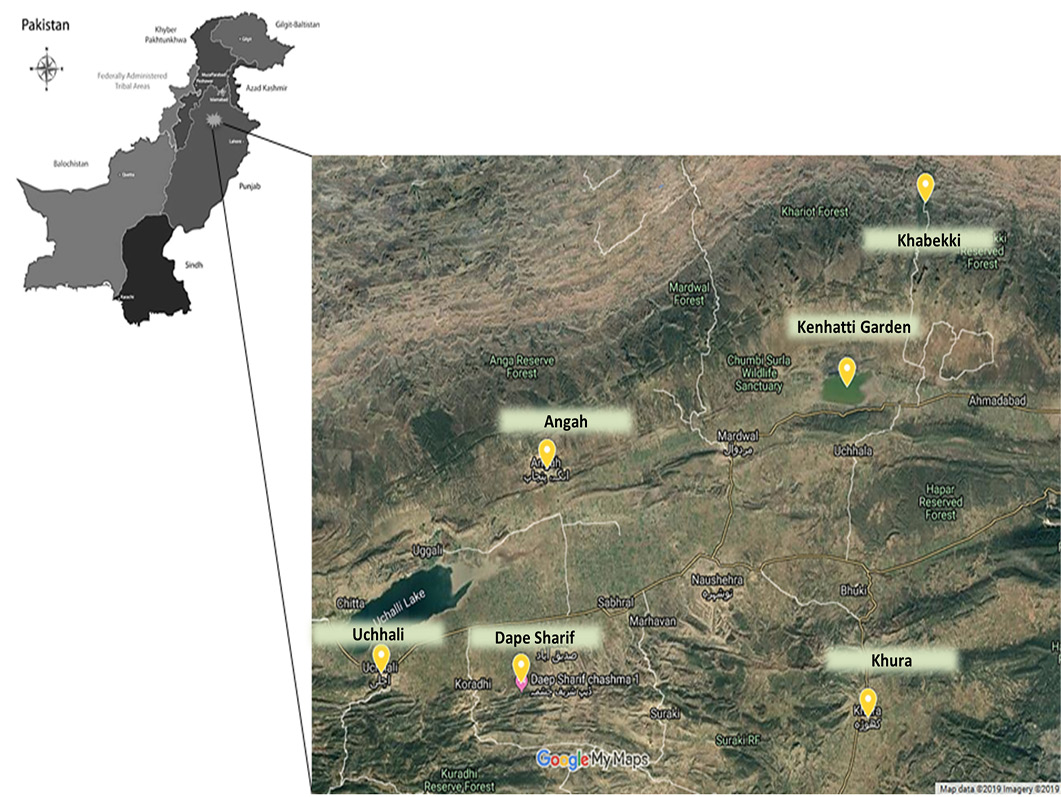
Indigenous plant species were collected from Soone Valley and surrounding Salt Range. Sampling area was about 300 Km2 located between longitudes 72º00’ to 72º30’ E and latitude 32º25’ to 32º45’ N . In the sampling area, six different sites, i.e. Khura, Khabikki, Kenhatti Garden, Daep Sharif, Angah and Uchhali, were selected for the collection of flora based on their vegetation enrichment as detailed in Figure 1 and Table 1. Sampling was done during September to October, 2018 and then March to April 2019.
Table 1: Geographical coordinates of the plant sampling sites (cf: Figure 1).
Localities
Latitude N
Longitude E
Elevation (m)
Khura
32.23° N
72.11° E
866
Dape Sharif
32.30° N
72.04° E
890
Uchhali
32.56° N
72.02° E
794
Kenhatti Garden
32.40° N
72.14° E
783
Angah
32.35° N
72.05° E
821
Khabekki
32.35° N
72.12° E
774
Sampling and processing of plant samples
Samples of forty plant species were collected from above mentioned selected sites. Samples were consisted of leaves, stems, roots, fruits and flowers as mentioned in Table 2. Among this plant collection, 38 samples were identified with the help of their vernacular name told by local inhabitants and already published literature and verified by the Department of Botany, University of Sargodha, Sargodha. The collected plant samples were washed by clean tap water and shade-dried for about two weeks. After drying, plant materials were grinded to make fine powder using commercial electrical blender and were preserved separately in plastic zip bags for further processing.
Extraction of plant samples
The extraction of plant samples was carried out in the Laboratory of the Department of Entomology, College of Agriculture, University of Sargodha, Pakistan. Soxhlet apparatus (Daihan Scientific Co., Ltd. South Korea) was used to extract the phyto-constituents according to a previously described protocol . A known amount (50 g) of grounded material of each plant sample was loaded into the filter paper thimble in Soxhlet apparatus. A piece of cotton was plugged at the top of the thimble to stop the entry of crude extract into the siphoning tube. A known volume (500 mL) of organic solvent (acetone having polarity index of 5.1 and boiling point of 56 oC) was filled into the flask (1 L) fixed over the mantle of heating device. The extractions were performed for 6-8 hr at 60 °C. The crude extract obtained from Soxhlet apparatus was further concentrated by evaporating the excess of extraction solvent using rotary evaporator (Daihan Scientific Co., Ltd. South Korea) set at 60 °C. Prepared extracts were preserved in hermetic dark glass vials at 4 °C.
Insect cultures
Adults of Asian citrus psyllid (D. citri) were collected with an aspirator from the citrus (Citrus reticulara cv. kinnow mandarin) field situated near the College of Agriculture, University of Sargodha. These field collected psyllids were reared for 2-3 weeks on potted Murraya paniculata (orange jasmine) plants maintained in the insect rearing cages at optimum temperature (25±5°C), relative humidity (60±5%) and 16L:8D photoperiod. Healthy and active adult psyllids were used in toxicity bioassays.
Larvae of armyworm (S. litura) were collected from the field of sunflower (Helianthus annuus) and were maintained in the laboratory in plastic jars under controlled conditions (25±2ºC, 60±5% RH and 16:8 (L: D) photoperiod). They were fed daily on un-contaminated fresh leaves of castor (Ricinus cummunis) plants. Adults upon emerging from pupa were transferred to separate plastic jars provided with 10% honey solution. Healthy and active larvae from F2 generation were used in bioassays.
Mosquito (C. quinquefasciatus) larvae were collected from different areas of Sargodha with the help of an aquatic net and dipper. Those collected larvae were identified on the basis of different distinguished morphological characteristics under microscope by using taxonomic keys available in literature . It was ensured that collection site was never exposed to any insecticide at least two months before collection of mosquito larvae.
For subterranean termites, intact portions of termite nest were collected from the termite infested stubbles of sugarcane (Saccharum officinarum). Before collection, it was ensured that the sugarcane field was not treated with any pesticide for last three months. These termites were identified as O. obesus on the basis of their distinguished morphological characters . In order to acclimatize the termite individuals to lab conditions, collected termite nest portions were maintained in the lab in polystyrene glass cages for few weeks. Only healthy and active worker individuals were used in toxicity bioassays.
Table 2: Details of different plant samples collected from Soone Valley and surrounding Salt Range of Pakistan.
Allyl isothiocyanate, 3-butenyl isothiocyanate, 4-methylsulfinybutyl isothiocyanate, sulforaphane), 2-phenylethyl isothiocyanate and bis (isothiocyanatobutyl) disulphide, fatty acids
*NI, not informed.
Toxicity bioassays
For screening toxicity potential of forty plant extracts, 10% solutions of these extracts were made using acetone and the same was used in control treatments. Bioassays were performed using completely randomized design (CRD) with five replications for each treatment.
For D. citri, twig-dip method was used. Freshly cut twigs (5 cm long) of orange jasmine (C. reticulata) were dipped into 10% solutions of botanical extracts for 30 sec and were placed at towel paper to soak up the excess solution from leaves. These treated twigs were then fixed in 2% agar solution in sterile Eppendorf tubes (1.5 mL) and these Eppendorf tubes were placed into sterile falcon tubes (50 mL). Laboratory maintained adult psyllids were collected with the help of aspirator and were kept into freezer for 5 min at 0 ºC to inactivate psyllids. Ten inactive psyllids were released into each falcon tubes with the help of a soft camel hair brush. Each falcon tube was covered with a piece of muslin cloth and tied with rubber band and all tubes were incubated in the rearing lab at controlled conditions (25 ± 2 ºC, 60 ± 5% RH and 16:8 (L: D) photoperiod). Data regarding mortality of psyllids was recorded at 24, 48 and 72 h post-exposure.
For S. litura, leaf-disc method was used. Uncontaminated fresh leaves of R. cummunis were washed and air-dried at room temperature (24 °C) for 5 min. Leaf discs (60 mm) were prepared and treated with treatment solutions and put to dry on towel paper for 15 min at room temperature. Treated and control leaf discs were placed in Petri plates (60 mm) over a thin layer of 2% agar to maintain the moisture within the Petri plates. Ten 2nd instar starved larvae of lab reared S. litura were released into each Petri plate and these plates were incubated in the rearing lab at controlled conditions (25 ± 2 ºC, 60 ± 5% RH and 16:8 (L: D) photoperiod). Data regarding the mortality of exposed larvae was recorded at 24, 48 and 72 h post-exposure.
Aqueous solution bioassay method was used for C. quinquefasciatus. Ten early 4th instar larvae of C. quinquefasciatus mosquito were dropped into disposable glasses (200 mL) having 100 mL of 0.5% aqueous solution of each botanical. Whole experimentation was performed in controlled conditions (25 ± 2 ºC, 60 ± 5% RH and 16:8 (L: D) photoperiod). Data regarding the mortality of exposed mosquito larvae was recorded at 24, 48 and 72 h post-exposure.
For O. obesus, filter paper disc method was used. Filter paper (Whatman No. 1) discs were dipped in 10% solution of each botanical extract for 30 sec and allowed to dry for 30 min at room temperature (24 °C). Treated and control leaf discs were placed in Petri plates (60 mm) over a thin layer of 2% agar to maintain the moisture within the Petri plates. Ten healthy worker termites were released in each Petri plate and these plates were incubated in the laboratory at 25 ± 2 ºC, 60 ± 5% RH and 16:8 (L: D) photoperiod). Data regarding the mortality of exposed termite individuals was recorded at 24, 48 and 72 h post-exposure.
Statistical analysis
Statistical analysis of data was performed using Statistix V. 8.1. analytical software (Tallahassee, FL, USA). In addition to graphical presentation of percent mortality of the exposed insect individuals, one-way factorial ANOVA was run using botanical extracts and time intervals as factors. Treatment means were compared using Tukey’s honest significant difference (HSD) at standard level of significance (α = 0.05).
Results and Discussion
Insecticidal potential of forty indigenous plant species (including trees, herbs and shrubs) was evaluated in this laboratory study against four insect pests of economic importance. Most of the plant species collected belongs to Apocynaceae, Amaranthacea, Fabaceae, Lamiaceae and Solanaceae families and are usually enriched in such phyto-constitutes as alkaloids, carbohydrates, cardiac glycosides, cyanogenic glycosides, flavonoids, phenols, resins oxalates, steroids, saponins and tannins (Table 2).
Toxicity of indigenous flora of Soone Valley against D. citri
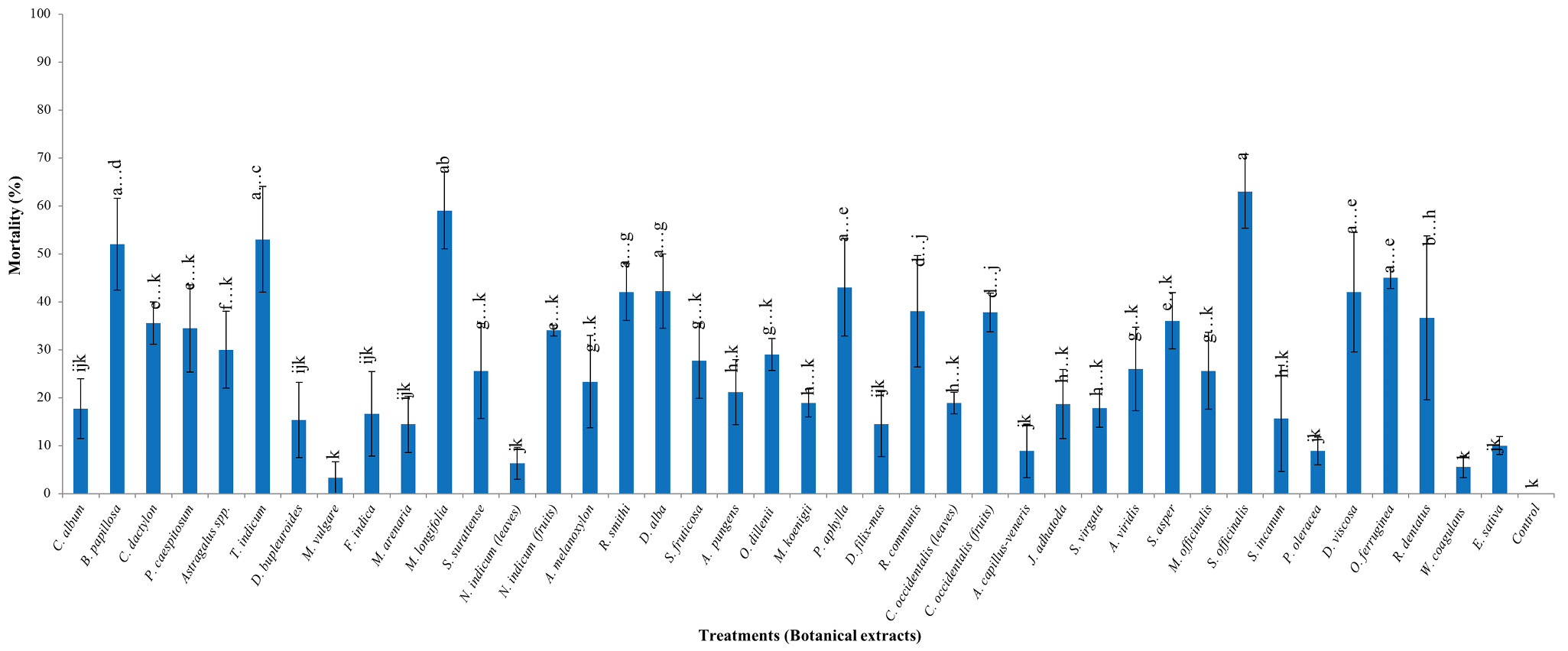
Toxicity bioassays revealed that the 10% acetone extracts of M. longifolia, S. asper, N. indicum, D. alba and S. officinalis exhibited highest average mortality of D. citri i.e. 93, 91, 89, 88, and 81%, respectively, whereas the other plant extracts caused less than 50% mortality as observed at 72 h post-exposure (Figure 2). Least toxic plant extracts were of Astragalus spp., W. coagulans, O. dillenii, T. indicum and A. viridis.
This observed mortality of D. citri by M. longifolia, S. asper and N. indicum would be due to diverse terpenoids and phenolic compounds present in these plant extracts ; ; ; ; . Our results are in line with the findings of Kuganathan et al. (2008) demonstrating significant mortality of aphids by the extracts of D. alba, probably due to the alkaloids present in the leaves of this plant. Khan et al. (2013) demonstrated significant toxicity of D. alba extract against citrus psyllids (D. citri) causing 60±9.7% nymphal mortality. Similarly, the toxic effect of essential oil of S. officinalis was revealed by Tomczyk and Suszko (2011) against two spotted spider mites and reported 56% mite mortality in 4 days of treatment. Govindappa and Poojashri (2011) examined the presence of chemicals such as flavonoids, phenol, saponins, tannin and terpenoids in M. officinalis that might be responsible for psyllid mortality in this study.
Toxicity of indigenous flora of Soone Valley against S. litura
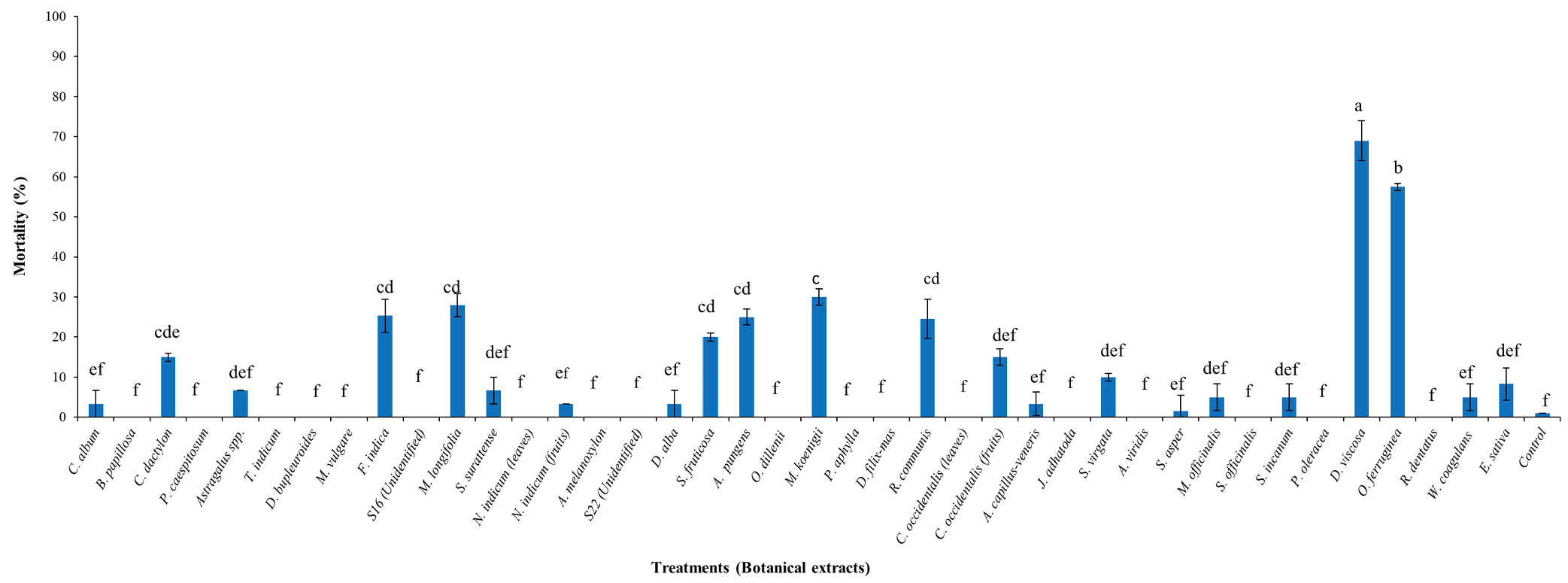
In case of S. litura, extracts of D. viscosa and O. ferruginea caused highest average mortality of S. litura, i.e. 70 and 58%, respectively. The extracts of M. koeingii, M. longifolia, F. indica, A. pungens and R. cummunis exhibited moderate toxicity causing 20 to 40% mortality of the exposed 2nd instar larvae of S. litura, whereas other plant extracts caused minimum or negligible mortality (Figure 3).
Ethnomedicinal plant species of Soone Valley and surrounding Salt Range such as D. viscosa and O. ferruginea have been known as excellent herbal remedies against many diseases including diarrhea and malaria . D. viscosa plant extracts constitute such phytochemicals as lupeol, stimgasterols, diterpenoids, flavonol-3-methyl ethers and certain fatty acids which have been demonstrated to show bioactivity against different insect pests including lepidopterous ; , coleopterous and homopterous pests . Similarly, many species of Oleaceae family contain toxic compounds potentially effective against different insect pests. For instance, O. europaea constitute higher phenolic contents and a triterpene compound (maslinic acid) exhibiting significant toxicity against aphids (Myzus persicae) and stored grain insect pests (Sitophilus granaries and Tribolium confusum) ; Kisa et al., 2018).
Toxicity of indigenous flora of Soone Valley against C. quinquefasciatus
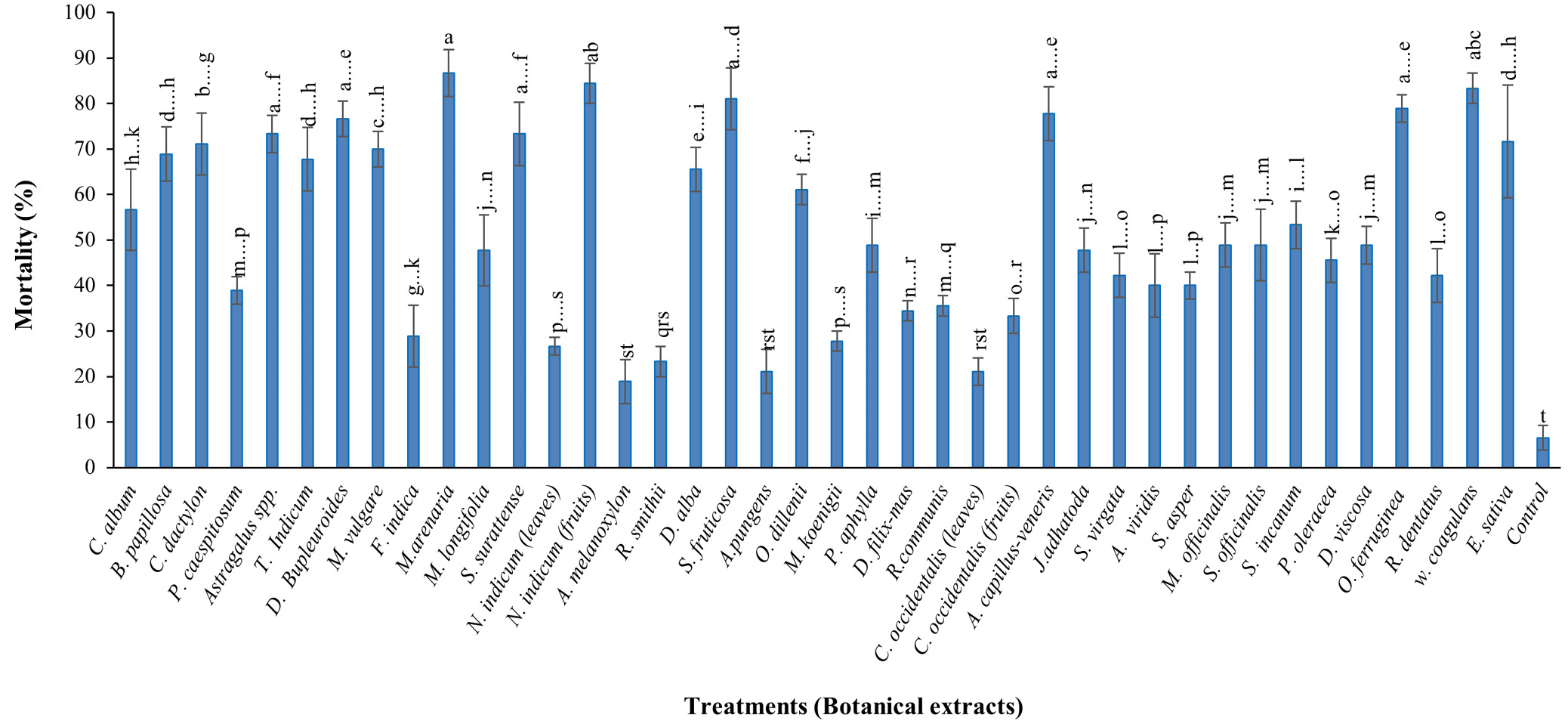
Figure 4 presents the average percent mortality of C. quinquefasciatus larvae by 0.5% botanical extracts. Maximum mortality of mosquito larvae was observed by the M. arenaria extract (87%), followed by the extracts N. indicum (84%), W. coagulans (83%), S. fruticosa (81%), O. ferruginea (79%), A. capillus-veneris (78%), D. bupleuroides (77%), Astragalus spp. (73%), S. surattense (73%), E. Sativa (72%), C. dactylon (71%), M. vulgare (70%), B. papillosa (69%), T. indicum (68%), D. alba (66%), O. dillenii (61%), S. incanum (53%). Other plant extracts showed less than 50% mortality. A. melanoxylon, C. occidentalis and A. pungens were least toxic extracts showing 20-25% mortality (Figure 4).
Extracts of N. indicum constitute different alkaloids and triterpenoids which show anti-feedant, ovicidal, larvicidal and repellant activities against a wide range of insect pests including mosquitoes ; ; ; ; . Acetone and methanolic extracts of N. indicum at 0.02 to 0.03% concentrations showed significant mortality (more than 50%) of C. quinquefasciatus larvae ; ; . Similarly, W. coagulans and S. fruticosa constitute different alkaloids and phenols, and α-pinene and borneol, respectively ; and these plant extracts (10%) have shown to cause significant mortality (up to 63%) in Callosobruchus chinensis and up to 50% mortality in larvae of Culex pipiens . Our results are in line with the findings of Teressa et al. (2019) showing 60% mortality in Anopheles mosquito larvae by the extract of O. europea plant. Similarly, 0.03% hexane extract of A. capillus-veneris has been found determinant to Plutella xylostella (causing 80% mortality) and to Aphis craccivora (causing up to 70% mortality) .
Toxicity of indigenous flora of Soone Valley against O. obesus
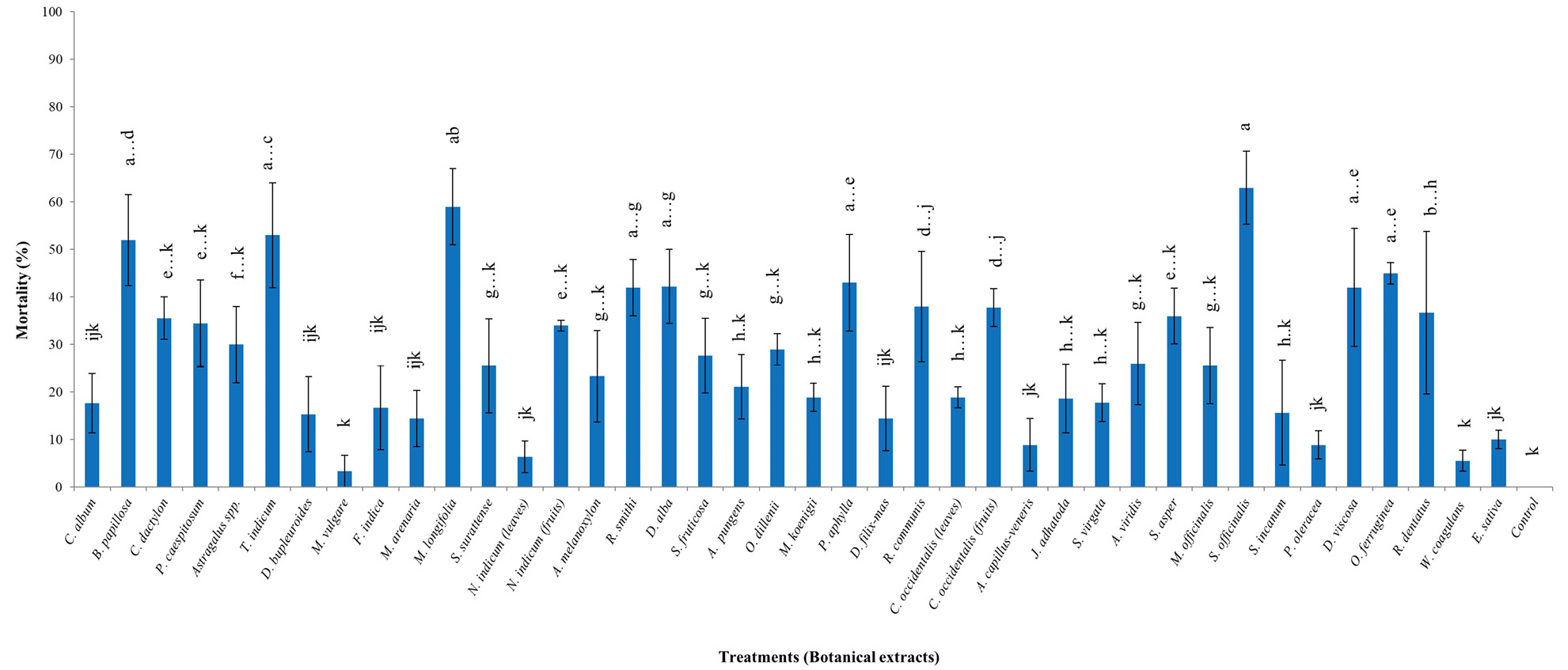
In case of subterranean termites, the most toxic plant extracts were P. aphylla, Rhamnus spp., B. papillosa and T. indicum causing 89, 62, 52 and 50% termite mortality, respectively. Minimum average termite mortality was exhibited by the 10% extracts of M. vulgare, W. coagulans, P. oleracea and A. capillus-veneris (Figure 5).
The triterpenes isolated from the stems of P. aphylla showed antibacterial activity but insecticidal activity of this plant species has not tested against any insect pest. Acetone and ethanol extracts of Rhamnus dispermus caused significant mortality of peach trunk aphid (Pterochloroides persicae) ; . The methanolic extract of B. papillosa showed acaricidal activity against Rhipicephalus microplus . Similarly, different organic solvent derived and aqueous extracts of T. indicum have been shown significant effectiveness against armyworms (Mythimna separate), dengue vector mosquitos (Aedes aegypti) and many stored grain pests ; ; .
Conclusions and Recommendations
Toxicity bioassays conducted with methanolic extracts of forty indigenous plant species of Soone Valley revealed that M. longifolia caused highest mortality in D. citri, D. viscosa caused 70% mortality in S. litura, M. arenaria caused 87% mortality in C. quinquefasciatus and P. aphylla caused 89% mortality in O. obesus. So, for the further studies’ chemical characterization of these most effective plant extracts will be analyzed for their chemical constituents.
Acknowledgements
This study was financially supported by a research project (No. UOS/ORIC/2016/11) funded by the Office of Research, Innovation and Commercialization (ORIC), University of Sargodha. Moreover, authors acknowledge the technical assistance provided by Dr. Amin Ullah Shah of Department of Botany, University of Sargodha, regarding the identification of plant samples collected during the study.
Conflict of interest
The authors have declared no conflict of interest.
Figures
Figure 1:.
Main locations selected for the collection of indigenous flora of Soone Valley and surrounding Salt Range of Pakistan (cf: Table 1).
Figure 2:.
Percent mortality (mean ± SE) of citrus psyllid (D. citri) adults bioassayed with 10% acetone solutions of different indigenous plant species collected from Soone Valley and surrounding Salt Range.
Figure 3:.
Percent mortality (mean ± SE) of armyworm (S. litura) larvae bioassayed with 10% acetone solutions of different indigenous plant species collected from Soone Valley and surrounding Salt Range.
Figure 4:.
Percent mortality (mean ± SE) of mosquito (C. quinquefasciatus) larvae bioassayed with 10% acetone solutions of different indigenous plant species collected from Soone Valley and surrounding Salt Range.
Figure 5:.
Percent mortality (mean ± SE) of subterranean termite (O. obesus) worker termites bioassayed with 10% acetone solutions of different indigenous plant species collected from Soone Valley and surrounding Salt Range.
References
Ahmad, F., Khan, M.A., Gul, F., Suhail, A., Ullah, M. and Salman, M., 2014. Evaluation of different plant extracts against Citrus psylla (Diaphorina citri Kuwayama). Pak. J. Weed Sci. Res., 20: 347-358.
Ahmad, I., Ahmad, M.S.A., Hussain, M., Hameed, M., Ashraf, M.Y. and Koukab, M.Y., 2009. Spatio-temporal effects on species classification of medicinal plants in Soone Valley of Pakistan. Int. J. Agric. Biol., 11: 64-68.
Ahmad, M. and Gull, S., 2017. Susceptibility of armyworm Spodoptera litura (Lepidoptera: Noctuidae) to novel insecticides in Pakistan. Can. Entomol., 149: 649-661. https://doi.org/10.4039/tce.2017.29[CrossRef]
Ahmed, S., Fiaz, S., Riaz, M.A. and Hussain, A., 2005. Comparative efficacy of Datura alba nees, Calotropis procera and imidacloprid on termites in sugarcane at Faisalabad. Pak. Entomol., 27: 11-14.
Ahmed, S., Khan, R.R. and Riaz, M.A., 2007. Some studies on the field performance of plant extracts against termites (Odontotermes guptai and Microtermes obesi) in sugarcane at Faisalabad. Int. J. Agric. Biol., 9: 398-400.
Ahmed, S., Mustafa, T., Riaz, M.A. and Hussain, A., 2006. Efficacy of insecticides against subterranean termites in sugarcane. Int. J. Agric. Biol., 8: 508-510.
Akhtar, N. and Mirza, B., 2018. Phytochemical analysis and comprehensive evaluation of antimicrobial and antioxidant properties of 61 medicinal plant species. Arab. J. Chem., 11: 1223-1235. https://doi.org/10.1016/j.arabjc.2015.01.013[CrossRef]
Amessis-Ouchemoukh, N., Abu-Reidah, I. M., Quirantes-Piné, R., Madani, K. and Segura-Carretero, A., 2014. Phytochemical profiling, in vitro evaluation of total phenolic contents and antioxidant properties of Marrubium vulgare (horehound) leaves of plants growing in Algeria. Ind. Crops. Prod., 61: 120-129. https://doi.org/10.1016/j.indcrop.2014.06.049[CrossRef]
Anusha, K., Balakrishnan, S., Sindhu, S., Arumugam, P. and Hariram, S.B., 2014. Studies on phytochemical screening and antioxidant potential of Trichodesma indicum. Int. J. Pharmacogn. Phytochem. Res., 6: 536-539.
Arivoli, S. and Tennyson, S., 2012. Antifeedant activity of plant extracts against Spodoptera litura (Fab.) (Lepidoptera: Noctuidae). Am. Eur. J. Agric. Environ. Sci., 12: 764-768.
Armenta, R., Martinez, A.M., Chapman, J.W., Magallanes, R., Goulson, D., Caballero, P. and Penagos, D.I., 2003. Impact of a nucleopolyhedrovirus bioinsecticide and selected synthetic insecticides on the abundance of insect natural enemies on maize in southern Mexico. J. Econ. Entomol., 96: 649-661. https://doi.org/10.1093/jee/96.3.649[CrossRef]
Ateyyat, M.A. and Darwish, M.A., 2009. Insecticidal activity of different extracts of Rhamnus dispermus (Rhamnaceae) against peach trunk aphid, Pterochloroides persicae (Homoptera: Lachnidae). Span. J. Agric. Res., 1: 160-164. https://doi.org/10.5424/sjar/2009071-415[CrossRef]
Auta, R., James, S.A., Auta, T. and Sofa, E.M., 2011. Nutritive value and phytochemical composition of processed Solanum incanum (Bitter garden egg). Sci. World. J., 6: 5-6.
Azari-Hamidian, S. and Harbach, R.E., 2009. Keys to the adult females and fourth-instar larvae of the mosquitoes of Iran (Diptera: Culicidae). Zootaxa, 2078: 1-33. https://doi.org/10.11646/zootaxa.2078.1.1[CrossRef]
Belkin, J.N., 1962. Mosquitoes of the South Pacific (Diptera, Culicidae) (Vol, 2). Cambridge University Press, New York. eISBN: 19632902382. pp. 412.
Bhuvaneshwari, L., Arthy, E., Anitha, C., Dhanabalan, K. and Meena, M., 2007. Phytochemical analysis and antibacterial activity of Nerium oleander. Anc. Sci. Life., 26: 24.
Bhuvaneshwari, L., Arthy, E., Anitha, C., Dhanabalan, K. and Meena, M., 2007. Phytochemical analysis and Antibacterial activity of Nerium oleander. Anc. sci. life., 26: 24.
Brauman, A., Majeed, M.Z., Buatois, B., Robert, A., Pablo, A.L. and Miambi, E., 2015. Nitrous oxide (N2O) emissions by termites: Does the feeding guild matter? PLoS One, 10: e0144340. https://doi.org/10.1371/journal.pone.0144340[CrossRef]
Buhroo, A.A., Nisa, G., Asrafuzzaman, S., Prasad, R., Rasheed, R. and Bhattacharyya, A., 2017. Biogenic silver nanoparticles from Trichodesma indicum aqueous leaf extract against Mythimna separata and evaluation of its larvicidal efficacy. J. Plant Prot. Res., 57: 194-200. https://doi.org/10.1515/jppr-2017-0026[CrossRef]
Burm, F., 2011. Chemical constituents and biological activities of Fagonia indica Burm F. Res. J. Med. Plant, 5: 531-546.
Canales, E., Coll, Y., Hernández, I., Portieles, R., García, M.R., López, Y. and Batista, L., 2016. ‘Candidatus Liberibacter asiaticus’, causal agent of citrus Huánglóngbìng, is reduced by treatment with Brassinosteroids. PLoS One, 11: e0146223. https://doi.org/10.1371/journal.pone.0146223[CrossRef]
Chanu, W.S. and Sarangthem, K., 2014. Phytochemical constituents of Justicia adhatoda linn. found in Manipur. Indian J. Plant Sci., 3: 2319-3824.
Chellappandian, M., Senthil-Nathan, S., Vasantha-Srinivasan, P., Karthi, S., Thanigaivel, A., Kalaivani, K., and Shyam-Sundar, N., 2019. Target and non-target botanical pesticides effect of Trichodesma indicum (Linn) R. Br. and their chemical derivatives against the dengue vector, Aedes aegypti L. Environ. Sci. Pollut. Res., 26: 16303-16315. https://doi.org/10.1007/s11356-019-04870-3[CrossRef]
Dahchar, Z., Bendali-Saoudi, F. and Soltani, N., 2016. Larvicidal activity of some plant extracts against two mosquito species Culex pipiens and Culiseta longiareolata. J. Entomol. Zool. Stud., 4: 346-350.
Dey, D., Routray, S., Baral, S. and Mahantheshwara, B., 2017. Effect of planting dates and botanical insecticides against major Lepidopterous pests of cabbage: A review. Agric. Rev., 38: 60-66. https://doi.org/10.18805/ag.v0i0.7011[CrossRef]
Díaz, M., Díaz, C.E., Álvarez, R.G., González, A., Castillo, L., González-Coloma, A., and Rossini, C., 2015. Differential anti-insect activity of natural products isolated from Dodonaea viscosa Jacq. (Sapindaceae). J. Plant Prot. Res., 55: 172-178. https://doi.org/10.1515/jppr-2015-0023[CrossRef]
Dimetry, N.Z., El-Gengaihi, S., Hafez, M. and Abbass, M.H., 2015. Pesticidal activity of certain plant extracts and their isolates against the cowpea beetle Callosobruchus maculatus (F.) (Coleoptera: Chrysomelidae: Bruchinae). HerbaPol, 61: 77-92. https://doi.org/10.1515/hepo-2015-0024[CrossRef]
Edwards, C.A., 2013. Environmental pollution by pesticides (Vol. 3). Springer Science and Business Media, New York. eISBN: 978-1-4615-8942-6. pp. 542.
El-Bokl, M.M., 2016. Toxicity and bioefficacy of selected plant extracts against the mosquito vector Culex pipiens L. (Diptera: Culicidae). J. Entomol. Zool. Stud., 4: 483-488.
EL-Kamali, H.H., 2009. Effect of certain medicinal plants extracts against storage pest, Tribolium castaneum Herbst. Am. Eur. J. Sustain. Agric., 3: 139-142.
El-Wakeil, N., Gaafar, N., Sallam, A. and Volkmar, C., 2013. Insecticides: Development of safer and more effective technologies agricultural and biological sciences. In: Tech Open Access Publisher: London. ISBN: 9789535109587. pp. 560.
Eman, A.A., 2011. Morphological, phytochemical and biological screening on three Egyptian species of Fagonia. Acad. Arena, 3: 18-27.
Erhirhie, E.O., 2018. Teratogenic effects of ethanol leaf extract of Dryopteris filix–mas (L.) Schott. Alg. J. Nat. Prod., 6: 573-583. http://dx.doi.org/10.5281/zenodo.1336888[CrossRef]
Gallo, M.B., Rocha, W.C., da Cunha, U.S., Diogo, F.A., da Silva, F.C., Vieira, P.C. and Batista‐Pereira, L.G., 2006. Bioactivity of extracts and isolated compounds from Vitex polygama (Verbenaceae) and Siphoneugena densiflora (Myrtaceae) against Spodoptera frugiperda (Lepidoptera: Noctuidae). Pest. Manag. Sci., 62: 1072-1081. https://doi.org/10.1002/ps.1278[CrossRef]
Ghoulami, S., Idrissi, A.I. and Fkih-Tetouani, S., 2001. Phytochemical study of Mentha longifolia of Morocco. Fitoterapia, 72: 596-598. https://doi.org/10.1016/S0367-326X(01)00279-9[CrossRef]
Gopalakrishnan, S., Rao, G.R., Humayun, P., Rao, V.R., Alekhya, G., Jacob, S. and Rupela, O., 2011. Efficacy of botanical extracts and entomopathogens on control of Helicoverpa armigera and Spodoptera litura. Afr. J. Biotechnol., 10: 16667-16673. https://doi.org/10.5897/AJB11.2475[CrossRef]
Gottwald, T.R., 2010. Current epidemiological understanding of citrus Huánglóngbìng. Annu. Rev. Phytopathol., 48: 119-139. https://doi.org/10.1146/annurev-phyto-073009-114418[CrossRef]
Govindappa, M. and Poojashri, M.N., 2011. Antimicrobial, antioxidant and in vitro anti-inflammatory activity of ethanol extract and active phytochemical screening of Wedelia trilobata (L.) Hitchc. J. Pharmacognosy. Phytother., 3: 43-51.
Grafton-Cardwell, E.E., Stelinski, L.L. and Stansly, P.A., 2013. Biology and management of Asian citrus psyllid, vector of the Huánglóngbìng pathogens. Annu. Rev. Entomol., 58: 413-432. https://doi.org/10.1146/annurev-ento-120811-153542[CrossRef]
Gupta, L. and Srivastava, M., 2008. Effect of Withania somnifera extracts on the mortality of Callosobruchus chinensis L. J. Biopestic., 1: 190-192.
Halbert, S. E. and Núñez, C.A., 2004. Distribution of the Asian citrus psyllid, Diaphorina citri Kuwayama (Rhynchota: Psyllidae) in the Caribbean basin. Fla. Entomol., 87: 401-403. https://doi.org/10.1653/0015-4040(2004)087[0401:DOTACP]2.0.CO;2[CrossRef]
Hall, D.G., Richardson, M.L., Ammar, E.D. and Halbert, S.E., 2013. Asian citrus psyllid, Diaphorina citri, vector of citrus Huánglóngbìng disease. Entomol. Exp. Appl., 146: 207-223. https://doi.org/10.1111/eea.12025[CrossRef]
Hamouda, A.B., Boussadia, O., Khaoula, B., Laarif, A. and Braham, M., 2015. Studies on insecticidal and deterrent effects of olive leaf extracts on Myzus persicae and Phthorimaea operculella. J. Entomol. Zool. Stud., 3: 294-297.
Handral, H.K., Jha, P.K. and Shruthi, S.D., 2010. Pharmacognostic and phytochemical studies on the leaves of Murraya koenigii L Spreng. Pharmacophore, 1: 231-238.
Hardin, M.R., Benrey, B., Coll, M., Lamp, W.O., Roderick, G.K. and Barbosa, P., 1995. Arthropod pest resurgence: an overview of potential mechanisms. Crop Prot., 14: 3-18. https://doi.org/10.1016/0261-2194(95)91106-P[CrossRef]
Hashmi, M.A., Shah, H.S., Khan, A., Farooq, U., Iqbal, J., Ahmad, V.U. and Perveen, S., 2015. Anticancer and alkaline phosphatase inhibitory effects of compounds isolated from the leaves of Olea ferruginea Royle. Rec. Nat. Prod., 9: 164-168.
Hernández-Saavedra, D., Pérez-Ramírez, I.F., Ramos-Gómez, M., Mendoza-Díaz, S., Loarca-Pina, G. and Reynoso-Camacho, R., 2016. Phytochemical characterization and effect of Calendula officinalis, Hypericum perforatum, and Salvia officinalis infusions on obesity-associated cardiovascular risk. Med. Chem. Res., 25: 163-172. https://doi.org/10.1007/s00044-015-1454-1[CrossRef]
Hiremath, G.I., Ahn, Y.J. and Kim, S.I., 1997. Insecticidal activity of Indian plant extracts against Nilaparvata lugens (Homoptera: Delphacidae). Appl. Entomol. Zool., 32: 159-166. https://doi.org/10.1303/aez.32.159[CrossRef]
Huang, J., Wong, K.H., Tay, S.V., How, A. and Tam, J.P., 2019. Cysteine-rich peptide fingerprinting as a general method for herbal analysis to differentiate Radix Astragali and Radix Hedysarum. Front. Plant Sci., 10: 973. https://doi.org/10.3389/fpls.2019.00973[CrossRef]
Husain, M.A. and Nath, D., 1927. The citrus psylla (Diaphorina citri, Kuw.) [Psyllidae: Homoptera]. Mem. Dept. Agric. India Entomol. Ser., 10: 1-27.
Hussain, J., Muhammad, Z., Ullah, R., Khan, F.U., Khan, I.U., Khan, N. and Jan, S., 2010. Evaluation of the chemical composition of Sonchus eruca and Sonchus asper. J. Am. Sci., 6: 231-235.
Ibraheim, Z.Z., Ahmed, A.S. and Gouda, Y.G., 2011. Phytochemical and biological studies of Adiantum capillus-veneris L. Saudi Pharm. J., 19: 65-74. https://doi.org/10.1016/j.jsps.2011.01.007[CrossRef]
Indhumathi, T. and Mohandass, S., 2014. Efficacy of ethanolic extract of Solanum incanum fruit extract for its antimicrobial activity. Int. J. Curr. Microbiol. Appl. Sci., 3: 939-949.
Iqbal, J., Ishtiaq, F., Alqarni, A.S. and Owayss, A.A., 2018. Evaluation of larvicidal efficacy of indigenous plant extracts against Culex quinquefasciatus (Say) under laboratory conditions. Turk. J. Agric. For., 42: 207-215. https://doi.org/10.3906/tar-1711-69[CrossRef]
Iqbal, J., Zaib, S., Farooq, U., Khan, A., Bibi, I. and Suleman, S., 2012. Antioxidant, antimicrobial, and free radical scavenging potential of aerial parts of Periploca aphylla and Ricinus communis. Int. Sch. Res. Notices,1: 1-6. https://doi.org/10.5402/2012/563267[CrossRef]
Iqbal, N. and Saeed, S., 2013. Toxicity of six new chemical insecticides against the termite, Microtermes mycophagus D. (Isoptera: Termitidae: Macrotermitinae). Pak. J. Zool., 45: 709-713.
Ishaq, M.S., Hussain, M.M., Siddique Afridi, M., Ali, G., Khattak, M. and Ahmad, S., 2014. In vitro phytochemical, antibacterial, and antifungal activities of leaf, stem, and root extracts of Adiantum capillus veneris. Sci. World J., 1-7. https://doi.org/10.1155/2014/269793[CrossRef]
Isman, M.B., 2006. Botanical insecticides, deterrents, and repellents in modern agriculture and an increasingly regulated world. Annu. Rev. Entomol., 51: 45-66. https://doi.org/10.1146/annurev.ento.51.110104.151146[CrossRef]
Jayapriya, G. and Shoba, F.G., 2015. Phytochemical analysis, anti-Microbial efficacy and determination of bioactive components from leaves of Justicia adhatoda (Linn.). Asian J. Plant Sci. Res., 5: 43-51.
Jonsson, N.N. and Iqbal, Z., 2012. Syringe test (modified larval immersion test): A new bioassay for testing acaricidal activity of plant extracts against Rhipicephalus microplus. Vet. Parasitol., 188: 362-367. https://doi.org/10.1016/j.vetpar.2012.03.021[CrossRef]
Jouquet, P., Traoré, S., Choosai, C., Hartmann, C. and Bignell, D., 2011. Influence of termites on ecosystem functioning. Ecosystem services provided by termites. Eur. J. Soil Biol., 47: 215-222. https://doi.org/10.1016/j.ejsobi.2011.05.005[CrossRef]
Kaleeswaran, B., Ilavenil, S. and Ravikumar, S., 2010. Screening of phytochemical properties and antibacterial activity of Cynodon dactylon L. Int. J. Curr. Res., 3: 83-88.
Kalpana, G., Sruthi, K., Banu, Z., Sumakanth, M., Ravindernath, A. and Prakash, D.J., 2018. Screening of analgesic activity of methanolic extract and its fractions of Alternanthera Pungens. IOSR J. Pharm. Biol. Sci., 13: 53-58.
Kazmi, Z., Safdar, N. and Yasmin, A., 2017. Assessment of Adiantum incisum, Alternanthera pungens and Trichodesma indicum as bio-insecticides against stored grain pests. Proc. Pak. Acad. Sci. B Life Environ. Sci., 54: 103-109.
Khan, A.A., Afzal, M., Raza, A.M., Khan, A.M., Iqbal, J., Tahir, H.M. and Aqeel, M.A., 2013. Toxicity of botanicals and selective insecticides to Asian citrus psylla, Diaphorina citri K. (Homoptera: Psyllidae) in laboratory conditions. Jokull J., 63: 52-72.
Khan, R.A., Khan, N.A., Khan, F.U., Ahmed, M., Shah, A.S., Khan, M.R. and Shah, M.S., 2012. Phytochemical, antioxidant and cytotoxic activities of Periploca aphyla and Mentha longifolia, selected medicinal plants of District Bannu, Pakistan. Afr. J. Pharm. Pharmacol., 6: 3130-3135. https://doi.org/10.5897/AJPP12.445[CrossRef]
Khoobchandani, M., Ojeswi, B.K., Ganesh, N., Srivastava, M.M., Gabbanini, S., Matera, R., Lori, R. and Valgimigli, L., 2010. Antimicrobial properties and analytical profile of traditional Eruca sativa seed oil: Comparison with various aerial and root plant extracts. Food Chem., 120: 217-224. https://doi.org/10.1016/j.foodchem.2009.10.011[CrossRef]
Kısa, A., Akyüz, M., Çoğun, H.Y., Kordali, Ş., Bozhüyük, A.U., Tezel, B. and Çakır, A., 2018. Effects of Olea europaea L. leaf metabolites on the tilapia (Oreochromis niloticus) and three stored pests, Sitophilus granarius, Tribolium confusum and Acanthoscelides obtectus. Rec. Nat. Prod., 12: 201. https://doi.org/10.25135/rnp.23.17.07.126[CrossRef]
Koliopoulos, G., Pitarokili, D., Kioulos, E., Michaelakis, A. and Tzakou, O., 2010. Chemical composition and larvicidal evaluation of Mentha, Salvia, and Melissa essential oils against the West Nile virus mosquito Culex pipiens. Parasitol Res., 107: 327-335. https://doi.org/10.1007/s00436-010-1865-3[CrossRef]
Kontogianni, V.G., Tomic, G., Nikolic, I., Nerantzaki, A.A., Sayyad, N., Stosic-Grujicic, S. and Tzakos, A.G., 2013. Phytochemical profile of Rosmarinus officinalis and Salvia officinalis extracts and correlation to their antioxidant and anti-proliferative activity. Food. Chem., 136: 120-129. https://doi.org/10.1016/j.foodchem.2012.07.091[CrossRef]
Koşar, M., Göger, F. and Can Başer, K.H., 2008. In vitro antioxidant properties and phenolic composition of Salvia virgata Jacq. from Turkey. J. Agric. Food. Chem., 56: 2369-2374. https://doi.org/10.1021/jf073516b[CrossRef]
Kuganathan, N., Saminathan, S. and Muttukrishna, S., 2008. Toxicity of Datura alba leaf extract to aphids and ants. Internet. J. Toxicol., 5: 1559-3916. https://doi.org/10.5580/3db[CrossRef]
Kumar, B.A., Lakshman, K., Jayaveea, K.N., Shekar, D.S., Khan, S., Thippeswamy, B.S. and Veerapur, V.P., 2012. Antidiabetic, antihyperlipidemic and antioxidant activities of methanolic extract of Amaranthus viridis Linn in alloxan induced diabetic rats. Exp. Toxicol. Pathol., 64: 75-79. https://doi.org/10.1016/j.etp.2010.06.009[CrossRef]
Kumar, B.A., Lakshman, K., Jayaveea, K.N., Shekar, D.S., Khan, S., Thippeswamy, B.S. and Veerapur, V.P., 2012. Antidiabetic, antihyperlipidemic and antioxidant activities of methanolic extract of Amaranthus viridis Linn in alloxan induced diabetic rats. Exp. Toxicol. Pathol., 64: 75-79. https://doi.org/10.1016/j.etp.2010.06.009[CrossRef]
Kumar, R., Kranthi, S., Nagrare, V.S., Monga, D., Kranthi, K.R., Rao, N. and Singh, A., 2019. Insecticidal activity of botanical oils and other neem-based derivatives against whitefly, Bemisia tabaci (Gennadius) (Homoptera: Aleyrodidae) on cotton. Int. J. Trop. Insect Sci., 39: 203-210. https://doi.org/10.1007/s42690-019-00027-4[CrossRef]
Kumari, P., Kumari, C. and Singh, P.S., 2017. Phytochemical screening of selected medicinal plants for secondary metabolites. Int. J. Life. Sci. Scient. Res., 3: 1151-1157.
Lee, S.E., Lee, B.H., Choi, W.S., Park, B.S., Kim, J.G. and Campbell, B.C., 2001. Fumigant toxicity of volatile natural products from Korean spices and medicinal plants towards the rice weevil, Sitophilus oryzae (L). Pest. Manag. Sci., 57: 548-553. https://doi.org/10.1002/ps.322[CrossRef]
Luis, A., Gil, N., Amaral, M.E. and Duarte, A.P., 2012. Antioxidant activities of extracts from Acacia melanoxylon, Acacia dealbata and Olea europaea and alkaloids estimation. Int. J. Pharm. Pharm., 4: 225-231.
Mahmood, R., Rehman, A. and Ahmad, M., 2014. Prospects of biological control of citrus insect pests in Pakistan. J. Agric. Res., 52: 229-244.
Malarvannan, S., Giridharan, R., Sekar, S., Prabavathy, V.R. and Nair, S., 2009. Ovicidal activity of crude extracts of few traditional plants against Helicoverpa armigera (Hubner) (Noctuidae: Lepidoptera). J. Biopestic., 2: 64-71.
Manzoor, F., Sayyed, A.H., Rafique, T. and Malik, S.A., 2012. Toxicity and repellency of different insecticides against Heterotermes indicola (Isoptera: Rhinotermitidae). J. Anim. Plant Sci., 22: 65-71.
Mathur, D., Agrawal, R.C. and Shrivastava, V., 2011. Phytochemical screening and determination of antioxidant potential of fruits extracts of Withania coagulans. Rec. Res. Sci. Technol., 3: 26-29.
Mohammed, A.K. and Nawar, M.H., 2020. Study of the effect of alcoholic extract of Dodonaea viscosal. leaves on the life performance of the greater wax worm Galleria mellonella L. (lepidoptera: pyralidae). Plant Arch., 20: 3449-3454.
Mojab, F., Kamalinejad, M., Ghaderi, N. and Vahidipour, H.R., 2010. Phytochemical screening of some species of Iranian plants. Iran. J. Pharm. Res., 2: 77-82.
Munir, U., Perveen, A. and Qamarunnisa, S., 2014. Comparative pharmacognostic evaluation of some species of the genera Suaeda and Salsola leaf (Chenopodiaceae). Pak. J. Pharm. Sci., 27: 1309-1315.
Muruhan, S., Selvaraj, S. and Viswanathan, P.K., 2013. In vitro antioxidant activities of Solanum surattense leaf extract. Asian Pac. J. Trop. Biomed., 3: 28-34. https://doi.org/10.1016/S2221-1691(13)60019-2[CrossRef]
Nathan, S.S., Kalaivani, K. and Chung, P.G., 2005. The effects of azadirachtin and nucleopolyhedrovirus on midgut enzymatic profile of Spodoptera litura Fab. (Lepidoptera: Noctuidae). Pestic. Biochem. Physiol., 83: 46-57. https://doi.org/10.1016/j.pestbp.2005.03.009[CrossRef]
Nisa, H., Kamili, A.N., Bandh, S.A., Lone, B.A. and Parray, J.A., 2013. Phytochemical screening, antimicrobial and antioxidant efficacy of different extracts of Rumex dentatus L. a locally used medicinal herb of Kashmir Himalaya. Asian. Pac. J. Trop. Dis., 3: 434-440. https://doi.org/10.1016/S2222-1808(13)60097-3[CrossRef]
Nisar, M.S., Ahmed, S., Ashfaq, M. and Sahi, S.T., 2012. Effect of leaf and seed extracts of Jatropha curcas linn. on mortality and tunneling of subterranean termites, Odontotermes obesus (Ramb.) (Termitidae: Isoptera). Pak. J. Life. Soc. Sci., 10: 2012.
Odeyemi, O.O., Masika, P. and Afolayan, A.J., 2008. Insecticidal activities of essential oil from the leaves of Mentha longifolia L. subsp. capensis against Sitophilus zeamais (Motschulsky) (Coleoptera: Curculionidae). Afr. Entomol., 16: 220-225. https://doi.org/10.4001/1021-3589-16.2.220[CrossRef]
Pandey, S. and Gupta, R.K., 2014. Screening of nutritional, phytochemical, antioxidant and antibacterial activity of Chenopodium album (Bathua). J. Pharmacogn. Phytochem., 3: 1-9.
Parveen, S., Khalid, A., Farooq, A. and Choudhary, M.I., 2001. Acetyl and butyrylcholinesterase-inhibiting triterpenoid alkaloids from Buxus papillosa. Phytochemistry, 58: 963-968. https://doi.org/10.1016/S0031-9422(01)00332-6[CrossRef]
Patil, D.S. and Chavan, N.S., 2010. Repellency and toxicity of some botanicals against Spodoptera litura Fabricius on Glycine max. Linn. (Soybean). Bioscan., 5: 653-654.
Patt, J.M. and Setamou, M., 2010. Responses of the Asian citrus psyllid to volatiles emitted by the flushing shoots of its rutaceous host plants. Environ. Entomol., 39: 618-624. https://doi.org/10.1603/EN09216[CrossRef]
Paulraj, G., 2001. Integration of intercrops and plant products on chosen groundnut pests management. Doctoral dissertation, Bharathidasan University, India.
Perianayagam, J.B., Sharma, S.K., Pillai, K.K., Pandurangan, A. and Kesavan, D., 2012. Evaluation of antimicrobial activity of ethanol extract and compounds isolated from Trichodesma indicum (Linn.) R. Br. root. J. Ethnopharmacol., 142: 283-286. https://doi.org/10.1016/j.jep.2012.04.020[CrossRef]
Ponsankar, A., Vasantha-Srinivasan, P., Senthil-Nathan, S., Thanigaivel, A., Edwin, E.S., Selin-Rani, S. and Paik, C.H., 2016. Target and non-target toxicity of botanical insecticide derived from Couroupita guianensis L. flower against generalist herbivore, Spodoptera litura Fab. and an earthworm, Eisenia foetida Savigny. Ecotoxicol. Environ. Saf., 133: 260-270. https://doi.org/10.1016/j.ecoenv.2016.06.043[CrossRef]
Pooja, S. and Vidyasagar, G.M., 2016. Phytochemical screening for secondary metabolites of Opuntia dillenii Haw. J. Med. Plants, 4: 39-43.
Rahuman, A.A. and Venkatesan, P., 2008. Larvicidal efficacy of five cucurbitaceous plant leaf extracts against mosquito species. Parasitol. Res., 103: 133. https://doi.org/10.1007/s00436-008-0940-5[CrossRef]
Rajagopal, D., 2002. 33 Economically important termite species in India. Sociobiol., 40: 33-46.
Rajurkar, N.S. and Gaikwad, K., 2012. Evaluation of phytochemicals, antioxidant activity and elemental content of Adiantum capillus veneris leaves. J. Chem. Pharm. Res., 4: 365-374.
Rashid, U., Khan, M.R., Jan, S., Bokhari, J. and Shah, N.A., 2013. Assessment of phytochemicals, antimicrobial and cytotoxic activities of extract and fractions from Fagonia olivieri (Zygophyllaceae). BMC Complement. Altern. Med., 13: 167. https://doi.org/10.1186/1472-6882-13-167[CrossRef]
Rasib, K.Z., Hidayat, W. and Aihetasham, A., 2017. Feeding preferences and control of a Pakistani termite Odontotermes obesus (Rambur) (Isoptera, Rhinotermitidae). Annu. Res. Rev. Biol., 18: 1-13. https://doi.org/10.9734/ARRB/2017/36225[CrossRef]
Razi, M.F., Keremane, M.L., Ramadugu, C., Roose, M., Khan, I.A. and Lee, R.F., 2014. Detection of citrus huanglongbing-associated ‘Candidatus Liberibacter asiaticus’ in citrus and Diaphorina citri in Pakistan, seasonal variability, and implications for disease management. Phytopathol., 104: 257-268. https://doi.org/10.1094/PHYTO-08-13-0224-R[CrossRef]
Riaz, T., Abbasi, M.A., Rehman, A., Shahzadi, U., Qureshi, M.Z. and Ajaib, M., 2012. Dicliptera bupleuroides: An imperative source for protection from oxidative stress. J. Chem. Soc. Pak., 34: 326-332.
Rouland-Lefevre, C., 2010. Termites as pests of agriculture. Springer Science and Business Media, New York. eISBN: 978-90-481-3976-7. pp. 517. https://doi.org/10.1007/978-90-481-3977-4_18[CrossRef]
Saboo, S.S., Tapadiya, G.G., Lamale, J.J. and Khadabadi, S.S., 2014. Phytochemical screening and antioxidant, antimitotic, and antiproliferative activities of Trichodesma indicum shoot. Anc. Sci. Life., 34: 113-118.
Saganuwan, A.S. and Gulumbe, M.L., 2006. Evaluation of in vitro antimicrobial activities and phytochemical constituents of Cassia occidentalis. Anim. Res. Int., 3: 566-569.
Sambo, H.S., Olatunde, A. and Kiyawa, A.S., 2016. Phytochemical, proximate and mineral analyses of Solanum incanum fruit. Int. J. Chem. Mater. Environ. Res., 3: 8-13.
Shah, A. and Rahim, S., 2017. Ethnomedicinal uses of plants for the treatment of malaria in Soon Valley, Khushab, Pakistan. J. Ethnopharmacol., 200: 84-106. https://doi.org/10.1016/j.jep.2017.02.005[CrossRef]
Shah, B.P. and Devkota, B., 2009. Obsolete pesticides: their environmental and human health hazards. J. Agric. Environ., 10: 60-66. https://doi.org/10.3126/aej.v10i0.2130[CrossRef]
Shanbhag, R.R. and Sundararaj, R., 2011. An identification guide to the wood destroying termites of south India. J. Indian Acad. Wood Sci., 8: 148-151. https://doi.org/10.1007/s13196-012-0028-9[CrossRef]
Shareef, M.F., Raza, A.B.M., Majeed, M.Z., Ahmed, K.S., Raza, W. and Faqir, H., 2016. Effect of botanicals on the infestation of citrus leaf miner, Phyllocnistis citrella stainton. J. Entomol. Zool. Stud., 4: 1335-1340.
Sharma, P., Mohan, L. and Srivastava, C.N., 2005. Larvicidal potential of Nerium indicum and Thuja oriertelis extracts against malaria and Japanese encephalitis vector. J. Environ. Biol., 26: 657–660.
Sharma, N. and Sood, S., 2012. Effect of Adiantum Capillus-Veneris Against Plutella Xylostella (Lepidoptera: Yponomeutoidae) and Aphis Craccivora (Homoptera: Aphididae). Bioinf. Quar. J. Life. Sci., 9: 105-110.
Sujatha, S., Joseph, B. and Sumi, P.S., 2010. Medicinal plants and its impact of ecology, nutritional effluents and incentive of digestive enzymes on Spodoptera litura (Fabricious). Asian J. Agric. Res., 4: 204-211. https://doi.org/10.3923/ajar.2010.204.211[CrossRef]
Suresh, K., 2008. Antimicrobial and Phytochemical Investigation of the Leaves of Carica papaya L., Cynodon dactylon (L.) Pers., Euphorbia hirta L., Melia azedarach L. and Psidium guajava L. Ethnobotan. Leafl., 12: 1184-91.
Teixeira, C.D., Saillard, C., Eveillard, S., Danet, J.L., Ayres, A.J. and Bové, J., 2005. Candidatus Liberibacter americanus’, associated with citrus Huánglóngbìng (greening disease) in São Paulo State, Brazil. Int. J. Syst. Evol. Microbiol., 55: 1857-1862. https://doi.org/10.1099/ijs.0.63677-0[CrossRef]
Teressa, H., Ersino, W. and Alemayo, T., 2019. Evaluation of larvacidal activity of Olea europaea extract against Anopheles mosquito in in vitro, Fogera Woreda, North Western Ethiopia. Agric. Res. Technol., 22: 1-5.
Tiwari, S., Mann, R.S., Rogers, M.E. and Stelinski, L.L., 2011. Insecticide resistance in field populations of Asian citrus psyllid in Florida. Pest. Manag. Sci., 67: 1258-1268. https://doi.org/10.1002/ps.2181[CrossRef]
Tomczyk, A. and Suszko, M., 2011. The role of phenols in the influence of herbal extracts from Salvia officinalis L. and Matricaria chamomilla L. on two-spotted spider mite Tetranychus urticae Koch. Biol. Lett., 48: 193-205. https://doi.org/10.2478/v10120-011-0020-x[CrossRef]
Tong, H., Su, Q., Zhou, X. and Bai, L., 2013. Field resistance of Spodoptera litura (Lepidoptera: Noctuidae) to organophosphates, pyrethroids, carbamates and four newer chemistry insecticides in Hunan, China. J. Pest. Sci., 86: 599-609. https://doi.org/10.1007/s10340-013-0505-y[CrossRef]
Uddin, G., Rauf, A. and Akhtar, S., 2012. Studies on chemical constituents, phytochemical profile and pharmacological action of Datura alba. Mid-East. J. Med. Plants Res., 1: 14-18.
Ullah, S., Bano, A., Girmay, S. and Tan, G., 2012. Anticancer, antioxidant and antimicrobial activities of Suaeda fruticosa related to its phytochemical screening. Int. J. Phytomed., 4: 284.
Venkatesh, S., Reddy, Y.R., Ramesh, M., Swamy, M.M., Mahadevan, N. and Suresh, B., 2008. Pharmacognostical studies on Dodonaea viscosa leaves. Afr. J. Pharm. Pharmacol., 2: 083-088. https://doi.org/10.5897/AJPP.9000220[CrossRef]
Verma, M., Pradhan, S., Sharma, S., Naik, S.N. and Prasad, R., 2011. Efficacy of karanjin and phorbol ester fraction against termites (Odontotermes obesus). Int. Biodeterior. Biodeg., 65: 877-882. https://doi.org/10.1016/j.ibiod.2011.05.007[CrossRef]
Verma, R.K. and Verma, S.K., 2006. Phytochemical and termiticidal study of Lantana camara var. aculeata leaves. Fitoterapia, 77: 466-468. https://doi.org/10.1016/j.fitote.2006.05.014[CrossRef]
Verma, S., Sharma, S. and Malik, A., 2016. Termiticidal and repellency efficacy of botanicals against Odontotermes obesus. Int. J. Res. Biosci., 5: 52-59.
Wafa, G., Amadou, D. and Larbi, K.M., 2014. Larvicidal activity, phytochemical composition, and antioxidant properties of different parts of five populations of Ricinus communis L. Ind. Crops. Prod., 56: 43-51. https://doi.org/10.1016/j.indcrop.2014.02.036[CrossRef]
World Health Organization, 2005. Guidelines for laboratory and field testing of mosquito larvicides. Geneva: WHO/CDS/WHOPES/GCDPP/ 2005 41.
Yadav, J.P., Arya, V., Yadav, S., Panghal, M., Kumar, S. and Dhankhar, S., 2010. Cassia occidentalis L.: A review on its ethnobotany, phytochemical and pharmacological profile. Fitoterapia, 81: 223-230. https://doi.org/10.1016/j.fitote.2009.09.008[CrossRef]
Yadav, R.N.S. and Agarwala, M., 2011. Phytochemical analysis of some medicinal plants. J. Phytol., 3: 10-14.
Yadav, R.N.S. and Agarwala, M., 2011. Phytochemical analysis of some medicinal plants. J. Phytol., 3: 10-14. https://doi.org/10.5897/AJB11.1948[CrossRef]
Zongo, C., Savadogo, A., Somda, K.M., Koudou, J. and Traore, A.S., 2011. In vitro evaluation of the antimicrobial and antioxidant properties of extracts from whole plant of Alternanthera pungens HB and K. and leaves of Combretum sericeum G. Don. Int. J. Phytomed., 3: 182-191.