
The 96 h LC50 and lethal concentration of Fe+Ni+Pb+Zn mixture for the fish, Cirrhina mrigala was determined in this research work. The fish were exposed to each of the 19 different concentrations (5-90 mg/L) of Fe+Zn+Pb+Ni mixture to determine 96 h LC50 and lethal concentration. During acute toxicity test, behavioral changes and catalase activity in liver, kidney, gills, brain and muscle of the fish were also studied. The mean 96 h LC50 and lethal value for C. mrigala was determined as 47.56±0.04 and 93.89±0.07 mgL-1, respectively. The selected concentration of Fe+Ni+Pb+Zn concentrations showed strong and direct relationship with, fin movement followed by mucous secretion, hyperactivity and swimming rate for C. mrigala with R2 value of 0.858, 0.853, 0.216 and 0.005, respectively. The Fe+Ni+Pb+Zn mixture exposure at 96 h LC50 concentration caused significant decrease of catalase activity in liver, kidney, gills, muscle and brain of C. mrigala as compared to control. This study suggests that the behavioral and biochemical parameters can be used as a valuable bio-marker to identify the toxic effects of pollutants in aquatic systems.
Research Article · Volume 33, Issue 1, 22 June 2018 · Open Access
Comparative Assessment of the Acute Toxicity, Behavior and Catalase Activity in Cirrhina mrigala Exposed to Fe+Ni+Pb+Zn Mixture
· · · · · · ·
Affiliations & Notes ⌄
- 1Department of Zoology, Government College Women University, Sialkot, Pakistan 2Department of Zoology, Wildlife and Fisheries, University of Agriculture, Faisalabad, Pakistan 3Department of Physics, University of Agriculture, Faisalabad, Pakistan , *Corresponding author: Huma Naz, humanaz98@yahoo.com
Article Info ⌄
- Journal:
- Punjab University Journal of Zoology
- Published:
- 22 June 2018
Abstract
Introduction
Aquatic pollution is a hot issue in different areas of Pakistan which is rising rapidly due to industrial revolution. Heavy metals are the major source of environmental contaminants, on entering aquatic ecosystem, cause serious problems to aquatic fauna due to their persistent nature . Aquatic ecosystems contained these metals in combined form due to diversified sources of their discharge . Metals in combined form showed much varied effects than in single form . The complex mixtures of toxicants in water bodies may cause injurious effects on the water living animals . Water pollution mainly affects the aquatic animals in various ways such as biochemical or physiological disturbance in response to toxicity caused by those pollutants .
Among aquatic animals, fishes are most susceptible to changes in their surrounding environment. Fish can be used as a best indicator for assessing the condition of particular water body ; . The toxicants present in aquatic medium may affect the water quality as well as swimming, feeding, delayed hatching and maturation period of fish ; Laovitthayanggoon, 2006; . At individual level response, behaviour is the one that is result of physiological and molecular modifications as well as ecological processes in organisms ; . Toxicants have ability to amass in various tissues of fish . Therefore, in ecological, toxicological and pathological studies, the most commonly used fish organs are liver, gills, kidney and muscles ; ; because all these organs are have higher ability to amass the toxicant due to their metabolic activity ; ; .
Oxidative stress due to metals toxicity cause the production of reactive oxygen species (ROS), such as H2O2, O-2 and OH- that cause oxidation of lipids, proteins, RNA and DNA, which disrupts the structure of cell finally cause the cell death . Fish tissues are gifted with this system to save them from oxidative stress induced by metals . Antioxidant defense system consists of enzymes like superoxide dismutase, glutathione peroxidase, catalase, glutathione-reductase and glutathione S-transferase ; . Catalase is a key component of defensive system scavenges hydrogen peroxide which has ability to interact with biological membranes and also inhibit some enzyme activities. Evaluation of oxidative stress biomarker such as catalase activity is considered to be a useful measure before any injurious effects appeared in fish ; . The heavy metals in the riverine systems are exist in the form of mixtures and their unsafe concentrations exert their negative impacts on the fish, necessitated this research work, that was performed to estimate the acute toxicity of waterborne Fe+Ni+Pb+Zn mixture and its effect on catalase activity in different organs of freshwater fish, Cirrhina mrigala.
Materials and Methods
96 h LC50 and lethal concentration
Cirrhina mrigala (Mori) was selected as an experimental fish. The experimental fish was purchased from Fish Seed Hatchery, Faisalabad. The acute toxicity test (96 h LC50 and lethal concentration) was conducted in the wet laboratory at Fisheries Research Farms, University of Agriculture, Faisalabad, Pakistan. The fish were placed in cemented tank for acclimatization to laboratory conditions for 15 days. Fish were fed with a commercial fish feed twice a day at 3% body weight during the period of acclimation but were starved for 24 h prior to the experiment and throughout the experiment. No mortality was observed during the acclimatization. During acclimatization, 12 h light and 12 h dark photoperiod was maintained. Chlorides Salts of iron (FeCl2.4H2O), zinc (ZnCl2), lead (PbCl2) and nickel (NiCl2.6H2O) were used to make stock solutions of metal. Metals mixture of required concentration was ready by dissolving a suitable volume of stock solution in deionized water. The experimental fish C. mrigala was exposed to each of the 19 different concentrations (5-90 mg/L) of heavy metals mixture (Fe+Zn+Pb+Ni) to determine 96 h LC50 and lethal concentration. The trial was conduct with three replications in 100 L glass aquaria each having ten C. mrigala (90-day old).
Physico-chemistry of test media
The temperature, hardness and pH of water were maintained as 30°C, 225 mgL-1, and 7.5, respectively. The other water quality parameters viz. carbon dioxide, ammonia, electric conductivity, dissolved oxygen, potassium, magnesium, sodium, and calcium, were also measured (APHA, 2005).
Behavioral study
During the acute test, the behavioral abnormalities such as hyperactivity, swimming rate, mucous secretion and fin movement of the healthy (control) and metals mixture exposed fish were regularly observed.
Biochemical study
After acute exposure of metals mixture, fish were sacrificed and organs viz. gills, liver, kidney, muscle and brain of fish was separated to evaluate the catalase activity.
Preparation of homogenate
The dissected organs (gills, liver, kidney, muscle and brain) were, separately, homogenized in cold phosphate buffer in ration of 1:4 (w/v) by using a blender. Organ homogenates were centrifuged for 15 min at 10,000 rpm and 4°C. The clear supernatants were used for catalase assay.
Catalase assay
Catalase activity was noted according to the method of Chance and Mehaly (1977). Buffer substrate solution of H2O2 (10 mM) was prepared in 60 mM phosphate buffer (pH 7.0). Reaction mixture contained 2ml of buffered substrate solution and 0.05 ml of enzyme extract. The absorbance was recorded at 240nm.
Statistical analyses
The whole experiment was performed with three replicates. Probit Analysis was applied to calculate the LC50 and lethal values of metals mixture for fish C. mrigala at 95% confidence interval. Correlation analysis was performed to find out relationship among physico-chemical parameters with Fe+Zn+Pb+Ni mixture concentrations. Statistical differences among different variables were found by performing ANOVA. A regression analysis was applied to check the relationship between various mixture concentration and behavioral parameters under study .
Results and Discussion
96 h LC50 and lethal concentration
The obtained data on fish mortality with mean 96 h LC50 and lethal values, concentration of metals in mixture, exposure duration, 95% lower and upper confidence interval limits with their calculated chi-square values are given in Table I. The LC50 and lethal value (96 h) for C. mrigala was computed as 47.56±0.04 and 93.89±0.07 mgL-1, respectively. The Deviance Chi-Square and p-value for C. mrigala was determined as 3.72 and 0.994, respectively. The mortality of the fish, C. mrigala, increased with increasing concentrations of Fe+Ni+Pb+Zn mixture and duration of exposure. Figure 1 shows the relationship between the concentrations of Fe+Ni+Pb+Zn mixture and mortality of C. mrigala. Mean LC50 and lethal concentrations of Pb+Ni for Ctenopharyngodon idella (56.42±2.51 and 120.98±7.18 mgL-1) and Hypophthalmichthys molitrix (55.85±2.84 and 128.44±9.25 mgL-1) was reported by Naz and Javed (2013). Abdullah et al. (2011) calculated the 96 h LC50 value of Pb, Zn, Ni and Mn for C. mrigala (90-day old) as 32.68, 40.58, 23.96 and 71.24 mgL-1, respectively. Naz and Javed (2012) find the 96 h LC50 and lethal concentrations of Fe+Zn+Pb+Ni+Mn mixture for Cirrhina mrigala as 43.35±0.78 and 75.22±0.45 mgL-1, respectively. The 96 h LC50 and lethal value of Fe+Ni mixture for the fish C. mrigala was estimated as 64.44±0.70 and 100.35±0.46 mgL-1, respectively .
Behavioral study
Behavioral abnormalities in the any examined individual are the most responsive signs of toxicant exposure. During acute toxicity test period (4 day) fish behavior was observed. Fish, C. mrigala exposed to various concentration of Fe+Ni+Pb+Zn mixture for 96 h showed a marked change in behavior. The alter behavior of fish such as hyper-activity, swimming rate, mucous secretion and fin movement were increased with increasing the concentration of metals mixture and finally fish became settled at the bottom and all activities were stopped before death. Figure 2 represents the relationship between fish behavior and Fe+Ni+Pb+Zn concentrations used during this experiment. The exposed Fe+Ni+Pb+Zn concentrations showed strong and direct relationship with, fin movement followed by mucous secretion, hyperactivity and swimming rate for C. mrigala with R2 value of 0.858; 0.853; 0.216 and 0.005, respectively. In control fish, no behavioral changes were recorded. The response and survival of aquatic organism mainly depends on the biological conditions of organisms and physico-chemical parameter of water. In addition, it also depends upon toxicity, type and nature of toxicants . According to Remyla et al. (2008) modifications in behavioral patterns of organisms is the major responsive sign of anxiety caused by contact to chemicals.
Batool et al. (2014) checked the acute impacts of cadmium and copper on behavioral responses of Channa marulius and Wallago attu. During the acute exposure of both metals, the fish showed increased surface behavior, hyperactivity and erratic swimming. These results are also similar to the findings of Biuki et al. (2010). Exposure of high concentration of cadmium chloride to fish (Chanos chanos) showed behavioural changes such as swimming disorder and fin movements. According to Susan and Sobha (2010) exposure of fenvalerate change the behavior (such as swimming at the water surface, increased mucus production and hyperexcitation) of C. catla, L. rohita and C. mrigala. Hesni et al. (2010) reported that the milkfish (Chanos chanos) exposed to lead nitrate showed behaviour changes such as downward and vertical swimming patterns, increased mucus secretion, hyperactivity and loss of balance. The abnormal behavior like hyperactivity was dose and duration dependent .
Table I: 96 h acute toxicity of heavy metals mixtures (mgL-1) for Cirrhina mrigala.
| Fish species | Metals mixture | Mixture ratio | LC50 | 95% CI (LCL-UCL) | Lethal conc. | 95% CI (LCL-UCL) | Pearson goodness of fit tests | ||
| Chi-Square | DF | p-value | |||||||
| Cirrhina mrigala | Fe+Ni+ Pb+Zn | 1:1:1:1 | 47.56 | 38.93-53.62 | 93.89 | 84.07-111.44 | 3.72 | 13 | 0.994 |
CI, confidence interval (mgL-1); LCL, lower confidence limit (mgL-1); UCL, upper confidence limit (mgL-1); Lethal Conc., lethal concentrations (mgL-1); DF, degree of freedom.
Catalase activity
Figure 3 shows the exposure of Fe+Ni+Pb+Zn mixture at 96 h LC50 concentration caused significant depletion in catalase level in all observed organs of C. mrigala as compared to control. Results were statistically highly significant (p>0.001). According to Batool et al. (2014) acute exposure of metals (chromium and cadmium) to fish caused reduction in catalase activity. Mohanty and Samanta (2016) reported the significantly reduced catalase activity in Notopterus notopterus muscle tissues exposed to Fe, Cu, Ni, Cd, Pb and Zn from Mahanadi River. Present work was supported by Atli and Canli (2010), who reported the reduced catalase level in kidney and liver of tilapia under the acute exposure of metals viz. Cu, Cd, Zn, Cr and Fe. Heavy metals (Cr, Ni, Pb and Cd) altered the antioxidant enzymes activities in all tissues (gills, brain, kidney and liver) of Heteropneustes fossilis and Channa striatus inhabiting Kali River of northern India (Fatima and Usmani, 2015). According to Atli and Canli (2010) fluctuation in antioxidant enzymes responses against metal exposures, depend upon nature of toxicants, organ and type of exposure. CAT is primarily a peroxisomal enzyme that converts the hydrogen peroxide into water and oxygen (Fatima and Usmani, 2015). According to the Atli and Canli (2010) the inhibition in catalase may be due to the binding of metal ions to–SH groups on catalase which results in increased O-2 and H2O2 radicals. According to Orun et al. (2008) catalase level dropped off significantly in liver of Oncorhynchus mykiss when exposed to metals (Cd+2, Cr+3 and Se).
Conclusion
This study demonstrated that acute toxicity of heavy metals mixture not only affects the behavior of fish but also had negative impact on antioxidant enzyme (catalase) of fish. It was also concluded that catalase enzyme can be taken as a sensitive biomarker in eco-toxicology and fish can be used as a good indicator of water contamination.
Conflicts of interest
The authors declare no conflicts of interest.
Figures
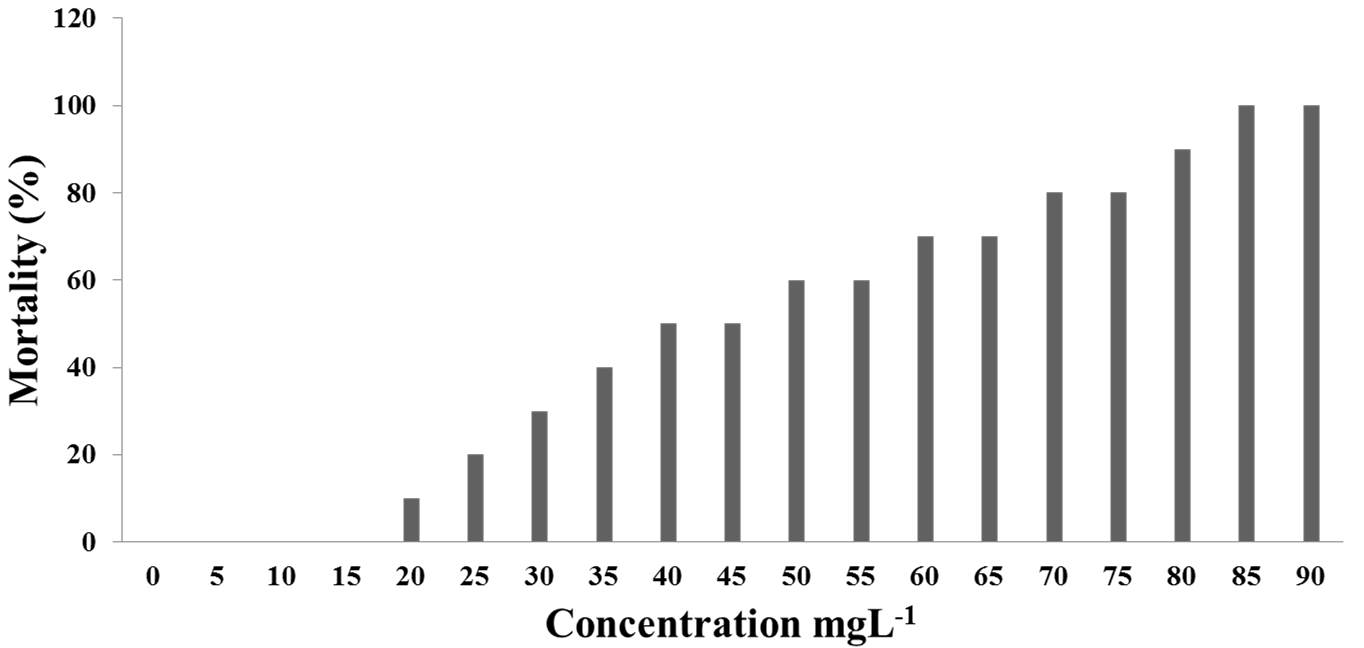
Relationship between C. mrigala mortality (%) and exposed concentrations of Fe+Ni+Pb+Zn mixture (mgL-1) during 96 h acute toxicity test.
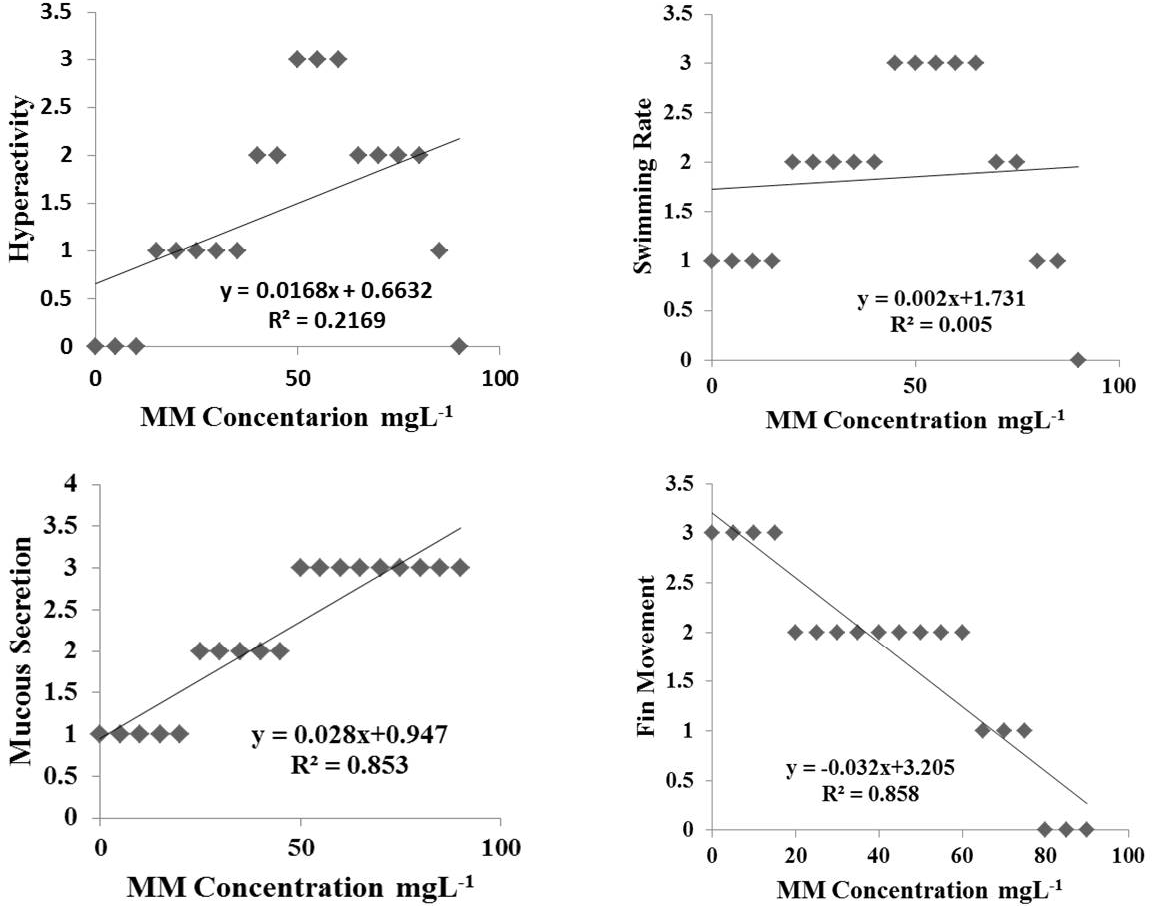
Behavioral response of C. mrigala exposed to various concentrations of Fe+Ni+Pb+Zn mixture.
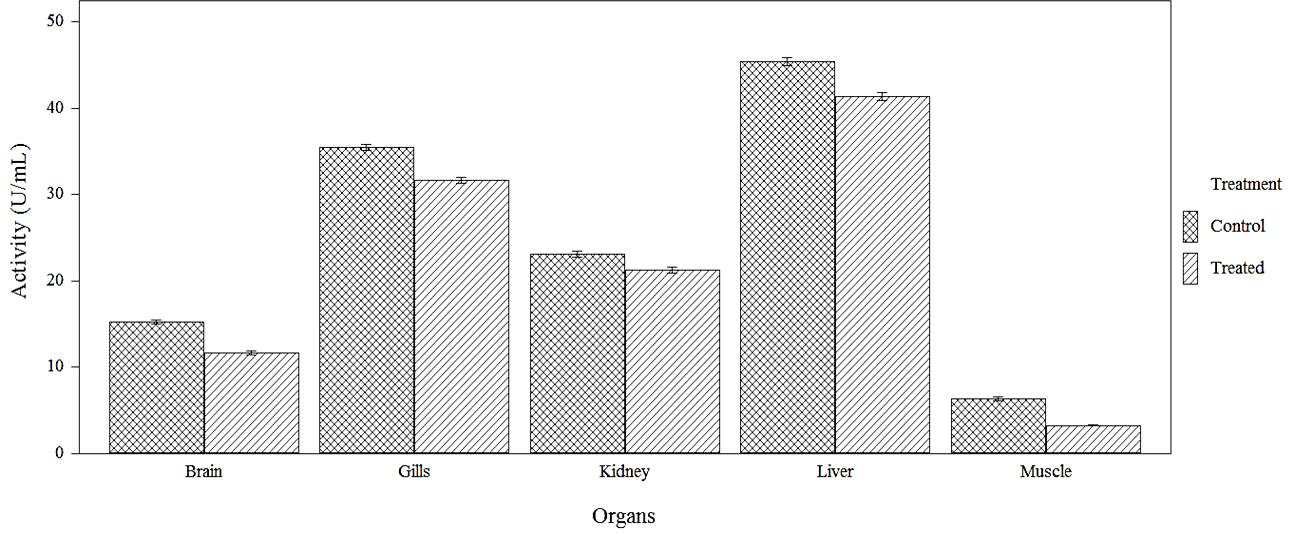
Catalase activity in different organs of C. mrigala exposed to 96 h LC50 concentration of Fe+Ni+Pb+Zn mixture.
References
- APHA, 1998. Standard method for examination of water and waste water, 20th ed. American Public Health Association, New York, pp. 1193.
- Abdullah, S., Javed, M., Yaqub, S. and Ahmad, N., 2011. Metal bioaccumulation patterns in major carps during acute toxicity tests. Int. J. agric. Biol., 13: 756-760.
- Andres, S., Ribeyre, F.J., Tourencq, N. and Boudou, A., 2000. Interspecific comparison of cadmium and zinc contamination in the organs of four fish species along a polymetallic pollution gradient (Lot River, France). Sci. Total Environ., 248: 11-25. https://doi.org/10.1016/S0048-9697(99)00477-5[CrossRef]
- Atif, F., Parvez, S., Pandey, S., Ali, M., Kaur, M., Rehman, H., Khan, H.A. and Raisuddin, S., 2005. Modulatory effect of cadmium exposure on deltamethrin induced oxidative stress in Channa punctatus Bloch. Arch. Environ. Contam. Toxicol., 49: 371-377. https://doi.org/10.1007/s00244-003-9231-4[CrossRef]
- Atli, G. and Canli, M., 2008. Responses of metallothionein and reduced glutathione in freshwater fish Oreochromis niloticus following metal exposures. Environ. Toxicol. Pharm., 25: 33-38. https://doi.org/10.1016/j.etap.2007.08.007[CrossRef]
- Atli, G. and Canli, M., 2010. Response of antioxidant system of freshwater fish Oreochromis niloticus to acute and chronic metal (Cd ,Cu, Cr, Zn, Fe) exposures. Ecotoxicol. Environ. Safe., 73: 1884-1889. https://doi.org/10.1016/j.ecoenv.2010.09.005[CrossRef]
- Batool, M., Abdullah, S. and Abbas, K., 2014. Antioxidant enzymes activity during acute toxicity of Chromium and cadmium to Channa marulius and Wallago attu. Pak. J. agric. Sci., 51: 1017-1023.
- Begam, G., 2004. Carbofuran insecticide induced biochemical alterations in liver and muscle tissues of the Clarias bartrachus (Linn) and recovery response. Aquat. Toxicol., 66: 83-92. https://doi.org/10.1016/j.aquatox.2003.08.002[CrossRef]
- Biuki, N.A., Savari, A., Mortazavi, M.S. and Zolgharnein, H., 2010. Acute toxicity of cadmium chloride (CdCl2.H2O) on Chanos chanos and their behavior responses. World J. Fish. Mar. Sci., 2: 481-486.
- Cao, L., Huang, W., Liu, J., Yin, X. and Dou, S., 2010. Accumulation and oxidative stress biomarkers in Japanese flounder larvae and juveniles under chronic camium exposure. Comp. Biochem. Physiol. C: Toxicol. Pharmacol., 151: 386-892.
- Chance, M. and Mehaly, A.C., 1977. Assay of catalase and peroxidase. Methods Enzymol., 2: 764-817. https://doi.org/10.1016/S0076-6879(55)02300-8[CrossRef]
- Farombi, O., Adelowo, O.A. and Ajimoko, Y.R., 2007. Biomarkers of oxidative stress and heavy metal levels as indicators of environmental pollution in African cat fish (Clarias gariepinus) from Nigeria Ogun River. Int. J. environ. Res. Publ. Hlth., 4: 158-165. https://doi.org/10.3390/ijerph2007040011[CrossRef]
- Fatima, M. and Usmani, N., 2013. Histopathology and bioaccumulation of heavy metals (Cr, Ni and Pb) in fish (Channa striatus and Heteropneustes fossilis) tissue: A study for toxicity and ecological impacts. Pak. J. biol. Sci., 16: 412-420. https://doi.org/10.3923/pjbs.2013.412.420[CrossRef]
- Gul, S., Belge-Kurutas, E., Yildiz, E., Sahan, A. and Doran, F., 2004. Pollution correlated modifications of liver antioxidant systems and histopathology of fish (Cyprinidae) living in Seyhan Dam Lake, Turkey. Environ. Int., 30: 605-609. https://doi.org/10.1016/S0160-4120(03)00059-X[CrossRef]
- Gupta, A., Rai, D.K., Pandey, R.S. and Sharma, B., 2009. Analysis of some heavy metals in the riverine water, sediments and fish from river Ganges at Allahabad. Environ. Monitor. Assess., 157: 449-458. https://doi.org/10.1007/s10661-008-0547-4[CrossRef]
- Hamilton, M.A., Rusoo, R.C. and Thurstan, R.V., 1977. Trimmed spearman-karber method for estimation for medical lethal concentration in toxocity bioassay. Eviron. Sci. Toxicol., 11: 714-719. https://doi.org/10.1021/es60130a004[CrossRef]
- Heier, L.S., Lien, I.B., Stromseng, A.E., Ljones, M., Rosseland, B.O., Tollefsen, K.E. and Salbu, B., 2009. Speciation of lead, copper, zinc and antimony in water draining a shooting range-Time dependent metal accumulation and biomarker responses in brown trout (Salmo trutta L.). Sci. Total Environ., 407: 4047-4055. https://doi.org/10.1016/j.scitotenv.2009.03.002[CrossRef]
- Hesni, M.A., Savari, A., Dadolahi, A., Mortazavi, M.S. and Rezaee, M., 2010. The study of acute toxicity of lead nitrate Pb (NO3)2 metal salt and behavioural changes of milkfish (Chanos chanos). Conference Hand Book, Farming the Waters for People and Food, Thailand.
- Karadedeh, E.U., 2000. Concentrations of some heavy metals in water, sediment and fish species from the Ataturk Dam Lake (Euphrates), Turkey. Chemosphere, 41: 1371-1376. https://doi.org/10.1016/S0045-6535(99)00563-9[CrossRef]
- Kumar, P., Prasad, Y. and Patra, A.K., 2007. Levels of cadmium and lead in tissues of freshwater fish (Clarias batrachus L.) and chicken in Western UP (India). Bull. Environ. Contam. Toxicol., 79: 396-400. https://doi.org/10.1007/s00128-007-9263-y[CrossRef]
- Lange, A., Ausseil, O. and Senger, H., 2002. Alterations of tissue glutathione level and metallothionein mRNA in rainbow trout during single and combined exposure to cadmium and zinc. Comp. Biochem. Physiol., 131: 231-243. https://doi.org/10.1016/S1532-0456(02)00010-8[CrossRef]
- Laovitthyanggoon, S., 2006. Effects of cadmium level on chromosomal structure of snakehead-fish (Ophiocephalus stiatus). Faculty of Graduate Studies, Mahidol University, Thailand.
- Lopez-Lopez, E., Sedeno-Diaz, J.E., Soto, C. and Favari, L., 2011. Responses of antioxidant enzymes, lipid peroxidation, and Na?/K?-ATPase in liver of the fish Goodea atripinnis exposed to Lake Yuriria water. Fish Physiol. Biochem., 37: 511-522. https://doi.org/10.1007/s10695-010-9453-0[CrossRef]
- Marcovecchio, J.E., 2004. The use of Micropogonias furnieri and Mugil liza as bioindicators of heavy metals pollution in La Plata river estuary, Argentina. Sci. Total Environ, 323: 219-226. https://doi.org/10.1016/j.scitotenv.2003.09.029[CrossRef]
- Mohanty, D. and Samanta, L., 2016. Multivariate analysis of potential biomarkers of oxidative stress in Notopterus notopterus tissues from Mahanadi River as a function of concentration of heavy metals. Chemosphere, 155: 28-38. https://doi.org/10.1016/j.chemosphere.2016.04.035[CrossRef]
- Mokhtar, M.B., Ahmad, Z.A., Vikneswaran, M. and Sarva, M.P., 2009. Assessment level of heavy metals in Paenaeus mondon and Oreochromis mossambicus spp. in selected aquaculture ponds of high densities development area. Europ. J. Scient. Res., 30: 348-360.
- Naz, S. and Javed, M., 2012. Evaluation of acute toxicity of metals mixture and bioaccumualtion in freshwater fish. Biosci. Methods, 4: 11-18.
- Naz, S. and Javed, M., 2013. Studies on the toxic effects of lead and nickel mixture on two freshwater fishes, Ctenopharyngodon idella and Hypophthalmichthys molitrix. J. Anim. Pl. Sci., 23: 798-804.
- Orun, I., Talas, Z.S., Ozdemir, I., Alkan, A. and Erdogan, K., 2008. Antioxidative role of selenium on some tissues of (Cd2+, Cr3+) induced rainbow trout. Ecotoxicol. environ. Safe., 71: 71-75. https://doi.org/10.1016/j.ecoenv.2007.07.008[CrossRef]
- Pinto, E., Sigaud-Kutner, T.C.S., Leitao, M.A.S., Okamoto, O.K., Morse, D., Colepicolo, P., 2003. Heavy metal-induced oxidative stress in algae. J. Phycol., 39: 1008-1018. https://doi.org/10.1111/j.0022-3646.2003.02-193.x[CrossRef]
- Rao, L.M. and Padmaja, G., 2000. Bioaccumulation of heavy metals in M. cyprinoids from the harbor waters of Visakhapatnam. Bull. Pure appl. Sci., 19: 77-85.
- Remyla, S.R., Mathan, R, Kenneth, S.S. and Karunthchalam, S.K., 2008. Influence of zinc on cadmium induced responses in a freshwater Teleost fish Catla catla. Fish Physiol. Biochem., 34: 169-174. https://doi.org/10.1007/s10695-007-9157-2[CrossRef]
- Saima, N. and Javed, M., 2012. Acute toxicity of metals mixtures for fish, Catla catla, Labeo rohita and Cirrhina mrigala. Pak. J. agric. Sci., 49: 357-361.
- Sanchez, W., Palluel, O., Meunier, L., Coquery, M., Porcher, J.M. and Ait-Aissa, S., 2005. Copper-induced oxidative stress in three-spined stickleback: Relationship with hepatic metal levels. Environ. Toxicol. Pharmacol., 19: 177-183. https://doi.org/10.1016/j.etap.2004.07.003[CrossRef]
- Sauer, G.R. and Watabe, N., 1989. Ultrastructural and histochemical aspects of zinc accumulation by fish scales. Tissue Cell, 21: 935-943. https://doi.org/10.1016/0040-8166(89)90044-X[CrossRef]
- Scott, G.R. and Sloman, K.A., 2004. The effects of environmental pollutants on complex fish behavior: Integrative behavioral and physiological indicators of toxicity. Aquat. Toxicol., 68: 369-392. https://doi.org/10.1016/j.aquatox.2004.03.016[CrossRef]
- Steel, R.G.D., Torrie, J.H. and Dinkkey, D.A., 1997. Principles and procedures of statistics: a biometrical approach, 2nd ed. McGraw Hill Book Co., Singapore.
- Susan, T.A. and Sobha, K., 2010. A study on acute toxicity, oxygen consumption and behavioural changes in the three major Carps, Labeo rohita (Ham), Catla catla (Ham) and Cirrhinus mrigala (Ham) exposed to fenvalerate. Biol. Res. Bull., 1: 24-28.
- Tiwari, M., Nagpure, N.S., Saksena, D.N., Kumar, R., Singh, S.P., Kushwaha, B. and Lakra, W.S., 2011. Evaluation of acute toxicity levels and ethological responses under heavy metal cadmium exposure in freshwater teleost, Channa punctata (Bloch). Int. J. aquat. Sci., 2: 36-47.
- Tripathi, B.N., Mehta, S.K., Amar, A. and Gaur, J.P., 2006. Oxidative stress in Scenedesmus sp. during short-and long-term exposure to Cu2+ and Zn2+. Chemosphere, 62: 538-544. https://doi.org/10.1016/j.chemosphere.2005.06.031[CrossRef]
- Velcheva, I., 2002. Content and transfer of cadmium (Cd) in the organism of freshwater fishes. Acta Zool. Bulgarica, 54: 109-114.
- Vosyliene, M.Z., Kazlauskiene, N. and Svecevicius, G., 2003. Effect of a heavy metal model mixture on biological parameters of rainbow trout, Oncorhynchus mykiss. Environ. Sci. Pollut. Res., 10: 103-107. https://doi.org/10.1065/espr2002.02.109[CrossRef]
- Weis, J.S., 2005. Does pollution affect fisheries? Book critique. Environ. Biol. Fish., 72: 357-359. https://doi.org/10.1007/s10641-004-1618-1[CrossRef]
Services
Article usage statistics
Loading…