Research Article · Volume 41, Issue 2, 23 August 2026 · Open Access
Acute Toxicity, Catalase Activity and Histological Examination of Pb+Cd Mixture Stressed Tilapia
· · · · · · ·
Affiliations & Notes ⌄
1Department of Zoology, Cholistan University of Veterinary and Animal Sciences, Bahawalpur, Pakistan 2Department of Life Sciences, Khwaja Fareed University of Engineering and Information Technology, Rahim Yar Khan, Pakistan 3Department of Zoology, Wildlife and Fisheries, University of Agriculture, Faisalabad, Pakistan 4Department of Anatomy and Histology, Cholistan University of Veterinary and Animal Sciences, Bahawalpur, Pakistan Corresponding Author: Huma Naz dr.humanaz98@gmail.com, tanvirahmed
This study concluded that heavy metals are highly toxic to aquatic animals like fish.
Because these pollutants can alter the antioxidant enzymes activity and also cause histological changes in fish.
Heavy have a number of negative impacts on fish in many ways, which is very detrimental to the production of sustainable aquaculture.
Further research is needed to develop the some new suitable, easy and most convenient approaches to minimize the metals pollution in aquatic environment.
Selected from the article's own text.
Abstract
The study was conducted to examine the acute toxicity, catalase activity and histological of cadmium (Cd)+ lead(Pb) mixture stressed tilapia. The fish, tilapia was exposed to different concentration of Cd+Pb to find the acute toxicity for 96-hr. The 96-hrs LC50 and lethal value with a 95% confidence interval were calculated as 180.35 and 347.81 mg/L, respectively through Probit analysis approach. After acute toxicity test, effects of Cd+Pb mixture on catalase (CAT) activity and histology were also observed. The findings of this investigation revealed that Cd+Pb -stressed O. niloticus had reduced CAT activity in all organs viz. liver, gills, intestine and brain as compared to control. The results of histology showed the changes in brain and intestine of Cd+Pb-stressed tilapia. In brain of stressed fish severe damage including vacuoles destruction, necrosis, edema, granular layer degeneration was noted. In intestine, widening of intestinal lumen, curling of intestinal villi, mucous cells degeneration, and necrosis in villi was reported.
Novelty Statement | This Study expanded the knowledge on the effect of metal (Pb) toxicity by establishing a connection between exposure and tissue level responses, thus contributing to an in-depth evaluation of the toxic impact of Pb on fish. Findings of this research highlight the role of fish as bioindicators of lead pollution in water ecosystems.
Introduction
Heavy metals (HMs) are naturally occurring environmental components and are thought to be potential aquatic contaminants ; . While some heavy metals serve as catalytic and structural elements of enzymes and proteins, they are necessary for organic frameworks in the human body. The heavy metals such as Zn, Cu, and Ni are the few metals which may be harmful when safe amount is surpassed. Even in small amounts, other metals including Cd, Pb, and Cr are dangerous pollutants ; . HMs comprise the main pollutants in environment because of their carcinogenicity, perseverance, teratogenicity, mutagenicity and capacity to bioaccumulate in food chains ; ; ; .
HMs is entered into fish bodies by direct assimilation from water through their skins and gills, or by ingestion of sullied food . Subsequently, exposure to Microplastics (MPs) can promote to various poisonous impacts, e.g., endocrine disruption, intestinal loss, immune response, oxidative pressure and ultimately reduced growth and survival ; ; Montero de Espinosa et al., 2017). Similarly, lot of synthetic antibiotics are utilized in fish farms, animal husbandry, and medical therapy . The discharge of these compounds into surface water effect the biological creature in the ecosystem.
Lead, cadmium, and mercury are examples of HMs that can be extremely hazardous and have no biological or useful functions in living things . Even at trace polluted water is the significant reason for bioaccumulation of metals in the different crucial organs of the freshwater fish . The World Health Organisation (WHO) has released guidelines that state the ideal amounts of Pb and Cd are 0.01 and 0.003 mg/l, respectively .
Aquatic species are extremely sensitive to heavy metal (cadmium), which is also a non-essential nutrient. Cadmium accumulates in fish bodies and causes clinical abnormalities such as gill damage, skeletal deformities and changes in various internal organs especially intestine, liver and kidney . Fish inhale Cd from the water via its gills or digestive system and dispersed in various tissue and organ, each of which has a varied Cd level ; .
Human health is negatively impacted by lead’s toxicity. The health risks associated with ingesting lead are significant ; WHO, 2011). The effects of exposure depend on the dose, exposure time, the mode of exposure, personal habits, traits, and presence of other chemicals . Heavy metals such as cadmium+lead (Cd + Pb) are common in the environment and quite dangerous ; .
Fish, such as the Nile tilapia, Oreochromis niloticus, play a vital role in the aquatic food web and are frequently utilised as biomarkers in toxicological investigations. When they consume those organisms which contaminated with heavy metals, negative health impacts occur ; ; ; . Single or several tissues can be analyzed to track the impact of toxicants in specific parts of certain organs, as well as tissue degradation in other places, in order to identify the observed alternations. Histopathology is employed for causation, diagnosis and illness prevention, and now regarded as one of the most accurate and valuable tool for toxicological effects study . Heavy metals disturb the fish internal organs so badly including intestine and brain .
Enzymatic antioxidant system was activated to defend living organisms from these shocks . Essential metals (Cu, Zn, and Fe) can potentially have negative health effects from overdosing as compare to non-essential heavy metals (Cd and Pb), which can demonstrate high toxicity even in tiny concentrations. Reason behind high attention to heavy metals is not only threats to organisms of water bodies but also due to human health issues from these pollutants ; ; . Therefore, work was designed to evaluate to the lethal concentration, antioxidant enzyme and histological alternation in intestine and brain of O. niloticus exposed to of Cd+Pb.
Materials and Methods
Experimental design
The fish tilapia (Oreochromis niloticus) was taken from Fisheries Research and Training Complex, Bahawalpur and were brought to the lab of Cholistan University of Veterinary and Animal, Bahawalpur. Fish were kept in glass aquariums. The fish were housed in a lab with an environment that was controlled. Fish were acclimatized for 14 days. In each aquarium, ten fish were housed. Throughout the duration of the examination, the water’s pH (7.0), total hardness (200 mg L-1) and temperature (30°C) remained unchanged. With the aid of a capillary system and an air pump, regular air was provided to entire of the test and control mediums.
Determination of physico-chemical parameters
Digital meters WTW inolab were used to test pH and electrical conductivity, while electronic meters HANNA HI-9146 were used to detect water temperature and dissolved oxygen. However, measurements of total ammonia, calcium, CO2, hardness and magnesium were made as well.
Acute toxicity test
The chloride salts of both cadmium+lead (Cd+Pb) were mixed in distilled water, separately to make solution for static bioassays. In different concentrations of Cd+Pb by the ratio of 1:1. The test organisms (fish) were randomly distributed. For the acute bioassay experiments, ten fish were employed per concentration and per replication. In 100 L capacity test aquarium, Cd+Pb concentrations were administered 0, 15, 30, 45, 60, 75, 90, 105, 120, 135, 150, 165, 180, 195, 210, 225, 240, 255, 270, 285 and 300 mg/L. Keeping all other conditions constant, the control group was held in plain water without the addition of Cd+Pb. All experiments were conducted for 96-hr duration. The aggregate of dead fish was taken account of after every 12-hr interval and their immediate removal from the aquaria was made sure. At the end of 96-hr period, mortality rate was determined.
Assay of catalase (CAT)
CAT activity was determined according to Chance and Mehaly (1977) by determining its ability to decreased hydrogen peroxide at 240 nm.
Histological examination
After a 96-hrs exposure period, tiny sections of intestine and brain were fixed in 10% formalin, dehydrate and cleaned in xylene. Light microscopy was used to analyze and take pictures of fixed tissues that had been implanted in paraffin wax and separated at a thickness of 5µm. The paraffin-embedding technique was applied for light microscopic investigation of brain and intestinal samples .
Statistical analyses
The collected data was examined by practicing the proper statistical techniques . Graphs were drawn in Microsoft Excel. Probit Analysis technique was used to calculate lethal concentration of Cd+Pb and LC50 for Nile tilapia with confidence limit of 95% by software Minitab. ANOVA was applied on enzymatic data. The histological observation was made on microscope.
Results and Discussion
Acute toxicity
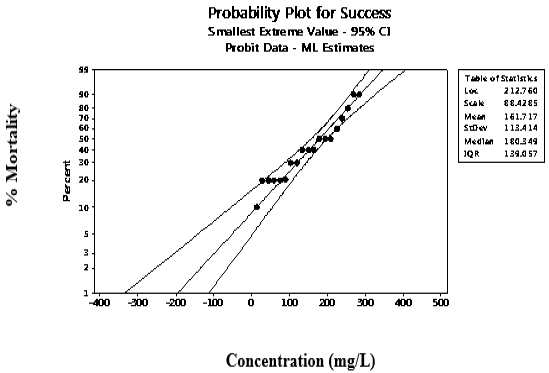
The 96-hr LC50 and lethal concentrations of Cd+Pb for fish tilapia were determined as 180.349 and 347.806 mg/L, respectively (Figure 1). Even at low amount, non-essential elements like Cd+Pb are extremely hazardous . The most grounded connections frequently take place in binary mixtures, and as the number of mixture components increases, the impact of the interactions may become less significant Liu et al. (2015). The relative potency and affinity of toxicants, the amounts and ratios of dissolved metals, and the background solution’s composition all affect how toxic metal combinations react . Almeida et al. (2002) reported the 96-hr LC50 value of Cd was18.58 mg/L for the same species as used in the present study. Ullah et al. (2016) described the LC50 of Pb for O. niloticus was 44 mgL-1. Utami et al. (2018) described the LC50 value of Pb for O. niloticus as 324.38 ppm. Faheem et al. (2012) described the LC50 of Pb for O. niloticus as 35.848 mgL-1
Catalase activity
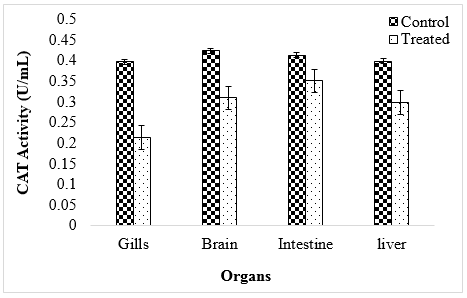
In present study catalase activity was measured in brain, intestine, gills and liver of fish, tilapia after acute exposure of binary metal mixture Cd+Pb. The findings of the current investigation revealed that Cd+Pb stressed O. niloticus had reduced CAT activity in all organs as compared to control. Statistical data showed a substantial difference between the Cd+Pb treated O. niloticus CAT activity and the control (Figure 2). The metal ions can binds to SH groups of proteins (catalase) and inhibit the activity which increases the production of radicals O-2 and H2O2 . The response of antioxidant enzymes against metals is associated with multiple factors including exposed organ, pollutant nature and exposure time .
Tufail et al. (2019) reported the lowest CAT activity in liver of contaminated (pesticides) exposed Channa striata. Metals mixtures significantly decrease the CAT and SOD activities in gills, brain and liver of fish . According to Usman et al. (2020) pollutants has ability to induce a significant reduction in liver, brain and gills, CAT level of C. idella. Rana et al. (2018) also noted the similar results in gills of C. striata. Reduction in CAT level in liver, brain and gills of C. striata due Pb+Ni was noted by Arshad et al. (2018). Metals mixture (Fe+Ni+Pb+Zn) exposure to Cirrhinus mrigala showed a reduction in liver, gills, and brain CAT activity .
Catalase is an essential cell reinforcement defense part shields fish from oxidative pressure by changing the hydrogen peroxide into water and oxygen . Hansen (2006) revealed the reaction of multiple antioxidant enzymes, including CAT in three populations of Salmo trutta exposed to metals in their natural habitat. They discovered that the kidney and liver of metal-exposed trout had higher enzyme activity than reference trout. Similarly, after Cd exposures, CAT activity rose in the liver and kidney of O. mossambicus showing a prospective shift towards a detoxifying component following Cd exposure.
Intestine histology
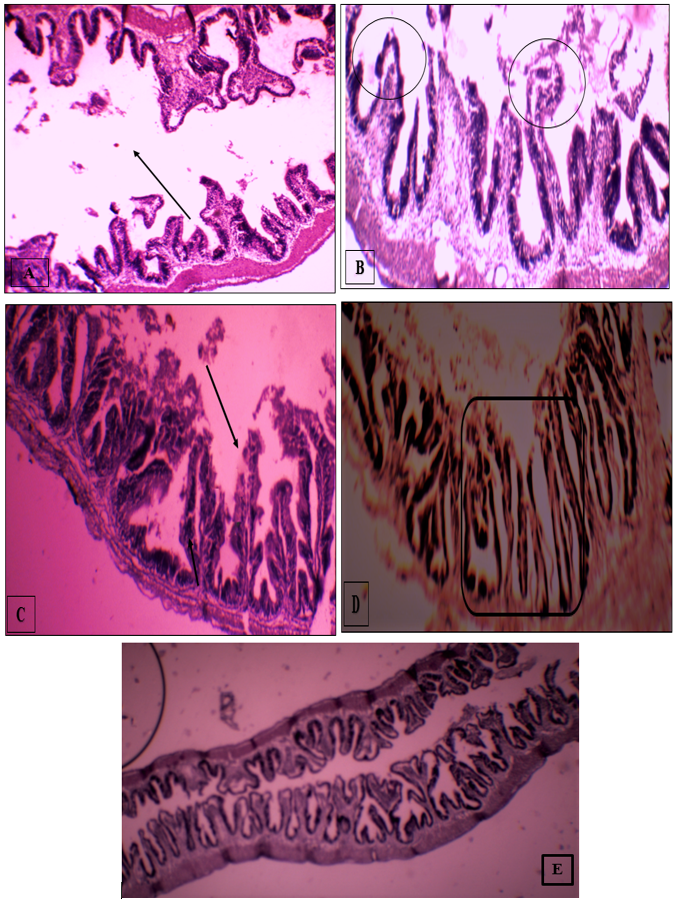
In present study, Cd+Pb - exposure to tilapia showed severe damages to intestine histology as compared to control group (Figure 3) at a very high extent. The damages include complete villi structure damages with distortion of villi boundaries there is no prominent cellular bodies with nuclei seen, necrosis in mucosa and hemorrhage in submucosa noticed. The decay of structures in the hepatic tissues and in the gut of fish when injected with Cd . Bioaccumulation of sub-lethal elements like Cd+Pb mixture resulted in tissue harm which promoted the weakened behavior and impaired physiology of the stressed living being . Epithelium of columnar cells damage badly and complete destruction of blood vessels, lymphocytes observed. Some villi shows tips facing lumen damage which revealed that, the damage starting from tips to the basal layer. There are no goblet cells seen after metal exposure. Dilation in lamina propria occurred. Our findings are in accordance with Younis et al. (2013), same damages in intestine of tilapia after exposure of cadmium was noted. Liu et al. (2020) reported villi structure damages in big head carp after lead exposure. Metal buildup in fish can result in a variety of adverse outcomes, including changes in enzyme activity and organ damage .
It is a truth that mainly consumption of heavy metals happens via gills but it also take place through intestine as reported by Mohamed (2008), Gills are the first organs to face external pollutants but intestine has a lot of finger like projections which increases its surface area . For absorptive function, intestinal villi supply a large epithelial surface area . Lead stress has been shown to increase zebrafish intestinal pathogens, disrupt the physical barrier of the gut in previous research and induce goblet cell mucin secretion .
Ajmaal et al. (2024) also reported the significant increase in villus height, width and muscularis mucosa and the significant decrease in the crypt depth and tunica mucosa in intestinal tissues of Cd-exposed fish.
Brain histology
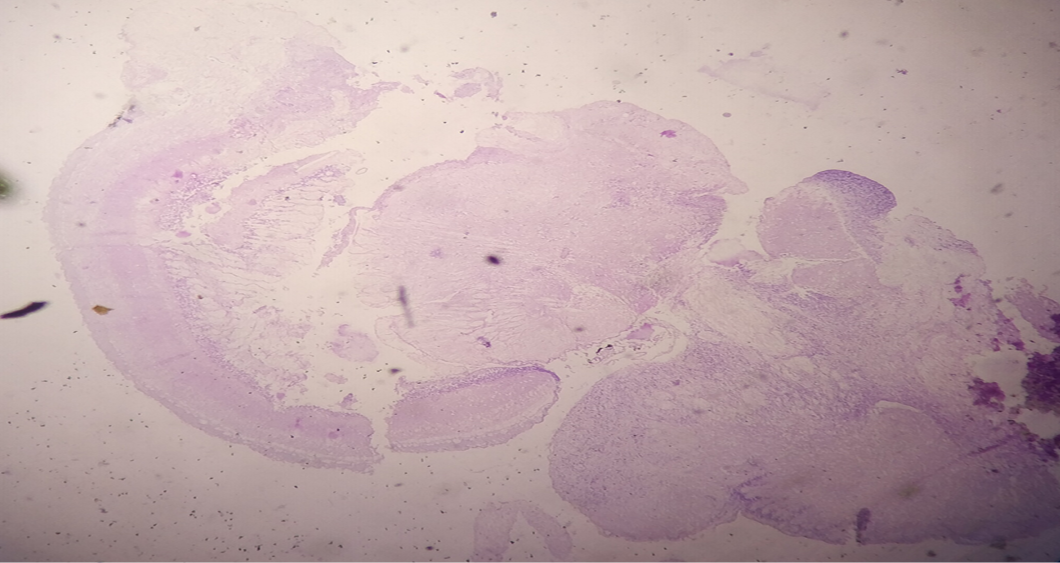
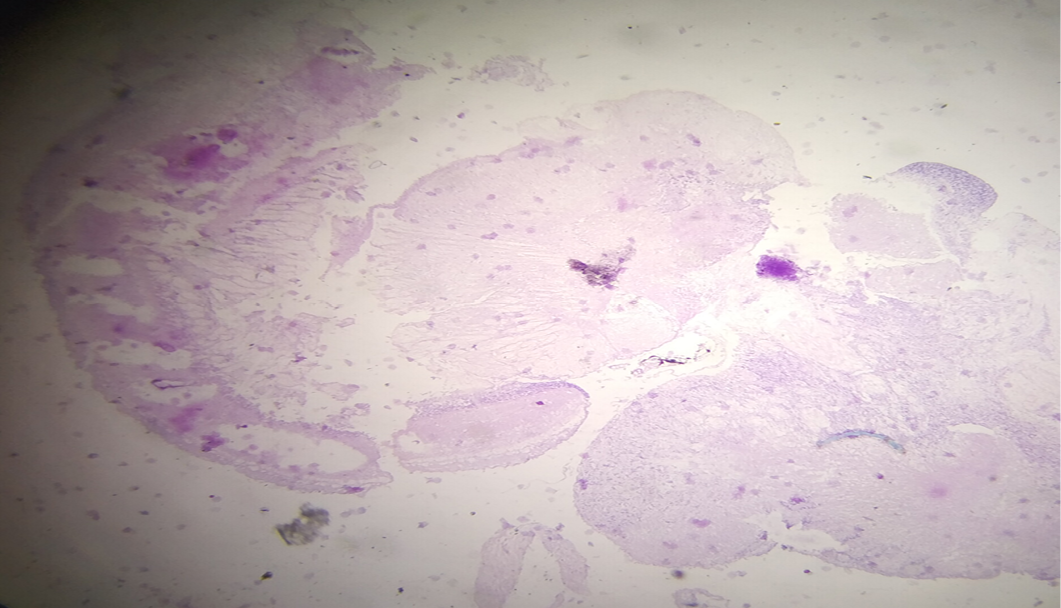
After acute exposure of Cd+Pb mixture to tilapia, the brain shows several histological lesions hemorrhage, congestion, necrosis, edema, vacuolar degeneration in the granular layer (Figure 4) as compared to control group (Figure 5). Al-kshab and Yehya (2021) reported the similar damages (necrosis and vacuolization) in G. affinis after exposure of lead chloride. The Cd+Pb mixture showed the neuronal cell degeneration, vacuolization, expanding of pyramidal cells and dystrophic changes were trademark highlights saw in the treatment of brain . Vacuolization in tissue might be
the after effect of glycolysis prompting mitochondrial and microsomal dysfunctions . The extreme necrosis of neuronal cells in the cerebrum demonstrating the loss of nissl substances. Lead acts straightforwardly on the cerebral vasculatures including blood-cerebrum obstruction and causes cerebral edema. After exposure to lead, glial nodules, malacia, and brain haemorrhage cause organism mortality in C. gariepinus (Adeyemo, 2008). Results of Al-Sawafi et al. (2017) are also similar to our findings that zebrafish show several abnormalities and gliosis and destruction after exposure of cadmium. Vacuolization occurs after disturbance of biological reactions in C. carpio after exposure of lead and cadmium . Lead, a highly neurotoxic substance that affects distinct functional parts of the brain in humans and fish and is known to interact at the molecular and cellular levels inside the body. When lead interacts with the brain then each region answers contrarily . Sabullah et al. (2020) reported the cell death in C. gariepinus after exposure of zinc sulphate following detachments around neurons. The brain of Pb-stressed O. niloticus showed the hemorrhage, vacuolation, inflammation, degeneration and atrophy . Toxicant (Imidacloprid) induced neural disordered like neuronophagia, vocuolation and complete neural loss in Clarias gariepinus was noted by Rahman et al. (2023). Naz et al. (2023) also observed the degenerative alterations like neuron necrosis, ctoplasmic vacuolization, intracellular edema and congestion in brain tissue of CuSO4 exposed Labeo rohita. The histopathological analyses showed significant brain damage characterized by glial scar formation and ventricular enlargement in Pb and As- exposed Zebrafish .
Conclusion
This study concluded that heavy metals are highly toxic to aquatic animals like fish. Because these pollutants can alter the antioxidant enzymes activity and also cause histological changes in fish. Heavy have a number of negative impacts on fish in many ways, which is very detrimental to the production of sustainable aquaculture. These biomarkers can be used to detect the pollution of aquatic bodies. Further research is needed to develop the some new suitable, easy and most convenient approaches to minimize the metals pollution in aquatic environment.
Declarations
Acknowledgement
The authors are grateful to the Department of Zoology, CUVAS, Bahawalpur, for providing laboratory facilities to conduct the research work.
Funding
No external funding was received for this study.
IRB approval
This study was approved by the Institutional Ethical Review Committee of Cholistan University of Veterinary and Animal Sciences, Bahawalpur.
Generative AI and AI assisted technology statement
The authors declare that no generative AI and AI assisted technology was used in the creation of this manuscript.
Statement of conflict of interest
The authors have declared no conflict of interest.
Figures
Figure 1:.
Graph of probabilities for lethal concentration (mg/L) and 96-hrs LC50 of Pb+Cd mixture for tilapia.
Figure 2:.
Activity of catalase in organs of fish, tilapia exposed to Cd+Pb mixture.
Figure 3:.
Histological alterations in intestine (A) Widening of intestinal lumen (Arrow); (B) Curling of intestinal villi (Shown by circle) (C) Mucous cells degeneration (Arrow) (D) Necrosis in villi (Shown by rectangle) (E) Control.
Figure 4:.
Tilapia brain normal histology of after exposure of Cd+Pb.
Figure 5:.
Damages in tilapia brain including lesions, hemorrhage, congestion, necrosis, edema and vacoular degeneration.
References
Abbas, K.K., Abdulkadhimal-Ghaban, A.M.H. and Rdewi, E.H., 2022. Synthesis of a novel ZnO/TiO2-nanorod MXene heterostructured nanophotocatalyst for the removal pharmaceutical ceftriaxone sodium from aqueous solution under simulated sunlight. J. Environ. Chem. Eng., 10: e108111. https://doi.org/10.1016/j.jece.2022.108111[CrossRef]
Adeyemo, O.K., 2008. Histological alterations observed in the liver and brain of Clarias gariepinus exposed to chronic sublethal dose of lead. Bull. Eur. Ass. Fish Pathol., 28: 1-105.
Afshan, S., Ali, S., Ameen, U., Farid, M., Bharwana, S., Hannan, F. and Ahmad, R., 2014. Effect of different heavy metal pollution on Fish. Res. J. Chem. Environ. Sci., 2: 74-79.
Ajmaal, R., Naz, H., Mehmood, K., Batool, M., Rehman, N.U., Ahmed, T., Shah, S.Q.A., Safdar, W., Imam, S., Ijaz, M.U. and Usman, M., 2024. Histo-morphometric indices and catalase response in muscles, gills and intestine of cadmium stressed Hypophthalmichthys molitrix. Pakistan J. Zool., 57: 1503-2002. https://doi.org/10.17582/journal.pjz/20230509070520[Full text][CrossRef]
Al-Bairuty, G.A., Shaw, B.J., Handy, R.D. and Henry, T.B., 2013. Histopathological effect of waterborne copper nanoparticles and copper sulphate on the organ of rainbow trout (Oncorhynchus mykiss). Aqua. Toxicol., 126: 104-115. https://doi.org/10.1016/j.aquatox.2012.10.005[CrossRef]
Ali, H., Khan, E. and Ilahi, I., 2019. Environmental chemistry and ecotoxicology of hazardous heavy metals: Environmental persistence, toxicity, and bioaccumulation. J. Chem., pp. 1-14. https://doi.org/10.1155/2019/6730305[CrossRef]
Al-Kshab, A.A. and Yehya, O.Q., 2021. Determination of the lethal concentration 50% (LC50) of lead chloride and its accumulation in different organs of Gambusia affinis fish. Int. J. Vet. Sci., 35: 361-367. https://doi.org/10.33899/ijvs.2020.126853.1401[CrossRef]
Almeida, J.A., Di, Y.S., Marques, S.F., Faine, L.A., Ribas, B.O., Burneiko, R.C. and Novelli, E.L., 2002. The use of the oxidative stress responses as biomarkers in Nile tilapia (Oreochromis niloticus) exposed to in vivo cadmium contamination. Environ. Int., 27: 673–679. https://doi.org/10.1016/S0160-4120(01)00127-1[CrossRef]
Al-Sawafi, A.G.A., Wang, L. and Yan, Y., 2017. Cadmium accumulation and its histological effect on brain and skeletal muscle of zebrafish. J. Heavy Met. Toxi. Dis., 2: 2.
Arshad, R., Abdullah, S., Naz, H. and Abbas, K., 2018. Catalase activity as a bio-indicator of lead+nickel toxicity in carnivorous fish, Channa striata. Proc. Pak. Acad. Sci. B. Life Environ. Sci., 55: 37–43.
Asagba, S.O., Eriyamremu, G.E. and Igberaese, M.E., 2008. Bioaccumulation of cadmium and its biochemical effect on selected tissues of the catfish (Clarias gariepinus). Fish Physiol. Biochem., 34: 61–69. https://doi.org/10.1007/s10695-007-9147-4[CrossRef]
Atli, G. and Canli, M., 2007. Enzymatic responses to metal exposures in a freshwater fish Oreochromis niloticus. Comp. Biochem. Physiol Toxicol. Pharmacol., 145: 282-287. https://doi.org/10.1016/j.cbpc.2006.12.012[CrossRef]
Atli, G. and Canli, M., 2010. Response of antioxidant system of freshwater fish Oreochromis niloticus to acute and chronic metal (Cd ,Cu, Cr, Zn, Fe) exposures. Ecotoxicol. Environ. Saf., 73: 1884-1889. https://doi.org/10.1016/j.ecoenv.2010.09.005[CrossRef]
Ayyat, M., Ayyat, A., Naie, M. and Al-Sagheer, A., 2020. Reversal effects of some safe dietary supplements on lead contaminated diet induced impaired growth and associated parameters in Nile tilapia. Aquaculture, pp. 734580. https://doi.org/10.1016/j.aquaculture.2019.734580[CrossRef]
Balistrieri, L.S. and Mebane, C.A., 2014. Predicting the toxicity of metal mixtures. Sci. Tot. Environ., 466467: 788-799. https://doi.org/10.1016/j.scitotenv.2013.07.034[CrossRef]
Bancroft, M.A., Bendana, L., Bruggeman, J. and Feuerle, L., 2013. Interpreting in the gray zone: Where community and legal interpreting intersect. Transl. Interpret., 5: 94-113. https://doi.org/10.12807/ti.105201.2013.a05[CrossRef]
Bawuro, A.A., Voegborlo, R.B. and Adimado, A.A., 2018. Bioaccumulation of heavy metals in some tissues of fish in lake Geriyo, Adamawa State, Nigeria. JESPH, 1-7. https://doi.org/10.1155/2018/1854892[CrossRef]
Bujjamma, P. and Padmavathi, P., 2018. Effect of cadmium on haematological changes in a freshwater catfish. Heteropneustes fossilis, 3:132-141.
Chance, M. and Mehaly, A.C., 1977. Assay of catalase and peroxidase method. Enzymol., 2: 764-817.
Clearwater, S.J., Farag, A.M. and Meyer, J.S., 2002. Bioavailability and toxicity of dietborne copper and zinc to fish. Comp. Biochem. Physiol., 132: 269-313. https://doi.org/10.1016/S1532-0456(02)00078-9[CrossRef]
Demey, H., Vincent, T. and Guibal, E., 2018. A novel algal-based sorbent for heavy metal removal. J. Chem. Eng., 332: 582–595. https://doi.org/10.1016/j.cej.2017.09.083[CrossRef]
Ekeanyanwu, C., Nwokedi, L. and Noah, T., 2015. Monitoring of metals in Tilapia nilotica tissues, bottom sediments and water from Nworie River and Oguta Lake in Imo State, Nigeria. Afr. J. Environ. Sci., 9: 682-690. https://doi.org/10.5897/AJEST2015.1894[CrossRef]
Faheem, M., Sulehria, A.Q.K., Tariq, I., Khadija, Fiaz, I. and Saeed, M., 2012. Effect of sub-lethal dose of cadmium chloride on biochemical profile and catalase activity in fresh water fish Oreochromis niloticus. Biol. Pak., 58: 73-78.
Fernandes, C., Fontainhas, F.A., Cabral, D. and Salgado, M., 2008. Heavy metals in water, sediment and tissues of Lizasa liens from Esmoriz-Paramos lagoon. Port. Environ. Monit. Asses, 136: 267-275. https://doi.org/10.1007/s10661-007-9682-6[CrossRef]
Gall, J.E., Boyd, R.S. and Rajakaruna, N., 2015. Transfer of heavy metals through terrestrial food webs: A review. Environ. Monit. Assess., 187: 201-206. https://doi.org/10.1007/s10661-015-4436-3[CrossRef]
Greven, T., 2016. The rise of right-wing populism in Europe and the United States. A comparative perspective (La emergencia del populismo de derechas en Europa y Estados Unidos. Una perspectiva comparada). Friedrich Ebert Foundation, Washington DC Office, pp. 1-8.
Hansen, N., 2006. The CMA evolution strategy: A comparing review. Towards a new evolutionary computation: Advances in the estimation of distribution algorithms, pp. 75-102. https://doi.org/10.1007/3-540-32494-1_4[CrossRef]
Hosoyamada, Y. and Sakai, T., 2005. Structural and mechanical architecture of the intestinal villi and crypts in the rat intestine: Integrative reevaluation from ultrastructural analysis. Anat. Embryol., 210: 1–12. https://doi.org/10.1007/s00429-005-0011-y[CrossRef]
Hussan, A., Gon, C., Tanmoy, Ahmed, I., Samchetshabam, G., Das, A., Udit, Uday, Chakrabarti, Partha. and Mandal, R.N., 2016. Effect of mercury and cadmium on the oxygen consumption and gill histology of Catla catla (Ham. 1822). Proc. Natl. Acad. Sci. India Sect. B Biol. Sci., 88: 729-738. https://doi.org/10.1007/s40011-016-0806-z[CrossRef]
Intamat, S., Phoonaploy, U., Sriuttha, M., Tengjaroenkul, B. And Neeratanaphan, L., 2016. Heavy metal accumulation in aquatic animals around the gold mine area of Loei province, Thailand. Human and ecological risk assessment. Int. J., 22: 1418-1432. https://doi.org/10.1080/10807039.2016.1187062[CrossRef]
Jaishankar, M., Tseten, T., Anbalagan, N., Mathew B.B. and Beeregowda, K.N., 2014. Toxicity, mechanism and health effects of some heavy metals. Interdiscip. Toxicol., 7: 60–72. https://doi.org/10.2478/intox-2014-0009[CrossRef]
Jamali, A., Tehrani, A.A., Shemirani, F. and Morsali, A., 2016. Lanthanide metal-organic frameworks as selective microporous materials for adsorption of heavy metal ions. Dalton Trans., 45: 9193–9200. https://doi.org/10.1039/C6DT00782A[CrossRef]
Karimi, A., Naghizadeh, A., Biglari, H., Peirovi, R., Ghasemi, A. and Zarei, A., 2020. Assessment of human health risks and pollution index for heavy metals in farmlands irrigated by effluents of stabilization ponds. Environ. Sci. Pollut. Res., pp. 1–11. https://doi.org/10.1007/s11356-020-07642-6[CrossRef]
Lacerda, D., Vergilio, C.D., Souza, T., Costa, L., Rangel, T., Oliveira, B., Almeida, D., Pestana, I., Almeida, M. and Rezende, C., 2020. Comparative metal accumulation and toxicogenetic damage induction in three neotropical fish species with distinct foraging habits and feeding preferences. Ecot. Environ. Saf., 195. https://doi.org/10.1016/j.ecoenv.2020.110449[CrossRef]
Liu, H., Fu, S., Zhang, S., Ding, M. and Wang, A., 2020. Lead induces structural damage, microbiota dysbiosis and cell apoptosis in the intestine of juvenile bighead carp (Hypophthalmichthys nobilis). Aquaculture, 528: 735573. https://doi.org/10.1016/j.aquaculture.2020.735573[CrossRef]
Liu, J., Pang, J.J., Tu, Z.C., Wang, H., Sha, X.M., Shao, Y.H. and Liu, G.X., 2019. The accumulation, histopathology and intestinal microorganism effect of waterborne cadmium on Carassius auratus gibelio. Fish physiol. Biochem., 45: 231-243. https://doi.org/10.1007/s10695-018-0557-2[CrossRef]
Liu, M., Deng, P., Li, G., Liu, H., Zuo, J., Cui, W., Zhang, H., Chen, X., Yao, J., Peng, X., Peng, L., Liu, J., Zheng, W., Luan N., 2024. Neurotoxicity of combined exposure to the heavy metals (Pb and As) in Zebrafish (Danio rerio). Toxics, 12: 282. https://doi.org/10.3390/toxics12040282[CrossRef]
Liu, Y., Vijver, M.G., Qiu, H., Baas, J. and Peijnenburg, W.J.G.M., 2015. Statistically significant deviations from additivity: What do they mean in assessing toxicity of mixtures? Ecot. Environ. Saf., 122: 37-44. https://doi.org/10.1016/j.ecoenv.2015.07.012[CrossRef]
Loganathan, K., Velmurugan, B., Howrelia, J.H., Selvanayagam, M. and Patnaik, B.B., 2006. Zinc induced histological changes in brain and liver of Labeo rohita (Ham.). J. Environ. Biol., 27: 107-110.
Mahboob, S., Al-Ghanim, K.A., Al-Balawi, H.F., Al-Misned, F. and Ahmed, Z., 2020. Toxicological effects of heavy metals on histological alterations in various organs in Nile tilapia (Oreochromis niloticus) from freshwater reservoir. J. King Saud Univ. Sci., 32: 970-973. https://doi.org/10.1016/j.jksus.2019.07.004[CrossRef]
Mohamed, F.A.S., 2008. Bioaccumulation of selected metals and histopathological alterations in tissues of Oreochromis niloticus and Lates niloticus from Lake Nasser, Egypt. Glob. Vet., 2: 205-2018.
Montero, E.L., Meesorn, W., Moatsou, D. and Weder, C., 2017. Bioinspired polymer systems with stimuli-responsive mechanical properties. Chem. Rev., 117: 12851-12892. https://doi.org/10.1021/acs.chemrev.7b00168[CrossRef]
Mustafa, R., Ahmed, S., Gupta, A. and Venuto, R.C., 2012. A comprehensive review of hypertension in pregnancy. J. Pregnancy, 2012: 1-19. https://doi.org/10.1155/2012/105918[CrossRef]
Naz, H., Abdullah, S., Naz, S., Abbas, S., Hassan, W., Perveen, S., Batool, M. and Shafique, L., 2018. Comparative assessment of the acute toxicity, behavior and catalase activity in Cirrhina mrigala exposed to Fe+Ni+Pb+Zn mixture. Punjab Univ. J. Zool., 33: 91-97. https://doi.org/10.17582/pujz/2018.33.1.91.97[CrossRef]
Naz, S., Hussain, R., Guangbin, Z., Chatha, A.M.M., Rehman, Z.U., Jahan, S., Liaquat, M., Khan, A.M., 2023. Copper sulphate induces clinic-hematological, oxidative stress, serum biochemical and histopathological changes in fresh water fish rohu (Labeo rohita). Front. Vet. Sci., Compr. Clinc. Med., 10. https://doi.org/10.3389/fvets.2023.1142042[CrossRef]
Naz, S., Hussain, R., Ullah, Q., Chatha, A.M.M., Shaheen, A. and Khan, R.U., 2021. Toxic effect of some heavy metals on hematology and histopathology of major carp (Catla catla). ESPR, 28: 6533-6539. https://doi.org/10.1007/s11356-020-10980-0[CrossRef]
Opaluwa, O.D., Aremu, M.O., Ogbo, L.O., Magaji, J.I., Odiba, I.E. and Ekpo, E.R., 2012. Assessment of Heavy Metals in Water, Fish and Sediments from UKE Stream, Nasarawa State, Nigeria. Curr. World Environ., 7: 213-220. https://doi.org/10.12944/CWE.7.2.04[CrossRef]
Osborne, O.J., Lin, S. and Chang C.H., 2015. Organ-specifc and size-depend-ent Ag nanoparticle toxicity in gills and intestines of adult zebrafsh. ACS Nano, 9: 9573–9584. https://doi.org/10.1021/acsnano.5b04583[CrossRef]
Patnaik, B.B., Howrelia, H., Mathews, T. and Selvanayagam, M., 2011. Histopathology of gill, liver, muscle and brain of Cyprinus carpio communis L. exposed to sublethal concentration of lead and cadmium. Afr. J. Biotechnol., 10: 12218-12223.
Rahman, A.N.A., Abdel-Mageed, M.A., Assayed, M.E.M., Gharib, H.S.A.R., Nasr, M.A., Elshopakey, G.E., Moniem, H.A., Shahin, S.E., Husseiny, E.E.L. and Ahmed, S.A.A., 2023. Imidacloprid induced growth, hematological, neuro-behavior, anti-oxidant, economic, genetic, and histopathological alterations in Clarias gariepinus: Alleviative role of dietary Hyphaene thebaica. Aquaculture, 564. https://doi.org/10.1016/j.aquaculture.2022.739058[CrossRef]
Rajamanickam, D. and Devadason, C.G., 2021. Histopathological alterations in gill, liver, and brain of Nile tilapia (Oreochromis niloticus), exposed to lead nitrate (Pb(NO3)2). Int. J. Sci. Technol. Res., 10: 149-153.
Rana, A., Abdullah, S., Naz, H. and Abbas, K., 2018. Characterization of catalase form carnivorous fish Channa striata exposed to binary insecticides mixture (deltamethrin + endosulfan). Pak. J. Agric. Res., 31: 368-374. https://doi.org/10.17582/journal.pjar/2018/31.4.368.374[CrossRef]
Reddy, P. and Rawat, S., 2013. Assessment of aquatic pollution using histopathology in fish as a protocol. Int. Res. J. Environ. Sci., 2: 79–82.
Rehman, T., Naz, S., Hussain, R., Chatha, A.M.M., Ahmad, F., Yamin, A., Akram, R., Naz, H. And Shaheen, A., 2021. Exposure to heavy metals causes histopathological changes and alters antioxidant enzymes in fresh water fish (Oreochromis niloticus). Asian J. Agric. Biol., 1: 1-11. https://doi.org/10.35495/ajab.2020.03.143[CrossRef]
Sabullah, M.K., Azri, N.A.M., Daud, H.M. and Ahmad, S.A., 2020. Alteration in physiological and histological features of clarias gariepinus parenchyma cell upon exposure to zinc sulphate. Int. J. Agric. Biol., 24: 1089-1097. https://doi.org/10.17957/IJAB/15.1537[CrossRef]
Saha, N., Mollah, M.Z.I., Alam, M.F. and Safiur R.M., 2016. Seasonal investigation of heavy metals in marine fishes captured from the Bay and Bengal and the implications for human health risk assessment. Fd. Cont., 70: 1-9. https://doi.org/10.1016/j.foodcont.2016.05.040[CrossRef]
Santosh, D., Figueiredo, D., Kirsten, T. and Borges, J., 2018. Behavior as an earlysign of toxicity and respiratory system injury induced by cadmium in zebrafish. Aas. De. Saude. Ambiental., 6: 16-33.
Squadrone, S., Prearo, M., Brizio, P., Gavinelli, S., Pellegrino, M., Scanzio, T. and Abete, M.C. 2013. Heavy metals distribution in muscle, liver, kidney and gill of European catfish (Silurus glanis) from Italian Rivers. Chemosphere, 90: 358–365. https://doi.org/10.1016/j.chemosphere.2012.07.028[CrossRef]
Steel, R.G.D., Torrie, J.H. and Dickey, D., 1997. Principles and procedure of statistics: A biometrical approach, 3rd Ed. McGraw Hill Book Co. Inc., New York, pp. 352-358.
Tufail, F., Abdullah, S., Naz, H., Abbas, K. and Shafique, L., 2019. Purification and kinetic characterization of hepatic catalase from carnivore fish, Channa striata exposed to agrochemicals (endosulfan+deltamethrin). Punjab Univ. J. Zool., 34: 79-84. https://doi.org/10.17582/journal.pujz/2019.34.1.79.84[Full text][CrossRef]
Ullah, A., Rehman, H.U., Khan, A.Z., Rehman, Z., Ahmad, S., Rehman, M.U. and Khan, J., 2016. Determination of 96-Hr LC50 of lead nitrate for a fish, Oreochromis niloticus. J. Ent. Zool., 4: 1216-1218.
Usman, T., Abdullah, S., Naz, H., Abbas, K., Shafique, L. and Siddique, Q., 2020. Acute toxic effect of technical grade insecticides on behavior, catalase activity and total protein contents of fish, Ctenopharyngodon idella. Pakistan J. Zool., 52: 2023-2026. https://doi.org/10.17582/journal.pjz/20181103091108[Full text][CrossRef]
Utami, N.R., Widiyaningrum, P. and Iswari, R.S., 2018. Histologic structure of red nile tilapia fish (Oreochromis nilloticus Var.) gill which is exposed to lead acetate. J. Phys. Conf. Ser., 983: 1- 012181.
Wang, X., Sato, T., Xing, B. and Tao, S., 2005. Health risks of heavy metals to the general public in Tianjin, China via consumption of vegetables and fish. Sci. Tot. Environ., 350: 28–37. https://doi.org/10.1016/j.scitotenv.2004.09.044[CrossRef]
WHO, 2011. WHO report on the global tobacco epidemic, 2011: warning about the dangers of tobacco. World Health Organization.
Wilson, J.M. and Castro, L.F.C., 2010. Morphological diversity of the gastrointestinal tract in fishes. Fish Physiol., 30: 1–55. https://doi.org/10.1016/S1546-5098(10)03001-3[CrossRef]
Xia, J., Lu, L., Jin, C., Wang, S., Zhou, J., Ni, Y. and Fu, Z., 2018. Effects of short term lead exposure on gut microbiota and hepatic metabolism in adult zebrafish. Comp. Biochem. Physiol. C., 209: 1–8. https://doi.org/10.1016/j.cbpc.2018.03.007[CrossRef]
Yang, Y., Wei, L., Cui, L., Zhang, M. and Wang, J., 2017. Profiles and risk assessment of heavy metals in Great Rift lakes, Kenya. Clean (Weinh), 45: 1600825. https://doi.org/10.1002/clen.201600825[CrossRef]
Younis, E.M., Abdel-Warith, A.A., Al-Asgah, N. A., Ebaid, H. and Mubarak, M., 2013. Histological changes in the liver and intestine of Nile tilapia, Oreochromis niloticus, exposed to sublethal concentrations of cadmium. Pakistan J. Zool., 45: 833-841.
Zhao L, Zheng Y.G., Feng, Y.H., Li M.Y., Wang, G.Q. and Ma, Y.F., 2020. Toxic effects of waterborne lead (Pb) on bioaccumulation, serum biochemistry, oxidative stress and heat shock protein-related genes expression in Channa argus. Chemosphere, 261: 127714. https://doi.org/10.1016/j.chemosphere.2020.127714[CrossRef]
Zheng, X., Zang, W., Yan, Z., Hong, Y., Liu, Z., Yi, X., Wang, X., Liu, T. and Zhou, L., 2015. Species sensitivity analysis of heavy metals to freshwater organisms. Ecotoxicology, 24: 1621–1631. https://doi.org/10.1007/s10646-015-1500-2[CrossRef]