
Current study deals with the production, purification and characterization of recombinant thermostable cellulase from Thermotoga naphthophila. PCR using the genomic DNA of T. naphthophila as template resulted in amplification of 1 kb cellulase gene. The amplified cellulase gene was cloned in pTZ57R/T and sub-cloned in pET28a. The expression of recombinant cellulase was analyzed using BL21 CodonPlus (DE3) cells as expression host. The expression studies resulted in the production of recombinant enzyme as soluble protein. The recombinant protein was purified by affinity column chromatography. The characterization studies of purified protein demonstrated the optimal enzyme activity at 90°C and pH 4.8. The presence of cobalt enhanced the cellulase activity and 2.5 mM cobalt was recorded the optimal concentration for the maximal cellulase activity. SDS-PAGE analysis confirmed the molecular weight of recombinant protein as 39 kDa. The protein was found thermostable which retained more than 70% residual activity with an incubation of 1.67h at 90 °C in the presence of cobalt. Presence of ionic and non-ionic detergents showed an inhibitory effect on the enzyme activity. Kinetic studies of recombinant protein demonstrated the km and Vmax values of 0.22 mg/mL and 2500 µmoles/min respectively with the specific activity of 12464 Umg-1, using carboxymethyl cellulose as substrate. The deinking potential of recombinant cellulase to remove ink from the paper makes this enzyme a suitable candidate for its use in paper Industry. We are reporting a new member of M42 Family of aminopeptidases. The stability of this recombinant cellulase at wide range of temperature, pH, its high level activity and its paper deinking potential makes it a suitable candidate for its use in paper industry.
Research Article · Volume 51, Issue 3, 22 March 2019 · Open Access
Cloning, Expression and Characterization of Highly Active Recombinant Thermostable Cellulase from Thermotoga naphthophila
· · · · · · · · ·
Affiliations & Notes ⌄
- 1Institute of Biochemistry and Biotechnology, University of Veterinary and Animal Sciences, Abdul Qadir Jillani Road, Lahore 2Department of Biochemistry, Faculty of Life Sciences, Univesity of Central Punjab I, Khayaban-e-Jinah, Johar Town, Lahore 3Department of Microbiology, University of Veterinary and Animal Sciences, Abdul Qadir Jillani Road, Lahore 4Institute of Agricultural Sciences, University of Punjab, Lahore 5School of Biological Sciences, University of The Punjab, Lahore , * Correspond
Article Info ⌄
- Journal:
- Pakistan Journal of Zoology
- Published:
- 22 March 2019

From the article
- Comparative analysis of this cellulase with various members of M42 Family of aminopeptidases indicated the presence of conserved amino acids responsible for the incorporation of metal ions and for the enzymatic activity including His, Asp, Glu, Glu, Asp and His.
- The increase in temperature from 40 to 90°C showed a linear increase in CELTN activity with a maximal activity at 90°C. Further increase in temperature to 100°C resulted in decreased enzymatic activity (Fig. 3).
- This study successfully described the characterization of a recombinant thermostable cellulase from Thermotoga naphthophila a new member of M42 family of aminopeptidases.
- The ability of enzyme to show its activity at a wide range of temperature, its stability to high temperature, pH and de-inking ability are the characteristics that make this cellulase unique.
Selected from the article's own text.
Abstract
Introduction
Cellulose is the most abundant biopolymer on Earth. Plants produce about 180 billion tons of cellulose annually through photosynthesis process . It is a linear polysaccharide with many glucose molecules that are polymerized with β 1,4 glycosidic linkages . The D- glucose residues in linear polymer of cellulose are interconnected and stabilized via hydrogen bonding or van der Waals forces and make it overall recalcitrance . Cellulosic raw material in the form of agriculture and industrial waste could not be exploited efficiently. Therefore, it is needed to develop considerable economic and cost efficient procedure for utilization of cellulose as carbon source. It is important to convert the inexhaustible organic mass to useful product .
Cellulases (EC 3.2.1.4) are responsible for hydrolysis of β 1,4 linkage of cellulose to fermentable sugars which can be utilized as energy source . The cellulases have wide range of application in different field such as in farm animal feed industry for the improvement of feed digestion , in juice industry for maceration process , in leather industry for final finishing step of fiber , in paper industry for de-inking and in textile industry for softening and finishing of cotton fabrics .
Production of cellulases has been reported from bacteria , fungi , animals and plants . Bacteria have potential advantage over the others because of fast growth rate and easy to handle ;; . Bacteria secrete three different categories of cellulases including endoglucanases (EC 3.2.1.4), β-glucosidases (EC 3.2.1.21) and cellobiohydrolase (EC 3.2.1.91) which act synergically to degrade complex cellulose material into simple sugar components ; . Industry requires thermostable enzyme which should be stable for long time and can tolerate the harsh temperature conditions. Thermophiles and hyperthermophiles are the microbes that have ability for the production of thermostable protein as compared to mesophiles.
Thermotoga naphthophila is an anaerobic hyperthermophile. The cells are rod shaped that shows optimal growth at 90°C and are involved in the production of thermostable enzymes . The present study demonstrates the production and characterization of recombinant thermostable cellulase from this hyperthermophile and the utilization of this cellulase for paper de-inking process.
Materials and methods
Chemicals
The chemicals used in the study were of analytical grade and were purchased from Sigma Aldrich (St. Louis, MO, USA). The PCR cloning kit, DNA extraction kit, ligation kit and restriction endonucleases were purchased from Thermoscientific, LifeSciences, USA.
Cloning of cellulase gene
The cellulase gene from T. naphthophila RUK-10 was amplified using the CEL-TN-F (CATATGTATCTCAAAGAGCTTTC) and CEL-TN-R (TCATGAGACCACCTCCACG) as forward and reverse primers, respectively, using the genomic DNA of T. naphthophila RUK-10 as template. The forward primer contained the unique Nde I restriction site. The genomic DNA of T. naphthophila RUK-10 was purchased from Leibniz Institute DSMZ German Collection of Microorganism and Cell Culture. The amplified PCR product was purified from agarose gel using DNA purification kit and the purified PCR product was ligated in pTZ57R/T using T4 DNA ligase. The ligated material was utilized for the transformation of E. coli DH5α competent cells. The positive clones were selected on the basis of blue white screening . Plasmid DNA was isolated and the presence of insert in the recombinant pTZ57R/T was confirmed by restriction digestion using Nde I and Hind III endonucleases. DNA sequencing of the restriction confirmed recombinant pTZ57R/T was performed using M13 forward and reverse primers and the obtained DNA and deduced amino acid sequences were utilized for homology and comparative analysis using the BLAST and Clustal Omega programs .
Expression studies of recombinant cellulase
Regarding the expression studies, the gene was transfered from recombinant pTZ57R/T to pET28a already restricted with same restriction enzymes and was utilized for the transformation of BL21 CodonPlus(DE3) competent cells. The cells were grown in LB medium supplemented with kanamycin (50 µg/mL). The overnight grown culture of BL21 CodonPlus (DE3) cells having recombinant pET28a was diluted to 1% and was incubated at 37°C till the OD reached to 0.4 at 660 nm. The cells were induced with 0.5 mM IPTG and were further incubated for 6 h in shaker at 37°C under shaking conditions (I3000, Labtech, Korea). Centrifugation was performed, supernatant was discarded and the cellular pellet was resuspended in 50 mM sodium acetate buffer (pH 4.8). The cells were lyzed by sonication (Sonics, Newtorn, USA). The soluble and insoluble production of cellulase was examined by activity assay and SDS-PAGE analysis . The expression was also analyzed at 20 and 25°C. For this purpose, the recombinant cells after attaining the OD to 0.4 were shifted to selected temperature before induction. The induction was done as described above with the post induction time of 22 h at the selected temperature.
Purification of recombinant cellulase
The soluble part after sonication was applied to Ni-NTA agarose column pre-equilibrated with 50 mM sodium acetate (pH 4.8) with 500 mM NaCl and 50 mM imidazole. The elusion was done with same buffer having 500 mM NaCl and 250 mM imidazole. The fractions were collected and were utilized for activity assay . The purity of fractions was analyzed on SDS-PAGE. The protein concentrations of fractions were calculated by Bradford method . The purified recombinant cellulase (CELTN) was utilized for further studies.
Cellulase activity assay
CELTN activity was examined using sodium carboxymethyl cellulose as substrate . The enzyme activity assay mixture was prepared by mixing 50 µL of recombinant cellulase with 1% sodium carboxymethyl cellulose in 50 mM sodium acetate buffer (pH 4.8) containing 2.5 mM cobalt. The reaction mixture was incubated at 90°C for 30 min in water bath (D-91126, Memmert, Germany). DNS reagent (1mL) was added to the above assay mixture followed by boiling for 10 min. The absorbance was recorded at 540 nm. One unit of enzyme activity was defined as the amount of enzyme required to liberate 1 µmol of glucose per minute under optimal conditions.
Characterization studies of recombinant cellulase
Effect of temperature on CELTN activity
CELTN activity was examined at wide range of temperature ranging from 40 to 100°C in 50 mM sodium acetate buffer (pH 4.8) .
Effect of pH on CELTN activity
The enzyme activity was evaluated by examining the CELTN activity at wide range of pH using 50 mM of each of sodium acetate buffer (3-5), sodium phosphate buffer (5-7) and Tris HCl buffer (7-9) at 90°C using sodium carboxymethyl cellulose as substrate.
Effect of metal ions, detergent and salt on CELTN activity
The dependency of CELTN on metal ion was explored by examining the CELTN activity in the presence of 1 mM of EDTA or Ca2+, Co2+, Zn,2+ Mg2+ or Mn2+ at 90°C in sodium acetate buffer (pH 4.8) . The CELTN activity was also analyzed in the presence of ionic (SDS) and non-ionic (Tween-80 and Triton X-100) detergents at final concentration of 1% ; .
Thermostability studies of CELTN
Regarding the thermostability studies, the CELTN was incubated at 90°C in the presence and absence of cobalt. The sample was withdrawn after every 10 min and was utilized for examining the CELTN residual activity.
Kinetic studies
Effect of substrate concentrations on enzyme activity was analyzed by measuring the CELTN activity using various concentrations of sodium carboxymethyl cellulose ranging from 0.1 to 1% in sodium acetate buffer (pH 4.8) at 90°C. The data obtained was utilized for developing Lineweaver Burk Plot and for the estimation of kinetic parameters .
Suitable industry for the recombinant cellulase
Paper de-inking ability of CELTN was explored as the process is environment friendly without production of any hazardous pollutants. Two papers (Rizvi Paper Products, Lahore, Punjab, Pakistan) with 15 x 20 cm dimensions were taken. Pen (Dollar, Industries Private Ltd, Karachi, Pakistan) and Ballpoint (Piano, Sayyad Engineers Ltd, Lahore, Pakistan) were utilized for writing on the pages. Each page was divided into two half’s (15 x 10 cm). One was taken as negative control in each case and was not treated with enzyme whereas the second half was treated with enzyme. All the paper pieces were passed through the process of pulping and maceration. The pulping was done by soaking the paper in hot water for 2 h followed by incubation in 0.1% Tween-80 for maceration process and was oven dried at 50°C for 30 min . After the completion of maceration process, each of the experimental pages was incubated at 50°C in 50 ml of sodium acetate buffer (pH 4.8) containing 50 µl of enzyme with 2.5 mM concentration of CoCl2 for 30 min. The incubation condition for the negative control was same except the presence of enzyme. After enzymatic treatment the page was dried and picture was taken for record .
Results
The PCR using the gene specific primers and genomic DNA of T. naphthophila RKU-10 as template resulted in the amplification of 1 kb cellulase gene. The purified PCR was cloned in pTZ57R/T and restriction digestion with Nde I and Hind III confirmed the liberation of 1 kb insert in the recombinant vector. The sequence of confirmed recombinant vector was utilized for homology analysis. The nucleotide sequence comparative analysis of cellulase from T. naphthophila showed 99% identity with Thermotoga sp. Cell2 and Thermotoga sp. RQ2, 97% with Thermotoga maritima and 93% with Thermotoga petrophila strain RUK1. Amino acid based sequence alignment of cellulase from T. naphthophila RKU-10 confirmed this cellulase as a member of M42 Family of aminopeptidases. Comparative analysis of this cellulase with various members of M42 Family of aminopeptidases indicated the presence of conserved amino acids responsible for the incorporation of metal ions and for the enzymatic activity including His, Asp, Glu, Glu, Asp and His. However second last Asp that was conserved in this Family was replaced with Glu219 in case of CELTN (Fig. 1).
The expression studies at 20, 25 and 37°C demonstrated the high level production of CELTN at 25°C as compared to 20°C or 37°C. The maximal soluble production of CELTN was recorded when the BL21 CodonPlus (DE3) cells having cellulase gene in pET28a were induced with 0.5 mM IPTG with the post induction incubation of 22 h at 25°C. The SDS-PAGE analysis of the purified CELTN after Ni-NTA affinity chromatography resulted in the appearance of single band having molecular mass of 39 kDa (Fig. 2).
The increase in temperature from 40 to 90°C showed a linear increase in CELTN activity with a maximal activity at 90°C. Further increase in temperature to 100°C resulted in decreased enzymatic activity (Fig. 3). The CELTN activity was increased with the increase in pH. Optimal activity was recorded between pH 4 and 5 while further increase in pH resulted in decreased activity. Further studies on enzyme activity between pH 4 to 5 demonstrated the maximal enzymatic activity at pH 4.8 (Fig. 4) when 50 mM Sodium acetate buffer was utilized for CELTN activity analysis.
Table I.- Effect of metal ions and detergents on CELTN activity.
| Metal ions / Detergents | Relative activity (%) | |
| None | 100 | |
| EDTA | 0 | |
| Metals ions | ||
| Zn2+ | 102 | |
| Mn2+ | 105 | |
| Mg2+ | 110 | |
| Ca2+ | 115 | |
| Co2+ | 132 | |
| Detergents | ||
| SDS | 8 | |
| Tween 80 | 10 | |
| Trion X-100 | 14 | |
The abolishment of CELTN activity in the presence of 1 mM EDTA indicated the dependency of CELTN on metal ions as cofactor. The presence of Mn2+, Zn2+, Ca2+ and Mg2+ did not put significant effect on the CELTN activity whereas the presence of 1 mM Co2+ resulted in 1.3 fold increases in CELTN activity (Table I). The optimal enzymatic activity was recorded when the cobalt was utilized at a final concentration of 2.5 mM in the activity assay. The presence of detergents showed an inhibitory effect on CELTN activity. Presence of SDS, Tween 80 and Triton X-100 at final concentration of 1% reduced the CELTN activity to 8, 10 and 14%, respectively (Table I).
Thermostability studies demonstrated that recombinant enzyme retained 50% residual activity at 90°C after an incubation of 1.67 h in the absence of metal ion whereas the presence of 2.5 mM Co2+ showed stabilizing effect and CELTN retained more than 70% residual activity after an incubation of 1.67h at 90°C (Fig. 5).
The enzyme activity was increased with the increased in substrate concentration following the Michaelis Menten equation till the achievement of saturation level. Line Weaver Burk plot demonstrated the Km and Vmax values of 0.22 mg/mL and 2500 µmoles/min when sodium carboxymethyl cellulose was utilized as substrate (Fig. 6).
The comparison of control with the experimental paper for the removal of ink clearly demonstrated the ability of CELTN to remove the pen and ball point ink as compared to control. However, the intensity of removal of pen ink was quiet high as compared to ball point ink (Fig. 7).
Discussion
Thermostable cellulases have wide range of application in many industries. The cellulase produced in current study has strong potential for its utilization in paper and poultry industry. Current study deals with the characterization of recombinant thermostable cellulase from T. naphthophila and explores its utilization for paper de-inking process.
The sequence homology analysis indicated the high level identity of CELTN with M42 Family of aminopeptidases. Homology based on amino acid sequence of cellulase from present study indicated the Thermotoga maritima Tm-1049 as closest homologue with 98.5% identity whereas CELTN shared 36.5% identity with FrvX aminopeptidase from P. horikoshi. Interestingly these three strains are members of M42 Family of aminopeptidase that share the conserved amino acids (His, Asp, Glu, Asp and His) for the binding of metal ion and for the enzymatic activity. However in sequence of CELTN the second last conserved Asp is replaced with Glu219 but this change is simply the replacement of one negatively charged amino acid with the other negatively charged amino acid. According to sequence of CELTN, His60, Asp166, Glu196, Glu197, Glu219 and His307 are the conserved amino acids responsible for the accommodation of two cobalt ions with the help of water molecule. Asp166, His307, Asp197 and water molecule are responsible for the accommodation of first metal ion whereas Asp166, His60, Asp219 and water molecule are responsible for the binding of second metal ion. It follows a similar mechanism of action as described by Russo and Baumann (2004). CELTN active site conserved amino acids are same as that of FrvX aminopeptidase (Fig. 1), further experimentation will be performed in-order to explore the aminopeptidase activity of CELTN.
Expression studies of CELTN, demonstrated the higher level production of recombinant protein at 25°C whereas its closest homologue T. maritima showed the optimal production of cellulase at 20°C . Similarly maximal production of endoglucanase from E. cellulosolvens was recorded at 18°C whereas the cellobiohydrolase from C. saccharolyticus and endocellulase from P. furiosus showed their maximal production at 30°C.
Maximal CELTN production was recorded when the cells were induced with 0.5 mM IPTG that is well aligned to 0.5 mM for E. cellulosolvens and C. saccharolyticus , 0.4 mM with the same enzyme from T. maritima , whereas a lower concentration of 0.1 mM was required for the maximal production of endocellulase from P. furiosus .
SDS-PAGE analysis of the purified protein showed the molecular mass of 39 kDa which is in agreement with 38.3 kDa for AcCel12B from Acidothermus cellulolyticus , 37 kDa cellulase from F. nodosum and 35 kDa Cel5A from T. maritima while the two cellulases from T. neapolitana showed the molecular size of 29 and 30 kDa .
The CELTN exhibited optimal activity at 90°C that agrees with cellulase from T. neopolitana and P. furiosus which showed maximal activity between 90 to 100°C whereas this value is quiet high as compared to other cellulase from Cellulomonas sp. , C. saccharolyticus , T. maritima and Geobacillus WSUCFI which revealed highest activity at 60, 80, 80 and 70°C.
The enzyme retained more than 75% residual activity at 90°C with 2.5 mM Co+2 after 1.67h of incubation that is comparable with recombinant RmCel12A from R. marinus which showed more than 50% residual activity at 90°C for 2.5h . This cellulase was found more stable as compared to recombinant GH5 from C. saccharolyticus which showed 50% residual activity after 23h of incubation at 80°C and AcCel12B from A. cellulolyticus 11B which showed 50% residual activity at 70°C after 2h of incubation . However, Eg1A cellulase from P. furiosus showed higher level stability with more than 50% residual activity at 95°C after 40h of incubation .
The pH studies indicated the highest CELTN activity at pH 4.8 that is similar to cellulases from T. maritima , C. saccharolyticus , Geobacillus WSUCFI and Bacillus strain M9 having highest cellulase activities between pH 4.8 to 5 whereas the cellulase from R. marinus , Streptomyces sp. , T. neopolitana , E. cellulosolvens , P. furiosus and Cellulomonas sp. showed maximal cellulytic activities at pH between 5.5 to 8.
The abolishment of enzymatic activity in the presence of 1 mM EDTA clearly indicated the metal dependency of enzyme. The presence of Co2+ showed an enhancement of CELTN activity. Previous reports on cellulases also confirm the role of Co2+ in the enhancement of cellulolytic activity of Cellulomonas sp. , T. fusca , A. cellulyticus , M. circinelloides and C. paradoxa .
The presence of ionic and non-ionic detergents showed inhibitory effect on the CELTN activity. Same pattern of inhibition was recorded for cellulases form Bacillus strain M9 that also showed its highest activity under acidic conditions whereas the alkaline cellulase from Bacillus sp. SMIA-2 showed stability with 95% residual activity in the presence of 0.25% SDS .
CELTN showed Km value of 0.22 mg/mL that is quiet low as compared to 1.08 mg/mL for WSUCFI from Geobacillus sp. , 3.11 mg/mL for DUSELR13 from Bacillus sp. , 3.6 mg/mL for P. fluorescens , 4.97 mg/mL for A. anitratus , 7.90 mg/mL for Branhamella sp. , 19 mg/mL from T. curvata and 25 mg/mL for AcCel12B from A. cellulyticus . The low Km value of CELTN indicted high affinity of enzyme for its substrate.
The CELTN showed higher level cellulytic activity of 12464 Umg-1 as compared to 1536 and 1219 Umg-1 for CelB and CelA from Thermotoga neapolitana , 735 Umg-1 for GH12 endoglucanase from Thermotoga petrophila , 66 Umg-1 for thermostable Cellobiohydrolase from Thermotoga petrophila and 4.23 Umg-1 for hyper-thermostable endoglucanase from Thermotoga meritima . Low km and high affinity of CELTN for its substrate is the basis for its higher level activity. The higher level activity might be correlated with the replacement of conserved Asp in M42 Family with Glu at 219 position in the sequence of CELTN. However, 3D x-ray crystallographic structure determination will be required in order to confirm this.
The CELTN has strong potential for paper de-inking of pen ink as compared to ball point ink. Previously, Patil and Dhake (2014) utilized β-glucosidases from Penicillium purpurogenum for de-inking of newspaper ink.
Conclusion
This study successfully described the characterization of a recombinant thermostable cellulase from Thermotoga naphthophila a new member of M42 family of aminopeptidases. The ability of enzyme to show its activity at a wide range of temperature, its stability to high temperature, pH and de-inking ability are the characteristics that make this cellulase unique. Large scale production of this enzyme will be required in future for its possible use in industry of Pakistan.
Acknowledgement
This work was supported by funds provided by Higher Education Commission, Pakistan.
Statement of conflict of interest
The authors have no conflict of interest.
Figures
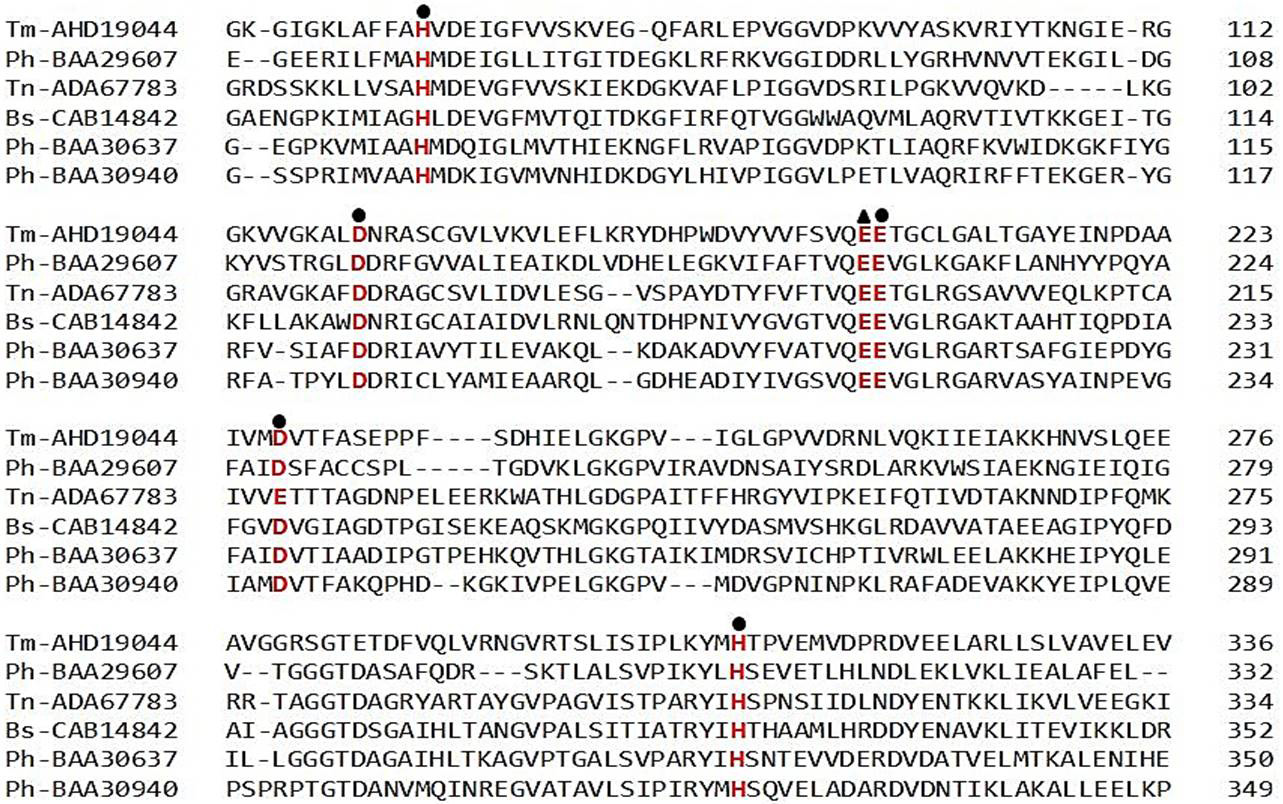
Comparative analysis of cellulase from T. naphthophila str. RKU10 (Tn-ADA67783) with other members of family M42 aminopeptidase including FrvX (Ph-BAA30637), TET1 (Ph-BAA29607) and TET3 (Ph-BAA30940) from P. horikoshii str. OT3 (Russo and Baumann, 2004, 2005; Dura et al., 2009), putative fructose-lysine aminopeptidase from B. subtilis str.168 (Bs-AGA23783) (Remaut et al., 2001) and peptidase from T. maritima str. MSB8 (Tm-AHD19044) (Kapoor et al., 2010). Conserved amino acids are shown in red color. Circle above the sequence shows conserved amino acids involve in metal binding whereas the triangle above sequence indicate conserved amino acid involve in enzyme activity. The comparative analysis was developed using Clustal Omega programme.
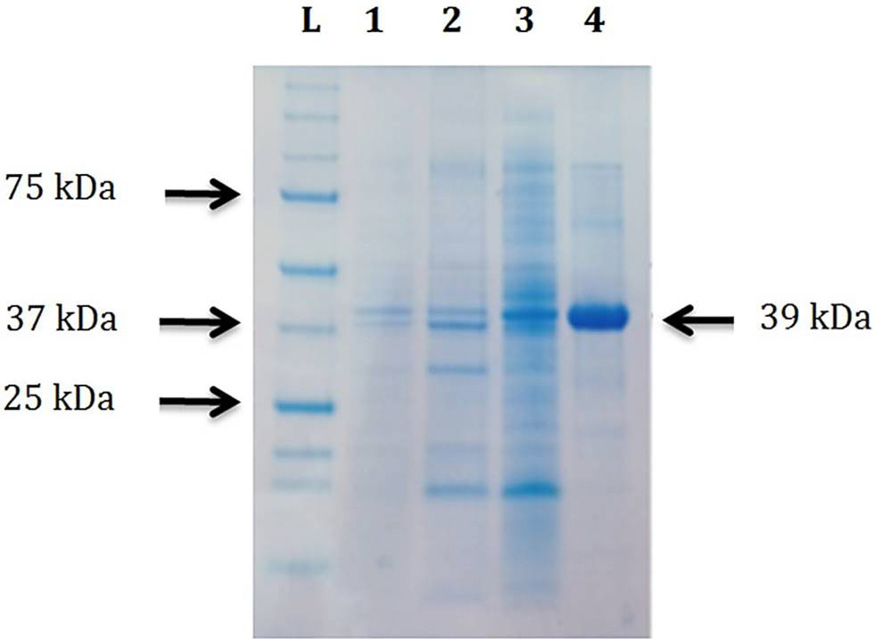
Coomassie brilliant blue stained acrylamide/bisacrylamide gel showing purification of CELTN at 25°C. Lane L, protein ladder (The Precision Plus, Bio-Rad, USA); Lane 1, the BL21 CodonPlus (DE3) total cells having pET-CEL collected after 22h of induction with final concentration of 0.5 mM IPTG at 25°C; Lane 2, insoluble part after lysis of cells in Lane 1; Lane 3, soluble part after lysis of cells in Lane 1; Lane 4, purified CELTN after Ni-NTA affinity column chromatography.
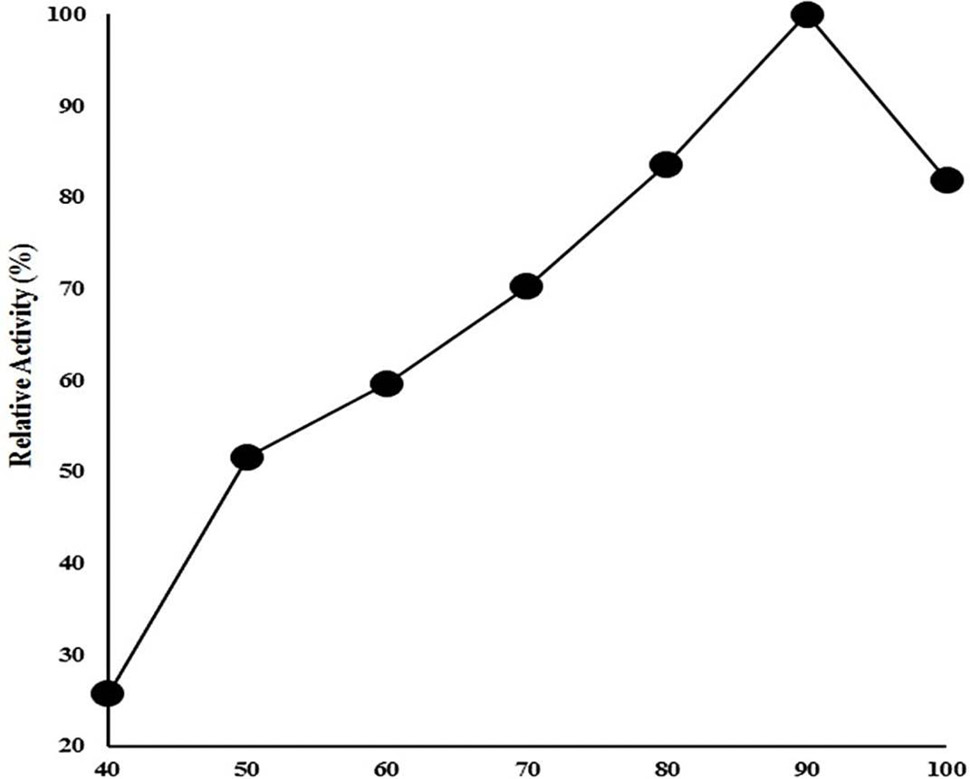
Effect of temperature on CELTN activity. Enzyme activity was examined at wide range of temperature from 40 to 100°C in 50 mM acetate buffer of pH 4.8 and 1% sodium carboxymethyl cellulose as substrate. The data on X-axis shows the temperature (°C) whereas on Y-axis shows relative enzyme activity (%).
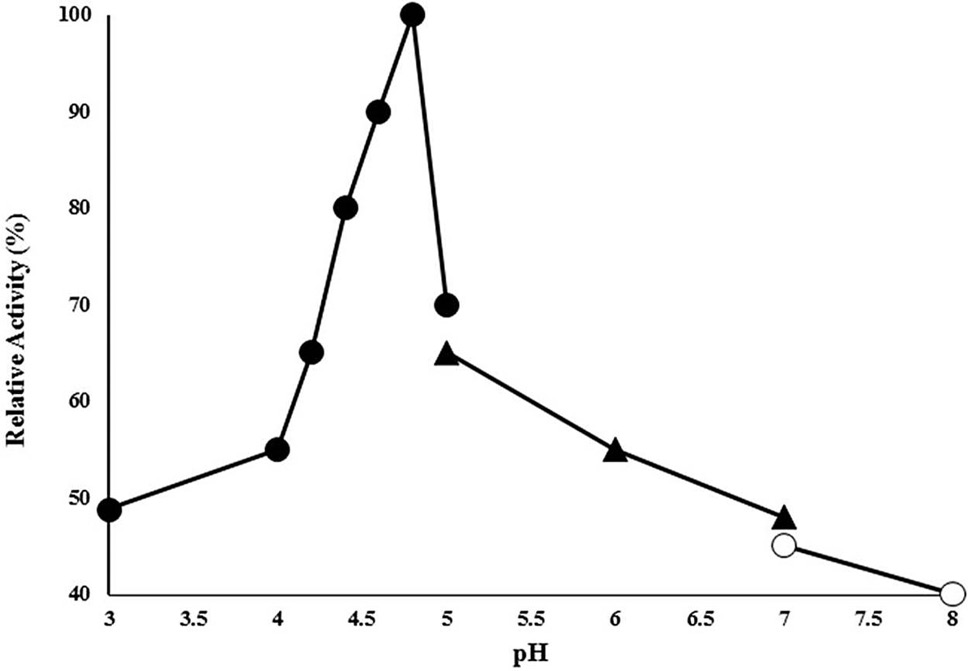
Effect of pH on CELTN activity enzyme activity was analyzed in 50 mM of each of acetate buffer range (3-5), phosphate buffer (5-7) and Tris HCl buffer (7-8) at 90°C using 1% sodium carboxymethyl cellulose as substrate. X-axis shows the pH while Y-axis presents the relative activity (%).
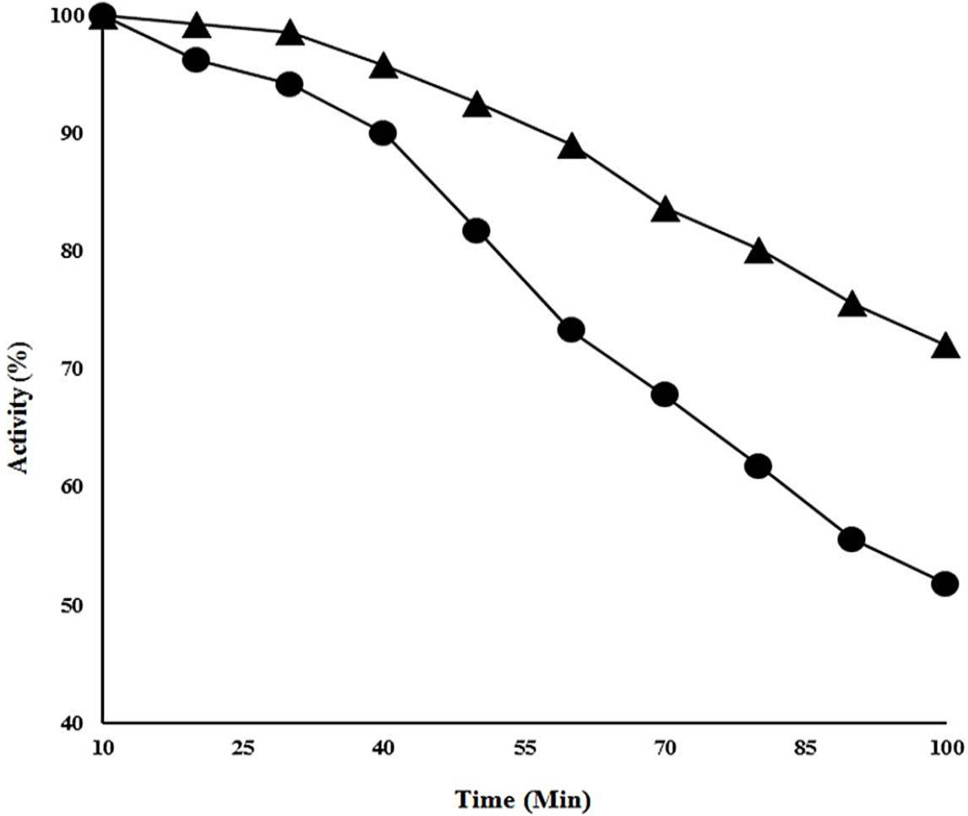
Thermo-stability studies of CELTN. The protein was incubated at 90°C in the absence or presence of 2.5 mM of Co2+. Closed circle shows the residual activity of cellulase without metal ion whereas closed triangles presents the cellulase activity at 90°C in the presence of 2.5 mM of Co2+.
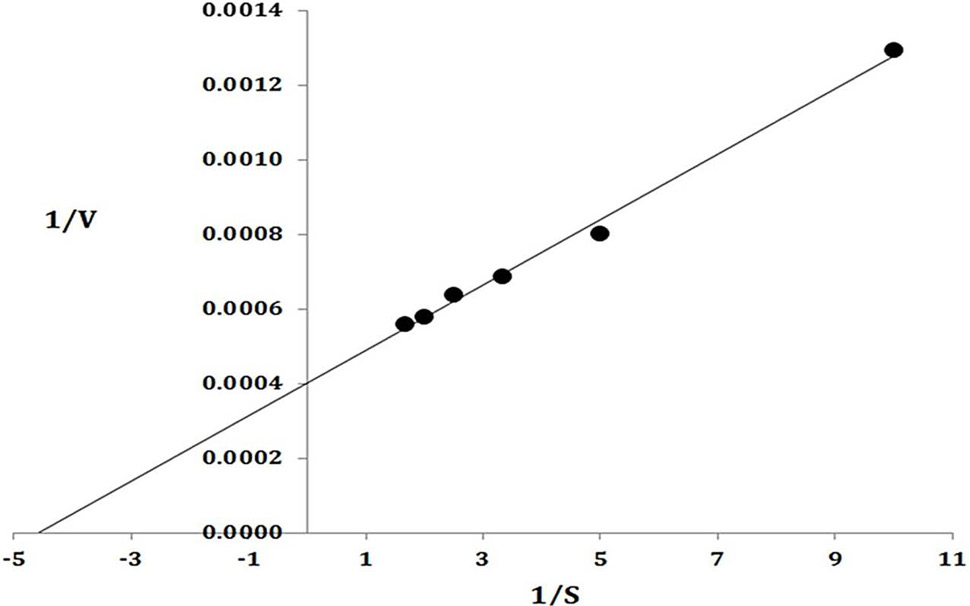
Lineweaver Burk plot. The data on X-axis indicate the 1/substrate while along Y-axis present 1/Velocity.
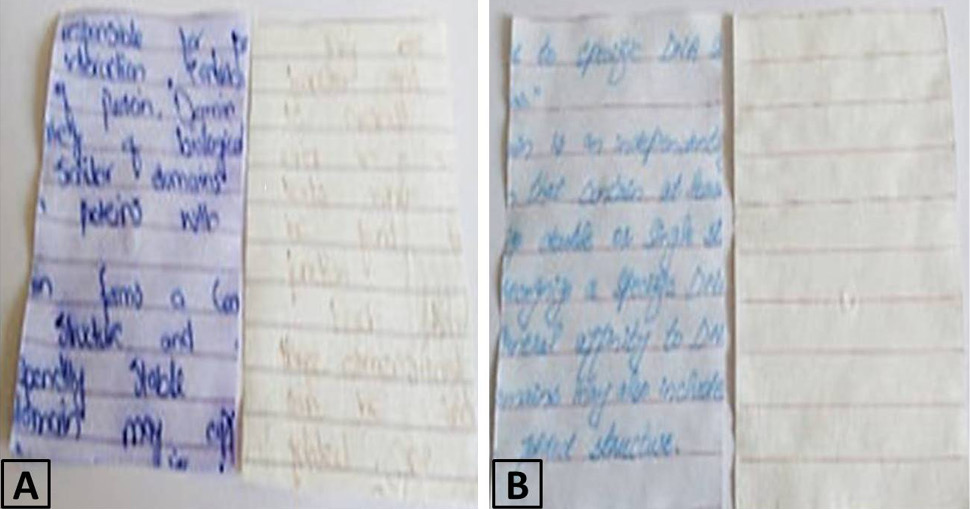
De-inking action of CELTN: A, ability of CELTN to remove ball point ink; B, ability of CELTN to remove pen ink.
References
- Adsul, M., Bastawde, K.B., Varma, A. and Gokhale, D., 2007. Strain improvement of Penicillium janthinellum NCIM 1171 for increased cellulase production. Bioresour. Technol., 98: 1467-1473. https://doi.org/10.1016/j.biortech.2006.02.036[CrossRef]
- Anish, R., Rahman, M.S. and Rao, M., 2007. Application of cellulases from an alkalothermophilic Thermomonospora sp. in biopolishing of denims. Biotechnol. Bioengin., 96: 48-56. https://doi.org/10.1002/bit.21175[CrossRef]
- Bajaj, B., Pangotra, H., Wani, M., Sharma, P. and Sharma, A., 2009. Partial purification and characterization of highly thermostable and pH stable endoglucanase from a newly isolated Bacillus strain M-9. Indian J. chem. Technol., 16: 382-387.
- Bakare, M.K., Adewale, I.O., Ajayi, A. and Shonukan, O.O., 2005. Purification and characterization of cellulase from the wild-type and two improved mutants of Pseudomonas fluorescens. Afr. J. Biotechnol., 4: 898-904.
- Bauer, M.W., Driskill, L.E., Callen, W., Snead, M.A., Mathur, E.J. and Kelly, R.M., 1999. An endoglucanase, EglA, from the hyperthermophilic archaeon Pyrococcus furiosus hydrolyzes beta-1,4 bonds in mixed-linkage (1-->3), (1-->4)-beta-D-glucans and cellulose. J. Bact., 18: 284-290.
- Beeson, W.T., Vu, V.V., Span, E.A., Phillips, C.M. and Marletta, M.A., 2015. Cellulose degradation by polysaccharide monooxygenases. Annu. Rev. Biochem., 84: 923-946. https://doi.org/10.1146/annurev-biochem-060614-034439[CrossRef]
- Bhat, M.K., 2000. Cellulases and related enzymes in biotechnology. Biotechnol. Adv., 18: 355-383. https://doi.org/10.1016/S0734-9750(00)00041-0[CrossRef]
- Bok, J.D., Yernool, D.A. and Eveleigh, D.E., 1998. Purification, characterization, and molecular analysis of thermostable cellulases CelA and CelB from Thermotoga neapolitana. Appl. environ. Microbiol., 64: 4774-4781.
- Bradford, M.M., 1976. A rapid and sensitive method for the quantitation of microgram quantities of protein utilizing the principle of protein-dye binding. Anal. Biochem., 72: 248-254. https://doi.org/10.1016/0003-2697(76)90527-3[CrossRef]
- Chakraborty, A. and Mahajan, A., 2014. Cellulase activity enhancement of bacteria isolated from oil-pump soil using substrate and medium optimization. Microbiol. Res., 4: 52-56.
- Cheng, G., Varanasi, P., Li, C., Liu, H., Melnichenko, Y.B., Simmons, B.A., Kent, M.S. and Singh, S., 2011. Transition of cellulose crystalline structure and surface morphology of biomass as a function of ionic liquid pretreatment and its relation to enzymatic hydrolysis. Biomacromolecules, 12: 933-941. https://doi.org/10.1021/bm101240z[CrossRef]
- Clarke, A.J., 1997. Biodegradation of cellulose: Enzymology and biotechnology. Technomic Publishing Co. Inc., Lancaster, Pa.
- Dienes, D., Egyhazi, A. and Reczey, K., 2004. Treatment of recycled fiber with Trichoderma cellulases. Ind. Crops Prod., 5th European Symposium on Industrial Crops and Products and the 3rd International Congress and Trade Show. GreenTech, pp. 11-21. https://doi.org/10.1016/j.indcrop.2003.12.009[CrossRef]
- Dura, M.A., Rosenbaum, E., Larabi, A., Gabel, F., Vellieux, F.M. and Franzetti, B., 2009. The structural and biochemical characterizations of a novel TET peptidase complex from Pyrococcus horikoshii reveal an integrated peptide degradation system in hyperthermophilic Archaea. Mol Microbiol., 72:26-40. https://doi.org/10.1111/j.1365-2958[CrossRef]
- Ekperigin, M.M., 2007. Preliminary studies of cellulase production by Acinetobacter anitratus and Branhamella sp. Afr. J. Biotechnol., 6: 28-33.
- Ferchak, J.D. and Pye, E.K., 1983. Effect of cellobiose, glucose, ethanol, and metal ions on the cellulase enzyme complex of Thermomonospora fusca. Biotechnol. Bioengin., 2: 2865-2872. https://doi.org/10.1002/bit.260251205[CrossRef]
- Festucci, B.R.A., Otoni, W.C. and Joshi, C.P., 2007. Structure, organization and functions of cellulose synthase complexes in higher plants. Braz. J. Pl. Physiol., 19: 1-13. https://doi.org/10.1590/S1677-04202007000100001[CrossRef]
- Halldorsdottir, S., Thorolfsdottir, E.T., Spilliaert, R., Johansson, M., Thorbjarnardottir, S.H., Palsdottir, A., Hreggvidsson, G.O., Kristjánsson, J.K., Holst, O. and Eggertsson, G., 1998. Cloning, sequencing and overexpression of a Rhodothermus marinus gene encoding a thermostable cellulase of glycosyl hydrolase family 12. Appl. Microbiol. Biotechnol., 49: 277-284. https://doi.org/10.1007/s002530051169[CrossRef]
- Haq, I.U., Muneer, B., Hussain, Z., Khan, M.A., Afzal, S., Majeed, S., Akram, F. and Akmal, S., 2015. Thermodynamic and saccharification analysis of cloned GH12 endo-1,4-β-glucanase from Thermotoga petrophila in a mesophilic host. Protein Pept. Lett., 22: 785-794. https://doi.org/10.2174/0929866522666150630105035[CrossRef]
- Haq, I.U., Tahir, S.F., Aftab, M.N., Akram, F., Rehman, A.U., Nawaz, A. and Mukhtar, H., 2018. Purification and characterization of a thermostable cellobiohydrolase from Thermotoga petrophila. Protein Pept. Lett., 25: 1003-1014. https://doi.org/10.2174/0929866525666181108101824[CrossRef]
- Kapoor, D., Singh, B., Karthikeyan, S. and Guptasarma, S., 2010. A functional comparison of the TET aminopeptidases of P. furiosus and B. subtilis with a protein-engineered variant recombining the former’s structure with the latter’s active site. Enzy. Microbial Technol., 46:1-8. https://doi.org/10.1016/j.enzmictec.2009.09.003[CrossRef]
- Karmakar, M. and Ray, R.R., 2011. Current trends in research and application of microbial cellulases. Res. J. Microbiol., 6: 41-53. https://doi.org/10.3923/jm.2011.41.53[CrossRef]
- Kataoka, M. and Ishikawa, K., 2014. A new crystal form of a hyperthermophilic endocellulase. Acta Crystallogr. Sect. F Struct. Biol. Commun., 70: 878-883.
- Kuhad, R.C., Gupta, R. and Singh, A., 2011. Microbial cellulases and their industrial applications. Enzyme Res., 2011: 1-10. https://doi.org/10.4061/2011/280696[CrossRef]
- Ladeira, S.A., Cruz, E., Delatorre, A.B., Barbosa, J.B. and Martins, M.L.L., 2015. Cellulase production by thermophilic Bacillus sp. SMIA-2 and its detergent compatibility. Electron. J. Biotechnol., 18: 110-115. https://doi.org/10.1016/j.ejbt.2014.12.008[CrossRef]
- Laemmli, U.K., 1970. Cleavage of structural proteins during the assembly of the head of bacteriophage T4. Nature, 227: 680-685. https://doi.org/10.1038/227680a0[CrossRef]
- Liu, S.L., Chen, W.Z., Liu, G. and Xing, M., 2011. Enhanced secreting expression and improved properties of a recombinant alkaline endoglucanase cloned in Escherichia coli. J. Ind. Microbiol. Biotechnol., 38: 855-861. https://doi.org/10.1007/s10295-011-0941-8[CrossRef]
- Lucas, R., Robles, A., Teresa García, M., Alvarez de Cienfuegos, G. and Galvez, A., 2001. Production, purification, and properties of an endoglucanase produced by the Hyphomycete Chalara (Syn. Thielaviopsis paradoxa) CH32. J. Agric. Fd. Chem., 49: 79-85. https://doi.org/10.1021/jf000916p[CrossRef]
- Lynd, L.R., Weimer, P.J., van Zyl, W.H. and Pretorius, I.S., 2002. Microbial cellulose utilization: Fundamentals and biotechnology. Microbiol. Mol. Biol. Rev., 66: 506-577. https://doi.org/10.1128/MMBR.66.3.506-577.2002[CrossRef]
- Maki, M., Leung, K.T. and Qin, W., 2009. The prospects of cellulase-producing bacteria for the bioconversion of lignocellulosic biomass. Int. J. biol. Sci., 5: 500-516. https://doi.org/10.7150/ijbs.5.500[CrossRef]
- Mansoor, S., Tayyab, M., Jawad, A., Munir, B., Firyal, S., Awan, A.R., Rashid, N. and Wasim, M., 2018. Refolding of misfolded inclusion bodies of recombinant α-amylase: Characterization of cobalt activated thermostable α-amylase from Geobacillus SBS-4S. Pakistan J. Zool., 50: 1147-1155. https://doi.org/10.17582/journal.pjz/2018.50.3.1147.1155[Full text][CrossRef]
- Matsui, K., Bae, J., Esaka, K., Morisaka, H., Kuroda, K. and Ueda, M., 2013. Exoproteome profiles of Clostridium cellulovorans grown on various carbon sources. Appl. environ. Microbiol., 79: 6576-6584. https://doi.org/10.1128/AEM.02137-13[CrossRef]
- Mohandass, C. and Raghukumar, C., 2005. Biological deinking of inkjet-printed paper using Vibrio alginolyticus and its enzymes. J. Ind. Microbiol. Biotechnol., 32: 424-429. https://doi.org/10.1007/s10295-005-0017-8[CrossRef]
- Nishida, N., Nagasaka, T., Kashiwagi, K., Boland, C.R. and Goel, A., 2007. High copy amplification of the Aurora-A gene is associated with chromosomal instability phenotype in human colorectal cancers. Cancer Biol. Ther., 6: 525-533. https://doi.org/10.4161/cbt.6.4.3817[CrossRef]
- Pala, H., Mota, M. and Gama, F.M., 2004. Enzymatic versus chemical deinking of non-impact ink printed paper. J. Biotechnol., 108: 79-89. https://doi.org/10.1016/j.jbiotec.2003.10.016[CrossRef]
- Park, J.I., Kent, M.S., Datta, S., Holmes, B.M., Huang, Z., Simmons, B.A., Sale, K.L. and Sapra, R., 2011. Enzymatic hydrolysis of cellulose by the cellobiohydrolase domain of CelB from the hyperthermophilic bacterium Caldicellulosiruptor saccharolyticus. Bioresour. Technol., 102: 5988-5994. https://doi.org/10.1016/j.biortech.2011.02.036[CrossRef]
- Patil, M.B. and Dhake, A.B., 2014. Deinking of news paper pulp by β-Glucosidase of Penicillium purpurogenum. Int. J. Sci. Res. Sci. Eng. Technol., 3: 276-279.
- Pereira, J.H., Chen, Z., McAndrew, R.P., Sapra, R., Chhabra, S.R., Sale, K.L., Simmons, B.A. and Adams, P.D., 2010. Biochemical characterization and crystal structure of endoglucanase Cel5A from the hyperthermophilic Thermotoga maritima. J. Struct. Biol., 172: 372-379. https://doi.org/10.1016/j.jsb.2010.06.018[CrossRef]
- Remaut, H., Bompard, G.C, Goffin, C., Frere, J.M. and Van, B.J., 2001. Structure of the Bacillus subtilis D-aminopeptidase DppA reveals a novel self-compartmentalizing protease. Nat. Struct. Biol., 8: 674-8.
- Rastogi, G., Bhalla, A., Adhikari, A., Bischoff, K.M., Hughes, S.R., Christopher, L.P. and Sani, R.K., 2010. Characterization of thermostable cellulases produced by Bacillus and Geobacillus strains. Bioresour. Technol., 101: 8798-8806. https://doi.org/10.1016/j.biortech.2010.06.001[CrossRef]
- Russo, S. and Baumann, U., 2004. Crystal structure of a dodecameric tetrahedral-shaped aminopeptidase. J. biol. Chem., 279: 51275-51281. https://doi.org/10.1074/jbc.M409455200[CrossRef]
- Sabir, F., Tayyab, M., Muneer, B., Hashmi, A.S., Awan, A.R., Rashid, N., Wasim, M. and Firyal, S., 2017. Characterization of recombinant thermostable phytase from Thermotoga naphthophila: A step for the fulfilment of domestic requirement of phytase in Pakistan. Pakistan J. Zool., 49: 1945-1951. https://doi.org/10.17582/journal.pjz/2017.49.6.1945.1951[CrossRef]
- Saha, B.C., 2004. Production, purification and properties of endoglucanase from a newly isolated strain of Mucor circinelloides. Process Biochem., 39: 1871-1876. https://doi.org/10.1016/j.procbio.2003.09.013[CrossRef]
- Sambrook, J. and Russell, D.W., 2001. Molecular cloning: A laboratory manual, 3rd ed. Cold Spring Harbor Laboratory Press, New York.
- Sanger, F., Air, G.M., Barrell, B.G., Brown, N.L., Coulson, A.R., Fiddes, C.A., Hutchison, C.A., Slocombe, P.M. and Smith, M., 1977. Nucleotide sequence of bacteriophage phi X174 DNA. Nature, 265: 687-695. https://doi.org/10.1038/265687a0[CrossRef]
- Smant, G., Stokkermans, J.P.W.G., Yan, Y., Boer, J.M., Baum, T.J., Wang, X., Hussey, R.S., Gommers, F.J., Henrissat, B., Davis, E.L., Helder, J., Schots, A. and Bakker, J., 1998. Endogenous cellulases in animals: Isolation of β-1,4-endoglucanase genes from two species of plant-parasitic cyst nematodes. Proc. natl. Acad. Sci., 95: 4906-4911. https://doi.org/10.1073/pnas.95.9.4906[CrossRef]
- Stutzenberger, F.J., 1971. Cellulase production by Thermomonospora curvata isolated from municipal solid waste compost. Appl. environ. Microbiol., 22: 147-152.
- Tayyab, M., Rashid, N. and Akhtar, M., 2011. Isolation and identification of lipase producing thermophilic Geobacillus sp. SBS-4S: Cloning and characterization of the lipase. J. Biosci. Bioengin., 111: 272-278. https://doi.org/10.1016/j.jbiosc.2010.11.015[CrossRef]
- Urbanowicz, B.R., Bennett, A.B., Del Campillo, E., Catalá, C., Hayashi, T., Henrissat, B., Höfte, H., McQueen-Mason, S.J., Patterson, S.E., Shoseyov, O., Teeri, T.T. and Rose, J.K.C., 2007. Structural organization and a standardized nomenclature for plant endo-1,4-beta-glucanases (cellulases) of glycosyl hydrolase family 9. Pl. Physiol., 144: 1693-1696. https://doi.org/10.1104/pp.107.102574[CrossRef]
- Solingen, P., Meijer, D., van der Kleij, W.A., Barnett, C., Bolle, R., Power, S. and Jones, B., 2001. Cloning and expression of an endocellulase gene from a novel Streptomyces isolated from an east African soda lake. Extrem. Life Extreme Cond., 5: 333-341. https://doi.org/10.1007/s007920100198[CrossRef]
- Wang, J., Gao, G., Li, Y., Yang, L., Liang, Y., Jin, H., Han, W., Feng, Y. and Zhang, Z., 2015. Cloning, expression and characterization of a thermophilic endoglucanase, AcCel12B from Acidothermus cellulolyticus 11B. Int. J. mol. Sci., 16: 25080-25095. https://doi.org/10.3390/ijms161025080[CrossRef]
- Wang, J., Wen, B., Xu, Q., Xie, X. and Chen, N., 2015. Optimization of carbon source and glucose feeding strategy for improvement of L-isoleucine production by Escherichia coli. Biotechnol. Biotechnol. Equip., 29: 374-380. https://doi.org/10.1080/13102818.2015.1006899[CrossRef]
- Wicher, K.B., Abou-Hachem, M., Halldórsdóttir, S., Thorbjarnadóttir, S.H., Eggertsson, G., Hreggvidsson, G.O., Nordberg Karlsson, E. and Holst, O., 2001. Deletion of a cytotoxic, N-terminal putatitive signal peptide results in a significant increase in production yields in Escherichia coli and improved specific activity of Cel12A from Rhodothermus marinus. Appl. Microbiol. Biotechnol., 55: 578-584. https://doi.org/10.1007/s002530000559[CrossRef]
- Xiao, Z., Storms, R. and Tsang, A., 2005. Microplate-based carboxymethylcellulose assay for endoglucanase activity. Anal. Biochem., 342: 176-178. https://doi.org/10.1016/j.ab.2005.01.052[CrossRef]
- Yoda, K., Toyoda, A., Mukoyama, Y., Nakamura, Y. and Minato, H., 2005. Cloning, sequencing, and expression of a Eubacterium cellulosolvens 5 gene encoding an endoglucanase (Cel5A) with novel carbohydrate-binding modules, and properties of Cel5A. Appl. environ. Microbiol., 71: 5787-5793. https://doi.org/10.1128/AEM.71.10.5787-5793.2005[CrossRef]
- Zhang, J., Shi, H., Xu, L., Zhu, X. and Li, X., 2015. Site-directed mutagenesis of a hyper-thermophilic endoglucanase Cel12B from Thermotoga maritima based on rational design. PLoS One, 10: e0133824. https://doi.org/10.1371/journal.pone.0133824[CrossRef]
Cited by 3 articles
In journals published by ResearchersLinks.
- Impact of Locally Characterized Protease from Geobacillus SBS 4S on the Growth of Poultry BirdPakistan Journal of Zoology · 2023
- Production and Utilization of Locally Characterized Recombinant β-Lactamase as Positive Control in the Antibiotic Susceptibility TestingPakistan Journal of Zoology · 2021
- Optimization of Conditions for Maximal Production of Recombinant Thermostable Cellulase from Thermotoga naphthophila using E. coli BL21-CodonPlus (DE3) as Expression HostPakistan Journal of Zoology · 2019
Services
Article usage statistics
Loading…