Research Article · Volume 39, Issue 1, 22 April 2024 · Open Access
Chlorpyrifos and Endosulfan Mixture Induced DNA Damage and Nuclear Anomalies in RBCs of Labeo rohita Assessed Through Comet and Micronucleus Assay
· · · · · · · ·
Affiliations & Notes ⌄
1Department of Zoology, Cholistan University of Veterinary and Animal Sciences, Bahawalpur, Pakistan 2Department of Zoology, Wildlife and Fisheries, University of Agriculture Faisalabad, Pakistan 3Department of Life Sciences, Khwaja Fareed University of Engineering and Information Technology, Rahim Yar Khan, Pakistan 4Institute of Zoology, Bahauddin Zakariya University Multan 5Department of Parasitology, Cholistan University of Veterinary and Animal Sciences, Bahawalpur, Pakistan Corresponding au
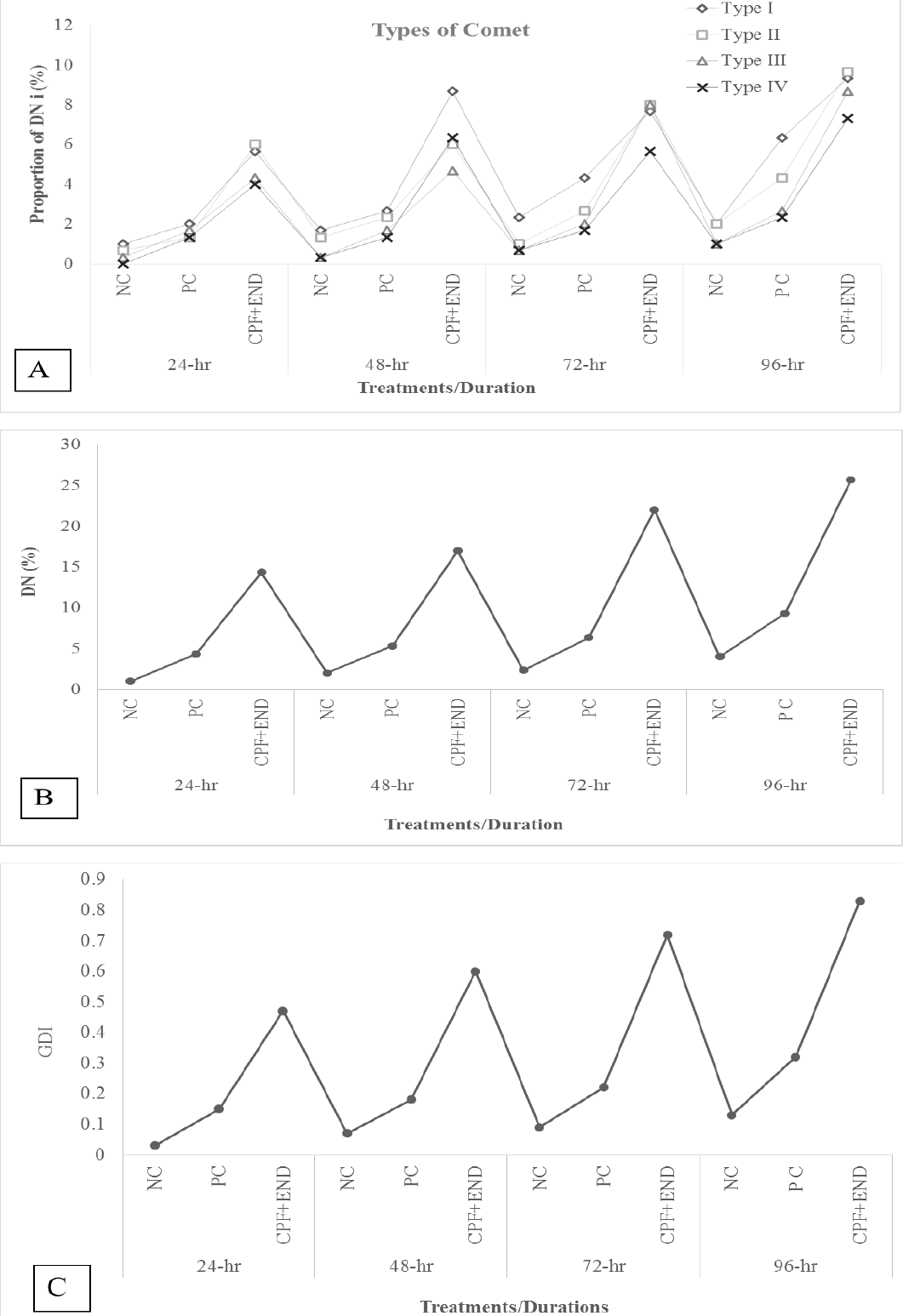
The results of present experiment showed that different types of comet, DN and GDI in RBCs of insecticides mixture exposed L. rohita was increased throughout the experiment (Figure 1).
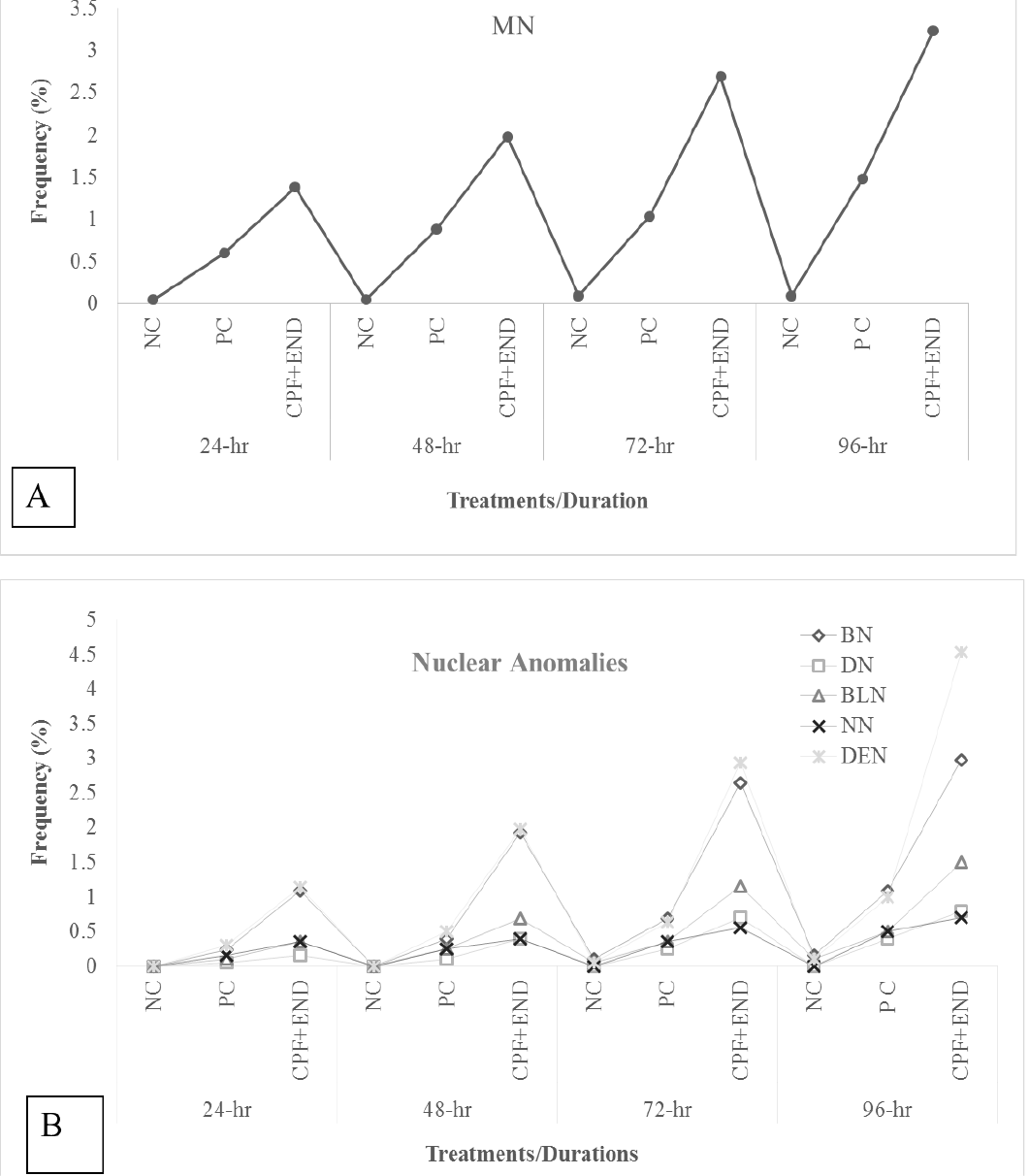
The duration specific response was observed for both DNA damage and nuclear anomalies in L. rohita.
More DNA damage was reported on 70 days of experiment as compared to non-exposed group (Figure 1 and 2).
Results of the present study showed that as time of exposure of fish to insecticides increased, damage of DNA also increased significantly.
Selected from the article's own text.
Abstract
Abstract | Insecticides are widely used to control the insect damaging food and cash crops as well as the fruit plants. However, terrestrial and aquatic biodiversity is directly affected by overuse of insecticides. Present study was conducted to find out the genotoxic effect of insecticides on DNA damage and nuclear anomalies in RBCs of Labeo rohita after exposure to chlorpyrifos+endosulfan (CPF+END) by using Comet and Micronucleus Assay. Twenty fingerlings of L. rohita was kept in LC50 concentration of CPF+END, (1.95±0.02 μgL-1 for 96 h) for 5 days after acclimatization. The blood sample of 5 fish was collected after 24, 48, 72 and 96 h to see the DNA damage and nuclear anomalies. Results of the current study revealed that damaged nuclei (DN%) and genetic damage index (GDI) in RBCs of L. rohita exposed to insecticides mixture was increased throughout the experiment. Similarly, the frequency of micronuclei (MN) and other nuclear anomalies (NAs) were also increased as the duration of exposure passed. It is concluded that exposure of fish to insecticides may cause considerable genetic damage to the fish. The both Comet and MN Assay are good biomarkers to identify the insecticides pollution. The results of our study can be utilized in environmental risk evaluation and in bio-monitoring approaches.
Novelty Statement | This research sheds light on the genotoxicity and environmental risks associated with endosulfan and chlorpyrifos pesticides in freshwater ecosystems and offers new insights into the potential synergistic effects of these pesticides on aquatic organisms.
Introduction
In the field of agriculture pesticides, insecticides and herbicides are abundantly used as chemicals to control pests, insects and unwanted weeds from crops . Terrestrial and aquatic biodiversity is directly affected by overuse of pesticides . Fish comes in direct contact with insecticides, as these chemicals are widely used on crops growing in the vicinity of fish farms . Pakistan ranks second in consuming pesticides among the countries included in the Indian Subcontinent .
Class of pesticides called organophosphate is widely used against pests of cash crops like rice, cotton, vegetables and fruit trees i.e., bananas and apple ; . An organophosphate, chlorpyrifos also seems to affect fish by creating oxidative stress damaging hereditary material, affecting blood characteristics, creating histopathological alterations and inhibition of acetylcholine esterase . Insecticide organochlorine is also being widely used against many insects since long . Endosulfan, an organochlorine has the potential to kill wide range of insects . DNA is severely damaged by endosulfan by different ways including structural modifications, cellular transformation and gene amplification . According to Ghaffar et al. (2015) endosulfan also reported to produce reactive oxygen species (ROS) as endosulfan is involved in redox reaction. Previous studies had shown that the effect of pesticides on water bodies consequences oxidative stress, cell death and DNA damage ; ; .
Antioxidants badly affects organisms by producing oxidative stress and this disturbance can be seen when organism’s body absorb such harmful pollutants which increase level of free radicals and ROS. Ultimately generated imbalance cause problem to organism health. Hematology of fish seems to be changed after exposure of damaging pollutants stresses .
Damage of chemical mutagens, pollutants to organisms DNA can be estimated by a widely used method called Comet Assay. Basic principle of Comet Assay is based on movement of genetic material along charged poles . Knowing genotoxic effects of pollutants to fish, Comet Assay is taken as one of the best and flexible technique. Significance of Comet Assay includes analyzing effects of physical and chemical mutagens, detecting low level of DNA damage, indicating DNA structural changes, apoptosis and determining inter strand cross linkages . According to Bolognesi and Hayashi (2011), pesticides affect cell division badly and creates micronuclei by affecting chromosomal damage. Micronucleus (MN) Assay is adopted to estimate genotoxic changes after exposure of aquatic organisms to chemical pollutants (Ventura-Campos de et al., 2008). MN Assay is widely used to estimate aneugenic and clastogenic effects in vitro and in vivo . The focus of this study was to find out the genotoxic effect of insecticide mixture on Labeo rohita by adopting two different techniques such as Comet Assay and Micronuclei Assay.
Materials and Methods
Acclimatization of experimental fish
Fingerlings of L. rohita (N 30) were purchased from the Fish Seed Hatchery Faisalabad. In order to become accustomed to new environment fishes were kept for two weeks in cemented tanks. LC50 (96-h) conc. of chlorpyrifos+endosulfan used was 1.95±0.02 μgL-1 as reported by Naz et al. (2019). Twenty fingerlings were kept in LC50 conc. of (CPF+END) mixture for 96 h. Five fish samples were maintained in same conditions without pesticides as a negative control while 5 fish were exposed to cyclophosphamide as a positive control. Five fish were removed from the experimental group after 24, 48, 72 and 96 h, for blood sampling.
Stock solutions
Stock solution of chlorpyrifos (CPF) and endosulfan (END) was prepared by dissolving 1g/100ml of technical grade CPF and END in analytical grade (95%) methanol separately. Required concentrations of solutions of CPF and END mixture (1:1) were prepared by diluting it in deionized water.
Comet assay
During sampling, blood was collected from the caudal vein of each fish. Eppendorf tube was filled with blood and anticoagulant was added to prevent blood clotting. Lysis, electrophoresis and staining was done as recommended in Comet Assay . Epi-Fluorescence microscope were used for scoring randomly two slides that were prepared for each treatment. Five categories of damaged cells were designed as “comet” according to comets tail lengths (Type IV: complete damage, Type IIII: high level damage, Type II: medium level damage, Type I: low level damage and Type 0: undamaged). For measuring the comet tail length of damaged cells TriTek Comet Score TM software was used .
Equation 1.Equation 3.
Micronucleus assay
A slide was prepared by instantly smearing droplets of blood which were taken from the caudal vein of a fish. Methanol was added to fix smears and slides were left for drying in air for 10 minutes. Wright-Giemsa stain were used for 8 minutes for staining . According to Fenech et al. (2003) binocular microscope was used for scoring of micronuclei and the NAs on coded slides. To calculate the MN frequency following formulae was used:
Equation 2.
Statistical analysis
Data was expressed in mean (±SE) and was analyzed by non-parametric Mann-Whitney U-test obtained from DNA damage and nuclear abnormalities. The Microsoft Excel was used to draw the graphs.
Results and Discussion
The results of present experiment showed that different types of comet, DN and GDI in RBCs of insecticides mixture exposed L. rohita was increased throughout the experiment (Figure 1). Although GDI and damage nuclei were observed on the first day of experiment but as compared to day 2, 3 and 4, it seemed to be gradually increased and on day 4 GDI and DN was at its higher level. Similarly, MN and NAs frequency was also increased as the duration of exposure passed (Figure 2). The duration specific response was observed for both DNA damage and nuclear anomalies in L. rohita. Same trend was shown by Ambreen and Javed (2018), who reported that Oreochromis niloticus exposed to insecticides for 70 days showed GDI and it was totally dose and duration dependent. More DNA damage was reported on 70 days of experiment as compared to non-exposed group (Figure 1 and 2).
Results of the present study showed that as time of exposure of fish to insecticides increased, damage of DNA also increased significantly. This may be due to some biochemical effects of insecticides. The ROS produced as a result of organophosphate metabolic processes that damage the pyrimidine and purine bases which induce DNA strand breaks . A direct relation of increased oxidative stress and DNA damage was reported by Ansari et al. (2011). DNA strand breaks, enzyme inactivation, and even carcinogenic effects on excessive accumulation of ROS (hydrogen peroxide, superoxide anion, and hydroxyl radical was reported by many researchers . The hydroxyl radical, with a lifetime of a few nanoseconds, is the most important free radical of biological and toxicological importance, because of its potent oxidative potential and indiscriminate reactivity with cellular components, such as lipids of biological membranes, proteins of enzymes, and DNA . Pesticides composed different heavy metals such as manganese, copper, zinc, lead, cadmium, iron and nickel, etc. that causes DNA damage by Fenton-like reactions . For repairing these DNA damages, living organism have ability to synthesize and control specific enzymatic systems . Alkyl and phosphoryl groups are two electrophilic groups which are produced by the metabolism of organophosphate pesticide and are a good substrate for nucleophilic attack. Interaction with DNA may be resulted by phosphorylation process (Ali et al., 2009).
In the present study it was found that DN and GDI in RBCs as well as MN and NAs frequency of insecticides mixture exposed L. rohita was increased throughout the experiment (Figures 1 and 2). Ullah (2015) also reported different extents of damage to DNA of L. rohita subjected to endosulfan for 28 days at different concentrations. Wang et al. (2018) reported that highest concentration of organophosphate sumithion disturbed organisms ROS and damaged DNA as estimated by Comet Assay. Pawar et al. (2019) noted DNA damage (% tail DNA) by Comet Assay and found similar results to our study that damage is totally time and dose dependent. El-Bouhy et al. (2018) documented significant increase in tail length, tail DNA% and tail moment when Juvenile Nile Tilapia was exposed to chlorpyrifos. Hussain et al. (2018), stated that significant damage to DNA was observed with the help of Comet Assay in L. rohita, C. mrigala and in C. catla. According to Khisroon et al. (2021) when the concentration and exposure duration of endosulfan increased, DNA damage level was also increased. For MN and NAs, results similar to our study were reported by Shoaib and Ali (2021); Ali et al. (2018). Islam et al. (2019) observed that level of MN of striped catfish, Pangasianodon hypophthalmus increased when exposed to different concentration of insecticide sumithion. It was reported that MN formation in L. rohita micronucleus was totally time dependent and their number increased after 96 hours of exposure to chlorpyrifos .
As reported in the present study, in L. rohita exposed to insecticides, GDI increased with the passage of time. Same trend was observed by Naz et al. (2019), who reported significant GDI and damaged nuclei in C. catla exposed to chlorpyrifos and endosulfan. Low level exposure of chlorpyrifos to common carp significantly caused DNA damage forms nuclear abnormalities . After exposure of monocrotrophos and organophosphate to zebra fish Micronuleus test and comet assay indicated formation of micronulei and DNA damage (Dcosta et al., 2018). Similarly, many Authors ; ; also documented that the Micronucleus Test shows formation of MN and NAs in fish erythrocytes after exposing to insecticides. Naz et al. (2021) also documented that In C. mrigala damaged DNA, nuclear anomalies, micronuclei are totally time dependent when exposed to three different mixtures of B+C, C+B and B+E.
Conclusions and Recommendations
The current research concluded that CPF+END mixture is very toxic to fish even at very low concentration. It has ability to cause considerable genetic damage to fish. The both Comet and MN Assay are good biomarkers to identify the insecticides pollution. The results of our study can be utilized in environmental risk evaluation and in bio-monitoring approaches.
Acknowledgement
Authors would like to acknowledge Department of Zoology, Wildlife and Fisheries, University of Agriculture, Faisalabad for providing support in this study.
Consent for publication
All authors are fine with the current version of the manuscript and give their consent for publication.
Ethical approval
Not applicable.
Conflict of interest
The authors have declared no conflict of interest.
Figures
Figure 1:.
The different types of comet (A), DN (B) and GDI (C) In RBCs of L. rohits.
Figure 2:.
The MN (A) and NAs (B) frequency in RBCs of L. rohita.
References
Alak, G., Yeltekin, A.C., Ozgerisc, F.B., Parlak, V., Ucar, A., Keles¸ M.S. and Atamanalp, M., 2019. Therapeutic effect of N-acetyl cysteine as an antioxidant on rainbow trout’s brain in cypermethrin toxicity. Chemosphere, 221: 30-36. https://doi.org/10.1016/j.chemosphere.2018.12.196[CrossRef]
Ali, M.A., Shoaib, N., Naqvi, G.Z. and Siddiqui, P.J.A., 2018. Genotoxic effect of pesticides on gill tissues of green-lipped mussel Perna viridis (L.). Ind. J. Exp. Biol., 56: 611-615.
Ali, R., Mittelstaedt, R.A., Shaddock, J.G., Ding, W., Bhalli, J.A., Khan, Q.M. and Heflich, R.H., 2011. Comparative analysis of micronuclei and DNA damage induced by ochratoxin A in two mammalian cell lines. Mutat. Res., 723: 58–64. https://doi.org/10.1016/j.mrgentox.2011.04.002[CrossRef]
Ambreen, F. and Javed, M., 2018. Pesticide mixture induced DNA damage in peripheral blood erythrocytes of freshwater fish, Oreochromis niloticus. Pakistan J. Zool., 50: 339-346. https://doi.org/10.17582/journal.pjz/2018.50.1.339.346[Full text][CrossRef]
Ansari, R.A., Rahman, S., Kaur, M., Anjum, S. and Raisuddin, S., 2011. In vivo cytogenetic and oxidative stress-inducing effects of cypermethrin in freshwater fish, Channa punctata Bloch. Ecotoxicol. Environ. Safe., 74: 150-156.
Banaee, M., Haghi, B.N. And Ibrahim, A.T.A., 2014. Sub-lethal toxicity of chlorpyrifos on Common carp, Cyprinus carpio (Linnaeus, 1758): Biochemical response. Int. J. Aquat. Biol., 1: 281-288.
Barsiene, J., Lazutka, J., Syvokiene, J., Dedonyte, V., Rybakovas, A., Bjornstad, A. And Andersen, O.K., 2004. Analysis of micronuclei in blue mussels and fish from the Baltic and north seas. Environ. Toxicol., 19: 365-371. https://doi.org/10.1002/tox.20031[CrossRef]
Bolognesi, C. and Hayashi, M., 2011. Micronucleus assay in aquatic animals. Mutagenesis, 26: 205-213. https://doi.org/10.1093/mutage/geq073[CrossRef]
Bright, D.E., 2018. A taxonomic monograph of the bark and ambrosia beetles of the West Indies (Coleoptera: Curculionoidea: Scolytidae). studies on West Indian Scolytidae (Coleoptera) 7. Insecta Mund., 664: 1–4.
Corsini, E., Sokooti, M., Galli, C.L., Moretto, A. and Colosio, C., 2013. Pesticide induced immunotoxicity in humans: A comprehensive review of the existing evidence. Toxicology, 307: 123–135. https://doi.org/10.1016/j.tox.2012.10.009[CrossRef]
Davico, C.E., Loteste, A., Parma, M.J., Poletta, G. and Simoniello, M.F., 2020. Stress oxidative and genotoxicity in Prochilodus lineatus (Valenciennes, 1836) exposed to commercial formulation of insecticide cypermethrin. Drug Chem. Toxicol., 43: 79-84. https://doi.org/10.1080/01480545.2018.1497643[CrossRef]
D-Costa, A.H., Shyama, S.K., Kumar, M.K.P. and Fernandes, T.M., 2018. Induction of DNA damage in the peripheral blood of zebrafish (Danio rerio) by an agricultural organophosphate pesticide, monocrotophos. Int. Aquat. Res., 10: 243–251. https://doi.org/10.1007/s40071-018-0201-x[CrossRef]
El-Bouhy, Z., Abd-Elhakim, Y. and Mohamed, E.M., 2018. Chronic effect of chlorpyrifos on biochemical, immunological changes and DNA Damage in Juvenile Nile tilapia (Oreochromis niloticus). Zagazig Vet. J., 46: 51-59. https://doi.org/10.21608/zvjz.2018.7623[CrossRef]
Ercal, N., Gurer-Orhan, H. and Aykin-Burns, N., 2001. Toxic metals and oxidative stress part I: Mechanisms involved in metal-induced oxidative damage. Curr. Top. Med. Chem., 1: 529-539.
Fenech, M. and Ferguson, L.R., 2001. Vitamins/minerals and genomic stabilitsy in humans. Mutat. Res., 475: 1-6.
Fenech, M., Chang, W.P., Kirsch-Volders, M., Holland, N., Bonassi, S. and Zeiger, E., 2003. Human project: Detailed description of the scoring criteria for the cytokinesis-block micronucleus assay using isolated human lymphocyte culture. Mutat. Res., 534: 65-75. https://doi.org/10.1016/S1383-5718(02)00249-8[CrossRef]
Ghaffar, A., Hussain, R., Khan, A. and Abbas, R.Z., 2015. Hemato-biochemical and genetic damage caused by triazophos in freshwater fish, Labeo rohita. Int. J. Agric. Biol., 17: 637-642.
Gomez, L.E., 2009. Use and benefits of chlorpyrifos in US agriculture. Dow AgroSciences, LLC.
Grube, A., Donaldson, D., Kiely, T. and Wu, L., 2011. Pesticides industry sales and usage: 2006 and 2007 market estimates. United States environmental protection agency, office of pesticide programs, biological and economic analysis division, Washington, DC, EPA 733-R-11-001.
Guney, M., Baha, O., Hilmi, D., Gulnur, T., Seren, G.G., Irfan, A. and Tamer, M., 2007. Fallopian damage induced by organophosphate insecticide methyl-parathion, and protective effect of vitamins E and C on ultra-structural changes in rats. Toxicol. Ind. Health, 23: 429-438.
Hayat, S., Javed, M. and Razzaq, S., 2007. Growth performance of metal stressed major carps viz., Catla catla, Labeo rohita and Cirrhina mrigala reared under semi-intensive culture system. Pak. Vet. J., 27: 8-12.
Hemalatha, D., Nataraj, B., Rangasamy, B., Maharajan, K. and Rames, M., 2020. Exploring the sublethal genotoxic effects of class II organophosphorus insecticide quinalphos on freshwater fish. Cyprinus carpio. J. Ocean. Limnol., 39: 661-670. https://doi.org/10.1007/s00343-019-9104-y[CrossRef]
Hemalatha, D., Nataraj, B., Rangasamy, B., Maharajan, K. and Ramesh, M., 2021. Exploring the sublethal genotoxic effects of class II organophosphorus insecticide quinalphos on freshwater fish Cyprinus carpio. J. Ocean. Limnol., 39: 661–670. https://doi.org/10.1007/s00343-019-9104-y[CrossRef]
Hussain, B., Sultana, T., Sultana, S., Al-Ghanim, K.A., Masoud, M.S. and Mahboob, S., 2018. Use of statistical analysis to validate ecogenotoxicology findings arising from various comet assay components. Environ. Sci. Pollut. Res., 25: 9730-9736. https://doi.org/10.1007/s11356-018-1268-z[CrossRef]
Hussain, R., Ali, F., Javed, M.T., Jabeen, G., Ghaffar, A., Khan, I., Liaqat, S., Hussain, T., Abbas, R.Z., Riaz, A., Gul, S.T. and Ghori. M.T., 2019. Clinico-hematological, serum bio-chemical, genotoxic and histopathological effects of tri-chlorfon in adult cockerels. Toxin Rev., pp: 1-9. https://doi.org/10.1080/15569543.2019.1673422[CrossRef]
Islam, S.M.M., Rahman, M.A., Nahar, S., Uddin, M.H., Haque, M.M. and Shahjahan, M., 2019. Acute toxicity of an organophosphate insecticide sumithion to striped catfish Pangasianodon hypophthalmus. Toxicol Rep., 6: 957-962. https://doi.org/10.1016/j.toxrep.2019.09.004[CrossRef]
Ismail, M., Ali, R., Shahid, M., Khan, M.A., Zubair, M., Ali, T., and Khan, Q.M., 2018. Genotoxic and hematological effects of chlorpyrifos exposure on freshwater fish Labeo rohita. Drug Chem. Toxicol., 41: 22-26. https://doi.org/10.1080/01480545.2017.1280047[CrossRef]
Jackson, A.L. and Loeb, L.A., 2001. The contribution of endogenous sources of DNA damage to the multiple mutations in cancer. Mutat. Res., 477: 7-21.
Jose, S., Jayesh, P., Mohandas, A., Philip, R. and Singh, I.S.B., 2011. Application of primary haemocyte culture of Penaeus monodon in the assessment of cytotoxicity and genotoxicity of heavy metals and pesticides. Mar. Environ. Res., 71: 169-177. https://doi.org/10.1016/j.marenvres.2010.12.008[CrossRef]
Khisroon, M., Hassan, N., Khan, A. and Farooqi, J., 2021. Assessment of DNA damage induced by endosulfan in grass carp (Ctenopharyngodon idella Valenciennes, 1844). Environ. Sci. Pollut. Res. Int., 28: 15551-15555. https://doi.org/10.1007/s11356-021-12727-x[CrossRef]
Kim, I.Y. and Hyun, C.K., 2006. Comparative evaluation of the alkaline comet assay with the micronucleus test for genotoxicity monitoring using aquatic organisms. Ecotoxicol. Environ. Saf., 64: 288–297. https://doi.org/10.1016/j.ecoenv.2005.05.019[CrossRef]
Latif, M., 2020. Study of oxidative stress and histo-biochemical biomarkers of diethyl phthalate induced toxicity in a cultureable fish, Labeo rohita. Pak. Vet. J., 40: 202–208. https://doi.org/10.29261/pakvetj/2019.108[CrossRef]
Lu, Y., Zhang, A., Li, C., Zhang, P., Su, X., Li, Y., Mu, C. and Li, T., 2013. The link between selenium binding protein from Sinonovacula constricta and environmental pollutions exposure. Fish Shellf. Immunol., 35: 271-277.
Mitkovska, V. And Chassovnikarova, T., 2020. Chlorpyrifos levels within permitted limits induce nuclear abnormalities and DNA damage in the erythrocytes of the common carp. Environ. Sci. Pollut. Res. Int., 27: 7166-7176. https://doi.org/10.1007/s11356-019-07408-9[CrossRef]
Muazzam, B., Munawar, K., Khan, I.A., Jahan, S., Iqbal, M., Asi, M.R., Farooqi, A., Nazli, A., Hussain, I. and Zafar, M.I., 2019. Stress response and toxicity studies on zebrafish exposed to endosulfan and imidacloprid present in water. J. Water Suppl. Res. Technol. Aqua, 68: 718–730. https://doi.org/10.2166/aqua.2019.077[CrossRef]
Nagarani, N., Devi, V.J. and Kumaraguru, A.K., 2012. Identification of DNA damage in marine fish Therapon jarbua by comet assay technique. J. Environ. Biol., 33: 699-703.
Naz, H., Abdullah, S., Abbas, K., Tariq, M.R., Shafique, L. and Nazeer, G., 2019. Comet assay: Quantification of damaged DNA in Catla catla exposed to endosulfan+chlorpyrifos. Punjab Univ. J. Zool., 34: 85-88. https://doi.org/10.17582/journal.pujz/2019.34.1.85.88[Full text][CrossRef]
Naz, H., Abdullah, S., Ahmed, T., Abbas, K. and Ijaz, M.U., 2021. Regression analysis for predicting the duration dependent response of oxidative stress dynamics and nuclear abnormalities in Catla catla exposed to chlorpyrifos and endosulfan. J. Anim. Pl. Sci., 31: 1167-1173. https://doi.org/10.36899/JAPS.2021.4.0314[CrossRef]
Naz, H., Abdullah, S., Ahmed, T., Abbas, K., Ijaz, M.U. and Hassan, M.A., 2019. Toxicity, oxidative stress and geno-toxicity: Lethal and sub-lethal effects of three different insecticides mixtures on Cirrhina mrigala. J. Anim. Pl. Sci., 32: 2022.
Norppa, H. and Falck, G.C.M., 2003. What do human micronuclei contain? Mutagenesis, 18: 221–233. https://doi.org/10.1093/mutage/18.3.221[CrossRef]
Pawar, A.P., Sanaye, S.V., Shyama, S., Sreepada, R.A., Bhagat, J., Kumar, P. and Khandeparker, R.D.S., 2019. In vivo DNA damage in gill, haemolymph and muscle cells of white leg shrimp Litopenaeus vannamei on exposure to organophosphorus pesticide. Aquacult. Environ. Interact., 11: 75-86. https://doi.org/10.3354/aei00299[CrossRef]
Rehman, M.U., Mir, M.U.R., Ahmed, S.B., Shakeel, S., Shah, M.Y. and Bhat, S.A., 2016. Endosulfan, a global pesticide: A review of its toxicity on various aspects of fish biology. Int. J. Gen. Med. Pharm., 5: 17–26.
Shoaib, N. and Ali, M.A., 2021. Genotoxic effect of pesticides on Perna viridis. Pakistan J. Zool., 54: 1323-1329. https://doi.org/10.17582/journal.pjz/20190817190848[Full text][CrossRef]
Singh, N.P., Mccoy, M.T., Tice, R.R. and Schneider, E.L., 1988. A simple technique for quantization of low levels of DNA damage in individual cells. Exp. Cell Res., 175: 184-191. https://doi.org/10.1016/0014-4827(88)90265-0[CrossRef]
Stanley, J. and Preetah, G., 2016. Pesticide toxicity to non-target organisms. Springer, Dordrecht, The Netherlands, pp. 502. https://doi.org/10.1007/978-94-017-7752-0[CrossRef]
Ucar, A., Parlak, V., Alak, G., Atamanalp, M. and Sisecioglu, M., 2020. Toxicity mechanisms of chlorpyrifos on tissues of rainbow trout and brown trout: Evaluation of oxidative stress responses and acetylcholinesterase enzymes activity. Iran. J. Fish. Sci., 19: 2106-2117.
Ullah, S., 2015. Protective role of vitamin C against cypermethrin induced toxicity in Labeo rohita (Ham.): Biochemical aspects. M.Phil. thesis, submitted to Department of Animal Sciences, Quaid-i-Azam University Islamabad, Pakistan.
Ullah, S., Begum, M., Ahmad, S. and Dhama, K., 2016. Genotoxic effect of Endosulfan at sublethal concentrations in Mori (Cirrhinus mrigala) fish using single cell gel electrophoresis (comet) assay. Int. J. Pharm., 12: 169-176. https://doi.org/10.3923/ijp.2016.169.176[CrossRef]
Ventura-Campos-De, B., Angelis-De D.F. and Marin-Morales, M.A., 2008. Mutagenic and genotoxic effects of the Atrazine herbicide in Oreochromis niloticus (Perciformes, Cichlidae) detected by the micronuclei test and the comet assay. Pestic. Biochem. Physiol., 90: 42–51. https://doi.org/10.1016/j.pestbp.2007.07.009[CrossRef]
Wang, C., Harwood, J.D. and Zhang, Q., 2018. Oxidative stress and DNA damage in common carp (Cyprinus carpio) exposed to the herbicide mesotrione. Chemosphere, 193: 1080-1086. https://doi.org/10.1016/j.chemosphere.2017.11.148[CrossRef]
Xing, Y., Zhao, X. and Cai, L., 2011. Prediction of nucleosome occupancy in Saccharomyces cerevisiae using position-correlation scoring function. Genomics, 98: 359-366. https://doi.org/10.1016/j.ygeno.2011.07.008[CrossRef]
Chlorpyrifos and Endosulfan Mixture Induced DNA Damage and Nuclear Anomalies in RBCs of Labeo rohita Assessed Through Comet and Micronucleus Assay · ResearchersLinks