Research Article · Volume 39, Issue 1, 22 April 2024 · Open Access
Antibiotic Residues of Penicillin and Oxytetracycline in Yoghurt: One Health Needs Paradigm Shift, Legislation and Policy Formulation in Pakistan
· · · · · · · · · ·
Affiliations & Notes ⌄
1BE and OE, HQs, Federal Government, Islamabad, Pakistan 2Clinical Medicine Department, University of Veterinary & Animal Sciences (UVAS), Lahore, Pakistan 3School Education Department, Government of the Punjab, Pakistan 4Institute of Biochemistry and Biotechnology, University of Veterinary & Animal Sciences (UVAS), Lahore, Pakistan 5Population Welfare Department, Government of the Punjab, Pakistan 6Children Hospital and Institute of Child Health, Multan, Pakistan 7Massey University, New Zealand
The yogurt contained as high as 13.95 µg/Kg or ng/g penicillin as the highest quantity in any of the samples while the lowest penicillin was detected as 7.07 µg/Kg or ng/g in a sample.
On the other hand, in case of oxytetracycline, the highest quantity was observed as 306.73 µg/Kg or ng/g in a sample while the lowest quantity of oxytetracycline was figured out in a sample as 197.77 µg/Kg or ng/g.
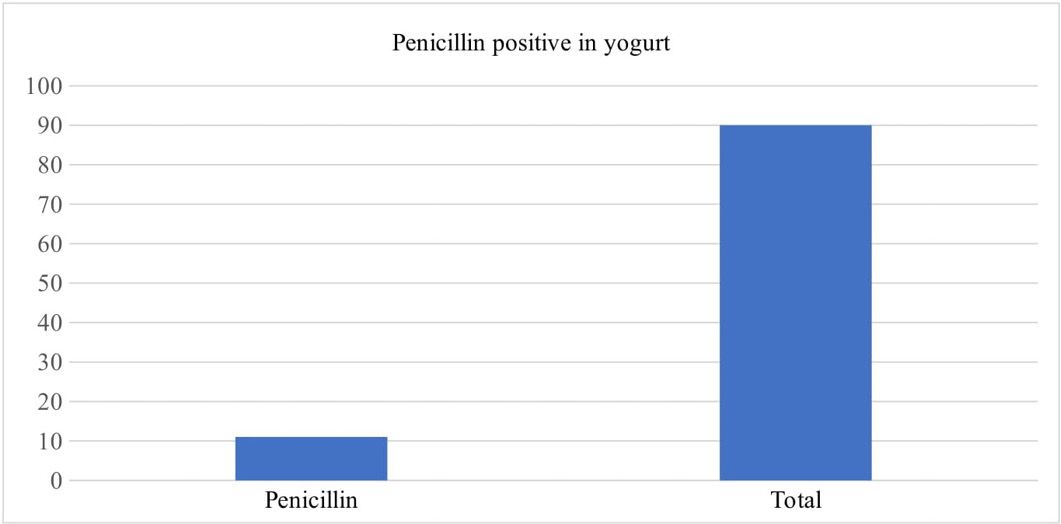
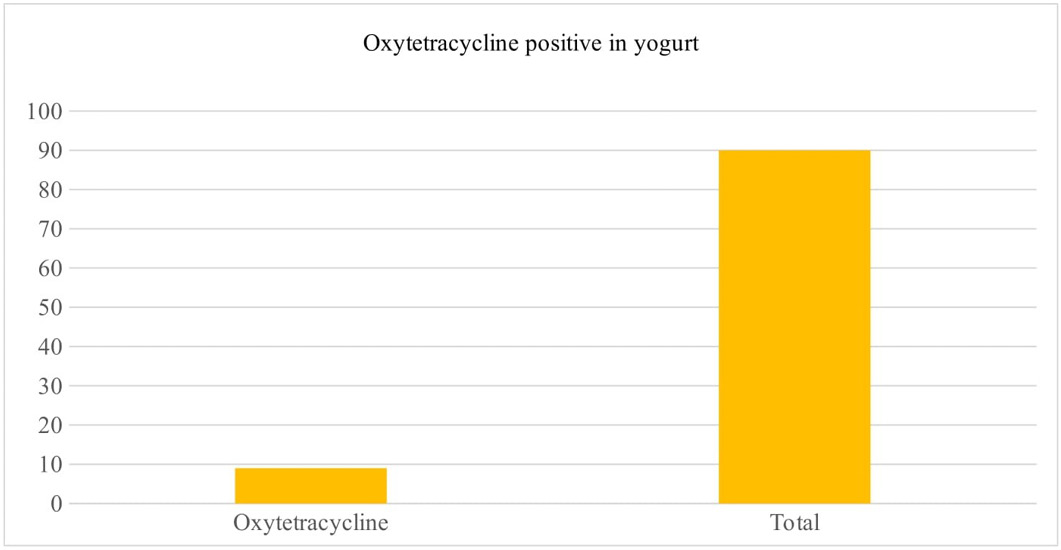
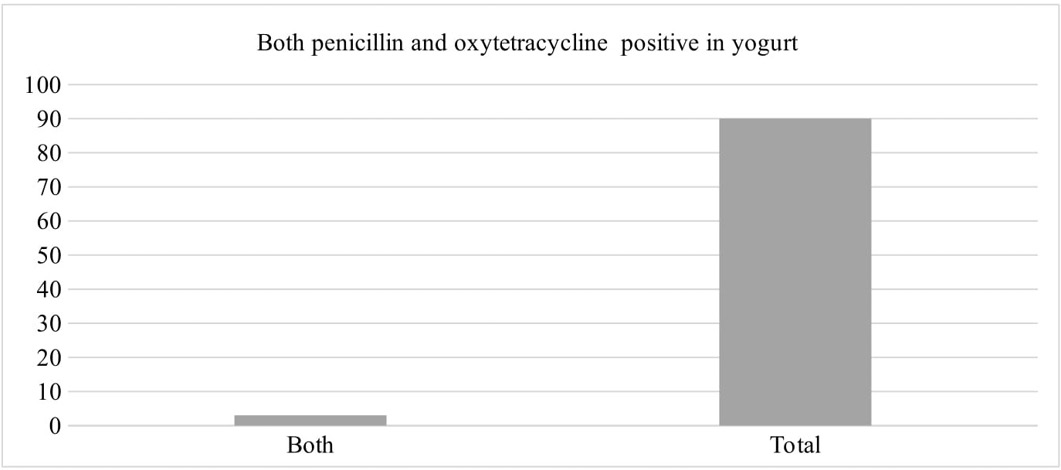
The 23 samples out of 90 were figured out to be positive making Penicillin at the highest 11 out of 23, making a percentage of 47.83 %, Oxytetracycline 9 out of 23, making a percentage of 39.13% and both Penicillin and Oxytetracycline simultaneously, making a percentage of 13.04% (Table 4 and Figures 3, 4, 5, 6, 7).
Selected from the article's own text.
Abstract
Yoghurt is considered a nutritional food rich in proteins and other essential minerals. Poor quality milk having Antibiotic Resistance resides threat to one health. Antibiotic Resistance is the main issue that affects the livestock, humans and environment. Antibiotic Resistance occurs due to the use of excessive amount of antibiotics for the growth and development of livestock. 90 samples of each weigh about 50 grams have been collected from Lahore and brought to University of Veterinary and Animal Sciences, Lahore in a Laboratory and applied HPLC technique on samples and found residues of Penicillin and oxytetracycline in different percentages (11% and 9%, respectively) and percentage of both combine Penicillin and oxytetracycline is 3%. In a yoghurt sample, the highest penicillin was found as 13.95 µg/Kg, the lowest penicillin was detected as 7.07 µg/Kg, the highest oxytetracycline was observed as 306.73 µg/Kg, the lowest oxytetracycline was figured out as 197.77 µg/Kg. The result is statistically significant and against the Null Hypothesis. It shows that significant difference has been estimated among all of the positive samples of yogurt. We found the commonly used antibiotics (Penicillin and oxytetracycline) in routine food i.e., in yoghurt samples collected from open market of Lahore, District of Punjab Province, Pakistan.
Novelty Statement | The detection of antibiotics (ABs) residues of penicillin and oxytetracycline in yoghurt through HPLC have been detected for the first time in Lahore, Punjab, Pakistan as a research study.
Introduction
According to Food and Drug administration in the United State, Residues are substances and their metabolites which are present in staples acquired from animals to which the drugs being referred to have been directed . With the discovery of pharmaceuticals, pharmaceuticals have been being used tremendously that include antibiotics (ABs). The discovery of animal and environmental health requires the exigent attention from all the states around the world Antibiotic agents can kill or restrain the development of defenseless bacteria, permitting resistant isolates to colonize and duplicate in a provided climate .
One Health (OH), is closely connected with the health of animal, human beings, and the environmental health . The worldwide emerging OH approach is an essential to address this issue effectively. The study has revealed that the issues which are related to the accumulation of antibiotics residues from different sources is becoming part of waste-water are eventually leading to the antibiotic resistance (AR) . Retailers and merchants do not have satisfactory information on compelling dose and the conceivable results of veterinary medications . Abuse of these antibiotics in animals has prompted the presence of residues in determined food sources, like milk and dairy items .
Tetracyclines are wide range and the most normally involved antibiotic agents for prophylactic and development purposes in numerous nations all over the planet, with oxytetracycline (OTC) being one model . The first antibiotic to be utilized in veterinary medication was penicillin G, which was at first made accessible in 1947 . Misuse of this antibiotics may led to the resistance and residues in dairy products . Poor quality milk containing the ABs poses threat to the one health and public health. The quality of milk from safety perspective should be improved .
In contemporary world, the Antibiotic Resistance (ABR) is one of the serious international threat to the human health inflicting many thousands fatalities each year due to the antibiotic residues in a variety of products . Different insightful techniques have been depicted to decide antibiotics residues in milk, for example, microbiological, chromatographic, immunochemical, receptor also, enzymes based tests. Milk is an exceptionally polished off food on the planet which has likewise an extraordinary incentive for human wellbeing Buildups of anti-toxins are predominantly tracked down in milk because of their imprudent use in treating irresistible illnesses of animals .
All vital regulatory, economic, and political forms acknowledge antibiotic resistance (ABR) as one of the crucial universal health challenges of the twenty-first century . According to a recent study, over 1 million deaths are caused by antibiotic resistance . The health warning of ABR is especially concerning in low and middle income countries due to the increased probability of local area obtained safe contaminations, the more infectious disease burden in the common population, lack of coverage of pure water and sanitation, and implementation of antibiotics in foodstuff production and healthcare . According to data collected, the antibiotic resistance crisis has worsened since the twenty-first century, and there is a need to reduce the burden of antibiotics in order to avoid antibiotic resistance . Otherwise, it will have a negative impact on the OH (van-Puyvelde et al., 2018). Policy makers should think about the OH to provide candid benefits. The scientists can inculcate a variety of sectors to work in collaboration for the OH . The implementation is another challenge and it should be in letter and spirit regarding the OH approach. China has initiated in a strict manner to conduct legal clinical practices since then to improve the relationship among the triad of planet .
The key objectives of the study were to detect commonly used antibiotics like penicillin and oxytetracycline as a one health issue and suggesting a way-forward for the legislatives to ensure food safety through food controlling authorities.
Materials and Methods
Sampling areas
The yoghurt samples were collected from a variety of areas of Lahore, District of Punjab Province, Pakistan. These areas included as sub-areas of Lahore district as Baad-Shahi Mosque to Sundar Estate Area and Johar Town to DHA.
Sampling criteria, type and size
The experimental source included 90 samples of yoghurt as fifty grams per sample (50g/sample). The samples were collected from the open markets of Lahore, and brought to UVAS, Lahore.
Samples collection, preservation and processing
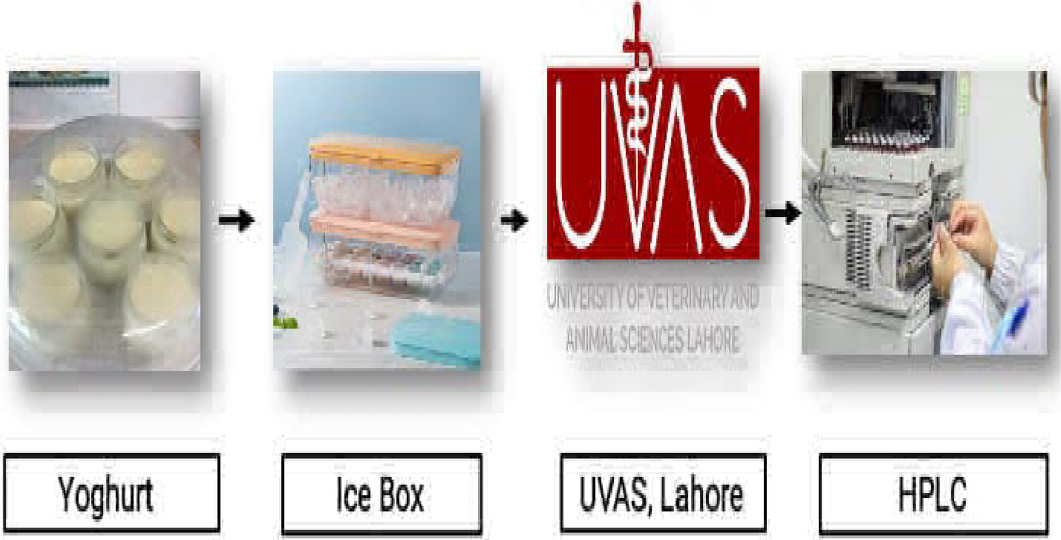
The HPLC for yoghurt samples can be easily used as a one of the most reliable and modern technique. The HPLC MS/MS has become gold- standard for multi residue analyses because of the fact that it has vintages over other methods. It is considered one of the most sensitive and reliable method for testing the samples in context of ABs detection and quantification. One of the best sensitive techniques includes HPLC-MS/MS . The HPLC and LC-MS/MS are highly sensitive detection methods for ABs in food . A variety of accurate analytical methods are available for the purpose of detection of the ABs. These techniques include high performance liquid chromatography (HPLC), gas chromatography, GC-MS and rapid chromatographic detection kits . The samples of yoghurt were collected in plastic zipper bags. Those were transported to the university’s clinical medicine laboratory in ice boxes. For preservation purpose, the samples were kept in refrigerator prior to testing. The quantification of the ABs residues was performed which under HPLC and was assessed statistically through a variety of available software. The processing of samples was initiated and completed as per standard procedures provided with HPLC machine and equipment (Figure 1). The quantification of the ABs residues was performed which under HPLC and was assessed statistically through a variety of available software.
Statistical analysis
SPSS (IBM Corp., NY, USA) version 26.0 was used to encode the data set. Reports of baseline characteristic frequencies were made. All variables were originally investigated using a univariable analysis to identify the risk factors linked to the incidence of antibiotic residues in samples. The correlation between antibiotic residue and the positive samples was evaluated using Chi-square (χ2). Multivariable logistic regression (MLR) was also employed to identify factor linked with positive and negative dichotomous sample outcome. The 95% CI was used to emphasize the odds ratio in the MLR-based statistical test, which was based on the two-sided Wald test.
Results and Discussion
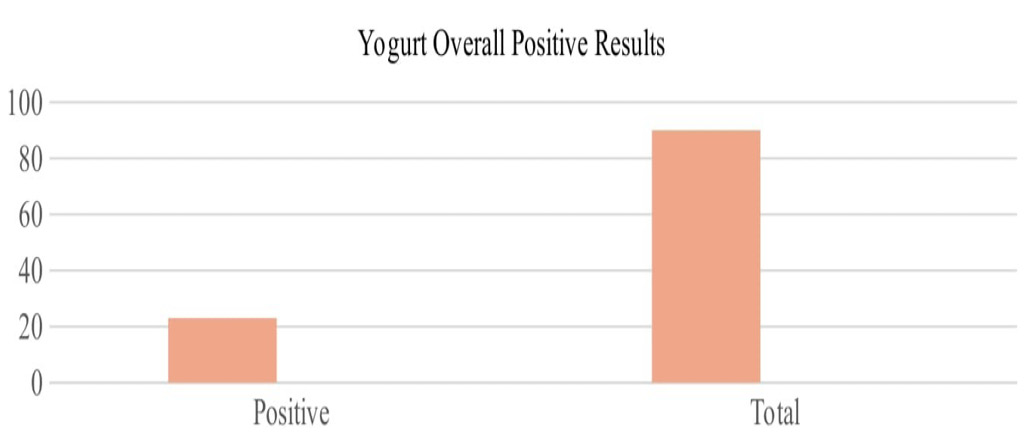
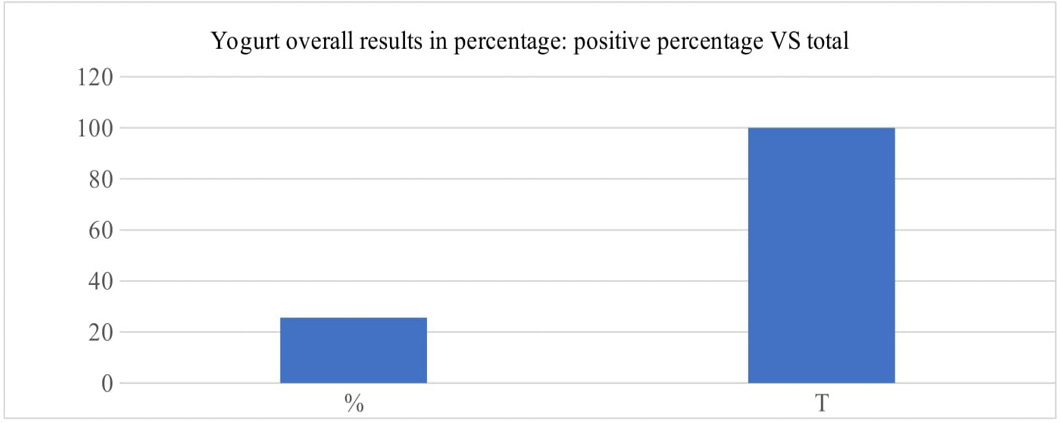
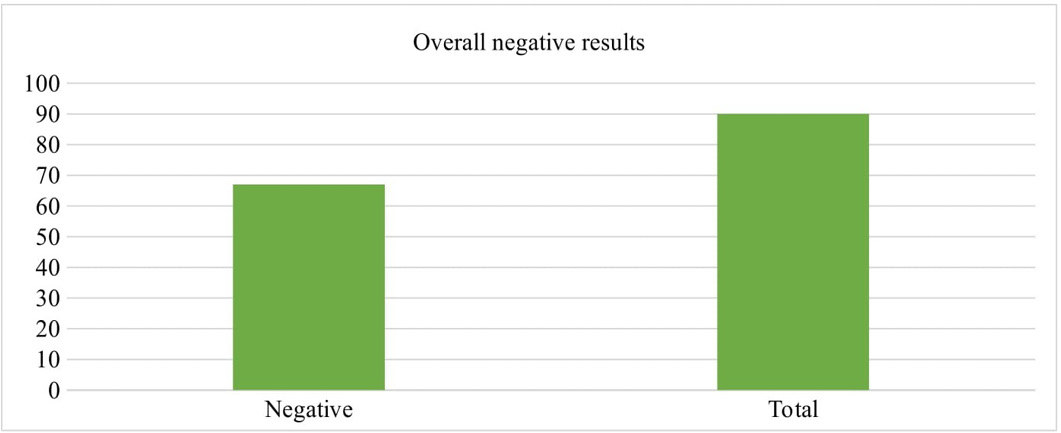
The 23 samples out of 90 were found positive making a percentage of 25.56 and 67 were negative making a percentage of 74.44 for Penicillin and Oxytetracycline (ABs) and both of ABs simultaneously (Table 1).
Table 1: Yogurt positive and negative samples with percentages.
Category
Total samples
Positive
%
Negative
%
Yogurt
90
23
25.56
67
74.44
The yogurt contained as high as 13.95 µg/Kg or ng/g penicillin as the highest quantity in any of the samples while the lowest penicillin was detected as 7.07 µg/Kg or ng/g in a sample. Similarly, the average highest penicillin was figured out in a sample as 10.53 µg/Kg or ng/g. On the other hand, in case of oxytetracycline, the highest quantity was observed as 306.73 µg/Kg or ng/g in a sample while the lowest quantity of oxytetracycline was figured out in a sample as 197.77 µg/Kg or ng/g. On similar grounds, the average highest oxytetracycline was observed as 255.88 µg/Kg or ng/g in the samples while the highest quantities of both of the Abs simultaneously (penicillin and oxytetracycline) were figured out as 12.63 simultaneously µg/Kg or ng/g penicillin and 275.41 µg/L or ng/ml as oxytetracycline , lowest both penicillin oxytetracycline were figured out as 9.90 µg/Kg or ng/g penicillin and 258.72 µg/Kg or ng/g as oxytetracycline respectively, average for both penicillin and oxytetracycline, penicillin as 10.90 µg/Kg or ng/g and 248.73 µg/Kg as oxytetracycline as well (Table 2 and Figure 2).
Table 2: Delineating penicillin and oxytetracycline in yogurt samples µg/kg.
Drugs in yogurt
Highest pen
Lowest pen
Average pen
Highest oxy.
Lowest oxy.
Average oxy.
Highest both pen. and oxy.
Lowest both pen. and oxy.
Average both pen. and oxy.
µg/kg or ng/g
13.95
7.07
10.53
306.73
197.77
255.88
12.63 and 275.41
9.90 and 258.72
10.9 and 248.73
The said samples are being presented as mean ± standard error of mean described by Coles. The obtained data was analyzed by using statistical technique known as ANOVA through the software named as SPSS, version 20.20. The mean values were sought as 10.606, and 254.09 while the standard deviation values were calculated as 1.907 and 33.59. The p-value obtained is 0.000000001 for yogurt only for the positive samples which have been quantified. This data has depicted that significant difference patterns have been shown among all of the positive samples. The positive samples had different quantities were present in different samples (Table 3).
Table 3: ANOVA of yogurt positive samples.
Mean
10.606
254.09
Standard deviation
1.907
33.59
F value
737.79
p value
0.000000001
The 23 samples out of 90 were figured out to be positive making Penicillin at the highest 11 out of 23, making a percentage of 47.83 %, Oxytetracycline 9 out of 23, making a percentage of 39.13% and both Penicillin and Oxytetracycline simultaneously, making a percentage of 13.04% (Table 4 and Figures 3, 4, 5, 6, 7).
Table 4: Yogurt positive samples- a drug wise comparison.
S. No.
Drug category
Positive samples
Percentage %
1.
Penicillin
11
47.83
2.
Oxytetracycline
9
39.13
3.
Both penicillin and oxytetracycline
3
13.04
Outcomes
As per following objectives of the current studies have been achieved which could be extended prospectively by discovering new avenues through multidisciplinary vistas:
Grave kind of effects of antibiotic residues were figured out from the analyzed data which were present in yoghurt on national food safety and public health eventually lead to one-health issue. This is due to the abuse of ABs in livestock which remains unmeasured at the hands of quackery.
The pragmatic way-forward has been suggested for all kind of stakeholders. These stakeholders include legislative, judiciary, corporate sector, common public (consumers) and prescription policy makers.
Public awareness-based newspapers article has been published in national dailies, on national TV channels and social media channels.
There is a strict need of policy in both private and public sector to reduce the use of ABs in live-stocks of Pakistan.
Antibiotics (ABs) are commonly exploited to treat sickness in animals and to enhance their production. These substances can be found as residues in milk, and such kind of food is unsuitable for human consumption. The tenacious and strict control of those Abs through legislation would be indispensable and it must be checked with iron hands . The utilization of ABs in cattle for the treatment has contributed to the residues in dairy items. Penicillin is ordinarily utilized veterinary medication to treat mastitis in dairy cows . A range of sensitive and specific strategies are developed for the quantification of those compounds in numerous livestock food materials. However, it is pertinent to mention here that the determination of trace residues in foods like milk typically need intensive sample extraction and preparation before conducting instrumental analysis (Pérez-Valdespino et al., 2020). Twenty three (23) out of 90 samples were positive for antibiotic (Penicillin and Oxytetracycline) residues according to techniques applied as mentioned in Table 1 and same technique was used by . Antibiotic residues are present in different samples of milk with different percentages as mentioned by and . In proportion of 23 positive samples, 11 out of 23 were positive for penicillin residues making a percentage of 47.83% and 9 out of 23 were positive for oxytetracycline making a percentage of 39.13% and for both were 3 out of 23 making a percentage of 13.04% as mentioned in Table 2. The quantification of the ABs residues was performed which under HPLC and was assessed statistically through a variety of available software (Figure 1). These results are different from having penicillin percentage is 0 % and oxytetracycline is of 50%. The reason could be the difference in samples size, sample area, methodology and techniques applied and the environment of that area and least access of antibiotics to livestock in that area.
Epilogue and pragmatic way-forward
The data regarding the presence of commonly used ABs i.e. penicillin and oxytetracycline in livestock which are used as routine food for human consumption has delineated presence of antibiotic residues in yoghurt samples collected from the open markets of Lahore. There is a dire need of policy formulation in both private and public sector to reduce the use of ABs in live-stocks of Pakistan. Furthermore, all the stake-holders may work in collaboration to ensure OH.
Acknowledgements
Profound gratitude for the team of ABN TV’s Morning Show (Mr. Muneeb Hamid, Ms. Nimra Abbas and Ms. Farwa Raza) and digital platform (Mr. Tabasum Ranjha) for creating public awareness and disseminating the current research endeavours among the stake holders.
Conflict of interest
The authors have declared no conflict of interest.
Figures
Figure 1:.
Diagrammatic view of material and method.
Figure 2:.
Yogurt positive as compared to total samples.
Figure 3:.
Yogurt overall results in percentage: Positive percentage vs total.
Figure 4:.
Yogurt overall results in percentage: Negative percentage vs total.
Figure 5:.
Penicillin positive in yogurt.
Figure 6:.
Oxytetracycline positive in yogurt as compared to total samples.
Figure 7:.
Penicillin and oxytetracycline both positive in yogurt as compared to total samples.
References
Abebew, D.K., Belihu and Zewde, G., 2014. Detection and determination of oxytetracycline and penicillin G antibiotic residue levels in bovine bulk milk from Nazareth dairy farms, Ethiopia. Ethiopian Vet. J., 18: 1. https://www.ajol.info/index.php/evj/article/view/119774
Acharya, K.P., Acharya, N., Phuyal, S., Upadhyaya, M. and Lasee, S., 2020. One-health approach: A best possible way to control rabies. One Hlth., 10: 100161. https://doi.org/10.1016/j.onehlt.2020.100161[CrossRef]
Alnassrallah, M.N., Alzoman, N.Z. and Almomen, A., 2022. Qualitative immunoassay for the determination of tetracycline antibiotic residues in milk samples followed by a quantitative improved HPLC-DAD method. Sci. Rep., 12: 14502. https://doi.org/10.1038/s41598-022-18886-2[CrossRef]
Ambaw, M. and Aytenfsu, S., 2021. Detection of antibiotic residue in raw bulk milk in tiyo and digelu-tijo milk shades of Arsi Zone, Ethiopia. Fd. Sci. Qual. Manage., 107: 03.
Balkhy, H.H., Zowawi, H.M., Alshamrani, M.M., Allegranzi, B., Srinivasan, A., Al-Abdely, H.M., Somily, A.M., Al-Quwaizani, M.A., Al-Maani, A.S., Balkhy, H. and Al-Katheeri, H.A., 2018. Antimicrobial resistance: A round table discussion on the One Health concept from the gulf cooperation council countries. Part two: A focus on human health. J. Infect. Publ. Hlth., 11: 778-783. https://doi.org/10.1016/j.jiph.2018.05.008[CrossRef]
Fang, G. and Song, Q., 2021. Legislation advancement of one health in China in the context of the COVID-19 pandemic: From the perspective of the wild animal conservation law. One Hlth., 12: 100195. https://doi.org/10.1016/j.onehlt.2020.100195[CrossRef]
Fatoki, O.S., Opeolu, B.O., Genthe, B. and Olatunji, O.S., 2018. Multi-residue method for the determination of selected veterinary pharmaceutical residues in surface water around livestock agricultural farms. Heliyon, 4: e01066. https://doi.org/10.1016/j.heliyon.2018.e01066[CrossRef]
Hernando-Amado, S., Coque, T.M., Baquero, F. and Martínez, J.L., 2019. Defining and combating antibiotic resistance from one health and global health perspectives. Nat. Microbiol., 4: 1432.
Jamrozik, E. and Heriot, G.S., 2022. Ethics and antibiotic resistance. Br. Med. Bull., 141: 4. https://doi.org/10.1093/bmb/ldab030[CrossRef]
Kabrite, S., Bou-Mitri, C., Fares, J.E.H., Hassan, H.F. and Boumosleh, J.M., 2019. Identification and dietary exposure assessment of tetracycline and penicillin residues in fluid milk, yogurt, and labneh: A cross-sectional study in Lebanon. Vet. World, 12: 527. https://doi.org/10.14202/vetworld.2019.527-534[CrossRef]
Kaya, S.E. and Filazi, A., 2010. Determination of antibiotic residues in milk samples. Kafkas Univ. Vet. Fak. Derg, 16: S31.
Klein, E.Y., Van-Boeckel, T.P., Martinez, E.M., Pant, S., Gandra, S., Levin, S.A., Goossens, H. and Laxminarayan, R., 2018. Global increase and geographic convergence in antibiotic consumption between 2000 and 2015. Proc. Natl. Acad. Sci., 115: E3463. https://doi.org/10.1073/pnas.1717295115[CrossRef]
Lecuona, M.D., García S.G., Olazaguirre, G.A. and Ochoa, I.H., 2022. Antibiotics in dairy production: Where is the problem? Dairy, 3: 541-564. https://doi.org/10.3390/dairy3030039[CrossRef]
Lu, Z., Deng, F., He, R., Tan, L., Luo, X., Pan, X. and Yang, Z., 2019. A pass-through solid-phase extraction clean-up method for the determination of 11 quinolone antibiotics in chicken meat and egg samples using ultra-performance liquid chromatography tandem mass spectrometry. Microchem. J., 151: 104213. https://doi.org/10.1016/j.microc.2019.104213[CrossRef]
Majdinasab, M., Mishra, R.K., Tang, X. and Marty, J.L., 2020. Detection of antibiotics in food: New achievements in the development of biosensors. TrAC Trends Anal. Chem., 127: 115883. https://doi.org/10.1016/j.trac.2020.115883[CrossRef]
Ngangom, B.L., Tamunjoh, S.S.A. and Boyom, F.F., 2019. Antibiotic residues in food animals: Public health concern. Acta Ecol. Sin., 39: 411. https://doi.org/10.1016/j.chnaes.2018.10.004[CrossRef]
Nyokabi, S.N., de-Boer, I.J.M., Luning, P.A., Korir, L., Lindahl, J., Bett, B. and Oosting, S.J., 2021. Milk quality along dairy farming systems and associated value chains in Kenya: An analysis of composition, contamination and adulteration. Fd. Contr., 119: 107482. https://doi.org/10.1016/j.foodcont.2020.107482[CrossRef]
Pérez-Valdespino, A., Pircher, R., Pérez-Domínguez, C.Y. and Mendoza-Sanchez, I., 2020. Impact of flooding on urban soils: Changes in antibiotic resistance and bacterial community after Hurricane Harvey. Sci. Total Environ., 766: 142643. https://doi.org/10.1016/j.scitotenv.2020.142643[CrossRef]
Pourtaghi, A., Mohammadinejad, A., Rezaee, M.A., Saberi, M.R., Motamedshariaty, V.S. and Mohajeri, S.A., 2022. Application of molecularly imprinted solid-phase extraction coupled with liquid chromatography method for detection of penicillin G in pasteurised milk samples. Int. J. Dairy Technol., 75: 83. https://doi.org/10.1111/1471-0307.12833[CrossRef]
Rousham, E.K., Unicomb, L. and Islam, M.A., 2018. Human, animal and environmental contributors to antibiotic resistance in low-resource settings: Integrating behavioural, epidemiological and one health approaches. Proc. R. Soc. B Biol. Sci., 285: 20180332. https://doi.org/10.1098/rspb.2018.0332[CrossRef]
Sachi, S., Ferdous, J., Sikder, M.H. and Hussani, S.A.K., 2019. Antibiotic residues in milk: Past, present, and future. J. Adv. Vet. Anim. Res., 6: 315. https://doi.org/10.5455/javar.2019.f350[CrossRef]
Samad, A., 2022. Antibiotics resistance in poultry and its solution. Devot. J. Commun. Ser., 3: 999. https://doi.org/10.36418/dev.v3i10.206[CrossRef]
Saraiva, M.S., Lim, M.K., do-Monte, D.F.M., Givisiez, P.E.N., Alves, L.B.R., de-Freitas, O.C., Kariuki, S., Júnior, A.B., de-Oliveira, C.J.B. and Gebreyes, W.A., 2022. Antimicrobial resistance in the globalized food chain: A One Health perspective applied to the poultry industry. Braz. J. Microbiol., 1.
Sorinolu, A.J., Tyagi, N., Kumar, A. and Munir, M., 2021. Antibiotic resistance development and human health risks during wastewater reuse and biosolids application in agriculture. Chemosphere, 265: 129032. https://doi.org/10.1016/j.chemosphere.2020.129032[CrossRef]
Teixeira, R.C., Luiz, L.C., Junqueira, G.M.A., Bell, M.J.V. and Anjos, V.C., 2020. Detection of antibiotic residues in Cow’s milk: A theoretical and experimental vibrational study. J. Mol. Struct., 1215: 128221. https://doi.org/10.1016/j.molstruc.2020.128221[CrossRef]
van-Puyvelde, S., Deborggraeve, S. and Jacobs, J., 2018. Why the antibiotic resistance crisis requires a One Health approach. Lancet Infect. Dis., 18: 132. https://doi.org/10.1016/S1473-3099(17)30704-1[CrossRef]
Worku, Y., Muluneh, A., Tamir, A. and Nazir, S., 2017. Detection of penicillin residue in cow milk at Kombolcha dairy farms, northeastern Ethiopia. Bull. Anim. Hlth. Prod. Africa, 65: 393. https:// www.ajol.info/index.php/bahpa/article/view/167746
Zhou, Z.C., Feng, W.Q., Han, Y., Zheng, J., Chen, T., Wei, Y.Y., Gillings, M., Zhu, Y.G. and Chen, H., 2018. Prevalence and transmission of antibiotic resistance and microbiota between humans and water environments. Environ. Int., 121: 1155-1161. https://doi.org/10.1016/j.envint.2018.10.032[CrossRef]