Research Article · Volume 39, Issue 1, 22 April 2024 · Open Access
New Distribution Record and Habitat Characteristics of Stinging Catfish (Heteropneustes nani Hossain, Sarker, Sharifuzzaman and Chowdhury, 2013) from Nepal
· ·
Affiliations & Notes ⌄
1Central Department of Zoology, Institute of Science and Technology, Tribhuvan University, Kathmandu 44618, Nepal 2College of Fisheries and Life Science, Shanghai Ocean University, Shanghai, China Corresponding Author: Asmit Subba, subbaasmit926@gmail.com
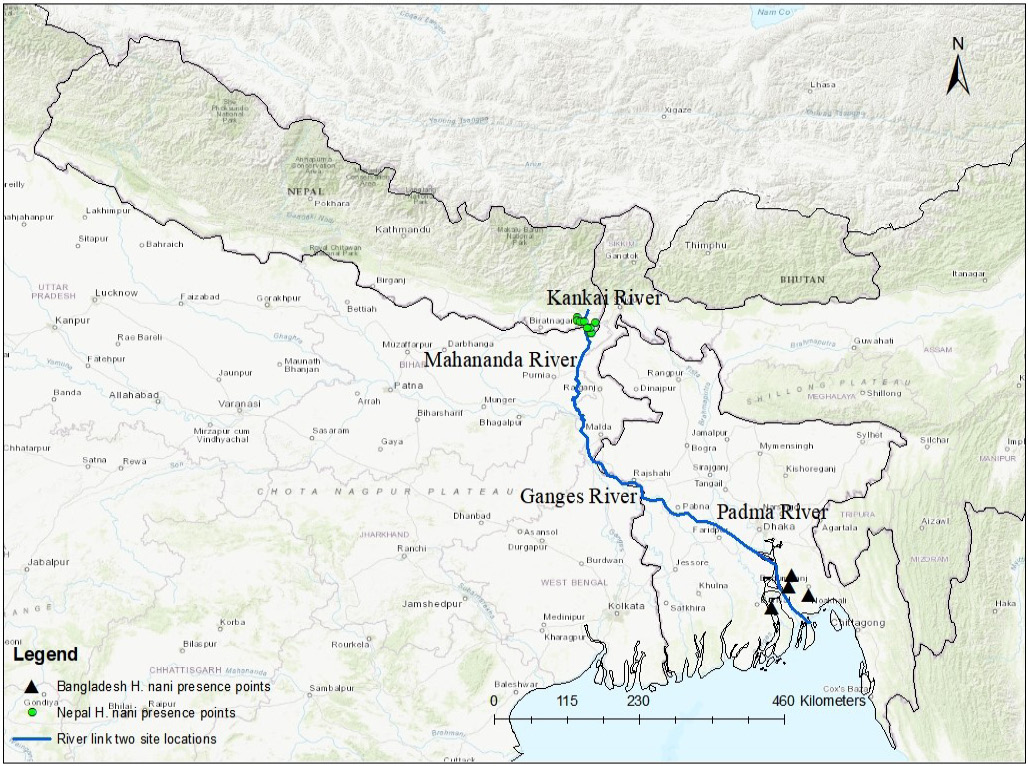
There are river connections between the localities of the original description of the H. nani from Bangladesh and the location of the present records in Nepal (Figure 5), which provided dispersal pathways.
H. nani was recorded from more localities compared to H. fossilis, likely because the surveys were conducted in habitats that were more preferable for H. nani.
This research has verified the presence of Heteropneustes nani in the eastern lowlands of Nepal.
Moreover, H. nani is widely distributed in shallow water bodies across the Jhapa District, showing a preference for oxygen-scarce lentic water ecosystems compared to H. fossilis.
Selected from the article's own text.
Abstract
The Stinging catfish (Heteropnuestes nani) was described in 2013 from the Noakhali of Bangladesh through detailed morphological characterization. They differ significantly from their congeners based on small size, completely separated pectoral spine from rays bearing 9–10 serrae along the inner edge and united anal-caudal fin. In Nepal, only one species of Heteropnuestes, i.e., H. fossilis has been reported. Based on the morphometric and meristic characteristics, this study reports the first-ever record of another species (H. nani) under the genus from eight locations in Jhapa District, eastern lowland Nepal, along with H. fossilis records. The two species distinctly differ, with H. nani conspicuously smaller than H. fossilis. Heteropnuestes nani has been recorded from nutrient-rich, shallow, and turbid water bodies with abundant invasive aquatic macrophytes (Eichhornia crassipes, Hydrilla verticillata, and Ceratophyllum submersum). The type locality of the H. nani in Bangladesh and the newly reported locality in Nepal share similar tropical monsoon climates and river connectivity that might have facilitated their dispersal. Further studies are warranted to understand the detailed taxonomy and distribution pattern of H. nani in Nepal.
Novelty Statement | This study reported the occurrence of Heteropeustes nani from Nepal using field surveys from water bodies of eastern lowland of the country. Further, it characterized the habitats of the species and proposed the dispersal route from its original description locality in Bangladesh.
Introduction
Heteropneustes Müller, 1840 is a genus of catfish with stinging capabilities, known for its unique feature of having an air sac. This catfish is part of the Heteropneustidae family in the order Siluriformes. Heteropneustes is found across a wide range of areas, including the Indian subcontinent and the mainland of several south and southeast Asian countries like India, Myanmar, Nepal, Pakistan, Sri Lanka, Vietnam, and Thailand (Arunachalam et al., 1890; ; . They inhabit ditches, swamps, canals, marshes, ponds, and waterlogged areas of lowlands with shallow water depth and low dissolved oxygen levels. They are characterized by an elongated and compressed body with short dorsal and long pelvic fins, a pectoral serrated spine associated with venom glands and four pairs of barbels, a pair of elongated and tubular cavities of air sacs extend posteriorly almost up to the tail, and adaptation to oxygen-deficient waters ; .
Five nominal species of Heteropnuestes are described, namely H. microps and H. longipectrolis from Western Ghats, India; H. kemratensis from the Chao Praya River in Thailand; H. fossilis (Bloch, 1794) from Tamil Nadu, India; and H. nani from Noakhali, Bangladesh . Heteropneustes nani stands out from its relatives due to its notably smaller size, with an average length of 98.08 mm from the snout to the tail (compared to 223.96 mm in H. fossilis, 152.40 mm in H. microops, 210.00 mm in H. kemratensis, and 150.00 mm in H. longipectoralis). Additionally, they have a unique combination of features: Their head is larger compared to their body depth; they have small jaws with fleshy lips and a terminal mouth; their body is dark colored with faint lateral bands on the sides; and their pectoral spines are set apart from the rays featuring 9–10 serrations along the inner edge .
The type locality of H. nani, the Noakhali area of Bangladesh, lies adjacent to Nepal, where the species has not been reported despite the resemblance of suitable habitats (lakes, ponds, marshes, and floodplains) between eastern lowlands of Nepal and Bangladesh. Only a single species of the genus, H. fossilis, was reported from Nepal . Morphologically, H. fossilis differs from H. nani in multiple characters. The upper body of H. fossilis is either yellow or dark purplish-brown color, while the lower body is comparatively lighter. The mouth extends backward, and the pectoral spine is connected to the fin rays by a membrane featuring 3–4 serrations that curve forward along the inner edge at the front tip. Additionally, there is a clear separation between the anal and caudal fins, marked by a distinct notch, unlike in H. nani (Bloch, 1794; ; . Heteropnuestes fossilis live in freshwater environments, occasionally in slightly salty or brackish water such as ponds, ditches, swamps, marshes, and muddy rivers. During the dry season, they can survive in partially wet and semi-dry mud, as noted by De Silva et al. (2015) and Fernado and Goonatilake (2019). It is one of the common species distributed along the lowland and midland waters of Nepal .
As a result of its altitudinal variation and geographical location intertwining the eastern and western Himalayas, Nepal is home to a wide variety of fish species . However, due to limited studies, many wildlife species, including fish, remain unidentified and lack proper taxonomic descriptions . Comprehensive research involving both meticulous classification efforts and genetic examinations is essential to formulate effective strategies for inventory and conserving the country’s fish population . This study marks the first record of Heteropneustes nani in Nepal from the eastern lowlands of Jhapa District. The habitat characteristics of the newly reported H. nani in Nepal have also been explained.
Materials and Methods
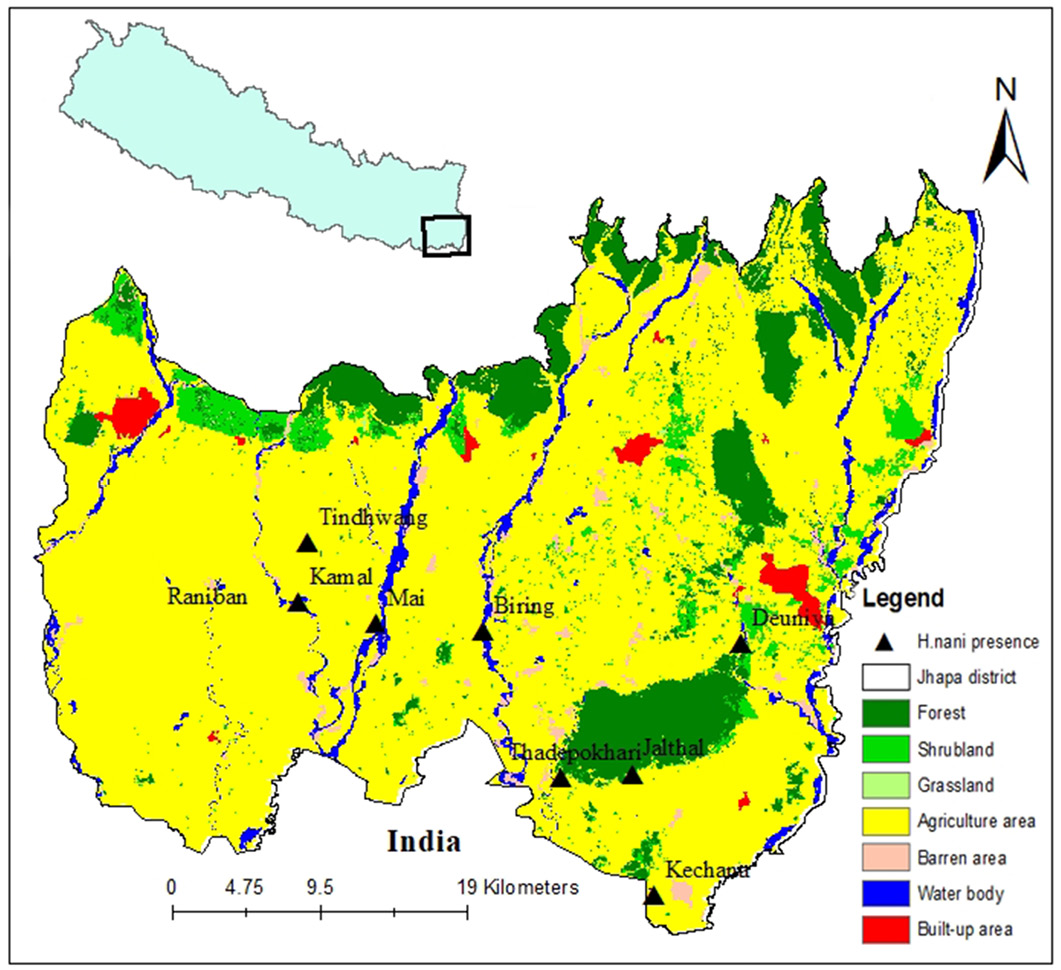
On 5th September 2021, during the Jalthal Biodiversity Profiling Survey, the first author observed a specimen from the small pond near the Deuniya River bridge, Jhapa District, Koshi Province, Nepal (Figure 1) where local fishermen had collected the fish. In a close observation, it appeared remarkably different from the previously reported stinging catfish from the locality, i.e., H. fossilis. Morphologically, they were smaller than H. fossilis and had completely separated pectoral spine from rays, and had 9–10 serrae along the inner edge, similar to the explanation of Hossain et al. (2013) for H. nani. Further explorations were done, and similar specimens were collected from eight different locations in Jhapa District between September 2021 and December 2022. Additional information, including habitat, local species names, locations, season, and abundance, was also collected.
The specimens were collected from small lakes, ponds, marshes, and flood plains of Deuniya River (88.050731°E, 26.530253°N), Kankai River (87.838364°E, 26.541983°N), Kamal River (87.792928°E, 26.554314°N), Biring River (87.900111°E, 26.537231°N), Thade Pokhari (87.945086°E, 26.451831°N), Kechana Jheel areas (87.999803°E, 26.383389°N), Jalthal Forest wetlands (87.986953°E, 26.454278°N), and Tindhwang areas (87.798356°E, 26.588661°N) with the help of local fishermen. These areas had abundant invasive aquatic macrophytes (Eichhornia crassipes, Hydrilla verticillata, and Ceratophyllum submersum), with low water depth and high turbidity, typical of nutrient-rich waters with high eutrophication rates that lead to low dissolved oxygen. In each station, a single specimen was collected.
The collected specimens were photographed and preserved in 95% alcohol in a plastic jar by making their caudal part upright to protect their caudal fin for further analysis. To make sample tracking easier, a collection number was given to each sample. The collected samples (H. fossilis and H. nani) were brought to the Central Department of Zoology, Tribhuvan University, for detailed taxonomic identification and comparison. The specimens are deposited in the Museum of the Central Department of Zoology, Tribhuvan University (CDZMTU-HN1). Since only two individuals of H. fossilis were collected, we could not use the individual data for morphometric comparison. Instead, we used adult specimen data collected by Hossain et al. (2013).
A diagnostic morphometric measurement was obtained based on Hubbs and Lagler (2004), which includes: Snout-vent length (SVL or SL); head length (HL); head width (HW); snout length (SNL); eye diameter (ED); body depth (BD); anal fin length (AFL); dorsal fin length (DFL); pectoral fin length (PFL); pectoral spine length (PSL); caudal fin length (CFL); first barbel (BL1); second barbel length (BL2); third barbel length (BL3) and fourth barbel length (BL4). The measurements were taken using a digital Vernier Caliper to the nearest tenth of a millimeter from the specimen’s left side following the method of Ng and Wright (2009) and were presented as mean±SD (standard deviation). The collected information was tabulated and visualized using unsupervised cluster analysis.
Results and Discussion
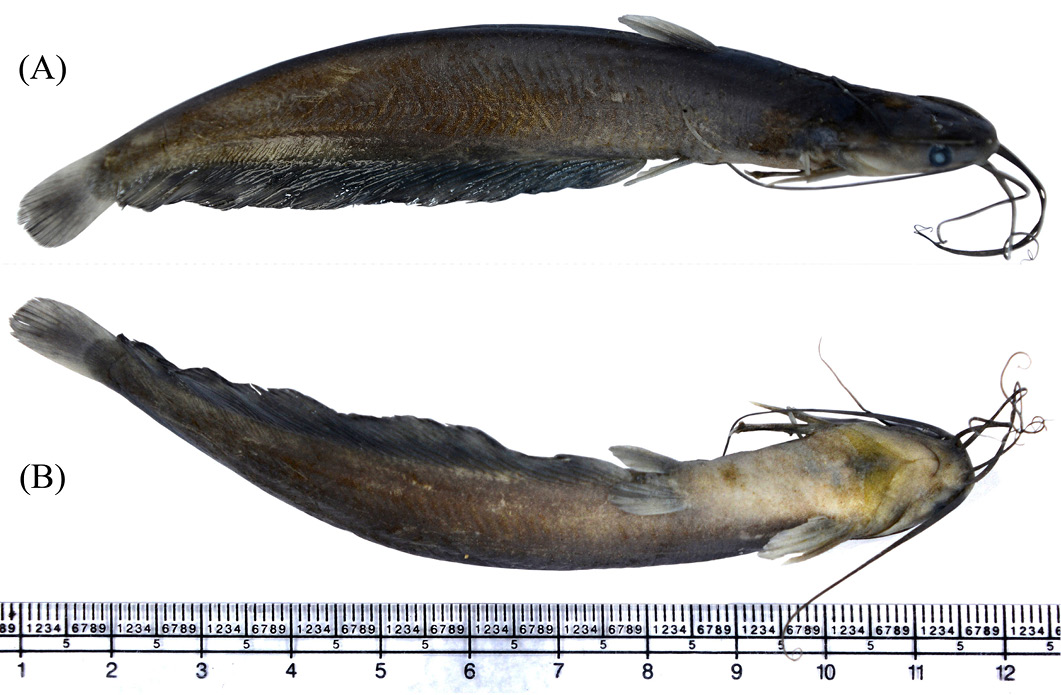
Based on the detailed diagnostics and morphometric data, the current species was smaller (95.7–98.97) mm, dorsally blackish, and lighter in ventral color in live specimens, and short and sub-cylindrical up to the pelvis base (Figure 2). Their head is generally depressed with length (14.11–17.21 with a mean of 15.47% of SL) less than the body depth (13.80–15.67 with a mean of 14.78714% of SL). They have a terminal mouth, villiform bands on jaws, small eye diameter (8.87–12.33 with a mean of 10.819 % HL), and four pairs of barbels; 34.23–36.54, 27.43–29.46, 30.28–31.23, and 35.11–36.42% of HL in order, respectively.
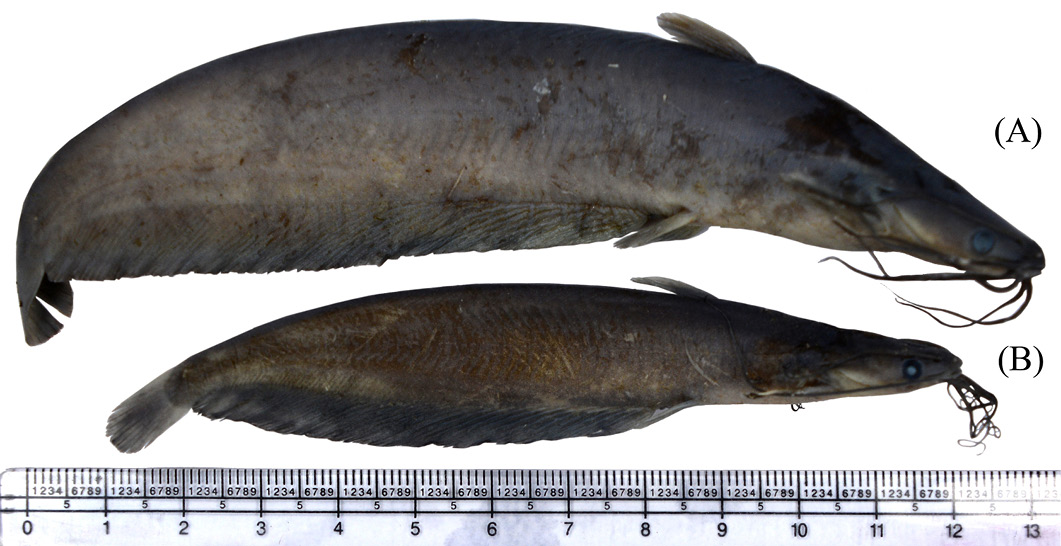
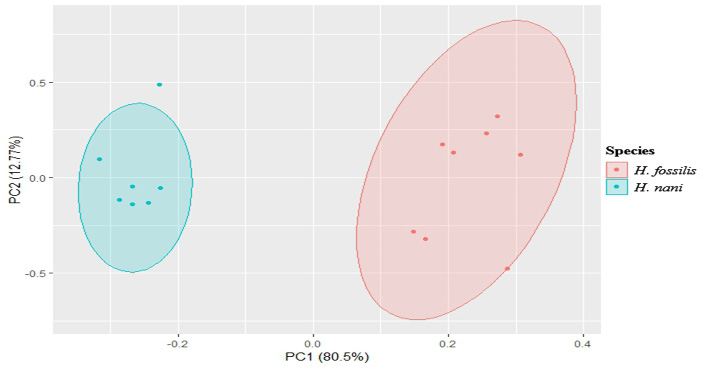
Heteropnuestes nani differs from the congener H. fossilis, which had already been documented from Nepal, in having separated pectoral spines and nine to ten antrose serrae, whereas the latter has pectoral spines attached by a membrane. Similarly, H. nani has a united caudal fin, while H. fossilis has a distinct caudal notch . In addition, other morphological features distinctively separate H. nani and H. fossilis (Table 1 and Figure 3). The unsupervised cluster analysis of morphological characters revealed two distinct clusters, H. nani and H. fossilis, with H. fossilis plotting on the positive side of the first principal component (Figure 4), reflecting the morphological distinctness between the two species, and the conspicuously smaller size of H. nani.
Table 1: Representing summary of diagnostic morphometric characteristics between H. nani and its congeners H. fossilis.
Features
Heteropnuestes nani (n= 8)
Heteropnuestes fossilis (n=12) *
Range
Mean±SD
Range
Mean±SD
Head length
14.11–17.21
15.47±1.183
12.77–14.56
13.65±0.65
Body depth
13.80–15.67
14.78±1.29
13.10–15.50
14.46±0.79
Anal fin length
61.88–66.30
63.44±1.827
59.47–63.11
60.89±1.27
Dorsal fin length
12.24–13.61
12.95±0.519
9.09–10.12
9.54±0.46
Pectoral fin length
10.87–12.35
11.73±0.533
10.07–10.55
10.25±0.16
Pectoral spine length
8.86–9.63
9.28±0.25
7.78–9.03
8.37–0.48
Caudal fin length
8.56–9.83
8.995±0.460
8.33–10.72
9.82±0.98
Ventral fin length
7.43–8.07
7.781±0.23
7.69–8.40
7.93±0.24
First barbel length
34.23–36.54
36.23±0.83
8.71–21.96
17.32±4.77
Second barbel length
27.43–29.46
28.83± 0.71
22.25–31.98
28.44±3.33
Third barbel length
30.28–31.23
30.83±0.33
19.30–27.71
23.68±2.73
Fourth barbel length
35.11–36.42
35.77±0.4
18.32–22.69
20.57±1.89
Eye diameter
8.87–12.33
10.819±1.12
11.24–12.18
11.71±0.47
Head width
88.20–94.46
91.69±2.226
Pectoral spine
Completely separated from rays
Attached to rays by a membrane
Anal–caudal fin
United
Separated by a distinct notch
*Source: .
Our study area lies in a tropical monsoon climate zone with adequate rainfall, rich in agricultural (paddy) landscape with several ponds, ditches, swamps, rivers, floodplains, and small lakes with a temperature range from 10.10°C to 33.35°C respectively ; . The climatic conditions of the H. nani localities in Nepal and Bangladesh are nearly similar, i.e., strong effects of the south-Asian summer monsoon ; . Besides climatic similarity, the riverine network connectivity has been found to affect the pattern of fish biodiversity because fish have to follow watercourses between habitats (Lynch et al., 2013; . There are river connections between the localities of the original description of the H. nani from Bangladesh and the location of the present records in Nepal (Figure 5), which provided dispersal pathways.
The Kankai River and its tributaries in Nepal flow southward, transitioning into the Mahananda River and then the Ganges River as they cross into India. Eventually, these waters merge into the Padma River, which further flows into the Bay of Bengal through Bangladesh ; . This connectivity of rivers might have facilitated the dispersal of H. nani across the river network. Further studies are required to document the fine-scale distribution of the species across water bodies in Nepal and India.
The low oxygen and nutrient-rich lentic ecosystem favors tubular air cavities containing Heteropnuestes species . The current study shows that H. nani distribution is widespread across the lowlands of Jhapa District together with H. fossilis. Through interviews, we found the local names of H. nani and H. fossilis are Kachad and Singhi, respectively, based on their pectoral poisonous spines. H. nani was recorded from more localities compared to H. fossilis, likely because the surveys were conducted in habitats that were more preferable for H. nani. Also, we recorded H. fossilis from comparatively deeper water levels than H. nani which were mostly in a purer waterside area.
The observed occurrence of the species can be explained by environmental variables such as temperature, precipitation, and habitat vegetation of our study area which resemble those of Noakhali in Bangladesh, from where the species was first recorded. In addition, other congeners, i.e., H. microps, H. longipectrolis, and H. kemratensis, are geographically distant from the survey locality and the morphological characteristics are closer to those of H. nani, compounding supporting that the specimens we collected from the eastern lowland of Nepal belong to Heteropnuestes nani.
Conclusion and Recommendations
This research has verified the presence of Heteropneustes nani in the eastern lowlands of Nepal. Despite coexisting with similar species like H. fossilis, they exhibit notable differences in morphology and habitat characteristics. These distinctions include the size, shape, coloration, the count of anterior serrae, and the separation of pectoral spines. Moreover, H. nani is widely distributed in shallow water bodies across the Jhapa District, showing a preference for oxygen-scarce lentic water ecosystems compared to H. fossilis. Furthermore, we assume that H. fossilis found on comparatively deeper, less turbid ditches and wetlands loaded with agricultural chemical-rich water than H. nani.
This study revealed a direct connection to the type locality of H. nani based on their river network linkage, although we need concrete evidence regarding their migration patterns. Based on our hypothesis, it is plausible that H. nani may be distributed across the southern areas of West Bengal, Bihar, and Bangladesh, as these regions feature similar wetland ecosystems with comparable physiochemical and environmental characteristics. Further studies, employing both morphological and genetic data to comprehensively confirm the taxonomic status of the species, are needed. Such investigations would also contribute to a better understanding of the distribution of H. nani throughout Nepal.
Acknowledgements
We acknowledge financial support from Forest Action Nepal under the Darwin Initiative Project UK funded project (Ref. 26-022), and all the members who participated actively for the collection of species. We also thank the Museum of the Central Department of Zoology for storing the specimens.
Conflict of interest
The authors have declared no conflict of interest.
Figures
Figure 1:.
A map representing the locations from where Heteropnuestes nani samples were collected. Each colour symbolizes the respective land use polygons.
Figure 2:.
Photographs of Heteropnuestes nani recorded from the study area; Dorsal (A) and Ventral (B) view.
Figure 3:.
The illustration depicting two species of Heteropnuestes found in Nepal. Plate A shows a sub-adult Heteropnuestes fossilis, while plate B features a Heteropnuestes nani.
Figure 4:.
Cluster-wise representation of H. fossilis and H. nani into two separate clusters, one of each species.
Figure 5:.
Map depicting the river connections between the original description of H. nani in Bangladesh (Hossain et al., 2013) and present records of the species in Nepal.
References
Arunachalam, M., Johnson, J.A. and Manimekalan, A., 1890. New record of Heteropnuestes microps (Gunther) (Claridae: Heteropnuesidae) from Western Ghats River, India. J. Bombay Nat. Hist. Soc., 68: 1–492. https://www.biodiversitylibrary.org/item/18553
Azam, M.M., Kumari, M., Maharana, C., Singh, A.K. and Tripathi, J.K., 2018. Recent insights into the dissolved and particulate fluxes from the Himalayan tributaries to the Ganga River. Environ. Earth Sci., 77: 313. https://doi.org/10.1007/s12665-018-7490-7[CrossRef]
Berra, T.M., 2007. Freshwater fish distribution. The University of Chicago Press: Chicago, USA. https://doi.org/10.7208/chicago/9780226044439.001.0001[CrossRef]
Bhattarai, K.P., 2017. Enumeration of flowering plants in Tarai Sal (Shorea robusta Gaertn.) Forest of Jalthal, Eastern Nepal. J. Plant Resour., 15: 14–20. https://doi.org/10.3126/on.v14i1.16438[CrossRef]
Bhattarai, K.P., Shrestha, P.K. and Koirala, O., 2017. Physico-chemical properties of water and soil of Bhimsen Pokhari Wetland, Jhapa District, Eastern Nepal. Nepal J. Biosci., 7: 72–76. https://doi.org/10.3126/njbs.v7i1.41785[CrossRef]
Bloch, M.E., 1794. Ichthyologie, ou Histoire naturelle, generale et particulier des poissons. A Berlin, Chez l’auteur, and chez François de la Garde libraire.
De Silva, M., Hapuarachchi, N., Jayaratne, T., Robeson, D., and Wildlife Conservation Society, G., 2015. Sri Lankan freshwater fishes. Wildlife Conservation Society, Galle.
Devi, K.E. and Raghunathan, M.B., 1999. Heteropneustes longipectoralis (siluriformes: heteropneustidae) a new species from the Anamalai Hills, in the Western Ghats. Rec. Zool. Surv. Ind., 97: 109–115. https://doi.org/10.26515/rzsi/v97/i3/1999/160129[CrossRef]
Dewan, A., Corner, R., Saleem, A., Rahman, M.M., Haider, M.R., Rahman, M.M., and Sarker, M.H., 2017. Assessing channel changes of the Ganges-Padma River system in Bangladesh using Landsat and hydrological data. Geomorphology, 276: 257–279. https://doi.org/10.1016/j.geomorph.2016.10.017[CrossRef]
Fernado, A. and Goonatilake, D.A., 2019. Heteropneustes fossilis. IUCN red list of threatened species 2019: e.T166452A60585129. https://dx.doi.org/10.2305/IUCN.UK.2019-3.RLTS.T166452A60585129.en. Accessed on 02 September 2023.[CrossRef]
Fowler, H.W., 1937. Zoological results of the third de Schauensee Siamese expedition. Part VIII: Fishes Obtained in 1936. Proc. Acad. Nat. Sci. Phila., 89: 125–264.
Hossain, M.S., Sarker, S., Sharifuzzaman, S.M. and Chowdhury, S.R., 2013. New species of stinging catfish Heteropneustes nani (Siluriformes: Heteropneustidae) from Noakhali, Bangladesh. Vertebr. Zool., 63: 259–267. https://doi.org/10.3897/vz.63.e31441[CrossRef]
Hubbs, C.L. and Lagler, K.F., 2004. Fishes of the great lakes region, revised edition. University of Michigan Press. https://doi.org/10.3998/mpub.17658[CrossRef]
Islam, M.N., 2009. Rainfall and temperature scenario for Bangladesh. Open Atmospheric Sci. J., 3: 93–103. https://doi.org/10.2174/1874282300903010093[CrossRef]
Kamruzzaman, M., Rahman, A.T.M.S., Ahmed, M.S., Kabir, M.E., Mazumder, Q.H., Rahman, M.S. and Jahan, C.S., 2018. Spatio-temporal analysis of climatic variables in the western part of Bangladesh. Environ. Dev. Sustain., 20: 89–108. https://doi.org/10.1007/s10668-016-9872-x[CrossRef]
Khatri, K., Jha, B.R., Gurung, S. and Khadka, U.R., 2020. Freshwater fish diversity and its conservation status in different water bodies of Nepal. Nepal J. Environ. Sci., 8: 39–52. https://doi.org/10.3126/njes.v8i1.34442[CrossRef]
Limbu, J.H., Rajbanshi, D., Subba, B.R., Subba, A., Yang, J.Q. and Li, C., 2023. First record of catfish Amblyceps waikhomi (Darshan, Kachari, Dutta, Ganguly, and das 2016) (Siluriformes: Amblycipitidae) for Nepal from the Singhiya River of Morang District, Eastern Nepal. Int. J. Zool., 2023: 3707208. https://doi.org/10.1155/2023/3707208[CrossRef]
Lynch, H.J., Campbell, G.E.H., Muneepeerakul, R., Arunachalam, M., Rodriguez-Iturbe, I. and Fagan, W.F., 2011. How restructuring river connectivity changes freshwater fish biodiversity and biogeography. Water Resour. Res., 47: W05531. https://doi.org/10.1029/2010WR010330[CrossRef]
Nelson, J.S., 2006. Fishes of the World (4th ed.). John Wiley and Sons, Inc., Hoboken, New Jersey. pp. 707.
Ng, H.H. and Wright, J.J., 2009. A new torrent catfish from western Thailand (Siluriformes: Amblycipitidae). Copeia, 2009: 369–377. https://doi.org/10.1643/CI-08-113[CrossRef]
Pethiyagoda, R. and Bahir, M.M., 1998. Heteropneustes microps, a junior synonym of H. fossilis (Osteichthyes: Heteropneustidae). J. South Asian Nat. Hist., 3: 113–114.
Ratmuangkhwang, S., Musikasinthorn, P. and Kumazawa, Y., 2014. Molecular phylogeny and biogeography of air sac catfishes of the Heteropneustes fossilis species complex (Siluriformes: Heteropneustidae). Mol. Phylogenet. Evol., 79: 82–91. https://doi.org/10.1016/j.ympev.2014.05.009[CrossRef]
Shao, X., Fang, Y., Jawitz, J.W., Yan, J. and Cui, B., 2019. River network connectivity and fish diversity. Sci. Total Environ., 689: 21–30. https://doi.org/10.1016/j.scitotenv.2019.06.340[CrossRef]
Shrestha, T.K., 2008. Ichthyology of Nepal: A study of fishes of the Himalayan waters. pp. 388.
Shrestha, T.K., 2000. Cold water fisheries development in Nepal. In: Cold water fisheries in the Trans-Himalayan countries (eds. T. Petr and D.B. Swar, D.B.). pp. 47–58.