Additionally, the antimicrobial resistance rates in this study for clindamycin and erythromycin (28.6%, & 23.8%) as shown in Table (2) respectively were lower than those of MRSA isolates from duck and turkey that reported in Netherlands farms (60% each).
Moreover, VanA gene associated with vancomycin resistance wasn’t detected in S. aureus isolates in this work.
The study of Methicillin-resistant S. aureus (MRSA) from ducks was conducted to acquire more information for hidden problem solving in duck farms in Egypt.
Although S. aureus has low significance as a problem in ducks, but it is a real source for antimicrobial resistance spreading in surroundings and in vicinity of duck farms.
Selected from the article's own text.
Abstract
Mona. A. A. AbdelRahman1, Fatma Amer2
1Department of Bacteriology, Reference Laboratory for Veterinary Quality Control on Poultry Production, Animal Health Research Institute, Agriculture Research Center, P.O. Box 264, Dokki, Giza 12618, Egypt; 2Department of Biotechnology, Reference Laboratory for Veterinary Quality Control on Poultry Production, Animal Health Research Institute, Agriculture Research Center, P.O. Box 264, Dokki, Giza 12618, Egypt.
Abstract | Although Methicillin-resistant Staphylococcus aureus (MRSA) is one of the most widespread Bacteria causing infection over the world for poultry sector, MRSA in duck farms hasn’t yet been investigated seriously. Thus, this study intensively investigates the prevalence of MRSA through 100 duck farms. S. aureus has been isolated from 21 farms. The classical enterotoxins (A–E) production plus toxic shock syndrome toxin (TSST-1) were screened by PCR, only four strains harbored sed gene. The antimicrobial resistance profiles were tested by agar diffusion assays showed that 90.5% of isolates exhibit multidrug resistance (MDR). All the tested isolates revealed 100% resistance towards penicillin G., ampicillin and cefoxitin. However, the resistances to kanamycin, tetracycline and gentamycin were 90.5%, 85.7% and 81% respectively. Additionally, Methicillin-resistant S. aureus (MRSA) isolates were identified by the presence of mecA gene, but all isolates were negative for mecC gene. The isolates were tested for the presence of four antimicrobial resistance genes including tetracycline resistance gene tetK that was detected in all isolates. Secondly, 90.5% of isolates carried erythromycin resistant gene ermB as well as gentamicin resistant gene, aacA-aphD. Finally, none of those isolates has carried vanA gene for vancomycin resistance. Consequently, continuous tracking the presence of MRSA in duck farms is very important to avoid developing a reservoir for antimicrobial resistances.
S. aureus is one of the most common bacterial diseases in poultry which causes drop in egg production, body weight loss, and lameness which is leading to carcass condemnation. Therefore, S. aureus has negative impact on the economy based on farming business alongside the foodborne illness causes . Moreover, S. aureus influences on the human health and causes food poisoning regarding to their enterotoxins productions .
Although diagnosing, detecting and genotyping of S. aureus are routinely processed among sick poultry (Andreasen , 2013) , alongside pigs, cows and goats, , the detection of S. aureus in ducks is too rare. However, in Egypt, the ducks are taking the second place of the poultry meat production . On the other hand, the S. aureus is considered as one of the bacteria causing diseases in ducks and is responsible for suppurative dermatitis, suppurative arthritis, and septicemic lesions. This is in a similar way to chicken but it has different immunity response ; . Moreover, the S. aureus causes diseases in both human and animals as consequences of virulence factors production also . These virulence factor are such as the enterotoxins which are heat stable, having 23 types including main fives types namely SEA, SEB, SEC, SED, and SEE. Additionally toxic shock syndrome of toxin-1 (TSST-1) ; is one of virulence factors as well.
Methicillin-resistant S. aureus (MRSA) has the ability to be transmitted to human from livestock and vice-versa , so that it causes a severe hazardous effect on the public health. MRSA carries variable antibiotic resistance patterns leading to the treatment failure and also causes nosocomial infection in some cases ; ; . Evermore, Methicillin-resistant S. aureus (MRSA) is characterized by harboring mecA gene which is responsible for methicillin resistance. Therefore, the gene encrypts against penicillin-binding protein (PBP2a) which is less influenced by beta-lactam antibiotics. However this encoded gene is located at the staphyloccoccal cassette chromosome mec(SCCmec) part, which is a genomic island ubiquitously disseminated among staphylococci ; . Recently, in Germany, a new gene has been discovered and known as mecC gene but its similarity to mecA gene is about 70% of identical nucleotide , noting that both animals and humans are carrying mecC gene .
Thus, MRSA has been categorized as one of a superbug ; WHO, 2020), because of its wide spread alongside to the misusage of antibiotics treating S. aureus infections which both are developing the antibiotic resistance. Throughout livestock and food producing animals the S. aureus infection can be easily transmitted to human via the food chain ; WHO, 2020; ; . The resultant, several cases had been reported as S. aureus infections in human ; .
Erythromycin is one of the antibiotics used in the treatment of Gram-positive bacteria as S. aureus . However, there are about 17 genes responsible for erythromycin resistance in S. aureus , where the most common genes are ermA, ermB and ermC. These genes are targeting and responsible for ribosomal manipulation in macrolides, lincosamides and type B streptogramins . Additionally, both tet(K) and tet(L) genes are rising up the resistance for tetracyclines at staphylococci .
Therefore, the aim of this study was MRSA detection from apparently healthy duck farms with their phenotypic and genotypic antimicrobial resistance characters as well as enterotoxin genes.
Materials and methods
Samples
The Samples were taken from 100 duck farms, where 3 freshly dead ducks were transferred in ice boxes to reference laboratory for veterinary quality control on poultry production within 24 h for examination and testing. All samples were collected from ducks joint while the stab swabs were gathered from internal organs such as lung and liver.
Bacterial Isolation
The swabs from lung and liver organs were inoculated into 5% sheep blood agar and incubated for 24 h at 37°C. After incubation, the S. aureus isolates are ß-hemolytic. Heavily contaminated material was inoculated into a selective medium inhibitory for gram-negative bacteria, such as mannitol-salt agar . After that, the typical Staphylococcus spp. colonies were investigated and examined by gram staining, slide catalase test, oxidase test, and tube coagulase test .
Antimicrobial Susceptibility Tests
Antimicrobial susceptibility testing for 21 S. aureus isolates throughout 18 antimicrobials agents was performed by using the disc diffusion method. The test was performed according to the Clinical and Laboratory Standards Institute (CLSI, 2015). The 18 antibiotics used in the disc diffusion method are namely: (Oxoid® ) Penicillin-G 10 I.U (P10); cefoxitin 30 μg (FOX30); Oxacillin 1µg (OX1); gentamicin 10 μg (CN10); Kanamycin 30 μg (K30); Ciprofloxacin 5 µg (CF5); clindamycin 2 μg (DA2); Azithromycin 15 μg (AZM15); erythromycin 15 μg (E15 ); Chloramphenicol 30 µg (C30); trimethoprim/sulfamethoxazole 1.25-23.75µg (SXT), doxycycline 30µg (DO30); Tetracycline 30 µg(T30), amoxicillin + clavulanic acid 20 + 10 μg (AMC30); cefotaxime 30µg (CTX 30); vancomycin 30 µg(VA 30); levofloxacin 5µg(Lev 5), ampicillin 10 μg (AMP10).
According to CLSI guidelines, after aerobic incubation at 37°C for 18-24 h, the susceptibilities of S. aureus isolates to the individual antimicrobial agents were determined and interpreted. The Test results were considered valid only, when the diameters of the inhibition zones for the control S. aureus (ATCC 25922) strain were within the performan-
Table 1: PCR primers used in this study and sizes of PCR products of methicillin resistance, enterotoxins (A-E), TSST-1, and antibiotic resistance genes.
Target
Gene
Primer Sequence 5'-3'
Amplified fragment
References
Methicillin
resistance
mecA
5’GTAGAAATGACTGAACGTCCGATAA3’
310 bp
5’CCAATTCCACATTGTTTCGGTCTAA3’
mecC
5’GAAAAAAAGGCTTAGAACGCCTc3’
138 bp
(Stegger et al.,2012)
5’GAAGATCTTTTCCGTTTTCAGC3’
Enrerotoxins
sea
5’GGTTATCAATGTGCGGGTGG3’
102 bp
(Betley and Mekalanos, 1988)
5’CGGCACTTTTTTCTCTTCGG3’
seb
5’GTATGGTGGTGTAACTGAGC 3’
164 bp
(Jones and Khan, 1986)
5’CCAAATAGTGACGAGTTAGG 3’
sec
5’AGATGAAGTAGTTGATGTGTATGG 3’
451 bp
(Bohach and Schlievert, 1987)
5’CACACTTTTAGAATCAACCG 3’
sed
5’CCAATAATAGGAGAAAATAAAAG 3’
278 bp
(Bayles and Iandolo , 1989)
5’ATTGGTATTTTTTTTCGTTC 3’
see
5’AGGTTTTTTCACAGGTCATCC 3’
209 bp
Couch et al.,1988
5’CTTTTTTTTCTTCGGTCAATC 3’
Toxic shock syndrome
tsst-1
5’ACCCCTGTTCCCTTATCATC 3’
326 bp
(Blomster-Hautamaa et al.,1986)
5’TTTTCAGTATTTGTAACGCC 3’
Erythromycin
resistance
erm(B)-1
erm(B)-2
5’CATTTAACGACGAAACTGGC 3’
425 bp
(Jensen et al.,1999)
5’GGAACATCTGTGGTATGGCG 3’
Tetracycline resistance
tetK
5’GTAGCGACAATAGGTAATAGT 3’
360 bp
(Strommenger et al.,2003)
5’GTAGTGACAATAAACCTCCTA 3’
Aminoglycoside resistance
Aac6-aph2
5’GAAGTACGCAGAAGAGA 3’
491 bp
(Choi et al.,2003)
5’ACATGGCAAGCTCTAGGA 3’
Vancomycin resistance
vanA
5’CATGACGTATCGGTAAAATC 3’
885 bp
(Patel et al., 1997)
-ce ranges.
Molecular Identification of Staph Aureus Isolates |Using Polymerase Chain Reaction Assay: DNA extraction was fulfilled using QIAamp DNA mini kit (Qiagen, Germany, GmbH) according to manufacturer’s instruction.
The used Oligonucleotide primers were supplied from Metabion (Germany), as mentioned in Table (1).
PCR amplification was employed using 25 µL PCR reaction which was containing 12.5 µL of Emerald Amp Max PCR Master Mix (Emerald, Japan), 1 µL of each primer (20 pmol conc.), 4.5µL of PCR grade water and 6 µL of a template using a Biometra T3 thermal cycler. The PCR products were separated by the agarose gel electrophoresis using 1.5% agarose gel which stained with Ethidium bromide. The gel was photographed using a gel documentation system (Alpha Innotech, biometra).
The efficiency of the amplification was verified for positive field samples that might have mecA, aacA-aphD, tetK, mecA, sea, seb, sec, see, sed and tsst-1 genes which were previously examined in veterinary quality control reference laboratory for poultry production -Animal health research.
Results
Prevalence of S. aureus
There were 100 farms under examination for existence of S. aureus, only 21 farms (21%) were confirmed by S. aureus isolates. The 21 isolates were affirmed S. aureus as positive from the results of the slide catalase test, tube coagulase test and negative oxidase test.
Table 2: Antimicrobial susceptibility of S. aureus isolated from duck farms
Antimicrobial
Resistance %
Intermediate %
Sensitive %
Penicillin
100
0
0
Ampicillin
100
0
0
Cefoxitin
100
0
4
Oxacillin
14.3
9.5
76.2
Gentamycin
81
0
19
Kanamycin
90.5
0
9.5
Ciprofloxacin
4.8
19
76.2
Clindamycin
28.6
23.8
47.6
Azithromycin
28.6
23.8
47.6
Erythromycin
23.8
66.7
9.5
Chloramphenicol
19
0
81
SXT
14.3
0
85.7
Doxycycline
14.3
28.6
57.1
Tetracycline
85.7
4.8
9.5
AMC
61.9
0
38.1
CTX 30
9.5
57.1
33.4
Vancomycin
0
0
21
Levofloxacin
9.5
0
90.5
Antimicrobial Susceptibility Testing
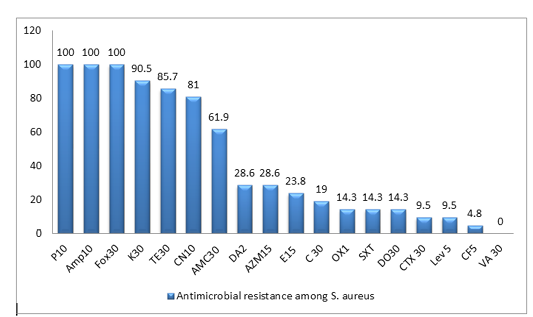
All the 21 S. aureus isolates were tested against 18 antibiotics agents. The antimicrobial resistance profiles of the isolates to antimicrobial agents are shown in (Table 2). All MRSA isolates were resistant to penicillin, ampicillin andcefoxitin, in addition to high resistance rate to Kanamycin(90.5%), Tetracycline(85.7%) and Gentamycin(81%), while Ciprofloxacin showed the lowest resistance rate of 4.8%. In this work, the majority of isolates are classified as MDR-SA ones, as 19 isolates (90.5%) are resistant to three or more antimicrobial classes among different classes are well known as multidrug resistant (MDR), as shown in Figure (1), Table (2) and Table (4)
PCR has confirmed the presence of mecA gene in all S. aureus isolates (as 100%) as well as the absence of mecC gene.
Detection of Virulence-Associated Genes
Additionally, the PCR results for five classical enterotoxins (A–E) and toxic shock syndrome toxin 1(tsst-1) have revealed the MRSA isolates don’t own sea, seb, sec, and see genes and. On contrary for sed gene, only four isolates have had it.
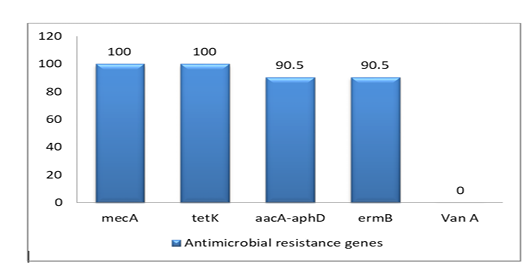
The prevalence of 5 antimicrobial resistance genes testing was done for the isolates. The highest resistant gene were mecA and tetK (100%) to betalactam and tetracycline, whereas aacA-aphD and ermB genes were (90.5%) only. However, the VanA gene was negative as shown in Figure (2), Table (3) and Table (4)
Discussion
Many infections are caused basically by S. aureus whatever its zoonotic importance . Therefore, there are many reports about incidences of S. aureus and methicillin resistance in different poultry spp. such as chicken , turkey , and food products . There is lack or report about the incidence of S. aureus and methicillin resistance in ducks, especially in Egypt .
In this study, the prevalence of S. aureus results in ducks was (21%), In comparison to previous studies, this prevalence of S. aureus is higher than prevalence rates for 100 ducks in Egypt (12.2%) , Dutch duck farms (10%) , and retail duck (7.2%) . However, the prevalence of S. aureus for this study is still lower than reported results for ducks in South African livestock (40%) . ).The incidence of MRSA in duck farms represents a great concern to protect consumers. These results encourage us to assess the risk of any health hazards which may happen and become more curious to know the its possibility to induce infections , so this study showed important information about MRSA from duck farms based on phenotypic and genotyping characterization and detection of enterotoxin genes and some antimicrobial resistance determinants.
Moreover, the antimicrobial resistance is one of the most global threats to human causing severe public health diseases . Moreover, WHO is doing its supreme effort to support health project of control antibiotic resistance in humans and veterinary sector by cooperation with other organizations as the Food and Agriculture Organization of the United Nations (FAO) and the World Organization for Animal Health (OIE) (WHO, 2020). Especially for diseases have ability to be transmitted from food producing animals throughout food chain. Uncontrolled usage and intake abuse of antibiotics for either human or animals without physician or veterinarian advice will have been bad consequence in dissemination of antibiotic resistance (WHO, 2020). Hence, Staphylococcal infections are usually treated by excessive usage of penicillin and tetracycline. The misusage of those antibiotics leads to increase antimicrobial resistance , as similar as to our antimicrobial resistance data in this current study.
It is found that the Cefoxitin is more accurate and is better than oxacillin in detection and identification of methicillin resistance. This regarding to Cefoxitin has high sensitivity, specificity and a higher effect on penicillin-binding protein 2a (PBP2a) rather than oxacillin .
In the present work, all MRSA isolatesare having resistance to penicillin, ampicillin. There is agreement with previous reports forisolated MRSA fromducks in Egypt (Eidet al., 2019). Moreover, all resistant isolates to penicillin and ampicillin has recordedmecAgene which is the principle inducer for methicillin resistance (Mareket al., 2018).
In this study, 23.8% of S. aureus isolates were resistant to erythromycin, while 14.3% were resistant to SXT. Thus, S. aureus isolates were less resistant to SXT than erythromycin, but both are pretty less than reported for ducks in Egypt before (80% for each one) (Eidet al., 2019).
On other hand, the resistance of S. aureus against gentamycin (81%) was higher than what was reported previously in Egyptian duck farms (20%) (Eidet al., 2019), ducklings (26.7%) (Farghaly et al., 2015), and from duck and turkey farms in Netherlands (52.5%) (Van Duijkeren et al., 2016).
The isolated MRSA from ducks has shown 100% susceptibility to vancomycin in good agreement with previous results from Netherlands farms (Van Duijkeren et al., 2016).
Additionally, the antimicrobial resistance rates in this study for clindamycin and erythromycin (28.6%, & 23.8%) as shown in Table (2) respectively were lower than those of MRSAisolates from duck and turkey that reported in Netherlands farms (60% each). Nevertheless, the ciprofloxacin has higher resistance rate (52.5%) than reported rates in our work (4.8%) (Van Duijkeren et al., 2016).
In this study, 90.5% of S. aureus isolates exhibited multi-drug resistance as stated by others who are relating to poultry isolates (Dweba et al., 2019; El-Adawy et al., 2016). These MDR isolates are serious threats to human who is with direct contact with ducks in the infected farms (Van Duijkeren et al., 2016). Furthermore, the majority of MRSA isolates exhibit MDR and have high percentage of resistance to tetracycline and gentamycin as previously mentioned (Marek et al., 2018; Lyon and Skurray, 1987). Moreover as shown in Table (4), all of these isolates are resistant to penicillin which is mediated by penicillinase and all of them having mecA gene (Leonard and Markey, 2008).
For these reasons, themecCandmecAgenes are responsible for detection of beta-lactam resistance (El-Adawyet al., 2016). ThemecCgene in MRSA is proved by numerous studies to be of zoonotic importance in livestock animals (Dwebaetal., 2019). In this study, All MRSA isolates do not harbormecCgene althoughmecAgene was detected in all isolates which is in agreement with previous study (VanDuijkerenet al., 2016).
Moreover, resistance of staphylococci to aminoglycoside (such as gentamicin, kanamycin and tobramycin) is mediated by aacA-aphD gene ; ; ). Thus, several studies have mentioned the prevalence of aminoglycoside and methicillin resistance relationship , with good agreement to our study as well. This relation can be explained as a result of neighboring positions of mecA gene and aminoglycoside resistance genes
Although, all MRSA isolated from duck in China harbored aminoglycoside resistance gene aacA-aphD , whereas in this study only 90.5% of ducks MRSA isolated could be detected.
Moreover, MRSA from different origins as pigs, cattle, chickens and ducks commonly carried tet(K) and/or tet(L) ; . All MRSA isolates (100%) in this study also carry tetracycline resistance gene tetK as well as MRSA isolates of duck in China . On contrary, lower percentage of tetK gene from avian species (chicken, duck and wild birds in in South Africa (42.5%) was reported .
However, there are several genes responsible for the resistance to macrolides, ermB is one of those genes. The ermB gene was found in 90.5% of isolates too. In spite of, the resistance due to ermB hasn’t beenstudied in ducks before, the resistance of ermB due to its occurrence in coagulase positive and coagulase-negative staph strains in poultry is 8.3% in USA farms , while it was 50% in turkey .
Although, it is well known that vancomycin is the first choice drug for treatment of MRSA in human , but in 2002, the CDC (Centers for Disease Control and Prevention) declared a first case of S. aureus resistant to methicillin and vancomycin (CDC, 2002). Therefore, a continuous monitoring for vancomycin resistance is required.
Moreover, VanA gene associated with vancomycin resistance wasn’t detected in S. aureus isolates in this work. This result was in good agreement with the result reported by Ahmed et al . Recently, a new report has identified a first record of VanA gene where its detection came from camels’ meat in Egypt .
The heat stable staphylococcal enterotoxins (SEs) are the main reason of food poisoning over the worldwide . Thus, reported that sea, seb, sec, and sed genes were not found except one strain harbored see gene in ducks, whereas the presence of sed gene was only found in four isolates in this work. Furthermore, all other classical enterotoxin genes and (tsst-1) weren’t detected in the current work which is similar to results recorded in Whiteface whistling ducks in Germany .
Conclusion
The study of Methicillin-resistant S. aureus (MRSA) from ducks was conducted to acquire more information for hidden problem solving in duck farms in Egypt. Although S. aureus has low significance as a problem in ducks, but it is a real source for antimicrobial resistance spreading in surroundings and in vicinity of duck farms. MRSA has proved influences on public health of human and on the environment causing infection through livestock animals, so we need more investigation and surveillance studies were needed on the dissemination of MRSA.
Conflict of interest
The authors declare that there is no conflict of interest for this publication.
Authors’ contributions
Abdel Rahman: Methodology (Bacterial Isolation, Antimicrobial Susceptibility Tests), writing- reviewing and editing of manuscript. Amer: Methodology (Molecular Identification ofS. AureusIsolates Using Polymerase Chain Reaction Assay) and approved the final manuscript.
References
• Achek R, Hotzel H, Cantekin Z, Nabi I, Hamdi TM, Neubauer H, El-Adawy H (2018). Emerging of antimicrobial resistance in staphylococci isolated from clinical and food samples in Algeria. BMC Res. Notes.;11(1):663.http://doi: 10.1186/s13104-018-3762-2.[CrossRef]
• Ahmed W, Neubauer H, Tomaso H, El Hofy FI, Monecke S, Abdeltawab AA, Hotzel H (2020). Characterization of Staphylococci and Streptococci Isolated from Milk of Bovides with Mastitis in Egypt. Pathogens. 9:381-398. http://doi: 10.3390/pathogens9050381.[CrossRef]
• Al-Amery K, Elhariri M, Elsayed A, El-Moghazy G, Elhelw R, El-Mahallawy H, El Hariri M, Hamza D (2019). Vancomycin-resistant S. aureus isolated from camel meat and slaughterhouse workers in Egypt. Antimicrob. Resist. Infect. Control. 8:129. http://doi:10.1186/s13756-019-0585-4.[CrossRef]
• Bayles KW, Iandolo JJ (1989). Genetic and molecular analyses of the gene encoding staphylococcal enterotoxin D. J. Bacteriol. 171: 4799-806. http://doi:10.1128/jb.171.9.4799-4806.1989[CrossRef]
• Ben Zakour NL, Sturdevant DE, Even S, Guinane CM, Barbey C, Alves PD, Cochet MF, Gautier M, Otto M, Fitzgerald JR, Le Loir Y (2008). Genome-wide analysis of ruminant Staphylococcus aureus reveals diversification of the core genome. J. Bacteriol. 190(19):6302-17. http://doi: 10.1128/JB.01984-07[CrossRef]
• Betley MJ, Mekalanos JJ (1988). Nucleotide sequence of the type A staphylococcal enterotoxin gene. J. Bacteriol. 170:34-41. http://doi:10.1128/jb.170.1.34-41.1988[CrossRef]
• Blomster-Hautamaa DA, Kreiswirth BN, Kornblum JS, Novick RP, Schlievert PM (1986). The nucleotide and partial amino acid sequence of toxic shock syndrome toxin-1. J. Biol. Chem. 261:15783-6. PMID: 3782090
• Blumental S, Deplano A, Jourdain S, De Mendonça R, Hallin M, Nonhoff C, Rottiers S, Vergison A, Denis O (2013). Dynamic pattern and genotypic diversity of S. nasopharyngeal carriage in healthy pre-school children. J. Antimicrob. Chemother. 68(7):1517-23. http://doi:10.1093/jac/dkt080[CrossRef]
• Bohach GA, Schlievert PM (1987). Nucleotide sequence of the staphylococcal enterotoxin C1 gene and relatedness to other pyrogenic toxins. Mol. Gen. Genet. 209: 15-20. http://doi: 10.1007/BF00329830.[CrossRef]
• Cao Y, Wang J, Wang R, Zhang X, Chao G, Wu Y (2016). Prevalence and characterization of resistance genes with genetic clones among S. aureus isolates obtained from various sources in China. J. Med. Microbiol. 65:569-571. http://doi: 10.1099/jmm.0.000250.[CrossRef]
• CDC (2002). Centers for Disease Control and Prevention, S. aureus resistant to vancomycin--United States, MMWR Morb Mortal Wkly Rep. 51: 565-567. https://www.cdc.gov/mmwr/preview/mmwrhtml/mm5126a1.htm.
• Chao G, Bao G, Cao Y, Yan W, Wang Y, Zhang X, Zhou L, Wu Y (2015). Prevalence and diversity of enterotoxin genes with genetic background of S. aureus isolates from different origins in China. Int. J. Food Microbiol. 211:142-7. http://doi: 10.1016/j.ijfoodmicro.2015.07.018.[CrossRef]
• Choi SM, Kim SH, Kim HJ, Lee DG, Choi JH, Yoo JH, Kang JH, Shin WS, Kang MW (2003). Multiplex PCR for the detection of genes encoding aminoglycoside modifying enzymes and methicillin resistance among Staphylococcus species. J. Korean Med. Sci. 18: 631-6. http://doi: 10.3346/jkms.2003.18.5.631.[CrossRef]
• CLSI (2015). Performance Standards for Antimicrobial Susceptibility Testing. 25th ed. Supplement M100-S25, Clinical and Laboratory Standards Institute, Wayne, PA. pp 64–71.
• Couch JL, Soltis MT, Betley MJ (1988). Cloning and nucleotide sequence of the type E staphylococcal enterotoxin gene. J. Bacteriol. 170:2954-60. http://doi:10.1128/jb.170.7.2954-2960.1988[CrossRef]
• Dweba CC, Zishiri OT, El Zowalaty ME (2019). Isolation and Molecular Identification of Virulence, Antimicrobial and Heavy Metal Resistance Genes in Livestock-Associated Methicillin-Resistant S. aureus. Pathogens. 8(2):79. http://doi: 10.3390/pathogens8020079.[CrossRef]
• Eid HM, Algammal AM, Elfeil WK, Youssef FM, Harb SM, Abd-Allah EM (2019). Prevalence, molecular typing, and antimicrobial resistance of bacterial pathogens isolated from ducks. Vet. World. 12.5:677-683. http://doi:10.14202/vetworld.2019.677-683
• El-Adawy H, Ahmed M, Hotzel H, Monecke S, Schulz J, Hartung J, Ehricht R, Neubauer H, Hafez HM (2016). Characterization of Methicillin-Resistant S. aureus Isolated from Healthy Turkeys and Broilers Using DNA Microarrays. Front Microbiol. 7:2019. http:// doi:10.3389/fmicb.2016.02019[CrossRef]
• Farghaly E, Shalaby A, Badr H (2015). Identification and Molecular Characterization of S. aureus from Newly Hatched Imported Poultry. Suez Canal Vet. Med. J. SCVMJ. 20: 317-330. http://doi:10.21608/SCVMJ.2015.64643[CrossRef]
• Feßler AT, Thomas P, Mühldorfer K, Grobbel M, Brombach J, Eichhorn I, Monecke S, Ehricht R, Schwarz S (2018). Phenotypic and genotypic characteristics of S. aureus isolates from zoo and wild animals. Vet. Microbiol. 218:98-103. http://doi:10.1016/j.vetmic.2018.03.020[CrossRef]
• García-Garrote F, Cercenado E, Marín M, Bal M, Trincado P, Corredoira J, Ballesteros C, Pita J, Alonso P, Vindel A (2014). Methicillin-resistant S. aureus carrying the mecC gene: emergence in Spain and report of a fatal case of bacteraemia. J. Antimicrob. Chemother. 69(1):45-50. http:// doi:10.1093/jac/dkt327[CrossRef]
• Grema HA, Geidam YA, Gadzama GB, Ameh JA, Suleiman A (2015). Methicillin resistant S. aureus (MRSA): a review Adv. Anim. Vet. Sci. 3. 79–98. http://dx.doi.org/10.14737/journal.aavs/2015/3.2.79.98[Full text][CrossRef]
• Han JE, Hwang SY, Kim JH, Shin SP, Jun JW, Chai JY, Park YH, Park SC (2013). CPR Methicillin resistant coagulase-negative staphylococci isolated from South Korean ducks exhibiting tremor. Acta Vet. Scand. 55:88. http://doi: 10.1186/1751-0147-55-88.[CrossRef]
• Jensen LB, Frimodt-Møller N, Aarestrup FM (1999). Presence of erm gene classes in gram-positive bacteria of animal and human origin in Denmark. FEMS Microbiol Lett. 170:151-8. http://doi:10.1111/j.1574-6968.1999.tb13368.x.[CrossRef]
• Jones CL, Khan SA (1986). Nucleotide sequence of the enterotoxin B gene from S. aureus. J. Bacteriol.166:29-33. http://doi: 10.1128/jb.166.1.29-33.1986.
• Khan AA, Nawaz MS, Khan SA, Steele R (2002). Detection and characterization of erythromycin-resistant methylase genes in Gram-positive bacteria isolated from poultry litter. Appl. Microb. Biotechnol. 59:377-81. http://doi:10.1007/s00253-002-1013-9.[CrossRef]
• Le Loir Y, Baron F, Gautier M (2003). S. aureus and food poisoning, Genet. Mol. Res. 2: 63–76.
• Leonard FC, Markey BK (2008). Meticillin-resistant S. aureus in animals: a review, Vet. J.175: 27–36. http://doi:10.1016/j.tvjl.2006.11.008[CrossRef]
• Lyon BR, Skurray R (1987) Antimicrobial resistance of S.aureus: genetic basis. Microbiol. Rev. 51: 88–134.
• Marek A, Pyzik E, Stępień-Pyśniak D, Urban-Chmiel R, Jarosz ŁS (2018). Association Between the Methicillin Resistance of S. aureus Isolated from Slaughter Poultry, Their Toxin Gene Profiles and Prophage Patterns. Curr. Microbiol. 75(10):1256-1266. http://doi:10.1007/s00284-018-1518-9[CrossRef]
• Nawaz MS, Khan SA, Khan AA, Khambaty FM, Cerniglia CE (2000). Comparative molecular analysis of erythromycin-resistance determinants in staphylococcal isolates of poultry and human origin. Mol. Cell Probes. 14:311-9. http://doi: 10.1006/mcpr.2000.0320.[CrossRef]
• Nemati M, Hermans K, Lipinska U, Denis O, Deplano A, Struelens M, Devriese LA, Pasmans F, Haesebrouck F (2008). Antimicrobial resistance of old and recent Staphylococcus aureus isolates from poultry: first detection of livestock-associated methicillin-resistant strain ST398. Antimicrob. Agents Chemother. 52: 3817-9. http://doi: 10.1128/AAC.00613-08[CrossRef]
• Nowrouzian FL, Karami N, Welinder-Olsson C, Ahrén C (2013). Virulence gene typing of methicillin-resistant S. aureus as a complement in epidemiological typing. J Microb. Methods. 93:173-6. http://doi:10.1016/j.mimet.2013.03.020[CrossRef]
• Ono HK, Sato’o Y, Narita K, Naito I, Hirose S, Hisatsune J, Asano K, Hu DL, Omoe K, Sugai M, Nakane A (2015). Identification and Characterization of a Novel Staphylococcal Emetic Toxin. Appl. Environ. Microbiol. 81(20):7034-40. http://doi:10.1128/AEM.01873-15[CrossRef]
• Patel R, Uhl JR, Kohner P, Hopkins MK, Cockerill FR (1997). Multiplex PCR detection of vanA, vanB, vanC-1, and vanC-2/3 genes in enterococci. J. Clin. Microbiol. 35:703-7. http://doi:10.1128/JCM.35.3.703-707.1997.[CrossRef]
• Quinn PJ, Markey BK, Carter ME, Donnelly WJ, Leonard FE (2002). Veterinary microbiology and microbial disease, first ed., Iowa: Blackwell Publishing Professional, pp 461–464.
• Radwan L, Madian H, Mahrous M, Badaw, Y, Zein El-Dein A (2019). Comparative studies on some productive traits and genetic diversity of two local strains of ducks: Sudani and Domyati. Arab Universities J. Agri. Sci. 27: 869-875. http://doi:10.21608/ajs.2019.43837[CrossRef]
• Rodríguez-Lázaro D, Oniciuc EA, García PG, Gallego D, Fernández-Natal I, Dominguez-Gil M, Eiros-Bouza JM, Wagner M, Nicolau AI, Hernández M (2017). Detection and Characterization of S. aureus and Methicillin-Resistant S. aureus in Foods Confiscated in EU Borders. Front Microbiol. 8:1344. http://doi: 10.3389/fmicb.2017.01344[CrossRef]
• Saha B, Singh AK, Ghosh A, Bal M (2008). Identification and characterization of a vancomycin-resistant S. aureus isolated from Kolkata (South Asia). J. Med. Microb. 57:72-79. http://doi:10.1099/jmm.0.47144-0[CrossRef]
• Schwarz S, Roberts MC, Werckenthin C, Pang Y, Lange C (1998). Tetracycline resistance in Staphylococcus spp. from domestic animals. Vet. Microb. 1998;63:217-27. http://doi:10.1016/s0378-1135(98)00234-x[CrossRef]
• Smyth JA, McNamee PT (2008). Staphylococci, streptococci and enterococci, in: Pattison M, McMullin P, Bradbury JM (6th ed) Poultry Diseases, 6th edn. Elsevier Health Sciences, Philadelphia, PA, pp 191-200
• Stegger M, Andersen PS, Kearns A, Pichon B, Holmes MA, Edwards G, Laurent F, Teale C, Skov R, Larsen AR (2012). Rapid detection, differentiation and typing of methicillin-resistant S. aureus harbouring either mecA or the new mecA homologue mecA(LGA251). Clin. Microb. Infect. 18(4):395-400. http://doi:10.1111/j.1469-0691.2011.03715.x.[CrossRef]
• Strommenger B, Kettlitz C, Werner G, Witte W. Multiplex PCR assay for simultaneous detection of nine clinically relevant antibiotic resistance genes in S. aureus (2003). J. Clin. Microb. 41:4089-94. http://doi:10.1128/jcm.41.9.4089-4094.2003.[CrossRef]
• Van Duijkeren E, Hengeveld P, Zomer TP, Landman F, Bosch T, Haenen A, van de Giessen A (2016). Transmission of MRSA between humans and animals on duck and turkey farms. J. Antimicrob. Chemother.71:58-62. http://doi: 10.1093/jac/dkv313
• Voss A, Loeffen F, Bakker J, Klaassen C, Wulf M (2005). Methicillin-resistant S. aureus in pig farming. Emerg. Infect. Dis. 11:1965-6. http://doi:10.3201/eid1112.050428.[CrossRef]
• Wang W, Baloch Z, Jiang T, Zhang C, Peng Z, Li F, Fanning S, Ma A, Xu J (2017). Enterotoxigenicity and Antimicrobial Resistance of S. aureus Isolated from Retail Food in China. Front Microb. 8:2256. http://doi:10.3389/fmicb.2017.02256
• Wendlandt S, Feßler AT, Monecke S, Ehricht R, Schwarz S, Kadlec K (2013). The diversity of antimicrobial resistance genes among staphylococci of animal origin. Int. J. Med. Microbiol. 303:338-49. http://doi:10.1016/j.ijmm.2013.02.006[CrossRef]
• WHO (2020). World Health Organization Antibiotic Resistance. Geneava, Switzerland. Available online: who.int/news-room/fact-sheets/detail/antibiotic-resistance. Accessed 2020.
Characterization of Toxin Gene Profiles and Antibiotic Resistance Genes of Methicillin Resistant Staphylococcus aureus Isolated from Ducks · ResearchersLinks