
Biofilms represent intricate communities of the surface-adherent bacterial cells, which are enclosed in a matrix of polysaccharides, proteins, lipids, and DNA. Biofilms are associated with a substantial part of bacterial infections in humans including healthcare-associated infections. Moreover, biofilms constitute a major health concern as they are commonly linked with persistent and recurrent infections, leading to higher morbidity, mortality, and economic burden. Clinical challenges arise when eliminating biofilms due to their high levels of antibacterial resistance, prompting the development of novel antibiofilm agents. In this review, we aim to direct the spot on innovative strategies that combat biofilms via interruption of quorum sensing (QS), targeting extracellular polymeric substances (EPSs), dispersion of biofilms, development of antimicrobial peptides (AMPs), and targeting the biofilm metabolism. Furthermore, this review highlights the futuristic antibiofilm approaches such as nanoparticles (NPs), surface coatings, antimicrobial microneedles, and photodynamic therapy. Notably, the use of new antibiofilm agents has been faced by many obstacles such as potential host toxicity, poor stability, and limited in vivo efficacy. Therefore, our assessment of various antibiofilm approaches may help to direct future endeavors toward efficient antibiofilm strategies. Moreover, further research is crucial to guarantee the effective and safe use of these agents and cross the gap between laboratory research and clinical practice.
Review · Volume 9, Issue 5, 11 September 2025 · Open Access
Biofilm Breakers: Strategies to Fight Bacterial Biofilms
·
Affiliations & Notes ⌄
- 1Medical Microbiology and Immunology Department, Faculty of Medicine, Mansoura University, Mansoura, Egypt
- 2Faculty of Medicine, Delta University for Science and Technology, Mansoura, Egypt. *Correspondence | Amira M. Sultan, Medical Microbiology and Immunology Department, Faculty of Medicine, Mansoura University, Mansoura, Egypt
- 3Email: amira110sultan@yahoo.com
Article Info ⌄
- Journal:
- Novel Research in Microbiology Journal
- Published:
- 11 September 2025
From the article
- In this study, we presented how biofilms can be tackled through different strategies including; interruption of QS, targeting of EPSs, dispersion of biofilms, targeting biofilm metabolism, and the usage of AMPs and antipersister peptides.
- Moreover, the emerging antibiofilm strategies such as NPs, surface coatings, antimicrobial microneedles, and PDT were explored.
- Out of these antibiofilm approaches, NP-based agents have stood out as they demonstrated very encouraging outcomes in their fight against biofilms.
- In addition, safe and effective delivery systems for antibiofilm agents are essential.
Selected from the article's own text.
Abstract
Introduction
Bacterial biofilms are surface-attached organized communities of bacterial cells. Inside biofilms, the bacterial members adhere to each other while being embedded in a self-produced matrix ; . Biofilms aid bacterial adhesion to various surfaces and act as protective armor against immune defenses and antibacterial agents, leading to persistent and recurrent infections. In addition, the high density of cells within biofilms enhances gene transfer of various resistance genetic determinants and other virulence genes . Because of anoxia and limited nutrients available inside the biofilm microenvironment, some bacterial residents display altered gene expression leading to metabolic inactivity or dormancy that play a key role in antibiotic tolerance. Although the immune responses are triggered by biofilm-related infections, they may not eradicate the biofilm pathogens. Instead, these host responses may lead to collateral tissue damage. Also, biofilms aid the spread of infection via the detachment of bacterial cells that rebuild biofilms at new locations .
Biofilms are linked with several chronic and acute infections such as cystic fibrosis, otitis, chronic wounds, and dental caries. Besides, the extensive usage of medical devices and catheters can lead to more biofilm-associated nosocomial infections, including intravascular catheter infections, catheter-associated urinary tract infections, and prosthetic joint infections ; . An estimated 60 % of the bacterial infections in humans and 65 % of the healthcare-associated infections are related to biofilms . Staphylococcus aureus (S. aureus), Staphylococcus epidermidis (S. epidermidis) and Pseudomonas aeruginosa (P. aeruginosa) are examples of the most common biofilm-forming bacteria ; .
Eradication of biofilms is clinically challenging because they usually exhibit substantial resistance to conventional antibacterial agents. Bacterial cells residing in biofilms are 100 to 1000 times more resistant than the free-living cells. A large number of bacterial species is already displaying resistance to many antibacterial agents, which makes the eradication of biofilms even more challenging ; . In addition, the conventional management of biofilm-related infections often includes intensive antibacterial therapy using combinations of antibiotics at elevated doses, which can worsen the problem of antibacterial resistance . Biofilm-related infections are linked with higher morbidity, mortality, long hospital stay, and healthcare costs, resulting in substantial economic burden, emphasizing the need for novel antibiofilm therapeutic approaches ; .
The objective of the present review is to provide an overview of biofilm formation and its role in bacterial resistance. In addition, this review explores different strategies designed to combat bacterial biofilm-related infections through disruption of quorum sensing (QS), targeting extracellular polymeric substances (EPSs), dispersion of biofilms, targeting biofilm metabolism and the usage of antimicrobial peptides (AMPs). Furthermore, the review sheds light on futuristic antibiofilm approaches such as nanoparticles (NPs), surface coatings, antimicrobial microneedles and photodynamic therapy (PDT).
Bacterial biofilm formation
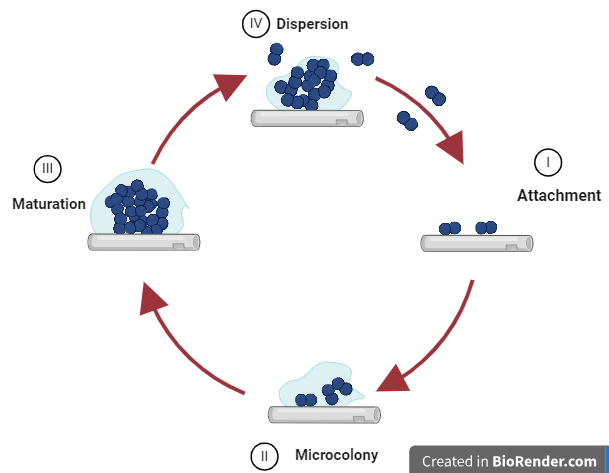
A biofilm consists of complex aggregates of bacterial cells that are attached to a surface and enclosed within a biofilm matrix formed of exo-polysaccharides, extracellular DNA (eDNA), proteins, and lipids, which are collectively known as EPSs ; . Biofilm-associated surfaces may be abiotic (non-living) as catheters or biotic (living) as gingiva. As shown in Figure 1, the growth cycle of biofilms consists of four phases: (I) bacterial attachment to the related surface, (II) micro-colony formation, (III) biofilm maturation, and (IV) biofilm dispersion .
Formation of biofilms occurs in a multiple-step process that starts with bacterial attachment to the related surface . This phase begins with reversible binding which is determined by physical dynamics such as electrostatic forces and hydrophobicity. Then, irreversible binding is enabled by the bacterial structures such as flagella and pili ; . During the attachment stage, the cells start to secrete EPSs which strengthen the adhesion, hold the cells together, and protect them from adverse surroundings. This complex structure can also trap nutrients and minerals from the adjacent microenvironment ; . Following attachment, the bacterial cells start to proliferate, aggregate, and build micro-colonies. In the next phase, full maturation occurs by a rise in the cellular density and augmented production of EPSs. A mature biofilm is characterized by a distinctive structure of considerable thickness with channels of water . Finally, biofilm dispersion occurs with some bacterial cells leaving the biofilm to start a new life cycle at other locations .
Bacterial QS system plays a key role in biofilm formation by mediating cell-to-cell communication ; . In this system, the bacterial cells synthesize, recognize, and respond to extracellular signaling molecules known as autoinducers (AIs). By using AIs concentration in the microenvironment, the bacteria can monitor changes
in their population density and coordinate the expression of QS-specific genes. Generally, QS systems are based on three principles; AIs synthesis, detection of AIs by receptors, and activation of QS-specific genes via transcription factors. With low cellular density, the AIs concentration remains lower than the detection threshold. On the other hand, with higher population density, many cells secret AIs into the extracellular microenvironment . When the density of cellular population increases to a certain point, the AIs concentration reaches their receptors detection threshold. Binding of AIs to their receptors on the bacterial cells, either membrane bound or intra-cellular receptors induces the transcription of QS-specific genes and the genes encoding AIs. By QS, the bacterial populations can orchestrate a community-wide expression of the genes required for biofilm synthesis ; . Acyl-homoserine lactones (AHLs) are the AIs commonly used by the Gram-negative bacteria, while in the Gram-positive bacteria; AIs comprise a group of secreted oligopeptides known as autoinducing peptides .
Role of biofilm in bacterial resistance
Bacterial residents of biofilms commonly exhibit considerably higher antibiotic resistance than free-living bacteria . Biofilms contribute significantly to the development of resistance through the following mechanisms: (1) the antibacterial agents penetrate poorly into the biofilm due to EPSs leading to reduced efficacy; (2) close contact between the bacterial members inside the biofilm promotes the spread of resistance genetic elements, such as plasmids via horizontal gene transfer; (3) the bacterial residents of biofilms display elevated expression of efflux pumps; (4) the heterogeneous bacterial growth inside the biofilms results in variant phenotypes such as persister cells, with altered antibacterial susceptibility profiles ; ; . Notably, the resistance displayed by the biofilms varies according to their age. It has been reported that older and slow-growing biofilms are considerably more resistant to the antibacterial agents, compared to the younger and fast-growing ones .
Biofilms are characterized by the presence of persister cells among their population; a subpopulation of bacterial cells that can survive under environmental stresses such as antibacterial agents by entering into a metabolically inactive dormant state ; . Conventional antibacterial agents target metabolically the active bacterial cells; therefore, the activity of these agents is limited against the dormant cells. Hence, persister cells play a key role in drug tolerance because most of the cellular pathways are inactive . In addition, persister cells represent a reservoir of surviving cells that regain activity and rebuild the biofilm when the antibacterial therapy is discontinued .
Biofilms serve as protected niches for the resident bacteria; therefore, their eradication by a single therapeutic agent could be challenging. Combinatorial strategies that employ the concurrent use of antibacterial agents, with different modes of action, have been proposed to improve the penetration of these agents into the biofilm and overcome the resistance that results from the usage of a single agent. In addition, these combined approaches enhance the potential to eliminate biofilms through working on multiple targets ; . One potential strategy to improve the efficacy of antibacterial drugs against the biofilms is to combine these drugs with other novel antibiofilm agents ; .
Strategies used for fighting bacterial biofilms
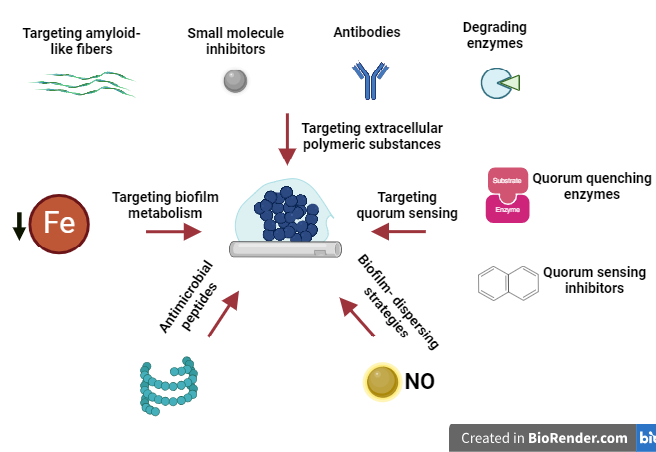
The growing impact of biofilm-related infections has guided the researchers to develop innovative antibiofilm agents. Nevertheless, the in vivo efficacy and potential toxicity of these agents continue to be the major concerns. The following sections discuss the most promising strategies developed to fight biofilms through interrupting QS, targeting EPSs, dispersion of biofilms, targeting biofilm metabolism, and the usage of AMPs, as shown in Figure 2. Moreover, relevant examples of antibiofilm agents and their mechanisms of action are listed in Table 1.
Strategies targeting quorum sensing
Targeting QS represents an encouraging weapon against biofilms. This approach aims to interfere with QS systems needed for inter-cellular communication and biofilm formation . Targeting interruption of QS can be performed through quorum quenching enzymes or chemical QS inhibitors (QSIs) .
Table 1: Antibiofilm agents and their mechanisms of action.
| Antibiofilm strategy | Antibiofilm agent | Mechanism of antibiofilm action | Reference |
| Strategies targeting quorum sensing | |||
| Quorum sensing inhibitors | Gliptins | Downregulation of the autoinducer synthetase-encoding genes | |
| 5-Hydroxymethylfurfural | Downregulation of the expression of quorum sensing-specific genes, competitive inhibition of the autoinducers | ||
| Quorum quenching enzymes | Acyl-homoserine lactone acylase | Degradation of acyl-homoserine lactones | |
| Strategies targeting extracellular polymeric substances | |||
| Small molecule inhibitors | Catechol-containing sulfonohydrazide compounds | Inhibition of diguanylate cyclase enzyme | |
| Degrading enzymes | α-amylase | Degradation of exopolysaccharides | |
| Dornase alfa | Degradation of extracellular DNA | ||
| Targeting amyloid-like fibers | Parthenolide | Inhibition of amyloid-like fibers polymerization | |
| Antibodies targeting extracellular polymeric substances | Psl-targeting antibodies | Targeting of Psl exopolysaccharides | |
| DNABII-targeting antibodies | Targeting of DNA-binding protein (DNABII) | ||
| Biofilm-dispersing strategies | |||
| Nitric oxide | Dispersion of biofilms | ||
| Biofilm-dispersing agents | Cephalosporin-3'-diazeniumdiolates (C3Ds) | Dispersion of biofilms | |
| Capsicumicine | Dispersion of biofilms | ||
| Antimicrobial peptides and antipersister peptides | |||
| Antimicrobial peptides | Nisin | Membrane depolarization and disruption | |
| Synthetic peptide PS1 | Degradation of the EPSs | ||
| Antipersister peptides | TM5 | Membrane depolarization and disruption of persister cells | |
| Acyldepsipeptide antibiotic (ADEP4) | Activation of ClpP protease in persister cells | (Conlon et al., 2013) | |
| Strategies targeting biofilm metabolism | |||
| Iron metabolism inhibitors | Gallium | Reduction of bacterial iron uptake | |
Where; Psl: P. aeruginosa exopolysaccharide, PS1: Synthetic peptide 1, EPSs: Extracellular polymeric substances, ClpP protease: Caseinolytic protease P, ADEP4: Acyldepsipeptide antibiotic.
Quorum sensing inhibitors
The utilization of QSIs as antibiofilm agents has been extensively investigated. Different QSIs execute their action through various mechanisms. For example, gliptins exert their antibiofilm activity by downregulating the AI synthetase-encoding genes . The aromatic aldehyde 5-hydroxymethylfurfural can inhibit QS by downregulating the expression of QS-specific genes. Also, it acts as a competitive inhibitor of the AIs . Cinnamaldehyde, another aromatic compound found in cinnamon, can disrupt QS by reducing the expression of AHLs-encoding genes . Similarly, Shang et al. (2021) have reported that tryptophan-containing peptides downregulate the expression of QS-specific genes, impair QS, and inhibit biofilm development in the multidrug-resistant P. aeruginosa. In addition, the combination of these peptides with antibiotics has expressed synergistic effects.
Phytochemicals derived from traditional medicinal plants, such as alkaloids, terpenoids, phenolics, essential oils, and lectins have antibiofilm properties as they inhibit the QS system through blocking the AIs, including AHLs ; . Nevertheless, the bacteria can become resistant to the phytochemicals; therefore, employing these products in combination with traditional antibiotics seems to be more effective to battle with the biofilm-related infections ; .
Quorum quenching enzymes
Quorum quenching enzymes are able to disrupt QS systems by degrading the bacterial AIs. These enzymes are promising because they work through extracellular interruption of QS and eliminate the need to enter the bacterial cells; however, the in vivo efficacy of these enzymes raises a lot of concerns and needs to be validated in relevant microenvironments . Lactonase and acylase hydrolytic enzymes, with the capability to degrade AHLs, have been widely investigated as antibiofilm agents against the Gram-negative bacteria ; .
Although QS-targeting agents have promising results, however, their practical usage is limited due to their low stability, potential toxicity, and limited therapeutic efficacy . Moreover, the access of these agents into the site of QS signaling could be hindered by the EPSs. Meanwhile, QS-targeting agents can be utilized in combination with antibacterial drugs or other antibiofilm agents to improve their efficacy .
Strategies targeting extracellular polymeric substances
The presence of EPSs is vital for biofilm development as they aid bacterial adhesion, nutrition, and structural stability. They also protect bacterial cells against various antibiotics and immune defenses . Therefore, targeting EPSs is a very promising tactic against biofilms, mediated through small molecule inhibitors, EPSs degrading enzymes, antibodies, and by targeting the amyloid-like fibers.
Small molecule inhibitors
These strategies employ small molecules to interfere with EPSs formation. For example, small molecule inhibitors have been utilized to interrupt the formation of cyclic-di-guanosine monophosphate (c-di-GMP). Following its synthesis by diguanylate cyclase enzyme, c-di-GMP regulates EPSs-producing enzymes through transmitting the signaling cascades inside the bacterial cells . Therefore, several small molecule inhibitors targeting diguanylate cyclase, such as catechol-containing sulfonohydrazide compounds, have been reported as effective antibiofilm agents in vitro; however, additional studies are needed to determine their effectiveness in vivo . Notably, diguanylate cyclases are not found in human cells and therefore regarded as promising targets for the antibiofilm agents.
Another strategy involves employing the small molecule inhibitors of glucosyl transferase enzyme, such as quinoxaline derivatives, to inhibit the synthesis of glucan found in the EPSs. These inhibitors delay dental caries in rat models by reducing the accumulation of biofilms on teeth . Small Schiff base molecules; part of carbonyl compound derivatives, are recently proposed as a possible way to combat biofilm-related infections because of their antibacterial efficacy . The small molecule inhibitor-based strategies present promising paths for the development of innovative antibiofilm agents. Besides, combinational administration of these inhibitors with the antimicrobial agents can serve as a prospective multi-targeted approach for biofilm elimination .
Extracellular polymeric substances degrading enzymes
Enzymes degrading EPSs constitute a powerful arsenal in the fight against biofilms, as they improve drug penetration, weaken biofilms, and make them more susceptible to the antibacterial agents. Many exo-polysaccharides-degrading enzymes such as dispersin B, α amylase, and glucan hydrolases have been previously evaluated as antibiofilm agents . By using pig models, the dispersin B enzyme is reported to to significantly inhibit skin colonization by S. epidermidis. In addition, dispersin B detaches the pre-attached S. epidermidis cells from the skin . Recently, α-amylase enzyme has been reported to disrupt the exopolysaccharides in the biofilm matrix of the multidrug-resistant bacteria with a significant reduction in the matrix of the carbohydrate content .
Several other degrading enzymes have been investigated such as Esp which is a purified serine protease enzyme. Purified Esp inhibits biofilm formation by S. aureus and eliminate pre-existing biofilms in vitro (Iwase et al., 2010). By breaking down eDNA, DNases can destroy the premature biofilms. However, in mature biofilms, this effect is probably hindered by other molecules such as exopolysaccharides and proteins, which support the structural integrity of the biofilm . Dornase alfa; a recombinant human DNase, is therapeutically utilized to breakdown DNA present in the sputum of cystic fibrosis patients. This therapeutic approach dissolves the sputum and reduces its viscosity, improves pulmonary functions, and decreases the development of exacerbations . An interventional study of dornase alfa in cystic fibrosis patients with early lung disease has demonstrated significant improvement in the pulmonary functions compared to the placebo group .
Although preclinical studies on EPSs-degrading enzymes have shown promising outcomes, but there are many concerns about their in vivo efficacy, stability, toxicity, and high production costs that need to be thoroughly investigated. Besides, the effects of these enzymes are limited by the type of the biofilm-forming bacteria that secrete variable EPSs components ; . However, combining antimicrobial agents with EPSs-degrading enzymes such as DNases and glucan hydrolases improves the antimicrobial efficacy and eliminates the biofilms .
Targeting amyloid-like fibers
Amyloid-like fibers have been recognized to play a vital role in biofilm development; hence, they are referred to as functional amyloid fibers. These fibers are found in EPSs and function as a protection barrier; therefore, they can serve as possible targets for antibiofilm agents . Both parthenolide and AA-861; a benzoquinone derivative, have demonstrated antibiofilm activity against Escherichia coli (E. coli) through inhibiting polymerization of the amyloid-like fibers, known as Curli, present in the E. coli biofilms .
Antibodies targeting extracellular polymeric substances
Antibodies directed against EPSs can be utilized to fight biofilm-related infections. For example, Psl exopolysaccharide present in the matrix of P. aeruginosa-related biofilms has been assessed as a potential target for these antibodies. Psl-targeting antibodies inhibited the adherence of P. aeruginosa to the lung epithelial cells, enhanced phagocytic killing of the pathogen, and conferred protection against infection in several mouse models . DNABII is a DNA-binding protein that plays an important role in maintaining structural integrity of the eDNA present in the biofilm matrix; therefore, antibodies directed against it can disrupt the biofilms. Jurcisek et al. (2022) have reported that antibodies targeting DNABII are able to significantly disrupt all the tested biofilms including single species and mixed biofilms. Such findings reflect the universal existence of DNABII in the biofilm matrices.
The use of EPSs-targeting antibodies is challenging because of the antigenic variability among the various bacterial biofilms. Nevertheless, targeting common EPSs components by specific antibodies is a potential approach, especially when used in combination with the antibacterial agents .
Biofilm-dispersing strategies
Agents promoting dispersion of biofilms may be promising as they enhance biofilm disassembly, make the bacteria more sensitive to traditional antibiotics, and reduce the risk of re-colonization. Nitric oxide (NO) is an endogenous chemical molecule with antimicrobial properties in the upper and lower respiratory airways . Recently, NO has gained attention as a biofilm-dispersing agent. NO reduces the intracellular c-di-GMP levels by activating the c-di-GMP hydrolyzing enzymes, which promote the dispersion of biofilms. In addition, NO increases the bacterial motility and downregulates the expression of adhesins-encoding genes . Gaseous NO has been successful in reducing the size of P. aeruginosa-associated biofilm aggregates in the sputum of cystic fibrosis patients . The application of NO gas is not feasible because of its high reactivity and instability; therefore, NO donors were suggested .
Nitric oxide donors can be used to disperse the bacterial biofilms so that co-administered antibacterial agents are able to kill the more susceptible unattached bacterial cells. Cephalosporin-3’-diazeniumdiolates (C3Ds) are NO donor prodrugs with a promising biofilm dispersing ability. Bacterial β-lactamases activate these prodrugs by cleaving the β-lactam ring and releasing NO. After activation by β-lactamases, C3Ds selectively deliver the released NO to the bacterial biofilms. C3Ds are recorded to be effective in dispersing the biofilms formed by P. aeruginosa .
Nitroxides (i.e., NO analogues) are small molecules that possess identical properties to NO with stabilized free radicals. These molecules exert an antibiofilm action in a NO mimetic fashion with the advantage of being more stable. In addition, nitroxides can be used in combination with the antibacterial agents to enhance biofilm eradication ; . Capsicumicine; a newly developed peptide from red peppers, has been able to interact with matrix polysaccharides and cause disassembly of biofilms formed by the S. epidermidis .
Antimicrobial peptides and antipersister peptides
Antimicrobial peptides are a group of small peptides; formed of 5 up to 100 amino acids, which exist naturally in bacteria, fungi, plants, and animals and display antimicrobial activities. AMPs form pores in the microbial membranes that cause the elimination of a broad spectrum of microorganisms with a lower chance of causing resistance ; .
Antimicrobial peptides display potent antimicrobial activity even in the face of multidrug-resistant bacteria . In addition, they display antibiofilm action via different mechanisms such as membrane depolarization with resulting disruption, which allows better penetration of the antibiofilm agents (e.g., nisin and mastoparan) ; . Other AMPs are able to inhibit the biofilm formation by degrading the EPSs such as the synthetic peptide PS1, or by interrupting the QS as DJK5/6 ; ; . Some AMPs also downregulate genes involved in biofilm formation . Combinational treatment of AMPs with conventional antibacterial agents may lead to enhanced outcomes. For example, nisin; a Food and Drug Administration (FDA)-approved AMP, functions as an antibiofilm agent synergistically with the antibacterial agents .
Persister cells found among the biofilm population may lead to recurrent infections; therefore, novel anti-persister agents are considered. AMPs are promising candidates to combat the persistent biofilms because they are active against slowly-growing bacterial cells and have broad-acting antimicrobial activities . TM5, a broad-spectrum AMP, has been recently developed and evaluated as an antipersister agent. TM5 is able to kill the persister cells via membrane depolarization and disruption. In addition, it is able to reduce the persister cells in the biofilms formed by both the Gram-negative and the Gram-positive bacteria in vitro . Although TM5 is a promising antipersister agent, its clinical effectiveness needs to be validated in vivo.
Another anti-persister candidate is the acyldepsipeptide antibiotic (ADEP4), which is a semi-synthetic derivative of the natural acyldepsipeptide. ADEP4 activates the ClpP protease in the persister cells that degrade the various intracellular targets, causing their death. However, ClpP is not an essential enzyme; therefore, ClpP mutants will be resistant to ADEP4 (Conlon et al., 2013). Similarly, the synthetic peptide SAAP-148 is able to eliminate the persister cells present in the methicillin resistant S. aureus (MRSA) biofilms within a prosthetic joint infection model . Other promising synthetic AMPs are the cationic glycosylated peptides. These peptides have a bactericidal effect against the replicating and the persister MRSA bacterial cells, and have successfully eradicated the MRSA biofilms in the human ex vivo skin infection models .
The pore-forming action of AMPs can target both the active and the dormant cells; therefore, the use of these peptides can reduce the development of bacterial tolerance. However, the effectiveness of AMPs is limited by several factors, including the unspecific toxicity caused by their accumulation, sensitivity to the bacterial proteases, low stability in the biological fluids, difficult access to the target cells within the biofilms, and high cost ; . In an attempt to overcome some of these limitations, synthetic antimicrobial peptoids have developed. These peptoids mimic the activity and structure of the AMPs, while showing superior stability to the proteases compared to these AMPs . Non-peptide mimics of AMPs such as ceragenins, have been also developed to overcome these drawbacks. Ceragenins are cationic non-peptide steroids that interact with the negatively charged membranes, causing permeability changes and cell death. In addition, ceragenins are characterized by enhanced stability and lower toxicity compared to the AMPs. Furthermore, using combinations of ceragenins and antibacterial agents has displayed a synergistic action ; .
Strategies targeting biofilm metabolism
Iron metabolism inhibitors have shown some promise as antibiofilm agents. Iron metabolism is essential for biofilm synthesis by several bacterial pathogens. Gallium, which is chemically similar to iron, decreases the bacterial iron uptake and inhibits the iron-dependent paths needed for biofilm formation. In the murine lung models, this decoying tactic is found to suppress biofilm formation and reduces bacterial counts in the existing biofilms. Furthermore, the intravenous form of gallium is FDA-approved for treating the hypercalcemia of malignancy, making it a promising antibiofilm agent . Similarly, the combination of tobramycin with either deferoxamine or deferasirox; FDA-approved iron chelators, has reduced the established biofilms formed by the P. aeruginosa .
The use of certain amino acids has also been explored as possible antibiofilm agents. For example, L-methionine has been reported as a promising adjuvant for treating P. aeruginosa-associated biofilms by inducing the expression of DNase, which degrades eDNA found in the EPSs, and enhancing the susceptibility toward ciprofloxacin .
Futuristic antibiofilm strategies
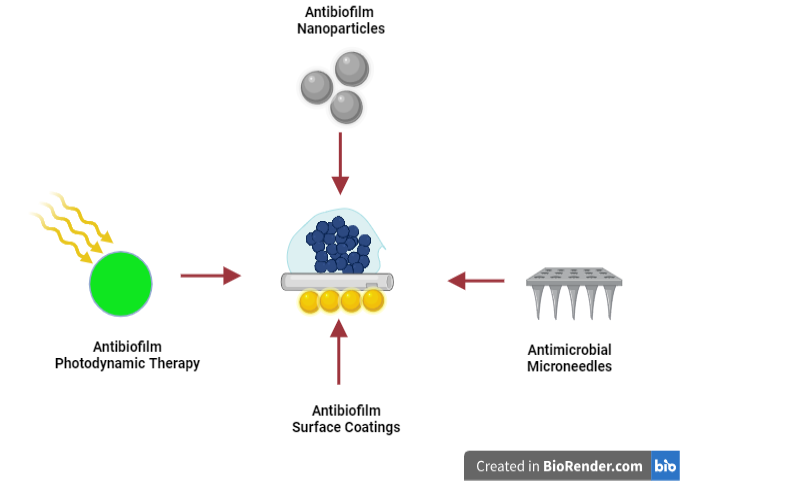
The substantial knowledge currently available on biofilm synthesis and recent innovations such as nano-engineering has paved the way for futuristic antibiofilm strategies. The following sections highlight these emerging antibiofilm strategies, including NPs, surface coatings, antimicrobial microneedles, and PDT (Figure 3). Table 2 presents several selected examples of futuristic antibiofilm agents and their mechanisms of action.
Antibiofilm nanoparticles
Recently, nanotechnology has received a lot of interest because of its wide-ranging applications. NPs, less than 100 nm in size, display unique biological characters such as stability and enhanced antimicrobial efficacy ; ; . Because of their small size, NPs can penetrate the cells more effectively and be deposited as ultra-thin coatings on the different surfaces ; . Therefore, nanotechnology can be used to create functional NPs designed to target the biofilm bacterial cells without harming the host cells. In addition, NPs can be utilized as vehicles to deliver various agents into the site of infection. Furthermore, NPs can be manipulated as coatings for the medical surfaces liable to biofilm formation .
Table 2: Futuristic antibiofilm agents and their mechanisms of action.
| Antibiofilm strategy | Antibiofilm agent | Mechanism of antibiofilm action | Reference |
| Antibiofilm nanoparticles | Silver nanoparticles | Biofilm targeting agent, nano-based drug delivery system | ; |
| Liposomes | Nano-based drug delivery system | ||
| Silver nanoparticles associated with nitric oxide donor | Delivery of nitric oxide, dispersion of biofilms | ||
| Nanoparticles coated with DNase enzyme and loaded with ciprofloxacin | Release of ciprofloxacin, degradation of extracellular DNA | ||
| Antibiofilm surface coatings | Nanostructured silver antibacterial surfaces | Inhibition of bacterial adhesion to the surface, antibacterial action | |
| GL13K antimicrobial peptide-decorated with silver nanoparticles | Inhibition of bacterial adhesion to the surface, Antibacterial action | ||
| Antimicrobial microneedles | Dissolvable microneedles and antibacterial-loaded nanoparticles | Delivery of the antibacterial agent to into biofilms | |
| Dissolvable microneedles loaded with an engineered antimicrobial peptide | Delivery of the antimicrobial peptide into biofilms | ||
| Antibiofilm photodynamic therapy | Malachite green encapsulated silica nanoparticles | Release of reactive oxygen species | |
| Rose Bengal and proteinase K-loaded nanocomplex | Release of reactive oxygen species, release of proteinase K |
Previous studies have demonstrated that gold, silver, nickel, iron, zinc oxide, and copper oxide NPs possess substantial antibiofilm properties ; . The antibiofilm action of NPs is mediated by several mechanisms, including disruption of cell membranes causing leakage of cellular components, denaturation of proteins, damaging of the bacterial DNA, and generating reactive oxygen species (ROS) that can oxidize the cellular constituents and disrupt the QS ; .
Metallic NPS (i.e., silver and gold) are acquiring more attention because of their strong antibacterial action, stability, and lower risk for inducing resistance. In addition to the direct lethal effect of these metallic NPs, they also act as QSIs. Such NPs can be utilized as biofilm-targeting agents and drug delivery systems ; ; . Rodríguez-Serrano et al. (2020) have demonstrated that AgNPs have caused 97 % reduction in biofilm formation and 80% destruction of the mature biofilm formed by the uropathogenic E. coli. Similarly, Abd Elkodous et al. (2020) reported that ZnONPs; another metallic NPs, have shown prominent antibacterial and antibiofilm activities. Although the metallic NPs have demonstrated encouraging results as antibiofilm agents, they can cause toxicity in the mammalian cells .
Effective delivery systems are necessary as they allow the antibiofilm agents to penetrate the EPSs and eliminate the need for excessive dosages that might cause host toxicity and bacterial resistance. Various NPs have been utilized as vehicles of antibacterial drugs or other antibiofilm agents ; . For example, several delivery nanosystems, such as NO-releasing silica NPs and NO donor-associated with AgNPs, have been designed to deliver NO in an effective and safe way to the site of the biofilm ; . In addition, the synthetic polymer NPs (i.e., polylactic acid NPs) has been approved by the FDA as parenteral route drug carriers .
Liposomes (i.e., lipid-based nanocarriers) are physiologically compatible vesicles made of phospholipid bilayers, which can also function as vehicles for drug delivery. These nanocarriers have the ability to penetrate the biofilms while guarding their cargo against enzymatic inactivation or other harmful surroundings. Following fusion of the bacterial cell membrane with the lipid component of the liposomes, the drug is released into the cytoplasm, which maximizes the drug effects and decreases the toxicity to the host cells ; .
Nanoparticles have also been conjugated with antibacterial drugs to increase their effectiveness . For example, the macrolides-conjugated magnetic NPs exhibited significantly enhanced antimicrobial efficacy against the resistant bacteria. Magnetic NPs are built from magnetic materials; therefore, they can be guided toward their targets by using a magnetic field that can further enhance their action . Similarly, NPs coated with DNase enzyme and loaded with ciprofloxacin are able to release ciprofloxacin in a controlled manner and disassemble P. aeruginosa biofilms by degrading the eDNA . NPs have also been conjugated with other antibiofilm agents such as QSIs (e.g., cinnamaldehyde incorporated in gold NPs), quorum quenching enzymes (e.g., acylase enzyme in combination with AgNPs), and EPSs-degrading enzymes (e.g., amylase enzyme conjugated with AgNPs) .
The development of NPs for antimicrobial applications has been extensively investigated at the pre-clinical level and some NPs are already FDA-approved for clinical use such as liposomal formulations ; . Although nanoscience provides a promising platform and efficient biofilm-targeting techniques, the following points should be further investigated; compatibility of NPs, in vivo efficiency, safety, and potential techniques used to develop wide-scale affordable antibiofilm products ; .
Antibiofilm surface coatings
The use of antibiofilm surface coatings has been widely explored to inhibit the bacterial adhesion, which is the first step of the biofilm life cycle . This can be conducted via applying anti-adhesion coatings that create charged or rough surfaces that cause bacterial repulsion. For example, coating medical devices with trimethylsilane has resulted in substantial inhibition of biofilm formation. Similarly, a polymer brush coating made of polyethylene oxide can create a repulsive osmotic pressure that reduces bacterial adhesion .
Nanoparticles, such as Ag, have been utilized as coatings on medical devices and implants because of their biocompatibility and intrinsic antibacterial activities, which prevent biofilm formation ; . Nanostructured Ag antibacterial surfaces have demonstrated antibacterial potentials against the Gram-positive and the Gram-negative bacteria . GL13K; a self-assembled AMP, is synthesized and then decorated with Ag NPs. This nanostructure has been used as a coating for implant-related titanium surfaces to prevent implant-associated infections. This hybrid nanocoating has displayed high antimicrobial activity in vitro and in vivo using infection rat models . Using AMPs as surface coatings can inhibit bacterial biofilm formation by causing bacterial membrane lysis .
The incorporation of antibiotics into surface coatings has also been investigated. For example, metal implants have been coated with antibiotics such as vancomycin to inhibit biofilm formation. However, this may cause bacterial resistance to vancomycin . Medical equipment made of silicone is frequently coated with trimethoxysilyl propyl dimethyloctadecyl ammonium chloride (QAS-30), which has antibacterial effects through its quaternary ammonium groups . It should be mentioned that antibiotic incorporation into surface coatings has several drawbacks, including potential toxic effects, absorption of proteins present in the surface coatings, and gradual decrease in efficacy over time .
Antimicrobial microneedles
Microneedles are minimally invasive three-dimensional biomedical devices that can penetrate different barriers. Because microneedles can pass through the EPSs, they are considered an efficient system for antibiofilm drug delivery . Microneedle patches; initially developed for transdermal-drug delivery, have been explored for treating biofilms. Xu et al. (2019) have designed microneedle patches composed of dissolvable microneedles and antibacterial-loaded NPs. These patches released the antibacterial agent within the biofilm matrix following exposure to the gelatinase enzyme produced by bacterial members of the biofilms.
Other studies have designed flexible microneedle patches that can co-administer the antimicrobial agents and oxygen simultaneously. These flexible patches have a strong bactericidal effect on both the Gram-positive and the Gram-negative bacterial biofilms ; . Also, Permana et al. (2020) have developed a combination of dissolving microneedles and doxycycline-loaded NPs to enhance biofilm penetration. This combinatorial approach resulted in a 99.9 % reduction of the bacterial burden in an ex vivo biofilm model using full-thickness excised porcine skin.
In an attempt to eliminate biofilms in chronic wounds, researchers have developed a novel wound dressing consisting of dissolvable microneedles loaded with an engineered AMP, able to deliver the AMP inside and outside the bacterial biofilms. In addition, this dressing is able to eradicate the MRSA biofilms in ex vivo human skin wound infection models . Therefore, the integration of various antibiofilm agents into microneedles can hold a great potential for the elimination of challenging biofilms.
Antibiofilm photodynamic therapy
Recently, PDT has gained attention as an effective weapon against biofilms. This technology operates by using a photosensitizer molecule that releases ROS following exposure to a light of a specific wavelength. The released ROS interact with the cellular molecules, causing bacterial cell death through different mechanisms, including cytoplasmic membrane damage, leakage of cellular components, and DNA damage. PDT is highly advantageous against biofilms because the light wavelength can be adjusted according to the lesion area . In addition, it is a nontoxic technique that does not generate photo-resistant bacterial strains. However, PDT drawbacks include photosensitizer aggregation and instability; therefore, NPs can be used as carriers of photosensitizers . For example, silica NPs are used as a vehicle for the malachite green photosensitizer and have revealed enhanced antibiofilm effects against S. aureus and E. coli biofilms . The photosensitizer Rose Bengal and proteinase K-loaded nanocomplex have been also developed to combat biofilm-related infections. Upon exposure to an acidic biofilm environment, this nanocomplex becomes decomposed releasing proteinase K that degrades the proteins present in the biofilm matrix. On the other hand, upon illumination, the photosensitizer Rose Bengal is activated to release ROS, killing the bacteria found in the biofilm core. This promising nanocomplex has been implicated in high biofilm eradication capacity using both in vitro and in vivo mouse biofilm models .
Conclusions and Recommendations
The past two decades have deonstrated a remarkable advancement in research and understanding of bacterial biofilms; however, biofilm-related infections remain a significant health problem. In this study, we presented how biofilms can be tackled through different strategies including; interruption of QS, targeting of EPSs, dispersion of biofilms, targeting biofilm metabolism, and the usage of AMPs and antipersister peptides. Moreover, the emerging antibiofilm strategies such as NPs, surface coatings, antimicrobial microneedles, and PDT were explored. Out of these antibiofilm approaches, NP-based agents have stood out as they demonstrated very encouraging outcomes in their fight against biofilms. Similarly, AMPs could provide new therapeutics for treating infections linked to biofilms, especially when dealing with persister cells.
Eradication of already established biofilms is clinically challenging; therefore, strategies that prevent biofilm formation such as antibiofilm surface coatings, QSIs, and small molecule inhibitors hold a lot of promise. In addition, safe and effective delivery systems for antibiofilm agents are essential. Drug delivery systems that can penetrate EPSs, such as NPs and microneedles-based systems, can ensure optimal delivery and enhance the effectiveness of antibiofilm agents. Overall, strategies presented in this study could provide a renewal in the current antibiofilm therapeutic pool.
Future researches are recommended to target the development of effective antibiofilm agents that integrate the following criteria: Prevention of biofilm formation, elimination of established biofilms, eradication of bacteria without creating selective pressure, effective delivery system into the biofilm, biocompatibility, safety, and stability. Combinatorial strategies involving the usage of different antibiofilm agents should also be promoted. Other factors such as the production scale and economic feasibility should also be considered. Furthermore, the proper implementation of infection control precautions is essential to limit the spread of biofilm forming bacteria in healthcare facilities and decrease the biofilm-related nosocomial infections.
Acknowledgements
We would like to express our gratitude to the members of Medical Microbiology and Immunology Department, Faculty of Medicine, Mansoura University for their support.
Novelty Statement
The current review provides a comprehensive analysis of the different agents used to fight bacterial biofilms. Additionally, it highlights the importance of several emerging antibiofilm strategies, including NPs, surface coatings, antimicrobial microneedles, and PDT.
Author’s Contribution
AMS: Conceptualization. AMS and KWS: Methodology. AMS and KWS: Writing and reviewing. AMS: Reviewing and editing.
Ethical approval
Non-applicable.
Funding source
This study received no specific grant from any funding agency.
Generative AI or AI-assisted technology statement
The authors declare that no Generative AI was used in the creation of this manuscript.
Conflict of interests
The authors declared no conflicts of interest.
Figures
References
- Abd Elkodous, M., El-Sayyad, G.S., Abdel Maksoud, M.I.A., Abdelrahman, I.Y., Mosallam, F.M., Gobara, M. and El-Batal, A.I., 2020. Fabrication of ultra-pure anisotropic zinc oxide nanoparticles via simple and cost-effective route: Implications for UTI and EAC medications. Biol. Trace. Elem. Res., 196(1): 297-317. https://doi.org/10.1007/s12011-019-01894-1[CrossRef]
- Abdelhamid, A.G. and Yousef, A.E., 2023. Combating bacterial biofilms: Current and emerging antibiofilm strategies for treating persistent infections. Antibiotics, 12(6): 1005. https://doi.org/10.3390/antibiotics12061005[CrossRef]
- Akay, S. and Yaghmur, A., 2024. Recent Advances in antibacterial coatings to combat orthopedic implant-associated infections. Molecules, 29(5): 1172. https://doi.org/10.3390/molecules29051172[CrossRef]
- Alav, I., Sutton, J.M. and Rahman, K.M., 2018. Role of bacterial efflux pumps in biofilm formation. J. Antimicrob. Chemother., 73(8): 2003-2020. https://doi.org/10.1093/jac/dky042[CrossRef]
- Assefa, M. and Amare, A., 2022. Biofilm-associated multi-drug resistance in hospital-acquired infections: A review. Infect. Drug. Resist., 15: 5061-5068. https://doi.org/10.2147/IDR.S379502[CrossRef]
- Baelo, A., Levato, R., Julián, E., Crespo, A., Astola, J., Gavaldà, J., Engel, E., Mateos-Timoneda, M.A. and Torrents, E., 2015. Disassembling bacterial extracellular matrix with DNase-coated nanoparticles to enhance antibiotic delivery in biofilm infections. J. Contr. Release, 209: 150-158. https://doi.org/10.1016/j.jconrel.2015.04.028[CrossRef]
- Barraud, N., Kardak, B.G., Yepuri, N.R., Howlin, R.P., Webb, J.S., Faust, S.N., Kjelleberg, S., Rice, S.A. and Kelso, M.J., 2012. Cephalosporin-3’-diazeniumdiolates: Targeted NO-donor prodrugs for dispersing bacterial biofilms. Angew. Chem. Int. Ed. Engl., 51(36): 9057-9060. https://doi.org/10.1002/anie.201202414[CrossRef]
- Ciofu, O. and Tolker-Nielsen, T., 2019. Tolerance and resistance of Pseudomonas aeruginosa biofilms to antimicrobial agents-how P. aeruginosa can escape antibiotics. Front. Microbiol., 10: 913. https://doi.org/10.3389/fmicb.2019.00913[CrossRef]
- Coandă, M., Limban, C. and Nuță D.C., 2024. Small Schiff base molecules-a possible strategy to combat biofilm-related infections. Antibiotics, 13(1): 75. https://doi.org/10.3390/antibiotics13010075[CrossRef]
- Conlon, B.P., Nakayasu, E.S., Fleck, L.E., LaFleur, M.D., Isabella, V.M., Coleman, K., Leonard, S.N., Smith, R.D., Adkins, J.N. and Lewis, K., 2013. Activated ClpP kills persisters and eradicates a chronic biofilm infection. Nature, 503(7476): 365-370. https://doi.org/10.1038/nature12790[CrossRef]
- Cruz, A., Condinho, M., Carvalho, B., Arraiano, C.M., Pobre, V. and Pinto, S.N., 2021. The two weapons against bacterial biofilms: Detection and treatment. Antibiotics, 10(12): 1482. https://doi.org/10.3390/antibiotics10121482[CrossRef]
- Damiri, F., Kommineni, N., Ebhodaghe, S.O., Bulusu, R., Jyothi, V.G.S.S., Sayed, A.A., Awaji, A.A., Germoush, M.O., Al-Malky, H.S., Nasrullah, M.Z., Rahman, M.H., Abdel-Daim, M.M. and Berrada, M., 2022. Microneedle-based natural polysaccharide for drug delivery systems (DDS): Progress and challenges. Pharmaceuticals, 15(2): 190. https://doi.org/10.3390/ph15020190[CrossRef]
- DiGiandomenico, A., Warrener, P., Hamilton, M., Guillard, S., Ravn, P., Minter, R., Camara, M.M., Venkatraman, V., Macgill, R.S., Lin, J., Wang, Q., Keller, A.E., Bonnell, J.C., Tomich, M., Jermutus, L., McCarthy, M.P., Melnick, D.A., Suzich, J.A. and Stover, C.K., 2012. Identification of broadly protective human antibodies to Pseudomonas aeruginosa exopolysaccharide Psl by phenotypic screening. J. Exp. Med., 209(7): 1273-1287. https://doi.org/10.1084/jem.20120033[CrossRef]
- Ding, M, Zhao, W., Zhang, X., Song, L. and Luan, S., 2022. Charge-switchable MOF nanocomplex for enhanced biofilm penetration and eradication. J. Hazard. Mater., 439: 129594. https://doi.org/10.1016/j.jhazmat.2022.129594[CrossRef]
- Fernicola, S., Paiardini, A., Giardina, G., Rampioni, G., Leoni, L., Cutruzzolà, F. and Rinaldo, S., 2015. In silico discovery and in vitro validation of catechol-containing sulfonohydrazide compounds as potent inhibitors of the diguanylate cyclase PleD. J Bacteriol., 198(1): 147-156. https://doi.org/10.1128/JB.00742-15[CrossRef]
- Ferreira, M., Ogren, M., Dias, J.N.R., Silva, M., Gil, S., Tavares, L., Aires-da-Silva, F., Gaspar, M.M. and Aguiar, S.I., 2021. Liposomes as antibiotic delivery systems: A promising nanotechnological strategy against antimicrobial resistance. Molecules, 26(7): 2047. https://doi.org/10.3390/molecules26072047[CrossRef]
- Ferreres, G., Ivanova, K., Ivanov, I. and Tzanov, T., 2023. Nanomaterials and coatings for managing antibiotic-resistant biofilms. Antibiotics, 12(2): 310. https://doi.org/10.3390/antibiotics12020310[CrossRef]
- Flemming, H.C., van Hullebusch, E.D., Neu, T.R., Nielsen, P.H., Seviour, T., Stoodley, P., Wingender, J. and Wuertz, S., 2023. The biofilm matrix: multitasking in a shared space. Nat. Rev. Microbiol., 21(2): 70-86. https://doi.org/10.1038/s41579-022-00791-0[CrossRef]
- Gajic, I., Tomic, N., Lukovic, B., Jovicevic, M., Kekic, D., Petrovic, M., Jankovic, M., Trudic, A., Mitic Culafic, D., Milenkovic, M. and Opavski, N., 2025. A comprehensive overview of antibacterial agents for combating multidrug-resistant bacteria: The current landscape, development, future opportunities, and challenges. Antibiotics, 14(3): 221. https://doi.org/10.3390/antibiotics14030221[CrossRef]
- Gilabert-Porres, J., Martí, S., Calatayud, L., Ramos, V., Rosell, A. and Borrós, S., 2016. Design of a nanostructured active surface against Gram-positive and Gram-negative bacteria through plasma activation and in situ silver reduction. ACS Appl. Mater. Interfaces, 8(1): 64-73. https://doi.org/10.1021/acsami.5b07115[CrossRef]
- Gnanadhas, D.P., Elango, M., Datey, A. and Chakravortty, D., 2015. Chronic lung infection by Pseudomonas aeruginosa biofilm is cured by L-Methionine in combination with antibiotic therapy. Sci. Rep., 5: 16043. https://doi.org/10.1038/srep16043[CrossRef]
- Gomes Von Borowski, R., Chat, S., Schneider, R., Nonin-Lecomte, S., Bouaziz, S., Giudice, E., Rigon Zimmer, A., Baggio Gnoatto, S. C., Macedo, A. J. and Gillet, R., 2021. Capsicumicine, a new bioinspired peptide from red peppers prevents Staphylococcal biofilm in vitro and in vivo via a matrix anti-assembly mechanism of action. Microbiol. Spectr., 9(2): e0047121. https://doi.org/10.1128/Spectrum.00471-21[CrossRef]
- González-Fernández, S., Blanco-Agudín, N., Rodríguez, D., Fernández-Vega, I., Merayo-Lloves, J. and Quirós LM., 2025. Silver Nanoparticles: A versatile tool against infectious and non-infectious diseases. Antibiotics, 14(3): 289. https://doi.org/10.3390/antibiotics14030289[CrossRef]
- Harms, A., Brodersen, D.E., Mitarai, N. and Gerdes, K., 2018. Toxins, targets, and triggers: An overview of toxin-antitoxin biology. Mol. Cell., 70(5): 768-784. https://doi.org/10.1016/j.molcel.2018.01.003[CrossRef]
- Howlin, R.P., Cathie, K., Hall-Stoodley, L., Cornelius, V., Duignan, C., Allan, R.N., Fernandez, B.O., Barraud, N., Bruce, K.D., Jefferies, J., Kelso, M., Kjelleberg, S., Rice, S.A., Rogers, G.B., Pink, S., Smith, C., Sukhtankar, P.S., Salib, R., Legg, J., Carroll, M. and Webb, J.S., 2017. Low-dose nitric oxide as targeted anti-biofilm adjunctive therapy to treat chronic Pseudomonas aeruginosa infection in cystic fibrosis. Mol. Ther., 25(9): 2104-2116. https://doi.org/10.1016/j.ymthe.2017.06.021[CrossRef]
- Ioannou, P., Baliou, S. and Samonis, G., 2024. Nanotechnology in the diagnosis and treatment of antibiotic-resistant infections. Antibiotics, 13(2): 121. https://doi.org/10.3390/antibiotics13020121[CrossRef]
- Iwase, T., Uehara, Y., Shinji, H., Tajima, A., Seo, H., Takada, K., Agata, T. and Mizunoe, Y., 2010. Staphylococcus epidermidis Esp inhibits Staphylococcus aureus biofilm formation and nasal colonization. Nature, 465(7296): 346-349. https://doi.org/10.1038/nature09074[CrossRef]
- Jurcisek, J.A., Hofer, L.K., Goodman, S.D. and Bakaletz, L.O., 2022. Monoclonal antibodies that target extracellular DNABII proteins or the type IV pilus of nontypeable Haemophilus influenzae (NTHI) worked additively to disrupt 2-genera biofilms. Biofilm, 4: 100096. https://doi.org/10.1016/j.bioflm.2022.100096[CrossRef]
- Kaneko, Y., Thoendel, M., Olakanmi, O., Britigan, B.E. and Singh, P.K., 2007. The transition metal gallium disrupts Pseudomonas aeruginosa iron metabolism and has antimicrobial and antibiofilm activity. J. Clin. Invest., 117(4): 877-888. https://doi.org/10.1172/JCI30783[CrossRef]
- Kaplan, J.B., Mlynek, K.D., Hettiarachchi, H., Alamneh, Y.A., Biggemann, L., Zurawski, D.V., Black, C.C., Bane, C.E., Kim, R.K. and Granick, M.S., 2018. Extracellular polymeric substance (EPS)-degrading enzymes reduce Staphylococcal surface attachment and biocide resistance on pig skin in vivo. PLoS One, 13(10): e0205526. https://doi.org/10.1371/journal.pone.0205526[CrossRef]
- Khameneh, B., Eskin, N.A.M., Iranshahy, M. and Fazly Bazzaz, B.S., 2021. Phytochemicals: a promising weapon in the arsenal against antibiotic-resistant bacteria. Antibiotics, 10(9): 1044. https://doi.org/10.3390/antibiotics10091044[CrossRef]
- Khayat, M.T., Abbas, H.A., Ibrahim, T.S., Khayyat, A.N., Alharbi, M., Darwish, K.M., Elhady, S.S., Khafagy, E.S., Safo, M.K. and Hegazy, W.A.H., 2022. Anti-quorum sensing activities of gliptins against Pseudomonas aeruginosa and Staphylococcus aureus. Biomedicines, 10(5): 1169. https://doi.org/10.3390/biomedicines10051169[CrossRef]
- Konstan, M.W. and Ratjen, F., 2012. Effect of Dornase alfa on inflammation and lung function: Potential role in the early treatment of cystic fibrosis. J. Cyst. Fibros., 11(2): 78-83. https://doi.org/10.1016/j.jcf.2011.10.003[CrossRef]
- Lakshmi, S.A., Alexpandi, R., Shafreen, R.M.B., amilmuhilan, K., Srivathsan, A., Kasthuri, T., Ravi, A.V., Shiburaj, S. and Pandian, S.K., 2022. Evaluation of antibiofilm potential of four-domain α-amylase from Streptomyces griseus against exopolysaccharides (EPS) of bacterial pathogens using Danio rerio. Arch. Microbiol., 204(5): 243. https://doi.org/10.1007/s00203-022-02847-4[CrossRef]
- Lin, J.S., Bekale, L.A., Molchanova, N., Nielsen, J.E., Wright, M., Bacacao, B., Diamond, G., Jenssen, H., Santa Maria, P.L. and Barron, A.E., 2022. Anti-persister and anti-biofilm activity of self-assembled antimicrobial peptoid ellipsoidal micelles. ACS Infect. Dis., 8(9): 1823-1830. https://doi.org/10.1021/acsinfecdis.2c00288[CrossRef]
- Makhlouf, Z., Ali, A.A. and Al-Sayah, M.H., 2023. Liposomes-based drug delivery systems of anti-biofilm agents to combat bacterial biofilm formation. Antibiotics, 12(5): 875. https://doi.org/10.3390/antibiotics12050875[CrossRef]
- Mancuso, G., Trinchera, M., Midiri, A., Zummo, S., Vitale, G. and Biondo, C., 2024. Novel antimicrobial approaches to combat bacterial biofilms associated with urinary tract infections. Antibiotics, 13(2): 154. https://doi.org/10.3390/antibiotics13020154[CrossRef]
- Mirghani, R., Saba, T., Khaliq, H., Mitchell, J., Do, L., Chambi, L., Diaz, K., Kennedy, T., Alkassab, K., Huynh, T., Elmi, M., Martinez, J., Sawan, S. and Rijal, G., 2022. Biofilms: formation, drug resistance and alternatives to conventional approaches. AIMS Microbiol., 8(3): 239-277. https://doi.org/10.3934/microbiol.2022019[CrossRef]
- Mishra, S.K., Akter, T., Urmi, U.L., Enninful, G., Sara, M., Shen, J., Suresh, D., Zheng, L., Mekonen, E.S., Rayamajhee, B., Labricciosa, F.M., Sartelli, M. and Willcox, M., 2025. Harnessing non-antibiotic strategies to counter multidrug-resistant clinical pathogens with special reference to antimicrobial peptides and their coatings. Antibiotics, 14(1): 57. https://doi.org/10.3390/antibiotics14010057[CrossRef]
- Moradi, F., Ghaedi, A., Fooladfar, Z. and Bazrgar, A., 2023. Recent advance on nanoparticles or nanomaterials with anti-multidrug resistant bacteria and anti-bacterial biofilm properties: A systematic review. Heliyon, 9(11): e22105. https://doi.org/10.1016/j.heliyon.2023.e22105[CrossRef]
- Moreau-Marquis, S., O’Toole, G.A. and Stanton, B.A., 2009. Tobramycin and FDA-approved iron chelators eliminate Pseudomonas aeruginosa biofilms on cystic fibrosis cells. Am. J. Respir. Cell. Mol. Biol., 41(3): 305-313. https://doi.org/10.1165/rcmb.2008-0299OC[CrossRef]
- Mulat, M., Banicod, R.J.S., Tabassum, N., Javaid, A., Karthikeyan, A., Jeong, G.J., Kim, Y.M., Jung, W.K. and Khan, F., 2025. Multiple strategies for the application of medicinal plant-derived bioactive compounds in controlling microbial biofilm and virulence properties. Antibiotics, 14(6): 555. https://doi.org/10.3390/antibiotics14060555[CrossRef]
- Niño-Vega, G.A., Ortiz-Ramírez, J.A. and López-Romero, E., 2025. Novel antibacterial approaches and therapeutic strategies. Antibiotics, 14(4): 404. https://doi.org/10.3390/antibiotics14040404[CrossRef]
- Paramanantham, P., Siddhardha, B., Lal Sb, S., Sharan, A., Alyousef, A.A., Al-Dosary, M.S., Arshad, M. and Syed, A., 2019. Antimicrobial photodynamic therapy on Staphylococcus aureus and Escherichia coli using malachite green encapsulated mesoporous silica nanoparticles: An in vitro study. PeerJ, 7: e7454. https://doi.org/10.7717/peerj.7454[CrossRef]
- Park, S.C., Lee, M.Y., Kim, J.Y., Jung, M., Shin, M.K., Lee, W.K., Cheong, G.W., Lee, J.R. and Jang, M.K., 2019. Anti-Biofilm effects of synthetic antimicrobial peptides against drug-resistant Pseudomonas aeruginosa and Staphylococcus aureus planktonic cells and biofilm. Molecules, 24(24): 4560. https://doi.org/10.3390/molecules24244560[CrossRef]
- Parvin, N., Joo, S.W. and Mandal, T.K., 2025. Nanomaterial-based strategies to combat antibiotic resistance: Mechanisms and applications. Antibiotics, 14(2): 207. https://doi.org/10.3390/antibiotics14020207[CrossRef]
- Permana, A.D., Mir, M., Utomo, E. and Donnelly, R.F., 2020. Bacterially sensitive nanoparticle-based dissolving microneedles of doxycycline for enhanced treatment of bacterial biofilm skin infection: A proof of concept study. Int. J. Pharm. X., 2: 100047. https://doi.org/10.1016/j.ijpx.2020.100047[CrossRef]
- Pontes, J.T.C., Toledo Borges, A.B., Roque-Borda, C.A. and Pavan, F.R., 2022. Antimicrobial peptides as an alternative for the eradication of bacterial biofilms of multi-drug resistant bacteria. Pharmaceutics, 14(3): 642. https://doi.org/10.3390/pharmaceutics14030642[CrossRef]
- Qindeel, M., Barani, M., Rahdar, A., Arshad, R. and Cucchiarini, M., 2021. Nanomaterials for the diagnosis and treatment of urinary tract infections. Nanomaterials, 11(2): 546. https://doi.org/10.3390/nano11020546[CrossRef]
- Rajkumari, J., Borkotoky, S., Reddy, D., Mohanty, S.K., Kumavath, R., Murali, A., Suchiang, K. and Busi, S., 2019. Anti-quorum sensing and anti-biofilm activity of 5-hydroxymethylfurfural against Pseudomonas aeruginosa PAO1: Insights from in vitro, in vivo and in silico studies. Microbiol. Res., 226: 19-26. https://doi.org/10.1016/j.micres.2019.05.001[CrossRef]
- Ren, Z., Cui, T., Zeng, J., Chen, L., Zhang, W., Xu, X., Cheng, L., Li, M., Li, J., Zhou, X. and Li, Y., 2015. Molecule targeting glucosyltransferase inhibits Streptococcus mutans biofilm formation and virulence. Antimicrob. Agents Chemother., 60(1): 126-135. https://doi.org/10.1128/AAC.00919-15[CrossRef]
- Rodríguez-Serrano, C., Guzmán-Moreno, J., Ángeles-Chávez, C., Rodríguez-González, V., Ortega-Sigala, J.J., Ramírez-Santoyo, R.M. and Vidales-Rodríguez, L.E., 2020. Biosynthesis of silver nanoparticles by Fusarium scirpi and its potential as antimicrobial agent against uropathogenic Escherichia coli biofilms. PLoS One, 15(3): e0230275. https://doi.org/10.1371/journal.pone.0230275[CrossRef]
- Rolim, W.R., Pieretti, J.C., Renó, D.L.S., Lima, B.A., Nascimento, M.H.M., Ambrosio, F. N., Lombello, C.B., Brocchi, M., de Souza, A.C.S. and Seabra, A.B., 2019. Antimicrobial activity and cytotoxicity to tumor cells of nitric oxide donor and silver nanoparticles containing PVA/PEG films for topical applications. ACS Appl. Mater. Interfaces, 11(6): 6589-6604. https://doi.org/10.1021/acsami.8b19021[CrossRef]
- Romero, D., Sanabria-Valentín, E., Vlamakis, H. and Kolter, R., 2013. Biofilm inhibitors that target amyloid proteins. Chem. Biol., 20(1): 102-110. https://doi.org/10.1016/j.chembiol.2012.10.021[CrossRef]
- Scheper, H., Wubbolts, J.M., Verhagen, J.A.M., de Visser, A.W., van der Wal, R.J.P., Visser, L.G., de Boer, M.G.J. and Nibbering, P.H., 2021. SAAP-148 Eradicates MRSA persisters within mature biofilm models simulating prosthetic joint infection. Front. Microbiol., 12: 625952. https://doi.org/10.3389/fmicb.2021.625952[CrossRef]
- Shang, D., Han, X., Du, W., Kou, Z. and Jiang, F., 2021. Trp-containing antibacterial peptides impair quorum sensing and biofilm development in multidrug-resistant Pseudomonas aeruginosa and exhibit synergistic effects with antibiotics. Front. Microbiol., 12: 611009. https://doi.org/10.3389/fmicb.2021.611009[CrossRef]
- Shin, J.M., Gwak, J.W., Kamarajan, P., Fenno, J.C., Rickard, A.H. and Kapila, Y.L., 2016. Biomedical applications of nisin. J. Appl. Microbiol., 120(6): 1449-1465. https://doi.org/10.1111/jam.13033[CrossRef]
- Siraj, E.A., Yayehrad, A.T. and Belete, A., 2023. How combined macrolide nanomaterials are effective against resistant pathogens? A comprehensive review of the literature. Int. J. Nanomed., 18: 5289-5307. https://doi.org/10.2147/IJN.S418588[CrossRef]
- Sompiyachoke, K. and Elias, M.H., 2024. Engineering quorum quenching acylases with improved kinetic and biochemical properties. Protein Sci., 33(4): e4954. https://doi.org/10.1002/pro.4954[CrossRef]
- Su, Y., Mainardi, V.L., Wang, H., McCarthy, A., Zhang, Y.S., Chen, S., John, J.V., Wong, S.L., Hollins, R.R., Wang, G. and Xie, J., 2020. Dissolvable microneedles coupled with nanofiber dressings eradicate biofilms via effectively delivering a database-designed antimicrobial peptide. ACS Nano., 14(9): 11775-11786. https://doi.org/10.1021/acsnano.0c04527[CrossRef]
- Sun, M., Zhong, X., Dai, M., Feng, X., Tang, C., Cao, L. and Liu, L., 2024. Antibacterial microneedle patch releases oxygen to enhance diabetic wound healing. Mater. Today Bio, 24: 100945. https://doi.org/10.1016/j.mtbio.2024.100945[CrossRef]
- Thambirajoo, M., Maarof, M., Lokanathan, Y., Katas, H., Ghazalli, N.F., Tabata, Y. and Fauzi, M.B., 2021. Potential of nanoparticles integrated with antibacterial properties in preventing biofilm and antibiotic resistance. Antibiotics, 10(11): 1338. https://doi.org/10.3390/antibiotics10111338[CrossRef]
- Wnorowska, U., Fiedoruk, K., Piktel, E., Prasad, S.V., Sulik, M., Janion, M., Daniluk, T., Savage, P.B. and Bucki, R., 2020. Nanoantibiotics containing membrane-active human cathelicidin LL-37 or synthetic ceragenins attached to the surface of magnetic nanoparticles as novel and innovative therapeutic tools: Current status and potential future applications. J. Nanobiotechnol., 18(1): 3. https://doi.org/10.1186/s12951-019-0566-z[CrossRef]
- Woodhouse, I., Nejati, S., Selvamani, V., Jiang, H., Chittiboyina, S., Grant, J., Mutlu, Z., Waimin, J., Abutaleb, N.S., Seleem, M.N. and Rahimi, R., 2021. Flexible microneedle array patch for chronic wound oxygenation and biofilm eradication. ACS Appl. Bio. Mater., 4(7): 5405-5415. https://doi.org/10.1021/acsabm.1c00087[CrossRef]
- Xu, J., Danehy, R., Cai, H., Ao, Z., Pu, M., Nusawardhana, A., Rowe-Magnus, D. and Guo, F., 2019. Microneedle patch-mediated treatment of bacterial biofilms. ACS Appl. Mater. Interfaces, 11(16): 14640-14646. https://doi.org/10.1021/acsami.9b02578[CrossRef]
- Ye, Z., Sang, T., Li, K., Fischer, N.G., Mutreja, I., Echeverría, C., Kumar, D., Tang, Z. and Aparicio, C., 2022. Hybrid nanocoatings of self-assembled organic-inorganic amphiphiles for prevention of implant infections. Acta Biomater., 140: 338-349. https://doi.org/10.1016/j.actbio.2021.12.008[CrossRef]
- Zhang, K., Du, Y., Si, Z., Liu, Y., Turvey, M.E., Raju, C., Keogh, D., Ruan, L., Jothy, S.L., Reghu, S., Marimuthu, K., De, P.P., Ng, O.T., Mediavilla, J.R., Kreiswirth, B.N., Chi, Y.R., Ren, J., Tam, K.C., Liu, X.W., Duan, H. and Chan-Park, M.B., 2019. Enantiomeric glycosylated cationic block co-beta-peptides eradicate Staphylococcus aureus biofilms and antibiotic-tolerant persisters. Nat. Commun., 10(1): 4792. https://doi.org/10.1038/s41467-019-12702-8[CrossRef]
Services
Article usage statistics
Loading…